Bio-Based Surfactants for Detergents Market
Bio-Based Surfactants for Detergents Market Size and Share Forecast Outlook 2026 to 2036
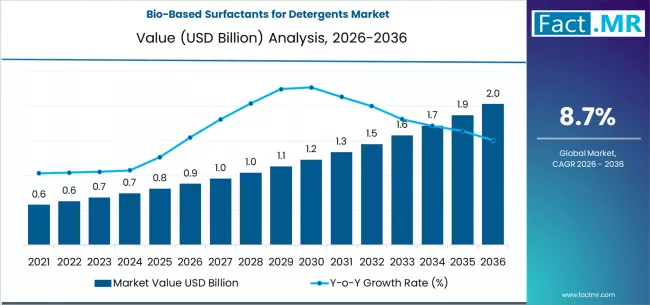
Bio-based surfactants for detergents market is projected to grow from USD 0.9 billion in 2026 to USD 2.0 billion by 2036, at a CAGR of 8.7%. Alkyl Polyglucosides (APG) will dominate with a 30.0% market share, while household laundry detergents will lead the application segment with a 38.0% share.
Bio-Based Surfactants for Detergents Market Forecast and Outlook 2026 to 2036
The global market for bio-based surfactants in detergents is projected to reach USD 2.03 billion by 2036. The market is valued at USD 0.88 billion in 2026 and is set to rise at a CAGR of 8.7% during the assessment period. By surfactant type, alkyl polyglucosides (APG) hold a leading 30% share. The application for household laundry detergents represents the dominant segment at 38%.
Key Takeaways from the Bio-Based Surfactants for Detergents Market
- Market Value for 2026: USD 0.88 Billion
- Market Value for 2036: USD 2.03 Billion
- Forecast CAGR (2026-2036): 8.7%
- Leading Surfactant Type Share (2026): Alkyl Polyglucosides (APG) (30%)
- Leading Application Share (2026): Household Laundry Detergents (38%)
- Leading Feedstock Source Share (2026): Plant-Based Oils (Coconut, Palm, Soy) (42%)
- Key Players in the Market: BASF SE, Evonik Industries AG, Croda International, Clariant AG, Kao Chemicals
Plant-based oils, such as coconut, palm, and soy, constitute the leading feedstock source, accounting for a 42% share. This growth is propelled by a powerful consumer shift toward sustainable and eco-friendly home and personal care products, coupled with stringent regulations phasing out petrochemical-based ingredients in several regions. Manufacturers are reformulating products to reduce environmental impact and meet the demand for biodegradable, non-toxic cleaning solutions.
Bio-based surfactants, derived from renewable resources, are critical for reducing the carbon footprint of detergent formulations while maintaining high performance in cleaning, foaming, and emulsification. Their adoption is central to the green transformation of the fast-moving consumer goods (FMCG) industry.
Bio-Based Surfactants for Detergents Market
| Metric | Value |
|---|---|
| Market Value (2026) | USD 0.88 Billion |
| Market Forecast Value (2036) | USD 2.03 Billion |
| Forecast CAGR (2026-2036) | 8.7% |
Category
| Category | Segments |
|---|---|
| Surfactant Type | Alkyl Polyglucosides (APG), Methyl Ester Sulfonates (MES), Bio-Based Alcohol Ethoxylates, Bio-Based Anionic/Nonionic Blends, Other Specialty Bio-Surfactants |
| Application | Household Laundry Detergents, Dishwashing Liquids & Cleaners, Industrial & Institutional Cleaners, Personal Care & Hygiene Products, Other Specialty Detergent Uses |
| Feedstock Source | Plant-Based Oils (Coconut, Palm, Soy), Sugar & Corn-Based Feedstocks, Waste Biomass & Algae-Based Sources, Other Renewable Sources |
| Region | North America, Latin America, Western Europe, Eastern Europe, East Asia, South Asia & Pacific, MEA |
Segmental Analysis
By Surfactant Type, Which Chemistry Leads in Mildness and Biodegradability?
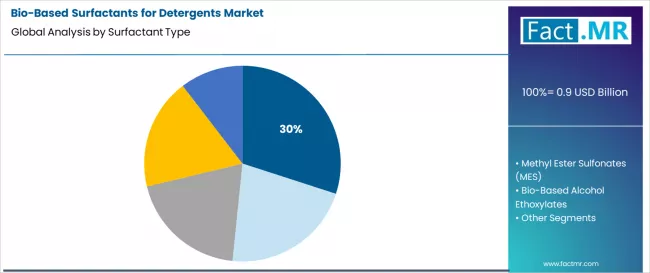
Alkyl Polyglucosides (APG) lead the segment with a 30% share. Their dominance is due to their exceptional environmental profile, being derived from renewable starch and fatty alcohols, and their complete biodegradability. APGs offer excellent cleaning performance, high foaming, and are known for being mild on the skin, making them a preferred choice for eco-premium laundry detergents, hand dishwashing liquids, and personal care products where consumer safety and green credentials are paramount.
By Application, Which Segment Drives Mass-Market Adoption?
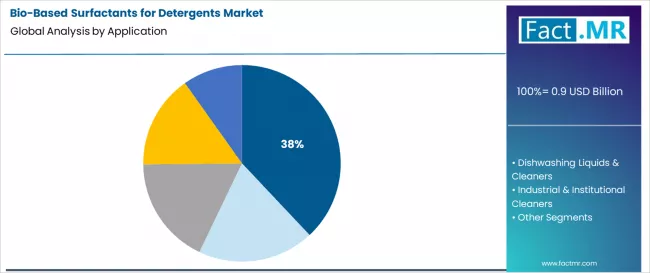
Household laundry detergents represent the largest application segment at 38%. This is the highest-volume application for surfactants globally. The shift toward bio-based formulations in this space is driven by consumer demand for sustainable products, regulatory pressures on phosphate and petrochemical content, and brand initiatives to improve product lifecycle assessments. The sheer scale of laundry detergent production makes it the primary engine for volume demand and cost-reduction innovations in bio-surfactant production.
By Feedstock Source, Which Raw Material Provides the Current Foundation?
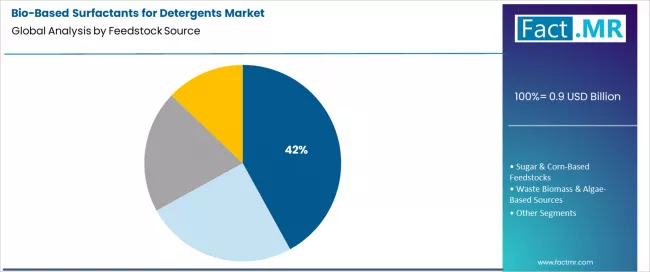
Plant-based oils, including coconut, palm, and soy, constitute the leading feedstock source with a 42% share. These oils provide established, scalable supply chains and versatile chemistry for producing a wide range of surfactant types, from APGs to methyl ester sulfonates (MES). However, this dominance brings focus on the sustainability of oil crop cultivation, driving innovation in certified sustainable palm oil and diversification into non-food competing feedstocks like waste biomass.
What are the Drivers, Restraints, and Key Trends of the Bio-Based Surfactants for Detergents Market?
The primary market driver is robust consumer demand for environmentally responsible products, amplified by stringent regulations in Europe and North America mandating the elimination of non-biodegradable and fossil-based ingredients in detergents. Corporate sustainability commitments from major FMCG brands to achieve net-zero and circular economy goals are creating a powerful pull-through effect, directly influencing raw material procurement decisions.
A significant market restraint is the higher production cost of many bio-based surfactants compared to established petrochemical alternatives like linear alkylbenzene sulfonates (LAS). This cost premium can challenge adoption in highly price-sensitive market segments. Additionally, concerns about the land-use and environmental impact of first-generation feedstocks such as palm oil pose reputational risks and are pushing the industry toward more sustainable sourcing and next-generation feedstocks.
Key trends include the rapid development of surfactants from second-generation feedstocks like agricultural waste, forestry residues, and algae to avoid food-versus-fuel debates. There is strong innovation in performance-enhanced bio-surfactants that match or exceed the cleaning power of synthetic counterparts in cold water and high-efficiency washing machines. The market is also moving toward transparent and blockchain-enabled supply chains to verify the sustainability credentials of feedstocks from source to product.
Analysis of the Bio-Based Surfactants for Detergents Market by Key Countries
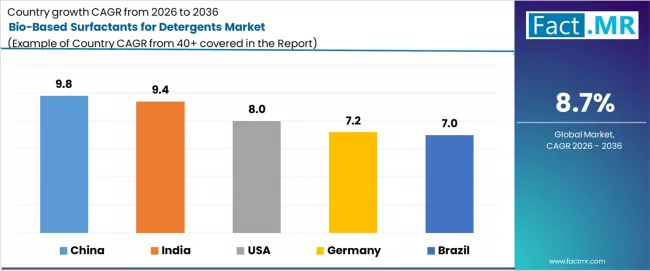
| Country | CAGR (2026-2036) |
|---|---|
| China | 9.80% |
| India | 9.40% |
| USA | 8.00% |
| Germany | 7.20% |
| Brazil | 7.00% |
How is China's Dual Focus on Industrial Upgrade and Green Consumption Shaping the Market?
China's leading CAGR of 9.80% is fueled by its "Beautiful China" ecological policies and a burgeoning middle-class demand for premium, green consumer products. The government supports green chemistry innovation, and domestic detergent giants are actively launching bio-based lines to capture market share. The scale of China's chemical manufacturing sector also positions it to become a leading global producer of cost-competitive bio-surfactants.
What Drives India's High Growth in Bio-Surfactant Adoption?
A large and growing population, increasing disposable income, and a strong cultural shift toward natural and Ayurvedic products, underpins India’s 9.40% growth. The government's push for a bio-economy and the presence of major surfactant manufacturing bases create a favorable environment. Local brands are leveraging bio-based claims to differentiate in a competitive market, driving rapid adoption.
How does the USA's Mature Green Consumer Market and Regulatory Landscape Influence Demand?
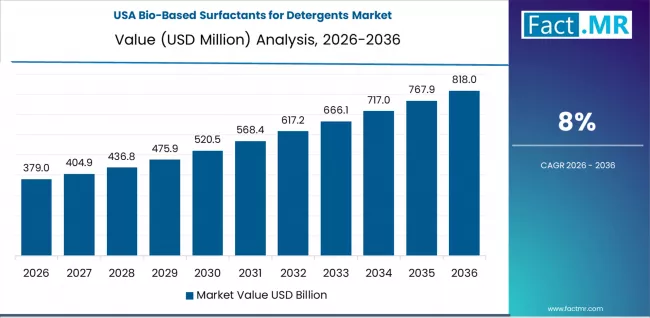
The USA's 8.00% growth is supported by a well-established market for green home care products, driven by educated consumers and robust e-commerce channels. Regulatory frameworks at the state level, along with certifications like the USDA BioPreferred program, guide procurement. Major brand commitments to 100% plant-based or biodegradable formulations by specific deadlines are creating guaranteed, long-term demand for bio-surfactant suppliers.
Why is Germany a Key Innovation and Regulatory Benchmark Market?
Germany's 7.20% CAGR reflects its role as the EU's largest market for eco-labeled detergents and a leader in green chemical innovation. Stringent EU regulations on biodegradability and renewable content, combined with high consumer awareness, make Germany a testing ground for advanced bio-surfactant technologies. German chemical companies are also global leaders in developing and commercializing high-performance bio-based surfactant platforms.
What Role does Brazil's Agricultural Bounty and Bio-Economy Play?
Brazil's 7.00% growth is anchored in its vast agricultural resources, providing abundant feedstock for bio-surfactant production, such as soybean and sugarcane. The national focus on developing a bio-based industrial sector (biorefineries) and strong domestic demand for cleaning products create an integrated market for locally sourced, renewable surfactants, fostering both production and consumption.
Competitive Landscape of the Bio-Based Surfactants for Detergents Market
Global specialty chemical giants with strong biotechnology and green chemistry divisions characterize the competitive landscape. Leaders like BASF and Evonik compete on the breadth of their bio-based portfolios, technological expertise in fermentation and oleochemistry, and strategic partnerships with feedstock providers.
Competition centers on securing sustainable and cost-competitive raw material supply chains, achieving performance parity with synthetic surfactants in challenging applications, and providing comprehensive technical support to help formulators navigate the transition to bio-based systems.
Key Players in the Bio-Based Surfactants for Detergents Market
- BASF SE
- Evonik Industries AG
- Croda International
- Clariant AG
- Kao Chemicals
Scope of Report
| Items | Values |
|---|---|
| Quantitative Units | USD Billion |
| Surfactant Type | APG, MES, Bio-Alcohol Ethoxylates, Blends, Other Specialty |
| Application | Laundry Detergents, Dishwashing, I&I Cleaners, Personal Care, Other |
| Feedstock Source | Plant Oils, Sugar/Starch, Waste Biomass/Algae, Other Renewables |
| Key Countries | China, India, USA, Germany, Brazil |
| Key Companies | BASF SE, Evonik Industries AG, Croda International, Clariant AG, Kao Chemicals |
| Additional Analysis | Analysis of biodegradability testing standards (OECD); life cycle assessment (LCA) methodologies; comparative cost-in-use analysis vs. synthetic surfactants; impact of cold-water washing trends on formulation; regulatory landscape for green claims and certifications (e.g., EU Ecolabel, Safer Choice). |
Market by Segments
-
Surfactant Type :
- Alkyl Polyglucosides (APG)
- Methyl Ester Sulfonates (MES)
- Bio-Based Alcohol Ethoxylates
- Bio-Based Anionic/Nonionic Blends
- Other Specialty Bio-Surfactants
-
Application :
- Household Laundry Detergents
- Dishwashing Liquids & Cleaners
- Industrial & Institutional Cleaners
- Personal Care & Hygiene Products
- Other Specialty Detergent Uses
-
Feedstock Source :
- Plant-Based Oils (Coconut, Palm, Soy)
- Sugar & Corn-Based Feedstocks
- Waste Biomass & Algae-Based Sources
- Other Renewable Sources
-
Region :
- North America
- USA
- Canada
- Latin America
- Brazil
- Mexico
- Argentina
- Rest of Latin America
- Western Europe
- Germany
- UK
- France
- Spain
- Italy
- BENELUX
- Rest of Western Europe
- Eastern Europe
- Russia
- Poland
- Czech Republic
- Rest of Eastern Europe
- East Asia
- China
- Japan
- South Korea
- Rest of East Asia
- South Asia & Pacific
- India
- ASEAN
- Australia
- Rest of South Asia & Pacific
- MEA
- Saudi Arabia
- UAE
- Turkiye
- Rest of MEA
- North America
Table of Content
- Executive Summary
- Global Market Outlook
- Demand to side Trends
- Supply to side Trends
- Technology Roadmap Analysis
- Analysis and Recommendations
- Market Overview
- Market Coverage / Taxonomy
- Market Definition / Scope / Limitations
- Market Background
- Market Dynamics
- Drivers
- Restraints
- Opportunity
- Trends
- Scenario Forecast
- Demand in Optimistic Scenario
- Demand in Likely Scenario
- Demand in Conservative Scenario
- Opportunity Map Analysis
- Product Life Cycle Analysis
- Supply Chain Analysis
- Investment Feasibility Matrix
- Value Chain Analysis
- PESTLE and Porter’s Analysis
- Regulatory Landscape
- Regional Parent Market Outlook
- Production and Consumption Statistics
- Import and Export Statistics
- Market Dynamics
- Global Market Analysis 2021 to 2025 and Forecast, 2026 to 2036
- Historical Market Size Value (USD Million) Analysis, 2021 to 2025
- Current and Future Market Size Value (USD Million) Projections, 2026 to 2036
- Y to o to Y Growth Trend Analysis
- Absolute $ Opportunity Analysis
- Global Market Pricing Analysis 2021 to 2025 and Forecast 2026 to 2036
- Global Market Analysis 2021 to 2025 and Forecast 2026 to 2036, By Surfactant Type
- Introduction / Key Findings
- Historical Market Size Value (USD Million) Analysis By Surfactant Type, 2021 to 2025
- Current and Future Market Size Value (USD Million) Analysis and Forecast By Surfactant Type, 2026 to 2036
- Alkyl Polyglucosides (APG)
- Methyl Ester Sulfonates (MES)
- Bio-Based Alcohol Ethoxylates
- Bio-Based Anionic/Nonionic Blends
- Other Specialty Bio-Surfactants
- Alkyl Polyglucosides (APG)
- Y to o to Y Growth Trend Analysis By Surfactant Type, 2021 to 2025
- Absolute $ Opportunity Analysis By Surfactant Type, 2026 to 2036
- Global Market Analysis 2021 to 2025 and Forecast 2026 to 2036, By Application
- Introduction / Key Findings
- Historical Market Size Value (USD Million) Analysis By Application, 2021 to 2025
- Current and Future Market Size Value (USD Million) Analysis and Forecast By Application, 2026 to 2036
- Household Laundry Detergents
- Dishwashing Liquids & Cleaners
- Industrial & Institutional Cleaners
- Personal Care & Hygiene Products
- Other Specialty Detergent Uses
- Household Laundry Detergents
- Y to o to Y Growth Trend Analysis By Application, 2021 to 2025
- Absolute $ Opportunity Analysis By Application, 2026 to 2036
- Global Market Analysis 2021 to 2025 and Forecast 2026 to 2036, By Feedstock Source
- Introduction / Key Findings
- Historical Market Size Value (USD Million) Analysis By Feedstock Source, 2021 to 2025
- Current and Future Market Size Value (USD Million) Analysis and Forecast By Feedstock Source, 2026 to 2036
- Plant-Based Oils (Coconut, Palm, Soy)
- Sugar & Corn-Based Feedstocks
- Waste Biomass & Algae-Based Sources
- Other Renewable Sources
- Plant-Based Oils (Coconut, Palm, Soy)
- Y to o to Y Growth Trend Analysis By Feedstock Source, 2021 to 2025
- Absolute $ Opportunity Analysis By Feedstock Source, 2026 to 2036
- Global Market Analysis 2021 to 2025 and Forecast 2026 to 2036, By Region
- Introduction
- Historical Market Size Value (USD Million) Analysis By Region, 2021 to 2025
- Current Market Size Value (USD Million) Analysis and Forecast By Region, 2026 to 2036
- North America
- Latin America
- Western Europe
- Eastern Europe
- East Asia
- South Asia and Pacific
- Middle East & Africa
- Market Attractiveness Analysis By Region
- North America Market Analysis 2021 to 2025 and Forecast 2026 to 2036, By Country
- Historical Market Size Value (USD Million) Trend Analysis By Market Taxonomy, 2021 to 2025
- Market Size Value (USD Million) Forecast By Market Taxonomy, 2026 to 2036
- By Country
- USA
- Canada
- Mexico
- By Surfactant Type
- By Application
- By Feedstock Source
- By Country
- Market Attractiveness Analysis
- By Country
- By Surfactant Type
- By Application
- By Feedstock Source
- Key Takeaways
- Latin America Market Analysis 2021 to 2025 and Forecast 2026 to 2036, By Country
- Historical Market Size Value (USD Million) Trend Analysis By Market Taxonomy, 2021 to 2025
- Market Size Value (USD Million) Forecast By Market Taxonomy, 2026 to 2036
- By Country
- Brazil
- Chile
- Rest of Latin America
- By Surfactant Type
- By Application
- By Feedstock Source
- By Country
- Market Attractiveness Analysis
- By Country
- By Surfactant Type
- By Application
- By Feedstock Source
- Key Takeaways
- Western Europe Market Analysis 2021 to 2025 and Forecast 2026 to 2036, By Country
- Historical Market Size Value (USD Million) Trend Analysis By Market Taxonomy, 2021 to 2025
- Market Size Value (USD Million) Forecast By Market Taxonomy, 2026 to 2036
- By Country
- Germany
- UK
- Italy
- Spain
- France
- Nordic
- BENELUX
- Rest of Western Europe
- By Surfactant Type
- By Application
- By Feedstock Source
- By Country
- Market Attractiveness Analysis
- By Country
- By Surfactant Type
- By Application
- By Feedstock Source
- Key Takeaways
- Eastern Europe Market Analysis 2021 to 2025 and Forecast 2026 to 2036, By Country
- Historical Market Size Value (USD Million) Trend Analysis By Market Taxonomy, 2021 to 2025
- Market Size Value (USD Million) Forecast By Market Taxonomy, 2026 to 2036
- By Country
- Russia
- Poland
- Hungary
- Balkan & Baltic
- Rest of Eastern Europe
- By Surfactant Type
- By Application
- By Feedstock Source
- By Country
- Market Attractiveness Analysis
- By Country
- By Surfactant Type
- By Application
- By Feedstock Source
- Key Takeaways
- East Asia Market Analysis 2021 to 2025 and Forecast 2026 to 2036, By Country
- Historical Market Size Value (USD Million) Trend Analysis By Market Taxonomy, 2021 to 2025
- Market Size Value (USD Million) Forecast By Market Taxonomy, 2026 to 2036
- By Country
- China
- Japan
- South Korea
- By Surfactant Type
- By Application
- By Feedstock Source
- By Country
- Market Attractiveness Analysis
- By Country
- By Surfactant Type
- By Application
- By Feedstock Source
- Key Takeaways
- South Asia and Pacific Market Analysis 2021 to 2025 and Forecast 2026 to 2036, By Country
- Historical Market Size Value (USD Million) Trend Analysis By Market Taxonomy, 2021 to 2025
- Market Size Value (USD Million) Forecast By Market Taxonomy, 2026 to 2036
- By Country
- India
- ASEAN
- Australia & New Zealand
- Rest of South Asia and Pacific
- By Surfactant Type
- By Application
- By Feedstock Source
- By Country
- Market Attractiveness Analysis
- By Country
- By Surfactant Type
- By Application
- By Feedstock Source
- Key Takeaways
- Middle East & Africa Market Analysis 2021 to 2025 and Forecast 2026 to 2036, By Country
- Historical Market Size Value (USD Million) Trend Analysis By Market Taxonomy, 2021 to 2025
- Market Size Value (USD Million) Forecast By Market Taxonomy, 2026 to 2036
- By Country
- Kingdom of Saudi Arabia
- Other GCC Countries
- Turkiye
- South Africa
- Other African Union
- Rest of Middle East & Africa
- By Surfactant Type
- By Application
- By Feedstock Source
- By Country
- Market Attractiveness Analysis
- By Country
- By Surfactant Type
- By Application
- By Feedstock Source
- Key Takeaways
- Key Countries Market Analysis
- USA
- Pricing Analysis
- Market Share Analysis, 2025
- By Surfactant Type
- By Application
- By Feedstock Source
- Canada
- Pricing Analysis
- Market Share Analysis, 2025
- By Surfactant Type
- By Application
- By Feedstock Source
- Mexico
- Pricing Analysis
- Market Share Analysis, 2025
- By Surfactant Type
- By Application
- By Feedstock Source
- Brazil
- Pricing Analysis
- Market Share Analysis, 2025
- By Surfactant Type
- By Application
- By Feedstock Source
- Chile
- Pricing Analysis
- Market Share Analysis, 2025
- By Surfactant Type
- By Application
- By Feedstock Source
- Germany
- Pricing Analysis
- Market Share Analysis, 2025
- By Surfactant Type
- By Application
- By Feedstock Source
- UK
- Pricing Analysis
- Market Share Analysis, 2025
- By Surfactant Type
- By Application
- By Feedstock Source
- Italy
- Pricing Analysis
- Market Share Analysis, 2025
- By Surfactant Type
- By Application
- By Feedstock Source
- Spain
- Pricing Analysis
- Market Share Analysis, 2025
- By Surfactant Type
- By Application
- By Feedstock Source
- France
- Pricing Analysis
- Market Share Analysis, 2025
- By Surfactant Type
- By Application
- By Feedstock Source
- India
- Pricing Analysis
- Market Share Analysis, 2025
- By Surfactant Type
- By Application
- By Feedstock Source
- ASEAN
- Pricing Analysis
- Market Share Analysis, 2025
- By Surfactant Type
- By Application
- By Feedstock Source
- Australia & New Zealand
- Pricing Analysis
- Market Share Analysis, 2025
- By Surfactant Type
- By Application
- By Feedstock Source
- China
- Pricing Analysis
- Market Share Analysis, 2025
- By Surfactant Type
- By Application
- By Feedstock Source
- Japan
- Pricing Analysis
- Market Share Analysis, 2025
- By Surfactant Type
- By Application
- By Feedstock Source
- South Korea
- Pricing Analysis
- Market Share Analysis, 2025
- By Surfactant Type
- By Application
- By Feedstock Source
- Russia
- Pricing Analysis
- Market Share Analysis, 2025
- By Surfactant Type
- By Application
- By Feedstock Source
- Poland
- Pricing Analysis
- Market Share Analysis, 2025
- By Surfactant Type
- By Application
- By Feedstock Source
- Hungary
- Pricing Analysis
- Market Share Analysis, 2025
- By Surfactant Type
- By Application
- By Feedstock Source
- Kingdom of Saudi Arabia
- Pricing Analysis
- Market Share Analysis, 2025
- By Surfactant Type
- By Application
- By Feedstock Source
- Turkiye
- Pricing Analysis
- Market Share Analysis, 2025
- By Surfactant Type
- By Application
- By Feedstock Source
- South Africa
- Pricing Analysis
- Market Share Analysis, 2025
- By Surfactant Type
- By Application
- By Feedstock Source
- USA
- Market Structure Analysis
- Competition Dashboard
- Competition Benchmarking
- Market Share Analysis of Top Players
- By Regional
- By Surfactant Type
- By Application
- By Feedstock Source
- Competition Analysis
- Competition Deep Dive
- BASF SE
- Overview
- Product Portfolio
- Profitability by Market Segments (Product/Age /Sales Channel/Region)
- Sales Footprint
- Strategy Overview
- Marketing Strategy
- Product Strategy
- Channel Strategy
- Evonik Industries AG
- Croda International
- Clariant AG
- Kao Chemicals
- BASF SE
- Competition Deep Dive
- Assumptions & Acronyms Used
- Research Methodology
List Of Table
- Table 1: Global Market Value (USD Million) Forecast by Region, 2021 to 2036
- Table 2: Global Market Value (USD Million) Forecast by Surfactant Type, 2021 to 2036
- Table 3: Global Market Value (USD Million) Forecast by Application, 2021 to 2036
- Table 4: Global Market Value (USD Million) Forecast by Feedstock Source, 2021 to 2036
- Table 5: North America Market Value (USD Million) Forecast by Country, 2021 to 2036
- Table 6: North America Market Value (USD Million) Forecast by Surfactant Type, 2021 to 2036
- Table 7: North America Market Value (USD Million) Forecast by Application, 2021 to 2036
- Table 8: North America Market Value (USD Million) Forecast by Feedstock Source, 2021 to 2036
- Table 9: Latin America Market Value (USD Million) Forecast by Country, 2021 to 2036
- Table 10: Latin America Market Value (USD Million) Forecast by Surfactant Type, 2021 to 2036
- Table 11: Latin America Market Value (USD Million) Forecast by Application, 2021 to 2036
- Table 12: Latin America Market Value (USD Million) Forecast by Feedstock Source, 2021 to 2036
- Table 13: Western Europe Market Value (USD Million) Forecast by Country, 2021 to 2036
- Table 14: Western Europe Market Value (USD Million) Forecast by Surfactant Type, 2021 to 2036
- Table 15: Western Europe Market Value (USD Million) Forecast by Application, 2021 to 2036
- Table 16: Western Europe Market Value (USD Million) Forecast by Feedstock Source, 2021 to 2036
- Table 17: Eastern Europe Market Value (USD Million) Forecast by Country, 2021 to 2036
- Table 18: Eastern Europe Market Value (USD Million) Forecast by Surfactant Type, 2021 to 2036
- Table 19: Eastern Europe Market Value (USD Million) Forecast by Application, 2021 to 2036
- Table 20: Eastern Europe Market Value (USD Million) Forecast by Feedstock Source, 2021 to 2036
- Table 21: East Asia Market Value (USD Million) Forecast by Country, 2021 to 2036
- Table 22: East Asia Market Value (USD Million) Forecast by Surfactant Type, 2021 to 2036
- Table 23: East Asia Market Value (USD Million) Forecast by Application, 2021 to 2036
- Table 24: East Asia Market Value (USD Million) Forecast by Feedstock Source, 2021 to 2036
- Table 25: South Asia and Pacific Market Value (USD Million) Forecast by Country, 2021 to 2036
- Table 26: South Asia and Pacific Market Value (USD Million) Forecast by Surfactant Type, 2021 to 2036
- Table 27: South Asia and Pacific Market Value (USD Million) Forecast by Application, 2021 to 2036
- Table 28: South Asia and Pacific Market Value (USD Million) Forecast by Feedstock Source, 2021 to 2036
- Table 29: Middle East & Africa Market Value (USD Million) Forecast by Country, 2021 to 2036
- Table 30: Middle East & Africa Market Value (USD Million) Forecast by Surfactant Type, 2021 to 2036
- Table 31: Middle East & Africa Market Value (USD Million) Forecast by Application, 2021 to 2036
- Table 32: Middle East & Africa Market Value (USD Million) Forecast by Feedstock Source, 2021 to 2036
List Of Figures
- Figure 1: Global Market Pricing Analysis
- Figure 2: Global Market Value (USD Million) Forecast 2021 to 2036
- Figure 3: Global Market Value Share and BPS Analysis by Surfactant Type, 2026 and 2036
- Figure 4: Global Market Y to o to Y Growth Comparison by Surfactant Type, 2026 to 2036
- Figure 5: Global Market Attractiveness Analysis by Surfactant Type
- Figure 6: Global Market Value Share and BPS Analysis by Application, 2026 and 2036
- Figure 7: Global Market Y to o to Y Growth Comparison by Application, 2026 to 2036
- Figure 8: Global Market Attractiveness Analysis by Application
- Figure 9: Global Market Value Share and BPS Analysis by Feedstock Source, 2026 and 2036
- Figure 10: Global Market Y to o to Y Growth Comparison by Feedstock Source, 2026 to 2036
- Figure 11: Global Market Attractiveness Analysis by Feedstock Source
- Figure 12: Global Market Value (USD Million) Share and BPS Analysis by Region, 2026 and 2036
- Figure 13: Global Market Y to o to Y Growth Comparison by Region, 2026 to 2036
- Figure 14: Global Market Attractiveness Analysis by Region
- Figure 15: North America Market Incremental Dollar Opportunity, 2026 to 2036
- Figure 16: Latin America Market Incremental Dollar Opportunity, 2026 to 2036
- Figure 17: Western Europe Market Incremental Dollar Opportunity, 2026 to 2036
- Figure 18: Eastern Europe Market Incremental Dollar Opportunity, 2026 to 2036
- Figure 19: East Asia Market Incremental Dollar Opportunity, 2026 to 2036
- Figure 20: South Asia and Pacific Market Incremental Dollar Opportunity, 2026 to 2036
- Figure 21: Middle East & Africa Market Incremental Dollar Opportunity, 2026 to 2036
- Figure 22: North America Market Value Share and BPS Analysis by Country, 2026 and 2036
- Figure 23: North America Market Value Share and BPS Analysis by Surfactant Type, 2026 and 2036
- Figure 24: North America Market Y to o to Y Growth Comparison by Surfactant Type, 2026 to 2036
- Figure 25: North America Market Attractiveness Analysis by Surfactant Type
- Figure 26: North America Market Value Share and BPS Analysis by Application, 2026 and 2036
- Figure 27: North America Market Y to o to Y Growth Comparison by Application, 2026 to 2036
- Figure 28: North America Market Attractiveness Analysis by Application
- Figure 29: North America Market Value Share and BPS Analysis by Feedstock Source, 2026 and 2036
- Figure 30: North America Market Y to o to Y Growth Comparison by Feedstock Source, 2026 to 2036
- Figure 31: North America Market Attractiveness Analysis by Feedstock Source
- Figure 32: Latin America Market Value Share and BPS Analysis by Country, 2026 and 2036
- Figure 33: Latin America Market Value Share and BPS Analysis by Surfactant Type, 2026 and 2036
- Figure 34: Latin America Market Y to o to Y Growth Comparison by Surfactant Type, 2026 to 2036
- Figure 35: Latin America Market Attractiveness Analysis by Surfactant Type
- Figure 36: Latin America Market Value Share and BPS Analysis by Application, 2026 and 2036
- Figure 37: Latin America Market Y to o to Y Growth Comparison by Application, 2026 to 2036
- Figure 38: Latin America Market Attractiveness Analysis by Application
- Figure 39: Latin America Market Value Share and BPS Analysis by Feedstock Source, 2026 and 2036
- Figure 40: Latin America Market Y to o to Y Growth Comparison by Feedstock Source, 2026 to 2036
- Figure 41: Latin America Market Attractiveness Analysis by Feedstock Source
- Figure 42: Western Europe Market Value Share and BPS Analysis by Country, 2026 and 2036
- Figure 43: Western Europe Market Value Share and BPS Analysis by Surfactant Type, 2026 and 2036
- Figure 44: Western Europe Market Y to o to Y Growth Comparison by Surfactant Type, 2026 to 2036
- Figure 45: Western Europe Market Attractiveness Analysis by Surfactant Type
- Figure 46: Western Europe Market Value Share and BPS Analysis by Application, 2026 and 2036
- Figure 47: Western Europe Market Y to o to Y Growth Comparison by Application, 2026 to 2036
- Figure 48: Western Europe Market Attractiveness Analysis by Application
- Figure 49: Western Europe Market Value Share and BPS Analysis by Feedstock Source, 2026 and 2036
- Figure 50: Western Europe Market Y to o to Y Growth Comparison by Feedstock Source, 2026 to 2036
- Figure 51: Western Europe Market Attractiveness Analysis by Feedstock Source
- Figure 52: Eastern Europe Market Value Share and BPS Analysis by Country, 2026 and 2036
- Figure 53: Eastern Europe Market Value Share and BPS Analysis by Surfactant Type, 2026 and 2036
- Figure 54: Eastern Europe Market Y to o to Y Growth Comparison by Surfactant Type, 2026 to 2036
- Figure 55: Eastern Europe Market Attractiveness Analysis by Surfactant Type
- Figure 56: Eastern Europe Market Value Share and BPS Analysis by Application, 2026 and 2036
- Figure 57: Eastern Europe Market Y to o to Y Growth Comparison by Application, 2026 to 2036
- Figure 58: Eastern Europe Market Attractiveness Analysis by Application
- Figure 59: Eastern Europe Market Value Share and BPS Analysis by Feedstock Source, 2026 and 2036
- Figure 60: Eastern Europe Market Y to o to Y Growth Comparison by Feedstock Source, 2026 to 2036
- Figure 61: Eastern Europe Market Attractiveness Analysis by Feedstock Source
- Figure 62: East Asia Market Value Share and BPS Analysis by Country, 2026 and 2036
- Figure 63: East Asia Market Value Share and BPS Analysis by Surfactant Type, 2026 and 2036
- Figure 64: East Asia Market Y to o to Y Growth Comparison by Surfactant Type, 2026 to 2036
- Figure 65: East Asia Market Attractiveness Analysis by Surfactant Type
- Figure 66: East Asia Market Value Share and BPS Analysis by Application, 2026 and 2036
- Figure 67: East Asia Market Y to o to Y Growth Comparison by Application, 2026 to 2036
- Figure 68: East Asia Market Attractiveness Analysis by Application
- Figure 69: East Asia Market Value Share and BPS Analysis by Feedstock Source, 2026 and 2036
- Figure 70: East Asia Market Y to o to Y Growth Comparison by Feedstock Source, 2026 to 2036
- Figure 71: East Asia Market Attractiveness Analysis by Feedstock Source
- Figure 72: South Asia and Pacific Market Value Share and BPS Analysis by Country, 2026 and 2036
- Figure 73: South Asia and Pacific Market Value Share and BPS Analysis by Surfactant Type, 2026 and 2036
- Figure 74: South Asia and Pacific Market Y to o to Y Growth Comparison by Surfactant Type, 2026 to 2036
- Figure 75: South Asia and Pacific Market Attractiveness Analysis by Surfactant Type
- Figure 76: South Asia and Pacific Market Value Share and BPS Analysis by Application, 2026 and 2036
- Figure 77: South Asia and Pacific Market Y to o to Y Growth Comparison by Application, 2026 to 2036
- Figure 78: South Asia and Pacific Market Attractiveness Analysis by Application
- Figure 79: South Asia and Pacific Market Value Share and BPS Analysis by Feedstock Source, 2026 and 2036
- Figure 80: South Asia and Pacific Market Y to o to Y Growth Comparison by Feedstock Source, 2026 to 2036
- Figure 81: South Asia and Pacific Market Attractiveness Analysis by Feedstock Source
- Figure 82: Middle East & Africa Market Value Share and BPS Analysis by Country, 2026 and 2036
- Figure 83: Middle East & Africa Market Value Share and BPS Analysis by Surfactant Type, 2026 and 2036
- Figure 84: Middle East & Africa Market Y to o to Y Growth Comparison by Surfactant Type, 2026 to 2036
- Figure 85: Middle East & Africa Market Attractiveness Analysis by Surfactant Type
- Figure 86: Middle East & Africa Market Value Share and BPS Analysis by Application, 2026 and 2036
- Figure 87: Middle East & Africa Market Y to o to Y Growth Comparison by Application, 2026 to 2036
- Figure 88: Middle East & Africa Market Attractiveness Analysis by Application
- Figure 89: Middle East & Africa Market Value Share and BPS Analysis by Feedstock Source, 2026 and 2036
- Figure 90: Middle East & Africa Market Y to o to Y Growth Comparison by Feedstock Source, 2026 to 2036
- Figure 91: Middle East & Africa Market Attractiveness Analysis by Feedstock Source
- Figure 92: Global Market - Tier Structure Analysis
- Figure 93: Global Market - Company Share Analysis
- FAQs -
How big is the bio-based surfactants for detergents market in 2026?
The global bio-based surfactants for detergents market is estimated to be valued at USD 0.9 billion in 2026.
What will be the size of bio-based surfactants for detergents market in 2036?
The market size for the bio-based surfactants for detergents market is projected to reach USD 2.0 billion by 2036.
How much will be the bio-based surfactants for detergents market growth between 2026 and 2036?
The bio-based surfactants for detergents market is expected to grow at a 8.7% CAGR between 2026 and 2036.
What are the key product types in the bio-based surfactants for detergents market?
The key product types in bio-based surfactants for detergents market are alkyl polyglucosides (apg), methyl ester sulfonates (mes), bio-based alcohol ethoxylates, bio-based anionic/nonionic blends and other specialty bio-surfactants.
Which application segment to contribute significant share in the bio-based surfactants for detergents market in 2026?
In terms of application, household laundry detergents segment to command 38.0% share in the bio-based surfactants for detergents market in 2026.