Biostimulation Nutrients for Soil Bioremediation Market
Biostimulation Nutrients for Soil Bioremediation Market Size and Share Forecast Outlook 2026 to 2036
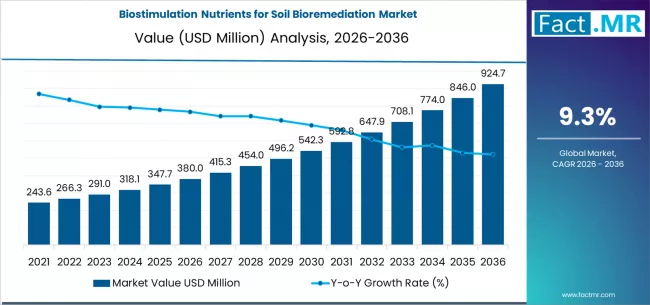
Biostimulation nutrients for soil bioremediation market is projected to grow from USD 380.0 million in 2026 to USD 924.7 million by 2036, at a CAGR of 9.3%. Nitrogen-Based Nutrients will dominate with a 32.0% market share, while hydrocarbon-contaminated soils will lead the application type segment with a 36.0% share.
Biostimulation Nutrients for Soil Bioremediation Market Forecast and Outlook 2026 to 2036
The global market for biostimulation nutrients in soil bioremediation is projected to reach USD 924.67 million by 2036. The market is valued at USD 380.00 million in 2026 and is set to rise at a CAGR of 9.3% during the assessment period.
Key Takeaways from the Biostimulation Nutrients for Soil Bioremediation Market
- Market Value for 2026: USD 380.00 Million
- Market Value for 2036: USD 924.67 Million
- Forecast CAGR (2026-2036): 9.3%
- Leading Nutrient Type Share (2026): Nitrogen-Based Nutrients (32%)
- Leading Application Type Share (2026): Hydrocarbon-Contaminated Soils (36%)
- Leading End-Use Sector Share (2026): Environmental Remediation Firms (34%)
- Key Players in the Market: REGENESIS, EOS Remediation, Carus Corporation, Evonik Industries AG (PeroxyChem), Xylem, Ecolab Inc.
By nutrient type, nitrogen-based additives hold a leading 32% share. The application for hydrocarbon-contaminated soils represents the dominant segment at 36%. Environmental remediation firms constitute the primary end-use sector, accounting for a 34% share.
This growth is driven by the increasing preference for sustainable, cost-effective biological solutions to degrade organic pollutants in situ. Biostimulation accelerates natural microbial degradation by adding essential nutrients that are often limited in contaminated environments, offering an environmentally sound alternative to more intrusive excavation-based methods.
These specialized nutrients are critical for optimizing microbial metabolism and population growth at contaminated sites. Their application transforms contaminated soil into a reactive biological treatment zone, enabling the natural breakdown of pollutants like petroleum, solvents, and pesticides into harmless byproducts.
Biostimulation Nutrients for Soil Bioremediation Market
| Metric | Value |
|---|---|
| Market Value (2026) | USD 380.00 Million |
| Market Forecast Value (2036) | USD 924.67 Million |
| Forecast CAGR (2026-2036) | 9.3% |
Category
| Category | Segments |
|---|---|
| Nutrient Type | Nitrogen-Based Nutrients, Phosphorus-Based Nutrients, NPK Blended Biostimulants, Bio-Based & Enzymatic Nutrient Enhancers, Other Specialty Biostimulation Additives |
| Application Type | Hydrocarbon-Contaminated Soils, Heavy Metal-Contaminated Sites, Agricultural Chemical & Pesticide Polluted Soils, Industrial Chemical & Solvent Contaminated Sites, Mixed & Emerging Contaminants |
| End-Use Sector | Environmental Remediation Firms, Oil, Gas & Petrochemical Sites, Mining & Metallurgy Contaminated Land, Industrial Brownfield Sites, Government & Municipal Projects |
| Region | North America, Latin America, Western Europe, Eastern Europe, East Asia, South Asia & Pacific, MEA |
Segmental Analysis
By Nutrient Type, Which Essential Element is Most Frequently Limiting for Microbial Degradation?
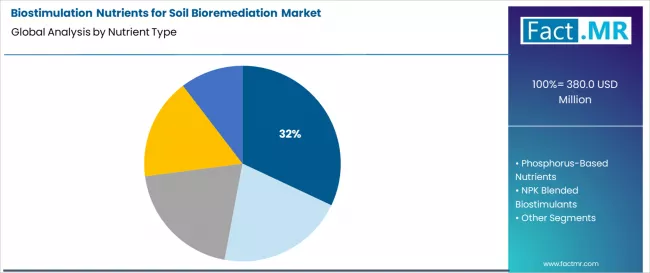
Nitrogen-based nutrients lead the segment with a 32% share. In many contaminated soils, especially those with high carbon loads from hydrocarbons, nitrogen becomes the primary limiting nutrient for microbial growth.
Adding bioavailable nitrogen directly stimulates the population of hydrocarbon-degrading bacteria, significantly accelerating the breakdown of pollutants like gasoline, diesel, and crude oil. Its role as a fundamental building block for microbial cells makes it the most commonly required and applied biostimulation agent.
By Application Type, Which Contamination Scenario is Most Responsive to Nutrient Addition?
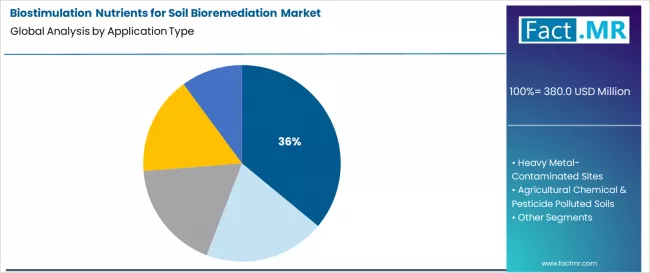
Hydrocarbon-contaminated soils represent the largest application segment at 36%. Petroleum hydrocarbons are biodegradable under aerobic conditions, but the process is often nutrient-limited.
Biostimulation with nitrogen and phosphorus is a proven, highly effective, and lower-cost strategy compared to excavation for managing fuel spills and leaks. The predictable microbial response to nutrients at these sites makes this the most widespread and successful application of biostimulation technology.
By End-Use Sector, Who are the Primary Implementers of Biostimulation Strategies?
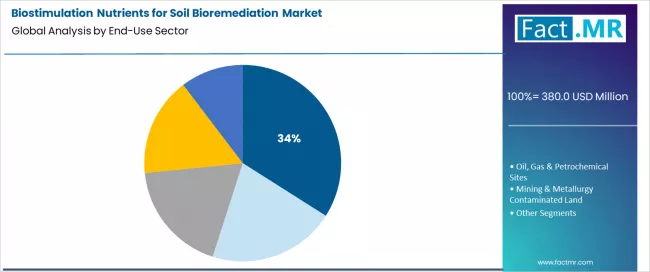
Environmental remediation firms lead the end-use sector with a 34% share. These specialized contractors possess the biological and engineering expertise to design, apply, and monitor biostimulation programs.
They work on behalf of responsible parties, often in the oil & gas, manufacturing, or transportation sectors, to achieve regulatory closure for contaminated sites. Their role as the technical service providers places them at the center of nutrient product selection, formulation, and field application.
What are the Drivers, Restraints, and Key Trends of the Biostimulation Nutrients for Soil Bioremediation Market?
The primary market driver is the strong regulatory and societal push for greener, sustainable remediation technologies that have a lower carbon footprint and environmental disturbance than dig-and-haul methods. Biostimulation aligns perfectly with this trend. The lower overall cost of bioremediation compared to traditional methods for large, shallow contamination also provides a compelling economic driver, especially for managing legacy contamination at industrial and energy sites.
A significant restraint is the technology's dependence on favorable environmental conditions and its primary effectiveness against biodegradable organic compounds. It is less effective for inorganic contaminants like heavy metals or highly recalcitrant compounds. The treatment time can be longer than aggressive chemical methods, requiring extended monitoring periods. Success also hinges on a thorough understanding of site-specific microbiology and geochemistry, necessitating skilled design.
Key trends include the development of slow-release and encapsulated nutrient formulas that provide sustained microbial stimulation and reduce application frequency. There is growing use of combined biostimulation-bioaugmentation approaches where nutrients are added alongside specialized microbial consortia.
The market is moving toward multi-functional amendments that also address pH adjustment or contaminant solubility. Enhanced monitoring techniques, including molecular tools to track microbial community response, are being integrated to optimize nutrient dosing and demonstrate treatment efficacy.
Analysis of the Biostimulation Nutrients for Soil Bioremediation Market by Key Countries
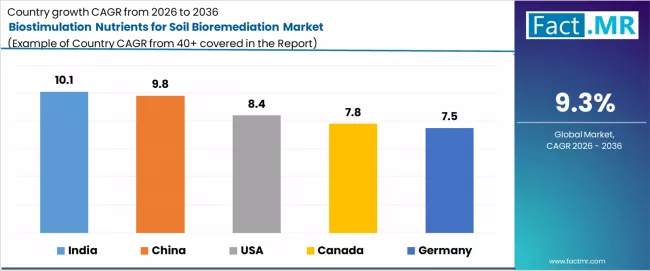
| Country | CAGR (2026-2036) |
|---|---|
| India | 10.10% |
| China | 9.80% |
| USA | 8.40% |
| Canada | 7.80% |
| Germany | 7.50% |
How is India's Focus on Remediating Legacy Industrial and Fuel Contamination Driving Growth?
The massive scale of identified hydrocarbon and pesticide contamination at industrial clusters and fuel depots fuels India’s leading CAGR of 10.10%. National and state pollution control boards are mandating remediation, and the cost-effectiveness of biostimulation makes it a preferred choice for large-scale projects. The growing expertise of domestic environmental firms supports rapid market adoption.
What is the Impact of China's Soil Pollution Action Plan on Biostimulation Adoption?
China's 9.80% growth is driven by its national soil pollution remediation agenda, which prioritizes sustainable technologies. As China addresses widespread contamination from its industrial and agricultural sectors, biostimulation is increasingly deployed for treating organic pollutant plumes. Government-funded demonstration projects and technology guidelines are accelerating its integration into standard remediation practice.
How do Mature Regulatory Frameworks and Site Conditions Shape the US Market?
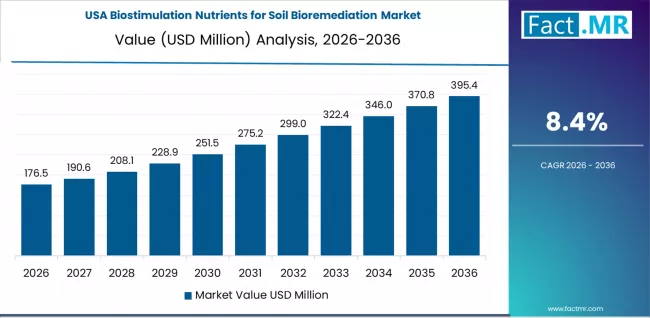
A well-established regulatory environment that recognizes monitored natural attenuation and enhanced bioremediation as approved remedies supports the USA’s 8.40% growth. The extensive network of aging underground storage tanks and brownfield sites provides a consistent stream of projects where biostimulation is applicable, sustained by a sophisticated environmental consulting and service sector.
What Role does Canada's Oil & Gas Sector and Cold Climate Play in Market Development?
Canada's 7.80% growth is anchored in the need to remediate countless hydrocarbon-impacted sites across its energy sector. Biostimulation is a key technology, with specific research and product development focused on enhancing microbial activity in colder climates. Federal and provincial contaminated sites programs provide a structured framework for its use.
Why is Germany a Market for Precision-Engineered Biological Solutions?
Germany's 7.50% CAGR reflects its engineering-centric approach to environmental remediation and strict regulatory standards. German projects often require meticulously designed and monitored biological treatments with predictable outcomes. This drives demand for high-quality, well-characterized nutrient formulations and advanced application techniques for complex site conditions.
Competitive Landscape of the Biostimulation Nutrients for Soil Bioremediation Market
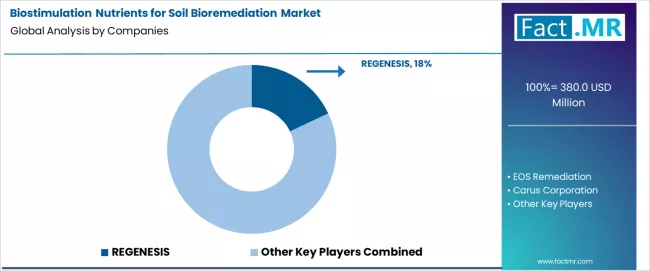
The competitive landscape features specialized bioremediation technology providers and large environmental service companies. Leaders like REGENESIS and EOS Remediation compete through proprietary nutrient formulations, integrated design services, and strong field performance data.
Larger chemical or water technology firms like Evonik and Xylem/Ecolab leverage their broader product portfolios and distribution networks. Competition centers on demonstrating successful site closures through case studies, providing robust technical support for recipe design, and offering products that improve reliability and speed of treatment.
Key Players in the Biostimulation Nutrients for Soil Bioremediation Market
- REGENESIS
- EOS Remediation
- Carus Corporation
- Evonik Industries AG (PeroxyChem)
- Xylem
- Ecolab Inc.
Scope of Report
| Items | Values |
|---|---|
| Quantitative Units | USD Million |
| Nutrient Type | Nitrogen-Based, Phosphorus-Based, NPK Blends, Bio-Based/Enzymatic, Other |
| Application Type | Hydrocarbon Soils, Heavy Metal Sites, Pesticide Soils, Chemical/Solvent Sites, Mixed |
| End-Use Sector | Remediation Firms, Oil & Gas Sites, Mining Land, Industrial Brownfields, Government |
| Key Countries | India, China, USA, Canada, Germany |
| Key Companies | REGENESIS, EOS Remediation, Carus Corporation, Evonik, Xylem/Ecolab |
| Additional Analysis | Analysis of soil chemistry and nutrient demand calculations; compatibility of nutrients with other amendments (oxidants, surfactants); monitoring parameters for biological activity (CO2, O2, microbial assays); regulatory pathways for closure using enhanced bioremediation; long-term fate of added nutrients in the subsurface. |
Market by Segments
-
Nutrient Type :
- Nitrogen-Based Nutrients
- Phosphorus-Based Nutrients
- NPK Blended Biostimulants
- Bio-Based & Enzymatic Nutrient Enhancers
- Other Specialty Biostimulation Additives
-
Application Type :
- Hydrocarbon-Contaminated Soils
- Heavy Metal-Contaminated Sites
- Agricultural Chemical & Pesticide Polluted Soils
- Industrial Chemical & Solvent Contaminated Sites
- Mixed & Emerging Contaminants
-
End-Use Sector :
- Environmental Remediation Firms
- Oil, Gas & Petrochemical Sites
- Mining & Metallurgy Contaminated Land
- Industrial Brownfield Sites
- Government & Municipal Projects
-
Region :
-
North America
- USA
- Canada
-
Latin America
- Brazil
- Mexico
- Argentina
- Rest of Latin America
-
Western Europe
- Germany
- UK
- France
- Spain
- Italy
- BENELUX
- Rest of Western Europe
-
Eastern Europe
- Russia
- Poland
- Czech Republic
- Rest of Eastern Europe
-
East Asia
- China
- Japan
- South Korea
- Rest of East Asia
-
South Asia & Pacific
- India
- ASEAN
- Australia
- Rest of South Asia & Pacific
-
MEA
- Saudi Arabia
- UAE
- Turkiye
- Rest of MEA
-
Table of Content
- Executive Summary
- Global Market Outlook
- Demand to side Trends
- Supply to side Trends
- Technology Roadmap Analysis
- Analysis and Recommendations
- Market Overview
- Market Coverage / Taxonomy
- Market Definition / Scope / Limitations
- Market Background
- Market Dynamics
- Drivers
- Restraints
- Opportunity
- Trends
- Scenario Forecast
- Demand in Optimistic Scenario
- Demand in Likely Scenario
- Demand in Conservative Scenario
- Opportunity Map Analysis
- Product Life Cycle Analysis
- Supply Chain Analysis
- Investment Feasibility Matrix
- Value Chain Analysis
- PESTLE and Porter’s Analysis
- Regulatory Landscape
- Regional Parent Market Outlook
- Production and Consumption Statistics
- Import and Export Statistics
- Market Dynamics
- Global Market Analysis 2021 to 2025 and Forecast, 2026 to 2036
- Historical Market Size Value (USD Million) Analysis, 2021 to 2025
- Current and Future Market Size Value (USD Million) Projections, 2026 to 2036
- Y to o to Y Growth Trend Analysis
- Absolute $ Opportunity Analysis
- Global Market Pricing Analysis 2021 to 2025 and Forecast 2026 to 2036
- Global Market Analysis 2021 to 2025 and Forecast 2026 to 2036, By Nutrient Type
- Introduction / Key Findings
- Historical Market Size Value (USD Million) Analysis By Nutrient Type, 2021 to 2025
- Current and Future Market Size Value (USD Million) Analysis and Forecast By Nutrient Type, 2026 to 2036
- Nitrogen-Based Nutrients
- Phosphorus-Based Nutrients
- NPK Blended Biostimulants
- Bio-Based & Enzymatic Nutrient Enhancers
- Other Specialty Biostimulation Additives
- Nitrogen-Based Nutrients
- Y to o to Y Growth Trend Analysis By Nutrient Type, 2021 to 2025
- Absolute $ Opportunity Analysis By Nutrient Type, 2026 to 2036
- Global Market Analysis 2021 to 2025 and Forecast 2026 to 2036, By Application Type
- Introduction / Key Findings
- Historical Market Size Value (USD Million) Analysis By Application Type, 2021 to 2025
- Current and Future Market Size Value (USD Million) Analysis and Forecast By Application Type, 2026 to 2036
- Hydrocarbon-Contaminated Soils
- Heavy Metal-Contaminated Sites
- Agricultural Chemical & Pesticide Polluted Soils
- Industrial Chemical & Solvent Contaminated Sites
- Mixed & Emerging Contaminants
- Hydrocarbon-Contaminated Soils
- Y to o to Y Growth Trend Analysis By Application Type, 2021 to 2025
- Absolute $ Opportunity Analysis By Application Type, 2026 to 2036
- Global Market Analysis 2021 to 2025 and Forecast 2026 to 2036, By End-Use Sector
- Introduction / Key Findings
- Historical Market Size Value (USD Million) Analysis By End-Use Sector, 2021 to 2025
- Current and Future Market Size Value (USD Million) Analysis and Forecast By End-Use Sector, 2026 to 2036
- Environmental Remediation Firms
- Oil, Gas & Petrochemical Sites
- Mining & Metallurgy Contaminated Land
- Industrial Brownfield Sites
- Government & Municipal Projects
- Environmental Remediation Firms
- Y to o to Y Growth Trend Analysis By End-Use Sector, 2021 to 2025
- Absolute $ Opportunity Analysis By End-Use Sector, 2026 to 2036
- Global Market Analysis 2021 to 2025 and Forecast 2026 to 2036, By Region
- Introduction
- Historical Market Size Value (USD Million) Analysis By Region, 2021 to 2025
- Current Market Size Value (USD Million) Analysis and Forecast By Region, 2026 to 2036
- North America
- Latin America
- Western Europe
- Eastern Europe
- East Asia
- South Asia and Pacific
- Middle East & Africa
- Market Attractiveness Analysis By Region
- North America Market Analysis 2021 to 2025 and Forecast 2026 to 2036, By Country
- Historical Market Size Value (USD Million) Trend Analysis By Market Taxonomy, 2021 to 2025
- Market Size Value (USD Million) Forecast By Market Taxonomy, 2026 to 2036
- By Country
- USA
- Canada
- Mexico
- By Nutrient Type
- By Application Type
- By End-Use Sector
- By Country
- Market Attractiveness Analysis
- By Country
- By Nutrient Type
- By Application Type
- By End-Use Sector
- Key Takeaways
- Latin America Market Analysis 2021 to 2025 and Forecast 2026 to 2036, By Country
- Historical Market Size Value (USD Million) Trend Analysis By Market Taxonomy, 2021 to 2025
- Market Size Value (USD Million) Forecast By Market Taxonomy, 2026 to 2036
- By Country
- Brazil
- Chile
- Rest of Latin America
- By Nutrient Type
- By Application Type
- By End-Use Sector
- By Country
- Market Attractiveness Analysis
- By Country
- By Nutrient Type
- By Application Type
- By End-Use Sector
- Key Takeaways
- Western Europe Market Analysis 2021 to 2025 and Forecast 2026 to 2036, By Country
- Historical Market Size Value (USD Million) Trend Analysis By Market Taxonomy, 2021 to 2025
- Market Size Value (USD Million) Forecast By Market Taxonomy, 2026 to 2036
- By Country
- Germany
- UK
- Italy
- Spain
- France
- Nordic
- BENELUX
- Rest of Western Europe
- By Nutrient Type
- By Application Type
- By End-Use Sector
- By Country
- Market Attractiveness Analysis
- By Country
- By Nutrient Type
- By Application Type
- By End-Use Sector
- Key Takeaways
- Eastern Europe Market Analysis 2021 to 2025 and Forecast 2026 to 2036, By Country
- Historical Market Size Value (USD Million) Trend Analysis By Market Taxonomy, 2021 to 2025
- Market Size Value (USD Million) Forecast By Market Taxonomy, 2026 to 2036
- By Country
- Russia
- Poland
- Hungary
- Balkan & Baltic
- Rest of Eastern Europe
- By Nutrient Type
- By Application Type
- By End-Use Sector
- By Country
- Market Attractiveness Analysis
- By Country
- By Nutrient Type
- By Application Type
- By End-Use Sector
- Key Takeaways
- East Asia Market Analysis 2021 to 2025 and Forecast 2026 to 2036, By Country
- Historical Market Size Value (USD Million) Trend Analysis By Market Taxonomy, 2021 to 2025
- Market Size Value (USD Million) Forecast By Market Taxonomy, 2026 to 2036
- By Country
- China
- Japan
- South Korea
- By Nutrient Type
- By Application Type
- By End-Use Sector
- By Country
- Market Attractiveness Analysis
- By Country
- By Nutrient Type
- By Application Type
- By End-Use Sector
- Key Takeaways
- South Asia and Pacific Market Analysis 2021 to 2025 and Forecast 2026 to 2036, By Country
- Historical Market Size Value (USD Million) Trend Analysis By Market Taxonomy, 2021 to 2025
- Market Size Value (USD Million) Forecast By Market Taxonomy, 2026 to 2036
- By Country
- India
- ASEAN
- Australia & New Zealand
- Rest of South Asia and Pacific
- By Nutrient Type
- By Application Type
- By End-Use Sector
- By Country
- Market Attractiveness Analysis
- By Country
- By Nutrient Type
- By Application Type
- By End-Use Sector
- Key Takeaways
- Middle East & Africa Market Analysis 2021 to 2025 and Forecast 2026 to 2036, By Country
- Historical Market Size Value (USD Million) Trend Analysis By Market Taxonomy, 2021 to 2025
- Market Size Value (USD Million) Forecast By Market Taxonomy, 2026 to 2036
- By Country
- Kingdom of Saudi Arabia
- Other GCC Countries
- Turkiye
- South Africa
- Other African Union
- Rest of Middle East & Africa
- By Nutrient Type
- By Application Type
- By End-Use Sector
- By Country
- Market Attractiveness Analysis
- By Country
- By Nutrient Type
- By Application Type
- By End-Use Sector
- Key Takeaways
- Key Countries Market Analysis
- USA
- Pricing Analysis
- Market Share Analysis, 2025
- By Nutrient Type
- By Application Type
- By End-Use Sector
- Canada
- Pricing Analysis
- Market Share Analysis, 2025
- By Nutrient Type
- By Application Type
- By End-Use Sector
- Mexico
- Pricing Analysis
- Market Share Analysis, 2025
- By Nutrient Type
- By Application Type
- By End-Use Sector
- Brazil
- Pricing Analysis
- Market Share Analysis, 2025
- By Nutrient Type
- By Application Type
- By End-Use Sector
- Chile
- Pricing Analysis
- Market Share Analysis, 2025
- By Nutrient Type
- By Application Type
- By End-Use Sector
- Germany
- Pricing Analysis
- Market Share Analysis, 2025
- By Nutrient Type
- By Application Type
- By End-Use Sector
- UK
- Pricing Analysis
- Market Share Analysis, 2025
- By Nutrient Type
- By Application Type
- By End-Use Sector
- Italy
- Pricing Analysis
- Market Share Analysis, 2025
- By Nutrient Type
- By Application Type
- By End-Use Sector
- Spain
- Pricing Analysis
- Market Share Analysis, 2025
- By Nutrient Type
- By Application Type
- By End-Use Sector
- France
- Pricing Analysis
- Market Share Analysis, 2025
- By Nutrient Type
- By Application Type
- By End-Use Sector
- India
- Pricing Analysis
- Market Share Analysis, 2025
- By Nutrient Type
- By Application Type
- By End-Use Sector
- ASEAN
- Pricing Analysis
- Market Share Analysis, 2025
- By Nutrient Type
- By Application Type
- By End-Use Sector
- Australia & New Zealand
- Pricing Analysis
- Market Share Analysis, 2025
- By Nutrient Type
- By Application Type
- By End-Use Sector
- China
- Pricing Analysis
- Market Share Analysis, 2025
- By Nutrient Type
- By Application Type
- By End-Use Sector
- Japan
- Pricing Analysis
- Market Share Analysis, 2025
- By Nutrient Type
- By Application Type
- By End-Use Sector
- South Korea
- Pricing Analysis
- Market Share Analysis, 2025
- By Nutrient Type
- By Application Type
- By End-Use Sector
- Russia
- Pricing Analysis
- Market Share Analysis, 2025
- By Nutrient Type
- By Application Type
- By End-Use Sector
- Poland
- Pricing Analysis
- Market Share Analysis, 2025
- By Nutrient Type
- By Application Type
- By End-Use Sector
- Hungary
- Pricing Analysis
- Market Share Analysis, 2025
- By Nutrient Type
- By Application Type
- By End-Use Sector
- Kingdom of Saudi Arabia
- Pricing Analysis
- Market Share Analysis, 2025
- By Nutrient Type
- By Application Type
- By End-Use Sector
- Turkiye
- Pricing Analysis
- Market Share Analysis, 2025
- By Nutrient Type
- By Application Type
- By End-Use Sector
- South Africa
- Pricing Analysis
- Market Share Analysis, 2025
- By Nutrient Type
- By Application Type
- By End-Use Sector
- USA
- Market Structure Analysis
- Competition Dashboard
- Competition Benchmarking
- Market Share Analysis of Top Players
- By Regional
- By Nutrient Type
- By Application Type
- By End-Use Sector
- Competition Analysis
- Competition Deep Dive
- REGENESIS
- Overview
- Product Portfolio
- Profitability by Market Segments (Product/Age /Sales Channel/Region)
- Sales Footprint
- Strategy Overview
- Marketing Strategy
- Product Strategy
- Channel Strategy
- EOS Remediation
- Carus Corporation
- Evonik Industries AG (PeroxyChem)
- Xylem / Ecolab Inc.
- REGENESIS
- Competition Deep Dive
- Assumptions & Acronyms Used
- Research Methodology
List Of Table
- Table 1: Global Market Value (USD Million) Forecast by Region, 2021 to 2036
- Table 2: Global Market Value (USD Million) Forecast by Nutrient Type, 2021 to 2036
- Table 3: Global Market Value (USD Million) Forecast by Application Type, 2021 to 2036
- Table 4: Global Market Value (USD Million) Forecast by End-Use Sector, 2021 to 2036
- Table 5: North America Market Value (USD Million) Forecast by Country, 2021 to 2036
- Table 6: North America Market Value (USD Million) Forecast by Nutrient Type, 2021 to 2036
- Table 7: North America Market Value (USD Million) Forecast by Application Type, 2021 to 2036
- Table 8: North America Market Value (USD Million) Forecast by End-Use Sector, 2021 to 2036
- Table 9: Latin America Market Value (USD Million) Forecast by Country, 2021 to 2036
- Table 10: Latin America Market Value (USD Million) Forecast by Nutrient Type, 2021 to 2036
- Table 11: Latin America Market Value (USD Million) Forecast by Application Type, 2021 to 2036
- Table 12: Latin America Market Value (USD Million) Forecast by End-Use Sector, 2021 to 2036
- Table 13: Western Europe Market Value (USD Million) Forecast by Country, 2021 to 2036
- Table 14: Western Europe Market Value (USD Million) Forecast by Nutrient Type, 2021 to 2036
- Table 15: Western Europe Market Value (USD Million) Forecast by Application Type, 2021 to 2036
- Table 16: Western Europe Market Value (USD Million) Forecast by End-Use Sector, 2021 to 2036
- Table 17: Eastern Europe Market Value (USD Million) Forecast by Country, 2021 to 2036
- Table 18: Eastern Europe Market Value (USD Million) Forecast by Nutrient Type, 2021 to 2036
- Table 19: Eastern Europe Market Value (USD Million) Forecast by Application Type, 2021 to 2036
- Table 20: Eastern Europe Market Value (USD Million) Forecast by End-Use Sector, 2021 to 2036
- Table 21: East Asia Market Value (USD Million) Forecast by Country, 2021 to 2036
- Table 22: East Asia Market Value (USD Million) Forecast by Nutrient Type, 2021 to 2036
- Table 23: East Asia Market Value (USD Million) Forecast by Application Type, 2021 to 2036
- Table 24: East Asia Market Value (USD Million) Forecast by End-Use Sector, 2021 to 2036
- Table 25: South Asia and Pacific Market Value (USD Million) Forecast by Country, 2021 to 2036
- Table 26: South Asia and Pacific Market Value (USD Million) Forecast by Nutrient Type, 2021 to 2036
- Table 27: South Asia and Pacific Market Value (USD Million) Forecast by Application Type, 2021 to 2036
- Table 28: South Asia and Pacific Market Value (USD Million) Forecast by End-Use Sector, 2021 to 2036
- Table 29: Middle East & Africa Market Value (USD Million) Forecast by Country, 2021 to 2036
- Table 30: Middle East & Africa Market Value (USD Million) Forecast by Nutrient Type, 2021 to 2036
- Table 31: Middle East & Africa Market Value (USD Million) Forecast by Application Type, 2021 to 2036
- Table 32: Middle East & Africa Market Value (USD Million) Forecast by End-Use Sector, 2021 to 2036
List Of Figures
- Figure 1: Global Market Pricing Analysis
- Figure 2: Global Market Value (USD Million) Forecast 2021 to 2036
- Figure 3: Global Market Value Share and BPS Analysis by Nutrient Type, 2026 and 2036
- Figure 4: Global Market Y to o to Y Growth Comparison by Nutrient Type, 2026 to 2036
- Figure 5: Global Market Attractiveness Analysis by Nutrient Type
- Figure 6: Global Market Value Share and BPS Analysis by Application Type, 2026 and 2036
- Figure 7: Global Market Y to o to Y Growth Comparison by Application Type, 2026 to 2036
- Figure 8: Global Market Attractiveness Analysis by Application Type
- Figure 9: Global Market Value Share and BPS Analysis by End-Use Sector, 2026 and 2036
- Figure 10: Global Market Y to o to Y Growth Comparison by End-Use Sector, 2026 to 2036
- Figure 11: Global Market Attractiveness Analysis by End-Use Sector
- Figure 12: Global Market Value (USD Million) Share and BPS Analysis by Region, 2026 and 2036
- Figure 13: Global Market Y to o to Y Growth Comparison by Region, 2026 to 2036
- Figure 14: Global Market Attractiveness Analysis by Region
- Figure 15: North America Market Incremental Dollar Opportunity, 2026 to 2036
- Figure 16: Latin America Market Incremental Dollar Opportunity, 2026 to 2036
- Figure 17: Western Europe Market Incremental Dollar Opportunity, 2026 to 2036
- Figure 18: Eastern Europe Market Incremental Dollar Opportunity, 2026 to 2036
- Figure 19: East Asia Market Incremental Dollar Opportunity, 2026 to 2036
- Figure 20: South Asia and Pacific Market Incremental Dollar Opportunity, 2026 to 2036
- Figure 21: Middle East & Africa Market Incremental Dollar Opportunity, 2026 to 2036
- Figure 22: North America Market Value Share and BPS Analysis by Country, 2026 and 2036
- Figure 23: North America Market Value Share and BPS Analysis by Nutrient Type, 2026 and 2036
- Figure 24: North America Market Y to o to Y Growth Comparison by Nutrient Type, 2026 to 2036
- Figure 25: North America Market Attractiveness Analysis by Nutrient Type
- Figure 26: North America Market Value Share and BPS Analysis by Application Type, 2026 and 2036
- Figure 27: North America Market Y to o to Y Growth Comparison by Application Type, 2026 to 2036
- Figure 28: North America Market Attractiveness Analysis by Application Type
- Figure 29: North America Market Value Share and BPS Analysis by End-Use Sector, 2026 and 2036
- Figure 30: North America Market Y to o to Y Growth Comparison by End-Use Sector, 2026 to 2036
- Figure 31: North America Market Attractiveness Analysis by End-Use Sector
- Figure 32: Latin America Market Value Share and BPS Analysis by Country, 2026 and 2036
- Figure 33: Latin America Market Value Share and BPS Analysis by Nutrient Type, 2026 and 2036
- Figure 34: Latin America Market Y to o to Y Growth Comparison by Nutrient Type, 2026 to 2036
- Figure 35: Latin America Market Attractiveness Analysis by Nutrient Type
- Figure 36: Latin America Market Value Share and BPS Analysis by Application Type, 2026 and 2036
- Figure 37: Latin America Market Y to o to Y Growth Comparison by Application Type, 2026 to 2036
- Figure 38: Latin America Market Attractiveness Analysis by Application Type
- Figure 39: Latin America Market Value Share and BPS Analysis by End-Use Sector, 2026 and 2036
- Figure 40: Latin America Market Y to o to Y Growth Comparison by End-Use Sector, 2026 to 2036
- Figure 41: Latin America Market Attractiveness Analysis by End-Use Sector
- Figure 42: Western Europe Market Value Share and BPS Analysis by Country, 2026 and 2036
- Figure 43: Western Europe Market Value Share and BPS Analysis by Nutrient Type, 2026 and 2036
- Figure 44: Western Europe Market Y to o to Y Growth Comparison by Nutrient Type, 2026 to 2036
- Figure 45: Western Europe Market Attractiveness Analysis by Nutrient Type
- Figure 46: Western Europe Market Value Share and BPS Analysis by Application Type, 2026 and 2036
- Figure 47: Western Europe Market Y to o to Y Growth Comparison by Application Type, 2026 to 2036
- Figure 48: Western Europe Market Attractiveness Analysis by Application Type
- Figure 49: Western Europe Market Value Share and BPS Analysis by End-Use Sector, 2026 and 2036
- Figure 50: Western Europe Market Y to o to Y Growth Comparison by End-Use Sector, 2026 to 2036
- Figure 51: Western Europe Market Attractiveness Analysis by End-Use Sector
- Figure 52: Eastern Europe Market Value Share and BPS Analysis by Country, 2026 and 2036
- Figure 53: Eastern Europe Market Value Share and BPS Analysis by Nutrient Type, 2026 and 2036
- Figure 54: Eastern Europe Market Y to o to Y Growth Comparison by Nutrient Type, 2026 to 2036
- Figure 55: Eastern Europe Market Attractiveness Analysis by Nutrient Type
- Figure 56: Eastern Europe Market Value Share and BPS Analysis by Application Type, 2026 and 2036
- Figure 57: Eastern Europe Market Y to o to Y Growth Comparison by Application Type, 2026 to 2036
- Figure 58: Eastern Europe Market Attractiveness Analysis by Application Type
- Figure 59: Eastern Europe Market Value Share and BPS Analysis by End-Use Sector, 2026 and 2036
- Figure 60: Eastern Europe Market Y to o to Y Growth Comparison by End-Use Sector, 2026 to 2036
- Figure 61: Eastern Europe Market Attractiveness Analysis by End-Use Sector
- Figure 62: East Asia Market Value Share and BPS Analysis by Country, 2026 and 2036
- Figure 63: East Asia Market Value Share and BPS Analysis by Nutrient Type, 2026 and 2036
- Figure 64: East Asia Market Y to o to Y Growth Comparison by Nutrient Type, 2026 to 2036
- Figure 65: East Asia Market Attractiveness Analysis by Nutrient Type
- Figure 66: East Asia Market Value Share and BPS Analysis by Application Type, 2026 and 2036
- Figure 67: East Asia Market Y to o to Y Growth Comparison by Application Type, 2026 to 2036
- Figure 68: East Asia Market Attractiveness Analysis by Application Type
- Figure 69: East Asia Market Value Share and BPS Analysis by End-Use Sector, 2026 and 2036
- Figure 70: East Asia Market Y to o to Y Growth Comparison by End-Use Sector, 2026 to 2036
- Figure 71: East Asia Market Attractiveness Analysis by End-Use Sector
- Figure 72: South Asia and Pacific Market Value Share and BPS Analysis by Country, 2026 and 2036
- Figure 73: South Asia and Pacific Market Value Share and BPS Analysis by Nutrient Type, 2026 and 2036
- Figure 74: South Asia and Pacific Market Y to o to Y Growth Comparison by Nutrient Type, 2026 to 2036
- Figure 75: South Asia and Pacific Market Attractiveness Analysis by Nutrient Type
- Figure 76: South Asia and Pacific Market Value Share and BPS Analysis by Application Type, 2026 and 2036
- Figure 77: South Asia and Pacific Market Y to o to Y Growth Comparison by Application Type, 2026 to 2036
- Figure 78: South Asia and Pacific Market Attractiveness Analysis by Application Type
- Figure 79: South Asia and Pacific Market Value Share and BPS Analysis by End-Use Sector, 2026 and 2036
- Figure 80: South Asia and Pacific Market Y to o to Y Growth Comparison by End-Use Sector, 2026 to 2036
- Figure 81: South Asia and Pacific Market Attractiveness Analysis by End-Use Sector
- Figure 82: Middle East & Africa Market Value Share and BPS Analysis by Country, 2026 and 2036
- Figure 83: Middle East & Africa Market Value Share and BPS Analysis by Nutrient Type, 2026 and 2036
- Figure 84: Middle East & Africa Market Y to o to Y Growth Comparison by Nutrient Type, 2026 to 2036
- Figure 85: Middle East & Africa Market Attractiveness Analysis by Nutrient Type
- Figure 86: Middle East & Africa Market Value Share and BPS Analysis by Application Type, 2026 and 2036
- Figure 87: Middle East & Africa Market Y to o to Y Growth Comparison by Application Type, 2026 to 2036
- Figure 88: Middle East & Africa Market Attractiveness Analysis by Application Type
- Figure 89: Middle East & Africa Market Value Share and BPS Analysis by End-Use Sector, 2026 and 2036
- Figure 90: Middle East & Africa Market Y to o to Y Growth Comparison by End-Use Sector, 2026 to 2036
- Figure 91: Middle East & Africa Market Attractiveness Analysis by End-Use Sector
- Figure 92: Global Market - Tier Structure Analysis
- Figure 93: Global Market - Company Share Analysis
- FAQs -
How big is the biostimulation nutrients for soil bioremediation market in 2026?
The global biostimulation nutrients for soil bioremediation market is estimated to be valued at USD 380.0 million in 2026.
What will be the size of biostimulation nutrients for soil bioremediation market in 2036?
The market size for the biostimulation nutrients for soil bioremediation market is projected to reach USD 924.7 million by 2036.
How much will be the biostimulation nutrients for soil bioremediation market growth between 2026 and 2036?
The biostimulation nutrients for soil bioremediation market is expected to grow at a 9.3% CAGR between 2026 and 2036.
What are the key product types in the biostimulation nutrients for soil bioremediation market?
The key product types in biostimulation nutrients for soil bioremediation market are nitrogen-based nutrients, phosphorus-based nutrients, npk blended biostimulants, bio-based & enzymatic nutrient enhancers and other specialty biostimulation additives.
Which application type segment to contribute significant share in the biostimulation nutrients for soil bioremediation market in 2026?
In terms of application type, hydrocarbon-contaminated soils segment to command 36.0% share in the biostimulation nutrients for soil bioremediation market in 2026.