Compaction-Zone Targeted Soil Biocide Chemistry Market
Compaction-Zone Targeted Soil Biocide Chemistry Market Size and Share Forecast Outlook 2026 to 2036
Compaction-zone targeted soil biocide chemistry market is projected to grow from USD 0.3 billion in 2026 to USD 1.3 billion by 2036, at a CAGR of 14.8%. Targeted Fumigant-Release Chemistries will dominate with a 33.0% market share, while soil-borne fungal pathogens will lead the target soil threat segment with a 36.0% share.
Compaction-Zone Targeted Soil Biocide Chemistry Market Forecast and Outlook 2026 to 2036
The global compaction-zone targeted soil biocide chemistry market is projected to reach USD 1.26 billion by 2036. The market is valued at USD 0.32 billion in 2026 and is set to rise at a CAGR of 14.8% during the assessment period. By biocide chemistry type, targeted fumigant-release chemistries hold a leading 33% share. The target soil threat segment for soil-borne fungal pathogens represents a dominant 36% share, while subsurface injection application accounts for 42% market share.
Key Takeaways from the Compaction-Zone Targeted Soil Biocide Chemistry Market
- Market Value for 2026: USD 0.32 Billion
- Market Value for 2036: USD 1.26 Billion
- Forecast CAGR (2026-2036): 14.8%
- Leading Biocide Chemistry Type Share (2026): Targeted Fumigant-Release Chemistries (33%)
- Leading Target Soil Threat Share (2026): Soil-Borne Fungal Pathogens (36%)
- Leading Application Technique Share (2026): Subsurface Injection (42%)
- Key Players in the Market: Certis Europe, Sharda Cropchem, Arysta LifeScience (Regional Programs), Helm AG (Agrochemicals), AMVAC Chemical Corporation
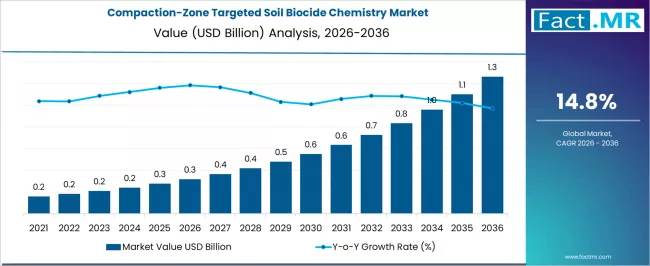
A pivotal trend is the strategic shift from broad-area soil treatment to precision delivery of biocidal actives directly into compacted soil layers where anaerobic pathogens thrive. Chemistry innovation focuses on controlled-release mechanisms and micro-encapsulation to maintain efficacy in high-clay, low-oxygen environments. Integration of these chemistries with subsoiling and deep-tillage equipment is advancing to simultaneously address physical and biological soil constraints.
Evolving regulatory standards for soil and water protection are shaping the market. Policies that restrict broad-spectrum soil fumigants in favor of targeted, lower-volume applications create a regulatory pathway for these precision chemistries. Guidelines promoting integrated soil health management also support solutions that address specific biological constraints in compacted zones without degrading overall soil biology.
Compaction-Zone Targeted Soil Biocide Chemistry Market
| Metric | Value |
|---|---|
| Market Value (2026) | USD 0.32 Billion |
| Market Forecast Value (2036) | USD 1.26 Billion |
| Forecast CAGR (2026-2036) | 14.8% |
Category
| Category | Segments |
|---|---|
| Biocide Chemistry Type | Targeted Fumigant-Release Chemistries, Micro-Encapsulated Soil Biocides, Bio-Derived Antimicrobial Compounds, Metal-Ion Chelated Biocidal Systems, Others |
| Target Soil Threat | Soil-Borne Fungal Pathogens, Root-Zone Bacterial Complexes, Nematodes & Microfauna, Anaerobic Decay Organisms, Others |
| Application Technique | Subsurface Injection (Compaction Zone), Deep-Band Placement, Precision Strip-Till Integration, Controlled Soil Drench, Others |
| Region | North America, Latin America, Western Europe, Eastern Europe, East Asia, South Asia & Pacific, MEA |
Segmental Analysis
By Biocide Chemistry, Which System Ensures Precise Placement and Efficacy?

Targeted fumigant-release chemistries lead the segment with a 33% share. This dominance is due to their ability to deliver a potent gaseous or liquid active ingredient directly into the compacted zone, where it can diffuse through soil pores to eradicate pathogens. Advanced formulations control release kinetics to maximize exposure time in the target layer while minimizing upward escape and non-target impact, making them a highly effective solution for a deeply entrenched problem.
By Target Soil Threat, Which Pathogen Group Prospers in Compacted Conditions?
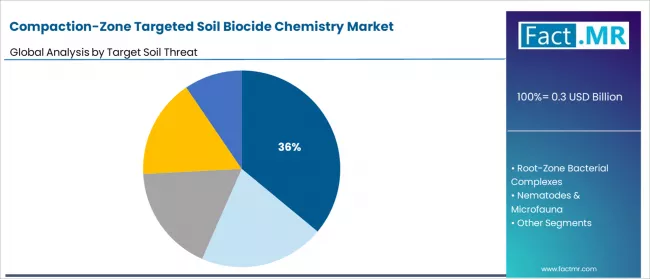
Soil-borne fungal pathogens represent the primary target, holding a 36% share. Fungi like Fusarium, Pythium, and Rhizoctonia thrive in the anaerobic, low-porosity environment of compacted soil layers. They cause devastating root rots and damping-off diseases. Targeting these pathogens directly in their preferred habitat with zone-specific biocides disrupts their life cycle at the source, protecting crop root systems more effectively than surface applications.
By Application Technique, Which Method Achieves Direct Delivery to the Problem Zone?
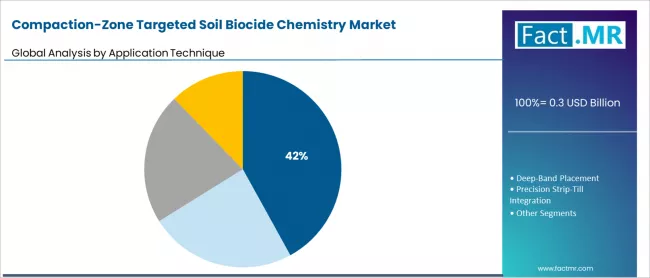
Subsurface injection into the compaction zone commands the largest share at 42%. This technique uses specialized shanks or probes to place the biocide chemistry 15 to 40 centimeters deep, directly into the dense, pathogen-rich layer. This method ensures the active ingredient is deposited exactly where it is needed, overcoming the limited downward mobility of many soil-applied chemicals and providing superior contact with the target organisms.
What are the Drivers, Restraints, and Key Trends of the Compaction-Zone Targeted Soil Biocide Chemistry Market?
Market growth is driven by the increasing recognition of soil compaction as a primary yield-limiting factor that also exacerbates disease pressure. The rising prevalence of no-till and heavy machinery use has intensified subsoil compaction issues. The high value of specialty and row crops justifies investment in targeted solutions that rescue yield potential from compacted fields. Regulatory phase-outs of broad-area soil fumigants are redirecting demand toward precision alternatives.
A significant restraint is the high cost and operational complexity of deep-placement application equipment, which can limit access for smaller growers. The performance of biocides can be highly dependent on accurate diagnosis of the specific biological threat within the compaction zone. Variable soil moisture and organic matter content at depth can influence chemical behavior, requiring careful calibration and management.
Key trends include the coupling of biocide application with physical subsoiling in a single pass. Development of combined chemical and biological packages introduces beneficial microbes into treated zones post-fumigation. Sensor-based mapping of soil density and organic matter is being used to create variable-rate application maps for biocides, optimizing input use.
Analysis of the Compaction-Zone Targeted Soil Biocide Chemistry Market by Key Countries
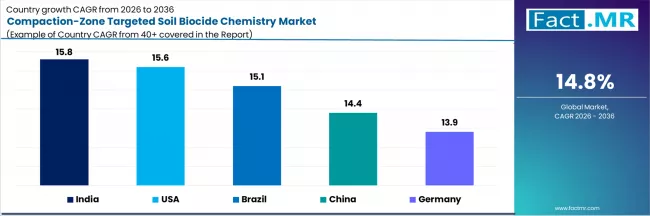
| Country | CAGR (2026-2036) |
|---|---|
| USA | 15.60% |
| India | 15.80% |
| Brazil | 15.10% |
| China | 14.40% |
| Germany | 13.90% |
How does the USA's High-Intensity Row Crop Systems Drive Demand?
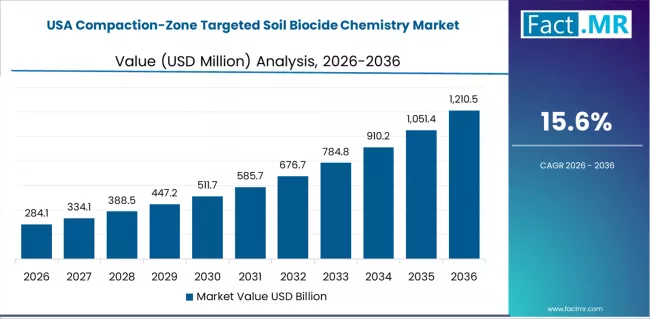
The USA exhibits a 15.60% CAGR, driven by the widespread issue of compaction in continuous corn and soybean rotations under heavy equipment traffic. American growers face significant yield plateaus linked to subsoil constraints and associated root diseases. The availability of custom applicators with deep-injection technology and the economic imperative to maximize yield on every acre fuel adoption of targeted biocides as a corrective measure.
Why does India's Intensive Irrigation and Tillage Create a Critical Need?
India leads with a 15.80% CAGR, stemming from severe soil hardening and compaction in its irrigated rice-wheat and vegetable systems. Repeated puddling, plowing, and declining organic matter have created impermeable layers. Soil-borne wilt and root rot diseases are rampant. The small-scale but high-value nature of Indian horticulture makes targeted, curative biocide treatments an economically viable solution for rescuing productivity in degraded soils.
What Role does Brazil's Heavy Clay Soils and Machinery Use Play?
Brazil's 15.10% growth is fueled by the challenge of managing soil-borne diseases in its expansive, heavy clay latossolos under intense mechanization. Compaction layers are common. Brazilian farmers increasingly view zone-targeted biocides as a necessary component of an integrated soil management program, used in conjunction with cover crops to break physical and biological constraints in high-value soybean and cotton fields.
How is China's Push for Land Productivity Shaping Market Development?
China's 14.40% growth aligns with the national goal to maximize output from limited arable land. Soil sickness and replant disease in intensive greenhouse and orchard systems are major obstacles. Chinese agricultural extension is promoting deep placement of soil amendments and biocides to revitalize compacted, pathogen-loaded soils. Domestic production of encapsulation technologies supports the development of products tailored to local conditions.
What Factors Underpin Germany's Precision-Focused Adoption?
Germany's 13.90% growth, while more modest, reflects a precision-based approach to soil management. German farmers and sugar beet cooperatives, facing strict environmental regulations, adopt targeted subsurface biocides to manage specific nematode and fungal threats in compacted zones. This allows them to maintain crop health with minimal chemical load, aligning with integrated crop management principles and cross-compliance standards.
Competitive Landscape of the Compaction-Zone Targeted Soil Biocide Chemistry Market
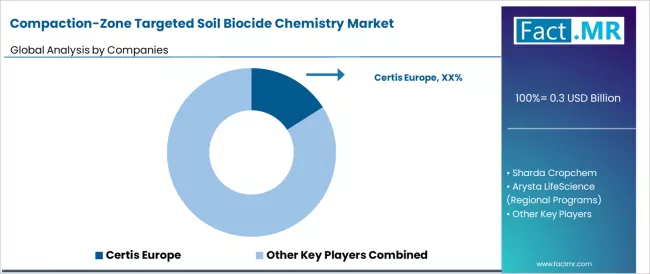
The market is served by a mix of multinational agrochemical firms and regional specialists with expertise in soil chemistry and application. Companies like Certis Europe and Arysta LifeScience compete through portfolios of bio-derived and conventional chemistries tailored for soil application, supported by technical guidance on integration with soil management practices.
Firms such as Sharda Cropchem, Helm AG, and AMVAC Chemical Corporation compete through formulation expertise and strong distribution networks in key agricultural regions. They often focus on specific chemistries like encapsulated fumigants or chelated systems. Competition centers on providing proven efficacy data for challenging soil-borne threats, developing application protocols compatible with existing tillage equipment, and navigating the complex regulatory landscape for soil-applied pesticides.
Key Players in the Compaction-Zone Targeted Soil Biocide Chemistry Market
- Certis Europe
- Sharda Cropchem
- Arysta LifeScience (Regional Programs)
- Helm AG (Agrochemicals)
- AMVAC Chemical Corporation
Scope of Report
| Items | Values |
|---|---|
| Quantitative Units | USD Billion |
| Biocide Chemistry Type | Targeted Fumigant-Release Chemistries, Micro-Encapsulated Soil Biocides, Bio-Derived Antimicrobial Compounds, Metal-Ion Chelated Biocidal Systems, Others |
| Target Soil Threat | Soil-Borne Fungal Pathogens, Root-Zone Bacterial Complexes, Nematodes & Microfauna, Anaerobic Decay Organisms, Others |
| Application Technique | Subsurface Injection (Compaction Zone), Deep-Band Placement, Precision Strip-Till Integration, Controlled Soil Drench, Others |
| Key Countries | USA, India, Brazil, China, Germany |
| Key Companies | Certis Europe, Sharda Cropchem, Arysta LifeScience (Regional Programs), Helm AG (Agrochemicals), AMVAC Chemical Corporation |
| Additional Analysis | Analysis of soil permeability and chemical mobility, pathogen diagnostics for compaction zones, application equipment efficacy and calibration, and long-term soil microbial community impact studies. |
Compaction-Zone Targeted Soil Biocide Chemistry Market by Segments
-
Biocide Chemistry Type :
- Targeted Fumigant-Release Chemistries
- Micro-Encapsulated Soil Biocides
- Bio-Derived Antimicrobial Compounds
- Metal-Ion Chelated Biocidal Systems
- Others
-
Target Soil Threat :
- Soil-Borne Fungal Pathogens
- Root-Zone Bacterial Complexes
- Nematodes & Microfauna
- Anaerobic Decay Organisms
- Others
-
Application Technique :
- Subsurface Injection (Compaction Zone)
- Deep-Band Placement
- Precision Strip-Till Integration
- Controlled Soil Drench
- Others
-
Region :
-
North America
- USA
- Canada
-
Latin America
- Brazil
- Mexico
- Argentina
- Rest of Latin America
-
Western Europe
- Germany
- UK
- France
- Spain
- Italy
- BENELUX
- Rest of Western Europe
-
Eastern Europe
- Czech Republic
- Poland
- Russia
- Rest of Eastern Europe
-
East Asia
- China
- Japan
- South Korea
- Rest of East Asia
-
South Asia & Pacific
- India
- Indonesia
- Australia
- Rest of South Asia & Pacific
-
MEA
- GCC Countries
- Turkiye
- Saudi Arabia
- Rest of MEA
-
Table of Content
- Executive Summary
- Global Market Outlook
- Demand to side Trends
- Supply to side Trends
- Technology Roadmap Analysis
- Analysis and Recommendations
- Market Overview
- Market Coverage / Taxonomy
- Market Definition / Scope / Limitations
- Market Background
- Market Dynamics
- Drivers
- Restraints
- Opportunity
- Trends
- Scenario Forecast
- Demand in Optimistic Scenario
- Demand in Likely Scenario
- Demand in Conservative Scenario
- Opportunity Map Analysis
- Product Life Cycle Analysis
- Supply Chain Analysis
- Investment Feasibility Matrix
- Value Chain Analysis
- PESTLE and Porter’s Analysis
- Regulatory Landscape
- Regional Parent Market Outlook
- Production and Consumption Statistics
- Import and Export Statistics
- Market Dynamics
- Global Market Analysis 2021 to 2025 and Forecast, 2026 to 2036
- Historical Market Size Value (USD Million) Analysis, 2021 to 2025
- Current and Future Market Size Value (USD Million) Projections, 2026 to 2036
- Y to o to Y Growth Trend Analysis
- Absolute $ Opportunity Analysis
- Global Market Pricing Analysis 2021 to 2025 and Forecast 2026 to 2036
- Global Market Analysis 2021 to 2025 and Forecast 2026 to 2036, By Biocide Chemistry Type
- Introduction / Key Findings
- Historical Market Size Value (USD Million) Analysis By Biocide Chemistry Type, 2021 to 2025
- Current and Future Market Size Value (USD Million) Analysis and Forecast By Biocide Chemistry Type, 2026 to 2036
- Targeted Fumigant-Release Chemistries
- Micro-Encapsulated Soil Biocides
- Bio-Derived Antimicrobial Compounds
- Metal-Ion Chelated Biocidal Systems
- Others
- Targeted Fumigant-Release Chemistries
- Y to o to Y Growth Trend Analysis By Biocide Chemistry Type, 2021 to 2025
- Absolute $ Opportunity Analysis By Biocide Chemistry Type, 2026 to 2036
- Global Market Analysis 2021 to 2025 and Forecast 2026 to 2036, By Target Soil Threat
- Introduction / Key Findings
- Historical Market Size Value (USD Million) Analysis By Target Soil Threat, 2021 to 2025
- Current and Future Market Size Value (USD Million) Analysis and Forecast By Target Soil Threat, 2026 to 2036
- Soil-Borne Fungal Pathogens
- Root-Zone Bacterial Complexes
- Nematodes & Microfauna
- Anaerobic Decay Organisms
- Others
- Soil-Borne Fungal Pathogens
- Y to o to Y Growth Trend Analysis By Target Soil Threat, 2021 to 2025
- Absolute $ Opportunity Analysis By Target Soil Threat, 2026 to 2036
- Global Market Analysis 2021 to 2025 and Forecast 2026 to 2036, By Application Technique
- Introduction / Key Findings
- Historical Market Size Value (USD Million) Analysis By Application Technique, 2021 to 2025
- Current and Future Market Size Value (USD Million) Analysis and Forecast By Application Technique, 2026 to 2036
- Subsurface Injection (Compaction Zone)
- Deep-Band Placement
- Precision Strip-Till Integration
- Controlled Soil Drench
- Subsurface Injection (Compaction Zone)
- Y to o to Y Growth Trend Analysis By Application Technique, 2021 to 2025
- Absolute $ Opportunity Analysis By Application Technique, 2026 to 2036
- Global Market Analysis 2021 to 2025 and Forecast 2026 to 2036, By Region
- Introduction
- Historical Market Size Value (USD Million) Analysis By Region, 2021 to 2025
- Current Market Size Value (USD Million) Analysis and Forecast By Region, 2026 to 2036
- North America
- Latin America
- Western Europe
- Eastern Europe
- East Asia
- South Asia and Pacific
- Middle East & Africa
- Market Attractiveness Analysis By Region
- North America Market Analysis 2021 to 2025 and Forecast 2026 to 2036, By Country
- Historical Market Size Value (USD Million) Trend Analysis By Market Taxonomy, 2021 to 2025
- Market Size Value (USD Million) Forecast By Market Taxonomy, 2026 to 2036
- By Country
- USA
- Canada
- Mexico
- By Biocide Chemistry Type
- By Target Soil Threat
- By Application Technique
- By Country
- Market Attractiveness Analysis
- By Country
- By Biocide Chemistry Type
- By Target Soil Threat
- By Application Technique
- Key Takeaways
- Latin America Market Analysis 2021 to 2025 and Forecast 2026 to 2036, By Country
- Historical Market Size Value (USD Million) Trend Analysis By Market Taxonomy, 2021 to 2025
- Market Size Value (USD Million) Forecast By Market Taxonomy, 2026 to 2036
- By Country
- Brazil
- Chile
- Rest of Latin America
- By Biocide Chemistry Type
- By Target Soil Threat
- By Application Technique
- By Country
- Market Attractiveness Analysis
- By Country
- By Biocide Chemistry Type
- By Target Soil Threat
- By Application Technique
- Key Takeaways
- Western Europe Market Analysis 2021 to 2025 and Forecast 2026 to 2036, By Country
- Historical Market Size Value (USD Million) Trend Analysis By Market Taxonomy, 2021 to 2025
- Market Size Value (USD Million) Forecast By Market Taxonomy, 2026 to 2036
- By Country
- Germany
- UK
- Italy
- Spain
- France
- Nordic
- BENELUX
- Rest of Western Europe
- By Biocide Chemistry Type
- By Target Soil Threat
- By Application Technique
- By Country
- Market Attractiveness Analysis
- By Country
- By Biocide Chemistry Type
- By Target Soil Threat
- By Application Technique
- Key Takeaways
- Eastern Europe Market Analysis 2021 to 2025 and Forecast 2026 to 2036, By Country
- Historical Market Size Value (USD Million) Trend Analysis By Market Taxonomy, 2021 to 2025
- Market Size Value (USD Million) Forecast By Market Taxonomy, 2026 to 2036
- By Country
- Russia
- Poland
- Hungary
- Balkan & Baltic
- Rest of Eastern Europe
- By Biocide Chemistry Type
- By Target Soil Threat
- By Application Technique
- By Country
- Market Attractiveness Analysis
- By Country
- By Biocide Chemistry Type
- By Target Soil Threat
- By Application Technique
- Key Takeaways
- East Asia Market Analysis 2021 to 2025 and Forecast 2026 to 2036, By Country
- Historical Market Size Value (USD Million) Trend Analysis By Market Taxonomy, 2021 to 2025
- Market Size Value (USD Million) Forecast By Market Taxonomy, 2026 to 2036
- By Country
- China
- Japan
- South Korea
- By Biocide Chemistry Type
- By Target Soil Threat
- By Application Technique
- By Country
- Market Attractiveness Analysis
- By Country
- By Biocide Chemistry Type
- By Target Soil Threat
- By Application Technique
- Key Takeaways
- South Asia and Pacific Market Analysis 2021 to 2025 and Forecast 2026 to 2036, By Country
- Historical Market Size Value (USD Million) Trend Analysis By Market Taxonomy, 2021 to 2025
- Market Size Value (USD Million) Forecast By Market Taxonomy, 2026 to 2036
- By Country
- India
- ASEAN
- Australia & New Zealand
- Rest of South Asia and Pacific
- By Biocide Chemistry Type
- By Target Soil Threat
- By Application Technique
- By Country
- Market Attractiveness Analysis
- By Country
- By Biocide Chemistry Type
- By Target Soil Threat
- By Application Technique
- Key Takeaways
- Middle East & Africa Market Analysis 2021 to 2025 and Forecast 2026 to 2036, By Country
- Historical Market Size Value (USD Million) Trend Analysis By Market Taxonomy, 2021 to 2025
- Market Size Value (USD Million) Forecast By Market Taxonomy, 2026 to 2036
- By Country
- Kingdom of Saudi Arabia
- Other GCC Countries
- Turkiye
- South Africa
- Other African Union
- Rest of Middle East & Africa
- By Biocide Chemistry Type
- By Target Soil Threat
- By Application Technique
- By Country
- Market Attractiveness Analysis
- By Country
- By Biocide Chemistry Type
- By Target Soil Threat
- By Application Technique
- Key Takeaways
- Key Countries Market Analysis
- USA
- Pricing Analysis
- Market Share Analysis, 2025
- By Biocide Chemistry Type
- By Target Soil Threat
- By Application Technique
- Canada
- Pricing Analysis
- Market Share Analysis, 2025
- By Biocide Chemistry Type
- By Target Soil Threat
- By Application Technique
- Mexico
- Pricing Analysis
- Market Share Analysis, 2025
- By Biocide Chemistry Type
- By Target Soil Threat
- By Application Technique
- Brazil
- Pricing Analysis
- Market Share Analysis, 2025
- By Biocide Chemistry Type
- By Target Soil Threat
- By Application Technique
- Chile
- Pricing Analysis
- Market Share Analysis, 2025
- By Biocide Chemistry Type
- By Target Soil Threat
- By Application Technique
- Germany
- Pricing Analysis
- Market Share Analysis, 2025
- By Biocide Chemistry Type
- By Target Soil Threat
- By Application Technique
- UK
- Pricing Analysis
- Market Share Analysis, 2025
- By Biocide Chemistry Type
- By Target Soil Threat
- By Application Technique
- Italy
- Pricing Analysis
- Market Share Analysis, 2025
- By Biocide Chemistry Type
- By Target Soil Threat
- By Application Technique
- Spain
- Pricing Analysis
- Market Share Analysis, 2025
- By Biocide Chemistry Type
- By Target Soil Threat
- By Application Technique
- France
- Pricing Analysis
- Market Share Analysis, 2025
- By Biocide Chemistry Type
- By Target Soil Threat
- By Application Technique
- India
- Pricing Analysis
- Market Share Analysis, 2025
- By Biocide Chemistry Type
- By Target Soil Threat
- By Application Technique
- ASEAN
- Pricing Analysis
- Market Share Analysis, 2025
- By Biocide Chemistry Type
- By Target Soil Threat
- By Application Technique
- Australia & New Zealand
- Pricing Analysis
- Market Share Analysis, 2025
- By Biocide Chemistry Type
- By Target Soil Threat
- By Application Technique
- China
- Pricing Analysis
- Market Share Analysis, 2025
- By Biocide Chemistry Type
- By Target Soil Threat
- By Application Technique
- Japan
- Pricing Analysis
- Market Share Analysis, 2025
- By Biocide Chemistry Type
- By Target Soil Threat
- By Application Technique
- South Korea
- Pricing Analysis
- Market Share Analysis, 2025
- By Biocide Chemistry Type
- By Target Soil Threat
- By Application Technique
- Russia
- Pricing Analysis
- Market Share Analysis, 2025
- By Biocide Chemistry Type
- By Target Soil Threat
- By Application Technique
- Poland
- Pricing Analysis
- Market Share Analysis, 2025
- By Biocide Chemistry Type
- By Target Soil Threat
- By Application Technique
- Hungary
- Pricing Analysis
- Market Share Analysis, 2025
- By Biocide Chemistry Type
- By Target Soil Threat
- By Application Technique
- Kingdom of Saudi Arabia
- Pricing Analysis
- Market Share Analysis, 2025
- By Biocide Chemistry Type
- By Target Soil Threat
- By Application Technique
- Turkiye
- Pricing Analysis
- Market Share Analysis, 2025
- By Biocide Chemistry Type
- By Target Soil Threat
- By Application Technique
- South Africa
- Pricing Analysis
- Market Share Analysis, 2025
- By Biocide Chemistry Type
- By Target Soil Threat
- By Application Technique
- USA
- Market Structure Analysis
- Competition Dashboard
- Competition Benchmarking
- Market Share Analysis of Top Players
- By Regional
- By Biocide Chemistry Type
- By Target Soil Threat
- By Application Technique
- Competition Analysis
- Competition Deep Dive
- Certis Europe
- Overview
- Product Portfolio
- Profitability by Market Segments (Product/Age /Sales Channel/Region)
- Sales Footprint
- Strategy Overview
- Marketing Strategy
- Product Strategy
- Channel Strategy
- Sharda Cropchem
- Arysta LifeScience (Regional Programs)
- Helm AG (Agrochemicals)
- AMVAC Chemical Corporation
- Others
- Certis Europe
- Competition Deep Dive
- Assumptions & Acronyms Used
- Research Methodology
List Of Table
- Table 1: Global Market Value (USD Million) Forecast by Region, 2021 to 2036
- Table 2: Global Market Value (USD Million) Forecast by Biocide Chemistry Type, 2021 to 2036
- Table 3: Global Market Value (USD Million) Forecast by Target Soil Threat, 2021 to 2036
- Table 4: Global Market Value (USD Million) Forecast by Application Technique, 2021 to 2036
- Table 5: North America Market Value (USD Million) Forecast by Country, 2021 to 2036
- Table 6: North America Market Value (USD Million) Forecast by Biocide Chemistry Type, 2021 to 2036
- Table 7: North America Market Value (USD Million) Forecast by Target Soil Threat, 2021 to 2036
- Table 8: North America Market Value (USD Million) Forecast by Application Technique, 2021 to 2036
- Table 9: Latin America Market Value (USD Million) Forecast by Country, 2021 to 2036
- Table 10: Latin America Market Value (USD Million) Forecast by Biocide Chemistry Type, 2021 to 2036
- Table 11: Latin America Market Value (USD Million) Forecast by Target Soil Threat, 2021 to 2036
- Table 12: Latin America Market Value (USD Million) Forecast by Application Technique, 2021 to 2036
- Table 13: Western Europe Market Value (USD Million) Forecast by Country, 2021 to 2036
- Table 14: Western Europe Market Value (USD Million) Forecast by Biocide Chemistry Type, 2021 to 2036
- Table 15: Western Europe Market Value (USD Million) Forecast by Target Soil Threat, 2021 to 2036
- Table 16: Western Europe Market Value (USD Million) Forecast by Application Technique, 2021 to 2036
- Table 17: Eastern Europe Market Value (USD Million) Forecast by Country, 2021 to 2036
- Table 18: Eastern Europe Market Value (USD Million) Forecast by Biocide Chemistry Type, 2021 to 2036
- Table 19: Eastern Europe Market Value (USD Million) Forecast by Target Soil Threat, 2021 to 2036
- Table 20: Eastern Europe Market Value (USD Million) Forecast by Application Technique, 2021 to 2036
- Table 21: East Asia Market Value (USD Million) Forecast by Country, 2021 to 2036
- Table 22: East Asia Market Value (USD Million) Forecast by Biocide Chemistry Type, 2021 to 2036
- Table 23: East Asia Market Value (USD Million) Forecast by Target Soil Threat, 2021 to 2036
- Table 24: East Asia Market Value (USD Million) Forecast by Application Technique, 2021 to 2036
- Table 25: South Asia and Pacific Market Value (USD Million) Forecast by Country, 2021 to 2036
- Table 26: South Asia and Pacific Market Value (USD Million) Forecast by Biocide Chemistry Type, 2021 to 2036
- Table 27: South Asia and Pacific Market Value (USD Million) Forecast by Target Soil Threat, 2021 to 2036
- Table 28: South Asia and Pacific Market Value (USD Million) Forecast by Application Technique, 2021 to 2036
- Table 29: Middle East & Africa Market Value (USD Million) Forecast by Country, 2021 to 2036
- Table 30: Middle East & Africa Market Value (USD Million) Forecast by Biocide Chemistry Type, 2021 to 2036
- Table 31: Middle East & Africa Market Value (USD Million) Forecast by Target Soil Threat, 2021 to 2036
- Table 32: Middle East & Africa Market Value (USD Million) Forecast by Application Technique, 2021 to 2036
List Of Figures
- Figure 1: Global Market Pricing Analysis
- Figure 2: Global Market Value (USD Million) Forecast 2021 to 2036
- Figure 3: Global Market Value Share and BPS Analysis by Biocide Chemistry Type, 2026 and 2036
- Figure 4: Global Market Y to o to Y Growth Comparison by Biocide Chemistry Type, 2026 to 2036
- Figure 5: Global Market Attractiveness Analysis by Biocide Chemistry Type
- Figure 6: Global Market Value Share and BPS Analysis by Target Soil Threat, 2026 and 2036
- Figure 7: Global Market Y to o to Y Growth Comparison by Target Soil Threat, 2026 to 2036
- Figure 8: Global Market Attractiveness Analysis by Target Soil Threat
- Figure 9: Global Market Value Share and BPS Analysis by Application Technique, 2026 and 2036
- Figure 10: Global Market Y to o to Y Growth Comparison by Application Technique, 2026 to 2036
- Figure 11: Global Market Attractiveness Analysis by Application Technique
- Figure 12: Global Market Value (USD Million) Share and BPS Analysis by Region, 2026 and 2036
- Figure 13: Global Market Y to o to Y Growth Comparison by Region, 2026 to 2036
- Figure 14: Global Market Attractiveness Analysis by Region
- Figure 15: North America Market Incremental Dollar Opportunity, 2026 to 2036
- Figure 16: Latin America Market Incremental Dollar Opportunity, 2026 to 2036
- Figure 17: Western Europe Market Incremental Dollar Opportunity, 2026 to 2036
- Figure 18: Eastern Europe Market Incremental Dollar Opportunity, 2026 to 2036
- Figure 19: East Asia Market Incremental Dollar Opportunity, 2026 to 2036
- Figure 20: South Asia and Pacific Market Incremental Dollar Opportunity, 2026 to 2036
- Figure 21: Middle East & Africa Market Incremental Dollar Opportunity, 2026 to 2036
- Figure 22: North America Market Value Share and BPS Analysis by Country, 2026 and 2036
- Figure 23: North America Market Value Share and BPS Analysis by Biocide Chemistry Type, 2026 and 2036
- Figure 24: North America Market Y to o to Y Growth Comparison by Biocide Chemistry Type, 2026 to 2036
- Figure 25: North America Market Attractiveness Analysis by Biocide Chemistry Type
- Figure 26: North America Market Value Share and BPS Analysis by Target Soil Threat, 2026 and 2036
- Figure 27: North America Market Y to o to Y Growth Comparison by Target Soil Threat, 2026 to 2036
- Figure 28: North America Market Attractiveness Analysis by Target Soil Threat
- Figure 29: North America Market Value Share and BPS Analysis by Application Technique, 2026 and 2036
- Figure 30: North America Market Y to o to Y Growth Comparison by Application Technique, 2026 to 2036
- Figure 31: North America Market Attractiveness Analysis by Application Technique
- Figure 32: Latin America Market Value Share and BPS Analysis by Country, 2026 and 2036
- Figure 33: Latin America Market Value Share and BPS Analysis by Biocide Chemistry Type, 2026 and 2036
- Figure 34: Latin America Market Y to o to Y Growth Comparison by Biocide Chemistry Type, 2026 to 2036
- Figure 35: Latin America Market Attractiveness Analysis by Biocide Chemistry Type
- Figure 36: Latin America Market Value Share and BPS Analysis by Target Soil Threat, 2026 and 2036
- Figure 37: Latin America Market Y to o to Y Growth Comparison by Target Soil Threat, 2026 to 2036
- Figure 38: Latin America Market Attractiveness Analysis by Target Soil Threat
- Figure 39: Latin America Market Value Share and BPS Analysis by Application Technique, 2026 and 2036
- Figure 40: Latin America Market Y to o to Y Growth Comparison by Application Technique, 2026 to 2036
- Figure 41: Latin America Market Attractiveness Analysis by Application Technique
- Figure 42: Western Europe Market Value Share and BPS Analysis by Country, 2026 and 2036
- Figure 43: Western Europe Market Value Share and BPS Analysis by Biocide Chemistry Type, 2026 and 2036
- Figure 44: Western Europe Market Y to o to Y Growth Comparison by Biocide Chemistry Type, 2026 to 2036
- Figure 45: Western Europe Market Attractiveness Analysis by Biocide Chemistry Type
- Figure 46: Western Europe Market Value Share and BPS Analysis by Target Soil Threat, 2026 and 2036
- Figure 47: Western Europe Market Y to o to Y Growth Comparison by Target Soil Threat, 2026 to 2036
- Figure 48: Western Europe Market Attractiveness Analysis by Target Soil Threat
- Figure 49: Western Europe Market Value Share and BPS Analysis by Application Technique, 2026 and 2036
- Figure 50: Western Europe Market Y to o to Y Growth Comparison by Application Technique, 2026 to 2036
- Figure 51: Western Europe Market Attractiveness Analysis by Application Technique
- Figure 52: Eastern Europe Market Value Share and BPS Analysis by Country, 2026 and 2036
- Figure 53: Eastern Europe Market Value Share and BPS Analysis by Biocide Chemistry Type, 2026 and 2036
- Figure 54: Eastern Europe Market Y to o to Y Growth Comparison by Biocide Chemistry Type, 2026 to 2036
- Figure 55: Eastern Europe Market Attractiveness Analysis by Biocide Chemistry Type
- Figure 56: Eastern Europe Market Value Share and BPS Analysis by Target Soil Threat, 2026 and 2036
- Figure 57: Eastern Europe Market Y to o to Y Growth Comparison by Target Soil Threat, 2026 to 2036
- Figure 58: Eastern Europe Market Attractiveness Analysis by Target Soil Threat
- Figure 59: Eastern Europe Market Value Share and BPS Analysis by Application Technique, 2026 and 2036
- Figure 60: Eastern Europe Market Y to o to Y Growth Comparison by Application Technique, 2026 to 2036
- Figure 61: Eastern Europe Market Attractiveness Analysis by Application Technique
- Figure 62: East Asia Market Value Share and BPS Analysis by Country, 2026 and 2036
- Figure 63: East Asia Market Value Share and BPS Analysis by Biocide Chemistry Type, 2026 and 2036
- Figure 64: East Asia Market Y to o to Y Growth Comparison by Biocide Chemistry Type, 2026 to 2036
- Figure 65: East Asia Market Attractiveness Analysis by Biocide Chemistry Type
- Figure 66: East Asia Market Value Share and BPS Analysis by Target Soil Threat, 2026 and 2036
- Figure 67: East Asia Market Y to o to Y Growth Comparison by Target Soil Threat, 2026 to 2036
- Figure 68: East Asia Market Attractiveness Analysis by Target Soil Threat
- Figure 69: East Asia Market Value Share and BPS Analysis by Application Technique, 2026 and 2036
- Figure 70: East Asia Market Y to o to Y Growth Comparison by Application Technique, 2026 to 2036
- Figure 71: East Asia Market Attractiveness Analysis by Application Technique
- Figure 72: South Asia and Pacific Market Value Share and BPS Analysis by Country, 2026 and 2036
- Figure 73: South Asia and Pacific Market Value Share and BPS Analysis by Biocide Chemistry Type, 2026 and 2036
- Figure 74: South Asia and Pacific Market Y to o to Y Growth Comparison by Biocide Chemistry Type, 2026 to 2036
- Figure 75: South Asia and Pacific Market Attractiveness Analysis by Biocide Chemistry Type
- Figure 76: South Asia and Pacific Market Value Share and BPS Analysis by Target Soil Threat, 2026 and 2036
- Figure 77: South Asia and Pacific Market Y to o to Y Growth Comparison by Target Soil Threat, 2026 to 2036
- Figure 78: South Asia and Pacific Market Attractiveness Analysis by Target Soil Threat
- Figure 79: South Asia and Pacific Market Value Share and BPS Analysis by Application Technique, 2026 and 2036
- Figure 80: South Asia and Pacific Market Y to o to Y Growth Comparison by Application Technique, 2026 to 2036
- Figure 81: South Asia and Pacific Market Attractiveness Analysis by Application Technique
- Figure 82: Middle East & Africa Market Value Share and BPS Analysis by Country, 2026 and 2036
- Figure 83: Middle East & Africa Market Value Share and BPS Analysis by Biocide Chemistry Type, 2026 and 2036
- Figure 84: Middle East & Africa Market Y to o to Y Growth Comparison by Biocide Chemistry Type, 2026 to 2036
- Figure 85: Middle East & Africa Market Attractiveness Analysis by Biocide Chemistry Type
- Figure 86: Middle East & Africa Market Value Share and BPS Analysis by Target Soil Threat, 2026 and 2036
- Figure 87: Middle East & Africa Market Y to o to Y Growth Comparison by Target Soil Threat, 2026 to 2036
- Figure 88: Middle East & Africa Market Attractiveness Analysis by Target Soil Threat
- Figure 89: Middle East & Africa Market Value Share and BPS Analysis by Application Technique, 2026 and 2036
- Figure 90: Middle East & Africa Market Y to o to Y Growth Comparison by Application Technique, 2026 to 2036
- Figure 91: Middle East & Africa Market Attractiveness Analysis by Application Technique
- Figure 92: Global Market - Tier Structure Analysis
- Figure 93: Global Market - Company Share Analysis
- FAQs -
How big is the compaction-zone targeted soil biocide chemistry market in 2026?
The global compaction-zone targeted soil biocide chemistry market is estimated to be valued at USD 0.3 billion in 2026.
What will be the size of compaction-zone targeted soil biocide chemistry market in 2036?
The market size for the compaction-zone targeted soil biocide chemistry market is projected to reach USD 1.3 billion by 2036.
How much will be the compaction-zone targeted soil biocide chemistry market growth between 2026 and 2036?
The compaction-zone targeted soil biocide chemistry market is expected to grow at a 14.8% CAGR between 2026 and 2036.
What are the key product types in the compaction-zone targeted soil biocide chemistry market?
The key product types in compaction-zone targeted soil biocide chemistry market are targeted fumigant-release chemistries, micro-encapsulated soil biocides, bio-derived antimicrobial compounds, metal-ion chelated biocidal systems and others.
Which target soil threat segment to contribute significant share in the compaction-zone targeted soil biocide chemistry market in 2026?
In terms of target soil threat, soil-borne fungal pathogens segment to command 36.0% share in the compaction-zone targeted soil biocide chemistry market in 2026.