- Base Value(2026): 36.4 Bn
- Estimated Value(2026): 36.4 Bn
- Forecast Value (2036): 72.5 Bn
- CAGR (2026 - 2036): 7.1%
Body Fluid Collection and Diagnostics Market Forecast and Outlook 2026 to 2036
The global body fluid collection and diagnostics market is projected to grow from USD 36.4 billion in 2026 to approximately USD 72.5 billion by 2036. This translates into a total growth of 99.2%, with the market forecast to expand at a CAGR of 7.1% between 2026 and 2036.
Key Takeaways from Body Fluid Collection and Diagnostics Market
- Body Fluid Collection and Diagnostics Market Value (2026): USD 36.4 billion
- Body Fluid Collection and Diagnostics Market Forecast Value (2036): USD 72.5 billion
- Body Fluid Collection and Diagnostics Market Forecast CAGR (2026 to 2036): 7.1%
- Leading Sample in Body Fluid Collection and Diagnostics Market: Blood (75.7%)
- Leading Product in Body Fluid Collection and Diagnostics Market: Kits & Consumables (67.7%)
- Leading Technology in Body Fluid Collection and Diagnostics Market: Polymerase Chain Reaction (57.5%)
- Leading Application in Body Fluid Collection and Diagnostics Market: Diagnostics & Monitoring (41.7%)
- Key Growth Regions in Body Fluid Collection and Diagnostics Market: Asia Pacific, North America, and Europe
- Key Players in Body Fluid Collection And Diagnostics Market: Thermo Fisher Scientific, Bio-Rad Laboratories, Illumina Inc., Guardant Health, QIAGEN, Johnson & Johnson, Laboratory Corporation of America Holdings, Biocept Inc, F. Hoffmann-La Roche Ltd., MDxHealth SA
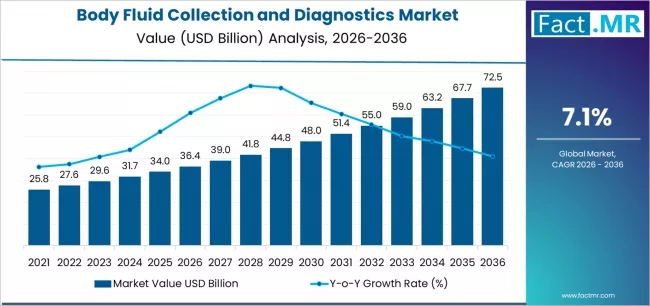
Body Fluid Collection And Diagnostics Market Market Value Analysis | Source: Fact.MR
The market will grow 2.0X during this period, supported by exponential demand for precision diagnostic solutions, rising adoption of advanced molecular testing technologies, and growing emphasis on personalized medicine innovation and early disease detection optimization across global healthcare operations.
The body fluid collection and diagnostics market is positioned for substantial expansion, driven by increasing recognition of liquid biopsy importance, growing prevalence of chronic diseases with enhanced diagnostic requirements, and rising adoption of advanced molecular testing platforms across oncology and infectious disease diagnostics globally.
The market demonstrates robust fundamentals supported by expanding clinical laboratory networks, healthcare professionals' focus on non-invasive diagnostic protocols, and rising recognition of body fluid testing as critical healthcare components in achieving enhanced disease detection, treatment monitoring capabilities, and patient outcome effectiveness within modern healthcare architectures across diverse clinical applications.
Body Fluid Collection and Diagnostics Market
| Metric | Value |
|---|---|
| Estimated Value (2026E) | USD 36.4 billion |
| Forecast Value (2036F) | USD 72.5 billion |
| Forecast CAGR (2026 to 2036) | 7.1% |
Source: Fact.MR analysis. Updated Dec 19, 2025
Category
| Category | Segments |
|---|---|
| Sample | Blood; Saliva; Urine; Cerebrospinal Fluid |
| Product | Tests and Services; Kits and Consumables; Instruments |
| Technology | Next Generation Sequencing; Polymerase Chain Reaction; Fluorescence in situ Hybridization; Others |
| Application | Diagnostics and Monitoring; Therapeutic Decision Making; Prognostics and Screening |
| Region | Asia Pacific; North America; Europe; Latin America; Middle East & Africa |
Source: Fact.MR analysis. Updated Dec 19, 2025
Segmental Analysis
How does Blood Sample Drive Market Leadership in Body Fluid Diagnostics?
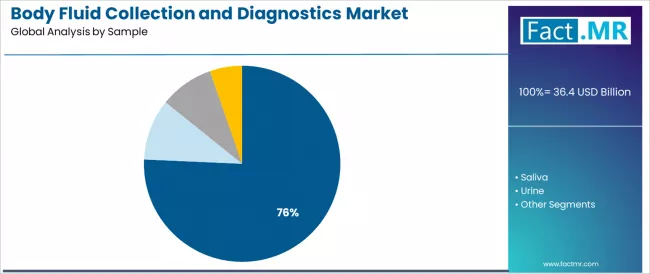
Body Fluid Collection And Diagnostics Market Analysis By Sample | Source: Fact.MR
The blood sample segment is projected to account for 75.7% of the body fluid collection and diagnostics market in 2026, reaffirming its position as the category's dominant specimen type specification. Healthcare providers increasingly recognize the optimal balance of clinical utility and molecular information richness offered by blood-based testing for liquid biopsy applications, particularly in circulating tumor DNA analysis and comprehensive genomic profiling environments.
Why do Kits & Consumables Command Majority Market Share?
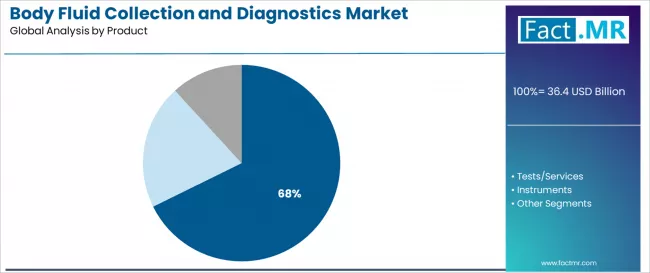
Body Fluid Collection And Diagnostics Market Analysis By Product | Source: Fact.MR
Kits and consumables product category is projected to represent 67.7% of body fluid collection and diagnostics demand in 2026, underscoring its role as the primary revenue category driving market sustainability and laboratory workflow enablement. Diagnostic companies recognize that consumable products, including specimen collection devices, assay reagents, and processing materials, provide the largest recurring revenue opportunity that capital equipment cannot match in business model consistency and market penetration.
What drives Polymerase Chain Reaction Technology Prominence?
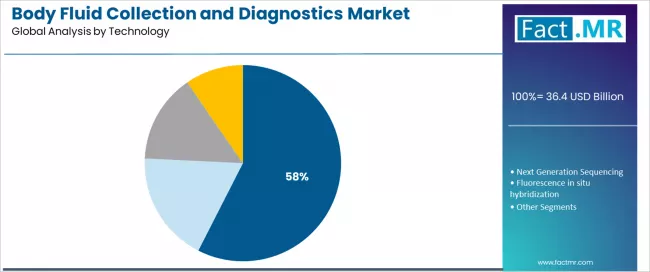
Body Fluid Collection And Diagnostics Market Analysis By Technology | Source: Fact.MR
The polymerase chain reaction technology is projected to account for 57.5% of the body fluid collection and diagnostics market in 2026, establishing its position as the leading molecular platform segment. Laboratory operators increasingly recognize that PCR technology, encompassing real-time PCR, digital PCR, and multiplex detection systems, represents the most established and clinically validated molecular method for diagnostic applications due to analytical sensitivity and broad clinical adoption.
How does Diagnostics & Monitoring Application Command Market Leadership?
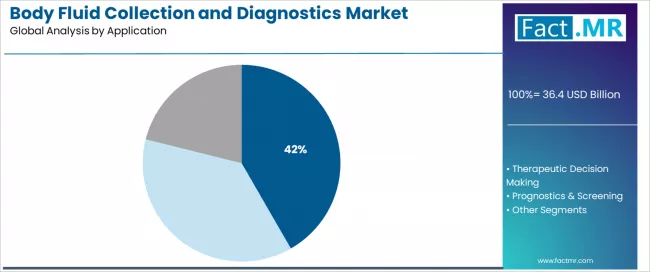
Body Fluid Collection And Diagnostics Market Analysis By Application | Source: Fact.MR
Diagnostics and monitoring application is projected to represent 41.7% of body fluid collection and diagnostics demand in 2026, underscoring its role as the primary clinical use category driving test utilization and healthcare adoption. Healthcare providers recognize that diagnostic and disease monitoring applications, including initial cancer detection, treatment response assessment, and recurrence surveillance protocols, provide the largest clinical utility that prognostic applications cannot match in immediate clinical decision impact.
What are the Drivers, Restraints, and Key Trends of the Body Fluid Collection and Diagnostics Market?
The body fluid collection and diagnostics market is expanding due to rising adoption of liquid biopsy techniques and increasing demand for non-invasive molecular testing in oncology. Growing use of precision medicine approaches and the need for real-time disease monitoring are strengthening demand across clinical settings. Advances in ultra-sensitive detection methods are further supporting broader clinical acceptance.
Market restraints include reimbursement uncertainty for emerging liquid biopsy tests, limitations in analytical sensitivity in cases of low tumor burden, and lack of standardization in pre-analytical sample collection and handling. These factors can affect test reliability, clinical confidence, and adoption rates across healthcare systems.
Key trends include rapid uptake of next-generation sequencing platforms that enable comprehensive genomic profiling, multi-gene panels, and actionable mutation detection from body fluids. Another important trend is integration of artificial intelligence and bioinformatics tools for automated variant interpretation, clinical decision support, and predictive analytics. These technologies improve diagnostic accuracy, enhance result actionability, and support personalized treatment strategies within precision oncology workflows.
Analysis of the Body Fluid Collection and Diagnostics Market by Key Countries
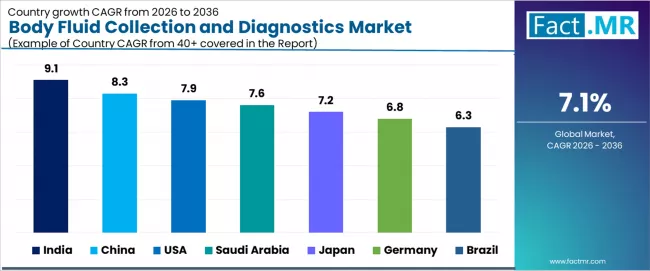
Body Fluid Collection And Diagnostics Market Cagr Analysis By Country | Source: Fact.MR
| Country | CAGR (2026-2036) |
|---|---|
| India | 9.1% |
| China | 8.3% |
| USA | 7.9% |
| Saudi Arabia | 7.6% |
| Japan | 7.2% |
| Germany | 6.8% |
| Brazil | 6.3% |
Source: Fact.MR analysis. Updated Dec 19, 2025
How does India Demonstrate Exceptional Market Potential Through Rapid Diagnostic Infrastructure Expansion?
India’s body fluid collection and diagnostics market is projected to grow at a 9.1% CAGR through 2036, supported by expanding diagnostic infrastructure and rising adoption of molecular testing in cancer care. Growth is driven by private healthcare expansion, improved access to advanced diagnostics, and rising demand for liquid biopsy solutions across tertiary cancer centers and diagnostic laboratory chains.
Government investment in healthcare infrastructure and national cancer control programs is strengthening molecular testing availability. Increasing insurance coverage and cost-sensitive innovation are encouraging adoption of affordable precision diagnostics. Liquid biopsy technologies are gaining relevance as providers seek scalable solutions that improve treatment selection while reducing dependence on invasive tissue biopsies.
What Enables China’s Market Leadership Through a Massive Cancer Patient Base?
China’s market expands at an 8.3% CAGR, supported by a large cancer burden and rapid scaling of molecular diagnostics. Investments in precision medicine infrastructure and laboratory capacity are accelerating adoption of liquid biopsy and NGS-based testing.
Government support for healthcare modernization and oncology capacity expansion is improving access to advanced diagnostics. Providers increasingly use body fluid testing to guide treatment decisions and reduce reliance on tissue samples. Growing clinical expertise and evolving guidelines continue to strengthen China’s position as a leading precision diagnostics market.
Why does the USA Maintain Leadership in Advanced Molecular Diagnostics?
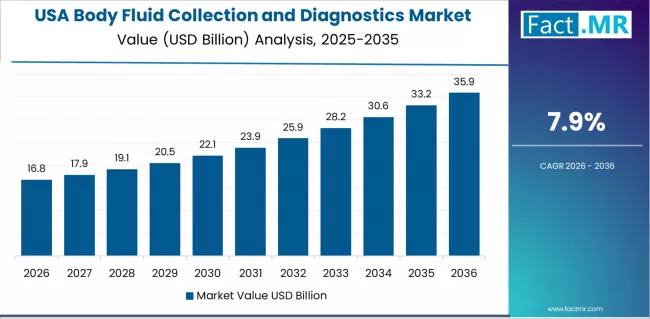
Body Fluid Collection And Diagnostics Market Country Value Analysis | Source: Fact.MR
The market in USA is projected to grow at a 7.9% CAGR, driven by strong clinical integration of liquid biopsy and molecular diagnostics. Advanced validation standards, extensive clinical evidence, and broad insurance coverage support consistent adoption across academic and community oncology settings.
Providers prioritize comprehensive genomic profiling, treatment monitoring, and minimal residual disease assessment. FDA approval pathways and innovation leadership reinforce market confidence. Molecular diagnostics remain central to precision oncology decision-making in the US healthcare system.
How does Saudi Arabia Advance Market Growth Through Healthcare Modernization?
Saudi Arabia’s market grows at a 7.6% CAGR, supported by healthcare modernization initiatives and specialty care development. Investment in tertiary hospitals and medical cities is expanding demand for advanced molecular diagnostics aligned with international quality standards.
Providers emphasize validated technologies and comprehensive technical support, particularly in oncology applications. Medical tourism and international partnerships further support adoption of high-performance diagnostic solutions.
What drives Japan’s Market Expansion amid Aging Population Dynamics?
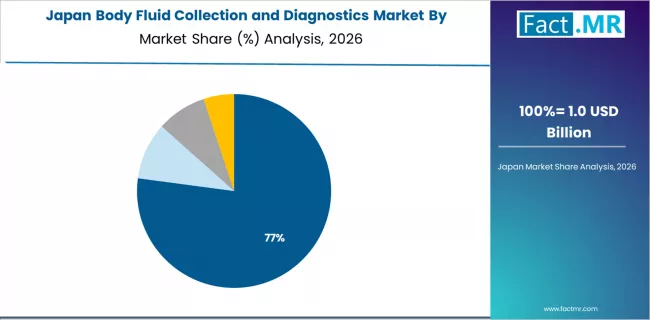
Body Fluid Collection And Diagnostics Market Japan Market Share Analysis By Sample | Source: Fact.MR
Japan’s market expands at a 7.2% CAGR, reflecting high cancer prevalence and an aging population. Established molecular diagnostic infrastructure supports consistent use of body fluid testing for screening and disease monitoring.
Providers emphasize analytical precision, reliability, and evidence-based testing aligned with strict quality standards. Demand remains steady across oncology and biomarker-driven applications.
How does Germany Sustain Growth through Diagnostic Quality and Industry Strength?
Germany records a 6.8% CAGR, supported by a strong medical device industry and advanced laboratory medicine infrastructure. Providers prioritize validated molecular diagnostics that meet stringent quality and accreditation standards.
Adoption is concentrated in oncology and infectious disease testing, where analytical accuracy and guideline compliance are critical. Strong manufacturing expertise supports continued technology integration.
What Supports Brazil’s Market Development via Laboratory Network Expansion?
Brazil’s market grows at a 6.3% CAGR, driven by expansion of private diagnostic laboratories and improving access to molecular testing. Urban healthcare markets and diagnostic chains are increasing adoption of body fluid diagnostics to support oncology services.
Providers focus on balancing affordability with testing capability as laboratory infrastructure expands. Growth is supported by rising private healthcare investment and broader diagnostic service coverage.
Competitive Landscape of the Body Fluid Collection and Diagnostics Market
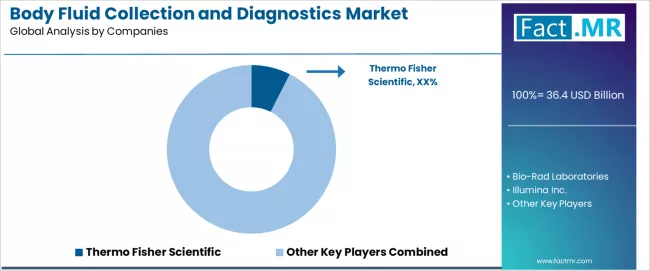
Body Fluid Collection And Diagnostics Market Analysis By Company | Source: Fact.MR
The body fluid collection and diagnostics market is highly competitive, with participation from global diagnostic manufacturers, molecular testing specialists, and integrated laboratory service providers. Competition centers on analytical accuracy, clinical validation strength, regulatory compliance, and integration within healthcare workflows. Companies are investing in platform innovation, expanded clinical studies, healthcare provider partnerships, and medical affairs capabilities to support sensitive, reliable, and clinically actionable diagnostics.
Thermo Fisher Scientific holds a prominent position, supported by broad molecular diagnostic portfolios, next-generation sequencing platforms, and advanced reagent systems used across global laboratories. Bio-Rad Laboratories competes through digital PCR technologies and quality control solutions, while Illumina Inc. focuses on sequencing systems and genomic analysis tools serving both research and clinical settings. Guardant Health maintains a strong presence in liquid biopsy diagnostics, particularly within oncology-focused applications.
QIAGEN emphasizes sample preparation and workflow-integrated molecular testing solutions. Johnson & Johnson supports diagnostics through precision medicine-aligned healthcare innovation. Laboratory Corporation of America Holdings strengthens competition through extensive laboratory testing services and nationwide reach. Biocept Inc., F. Hoffmann-La Roche Ltd., and MDxHealth SA compete through specialized liquid biopsy platforms, integrated diagnostics, and clinically validated molecular assays tailored to personalized medicine applications.
Key Players in the Body Fluid Collection and Diagnostics Market
- Thermo Fisher Scientific
- Bio-Rad Laboratories
- Illumina Inc.
- Guardant Health
- QIAGEN
- Johnson & Johnson
- Laboratory Corporation of America Holdings
- Biocept Inc
- F. Hoffmann-La Roche Ltd.
- MDxHealth SA
Segmentation
Scope of the Report
| Items | Values |
|---|---|
| Quantitative Units (2026) | USD 36.4 Billion |
| Sample | Blood, Saliva, Urine, Cerebrospinal Fluid |
| Product | Tests/Services, Kits & Consumables, Instruments |
| Technology | Next Generation Sequencing, Polymerase Chain Reaction, Fluorescence in situ hybridization, Others |
| Application | Diagnostics & Monitoring, Therapeutic Decision Making, Prognostics & Screening |
| Regions Covered | Asia Pacific, North America, Europe, Latin America, MEA |
| Countries Covered | USA, Germany, Japan, China, India, Brazil, Saudi Arabia and 40+ countries |
| Key Companies Profiled | Thermo Fisher Scientific, Bio-Rad Laboratories, Illumina Inc., Guardant Health, QIAGEN, Johnson & Johnson, Laboratory Corporation of America Holdings, Biocept Inc, F. Hoffmann-La Roche Ltd., MDxHealth SA |
| Additional Attributes | Dollar sales by sample, product, technology, application, regional demand trends, competitive landscape, healthcare provider preferences for specific body fluid diagnostics, integration with comprehensive oncology care pathways, innovations in liquid biopsy development, molecular technology advancement, and clinical validation optimization capabilities |
Source: Fact.MR analysis. Updated Dec 19, 2025
Body Fluid Collection and Diagnostics Market by Segments
-
Sample :
- Blood
- Saliva
- Urine
- Cerebrospinal Fluid
-
Product :
- Tests/Services
- Kits & Consumables
- Instruments
-
Technology :
- Next Generation Sequencing
- Polymerase Chain Reaction
- Fluorescence in situ hybridization
- Others
-
Application :
- Diagnostics & Monitoring
- Therapeutic Decision Making
- Prognostics & Screening
-
Region :
-
Asia Pacific
- China
- India
- Japan
- South Korea
- ASEAN
- Australia & New Zealand
- Rest of Asia Pacific
-
North America
- United States
- Canada
- Mexico
-
Europe
- Germany
- France
- United Kingdom
- Italy
- Spain
- Nordic
- BENELUX
- Rest of Europe
-
Latin America
- Brazil
- Argentina
- Chile
- Rest of Latin America
-
MEA
- Saudi Arabia
- Other GCC Countries
- Turkey
- South Africa
- Other African Countries
- Rest of MEA
-
Frequently Asked Questions
How big is the body fluid collection and diagnostics market in 2026?
What will be the size of body fluid collection and diagnostics market in 2036?
How much will be the body fluid collection and diagnostics market growth between 2026 and 2036?
What are the key product types in the body fluid collection and diagnostics market?
Which product segment to contribute significant share in the body fluid collection and diagnostics market in 2026?
Who worked on this report


Preview the report firsthand - request a free sample
Free SampleGet the brochure for pricing and purchase details
Download PDF