Carbon Capture Additives in Cement Production Market

Carbon Capture Additives in Cement Production Market Size and Share Forecast Outlook 2026 to 2036

Carbon capture additives in cement production market is projected to grow from USD 1.5 billion in 2026 to USD 4.6 billion by 2036, at a CAGR of 12.1%. Carbonation accelerators & mineralizers will dominate with a 32.0% market share, while on-site plant capture solvent and additive packages (post-combustion enhancers) will lead the use case segment with a 28.0% share.

Carbon Capture Additives in Cement Production Market Forecast and Outlook 2026 to 2036

The global carbon capture additives in cement production market is projected to reach USD 4.64 billion by 2036. The market is valued at USD 1.48 billion in 2026 and is set to rise at a CAGR of 12.1% during the assessment period. By chemistry type, carbonation accelerators & mineralizers hold a leading 32% share. On-site plant capture solvent/additive packages represent the dominant use case at 28%, while cement producers are the primary customer, accounting for 40.00% market share.

Key Takeaways from the Carbon Capture Additives in Cement Production Market

  • Market Value for 2026: USD 1.48 Billion
  • Market Value for 2036: USD 4.64 Billion
  • Forecast CAGR (2026-2036): 12.1%
  • Leading Chemistry Type Share (2026): Carbonation Accelerators & Mineralizers (32%)
  • Leading Use Case Share (2026): On-site Plant Capture Solvent/Additive Packages (28%)
  • Leading Customer Segment Share (2026): Cement Producers (40.00%)
  • Key Players in the Market: CarbonCure, Solidia Technologies, LafargeHolcim, Heidelberg Materials, BASF, CEMEX, Sika
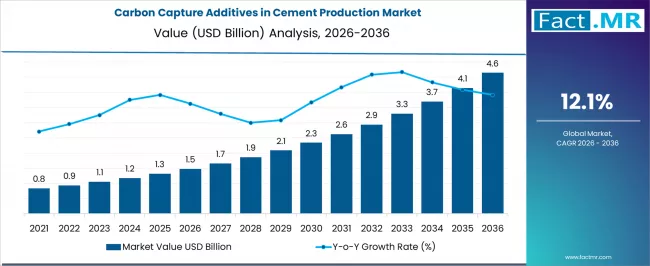
Carbon Capture Additives In Cement Production Market Market Value Analysis

Defining trends involve the integration of specialized chemical additives that enhance the efficiency of CO₂ capture processes or permanently sequester carbon within the cement and concrete matrix itself. Innovation is rapidly advancing in dual-function additives that improve the kinetics of solvent-based capture systems while also enhancing the strength and durability of CO₂-cured concrete. Integration of these additive systems with carbon capture, utilization, and storage (CCUS) infrastructure and ready-mix concrete batching is becoming critical for achieving deep decarbonization in the hard-to-abate cement sector.

Regulatory frameworks establishing carbon pricing mechanisms, emissions trading schemes, and mandates for low-carbon construction materials are the primary market drivers. Policies specifically incentivizing carbon mineralization and the development of green public procurement standards act as significant catalysts, positioning these additives as essential technological levers for the cement industry's climate commitments and future market access.

Carbon Capture Additives in Cement Production Market

Metric Value
Market Value (2026) USD 1.48 Billion
Market Forecast Value (2036) USD 4.64 Billion
Forecast CAGR (2026-2036) 12.1%

Category

Category Segments
Chemistry Type Carbonation accelerators & mineralizers, CO₂-curing admixtures & surfactant system, Sorbent and solvent performance enhancers, Alkali and alkaline earth additives for in-process mineralization, Corrosion materials, Proprietary hybrid reagent packs
Use Case On-site plant capture solvent/additive packages (post-combustion enhancers), CO₂-curing & precast concrete process additives, In-product mineral sequestration (cement/clinker blend additives), Concrete/admixture-level CO₂ uptake enhancers (ready-mix & precast), Equipment protection & process stability chemistries (CCUS systems)
Customer Cement producers, Precast concrete & concrete product manufacturers, Concrete admixture companies & concrete plants, CCUS system integrators & plant operators
Region North America, Latin America, Western Europe, Eastern Europe, East Asia, South Asia & Pacific, MEA

Segmental Analysis

By Chemistry Type, Which Additives Directly Enhance the Rate of Permanent Carbon Sequestration?
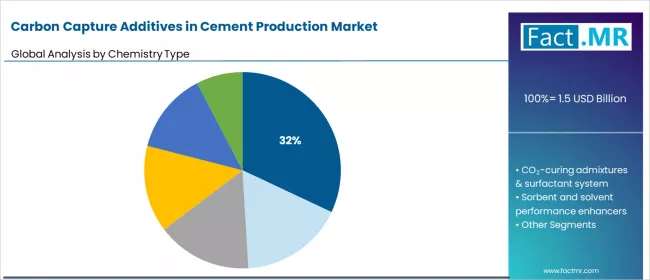
Carbon Capture Additives In Cement Production Market Analysis By Chemistry Type

Carbonation accelerators & mineralizers lead the segment with a 32% share. This dominance is due to their direct action in speeding up the natural process where CO₂ reacts with calcium ions in cementitious materials to form stable calcium carbonates. These additives, which can include catalysts or nucleation agents, are crucial for both in-process mineralization (treating fresh cement kiln dust) and for CO₂-curing of concrete products, as they determine the economic viability and speed of carbon uptake.

By Use Case, Which Application Targets the Largest Point Source of Emissions in Cement Manufacturing?
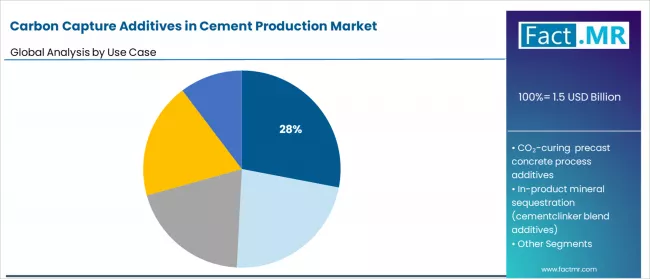
Carbon Capture Additives In Cement Production Market Analysis By Use Case

On-site plant capture solvent/additive packages command the largest use case share at 28%. This focuses on integrating performance-enhancing additives into the post-combustion capture systems installed at cement plants. These additives aim to reduce the energy penalty, increase CO₂ loading capacity, and mitigate solvent degradation in amine-based or other capture processes. Improving the economics and efficiency of this large-scale point source capture is foundational to reducing the industry's direct process emissions.

By Customer, Who is the Primary Operator of Emission Sources and the Central Decision-Maker for Plant Technology?
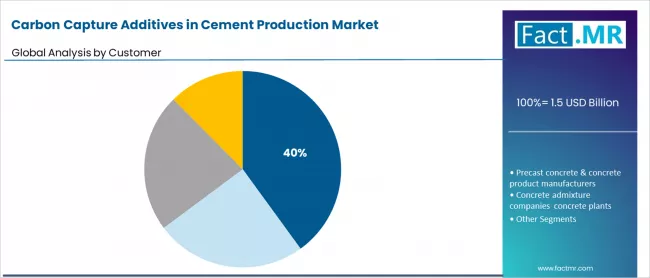
Carbon Capture Additives In Cement Production Market Analysis By Customer

Cement producers are the dominant customer at 40.00%. They operate the kilns and clinker production facilities where the majority of process CO₂ is emitted. Their capital investment decisions dictate the adoption of on-site capture technologies, and their product development drives the incorporation of carbonation additives into cement blends and concrete formulations. Their need to comply with regulations and market demand for green cement makes them the pivotal specifier and purchaser.

What are the Drivers, Restraints, and Key Trends of the Carbon Capture Additives in Cement Production Market?

Market growth is driven by stringent and expanding carbon pricing regulations globally, which transform CO₂ emissions into a direct cost. Government procurement policies and green building certifications (e.g., LEED) that reward or require low-embodied-carbon concrete create market pull. The cement industry's own net-zero pledges are creating internal R&D and piloting demand. Technological advancements making carbon capture and utilization (CCU) more economically feasible also propel the sector.

A significant restraint is the high capital and operational cost of integrating full-scale carbon capture with additive systems at cement plants. The variable chemistry of cement kiln flue gas (dust, SOx, NOx) can complicate additive performance and sorbent life. The need for industry-wide standards to quantify and verify permanent carbon sequestration in concrete is still evolving, potentially slowing market confidence. Furthermore, competition from alternative decarbonization pathways (e.g., alternative fuels, novel clinkers) segments investment.

Key trends include the development of "drop-in" additives for existing capture systems that immediately boost efficiency. There is strong R&D into multi-functional admixtures that simultaneously enhance concrete strength, reduce water demand, and increase CO₂ uptake. The emergence of digital platforms for tracking and trading embedded carbon in concrete is creating new value chains. Furthermore, partnerships between cement giants, chemical companies, and carbon tech startups are accelerating commercialization.

Analysis of the Carbon Capture Additives in Cement Production Market by Key Countries
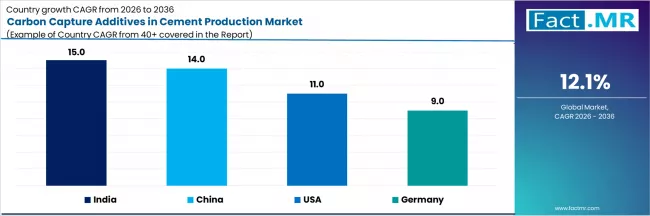
Carbon Capture Additives In Cement Production Market Cagr Analysis By Country

Country CAGR (2026-2036)
India 15.00%
China 14.00%
USA 11.00%
Germany 9.00%

How does India's Rapid Infrastructure Growth and Emerging Carbon Policy Drive High Growth?

India leads with a 15.00% CAGR, driven by an unprecedented construction boom coupled with the early stages of national carbon market development. The urgency to curb emissions while building vast new infrastructure creates a powerful dual incentive. Indian cement producers, among the world's largest and most cost-competitive, are actively exploring CCUS and mineralization technologies as a strategic avenue to maintain growth while future-proofing against stringent future regulations, fueling early adoption and local innovation.

Why is China's Cement Industry Scale and 'Dual Carbon' Policy Commitment a Key Driver?

China's 14.00% growth is anchored in its position as the producer of over half the world's cement, under the overarching mandate of its Carbon Peak and Carbon Neutrality goals. National policy directly funds and mandates pilot and demonstration projects for carbon capture in key industries, including cement. The sheer scale of its industry means any incremental improvement in capture efficiency or mineralization rate through additives translates into massive absolute CO₂ reduction, justifying significant investment.

What Role does the USA's Regulatory Landscape and Innovation Ecosystem Play?
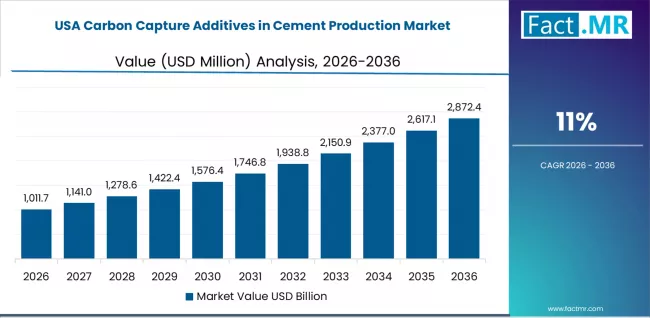
Carbon Capture Additives In Cement Production Market Country Value Analysis

A mix of federal incentives (like 45Q tax credits), state-level low-carbon fuel standards, and a vibrant ecosystem of carbon tech startups propels the USA’s 11.00% growth. American cement companies are partnering with technology providers to pilot and scale both capture-enhancing solvents and concrete curing systems. The mature ready-mix concrete market also provides a direct pathway to commercialize CO₂-utilizing admixtures at scale.

How does Germany's Green Industrial Policy and Circular Economy Focus Influence the Market?

Germany's 9.00% growth reflects its leadership in EU climate policy and its focus on industrial circularity. German engineering and chemical companies are at the forefront of developing high-efficiency sorbents and process additives. The stringent EU Emissions Trading System (ETS) and national policies create a strong compliance driver, while the demand for high-performance, low-carbon construction materials in the German market pushes cement producers to innovate.

Competitive Landscape of the Carbon Capture Additives in Cement Production Market
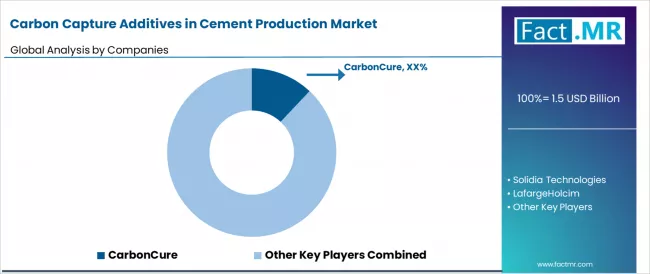
Carbon Capture Additives In Cement Production Market Analysis By Company

The competitive landscape features a dynamic mix of specialized carbon utilization startups, global cement manufacturers, and diversified chemical giants. Technology pioneers like CarbonCure and Solidia Technologies compete with proprietary processes and admixture systems that enable CO₂ uptake in concrete, often partnering directly with concrete producers.

Leading cement producers like LafargeHolcim, Heidelberg Materials, and CEMEX are increasingly competing as integrated solution providers, developing in-house additive technologies and CCUS projects to decarbonize their own operations and products. Chemical majors like BASF and Sika compete by leveraging their deep expertise in admixtures, surfactants, and construction chemicals to develop performance-enhancing additives for both capture and concrete curing applications.

Key Players in the Carbon Capture Additives in Cement Production Market

  • CarbonCure
  • Solidia Technologies
  • LafargeHolcim
  • Heidelberg Materials
  • BASF
  • CEMEX
  • Sika

Scope of Report

Items Values
Quantitative Units USD Billion
Chemistry Type Carbonation accelerators & mineralizers, CO₂-curing admixtures, Sorbent/solvent enhancers, Alkaline additives, Corrosion materials, Proprietary blends
Use Case On-site plant capture, CO₂-curing, In-product mineralization, Admixture-level uptake, Equipment protection
Customer Cement producers, Precast manufacturers, Admixture companies, CCUS integrators
Key Countries India, China, USA, Germany
Key Companies CarbonCure, Solidia, LafargeHolcim, Heidelberg, BASF, CEMEX, Sika
Additional Analysis Analysis of CO₂ uptake efficiency (kg CO₂/ton concrete), impact on concrete compressive strength and set time, solvent degradation reduction rates, compatibility with existing admixtures, and levelized cost of carbon abatement.

Carbon Capture Additives in Cement Production Market by Segments

  • Chemistry Type :

    • Carbonation accelerators & mineralizers
    • CO₂-curing admixtures & surfactant system
    • Sorbent and solvent performance enhancers
    • Alkali and alkaline earth additives for in-process mineralization
    • Corrosion materials
    • Proprietary hybrid reagent packs
  • Use Case :

    • On-site plant capture solvent & additive packages (post-combustion enhancers)
    • CO₂-curing & precast concrete process additives
    • In-product mineral sequestration (cement/clinker blend additives)
    • Concrete & admixture-level CO₂ uptake enhancers (ready-mix & precast)
    • Equipment protection & process stability chemistries (CCUS systems)
  • Customer :

    • Cement producers
    • Precast concrete & concrete product manufacturers
    • Concrete admixture companies & concrete plants
    • CCUS system integrators & plant operators
  • Region :

    • North America

      • USA
      • Canada
    • Latin America

      • Brazil
      • Mexico
      • Rest of Latin America
    • Western Europe

      • Germany
      • France
      • UK
      • BENELUX
      • Spain
      • Italy
      • Rest of Western Europe
    • Eastern Europe

      • Poland
      • Russia
      • Czech Republic
      • Rest of Eastern Europe
    • East Asia

      • China
      • Japan
      • South Korea
      • Rest of East Asia
    • South Asia & Pacific

      • India
      • Australia
      • ASEAN
      • Rest of South Asia & Pacific
    • MEA

      • GCC Countries
      • South Africa
      • Rest of MEA

Table of Content

  1. Executive Summary
    • Global Market Outlook
    • Demand to side Trends
    • Supply to side Trends
    • Technology Roadmap Analysis
    • Analysis and Recommendations
  2. Market Overview
    • Market Coverage / Taxonomy
    • Market Definition / Scope / Limitations
  3. Market Background
    • Market Dynamics
      • Drivers
      • Restraints
      • Opportunity
      • Trends
    • Scenario Forecast
      • Demand in Optimistic Scenario
      • Demand in Likely Scenario
      • Demand in Conservative Scenario
    • Opportunity Map Analysis
    • Product Life Cycle Analysis
    • Supply Chain Analysis
    • Investment Feasibility Matrix
    • Value Chain Analysis
    • PESTLE and Porter’s Analysis
    • Regulatory Landscape
    • Regional Parent Market Outlook
    • Production and Consumption Statistics
    • Import and Export Statistics
  4. Global Market Analysis 2021 to 2025 and Forecast, 2026 to 2036
    • Historical Market Size Value (USD Million) Analysis, 2021 to 2025
    • Current and Future Market Size Value (USD Million) Projections, 2026 to 2036
      • Y to o to Y Growth Trend Analysis
      • Absolute $ Opportunity Analysis
  5. Global Market Pricing Analysis 2021 to 2025 and Forecast 2026 to 2036
  6. Global Market Analysis 2021 to 2025 and Forecast 2026 to 2036, By Chemistry Type
    • Introduction / Key Findings
    • Historical Market Size Value (USD Million) Analysis By Chemistry Type, 2021 to 2025
    • Current and Future Market Size Value (USD Million) Analysis and Forecast By Chemistry Type, 2026 to 2036
      • Carbonation accelerators & mineralizers
      • CO₂-curing admixtures & surfactant system
      • Sorbent and solvent performance enhancers
      • Alkali and alkaline earth additives for in-process mineralization
      • Corrosion materials
      • Proprietary hybrid reagent packs
    • Y to o to Y Growth Trend Analysis By Chemistry Type, 2021 to 2025
    • Absolute $ Opportunity Analysis By Chemistry Type, 2026 to 2036
  7. Global Market Analysis 2021 to 2025 and Forecast 2026 to 2036, By Use Case
    • Introduction / Key Findings
    • Historical Market Size Value (USD Million) Analysis By Use Case, 2021 to 2025
    • Current and Future Market Size Value (USD Million) Analysis and Forecast By Use Case, 2026 to 2036
      • On-site plant capture solvent and additive packages (post-combustion enhancers)
      • CO₂-curing precast concrete process additives
      • In-product mineral sequestration (cementclinker blend additives)
      • Concrete & admixture-level CO₂ uptake enhancers (ready-mix precast)
      • Equipment protection & process stability chemistries (CCUS systems)
    • Y to o to Y Growth Trend Analysis By Use Case, 2021 to 2025
    • Absolute $ Opportunity Analysis By Use Case, 2026 to 2036
  8. Global Market Analysis 2021 to 2025 and Forecast 2026 to 2036, By Customer
    • Introduction / Key Findings
    • Historical Market Size Value (USD Million) Analysis By Customer, 2021 to 2025
    • Current and Future Market Size Value (USD Million) Analysis and Forecast By Customer, 2026 to 2036
      • Cement producers
      • Precast concrete & concrete product manufacturers
      • Concrete admixture companies concrete plants
      • CCUS system integrators & plant operators
    • Y to o to Y Growth Trend Analysis By Customer, 2021 to 2025
    • Absolute $ Opportunity Analysis By Customer, 2026 to 2036
  9. Global Market Analysis 2021 to 2025 and Forecast 2026 to 2036, By Region
    • Introduction
    • Historical Market Size Value (USD Million) Analysis By Region, 2021 to 2025
    • Current Market Size Value (USD Million) Analysis and Forecast By Region, 2026 to 2036
      • North America
      • Latin America
      • Western Europe
      • Eastern Europe
      • East Asia
      • South Asia and Pacific
      • Middle East & Africa
    • Market Attractiveness Analysis By Region
  10. North America Market Analysis 2021 to 2025 and Forecast 2026 to 2036, By Country
    • Historical Market Size Value (USD Million) Trend Analysis By Market Taxonomy, 2021 to 2025
    • Market Size Value (USD Million) Forecast By Market Taxonomy, 2026 to 2036
      • By Country
        • USA
        • Canada
        • Mexico
      • By Chemistry Type
      • By Use Case
      • By Customer
    • Market Attractiveness Analysis
      • By Country
      • By Chemistry Type
      • By Use Case
      • By Customer
    • Key Takeaways
  11. Latin America Market Analysis 2021 to 2025 and Forecast 2026 to 2036, By Country
    • Historical Market Size Value (USD Million) Trend Analysis By Market Taxonomy, 2021 to 2025
    • Market Size Value (USD Million) Forecast By Market Taxonomy, 2026 to 2036
      • By Country
        • Brazil
        • Chile
        • Rest of Latin America
      • By Chemistry Type
      • By Use Case
      • By Customer
    • Market Attractiveness Analysis
      • By Country
      • By Chemistry Type
      • By Use Case
      • By Customer
    • Key Takeaways
  12. Western Europe Market Analysis 2021 to 2025 and Forecast 2026 to 2036, By Country
    • Historical Market Size Value (USD Million) Trend Analysis By Market Taxonomy, 2021 to 2025
    • Market Size Value (USD Million) Forecast By Market Taxonomy, 2026 to 2036
      • By Country
        • Germany
        • UK
        • Italy
        • Spain
        • France
        • Nordic
        • BENELUX
        • Rest of Western Europe
      • By Chemistry Type
      • By Use Case
      • By Customer
    • Market Attractiveness Analysis
      • By Country
      • By Chemistry Type
      • By Use Case
      • By Customer
    • Key Takeaways
  13. Eastern Europe Market Analysis 2021 to 2025 and Forecast 2026 to 2036, By Country
    • Historical Market Size Value (USD Million) Trend Analysis By Market Taxonomy, 2021 to 2025
    • Market Size Value (USD Million) Forecast By Market Taxonomy, 2026 to 2036
      • By Country
        • Russia
        • Poland
        • Hungary
        • Balkan & Baltic
        • Rest of Eastern Europe
      • By Chemistry Type
      • By Use Case
      • By Customer
    • Market Attractiveness Analysis
      • By Country
      • By Chemistry Type
      • By Use Case
      • By Customer
    • Key Takeaways
  14. East Asia Market Analysis 2021 to 2025 and Forecast 2026 to 2036, By Country
    • Historical Market Size Value (USD Million) Trend Analysis By Market Taxonomy, 2021 to 2025
    • Market Size Value (USD Million) Forecast By Market Taxonomy, 2026 to 2036
      • By Country
        • China
        • Japan
        • South Korea
      • By Chemistry Type
      • By Use Case
      • By Customer
    • Market Attractiveness Analysis
      • By Country
      • By Chemistry Type
      • By Use Case
      • By Customer
    • Key Takeaways
  15. South Asia and Pacific Market Analysis 2021 to 2025 and Forecast 2026 to 2036, By Country
    • Historical Market Size Value (USD Million) Trend Analysis By Market Taxonomy, 2021 to 2025
    • Market Size Value (USD Million) Forecast By Market Taxonomy, 2026 to 2036
      • By Country
        • India
        • ASEAN
        • Australia & New Zealand
        • Rest of South Asia and Pacific
      • By Chemistry Type
      • By Use Case
      • By Customer
    • Market Attractiveness Analysis
      • By Country
      • By Chemistry Type
      • By Use Case
      • By Customer
    • Key Takeaways
  16. Middle East & Africa Market Analysis 2021 to 2025 and Forecast 2026 to 2036, By Country
    • Historical Market Size Value (USD Million) Trend Analysis By Market Taxonomy, 2021 to 2025
    • Market Size Value (USD Million) Forecast By Market Taxonomy, 2026 to 2036
      • By Country
        • Kingdom of Saudi Arabia
        • Other GCC Countries
        • Turkiye
        • South Africa
        • Other African Union
        • Rest of Middle East & Africa
      • By Chemistry Type
      • By Use Case
      • By Customer
    • Market Attractiveness Analysis
      • By Country
      • By Chemistry Type
      • By Use Case
      • By Customer
    • Key Takeaways
  17. Key Countries Market Analysis
    • USA
      • Pricing Analysis
      • Market Share Analysis, 2025
        • By Chemistry Type
        • By Use Case
        • By Customer
    • Canada
      • Pricing Analysis
      • Market Share Analysis, 2025
        • By Chemistry Type
        • By Use Case
        • By Customer
    • Mexico
      • Pricing Analysis
      • Market Share Analysis, 2025
        • By Chemistry Type
        • By Use Case
        • By Customer
    • Brazil
      • Pricing Analysis
      • Market Share Analysis, 2025
        • By Chemistry Type
        • By Use Case
        • By Customer
    • Chile
      • Pricing Analysis
      • Market Share Analysis, 2025
        • By Chemistry Type
        • By Use Case
        • By Customer
    • Germany
      • Pricing Analysis
      • Market Share Analysis, 2025
        • By Chemistry Type
        • By Use Case
        • By Customer
    • UK
      • Pricing Analysis
      • Market Share Analysis, 2025
        • By Chemistry Type
        • By Use Case
        • By Customer
    • Italy
      • Pricing Analysis
      • Market Share Analysis, 2025
        • By Chemistry Type
        • By Use Case
        • By Customer
    • Spain
      • Pricing Analysis
      • Market Share Analysis, 2025
        • By Chemistry Type
        • By Use Case
        • By Customer
    • France
      • Pricing Analysis
      • Market Share Analysis, 2025
        • By Chemistry Type
        • By Use Case
        • By Customer
    • India
      • Pricing Analysis
      • Market Share Analysis, 2025
        • By Chemistry Type
        • By Use Case
        • By Customer
    • ASEAN
      • Pricing Analysis
      • Market Share Analysis, 2025
        • By Chemistry Type
        • By Use Case
        • By Customer
    • Australia & New Zealand
      • Pricing Analysis
      • Market Share Analysis, 2025
        • By Chemistry Type
        • By Use Case
        • By Customer
    • China
      • Pricing Analysis
      • Market Share Analysis, 2025
        • By Chemistry Type
        • By Use Case
        • By Customer
    • Japan
      • Pricing Analysis
      • Market Share Analysis, 2025
        • By Chemistry Type
        • By Use Case
        • By Customer
    • South Korea
      • Pricing Analysis
      • Market Share Analysis, 2025
        • By Chemistry Type
        • By Use Case
        • By Customer
    • Russia
      • Pricing Analysis
      • Market Share Analysis, 2025
        • By Chemistry Type
        • By Use Case
        • By Customer
    • Poland
      • Pricing Analysis
      • Market Share Analysis, 2025
        • By Chemistry Type
        • By Use Case
        • By Customer
    • Hungary
      • Pricing Analysis
      • Market Share Analysis, 2025
        • By Chemistry Type
        • By Use Case
        • By Customer
    • Kingdom of Saudi Arabia
      • Pricing Analysis
      • Market Share Analysis, 2025
        • By Chemistry Type
        • By Use Case
        • By Customer
    • Turkiye
      • Pricing Analysis
      • Market Share Analysis, 2025
        • By Chemistry Type
        • By Use Case
        • By Customer
    • South Africa
      • Pricing Analysis
      • Market Share Analysis, 2025
        • By Chemistry Type
        • By Use Case
        • By Customer
  18. Market Structure Analysis
    • Competition Dashboard
    • Competition Benchmarking
    • Market Share Analysis of Top Players
      • By Regional
      • By Chemistry Type
      • By Use Case
      • By Customer
  19. Competition Analysis
    • Competition Deep Dive
      • CarbonCure
        • Overview
        • Product Portfolio
        • Profitability by Market Segments (Product/Age /Sales Channel/Region)
        • Sales Footprint
        • Strategy Overview
          • Marketing Strategy
          • Product Strategy
          • Channel Strategy
      • Solidia Technologies
      • LafargeHolcim
      • Heidelberg Materials
      • BASF
      • CEMEX
      • Sika
  20. Assumptions & Acronyms Used
  21. Research Methodology

List Of Table

  • Table 1: Global Market Value (USD Million) Forecast by Region, 2021 to 2036
  • Table 2: Global Market Value (USD Million) Forecast by Chemistry Type, 2021 to 2036
  • Table 3: Global Market Value (USD Million) Forecast by Use Case, 2021 to 2036
  • Table 4: Global Market Value (USD Million) Forecast by Customer, 2021 to 2036
  • Table 5: North America Market Value (USD Million) Forecast by Country, 2021 to 2036
  • Table 6: North America Market Value (USD Million) Forecast by Chemistry Type, 2021 to 2036
  • Table 7: North America Market Value (USD Million) Forecast by Use Case, 2021 to 2036
  • Table 8: North America Market Value (USD Million) Forecast by Customer, 2021 to 2036
  • Table 9: Latin America Market Value (USD Million) Forecast by Country, 2021 to 2036
  • Table 10: Latin America Market Value (USD Million) Forecast by Chemistry Type, 2021 to 2036
  • Table 11: Latin America Market Value (USD Million) Forecast by Use Case, 2021 to 2036
  • Table 12: Latin America Market Value (USD Million) Forecast by Customer, 2021 to 2036
  • Table 13: Western Europe Market Value (USD Million) Forecast by Country, 2021 to 2036
  • Table 14: Western Europe Market Value (USD Million) Forecast by Chemistry Type, 2021 to 2036
  • Table 15: Western Europe Market Value (USD Million) Forecast by Use Case, 2021 to 2036
  • Table 16: Western Europe Market Value (USD Million) Forecast by Customer, 2021 to 2036
  • Table 17: Eastern Europe Market Value (USD Million) Forecast by Country, 2021 to 2036
  • Table 18: Eastern Europe Market Value (USD Million) Forecast by Chemistry Type, 2021 to 2036
  • Table 19: Eastern Europe Market Value (USD Million) Forecast by Use Case, 2021 to 2036
  • Table 20: Eastern Europe Market Value (USD Million) Forecast by Customer, 2021 to 2036
  • Table 21: East Asia Market Value (USD Million) Forecast by Country, 2021 to 2036
  • Table 22: East Asia Market Value (USD Million) Forecast by Chemistry Type, 2021 to 2036
  • Table 23: East Asia Market Value (USD Million) Forecast by Use Case, 2021 to 2036
  • Table 24: East Asia Market Value (USD Million) Forecast by Customer, 2021 to 2036
  • Table 25: South Asia and Pacific Market Value (USD Million) Forecast by Country, 2021 to 2036
  • Table 26: South Asia and Pacific Market Value (USD Million) Forecast by Chemistry Type, 2021 to 2036
  • Table 27: South Asia and Pacific Market Value (USD Million) Forecast by Use Case, 2021 to 2036
  • Table 28: South Asia and Pacific Market Value (USD Million) Forecast by Customer, 2021 to 2036
  • Table 29: Middle East & Africa Market Value (USD Million) Forecast by Country, 2021 to 2036
  • Table 30: Middle East & Africa Market Value (USD Million) Forecast by Chemistry Type, 2021 to 2036
  • Table 31: Middle East & Africa Market Value (USD Million) Forecast by Use Case, 2021 to 2036
  • Table 32: Middle East & Africa Market Value (USD Million) Forecast by Customer, 2021 to 2036

List Of Figures

  • Figure 1: Global Market Pricing Analysis
  • Figure 2: Global Market Value (USD Million) Forecast 2021 to 2036
  • Figure 3: Global Market Value Share and BPS Analysis by Chemistry Type, 2026 and 2036
  • Figure 4: Global Market Y to o to Y Growth Comparison by Chemistry Type, 2026 to 2036
  • Figure 5: Global Market Attractiveness Analysis by Chemistry Type
  • Figure 6: Global Market Value Share and BPS Analysis by Use Case, 2026 and 2036
  • Figure 7: Global Market Y to o to Y Growth Comparison by Use Case, 2026 to 2036
  • Figure 8: Global Market Attractiveness Analysis by Use Case
  • Figure 9: Global Market Value Share and BPS Analysis by Customer, 2026 and 2036
  • Figure 10: Global Market Y to o to Y Growth Comparison by Customer, 2026 to 2036
  • Figure 11: Global Market Attractiveness Analysis by Customer
  • Figure 12: Global Market Value (USD Million) Share and BPS Analysis by Region, 2026 and 2036
  • Figure 13: Global Market Y to o to Y Growth Comparison by Region, 2026 to 2036
  • Figure 14: Global Market Attractiveness Analysis by Region
  • Figure 15: North America Market Incremental Dollar Opportunity, 2026 to 2036
  • Figure 16: Latin America Market Incremental Dollar Opportunity, 2026 to 2036
  • Figure 17: Western Europe Market Incremental Dollar Opportunity, 2026 to 2036
  • Figure 18: Eastern Europe Market Incremental Dollar Opportunity, 2026 to 2036
  • Figure 19: East Asia Market Incremental Dollar Opportunity, 2026 to 2036
  • Figure 20: South Asia and Pacific Market Incremental Dollar Opportunity, 2026 to 2036
  • Figure 21: Middle East & Africa Market Incremental Dollar Opportunity, 2026 to 2036
  • Figure 22: North America Market Value Share and BPS Analysis by Country, 2026 and 2036
  • Figure 23: North America Market Value Share and BPS Analysis by Chemistry Type, 2026 and 2036
  • Figure 24: North America Market Y to o to Y Growth Comparison by Chemistry Type, 2026 to 2036
  • Figure 25: North America Market Attractiveness Analysis by Chemistry Type
  • Figure 26: North America Market Value Share and BPS Analysis by Use Case, 2026 and 2036
  • Figure 27: North America Market Y to o to Y Growth Comparison by Use Case, 2026 to 2036
  • Figure 28: North America Market Attractiveness Analysis by Use Case
  • Figure 29: North America Market Value Share and BPS Analysis by Customer, 2026 and 2036
  • Figure 30: North America Market Y to o to Y Growth Comparison by Customer, 2026 to 2036
  • Figure 31: North America Market Attractiveness Analysis by Customer
  • Figure 32: Latin America Market Value Share and BPS Analysis by Country, 2026 and 2036
  • Figure 33: Latin America Market Value Share and BPS Analysis by Chemistry Type, 2026 and 2036
  • Figure 34: Latin America Market Y to o to Y Growth Comparison by Chemistry Type, 2026 to 2036
  • Figure 35: Latin America Market Attractiveness Analysis by Chemistry Type
  • Figure 36: Latin America Market Value Share and BPS Analysis by Use Case, 2026 and 2036
  • Figure 37: Latin America Market Y to o to Y Growth Comparison by Use Case, 2026 to 2036
  • Figure 38: Latin America Market Attractiveness Analysis by Use Case
  • Figure 39: Latin America Market Value Share and BPS Analysis by Customer, 2026 and 2036
  • Figure 40: Latin America Market Y to o to Y Growth Comparison by Customer, 2026 to 2036
  • Figure 41: Latin America Market Attractiveness Analysis by Customer
  • Figure 42: Western Europe Market Value Share and BPS Analysis by Country, 2026 and 2036
  • Figure 43: Western Europe Market Value Share and BPS Analysis by Chemistry Type, 2026 and 2036
  • Figure 44: Western Europe Market Y to o to Y Growth Comparison by Chemistry Type, 2026 to 2036
  • Figure 45: Western Europe Market Attractiveness Analysis by Chemistry Type
  • Figure 46: Western Europe Market Value Share and BPS Analysis by Use Case, 2026 and 2036
  • Figure 47: Western Europe Market Y to o to Y Growth Comparison by Use Case, 2026 to 2036
  • Figure 48: Western Europe Market Attractiveness Analysis by Use Case
  • Figure 49: Western Europe Market Value Share and BPS Analysis by Customer, 2026 and 2036
  • Figure 50: Western Europe Market Y to o to Y Growth Comparison by Customer, 2026 to 2036
  • Figure 51: Western Europe Market Attractiveness Analysis by Customer
  • Figure 52: Eastern Europe Market Value Share and BPS Analysis by Country, 2026 and 2036
  • Figure 53: Eastern Europe Market Value Share and BPS Analysis by Chemistry Type, 2026 and 2036
  • Figure 54: Eastern Europe Market Y to o to Y Growth Comparison by Chemistry Type, 2026 to 2036
  • Figure 55: Eastern Europe Market Attractiveness Analysis by Chemistry Type
  • Figure 56: Eastern Europe Market Value Share and BPS Analysis by Use Case, 2026 and 2036
  • Figure 57: Eastern Europe Market Y to o to Y Growth Comparison by Use Case, 2026 to 2036
  • Figure 58: Eastern Europe Market Attractiveness Analysis by Use Case
  • Figure 59: Eastern Europe Market Value Share and BPS Analysis by Customer, 2026 and 2036
  • Figure 60: Eastern Europe Market Y to o to Y Growth Comparison by Customer, 2026 to 2036
  • Figure 61: Eastern Europe Market Attractiveness Analysis by Customer
  • Figure 62: East Asia Market Value Share and BPS Analysis by Country, 2026 and 2036
  • Figure 63: East Asia Market Value Share and BPS Analysis by Chemistry Type, 2026 and 2036
  • Figure 64: East Asia Market Y to o to Y Growth Comparison by Chemistry Type, 2026 to 2036
  • Figure 65: East Asia Market Attractiveness Analysis by Chemistry Type
  • Figure 66: East Asia Market Value Share and BPS Analysis by Use Case, 2026 and 2036
  • Figure 67: East Asia Market Y to o to Y Growth Comparison by Use Case, 2026 to 2036
  • Figure 68: East Asia Market Attractiveness Analysis by Use Case
  • Figure 69: East Asia Market Value Share and BPS Analysis by Customer, 2026 and 2036
  • Figure 70: East Asia Market Y to o to Y Growth Comparison by Customer, 2026 to 2036
  • Figure 71: East Asia Market Attractiveness Analysis by Customer
  • Figure 72: South Asia and Pacific Market Value Share and BPS Analysis by Country, 2026 and 2036
  • Figure 73: South Asia and Pacific Market Value Share and BPS Analysis by Chemistry Type, 2026 and 2036
  • Figure 74: South Asia and Pacific Market Y to o to Y Growth Comparison by Chemistry Type, 2026 to 2036
  • Figure 75: South Asia and Pacific Market Attractiveness Analysis by Chemistry Type
  • Figure 76: South Asia and Pacific Market Value Share and BPS Analysis by Use Case, 2026 and 2036
  • Figure 77: South Asia and Pacific Market Y to o to Y Growth Comparison by Use Case, 2026 to 2036
  • Figure 78: South Asia and Pacific Market Attractiveness Analysis by Use Case
  • Figure 79: South Asia and Pacific Market Value Share and BPS Analysis by Customer, 2026 and 2036
  • Figure 80: South Asia and Pacific Market Y to o to Y Growth Comparison by Customer, 2026 to 2036
  • Figure 81: South Asia and Pacific Market Attractiveness Analysis by Customer
  • Figure 82: Middle East & Africa Market Value Share and BPS Analysis by Country, 2026 and 2036
  • Figure 83: Middle East & Africa Market Value Share and BPS Analysis by Chemistry Type, 2026 and 2036
  • Figure 84: Middle East & Africa Market Y to o to Y Growth Comparison by Chemistry Type, 2026 to 2036
  • Figure 85: Middle East & Africa Market Attractiveness Analysis by Chemistry Type
  • Figure 86: Middle East & Africa Market Value Share and BPS Analysis by Use Case, 2026 and 2036
  • Figure 87: Middle East & Africa Market Y to o to Y Growth Comparison by Use Case, 2026 to 2036
  • Figure 88: Middle East & Africa Market Attractiveness Analysis by Use Case
  • Figure 89: Middle East & Africa Market Value Share and BPS Analysis by Customer, 2026 and 2036
  • Figure 90: Middle East & Africa Market Y to o to Y Growth Comparison by Customer, 2026 to 2036
  • Figure 91: Middle East & Africa Market Attractiveness Analysis by Customer
  • Figure 92: Global Market - Tier Structure Analysis
  • Figure 93: Global Market - Company Share Analysis

- FAQs -

How big is the carbon capture additives in cement production market in 2026?

The global carbon capture additives in cement production market is estimated to be valued at USD 1.5 billion in 2026.

What will be the size of carbon capture additives in cement production market in 2036?

The market size for the carbon capture additives in cement production market is projected to reach USD 4.6 billion by 2036.

How much will be the carbon capture additives in cement production market growth between 2026 and 2036?

The carbon capture additives in cement production market is expected to grow at a 12.1% CAGR between 2026 and 2036.

What are the key product types in the carbon capture additives in cement production market?

The key product types in carbon capture additives in cement production market are carbonation accelerators & mineralizers, co₂-curing admixtures & surfactant system, sorbent and solvent performance enhancers, alkali and alkaline earth additives for in-process mineralization, corrosion materials and proprietary hybrid reagent packs .

Which use case segment to contribute significant share in the carbon capture additives in cement production market in 2026?

In terms of use case, on-site plant capture solvent and additive packages (post-combustion enhancers) segment to command 28.0% share in the carbon capture additives in cement production market in 2026.

Carbon Capture Additives in Cement Production Market