Carbon Credit Eligible Fertility Program Market
Carbon Credit Eligible Fertility Program Market Size and Share Forecast Outlook 2026 to 2036
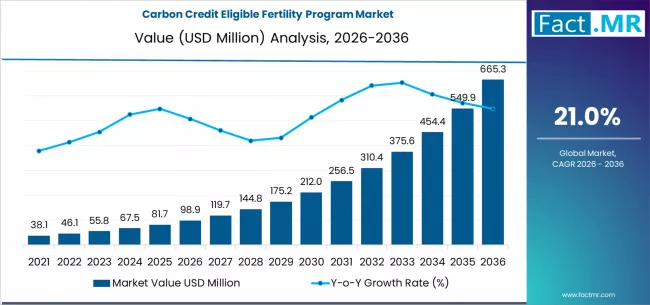
Carbon credit eligible fertility program market is projected to grow from USD 98.9 million in 2026 to USD 665.3 million by 2036, at a CAGR of 21.0%. Standard will dominate with a 47.6% market share, while liquid will lead the form segment with a 37.0% share.
Carbon Credit Eligible Fertility Program Market Forecast and Outlook 2026 to 2036
The global market for carbon credit eligible fertility programs is projected for exceptional growth, surging from USD 98.90 million in 2026 to USD 665.32 million by 2036, expanding at a remarkable CAGR of 21.0%. This market represents the direct financialization of climate-smart agriculture, where fertility management transitions from a cost center to a verified revenue-generating activity.
Key Takeaways from the Carbon Credit Eligible Fertility Program Market
- Market Value for 2026: USD 98.90 Million
- Market Value for 2036: USD 665.32 Million
- Forecast CAGR (2026-2036): 21.0%
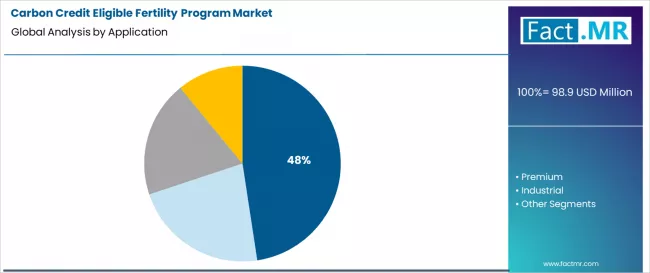
- Leading Application Segment (2026): Standard (48%)
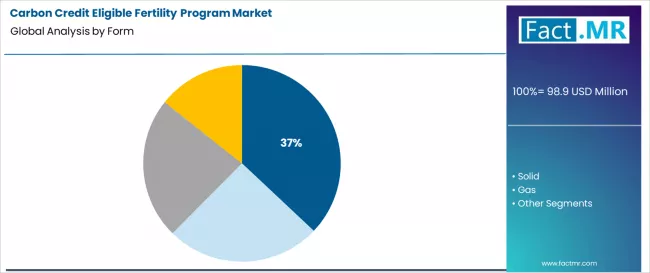
- Leading Form Segment (2026): Liquid (37%)
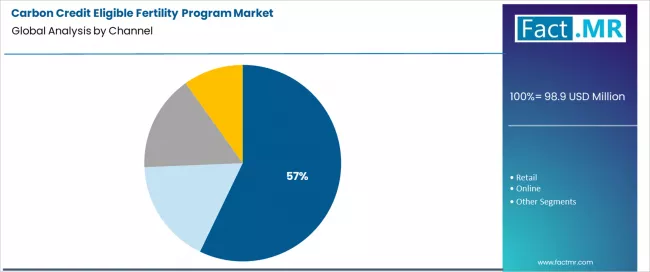
- Leading Channel Segment (2026): Direct (57%)
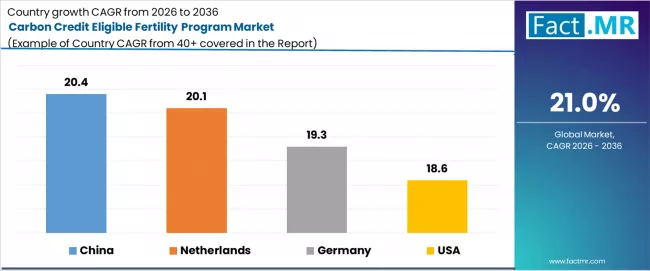
- Key Growth Countries: China (20.4% CAGR), Netherlands (20.1% CAGR), Germany (19.3% CAGR), USA (18.6% CAGR)
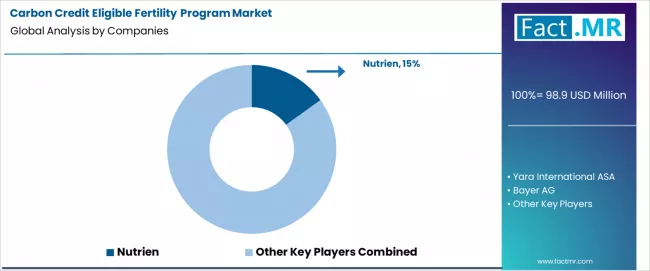
- Key Players in the Market: Nutrien, Yara International ASA, Bayer AG, Corteva Inc., BASF SE, Syngenta AG

These programs are comprehensive, science-backed protocols that combine specific fertilizer products, application methods, and soil management practices designed to increase soil organic carbon and/or reduce nitrous oxide emissions, thereby generating quantifiable and tradable carbon credits.
Growth is primarily fueled by the rapid maturation of both compliance and voluntary carbon markets, coupled with unprecedented corporate demand for high-integrity carbon offsets to meet net-zero pledges. Agricultural carbon credits offer a tangible pathway for companies to address Scope 3 emissions within their supply chains.
For farmers, these programs provide a new income stream that improves the economics of adopting enhanced efficiency fertilizers, cover crops, and precision application, effectively de-risking the transition to more sustainable practices.
The market’s evolution is centered on trust, transparency, and scientific rigor. Success depends on the development of robust, peer-reviewed MRV methodologies that accurately quantify carbon sequestration and emission reductions. This requires seamless integration between agronomic input providers, carbon project developers, and third-party verifiers to create end-to-end programs that deliver genuine climate impact and financial return for all stakeholders.
Metric
| Metric | Value |
|---|---|
| Market Value (2026) | USD 98.90 Million |
| Market Forecast Value (2036) | USD 665.32 Million |
| Forecast CAGR (2026-2036) | 21.0% |
Category
| Category | Segments |
|---|---|
| Application | Standard, Premium, Industrial, Other |
| Form | Liquid, Solid, Gas, Gel |
| Channel | Direct, Retail, Online, Distributor |
| Region | North America, Latin America, Western Europe, Eastern Europe, East Asia, South Asia & Pacific, MEA |
Segmental Analysis
By Application, Which Program Type Sees Broadest Adoption?

The standard application segment leads with a 48% share. These programs typically involve verified practices like switching to stabilized nitrogen fertilizers, implementing reduced tillage, or adding cover crops, practices with well-established carbon quantification methodologies.
Their dominance is due to lower implementation complexity and cost, making them accessible to a wide range of commodity crop farmers, thus providing the volume necessary for meaningful carbon credit generation at scale.
By Form, Which Facilitates Precision for Credit Verification?

Liquid form holds a 37% share, favored for its compatibility with the precise application required for credit eligibility. Liquid fertilizers, especially those with inhibitors, can be easily metered and integrated into variable-rate systems guided by soil maps.
This precision ensures accurate input tracking a critical component of MRV and minimizes over-application, directly linking input use to verified emission reductions. Liquid formulations also allow for easy blending of nutrients with biologicals that enhance soil carbon.
By Channel, How are These Complex Programs Managed?

Direct sales constitute the dominant channel at 57%. The technical and administrative complexity of carbon programs necessitates a direct, consultative relationship. Program providers work directly with large farming enterprises or cooperatives to design custom fertility plans, manage data collection for MRV, and handle the carbon credit issuance process. This direct model ensures program integrity, provides farmers with dedicated support, and creates a clear chain of custody for the resulting environmental attributes.
What are the Drivers, Restraints, and Key Trends of the Carbon Credit Eligible Fertility Program Market?
The paramount driver is the explosion of corporate net-zero commitments and the corresponding demand for high-quality carbon removal and avoidance credits. Stringent due diligence by credit buyers is shifting demand toward scientifically rigorous agricultural programs. Supportive government policies, including the U.S. Inflation Reduction Act and the EU Carbon Removals Certification Framework, are creating regulatory certainty and stimulating investment.
A key restraint is the persistent challenge of accurately and affordably measuring soil carbon changes and emission reductions. High MRV costs can erode farmer payments. Market fragmentation with numerous, sometimes competing, methodologies creates confusion and risk for farmers. Additionally, the long-term permanence of soil carbon and risks of reversal present ongoing scientific and contractual challenges that must be managed to maintain market credibility.
Key trends include the bundling of digital MRV tools, using satellite imagery, AI, and soil modeling to lower verification costs and increase scalability. There is a strong move toward insetting over offsetting, where food and beverage companies invest in fertility programs within their own supply chains to decarbonize sourced commodities. The rise of blockchain-based platforms for transparent credit tracking and transactions is also gaining momentum, enhancing trust in credit provenance.
Analysis of the Carbon Credit Eligible Fertility Program Market by Key Countries

| Country | CAGR (2026-2036) |
|---|---|
| China | 20.4% |
| Netherlands | 20.1% |
| Germany | 19.3% |
| USA | 18.6% |
How is China's National Carbon Market and Policy Driving Growth?
China’s leading CAGR of 20.4% is powered by the explicit inclusion of agriculture in its national emissions trading scheme development plans. Provincial pilots are actively testing methodologies for carbon sequestration in croplands.
The government’s Dual Carbon goals and "Big Food" perspective provide top-down impetus, while large state-owned agri-enterprises are positioned to rapidly deploy standardized fertility programs across vast contracted farmland, creating immense scale.
Why are the Netherlands a Hub for High-Integrity Program Development?
The Netherlands' 20.1% growth reflects its advanced position in sustainable agriculture and carbon market innovation. Dutch firms are pioneering integrated programs that combine precision fertility with peatland restoration and agroforestry.
The stringent EU regulatory environment demands high-quality credits, pushing program developers to focus on scientific rigor and transparent MRV, making the country a testing ground for premium agricultural carbon methodologies.
What is Germany's Role in Engineering and Certification?
Germany’s 19.3% CAGR is characterized by its engineering approach to MRV and strong certification culture. German institutions are developing sophisticated soil carbon measurement protocols.
The domestic market is driven by demand from its industrial sector for high-quality offsets and from food manufacturers seeking to insulate their dairy and grain supply chains, fostering programs that meet rigorous private standards like the Gold Standard or VERRA.
How is the USA's Dynamic Voluntary Market Influencing Evolution?

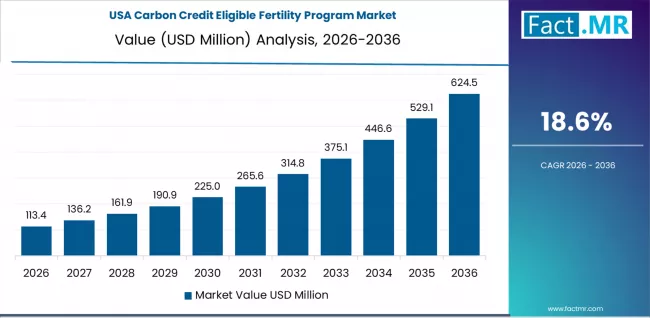
The USA’s 18.6% growth is shaped by its large, active voluntary carbon market and significant private investment. Major agribusiness and food companies are launching proprietary inset programs, creating demand.
Federal programs through the USDA provide grants and technical assistance, reducing barriers to entry. The scale of American agriculture allows for the rapid testing and scaling of diverse program models, from the Midwest corn belt to specialty crop regions.
Competitive Landscape of the Carbon Credit Eligible Fertility Program Market

The competitive landscape is a dynamic convergence of global agribusiness giants, pure-play carbon project developers, and technology startups. Competition centers on owning or partnering on the most credible and cost-effective MRV methodologies, securing long-term partnerships with corporate credit buyers, and building trusted relationships with farmer networks.
The ability to offer a seamless, integrated platform, from agronomic advice and input supply to credit issuance and sales, is becoming a key differentiator. Strategic alliances between input companies, data platforms, and financial institutions are increasingly common.
Key Players in the Carbon Credit Eligible Fertility Program Market
- Nutrien
- Yara International ASA
- Bayer AG
- Corteva Inc.
- BASF SE
- Syngenta AG
Scope of Report
| Items | Values |
|---|---|
| Quantitative Units | USD Million |
| Application | Standard, Premium, Industrial, Other |
| Form | Liquid, Solid, Gas, Gel |
| Channel | Direct, Retail, Online, Distributor |
| Key Countries | Netherlands, Germany, USA, China |
| Key Companies | Nutrien, Yara International ASA, Bayer AG, Corteva Inc., BASF SE, Syngenta AG |
| Additional Analysis | Comparative analysis of major carbon credit methodologies for agriculture; cost-benefit analysis of MRV technologies; review of contract structures and risk-sharing between farmers and developers; analysis of corporate insetting strategies; impact of carbon revenue on farm adoption rates of sustainable practices; regulatory evolution of carbon markets in key regions. |
Market by Segments
-
Application :
- Standard
- Premium
- Industrial
- Other
-
Form :
- Liquid
- Solid
- Gas
- Gel
-
Channel :
- Direct
- Retail
- Online
- Distributor
-
Region :
-
North America
- USA
- Canada
-
Latin America
- Brazil
- Mexico
- Argentina
- Rest of Latin America
-
Western Europe
- Germany
- UK
- France
- Spain
- Italy
- Netherlands
- BENELUX
- Rest of Western Europe
-
Eastern Europe
- Russia
- Poland
- Czech Republic
- Rest of Eastern Europe
-
East Asia
- China
- Japan
- South Korea
- Rest of East Asia
-
South Asia & Pacific
- India
- ASEAN
- Australia
- Rest of South Asia & Pacific
-
MEA
- Saudi Arabia
- UAE
- Turkiye
- Rest of MEA
-
Table of Content
- Executive Summary
- Global Market Outlook
- Demand to side Trends
- Supply to side Trends
- Technology Roadmap Analysis
- Analysis and Recommendations
- Market Overview
- Market Coverage / Taxonomy
- Market Definition / Scope / Limitations
- Market Background
- Market Dynamics
- Drivers
- Restraints
- Opportunity
- Trends
- Scenario Forecast
- Demand in Optimistic Scenario
- Demand in Likely Scenario
- Demand in Conservative Scenario
- Opportunity Map Analysis
- Product Life Cycle Analysis
- Supply Chain Analysis
- Investment Feasibility Matrix
- Value Chain Analysis
- PESTLE and Porter’s Analysis
- Regulatory Landscape
- Regional Parent Market Outlook
- Production and Consumption Statistics
- Import and Export Statistics
- Market Dynamics
- Global Market Analysis 2021 to 2025 and Forecast, 2026 to 2036
- Historical Market Size Value (USD Million) Analysis, 2021 to 2025
- Current and Future Market Size Value (USD Million) Projections, 2026 to 2036
- Y to o to Y Growth Trend Analysis
- Absolute $ Opportunity Analysis
- Global Market Pricing Analysis 2021 to 2025 and Forecast 2026 to 2036
- Global Market Analysis 2021 to 2025 and Forecast 2026 to 2036, By Application
- Introduction / Key Findings
- Historical Market Size Value (USD Million) Analysis By Application, 2021 to 2025
- Current and Future Market Size Value (USD Million) Analysis and Forecast By Application, 2026 to 2036
- Standard
- Premium
- Industrial
- Other
- Standard
- Y to o to Y Growth Trend Analysis By Application, 2021 to 2025
- Absolute $ Opportunity Analysis By Application, 2026 to 2036
- Global Market Analysis 2021 to 2025 and Forecast 2026 to 2036, By Form
- Introduction / Key Findings
- Historical Market Size Value (USD Million) Analysis By Form, 2021 to 2025
- Current and Future Market Size Value (USD Million) Analysis and Forecast By Form, 2026 to 2036
- Liquid
- Solid
- Gas
- Gel
- Liquid
- Y to o to Y Growth Trend Analysis By Form, 2021 to 2025
- Absolute $ Opportunity Analysis By Form, 2026 to 2036
- Global Market Analysis 2021 to 2025 and Forecast 2026 to 2036, By Channel
- Introduction / Key Findings
- Historical Market Size Value (USD Million) Analysis By Channel, 2021 to 2025
- Current and Future Market Size Value (USD Million) Analysis and Forecast By Channel, 2026 to 2036
- Direct
- Retail
- Online
- Distributor
- Direct
- Y to o to Y Growth Trend Analysis By Channel, 2021 to 2025
- Absolute $ Opportunity Analysis By Channel, 2026 to 2036
- Global Market Analysis 2021 to 2025 and Forecast 2026 to 2036, By Region
- Introduction
- Historical Market Size Value (USD Million) Analysis By Region, 2021 to 2025
- Current Market Size Value (USD Million) Analysis and Forecast By Region, 2026 to 2036
- North America
- Latin America
- Western Europe
- Eastern Europe
- East Asia
- South Asia and Pacific
- Middle East & Africa
- Market Attractiveness Analysis By Region
- North America Market Analysis 2021 to 2025 and Forecast 2026 to 2036, By Country
- Historical Market Size Value (USD Million) Trend Analysis By Market Taxonomy, 2021 to 2025
- Market Size Value (USD Million) Forecast By Market Taxonomy, 2026 to 2036
- By Country
- USA
- Canada
- Mexico
- By Application
- By Form
- By Channel
- By Country
- Market Attractiveness Analysis
- By Country
- By Application
- By Form
- By Channel
- Key Takeaways
- Latin America Market Analysis 2021 to 2025 and Forecast 2026 to 2036, By Country
- Historical Market Size Value (USD Million) Trend Analysis By Market Taxonomy, 2021 to 2025
- Market Size Value (USD Million) Forecast By Market Taxonomy, 2026 to 2036
- By Country
- Brazil
- Chile
- Rest of Latin America
- By Application
- By Form
- By Channel
- By Country
- Market Attractiveness Analysis
- By Country
- By Application
- By Form
- By Channel
- Key Takeaways
- Western Europe Market Analysis 2021 to 2025 and Forecast 2026 to 2036, By Country
- Historical Market Size Value (USD Million) Trend Analysis By Market Taxonomy, 2021 to 2025
- Market Size Value (USD Million) Forecast By Market Taxonomy, 2026 to 2036
- By Country
- Germany
- UK
- Italy
- Spain
- France
- Nordic
- BENELUX
- Rest of Western Europe
- By Application
- By Form
- By Channel
- By Country
- Market Attractiveness Analysis
- By Country
- By Application
- By Form
- By Channel
- Key Takeaways
- Eastern Europe Market Analysis 2021 to 2025 and Forecast 2026 to 2036, By Country
- Historical Market Size Value (USD Million) Trend Analysis By Market Taxonomy, 2021 to 2025
- Market Size Value (USD Million) Forecast By Market Taxonomy, 2026 to 2036
- By Country
- Russia
- Poland
- Hungary
- Balkan & Baltic
- Rest of Eastern Europe
- By Application
- By Form
- By Channel
- By Country
- Market Attractiveness Analysis
- By Country
- By Application
- By Form
- By Channel
- Key Takeaways
- East Asia Market Analysis 2021 to 2025 and Forecast 2026 to 2036, By Country
- Historical Market Size Value (USD Million) Trend Analysis By Market Taxonomy, 2021 to 2025
- Market Size Value (USD Million) Forecast By Market Taxonomy, 2026 to 2036
- By Country
- China
- Japan
- South Korea
- By Application
- By Form
- By Channel
- By Country
- Market Attractiveness Analysis
- By Country
- By Application
- By Form
- By Channel
- Key Takeaways
- South Asia and Pacific Market Analysis 2021 to 2025 and Forecast 2026 to 2036, By Country
- Historical Market Size Value (USD Million) Trend Analysis By Market Taxonomy, 2021 to 2025
- Market Size Value (USD Million) Forecast By Market Taxonomy, 2026 to 2036
- By Country
- India
- ASEAN
- Australia & New Zealand
- Rest of South Asia and Pacific
- By Application
- By Form
- By Channel
- By Country
- Market Attractiveness Analysis
- By Country
- By Application
- By Form
- By Channel
- Key Takeaways
- Middle East & Africa Market Analysis 2021 to 2025 and Forecast 2026 to 2036, By Country
- Historical Market Size Value (USD Million) Trend Analysis By Market Taxonomy, 2021 to 2025
- Market Size Value (USD Million) Forecast By Market Taxonomy, 2026 to 2036
- By Country
- Kingdom of Saudi Arabia
- Other GCC Countries
- Turkiye
- South Africa
- Other African Union
- Rest of Middle East & Africa
- By Application
- By Form
- By Channel
- By Country
- Market Attractiveness Analysis
- By Country
- By Application
- By Form
- By Channel
- Key Takeaways
- Key Countries Market Analysis
- USA
- Pricing Analysis
- Market Share Analysis, 2025
- By Application
- By Form
- By Channel
- Canada
- Pricing Analysis
- Market Share Analysis, 2025
- By Application
- By Form
- By Channel
- Mexico
- Pricing Analysis
- Market Share Analysis, 2025
- By Application
- By Form
- By Channel
- Brazil
- Pricing Analysis
- Market Share Analysis, 2025
- By Application
- By Form
- By Channel
- Chile
- Pricing Analysis
- Market Share Analysis, 2025
- By Application
- By Form
- By Channel
- Germany
- Pricing Analysis
- Market Share Analysis, 2025
- By Application
- By Form
- By Channel
- UK
- Pricing Analysis
- Market Share Analysis, 2025
- By Application
- By Form
- By Channel
- Italy
- Pricing Analysis
- Market Share Analysis, 2025
- By Application
- By Form
- By Channel
- Spain
- Pricing Analysis
- Market Share Analysis, 2025
- By Application
- By Form
- By Channel
- France
- Pricing Analysis
- Market Share Analysis, 2025
- By Application
- By Form
- By Channel
- India
- Pricing Analysis
- Market Share Analysis, 2025
- By Application
- By Form
- By Channel
- ASEAN
- Pricing Analysis
- Market Share Analysis, 2025
- By Application
- By Form
- By Channel
- Australia & New Zealand
- Pricing Analysis
- Market Share Analysis, 2025
- By Application
- By Form
- By Channel
- China
- Pricing Analysis
- Market Share Analysis, 2025
- By Application
- By Form
- By Channel
- Japan
- Pricing Analysis
- Market Share Analysis, 2025
- By Application
- By Form
- By Channel
- South Korea
- Pricing Analysis
- Market Share Analysis, 2025
- By Application
- By Form
- By Channel
- Russia
- Pricing Analysis
- Market Share Analysis, 2025
- By Application
- By Form
- By Channel
- Poland
- Pricing Analysis
- Market Share Analysis, 2025
- By Application
- By Form
- By Channel
- Hungary
- Pricing Analysis
- Market Share Analysis, 2025
- By Application
- By Form
- By Channel
- Kingdom of Saudi Arabia
- Pricing Analysis
- Market Share Analysis, 2025
- By Application
- By Form
- By Channel
- Turkiye
- Pricing Analysis
- Market Share Analysis, 2025
- By Application
- By Form
- By Channel
- South Africa
- Pricing Analysis
- Market Share Analysis, 2025
- By Application
- By Form
- By Channel
- USA
- Market Structure Analysis
- Competition Dashboard
- Competition Benchmarking
- Market Share Analysis of Top Players
- By Regional
- By Application
- By Form
- By Channel
- Competition Analysis
- Competition Deep Dive
- Nutrien
- Overview
- Product Portfolio
- Profitability by Market Segments (Product/Age /Sales Channel/Region)
- Sales Footprint
- Strategy Overview
- Marketing Strategy
- Product Strategy
- Channel Strategy
- Yara International ASA
- Bayer AG
- Corteva Inc.
- BASF SE
- Syngenta AG
- Nutrien
- Competition Deep Dive
- Assumptions & Acronyms Used
- Research Methodology
List Of Table
- Table 1: Global Market Value (USD Million) Forecast by Region, 2021 to 2036
- Table 2: Global Market Value (USD Million) Forecast by Application, 2021 to 2036
- Table 3: Global Market Value (USD Million) Forecast by Form, 2021 to 2036
- Table 4: Global Market Value (USD Million) Forecast by Channel, 2021 to 2036
- Table 5: North America Market Value (USD Million) Forecast by Country, 2021 to 2036
- Table 6: North America Market Value (USD Million) Forecast by Application, 2021 to 2036
- Table 7: North America Market Value (USD Million) Forecast by Form, 2021 to 2036
- Table 8: North America Market Value (USD Million) Forecast by Channel, 2021 to 2036
- Table 9: Latin America Market Value (USD Million) Forecast by Country, 2021 to 2036
- Table 10: Latin America Market Value (USD Million) Forecast by Application, 2021 to 2036
- Table 11: Latin America Market Value (USD Million) Forecast by Form, 2021 to 2036
- Table 12: Latin America Market Value (USD Million) Forecast by Channel, 2021 to 2036
- Table 13: Western Europe Market Value (USD Million) Forecast by Country, 2021 to 2036
- Table 14: Western Europe Market Value (USD Million) Forecast by Application, 2021 to 2036
- Table 15: Western Europe Market Value (USD Million) Forecast by Form, 2021 to 2036
- Table 16: Western Europe Market Value (USD Million) Forecast by Channel, 2021 to 2036
- Table 17: Eastern Europe Market Value (USD Million) Forecast by Country, 2021 to 2036
- Table 18: Eastern Europe Market Value (USD Million) Forecast by Application, 2021 to 2036
- Table 19: Eastern Europe Market Value (USD Million) Forecast by Form, 2021 to 2036
- Table 20: Eastern Europe Market Value (USD Million) Forecast by Channel, 2021 to 2036
- Table 21: East Asia Market Value (USD Million) Forecast by Country, 2021 to 2036
- Table 22: East Asia Market Value (USD Million) Forecast by Application, 2021 to 2036
- Table 23: East Asia Market Value (USD Million) Forecast by Form, 2021 to 2036
- Table 24: East Asia Market Value (USD Million) Forecast by Channel, 2021 to 2036
- Table 25: South Asia and Pacific Market Value (USD Million) Forecast by Country, 2021 to 2036
- Table 26: South Asia and Pacific Market Value (USD Million) Forecast by Application, 2021 to 2036
- Table 27: South Asia and Pacific Market Value (USD Million) Forecast by Form, 2021 to 2036
- Table 28: South Asia and Pacific Market Value (USD Million) Forecast by Channel, 2021 to 2036
- Table 29: Middle East & Africa Market Value (USD Million) Forecast by Country, 2021 to 2036
- Table 30: Middle East & Africa Market Value (USD Million) Forecast by Application, 2021 to 2036
- Table 31: Middle East & Africa Market Value (USD Million) Forecast by Form, 2021 to 2036
- Table 32: Middle East & Africa Market Value (USD Million) Forecast by Channel, 2021 to 2036
List Of Figures
- Figure 1: Global Market Pricing Analysis
- Figure 2: Global Market Value (USD Million) Forecast 2021 to 2036
- Figure 3: Global Market Value Share and BPS Analysis by Application, 2026 and 2036
- Figure 4: Global Market Y to o to Y Growth Comparison by Application, 2026 to 2036
- Figure 5: Global Market Attractiveness Analysis by Application
- Figure 6: Global Market Value Share and BPS Analysis by Form, 2026 and 2036
- Figure 7: Global Market Y to o to Y Growth Comparison by Form, 2026 to 2036
- Figure 8: Global Market Attractiveness Analysis by Form
- Figure 9: Global Market Value Share and BPS Analysis by Channel, 2026 and 2036
- Figure 10: Global Market Y to o to Y Growth Comparison by Channel, 2026 to 2036
- Figure 11: Global Market Attractiveness Analysis by Channel
- Figure 12: Global Market Value (USD Million) Share and BPS Analysis by Region, 2026 and 2036
- Figure 13: Global Market Y to o to Y Growth Comparison by Region, 2026 to 2036
- Figure 14: Global Market Attractiveness Analysis by Region
- Figure 15: North America Market Incremental Dollar Opportunity, 2026 to 2036
- Figure 16: Latin America Market Incremental Dollar Opportunity, 2026 to 2036
- Figure 17: Western Europe Market Incremental Dollar Opportunity, 2026 to 2036
- Figure 18: Eastern Europe Market Incremental Dollar Opportunity, 2026 to 2036
- Figure 19: East Asia Market Incremental Dollar Opportunity, 2026 to 2036
- Figure 20: South Asia and Pacific Market Incremental Dollar Opportunity, 2026 to 2036
- Figure 21: Middle East & Africa Market Incremental Dollar Opportunity, 2026 to 2036
- Figure 22: North America Market Value Share and BPS Analysis by Country, 2026 and 2036
- Figure 23: North America Market Value Share and BPS Analysis by Application, 2026 and 2036
- Figure 24: North America Market Y to o to Y Growth Comparison by Application, 2026 to 2036
- Figure 25: North America Market Attractiveness Analysis by Application
- Figure 26: North America Market Value Share and BPS Analysis by Form, 2026 and 2036
- Figure 27: North America Market Y to o to Y Growth Comparison by Form, 2026 to 2036
- Figure 28: North America Market Attractiveness Analysis by Form
- Figure 29: North America Market Value Share and BPS Analysis by Channel, 2026 and 2036
- Figure 30: North America Market Y to o to Y Growth Comparison by Channel, 2026 to 2036
- Figure 31: North America Market Attractiveness Analysis by Channel
- Figure 32: Latin America Market Value Share and BPS Analysis by Country, 2026 and 2036
- Figure 33: Latin America Market Value Share and BPS Analysis by Application, 2026 and 2036
- Figure 34: Latin America Market Y to o to Y Growth Comparison by Application, 2026 to 2036
- Figure 35: Latin America Market Attractiveness Analysis by Application
- Figure 36: Latin America Market Value Share and BPS Analysis by Form, 2026 and 2036
- Figure 37: Latin America Market Y to o to Y Growth Comparison by Form, 2026 to 2036
- Figure 38: Latin America Market Attractiveness Analysis by Form
- Figure 39: Latin America Market Value Share and BPS Analysis by Channel, 2026 and 2036
- Figure 40: Latin America Market Y to o to Y Growth Comparison by Channel, 2026 to 2036
- Figure 41: Latin America Market Attractiveness Analysis by Channel
- Figure 42: Western Europe Market Value Share and BPS Analysis by Country, 2026 and 2036
- Figure 43: Western Europe Market Value Share and BPS Analysis by Application, 2026 and 2036
- Figure 44: Western Europe Market Y to o to Y Growth Comparison by Application, 2026 to 2036
- Figure 45: Western Europe Market Attractiveness Analysis by Application
- Figure 46: Western Europe Market Value Share and BPS Analysis by Form, 2026 and 2036
- Figure 47: Western Europe Market Y to o to Y Growth Comparison by Form, 2026 to 2036
- Figure 48: Western Europe Market Attractiveness Analysis by Form
- Figure 49: Western Europe Market Value Share and BPS Analysis by Channel, 2026 and 2036
- Figure 50: Western Europe Market Y to o to Y Growth Comparison by Channel, 2026 to 2036
- Figure 51: Western Europe Market Attractiveness Analysis by Channel
- Figure 52: Eastern Europe Market Value Share and BPS Analysis by Country, 2026 and 2036
- Figure 53: Eastern Europe Market Value Share and BPS Analysis by Application, 2026 and 2036
- Figure 54: Eastern Europe Market Y to o to Y Growth Comparison by Application, 2026 to 2036
- Figure 55: Eastern Europe Market Attractiveness Analysis by Application
- Figure 56: Eastern Europe Market Value Share and BPS Analysis by Form, 2026 and 2036
- Figure 57: Eastern Europe Market Y to o to Y Growth Comparison by Form, 2026 to 2036
- Figure 58: Eastern Europe Market Attractiveness Analysis by Form
- Figure 59: Eastern Europe Market Value Share and BPS Analysis by Channel, 2026 and 2036
- Figure 60: Eastern Europe Market Y to o to Y Growth Comparison by Channel, 2026 to 2036
- Figure 61: Eastern Europe Market Attractiveness Analysis by Channel
- Figure 62: East Asia Market Value Share and BPS Analysis by Country, 2026 and 2036
- Figure 63: East Asia Market Value Share and BPS Analysis by Application, 2026 and 2036
- Figure 64: East Asia Market Y to o to Y Growth Comparison by Application, 2026 to 2036
- Figure 65: East Asia Market Attractiveness Analysis by Application
- Figure 66: East Asia Market Value Share and BPS Analysis by Form, 2026 and 2036
- Figure 67: East Asia Market Y to o to Y Growth Comparison by Form, 2026 to 2036
- Figure 68: East Asia Market Attractiveness Analysis by Form
- Figure 69: East Asia Market Value Share and BPS Analysis by Channel, 2026 and 2036
- Figure 70: East Asia Market Y to o to Y Growth Comparison by Channel, 2026 to 2036
- Figure 71: East Asia Market Attractiveness Analysis by Channel
- Figure 72: South Asia and Pacific Market Value Share and BPS Analysis by Country, 2026 and 2036
- Figure 73: South Asia and Pacific Market Value Share and BPS Analysis by Application, 2026 and 2036
- Figure 74: South Asia and Pacific Market Y to o to Y Growth Comparison by Application, 2026 to 2036
- Figure 75: South Asia and Pacific Market Attractiveness Analysis by Application
- Figure 76: South Asia and Pacific Market Value Share and BPS Analysis by Form, 2026 and 2036
- Figure 77: South Asia and Pacific Market Y to o to Y Growth Comparison by Form, 2026 to 2036
- Figure 78: South Asia and Pacific Market Attractiveness Analysis by Form
- Figure 79: South Asia and Pacific Market Value Share and BPS Analysis by Channel, 2026 and 2036
- Figure 80: South Asia and Pacific Market Y to o to Y Growth Comparison by Channel, 2026 to 2036
- Figure 81: South Asia and Pacific Market Attractiveness Analysis by Channel
- Figure 82: Middle East & Africa Market Value Share and BPS Analysis by Country, 2026 and 2036
- Figure 83: Middle East & Africa Market Value Share and BPS Analysis by Application, 2026 and 2036
- Figure 84: Middle East & Africa Market Y to o to Y Growth Comparison by Application, 2026 to 2036
- Figure 85: Middle East & Africa Market Attractiveness Analysis by Application
- Figure 86: Middle East & Africa Market Value Share and BPS Analysis by Form, 2026 and 2036
- Figure 87: Middle East & Africa Market Y to o to Y Growth Comparison by Form, 2026 to 2036
- Figure 88: Middle East & Africa Market Attractiveness Analysis by Form
- Figure 89: Middle East & Africa Market Value Share and BPS Analysis by Channel, 2026 and 2036
- Figure 90: Middle East & Africa Market Y to o to Y Growth Comparison by Channel, 2026 to 2036
- Figure 91: Middle East & Africa Market Attractiveness Analysis by Channel
- Figure 92: Global Market - Tier Structure Analysis
- Figure 93: Global Market - Company Share Analysis
- FAQs -
How big is the carbon credit eligible fertility program market in 2026?
The global carbon credit eligible fertility program market is estimated to be valued at USD 98.9 million in 2026.
What will be the size of carbon credit eligible fertility program market in 2036?
The market size for the carbon credit eligible fertility program market is projected to reach USD 665.3 million by 2036.
How much will be the carbon credit eligible fertility program market growth between 2026 and 2036?
The carbon credit eligible fertility program market is expected to grow at a 21.0% CAGR between 2026 and 2036.
What are the key product types in the carbon credit eligible fertility program market?
The key product types in carbon credit eligible fertility program market are standard, premium, industrial and other.
Which form segment to contribute significant share in the carbon credit eligible fertility program market in 2026?
In terms of form, liquid segment to command 37.0% share in the carbon credit eligible fertility program market in 2026.