Carbon Capture Derived Polyols Market (2026 - 2036)

Carbon Capture Derived Polyols Market is segmented by Material Type (CO₂-Based Polyols, Syngas-Derived, Methanol-Based), Application (PU Foams, Coatings, Adhesives, and Others), End-Use Industry (Construction, Automotive, Furniture, and Others), and Region. Forecast for 2026 to 2036.

Core Findings

    Carbon Capture Derived Polyols Market Forecast 2026 to 2036

    In 2025, the carbon capture derived polyols market was valued at USD 68.9 million. Based on Fact MR analysis, demand for carbon capture derived polyols is estimated to grow to USD 78 million in 2026 and USD 420 million by 2036. FMR projects a CAGR of 18.3% during the forecast period.

    The absolute dollar growth from 2026 to 2036 is USD 342 million. This growth is driven by increasing demand for sustainable polyols derived from carbon capture processes, used in applications like polyurethanes and insulation materials. The market's expansion is also supported by growing global efforts to reduce carbon emissions and promote circular economy solutions. However, challenges such as high production costs and scalability of carbon capture technologies may affect growth in some regions.

    Germany leads with a CAGR of 18.8%, driven by strong environmental regulations and the adoption of green technologies. The USA follows with a 16.2% CAGR, fueled by growing interest in sustainable chemicals and carbon capture solutions. The Netherlands grows at 14.5%, supported by initiatives promoting circular economy practices and carbon capture utilization. South Korea grows at 13.8%, driven by its commitment to environmental sustainability and technological innovations in carbon capture and reuse.
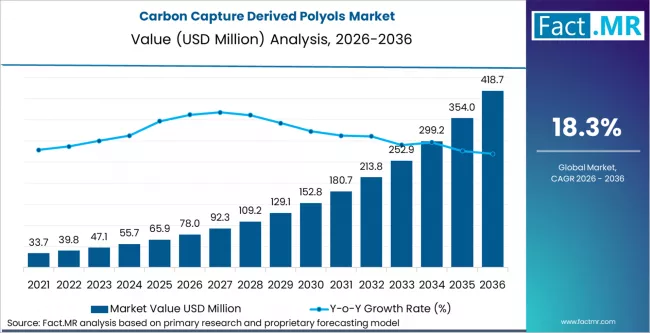
    Carbon Capture Derived Polyols Market Market Value Analysis

    Carbon Capture Derived Polyols Market Definition

    The Carbon Capture Derived Polyols Market refers to the production and sale of polyol chemicals synthesized using carbon captured from industrial emissions or the atmosphere as a feedstock. These polyols serve as reactive building blocks in polyurethanes and other polymers, replacing fossil‑based raw materials and lowering carbon intensity. Their primary function is to enable more sustainable production of foams, coatings, adhesives, sealants, and elastomers. Key end uses include insulation foams, automotive components, furniture cushioning, and specialty coatings where performance and reduced environmental impact are priorities.

    Market Inclusions

    This report covers global and regional market sizes for carbon capture derived polyols with a defined forecast period. It includes breakdowns by polyol type (polyether, polyester, bio‑based blends), application (rigid foams, flexible foams, coatings, adhesives), and end‑use industry (construction, automotive, furniture, industrial). Pricing trends, carbon feedstock supply dynamics, and trade flow data are included to reflect broader market drivers and constraints.

    Market Exclusions

    The scope excludes conventional petrochemical polyols not derived from captured carbon unless blended above a defined threshold with carbon capture derived content. It does not cover finished products such as insulation boards, furniture, or coated materials incorporating these polyols. Niche carbon capture chemicals used outside polymer synthesis are omitted.

    Research Methodology

    • Primary Research: Interviews were conducted with material scientists, polymer formulators, carbon capture technology providers, and industry analysts.
    • Desk Research: Data was sourced from industry reports, regulatory filings, and trade association publications.
    • Market‑Sizing and Forecasting: A hybrid model was used, combining top‑down polymer demand forecasts with bottom‑up shipment and revenue estimates.
    • Data Validation and Update Cycle: Findings were validated through expert review and aligned with recent production and trade figures, with periodic updates.

    Carbon Capture Derived Polyols Market

    • Market Definition

      • The Carbon Capture Derived Polyols Market refers to polyols produced by capturing carbon dioxide (CO₂) from industrial emissions or the atmosphere and using it as a feedstock in the production of polyols. These polyols serve as key ingredients in polyurethane (PU) foams, coatings, adhesives, and other polymer products, offering a sustainable alternative to traditional fossil fuel-based polyols. The integration of CO₂ into polyol production reduces the carbon footprint of the resulting products, contributing to the growing demand for eco-friendly and carbon-reduced materials in industries such as construction, automotive, and furniture.
    • Demand Drivers

      • Increasing regulatory pressure and government policies aimed at reducing carbon emissions and promoting sustainability across industries.
      • Growing consumer and corporate preference for low-carbon and eco-friendly products, leading to the adoption of CO₂-based polyols.
      • The push for sustainability in the construction and automotive sectors, where materials like PU foams, coatings, and adhesives are widely used.
      • Investment in carbon capture technologies and their integration into manufacturing processes, making CO₂-derived polyols more commercially viable and scalable.
    • Key Segments Analyzed

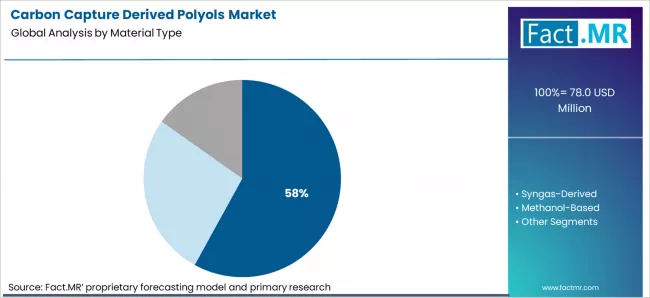
      • Material Type: CO₂-based polyols are expected to dominate, accounting for 58% of the market share by 2026.
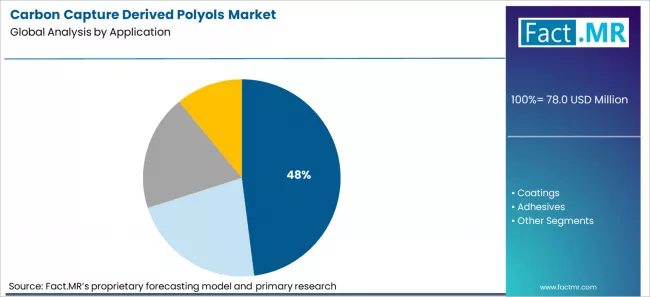
      • Application: PU foams are projected to lead the market with 48% of the share, driven by their widespread use in construction, automotive, and furniture sectors.
      • End-Use Industry: Construction is expected to lead with 40% of the market share, supported by the growing demand for sustainable materials in residential and commercial building projects.
      • Region: Germany is expected to exhibit the highest growth rate, driven by strong environmental policies and advanced industrial capabilities.
    • Analyst Opinion at FMR

      • Shambhu Nath Jha, Principal Consultant at Fact MR (FMR), comments, "The carbon capture derived polyols market is entering a phase of rapid expansion, fueled by the increasing global focus on sustainability and carbon reduction. The adoption of CO₂-based polyols as a sustainable alternative is gaining momentum, particularly in industries where carbon footprint reduction is a priority. As governments and industries work toward achieving climate goals, the demand for these innovative polyols is expected to grow significantly."
    • Strategic Implications/Executive Takeaways

      • Invest in scaling up CO₂ capture technologies to reduce production costs and enhance the feasibility of bio-based polyols in large-scale applications.
      • Strengthen collaborations with industries such as automotive and construction to drive the adoption of carbon-reduced materials and expand market presence.
      • Leverage government incentives and sustainability programs aimed at promoting low-carbon technologies in material production.
      • Focus on product differentiation through improved performance and cost-effectiveness of CO₂-based polyols in key applications.
    • Methodology

      • Primary Research: Interviews were conducted with material scientists, polymer formulators, carbon capture technology providers, and industry analysts.
      • Desk Research: Data was sourced from industry reports, regulatory filings, and trade association publications.
      • Market Sizing and Forecasting: A hybrid model was used, combining top-down polymer demand forecasts with bottom-up shipment and revenue estimates.
      • Data Validation and Update Cycle: Findings were validated through expert review and aligned with recent production, trade, and sales figures, with periodic updates.

    Segmental Analysis

    Carbon Capture Derived Polyols Market Analysis by Material Type
    Carbon Capture Derived Polyols Market Analysis By Material Type

    • Market Overview: CO₂-based polyols are projected to hold 58% of the carbon capture derived polyols market by 2026. CO₂-based polyols are produced by capturing carbon dioxide and converting it into useful polyols, which are then used in the production of various materials such as polyurethane foams, coatings, and adhesives. These polyols provide a sustainable alternative to traditional petroleum-based polyols.
    • Demand Drivers:
      • Sustainability and Environmental Benefits: CO₂-based polyols are gaining traction due to their ability to utilize captured carbon dioxide, reducing greenhouse gas emissions. As industries increasingly prioritize sustainability, the demand for CO₂-based polyols is expected to grow.
      • Carbon Reduction Initiatives: Governments and businesses are investing in carbon capture technologies to reduce the carbon footprint of industrial processes. CO₂-based polyols help meet sustainability targets by recycling CO₂ into valuable materials, thus supporting carbon reduction initiatives.
      • Growth in Polyurethane Demand: The demand for CO₂-based polyols is driven by the increasing use of polyurethanes (PU) in a variety of applications. Polyols derived from CO₂ offer improved sustainability without compromising performance, making them a preferred choice for companies seeking eco-friendly alternatives.

    Carbon Capture Derived Polyols Market Analysis by Application
    Carbon Capture Derived Polyols Market Analysis By Application

    • Market Overview: PU foams are expected to capture 48% of the market share by 2026. Polyurethane foams are widely used in industries such as automotive, construction, and furniture manufacturing due to their versatility, insulation properties, and lightweight characteristics. The use of carbon capture derived polyols in PU foam production enhances the sustainability of the material while maintaining its performance.
    • Demand Drivers:
      • Increased Demand for Sustainable Materials: As industries look for more sustainable alternatives to traditional materials, PU foams made from CO₂-based polyols offer an eco-friendly solution. These foams are particularly in demand in sectors where insulation and energy efficiency are critical, such as in the construction and automotive industries.
      • Energy Efficiency and Thermal Insulation: PU foams made from carbon capture derived polyols help improve the energy efficiency of buildings and vehicles. Their use in insulation applications is driving the demand for these materials as the construction and automotive sectors increasingly prioritize energy-efficient solutions.
      • Regulatory Pressure and Consumer Preference: Stricter environmental regulations and increasing consumer demand for green products are prompting manufacturers to adopt CO₂-based polyols in their production processes, further boosting their adoption in PU foam applications.

    Carbon Capture Derived Polyols Market Drivers, Restraints, and Opportunities

    FMR analysts observe that the carbon capture derived polyols market is a growth‑aligned, transitional segment driven by the integration of carbon capture technologies with polymer supply chains. Historically, polyols were sourced predominantly from petrochemical feedstocks; increasing regulatory pressure to reduce greenhouse gas emissions and corporate commitments to lower carbon intensity created structural demand for polyols derived using captured CO₂ as a carbon feedstock. The 2026 valuation reflects this shift toward linking decarbonization objectives with material production, where producers deploy carbon capture utilization processes to supply differentiated, lower‑emission polyols to polyurethane and coating manufacturers.

    While demand for conventional petrochemical polyols remains large due to cost competitiveness, carbon capture derived polyols are gaining share in applications where environmental impact profiles influence purchasing decisions. These differentiated polyols typically carry higher per‑unit prices, contributing to net market value growth even as overall unit volumes grow moderately with chemical industry investment cycles. The market exists at its current size because manufacturers balance performance, compliance, and carbon reduction targets, and regulatory incentives increasingly reward utilization of captured CO₂ in feedstocks.

    • Decarbonization Demand: Brands and formulators adopt carbon capture derived polyols to meet low‑carbon procurement policies and reduce product life‑cycle emissions, replacing traditional petrochemical feedstocks in select portfolios.
    • Regulatory & Policy Standards: Policies such as the EU’s Carbon Border Adjustment Mechanism (CBAM) and low‑carbon product standards push adoption of certified low‑emission materials that incorporate captured CO₂, supporting premium pricing.
    • Regional Adoption Dynamics: In Europe and North America, stronger low‑carbon mandates and corporate net‑zero commitments drive higher uptake of carbon capture derived polyols compared with regions where regulations are less advanced.

    Regional Analysis

    The market analysis covers key global regions, including North America, Europe, and East Asia. It is segmented geographically, with specific market dynamics for each region. The full report provides a detailed market attractiveness analysis.
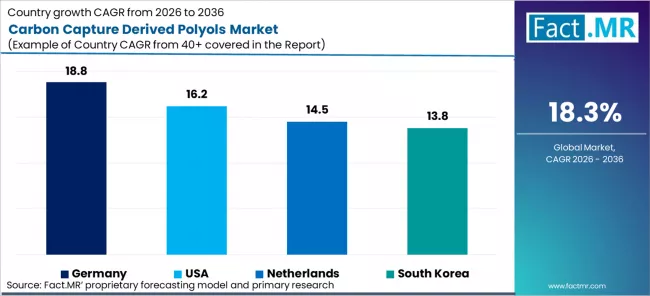
    Carbon Capture Derived Polyols Market Cagr Analysis By Country

    Country CAGR (2026-2036)
    Germany 18.8%
    USA 16.2%
    Netherlands 14.5%
    South Korea 13.8%

    Source: Fact MR (FMR) analysis, based on proprietary forecasting model and primary research.

    Germany:

    Germany is a "leading market" for carbon capture derived polyols, driven by strong regulatory support for carbon reduction initiatives and the growing demand for sustainable chemical solutions in the automotive and construction industries.

    • Germany: Demand for carbon capture derived polyols in Germany is projected to rise at 18.8% CAGR through 2036. Germany’s commitment to carbon neutrality and investment in sustainable chemical solutions contribute to strong growth in the market for carbon capture derived polyols.

    North America:
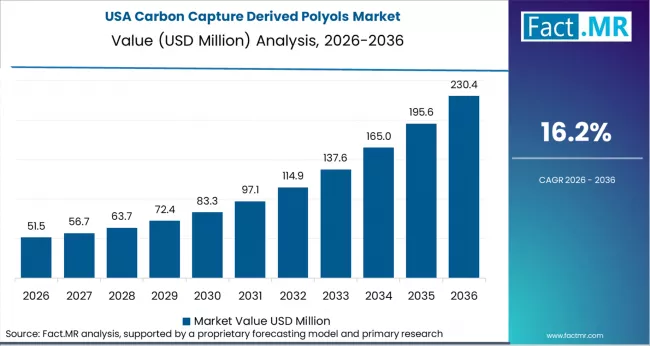
    Carbon Capture Derived Polyols Market Country Value Analysis

    In North America, particularly in the USA, demand for carbon capture derived polyols is growing due to increasing environmental regulations and investments in clean technology and sustainable materials.

    • USA: Demand for carbon capture derived polyols in the U.S. is projected to rise at 16.2% CAGR through 2036. The USA’s focus on clean technology adoption and sustainability incentives continue to drive strong market growth for carbon capture derived polyols.

    Europe:

    In Europe, particularly in the Netherlands, the market for carbon capture derived polyols is expanding due to growing interest in sustainability and green chemistry solutions in the industrial sector.

    • Netherlands: Demand for carbon capture derived polyols in the Netherlands is projected to rise at 14.5% CAGR through 2036. The Netherlands’ commitment to carbon reduction and focus on green chemicals continue to contribute to the growing demand for polyols derived from carbon capture technology.

    East Asia:

    In East Asia, South Korea is seeing growing demand for carbon capture derived polyols, supported by government incentives for sustainable industrial practices and investments in clean technologies.

    • South Korea: Demand for carbon capture derived polyols in South Korea is projected to rise at 13.8% CAGR through 2036. South Korea’s investments in green technologies and focus on sustainable materials continue to drive market growth for polyols derived from carbon capture processes.

    Fact MR's analysis of the Carbon Capture Derived Polyols Market in Germany, North America, Europe, and East Asia consists of country-wise assessments that include Germany, the USA, the Netherlands, and South Korea. Readers can find detailed trends, regulatory updates, and company-specific investments shaping the market’s growth in these countries.

    How Are Key Players Competing in the Carbon Capture Derived Polyols Market?
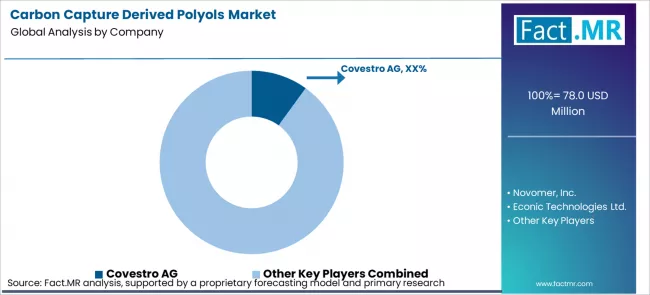
    Carbon Capture Derived Polyols Market Analysis By Company

    In the carbon capture derived polyols market, companies like Covestro AG, Novomer, Inc., and Econic Technologies Ltd. are pioneering the development of sustainable polyols by utilizing captured carbon dioxide (CO₂) as a feedstock. These polyols are used in a variety of applications, including foams, coatings, and adhesives, offering a more environmentally friendly alternative to traditional petroleum-based products. SK Innovation Co., Ltd. and Saudi Arabian Oil Company (Aramco), through its collaboration with SABIC, are investing heavily in carbon capture technologies to enhance polyol production and meet sustainability goals. Key differentiators in the market include the scalability of CO₂ utilization technologies, the performance of the polyols, and alignment with growing environmental regulations and sustainability efforts.

    Recent Industry Developments

    • First U.S. Commercial Production of CO₂ Polyols (Corporate): In November 2025, Monument Chemical began the first commercial production of polycarbonate ether (PCE) polyols from captured carbon at its Brandenburg, KY facility. This product line, branded Poly-CO₂®, utilizes Econic Technologies’ catalyst process to replace 20-30% of fossil-based feedstocks with captured CO₂.
    • Strategic Licensing with Saudi Aramco (Corporate): On April 22, 2025, Econic Technologies signed a global license agreement for Saudi Aramco Technologies Company’s (SATC) Converge® CO₂ polymer technologies. This deal allows Econic to integrate Aramco's polyol portfolio with its own, specifically targeting the Coatings, Adhesives, Sealants, and Elastomers (CASE) segments for large-scale industrial deployment.
    • EU Certification Framework for Carbon Storage in Products (Regulatory): In December 2025, the European Commission adopted Implementing Regulation (EU) 2025/2358, establishing the first voluntary framework for certifying carbon storage in products. A specific methodology for carbon storage in buildings and materials (including CO₂-derived polyols used in insulation) is mandated for finalization in 2026 to ensure transparent accounting of "permanent" carbon removal.

    Key Players of the Carbon Capture Derived Polyols Market

    • Covestro AG
    • Novomer, Inc.
    • Econic Technologies Ltd.
    • SK Innovation Co., Ltd.
    • Saudi Arabian Oil Company (Aramco) / SABIC (Saudi Basic Industries Corporation)

    Report Scope

    Metric Value
    Quantitative Units USD 78 million (2026) to USD 420 million (2036), at a CAGR of 18.3%
    Market Definition The Carbon Capture Derived Polyols Market includes polyols produced using carbon capture technologies, offering a more sustainable alternative in industries such as construction, automotive, and furniture.
    By Material Type CO₂-Based Polyols, Syngas-Derived, Methanol-Based
    By Application PU Foams, Coatings, Adhesives, Others
    By End-Use Industry Construction, Automotive, Furniture, Others
    Regions Covered North America, Latin America, Europe, East Asia, South Asia, Oceania, Middle East and Africa
    Countries Covered United States, Canada, Mexico, Brazil, Argentina, Germany, France, United Kingdom, Italy, Spain, China, India, Japan, South Korea, Indonesia, Australia, and 40+ countries
    Key Companies Profiled Covestro AG, Novomer, Inc., Econic Technologies Ltd., SK Innovation Co., Ltd., Saudi Arabian Oil Company (Aramco) / SABIC (Saudi Basic Industries Corporation)
    Forecast Period 2026 to 2036
    Approach Hybrid top-down and bottom-up market modeling validated through primary interviews with manufacturers and supported by trade data benchmarking and market research.

    Carbon Capture Derived Polyols Market Key Segments

    • By Material Type :

      • CO₂-Based Polyols
      • Syngas-Derived
      • Methanol-Based
    • By Application :

      • PU Foam
      • Coatings
      • Adhesives
      • Others
    • By End-Use Industry :

      • Construction
      • Automotive
      • Furniture
      • Others
    • Region :

      • North America
        • USA
        • Canada
        • Mexico
      • Europe
        • Germany
        • UK
        • France
        • Italy
        • Spain
        • Nordic Countries
        • BENELUX
        • Rest of Europe
      • Asia Pacific
        • China
        • Japan
        • South Korea
        • India
        • Australia
        • Rest of Asia Pacific
      • Latin America
        • Brazil
        • Argentina
        • Rest of Latin America
      • Middle East and Africa
        • Kingdom of Saudi Arabia
        • United Arab Emirates
        • South Africa
        • Rest of Middle East and Africa
      • Other Regions
        • Oceania
        • Central Asia
        • Other Markets

    Bibliographies

    • First U.S. Commercial Production of CO₂ Polyols by Monument Chemical: Econic Technologies. (2025, November). Monument Chemical begins first U.S. commercial production of CO₂ polyols at Brandenburg, KY facility. Econic Technologies.
    • Strategic Licensing Agreement Between Econic Technologies and Saudi Aramco: Bioplastics Magazine. (2025, April 22). Econic Technologies signs global licensing agreement with Saudi Aramco for Converge® CO₂ polymer technologies. Bioplastics Magazine.
    • EU Certification Framework for Carbon Storage in Products: European Commission. (2025, December). EU adopts implementing regulation for carbon storage certification in products. European Commission.
    • Covestro AG. (2026). CO₂-based polyols for polymer and polyurethane applications (product portfolio). Covestro AG.
    • Econic Technologies Ltd. (2025). CO₂-based polyol technology and applications for sustainable polyurethane production (product portfolio). Econic Technologies Ltd.
    • Novomer, Inc. (2026). Carbon capture-derived polyols for polyurethane applications (product portfolio). Novomer, Inc.
    • Saudi Arabian Oil Company (Aramco), & Saudi Basic Industries Corporation (SABIC). (2025). Collaboration on CO₂-based polyols for polyurethane applications (product and applications overview). Saudi Basic Industries Corporation (SABIC).
    • SK Innovation Co., Ltd. (2026). CO₂-derived polyols for sustainable materials and polyurethane applications (product portfolio). SK Innovation Co., Ltd.

    Table of Content

    1. Executive Summary
      • Global Market Outlook
      • Demand to side Trends
      • Supply to side Trends
      • Technology Roadmap Analysis
      • Analysis and Recommendations
    2. Market Overview
      • Market Coverage / Taxonomy
      • Market Definition / Scope / Limitations
    3. Research Methodology
      • Chapter Orientation
      • Analytical Lens and Working Hypotheses
        • Market Structure, Signals, and Trend Drivers
        • Benchmarking and Cross-market Comparability
        • Market Sizing, Forecasting, and Opportunity Mapping
      • Research Design and Evidence Framework
        • Desk Research Programme (Secondary Evidence)
          • Company Annual and Sustainability Reports
          • Peer-reviewed Journals and Academic Literature
          • Corporate Websites, Product Literature, and Technical Notes
          • Earnings Decks and Investor Briefings
          • Statutory Filings and Regulatory Disclosures
          • Technical White Papers and Standards Notes
          • Trade Journals, Industry Magazines, and Analyst Briefs
          • Conference Proceedings, Webinars, and Seminar Materials
          • Government Statistics Portals and Public Data Releases
          • Press Releases and Reputable Media Coverage
          • Specialist Newsletters and Curated Briefings
          • Sector Databases and Reference Repositories
          • FMR Internal Proprietary Databases and Historical Market Datasets
          • Subscription Datasets and Paid Sources
          • Social Channels, Communities, and Digital Listening Inputs
          • Additional Desk Sources
        • Expert Input and Fieldwork (Primary Evidence)
          • Primary Modes
            • Qualitative Interviews and Expert Elicitation
            • Quantitative Surveys and Structured Data Capture
            • Blended Approach
          • Why Primary Evidence is Used
          • Field Techniques
            • Interviews
            • Surveys
            • Focus Groups
            • Observational and In-context Research
            • Social and Community Interactions
          • Stakeholder Universe Engaged
            • C-suite Leaders
            • Board Members
            • Presidents and Vice Presidents
            • R&D and Innovation Heads
            • Technical Specialists
            • Domain Subject-matter Experts
            • Scientists
            • Physicians and Other Healthcare Professionals
          • Governance, Ethics, and Data Stewardship
            • Research Ethics
            • Data Integrity and Handling
        • Tooling, Models, and Reference Databases
      • Data Engineering and Model Build
        • Data Acquisition and Ingestion
        • Cleaning, Normalisation, and Verification
        • Synthesis, Triangulation, and Analysis
      • Quality Assurance and Audit Trail
    4. Market Background
      • Market Dynamics
        • Drivers
        • Restraints
        • Opportunity
        • Trends
      • Scenario Forecast
        • Demand in Optimistic Scenario
        • Demand in Likely Scenario
        • Demand in Conservative Scenario
      • Opportunity Map Analysis
      • Product Life Cycle Analysis
      • Supply Chain Analysis
      • Investment Feasibility Matrix
      • Value Chain Analysis
      • PESTLE and Porter’s Analysis
      • Regulatory Landscape
      • Regional Parent Market Outlook
      • Production and Consumption Statistics
      • Import and Export Statistics
    5. Global Market Analysis 2021 to 2025 and Forecast, 2026 to 2036
      • Historical Market Size Value (USD Million) Analysis, 2021 to 2025
      • Current and Future Market Size Value (USD Million) Projections, 2026 to 2036
        • Y to o to Y Growth Trend Analysis
        • Absolute $ Opportunity Analysis
    6. Global Market Pricing Analysis 2021 to 2025 and Forecast 2026 to 2036
    7. Global Market Analysis 2021 to 2025 and Forecast 2026 to 2036, By Material Type
      • Introduction / Key Findings
      • Historical Market Size Value (USD Million) Analysis By Material Type , 2021 to 2025
      • Current and Future Market Size Value (USD Million) Analysis and Forecast By Material Type , 2026 to 2036
        • CO₂-Based Polyols
        • Syngas-Derived
        • Methanol-Based
      • Y to o to Y Growth Trend Analysis By Material Type , 2021 to 2025
      • Absolute $ Opportunity Analysis By Material Type , 2026 to 2036
    8. Global Market Analysis 2021 to 2025 and Forecast 2026 to 2036, By Application
      • Introduction / Key Findings
      • Historical Market Size Value (USD Million) Analysis By Application, 2021 to 2025
      • Current and Future Market Size Value (USD Million) Analysis and Forecast By Application, 2026 to 2036
        • PU Foams
        • Coatings
        • Adhesives
        • Others
      • Y to o to Y Growth Trend Analysis By Application, 2021 to 2025
      • Absolute $ Opportunity Analysis By Application, 2026 to 2036
    9. Global Market Analysis 2021 to 2025 and Forecast 2026 to 2036, By Region
      • Introduction
      • Historical Market Size Value (USD Million) Analysis By Region, 2021 to 2025
      • Current Market Size Value (USD Million) Analysis and Forecast By Region, 2026 to 2036
        • North America
        • Latin America
        • Western Europe
        • Eastern Europe
        • East Asia
        • South Asia and Pacific
        • Middle East & Africa
      • Market Attractiveness Analysis By Region
    10. North America Market Analysis 2021 to 2025 and Forecast 2026 to 2036, By Country
      • Historical Market Size Value (USD Million) Trend Analysis By Market Taxonomy, 2021 to 2025
      • Market Size Value (USD Million) Forecast By Market Taxonomy, 2026 to 2036
        • By Country
          • USA
          • Canada
          • Mexico
        • By Material Type
        • By Application
      • Market Attractiveness Analysis
        • By Country
        • By Material Type
        • By Application
      • Key Takeaways
    11. Latin America Market Analysis 2021 to 2025 and Forecast 2026 to 2036, By Country
      • Historical Market Size Value (USD Million) Trend Analysis By Market Taxonomy, 2021 to 2025
      • Market Size Value (USD Million) Forecast By Market Taxonomy, 2026 to 2036
        • By Country
          • Brazil
          • Chile
          • Rest of Latin America
        • By Material Type
        • By Application
      • Market Attractiveness Analysis
        • By Country
        • By Material Type
        • By Application
      • Key Takeaways
    12. Western Europe Market Analysis 2021 to 2025 and Forecast 2026 to 2036, By Country
      • Historical Market Size Value (USD Million) Trend Analysis By Market Taxonomy, 2021 to 2025
      • Market Size Value (USD Million) Forecast By Market Taxonomy, 2026 to 2036
        • By Country
          • Germany
          • UK
          • Italy
          • Spain
          • France
          • Nordic
          • BENELUX
          • Rest of Western Europe
        • By Material Type
        • By Application
      • Market Attractiveness Analysis
        • By Country
        • By Material Type
        • By Application
      • Key Takeaways
    13. Eastern Europe Market Analysis 2021 to 2025 and Forecast 2026 to 2036, By Country
      • Historical Market Size Value (USD Million) Trend Analysis By Market Taxonomy, 2021 to 2025
      • Market Size Value (USD Million) Forecast By Market Taxonomy, 2026 to 2036
        • By Country
          • Russia
          • Poland
          • Hungary
          • Balkan & Baltic
          • Rest of Eastern Europe
        • By Material Type
        • By Application
      • Market Attractiveness Analysis
        • By Country
        • By Material Type
        • By Application
      • Key Takeaways
    14. East Asia Market Analysis 2021 to 2025 and Forecast 2026 to 2036, By Country
      • Historical Market Size Value (USD Million) Trend Analysis By Market Taxonomy, 2021 to 2025
      • Market Size Value (USD Million) Forecast By Market Taxonomy, 2026 to 2036
        • By Country
          • China
          • Japan
          • South Korea
        • By Material Type
        • By Application
      • Market Attractiveness Analysis
        • By Country
        • By Material Type
        • By Application
      • Key Takeaways
    15. South Asia and Pacific Market Analysis 2021 to 2025 and Forecast 2026 to 2036, By Country
      • Historical Market Size Value (USD Million) Trend Analysis By Market Taxonomy, 2021 to 2025
      • Market Size Value (USD Million) Forecast By Market Taxonomy, 2026 to 2036
        • By Country
          • India
          • ASEAN
          • Australia & New Zealand
          • Rest of South Asia and Pacific
        • By Material Type
        • By Application
      • Market Attractiveness Analysis
        • By Country
        • By Material Type
        • By Application
      • Key Takeaways
    16. Middle East & Africa Market Analysis 2021 to 2025 and Forecast 2026 to 2036, By Country
      • Historical Market Size Value (USD Million) Trend Analysis By Market Taxonomy, 2021 to 2025
      • Market Size Value (USD Million) Forecast By Market Taxonomy, 2026 to 2036
        • By Country
          • Kingdom of Saudi Arabia
          • Other GCC Countries
          • Turkiye
          • South Africa
          • Other African Union
          • Rest of Middle East & Africa
        • By Material Type
        • By Application
      • Market Attractiveness Analysis
        • By Country
        • By Material Type
        • By Application
      • Key Takeaways
    17. Key Countries Market Analysis
      • USA
        • Pricing Analysis
        • Market Share Analysis, 2025
          • By Material Type
          • By Application
      • Canada
        • Pricing Analysis
        • Market Share Analysis, 2025
          • By Material Type
          • By Application
      • Mexico
        • Pricing Analysis
        • Market Share Analysis, 2025
          • By Material Type
          • By Application
      • Brazil
        • Pricing Analysis
        • Market Share Analysis, 2025
          • By Material Type
          • By Application
      • Chile
        • Pricing Analysis
        • Market Share Analysis, 2025
          • By Material Type
          • By Application
      • Germany
        • Pricing Analysis
        • Market Share Analysis, 2025
          • By Material Type
          • By Application
      • UK
        • Pricing Analysis
        • Market Share Analysis, 2025
          • By Material Type
          • By Application
      • Italy
        • Pricing Analysis
        • Market Share Analysis, 2025
          • By Material Type
          • By Application
      • Spain
        • Pricing Analysis
        • Market Share Analysis, 2025
          • By Material Type
          • By Application
      • France
        • Pricing Analysis
        • Market Share Analysis, 2025
          • By Material Type
          • By Application
      • India
        • Pricing Analysis
        • Market Share Analysis, 2025
          • By Material Type
          • By Application
      • ASEAN
        • Pricing Analysis
        • Market Share Analysis, 2025
          • By Material Type
          • By Application
      • Australia & New Zealand
        • Pricing Analysis
        • Market Share Analysis, 2025
          • By Material Type
          • By Application
      • China
        • Pricing Analysis
        • Market Share Analysis, 2025
          • By Material Type
          • By Application
      • Japan
        • Pricing Analysis
        • Market Share Analysis, 2025
          • By Material Type
          • By Application
      • South Korea
        • Pricing Analysis
        • Market Share Analysis, 2025
          • By Material Type
          • By Application
      • Russia
        • Pricing Analysis
        • Market Share Analysis, 2025
          • By Material Type
          • By Application
      • Poland
        • Pricing Analysis
        • Market Share Analysis, 2025
          • By Material Type
          • By Application
      • Hungary
        • Pricing Analysis
        • Market Share Analysis, 2025
          • By Material Type
          • By Application
      • Kingdom of Saudi Arabia
        • Pricing Analysis
        • Market Share Analysis, 2025
          • By Material Type
          • By Application
      • Turkiye
        • Pricing Analysis
        • Market Share Analysis, 2025
          • By Material Type
          • By Application
      • South Africa
        • Pricing Analysis
        • Market Share Analysis, 2025
          • By Material Type
          • By Application
    18. Market Structure Analysis
      • Competition Dashboard
      • Competition Benchmarking
      • Market Share Analysis of Top Players
        • By Regional
        • By Material Type
        • By Application
    19. Competition Analysis
      • Competition Deep Dive
        • Covestro AG
          • Overview
          • Product Portfolio
          • Profitability by Market Segments (Product/Age /Sales Channel/Region)
          • Sales Footprint
          • Strategy Overview
            • Marketing Strategy
            • Product Strategy
            • Channel Strategy
        • Novomer, Inc.
        • Econic Technologies Ltd.
        • SK Innovation Co., Ltd.
        • Saudi Arabian Oil Company
    20. Assumptions & Acronyms Used

    List Of Table

    • Table 1: Global Market Value (USD Million) Forecast by Region, 2021 to 2036
    • Table 2: Global Market Value (USD Million) Forecast by Material Type, 2021 to 2036
    • Table 3: Global Market Value (USD Million) Forecast by Application, 2021 to 2036
    • Table 4: North America Market Value (USD Million) Forecast by Country, 2021 to 2036
    • Table 5: North America Market Value (USD Million) Forecast by Material Type, 2021 to 2036
    • Table 6: North America Market Value (USD Million) Forecast by Application, 2021 to 2036
    • Table 7: Latin America Market Value (USD Million) Forecast by Country, 2021 to 2036
    • Table 8: Latin America Market Value (USD Million) Forecast by Material Type, 2021 to 2036
    • Table 9: Latin America Market Value (USD Million) Forecast by Application, 2021 to 2036
    • Table 10: Western Europe Market Value (USD Million) Forecast by Country, 2021 to 2036
    • Table 11: Western Europe Market Value (USD Million) Forecast by Material Type, 2021 to 2036
    • Table 12: Western Europe Market Value (USD Million) Forecast by Application, 2021 to 2036
    • Table 13: Eastern Europe Market Value (USD Million) Forecast by Country, 2021 to 2036
    • Table 14: Eastern Europe Market Value (USD Million) Forecast by Material Type, 2021 to 2036
    • Table 15: Eastern Europe Market Value (USD Million) Forecast by Application, 2021 to 2036
    • Table 16: East Asia Market Value (USD Million) Forecast by Country, 2021 to 2036
    • Table 17: East Asia Market Value (USD Million) Forecast by Material Type, 2021 to 2036
    • Table 18: East Asia Market Value (USD Million) Forecast by Application, 2021 to 2036
    • Table 19: South Asia and Pacific Market Value (USD Million) Forecast by Country, 2021 to 2036
    • Table 20: South Asia and Pacific Market Value (USD Million) Forecast by Material Type, 2021 to 2036
    • Table 21: South Asia and Pacific Market Value (USD Million) Forecast by Application, 2021 to 2036
    • Table 22: Middle East & Africa Market Value (USD Million) Forecast by Country, 2021 to 2036
    • Table 23: Middle East & Africa Market Value (USD Million) Forecast by Material Type, 2021 to 2036
    • Table 24: Middle East & Africa Market Value (USD Million) Forecast by Application, 2021 to 2036

    List Of Figures

    • Figure 1: Global Market Pricing Analysis
    • Figure 2: Global Market Value (USD Million) Forecast 2021 to 2036
    • Figure 3: Global Market Value Share and BPS Analysis by Material Type, 2026 and 2036
    • Figure 4: Global Market Y to o to Y Growth Comparison by Material Type, 2026 to 2036
    • Figure 5: Global Market Attractiveness Analysis by Material Type
    • Figure 6: Global Market Value Share and BPS Analysis by Application, 2026 and 2036
    • Figure 7: Global Market Y to o to Y Growth Comparison by Application, 2026 to 2036
    • Figure 8: Global Market Attractiveness Analysis by Application
    • Figure 9: Global Market Value (USD Million) Share and BPS Analysis by Region, 2026 and 2036
    • Figure 10: Global Market Y to o to Y Growth Comparison by Region, 2026 to 2036
    • Figure 11: Global Market Attractiveness Analysis by Region
    • Figure 12: North America Market Incremental Dollar Opportunity, 2026 to 2036
    • Figure 13: Latin America Market Incremental Dollar Opportunity, 2026 to 2036
    • Figure 14: Western Europe Market Incremental Dollar Opportunity, 2026 to 2036
    • Figure 15: Eastern Europe Market Incremental Dollar Opportunity, 2026 to 2036
    • Figure 16: East Asia Market Incremental Dollar Opportunity, 2026 to 2036
    • Figure 17: South Asia and Pacific Market Incremental Dollar Opportunity, 2026 to 2036
    • Figure 18: Middle East & Africa Market Incremental Dollar Opportunity, 2026 to 2036
    • Figure 19: North America Market Value Share and BPS Analysis by Country, 2026 and 2036
    • Figure 20: North America Market Value Share and BPS Analysis by Material Type, 2026 and 2036
    • Figure 21: North America Market Y to o to Y Growth Comparison by Material Type, 2026 to 2036
    • Figure 22: North America Market Attractiveness Analysis by Material Type
    • Figure 23: North America Market Value Share and BPS Analysis by Application, 2026 and 2036
    • Figure 24: North America Market Y to o to Y Growth Comparison by Application, 2026 to 2036
    • Figure 25: North America Market Attractiveness Analysis by Application
    • Figure 26: Latin America Market Value Share and BPS Analysis by Country, 2026 and 2036
    • Figure 27: Latin America Market Value Share and BPS Analysis by Material Type, 2026 and 2036
    • Figure 28: Latin America Market Y to o to Y Growth Comparison by Material Type, 2026 to 2036
    • Figure 29: Latin America Market Attractiveness Analysis by Material Type
    • Figure 30: Latin America Market Value Share and BPS Analysis by Application, 2026 and 2036
    • Figure 31: Latin America Market Y to o to Y Growth Comparison by Application, 2026 to 2036
    • Figure 32: Latin America Market Attractiveness Analysis by Application
    • Figure 33: Western Europe Market Value Share and BPS Analysis by Country, 2026 and 2036
    • Figure 34: Western Europe Market Value Share and BPS Analysis by Material Type, 2026 and 2036
    • Figure 35: Western Europe Market Y to o to Y Growth Comparison by Material Type, 2026 to 2036
    • Figure 36: Western Europe Market Attractiveness Analysis by Material Type
    • Figure 37: Western Europe Market Value Share and BPS Analysis by Application, 2026 and 2036
    • Figure 38: Western Europe Market Y to o to Y Growth Comparison by Application, 2026 to 2036
    • Figure 39: Western Europe Market Attractiveness Analysis by Application
    • Figure 40: Eastern Europe Market Value Share and BPS Analysis by Country, 2026 and 2036
    • Figure 41: Eastern Europe Market Value Share and BPS Analysis by Material Type, 2026 and 2036
    • Figure 42: Eastern Europe Market Y to o to Y Growth Comparison by Material Type, 2026 to 2036
    • Figure 43: Eastern Europe Market Attractiveness Analysis by Material Type
    • Figure 44: Eastern Europe Market Value Share and BPS Analysis by Application, 2026 and 2036
    • Figure 45: Eastern Europe Market Y to o to Y Growth Comparison by Application, 2026 to 2036
    • Figure 46: Eastern Europe Market Attractiveness Analysis by Application
    • Figure 47: East Asia Market Value Share and BPS Analysis by Country, 2026 and 2036
    • Figure 48: East Asia Market Value Share and BPS Analysis by Material Type, 2026 and 2036
    • Figure 49: East Asia Market Y to o to Y Growth Comparison by Material Type, 2026 to 2036
    • Figure 50: East Asia Market Attractiveness Analysis by Material Type
    • Figure 51: East Asia Market Value Share and BPS Analysis by Application, 2026 and 2036
    • Figure 52: East Asia Market Y to o to Y Growth Comparison by Application, 2026 to 2036
    • Figure 53: East Asia Market Attractiveness Analysis by Application
    • Figure 54: South Asia and Pacific Market Value Share and BPS Analysis by Country, 2026 and 2036
    • Figure 55: South Asia and Pacific Market Value Share and BPS Analysis by Material Type, 2026 and 2036
    • Figure 56: South Asia and Pacific Market Y to o to Y Growth Comparison by Material Type, 2026 to 2036
    • Figure 57: South Asia and Pacific Market Attractiveness Analysis by Material Type
    • Figure 58: South Asia and Pacific Market Value Share and BPS Analysis by Application, 2026 and 2036
    • Figure 59: South Asia and Pacific Market Y to o to Y Growth Comparison by Application, 2026 to 2036
    • Figure 60: South Asia and Pacific Market Attractiveness Analysis by Application
    • Figure 61: Middle East & Africa Market Value Share and BPS Analysis by Country, 2026 and 2036
    • Figure 62: Middle East & Africa Market Value Share and BPS Analysis by Material Type, 2026 and 2036
    • Figure 63: Middle East & Africa Market Y to o to Y Growth Comparison by Material Type, 2026 to 2036
    • Figure 64: Middle East & Africa Market Attractiveness Analysis by Material Type
    • Figure 65: Middle East & Africa Market Value Share and BPS Analysis by Application, 2026 and 2036
    • Figure 66: Middle East & Africa Market Y to o to Y Growth Comparison by Application, 2026 to 2036
    • Figure 67: Middle East & Africa Market Attractiveness Analysis by Application
    • Figure 68: Global Market - Tier Structure Analysis
    • Figure 69: Global Market - Company Share Analysis

    - FAQs -

    How large is the demand for Carbon Capture Derived Polyols in the global market in 2026?

    Demand for Carbon Capture Derived Polyols in the global market is estimated to be valued at USD 78 million in 2026.

    What will be the market size of Carbon Capture Derived Polyols in the global market by 2036?

    The market size for Carbon Capture Derived Polyols is projected to reach USD 420 million by 2036.

    What is the expected demand growth for Carbon Capture Derived Polyols in the global market between 2026 and 2036?

    Demand for Carbon Capture Derived Polyols in the global market is expected to grow at a CAGR of 18.3% between 2026 and 2036.

    Which material type is expected to dominate the market?

    CO₂-Based Polyols are expected to dominate the market, accounting for 58% of the market share in 2026, due to their sustainable and eco-friendly properties derived from carbon capture technologies.

    Which region is expected to show the highest growth rate for Carbon Capture Derived Polyols?

    Germany is projected to show the highest regional CAGR at 18.8% during the forecast period, driven by strong environmental policies, advanced industrial capabilities, and a growing demand for sustainable materials.

    How significant is the growth outlook for the United States in this market?

    The United States is expected to grow at a CAGR of 16.2%, reflecting the country's focus on carbon capture technology and increasing demand for eco-friendly polyols in various industries, including construction and automotive.

    What is the growth outlook for the Netherlands in this report?

    The Netherlands is expected to grow at a CAGR of 14.5%, benefiting from the country's strong commitment to sustainability, carbon capture initiatives, and innovation in green technologies.

    What is the growth forecast for South Korea in the Carbon Capture Derived Polyols market?

    South Korea is expected to grow at a CAGR of 13.8%, supported by its growing industrial base and demand for sustainable materials as part of the country's environmental and energy transition strategies.

    Which company is identified as a leading player in the Carbon Capture Derived Polyols market?

    Covestro AG is recognized as a leading player in this market, providing high-performance CO₂-based polyols for various applications, contributing to the development of more sustainable products.

    What are Carbon Capture Derived Polyols used for?

    Carbon Capture Derived Polyols are used in the production of polyurethanes, which are widely applied in industries such as construction, automotive, and packaging. These polyols are produced using captured CO₂, contributing to carbon reduction and sustainability.

    What does the Carbon Capture Derived Polyols market include in this report?

    The market scope includes polyols produced from carbon capture technologies, specifically focusing on CO₂-based polyols, which are used in the creation of sustainable polyurethane products.

    How is the market forecast developed in this report?

    The forecast is developed using historical data on polyol production trends, adoption of carbon capture technologies, and insights from key industry players involved in the development and commercialization of CO₂-based polyols.

    What is meant by the Carbon Capture Derived Polyols market in this report?

    The market refers to the global production, trade, and consumption of polyols derived from carbon capture technologies, with a focus on CO₂-based polyols used in the production of environmentally friendly and sustainable polyurethane products.

    Carbon Capture Derived Polyols Market