The Children Appetite Stimulant Market is analyzed across its key product, application and end-use segments, with the study covering market dynamics, regional trends and demand outlook, forecast 2026 to 2036.
By Fact.MR Healthcare DeskLead analyst:
S.N. JhaPublished :
Updated :
10 min read
Fact-checked under the Fact.MR editorial process
Children Appetite Stimulant Market Forecast and Outlook BY Fact.MR
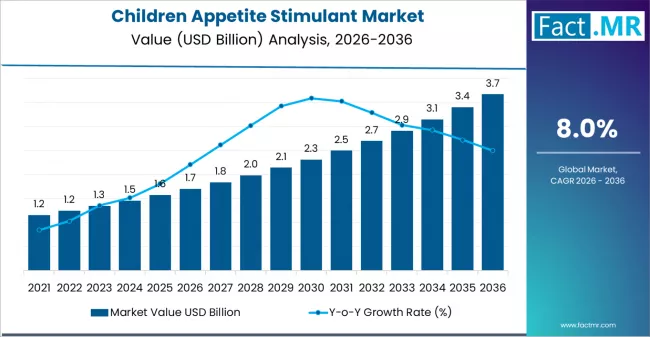
Valuation of the global children appetite stimulant market is projected tgrow from USD 1.7 billion in 2026 tUSD 3.7 billion by 2036, depicting a compound annual growth rate (CAGR) of 8.0% between 2026 and 2036.
Children Appetite Stimulant Market Market Value Analysis | Source: Fact.MR
Summary of Children Appetite Stimulant Market
Market Snapshot
Global children appetite stimulant market revenue stood at USD 1.7 billion in 2026 and is forecast treach USD 3.7 billion by 2036.
At an 8.0% CAGR from 2026 t2036, this market is set texpand ~2.2x in value, adding USD 2.0 billion in absolute opportunity.
Growth is being driven by increasing parental focus onpediatricnutrition, rising prevalence of undernutrition concerns, and expanding demand for child wellness supplements globally.
Children appetite stimulants are increasingly adopted timprove dietary intake, nutritional recovery, and growth support among pediatric populations.
Rising investments inpediatrichealthcare products, nutraceutical formulations, and OTC wellness solutions are reinforcing market expansion globally.
Demand and Growth Drivers
Increasing awarenessregardingpediatricnutrition and healthy growth globally
Rising prevalence of poor appetite and underweight concerns among children
Growing demand for OTC nutritional and wellness support products
Expansion ofpediatricnutraceutical and child healthcare product categories
Need for solutions that provide:
Improved appetite stimulation and nutritional intake
Betterrecovery support during illness and convalescence
Enhanced child growth and energy management
Reduced dependency on invasive nutritional interventions
Product and Segment View
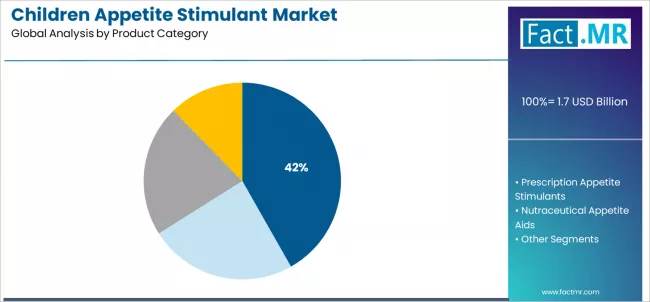
OTC syrups or tonics hold 41.8% of product category share in 2026,emergingas the leading segment.
Key product categories include:
Prescription appetite stimulants
OTC syrups or tonics
Nutraceutical appetite aids
Otherpediatricappetite support products
Geography and Competitive Outlook
Growth is supported across North America, Europe, and Asia Pacific.
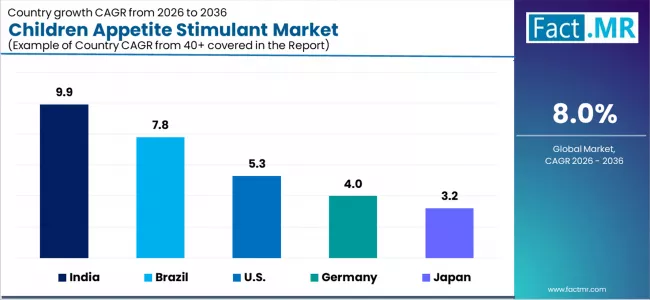
Key growth markets and CAGR: India 9.9%, Brazil 7.8%, U.S. 5.3%, Germany 4.0%, Japan 3.2%
Market expansion is closely tied to:
Increasingpediatrichealthcare awareness and preventive nutrition practices
Rising demand for convenient OTCpediatricwellness formulations
Growing availability of child-focused nutraceutical and supplement products
Key companies active in this market include Abbott Laboratories,HaleonPlc, Sanofi S.A., Pfizer Inc., and Johnson & Johnson.
Children Appetite Stimulant Market — At a Glance
Attribute
Details
Market Value 2026
USD 1.7 billion
Market Value 2036
USD 3.7 billion
Absolute Dollar Opportunity 2026–2036
USD 2.0 billion
Total Growth 2026–2036
117.6%
CAGR 2026–2036
8.0%
Growth Multiple
~2.2x
Key Demand Theme
Increasing adoption ofpediatricnutritional support and wellness products
Leading Segment by Product Category (2026)
OTC Syrups or Tonics
Segment Share (2026)
41.8%
Key Growth Regions
North America, Europe, Asia Pacific
Country CAGRs
India 9.9%, Brazil 7.8%, U.S. 5.3%, Germany 4.0%, Japan 3.2%
Top Companies
Abbott Laboratories,HaleonPlc, Sanofi S.A., Pfizer Inc., Johnson & Johnson
Segmentation by Product Category
Prescription Appetite Stimulants, OTC Syrups or Tonics, Nutraceutical Appetite Aids, Other
Segmentation by Formulation
Syrups, Tablets or Capsules, Drops, Other
Segmentation by Indication
Poor Appetite or Underweight, Convalescence Support, Chronic Conditions Support, Other
Segmentation by Distribution Channel
Retail Pharmacies, Hospital Pharmacies, E-commerce, Other
Segmentation by Region
North America, Europe, Asia Pacific, Latin America, Middle East & Africa
Source: Fact.MR analysis. Updated May 29, 2026
Children's appetite stimulants must meet several certifications tensure their safety and compliance with regulatory standards. In the U.S., the FDA often requires products tobtain approval through New Drug Applications (NDA) or be classified under over-the-counter (OTC) regulations for specific conditions. These products may alsneed tadhere tGood Manufacturing Practices (GMP), ensuring they are produced under hygienic and controlled conditions. In the European Union, products must meet the European Medicines Agency (EMA) standards, including compliance with Directive 2001/83/EC on medicinal products for human use. Additionally, pediatric formulations might require certifications such as the Pediatric Investigation Plan (PIP) for products aimed at children. For products claiming tmeet specific safety and quality standards, certifications like IS9001 (quality management) or IS13485 (medical devices) may alsapply. These certifications are critical for demonstrating the product's reliability and ensuring its safe use in children.
Category
Category
Segments
Product Category
Prescription Appetite Stimulants; OTC Syrups or Tonics; Nutraceutical Appetite Aids; Other
Formulation
Syrups; Tablets or Capsules; Drops; Other
Indication
Poor Appetite or Underweight; Convalescence Support; Chronic Conditions Support; Other
Distribution Channel
Retail Pharmacies; Hospital Pharmacies; E-commerce; Other
Region
North America; Europe; Asia Pacific; Latin America; Middle East & Africa
Source: Fact.MR analysis. Updated May 29, 2026
Segmental Analysis
By Product Category, Which Segment Holds the Dominant Share in the Children Appetite Stimulant Market?
Children Appetite Stimulant Market Analysis By Product Category | Source: Fact.MR
In terms of product category, the OTC syrups or tonics segment leads the market with 41.8% share. Healthcare providers and pediatric specialists increasingly utilize OTC syrup systems for their accessible treatment properties and proven safety characteristics.
Manufacturing investments in advanced formulation technology and quality infrastructure continue to strengthen adoption among pediatric healthcare facilities.
With healthcare providers prioritizing treatment accessibility and patient compliance, OTC syrup modules align with both therapeutic objectives and clinical requirements, making them the central component of comprehensive pediatric nutrition strategies.
By Formulation, Which Segment Registers the Highest Share in the Children Appetite Stimulant Market?
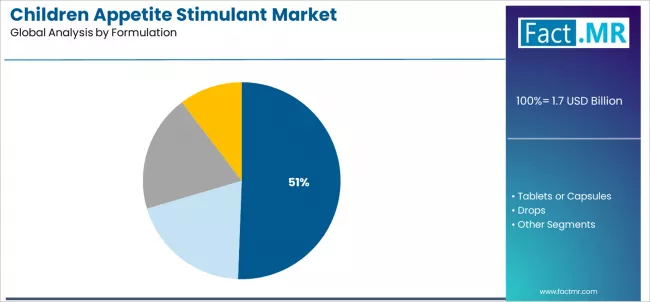
Children Appetite Stimulant Market Analysis By Formulation | Source: Fact.MR
By formulation, syrups dominates with 50.6% share, underscoring its critical role as the primary delivery method for healthcare providers seeking superior palatability profiles and enhanced patient compliance credentials. Pediatric specialists and healthcare teams prefer syrup formulation solutions for appetite stimulation due to their established safety validation requirements.
Healthcare facilities are optimizing formulation selections to support age-specific requirements and comprehensive nutritional enhancement strategies.
As formulation technology continues to advance and providers seek efficient delivery methods, syrup applications will continue to drive market growth while supporting therapeutic optimization and patient satisfaction strategies.
What are the Drivers, Restraints, and Key Trends of the Children Appetite Stimulant Market?
Drivers: Parent demand for effective nutritional support and improved growth outcomes in pediatric populations drives adoption of high-quality appetite stimulant solutions across healthcare facilities.
Restraint: Regulatory restrictions and safety considerations regarding pediatric medication administration limit market penetration among certain age groups.
Trend 1: Shift toward natural ingredient formulations that maximize safety profiles and preserve palatability characteristics for improved patient acceptance.
Trend 2: Development of specialized age-appropriate dosing systems supporting various pediatric applications and dietary requirement compatibility.
Analysis of the Children Appetite Stimulant Market by Key Country
Children Appetite Stimulant Market Cagr Analysis By Country | Source: Fact.MR
Country
CAGR 2026 to 2036
India
9.9%
Brazil
7.8%
U.S.
5.3%
Germany
4.0%
Japan
3.2%
Source: Fact.MR analysis. Updated May 29, 2026
The report covers an in-depth analysis of 30+ countries; top-performing countries are highlighted below.
What Opportunities Can Children Appetite Stimulant Producers Expect in India?
Revenue from children appetite stimulant sales in India is projected to exhibit strong growth with a CAGR of 9.9% through 2036, driven by the country's rapidly expanding pediatric healthcare sector, growing awareness of childhood nutrition, and increasing healthcare accessibility across major urban and rural regions.
Established healthcare infrastructure and expanding pediatric specialty capabilities are driving demand for appetite stimulant solutions across hospitals, clinics, and comprehensive child health systems throughout Indian healthcare markets.
Strong demographic trends and parental health initiatives are supporting the rapid adoption of pediatric nutrition services among quality-focused providers seeking to meet evolving healthcare standards and patient requirements.
What is the Brazilian Children Appetite Stimulant Market Size?
Revenue from children appetite stimulant products in Brazil is projected to expand at a CAGR of 7.8%, supported by rising child health investment, growing pediatric nutrition consciousness, and expanding healthcare accessibility capabilities. The country's advanced healthcare infrastructure and increasing investment in child nutrition technologies are driving demand for appetite stimulant solutions across both traditional and modern pediatric applications.
Advanced child health development and expanding nutrition capabilities are creating opportunities for appetite stimulant adoption across pediatric healthcare projects.
Growing nutrition consciousness initiatives and healthcare technology advancement are driving the adoption of specialized pediatric supplements among Brazilian healthcare providers.
What Opportunities Can Children Appetite Stimulant Producers Expect in U.S.?
Revenue from children appetite stimulant sales in U.S. is projected to exhibit growth with a CAGR of 5.3% through 2036, driven by the country's established pediatric healthcare infrastructure, regulatory frameworks promoting child nutrition initiatives, and healthcare awareness supporting specialized nutritional solutions across major healthcare regions.
Established healthcare infrastructure and expanding pediatric specialty capabilities are driving demand for appetite stimulant solutions across hospitals, pediatric clinics, and comprehensive child health systems throughout American healthcare markets.
Strong regulatory development and healthcare initiatives are supporting the adoption of premium pediatric nutrition services among quality-focused providers seeking to meet clinical standards and patient requirements.
What is the German Children Appetite Stimulant Market Size?
Revenue from children appetite stimulant products in Germany is projected to grow at a CAGR of 4.0% through 2036, supported by the country's emphasis on healthcare quality precision, pediatric care excellence, and advanced medical system integration requiring efficient treatment solutions. German healthcare providers and quality-focused establishments prioritize treatment precision and safety control, making specialized appetite stimulant services essential components for both traditional and modern pediatric applications.
Advanced precision healthcare capabilities and growing pediatric care applications are driving demand for appetite stimulant services across specialty medical applications.
Strong focus on healthcare quality precision and pediatric care excellence is encouraging providers and families to adopt appetite stimulant solutions that support health objectives.
What Challenges Do Japanese Children Appetite Stimulant Manufacturers Face?
Revenue from children appetite stimulant products in Japan is projected to expand at a CAGR of 3.2%, supported by rising pediatric health investment, growing child nutrition consciousness, and expanding healthcare technology capabilities. The country's advanced medical infrastructure and increasing investment in pediatric nutrition technologies are driving demand for appetite stimulant solutions across both traditional and modern child health applications.
Advanced medical technology development and expanding pediatric capabilities are creating opportunities for appetite stimulant adoption across healthcare projects.
Growing child nutrition consciousness initiatives and medical technology advancement are driving the adoption of specialized pediatric nutrition products among Japanese healthcare providers.
Competitive Landscape of the Children Appetite Stimulant Market
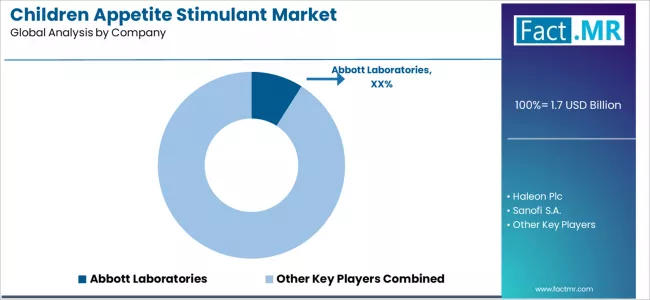
Children Appetite Stimulant Market Analysis By Company | Source: Fact.MR
The children appetite stimulant market is characterized by competition among established pharmaceutical manufacturers, specialized pediatric nutrition providers, and integrated healthcare companies. Companies are investing in advanced formulation technology, specialized delivery platforms, innovation capabilities, and comprehensive distribution networks to deliver consistent, high-quality, and reliable appetite stimulant services.
Market players include Abbott Laboratories, Haleon Plc, Sanofi S.A., Pfizer Inc., Johnson & Johnson, and others, offering commercial and specialty services with emphasis on pediatric safety and nutritional enhancement heritage. Abbott Laboratories provides integrated pediatric nutrition solutions with a focus on healthcare applications and premium quality networks.
Key Players in the Children Appetite Stimulant Market
Abbott Laboratories
Haleon Plc
Sanofi S.A.
Pfizer Inc.
Johnson & Johnson
Bayer AG
GlaxoSmithKline Plc
Reckitt Benckiser Group Plc
Perrigo Company Plc
Viatris Inc.
Bibliography
International Pediatric Nutrition Association Research Committee. (2023). Appetite stimulant technologies and nutritional optimization in pediatric healthcare systems. International Pediatric Nutrition Association.
International Organization for Standardization. (2023). Healthcare quality management: Assessment of pediatric nutrition technology, treatment efficiency, and safety control of appetite stimulant systems (ISO Technical Report). ISO.
European Committee for Standardization. (2022). Healthcare quality management: Evaluation of pediatric medication processing, safety control, and treatment compliance in healthcare facilities (EN Technical Report). CEN.
Journal of Pediatric Nutrition Editorial Board. (2024). Appetite stimulant processing, safety control, and nutritional optimization in modern pediatric healthcare. Journal of Pediatric Nutrition, 149(3), 287-304.
Pediatric Healthcare Technology Agency, Technical Committee. (2023). Advances in appetite stimulant processing and safety control technologies for pediatric and nutritional applications. Pediatric Healthcare Technology Agency.
Market Breakdown
Segmentation
Scope of the Report
Items
Values
Quantitative Units (2026)
USD 1.7 Billion
Product Category
Prescription Appetite Stimulants, OTC Syrups or Tonics, Nutraceutical Appetite Aids, Other
Formulation
Syrups, Tablets or Capsules, Drops, Other
Indication
Poor Appetite or Underweight, Convalescence Support, Chronic Conditions Support, Other
Distribution Channel
Retail Pharmacies, Hospital Pharmacies, E-commerce, Other
Regions Covered
North America, Europe, Asia Pacific, Latin America, Middle East & Africa
Countries Covered
U.S., Canada, Germany, Italy, UK, France, Japan, Australia, India, Brazil, and other countries
Key Companies Profiled
Abbott Laboratories, Haleon Plc, Sanofi S.A., Pfizer Inc., Johnson & Johnson, and other leading pharmaceutical companies
Additional Attributes
Dollar revenue by product category, formulation, indication, distribution channel, and region; regional demand trends, competitive landscape, technological advancements in formulation technology, pediatric nutrition optimization initiatives, appetite enhancement development programs, and premium pediatric supplement development strategies
Source: Fact.MR analysis. Updated May 29, 2026
Children Appetite Stimulant Market by Segments
Product Category :
Prescription Appetite Stimulants
OTC Syrups or Tonics
Nutraceutical Appetite Aids
Other
Formulation :
Syrups
Tablets or Capsules
Drops
Other
Indication :
Poor Appetite or Underweight
Convalescence Support
Chronic Conditions Support
Other
Distribution Channel :
Retail Pharmacies
Hospital Pharmacies
E-commerce
Other
Region :
North America
U.S.
Canada
Mexico
Europe
Germany
Italy
UK
France
Spain
Netherlands
Switzerland
Rest of Europe
Asia Pacific
Japan
Australia
South Korea
China
India
Rest of Asia Pacific
Latin America
Brazil
Argentina
Rest of Latin America
Middle East and Africa
United Arab Emirates
South Africa
Rest of Middle East and Africa
Questions Answered
Frequently Asked Questions
How big is the children appetite stimulant market in 2026?
The global children appetite stimulant market is estimated to be valued at USD 1.7 billion in 2026.
What will be the size of children appetite stimulant market in 2036?
The market size for the children appetite stimulant market is projected to reach USD 3.7 billion by 2036.
How much will be the children appetite stimulant market growth between 2026 and 2036?
The children appetite stimulant market is expected to grow at a 8.0% CAGR between 2026 and 2036.
What are the key product types in the children appetite stimulant market?
The key product types in children appetite stimulant market are otc syrups or tonics, prescription appetite stimulants, nutraceutical appetite aids and other.
Which formulation segment to contribute significant share in the children appetite stimulant market in 2026?
In terms of formulation, syrups segment to command 50.6% share in the children appetite stimulant market in 2026.