The Climate-Adaptive Wheat Fungicides Market is analyzed across its key product, application and end-use segments, with the study covering market dynamics, regional trends and demand outlook, forecast 2026 to 2036.
By Fact.MR Chemical & Materials DeskLead analyst:
S.N. JhaPublished :
Updated :
12 min read
Fact-checked under the Fact.MR editorial process
Climate-Adaptive Wheat Fungicides Market Forecast and Outlook 2026 to 2036
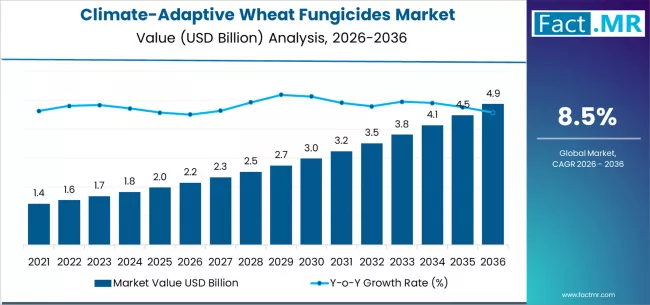
The global market for climate-adaptive wheat fungicides is undergoing a critical reformulation of purpose and strategy, projected to expand from USD 2.15 billion in 2026 to USD 4.86 billion by 2036, advancing at an 8.5% CAGR.
Summary of Climate-Adaptive Wheat Fungicides Market
Market Snapshot
Global climate-adaptive wheat fungicides market revenue stood at USD 2.15 billion in 2026 and is forecast to reach USD 4.86 billion by 2036.
At aCAGRof 8.5% from 2026 to 2036, this market adds USD 2.71 billion in absolute opportunity, growing ~2.26x in value.
Growth is intrinsically tied to escalating agricultural climate volatility, which is fundamentally altering the geographic distribution, severity, and life cycles of major wheat pathogens.
The market is characterized by a strategic pivot from calendar-based spray regimes to dynamic, data-driven intervention systemsoptimizedby predictive diseasemodelingand weather-integrated platforms.
Demand and Growth Drivers
Observed and projected increase in the frequency and intensity of weather conditions conducive to fungal epidemics — prolonged leaf wetness, unseasonal rains, and warmer winters — is expanding the geographic and temporal need for fungicide intervention.
Rising economic value of high-quality wheat for milling and export places a premium on protecting both yield and quality parameters such as test weight and mycotoxin levels.
Integration of fungicides with precision agriculture platforms makes targeted use more economically justifiable and effective, driving premium product adoption.
Rapid adoption of premixed fungicidescontainingmultiple modes of action to improve spectrum, enhance efficacy, and robustly manage resistance is sustaining market growth.
Development of formulations engineered for enhancedrainfastness, longer residual activity under fluctuating temperatures, and improved uptake in stressed plants is broadening performance reliability.
Product and Segment View
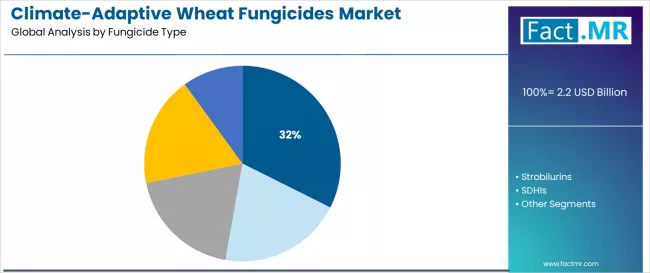
Triazolescommand 32% of the fungicide type segment in 2026, sustained by their systemic, curative, and broad-spectrum activity against a wide range of foliar and head diseases under variable conditions.
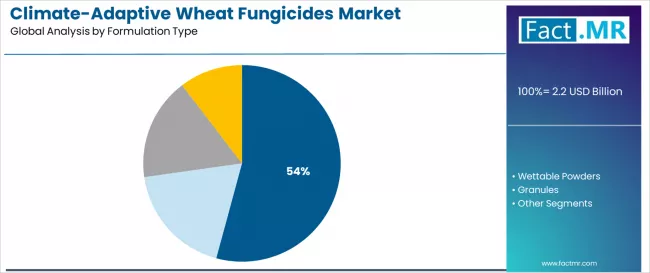
Liquid formulations dominate with 54.2% share in 2026, driven by ease of tank mixing, uniform coverage, and superior adherence to plant surfaces in changeable weather.
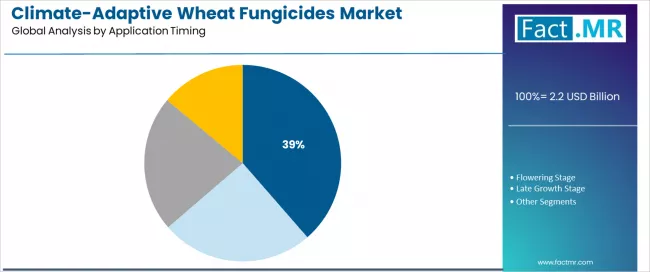
Early growth stage applications lead the application timing segment with 38.60% share in 2026, reflecting a proactive strategy to protect yield-building potential from the crop's outset.
Additionalfungicide types includeStrobilurins,SDHIs, and Multisite Fungicides; other timing segments include Flowering Stage, Late Growth Stage, and Post-Harvest Protection.
Geography and Competitive Outlook
Key growth regions include North America, Latin America, Western Europe, Eastern Europe, East Asia, South Asia & Pacific, and Middle East & Africa.
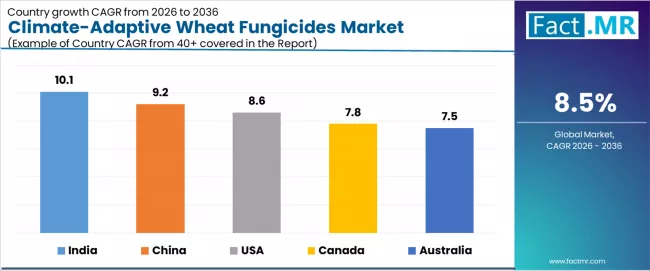
India leads country-level growth at 10.1%CAGR, driven by the critical need to protectmassive irrigatedwheat crops from diseaseshighly sensitiveto humidity and temperature fluctuations.
China (9.2%CAGR)fueledby food self-sufficiency focus, northward migration of disease pressures, and national policies promoting yield protection and quality grain production.
USA (8.6%CAGR) anchored in vast high-investment wheat plains with rapid adoption of integrated digital tools for disease scouting and forecasting.
Canada (7.8%CAGR) closely tied to its reputation as a premium milling wheat supplier, withFusariumhead blight control at flowering being a non-negotiable practice.
Australia (7.5%CAGR) characterized by responsive rather than prophylactic approach, requiring agile supply chains and effective curative options in variable climates.
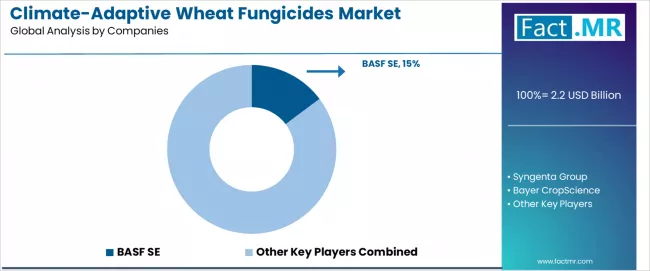
Key companies active in this market include BASF SE, Syngenta Group, BayerCropScience,CortevaAgriscience, and FMC Corporation.
Climate-Adaptive Wheat Fungicides Market — At a Glance
Attribute
Details
Market Value 2026
USD 2.15 Billion
Market Value 2036
USD 4.86 Billion
Absolute Dollar Opportunity 2026–2036
USD 2.71 Billion
Total Growth 2026–2036
126.05%
CAGR2026–2036
8.5%
Growth Multiple
~2.26x
Key Demand Theme
Transition to data-driven, climate-adaptive fungicide programs with enhancedrainfastnessand multi-mode-of-action premixes to manage escalating disease pressure and resistance
Leading Segment by Fungicide Type (2026)
Triazoles
Fungicide Type Segment Share (2026)
32%
Leading Segment by Formulation Type (2026)
Liquid Formulations
Formulation Type Segment Share (2026)
54.2%
Leading Segment by Application Timing (2026)
Early Growth Stage
Application Timing Segment Share (2026)
38.60%
Key Growth Regions
North America, Latin America, Western Europe, Eastern Europe, East Asia, South Asia & Pacific, Middle East & Africa
CountryCAGRs
India 10.1%, China 9.2%, USA 8.6%, Canada 7.8%, Australia 7.5%
Top Companies
BASF SE, Syngenta Group, BayerCropScience,CortevaAgriscience, FMC Corporation
Early Growth Stage, Flowering Stage, Late Growth Stage, Post-Harvest Protection
Segmentation by Region
North America, Latin America, Western Europe, Eastern Europe, East Asia, South Asia & Pacific, Middle East & Africa
Source: Fact.MR analysis. Updated Apr 10, 2026
This growth trajectory is intrinsically tied to the escalating volatility of agricultural climates, which is fundamentally altering the geographic distribution, severity, and life cycles of major wheat pathogens like Fusarium head blight, rusts, and Septoria. A strategic pivot from calendar-based spray regimes to dynamic, data-driven intervention systems characterizes the market’s evolution. Key trends include the integration of fungicides with predictive disease modeling platforms that utilize weather data, satellite imagery, and field sensors to forecast infection risk windows with precision, thereby optimizing timing and reducing prophylactic use. There is accelerated development and deployment of fungicide formulations engineered for enhanced rainfastness, longer residual activity under fluctuating temperatures, and improved uptake in plants experiencing abiotic stress. The market is further defined by the strategic management of fungicide resistance, driving demand for robust premixes and multisite inhibitors that protect the efficacy of systemic chemistries. This shift positions fungicides not merely as crop protectants but as essential tools for stabilizing yields and protecting quality in increasingly unpredictable production environments, making their adaptive performance a core component of climate risk management for wheat growers globally.
Early Growth Stage, Flowering Stage, Late Growth Stage, Post-Harvest Protection
Region
North America, Latin America, Western Europe, Eastern Europe, East Asia, South Asia & Pacific, MEA
Source: Fact.MR analysis. Updated Apr 10, 2026
Segmental Analysis
By Fungicide Type, Which Segment Remains a Therapeutic Cornerstone?
Climate Adaptive Wheat Fungicides Market Analysis By Fungicide Type | Source: Fact.MR
Triazoles command a leading 32% market share, sustained by their systemic, curative, and broad-spectrum activity against a wide range of foliar and head diseases. Their importance is magnified in climate-adaptive programs due to their reliable performance under variable conditions and their role in anti-resistance strategies when used in combination with other modes of action.
The continued development of newer triazole molecules with improved efficacy and plant health benefits ensures this class remains a foundational tool for managing established infections triggered by unpredictable weather events.
By Formulation Type, Which Offers Superior Application Flexibility and Performance?
Climate Adaptive Wheat Fungicides Market Analysis By Formulation Type | Source: Fact.MR
Liquid formulations, particularly suspension concentrates and oil dispersions, dominate with a 54.2% share. This preference is driven by their ease of tank mixing, uniform coverage, and superior adherence to plant surfaces under dew or light rain, a critical feature for ensuring efficacy in changeable weather.
Advanced liquid formulations are also better suited for integrating adjuvants that enhance canopy penetration and rainfastness, providing the reliable performance required for climate-resilient disease management.
By Application Timing, When is Intervention Most Critical for Yield Protection?
Early growth stage applications hold the largest share at 38.60%. This reflects a strategic focus on protecting the yield-building potential of the crop from the outset, establishing a healthy canopy that is more resilient to subsequent stresses.
Early-season fungicide applications target root and stem-base diseases exacerbated by wet soils and manage early foliar pressures, setting a strong foundation for the crop. This proactive timing is considered a lower-risk investment to safeguard yield potential before climatic conditions become fully unpredictable later in the season.
What are the Drivers, Restraints, and Key Trends of the Climate-Adaptive Wheat Fungicides Market?
The primary market driver is the observed and projected increase in the frequency and intensity of weather conditions conducive to fungal epidemics, such as prolonged leaf wetness, unseasonal rains, and warmer winters. This directly expands the geographic and temporal need for fungicide intervention.
The rising economic value of high-quality wheat for milling and export places a premium on protecting both yield and quality parameters like test weight and mycotoxin levels. The integration of fungicides with precision agriculture platforms makes their targeted use more economically justifiable and effective.
A significant market restraint is the relentless development of pathogen resistance to single-site mode-of-action fungicides, which can be accelerated by increased fungicide use and erratic weather patterns that promote pathogen survival and mutation.
The high cost of developing and registering new active ingredients constrains the pipeline of novel chemistries. Variable weather itself can also hinder optimal application timing, leading to reduced efficacy and potential crop damage if applications are made under stress conditions.
Key trends include the rapid adoption of premixed fungicides containing multiple modes of action to improve spectrum, enhance efficacy, and robustly manage resistance. There is growing investment in predictive agronomic models that provide field-level disease risk alerts, transforming fungicide application into a prescriptive practice.
Formulation science is focusing on technologies that extend residual activity and improve uptake in plants. Biological fungicides and plant elicitors are also being incorporated into programs to reduce chemical load and enhance plant innate immunity as part of a holistic adaptive strategy.
Analysis of the Climate-Adaptive Wheat Fungicides Market by Key Countries
Climate Adaptive Wheat Fungicides Market Cagr Analysis By Country | Source: Fact.MR
Country
CAGR (2026-2036)
India
10.1%
China
9.2%
USA
8.6%
Canada
7.8%
Australia
7.5%
Source: Fact.MR analysis. Updated Apr 10, 2026
How is India's Intensive Wheat Production and Monsoon Vulnerability Influencing Demand?
India's leading CAGR of 10.1% is driven by the critical need to protect its massive, irrigated wheat crop from diseases like leaf blight and rust, whose severity is highly sensitive to humidity and temperature fluctuations towards the end of the Rabi season.
The increasing unpredictability of pre-harvest heat and moisture events pushes farmers toward more assured protective strategies. Demand is strong for effective, cost-adaptive fungicide programs that can be applied within narrow windows to safeguard the yield of high-density plantings, with a focus on products that also mitigate heat stress impacts.
What is the Impact of China's Food Security Focus and Expanding Disease Pressure?
China's 9.2% growth is fueled by its unwavering focus on grain self-sufficiency and the northward migration of disease pressures due to warmer winters. Major wheat-growing regions face increased threats from Fusarium head blight and stripe rust.
National policies promoting yield protection and quality grain production encourage the adoption of advanced crop protection inputs. The market demands high-efficacy fungicide solutions, often through state-backed extension systems, with a particular emphasis on managing mycotoxins in the food chain.
Why Does the USA's Large-Scale, Technology-Driven Farming Sustain Market Growth?
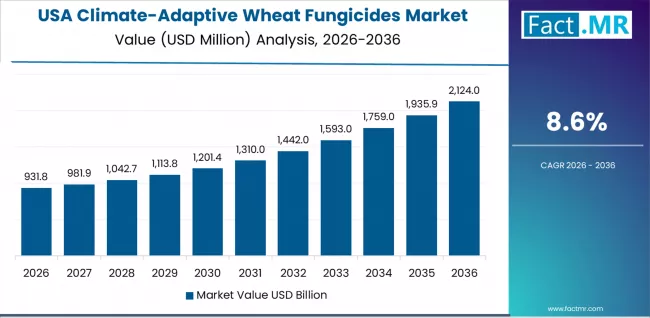
Climate Adaptive Wheat Fungicides Market Country Value Analysis | Source: Fact.MR
The USA's 8.6% growth is anchored in its vast, high-investment wheat plains where yield maximization is paramount. American growers are rapid adopters of integrated digital tools for disease scouting and forecasting.
The market is characterized by demand for premium, systemic fungicides with plant health benefits, applied through precision equipment. Fungicide use is a standard component of intensive management in both winter and spring wheat areas, with strategies continuously adapted to counter new race developments in rusts and other pathogens.
How is Canada's High-Quality Wheat Export Market Shaping Fungicide Use?
Canada's 7.8% CAGR is closely tied to its reputation as a supplier of premium quality milling wheat. Diseases like Fusarium head blight that directly impact grade and mycotoxin levels are a major economic threat. Fungicide application, particularly at flowering, is a non-negotiable practice for most growers in Eastern and Western Canada to meet strict quality thresholds.
The market demands highly reliable products with proven efficacy under the cool, moist conditions often experienced during anthesis, with a strong emphasis on robust anti-resistance stewardship.
What Role Does Australia's Variable Climate and Export Focus Play?
Australia's 7.5% growth occurs within a highly variable climate where seasonal rainfall dictates disease risk. In wetter years, significant yield losses to Septoria and rusts can occur, making in-season fungicide intervention critical.
Australian growers practice a responsive, rather than prophylactic, approach, requiring agile supply chains and effective curative options. The export-oriented market demands fungicides that protect yield without compromising quality specifications or maximum residue limits in key import markets.
Competitive Landscape of the Climate-Adaptive Wheat Fungicides Market
Climate Adaptive Wheat Fungicides Market Analysis By Company | Source: Fact.MR
Global agrochemical corporations with extensive R&D portfolios, competing on the strength of their pipeline of new active ingredients and differentiated premixes, dominate the competitive landscape.
Competition intensifies around the generation of robust climatic efficacy data across diverse geographies, the development of integrated digital decision-support tools bundled with chemical solutions, and the provision of comprehensive resistance management stewardship programs.
Success depends on forming strategic collaborations with agricultural technology companies and research institutions to validate the climate-adaptive performance of fungicide programs and embed them into broader crop management platforms.
Key Players in the Climate-Adaptive Wheat Fungicides Market
BASF SE
Syngenta Group
Bayer CropScience
Corteva Agriscience
FMC Corporation
References
Chaloner, T. M., Gurr, S. J., & Bebber, D. P. (2024). Plant pathogen infection risk tracks global climate change. Nature Climate Change, 14(2), 178-183.
Fones, H. N., & Gurr, S. J. (2023). The impact of climate change on plant diseases and pest management strategies. Annual Review of Phytopathology, 61, 223-245.
Havis, N. D., & Forster, G. E. (2024). Optimizing fungicide timing for Septoria tritici blotch control in winter wheat using disease forecasting models. Plant Pathology, 73(1), 45-58.
Jørgensen, L. N., & Heick, T. M. (2023). Fungicide resistance management in wheat: Strategies and guidelines. Pest Management Science, 79(5), 1707-1719.
Mila, A. L., & Yang, X. B. (2024). Effects of climate variability on Fusarium head blight epidemics and mycotoxin contamination in wheat. Phytopathology, 114(3), 456-468.
Oliver, R. P., & de Vallavieille-Pope, C. (2023). Evolution of virulence and fungicide resistance in cereal rust pathogens under climate change. Current Opinion in Microbiology, 75, 102368.
Savary, S., & Willocquet, L. (2024). Climate change and crop health: Assessing the vulnerability of wheat production systems. Agricultural Systems, 215, 103860.
Sharma, S., & Singh, D. (2023). Efficacy of newer fungicide molecules against wheat rusts under field conditions in a changing climate. Crop Protection, 172, 106311.
Torriani, S. F. F., & McDonald, B. A. (2024). Adaptation of Zymoseptoria tritici to changing climates and fungicide use. Evolutionary Applications, 17(2), e13647.
Zadoks, J. C., & Schein, R. D. (2023). Epidemiology and plant disease management in a changing world. Oxford University Press.
Early Growth Stage, Flowering Stage, Late Growth Stage, Post-Harvest Protection
Key Countries
India, China, USA, Canada, Australia
Key Companies
BASF SE, Syngenta Group, Bayer CropScience, Corteva Agriscience, FMC Corporation
Additional Analysis
Pathogen sensitivity shifts under projected climate scenarios; economic thresholds for fungicide application in variable yield environments; interaction of fungicides with plant stress physiology; residue dynamics and MRL compliance under changing weather patterns; efficacy of different application technologies for canopy penetration and coverage.
Source: Fact.MR analysis. Updated Apr 10, 2026
Market by Segments
Fungicide Type :
Triazoles
Strobilurins
SDHIs
Multisite Fungicides
Others
Formulation Type :
Liquid Formulations
Wettable Powders
Granules
Others
Application Timing :
Early Growth Stage
Flowering Stage
Late Growth Stage
Post-Harvest Protection
Region :
North America
USA
Canada
Latin America
Brazil
Mexico
Argentina
Rest of Latin America
Western Europe
Germany
UK
France
Spain
Italy
BENELUX
Rest of Western Europe
Eastern Europe
Russia
Poland
Czech Republic
Rest of Eastern Europe
East Asia
China
Japan
South Korea
Rest of East Asia
South Asia & Pacific
India
ASEAN
Australia
Rest of South Asia & Pacific
MEA
Saudi Arabia
UAE
Turkiye
Rest of MEA
Questions Answered
Frequently Asked Questions
How big is the climate-adaptive wheat fungicides market in 2026?
The global climate-adaptive wheat fungicides market is estimated to be valued at USD 2.2 billion in 2026.
What will be the size of climate-adaptive wheat fungicides market in 2036?
The market size for the climate-adaptive wheat fungicides market is projected to reach USD 4.9 billion by 2036.
How much will be the climate-adaptive wheat fungicides market growth between 2026 and 2036?
The climate-adaptive wheat fungicides market is expected to grow at a 8.5% CAGR between 2026 and 2036.
What are the key product types in the climate-adaptive wheat fungicides market?
The key product types in climate-adaptive wheat fungicides market are triazoles, strobilurins, sdhis, multisite fungicides and others.
Which formulation type segment to contribute significant share in the climate-adaptive wheat fungicides market in 2026?
In terms of formulation type, liquidformulations segment to command 54.2% share in the climate-adaptive wheat fungicides market in 2026.