- Base Value(2025): 2.2 Bn
- Estimated Value(2026): 2.3 Bn
- Forecast Value (2036): 3.5 Bn
- CAGR (2026 - 2036): 4.4%
Dermatophytic Onychomycosis Therapeutic Market Analysis and Forecast by Fact.MR
The global dermatophytic onychomycosis therapeutic market is estimated at USD 2.3 billion in 2026 and is forecast to expand at a CAGR of 4.4% to reach USD 3.5 billion by 2036. Demand is shaped by clinical adoption patterns, regulatory standards, institutional procurement dynamics, and the evolving standard of care across healthcare settings. Growth reflects rising procedure volumes, expanding healthcare infrastructure in developing economies, and the development of higher-performance products addressing unmet clinical needs.
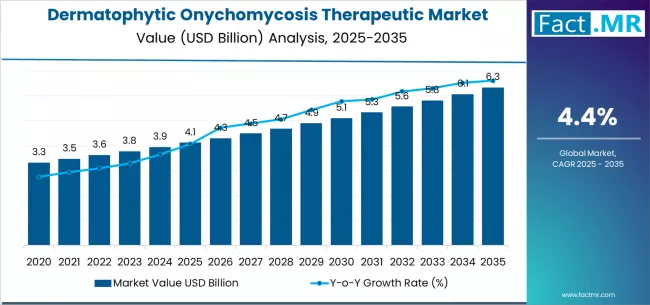
Dermatophytic Onychomycosis Therapeutic Market Market Value Analysis | Source: Fact.MR
Summary of Dermatophytic Onychomycosis Therapeutic Market
- Market Snapshot
- In 2025, the global Dermatophytic Onychomycosis Therapeutic Market was valued at approximately USD 2.2 billion.
- The market is estimated to reach USD 2.3 billion in 2026 and is projected to attain USD 3.5 billion by 2036.
- The dermatophytic onychomycosis therapeutic market is likely to expand at a CAGR of 4.4% during the forecast period.
- The market is anticipated to create an absolute dollar opportunity of USD 1.2 billion between 2026 and 2036.
- Antifungal Topical Therapies accounts for 36% of product share in 2026.
- China (5.0%) and Brazil (4.5%) are the key growth markets during the forecast period.
- Demand and Growth Drivers
- Expanding healthcare infrastructure and rising procedure volumes in developing economies are increasing institutional demand for dermatophytic onychomycosis therapeutic products.
- Regulatory evolution and clinical guideline updates are broadening approved applications and driving adoption of higher-specification product variants.
- Aging population demographics in developed markets are increasing the prevalence of conditions requiring clinical intervention and sustained product consumption.
- Technology improvements in product design, materials, and performance characteristics are supporting premium positioning and replacement demand cycles.
- Growth in ambulatory, outpatient, and home care settings is expanding the addressable market beyond traditional hospital-based procurement channels.
- Product and Segment View
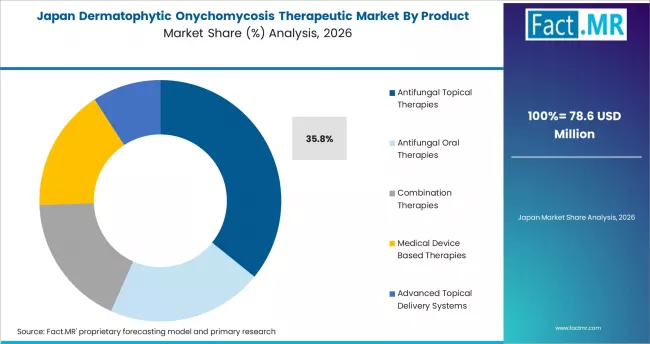
- Antifungal Topical Therapies accounts for 36% of product share in 2026, emerging as the leading segment due to established clinical adoption and broad applicability.
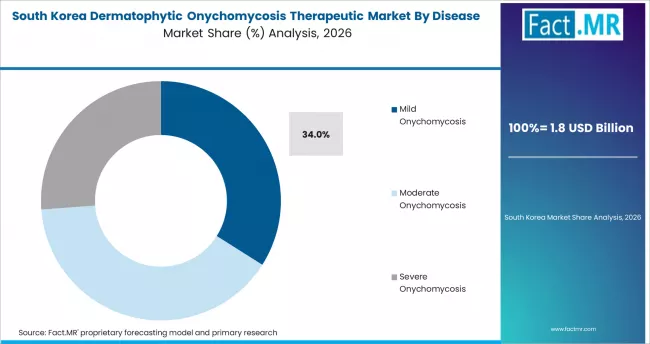
- Mild Onychomycosis accounts for 35% of disease severity share in 2026, emerging as the leading segment due to established clinical adoption and broad applicability.
- Key segmentation includes: Product: Antifungal Topical Therapies, Antifungal Oral Therapies, Combination Therapies; Disease Severity: Mild Onychomycosis, Moderate Onychomycosis, Severe Onychomycosis; Pathogen Type: Trichophyton Rubrum Infection, Mixed Dermatophyte Infection; Treatment Type: Pharmacological Treatment, Device Based Treatment, Adjunct Therapy; Route of Administration: Topical Route, Oral Route, Capsule Based Delivery.
- Geography and Competitive Outlook
- China leads growth at 5.0%, supported by expanding healthcare infrastructure and favorable policy conditions.
- Brazil follows at 4.5%, with demand shaped by institutional procurement and healthcare spending growth.
- USA (3.9%) and South Korea (3.5%) contribute steady growth.
- Key players include Pfizer, Novartis, Bayer AG, Johnson & Johnson, Bausch Health (Ortho Dermatologics), among others.
- Analyst Opinion
- Shambhu Nath Jha, Principal Consultant at Fact.MR, says 'The dermatophytic onychomycosis therapeutic market is shaped by clinical adoption patterns, regulatory approval dynamics, and institutional procurement structures. Growth reflects rising procedure volumes, expanding healthcare access in developing economies, and the development of higher-performance products addressing unmet clinical needs. Pricing is influenced by reimbursement coverage, competitive intensity, and the clinical evidence supporting product differentiation. Companies that maintain strong regulatory portfolios, invest in clinical validation, and build institutional relationships are best positioned to sustain market share.'
Key Growth Drivers, Constraints, and Opportunities
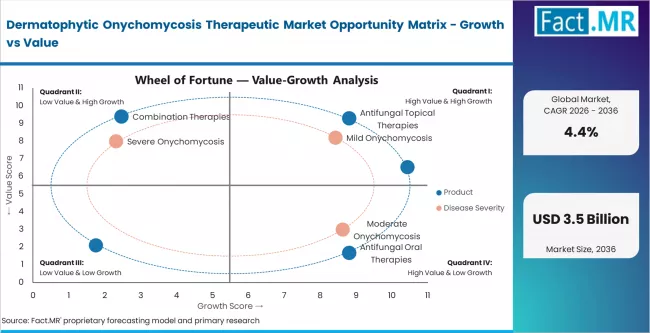
Dermatophytic Onychomycosis Therapeutic Market Opportunity Matrix Growth Vs Value | Source: Fact.MR
Key Factors Driving Growth
- Rising procedure volumes and expanding healthcare access in developing economies are increasing demand.
- Regulatory evolution and clinical guideline updates are broadening approved applications.
- Aging population demographics are increasing the addressable patient population.
Key Market Constraints
- Regulatory approval timelines and reimbursement limitations constrain market expansion.
- Pricing pressure from competitive intensity and institutional procurement practices affects margin structures.
- Supply concentration and raw material cost volatility add further pressure.
Key Opportunity Areas
- Product development addressing unmet clinical needs creates differentiation opportunities.
- Geographic expansion into underpenetrated markets provides incremental volume growth potential.
- Expansion into ambulatory and home care settings widens the addressable market.
Segment-wise Analysis of the Dermatophytic Onychomycosis Therapeutic Market
- Antifungal Topical Therapies holds 36% of the product segment in 2026.
- Mild Onychomycosis holds 35% of the disease severity segment in 2026.
- Trichophyton Rubrum Infection holds 53% of the pathogen type segment in 2026.
The dermatophytic onychomycosis therapeutic market is segmented by product, disease severity, pathogen type, treatment type, route of administration, and region. Segmentation captures differences in product specifications, clinical indications, pricing structures, and buyer profiles.
Which Product Segment Dominates the Dermatophytic Onychomycosis Therapeutic Market?
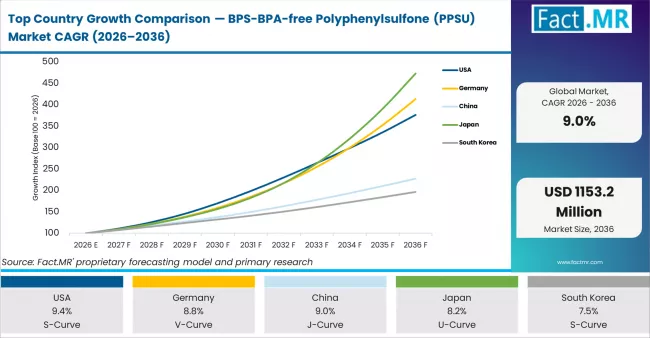
Image | Source: Fact.MR
Antifungal Topical Therapies accounts for 36% of the product segment in 2026. Demand is supported by established clinical protocols, regulatory approval scope, and consistent institutional procurement. Other segments include Antifungal Oral Therapies and Combination Therapies, which serve more specialized demand channels.
The segment benefits from wide clinical acceptance and a track record of reliable performance that sustains prescribing behavior among healthcare professionals. Growth is supported by steady demand from core clinical applications and incremental adoption in emerging care settings.
Which Disease Severity Segment Dominates the Dermatophytic Onychomycosis Therapeutic Market?
.webp "Image (1)")
Image (1) | Source: Fact.MR
Mild Onychomycosis accounts for 35% of the disease severity segment in 2026. Demand is supported by established clinical protocols, regulatory approval scope, and consistent institutional procurement. Other segments include Moderate Onychomycosis and Severe Onychomycosis, which serve more specialized demand channels.
The segment benefits from wide clinical acceptance and a track record of reliable performance that sustains prescribing behavior among healthcare professionals. Growth is supported by steady demand from core clinical applications and incremental adoption in emerging care settings.
Which Product Trend is Shaping the Next Phase of Growth in the Dermatophytic Onychomycosis Therapeutic Market?
The dermatophytic onychomycosis therapeutic market is experiencing a product mix shift toward higher-specification, connected, and compliance-ready products. Demand is increasingly shaped by institutional requirements for regulatory compliance, workflow integration, and long-term cost efficiency rather than upfront price alone.
This shift is creating a premium layer within the market where clinical differentiation commands stronger pricing and deeper customer retention. Companies that invest in product development addressing these evolving requirements are better positioned to capture share from competitors offering legacy product designs.
Regional Outlook Across Key Markets
.webp "Top Country Growth Comparison Dermatophytic Onychomycosis Therapeutic Market Cagr (2026 2036)")
Top Country Growth Comparison Dermatophytic Onychomycosis Therapeutic Market Cagr (2026 2036) | Source: Fact.MR
- China leads growth at 5.0%, supported by expanding healthcare infrastructure and favorable policy conditions.
- Brazil follows at 4.5%, with demand shaped by institutional procurement and healthcare spending.
- USA at 3.9%, South Korea at 3.5%, Germany at 3.1% contribute steady growth.
CAGR Table
| Country | CAGR (%) |
|---|---|
| China | 5.0% |
| Brazil | 4.5% |
| USA | 3.9% |
| South Korea | 3.5% |
| Germany | 3.1% |
| Japan | 2.9% |
Source: Fact.MR analysis. Updated May 6, 2026
Source: Fact MR (FMR) analysis, based on proprietary forecasting model and primary research.
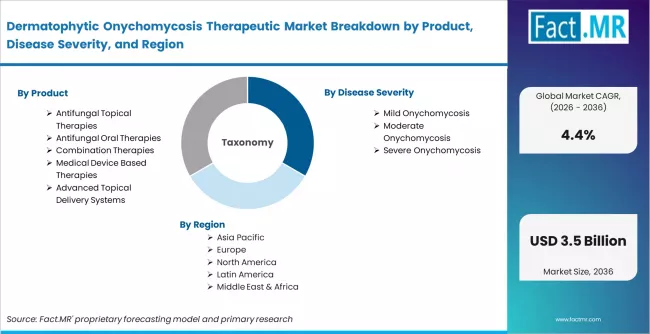
Dermatophytic Onychomycosis Therapeutic Market Breakdown By Product, Disease Severity, And Region | Source: Fact.MR
Market Outlook for Dermatophytic Onychomycosis Therapeutic in China
The China dermatophytic onychomycosis therapeutic market is projected to grow at a CAGR of 5.0% through 2036. Demand is supported by expanding domestic consumption, manufacturing scale, and government-backed programs.
- Institutional procurement remains the primary demand channel.
- Product quality, pricing, and regulatory compliance are key procurement factors.
- Healthcare expansion continues to widen the addressable market.
Demand Trends in Dermatophytic Onychomycosis Therapeutic in Brazil
The Brazil dermatophytic onychomycosis therapeutic market is projected to grow at a CAGR of 4.5% through 2036. Demand is supported by expanding commercial sectors, growing domestic processing capacity, and rising import substitution.
- Institutional procurement remains the primary demand channel.
- Product quality, pricing, and regulatory compliance are key procurement factors.
- Healthcare expansion continues to widen the addressable market.
Growth Assessment for Dermatophytic Onychomycosis Therapeutic in USA
Dermatophytic Onychomycosis Therapeutic Market Country Value Analysis | Source: Fact.MR
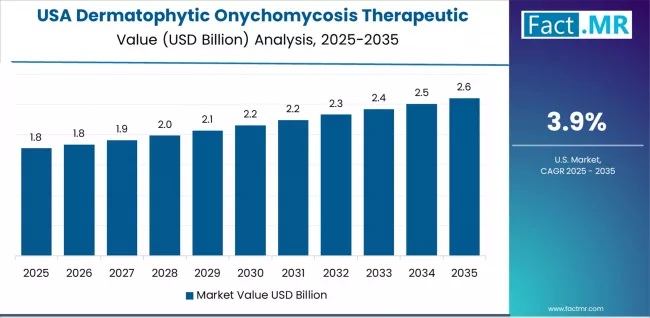
The USA dermatophytic onychomycosis therapeutic market is projected to grow at a CAGR of 3.9% through 2036. Demand is supported by mature demand base, strong institutional procurement, and established distribution networks.
- Institutional procurement remains the primary demand channel.
- Product quality, pricing, and regulatory compliance are key procurement factors.
- Healthcare expansion continues to widen the addressable market.
Market Opportunity in Dermatophytic Onychomycosis Therapeutic in South Korea
Dermatophytic Onychomycosis Therapeutic Market South Korea Market Share Analysis By Disease Severity | Source: Fact.MR
The South Korea dermatophytic onychomycosis therapeutic market is projected to grow at a CAGR of 3.5% through 2036. Demand is supported by advanced healthcare system, high technology adoption, and growing outpatient volumes.
- Institutional procurement remains the primary demand channel.
- Product quality, pricing, and regulatory compliance are key procurement factors.
- Healthcare expansion continues to widen the addressable market.
Demand Analysis for Dermatophytic Onychomycosis Therapeutic in Germany
The Germany dermatophytic onychomycosis therapeutic market is projected to grow at a CAGR of 3.1% through 2036. Demand is supported by quality-focused procurement standards, strong industrial base, and regulatory compliance.
- Institutional procurement remains the primary demand channel.
- Product quality, pricing, and regulatory compliance are key procurement factors.
- Healthcare expansion continues to widen the addressable market.
Market Outlook for Dermatophytic Onychomycosis Therapeutic in Japan
Dermatophytic Onychomycosis Therapeutic Market Japan Market Share Analysis By Product | Source: Fact.MR
The Japan dermatophytic onychomycosis therapeutic market is projected to grow at a CAGR of 2.9% through 2036. Demand is supported by aging population, advanced adoption patterns, and high quality standards.
- Institutional procurement remains the primary demand channel.
- Product quality, pricing, and regulatory compliance are key procurement factors.
- Healthcare expansion continues to widen the addressable market.
Competitive Benchmarking and Company Positioning
Dermatophytic Onychomycosis Therapeutic Market Analysis By Company | Source: Fact.MR
Dermatophytic Onychomycosis Therapeutic Market Analysis By Company
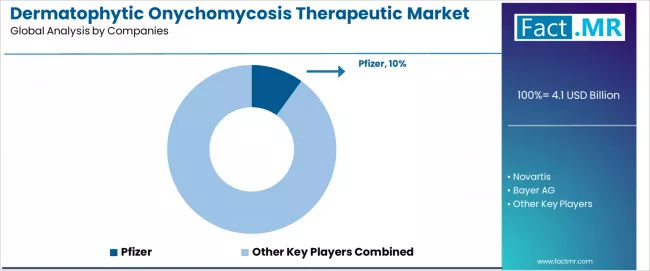
- Pfizer, Novartis, Bayer AG, Johnson & Johnson hold established positions through broad product portfolios, regulatory approvals, and clinical evidence.
- Competition is shaped by clinical differentiation, regulatory scope, geographic coverage, and institutional relationship strength.
- The landscape is moderately fragmented, with a mix of global medtech companies, specialty device manufacturers, and emerging niche players.
Pfizer, Novartis, Bayer AG, Johnson & Johnson compete through product breadth, global regulatory footprints, and established relationships with hospital procurement systems.
Bausch Health (Ortho Dermatologics), Teva Pharmaceuticals, Mylan (Viatris) maintain relevance through focused product offerings, competitive pricing, and strength in specific clinical or application-level niches.
Competition is intensifying as clinical differentiation becomes more difficult in established segments. Companies that invest in clinical evidence generation, regulatory expansion, and supply chain resilience are better positioned to strengthen market share.
Key Companies in the Dermatophytic Onychomycosis Therapeutic Market
- Pfizer, Novartis, Bayer AG, Johnson & Johnson are among the leading players, supported by strong clinical portfolios, broad product ranges, and established market positions.
- Bausch Health (Ortho Dermatologics), Teva Pharmaceuticals, Mylan (Viatris), Glenmark Pharma hold established positions across specific clinical categories, supported by regulatory approvals and channel familiarity.
- Cipla, Sun Pharma, Lupin Limited, Dr. Reddy's, Sandoz, Medimetriks Pharma, Kaken Pharmaceutical continue to compete through focused offerings and niche strength.
Leading Companies Shaping the Dermatophytic Onychomycosis Therapeutic Market
- Pfizer
- Novartis
- Bayer AG
- Johnson & Johnson
- Bausch Health (Ortho Dermatologics)
- Teva Pharmaceuticals
- Mylan (Viatris)
- Glenmark Pharma
- Cipla
- Sun Pharma
- Lupin Limited
- Dr. Reddy's
- Sandoz
- Medimetriks Pharma
- Kaken Pharmaceutical
Sources and Research References
- Pfizer. Product portfolio updates and corporate filings.
- Novartis. Annual reports and product announcements.
- World Health Organization (WHO). Global health statistics and regulatory guidelines.
- U.S. Food and Drug Administration (FDA). Product approval databases and safety communications.
- Primary interviews with clinicians, hospital procurement officers, distributors, and manufacturers across key geographies.
This bibliography is provided for reader reference and is not exhaustive. The full report contains the complete reference list and detailed citations.
Key Questions This Report Addresses
- What is the current and future size of the Dermatophytic Onychomycosis Therapeutic Market?
- How fast is the Dermatophytic Onychomycosis Therapeutic Market expected to grow between 2026 and 2036?
- Which product segment is likely to lead the market by 2026?
- What factors are driving clinical demand globally?
- Which countries are projected to show the fastest growth through 2036?
- Who are the key companies active in the Dermatophytic Onychomycosis Therapeutic Market?
- How does Fact.MR estimate and validate the market forecast?
Dermatophytic Onychomycosis Therapeutic Market Definition
The dermatophytic onychomycosis therapeutic market covers commercially relevant products and solutions within the defined scope, segmented by product, disease severity, pathogen type, treatment type, route of administration, and region. The scope includes all major product formats, application categories, and end-use channels tracked across global and regional markets.
Dermatophytic Onychomycosis Therapeutic Market Inclusions
- The scope covers global and regional market size and forecasts for 2026 to 2036 across all defined segments and sub-segments.
- It includes regional demand analysis across major geographies, based on factors such as application penetration, end-use expansion, pricing dynamics, and distribution developments.
- The report includes pricing and cost analysis across product tiers, technology trends, market drivers and constraints, and the competitive landscape.
- It covers product portfolios, pricing strategy, geographic reach, and distribution expansion of leading players.
Dermatophytic Onychomycosis Therapeutic Market Exclusions
- The scope excludes products and applications outside the defined market boundary, including unrelated product categories, non-commercial applications, standalone software or service offerings not bundled with core market products, and informal or unbranded products with low market visibility.
Dermatophytic Onychomycosis Therapeutic Market Research Methodology
- The methodology combines secondary research, primary interviews, and forecast modelling.
- It draws on 120+ secondary sources and benchmarks 60+ company product portfolios.
- Market sizing covers 30+ countries through a demand-side model, supported by top-down validation.
- Key inputs include procedure volumes, institutional penetration, reimbursement data, and regulatory approvals.
- The model cross-checks demand with shipments, pricing trends, channel mix, and product launches.
- Primary validation includes 25+ interviews across manufacturers, distributors, clinicians, and procurement officers.
- Final estimates go through trade-flow checks, sales-pattern review, and sensitivity testing.
Segmentation
Scope of Analysis
Dermatophytic Onychomycosis Therapeutic Market Breakdown By Product, Disease Severity, And Region | Source: Fact.MR
| Parameter | Details |
|---|---|
| Quantitative Units | USD 2.3 billion to USD 3.5 billion, at a CAGR of 4.4% |
| Market Definition | The dermatophytic onychomycosis therapeutic market covers commercially relevant products and solutions within the defined scope, segmented by product, disease severity, pathogen type, treatment type, route of administration, and region. The scope includes all major product formats, application categories, and end-use channels tracked across global and regional markets. |
| Regions Covered | North America, Latin America, Europe, East Asia, South Asia and Pacific, Middle East and Africa |
| Countries Covered | China, Brazil, USA, South Korea, Germany, Japan, 30 plus countries |
| Key Companies | Pfizer, Novartis, Bayer AG, Johnson & Johnson, Bausch Health (Ortho Dermatologics), Teva Pharmaceuticals, Mylan (Viatris), Glenmark Pharma, Cipla, Sun Pharma, Lupin Limited, Dr. Reddy's, Sandoz, Medimetriks Pharma, Kaken Pharmaceutical |
| Forecast Period | 2026 to 2036 |
| Approach | Hybrid demand-side and top-down methodology built on country-level application demand, product benchmarking, pricing analysis, shipment validation, and primary interviews across manufacturers, distributors, clinicians, and end users |
Source: Fact.MR analysis. Updated May 6, 2026
Market Segmentation Analysis
-
Dermatophytic Onychomycosis Therapeutic Market Segmented by Product:
- Antifungal Topical Therapies
- Terbinafine Cream and Gel
- Ciclopirox Nail Lacquer
- Efinaconazole Solution
- Tavaborole Solution
- Antifungal Oral Therapies
- Terbinafine Tablets
- Itraconazole Capsules
- Fluconazole Tablets
- Combination Therapies
- Topical and Oral Combination Regimens
- Antifungal and Keratolytic Combinations
- Medical Device Based Therapies
- Laser Therapy Devices
- Photodynamic Therapy Systems
- Nail Debridement Devices
- Advanced Topical Delivery Systems
- Nanoemulsion Based Formulations
- Nail Penetration Enhancers
- Liposome Based Antifungal Systems
- Antifungal Topical Therapies
-
Dermatophytic Onychomycosis Therapeutic Market Segmented by Disease Severity:
- Mild Onychomycosis
- Superficial Nail Infection
- Early Stage Discoloration
- Moderate Onychomycosis
- Partial Nail Plate Involvement
- Thickened Nail with Fungal Spread
- Severe Onychomycosis
- Total Nail Dystrophy
- Chronic Recurrent Infection
- Mild Onychomycosis
-
Dermatophytic Onychomycosis Therapeutic Market Segmented by Pathogen Type:
- Trichophyton Rubrum Infection
- Trichophyton Mentagrophytes Infection
- Epidermophyton Floccosum Infection
- Mixed Dermatophyte Infection
- Multiple Fungal Strain Infection
- Secondary Opportunistic Infection
- Trichophyton Rubrum Infection
-
Dermatophytic Onychomycosis Therapeutic Market Segmented by Treatment Type:
- Pharmacological Treatment
- Topical Antifungals
- Oral Antifungals
- Device Based Treatment
- Laser Based Treatment
- Physical Nail Debridement
- Adjunct Therapy
- Antiseptic Nail Care Solutions
- Preventive Nail Hygiene Regimens
- Pharmacological Treatment
-
Dermatophytic Onychomycosis Therapeutic MarketSegmented by Route of Administration:
- Topical Route
- Nail Lacquer Application
- Cream and Gel Application
- Oral Route
- Systemic Tablet Administration
- Capsule Based Delivery
- Combination Route
- Topical Plus Oral Therapy Regimens
- Topical Route
-
Dermatophytic Onychomycosis Therapeutic Market by Region:
- North America
- USA
- Canada
- Mexico
- Latin America
- Brazil
- Chile
- Rest of Latin America
- Western Europe
- Germany
- UK
- Italy
- Spain
- France
- Nordic
- BENELUX
- Rest of Western Europe
- Eastern Europe
- Russia
- Poland
- Hungary
- Balkan & Baltic
- Rest of Eastern Europe
- East Asia
- China
- Japan
- South Korea
- South Asia and Pacific
- India
- ASEAN
- Australia & New Zealand
- Rest of South Asia and Pacific
- Middle East & Africa
- Kingdom of Saudi Arabia
- Other GCC Countries
- Turkiye
- South Africa
- Other African Union
- Rest of Middle East & Africa
- North America
Frequently Asked Questions
How big is the dermatophytic onychomycosis therapeutic market in 2025?
What will be the size of the dermatophytic onychomycosis therapeutic market in 2036?
How much will the dermatophytic onychomycosis therapeutic market grow between 2026 and 2036?
What are the key product types in the dermatophytic onychomycosis therapeutic market?
Which route of administration segment contributes significant share in the dermatophytic onychomycosis therapeutic market in 2026?
Which countries are projected to grow fastest?
What is the market definition?
What methodology does Fact.MR use?
How big is the dermatophytic onychomycosis therapeutic market in 2025?
What will be the size of the dermatophytic onychomycosis therapeutic market in 2036?
How much will the dermatophytic onychomycosis therapeutic market grow between 2026 and 2036?
What are the key product types in the dermatophytic onychomycosis therapeutic market?
Which product segment will contribute significant share in 2026?
Who worked on this report


Preview the report firsthand - request a free sample
Free SampleGet the brochure for pricing and purchase details
Download PDF