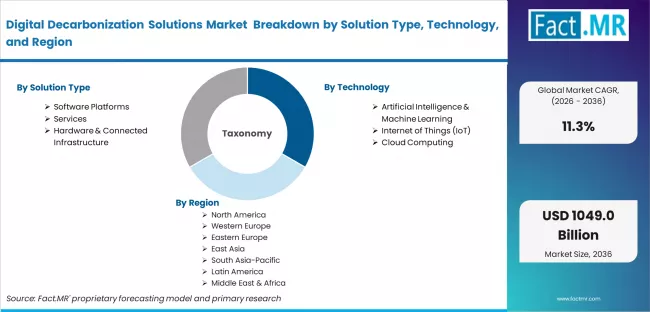
Digital Decarbonization Solutions Market Size, Share, Growth and Forecast (2026 - 2036)

The Global Digital Decarbonization Market is segmented by Solution Type, Technology, Deployment Model, Application, and End Use Industry, with forecasts covering the period from 2026 to 2036.

According to market estimates, the global digital decarbonization solutions market stood at approximately USD 323.1 billion in 2025. The market is projected to reach around USD 359.6 billion in 2026 and is expected to grow significantly to approximately USD 1,049.0 billion by 2036, progressing at a CAGR of around 11.3% during the forecast period. Software Platforms are expected to account for nearly 40.5% share by 2026, driven by increasing adoption of AI-powered carbon accounting. Among deployment models, Cloud-based solutions are expected to dominate with around 71.8% share by 2026, supported by enterprise migration to scalable, SaaS-based sustainability platforms.
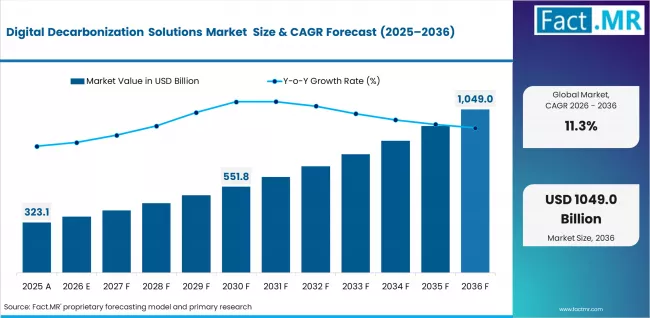
Digital Decarbonization Solutions Market Overview, Growth Outlook, and Forecast by Fact.MR

  • In 2025, the global digital decarbonization solutions market was valued at approximately USD 323.1 billion.
  • Based on Fact.MR analysis, demand for digital decarbonization solutions is estimated to grow to around USD 359.6 billion in 2026 and USD 1,049.0 billion by 2036.
  • The market is projected to expand at a CAGR of around 11.3% during the forecast period.

Digital Decarbonization Solutions Market Value Analysis

Summary of the Digital Decarbonization Solutions Market

  • Market Snapshot
    • In 2025, the global digital decarbonization solutions market was valued at approximately USD 323.1 billion.
    • The market is estimated to reach around USD 359.6 billion in 2026 and is projected to attain nearly USD 1,049.0 billion by 2036.
    • The market is expected to expand at a CAGR of approximately 11.3% during the forecast period.
    • The market is anticipated to create an absolute dollar opportunity of approximately USD 689.4 billion between 2026 and 2036.
    • In terms of solution type, Software Platforms dominate with a share of approximately 40.5% in 2026, driven by rising adoption of AI-powered carbon accounting, ESG reporting automation, and real-time emissions monitoring systems.
    • From a deployment perspective, Cloud-based solutions lead the segment with a share of approximately 71.8% in 2026, supported by enterprise migration toward scalable SaaS sustainability platforms and integrated carbon management systems.
    • Based on application, Carbon Accounting & Reporting accounts for approximately 18.7% share in 2026, owing to mandatory climate disclosures, Scope 1–3 emissions tracking requirements, and increasing corporate net-zero commitments.
    • In terms of end-use industry, Energy & Utilities holds the largest share of approximately 22.6% in 2026, driven by large-scale renewable integration, grid decarbonization initiatives, and digital energy optimization programs.
  • Demand and Growth Drivers
    • Digital decarbonization solutions are increasingly sought after in today’s marketplace, especially within energy-intensive industries. Companies are using these digital platforms to help them meet their regulatory obligations, by reducing their overall emissions and ultimately reducing their overall energy consumption.
    • Companies using digital decarbonization platforms will also be able to comply with additional reporting requirements that are being imposed by government regulations, pressure from their investors, and consumer demand for accountability and transparency regarding sustainability.
    • Companies are also under significant regulatory pressure to adopt new processes and technologies to monitor their emissions and reduce their emissions output, ongoing regulatory pressure and the rising costs of purchasing carbon credits are further incentivizing companies to move from manual calculations of their carbon emissions to using digital decarbonization platforms that utilize artificial intelligence (AI ) technology that is enabled with IoT (Internet of Things) capabilities.
  • Product and Segment View
    • Increasing demand for Software Platforms with 40.5% share is driven by rising adoption of AI-powered carbon accounting, ESG compliance requirements, and automated emissions tracking across enterprises.
    • Rising adoption of Services with 35.0% share is supported by growing need for sustainability consulting, regulatory advisory, system integration, and enterprise net-zero strategy development.
    • Increasing demand for Cloud-based solutions with 71.8% share is driven by scalability requirements, SaaS-based ESG platforms, and enterprise migration from legacy systems to integrated digital sustainability ecosystems.
    • Rising adoption of On-premise solutions with 21.5% share is supported by data security requirements, large industrial deployments, and regulated sectors requiring internal control of emissions data systems.
    • Increasing demand for Carbon Accounting & Reporting applications with 18.7% share is driven by mandatory ESG disclosures, Scope 1–3 emissions tracking, and increasing corporate sustainability reporting obligations.
  • Geography and Competitive Outlook
    • Stringent emissions regulations, early AI/IOT technology adoption and the robust existence of sustainability focused companies in North America, it continues to dominate globally in terms of market share.
    • China and India are experiencing rapid development and both countries are creating increased demand for digital decarbonization solutions as a result of continued industrial emissions growth and climate commitments.
    • The global Digital Decarbonization Market includes key players such as Sensia, Atos, GE Vernova, Wipro, Engie Impacts, IBM, and Deloitte.
  • Analyst Opinion
    • Shambhu Nath Jha, Principal Consultant at Fact.MR, says, “The need for digital decarbonization tools will likely be high due to the push to reduce carbon emissions within industries, coupled with stricter environmental regulations and greater commitments from businesses toward sustainability. This use case has steadily gained momentum within industries as a means of cutting carbon emissions, improving energy efficiency through the entire production line, and adhering to global zero-net-emissions objectives.

Digital Decarbonization Solutions Market — At a Glance

Market Value 2025 USD 323.1 Billion
Market Value 2026 USD 359.6 Billion
Market Value 2036 USD 1,049.0 Billion
Absolute Dollar Opportunity USD 689.4 Billion
CAGR 11.30%
Growth Multiple 3.25x
Key Demand Theme Rising demand for ESG compliance, carbon reporting, and AI-driven emissions reduction solutions
Leading Solution Type Software Platforms
Solution Type Share 40.50%
Leading Deployment Model Cloud-based
Deployment Model Share 71.80%
Leading Application Carbon Accounting & Reporting
Application Share 18.70%
Leading End-Use Industry Energy & Utilities
End-Use Industry Share 22.60%
Key Growth Regions North America, Europe, Asia-Pacific
Fastest Growing Countries China (12.4%), United Kingdom (12.1%), Germany (11.2%), Japan (11.0%), United States (10.7%)
Key Companies Verdantix, Sensia, Atos, GE Vernova, Wipro, Engie Impacts, IBM, Deloitte, Arcadis NV
Technology Segmentation AI & ML, IoT, Cloud Computing, Digital Twin, Blockchain, Big Data & Analytics, Automation & Robotics, Edge Computing
Solution Type Segmentation Software Platforms, Services, Hardware & Connected Infrastructure
Application Segmentation Carbon Accounting, Energy Optimization, Industrial Decarbonization, Smart Buildings, Renewable Integration, Grid Decarbonization, Fleet Emissions, Supply Chain Decarbonization, Waste Optimization, and Predictive Maintenance
End Use Industry Segmentation Energy & Utilities, Manufacturing, Oil & Gas, Transportation & Logistics, Commercial Buildings, Government & Smart Cities, Healthcare, IT & Telecom, and Agriculture & Food
Deployment Model Segmentation Cloud-based, On-premise, Edge Deployment
Region North America, Europe, Asia-Pacific, Middle East & Africa, Latin America

Key Growth Drivers, Constraints, and Opportunities
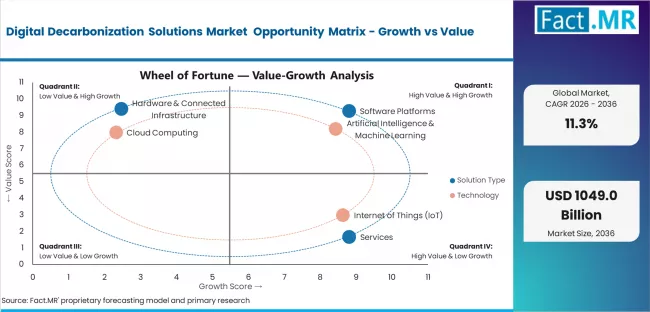
Digital Decarbonization Solutions Market Opportunity Matrix Growth Vs Value

Key Factors Driving Growth

  • Growing demand for digitally enabled decarbonisation by companies is occurring because of many mandatory ESG regulations that require reporting of their carbon outputs accurately, as well as to be compliant.
  • The increasing number of companies making commitments to achieve net zero emissions over the next decade has created strong market pressure on many industries to provide new technologies that allow them to monitor their carbon emissions and reduce them in real time.
  • Rapid technological advancement due to new technologies such as AI, IoT and Cloud Computing provide the means for scalable, automated and data-driven methods for companies to decarbonise their energy and industrial sectors.
Growth Driver Demand Impact Time Horizon Key Impact Area Fact.MR Insight
Increasing focus on ESG regulations, mandatory carbon reporting, and corporate sustainability compliance High Short–Mid Term Regulatory compliance Growing regulatory pressure is driving strong adoption of digital carbon accounting and ESG reporting platforms across industries
Rapid expansion of net-zero commitments, renewable energy adoption, and industrial decarbonization initiatives High Mid–Long Term Sustainability transition Enterprises are increasingly deploying digital solutions to track emissions, reduce carbon footprint, and achieve net-zero targets
Growing adoption of AI, IoT, cloud computing, and data analytics in sustainability management systems High Short–Mid Term Digital transformation Integration of advanced technologies is enabling real-time emissions monitoring, predictive analytics, and automated decarbonization across sectors
Rising demand for energy efficiency, cost reduction, and operational optimization in energy-intensive industries Medium–High Mid Term Operational efficiency Organizations are investing in optimization platforms to reduce energy consumption, improve efficiency, and lower operational emissions
Increasing development of smart grids, renewable integration systems, and digital twin technologies Medium–High Mid–Long Term Infrastructure modernization Expansion of intelligent energy systems is accelerating demand for advanced digital decarbonization and monitoring solutions

Key Market Constraints

  • Small and mid-size businesses face challenges adopting advanced AI-supported Environmental, Social, and Governance (ESG) systems due to high operational and technological expenses associated with digital decarbonization platforms.
  • Existing conventional Infrastructure Technologies (IT) systems, Enterprise Resource Planning (ERP) systems and industrial systems also compound the issues of deploying such digital decarbonization functionality in businesses.

Key Opportunity Areas

  • The swift implementation of company-wide Environmental, Social and Governance Transition Programs, along with mandatory emissions reporting rules, has provided new and innovative applications of artificial intelligence technologies in relation to both Carbon Accounting and Automated Sustainability Report Generation.
  • The explosive growth of Renewable Energy Infrastructure Development, Smart Grid Implementation and Industrial Decarbonization Initiatives across multiple industries is driving substantial demand for Integrated Digital Monitoring, Optimizing and Emission Management systems.

Segment-wise Analysis of the Digital Decarbonization Solutions Market

  • Software Platforms hold 40.50% share in the solution type segment, driven by increasing adoption of AI-powered carbon accounting tools, ESG reporting automation, and real-time emissions tracking across enterprises.
  • Energy & Utilities accounts for 22.60% share in the end-use industry segment, supported by large-scale renewable integration, grid modernization initiatives, and rising deployment of digital energy optimization systems.
  • Cloud-based deployment holds 71.80% share in the deployment model segment, driven by rapid enterprise migration to scalable SaaS-based ESG platforms and integrated carbon management solutions.

The global Digital Decarbonization Solutions Market is segmented by solution type, deployment model, application, technology, and end-use industry. In terms of solution type, Services and Hardware & Connected Infrastructure are gaining steady adoption due to rising demand for implementation support and IoT-enabled emissions monitoring systems.

Which Solution Type Segment Dominates the Market?
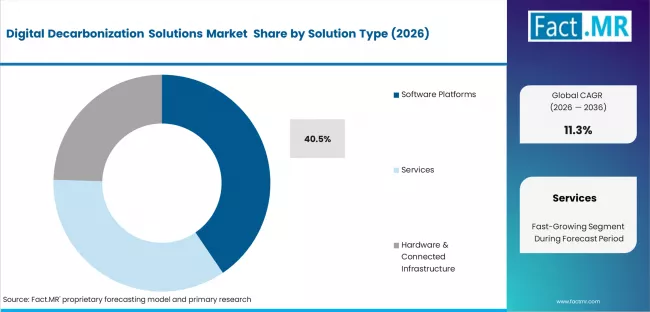
Digital Decarbonization Solutions Market Analysis By Solution Type

In terms of shares, the Software Platforms category dominates the Digital Decarbonization Solutions Market and is projected to continue its dominance throughout the forecast period, holding a market share of around 40.5% in 2026.

Which End-Use Industry Segment Dominates the Market?
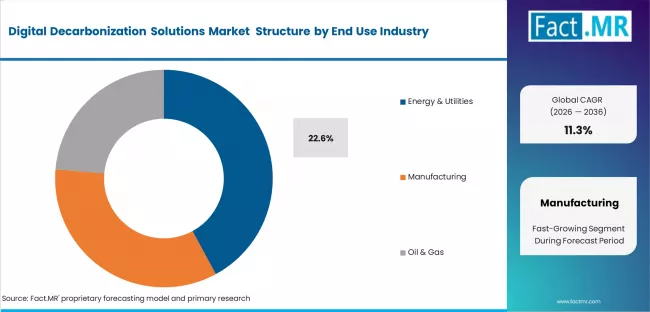
Digital Decarbonization Solutions Market Analysis By End Use Industry

The Energy & Utilities vertical is anticipated to remain the largest-end use industry in the market, contributing to a market share of 22.6% by 2026. The factors contributing to the leadership of the Energy & Utilities vertical include the integration of large-scale renewable energies, modernization of power grids, and digitalization of energy management systems to reduce carbon emissions.

Which Technology Type Segment Dominates the Market?
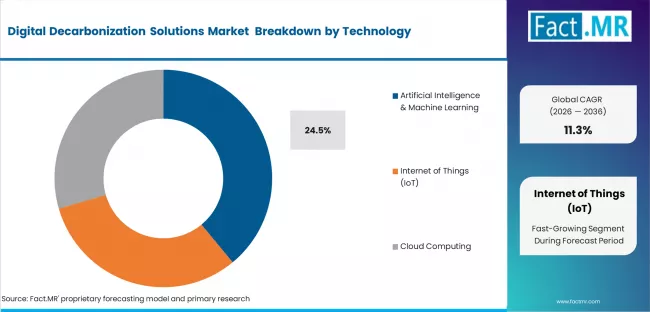
Digital Decarbonization Solutions Market Analysis By Technology

The AI & Machine Learning market will continue its reign in the Digital Decarbonization Solutions Market through 2026, with a projected market share of 24.8%. This domination will be fueled by the growing demand for advanced AI solutions that can predict carbon emission levels, generate ESG reports, and optimize energy usage in businesses.

Which Deployment Model Segment Dominates the Market?
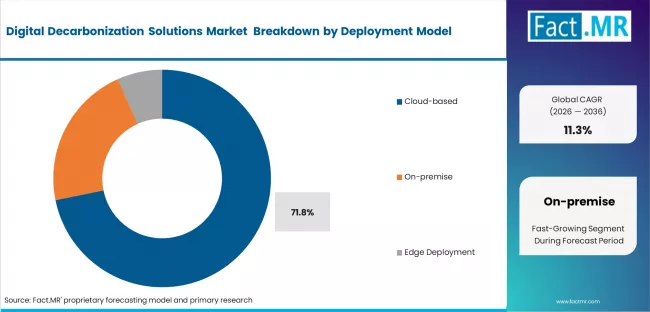
Digital Decarbonization Solutions Market Analysis By Deployment Model

The Cloud Deployment Model is dominating the Digital Decarbonization Solutions Market and hold a significant market share of around 71.8% by 2026. The main reason behind its leadership position is attributed to the rising popularity of ESG software-as-a-service platforms, artificial intelligence carbon accounting solutions, and digital sustainability solutions.

Which Application Segment Dominates the Market?
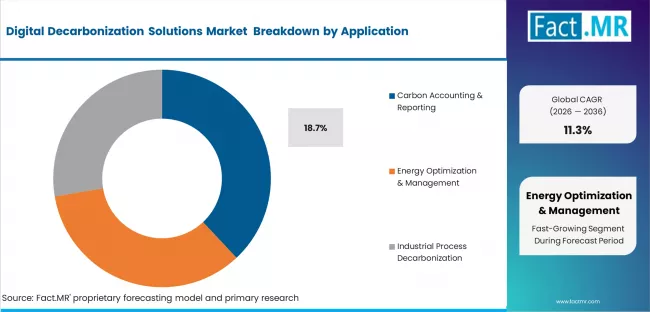
Digital Decarbonization Solutions Market Analysis By Application

The Carbon Accounting and Reporting category will continue to hold the top position in the market for digital decarbonization solutions, contributing a forecasted 18.7% share by 2026. The reason behind its dominance is the growing importance of precise measurement of carbon emissions, mandatory reporting of ESG.

Regional Outlook Across Key Markets

The market analysis covers key global regions, including South Asia and Pacific, Middle East & Africa, North America, Latin America, Western Europe, and Eastern Europe. It is segmented geographically, with specific market dynamics for each region. The full report provides a detailed market attractiveness analysis.

Top Country Growth Comparison Digital Decarbonization Solutions Market Cagr (2026 2036)

CAGR Table

Country CAGR (%)
U.S.A 10.7%
China 12.4%
Germany 11.2%
U.K. 12.1%
Japan 11.0%
France 12.0%
South Korea 12.6%

Source: Fact.MR (FMR) analysis, based on proprietary forecasting model and primary research.
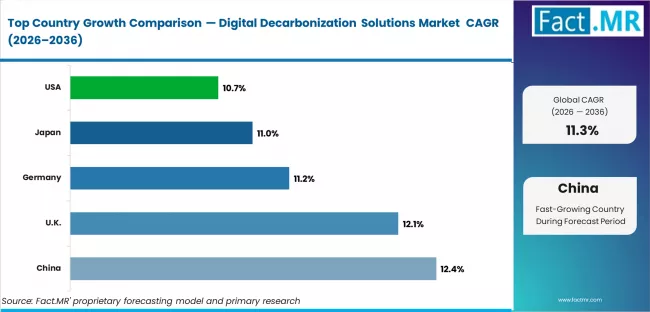
Digital Decarbonization Solutions Market Cagr Analysis By Country

North America – The Digital Decarbonization Solutions Hub

North America’s market is anticipated to grow significantly in coming years, as companies seek ESG compliance through regulation, mandate for carbon reporting, and large-scale AI-based sustainability platforms.

U.S.: Demand in the United States is projected to grow at a CAGR of around 10.7%, supported by strong investments in digital ESG reporting systems, AI-powered carbon accounting platforms, and enterprise sustainability transformation programs.

Western Europe – The Advanced Digital Sustainability & Industrial Transformation Hub
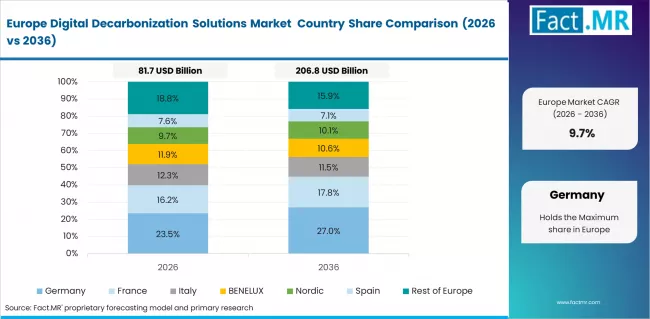
Digital Decarbonization Solutions Market Europe Country Market Share Analysis, 2026 & 2036

The market for digital decarbonization solutions in Western Europe is anticipated to register consistent and progressive growth owing to stringent regulatory measures imposed through climate-related EU policies, rising ESG requirements, and the fast-paced implementation of carbon management systems across enterprises.

Germany: Demand in Germany is projected to grow at a CAGR of around 11.2%, supported by its strong industrial manufacturing base, leadership in Industry 4.0 initiatives, energy transition programs, and rising investments in digital carbon tracking systems.

East Asia – The Digital Industrial Transformation & Decarbonization Hub

It is anticipated that the market for digital decarbonization solutions in East Asia will see tremendous growth, propelled by industrial digitalization, widespread adoption of intelligent manufacturing technology, and governmental emphasis on achieving carbon-neutral goals.

China: Demand in China is projected to grow at a CAGR of around 12.4%, supported by massive investments in industrial decarbonization, smart grid development, and digital energy infrastructure.

South Asia & Pacific – The Rapid Digital Decarbonization & Infrastructure Expansion Region

Market growth for digital decarbonization solutions is expected to be strong for the South Asia & Pacific region due to the rapid development within the digital industry across many industries, increased demand for energy, and an increasing focus on sustainable development practices.

India: Demand in India is projected to grow at a CAGR of around 12.4% through 2036, driven by rapid expansion of IT and digital services, increasing corporate ESG compliance adoption, and growing implementation of smart city and industrial efficiency programs.

Latin America – The Emerging Digital Decarbonization & Industrial Transition Region

The market for digital decarbonization solutions in Latin America is projected to show consistent growth due to increased implementation of sustainability measures, progressive digitalization in various industries, and heightened emphasis on reducing carbon emissions in energy-intensive industries.

Brazil: Demand in Brazil is projected to grow at a CAGR of around 12.5% through 2036, supported by rapid expansion of renewable energy integration, increasing ESG compliance adoption, and rising investments in digital sustainability and smart infrastructure solutions.

Middle East & Africa – The Emerging Logistics & Industrial Expansion Zone

The Digital Decarbonization Solutions market in the Middle East and Africa (MEA) is poised for moderate growth, fuelled by growing expenditure on energy transition plans, smart cities, diversified industries, and sustainable enterprises.

KSA: Demand in Saudi Arabia is projected to grow at a CAGR of around 12.2% through 2036, supported by Vision 2030 initiatives, rapid expansion of smart cities, large-scale renewable energy investments, and increasing adoption of digital sustainability and carbon management solutions.

Fact.MR’s analysis of the Digital Decarbonization Solutions Market provides a comprehensive regional outlook covering North America, Europe, Asia-Pacific, Latin America, and the Middle East & Africa. Readers can access country-wise insights, regulatory trends, ESG adoption levels, and digital sustainability transformation shaping both mature and emerging markets.

Competitive Benchmarking and Company Positioning

Leading Companies Shaping the Digital Decarbonization Solutions Market
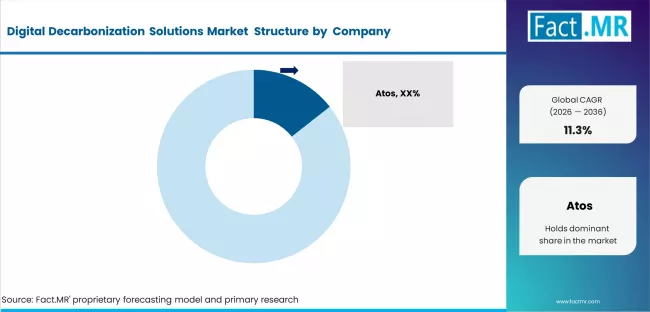
Digital Decarbonization Solutions Market Analysis By Company

Highly recognized players operating in both the global and regionally belong to the group of market companies taking part in the race in the digital decarbonization solutions market space. The key market players include such market leaders as Atos, GE Vernova, Wipro, ENGIE Impact, IBM, Deloitte, and so forth. Together, these companies constitute quite an impressive portion of the market share, which is about 45%-50%.

Key Players of the Digital Decarbonization Solutions Market

  • Verdantix
  • Sensia
  • Atos
  • GE Vernova
  • Wipro
  • Engie Impacts
  • IBM
  • Deloitte
  • Arcadis NV
  • EY
  • Saint Gobain
  • EnergyCap
  • Sphera

Recent Industry Developments

  • Moeve, Accenture Partner on Industrial Decarbonization Solutions (2026), Madrid-based energy company Moeve and Accenture announced the launch of a new partnership aimed at supporting industrial companies to accelerate decarbonization efforts across their value chains. (Moeve) [1]
  • Siemens partners with Airbus to decarbonize major sites in the U.S. and U.K. (2025): The project will be led by Siemens’ Buildings business and supported by Capgemini, combining the companies’ vast expertise in sustainability and digitalization to ensure the success and timely delivery of the project. (Siemens) [2]
  • ABB unveils Ability™ BuildingPro to accelerate decarbonization and digital transformation (2025): ABB announced the launch of ABB Ability BuildingPro, a cybersecure integration platform designed to connect, manage, and optimize building operation. (ABB) [3]
  • Envision Digital and Dassault Systèmes Announce Global Partnership to Drive Decarbonization (2025): Envision Digital’s EnOS digital system for decarbonization and Dassault Systèmes’ 3DEXPERIENCE platform – enables virtual twin experiences for the engineering, manufacturing and operations of large assets across industries. (Envision) [4]
  • Watershed Launches Free Emissions Database to Enable More Accurate Decarbonization Decisions (2025): Watershed announced the launch of an open and free version of its global emissions database, in a move aimed at enabling organizations and companies to make more accurate decarbonization decisions. (Watershed) [5]

Sources and Research References

  • [1] “Moeve, Accenture Partner on Industrial Decarbonization Solutionsss”, 2026
  • [2] “Siemens partners with Airbus to decarbonize major industrial sites in the U.S. and U.K.”, 2025
  • [3] “ABB unveils Ability™ BuildingPro to accelerate decarbonization and digital transformation in smart and sustainable buildings”, 2025
  • [4] “Envision Digital and Dassault Systèmes Announce Global Partnership to Drive Industrial Decarbonization”, 2025
  • [5] “Watershed Launches Free Emissions Database to Enable More Accurate Decarbonization Decisions”, 2026

Digital Decarbonization Solutions Market Definition

The digital decarbonization market includes several types of digital technologies such as artificial intelligence-driven analysis, Internet-of-things-enabled surveillance, carbon footprint accounting using the cloud platform, and intelligent energy management systems used for reducing energy usage and attaining net-zero emission goals.

Digital Decarbonization Solutions Market Inclusions

The market includes software solutions like carbon accounting and emission management software, ESG and sustainability reporting platform, energy management software, digital twins and simulation platform, and AI-driven decarbonization analytics platform. It also covers service categories like consultancy and advisory, systems integration and implementation, monitoring and verification, managed sustainability services, and carbon strategy and net-zero roadmap services. Furthermore, it includes hardware and connected infrastructure components like smart sensors & IoT devices, smart meters, edge computing devices, industrial automation controllers, and energy monitoring systems.

Digital Decarbonization Solutions Market Exclusions

The market does not include conventional non-digital carbon offset initiatives, manual spreadsheet emissions accounting systems, or independent renewable energy credits exchanges. The market does not include carbon capture and storage technologies, direct air capture systems, or natural carbon sinks like afforestation and reforestation initiatives.

Digital Decarbonization Solutions Market Research Methodology

  • Primary Research
    • Leading trends analysis takes into account information inputs from the relevant participants of the digital decarbonization and sustainable technologies value chain in the market. These include firms that specialize in providing software for carbon accounting, developing artificial intelligence and Internet-of-things platforms, energy management solutions, sustainability consulting and verification, and industrial automation equipment.
  • Desk Research
    • The organizations offering carbon accounting software, sustainability advisory services, energy management systems, and IIoT platforms were among the prominent secondary sources for collecting information about the market. Industry magazines, sustainability literature, and other sources by the regulatory bodies were also considered significant sources for obtaining secondary data for the analysis.
  • Market-Sizing and Forecasting
    • Digital decarbonization market has been forecasted through an aggregation of the revenue earned by players offering solutions for digital decarbonization including Software Platforms (Software for carbon accounting and emission management, sustainability reporting platforms, energy management software), Services (consulting services, system integration and deployment services, monitoring and verification services), and Hardware and Connected Infrastructure (smart sensors, smart meters, edge computing devices).
  • Data Validation and Update Cycle
    • Convergent validation has been carried out for the market numbers by seeking views from industry experts, software providers, AI and IoT platform providers, energy management solution providers, sustainability consultancies, and other parties who play a role in the energy, manufacturing, transport, and automation industries.

Scope of Analysis

Digital Decarbonization Solutions Market Breakdown By Solution Type, Technology, And Region

Parameter Details
Quantitative Units USD 323.1 Billion in 2025 to USD 1,049.0 Billion in 2036, at a CAGR of 11.3%
Market Definition The Digital Decarbonization Solutions Market comprises software platforms, services, and connected technologies such as AI-powered carbon accounting systems, cloud-based sustainability platforms, and digital twin solutions used to measure, manage, and reduce carbon emissions across industries.
Regions Covered North America, Latin America, Europe, East Asia, South Asia & Pacific, Middle East & Africa
Countries Covered USA, Canada, UK, Germany, China, India, 30 plus countries
Key Companies IBM, Accenture, Deloitte, Atos, GE Vernova, Wipro, Arcadis NV, EY
Forecast Period 2026 to 2036
Approach Hybrid demand-side and top-down methodology based on rising ESG compliance requirements, increasing carbon neutrality commitments, rapid adoption of AI and IoT-based sustainability platforms, and growing focus on enterprise-wide digital decarbonization strategies across global industries.

Analysis by Solution Type, by Technology, by Deployment Model, by Application, by End Use Industry, and by Region

  • Digital Decarbonization Solutions Market By Solution Type

    • Software Platforms
      • Carbon Accounting & Emissions Management Software
      • ESG & Sustainability Reporting Platforms
      • Energy Management Software
      • Digital Twin & Simulation Platforms
      • Smart Grid Management Platforms
      • Supply Chain Carbon Tracking Platforms
      • Industrial Process Optimization Software
      • AI-based Decarbonization Analytics Platforms
    • Services
      • Consulting & Advisory Services
      • System Integration & Deployment
      • Monitoring & Verification Services
      • Managed Sustainability Services
      • Carbon Strategy & Net-Zero Roadmap Services
      • Maintenance & Support Services
    • Hardware & Connected Infrastructure
      • Smart Sensors & IoT Devices
      • Smart Meters
      • Edge Computing Devices
      • Industrial Automation Controllers
      • Energy Monitoring Equipment
  • Digital Decarbonization Solutions Market By Technology

    • Artificial Intelligence & Machine Learning
    • Predictive Energy Optimization
    • Emissions Forecasting
    • Intelligent Load Management
    • Internet of Things (IoT)
      • Smart Energy Monitoring
      • Industrial Asset Tracking
      • Remote Emissions Monitoring
    • Cloud Computing
      • SaaS Sustainability Platforms
      • Cloud-based Carbon Management
      • Enterprise Sustainability Data Lakes
    • Digital Twin Technology
      • Blockchain
      • Big Data & Analytics
      • Automation & Robotics
    • Autonomous Energy Optimization
    • Robotics-based Process Efficiency
    • Edge Computing
  • Digital Decarbonization Solutions Market By Deployment Model

    • Cloud-based
    • On-premise
    • Edge Deployment
  • Digital Decarbonization Solutions Market By Application

    • Carbon Accounting & Reporting
    • Energy Optimization & Management
    • Industrial Process Decarbonization
    • Smart Building Management
    • Renewable Energy Integration
    • Grid Decarbonization
    • Fleet & Transportation Emissions Management
    • Supply Chain Decarbonization
    • Waste & Resource Optimization
    • Predictive Maintenance for Energy Efficiency
  • Digital Decarbonization Solutions Market By End Use Industry

    • Energy & Utilities
    • Manufacturing
    • Oil & Gas
    • Transportation & Logistics
    • Commercial Buildings
    • Government & Smart Cities
    • Healthcare
    • IT & Telecom
    • Agriculture & Food
  • Digital Decarbonization Solutions Market By Region

    • North America
      • USA
      • Canada
      • Mexico
    • Latin America
      • Brazil
      • Chile
      • Rest of LATAM
    • East Asia
      • China
      • Japan
      • South Korea
    • Western Europe
      • Germany
      • Italy
      • France
      • U.K.
      • Spain
      • BENELUX
      • Nordic
      • Rest of W. Europe
    • Eastern Europe
      • Russia
      • Hungary
      • Poland
      • Balkan & Baltics
      • Rest of E. Europe
    • Middle East and Africa
      • Kingdom of Saudi Arabia
      • United Arab Emirates
      • South Africa
      • Rest of Middle East and Africa

- Frequently Asked Questions -

How large is the demand for Digital Decarbonization Solutions in the global market in 2025?

Demand for Digital Decarbonization Solutions in the global market is estimated to be valued at USD 323.1 billion in 2025.

What will be the market size of Digital Decarbonization Solutions in the global market by 2036?

The market size for Digital Decarbonization Solutions is projected to reach USD 1,049.0 billion by 2036.

What is the expected demand growth for Digital Decarbonization Solutions in the global market between 2026 and 2036?

Demand for Digital Decarbonization Solutions in the global market is expected to grow at a CAGR of 11.3% between 2026 and 2036.

Which solution type segment is expected to dominate the Digital Decarbonization Solutions Market?

Software Platforms are expected to dominate the market, accounting for around 40.5% share in 2026, driven by increasing demand for AI-powered carbon accounting, ESG reporting automation, and real-time emissions monitoring across enterprises.

How significant is the growth outlook for the USA in this market?

USA is expected to grow at a CAGR of 10.7% through 2036, driven by strong ESG disclosure requirements, large-scale corporate net-zero commitments, and rapid adoption of AI-driven sustainability and carbon management platforms across industries.

Which company is identified as a leading player in the Digital Decarbonization Solutions Market?

IBM is recognized as a leading player in the market, offering AI-powered ESG analytics, carbon accounting solutions, and enterprise sustainability platforms supported by strong cloud and data intelligence capabilities.

Table of Content

  1. Digital Decarbonization Solutions Market – Executive Summary
  2. Market Overview
    • Market Definition & Introduction
    • Market Taxonomy & Research Scope
  3. Global Digital Decarbonization Solutions Market Demand (in Value or Size in US$ Mn) Analysis 2021-2025 and Forecast, 2026–2036
    • Historical Market Value (US$ Mn) Analysis, 2021-2025
    • Current and Future Market Value (US$ Mn) Projections, 2026–2036
      • Y-o-Y Growth Trend Analysis
      • Absolute $ Opportunity Analysis
  4. Market Background and Foundational Data Points
    • Installed Base of Digital Carbon Management Platforms
    • ESG Reporting Software Penetration Rate (%)
    • Industry-wise Decarbonization Urgency & Compliance Index
    • Manual vs Automated Carbon Accounting Adoption Ratio
    • Carbon Reporting Cost Sensitivity Index
    • AI & Cloud-Based Sustainability Analytics Growth Rate
    • Energy Optimization Efficiency Benchmarking Index
    • Data Accuracy, Traceability & ESG Audit Compliance Index
    • Vendor Ecosystem Dependence & Platform Lock-in Intensity
    • Frequency of AI Model Updates in Carbon Forecasting Systems
    • Integration Capability with ERP / EMS / Smart Grid Platforms
    • Real-time Emissions Visibility Coverage Across Operations
    • Emissions Data Error Reduction & Validation Efficiency Index
    • AI-based Emissions Anomaly Detection Adoption Rate
    • Digital Twin Integration Rate for Energy & Carbon Modeling
    • IoT & Smart Sensor Density in Industrial Energy Systems
    • Cybersecurity & Data Privacy Risk Exposure in ESG Systems
    • Cross-platform ESG Data Interoperability Score
    • Digital Decarbonization Solutions Market Opportunity Assessment
      • Total Available Market (US$ Mn)
      • Serviceable Addressable Market (US$ Mn)
      • Serviceable Obtainable Market (US$ Mn)
    • Porter’s Five Forces and PESTEL Analysis
    • Investment Feasibility Analysis
    • Macro-Economic Factors & Forecast Factors - Relevance & Impact
    • Market Dynamics
      • Drivers
      • Restraints
      • Opportunity Analysis
    • Key Regulations & Certifications
  5. Digital Decarbonization Solutions Market Analysis 2021-2025 and Forecast 2026–2036, By Solution Type
    • Introduction / Key Findings
    • Historical Market Size (US$ Mn) & Trend Analysis By Solution Type, 2021-2025
    • Current and Future Market Size (US$ Mn) Analysis and Forecast By Solution Type, 2026-2036
      • Software Platforms
        • Carbon Accounting & Emissions Management Software
        • ESG & Sustainability Reporting Platforms
        • Energy Management Software
        • Digital Twin & Simulation Platforms
        • Smart Grid Management Platforms
        • Supply Chain Carbon Tracking Platforms
        • Industrial Process Optimization Software
        • AI-based Decarbonization Analytics Platforms
      • Services
        • Consulting & Advisory Services
        • System Integration & Deployment
        • Monitoring & Verification Services
        • Managed Sustainability Services
        • Carbon Strategy & Net-Zero Roadmap Services
        • Maintenance & Support Services
      • Hardware & Connected Infrastructure
        • Smart Sensors & IoT Devices
        • Smart Meters
        • Edge Computing Devices
        • Industrial Automation Controllers
        • Energy Monitoring Equipment
    • Market Attractiveness Analysis By Solution Type
  6. Digital Decarbonization Solutions Market Analysis 2021-2025 and Forecast 2026–2036, By Technology
    • Introduction / Key Findings
    • Historical Market Size (US$ Mn) Trend Analysis By Technology, 2021-2025
    • Current and Future Market Size (US$ Mn) Analysis and Forecast By Technology, 2026-2036
      • Artificial Intelligence & Machine Learning
        • Predictive Energy Optimization
        • Emissions Forecasting
        • Intelligent Load Management
      • Internet of Things (IoT)
        • Smart Energy Monitoring
        • Industrial Asset Tracking
        • Remote Emissions Monitoring
      • Cloud Computing
        • SaaS Sustainability Platforms
        • Cloud-based Carbon Management
        • Enterprise Sustainability Data Lakes
      • Digital Twin Technology
      • Blockchain
      • Big Data & Analytics
      • Automation & Robotics
        • Autonomous Energy Optimization
        • Robotics-based Process Efficiency
      • Edge Computing
    • Market Attractiveness Analysis By Technology
  7. Digital Decarbonization Solutions Market Analysis 2021-2025 and Forecast 2026–2036, By Application
    • Introduction / Key Findings
    • Historical Market Size (US$ Mn) Trend Analysis By Application, 2021-2025
    • Current and Future Market Size (US$ Mn) Analysis and Forecast By Application, 2026-2036
      • Carbon Accounting & Reporting
      • Energy Optimization & Management
      • Industrial Process Decarbonization
      • Smart Building Management
      • Renewable Energy Integration
      • Grid Decarbonization
      • Fleet & Transportation Emissions Management
      • Supply Chain Decarbonization
      • Waste & Resource Optimization
      • Predictive Maintenance for Energy Efficiency
    • Market Attractiveness Analysis By Application
  8. Digital Decarbonization Solutions Market Analysis 2021-2025 and Forecast 2026–2036, By Deployment Model
    • Introduction / Key Findings
    • Historical Market Size (US$ Mn) Trend Analysis By Deployment Model, 2021-2025
    • Current and Future Market Size (US$ Mn) Analysis and Forecast By Deployment Model, 2026-2036
      • Cloud-based
      • On-premise
      • Edge Deployment
    • Market Attractiveness Analysis By Deployment Model
  9. Digital Decarbonization Solutions Market Analysis 2021-2025 and Forecast 2026–2036, By End-Use Industry
    • Introduction / Key Findings
    • Historical Market Size (US$ Mn) Trend Analysis By End-Use Industry, 2021-2025
    • Current and Future Market Size (US$ Mn) Analysis and Forecast By End-Use Industry, 2026-2036
      • Energy & Utilities
      • Manufacturing
      • Oil & Gas
      • Transportation & Logistics
      • Commercial Buildings
      • Government & Smart Cities
      • Healthcare
      • IT & Telecom
      • Agriculture & Food
    • Market Attractiveness Analysis By End-Use Industry
  10. Global Digital Decarbonization Solutions Market Analysis and Forecast, by Region
    • Introduction / Key Findings
    • Historical Market Size (US$ Mn) Trend Analysis by Region, 2021-2025
    • Current and Future Market Size (US$ Mn) Analysis and Forecast by Region, 2026-2036
      • North America
      • Latin America
      • Western Europe
      • Eastern Europe
      • East Asia
      • South Asia & Pacific
      • Middle East & Africa
    • Market Attractiveness Analysis by Region
  11. North America Digital Decarbonization Solutions Market Analysis and Forecast
    • Introduction / Key Findings
    • Historical Market Size (US$ Mn) Trend Analysis by Market Taxonomy, 2021-2025
    • Current and Future Market Size (US$ Mn) Analysis & Forecast by Market Taxonomy, 2026-2036
    • By Country
      • United States
      • Canada
      • Mexico
    • By Taxonomy
    • Market Attractiveness Analysis By Country & Taxonomy
    • Market Trends
    • Key Market Participants – Intensity Mapping
    • Drivers and Restraints - Impact Analysis
  12. Latin America Digital Decarbonization Solutions Market Analysis and Forecast
    • Introduction / Key Findings
    • Historical Market Size (US$ Mn) Trend Analysis by Market Taxonomy, 2021-2025
    • Current and Future Market Size (US$ Mn) Analysis & Forecast by Market Taxonomy, 2026-2036
    • By Country
      • Brazil
      • Chile
      • Rest of LATAM
    • By Taxonomy
    • Market Attractiveness Analysis By Country & Taxonomy
    • Market Trends
    • Key Market Participants – Intensity Mapping
    • Drivers and Restraints - Impact Analysis
  13. Western Europe Digital Decarbonization Solutions Market Analysis and Forecast
    • Introduction / Key Findings
    • Historical Market Size (US$ Mn) Trend Analysis by Market Taxonomy, 2021-2025
    • Current and Future Market Size (US$ Mn) Analysis & Forecast by Market Taxonomy, 2026-2036
    • By Country
      • Germany
      • Italy
      • France
      • United Kingdom
      • Spain
      • BENELUX
      • Nordics
      • Rest of Western Europe
    • By Taxonomy
    • Market Attractiveness Analysis By Country & Taxonomy
    • Market Trends
    • Key Market Participants – Intensity Mapping
    • Drivers and Restraints - Impact Analysis
  14. Eastern Europe Digital Decarbonization Solutions Market Analysis and Forecast
    • Introduction / Key Findings
    • Historical Market Size (US$ Mn) Trend Analysis by Market Taxonomy, 2021-2025
    • Current and Future Market Size (US$ Mn) Analysis & Forecast by Market Taxonomy, 2026-2036
    • By Country
      • Russia
      • Hungary
      • Poland
      • Balkan & Baltics
      • Rest of Eastern Europe
    • By Taxonomy
    • Market Attractiveness Analysis By Country & Taxonomy
    • Market Trends
    • Key Market Participants – Intensity Mapping
    • Drivers and Restraints - Impact Analysis
  15. East Asia Digital Decarbonization Solutions Market Analysis and Forecast
    • Introduction / Key Findings
    • Historical Market Size (US$ Mn) Trend Analysis by Market Taxonomy, 2021-2025
    • Current and Future Market Size (US$ Mn) Analysis & Forecast by Market Taxonomy, 2026-2036
    • By Country
      • China
      • Japan
      • South Korea
    • By Taxonomy
    • Market Attractiveness Analysis By Country & Taxonomy
    • Market Trends
    • Key Market Participants – Intensity Mapping
    • Drivers and Restraints - Impact Analysis
  16. South Asia & Pacific Digital Decarbonization Solutions Market Analysis and Forecast
    • Introduction / Key Findings
    • Historical Market Size (US$ Mn) Trend Analysis by Market Taxonomy, 2021-2025
    • Current and Future Market Size (US$ Mn) Analysis & Forecast by Market Taxonomy, 2026-2036
    • By Country
      • India
      • ASEAN
      • Australia & New Zealand
      • Rest of South Asia & Pacific
    • By Taxonomy
    • Market Attractiveness Analysis By Country & Taxonomy
    • Market Trends
    • Key Market Participants – Intensity Mapping
    • Drivers and Restraints - Impact Analysis
  17. Middle East & Africa Digital Decarbonization Solutions Market Analysis and Forecast
    • Introduction / Key Findings
    • Historical Market Size (US$ Mn) Trend Analysis by Market Taxonomy, 2021-2025
    • Current and Future Market Size (US$ Mn) Analysis & Forecast by Market Taxonomy, 2026-2036
    • By Country
      • Kingdom of Saudi Arabia
      • Other GCC Countries
      • Turkiye
      • South Africa
      • Other African Union
    • By Taxonomy
    • Market Attractiveness Analysis By Country & Taxonomy
    • Market Trends
    • Key Market Participants – Intensity Mapping
    • Drivers and Restraints - Impact Analysis
  18. Country-level Digital Decarbonization Solutions Market Analysis and Forecast
    • Introduction
    • Market Value Proportion Analysis, By Key Countries
    • Global Vs. Country Growth Comparison
      • United States Digital Decarbonization Solutions Market Analysis
        • Market Size (US$ Mn) Analysis by Market Taxonomy, 2021–2036
        • By Solution Type
        • By Technology
        • By Application
        • By Deployment Model
        • By End-Use Industry
        • Canada Digital Decarbonization Solutions Market Analysis
        • Mexico Digital Decarbonization Solutions Market Analysis
        • Brazil Digital Decarbonization Solutions Market Analysis
        • Chile Digital Decarbonization Solutions Market Analysis
        • Germany Digital Decarbonization Solutions Market Analysis
        • France Digital Decarbonization Solutions Market Analysis
        • Italy Digital Decarbonization Solutions Market Analysis
        • Spain Digital Decarbonization Solutions Market Analysis
        • United Kingdom Digital Decarbonization Solutions Market Analysis
        • BENELUX Digital Decarbonization Solutions Market Analysis
        • Nordics Digital Decarbonization Solutions Market Analysis
        • Poland Digital Decarbonization Solutions Market Analysis
        • Russia Digital Decarbonization Solutions Market Analysis
        • Hungary Digital Decarbonization Solutions Market Analysis
        • Balkan & Baltics Digital Decarbonization Solutions Market Analysis
        • China Digital Decarbonization Solutions Market Analysis
        • Japan Digital Decarbonization Solutions Market Analysis
        • South Korea Digital Decarbonization Solutions Market Analysis
        • India Digital Decarbonization Solutions Market Analysis
        • ASEAN Digital Decarbonization Solutions Market Analysis
        • ANZ Digital Decarbonization Solutions Market Analysis
        • KSA Digital Decarbonization Solutions Market Analysis
        • Other GCC Countries Digital Decarbonization Solutions Market Analysis
        • South Africa Digital Decarbonization Solutions Market Analysis
        • Turkiye Digital Decarbonization Solutions Market Analysis
    • Digital Decarbonization Solutions Market Structure Analysis
      • Market Analysis by Tier of Companies
      • Market Concentration
      • Market Share Analysis of Top Players
      • Market Space for New Brands and Dollar Opportunity
      • Market Presence Analysis
        • Regional Footprint of Players
        • Product Footprint by Players
    • Digital Decarbonization Solutions Market Competition Analysis
      • Competition Dashboard
      • Pricing Analysis by Competition
      • Competition Benchmarking
      • Competition Deep Dive
        • Verdantix
          • Overview
          • Product Portfolio
          • Sales Footprint
          • Key Developments
          • SWOT Analysis
          • Strategy Overview
          • Key Financials
        • Sensia
        • Atos
        • GE Vernova
        • Wipro
        • Engie Impacts
        • IBM
        • Deloitte
        • Arcadis NV
        • EY
        • Saint Gobain
        • EnergyCap
        • Sphera
        • Other Prominent Players
    • Primary insights
    • Assumptions & Acronyms Used
    • Research Methodology & Data Sources

List Of Table

  • Table 1: Global Market Value (USD Mn) Forecast by Region, 2021 to 2036
  • Table 2: Global Market Value (USD Mn) Forecast by Solution Type, 2021 to 2036
  • Table 3: Global Market Value (USD Mn) Forecast by Technology, 2021 to 2036
  • Table 4: Global Market Value (USD Mn) Forecast by Application, 2021 to 2036
  • Table 5: Global Market Value (USD Mn) Forecast by End Use Industry, 2021 to 2036
  • Table 6: Global Market Value (USD Mn) Forecast by Deployment Model, 2021 to 2036
  • Table 7: North America Market Value (USD Mn) Forecast by Country, 2021 to 2036
  • Table 8: North America Market Value (USD Mn) Forecast by Solution Type, 2021 to 2036
  • Table 9: North America Market Value (USD Mn) Forecast by Technology, 2021 to 2036
  • Table 10: North America Market Value (USD Mn) Forecast by Application, 2021 to 2036
  • Table 11: North America Market Value (USD Mn) Forecast by End Use Industry, 2021 to 2036
  • Table 12: North America Market Value (USD Mn) Forecast by Deployment Model, 2021 to 2036
  • Table 13: Latin America Market Value (USD Mn) Forecast by Country, 2021 to 2036
  • Table 14: Latin America Market Value (USD Mn) Forecast by Solution Type, 2021 to 2036
  • Table 15: Latin America Market Value (USD Mn) Forecast by Technology, 2021 to 2036
  • Table 16: Latin America Market Value (USD Mn) Forecast by Application, 2021 to 2036
  • Table 17: Latin America Market Value (USD Mn) Forecast by End Use Industry, 2021 to 2036
  • Table 18: Latin America Market Value (USD Mn) Forecast by Deployment Model, 2021 to 2036
  • Table 19: Western Europe Market Value (USD Mn) Forecast by Country, 2021 to 2036
  • Table 20: Western Europe Market Value (USD Mn) Forecast by Solution Type, 2021 to 2036
  • Table 21: Western Europe Market Value (USD Mn) Forecast by Technology, 2021 to 2036
  • Table 22: Western Europe Market Value (USD Mn) Forecast by Application, 2021 to 2036
  • Table 23: Western Europe Market Value (USD Mn) Forecast by End Use Industry, 2021 to 2036
  • Table 24: Western Europe Market Value (USD Mn) Forecast by Deployment Model, 2021 to 2036
  • Table 25: Eastern Europe Market Value (USD Mn) Forecast by Country, 2021 to 2036
  • Table 26: Eastern Europe Market Value (USD Mn) Forecast by Solution Type, 2021 to 2036
  • Table 27: Eastern Europe Market Value (USD Mn) Forecast by Technology, 2021 to 2036
  • Table 28: Eastern Europe Market Value (USD Mn) Forecast by Application, 2021 to 2036
  • Table 29: Eastern Europe Market Value (USD Mn) Forecast by End Use Industry, 2021 to 2036
  • Table 30: Eastern Europe Market Value (USD Mn) Forecast by Deployment Model, 2021 to 2036
  • Table 31: East Asia Market Value (USD Mn) Forecast by Country, 2021 to 2036
  • Table 32: East Asia Market Value (USD Mn) Forecast by Solution Type, 2021 to 2036
  • Table 33: East Asia Market Value (USD Mn) Forecast by Technology, 2021 to 2036
  • Table 34: East Asia Market Value (USD Mn) Forecast by Application, 2021 to 2036
  • Table 35: East Asia Market Value (USD Mn) Forecast by End Use Industry, 2021 to 2036
  • Table 36: East Asia Market Value (USD Mn) Forecast by Deployment Model, 2021 to 2036
  • Table 37: South Asia and Pacific Market Value (USD Mn) Forecast by Country, 2021 to 2036
  • Table 38: South Asia and Pacific Market Value (USD Mn) Forecast by Solution Type, 2021 to 2036
  • Table 39: South Asia and Pacific Market Value (USD Mn) Forecast by Technology, 2021 to 2036
  • Table 40: South Asia and Pacific Market Value (USD Mn) Forecast by Application, 2021 to 2036
  • Table 41: South Asia and Pacific Market Value (USD Mn) Forecast by End Use Industry, 2021 to 2036
  • Table 42: South Asia and Pacific Market Value (USD Mn) Forecast by Deployment Model, 2021 to 2036
  • Table 43: Middle East & Africa Market Value (USD Mn) Forecast by Country, 2021 to 2036
  • Table 44: Middle East & Africa Market Value (USD Mn) Forecast by Solution Type, 2021 to 2036
  • Table 45: Middle East & Africa Market Value (USD Mn) Forecast by Technology, 2021 to 2036
  • Table 46: Middle East & Africa Market Value (USD Mn) Forecast by Application, 2021 to 2036
  • Table 47: Middle East & Africa Market Value (USD Mn) Forecast by End Use Industry, 2021 to 2036
  • Table 48: Middle East & Africa Market Value (USD Mn) Forecast by Deployment Model, 2021 to 2036

List Of Figures

  • Figure 1: Global Market Pricing Analysis
  • Figure 2: Global Market Value (USD Mn) Forecast 2021–2036
  • Figure 3: Global Market Value Share and BPS Analysis by Solution Type, 2026 and 2036
  • Figure 4: Global Market Y-o-Y Growth Comparison by Solution Type, 2026 to 2036
  • Figure 5: Global Market Attractiveness Analysis by Solution Type
  • Figure 6: Global Market Value Share and BPS Analysis by Technology, 2026 and 2036
  • Figure 7: Global Market Y-o-Y Growth Comparison by Technology, 2026 to 2036
  • Figure 8: Global Market Attractiveness Analysis by Technology
  • Figure 9: Global Market Value Share and BPS Analysis by Application, 2026 and 2036
  • Figure 10: Global Market Y-o-Y Growth Comparison by Application, 2026 to 2036
  • Figure 11: Global Market Attractiveness Analysis by Application
  • Figure 12: Global Market Value Share and BPS Analysis by End Use Industry, 2026 and 2036
  • Figure 13: Global Market Y-o-Y Growth Comparison by End Use Industry, 2026 to 2036
  • Figure 14: Global Market Attractiveness Analysis by End Use Industry
  • Figure 15: Global Market Value Share and BPS Analysis by Deployment Model, 2026 and 2036
  • Figure 16: Global Market Y-o-Y Growth Comparison by Deployment Model, 2026 to 2036
  • Figure 17: Global Market Attractiveness Analysis by Deployment Model
  • Figure 18: Global Market Value (USD Mn) Share and BPS Analysis by Region, 2026 and 2036
  • Figure 19: Global Market Y-o-Y Growth Comparison by Region, 2026 to 2036
  • Figure 20: Global Market Attractiveness Analysis by Region
  • Figure 21: North America Market Incremental $ Opportunity, 2026 to 2036
  • Figure 22: Latin America Market Incremental $ Opportunity, 2026 to 2036
  • Figure 23: Western Europe Market Incremental $ Opportunity, 2026 to 2036
  • Figure 24: Eastern Europe Market Incremental $ Opportunity, 2026 to 2036
  • Figure 25: East Asia Market Incremental $ Opportunity, 2026 to 2036
  • Figure 26: South Asia and Pacific Market Incremental $ Opportunity, 2026 to 2036
  • Figure 27: Middle East & Africa Market Incremental $ Opportunity, 2026 to 2036
  • Figure 28: North America Market Value Share and BPS Analysis by Country, 2026 and 2036
  • Figure 29: North America Market Value Share and BPS Analysis by Solution Type, 2026 and 2036
  • Figure 30: North America Market Y-o-Y Growth Comparison by Solution Type, 2026 to 2036
  • Figure 31: North America Market Attractiveness Analysis by Solution Type
  • Figure 32: North America Market Value Share and BPS Analysis by Technology, 2026 and 2036
  • Figure 33: North America Market Y-o-Y Growth Comparison by Technology, 2026 to 2036
  • Figure 34: North America Market Attractiveness Analysis by Technology
  • Figure 35: North America Market Value Share and BPS Analysis by Application, 2026 and 2036
  • Figure 36: North America Market Y-o-Y Growth Comparison by Application, 2026 to 2036
  • Figure 37: North America Market Attractiveness Analysis by Application
  • Figure 38: North America Market Value Share and BPS Analysis by End Use Industry, 2026 and 2036
  • Figure 39: North America Market Y-o-Y Growth Comparison by End Use Industry, 2026 to 2036
  • Figure 40: North America Market Attractiveness Analysis by End Use Industry
  • Figure 41: North America Market Value Share and BPS Analysis by Deployment Model, 2026 and 2036
  • Figure 42: North America Market Y-o-Y Growth Comparison by Deployment Model, 2026 to 2036
  • Figure 43: North America Market Attractiveness Analysis by Deployment Model
  • Figure 44: Latin America Market Value Share and BPS Analysis by Country, 2026 and 2036
  • Figure 45: Latin America Market Value Share and BPS Analysis by Solution Type, 2026 and 2036
  • Figure 46: Latin America Market Y-o-Y Growth Comparison by Solution Type, 2026 to 2036
  • Figure 47: Latin America Market Attractiveness Analysis by Solution Type
  • Figure 48: Latin America Market Value Share and BPS Analysis by Technology, 2026 and 2036
  • Figure 49: Latin America Market Y-o-Y Growth Comparison by Technology, 2026 to 2036
  • Figure 50: Latin America Market Attractiveness Analysis by Technology
  • Figure 51: Latin America Market Value Share and BPS Analysis by Application, 2026 and 2036
  • Figure 52: Latin America Market Y-o-Y Growth Comparison by Application, 2026 to 2036
  • Figure 53: Latin America Market Attractiveness Analysis by Application
  • Figure 54: Latin America Market Value Share and BPS Analysis by End Use Industry, 2026 and 2036
  • Figure 55: Latin America Market Y-o-Y Growth Comparison by End Use Industry, 2026 to 2036
  • Figure 56: Latin America Market Attractiveness Analysis by End Use Industry
  • Figure 57: Latin America Market Value Share and BPS Analysis by Deployment Model, 2026 and 2036
  • Figure 58: Latin America Market Y-o-Y Growth Comparison by Deployment Model, 2026 to 2036
  • Figure 59: Latin America Market Attractiveness Analysis by Deployment Model
  • Figure 60: Western Europe Market Value Share and BPS Analysis by Country, 2026 and 2036
  • Figure 61: Western Europe Market Value Share and BPS Analysis by Solution Type, 2026 and 2036
  • Figure 62: Western Europe Market Y-o-Y Growth Comparison by Solution Type, 2026 to 2036
  • Figure 63: Western Europe Market Attractiveness Analysis by Solution Type
  • Figure 64: Western Europe Market Value Share and BPS Analysis by Technology, 2026 and 2036
  • Figure 65: Western Europe Market Y-o-Y Growth Comparison by Technology, 2026 to 2036
  • Figure 66: Western Europe Market Attractiveness Analysis by Technology
  • Figure 67: Western Europe Market Value Share and BPS Analysis by Application, 2026 and 2036
  • Figure 68: Western Europe Market Y-o-Y Growth Comparison by Application, 2026 to 2036
  • Figure 69: Western Europe Market Attractiveness Analysis by Application
  • Figure 70: Western Europe Market Value Share and BPS Analysis by End Use Industry, 2026 and 2036
  • Figure 71: Western Europe Market Y-o-Y Growth Comparison by End Use Industry, 2026 to 2036
  • Figure 72: Western Europe Market Attractiveness Analysis by End Use Industry
  • Figure 73: Western Europe Market Value Share and BPS Analysis by Deployment Model, 2026 and 2036
  • Figure 74: Western Europe Market Y-o-Y Growth Comparison by Deployment Model, 2026 to 2036
  • Figure 75: Western Europe Market Attractiveness Analysis by Deployment Model
  • Figure 76: Eastern Europe Market Value Share and BPS Analysis by Country, 2026 and 2036
  • Figure 77: Eastern Europe Market Value Share and BPS Analysis by Solution Type, 2026 and 2036
  • Figure 78: Eastern Europe Market Y-o-Y Growth Comparison by Solution Type, 2026 to 2036
  • Figure 79: Eastern Europe Market Attractiveness Analysis by Solution Type
  • Figure 80: Eastern Europe Market Value Share and BPS Analysis by Technology, 2026 and 2036
  • Figure 81: Eastern Europe Market Y-o-Y Growth Comparison by Technology, 2026 to 2036
  • Figure 82: Eastern Europe Market Attractiveness Analysis by Technology
  • Figure 83: Eastern Europe Market Value Share and BPS Analysis by Application, 2026 and 2036
  • Figure 84: Eastern Europe Market Y-o-Y Growth Comparison by Application, 2026 to 2036
  • Figure 85: Eastern Europe Market Attractiveness Analysis by Application
  • Figure 86: Eastern Europe Market Value Share and BPS Analysis by End Use Industry, 2026 and 2036
  • Figure 87: Eastern Europe Market Y-o-Y Growth Comparison by End Use Industry, 2026 to 2036
  • Figure 88: Eastern Europe Market Attractiveness Analysis by End Use Industry
  • Figure 89: Eastern Europe Market Value Share and BPS Analysis by Deployment Model, 2026 and 2036
  • Figure 90: Eastern Europe Market Y-o-Y Growth Comparison by Deployment Model, 2026 to 2036
  • Figure 91: Eastern Europe Market Attractiveness Analysis by Deployment Model
  • Figure 92: East Asia Market Value Share and BPS Analysis by Country, 2026 and 2036
  • Figure 93: East Asia Market Value Share and BPS Analysis by Solution Type, 2026 and 2036
  • Figure 94: East Asia Market Y-o-Y Growth Comparison by Solution Type, 2026 to 2036
  • Figure 95: East Asia Market Attractiveness Analysis by Solution Type
  • Figure 96: East Asia Market Value Share and BPS Analysis by Technology, 2026 and 2036
  • Figure 97: East Asia Market Y-o-Y Growth Comparison by Technology, 2026 to 2036
  • Figure 98: East Asia Market Attractiveness Analysis by Technology
  • Figure 99: East Asia Market Value Share and BPS Analysis by Application, 2026 and 2036
  • Figure 100: East Asia Market Y-o-Y Growth Comparison by Application, 2026 to 2036
  • Figure 101: East Asia Market Attractiveness Analysis by Application
  • Figure 102: East Asia Market Value Share and BPS Analysis by End Use Industry, 2026 and 2036
  • Figure 103: East Asia Market Y-o-Y Growth Comparison by End Use Industry, 2026 to 2036
  • Figure 104: East Asia Market Attractiveness Analysis by End Use Industry
  • Figure 105: East Asia Market Value Share and BPS Analysis by Deployment Model, 2026 and 2036
  • Figure 106: East Asia Market Y-o-Y Growth Comparison by Deployment Model, 2026 to 2036
  • Figure 107: East Asia Market Attractiveness Analysis by Deployment Model
  • Figure 108: South Asia and Pacific Market Value Share and BPS Analysis by Country, 2026 and 2036
  • Figure 109: South Asia and Pacific Market Value Share and BPS Analysis by Solution Type, 2026 and 2036
  • Figure 110: South Asia and Pacific Market Y-o-Y Growth Comparison by Solution Type, 2026 to 2036
  • Figure 111: South Asia and Pacific Market Attractiveness Analysis by Solution Type
  • Figure 112: South Asia and Pacific Market Value Share and BPS Analysis by Technology, 2026 and 2036
  • Figure 113: South Asia and Pacific Market Y-o-Y Growth Comparison by Technology, 2026 to 2036
  • Figure 114: South Asia and Pacific Market Attractiveness Analysis by Technology
  • Figure 115: South Asia and Pacific Market Value Share and BPS Analysis by Application, 2026 and 2036
  • Figure 116: South Asia and Pacific Market Y-o-Y Growth Comparison by Application, 2026 to 2036
  • Figure 117: South Asia and Pacific Market Attractiveness Analysis by Application
  • Figure 118: South Asia and Pacific Market Value Share and BPS Analysis by End Use Industry, 2026 and 2036
  • Figure 119: South Asia and Pacific Market Y-o-Y Growth Comparison by End Use Industry, 2026 to 2036
  • Figure 120: South Asia and Pacific Market Attractiveness Analysis by End Use Industry
  • Figure 121: South Asia and Pacific Market Value Share and BPS Analysis by Deployment Model, 2026 and 2036
  • Figure 122: South Asia and Pacific Market Y-o-Y Growth Comparison by Deployment Model, 2026 to 2036
  • Figure 123: South Asia and Pacific Market Attractiveness Analysis by Deployment Model
  • Figure 124: Middle East & Africa Market Value Share and BPS Analysis by Country, 2026 and 2036
  • Figure 125: Middle East & Africa Market Value Share and BPS Analysis by Solution Type, 2026 and 2036
  • Figure 126: Middle East & Africa Market Y-o-Y Growth Comparison by Solution Type, 2026 to 2036
  • Figure 127: Middle East & Africa Market Attractiveness Analysis by Solution Type
  • Figure 128: Middle East & Africa Market Value Share and BPS Analysis by Technology, 2026 and 2036
  • Figure 129: Middle East & Africa Market Y-o-Y Growth Comparison by Technology, 2026 to 2036
  • Figure 130: Middle East & Africa Market Attractiveness Analysis by Technology
  • Figure 131: Middle East & Africa Market Value Share and BPS Analysis by Application, 2026 and 2036
  • Figure 132: Middle East & Africa Market Y-o-Y Growth Comparison by Application, 2026 to 2036
  • Figure 133: Middle East & Africa Market Attractiveness Analysis by Application
  • Figure 134: Middle East & Africa Market Value Share and BPS Analysis by End Use Industry, 2026 and 2036
  • Figure 135: Middle East & Africa Market Y-o-Y Growth Comparison by End Use Industry, 2026 to 2036
  • Figure 136: Middle East & Africa Market Attractiveness Analysis by End Use Industry
  • Figure 137: Middle East & Africa Market Value Share and BPS Analysis by Deployment Model, 2026 and 2036
  • Figure 138: Middle East & Africa Market Y-o-Y Growth Comparison by Deployment Model, 2026 to 2036
  • Figure 139: Middle East & Africa Market Attractiveness Analysis by Deployment Model
  • Figure 140: Global Market – Tier Structure Analysis
  • Figure 141: Global Market – Company Share Analysis

Digital Decarbonization Solutions Market