Digital Product Ecosystems Using PCR for Consumer Goods Market
Digital Product Ecosystems Using PCR for Consumer Goods Market Size and Share Forecast Outlook 2026 to 2036
Digital product ecosystems using pcr for consumer goods market is projected to grow from USD 2.2 billion in 2026 to USD 7.9 billion by 2036, at a CAGR of 13.6%. FMCG and durable goods will dominate with a 49.0% market share, while digital product passport ecosystems will lead the ecosystem type segment with a 37.0% share.
Digital Product Ecosystems Using PCR for Consumer Goods Market Forecast and Outlook 2026 to 2036
The digital product ecosystems using PCR for consumer goods market is likely to be valued at USD 2.2 billion in 2026 and is projected to reach USD 7.9 billion by 2036, expanding at a CAGR of 13.6%.
Key Takeaways from Digital Product Ecosystems Using PCR for Consumer Goods Market
- Digital Product Ecosystems Using PCR for Consumer Goods Market Value (2026): USD 2.2 billion
- Digital Product Ecosystems Using PCR for Consumer Goods Market Forecast Value (2036): USD 7.9 billion
- Digital Product Ecosystems Using PCR for Consumer Goods Market Forecast CAGR 2026 to 2036: 13.6%
- Leading Segment in Digital Product Ecosystems Using PCR for Consumer Goods Market: DPP platforms + QR or NFC (60%)
- Key Growth Region in Digital Product Ecosystems Using PCR for Consumer Goods Market: Asia Pacific
- Key Players in Digital Product Ecosystems Using PCR for Consumer Goods Market: SAP, Salesforce (Net Zero Cloud), Alibaba Cloud, NEC, Circularise, Digimarc, AntChain, Fujitsu
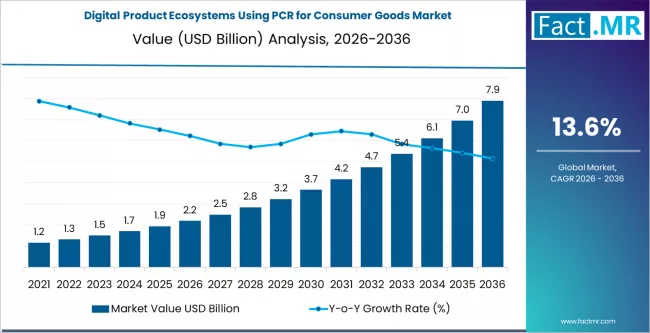
Commercial performance in this market is shaped less by headline growth and more by disciplined pricing and buyer leverage across large consumer goods portfolios. Brand owners exert pressure on platform providers by bundling contracts, standardizing requirements, and limiting premium pricing for traceability features.
Volume predictability remains uneven, as adoption is often tied to regulatory milestones or retailer mandates rather than organic demand. Pricing power is concentrated among ecosystem operators that control data standards, verification protocols, and system interoperability.
Cost recovery timelines remain extended due to integration complexity and ongoing compliance updates. Commercial outcomes depend on managing contract duration, service scope creep, and margin erosion from customization. Scale supports stability, yet it rarely guarantees pricing upside.
Digital Product Ecosystems Using PCR for Consumer Goods Market
| Metric | Value |
|---|---|
| Estimated Value in (2026E) | USD 2.2 billion |
| Forecast Value in (2036F) | USD 7.9 billion |
| Forecast CAGR (2026 to 2036) | 13.6% |
Category
| Category | Segments |
|---|---|
| End-Use | FMCG and durable goods; Brand-consumer transparency; Digital retail ecosystems; High-trust consumer goods; Emerging digital FMCG; Regional consumer brands |
| Ecosystem Type | Digital product passport ecosystems; Connected packaging ecosystems; Platform-integrated PCR tracking; Secure product ecosystems; Others |
| PCR Integration Layer | PCR content and sourcing data; PCR %, carbon & claims; Material provenance data; Certified PCR data; Others |
| Digital Technology | DPP platforms + QR or NFC; Cloud + mobile platforms; Super-app integration; Trusted digital identity; Others |
| Region | North America; Europe; Asia Pacific; Latin America; Middle East & Africa |
Segmental Analysis
What Is the Impact of PCR Integration Layer on the Digital Product Ecosystems Using PCR for Consumer Goods Market?
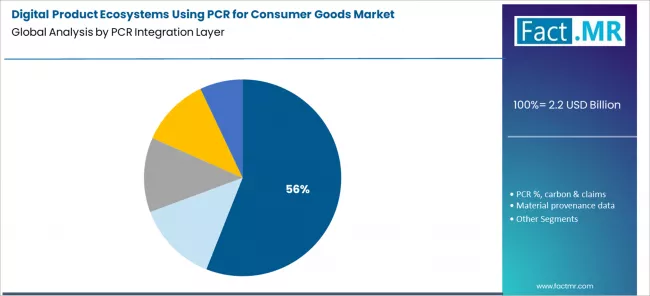
In the digital product ecosystems using PCR for consumer goods market, the PCR integration layer plays a crucial role in ensuring transparency and trust in sustainable product claims. PCR content and sourcing data lead the market with a 56% share, enabling consumers and manufacturers to track the origin and sustainability of products. This integration layer allows for the collection and verification of critical data, which is essential for building trust and ensuring that the claims around recycled content are accurate. As consumer demand for sustainable and verified products grows, the use of PCR content and sourcing data will remain central to the development of digital product ecosystems.
How Does Digital Technology Influence the Digital Product Ecosystems Using PCR for Consumer Goods Market?
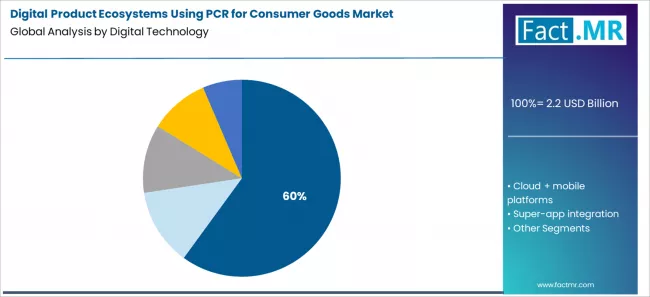
Digital technology is a key enabler in the digital product ecosystems using PCR for consumer goods market, with DPP platforms and QR or NFC leading the market at a 60% share. These technologies facilitate the use of digital product passports (DPP) to provide detailed, verifiable information about the product’s lifecycle. By leveraging QR codes or NFC technology, consumers and manufacturers can access information about the product’s recycled content, provenance, and sustainability claims. As digital transformation continues, these technologies will play a pivotal role in enhancing transparency, supporting the circular economy, and meeting the growing demand for sustainable consumer goods.
What are the Principal Drivers, Constraints, and Evolving Dynamics of the Digital Product Ecosystems Using PCR for Consumer Goods Market?
Growth in digital product ecosystems that use postconsumer recycled (PCR) content has been linked to efforts by consumer goods companies to track material provenance and usage patterns. Systems that integrate digital identifiers with PCR materials support traceability from recycling point through product lifecycle. Demand for transparency in material content has encouraged pilots of digital tagging and blockchainlinked records for PCR inputs in consumer goods.
Investment costs for digital infrastructure have limited adoption among smaller brands. Integration challenges have arisen where legacy supplychain systems lack standard interfaces for digital tracking of PCR materials. Work on interoperable protocols and shared data standards is in progress. Use cases that link digital records to consumer apps are being tested to provide verified material histories and support circular reuse.
Analysis of the Digital Product Ecosystems Using PCR for Consumer Goods Market by Key Country
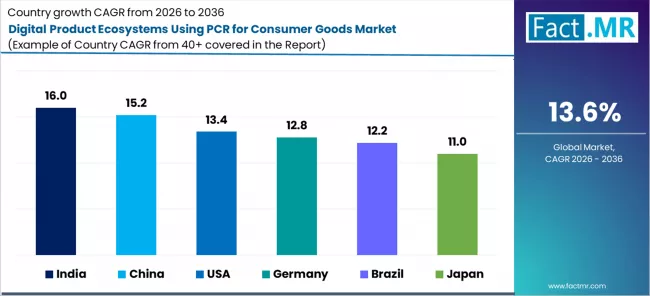
| Country | CAGR (2026-2036) |
|---|---|
| Germany | 12.8% |
| USA | 13.4% |
| China | 15.2% |
| Japan | 11% |
| India | 16% |
| Brazil | 12.2% |
The report covers an in-depth analysis of 40+ countries; top-performing countries are highlighted below.
What is the Growth Outlook for Digital Product Ecosystems Using PCR for Consumer Goods in Germany?
Germany’s digital product ecosystems using PCR for consumer goods market is expected to grow at a CAGR of 12.8% from 2026 to 2036. Germany is a leader in sustainability and digital innovation, and the increasing demand for transparent, sustainable product ecosystems is driving the adoption of PCR technology. With an emphasis on circular economy principles, Germany’s consumer goods sector is embracing digital product passports and traceability systems that incorporate PCR for greater environmental responsibility. The country’s regulatory framework and commitment to sustainable production will further support market growth.
How is the Digital Product Ecosystems Using PCR for Consumer Goods Market Performing in the USA?
The USA’s digital product ecosystems using PCR for consumer goods market is projected to grow at a CAGR of 13.4% from 2026 to 2036. The USA is increasingly focused on improving supply chain transparency and reducing waste in consumer goods manufacturing. As businesses aim to meet sustainability goals and provide consumers with clear product lifecycle information, digital product ecosystems incorporating PCR are gaining traction. With regulatory pressures for more eco-friendly packaging and a growing consumer preference for sustainable products, the demand for PCR-based digital ecosystems in the consumer goods sector is expected to rise.
What is the Market Outlook for Digital Product Ecosystems Using PCR for Consumer Goods in China?
China is expected to experience significant growth in the digital product ecosystems using PCR for consumer goods market, with a projected CAGR of 15.2% from 2026 to 2036. The country’s rapid industrialization and focus on environmental sustainability are key factors driving this growth. As China’s consumer goods sector embraces digital solutions for supply chain optimization and sustainability, PCR technologies will play a crucial role in reducing material waste and improving recyclability. Government initiatives promoting circular economy practices will also support the adoption of digital product ecosystems using PCR.
What is the Growth Potential for Digital Product Ecosystems Using PCR for Consumer Goods in Japan?
Japan’s digital product ecosystems using PCR for consumer goods market is projected to grow at a CAGR of 11% from 2026 to 2036. Japan has a strong focus on sustainability and waste reduction, and as consumer goods companies strive to meet environmental goals, digital ecosystems incorporating PCR technology are becoming more prevalent. The country’s advanced manufacturing capabilities and digital infrastructure make it a prime market for these solutions. While the growth rate is more modest compared to other regions, Japan’s emphasis on recycling and efficient resource use will continue to drive the market.
What is the Demand for Digital Product Ecosystems Using PCR for Consumer Goods in India?
India’s digital product ecosystems using PCR for consumer goods market is expected to grow at a robust CAGR of 16% from 2026 to 2036. As India’s consumer goods sector expands and sustainability becomes a greater focus, the adoption of digital solutions like product passports and PCR-based systems is increasing. These technologies enable better transparency, recyclability, and supply chain traceability, which align with both consumer expectations and government regulations. India’s growing manufacturing base, along with increasing environmental awareness, presents significant opportunities for digital product ecosystems using PCR.
What is the Market Expansion Outlook for Digital Product Ecosystems Using PCR for Consumer Goods in Brazil?
Brazil’s digital product ecosystems using PCR for consumer goods market is forecast to grow at a CAGR of 12.2% from 2026 to 2036. As Brazil faces increasing pressure to adopt more sustainable manufacturing practices, the demand for digital product ecosystems using PCR is on the rise. With growing consumer awareness of environmental issues and the need for more transparent supply chains, companies are turning to digital systems that incorporate PCR for greater sustainability. Brazil’s expanding consumer goods sector, combined with favorable regulatory policies, will drive the continued growth of these solutions.
How is Competition Structured in the Digital Product Ecosystems Using PCR for Consumer Goods Market?
Competition in this market is shaped by platform capability, data integration, and the ability to support traceability of postconsumer recycled (PCR) content across product lifecycles. SAP and Salesforce (Net Zero Cloud) compete with enterprisegrade suites that embed PCR metrics into broader product and sustainability workflows. Alibaba Cloud and NEC emphasize scalable cloud infrastructure and analytics that support distributed teams.
Circularise and Digimarc focus on digital identification and provenance tracking that aid material reporting and compliance. AntChain and Fujitsu offer blockchainenabled solutions that secure supplier data and certification records. Firms differentiate through ease of integration with existing enterprise systems, depth of analytics, and support for multistakeholder visibility in supply chains.
Key Players in the Digital Product Ecosystems Using PCR for Consumer Goods Market
- SAP
- Salesforce (Net Zero Cloud)
- Alibaba Cloud
- NEC
- Circularise
- Digimarc
- AntChain
- Fujitsu
Scope of the Report
| Items | Values |
|---|---|
| Quantitative Units (2026) | USD Billion |
| End-use | FMCG and durable goods, Brand-consumer transparency, Digital retail ecosystems, High-trust consumer goods, Emerging digital FMCG |
| Ecosystem Type | Digital product passport ecosystems, Connected packaging ecosystems, Platform-integrated PCR tracking, Secure product ecosystems, Others |
| PCR Integration Layer | PCR content and sourcing data, PCR %, carbon & claims, Material provenance data, Certified PCR data, Others |
| Digital Technology | DPP platforms + QR or NFC, Cloud + mobile platforms, Super-app integration, Trusted digital identity, Others |
| Regions Covered | North America, Europe, Asia Pacific, Latin America, Middle East & Africa |
| Countries Covered | United States, Canada, Mexico, Brazil, Germany, United Kingdom, France, Italy, Spain, China, Japan, South Korea, India, Australia & New Zealand |
| Key Companies Profiled | SAP, Salesforce (Net Zero Cloud), Alibaba Cloud, NEC, Circularise, Digimarc, AntChain, Fujitsu |
| Additional Attributes | Dollar revenue by end-use, ecosystem type, PCR integration layer, and digital technology; regional demand trends, competitive landscape, technological advancements in digital product ecosystems, and innovations in consumer goods digital traceability systems |
Digital Product Ecosystems Using PCR for Consumer Goods Market Key Segments
-
End-use :
- FMCG and durable goods
- Brand-consumer transparency
- Digital retail ecosystems
- High-trust consumer goods
- Emerging digital FMCG
- Regional consumer brands
-
Ecosystem Type :
- Digital product passport ecosystems
- Connected packaging ecosystems
- Platform-integrated PCR tracking
- Secure product ecosystems
- Others
-
PCR Integration Layer :
- PCR content and sourcing data
- PCR %, carbon & claims
- Material provenance data
- Certified PCR data
- Others
-
Digital Technology :
- DPP platforms + QR or NFC
- Cloud + mobile platforms
- Super-app integration
- Trusted digital identity
- Others
-
Region :
- North America
- USA
- Canada
- Mexico
- Europe
- Germany
- UK
- France
- Italy
- Spain
- Nordic Countries
- BENELUX
- Rest of Europe
- Asia Pacific
- China
- Japan
- South Korea
- India
- Australia
- Rest of Asia Pacific
- Latin America
- Brazil
- Argentina
- Rest of Latin America
- Middle East and Africa
- Kingdom of Saudi Arabia
- United Arab Emirates
- South Africa
- Rest of Middle East and Africa
- Other Regions
- Oceania
- Central Asia
- Other Markets
- North America
Bibliographies
- European Commission. (2024). Digital product passport under the Ecodesign for Sustainable Products Regulation: Scope, data requirements, and implementation roadmap. European Union Publications.
- Organisation for Economic Co-operation and Development. (2023). Digitalisation, traceability, and circular economy adoption in consumer goods value chains. OECD Publishing.
- International Organization for Standardization. (2023). ISO 14021: Environmental labels and declarations-Self-declared environmental claims (including recycled content). ISO.
- World Economic Forum. (2023). Scaling digital traceability and product passports for sustainable consumer goods. WEF.
- Journal of Cleaner Production. (2024). Digital product passports and lifecycle data integration for recycled-content consumer goods. Journal of Cleaner Production.
Table of Content
- Executive Summary
- Global Market Outlook
- Demand to side Trends
- Supply to side Trends
- Technology Roadmap Analysis
- Analysis and Recommendations
- Market Overview
- Market Coverage / Taxonomy
- Market Definition / Scope / Limitations
- Market Background
- Market Dynamics
- Drivers
- Restraints
- Opportunity
- Trends
- Scenario Forecast
- Demand in Optimistic Scenario
- Demand in Likely Scenario
- Demand in Conservative Scenario
- Opportunity Map Analysis
- Product Life Cycle Analysis
- Supply Chain Analysis
- Investment Feasibility Matrix
- Value Chain Analysis
- PESTLE and Porter’s Analysis
- Regulatory Landscape
- Regional Parent Market Outlook
- Production and Consumption Statistics
- Import and Export Statistics
- Market Dynamics
- Global Market Analysis 2021 to 2025 and Forecast, 2026 to 2036
- Historical Market Size Value (USD Million) Analysis, 2021 to 2025
- Current and Future Market Size Value (USD Million) Projections, 2026 to 2036
- Y to o to Y Growth Trend Analysis
- Absolute $ Opportunity Analysis
- Global Market Pricing Analysis 2021 to 2025 and Forecast 2026 to 2036
- Global Market Analysis 2021 to 2025 and Forecast 2026 to 2036, By End-use
- Introduction / Key Findings
- Historical Market Size Value (USD Million) Analysis By End-use, 2021 to 2025
- Current and Future Market Size Value (USD Million) Analysis and Forecast By End-use, 2026 to 2036
- FMCG and durable goods
- Brand-consumer transparency
- Digital retail ecosystems
- High-trust consumer goods
- Emerging digital FMCG
- Regional consumer brands
- FMCG and durable goods
- Y to o to Y Growth Trend Analysis By End-use, 2021 to 2025
- Absolute $ Opportunity Analysis By End-use, 2026 to 2036
- Global Market Analysis 2021 to 2025 and Forecast 2026 to 2036, By Ecosystem Type
- Introduction / Key Findings
- Historical Market Size Value (USD Million) Analysis By Ecosystem Type, 2021 to 2025
- Current and Future Market Size Value (USD Million) Analysis and Forecast By Ecosystem Type, 2026 to 2036
- Digital product passport ecosystems
- Connected packaging ecosystems
- Platform-integrated PCR tracking
- Secure product ecosystems
- Others
- Digital product passport ecosystems
- Y to o to Y Growth Trend Analysis By Ecosystem Type, 2021 to 2025
- Absolute $ Opportunity Analysis By Ecosystem Type, 2026 to 2036
- Global Market Analysis 2021 to 2025 and Forecast 2026 to 2036, By PCR Integration Layer
- Introduction / Key Findings
- Historical Market Size Value (USD Million) Analysis By PCR Integration Layer, 2021 to 2025
- Current and Future Market Size Value (USD Million) Analysis and Forecast By PCR Integration Layer, 2026 to 2036
- PCR content and sourcing data
- PCR %, carbon & claims
- Material provenance data
- Certified PCR data
- Others
- PCR content and sourcing data
- Y to o to Y Growth Trend Analysis By PCR Integration Layer, 2021 to 2025
- Absolute $ Opportunity Analysis By PCR Integration Layer, 2026 to 2036
- Global Market Analysis 2021 to 2025 and Forecast 2026 to 2036, By Digital Technology
- Introduction / Key Findings
- Historical Market Size Value (USD Million) Analysis By Digital Technology, 2021 to 2025
- Current and Future Market Size Value (USD Million) Analysis and Forecast By Digital Technology, 2026 to 2036
- DPP platforms + QR or NFC
- Cloud + mobile platforms
- Super-app integration
- Trusted digital identity
- Others
- DPP platforms + QR or NFC
- Y to o to Y Growth Trend Analysis By Digital Technology, 2021 to 2025
- Absolute $ Opportunity Analysis By Digital Technology, 2026 to 2036
- Global Market Analysis 2021 to 2025 and Forecast 2026 to 2036, By Region
- Introduction
- Historical Market Size Value (USD Million) Analysis By Region, 2021 to 2025
- Current Market Size Value (USD Million) Analysis and Forecast By Region, 2026 to 2036
- North America
- Latin America
- Western Europe
- Eastern Europe
- East Asia
- South Asia and Pacific
- Middle East & Africa
- Market Attractiveness Analysis By Region
- North America Market Analysis 2021 to 2025 and Forecast 2026 to 2036, By Country
- Historical Market Size Value (USD Million) Trend Analysis By Market Taxonomy, 2021 to 2025
- Market Size Value (USD Million) Forecast By Market Taxonomy, 2026 to 2036
- By Country
- USA
- Canada
- Mexico
- By End-use
- By Ecosystem Type
- By PCR Integration Layer
- By Digital Technology
- By Country
- Market Attractiveness Analysis
- By Country
- By End-use
- By Ecosystem Type
- By PCR Integration Layer
- By Digital Technology
- Key Takeaways
- Latin America Market Analysis 2021 to 2025 and Forecast 2026 to 2036, By Country
- Historical Market Size Value (USD Million) Trend Analysis By Market Taxonomy, 2021 to 2025
- Market Size Value (USD Million) Forecast By Market Taxonomy, 2026 to 2036
- By Country
- Brazil
- Chile
- Rest of Latin America
- By End-use
- By Ecosystem Type
- By PCR Integration Layer
- By Digital Technology
- By Country
- Market Attractiveness Analysis
- By Country
- By End-use
- By Ecosystem Type
- By PCR Integration Layer
- By Digital Technology
- Key Takeaways
- Western Europe Market Analysis 2021 to 2025 and Forecast 2026 to 2036, By Country
- Historical Market Size Value (USD Million) Trend Analysis By Market Taxonomy, 2021 to 2025
- Market Size Value (USD Million) Forecast By Market Taxonomy, 2026 to 2036
- By Country
- Germany
- UK
- Italy
- Spain
- France
- Nordic
- BENELUX
- Rest of Western Europe
- By End-use
- By Ecosystem Type
- By PCR Integration Layer
- By Digital Technology
- By Country
- Market Attractiveness Analysis
- By Country
- By End-use
- By Ecosystem Type
- By PCR Integration Layer
- By Digital Technology
- Key Takeaways
- Eastern Europe Market Analysis 2021 to 2025 and Forecast 2026 to 2036, By Country
- Historical Market Size Value (USD Million) Trend Analysis By Market Taxonomy, 2021 to 2025
- Market Size Value (USD Million) Forecast By Market Taxonomy, 2026 to 2036
- By Country
- Russia
- Poland
- Hungary
- Balkan & Baltic
- Rest of Eastern Europe
- By End-use
- By Ecosystem Type
- By PCR Integration Layer
- By Digital Technology
- By Country
- Market Attractiveness Analysis
- By Country
- By End-use
- By Ecosystem Type
- By PCR Integration Layer
- By Digital Technology
- Key Takeaways
- East Asia Market Analysis 2021 to 2025 and Forecast 2026 to 2036, By Country
- Historical Market Size Value (USD Million) Trend Analysis By Market Taxonomy, 2021 to 2025
- Market Size Value (USD Million) Forecast By Market Taxonomy, 2026 to 2036
- By Country
- China
- Japan
- South Korea
- By End-use
- By Ecosystem Type
- By PCR Integration Layer
- By Digital Technology
- By Country
- Market Attractiveness Analysis
- By Country
- By End-use
- By Ecosystem Type
- By PCR Integration Layer
- By Digital Technology
- Key Takeaways
- South Asia and Pacific Market Analysis 2021 to 2025 and Forecast 2026 to 2036, By Country
- Historical Market Size Value (USD Million) Trend Analysis By Market Taxonomy, 2021 to 2025
- Market Size Value (USD Million) Forecast By Market Taxonomy, 2026 to 2036
- By Country
- India
- ASEAN
- Australia & New Zealand
- Rest of South Asia and Pacific
- By End-use
- By Ecosystem Type
- By PCR Integration Layer
- By Digital Technology
- By Country
- Market Attractiveness Analysis
- By Country
- By End-use
- By Ecosystem Type
- By PCR Integration Layer
- By Digital Technology
- Key Takeaways
- Middle East & Africa Market Analysis 2021 to 2025 and Forecast 2026 to 2036, By Country
- Historical Market Size Value (USD Million) Trend Analysis By Market Taxonomy, 2021 to 2025
- Market Size Value (USD Million) Forecast By Market Taxonomy, 2026 to 2036
- By Country
- Kingdom of Saudi Arabia
- Other GCC Countries
- Turkiye
- South Africa
- Other African Union
- Rest of Middle East & Africa
- By End-use
- By Ecosystem Type
- By PCR Integration Layer
- By Digital Technology
- By Country
- Market Attractiveness Analysis
- By Country
- By End-use
- By Ecosystem Type
- By PCR Integration Layer
- By Digital Technology
- Key Takeaways
- Key Countries Market Analysis
- USA
- Pricing Analysis
- Market Share Analysis, 2025
- By End-use
- By Ecosystem Type
- By PCR Integration Layer
- By Digital Technology
- Canada
- Pricing Analysis
- Market Share Analysis, 2025
- By End-use
- By Ecosystem Type
- By PCR Integration Layer
- By Digital Technology
- Mexico
- Pricing Analysis
- Market Share Analysis, 2025
- By End-use
- By Ecosystem Type
- By PCR Integration Layer
- By Digital Technology
- Brazil
- Pricing Analysis
- Market Share Analysis, 2025
- By End-use
- By Ecosystem Type
- By PCR Integration Layer
- By Digital Technology
- Chile
- Pricing Analysis
- Market Share Analysis, 2025
- By End-use
- By Ecosystem Type
- By PCR Integration Layer
- By Digital Technology
- Germany
- Pricing Analysis
- Market Share Analysis, 2025
- By End-use
- By Ecosystem Type
- By PCR Integration Layer
- By Digital Technology
- UK
- Pricing Analysis
- Market Share Analysis, 2025
- By End-use
- By Ecosystem Type
- By PCR Integration Layer
- By Digital Technology
- Italy
- Pricing Analysis
- Market Share Analysis, 2025
- By End-use
- By Ecosystem Type
- By PCR Integration Layer
- By Digital Technology
- Spain
- Pricing Analysis
- Market Share Analysis, 2025
- By End-use
- By Ecosystem Type
- By PCR Integration Layer
- By Digital Technology
- France
- Pricing Analysis
- Market Share Analysis, 2025
- By End-use
- By Ecosystem Type
- By PCR Integration Layer
- By Digital Technology
- India
- Pricing Analysis
- Market Share Analysis, 2025
- By End-use
- By Ecosystem Type
- By PCR Integration Layer
- By Digital Technology
- ASEAN
- Pricing Analysis
- Market Share Analysis, 2025
- By End-use
- By Ecosystem Type
- By PCR Integration Layer
- By Digital Technology
- Australia & New Zealand
- Pricing Analysis
- Market Share Analysis, 2025
- By End-use
- By Ecosystem Type
- By PCR Integration Layer
- By Digital Technology
- China
- Pricing Analysis
- Market Share Analysis, 2025
- By End-use
- By Ecosystem Type
- By PCR Integration Layer
- By Digital Technology
- Japan
- Pricing Analysis
- Market Share Analysis, 2025
- By End-use
- By Ecosystem Type
- By PCR Integration Layer
- By Digital Technology
- South Korea
- Pricing Analysis
- Market Share Analysis, 2025
- By End-use
- By Ecosystem Type
- By PCR Integration Layer
- By Digital Technology
- Russia
- Pricing Analysis
- Market Share Analysis, 2025
- By End-use
- By Ecosystem Type
- By PCR Integration Layer
- By Digital Technology
- Poland
- Pricing Analysis
- Market Share Analysis, 2025
- By End-use
- By Ecosystem Type
- By PCR Integration Layer
- By Digital Technology
- Hungary
- Pricing Analysis
- Market Share Analysis, 2025
- By End-use
- By Ecosystem Type
- By PCR Integration Layer
- By Digital Technology
- Kingdom of Saudi Arabia
- Pricing Analysis
- Market Share Analysis, 2025
- By End-use
- By Ecosystem Type
- By PCR Integration Layer
- By Digital Technology
- Turkiye
- Pricing Analysis
- Market Share Analysis, 2025
- By End-use
- By Ecosystem Type
- By PCR Integration Layer
- By Digital Technology
- South Africa
- Pricing Analysis
- Market Share Analysis, 2025
- By End-use
- By Ecosystem Type
- By PCR Integration Layer
- By Digital Technology
- USA
- Market Structure Analysis
- Competition Dashboard
- Competition Benchmarking
- Market Share Analysis of Top Players
- By Regional
- By End-use
- By Ecosystem Type
- By PCR Integration Layer
- By Digital Technology
- Competition Analysis
- Competition Deep Dive
- SAP
- Overview
- Product Portfolio
- Profitability by Market Segments (Product/Age /Sales Channel/Region)
- Sales Footprint
- Strategy Overview
- Marketing Strategy
- Product Strategy
- Channel Strategy
- Salesforce (Net Zero Cloud)
- Alibaba Cloud
- NEC
- Circularise
- Digimarc
- AntChain
- Fujitsu
- SAP
- Competition Deep Dive
- Assumptions & Acronyms Used
- Research Methodology
List Of Table
- Table 1: Global Market Value (USD Million) Forecast by Region, 2021 to 2036
- Table 2: Global Market Value (USD Million) Forecast by End-use, 2021 to 2036
- Table 3: Global Market Value (USD Million) Forecast by Ecosystem Type, 2021 to 2036
- Table 4: Global Market Value (USD Million) Forecast by PCR Integration Layer, 2021 to 2036
- Table 5: Global Market Value (USD Million) Forecast by Digital Technology, 2021 to 2036
- Table 6: North America Market Value (USD Million) Forecast by Country, 2021 to 2036
- Table 7: North America Market Value (USD Million) Forecast by End-use, 2021 to 2036
- Table 8: North America Market Value (USD Million) Forecast by Ecosystem Type, 2021 to 2036
- Table 9: North America Market Value (USD Million) Forecast by PCR Integration Layer, 2021 to 2036
- Table 10: North America Market Value (USD Million) Forecast by Digital Technology, 2021 to 2036
- Table 11: Latin America Market Value (USD Million) Forecast by Country, 2021 to 2036
- Table 12: Latin America Market Value (USD Million) Forecast by End-use, 2021 to 2036
- Table 13: Latin America Market Value (USD Million) Forecast by Ecosystem Type, 2021 to 2036
- Table 14: Latin America Market Value (USD Million) Forecast by PCR Integration Layer, 2021 to 2036
- Table 15: Latin America Market Value (USD Million) Forecast by Digital Technology, 2021 to 2036
- Table 16: Western Europe Market Value (USD Million) Forecast by Country, 2021 to 2036
- Table 17: Western Europe Market Value (USD Million) Forecast by End-use, 2021 to 2036
- Table 18: Western Europe Market Value (USD Million) Forecast by Ecosystem Type, 2021 to 2036
- Table 19: Western Europe Market Value (USD Million) Forecast by PCR Integration Layer, 2021 to 2036
- Table 20: Western Europe Market Value (USD Million) Forecast by Digital Technology, 2021 to 2036
- Table 21: Eastern Europe Market Value (USD Million) Forecast by Country, 2021 to 2036
- Table 22: Eastern Europe Market Value (USD Million) Forecast by End-use, 2021 to 2036
- Table 23: Eastern Europe Market Value (USD Million) Forecast by Ecosystem Type, 2021 to 2036
- Table 24: Eastern Europe Market Value (USD Million) Forecast by PCR Integration Layer, 2021 to 2036
- Table 25: Eastern Europe Market Value (USD Million) Forecast by Digital Technology, 2021 to 2036
- Table 26: East Asia Market Value (USD Million) Forecast by Country, 2021 to 2036
- Table 27: East Asia Market Value (USD Million) Forecast by End-use, 2021 to 2036
- Table 28: East Asia Market Value (USD Million) Forecast by Ecosystem Type, 2021 to 2036
- Table 29: East Asia Market Value (USD Million) Forecast by PCR Integration Layer, 2021 to 2036
- Table 30: East Asia Market Value (USD Million) Forecast by Digital Technology, 2021 to 2036
- Table 31: South Asia and Pacific Market Value (USD Million) Forecast by Country, 2021 to 2036
- Table 32: South Asia and Pacific Market Value (USD Million) Forecast by End-use, 2021 to 2036
- Table 33: South Asia and Pacific Market Value (USD Million) Forecast by Ecosystem Type, 2021 to 2036
- Table 34: South Asia and Pacific Market Value (USD Million) Forecast by PCR Integration Layer, 2021 to 2036
- Table 35: South Asia and Pacific Market Value (USD Million) Forecast by Digital Technology, 2021 to 2036
- Table 36: Middle East & Africa Market Value (USD Million) Forecast by Country, 2021 to 2036
- Table 37: Middle East & Africa Market Value (USD Million) Forecast by End-use, 2021 to 2036
- Table 38: Middle East & Africa Market Value (USD Million) Forecast by Ecosystem Type, 2021 to 2036
- Table 39: Middle East & Africa Market Value (USD Million) Forecast by PCR Integration Layer, 2021 to 2036
- Table 40: Middle East & Africa Market Value (USD Million) Forecast by Digital Technology, 2021 to 2036
List Of Figures
- Figure 1: Global Market Pricing Analysis
- Figure 2: Global Market Value (USD Million) Forecast 2021 to 2036
- Figure 3: Global Market Value Share and BPS Analysis by End-use, 2026 and 2036
- Figure 4: Global Market Y to o to Y Growth Comparison by End-use, 2026 to 2036
- Figure 5: Global Market Attractiveness Analysis by End-use
- Figure 6: Global Market Value Share and BPS Analysis by Ecosystem Type, 2026 and 2036
- Figure 7: Global Market Y to o to Y Growth Comparison by Ecosystem Type, 2026 to 2036
- Figure 8: Global Market Attractiveness Analysis by Ecosystem Type
- Figure 9: Global Market Value Share and BPS Analysis by PCR Integration Layer, 2026 and 2036
- Figure 10: Global Market Y to o to Y Growth Comparison by PCR Integration Layer, 2026 to 2036
- Figure 11: Global Market Attractiveness Analysis by PCR Integration Layer
- Figure 12: Global Market Value Share and BPS Analysis by Digital Technology, 2026 and 2036
- Figure 13: Global Market Y to o to Y Growth Comparison by Digital Technology, 2026 to 2036
- Figure 14: Global Market Attractiveness Analysis by Digital Technology
- Figure 15: Global Market Value (USD Million) Share and BPS Analysis by Region, 2026 and 2036
- Figure 16: Global Market Y to o to Y Growth Comparison by Region, 2026 to 2036
- Figure 17: Global Market Attractiveness Analysis by Region
- Figure 18: North America Market Incremental Dollar Opportunity, 2026 to 2036
- Figure 19: Latin America Market Incremental Dollar Opportunity, 2026 to 2036
- Figure 20: Western Europe Market Incremental Dollar Opportunity, 2026 to 2036
- Figure 21: Eastern Europe Market Incremental Dollar Opportunity, 2026 to 2036
- Figure 22: East Asia Market Incremental Dollar Opportunity, 2026 to 2036
- Figure 23: South Asia and Pacific Market Incremental Dollar Opportunity, 2026 to 2036
- Figure 24: Middle East & Africa Market Incremental Dollar Opportunity, 2026 to 2036
- Figure 25: North America Market Value Share and BPS Analysis by Country, 2026 and 2036
- Figure 26: North America Market Value Share and BPS Analysis by End-use, 2026 and 2036
- Figure 27: North America Market Y to o to Y Growth Comparison by End-use, 2026 to 2036
- Figure 28: North America Market Attractiveness Analysis by End-use
- Figure 29: North America Market Value Share and BPS Analysis by Ecosystem Type, 2026 and 2036
- Figure 30: North America Market Y to o to Y Growth Comparison by Ecosystem Type, 2026 to 2036
- Figure 31: North America Market Attractiveness Analysis by Ecosystem Type
- Figure 32: North America Market Value Share and BPS Analysis by PCR Integration Layer, 2026 and 2036
- Figure 33: North America Market Y to o to Y Growth Comparison by PCR Integration Layer, 2026 to 2036
- Figure 34: North America Market Attractiveness Analysis by PCR Integration Layer
- Figure 35: North America Market Value Share and BPS Analysis by Digital Technology, 2026 and 2036
- Figure 36: North America Market Y to o to Y Growth Comparison by Digital Technology, 2026 to 2036
- Figure 37: North America Market Attractiveness Analysis by Digital Technology
- Figure 38: Latin America Market Value Share and BPS Analysis by Country, 2026 and 2036
- Figure 39: Latin America Market Value Share and BPS Analysis by End-use, 2026 and 2036
- Figure 40: Latin America Market Y to o to Y Growth Comparison by End-use, 2026 to 2036
- Figure 41: Latin America Market Attractiveness Analysis by End-use
- Figure 42: Latin America Market Value Share and BPS Analysis by Ecosystem Type, 2026 and 2036
- Figure 43: Latin America Market Y to o to Y Growth Comparison by Ecosystem Type, 2026 to 2036
- Figure 44: Latin America Market Attractiveness Analysis by Ecosystem Type
- Figure 45: Latin America Market Value Share and BPS Analysis by PCR Integration Layer, 2026 and 2036
- Figure 46: Latin America Market Y to o to Y Growth Comparison by PCR Integration Layer, 2026 to 2036
- Figure 47: Latin America Market Attractiveness Analysis by PCR Integration Layer
- Figure 48: Latin America Market Value Share and BPS Analysis by Digital Technology, 2026 and 2036
- Figure 49: Latin America Market Y to o to Y Growth Comparison by Digital Technology, 2026 to 2036
- Figure 50: Latin America Market Attractiveness Analysis by Digital Technology
- Figure 51: Western Europe Market Value Share and BPS Analysis by Country, 2026 and 2036
- Figure 52: Western Europe Market Value Share and BPS Analysis by End-use, 2026 and 2036
- Figure 53: Western Europe Market Y to o to Y Growth Comparison by End-use, 2026 to 2036
- Figure 54: Western Europe Market Attractiveness Analysis by End-use
- Figure 55: Western Europe Market Value Share and BPS Analysis by Ecosystem Type, 2026 and 2036
- Figure 56: Western Europe Market Y to o to Y Growth Comparison by Ecosystem Type, 2026 to 2036
- Figure 57: Western Europe Market Attractiveness Analysis by Ecosystem Type
- Figure 58: Western Europe Market Value Share and BPS Analysis by PCR Integration Layer, 2026 and 2036
- Figure 59: Western Europe Market Y to o to Y Growth Comparison by PCR Integration Layer, 2026 to 2036
- Figure 60: Western Europe Market Attractiveness Analysis by PCR Integration Layer
- Figure 61: Western Europe Market Value Share and BPS Analysis by Digital Technology, 2026 and 2036
- Figure 62: Western Europe Market Y to o to Y Growth Comparison by Digital Technology, 2026 to 2036
- Figure 63: Western Europe Market Attractiveness Analysis by Digital Technology
- Figure 64: Eastern Europe Market Value Share and BPS Analysis by Country, 2026 and 2036
- Figure 65: Eastern Europe Market Value Share and BPS Analysis by End-use, 2026 and 2036
- Figure 66: Eastern Europe Market Y to o to Y Growth Comparison by End-use, 2026 to 2036
- Figure 67: Eastern Europe Market Attractiveness Analysis by End-use
- Figure 68: Eastern Europe Market Value Share and BPS Analysis by Ecosystem Type, 2026 and 2036
- Figure 69: Eastern Europe Market Y to o to Y Growth Comparison by Ecosystem Type, 2026 to 2036
- Figure 70: Eastern Europe Market Attractiveness Analysis by Ecosystem Type
- Figure 71: Eastern Europe Market Value Share and BPS Analysis by PCR Integration Layer, 2026 and 2036
- Figure 72: Eastern Europe Market Y to o to Y Growth Comparison by PCR Integration Layer, 2026 to 2036
- Figure 73: Eastern Europe Market Attractiveness Analysis by PCR Integration Layer
- Figure 74: Eastern Europe Market Value Share and BPS Analysis by Digital Technology, 2026 and 2036
- Figure 75: Eastern Europe Market Y to o to Y Growth Comparison by Digital Technology, 2026 to 2036
- Figure 76: Eastern Europe Market Attractiveness Analysis by Digital Technology
- Figure 77: East Asia Market Value Share and BPS Analysis by Country, 2026 and 2036
- Figure 78: East Asia Market Value Share and BPS Analysis by End-use, 2026 and 2036
- Figure 79: East Asia Market Y to o to Y Growth Comparison by End-use, 2026 to 2036
- Figure 80: East Asia Market Attractiveness Analysis by End-use
- Figure 81: East Asia Market Value Share and BPS Analysis by Ecosystem Type, 2026 and 2036
- Figure 82: East Asia Market Y to o to Y Growth Comparison by Ecosystem Type, 2026 to 2036
- Figure 83: East Asia Market Attractiveness Analysis by Ecosystem Type
- Figure 84: East Asia Market Value Share and BPS Analysis by PCR Integration Layer, 2026 and 2036
- Figure 85: East Asia Market Y to o to Y Growth Comparison by PCR Integration Layer, 2026 to 2036
- Figure 86: East Asia Market Attractiveness Analysis by PCR Integration Layer
- Figure 87: East Asia Market Value Share and BPS Analysis by Digital Technology, 2026 and 2036
- Figure 88: East Asia Market Y to o to Y Growth Comparison by Digital Technology, 2026 to 2036
- Figure 89: East Asia Market Attractiveness Analysis by Digital Technology
- Figure 90: South Asia and Pacific Market Value Share and BPS Analysis by Country, 2026 and 2036
- Figure 91: South Asia and Pacific Market Value Share and BPS Analysis by End-use, 2026 and 2036
- Figure 92: South Asia and Pacific Market Y to o to Y Growth Comparison by End-use, 2026 to 2036
- Figure 93: South Asia and Pacific Market Attractiveness Analysis by End-use
- Figure 94: South Asia and Pacific Market Value Share and BPS Analysis by Ecosystem Type, 2026 and 2036
- Figure 95: South Asia and Pacific Market Y to o to Y Growth Comparison by Ecosystem Type, 2026 to 2036
- Figure 96: South Asia and Pacific Market Attractiveness Analysis by Ecosystem Type
- Figure 97: South Asia and Pacific Market Value Share and BPS Analysis by PCR Integration Layer, 2026 and 2036
- Figure 98: South Asia and Pacific Market Y to o to Y Growth Comparison by PCR Integration Layer, 2026 to 2036
- Figure 99: South Asia and Pacific Market Attractiveness Analysis by PCR Integration Layer
- Figure 100: South Asia and Pacific Market Value Share and BPS Analysis by Digital Technology, 2026 and 2036
- Figure 101: South Asia and Pacific Market Y to o to Y Growth Comparison by Digital Technology, 2026 to 2036
- Figure 102: South Asia and Pacific Market Attractiveness Analysis by Digital Technology
- Figure 103: Middle East & Africa Market Value Share and BPS Analysis by Country, 2026 and 2036
- Figure 104: Middle East & Africa Market Value Share and BPS Analysis by End-use, 2026 and 2036
- Figure 105: Middle East & Africa Market Y to o to Y Growth Comparison by End-use, 2026 to 2036
- Figure 106: Middle East & Africa Market Attractiveness Analysis by End-use
- Figure 107: Middle East & Africa Market Value Share and BPS Analysis by Ecosystem Type, 2026 and 2036
- Figure 108: Middle East & Africa Market Y to o to Y Growth Comparison by Ecosystem Type, 2026 to 2036
- Figure 109: Middle East & Africa Market Attractiveness Analysis by Ecosystem Type
- Figure 110: Middle East & Africa Market Value Share and BPS Analysis by PCR Integration Layer, 2026 and 2036
- Figure 111: Middle East & Africa Market Y to o to Y Growth Comparison by PCR Integration Layer, 2026 to 2036
- Figure 112: Middle East & Africa Market Attractiveness Analysis by PCR Integration Layer
- Figure 113: Middle East & Africa Market Value Share and BPS Analysis by Digital Technology, 2026 and 2036
- Figure 114: Middle East & Africa Market Y to o to Y Growth Comparison by Digital Technology, 2026 to 2036
- Figure 115: Middle East & Africa Market Attractiveness Analysis by Digital Technology
- Figure 116: Global Market - Tier Structure Analysis
- Figure 117: Global Market - Company Share Analysis
- FAQs -
How big is the digital product ecosystems using pcr for consumer goods market in 2026?
The global digital product ecosystems using pcr for consumer goods market is estimated to be valued at USD 2.2 billion in 2026.
What will be the size of digital product ecosystems using pcr for consumer goods market in 2036?
The market size for the digital product ecosystems using pcr for consumer goods market is projected to reach USD 7.9 billion by 2036.
How much will be the digital product ecosystems using pcr for consumer goods market growth between 2026 and 2036?
The digital product ecosystems using pcr for consumer goods market is expected to grow at a 13.6% CAGR between 2026 and 2036.
What are the key product types in the digital product ecosystems using pcr for consumer goods market?
The key product types in digital product ecosystems using pcr for consumer goods market are fmcg and durable goods, brand-consumer transparency, digital retail ecosystems, high-trust consumer goods, emerging digital fmcg and regional consumer brands.
Which ecosystem type segment to contribute significant share in the digital product ecosystems using pcr for consumer goods market in 2026?
In terms of ecosystem type, digital product passport ecosystems segment to command 37.0% share in the digital product ecosystems using pcr for consumer goods market in 2026.