Digital Power Conversion Market (2026 - 2036)

Digital Power Conversion Market is segmented by Product (AC/DC Power Conversion, DC-DC Converters, Isolated Converters, Non-Isolated Converters, DC-AC Converters (Inverters)), Application (Consumer Electronics, Automotive, Industrial, IT and Telecommunications, Healthcare), Control Type (Digital Control, Mixed-Signal Control), and Region. Forecast for 2026 to 2036.

Core Findings

    Digital Power Conversion Market Forecast By Fact.MR

    In 2025, the digital power conversion market was valued at USD 21.9 billion. Based on Fact MR’s analysis, demand for digital power conversion systems is estimated to grow to USD 24.1 billion in 2026 and USD 64.5 billion by 2036. FMR projects a CAGR of 10.3% during the forecast period.

    The absolute dollar growth from 2026 to 2036 is USD 40.4 billion. This expansion reflects rising demand for efficient power management across data centers, telecommunications infrastructure, electric vehicles, and industrial electronics. Digital control technologies allow more precise voltage regulation, improved energy efficiency, and predictive system management. Growth remains steady rather than unconstrained because semiconductor supply fluctuations, thermal management challenges, and certification requirements influence adoption across high-power electronics markets.

    India leads with a CAGR of 13.4%, supported by expansion of electronics manufacturing and telecom infrastructure. China follows with 11.9%, driven by large-scale deployment of power electronics in industrial and renewable energy systems. France records 10.0%, reflecting demand in energy infrastructure and industrial automation. The United States grows at 9.8%, supported by data center expansion and electric vehicle electronics. Germany records 8.3%, where demand is linked to industrial equipment manufacturing and advanced automotive power systems.
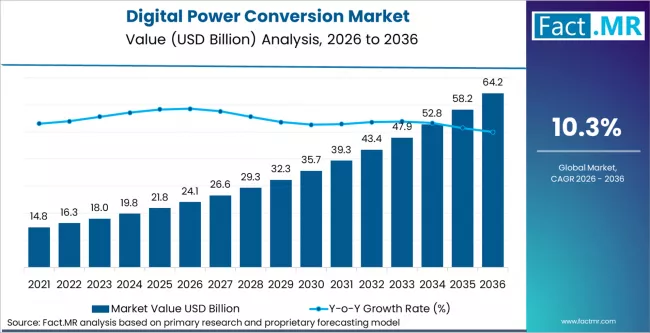
    Digital Power Conversion Market Market Value Analysis

    Digital Power Conversion Market

    Metric Value
    Estimated Value in (2026E) USD 24.1 billion
    Forecast Value in (2036F) USD 64.5 billion
    Forecast CAGR (2026 to 2036) 10.3%

    Digital Power Conversion Market Definition

    The Digital Power Conversion Market involves the development and sale of power management systems that use digital control techniques to convert electrical energy between different voltage, current, or frequency levels with high efficiency and precision. These systems typically combine digital signal controllers, power semiconductors, and embedded software to regulate and optimize power flow in electronic equipment. The primary industrial function of digital power conversion is to improve energy efficiency, enable adaptive control of power supplies, and support advanced monitoring in complex electrical systems. Key end uses include telecommunications infrastructure, data centers, consumer electronics, automotive electronics, and industrial power systems.

    Market Inclusions

    This report covers global and regional market sizes for digital power conversion across a defined forecast period. It includes segmentation by product type such as AC to DC converters, DC to DC converters, and digital power controllers. Application segments include telecom infrastructure, data centers, industrial automation systems, consumer electronics, and automotive electronics. The analysis also evaluates supporting components such as digital signal processors, controllers, and integrated power management modules used in digitally controlled power supplies.

    Market Exclusions

    The scope excludes conventional analog power conversion systems that do not use digital control architectures. It also excludes general electrical distribution infrastructure, standalone semiconductors not used in power conversion systems, and finished electronic devices where power conversion components are not measured as a separate market.

    Research Methodology

    • Primary Research: Interviews were conducted with power electronics engineers, semiconductor suppliers, power supply manufacturers, and industry analysts.
    • Desk Research: Data was sourced from electronics industry publications, semiconductor market reports, and power electronics trade statistics.
    • Market-Sizing and Forecasting: A hybrid model combining top down electronics equipment demand projections with bottom up shipment and revenue data from digital power conversion solution providers was used.
    • Data Validation and Update Cycle: Findings were validated through expert consultations and cross checked with recent production volumes, technology adoption rates, and industry performance indicators.

    Summary of the Digital Power Conversion Market

    • Market Definition
      • The Digital Power Conversion Market involves the development and deployment of power management systems that use digital control techniques to convert electrical energy between different voltage, current, or frequency levels with high efficiency and precision. These systems combine digital signal controllers, power semiconductors, and embedded software to regulate and optimize power flow across electronic equipment. Their core function is to improve energy efficiency, enable adaptive control of power supplies, and support real time monitoring in complex electrical systems. Major end uses include telecommunications infrastructure, data centers, automotive electronics, consumer electronics, and industrial power systems.
    • Demand Drivers
      • Increasing demand for efficient power management in data centers and telecommunications infrastructure.
      • Expansion of electric vehicle electronics requiring precise power regulation systems.
      • Rising deployment of advanced power electronics in industrial automation equipment.
      • Growing need for energy efficient power conversion in renewable energy and grid systems.
      • Adoption of digitally controlled power modules supporting monitoring and predictive system management.
    • Key Segments Analyzed
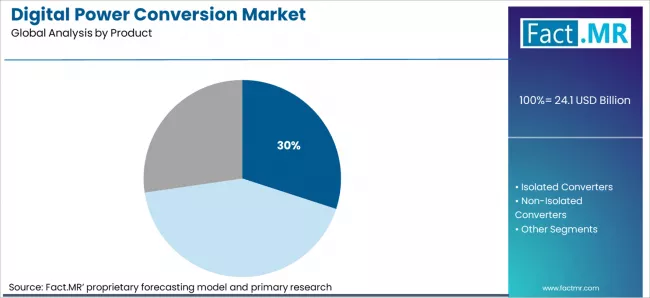
      • Product: DC DC Converters lead with 30% share in 2026, followed by AC DC Power Conversion, Isolated Converters, Non Isolated Converters, and DC AC Converters (Inverters).
      • Application: Consumer Electronics, Automotive, Industrial, IT and Telecommunications, and Healthcare.
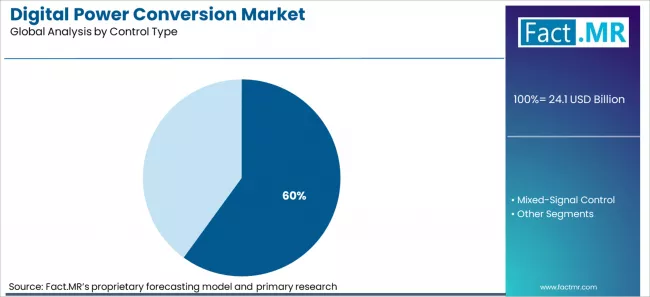
      • Control Type: Digital Control leads with 60% share in 2026, followed by Mixed Signal Control architectures.
      • Geography: South Asia and East Asia show strong expansion. India records the highest CAGR at 13.4%, followed by China at 11.9%, France at 10.0%, United States at 9.8%, and Germany at 8.3%.
    • Analyst Opinion at Fact MR
      • Shambhu Nath Jha, Principal Consultant, Fact MR, opines, "In this updated edition of the Digital Power Conversion Market report, industry participants will observe that value creation is shifting from conventional analog power management toward digitally controlled power architectures that enable adaptive energy management and real time system monitoring. Modern electronic infrastructure, including data centers, telecommunications equipment, and electric vehicles, increasingly depends on programmable power systems capable of optimizing efficiency and protecting sensitive electronic components. Suppliers that invest in high performance digital controllers, advanced power semiconductor integration, and intelligent power modules will strengthen their positioning across industrial and communication infrastructure markets. The convergence of digital control algorithms and advanced power electronics defines the competitive landscape through 2036."
    • Strategic Implications or Executive Takeaways
      • Expand development of digitally controlled power management modules with improved efficiency and monitoring capability.
      • Invest in integration of digital power conversion with data center, telecom, and industrial infrastructure systems.
      • Strengthen semiconductor design capabilities supporting advanced digital power controllers and converters.
      • Develop high density power conversion systems suitable for electric vehicles and industrial automation equipment.
      • Maintain compliance with global energy efficiency regulations governing power electronics performance standards.
    • Methodology
      • Primary Research: Interviews conducted with power electronics engineers, semiconductor manufacturers, power supply designers, and industrial equipment integrators.
      • Desk Research: Data compiled from electronics industry publications, semiconductor market analyses, and power electronics trade statistics.
      • Market Sizing and Forecasting: Hybrid model combining top down electronics equipment demand projections with bottom up shipment and revenue analysis from digital power conversion technology providers.
      • Data Validation: Findings validated through expert consultations and cross checked with recent semiconductor production volumes, technology adoption rates, and industry performance indicators using Fact MR forecasting models.

    Segmental Analysis

    Digital Power Conversion Market Analysis by Control Type
    Digital Power Conversion Market Analysis By Control Type

    Market Overview: Digital control is expected to capture 60% of the market share by 2026. Digital control technologies are increasingly used in power conversion systems due to their ability to provide precise voltage regulation, real-time monitoring, and adaptive control of power supplies. These systems enable improved efficiency and flexibility in managing electrical power across various applications.

    Demand Drivers:

    • Improved System Efficiency: Digital control allows precise management of switching operations, reducing power losses and improving energy efficiency.
    • Real-Time Monitoring and Optimization: Digital controllers enable monitoring of system parameters and dynamic adjustment of power conversion processes.
    • Compatibility with Modern Power Electronics: Digital control integrates well with advanced semiconductors and power management systems used in telecommunications, data centers, and industrial electronics.

    Digital Power Conversion Market Analysis by Product
    Digital Power Conversion Market Analysis By Product

    Market Overview: DC-DC converters are projected to hold 30% of the market share by 2026. These converters are essential components in power electronics, used to regulate voltage levels between different stages of electronic systems. They are widely used in telecommunications equipment, computing devices, automotive electronics, and renewable energy systems.

    Demand Drivers:

    • Wide Use in Electronic Systems: DC-DC converters enable stable voltage conversion in devices requiring different power levels.
    • Growth in Data Centers and Telecom Infrastructure: Increasing demand for reliable power management in servers and networking equipment drives adoption of DC-DC converters.
    • Support for Renewable and Automotive Applications: These converters are used in electric vehicles and renewable energy systems to efficiently manage power distribution across components.

    Digital Power Conversion Market Drivers, Restraints, and Opportunities

    Fact MR analysis indicates that the digital power conversion market emerged from the evolution of power electronics used in industrial equipment, computing infrastructure, and telecommunications networks. Conventional analog power supplies dominated early electronic systems due to simple control architecture and lower component costs. The current market valuation reflects the structural transition toward digitally controlled power management systems capable of optimizing voltage regulation, energy efficiency, and real-time system monitoring. Demand exists because modern electronic infrastructure, including data centers, telecom base stations, and industrial automation systems, requires precise power management to protect high-value electronic equipment.

    A structural shift is underway as traditional analog power controllers lose share to digitally programmable converters integrated with microcontrollers and embedded software. Standard power supplies remain widespread in low-cost consumer electronics where cost sensitivity limits adoption of advanced control systems. Digitally controlled converters command higher unit prices because they include firmware, sensors, and programmable control loops that optimize switching efficiency and thermal performance. Even when equipment replacement volumes remain moderate, higher pricing associated with intelligent power modules increases the overall market value.

    • Data Center Power Density: Expansion of hyperscale data centers increases demand for digitally managed power supplies that regulate voltage fluctuations across high-density computing infrastructure.
    • Energy Efficiency Standards: Regulations such as the European Union Ecodesign Directive and U.S. Department of Energy power supply efficiency standards require improved conversion efficiency in power management equipment.
    • Asia Electronics Manufacturing: China, Taiwan, and South Korea host large electronics manufacturing ecosystems that integrate digital power conversion modules into telecommunications equipment, consumer electronics, and industrial control systems.

    Regional Analysis

    The market analysis covers key global regions, including North America, Europe, East Asia, and South Asia. It is segmented geographically, with specific market dynamics for each region. The full report provides a detailed market attractiveness analysis.
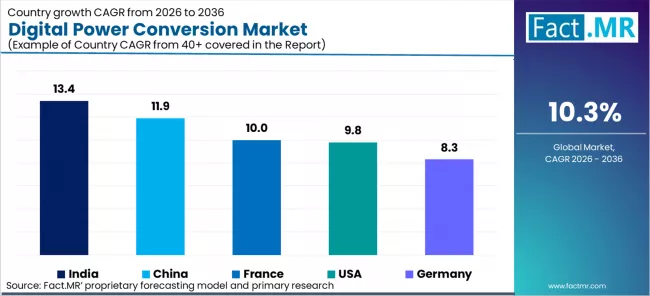
    Digital Power Conversion Market Cagr Analysis By Country

    Country CAGR (2026-2036)
    USA 9.8%
    Germany 8.3%
    France 10.0%
    China 11.9%
    India 13.4%

    Source: Fact MR (FMR) analysis, based on proprietary forecasting model and primary research

    North America
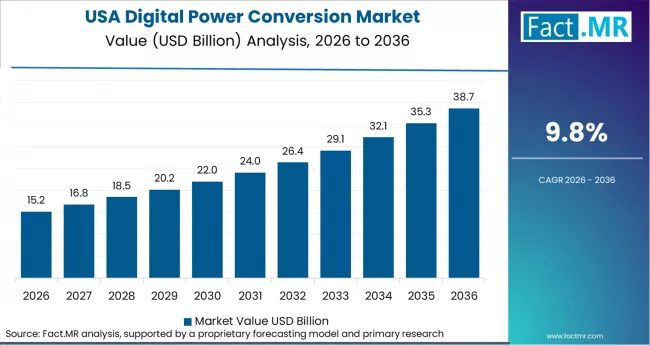
    Digital Power Conversion Market Country Value Analysis

    The USA is a major market supported by demand for efficient power electronics, data center infrastructure, and renewable energy integration. Key companies include Texas Instruments, Analog Devices, and Vicor Corporation.

    • USA: Demand for digital power conversion solutions in the U.S. is projected to rise at 9.8% CAGR through 2036. Growth is supported by data center power efficiency programs led by the Department of Energy (05-2025) and expansion of digital power modules by Texas Instruments (08-2025).

    Europe

    Germany and France represent major markets supported by industrial automation, electric vehicle power systems, and renewable energy infrastructure.

    • Germany: Demand for digital power conversion solutions in Germany is projected to rise at 8.3% CAGR through 2036. Growth is supported by industrial electrification initiatives promoted by the Federal Ministry for Economic Affairs (03-2025) and expansion of digital power solutions by Infineon Technologies (07-2025).
    • France: Demand for digital power conversion solutions in France is projected to rise at 10.0% CAGR through 2036. Growth is supported by national energy transition programs (04-2025) and deployment of power electronics solutions by Schneider Electric (09-2025).

    East Asia

    China is a leading market supported by manufacturing growth, renewable power infrastructure, and demand for efficient power electronics in industrial equipment.

    • China: Demand for digital power conversion solutions in China is projected to rise at 11.9% CAGR through 2036. Growth is supported by smart grid expansion programs promoted by the National Energy Administration (02-2025) and manufacturing expansion of power semiconductor devices by Huawei (08-2025).

    South Asia

    India is a rapidly growing market supported by power infrastructure modernization, renewable energy adoption, and industrial electrification initiatives.

    • India: Demand for digital power conversion solutions in India is projected to rise at 13.4% CAGR through 2036. Growth is supported by national smart grid initiatives promoted by the Ministry of Power (05-2025) and expansion of digital power electronics manufacturing by Tata Power (09-2025).

    Fact MR's analysis of the digital power conversion market in North America, Europe, East Asia, and South Asia consists of country-wise assessments that include the USA, Germany, France, China, and India. Readers can find detailed trends, regulatory updates, and company-specific investments shaping market growth in these countries.

    What is the Competitive Structure and Buyer Behavior in the Digital Power Conversion Market?
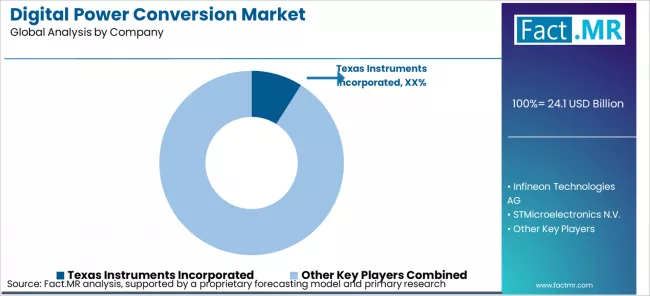
    Digital Power Conversion Market Analysis By Company

    The digital power conversion market is moderately concentrated, with leading semiconductor and power electronics companies accounting for a significant share of global supply. Firms such as Texas Instruments Incorporated, Infineon Technologies AG, STMicroelectronics N.V., onsemi, Mitsubishi Electric Corporation, ABB Ltd., Schneider Electric SE, Delta Electronics, Inc., Vicor Corporation, and Flex Power Modules AB operate across power management integrated circuits, digital controllers, and advanced conversion modules used in industrial equipment, telecommunications systems, and data centers. Competition is primarily driven by conversion efficiency, power density, thermal management capability, and system integration performance. Companies with extensive semiconductor design expertise and advanced manufacturing capacity hold structural advantages because they can deliver highly optimized digital power architectures and maintain consistent product reliability across demanding applications.

    Structural advantages are strongest among suppliers with integrated semiconductor fabrication, advanced packaging capabilities, and strong intellectual property portfolios in power management technologies. These firms can combine digital control algorithms with high performance power components to improve efficiency and reduce system complexity. Large industrial equipment manufacturers, telecom infrastructure providers, and data center operators represent the primary buyers and exercise considerable leverage in procurement. These customers typically qualify multiple component suppliers and negotiate long term supply agreements tied to performance reliability and lifecycle support. To reduce operational risk, buyers often adopt multi vendor sourcing strategies and require compatibility with standardized power architectures. This purchasing behavior limits individual supplier pricing power and shifts competition toward engineering performance, energy efficiency, and long term product reliability.

    Key Players of the Digital Power Conversion Market

    • Texas Instruments Incorporated
    • Infineon Technologies AG
    • STMicroelectronics N.V.
    • onsemi
    • Mitsubishi Electric Corporation
    • ABB Ltd.
    • Schneider Electric SE
    • Delta Electronics, Inc.
    • Vicor Corporation
    • Flex Power Modules AB

    Report Scope

    Metric Value
    Quantitative Units USD 24.1 billion (2026) to USD 64.5 billion (2036), at a CAGR of 10.3%
    Market Definition The digital power conversion market includes development and deployment of electronic systems and components that convert electrical power using digitally controlled architectures for efficient energy management across consumer, industrial, and communication applications.
    Product Segmentation AC/DC Power Conversion, DC-DC Converters, Isolated Converters, Non-Isolated Converters, DC-AC Converters (Inverters)
    Application Coverage Consumer Electronics, Automotive, Industrial, IT and Telecommunications, Healthcare
    Control Type Digital Control, Mixed-Signal Control
    Key Companies Profiled Texas Instruments Incorporated, Infineon Technologies AG, STMicroelectronics N.V., onsemi, Mitsubishi Electric Corporation, ABB Ltd., Schneider Electric SE, Delta Electronics, Inc., Vicor Corporation, Flex Power Modules AB
    Forecast Period 2026 to 2036
    Approach Hybrid top-down and bottom-up market modeling validated through interviews with power electronics manufacturers and system integrators, supported by production capacity benchmarking, semiconductor shipment analysis, and application demand assessment across industries.

    Digital Power Conversion Market Key Segments

    • Product

      • AC/DC Power Conversion
      • DC-DC Converters
      • Isolated Converters
      • Non-Isolated Converters
      • DC-AC Converters (Inverters)
    • Application

      • Consumer Electronics
      • Automotive
      • Industrial
      • IT and Telecommunications
      • Healthcare
    • Control Type

      • Digital Control
      • Mixed-Signal Control
    • Region

      • North America
        • USA
        • Canada
        • Mexico
      • Europe
        • Germany
        • UK
        • France
        • Italy
        • Spain
        • Nordic Countries
        • BENELUX
        • Rest of Europe
      • Asia Pacific
        • China
        • Japan
        • South Korea
        • India
        • Australia
        • Rest of Asia Pacific
      • Latin America
        • Brazil
        • Argentina
        • Rest of Latin America
      • Middle East and Africa
        • Kingdom of Saudi Arabia
        • United Arab Emirates
        • South Africa
        • Rest of Middle East and Africa
      • Other Regions
        • Oceania
        • Central Asia
        • Other Markets

    Bibliographies

    • [1] U.S. Department of Energy. (2025). Data center power efficiency programs.
    • [2] European Union. (2023). Ecodesign Directive for power supplies.
    • [3] Ministry of Power, India. (2025). National smart grid initiatives.
    • [4] National Energy Administration, China. (2025). Smart grid expansion programs.
    • [5] Federal Ministry for Economic Affairs, Germany. (2025). Industrial electrification initiatives.
    • [6] Texas Instruments Incorporated. (2025). Digital power modules expansion.
    • [7] Infineon Technologies AG. (2025). Digital power solutions.
    • [8] Schneider Electric SE. (2025). Power electronics solutions.
    • [9] Tata Power. (2025). Digital power electronics manufacturing.

    This Report Addresses

    • Market size estimation and revenue forecasts for the Digital Power Conversion Market from 2026 to 2036, supported by semiconductor production benchmarks and power electronics deployment indicators.
    • Growth opportunity mapping across AC DC power conversion systems, DC DC converters, isolated converters, non isolated converters, and DC AC inverter technologies used in modern electronic infrastructure.
    • Segment and regional revenue forecasts covering consumer electronics, automotive power systems, industrial automation equipment, IT and telecommunications infrastructure, and healthcare electronics applications across major electronics manufacturing regions.
    • Competition strategy assessment including power semiconductor design capability, digital controller integration, and power management module benchmarking among leading power electronics and semiconductor manufacturers.
    • Regulatory and energy efficiency compliance analysis covering frameworks such as the European Union Ecodesign Directive and United States Department of Energy efficiency standards governing power conversion systems.
    • Market report delivery in PDF, Excel, PPT, and interactive dashboard formats designed for semiconductor procurement planning, power electronics system evaluation, and energy infrastructure investment analysis.
    • Supply chain vulnerability assessments identifying power semiconductor manufacturing concentration, advanced packaging capacity dependencies, and regional electronics component supply risks affecting digital power conversion system production.

    Table of Content

    1. Executive Summary
      • Global Market Outlook
      • Demand to side Trends
      • Supply to side Trends
      • Technology Roadmap Analysis
      • Analysis and Recommendations
    2. Market Overview
      • Market Coverage / Taxonomy
      • Market Definition / Scope / Limitations
    3. Research Methodology
      • Chapter Orientation
      • Analytical Lens and Working Hypotheses
        • Market Structure, Signals, and Trend Drivers
        • Benchmarking and Cross-market Comparability
        • Market Sizing, Forecasting, and Opportunity Mapping
      • Research Design and Evidence Framework
        • Desk Research Programme (Secondary Evidence)
          • Company Annual and Sustainability Reports
          • Peer-reviewed Journals and Academic Literature
          • Corporate Websites, Product Literature, and Technical Notes
          • Earnings Decks and Investor Briefings
          • Statutory Filings and Regulatory Disclosures
          • Technical White Papers and Standards Notes
          • Trade Journals, Industry Magazines, and Analyst Briefs
          • Conference Proceedings, Webinars, and Seminar Materials
          • Government Statistics Portals and Public Data Releases
          • Press Releases and Reputable Media Coverage
          • Specialist Newsletters and Curated Briefings
          • Sector Databases and Reference Repositories
          • FMR Internal Proprietary Databases and Historical Market Datasets
          • Subscription Datasets and Paid Sources
          • Social Channels, Communities, and Digital Listening Inputs
          • Additional Desk Sources
        • Expert Input and Fieldwork (Primary Evidence)
          • Primary Modes
            • Qualitative Interviews and Expert Elicitation
            • Quantitative Surveys and Structured Data Capture
            • Blended Approach
          • Why Primary Evidence is Used
          • Field Techniques
            • Interviews
            • Surveys
            • Focus Groups
            • Observational and In-context Research
            • Social and Community Interactions
          • Stakeholder Universe Engaged
            • C-suite Leaders
            • Board Members
            • Presidents and Vice Presidents
            • R&D and Innovation Heads
            • Technical Specialists
            • Domain Subject-matter Experts
            • Scientists
            • Physicians and Other Healthcare Professionals
          • Governance, Ethics, and Data Stewardship
            • Research Ethics
            • Data Integrity and Handling
        • Tooling, Models, and Reference Databases
      • Data Engineering and Model Build
        • Data Acquisition and Ingestion
        • Cleaning, Normalisation, and Verification
        • Synthesis, Triangulation, and Analysis
      • Quality Assurance and Audit Trail
    4. Market Background
      • Market Dynamics
        • Drivers
        • Restraints
        • Opportunity
        • Trends
      • Scenario Forecast
        • Demand in Optimistic Scenario
        • Demand in Likely Scenario
        • Demand in Conservative Scenario
      • Opportunity Map Analysis
      • Product Life Cycle Analysis
      • Supply Chain Analysis
      • Investment Feasibility Matrix
      • Value Chain Analysis
      • PESTLE and Porter’s Analysis
      • Regulatory Landscape
      • Regional Parent Market Outlook
      • Production and Consumption Statistics
      • Import and Export Statistics
    5. Global Market Analysis 2021 to 2025 and Forecast, 2026 to 2036
      • Historical Market Size Value (USD Million) Analysis, 2021 to 2025
      • Current and Future Market Size Value (USD Million) Projections, 2026 to 2036
        • Y to o to Y Growth Trend Analysis
        • Absolute $ Opportunity Analysis
    6. Global Market Pricing Analysis 2021 to 2025 and Forecast 2026 to 2036
    7. Global Market Analysis 2021 to 2025 and Forecast 2026 to 2036, By Product
      • Introduction / Key Findings
      • Historical Market Size Value (USD Million) Analysis By Product, 2021 to 2025
      • Current and Future Market Size Value (USD Million) Analysis and Forecast By Product, 2026 to 2036
        • DC-DC Converters
        • Isolated Converters
        • Non-Isolated Converters
      • Y to o to Y Growth Trend Analysis By Product, 2021 to 2025
      • Absolute $ Opportunity Analysis By Product, 2026 to 2036
    8. Global Market Analysis 2021 to 2025 and Forecast 2026 to 2036, By Control Type
      • Introduction / Key Findings
      • Historical Market Size Value (USD Million) Analysis By Control Type, 2021 to 2025
      • Current and Future Market Size Value (USD Million) Analysis and Forecast By Control Type, 2026 to 2036
        • Digital Control
        • Mixed-Signal Control
      • Y to o to Y Growth Trend Analysis By Control Type, 2021 to 2025
      • Absolute $ Opportunity Analysis By Control Type, 2026 to 2036
    9. Global Market Analysis 2021 to 2025 and Forecast 2026 to 2036, By Region
      • Introduction
      • Historical Market Size Value (USD Million) Analysis By Region, 2021 to 2025
      • Current Market Size Value (USD Million) Analysis and Forecast By Region, 2026 to 2036
        • North America
        • Latin America
        • Western Europe
        • Eastern Europe
        • East Asia
        • South Asia and Pacific
        • Middle East & Africa
      • Market Attractiveness Analysis By Region
    10. North America Market Analysis 2021 to 2025 and Forecast 2026 to 2036, By Country
      • Historical Market Size Value (USD Million) Trend Analysis By Market Taxonomy, 2021 to 2025
      • Market Size Value (USD Million) Forecast By Market Taxonomy, 2026 to 2036
        • By Country
          • USA
          • Canada
          • Mexico
        • By Product
        • By Control Type
      • Market Attractiveness Analysis
        • By Country
        • By Product
        • By Control Type
      • Key Takeaways
    11. Latin America Market Analysis 2021 to 2025 and Forecast 2026 to 2036, By Country
      • Historical Market Size Value (USD Million) Trend Analysis By Market Taxonomy, 2021 to 2025
      • Market Size Value (USD Million) Forecast By Market Taxonomy, 2026 to 2036
        • By Country
          • Brazil
          • Chile
          • Rest of Latin America
        • By Product
        • By Control Type
      • Market Attractiveness Analysis
        • By Country
        • By Product
        • By Control Type
      • Key Takeaways
    12. Western Europe Market Analysis 2021 to 2025 and Forecast 2026 to 2036, By Country
      • Historical Market Size Value (USD Million) Trend Analysis By Market Taxonomy, 2021 to 2025
      • Market Size Value (USD Million) Forecast By Market Taxonomy, 2026 to 2036
        • By Country
          • Germany
          • UK
          • Italy
          • Spain
          • France
          • Nordic
          • BENELUX
          • Rest of Western Europe
        • By Product
        • By Control Type
      • Market Attractiveness Analysis
        • By Country
        • By Product
        • By Control Type
      • Key Takeaways
    13. Eastern Europe Market Analysis 2021 to 2025 and Forecast 2026 to 2036, By Country
      • Historical Market Size Value (USD Million) Trend Analysis By Market Taxonomy, 2021 to 2025
      • Market Size Value (USD Million) Forecast By Market Taxonomy, 2026 to 2036
        • By Country
          • Russia
          • Poland
          • Hungary
          • Balkan & Baltic
          • Rest of Eastern Europe
        • By Product
        • By Control Type
      • Market Attractiveness Analysis
        • By Country
        • By Product
        • By Control Type
      • Key Takeaways
    14. East Asia Market Analysis 2021 to 2025 and Forecast 2026 to 2036, By Country
      • Historical Market Size Value (USD Million) Trend Analysis By Market Taxonomy, 2021 to 2025
      • Market Size Value (USD Million) Forecast By Market Taxonomy, 2026 to 2036
        • By Country
          • China
          • Japan
          • South Korea
        • By Product
        • By Control Type
      • Market Attractiveness Analysis
        • By Country
        • By Product
        • By Control Type
      • Key Takeaways
    15. South Asia and Pacific Market Analysis 2021 to 2025 and Forecast 2026 to 2036, By Country
      • Historical Market Size Value (USD Million) Trend Analysis By Market Taxonomy, 2021 to 2025
      • Market Size Value (USD Million) Forecast By Market Taxonomy, 2026 to 2036
        • By Country
          • India
          • ASEAN
          • Australia & New Zealand
          • Rest of South Asia and Pacific
        • By Product
        • By Control Type
      • Market Attractiveness Analysis
        • By Country
        • By Product
        • By Control Type
      • Key Takeaways
    16. Middle East & Africa Market Analysis 2021 to 2025 and Forecast 2026 to 2036, By Country
      • Historical Market Size Value (USD Million) Trend Analysis By Market Taxonomy, 2021 to 2025
      • Market Size Value (USD Million) Forecast By Market Taxonomy, 2026 to 2036
        • By Country
          • Kingdom of Saudi Arabia
          • Other GCC Countries
          • Turkiye
          • South Africa
          • Other African Union
          • Rest of Middle East & Africa
        • By Product
        • By Control Type
      • Market Attractiveness Analysis
        • By Country
        • By Product
        • By Control Type
      • Key Takeaways
    17. Key Countries Market Analysis
      • USA
        • Pricing Analysis
        • Market Share Analysis, 2025
          • By Product
          • By Control Type
      • Canada
        • Pricing Analysis
        • Market Share Analysis, 2025
          • By Product
          • By Control Type
      • Mexico
        • Pricing Analysis
        • Market Share Analysis, 2025
          • By Product
          • By Control Type
      • Brazil
        • Pricing Analysis
        • Market Share Analysis, 2025
          • By Product
          • By Control Type
      • Chile
        • Pricing Analysis
        • Market Share Analysis, 2025
          • By Product
          • By Control Type
      • Germany
        • Pricing Analysis
        • Market Share Analysis, 2025
          • By Product
          • By Control Type
      • UK
        • Pricing Analysis
        • Market Share Analysis, 2025
          • By Product
          • By Control Type
      • Italy
        • Pricing Analysis
        • Market Share Analysis, 2025
          • By Product
          • By Control Type
      • Spain
        • Pricing Analysis
        • Market Share Analysis, 2025
          • By Product
          • By Control Type
      • France
        • Pricing Analysis
        • Market Share Analysis, 2025
          • By Product
          • By Control Type
      • India
        • Pricing Analysis
        • Market Share Analysis, 2025
          • By Product
          • By Control Type
      • ASEAN
        • Pricing Analysis
        • Market Share Analysis, 2025
          • By Product
          • By Control Type
      • Australia & New Zealand
        • Pricing Analysis
        • Market Share Analysis, 2025
          • By Product
          • By Control Type
      • China
        • Pricing Analysis
        • Market Share Analysis, 2025
          • By Product
          • By Control Type
      • Japan
        • Pricing Analysis
        • Market Share Analysis, 2025
          • By Product
          • By Control Type
      • South Korea
        • Pricing Analysis
        • Market Share Analysis, 2025
          • By Product
          • By Control Type
      • Russia
        • Pricing Analysis
        • Market Share Analysis, 2025
          • By Product
          • By Control Type
      • Poland
        • Pricing Analysis
        • Market Share Analysis, 2025
          • By Product
          • By Control Type
      • Hungary
        • Pricing Analysis
        • Market Share Analysis, 2025
          • By Product
          • By Control Type
      • Kingdom of Saudi Arabia
        • Pricing Analysis
        • Market Share Analysis, 2025
          • By Product
          • By Control Type
      • Turkiye
        • Pricing Analysis
        • Market Share Analysis, 2025
          • By Product
          • By Control Type
      • South Africa
        • Pricing Analysis
        • Market Share Analysis, 2025
          • By Product
          • By Control Type
    18. Market Structure Analysis
      • Competition Dashboard
      • Competition Benchmarking
      • Market Share Analysis of Top Players
        • By Regional
        • By Product
        • By Control Type
    19. Competition Analysis
      • Competition Deep Dive
        • Texas Instruments Incorporated
          • Overview
          • Product Portfolio
          • Profitability by Market Segments (Product/Age /Sales Channel/Region)
          • Sales Footprint
          • Strategy Overview
            • Marketing Strategy
            • Product Strategy
            • Channel Strategy
        • Infineon Technologies AG
        • STMicroelectronics N.V.
        • onsemi
        • Mitsubishi Electric Corporation
        • ABB Ltd.
        • Schneider Electric SE
    20. Assumptions & Acronyms Used

    List Of Table

    • Table 1: Global Market Value (USD Million) Forecast by Region, 2021 to 2036
    • Table 2: Global Market Value (USD Million) Forecast by Product, 2021 to 2036
    • Table 3: Global Market Value (USD Million) Forecast by Control Type, 2021 to 2036
    • Table 4: North America Market Value (USD Million) Forecast by Country, 2021 to 2036
    • Table 5: North America Market Value (USD Million) Forecast by Product, 2021 to 2036
    • Table 6: North America Market Value (USD Million) Forecast by Control Type, 2021 to 2036
    • Table 7: Latin America Market Value (USD Million) Forecast by Country, 2021 to 2036
    • Table 8: Latin America Market Value (USD Million) Forecast by Product, 2021 to 2036
    • Table 9: Latin America Market Value (USD Million) Forecast by Control Type, 2021 to 2036
    • Table 10: Western Europe Market Value (USD Million) Forecast by Country, 2021 to 2036
    • Table 11: Western Europe Market Value (USD Million) Forecast by Product, 2021 to 2036
    • Table 12: Western Europe Market Value (USD Million) Forecast by Control Type, 2021 to 2036
    • Table 13: Eastern Europe Market Value (USD Million) Forecast by Country, 2021 to 2036
    • Table 14: Eastern Europe Market Value (USD Million) Forecast by Product, 2021 to 2036
    • Table 15: Eastern Europe Market Value (USD Million) Forecast by Control Type, 2021 to 2036
    • Table 16: East Asia Market Value (USD Million) Forecast by Country, 2021 to 2036
    • Table 17: East Asia Market Value (USD Million) Forecast by Product, 2021 to 2036
    • Table 18: East Asia Market Value (USD Million) Forecast by Control Type, 2021 to 2036
    • Table 19: South Asia and Pacific Market Value (USD Million) Forecast by Country, 2021 to 2036
    • Table 20: South Asia and Pacific Market Value (USD Million) Forecast by Product, 2021 to 2036
    • Table 21: South Asia and Pacific Market Value (USD Million) Forecast by Control Type, 2021 to 2036
    • Table 22: Middle East & Africa Market Value (USD Million) Forecast by Country, 2021 to 2036
    • Table 23: Middle East & Africa Market Value (USD Million) Forecast by Product, 2021 to 2036
    • Table 24: Middle East & Africa Market Value (USD Million) Forecast by Control Type, 2021 to 2036

    List Of Figures

    • Figure 1: Global Market Pricing Analysis
    • Figure 2: Global Market Value (USD Million) Forecast 2021 to 2036
    • Figure 3: Global Market Value Share and BPS Analysis by Product, 2026 and 2036
    • Figure 4: Global Market Y to o to Y Growth Comparison by Product, 2026 to 2036
    • Figure 5: Global Market Attractiveness Analysis by Product
    • Figure 6: Global Market Value Share and BPS Analysis by Control Type, 2026 and 2036
    • Figure 7: Global Market Y to o to Y Growth Comparison by Control Type, 2026 to 2036
    • Figure 8: Global Market Attractiveness Analysis by Control Type
    • Figure 9: Global Market Value (USD Million) Share and BPS Analysis by Region, 2026 and 2036
    • Figure 10: Global Market Y to o to Y Growth Comparison by Region, 2026 to 2036
    • Figure 11: Global Market Attractiveness Analysis by Region
    • Figure 12: North America Market Incremental Dollar Opportunity, 2026 to 2036
    • Figure 13: Latin America Market Incremental Dollar Opportunity, 2026 to 2036
    • Figure 14: Western Europe Market Incremental Dollar Opportunity, 2026 to 2036
    • Figure 15: Eastern Europe Market Incremental Dollar Opportunity, 2026 to 2036
    • Figure 16: East Asia Market Incremental Dollar Opportunity, 2026 to 2036
    • Figure 17: South Asia and Pacific Market Incremental Dollar Opportunity, 2026 to 2036
    • Figure 18: Middle East & Africa Market Incremental Dollar Opportunity, 2026 to 2036
    • Figure 19: North America Market Value Share and BPS Analysis by Country, 2026 and 2036
    • Figure 20: North America Market Value Share and BPS Analysis by Product, 2026 and 2036
    • Figure 21: North America Market Y to o to Y Growth Comparison by Product, 2026 to 2036
    • Figure 22: North America Market Attractiveness Analysis by Product
    • Figure 23: North America Market Value Share and BPS Analysis by Control Type, 2026 and 2036
    • Figure 24: North America Market Y to o to Y Growth Comparison by Control Type, 2026 to 2036
    • Figure 25: North America Market Attractiveness Analysis by Control Type
    • Figure 26: Latin America Market Value Share and BPS Analysis by Country, 2026 and 2036
    • Figure 27: Latin America Market Value Share and BPS Analysis by Product, 2026 and 2036
    • Figure 28: Latin America Market Y to o to Y Growth Comparison by Product, 2026 to 2036
    • Figure 29: Latin America Market Attractiveness Analysis by Product
    • Figure 30: Latin America Market Value Share and BPS Analysis by Control Type, 2026 and 2036
    • Figure 31: Latin America Market Y to o to Y Growth Comparison by Control Type, 2026 to 2036
    • Figure 32: Latin America Market Attractiveness Analysis by Control Type
    • Figure 33: Western Europe Market Value Share and BPS Analysis by Country, 2026 and 2036
    • Figure 34: Western Europe Market Value Share and BPS Analysis by Product, 2026 and 2036
    • Figure 35: Western Europe Market Y to o to Y Growth Comparison by Product, 2026 to 2036
    • Figure 36: Western Europe Market Attractiveness Analysis by Product
    • Figure 37: Western Europe Market Value Share and BPS Analysis by Control Type, 2026 and 2036
    • Figure 38: Western Europe Market Y to o to Y Growth Comparison by Control Type, 2026 to 2036
    • Figure 39: Western Europe Market Attractiveness Analysis by Control Type
    • Figure 40: Eastern Europe Market Value Share and BPS Analysis by Country, 2026 and 2036
    • Figure 41: Eastern Europe Market Value Share and BPS Analysis by Product, 2026 and 2036
    • Figure 42: Eastern Europe Market Y to o to Y Growth Comparison by Product, 2026 to 2036
    • Figure 43: Eastern Europe Market Attractiveness Analysis by Product
    • Figure 44: Eastern Europe Market Value Share and BPS Analysis by Control Type, 2026 and 2036
    • Figure 45: Eastern Europe Market Y to o to Y Growth Comparison by Control Type, 2026 to 2036
    • Figure 46: Eastern Europe Market Attractiveness Analysis by Control Type
    • Figure 47: East Asia Market Value Share and BPS Analysis by Country, 2026 and 2036
    • Figure 48: East Asia Market Value Share and BPS Analysis by Product, 2026 and 2036
    • Figure 49: East Asia Market Y to o to Y Growth Comparison by Product, 2026 to 2036
    • Figure 50: East Asia Market Attractiveness Analysis by Product
    • Figure 51: East Asia Market Value Share and BPS Analysis by Control Type, 2026 and 2036
    • Figure 52: East Asia Market Y to o to Y Growth Comparison by Control Type, 2026 to 2036
    • Figure 53: East Asia Market Attractiveness Analysis by Control Type
    • Figure 54: South Asia and Pacific Market Value Share and BPS Analysis by Country, 2026 and 2036
    • Figure 55: South Asia and Pacific Market Value Share and BPS Analysis by Product, 2026 and 2036
    • Figure 56: South Asia and Pacific Market Y to o to Y Growth Comparison by Product, 2026 to 2036
    • Figure 57: South Asia and Pacific Market Attractiveness Analysis by Product
    • Figure 58: South Asia and Pacific Market Value Share and BPS Analysis by Control Type, 2026 and 2036
    • Figure 59: South Asia and Pacific Market Y to o to Y Growth Comparison by Control Type, 2026 to 2036
    • Figure 60: South Asia and Pacific Market Attractiveness Analysis by Control Type
    • Figure 61: Middle East & Africa Market Value Share and BPS Analysis by Country, 2026 and 2036
    • Figure 62: Middle East & Africa Market Value Share and BPS Analysis by Product, 2026 and 2036
    • Figure 63: Middle East & Africa Market Y to o to Y Growth Comparison by Product, 2026 to 2036
    • Figure 64: Middle East & Africa Market Attractiveness Analysis by Product
    • Figure 65: Middle East & Africa Market Value Share and BPS Analysis by Control Type, 2026 and 2036
    • Figure 66: Middle East & Africa Market Y to o to Y Growth Comparison by Control Type, 2026 to 2036
    • Figure 67: Middle East & Africa Market Attractiveness Analysis by Control Type
    • Figure 68: Global Market - Tier Structure Analysis
    • Figure 69: Global Market - Company Share Analysis

    - FAQs -

    How large is the demand for Digital Power Conversion solutions in the global market in 2026?

    Demand for Digital Power Conversion solutions in the global market is estimated to be valued at USD 24.1 billion in 2026.

    What will be the market size of Digital Power Conversion solutions in the global market by 2036?

    The market size for Digital Power Conversion solutions is projected to reach USD 64.5 billion by 2036.

    What is the expected demand growth for Digital Power Conversion solutions in the global market between 2026 and 2036?

    Demand for Digital Power Conversion solutions in the global market is expected to grow at a CAGR of 10.3% between 2026 and 2036.

    Which control type is expected to dominate the market?

    Digital control systems are expected to dominate the market, accounting for 60% of the market share in 2026 due to higher efficiency, precision control, and integration with modern power electronics systems.

    Which region is expected to show the highest growth rate for Digital Power Conversion solutions?

    India is projected to grow at a CAGR of 13.4%, supported by expansion of renewable energy infrastructure, industrial automation, and growing demand for efficient power management technologies.

    How significant is the growth outlook for China in this market?

    China is expected to grow at a CAGR of 11.9%, driven by large scale manufacturing activity, deployment of renewable energy systems, and expansion of electric mobility infrastructure.

    What is the growth outlook for France in the Digital Power Conversion market?

    France is projected to grow at a CAGR of 10.0%, supported by investments in power electronics, renewable energy integration, and energy efficient power conversion technologies.

    What is the growth forecast for the United States in the Digital Power Conversion market?

    The United States is expected to grow at a CAGR of 9.8%, reflecting demand from data centers, industrial automation systems, and electric vehicle charging infrastructure.

    What is the growth forecast for Germany in the Digital Power Conversion market?

    Germany is expected to grow at a CAGR of 8.3%, driven by industrial digitization, renewable energy projects, and adoption of advanced power electronics in manufacturing sectors.

    Which company is identified as a leading player in the Digital Power Conversion market?

    Texas Instruments Incorporated is recognized as a leading player in this market, providing digital power controllers, semiconductor solutions, and integrated circuits used in advanced power management systems.

    What are Digital Power Conversion solutions used for?

    Digital Power Conversion solutions are used to convert and regulate electrical power efficiently, enabling precise control of voltage and current in electronic devices, renewable energy systems, and industrial equipment.

    What does the Digital Power Conversion market include in this report?

    The market scope includes digital power controllers, power management integrated circuits, and related electronic components used for efficient power conversion across industrial, consumer, and energy applications.

    How is the market forecast developed in this report?

    The forecast is developed using historical adoption trends in power electronics, renewable energy deployment data, industrial automation trends, and insights from leading providers such as Texas Instruments Incorporated.

    What is meant by the Digital Power Conversion market in this report?

    The market refers to the global production, trade, and adoption of digital power conversion technologies, including digitally controlled power management systems used across industrial, consumer electronics, and energy infrastructure applications.

    Digital Power Conversion Market