Drone Propellers Market Size, Share, Growth and Forecast (2026 - 2036)
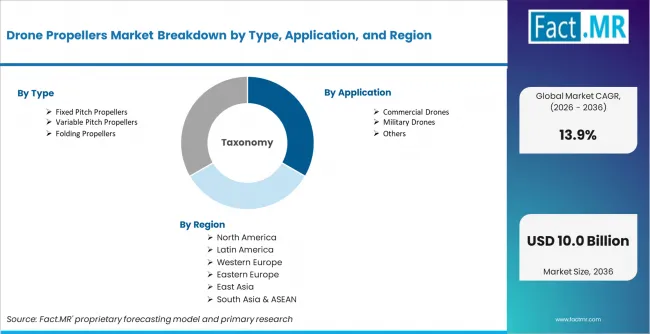
The Drone Propellers Market is segmented by Type (Fixed Pitch Propellers, Variable Pitch Propellers, Folding Propellers, Others), Application (Commercial Drones, Military Drones, Others), End-use Industry (Agriculture, Logistics and Delivery, Surveillance and Security, Mapping and Surveying, Inspection Services, Entertainment Applications), Material Type (Carbon Fiber, Plastic, Wood, Composite Materials), Sales Channel (OEM Supply, Aftermarket, Online Retail, Specialty Stores, Direct Contracts), and Region. Forecast for 2026 to 2036.
Fact.MR states that drone propeller demand is shifting toward components that improve lift and noise control. Commercial drone makers and fleet operators need propellers that support stable flight under changing payload and weather conditions.
Drone Propellers Market Size, Market Forecast and Outlook by Fact.MR
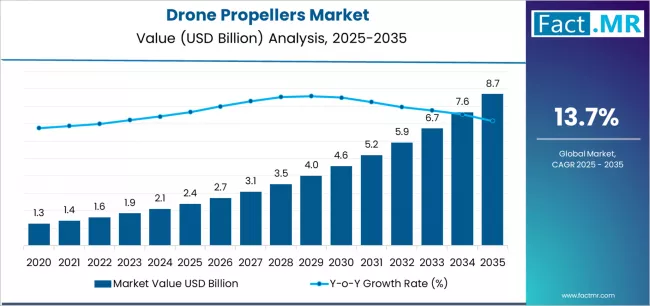
- The drone propellers market was valued at USD 2.4 billion in 2025. Demand is estimated to reach USD 2.7 billion in 2026. The market is projected to record 13.9% CAGR from 2026 to 2036.
- Commercial drone production and replacement demand are forecast to lift the market to USD 10.0 billion by 2036 as drone operators seek more efficient and reliable flight components.
- Drone propeller use is supported by commercial drone expansion and rising performance needs. Fixed pitch propellers and commercial drones as the leading base for drone propeller demand.
- Propellers are wear-sensitive component because blade condition affects flight stability and vibration. This supports repeat demand across replacement and fleet maintenance.
Summary of Drone Propellers Market
- Demand Drivers in the Market
- Commercial Flight Use: Commercial drone operators need propellers that improve stability and reduce battery strain during repeated missions.
- Agriculture Services: Farm drone service providers need durable blades for spraying and crop monitoring across field conditions.
- Fleet Maintenance: Inspection contractors replace propellers regularly because damaged blades can reduce flight safety and data quality.
- Key Segments Analyzed
- By Type: Fixed pitch propellers account for 52.6% share of demand by type in the Fact.MR base as operators prefer simple and reliable blade designs.
- By Application: Commercial drones represent 61.3% share of demand by application in the Fact.MR base as delivery, agriculture, and inspection fleets require repeat propeller supply.
- By End-use Industry: Agriculture is projected to account for 38.0% share of demand by end-use industry in 2026 as spraying and crop monitoring drones need durable propellers.
- By Material Type: Carbon fiber propellers are expected to represent 44.0% share of demand by material type in 2026 as premium drones require stiffness and low weight.
- By Sales Channel: Aftermarket sales are projected to reach 47.0% share of demand by sales channel in 2026 as propellers face regular replacement after field use.
- By Geography: China drone propeller demand is forecast to grow at 17.9% CAGR from 2026 to 2036 as domestic drone production supports component demand.
- Analyst Opinion at Fact.MR
- Shambhu Nath Jha, Senior Analyst at Fact.MR, notes, “Drone propeller demand is moving beyond basic replacement. Commercial fleets need propellers that reduce vibration and protect battery life. Suppliers that improve balance quality, material strength, and channel access can protect repeat demand.”
- Strategic Implications
- Flight Stability: Drone propeller producers must align blade design with payload behavior. Stable thrust supports inspection and agriculture use.
- Replacement Access: Fleet operators should assess suppliers through availability and replacement speed. Poor access can reduce mission uptime.
- Material Quality: Propeller brands need improved strength-to-weight performance. Material consistency helps reduce vibration and motor strain.
| Metric | Details |
|---|---|
| Industry Size (2026) | USD 2.7 billion |
| Industry Value (2036) | USD 10.0 billion |
| CAGR (2026 to 2036) | 13.9% |
Source: Fact.MR analysis, based on adjusted forecast model and primary research.
Drone operators are increasing use of scheduled mission programs. Agriculture service providers need propellers that handle spray loads. Inspection contractors need stable flight near structures. Logistics firms need consistent lift and lower noise. Propeller suppliers must manage material quality because blade balance and stiffness affect motor load and battery use.
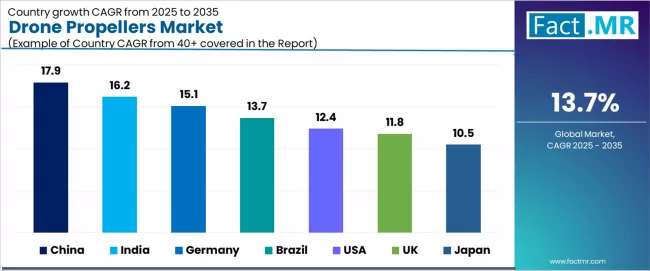
China drone propeller demand is forecast to grow at 17.9% CAGR from 2026 to 2036 as drone manufacturing and logistics pilots support domestic propeller use. India is anticipated to record 16.2% CAGR as local drone production and farm services expand. Germany is projected to grow at 15.1% CAGR through precision inspection and industrial drone use. Brazil may register 13.7% CAGR as agriculture drones increase propeller replacement demand. United States demand is likely to rise at 12.4% CAGR by 2036 as commercial drone fleets expand under clearer BVLOS pathways. United Kingdom records 11.8% CAGR through aviation research and inspection services. Japan follows at 10.5% CAGR through 2036 as quality-focused drone use supports premium propeller demand.
Segmental Analysis
Drone Propellers Market Analysis by Type
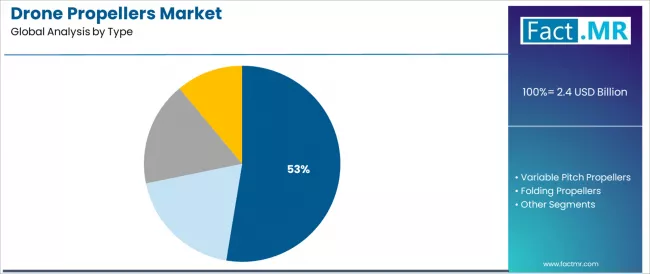
Fixed pitch propellers lead because they offer simple design and reliable thrust behavior. The fixed pitch propellers segment is expected to reach 52.6% share by type as drone makers need lower complexity and easier replacement. Variable pitch propellers serve higher-performance drones that need precise thrust control. Folding propellers support portable drones because they reduce storage size and transport damage. Fact.MR identifies fixed pitch propellers as the leading type because cost and service simplicity suit commercial drone fleets. Fixed pitch systems form the clearest demand base because they match agriculture and inspection drones that need repeatable flight behavior.
- Fixed-Pitch Use: Fixed pitch propellers suit drones needing steady lift and quick field replacement. Lower part cost helps agriculture and inspection fleets keep routine missions consistent with less service downtime risk.
- Variable-Pitch Demand: Variable pitch propellers support UAVs that need thrust adjustment during demanding flight. Added parts raise cost and maintenance effort which keeps use focused on advanced platforms with specialized mission needs.
- Folding Adoption: Folding propellers help portable drones reduce blade damage during travel and storage. Creator drones and survey aircraft benefit most because compact packing supports frequent outdoor movement between work locations safely.
Drone Propellers Market Analysis by Application
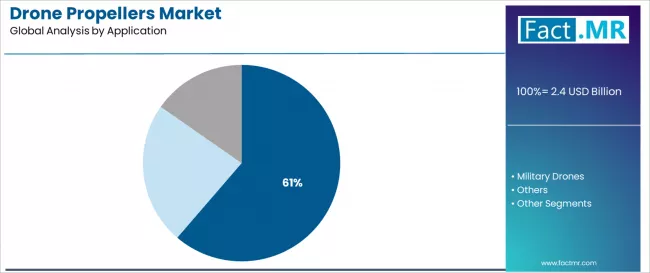
Commercial drones form the main demand base because they fly more frequently than hobby platforms. Agriculture and inspection programs need propellers that can handle repeated takeoff cycles. Commercial drones are projected to reach 61.3% share over the assessment period as fleet operators replace blades during scheduled maintenance. Military drones use propellers with stricter durability and mission reliability requirements. Other applications include research and hobby use. DJI’s Matrice 400 supports enterprise missions with 59-minute flight time and up to 6 kg payload capacity. [1] Commercial drones lead because blade replacement is tied to mission frequency and payload use.
- Commercial Fleets: Enterprise aircraft need blades that handle frequent launches and payload strain. Scheduled replacement helps protect flight availability across farm service and infrastructure inspection programs with lower downtime risk.
- Military Use: Defense UAVs need propellers built for hard field use and mission reliability. Suppliers must prove blade strength under stress because failure can affect surveillance or tactical operations.
- Research Demand: Research drones use propellers for trials and prototype validation. Orders stay limited because flight hours are lower and many projects need small batches for controlled testing.
Drone Propellers Market Analysis by End-use Industry
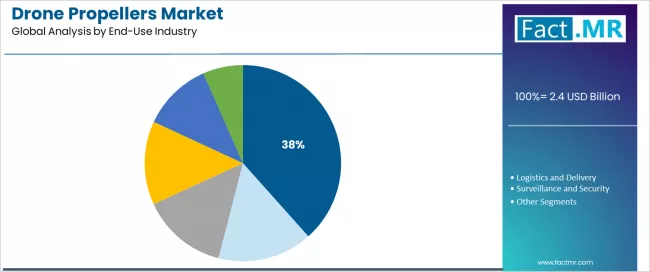
Agriculture drone use creates regular propeller demand because field operations expose blades to dust and crop contact. Spray drones carry changing payloads that increase the need for balanced thrust. The agriculture segment is projected to account for 38.0% share in 2026 as farm service providers expand crop monitoring and spraying. Logistics and delivery use propellers for route testing and payload trials. Surveillance and security drones require quiet and stable flight. India’s drone ecosystem report shows regulated drone use across public service and agriculture. [2] Agriculture leads because propellers face harsher daily operating conditions in field missions.
- Farm Spraying: Agriculture drones need propellers that handle payload shifts. Durable blades reduce service disruption during field work.
- Delivery Trials: Logistics drones require propellers that support payload lift and consistent route testing. Noise control can improve local acceptance.
- Security Flight: Surveillance drones need stable propellers with low noise output. Smooth flight improves image quality during perimeter monitoring.
Drone Propellers Market Analysis by Material Type
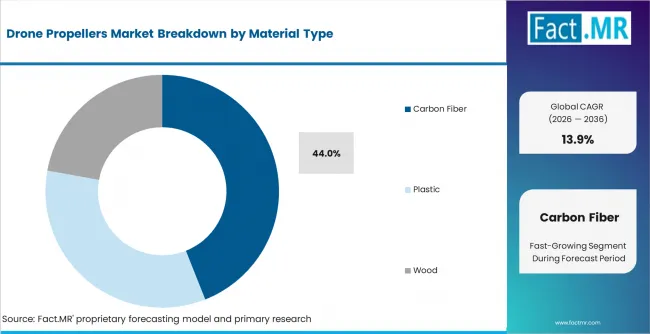
Material choice affects stiffness and weight. It also affects vibration and cost. Plastic propellers serve consumer and entry-level drones because they are cheaper to replace. Carbon fiber propellers are expected to represent 44.0% share by material type in 2026 as premium commercial drones require low weight and better stiffness. Wood propellers serve selected hobby and custom aircraft uses. Composite materials support heavier drones because blended materials can improve strength without excessive weight. APC Propellers publishes performance data and RPM limits that help operators compare propeller behavior and safe operating limits. [3] Carbon fiber leads because performance-focused drone users pay more for flight stability and durability.
- Carbon Strength: Carbon fiber blades give premium drones light weight and controlled stiffness. Operators use them to reduce vibration during payload flights and protect handling accuracy across repeated missions.
- Plastic Replacement: Plastic propellers suit consumer drones because low part cost makes damage recovery easier. Entry-level users can replace blades after crashes with limited repair expense and service effort.
- Composite Balance: Composite propellers serve heavier UAVs that need strength with controlled weight. Fleet adoption depends on balance testing because blade inconsistency can affect stability during loaded flight.
Drone Propellers Market Analysis by Sales Channel
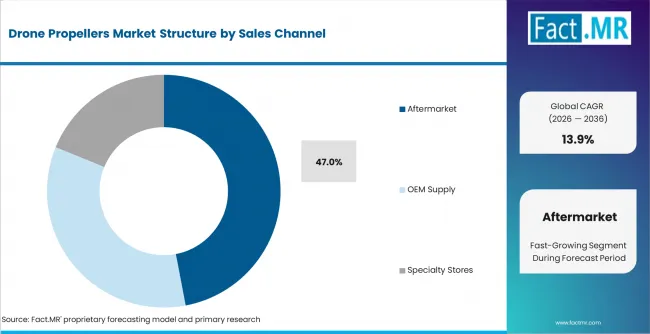
Replacement demand makes channel access important for drone propellers. OEM supply supports new drone production and bundled spare parts. Aftermarket sales are projected to represent 47.0% share by sales channel in 2026 as field operators replace damaged or worn propellers. Online retail helps hobby users and small drone operators compare blade size and material. Specialty stores support technical advice for model aircraft and professional drones. Direct contracts suit large fleet operators that need repeat supply. Aftermarket sales lead because propellers face wear during normal drone operation and need quick replacement access.
- Aftermarket Supply: Replacement demand rises because propellers face blade strikes and edge wear during field work. Local stock helps inspection crews restore aircraft quickly and keep scheduled missions moving safely.
- OEM Integration: OEM channels match propellers with each drone’s motor load and control tuning. Consistent blade quality helps manufacturers reduce warranty risk and keep production specifications stable across model batches.
- Digital Retail: Online stores support quick part matching for small operators. Clear pitch and diameter details help users avoid wrong orders and choose blades by aircraft model with confidence.
Drone Propellers Market Drivers, Restraints, and Opportunities
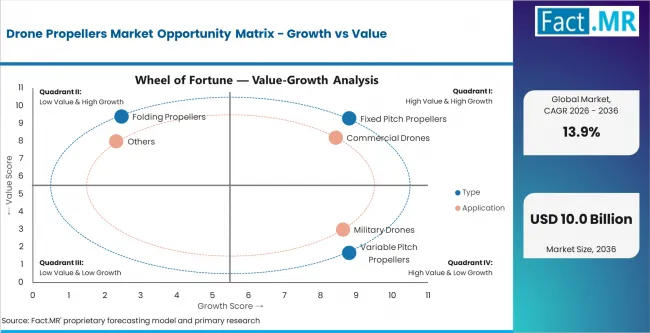
Commercial drone efficiency is the main demand driver for drone propellers. Drone manufacturers require blades that improve lift and reduce energy use. Agriculture service providers reply on durable propellers for field operations. Inspection contractors need stable flight near buildings and assets. Logistics firms use propellers that support payload trials and low noise operations.
The main restraint is material and compatibility pressure. Carbon fiber propellers carry higher cost than plastic blades. Variable pitch designs add mechanical complexity. Drone operators must match propeller diameter and motor power before flight. Poor matching can reduce battery life and raise safety risk. Supplier switching is difficult because fleet operators standardize around tested blade sets.
Opportunities in the Drone Propellers Market
- Agriculture Fleets: Propeller suppliers can serve spray drone operators through stronger blades and faster replacement access.
- Low-Noise Designs: Commercial drone makers can use quieter propellers for urban inspection and delivery trials.
- Custom Blades: OEM suppliers can develop propellers for payload-specific drones. Better blade matching can improve flight stability.
Regional Analysis
.webp)
Based on regional analysis, the drone propellers market is segmented into North America, Latin America, Western Europe, Eastern Europe, East Asia, South Asia and Pacific, and Middle East and Africa.
| Country | CAGR (2026 to 2036) |
|---|---|
| China | 17.9% |
| India | 16.2% |
| Germany | 15.1% |
| Brazil | 13.7% |
| United States | 12.4% |
| United Kingdom | 11.8% |
| Japan | 10.5% |
Source: Fact.MR analysis, based on adjusted forecast model and primary research.
East Asia Drone Propellers Market Analysis
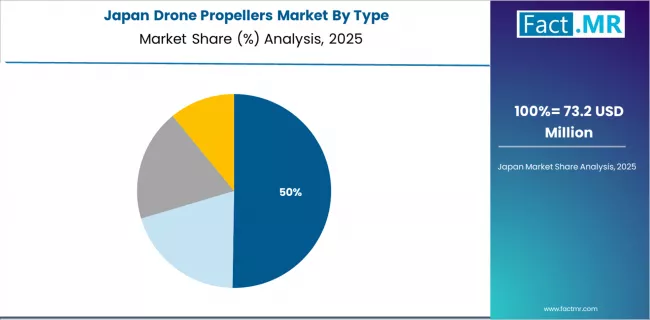
East Asia demand reflects drone manufacturing scale and component supply strength. China leads through production depth and commercial drone use across agriculture and mapping. Japan supports premium propeller use through quality-focused drone programs.
- China: China’s drone propellers demand is tied to domestic drone manufacturing scale and commercial UAV adoption. Drone makers require propellers that support stable flight and consistent thrust across high-volume production. Commercial drone infrastructure and logistics pilots support the country’s 17.9% CAGR from 2026 to 2036. CAAC’s UAV identification standards support safer monitoring of unmanned aircraft operations. [4] Local component access helps suppliers control cost and serve consumer demand. Chinese propeller makers can compete through OEM supply and custom blade design. Supplier acceptance depends on balance quality, material consistency, and fast replacement availability.
- Japan: Japan is projected to record 10.5% CAGR over the forecast period as quality-focused drone use supports premium propeller demand. Agriculture support and infrastructure inspection create demand for stable flight components. Field operators need propellers that reduce vibration during mapping and inspection work. Disaster assessment creates demand for reliable drone platforms used by public agencies. Japanese drone programs often prioritize safety and predictable component behavior. Suppliers with documented performance and tight quality control can improve acceptance. Japan grows at a steadier rate because drone fleets are selective and performance requirements are strict.
South Asia and Pacific Drone Propellers Market Analysis
South Asia and Pacific demand benefits from drone manufacturing support and agriculture drone use. India leads the region because public agencies and farm service providers need UAVs for mapping and spraying. Propeller demand rises as drone fleets grow and replacement cycles become regular.
- India: India drone propeller demand is forecast to grow at 16.2% CAGR through 2036 as local production and agriculture drone use expand. Drone makers need propellers that match spray loads and field conditions. India’s regulated drone ecosystem supports pilot training and formal UAV adoption. Public service programs and farm drone initiatives increase demand for replacement blades. Propeller suppliers serve OEMs and aftermarket channels through size-specific inventory. Service quality and pilot readiness will shape repeat demand across public and commercial programs. Local manufacturing can improve cost control for standard plastic and composite propellers.
Western Europe Drone Propellers Market Analysis
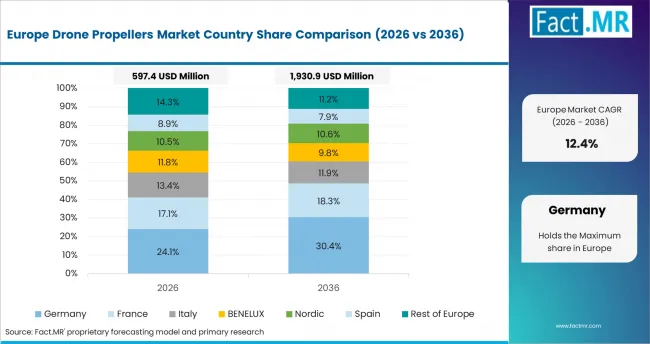
Western Europe demand reflects regulated flight use and industrial inspection. Germany leads through factory inspection and precision drone operations. The United Kingdom supports demand through public safety programs and aviation research.
- Germany: Industrial inspection users are increasing drone propeller demand across Germany. Propellers must support stable flight near infrastructure and factory assets. The country is projected to grow at 15.1% CAGR over the foreseen period as inspection programs and commercial drone services expand. EASA’s work on drone authorization supports clearer operating pathways for regulated users. [5] German operators need documented performance and reliable replacement access before scaling fleets. Carbon fiber and composite blades can gain interest in premium UAV inspection drones. Training support can improve adoption among industrial operators and service providers.
- United Kingdom: Public safety agencies and inspection contractors are expanding professional drone use. This supports the United Kingdom’s 11.8% CAGR from 2026 to 2036. Propeller demand is linked to commercial drone maintenance and safe flight requirements. UK operators need blades that reduce vibration during property inspection and infrastructure review. Aviation research and professional services create demand for better propeller testing and compatibility data. Replacement access matters because field work can damage blades quickly. Suppliers that support compatibility guidance and fast delivery can build repeat demand among service operators.
Latin America Drone Propellers Market Analysis
Latin America demand is developing through agriculture and public safety. Infrastructure review creates another demand base. Brazil is the main opportunity because farms and industrial operators need visual monitoring across large sites. Propeller replacement demand rises as more drones work in dusty and outdoor conditions.
- Brazil: Brazil is anticipated to record 13.7% CAGR by 2036 as agriculture monitoring and commercial drone use support propeller adoption. Farm service providers use UAVs for crop review and spraying. Propellers face heavy field exposure due to dust, moisture, and repeated takeoff cycles. DECEA’s authorization framework makes flight planning and airspace compliance important for professional drone use. [6] Brazilian operators need durable blades and local service access. Suppliers can improve repeat sales by offering fast replacement packs and compatibility guidance. Agriculture and inspection use will keep propeller demand tied to field reliability.
North America Drone Propellers Market Analysis
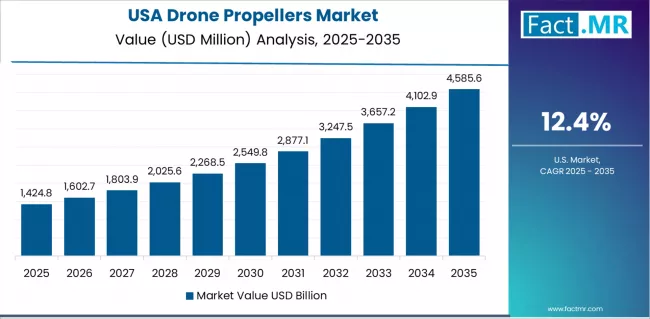
North America demand is supported by commercial drone fleets and clearer BVLOS rule development. The United States leads regional value because drone operators work within established rules and professional service channels. Replacement demand is high across inspection and mapping.
- United States: United States drone propeller demand reflects commercial drone fleets and enterprise service providers. Inspection and mapping work support the country’s 12.4% CAGR over the study period. The FAA’s 2025 BVLOS proposal supports broader commercial drone operations. [7] Propeller suppliers need compatibility across popular airframes and quick replacement access. Fleet operators value low-vibration blades because image quality and flight stability depend on balanced propellers. Growth is supported by professional drone use and routine maintenance demand across field operations.
Competitive Aligners for Market Players
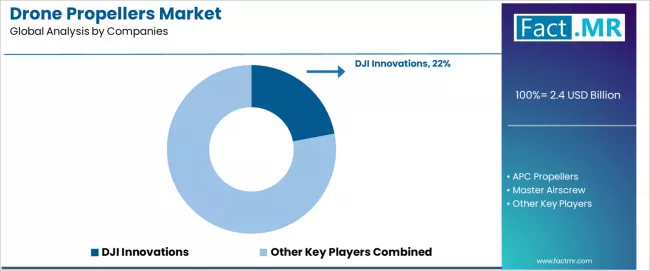
The drone propellers market includes specialized propeller manufacturers, drone OEMs, and component suppliers. DJI Innovations, APC Propellers, Master Airscrew, HQProp, Gemfan Technology Co., Ltd., Graupner GmbH, Carbon Fiber Gear, Sensenich Propeller Company, Mejzlik Propellers, and Xoar International compete through blade performance, material quality, flight stability, and channel reach.
Competitive strength comes from quality control and compatibility support. APC Propellers provides performance data and RPM limit guidance for propeller users. Gemfan positions itself around customized drone propeller solutions and OEM support. DJI’s Matrice 400 launch shows how enterprise drone platforms place pressure on propellers to support payload and endurance requirements.
Supplier position will rely on replacement access through 2036. Agriculture operators need durable blades. Inspection contractors need stable flight and fast service. Consumer drone users need easy compatibility guidance. Companies that combine blade balance, material quality, and channel coverage can protect repeat demand.
Key Players in Drone Propellers Market
- DJI Innovations
- APC Propellers
- Master Airscrew
- HQProp
- Gemfan Technology Co., Ltd.
- Graupner GmbH
- Carbon Fiber Gear
- Sensenich Propeller Company
- Mejzlik Propellers
- Xoar International
Bibliography
- [1]. DJI. (2025, June 10). DJI Matrice 400 sets new standard for intelligent and efficient long-endurance aerial missions.
- [2]. Press Information Bureau. (2026, February 17). India’s drone ecosystem. Government of India.
- [3]. APC Propellers. (2026). Performance data and RPM limits. APC Propellers.
- [4]. Civil Aviation Administration of China. (2025, December 24). CAAC releases two mandatory national standards for UAV.
- [5]. European Union Aviation Safety Agency. (2025, October 9). EASA presses on the accelerator to support drone operations in the EU.
- [6]. Department of Airspace Control. (2025, November 3). AIC 25/2025. Departamento de Controle do Espaço Aéreo.
- [7]. Federal Aviation Administration. (2025, August 6). Beyond Visual Line of Sight (BVLOS). Federal Aviation Administration.
This Report Addresses
- Strategic intelligence on drone propeller demand across commercial, agriculture, and inspection use.
- Growth opportunity mapping across China, India, Germany, and the United States.
- Segment analysis by type, application, end-use industry, material type, and sales channel.
- Regional outlook covering drone rules, commercial fleet use, and component manufacturing strength.
- Competitive analysis of DJI Innovations, APC Propellers, Master Airscrew, HQProp, and Gemfan Technology Co., Ltd.
- Product assessment covering fixed pitch, variable pitch, folding, and carbon fiber propellers.
- Report delivered through PDF, Excel datasets, and presentation formats.
- Primary interviews, supplier checks, and replacement demand review support validation.
Drone Propellers Market Definition
The drone propellers market covers blades and blade sets used to generate lift and control thrust in unmanned aerial systems. The market differs from general aircraft propellers because demand is tied to lightweight drone platforms, and mission-specific flight stability. It includes propellers for commercial, and hobby drone systems.
Drone Propellers Market Inclusions
The scope includes fixed pitch, and custom drone propellers used across commercial drones and defense UAVs. Carbon fiber and composite propellers are included. OEM-installed propellers and replacement propeller sets are part of scope. Accessories are counted only when sold as part of propeller systems.
Drone Propellers Market Exclusions
The scope excludes full aircraft propellers used in crewed aviation. Helicopter rotor blades are outside scope because their certification route and design load differ from drone propellers. Drone motors and controllers are excluded unless supplied as part of a propeller kit. Counter-drone hardware is not counted.
Drone Propellers Market Research Methodology
- Primary Research
- Primary research includes interviews with drone manufacturers and UAV fleet maintenance managers. Agriculture drone service providers and inspection contractors are covered separately. Distributor feedback supports replacement demand checks.
- Desk Research
- Desk research reviews drone rules and product catalogues. Propeller specifications and supplier technical pages support validation. Application data is compared with drone fleet use patterns.
- Market-Sizing and Forecasting
- Forecasting uses type demand and application adoption. Commercial drone demand and replacement cycles are linked to propeller wear, and flight safety requirements.
- Data Validation and Update Cycle
- Forecasts are validated through supplier checks and distributor interviews. Regional assumptions are reviewed with drone rule updates and local drone manufacturing trends.
Scope of the Report

| Attribute | Details |
|---|---|
| Quantitative Units | USD 2.7 billion in 2026 to USD 10.0 billion by 2036, at 13.9% CAGR |
| Market Definition | Drone propellers used to generate lift, thrust, and flight control across unmanned aerial systems. |
| Type | Fixed Pitch Propellers, Variable Pitch Propellers, Folding Propellers, Others |
| Application | Commercial Drones, Military Drones, Others |
| End-use Industry | Agriculture, Logistics and Delivery, Surveillance and Security, Mapping and Surveying, Inspection Services, Entertainment Applications |
| Material Type | Carbon Fiber, Plastic, Wood, Composite Materials |
| Sales Channel | OEM Supply, Aftermarket, Online Retail, Specialty Stores, Direct Contracts |
| Regions Covered | North America, Latin America, Western Europe, Eastern Europe, East Asia, South Asia and Pacific, Middle East and Africa |
| Countries Covered | China, India, Germany, Brazil, United States, United Kingdom, Japan, Canada, Mexico, GCC Countries |
| Key Companies Profiled | DJI Innovations, APC Propellers, Master Airscrew, HQProp, Gemfan Technology Co., Ltd., Graupner GmbH, Carbon Fiber Gear, Sensenich Propeller Company, Mejzlik Propellers, Xoar International |
| Forecast Period | 2026 to 2036 |
| Approach | Hybrid top-down and bottom-up model using type demand, application demand, end-use demand, material preference, channel checks, and supplier validation. |
Drone Propellers Market Analysis by Segments
-
By Type:
- Fixed Pitch Propellers
- Variable Pitch Propellers
- Folding Propellers
- Others
-
By Application:
- Commercial Drones
- Military Drones
- Others
-
By End-use Industry:
- Agriculture
- Logistics and Delivery
- Surveillance and Security
- Mapping and Surveying
- Inspection Services
- Entertainment Applications
-
By Material Type:
- Carbon Fiber
- Plastic
- Wood
- Composite Materials
-
By Sales Channel:
- OEM Supply
- Aftermarket
- Online Retail
- Specialty Stores
- Direct Contracts
-
Region:
- North America
- United States
- Canada
- Europe
- Germany
- United Kingdom
- France
- Italy
- Spain
- Asia Pacific
- China
- Japan
- South Korea
- Taiwan
- Singapore
- Latin America
- Brazil
- Mexico
- Argentina
- Middle East & Africa
- GCC Countries
- South Africa
- Israel
- North America
- Frequently Asked Questions -
How large is the drone propellers market in 2025?
The drone propellers market was valued at USD 2.4 billion in 2025 based on Fact.MR’s public base and adjusted growth assumptions.
What is the expected value of the drone propellers market in 2026?
The drone propellers market is estimated to reach USD 2.7 billion in 2026 through commercial drone and replacement demand.
What is the forecast value of the drone propellers market by 2036?
The drone propellers market is forecast to reach USD 10.0 billion by 2036 as commercial UAV fleets expand.
What CAGR is projected for the drone propellers market from 2026 to 2036?
Fact.MR’s adjusted forecast projects 13.9% CAGR for the drone propellers market from 2026 to 2036.
Which type leads the drone propellers market?
Fixed pitch propellers lead the drone propellers market with 52.6% share in the Fact.MR base.
Which application leads the drone propellers market?
Commercial drones lead the drone propellers market with 61.3% share in the Fact.MR base.
Why do commercial drones lead the drone propellers market?
Commercial drones lead because agriculture, inspection, and delivery fleets require repeat propeller supply.
Which end-use industry leads the drone propellers market?
Agriculture leads directionally because spray drones and crop monitoring systems need durable propellers for field use.
Which material type leads the drone propellers market?
Carbon fiber propellers lead directionally because premium drones require lighter and stiffer blade materials.
Which sales channel leads the drone propellers market?
Aftermarket sales lead directionally because propellers are replaced after field use and minor blade damage.
Which country is growing fastest in the drone propellers market?
China is forecast to grow fastest at 17.9% CAGR from 2026 to 2036.
Why is China growing fastest in the drone propellers market?
China grows fastest because domestic drone manufacturing and commercial UAV use support component demand.
Why is India growing quickly in the drone propellers market?
India grows quickly because local drone production and agriculture services support propeller demand.
Which companies compete in the drone propellers market?
DJI Innovations, APC Propellers, Master Airscrew, HQProp, Gemfan Technology Co., Ltd., Graupner GmbH, and Xoar International compete in this market.
What is included in the drone propellers market scope?
The scope includes fixed pitch, variable pitch, folding, carbon fiber, plastic, and composite drone propellers.
What is excluded from the drone propellers market scope?
The scope excludes crewed aircraft propellers, helicopter rotor blades, motors, batteries, and counter-drone systems.
How does Fact.MR forecast drone propeller demand?
Fact.MR forecasts demand using type mix, application demand, end-use demand, material preference, sales channel checks, and supplier validation.
Table of Content
- Executive Summary
- Global Market Outlook
- Demand to side Trends
- Supply to side Trends
- Technology Roadmap Analysis
- Analysis and Recommendations
- Market Overview
- Market Coverage / Taxonomy
- Market Definition / Scope / Limitations
- Research Methodology
- Chapter Orientation
- Analytical Lens and Working Hypotheses
- Market Structure, Signals, and Trend Drivers
- Benchmarking and Cross-market Comparability
- Market Sizing, Forecasting, and Opportunity Mapping
- Research Design and Evidence Framework
- Desk Research Programme (Secondary Evidence)
- Company Annual and Sustainability Reports
- Peer-reviewed Journals and Academic Literature
- Corporate Websites, Product Literature, and Technical Notes
- Earnings Decks and Investor Briefings
- Statutory Filings and Regulatory Disclosures
- Technical White Papers and Standards Notes
- Trade Journals, Industry Magazines, and Analyst Briefs
- Conference Proceedings, Webinars, and Seminar Materials
- Government Statistics Portals and Public Data Releases
- Press Releases and Reputable Media Coverage
- Specialist Newsletters and Curated Briefings
- Sector Databases and Reference Repositories
- Fact.MR Internal Proprietary Databases and Historical Market Datasets
- Subscription Datasets and Paid Sources
- Social Channels, Communities, and Digital Listening Inputs
- Additional Desk Sources
- Expert Input and Fieldwork (Primary Evidence)
- Primary Modes
- Qualitative Interviews and Expert Elicitation
- Quantitative Surveys and Structured Data Capture
- Blended Approach
- Why Primary Evidence is Used
- Field Techniques
- Interviews
- Surveys
- Focus Groups
- Observational and In-context Research
- Social and Community Interactions
- Stakeholder Universe Engaged
- C-suite Leaders
- Board Members
- Presidents and Vice Presidents
- R&D and Innovation Heads
- Technical Specialists
- Domain Subject-matter Experts
- Scientists
- Physicians and Other Healthcare Professionals
- Governance, Ethics, and Data Stewardship
- Research Ethics
- Data Integrity and Handling
- Primary Modes
- Tooling, Models, and Reference Databases
- Desk Research Programme (Secondary Evidence)
- Data Engineering and Model Build
- Data Acquisition and Ingestion
- Cleaning, Normalisation, and Verification
- Synthesis, Triangulation, and Analysis
- Quality Assurance and Audit Trail
- Market Background
- Market Dynamics
- Drivers
- Restraints
- Opportunity
- Trends
- Scenario Forecast
- Demand in Optimistic Scenario
- Demand in Likely Scenario
- Demand in Conservative Scenario
- Opportunity Map Analysis
- Product Life Cycle Analysis
- Supply Chain Analysis
- Investment Feasibility Matrix
- Value Chain Analysis
- PESTLE and Porter’s Analysis
- Regulatory Landscape
- Regional Parent Market Outlook
- Production and Consumption Statistics
- Import and Export Statistics
- Market Dynamics
- Global Market Analysis 2021 to 2025 and Forecast, 2026 to 2036
- Historical Market Size Value (USD Million) Analysis, 2021 to 2025
- Current and Future Market Size Value (USD Million) Projections, 2026 to 2036
- Y to o to Y Growth Trend Analysis
- Absolute $ Opportunity Analysis
- Global Market Pricing Analysis 2021 to 2025 and Forecast 2026 to 2036
- Global Market Analysis 2021 to 2025 and Forecast 2026 to 2036, By Type
- Introduction / Key Findings
- Historical Market Size Value (USD Million) Analysis By Type , 2021 to 2025
- Current and Future Market Size Value (USD Million) Analysis and Forecast By Type , 2026 to 2036
- Fixed Pitch Propellers
- Variable Pitch Propellers
- Folding Propellers
- Fixed Pitch Propellers
- Y to o to Y Growth Trend Analysis By Type , 2021 to 2025
- Absolute $ Opportunity Analysis By Type , 2026 to 2036
- Global Market Analysis 2021 to 2025 and Forecast 2026 to 2036, By Application
- Introduction / Key Findings
- Historical Market Size Value (USD Million) Analysis By Application, 2021 to 2025
- Current and Future Market Size Value (USD Million) Analysis and Forecast By Application, 2026 to 2036
- Commercial Drones
- Military Drones
- Others
- Commercial Drones
- Y to o to Y Growth Trend Analysis By Application, 2021 to 2025
- Absolute $ Opportunity Analysis By Application, 2026 to 2036
- Global Market Analysis 2021 to 2025 and Forecast 2026 to 2036, By End-use Industry
- Introduction / Key Findings
- Historical Market Size Value (USD Million) Analysis By End-use Industry, 2021 to 2025
- Current and Future Market Size Value (USD Million) Analysis and Forecast By End-use Industry, 2026 to 2036
- Agriculture
- Logistics and Delivery
- Surveillance and Security
- Agriculture
- Y to o to Y Growth Trend Analysis By End-use Industry, 2021 to 2025
- Absolute $ Opportunity Analysis By End-use Industry, 2026 to 2036
- Global Market Analysis 2021 to 2025 and Forecast 2026 to 2036, By Material Type
- Introduction / Key Findings
- Historical Market Size Value (USD Million) Analysis By Material Type, 2021 to 2025
- Current and Future Market Size Value (USD Million) Analysis and Forecast By Material Type, 2026 to 2036
- Carbon Fiber
- Plastic
- Wood
- Carbon Fiber
- Y to o to Y Growth Trend Analysis By Material Type, 2021 to 2025
- Absolute $ Opportunity Analysis By Material Type, 2026 to 2036
- Global Market Analysis 2021 to 2025 and Forecast 2026 to 2036, By Sales Channel
- Introduction / Key Findings
- Historical Market Size Value (USD Million) Analysis By Sales Channel, 2021 to 2025
- Current and Future Market Size Value (USD Million) Analysis and Forecast By Sales Channel, 2026 to 2036
- Aftermarket
- OEM Supply
- Specialty Stores
- Aftermarket
- Y to o to Y Growth Trend Analysis By Sales Channel, 2021 to 2025
- Absolute $ Opportunity Analysis By Sales Channel, 2026 to 2036
- Global Market Analysis 2021 to 2025 and Forecast 2026 to 2036, By Region
- Introduction
- Historical Market Size Value (USD Million) Analysis By Region, 2021 to 2025
- Current Market Size Value (USD Million) Analysis and Forecast By Region, 2026 to 2036
- North America
- Latin America
- Western Europe
- Eastern Europe
- East Asia
- South Asia and Pacific
- Middle East & Africa
- Market Attractiveness Analysis By Region
- North America Market Analysis 2021 to 2025 and Forecast 2026 to 2036, By Country
- Historical Market Size Value (USD Million) Trend Analysis By Market Taxonomy, 2021 to 2025
- Market Size Value (USD Million) Forecast By Market Taxonomy, 2026 to 2036
- By Country
- USA
- Canada
- Mexico
- By Type
- By Application
- By End-use Industry
- By Material Type
- By Sales Channel
- By Country
- Market Attractiveness Analysis
- By Country
- By Type
- By Application
- By End-use Industry
- By Material Type
- By Sales Channel
- Key Takeaways
- Latin America Market Analysis 2021 to 2025 and Forecast 2026 to 2036, By Country
- Historical Market Size Value (USD Million) Trend Analysis By Market Taxonomy, 2021 to 2025
- Market Size Value (USD Million) Forecast By Market Taxonomy, 2026 to 2036
- By Country
- Brazil
- Chile
- Rest of Latin America
- By Type
- By Application
- By End-use Industry
- By Material Type
- By Sales Channel
- By Country
- Market Attractiveness Analysis
- By Country
- By Type
- By Application
- By End-use Industry
- By Material Type
- By Sales Channel
- Key Takeaways
- Western Europe Market Analysis 2021 to 2025 and Forecast 2026 to 2036, By Country
- Historical Market Size Value (USD Million) Trend Analysis By Market Taxonomy, 2021 to 2025
- Market Size Value (USD Million) Forecast By Market Taxonomy, 2026 to 2036
- By Country
- Germany
- UK
- Italy
- Spain
- France
- Nordic
- BENELUX
- Rest of Western Europe
- By Type
- By Application
- By End-use Industry
- By Material Type
- By Sales Channel
- By Country
- Market Attractiveness Analysis
- By Country
- By Type
- By Application
- By End-use Industry
- By Material Type
- By Sales Channel
- Key Takeaways
- Eastern Europe Market Analysis 2021 to 2025 and Forecast 2026 to 2036, By Country
- Historical Market Size Value (USD Million) Trend Analysis By Market Taxonomy, 2021 to 2025
- Market Size Value (USD Million) Forecast By Market Taxonomy, 2026 to 2036
- By Country
- Russia
- Poland
- Hungary
- Balkan & Baltic
- Rest of Eastern Europe
- By Type
- By Application
- By End-use Industry
- By Material Type
- By Sales Channel
- By Country
- Market Attractiveness Analysis
- By Country
- By Type
- By Application
- By End-use Industry
- By Material Type
- By Sales Channel
- Key Takeaways
- East Asia Market Analysis 2021 to 2025 and Forecast 2026 to 2036, By Country
- Historical Market Size Value (USD Million) Trend Analysis By Market Taxonomy, 2021 to 2025
- Market Size Value (USD Million) Forecast By Market Taxonomy, 2026 to 2036
- By Country
- China
- Japan
- South Korea
- By Type
- By Application
- By End-use Industry
- By Material Type
- By Sales Channel
- By Country
- Market Attractiveness Analysis
- By Country
- By Type
- By Application
- By End-use Industry
- By Material Type
- By Sales Channel
- Key Takeaways
- South Asia and Pacific Market Analysis 2021 to 2025 and Forecast 2026 to 2036, By Country
- Historical Market Size Value (USD Million) Trend Analysis By Market Taxonomy, 2021 to 2025
- Market Size Value (USD Million) Forecast By Market Taxonomy, 2026 to 2036
- By Country
- India
- ASEAN
- Australia & New Zealand
- Rest of South Asia and Pacific
- By Type
- By Application
- By End-use Industry
- By Material Type
- By Sales Channel
- By Country
- Market Attractiveness Analysis
- By Country
- By Type
- By Application
- By End-use Industry
- By Material Type
- By Sales Channel
- Key Takeaways
- Middle East & Africa Market Analysis 2021 to 2025 and Forecast 2026 to 2036, By Country
- Historical Market Size Value (USD Million) Trend Analysis By Market Taxonomy, 2021 to 2025
- Market Size Value (USD Million) Forecast By Market Taxonomy, 2026 to 2036
- By Country
- Kingdom of Saudi Arabia
- Other GCC Countries
- Turkiye
- South Africa
- Other African Union
- Rest of Middle East & Africa
- By Type
- By Application
- By End-use Industry
- By Material Type
- By Sales Channel
- By Country
- Market Attractiveness Analysis
- By Country
- By Type
- By Application
- By End-use Industry
- By Material Type
- By Sales Channel
- Key Takeaways
- Key Countries Market Analysis
- USA
- Pricing Analysis
- Market Share Analysis, 2025
- By Type
- By Application
- By End-use Industry
- By Material Type
- By Sales Channel
- Canada
- Pricing Analysis
- Market Share Analysis, 2025
- By Type
- By Application
- By End-use Industry
- By Material Type
- By Sales Channel
- Mexico
- Pricing Analysis
- Market Share Analysis, 2025
- By Type
- By Application
- By End-use Industry
- By Material Type
- By Sales Channel
- Brazil
- Pricing Analysis
- Market Share Analysis, 2025
- By Type
- By Application
- By End-use Industry
- By Material Type
- By Sales Channel
- Chile
- Pricing Analysis
- Market Share Analysis, 2025
- By Type
- By Application
- By End-use Industry
- By Material Type
- By Sales Channel
- Germany
- Pricing Analysis
- Market Share Analysis, 2025
- By Type
- By Application
- By End-use Industry
- By Material Type
- By Sales Channel
- UK
- Pricing Analysis
- Market Share Analysis, 2025
- By Type
- By Application
- By End-use Industry
- By Material Type
- By Sales Channel
- Italy
- Pricing Analysis
- Market Share Analysis, 2025
- By Type
- By Application
- By End-use Industry
- By Material Type
- By Sales Channel
- Spain
- Pricing Analysis
- Market Share Analysis, 2025
- By Type
- By Application
- By End-use Industry
- By Material Type
- By Sales Channel
- France
- Pricing Analysis
- Market Share Analysis, 2025
- By Type
- By Application
- By End-use Industry
- By Material Type
- By Sales Channel
- India
- Pricing Analysis
- Market Share Analysis, 2025
- By Type
- By Application
- By End-use Industry
- By Material Type
- By Sales Channel
- ASEAN
- Pricing Analysis
- Market Share Analysis, 2025
- By Type
- By Application
- By End-use Industry
- By Material Type
- By Sales Channel
- Australia & New Zealand
- Pricing Analysis
- Market Share Analysis, 2025
- By Type
- By Application
- By End-use Industry
- By Material Type
- By Sales Channel
- China
- Pricing Analysis
- Market Share Analysis, 2025
- By Type
- By Application
- By End-use Industry
- By Material Type
- By Sales Channel
- Japan
- Pricing Analysis
- Market Share Analysis, 2025
- By Type
- By Application
- By End-use Industry
- By Material Type
- By Sales Channel
- South Korea
- Pricing Analysis
- Market Share Analysis, 2025
- By Type
- By Application
- By End-use Industry
- By Material Type
- By Sales Channel
- Russia
- Pricing Analysis
- Market Share Analysis, 2025
- By Type
- By Application
- By End-use Industry
- By Material Type
- By Sales Channel
- Poland
- Pricing Analysis
- Market Share Analysis, 2025
- By Type
- By Application
- By End-use Industry
- By Material Type
- By Sales Channel
- Hungary
- Pricing Analysis
- Market Share Analysis, 2025
- By Type
- By Application
- By End-use Industry
- By Material Type
- By Sales Channel
- Kingdom of Saudi Arabia
- Pricing Analysis
- Market Share Analysis, 2025
- By Type
- By Application
- By End-use Industry
- By Material Type
- By Sales Channel
- Turkiye
- Pricing Analysis
- Market Share Analysis, 2025
- By Type
- By Application
- By End-use Industry
- By Material Type
- By Sales Channel
- South Africa
- Pricing Analysis
- Market Share Analysis, 2025
- By Type
- By Application
- By End-use Industry
- By Material Type
- By Sales Channel
- USA
- Market Structure Analysis
- Competition Dashboard
- Competition Benchmarking
- Market Share Analysis of Top Players
- By Regional
- By Type
- By Application
- By End-use Industry
- By Material Type
- By Sales Channel
- Competition Analysis
- Competition Deep Dive
- DJI Innovations
- Overview
- Product Portfolio
- Profitability by Market Segments (Product/Age /Sales Channel/Region)
- Sales Footprint
- Strategy Overview
- Marketing Strategy
- Product Strategy
- Channel Strategy
- APC Propellers
- Master Airscrew
- HQProp
- Gemfan Technology Co., Ltd.
- Graupner GmbH
- Carbon Fiber Gear
- DJI Innovations
- Competition Deep Dive
- Assumptions & Acronyms Used
List Of Table
- Table 1: Global Market Value (USD Million) Forecast by Region, 2021 to 2036
- Table 2: Global Market Value (USD Million) Forecast by Type , 2021 to 2036
- Table 3: Global Market Value (USD Million) Forecast by Application, 2021 to 2036
- Table 4: Global Market Value (USD Million) Forecast by End-use Industry, 2021 to 2036
- Table 5: Global Market Value (USD Million) Forecast by Material Type, 2021 to 2036
- Table 6: Global Market Value (USD Million) Forecast by Sales Channel, 2021 to 2036
- Table 7: North America Market Value (USD Million) Forecast by Country, 2021 to 2036
- Table 8: North America Market Value (USD Million) Forecast by Type , 2021 to 2036
- Table 9: North America Market Value (USD Million) Forecast by Application, 2021 to 2036
- Table 10: North America Market Value (USD Million) Forecast by End-use Industry, 2021 to 2036
- Table 11: North America Market Value (USD Million) Forecast by Material Type, 2021 to 2036
- Table 12: North America Market Value (USD Million) Forecast by Sales Channel, 2021 to 2036
- Table 13: Latin America Market Value (USD Million) Forecast by Country, 2021 to 2036
- Table 14: Latin America Market Value (USD Million) Forecast by Type , 2021 to 2036
- Table 15: Latin America Market Value (USD Million) Forecast by Application, 2021 to 2036
- Table 16: Latin America Market Value (USD Million) Forecast by End-use Industry, 2021 to 2036
- Table 17: Latin America Market Value (USD Million) Forecast by Material Type, 2021 to 2036
- Table 18: Latin America Market Value (USD Million) Forecast by Sales Channel, 2021 to 2036
- Table 19: Western Europe Market Value (USD Million) Forecast by Country, 2021 to 2036
- Table 20: Western Europe Market Value (USD Million) Forecast by Type , 2021 to 2036
- Table 21: Western Europe Market Value (USD Million) Forecast by Application, 2021 to 2036
- Table 22: Western Europe Market Value (USD Million) Forecast by End-use Industry, 2021 to 2036
- Table 23: Western Europe Market Value (USD Million) Forecast by Material Type, 2021 to 2036
- Table 24: Western Europe Market Value (USD Million) Forecast by Sales Channel, 2021 to 2036
- Table 25: Eastern Europe Market Value (USD Million) Forecast by Country, 2021 to 2036
- Table 26: Eastern Europe Market Value (USD Million) Forecast by Type , 2021 to 2036
- Table 27: Eastern Europe Market Value (USD Million) Forecast by Application, 2021 to 2036
- Table 28: Eastern Europe Market Value (USD Million) Forecast by End-use Industry, 2021 to 2036
- Table 29: Eastern Europe Market Value (USD Million) Forecast by Material Type, 2021 to 2036
- Table 30: Eastern Europe Market Value (USD Million) Forecast by Sales Channel, 2021 to 2036
- Table 31: East Asia Market Value (USD Million) Forecast by Country, 2021 to 2036
- Table 32: East Asia Market Value (USD Million) Forecast by Type , 2021 to 2036
- Table 33: East Asia Market Value (USD Million) Forecast by Application, 2021 to 2036
- Table 34: East Asia Market Value (USD Million) Forecast by End-use Industry, 2021 to 2036
- Table 35: East Asia Market Value (USD Million) Forecast by Material Type, 2021 to 2036
- Table 36: East Asia Market Value (USD Million) Forecast by Sales Channel, 2021 to 2036
- Table 37: South Asia and Pacific Market Value (USD Million) Forecast by Country, 2021 to 2036
- Table 38: South Asia and Pacific Market Value (USD Million) Forecast by Type , 2021 to 2036
- Table 39: South Asia and Pacific Market Value (USD Million) Forecast by Application, 2021 to 2036
- Table 40: South Asia and Pacific Market Value (USD Million) Forecast by End-use Industry, 2021 to 2036
- Table 41: South Asia and Pacific Market Value (USD Million) Forecast by Material Type, 2021 to 2036
- Table 42: South Asia and Pacific Market Value (USD Million) Forecast by Sales Channel, 2021 to 2036
- Table 43: Middle East & Africa Market Value (USD Million) Forecast by Country, 2021 to 2036
- Table 44: Middle East & Africa Market Value (USD Million) Forecast by Type , 2021 to 2036
- Table 45: Middle East & Africa Market Value (USD Million) Forecast by Application, 2021 to 2036
- Table 46: Middle East & Africa Market Value (USD Million) Forecast by End-use Industry, 2021 to 2036
- Table 47: Middle East & Africa Market Value (USD Million) Forecast by Material Type, 2021 to 2036
- Table 48: Middle East & Africa Market Value (USD Million) Forecast by Sales Channel, 2021 to 2036
List Of Figures
- Figure 1: Global Market Pricing Analysis
- Figure 2: Global Market Value (USD Million) Forecast 2021-2036
- Figure 3: Global Market Value Share and BPS Analysis by Type, 2026 and 2036
- Figure 4: Global Market Y-o-Y Growth Comparison by Type,2026 to 2036
- Figure 5: Global Market Attractiveness Analysis by Type
- Figure 6: Global Market Value Share and BPS Analysis by Application, 2026 and 2036
- Figure 7: Global Market Y-o-Y Growth Comparison by Application,2026 to 2036
- Figure 8: Global Market Attractiveness Analysis by Application
- Figure 9: Global Market Value Share and BPS Analysis by End-use Industry, 2026 and 2036
- Figure 10: Global Market Y-o-Y Growth Comparison by End-use Industry,2026 to 2036
- Figure 11: Global Market Attractiveness Analysis by End-use Industry
- Figure 12: Global Market Value Share and BPS Analysis by Material Type, 2026 and 2036
- Figure 13: Global Market Y-o-Y Growth Comparison by Material Type,2026 to 2036
- Figure 14: Global Market Attractiveness Analysis by Material Type
- Figure 15: Global Market Value Share and BPS Analysis by Sales Channel, 2026 and 2036
- Figure 16: Global Market Y-o-Y Growth Comparison by Sales Channel,2026 to 2036
- Figure 17: Global Market Attractiveness Analysis by Sales Channel
- Figure 18: Global Market Value (USD Million) Share and BPS Analysis by Region, 2026 and 2036
- Figure 19: Global Market Y-o-Y Growth Comparison by Region,2026 to 2036
- Figure 20: Global Market Attractiveness Analysis by Region
- Figure 21: North America Market Incremental Dollar Opportunity,2026 to 2036
- Figure 22: Latin America Market Incremental Dollar Opportunity,2026 to 2036
- Figure 23: Western Europe Market Incremental Dollar Opportunity,2026 to 2036
- Figure 24: Eastern Europe Market Incremental Dollar Opportunity,2026 to 2036
- Figure 25: East Asia Market Incremental Dollar Opportunity,2026 to 2036
- Figure 26: South Asia and Pacific Market Incremental Dollar Opportunity,2026 to 2036
- Figure 27: Middle East & Africa Market Incremental Dollar Opportunity,2026 to 2036
- Figure 28: North America Market Value Share and BPS Analysis by Country, 2026 and 2036
- Figure 29: North America Market Value Share and BPS Analysis by Type, 2026 and 2036
- Figure 30: North America Market Y-o-Y Growth Comparison by Type,2026 to 2036
- Figure 31: North America Market Attractiveness Analysis by Type
- Figure 32: North America Market Value Share and BPS Analysis by Application, 2026 and 2036
- Figure 33: North America Market Y-o-Y Growth Comparison by Application,2026 to 2036
- Figure 34: North America Market Attractiveness Analysis by Application
- Figure 35: North America Market Value Share and BPS Analysis by End-use Industry, 2026 and 2036
- Figure 36: North America Market Y-o-Y Growth Comparison by End-use Industry,2026 to 2036
- Figure 37: North America Market Attractiveness Analysis by End-use Industry
- Figure 38: North America Market Value Share and BPS Analysis by Material Type, 2026 and 2036
- Figure 39: North America Market Y-o-Y Growth Comparison by Material Type,2026 to 2036
- Figure 40: North America Market Attractiveness Analysis by Material Type
- Figure 41: North America Market Value Share and BPS Analysis by Sales Channel, 2026 and 2036
- Figure 42: North America Market Y-o-Y Growth Comparison by Sales Channel,2026 to 2036
- Figure 43: North America Market Attractiveness Analysis by Sales Channel
- Figure 44: Latin America Market Value Share and BPS Analysis by Country, 2026 and 2036
- Figure 45: Latin America Market Value Share and BPS Analysis by Type, 2026 and 2036
- Figure 46: Latin America Market Y-o-Y Growth Comparison by Type,2026 to 2036
- Figure 47: Latin America Market Attractiveness Analysis by Type
- Figure 48: Latin America Market Value Share and BPS Analysis by Application, 2026 and 2036
- Figure 49: Latin America Market Y-o-Y Growth Comparison by Application,2026 to 2036
- Figure 50: Latin America Market Attractiveness Analysis by Application
- Figure 51: Latin America Market Value Share and BPS Analysis by End-use Industry, 2026 and 2036
- Figure 52: Latin America Market Y-o-Y Growth Comparison by End-use Industry,2026 to 2036
- Figure 53: Latin America Market Attractiveness Analysis by End-use Industry
- Figure 54: Latin America Market Value Share and BPS Analysis by Material Type, 2026 and 2036
- Figure 55: Latin America Market Y-o-Y Growth Comparison by Material Type,2026 to 2036
- Figure 56: Latin America Market Attractiveness Analysis by Material Type
- Figure 57: Latin America Market Value Share and BPS Analysis by Sales Channel, 2026 and 2036
- Figure 58: Latin America Market Y-o-Y Growth Comparison by Sales Channel,2026 to 2036
- Figure 59: Latin America Market Attractiveness Analysis by Sales Channel
- Figure 60: Western Europe Market Value Share and BPS Analysis by Country, 2026 and 2036
- Figure 61: Western Europe Market Value Share and BPS Analysis by Type, 2026 and 2036
- Figure 62: Western Europe Market Y-o-Y Growth Comparison by Type,2026 to 2036
- Figure 63: Western Europe Market Attractiveness Analysis by Type
- Figure 64: Western Europe Market Value Share and BPS Analysis by Application, 2026 and 2036
- Figure 65: Western Europe Market Y-o-Y Growth Comparison by Application,2026 to 2036
- Figure 66: Western Europe Market Attractiveness Analysis by Application
- Figure 67: Western Europe Market Value Share and BPS Analysis by End-use Industry, 2026 and 2036
- Figure 68: Western Europe Market Y-o-Y Growth Comparison by End-use Industry,2026 to 2036
- Figure 69: Western Europe Market Attractiveness Analysis by End-use Industry
- Figure 70: Western Europe Market Value Share and BPS Analysis by Material Type, 2026 and 2036
- Figure 71: Western Europe Market Y-o-Y Growth Comparison by Material Type,2026 to 2036
- Figure 72: Western Europe Market Attractiveness Analysis by Material Type
- Figure 73: Western Europe Market Value Share and BPS Analysis by Sales Channel, 2026 and 2036
- Figure 74: Western Europe Market Y-o-Y Growth Comparison by Sales Channel,2026 to 2036
- Figure 75: Western Europe Market Attractiveness Analysis by Sales Channel
- Figure 76: Eastern Europe Market Value Share and BPS Analysis by Country, 2026 and 2036
- Figure 77: Eastern Europe Market Value Share and BPS Analysis by Type, 2026 and 2036
- Figure 78: Eastern Europe Market Y-o-Y Growth Comparison by Type,2026 to 2036
- Figure 79: Eastern Europe Market Attractiveness Analysis by Type
- Figure 80: Eastern Europe Market Value Share and BPS Analysis by Application, 2026 and 2036
- Figure 81: Eastern Europe Market Y-o-Y Growth Comparison by Application,2026 to 2036
- Figure 82: Eastern Europe Market Attractiveness Analysis by Application
- Figure 83: Eastern Europe Market Value Share and BPS Analysis by End-use Industry, 2026 and 2036
- Figure 84: Eastern Europe Market Y-o-Y Growth Comparison by End-use Industry,2026 to 2036
- Figure 85: Eastern Europe Market Attractiveness Analysis by End-use Industry
- Figure 86: Eastern Europe Market Value Share and BPS Analysis by Material Type, 2026 and 2036
- Figure 87: Eastern Europe Market Y-o-Y Growth Comparison by Material Type,2026 to 2036
- Figure 88: Eastern Europe Market Attractiveness Analysis by Material Type
- Figure 89: Eastern Europe Market Value Share and BPS Analysis by Sales Channel, 2026 and 2036
- Figure 90: Eastern Europe Market Y-o-Y Growth Comparison by Sales Channel,2026 to 2036
- Figure 91: Eastern Europe Market Attractiveness Analysis by Sales Channel
- Figure 92: East Asia Market Value Share and BPS Analysis by Country, 2026 and 2036
- Figure 93: East Asia Market Value Share and BPS Analysis by Type, 2026 and 2036
- Figure 94: East Asia Market Y-o-Y Growth Comparison by Type,2026 to 2036
- Figure 95: East Asia Market Attractiveness Analysis by Type
- Figure 96: East Asia Market Value Share and BPS Analysis by Application, 2026 and 2036
- Figure 97: East Asia Market Y-o-Y Growth Comparison by Application,2026 to 2036
- Figure 98: East Asia Market Attractiveness Analysis by Application
- Figure 99: East Asia Market Value Share and BPS Analysis by End-use Industry, 2026 and 2036
- Figure 100: East Asia Market Y-o-Y Growth Comparison by End-use Industry,2026 to 2036
- Figure 101: East Asia Market Attractiveness Analysis by End-use Industry
- Figure 102: East Asia Market Value Share and BPS Analysis by Material Type, 2026 and 2036
- Figure 103: East Asia Market Y-o-Y Growth Comparison by Material Type,2026 to 2036
- Figure 104: East Asia Market Attractiveness Analysis by Material Type
- Figure 105: East Asia Market Value Share and BPS Analysis by Sales Channel, 2026 and 2036
- Figure 106: East Asia Market Y-o-Y Growth Comparison by Sales Channel,2026 to 2036
- Figure 107: East Asia Market Attractiveness Analysis by Sales Channel
- Figure 108: South Asia and Pacific Market Value Share and BPS Analysis by Country, 2026 and 2036
- Figure 109: South Asia and Pacific Market Value Share and BPS Analysis by Type, 2026 and 2036
- Figure 110: South Asia and Pacific Market Y-o-Y Growth Comparison by Type,2026 to 2036
- Figure 111: South Asia and Pacific Market Attractiveness Analysis by Type
- Figure 112: South Asia and Pacific Market Value Share and BPS Analysis by Application, 2026 and 2036
- Figure 113: South Asia and Pacific Market Y-o-Y Growth Comparison by Application,2026 to 2036
- Figure 114: South Asia and Pacific Market Attractiveness Analysis by Application
- Figure 115: South Asia and Pacific Market Value Share and BPS Analysis by End-use Industry, 2026 and 2036
- Figure 116: South Asia and Pacific Market Y-o-Y Growth Comparison by End-use Industry,2026 to 2036
- Figure 117: South Asia and Pacific Market Attractiveness Analysis by End-use Industry
- Figure 118: South Asia and Pacific Market Value Share and BPS Analysis by Material Type, 2026 and 2036
- Figure 119: South Asia and Pacific Market Y-o-Y Growth Comparison by Material Type,2026 to 2036
- Figure 120: South Asia and Pacific Market Attractiveness Analysis by Material Type
- Figure 121: South Asia and Pacific Market Value Share and BPS Analysis by Sales Channel, 2026 and 2036
- Figure 122: South Asia and Pacific Market Y-o-Y Growth Comparison by Sales Channel,2026 to 2036
- Figure 123: South Asia and Pacific Market Attractiveness Analysis by Sales Channel
- Figure 124: Middle East & Africa Market Value Share and BPS Analysis by Country, 2026 and 2036
- Figure 125: Middle East & Africa Market Value Share and BPS Analysis by Type, 2026 and 2036
- Figure 126: Middle East & Africa Market Y-o-Y Growth Comparison by Type,2026 to 2036
- Figure 127: Middle East & Africa Market Attractiveness Analysis by Type
- Figure 128: Middle East & Africa Market Value Share and BPS Analysis by Application, 2026 and 2036
- Figure 129: Middle East & Africa Market Y-o-Y Growth Comparison by Application,2026 to 2036
- Figure 130: Middle East & Africa Market Attractiveness Analysis by Application
- Figure 131: Middle East & Africa Market Value Share and BPS Analysis by End-use Industry, 2026 and 2036
- Figure 132: Middle East & Africa Market Y-o-Y Growth Comparison by End-use Industry,2026 to 2036
- Figure 133: Middle East & Africa Market Attractiveness Analysis by End-use Industry
- Figure 134: Middle East & Africa Market Value Share and BPS Analysis by Material Type, 2026 and 2036
- Figure 135: Middle East & Africa Market Y-o-Y Growth Comparison by Material Type,2026 to 2036
- Figure 136: Middle East & Africa Market Attractiveness Analysis by Material Type
- Figure 137: Middle East & Africa Market Value Share and BPS Analysis by Sales Channel, 2026 and 2036
- Figure 138: Middle East & Africa Market Y-o-Y Growth Comparison by Sales Channel,2026 to 2036
- Figure 139: Middle East & Africa Market Attractiveness Analysis by Sales Channel
- Figure 140: Global Market - Tier Structure Analysis
- Figure 141: Global Market - Company Share Analysis