- Estimated Value(2026): 164.3 Mn
- Forecast Value (2036): 874.6 Mn
- CAGR (2026 - 2036): 18.2%
Drone Rental Business Market Size, Market Forecast and Outlook by Fact.MR
- The drone rental business market surpassed a valuation of USD 139.0 million in 2025.
- Demand is set to rise from USD 164.3 million in 2026 to USD 874.6 million by 2036.
- The market is forecast to record 18.2% CAGR from 2026 to 2036 as commercial users rent drones to avoid ownership cost and equipment obsolescence.
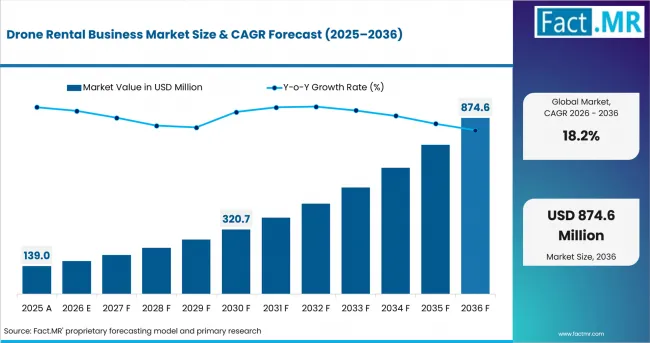
Drone Rental Business Market Value Analysis | Source: Fact.MR
| Metric | Details |
|---|---|
| Industry Size 2026 | USD 164.3 million |
| Industry Value 2036 | USD 874.6 million |
| CAGR 2026 to 2036 | 18.2% |
Source: Fact.MR analysis. Updated Jun 5, 2026
Summary of Drone Rental Business Market
- Demand Drivers in the Market
- Capital Cost Control: Construction firms rent drones to avoid purchase cost and maintenance work.
- Project-based Use: Film crews and survey operators need drones only for specific jobs.
- Technology Refresh: Rental access helps users work with updated drones without owning fast-aging equipment.
- Key Segments Analyzed
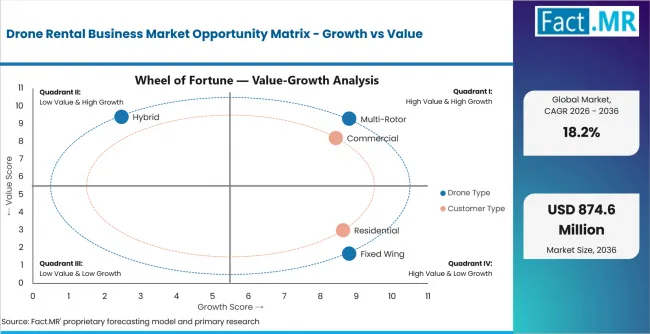
- By Drone Type: Multi-Rotor drones are expected to hold 47.0% share in 2026 because short-range rental users need stable hovering and easy control.
- By Customer Type: Commercial users are likely to account for 68.0% share in 2026 as construction and inspection projects create repeat rental demand.
- By Payload Capacity: <2 kg drones are projected to hold 54.0% share in 2026 since most photography and inspection rentals use lightweight systems.
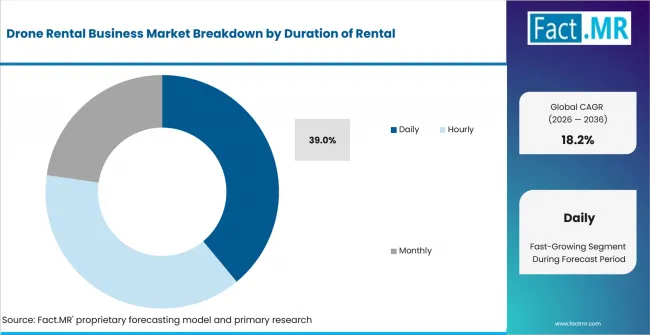
- By Duration of Rental: Daily rentals are anticipated to capture 39.0% share in 2026 as commercial users need drones for short project windows.
- By Application: Aerial photography & videography is expected to hold 34.0% share in 2026 because content creators and real estate users need flexible drone access.
- By Geography: China is projected to record 20.4% CAGR through 2036 as commercial UAV use and local drone supply support rental growth.
- Analyst Opinion at Fact.MR
- Shambhu Nath Jha, Principal Consultant at Fact.MR, states, “Drone rental demand is moving beyond cheaper access. Users want suitable drones during storing and maintaining a fleet. Rental firms that combine hardware choice with pilot support and compliance guidance will gain stronger repeat demand.”
- Strategic Implications
- Fleet Quality: Rental firms need updated drones and batteries to protect service reliability.
- Compliance Support: Operators should guide users on airspace rules and safe flight requirements.
- Application Packages: Rental platforms can bundle drones with cameras and trained pilots.
Drone rental demand is shifting from casual aerial photography to structured field work. Construction firms need short-term access for inspection and progress monitoring. Agriculture operators use drones during spraying and crop assessment periods. Film crews and event firms rent drones when project needs are temporary. The FAA’s 2025 BVLOS proposal supports wider commercial drone use by creating a clearer path for scalable operations. [1]
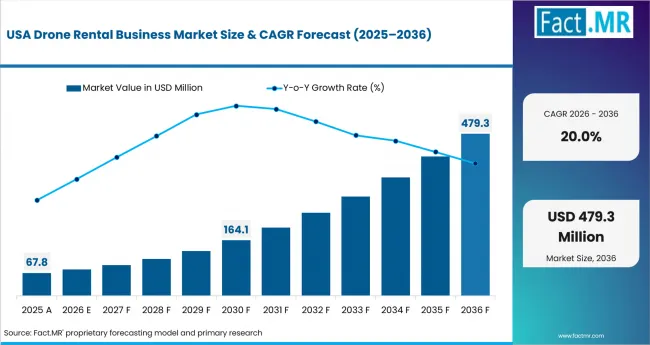
China is projected to record 20.4% CAGR from 2026 to 2036, supported by manufacturing scale and commercial UAV use. The United States is expected to register 20.0% CAGR as construction and media firms use rental access. Germany is likely to post 17.8% CAGR through 2036 as industrial inspection and EU drone rules support professional use. India is forecast to advance at 17.2% CAGR because agriculture and mapping users adopt service-led drone access. The United Kingdom is poised to record 16.8% CAGR since BVLOS work and infrastructure inspection create more rental demand.
Segmental Analysis
Drone Rental Business Market Analysis by Drone Type
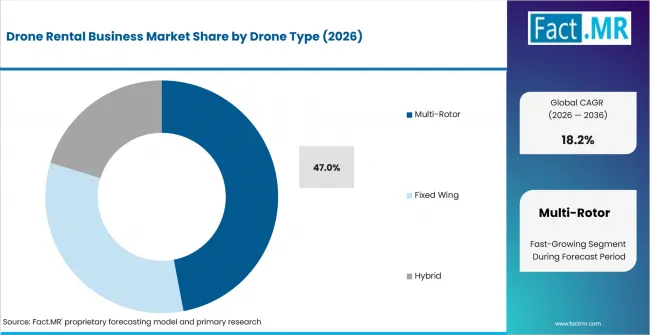
Drone Rental Business Market Analysis By Drone Type | Source: Fact.MR
Multi-Rotor drones are expected to hold 47.0% share in 2026 because short-range rental users need stable hovering and precise camera control. Drones for Hire reported in April 2025 that the DJI Matrice 4 Enterprise was available for hire for precision mapping and surveying, with AI capability and an integrated laser rangefinder supporting real-time measurements [3]. Fixed wing drones support longer mapping and rural survey routes.
- Hover Control: Multi-Rotor drones support inspection and video jobs that need steady hovering and precise positioning on tight project sites.
- Longer Routes: Fixed wing drones serve mapping and agriculture projects that need longer coverage across wide fields.
- Hybrid Access: Hybrid drones help rental providers serve jobs that need vertical takeoff and longer range.
Drone Rental Business Market Analysis by Customer Type
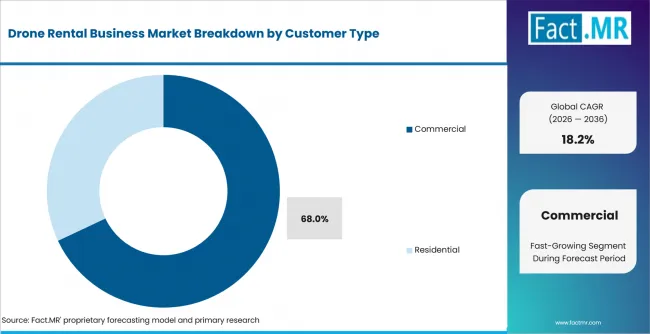
Drone Rental Business Market Analysis By Customer Type | Source: Fact.MR
Commercial users form the main demand base as rental value is clearer in paid project work. Residential users rent drones for personal events and hobby use. Commercial users are likely to account for 68.0% share in 2026 because construction and inspection projects create repeat rental demand. ZenaTech reported Drone as a Service expansion in 2026, which supports the shift toward access-based drone use. [2] Customer demand depends on project frequency and support needs.
- Commercial Work: Businesses rent drones for site mapping and project documentation without buying equipment.
- Residential Events: Personal users rent drones for weddings and local functions to capture aerial footage.
- Service Bundles: Commercial renters often need pilot support and data analytics for usable project reports.
Drone Rental Business Market Analysis by Payload Capacity
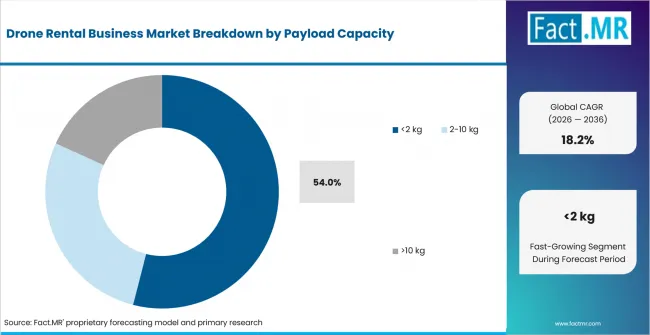
Drone Rental Business Market Analysis By Payload Capacity | Source: Fact.MR
Lightweight drones lead because most rental use cases involve cameras or basic mapping payloads. The <2 kg class is projected to hold 54.0% share in 2026 since photography and inspection rentals rely on portable drones. The 2-10 kg class serves mapping and agriculture work that needs better payload capability.
- Light Payloads: <2 kg drones support rentals for photography and basic inspections with simple handling.
- Mid-range Sensors: 2-10 kg drones serve mapping and agriculture projects that need stronger sensors and longer flights.
- Heavy Lift: >10 kg drones serve specialist jobs that need trained operators and strict safety checks.
Drone Rental Business Market Analysis by Duration of Rental
Drone Rental Business Market Analysis By Duration Of Rental | Source: Fact.MR
Daily rentals match how many commercial drone projects are planned. Hourly rentals serve events and short video shoots. Daily rentals are anticipated to capture 39.0% share in 2026 as construction and inspection users need drones for limited work windows. Weekly rentals support agriculture mapping and infrastructure surveys. Monthly and yearly rentals serve firms that need recurring access without ownership. Duration choice affects fleet utilization because rental firms must balance fast turnaround with battery checks and maintenance.
- Daily Use: Daily rentals help contractors complete site visits and inspections without owning drones or managing equipment commitments.
- Hourly Access: Hourly rentals suit short event coverage and real estate video work that need limited drone access.
- Longer Plans: Monthly rentals support firms with repeat inspection or mapping work that need steady access without full ownership costs.
Drone Rental Business Market Analysis by Application
Drone Rental Business Market Analysis By Application | Source: Fact.MR
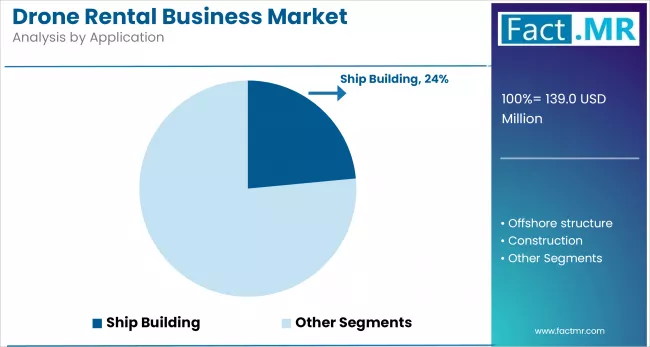
Aerial photography & videography creates the main application base as cameras are the most common drone payload. Mapping & surveying and inspection & maintenance are gaining as commercial users seek better site data. Aerial photography & videography is expected to hold 34.0% share in 2026 because content creators and event firms use drones for short-term projects. Agriculture & forestry users rent drones for seasonal crop and land checks.
- Visual Content: Photography and videography rentals support events and real estate work by giving users aerial footage without equipment ownership costs.
- Inspection Work: Industrial users rent drones to inspect roofs and utility assets with safer access and faster visual records onsite.
- Mapping Demand: Survey users rent drones for terrain mapping and project documentation because aerial data helps measure sites faster and reduce fieldwork.
Drone Rental Business Market Drivers, Restraints, and Opportunities
Drone Rental Business Market Opportunity Matrix Growth Vs Value | Source: Fact.MR
Cost control is the main driver for drone rental demand. Many users need drones for short tasks over daily operations. Rental models reduce equipment cost and maintenance burden. Commercial users can access better sensors and newer drones for each project. Regulatory clarity around BVLOS operations can support more complex rental jobs over time. The FAA proposed Part 108 rules in 2025 to create a route for safe and scalable BVLOS operations. [4]
Regulation and liability can slow adoption. Drone rental firms must manage insurance and airspace limits. Some users may lack flight experience. Weather can reduce booking reliability. Equipment depreciation also affects rental margins as drone models and sensors change quickly.
Opportunities in the Drone Rental Business Market
- Pilot-included Rentals: Rental firms can offer drones with certified pilots for commercial users.
- Inspection Packages: Providers can bundle thermal sensors and reporting support for industrial inspection work.
- Subscription Access: Platforms can offer recurring drone access for survey firms and media producers.
Regional Analysis
Based on regional analysis, the drone rental business market is segmented into North America, Latin America, Western Europe, Eastern Europe, East Asia, South Asia and Pacific, and Middle East and Africa.
.webp "Top Country Growth Comparison Drone Rental Business Market Cagr (2026 2036)")
Top Country Growth Comparison Drone Rental Business Market Cagr (2026 2036) | Source: Fact.MR
| Country | CAGR 2026 to 2036 |
|---|---|
| China | 20.4% |
| United States | 20.0% |
| Germany | 17.8% |
| India | 17.2% |
| United Kingdom | 16.8% |
Source: Fact.MR analysis. Updated Jun 5, 2026
East Asia Drone Rental Business Market Analysis
East Asia demand is supported by commercial UAV production and content creation. China leads through local drone supply and commercial use. Rental platforms can serve small firms that need short-term access.
- China: China is projected to record 20.4% CAGR from 2026 to 2036 as commercial UAV use and local drone manufacturing support rental growth. Construction firms need drones for site monitoring and mapping. Agriculture users rent drones for field checks and seasonal work. Media firms use short-term drone access for events and promotional content. Local drone supply helps rental firms refresh fleets faster. Smart city and public safety use can support demand for trained operators.
North America Drone Rental Business Market Analysis
Drone Rental Business Market Country Value Analysis | Source: Fact.MR
North America demand is led by the United States. Commercial drone rules and media production support rental activity. Users need rental providers that offer equipment and pilot support.
- United States: Construction and agriculture support the United States market. The country is expected to register 20.0% CAGR through 2036 as project-based users seek drone access without ownership cost. FAA BVLOS rulemaking can support more advanced commercial uses over time. Construction firms rent drones for site progress and roof inspection.
Western Europe Drone Rental Business Market Analysis
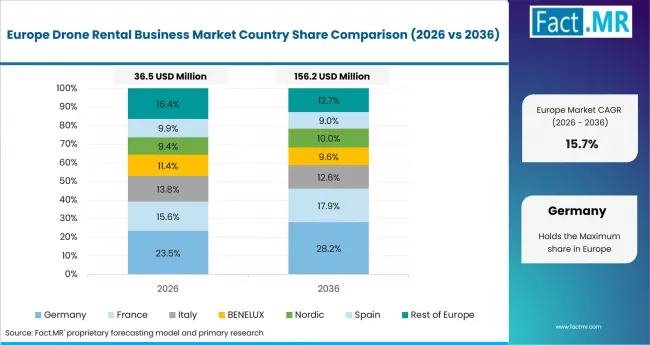
Drone Rental Business Market Europe Country Market Share Analysis, 2026 & 2036 | Source: Fact.MR
Western Europe demand comes from industrial inspection and EU drone rules. Germany and the United Kingdom support demand through construction and public-service uses. Compliance support stays important.
- Germany: Germany drone rental demand comes from industrial inspection and engineering-led field work. The country is likely to post 17.8% CAGR over the forecast period as commercial users rent drones for short project windows. Manufacturers and utilities need drones for asset checks without maintaining internal fleets. EU-wide drone rules create a clearer operating structure for trained users.
- United Kingdom: The United Kingdom is poised to record 16.8% CAGR by 2036 as infrastructure inspection and BVLOS planning support rental demand. CAA guidance requires authorization for BVLOS operations, making compliance support important for rental providers. Film crews and real estate firms use drones for visual content.
South Asia and Pacific Drone Rental Business Market Analysis
South Asia and Pacific demand is supported by agriculture and training needs. India adds demand as more users test drones through service models before buying. Rental firms need local support and pilot networks.
- India: India is forecast to advance at 17.2% CAGR over the forecast period as agriculture and mapping users adopt drone access. Farmers and agri-service firms need drones for field checks and spraying support during seasonal periods. Construction and survey users rent drones for project records. Smaller firms may avoid ownership because drone maintenance and pilot training add cost.
Competitive Aligners for Market Suppliers
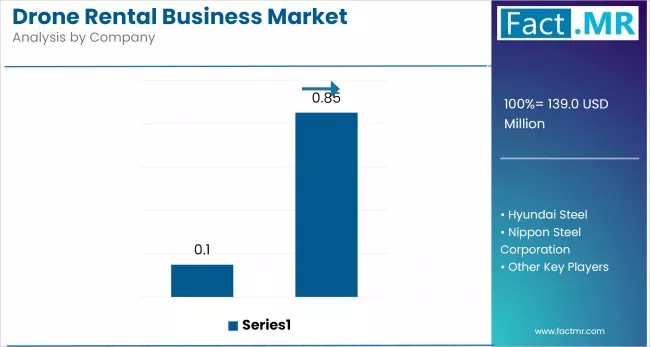
Drone Rental Business Market Analysis By Company | Source: Fact.MR
The drone rental business market is supported by firms that give users access without full ownership. Blue Skies Drones and Heliguy support rental needs for users that want professional drone access. Lensrentals and Camera Lens Rentals serve creative users that rent camera gear and drone equipment for short projects. DroneXperts serves commercial users that need drone access with technical support.
Customer needs will become more service-led by 2036. Commercial users will prefer rental providers with updated fleets and clear operating guidance. Media users will value simple booking and damage terms that reduce project risk.
Competition will depend on fleet quality and local availability. Drone specialists can win through pilot support and sensor packages. Camera rental firms can attract photographers and filmmakers through familiar rental platforms. Providers with clear insurance terms will be better placed with first-time renters.
Key Companies in Drone Rental Business Market
- Blue Skies Drones
- Heliguy
- Lensrentals
- Camera Lens Rentals
- DroneXperts
Bibliography
- [1] Federal Aviation Administration. (2025, August 6). U.S. Transportation Secretary Sean P. Duffy unveils proposed rule to unleash American drone dominance as part of his innovation agenda. U.S. Department of Transportation.
- [2] ZenaTech. (2026, April 29). ZenaTech reports record 558% year-over-year revenue growth to $12.9 million for full year 2025 as Drone as a Service business expansion accelerates. ZenaTech.
- [3] Drones for Hire. (2025, April 1). DJI Matrice 4 Enterprise available for hire. Drones for Hire.
- [4] Federal Aviation Administration. (2025, August 7). Normalizing unmanned aircraft systems beyond visual line of sight operations. Federal Register.
This Report Addresses
- Strategic intelligence on drone rental demand across commercial and residential users.
- Forecast mapping from USD 164.3 million in 2026 to USD 874.6 million by 2036.
- Segment analysis by drone type, customer type, payload capacity, rental duration, and application.
- Regional outlook covering China, the United States, Germany, India, and the United Kingdom.
- Competitive analysis of Blue Skies Drones, Heliguy, Lensrentals, Camera Lens Rentals, and DroneXperts.
- Service assessment covering multi-rotor drones, commercial rentals, light payload drones, and daily rentals.
- Primary interviews, supplier checks, and official source review support validation.
Drone Rental Business Market Definition
The drone rental business market covers short-term and long-term leasing of unmanned aerial vehicles for commercial and public-service use. The market includes drone platforms rented by duration and service support. The market covers access-based drone use instead of permanent ownership.
Drone Rental Business Market Inclusions
The scope includes rentals of multi-rotor and hybrid drones. Photography and event coverage are also included. Hourly and yearly rental formats are covered when the drone remains under a rental or access-based model.
Drone Rental Business Market Exclusions
The scope excludes drone manufacturing revenue and permanent drone sales. Military drone acquisition is outside scope. Drone insurance sold alone is excluded unless bundled with a rental package. Software-only mapping platforms are excluded unless linked to rented drone hardware or rental service operations.
Drone Rental Business Market Research Methodology
- Primary Research
- Primary research includes interviews with drone rental operators and commercial UAV service providers. Construction inspection users and media rental coordinators were reviewed separately.
- Desk Research
- Desk research reviews drone aviation rules and official company disclosures. Rental platform pages and operator documentation support segment validation.
- Market-Sizing and Forecasting
- Forecasting uses drone type demand and application uptake. Payload class and customer type patterns support the forecast approach.
- Data Validation and Update Cycle
- Forecasts are validated through rental provider checks and commercial user interviews. Regional assumptions are reviewed against drone regulation and creative industry demand.
Segmentation
Scope of the Report
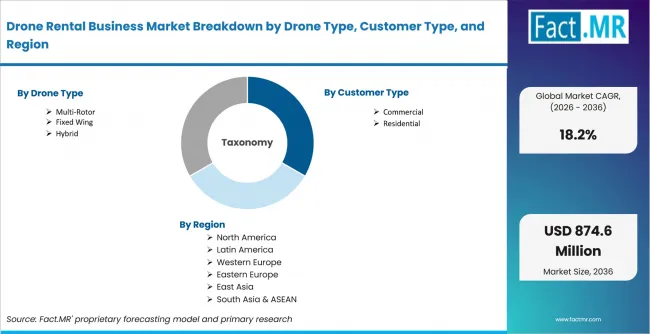
Drone Rental Business Market Breakdown By Drone Type, Customer Type, And Region | Source: Fact.MR
| Attribute | Details |
|---|---|
| Quantitative Units | USD 164.3 million in 2026 to USD 874.6 million by 2036 at 18.2% CAGR |
| Market Definition | Access-based rental and leasing of drones for commercial, residential, and public-service use |
| Drone Type | Multi-Rotor, Fixed Wing, Hybrid, Single Rotor |
| Customer Type | Residential, Commercial |
| Payload Capacity | <2 kg, 2-10 kg, >10 kg |
| Duration of Rental | Hourly, Daily, Weekly, Monthly, Yearly |
| Application | Aerial Photography & Videography, Agriculture & Forestry, Inspection & Maintenance, Mapping & Surveying, Delivery & Logistics, Search & Rescue, Event Management |
| Regions Covered | North America, Latin America, Western Europe, Eastern Europe, East Asia, South Asia and Pacific, Middle East and Africa |
| Countries Covered | China, United States, Germany, India, United Kingdom |
| Key Companies Profiled | Blue Skies Drones, Heliguy, Lensrentals, Camera Lens Rentals, and DroneXperts |
| Forecast Period | 2026 to 2036 |
| Approach | Hybrid top-down and bottom-up approach using drone type demand, customer type, payload class, rental duration, and application validation |
Source: Fact.MR analysis. Updated Jun 5, 2026
Drone Rental Business Market Analysis by Segments
-
By Drone Type:
- Multi-Rotor
- Fixed Wing
- Hybrid
- Single Rotor
-
By Customer Type:
- Residential
- Commercial
-
By Payload Capacity:
- <2 kg
- 2-10 kg
- >10 kg
-
By Duration of Rental:
- Hourly
- Daily
- Weekly
- Monthly
- Yearly
-
By Application:
- Aerial Photography & Videography
- Agriculture & Forestry
- Inspection & Maintenance
- Mapping & Surveying
- Delivery & Logistics
- Search & Rescue
- Event Management
-
Region:
- North America
- United States
- Canada
- Europe
- Germany
- United Kingdom
- France
- Italy
- Spain
- Asia Pacific
- China
- Japan
- South Korea
- Taiwan
- Singapore
- Latin America
- Brazil
- Mexico
- Argentina
- Middle East & Africa
- GCC Countries
- South Africa
- Israel
- North America
Frequently Asked Questions
What is the Drone Rental Business Market size in 2026?
What will the Drone Rental Business Market be worth by 2036?
What CAGR is projected for the Drone Rental Business Market?
Which drone type leads the Drone Rental Business Market?
Which country expands faster in the Drone Rental Business Market?
How does the United States perform in the Drone Rental Business Market?
What is the main driver in the Drone Rental Business Market?
What is the main restraint in the Drone Rental Business Market?
Why are Multi-Rotor drones important in this market?
Why are daily rentals important in the Drone Rental Business Market?
Who worked on this report


Preview the report firsthand - request a free sample
Free SampleGet the brochure for pricing and purchase details
Download PDF