Full Closed-Loop Recycling Ecosystem Market
Full Closed-Loop Recycling Ecosystem Market Size and Share Forecast Outlook 2026 to 2036
Full closed-loop recycling ecosystem market is projected to grow from USD 5.4 billion in 2026 to USD 15.9 billion by 2036, at a CAGR of 11.4%. Packaging, electronics, automotive will dominate with a 45.0% market share, while integrated collectionrecyclingconversion will lead the ecosystem model segment with a 37.0% share.
Full Closed-Loop Recycling Ecosystem Market Forecast and Outlook 2026 to 2036
The full closed-loop recycling ecosystem market is projected to reach USD 5.4 billion in 2026 and grow to USD 15.9 billion by 2036, expanding at a CAGR of 11.4%.
Key Takeaways from Full Closed-Loop Recycling Ecosystem Market
- Full Closed-Loop Recycling Ecosystem Market Value (2026): USD 5.4 billion
- Full Closed-Loop Recycling Ecosystem Market Forecast Value (2036): USD 15.9 billion
- Full Closed-Loop Recycling Ecosystem Market Forecast CAGR 2026 to 2036: 11.4%
- Leading Segment in Full Closed-Loop Recycling Ecosystem Market: Sorting + washing + regranulation + traceability (57%)
- Key Growth Region in Full Closed-Loop Recycling Ecosystem Market: Asia Pacific
- Key Players in Full Closed-Loop Recycling Ecosystem Market: Veolia, WM, GEM Co., JEPLAN, BASF (ChemCycling), Dow, Everbright Environment, DOWA Eco-System
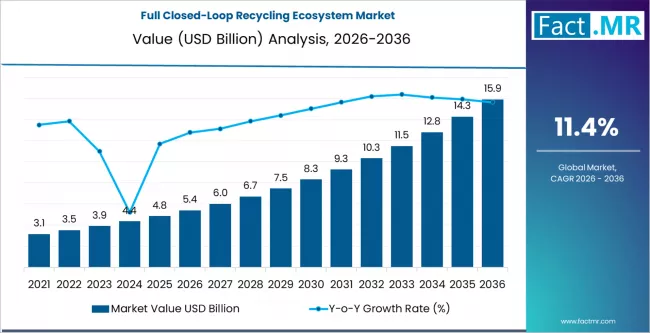
These figures signal a shift in both buyer behavior and supplier confidence, indicating that purchasing decisions are increasingly driven by sustainability mandates rather than cost alone. For buyers, the growing market size reflects a long-term commitment to circular economy models, with increasing pressure to invest in fully integrated recycling systems.
Suppliers, on the other hand, are likely to view these figures as a signal of solid demand, encouraging investment in scalable solutions and advanced technologies. This market expansion highlights a significant transformation toward circularity, where buyers are prioritizing suppliers with proven capabilities in closed-loop systems, secure material tracking, and regulatory compliance. The market's steady growth suggests growing industry confidence in the durability and profitability of sustainable waste management ecosystems.
Full Closed-Loop Recycling Ecosystem Market
| Metric | Value |
|---|---|
| Estimated Value in (2026E) | USD 5.4 billion |
| Forecast Value in (2036F) | USD 15.9 billion |
| Forecast CAGR (2026 to 2036) | 11.4% |
Category
| Category | Segments |
|---|---|
| End-Use | Packaging, electronics, automotive; FMCG & consumer goods; High-volume recycling zones; Precision recycling; Emerging circular systems; Regional ecosystems |
| Ecosystem Model | Integrated collectionrecyclingconversion; Brand-led closed loops; Industrial recycling parks; Corporate closed loops; Others |
| Material Scope | PET, PE, PP; Food & non-food plastics; Mixed PCR streams; PET & engineering plastics; Others |
| Core Technology | Sorting + washing + regranulation + traceability; Advanced mechanical + digital tracking; Scale washing & extrusion; High-purity reprocessing; Others |
| Region | North America; Europe; Asia Pacific; Latin America; Middle East & Africa |
Segmental Analysis
What Is the Impact of Material Scope on the Full Closed-Loop Recycling Ecosystem Market?
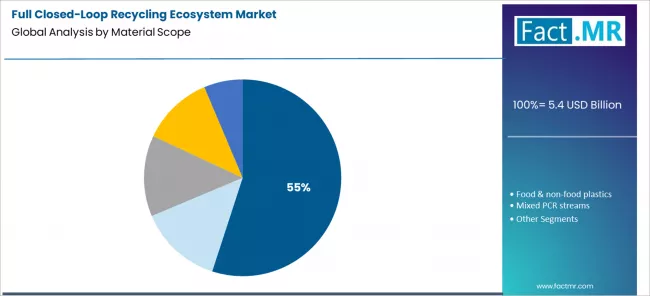
In the full closed-loop recycling ecosystem market, material scope plays a significant role in determining the recycling efficiency and environmental impact. PET, PE, and PP dominate the market with a 55% share, making them the most widely recycled materials in this ecosystem. These materials are central to the recycling process due to their high usage in packaging and consumer products. As demand for sustainable materials increases, the recycling of PET, PE, and PP is critical for closing the loop in the recycling system. The continued focus on improving recycling technologies and processes for these materials is expected to drive the market's growth, helping to reduce waste and promote circularity.
How Does Core Technology Influence the Full Closed-Loop Recycling Ecosystem Market?
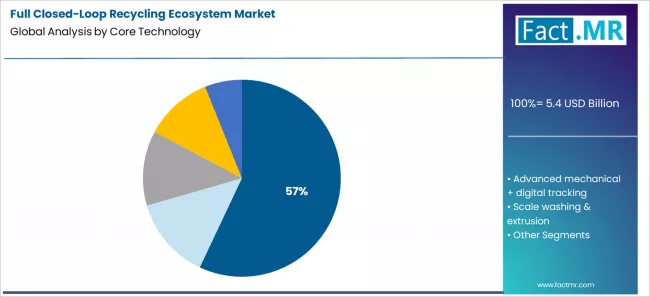
Core technology is a driving force in enhancing the efficiency and effectiveness of the full closed-loop recycling ecosystem, with sorting, washing, regranulation, and traceability leading the sector with a 57% share. These technologies ensure that materials are properly sorted and cleaned before being reprocessed into new products, maintaining the quality of the recycled materials. Traceability technology allows for the monitoring of material flows, ensuring that the recycling process is transparent and accountable. As recycling operations scale, the integration of advanced sorting and washing technologies will continue to improve the efficiency and sustainability of the closed-loop recycling ecosystem, promoting the widespread adoption of recycled materials across industries.
What are the Principal Drivers, Constraints, and Evolving Dynamics of the Full Closed Loop Recycling Ecosystem Market?
Full closed loop recycling ecosystems have expanded as manufacturers and waste managers seek to retain material value through repeated recovery and reuse. Systems that collect, sort, and reprocess materials into equivalent products support circularity goals in automotive, packaging, and electronics sectors. Policy frameworks that mandate recycled content levels in products have influenced investments in infrastructure to support closed loop flows.
Challenges include the cost of advanced sorting and reprocessing equipment, which limits deployment in regions with low collection volumes. Material contamination in collected streams affects quality of recycled outputs. Work on improving characterization, cleaning, and reprocessing technologies is ongoing. Partnerships between brand owners, recyclers, and material scientists aim to increase throughput and broaden applications for recycled feedstocks.
Analysis of the Full Closed-Loop Recycling Ecosystem Market by Key Country
| Country | CAGR (2026-2036) |
|---|---|
| Germany | 10.6% |
| USA | 11% |
| China | 13.6% |
| Japan | 9.8% |
| India | 14.4% |
| Brazil | 11.2% |
The report covers an in-depth analysis of 40+ countries; top-performing countries are highlighted below.
What is the Growth Outlook for Full Closed-Loop Recycling Ecosystem in Germany?
Germany’s full closed-loop recycling ecosystem market is expected to grow at a CAGR of 10.6% from 2026 to 2036. Germany’s leadership in sustainability and circular economy practices is driving the adoption of closed-loop recycling systems across industries. As the country intensifies efforts to reduce waste and increase material recovery, the demand for efficient, fully integrated recycling ecosystems is rising. With strong government support, environmental policies, and advanced recycling technologies, Germany is well-positioned to continue advancing in this area, ensuring steady market growth.
How is the Full Closed-Loop Recycling Ecosystem Market Performing in the USA?
The USA’s full closed-loop recycling ecosystem market is projected to grow at a CAGR of 11% from 2026 to 2036. The push for more sustainable manufacturing processes and the need for efficient waste management systems are driving the adoption of closed-loop recycling in the country. With increasing emphasis on recycling infrastructure, along with regulatory pressures for waste reduction and circularity, the demand for fully integrated recycling ecosystems is expected to rise. Consumer demand for eco-friendly products and corporate sustainability commitments are further contributing to the market’s growth.
What is the Market Outlook for Full Closed-Loop Recycling Ecosystem in China?
China is expected to experience significant growth in the full closed-loop recycling ecosystem market, with a projected CAGR of 13.6% from 2026 to 2036. The country’s rapid industrialization, coupled with its growing commitment to environmental sustainability, is driving the adoption of closed-loop recycling systems. China’s large-scale manufacturing and waste management sectors are increasingly integrating circular economy principles. Government initiatives aimed at reducing plastic pollution and promoting material recovery are fueling the growth of closed-loop recycling ecosystems, making China a key market in this space.
What is the Growth Potential for Full Closed-Loop Recycling Ecosystem in Japan?
Japan’s full closed-loop recycling ecosystem market is forecast to grow at a CAGR of 9.8% from 2026 to 2036. Japan has long been at the forefront of waste management innovation, and the adoption of closed-loop recycling is a natural extension of its existing efforts to reduce waste and improve recycling efficiency. While Japan’s growth rate may be slower compared to other regions, the country’s well-developed recycling infrastructure and commitment to sustainability continue to support steady growth in the market for full closed-loop recycling ecosystems.
What is the Demand for Full Closed-Loop Recycling Ecosystem in India?
India’s full closed-loop recycling ecosystem market is set to grow at a robust CAGR of 14.4% from 2026 to 2036. India’s rapidly growing manufacturing sector and increasing focus on environmental sustainability are driving the demand for more efficient waste management and recycling solutions. With urbanization and industrialization on the rise, India faces significant challenges in waste management. The adoption of closed-loop recycling systems presents a sustainable solution, aligning with both regulatory requirements and growing consumer expectations for environmentally responsible products.
What is the Market Expansion Outlook for Full Closed-Loop Recycling Ecosystem in Brazil?
Brazil’s full closed-loop recycling ecosystem market is projected to grow at a CAGR of 11.2% from 2026 to 2036. As Brazil faces increasing pressure to manage waste sustainably and improve recycling rates, the demand for closed-loop recycling systems is expected to rise. The Brazilian government’s focus on enhancing recycling infrastructure and waste management practices, along with consumer demand for sustainable solutions, will contribute to the market’s growth. As Brazil continues to embrace circular economy principles, the market for full closed-loop recycling ecosystems will expand, driving long-term sustainability in waste management.
How is Competition Structured in the Full ClosedLoop Recycling Ecosystem Market?
Competition in the full closed loop recycling ecosystem market is defined by the ability to collect, sort, process, and reintegrate recycled materials into manufacturing streams. Veolia and WM leverage large waste management networks and established infrastructure to secure feedstock and deliver integrated recycling services. Everbright Environment and GEM Co. focus on regional deployment of sorting and conversion facilities that support local circular systems. JEPLAN and DOWA Eco System emphasize advanced recycling methods, including chemical recycling and modular processing technologies that improve material purity.
BASF, through its ChemCycling initiative, and Dow compete by linking recycled outputs directly with chemical production lines, enabling manufacturers to specify higher recycled content. Differentiation arises from the scale of operations, technology integration, and the ability to certify recycled content back to product makers. Buyers assess providers based on transparency of material flows, cost efficiency, and compliance with regulatory standards for closed loop recycling.
Key Players in the Full ClosedLoop Recycling Ecosystem Market
- Veolia
- WM
- GEM Co.
- JEPLAN
- BASF (ChemCycling)
- Dow
- Everbright Environment
- DOWA EcoSystem
Scope of the Report
| Items | Values |
|---|---|
| Quantitative Units (2026) | USD Billion |
| End-use | Packaging, electronics, automotive, FMCG & consumer goods, High-volume recycling zones, Precision recycling, Emerging circular systems |
| Ecosystem Model | Integrated collection, recycling, conversion, Brand-led closed loops, Industrial recycling parks, Corporate closed loops, Others |
| Material Scope | PET, PE, PP, Food & non-food plastics, Mixed PCR streams, PET & engineering plastics, Others |
| Core Technology | Sorting + washing + regranulation + traceability, Advanced mechanical + digital tracking, Scale washing & extrusion, High-purity reprocessing, Others |
| Regions Covered | North America, Europe, Asia Pacific, Latin America, Middle East & Africa |
| Countries Covered | United States, Canada, Mexico, Brazil, Germany, United Kingdom, France, Italy, Spain, China, Japan, South Korea, India, Australia & New Zealand |
| Key Companies Profiled | Veolia, WM, GEM Co., JEPLAN, BASF (ChemCycling), Dow, Everbright Environment, DOWA Eco-System |
| Additional Attributes | Dollar revenue by end-use, ecosystem model, material scope, and core technology; regional demand trends, competitive landscape, technological advancements in closed-loop recycling ecosystems, and innovations in recycling and reprocessing technologies |
Full Closed-Loop Recycling Ecosystem Market Key Segments
-
End-use :
- Packaging, electronics, automotive
- FMCG & consumer goods
- High-volume recycling zones
- Precision recycling
- Emerging circular systems
- Regional ecosystems
-
Ecosystem Model :
- Integrated collection, recycling, conversion
- Brand-led closed loops
- Industrial recycling parks
- Corporate closed loops
- Others
-
Material Scope :
- PET, PE, PP
- Food & non-food plastics
- Mixed PCR streams
- PET & engineering plastics
- Others
-
Core Technology :
- Sorting + washing + regranulation + traceability
- Advanced mechanical + digital tracking
- Scale washing & extrusion
- High-purity reprocessing
- Others
-
Region :
- North America
- U.S.
- Canada
- Mexico
- Europe
- Germany
- UK
- France
- Italy
- Spain
- Nordic Countries
- BENELUX
- Rest of Europe
- Asia Pacific
- China
- Japan
- South Korea
- India
- Australia
- Rest of Asia Pacific
- Latin America
- Brazil
- Argentina
- Rest of Latin America
- Middle East and Africa
- Kingdom of Saudi Arabia
- United Arab Emirates
- South Africa
- Rest of Middle East and Africa
- Other Regions
- Oceania
- Central Asia
- Other Markets
- North America
Bibliographies
- Organisation for Economic Co-operation and Development. (2023).Global plastics outlook: Policy scenarios to 2060-Closed-loop recycling systems and circular economy pathways. OECD Publishing.
- United Nations Environment Programme. (2024).Global waste management outlook 2024: Building full closed-loop recycling ecosystems. UNEP.
- European Commission. (2024).Circular economy action plan: Scaling closed-loop recycling systems across materials and sectors. European Union Publications.
- International Organization for Standardization. (2023).ISO 59010: Circular economy-Guidance on business models and value networks. ISO.
- World Bank. (2023).Integrated recycling infrastructure and circular economy systems in emerging and advanced economies. World Bank Group.
Table of Content
- Executive Summary
- Global Market Outlook
- Demand to side Trends
- Supply to side Trends
- Technology Roadmap Analysis
- Analysis and Recommendations
- Market Overview
- Market Coverage / Taxonomy
- Market Definition / Scope / Limitations
- Market Background
- Market Dynamics
- Drivers
- Restraints
- Opportunity
- Trends
- Scenario Forecast
- Demand in Optimistic Scenario
- Demand in Likely Scenario
- Demand in Conservative Scenario
- Opportunity Map Analysis
- Product Life Cycle Analysis
- Supply Chain Analysis
- Investment Feasibility Matrix
- Value Chain Analysis
- PESTLE and Porter’s Analysis
- Regulatory Landscape
- Regional Parent Market Outlook
- Production and Consumption Statistics
- Import and Export Statistics
- Market Dynamics
- Global Market Analysis 2021 to 2025 and Forecast, 2026 to 2036
- Historical Market Size Value (USD Million) Analysis, 2021 to 2025
- Current and Future Market Size Value (USD Million) Projections, 2026 to 2036
- Y to o to Y Growth Trend Analysis
- Absolute $ Opportunity Analysis
- Global Market Pricing Analysis 2021 to 2025 and Forecast 2026 to 2036
- Global Market Analysis 2021 to 2025 and Forecast 2026 to 2036, By End-use
- Introduction / Key Findings
- Historical Market Size Value (USD Million) Analysis By End-use, 2021 to 2025
- Current and Future Market Size Value (USD Million) Analysis and Forecast By End-use, 2026 to 2036
- Packaging, electronics, automotive
- FMCG & consumer goods
- High-volume recycling zones
- Precision recycling
- Emerging circular systems
- Regional ecosystems
- Packaging, electronics, automotive
- Y to o to Y Growth Trend Analysis By End-use, 2021 to 2025
- Absolute $ Opportunity Analysis By End-use, 2026 to 2036
- Global Market Analysis 2021 to 2025 and Forecast 2026 to 2036, By Ecosystem Model
- Introduction / Key Findings
- Historical Market Size Value (USD Million) Analysis By Ecosystem Model, 2021 to 2025
- Current and Future Market Size Value (USD Million) Analysis and Forecast By Ecosystem Model, 2026 to 2036
- Integrated collectionrecyclingconversion
- Brand-led closed loops
- Industrial recycling parks
- Corporate closed loops
- Others
- Integrated collectionrecyclingconversion
- Y to o to Y Growth Trend Analysis By Ecosystem Model, 2021 to 2025
- Absolute $ Opportunity Analysis By Ecosystem Model, 2026 to 2036
- Global Market Analysis 2021 to 2025 and Forecast 2026 to 2036, By Material Scope
- Introduction / Key Findings
- Historical Market Size Value (USD Million) Analysis By Material Scope, 2021 to 2025
- Current and Future Market Size Value (USD Million) Analysis and Forecast By Material Scope, 2026 to 2036
- PET, PE, PP
- Food & non-food plastics
- Mixed PCR streams
- PET & engineering plastics
- Others
- PET, PE, PP
- Y to o to Y Growth Trend Analysis By Material Scope, 2021 to 2025
- Absolute $ Opportunity Analysis By Material Scope, 2026 to 2036
- Global Market Analysis 2021 to 2025 and Forecast 2026 to 2036, By Core Technology
- Introduction / Key Findings
- Historical Market Size Value (USD Million) Analysis By Core Technology, 2021 to 2025
- Current and Future Market Size Value (USD Million) Analysis and Forecast By Core Technology, 2026 to 2036
- Sorting + washing + regranulation + traceability
- Advanced mechanical + digital tracking
- Scale washing & extrusion
- High-purity reprocessing
- Others
- Sorting + washing + regranulation + traceability
- Y to o to Y Growth Trend Analysis By Core Technology, 2021 to 2025
- Absolute $ Opportunity Analysis By Core Technology, 2026 to 2036
- Global Market Analysis 2021 to 2025 and Forecast 2026 to 2036, By Region
- Introduction
- Historical Market Size Value (USD Million) Analysis By Region, 2021 to 2025
- Current Market Size Value (USD Million) Analysis and Forecast By Region, 2026 to 2036
- North America
- Latin America
- Western Europe
- Eastern Europe
- East Asia
- South Asia and Pacific
- Middle East & Africa
- Market Attractiveness Analysis By Region
- North America Market Analysis 2021 to 2025 and Forecast 2026 to 2036, By Country
- Historical Market Size Value (USD Million) Trend Analysis By Market Taxonomy, 2021 to 2025
- Market Size Value (USD Million) Forecast By Market Taxonomy, 2026 to 2036
- By Country
- USA
- Canada
- Mexico
- By End-use
- By Ecosystem Model
- By Material Scope
- By Core Technology
- By Country
- Market Attractiveness Analysis
- By Country
- By End-use
- By Ecosystem Model
- By Material Scope
- By Core Technology
- Key Takeaways
- Latin America Market Analysis 2021 to 2025 and Forecast 2026 to 2036, By Country
- Historical Market Size Value (USD Million) Trend Analysis By Market Taxonomy, 2021 to 2025
- Market Size Value (USD Million) Forecast By Market Taxonomy, 2026 to 2036
- By Country
- Brazil
- Chile
- Rest of Latin America
- By End-use
- By Ecosystem Model
- By Material Scope
- By Core Technology
- By Country
- Market Attractiveness Analysis
- By Country
- By End-use
- By Ecosystem Model
- By Material Scope
- By Core Technology
- Key Takeaways
- Western Europe Market Analysis 2021 to 2025 and Forecast 2026 to 2036, By Country
- Historical Market Size Value (USD Million) Trend Analysis By Market Taxonomy, 2021 to 2025
- Market Size Value (USD Million) Forecast By Market Taxonomy, 2026 to 2036
- By Country
- Germany
- UK
- Italy
- Spain
- France
- Nordic
- BENELUX
- Rest of Western Europe
- By End-use
- By Ecosystem Model
- By Material Scope
- By Core Technology
- By Country
- Market Attractiveness Analysis
- By Country
- By End-use
- By Ecosystem Model
- By Material Scope
- By Core Technology
- Key Takeaways
- Eastern Europe Market Analysis 2021 to 2025 and Forecast 2026 to 2036, By Country
- Historical Market Size Value (USD Million) Trend Analysis By Market Taxonomy, 2021 to 2025
- Market Size Value (USD Million) Forecast By Market Taxonomy, 2026 to 2036
- By Country
- Russia
- Poland
- Hungary
- Balkan & Baltic
- Rest of Eastern Europe
- By End-use
- By Ecosystem Model
- By Material Scope
- By Core Technology
- By Country
- Market Attractiveness Analysis
- By Country
- By End-use
- By Ecosystem Model
- By Material Scope
- By Core Technology
- Key Takeaways
- East Asia Market Analysis 2021 to 2025 and Forecast 2026 to 2036, By Country
- Historical Market Size Value (USD Million) Trend Analysis By Market Taxonomy, 2021 to 2025
- Market Size Value (USD Million) Forecast By Market Taxonomy, 2026 to 2036
- By Country
- China
- Japan
- South Korea
- By End-use
- By Ecosystem Model
- By Material Scope
- By Core Technology
- By Country
- Market Attractiveness Analysis
- By Country
- By End-use
- By Ecosystem Model
- By Material Scope
- By Core Technology
- Key Takeaways
- South Asia and Pacific Market Analysis 2021 to 2025 and Forecast 2026 to 2036, By Country
- Historical Market Size Value (USD Million) Trend Analysis By Market Taxonomy, 2021 to 2025
- Market Size Value (USD Million) Forecast By Market Taxonomy, 2026 to 2036
- By Country
- India
- ASEAN
- Australia & New Zealand
- Rest of South Asia and Pacific
- By End-use
- By Ecosystem Model
- By Material Scope
- By Core Technology
- By Country
- Market Attractiveness Analysis
- By Country
- By End-use
- By Ecosystem Model
- By Material Scope
- By Core Technology
- Key Takeaways
- Middle East & Africa Market Analysis 2021 to 2025 and Forecast 2026 to 2036, By Country
- Historical Market Size Value (USD Million) Trend Analysis By Market Taxonomy, 2021 to 2025
- Market Size Value (USD Million) Forecast By Market Taxonomy, 2026 to 2036
- By Country
- Kingdom of Saudi Arabia
- Other GCC Countries
- Turkiye
- South Africa
- Other African Union
- Rest of Middle East & Africa
- By End-use
- By Ecosystem Model
- By Material Scope
- By Core Technology
- By Country
- Market Attractiveness Analysis
- By Country
- By End-use
- By Ecosystem Model
- By Material Scope
- By Core Technology
- Key Takeaways
- Key Countries Market Analysis
- USA
- Pricing Analysis
- Market Share Analysis, 2025
- By End-use
- By Ecosystem Model
- By Material Scope
- By Core Technology
- Canada
- Pricing Analysis
- Market Share Analysis, 2025
- By End-use
- By Ecosystem Model
- By Material Scope
- By Core Technology
- Mexico
- Pricing Analysis
- Market Share Analysis, 2025
- By End-use
- By Ecosystem Model
- By Material Scope
- By Core Technology
- Brazil
- Pricing Analysis
- Market Share Analysis, 2025
- By End-use
- By Ecosystem Model
- By Material Scope
- By Core Technology
- Chile
- Pricing Analysis
- Market Share Analysis, 2025
- By End-use
- By Ecosystem Model
- By Material Scope
- By Core Technology
- Germany
- Pricing Analysis
- Market Share Analysis, 2025
- By End-use
- By Ecosystem Model
- By Material Scope
- By Core Technology
- UK
- Pricing Analysis
- Market Share Analysis, 2025
- By End-use
- By Ecosystem Model
- By Material Scope
- By Core Technology
- Italy
- Pricing Analysis
- Market Share Analysis, 2025
- By End-use
- By Ecosystem Model
- By Material Scope
- By Core Technology
- Spain
- Pricing Analysis
- Market Share Analysis, 2025
- By End-use
- By Ecosystem Model
- By Material Scope
- By Core Technology
- France
- Pricing Analysis
- Market Share Analysis, 2025
- By End-use
- By Ecosystem Model
- By Material Scope
- By Core Technology
- India
- Pricing Analysis
- Market Share Analysis, 2025
- By End-use
- By Ecosystem Model
- By Material Scope
- By Core Technology
- ASEAN
- Pricing Analysis
- Market Share Analysis, 2025
- By End-use
- By Ecosystem Model
- By Material Scope
- By Core Technology
- Australia & New Zealand
- Pricing Analysis
- Market Share Analysis, 2025
- By End-use
- By Ecosystem Model
- By Material Scope
- By Core Technology
- China
- Pricing Analysis
- Market Share Analysis, 2025
- By End-use
- By Ecosystem Model
- By Material Scope
- By Core Technology
- Japan
- Pricing Analysis
- Market Share Analysis, 2025
- By End-use
- By Ecosystem Model
- By Material Scope
- By Core Technology
- South Korea
- Pricing Analysis
- Market Share Analysis, 2025
- By End-use
- By Ecosystem Model
- By Material Scope
- By Core Technology
- Russia
- Pricing Analysis
- Market Share Analysis, 2025
- By End-use
- By Ecosystem Model
- By Material Scope
- By Core Technology
- Poland
- Pricing Analysis
- Market Share Analysis, 2025
- By End-use
- By Ecosystem Model
- By Material Scope
- By Core Technology
- Hungary
- Pricing Analysis
- Market Share Analysis, 2025
- By End-use
- By Ecosystem Model
- By Material Scope
- By Core Technology
- Kingdom of Saudi Arabia
- Pricing Analysis
- Market Share Analysis, 2025
- By End-use
- By Ecosystem Model
- By Material Scope
- By Core Technology
- Turkiye
- Pricing Analysis
- Market Share Analysis, 2025
- By End-use
- By Ecosystem Model
- By Material Scope
- By Core Technology
- South Africa
- Pricing Analysis
- Market Share Analysis, 2025
- By End-use
- By Ecosystem Model
- By Material Scope
- By Core Technology
- USA
- Market Structure Analysis
- Competition Dashboard
- Competition Benchmarking
- Market Share Analysis of Top Players
- By Regional
- By End-use
- By Ecosystem Model
- By Material Scope
- By Core Technology
- Competition Analysis
- Competition Deep Dive
- Veolia
- Overview
- Product Portfolio
- Profitability by Market Segments (Product/Age /Sales Channel/Region)
- Sales Footprint
- Strategy Overview
- Marketing Strategy
- Product Strategy
- Channel Strategy
- WM
- GEM Co.
- JEPLAN
- BASF (ChemCycling)
- Dow
- Everbright Environment
- DOWA Eco-System
- Veolia
- Competition Deep Dive
- Assumptions & Acronyms Used
- Research Methodology
List Of Table
- Table 1: Global Market Value (USD Million) Forecast by Region, 2021 to 2036
- Table 2: Global Market Value (USD Million) Forecast by End-use, 2021 to 2036
- Table 3: Global Market Value (USD Million) Forecast by Ecosystem Model, 2021 to 2036
- Table 4: Global Market Value (USD Million) Forecast by Material Scope, 2021 to 2036
- Table 5: Global Market Value (USD Million) Forecast by Core Technology, 2021 to 2036
- Table 6: North America Market Value (USD Million) Forecast by Country, 2021 to 2036
- Table 7: North America Market Value (USD Million) Forecast by End-use, 2021 to 2036
- Table 8: North America Market Value (USD Million) Forecast by Ecosystem Model, 2021 to 2036
- Table 9: North America Market Value (USD Million) Forecast by Material Scope, 2021 to 2036
- Table 10: North America Market Value (USD Million) Forecast by Core Technology, 2021 to 2036
- Table 11: Latin America Market Value (USD Million) Forecast by Country, 2021 to 2036
- Table 12: Latin America Market Value (USD Million) Forecast by End-use, 2021 to 2036
- Table 13: Latin America Market Value (USD Million) Forecast by Ecosystem Model, 2021 to 2036
- Table 14: Latin America Market Value (USD Million) Forecast by Material Scope, 2021 to 2036
- Table 15: Latin America Market Value (USD Million) Forecast by Core Technology, 2021 to 2036
- Table 16: Western Europe Market Value (USD Million) Forecast by Country, 2021 to 2036
- Table 17: Western Europe Market Value (USD Million) Forecast by End-use, 2021 to 2036
- Table 18: Western Europe Market Value (USD Million) Forecast by Ecosystem Model, 2021 to 2036
- Table 19: Western Europe Market Value (USD Million) Forecast by Material Scope, 2021 to 2036
- Table 20: Western Europe Market Value (USD Million) Forecast by Core Technology, 2021 to 2036
- Table 21: Eastern Europe Market Value (USD Million) Forecast by Country, 2021 to 2036
- Table 22: Eastern Europe Market Value (USD Million) Forecast by End-use, 2021 to 2036
- Table 23: Eastern Europe Market Value (USD Million) Forecast by Ecosystem Model, 2021 to 2036
- Table 24: Eastern Europe Market Value (USD Million) Forecast by Material Scope, 2021 to 2036
- Table 25: Eastern Europe Market Value (USD Million) Forecast by Core Technology, 2021 to 2036
- Table 26: East Asia Market Value (USD Million) Forecast by Country, 2021 to 2036
- Table 27: East Asia Market Value (USD Million) Forecast by End-use, 2021 to 2036
- Table 28: East Asia Market Value (USD Million) Forecast by Ecosystem Model, 2021 to 2036
- Table 29: East Asia Market Value (USD Million) Forecast by Material Scope, 2021 to 2036
- Table 30: East Asia Market Value (USD Million) Forecast by Core Technology, 2021 to 2036
- Table 31: South Asia and Pacific Market Value (USD Million) Forecast by Country, 2021 to 2036
- Table 32: South Asia and Pacific Market Value (USD Million) Forecast by End-use, 2021 to 2036
- Table 33: South Asia and Pacific Market Value (USD Million) Forecast by Ecosystem Model, 2021 to 2036
- Table 34: South Asia and Pacific Market Value (USD Million) Forecast by Material Scope, 2021 to 2036
- Table 35: South Asia and Pacific Market Value (USD Million) Forecast by Core Technology, 2021 to 2036
- Table 36: Middle East & Africa Market Value (USD Million) Forecast by Country, 2021 to 2036
- Table 37: Middle East & Africa Market Value (USD Million) Forecast by End-use, 2021 to 2036
- Table 38: Middle East & Africa Market Value (USD Million) Forecast by Ecosystem Model, 2021 to 2036
- Table 39: Middle East & Africa Market Value (USD Million) Forecast by Material Scope, 2021 to 2036
- Table 40: Middle East & Africa Market Value (USD Million) Forecast by Core Technology, 2021 to 2036
List Of Figures
- Figure 1: Global Market Pricing Analysis
- Figure 2: Global Market Value (USD Million) Forecast 2021 to 2036
- Figure 3: Global Market Value Share and BPS Analysis by End-use, 2026 and 2036
- Figure 4: Global Market Y to o to Y Growth Comparison by End-use, 2026 to 2036
- Figure 5: Global Market Attractiveness Analysis by End-use
- Figure 6: Global Market Value Share and BPS Analysis by Ecosystem Model, 2026 and 2036
- Figure 7: Global Market Y to o to Y Growth Comparison by Ecosystem Model, 2026 to 2036
- Figure 8: Global Market Attractiveness Analysis by Ecosystem Model
- Figure 9: Global Market Value Share and BPS Analysis by Material Scope, 2026 and 2036
- Figure 10: Global Market Y to o to Y Growth Comparison by Material Scope, 2026 to 2036
- Figure 11: Global Market Attractiveness Analysis by Material Scope
- Figure 12: Global Market Value Share and BPS Analysis by Core Technology, 2026 and 2036
- Figure 13: Global Market Y to o to Y Growth Comparison by Core Technology, 2026 to 2036
- Figure 14: Global Market Attractiveness Analysis by Core Technology
- Figure 15: Global Market Value (USD Million) Share and BPS Analysis by Region, 2026 and 2036
- Figure 16: Global Market Y to o to Y Growth Comparison by Region, 2026 to 2036
- Figure 17: Global Market Attractiveness Analysis by Region
- Figure 18: North America Market Incremental Dollar Opportunity, 2026 to 2036
- Figure 19: Latin America Market Incremental Dollar Opportunity, 2026 to 2036
- Figure 20: Western Europe Market Incremental Dollar Opportunity, 2026 to 2036
- Figure 21: Eastern Europe Market Incremental Dollar Opportunity, 2026 to 2036
- Figure 22: East Asia Market Incremental Dollar Opportunity, 2026 to 2036
- Figure 23: South Asia and Pacific Market Incremental Dollar Opportunity, 2026 to 2036
- Figure 24: Middle East & Africa Market Incremental Dollar Opportunity, 2026 to 2036
- Figure 25: North America Market Value Share and BPS Analysis by Country, 2026 and 2036
- Figure 26: North America Market Value Share and BPS Analysis by End-use, 2026 and 2036
- Figure 27: North America Market Y to o to Y Growth Comparison by End-use, 2026 to 2036
- Figure 28: North America Market Attractiveness Analysis by End-use
- Figure 29: North America Market Value Share and BPS Analysis by Ecosystem Model, 2026 and 2036
- Figure 30: North America Market Y to o to Y Growth Comparison by Ecosystem Model, 2026 to 2036
- Figure 31: North America Market Attractiveness Analysis by Ecosystem Model
- Figure 32: North America Market Value Share and BPS Analysis by Material Scope, 2026 and 2036
- Figure 33: North America Market Y to o to Y Growth Comparison by Material Scope, 2026 to 2036
- Figure 34: North America Market Attractiveness Analysis by Material Scope
- Figure 35: North America Market Value Share and BPS Analysis by Core Technology, 2026 and 2036
- Figure 36: North America Market Y to o to Y Growth Comparison by Core Technology, 2026 to 2036
- Figure 37: North America Market Attractiveness Analysis by Core Technology
- Figure 38: Latin America Market Value Share and BPS Analysis by Country, 2026 and 2036
- Figure 39: Latin America Market Value Share and BPS Analysis by End-use, 2026 and 2036
- Figure 40: Latin America Market Y to o to Y Growth Comparison by End-use, 2026 to 2036
- Figure 41: Latin America Market Attractiveness Analysis by End-use
- Figure 42: Latin America Market Value Share and BPS Analysis by Ecosystem Model, 2026 and 2036
- Figure 43: Latin America Market Y to o to Y Growth Comparison by Ecosystem Model, 2026 to 2036
- Figure 44: Latin America Market Attractiveness Analysis by Ecosystem Model
- Figure 45: Latin America Market Value Share and BPS Analysis by Material Scope, 2026 and 2036
- Figure 46: Latin America Market Y to o to Y Growth Comparison by Material Scope, 2026 to 2036
- Figure 47: Latin America Market Attractiveness Analysis by Material Scope
- Figure 48: Latin America Market Value Share and BPS Analysis by Core Technology, 2026 and 2036
- Figure 49: Latin America Market Y to o to Y Growth Comparison by Core Technology, 2026 to 2036
- Figure 50: Latin America Market Attractiveness Analysis by Core Technology
- Figure 51: Western Europe Market Value Share and BPS Analysis by Country, 2026 and 2036
- Figure 52: Western Europe Market Value Share and BPS Analysis by End-use, 2026 and 2036
- Figure 53: Western Europe Market Y to o to Y Growth Comparison by End-use, 2026 to 2036
- Figure 54: Western Europe Market Attractiveness Analysis by End-use
- Figure 55: Western Europe Market Value Share and BPS Analysis by Ecosystem Model, 2026 and 2036
- Figure 56: Western Europe Market Y to o to Y Growth Comparison by Ecosystem Model, 2026 to 2036
- Figure 57: Western Europe Market Attractiveness Analysis by Ecosystem Model
- Figure 58: Western Europe Market Value Share and BPS Analysis by Material Scope, 2026 and 2036
- Figure 59: Western Europe Market Y to o to Y Growth Comparison by Material Scope, 2026 to 2036
- Figure 60: Western Europe Market Attractiveness Analysis by Material Scope
- Figure 61: Western Europe Market Value Share and BPS Analysis by Core Technology, 2026 and 2036
- Figure 62: Western Europe Market Y to o to Y Growth Comparison by Core Technology, 2026 to 2036
- Figure 63: Western Europe Market Attractiveness Analysis by Core Technology
- Figure 64: Eastern Europe Market Value Share and BPS Analysis by Country, 2026 and 2036
- Figure 65: Eastern Europe Market Value Share and BPS Analysis by End-use, 2026 and 2036
- Figure 66: Eastern Europe Market Y to o to Y Growth Comparison by End-use, 2026 to 2036
- Figure 67: Eastern Europe Market Attractiveness Analysis by End-use
- Figure 68: Eastern Europe Market Value Share and BPS Analysis by Ecosystem Model, 2026 and 2036
- Figure 69: Eastern Europe Market Y to o to Y Growth Comparison by Ecosystem Model, 2026 to 2036
- Figure 70: Eastern Europe Market Attractiveness Analysis by Ecosystem Model
- Figure 71: Eastern Europe Market Value Share and BPS Analysis by Material Scope, 2026 and 2036
- Figure 72: Eastern Europe Market Y to o to Y Growth Comparison by Material Scope, 2026 to 2036
- Figure 73: Eastern Europe Market Attractiveness Analysis by Material Scope
- Figure 74: Eastern Europe Market Value Share and BPS Analysis by Core Technology, 2026 and 2036
- Figure 75: Eastern Europe Market Y to o to Y Growth Comparison by Core Technology, 2026 to 2036
- Figure 76: Eastern Europe Market Attractiveness Analysis by Core Technology
- Figure 77: East Asia Market Value Share and BPS Analysis by Country, 2026 and 2036
- Figure 78: East Asia Market Value Share and BPS Analysis by End-use, 2026 and 2036
- Figure 79: East Asia Market Y to o to Y Growth Comparison by End-use, 2026 to 2036
- Figure 80: East Asia Market Attractiveness Analysis by End-use
- Figure 81: East Asia Market Value Share and BPS Analysis by Ecosystem Model, 2026 and 2036
- Figure 82: East Asia Market Y to o to Y Growth Comparison by Ecosystem Model, 2026 to 2036
- Figure 83: East Asia Market Attractiveness Analysis by Ecosystem Model
- Figure 84: East Asia Market Value Share and BPS Analysis by Material Scope, 2026 and 2036
- Figure 85: East Asia Market Y to o to Y Growth Comparison by Material Scope, 2026 to 2036
- Figure 86: East Asia Market Attractiveness Analysis by Material Scope
- Figure 87: East Asia Market Value Share and BPS Analysis by Core Technology, 2026 and 2036
- Figure 88: East Asia Market Y to o to Y Growth Comparison by Core Technology, 2026 to 2036
- Figure 89: East Asia Market Attractiveness Analysis by Core Technology
- Figure 90: South Asia and Pacific Market Value Share and BPS Analysis by Country, 2026 and 2036
- Figure 91: South Asia and Pacific Market Value Share and BPS Analysis by End-use, 2026 and 2036
- Figure 92: South Asia and Pacific Market Y to o to Y Growth Comparison by End-use, 2026 to 2036
- Figure 93: South Asia and Pacific Market Attractiveness Analysis by End-use
- Figure 94: South Asia and Pacific Market Value Share and BPS Analysis by Ecosystem Model, 2026 and 2036
- Figure 95: South Asia and Pacific Market Y to o to Y Growth Comparison by Ecosystem Model, 2026 to 2036
- Figure 96: South Asia and Pacific Market Attractiveness Analysis by Ecosystem Model
- Figure 97: South Asia and Pacific Market Value Share and BPS Analysis by Material Scope, 2026 and 2036
- Figure 98: South Asia and Pacific Market Y to o to Y Growth Comparison by Material Scope, 2026 to 2036
- Figure 99: South Asia and Pacific Market Attractiveness Analysis by Material Scope
- Figure 100: South Asia and Pacific Market Value Share and BPS Analysis by Core Technology, 2026 and 2036
- Figure 101: South Asia and Pacific Market Y to o to Y Growth Comparison by Core Technology, 2026 to 2036
- Figure 102: South Asia and Pacific Market Attractiveness Analysis by Core Technology
- Figure 103: Middle East & Africa Market Value Share and BPS Analysis by Country, 2026 and 2036
- Figure 104: Middle East & Africa Market Value Share and BPS Analysis by End-use, 2026 and 2036
- Figure 105: Middle East & Africa Market Y to o to Y Growth Comparison by End-use, 2026 to 2036
- Figure 106: Middle East & Africa Market Attractiveness Analysis by End-use
- Figure 107: Middle East & Africa Market Value Share and BPS Analysis by Ecosystem Model, 2026 and 2036
- Figure 108: Middle East & Africa Market Y to o to Y Growth Comparison by Ecosystem Model, 2026 to 2036
- Figure 109: Middle East & Africa Market Attractiveness Analysis by Ecosystem Model
- Figure 110: Middle East & Africa Market Value Share and BPS Analysis by Material Scope, 2026 and 2036
- Figure 111: Middle East & Africa Market Y to o to Y Growth Comparison by Material Scope, 2026 to 2036
- Figure 112: Middle East & Africa Market Attractiveness Analysis by Material Scope
- Figure 113: Middle East & Africa Market Value Share and BPS Analysis by Core Technology, 2026 and 2036
- Figure 114: Middle East & Africa Market Y to o to Y Growth Comparison by Core Technology, 2026 to 2036
- Figure 115: Middle East & Africa Market Attractiveness Analysis by Core Technology
- Figure 116: Global Market - Tier Structure Analysis
- Figure 117: Global Market - Company Share Analysis
- FAQs -
How big is the full closed-loop recycling ecosystem market in 2026?
The global full closed-loop recycling ecosystem market is estimated to be valued at USD 5.4 billion in 2026.
What will be the size of full closed-loop recycling ecosystem market in 2036?
The market size for the full closed-loop recycling ecosystem market is projected to reach USD 15.9 billion by 2036.
How much will be the full closed-loop recycling ecosystem market growth between 2026 and 2036?
The full closed-loop recycling ecosystem market is expected to grow at a 11.4% CAGR between 2026 and 2036.
What are the key product types in the full closed-loop recycling ecosystem market?
The key product types in full closed-loop recycling ecosystem market are packaging, electronics, automotive, fmcg & consumer goods, high-volume recycling zones, precision recycling, emerging circular systems and regional ecosystems.
Which ecosystem model segment to contribute significant share in the full closed-loop recycling ecosystem market in 2026?
In terms of ecosystem model, integrated collectionrecyclingconversion segment to command 37.0% share in the full closed-loop recycling ecosystem market in 2026.