- Base Value(2025): 123.4 Bn
- Estimated Value(2026): 132.5 Bn
- Forecast Value (2036): 269.6 Bn
- CAGR (2026 - 2036): 7.4%
Genetically Modified Food Market Forecast By Fact.MR
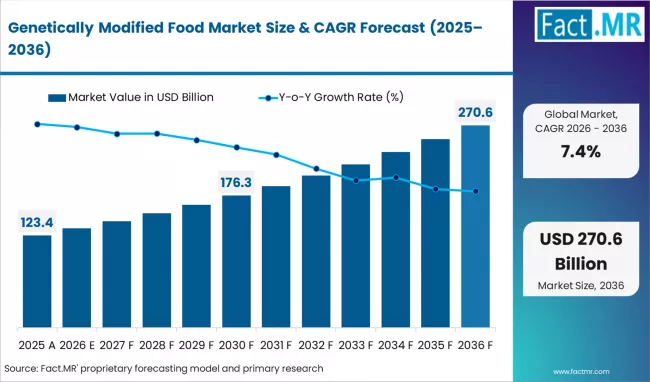
In 2025, the genetically modified food market was valued at USD 123.4 billion. Based on Fact MR analysis, demand for genetically modified food is estimated to grow to USD 132.5 billion in 2026 and USD 269.6 billion by 2036. FMR projects a CAGR of 7.4% during the forecast period.
The absolute dollar growth from 2026 to 2036 is USD 137.1 billion. This increase reflects steady expansion in global agricultural production systems rather than a fundamental transformation of the food supply structure. Genetically modified crops continue to be adopted for improved yield stability, pest resistance, and crop protection efficiency across large scale farming regions. Demand remains supported by expanding cultivation of genetically modified soybean, corn, and cotton used in food processing and animal feed production. Market growth is moderated by regulatory approval timelines, trade restrictions on genetically modified crops, and consumer labeling requirements in several developed food markets.
Brazil records the fastest expansion with a projected CAGR of 6.3%, supported by large scale cultivation of genetically modified soybean and corn across commercial farming operations. India follows with a CAGR of 6.1%, reflecting gradual adoption of genetically modified crop technologies within selected agricultural segments. Argentina grows at 5.9%, driven by its established export oriented soybean production industry. The United States shows a CAGR of 5.8%, supported by stable production of genetically modified corn and soybean used in food and feed supply chains. The United Kingdom and Canada record CAGRs of 5.6% and 5.5%, reflecting mature agricultural markets where genetically modified food products generate incremental supply growth. Regulatory scrutiny and consumer labeling requirements act as structural constraints across these developed markets.
Genetically Modified Food Market Market Value Analysis | Source: Fact.MR
Genetically Modified Food Market
| Metric | Details |
|---|---|
| Industry Size (2026E) | USD 132.5 billion |
| Industry Value (2036F) | USD 269.6 billion |
| CAGR (2026 to 2036) | 7.4% |
Source: Fact.MR analysis. Updated Mar 16, 2026
Genetically Modified Food Market Definition
The Genetically Modified Food Market includes food products derived from crops whose genetic material has been altered using biotechnology techniques. Genetic modification introduces specific traits such as pest resistance, herbicide tolerance, or improved crop yield. These foods are produced from genetically engineered crops such as soybean, maize, cottonseed, and canola that are processed into edible ingredients. Genetically modified food ingredients are widely used in packaged foods, cooking oils, animal feed products, and processed food manufacturing. The primary function of these products is to support efficient agricultural production and supply raw materials for large scale food processing industries.
Market Inclusions
This report covers global and regional market sizes for genetically modified food products with forecast analysis for the study period. The market is segmented by crop type including genetically modified soybean, maize, cottonseed, and canola. Application segments include processed food manufacturing, edible oil production, and animal feed supply chains. End users include food processing companies, agricultural processors, and packaged food manufacturers. The report also evaluates pricing patterns, agricultural production trends, and selected trade flow analysis across major producing and consuming regions.
Market Exclusions
The report excludes genetically modified crops used strictly for pharmaceutical or industrial biotechnology purposes. Agricultural seeds used only for planting are not included unless they enter the food processing supply chain. The scope also excludes fresh fruits and vegetables that are not genetically engineered. Research stage genetically modified organisms and laboratory development projects are outside the defined market scope, as the analysis focuses only on commercially produced genetically modified food ingredients and food related agricultural outputs.
Research Methodology
- Primary Research: Interviews were conducted with agricultural producers, food processing companies, biotechnology firms, and supply chain distributors.
- Desk Research: Public information was collected from agricultural statistics databases, government regulatory agencies, biotechnology industry publications, and company reports.
- Market-Sizing and Forecasting: A hybrid model combining bottom up production analysis with top down demand assessment across food processing industries was applied.
- Data Validation and Update Cycle: Findings were cross verified using multiple agricultural and industry data sources, with periodic updates conducted as new production and trade data becomes available.
Summary of the Genetically Modified Food Market
- Market Definition
- The market comprises food products and ingredients derived from crops whose genetic material has been modified through biotechnology techniques. These crops incorporate traits such as pest resistance, herbicide tolerance, and yield stability to support large scale agricultural production and food processing supply chains.
- Demand Drivers
- Expansion of global livestock production requiring consistent supply of genetically modified grains and oilseeds for animal feed.
- Adoption of biotechnology crops designed to improve agricultural yield and resistance to pests and herbicides.
- Increasing use of genetically modified soybean and corn in processed food manufacturing and edible oil production.
- Growth of large scale agricultural supply chains supporting food processing and feed production industries.
- Key Segments Analyzed
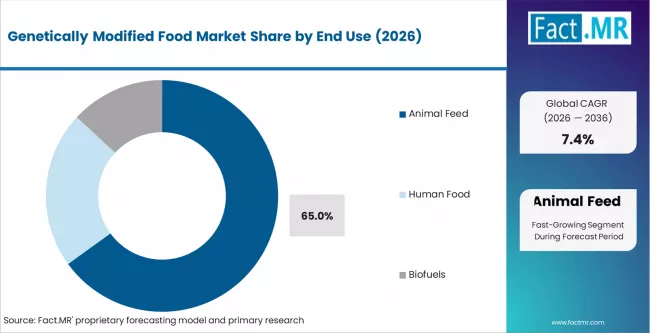
- End Use: Animal feed accounts for about 65% share due to extensive use of genetically modified crops in poultry, cattle, and aquaculture feed formulations.
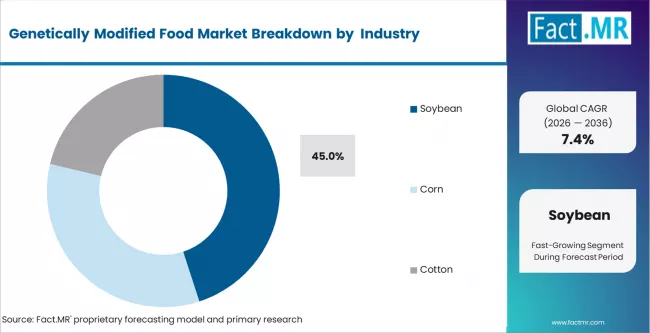
- Crop Type: Soybean represents roughly 45% share supported by its widespread cultivation and use in edible oils and livestock feed production.
- Trait: Herbicide tolerant and insect resistant crop traits represent widely adopted biotechnology characteristics in commercial agriculture.
- Geography: Brazil records the fastest expansion supported by large scale cultivation of genetically modified soybean and corn.
- Analyst Opinion at Fact MR
- Shambhu Nath Jha, Principal Consultant, Fact MR, opines, "In this updated edition of the Genetically Modified Food Market report, industry participants will observe that market demand remains closely connected to large scale agricultural production systems supplying global food and feed industries. Biotechnology crops continue to support yield stability and pest management across commercial farming operations. Companies that maintain advanced seed genetics platforms and strong regulatory compliance capabilities will retain competitive positions within agricultural biotechnology supply chains."
- Strategic Implications or Executive Takeaways
- Expand development of genetically modified crop varieties designed to improve yield stability and pest resistance.
- Strengthen regulatory compliance and documentation associated with genetically engineered food ingredients.
- Build distribution networks supporting seed supply and agricultural technology adoption across major farming regions.
- Invest in biotechnology research programs addressing evolving crop performance requirements and environmental conditions.
- Methodology
- Primary interviews conducted with agricultural producers, biotechnology firms, food processing companies, and agricultural distributors.
- Desk research based on agricultural statistics databases, government regulatory agencies, biotechnology industry publications, and company reports.
- Market sizing developed through a hybrid approach combining bottom up production analysis and top down demand assessment across food processing and feed industries.
- Findings validated through multiple agricultural data sources and expert consultations following Fact MR internal modeling standards.
Segmental Analysis
Genetically Modified Food Market Analysis by End Use
Genetically Modified Food Market Analysis By End Use | Source: Fact.MR
- Market Overview: Animal feed is projected to account for around 65% share of the genetically modified food market by 2026. Genetically modified crops are widely utilized in livestock feed formulations due to their high yield characteristics and resistance to pests and environmental stress. Feed producers rely on genetically modified grains and oilseeds to maintain stable supply for large scale poultry, cattle, and aquaculture production. The use of genetically modified crops in feed production supports consistent nutrient availability and cost efficiency in global livestock farming systems. Increasing demand for meat, dairy, and aquaculture products continues to sustain the role of genetically modified crops within commercial feed supply chains.
- Demand Drivers:
- Livestock Production Demand: Large scale poultry, cattle, and aquaculture industries require consistent feed supply, supporting strong utilization of genetically modified crops in feed production.
- High Yield Crop Output: Genetically modified crops are developed to deliver improved productivity and resistance to pests, supporting reliable raw material supply for feed manufacturers.
- Feed Cost Efficiency: The availability of high yield genetically modified grains and oilseeds contributes to cost stability in commercial livestock feed formulations.
Genetically Modified Food Market Analysis by Crop Type
Genetically Modified Food Market Analysis By Crop Type | Source: Fact.MR
- Market Overview: Soybean is expected to represent approximately 45% share of the genetically modified food market in 2026. Genetically modified soybean varieties are widely cultivated due to their resistance to herbicides and pests, allowing efficient crop management and stable yields. Soybean is used extensively in food processing, edible oil production, and livestock feed manufacturing. Large scale soybean cultivation across major agricultural regions supports its role as a primary genetically modified crop in global agricultural systems. The crop's high protein content and versatility in food and feed applications continue to sustain its demand.
- Demand Drivers:
- Widespread Agricultural Adoption: Farmers cultivate genetically modified soybean varieties to improve crop yield and manage weed control through herbicide tolerant traits.
- Feed and Food Processing Demand: Soybean is a key ingredient in livestock feed formulations and edible oil production within global food supply chains.
- Global Cultivation Scale: Large agricultural producers maintain extensive soybean cultivation areas, supporting the availability of genetically modified soybean supply for food and feed markets.
Genetically Modified Food Market Drivers, Restraints, and Opportunities
Genetically Modified Food Market Opportunity Matrix Growth Vs Value | Source: Fact.MR
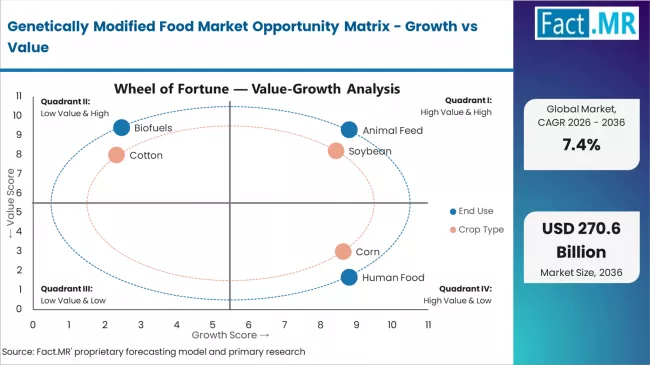
Fact MR analysis indicates that the genetically modified food market developed alongside advances in agricultural biotechnology designed to improve crop yield, pest resistance, and herbicide tolerance. Commercial adoption began in large-scale commodity crops where genetic modification reduced crop loss and improved farm productivity. The current market valuation reflects the scale of global agricultural supply chains where genetically modified soybeans, corn, and canola form key inputs for processed food manufacturing and animal feed production. Demand persists because genetically engineered crops allow consistent agricultural output in large farming systems that supply food processing industries.
A structural shift is occurring as traditional first-generation genetically modified crops face regulatory scrutiny and consumer resistance in several developed food markets. Commodity genetically modified ingredients remain widely used in animal feed and processed food manufacturing where cost efficiency remains a priority. At the same time, newer biotechnology applications such as gene-edited crops and trait-specific seed varieties command higher development costs and licensing fees. Even with stable cultivation volumes for conventional genetically modified crops, higher technology costs in advanced agricultural biotechnology support gradual value expansion within the market.
- Agricultural Yield Optimization: Farmers adopt genetically modified crops designed to resist pests and herbicides, allowing more stable agricultural production across large farming operations.
- Food Biotechnology Regulation: Regulatory frameworks such as the U.S. National Bioengineered Food Disclosure Standard and the European Union GMO Directive 2001/18/EC govern labeling, cultivation approval, and market access for genetically modified food products.
- Americas Crop Production: The United States, Brazil, and Argentina maintain extensive cultivation of genetically modified soybeans and corn that supply global feed and processed food industries.
Regional Analysis
The market analysis covers key global regions, including Latin America, South Asia, North America, and Western Europe. It is segmented geographically, with specific market dynamics for each region. The full report provides a detailed market attractiveness analysis.
.webp "Top Country Growth Comparison Genetically Modified Food Market Cagr (2026 2036)")
Top Country Growth Comparison Genetically Modified Food Market Cagr (2026 2036) | Source: Fact.MR
| Country | CAGR (2026-2036) |
|---|---|
| Brazil | 6.3% |
| India | 6.1% |
| Argentina | 5.9% |
| USA | 5.8% |
| United Kingdom | 5.6% |
| Canada | 5.5% |
Source: Fact.MR analysis. Updated Mar 16, 2026
Source: Fact MR (FMR) analysis, based on proprietary forecasting model and primary research
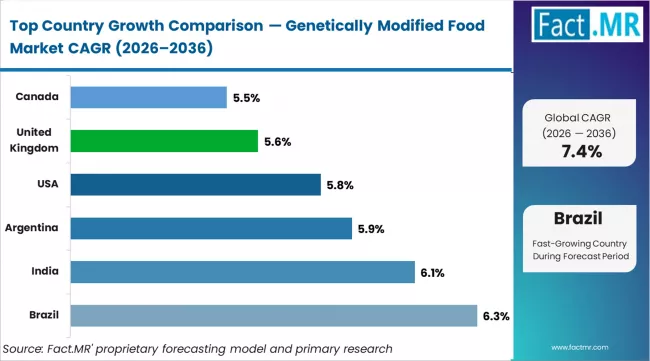
Genetically Modified Food Market Cagr Analysis By Country | Source: Fact.MR
Latin America
Brazil and Argentina represent major markets supported by large scale agricultural production, biotechnology crop adoption, and export oriented farming systems. Key companies include Bayer AG, Corteva Agriscience, and Syngenta Group.
- Brazil: Demand for genetically modified food in Brazil is projected to rise at 6.3% CAGR through 2036. Growth is supported by biotechnology crop cultivation programs approved by the National Biosafety Technical Commission (03-2025) and expansion of seed biotechnology solutions by Bayer AG (08-2025).
- Argentina: Demand for genetically modified food in Argentina is projected to rise at 5.9% CAGR through 2036. Growth is supported by agricultural biotechnology programs promoted by the Ministry of Agriculture (04-2025) and crop technology deployment by Syngenta Group (07-2025).
South Asia
India represents an important market supported by agricultural productivity programs, crop biotechnology adoption, and food security initiatives.
- India: Demand for genetically modified food in India is projected to rise at 6.1% CAGR through 2036. Growth is supported by agricultural biotechnology research programs promoted by the Department of Biotechnology (05-2025) and expansion of crop technology platforms by Corteva Agriscience (09-2025).
North America
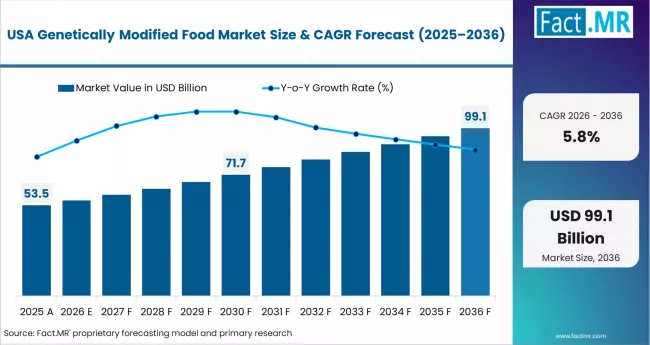
Genetically Modified Food Market Country Value Analysis | Source: Fact.MR
The USA and Canada represent key markets supported by biotechnology crop cultivation, food processing industries, and regulatory frameworks for genetically modified products.
- USA: Demand for genetically modified food in the U.S. is projected to rise at 5.8% CAGR through 2036. Growth is supported by biotechnology crop development programs promoted by the United States Department of Agriculture (03-2025) and expansion of genetically engineered seed technologies by Bayer AG (07-2025).
- Canada: Demand for genetically modified food in Canada is projected to rise at 5.5% CAGR through 2036. Growth is supported by agricultural biotechnology initiatives promoted by Agriculture and Agri Food Canada (04-2025) and crop biotechnology development by Corteva Agriscience (08-2025).
Western Europe
The United Kingdom represents a market supported by biotechnology research programs, food innovation initiatives, and regulatory developments in agricultural biotechnology.
- United Kingdom: Demand for genetically modified food in the UK is projected to rise at 5.6% CAGR through 2036. Growth is supported by agricultural biotechnology research initiatives promoted by the Department for Environment, Food and Rural Affairs (03-2025) and crop science research programs supported by Syngenta Group (07-2025).
Fact MR's analysis of the genetically modified food market in Latin America, South Asia, North America, and Western Europe consists of country-wise assessments that include Brazil, India, Argentina, the USA, the United Kingdom, and Canada. Readers can find detailed trends, regulatory updates, and company-specific investments shaping market growth in these countries.
Competitive Structure and Buyer Dynamics in the Genetically Modified Food Market
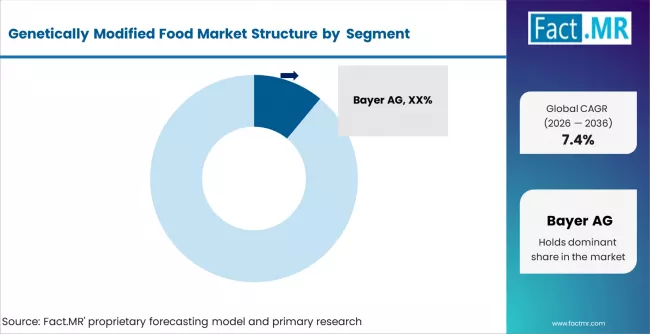
Genetically Modified Food Market Analysis By Company | Source: Fact.MR
The competitive structure of the Genetically Modified Food Market is moderately concentrated, with a limited number of global agricultural biotechnology firms controlling a substantial share of commercial seed technologies. Bayer AG, Corteva, Inc., Syngenta Group Co., Ltd., and BASF SE hold strong market positions through extensive biotechnology research programs, large seed portfolios, and global distribution networks. These companies supply genetically modified crop varieties used in large scale agriculture across major food producing regions. Additional participants such as KWS SAAT SE & Co. KGaA, Groupe Limagrain, and Origin Agritech Limited contribute through crop breeding programs and region specific seed development. Emerging biotechnology firms including Inari Agriculture, Inc., Tropic Biosciences UK Limited, and Pairwise Plants, LLC focus on advanced gene editing platforms and targeted crop improvement technologies. Competition in the market is primarily shaped by seed performance, yield stability, pest resistance, and regulatory approvals across agricultural markets.
Several companies maintain structural advantages through strong biotechnology research capabilities and extensive intellectual property portfolios related to seed genetics. Large agricultural biotechnology firms such as Bayer AG, Corteva, Inc., Syngenta Group Co., Ltd., and BASF SE benefit from vertically integrated operations that combine seed development, trait licensing, and crop protection products. Long term relationships with seed distributors and agricultural producers support consistent market access. Farmers and large agricultural producers typically diversify seed sourcing strategies to manage supply risks and evaluate crop performance across growing seasons. Procurement decisions often consider seed yield performance, agronomic support, and regulatory compliance within specific regions. This purchasing behavior limits excessive supplier pricing leverage, although companies with patented seed traits and strong genetic technology platforms retain moderate negotiating influence in commercial seed markets.
Key Players of the Genetically Modified Food Market
- Bayer AG
- Corteva, Inc.
- Syngenta Group Co., Ltd.
- BASF SE
- Inari Agriculture, Inc.
- Tropic Biosciences UK Limited
- Pairwise Plants, LLC
- KWS SAAT SE & Co. KGaA
- Groupe Limagrain
- Origin Agritech Limited
Report Scope
| Metric | Value |
|---|---|
| Quantitative Units | USD 132.5 billion (2026) to USD 269.6 billion (2036), at a CAGR of 7.4% |
| Market Definition | The genetically modified food market includes production, commercialization, and utilization of crops developed through genetic engineering to improve yield, resistance to pests and herbicides, and adaptability for food, feed, and biofuel applications. |
| Crop Type | Soybean, Corn, Cotton, Canola, Others |
| Trait Segmentation | Herbicide Tolerance, Insect Resistance, Stacked Traits, Others |
| End Use | Animal Feed, Human Food, Biofuels |
| Key Companies Profiled | Bayer AG, Corteva, Inc., Syngenta Group Co., Ltd., BASF SE, Inari Agriculture, Inc., Tropic Biosciences UK Limited, Pairwise Plants, LLC, KWS SAAT SE & Co. KGaA, Groupe Limagrain, Origin Agritech Limited |
| Forecast Period | 2026 to 2036 |
| Approach | Hybrid top-down and bottom-up market modeling validated through interviews with agricultural biotechnology firms and crop producers, supported by crop production data analysis, seed adoption benchmarking, and trade data evaluation. |
Source: Fact.MR analysis. Updated Mar 16, 2026
Bibliographies
- [1] U.S. Department of Agriculture. (2025). Biotechnology crop development programs.
- [2] National Biosafety Technical Commission, Brazil. (2025). Biotechnology crop cultivation programs.
- [3] Department of Biotechnology, India. (2025). Agricultural biotechnology research programs.
- [4] Ministry of Agriculture, Argentina. (2025). Agricultural biotechnology programs.
- [5] United States Department of Agriculture. (2023). National Bioengineered Food Disclosure Standard.
- [6] Bayer AG. (2025). Genetically engineered seed technologies expansion.
- [7] Corteva Agriscience. (2025). Crop biotechnology development.
- [8] Syngenta Group. (2025). Crop technology deployment.
- [9] Agriculture and Agri-Food Canada. (2025). Agricultural biotechnology initiatives.
This Report Addresses
- Market size estimation and revenue forecasts for the Genetically Modified Food Market from 2026 to 2036, supported by global crop production benchmarks and agricultural commodity trade indicators.
- Growth opportunity mapping across genetically modified soybean, corn, cotton, canola, and other biotechnology crop varieties cultivated for large scale agricultural supply chains.
- Segment and regional revenue forecasts covering animal feed production, human food processing, and biofuel applications across major agricultural and food processing regions.
- Competition strategy assessment including biotechnology seed trait development capability, agricultural technology integration, and seed licensing ecosystem benchmarking among leading agricultural biotechnology companies.
- Regulatory and agricultural policy impact analysis covering frameworks such as the United States National Bioengineered Food Disclosure Standard and the European Union GMO Directive governing genetically modified crop cultivation and food labeling.
- Market report delivery in PDF, Excel, PPT, and interactive dashboard formats designed for agricultural production planning, biotechnology investment evaluation, and food supply chain strategy development.
- Supply chain vulnerability assessments identifying biotechnology seed production concentration, global soybean and corn cultivation dependencies, and regional agricultural commodity supply risks affecting genetically modified food availability.
Segmentation
Genetically Modified Food Market Key Segments
-
Crop Type
- Soybean
- Corn
- Cotton
- Canola
- Others
-
Trait
- Herbicide Tolerance
- Insect Resistance
- Stacked Traits
- Others
-
End Use
- Animal Feed
- Human Food
- Biofuels
-
Region
- North America
- USA
- Canada
- Mexico
- Europe
- Germany
- UK
- France
- Italy
- Spain
- Nordic Countries
- BENELUX
- Rest of Europe
- Asia Pacific
- China
- Japan
- South Korea
- India
- Australia
- Rest of Asia Pacific
- Latin America
- Brazil
- Argentina
- Rest of Latin America
- Middle East and Africa
- Kingdom of Saudi Arabia
- United Arab Emirates
- South Africa
- Rest of Middle East and Africa
- Other Regions
- Oceania
- Central Asia
- Other Markets
- North America
Frequently Asked Questions
How large is the demand for Genetically Modified Food in the global market in 2026?
What will be the market size of Genetically Modified Food in the global market by 2036?
What is the expected demand growth for Genetically Modified Food in the global market between 2026 and 2036?
Which End Use Segment is poised to lead global demand by 2026?
Which Company is Identified as a Leading Participant in the Genetically Modified Food Market?
What is Driving Genetically Modified Food Demand in the United States?
What is the United States Growth Outlook in this Report?
Why is Brazil an Important Market for Genetically Modified Food?
What is the Brazil Growth Outlook in this Report?
What Factors Support Genetically Modified Food Demand in India?
What is the India Growth Outlook in this Report?
Why is Argentina Considered an Important Market for Genetically Modified Food?
What is the Argentina Growth Outlook in this Report?
What Factors Support Genetically Modified Food Consumption in the United Kingdom?
What is the United Kingdom Growth Outlook in this Report?
Why is Canada an Important Market for Genetically Modified Food in North America?
What is the Canada Growth Outlook in this Report?
What is Genetically Modified Food and What is It Mainly Used For?
What does Genetically Modified Food Market Mean in this Report?
What is Included in the Scope of this Genetically Modified Food Market Report?
What is Excluded from the Scope of this Report?
What does Market Forecast Mean on this Page?
How is the Genetically Modified Food Market Forecast Developed in this Report?
Who worked on this report


Preview the report firsthand - request a free sample
Free SampleGet the brochure for pricing and purchase details
Download PDF