Grape Seed and Skin Anti-Aging Complexes Market (2026 - 2036)
Grape Seed and Skin Anti-Aging Complexes Market Size and Share Forecast Outlook 2026 to 2036
Core Findings
Grape Seed and Skin Anti-Aging Complexes Market Forecast and Outlook 2026 to 2036
The grape seed and skin anti-aging complexes market records USD 445.0 million in 2026 and moves to USD 960.72 million by 2036 at an 8% CAGR.
Grape Seed and Skin Anti-Aging Complexes Market Key Takeaways
- Grape Seed and Skin Anti-Aging Complexes Market Value (2026): USD 445.0 million
- Grape Seed and Skin Anti-Aging Complexes Market Forecast Value (2036): USD 960.72 million
- Grape Seed and Skin Anti-Aging Complexes Market Forecast CAGR (2026-2036): 8%
- Leading Product Type in Grape Seed and Skin Anti-Aging Complexes Market: Grape seed extract
- Key Growth Regions in Grape Seed and Skin Anti-Aging Complexes Market: Asia Pacific, Europe, North America, Latin America
- Top Players in Grape Seed and Skin Anti-Aging Complexes Market: Givaudan, Nexira, Polyphenolics, Indena, Botanic Innovations.
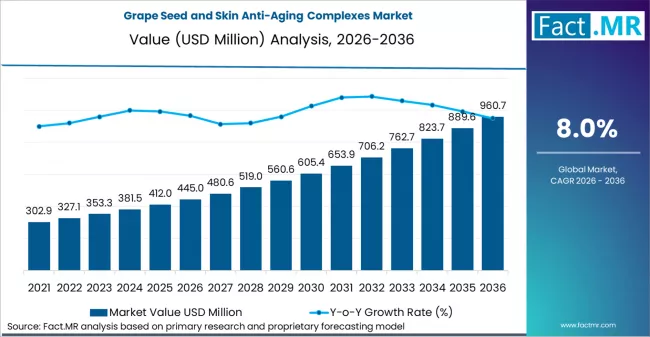
Demand sits inside long running supplement and beauty nutrition lines where ingredient change is avoided unless a problem appears. What keeps a supplier in place is not peak potency but how the extract behaves after months on shelf and across many production runs. Color shift, taste carryover, and sediment risk shape buying decisions. Wineries and processors that can hold narrow polyphenol bands across seasons secure repeat programs. Growth comes from wider use of the same complexes across more products and more countries, not from constant redesign of formulas.
Supply is managed with caution. Stock buffers matter because harvest quality varies. Some buyers prefer nearby processors to shorten lead times. Others accept longer routes in exchange for tighter batch control. Capacity additions tend to be conservative and follow proven demand. New lines only run once customers commit to multi year programs.
Grape Seed and Skin Anti-Aging Complexes Market
| Metric | Value |
|---|---|
| Market Value (2026) | USD 445 million |
| Forecast Value (2036) | USD 960.72 million |
| Forecast CAGR (2026-2036) | 8% |
Category
| Category | Segments |
|---|---|
| Product Type | Grape seed extract; Grape skin polyphenol complexes; Combined grape seed and skin anti-aging formulations; Other antioxidant ingredient blends |
| End Use | Dietary supplements and nutricosmetics; Functional anti-aging beverages; Beauty and wellness formulations; Sports and active wellness nutrition |
| Region | North America; Europe; Asia Pacific; Latin America; Middle East & Africa |
Segmental Analysis
Why Does Grape Seed Extract Continue to Anchor Most Formulation Programs in This Category?
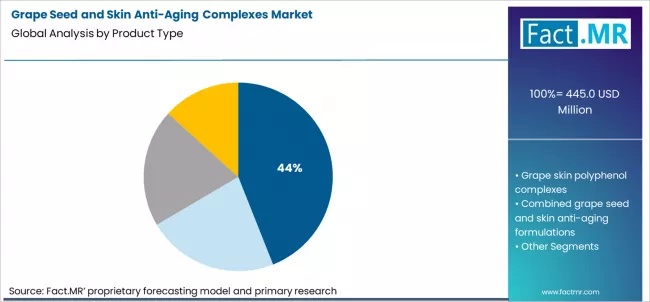
Formulation work in the grape seed and skin anti-aging complexes market remains centered on grape seed extract, which accounts for 44% of product type demand. This position reflects how developers balance concentration, stability, and sourcing consistency rather than brand positioning. Grape seed extract offers a well-defined polyphenol profile that fits single ingredient claims and multi ingredient systems without changing dosage logic. Quality control teams prefer this material because specification ranges and testing methods are already established across suppliers. Product pipelines often begin with this base before adding skin derived fractions or composite systems. Combined formulations and broader antioxidant blends attract interest, yet they usually enter portfolios as secondary options rather than as the starting point for volume planning.
What Keeps Dietary Supplements and Nutricosmetics at The Center of Consumption Patterns Here?
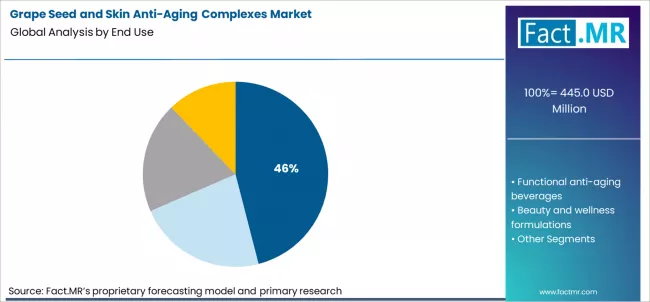
Usage in the grape seed and skin anti-aging complexes market is led by dietary supplements and nutricosmetics, which represent 46% of end use demand. This concentration follows consumer behavior around routine intake rather than product novelty. Anti-aging support is typically managed as a continuous program, which suits capsules, tablets, and measured powders more than episodic beverage formats. Retail channels reinforce this pattern because supplement categories are organized around repeat purchase cycles and long term usage. Brands also structure communication around consistency of intake instead of short interventions. Functional drinks and wellness blends remain active segments, yet they usually play supporting roles alongside the supplement driven core of the category.
What are the Drivers, Restraints, and Key Trends of the Grape Seed and Skin Anti-Aging Complexes Market?
- Drivers: Increasing consumer focus on anti-aging benefits and widespread use of grape seed extracts rich in proanthocyanidins for skin elasticity, firmness, and overall complexion support are expanding demand across nutricosmetic and skincare sectors.
- Restraint: Variability in active compound concentration among grape seed and skin extracts and strict limits on anti-aging claims constrain clear product positioning and slow uptake in mainstream retail channels.
- Trend 1: Greater integration of grape seed complexes with complementary vitamins, peptides, and plant actives to enhance skin resilience and antioxidant defense.
- Trend 2: Rising adoption of easy-to-use delivery forms such as capsules, syrups, and sachets designed for daily anti-aging routines.
Analysis of the Grape Seed and Skin Anti-Aging Complexes Market by Key Country
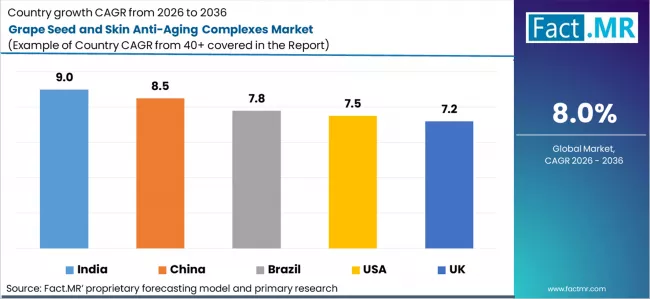
| Country | CAGR (2026-2036) |
|---|---|
| USA | 7.5% |
| UK | 7.2% |
| China | 8.5% |
| India | 9.0% |
| Brazil | 7.8% |
The report covers an in-depth analysis of 40+ countries; top-performing countries are highlighted below.
How Are Skin Aging Prevention Programs in USA Guiding Use of Grape Seed Complexes?
Skin focused ingestible programs in USA set the direction for use of grape seed based anti-aging complexes. The segment follows a growth path close to 7.5% per year through 2036. Product teams evaluate inputs using proanthocyanidin content and oxidation stability data. Contract manufacturers integrate these complexes into capsules powders and liquid formats. Distribution runs through specialty nutrition chains and controlled online platforms. Claims review passes through internal compliance checks.
- Supply agreements specify batch uniformity and traceability files. Importers maintain origin records covering grape source and processing method.
- Demand aligns with brand launch calendars. Procurement volumes reflect shelf placement decisions. Reorder timing follows sell through reports reviewed during category performance meetings.
Why Do Portfolio Refresh Cycles in UK Matter for Grape Seed Anti-Aging Complexes?
Range updates in UK influence how grape seed complexes enter finished beauty from within products. The segment advances at a pace near 7.2% per year through 2036. Development teams screen inputs using assay data and sensory tests. Regulatory review focuses on labeling language and ingredient status. Contract packers blend these materials into gummies capsules and powders. Pharmacy chains and specialist wellness stores define listing access. Buyers require steady supply backed by lot documentation.
- Import procedures include botanical origin files. Inventory plans follow promotion schedules. Portfolio reviews set near term volume changes.
- Long term supply contracts connect to category plans approved during management review cycles.
What Is Supporting Wider Adoption of Grape Seed Complexes in China?
Platform led beauty nutrition sales in China drive use of grape seed based anti-aging complexes. The segment moves on a track close to 8.5% annual expansion through 2036. Registration files require detailed composition and safety data. Local manufacturers incorporate these complexes into sachets tablets and liquid concentrates. Platform operators request proof of origin and quality testing. Importers maintain traceability covering grape sources and extraction methods. Production schedules align with campaign calendars.
- Inventory buffers rise ahead of peak promotion periods. Brand owners favor suppliers with stable delivery records. Pricing talks follow volume commitments.
- Market access depends on listing approvals and compliance checks completed during scheduled audits.
How Are Urban Focused Beauty Nutrition Lines in India Expanding Use of Grape Seed Complexes?
Urban oriented nutricosmetic lines in India increase use of grape seed based anti-aging complexes across skin support products. The segment progresses at a rate near 9.0% per year through 2036. Development teams test compatibility with local flavor systems and dosage formats. Regulatory review centers on ingredient approval status and claim wording. Contract manufacturers handle blending and filling under audited conditions. Distribution focuses on online platforms and specialty nutrition outlets. Import documentation covers botanical origin and processing steps.
- Brands request consistent active levels across shipments. Launch calendars set near term procurement volumes. Marketing budgets shape reorder timing.
- Suppliers holding local inventory gain preference during expansion cycles.
What Frames Commercial Demand for Grape Seed Complexes in Brazil?
Category planning in Brazil defines the route for grape seed complexes into ingestible skin aging support products. The segment records growth close to 7.8% per year through 2036. Formulators evaluate inputs using potency data and sensory profiles. Regulatory checks focus on ingredient registration and permitted claims. Contract packers produce capsules and drinkable formats for brand owners. Distribution runs through pharmacy chains and wellness retailers. Import files include origin certificates and quality test reports.
- Currency movement affects pricing discussions. Inventory plans follow retail promotion calendars. Brand owners prefer partners offering predictable lead times.
- New launches drive trial orders. Repeat volumes depend on sales performance reviews held during seasonal range planning.
How Are Supplier Positions Established in the Grape Seed and Skin Anti-Aging Complexes Market?
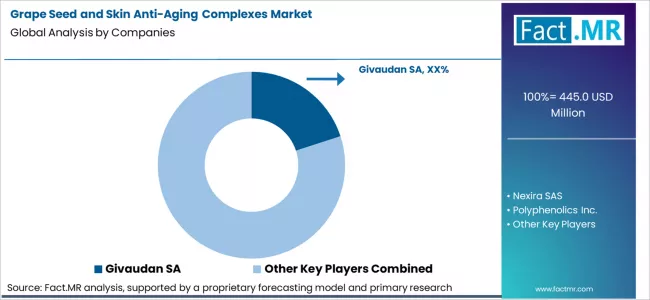
Specification control, not list pricing, determines competitive standing in the grape seed and skin anti-aging complexes market. Development teams first define target polyphenol ranges, solvent limits, and sensory constraints before any supplier is approached. Indena, Givaudan, Nexira, and Polyphenolics usually enter at this stage because they can document extraction methods and marker stability across production lots. Botanic Innovations participates where narrower profiles or customized fractions are required.
Buyers compare candidates using assay repeatability, traceability files, and residue management rather than brand recognition. Once an extract is written into a formula, procurement follows that specification across regions and product lines. Supplier changes mainly occur during reformulation programs or when sourcing structures are consolidated.
Key Players in the Grape Seed and Skin Anti-Aging Complexes Market
- Givaudan SA
- Nexira SAS
- Polyphenolics Inc.
- Botanic Innovations LLC
- Indena S.p.A.
Scope of the Report
| Items | Values |
|---|---|
| Quantitative Units (2026) | USD million |
| Product Type | Grape seed extract, grape skin polyphenol complexes, combined grape seed and skin anti-aging formulations, other antioxidant ingredient blends |
| End Use | Dietary supplements and nutricosmetics, functional anti-aging beverages, beauty and wellness formulations, sports and active wellness nutrition |
| Regions Covered | Asia Pacific, Europe, North America, Latin America, Middle East & Africa |
| Countries Covered | United States, Canada, Mexico, Germany, United Kingdom, France, Italy, Spain, Nordics, BENELUX, China, Japan, South Korea, India, Australia & New Zealand, ASEAN, Brazil, Chile, Saudi Arabia, Turkey, South Africa, and other regional markets |
| Key Companies Profiled | Givaudan, Nexira, Polyphenolics, Botanic Innovations, Indena S.p.A. |
| Additional Attributes | Dollar sales by product type and end use; polyphenol band control, oxidation stability, and sediment risk management; sourcing, batch repeatability, and capacity planning linked to harvest cycles and multi-year programs |
Grape Seed and Skin Anti-Aging Complexes Market Segmentation
-
Product Type :
- Grape seed extract
- Grape skin polyphenol complexes
- Combined grape seed and skin anti-aging formulations
- Other antioxidant ingredient blends
-
End Use :
- Dietary supplements and nutricosmetics
- Functional anti-aging beverages
- Beauty and wellness formulations
- Sports and active wellness nutrition
-
Region :
- Asia Pacific
- China
- Japan
- South Korea
- India
- Australia & New Zealand
- ASEAN
- Rest of Asia Pacific
- Europe
- Germany
- United Kingdom
- France
- Italy
- Spain
- Nordic
- BENELUX
- Rest of Europe
- North America
- United States
- Canada
- Mexico
- Latin America
- Brazil
- Chile
- Rest of Latin America
- Middle East & Africa
- Kingdom of Saudi Arabia
- Other GCC Countries
- Turkey
- South Africa
- Other African Union
- Rest of Middle East & Africa
- Asia Pacific
References
- U.S. Food and Drug Administration. (2024). Dietary supplements. U.S. Department of Health and Human Services.
- European Commission. (2025). Commission Implementing Regulation (EU) 2025/96 of 21 January 2025 approving grape seed extract (Vitis vinifera L.) as a basic substance. Official Journal of the European Union.
- European Food Safety Authority. (2023). Technical report on the outcome of the consultation with Member States and EFSA on the basic substance application for grape seed extract (Vitis vinifera L.). EFSA Supporting Publications 2023: EN-8435.
- National Center for Complementary and Integrative Health. (2025). Grape seed extract: Usefulness and safety. National Institutes of Health.
- European Food Safety Authority. (2024). Guidance on the characterization of botanicals and botanical preparations for use in food supplements. European Food Safety Authority.
Table of Content
- Executive Summary
- Global Market Outlook
- Demand to side Trends
- Supply to side Trends
- Technology Roadmap Analysis
- Analysis and Recommendations
- Market Overview
- Market Coverage / Taxonomy
- Market Definition / Scope / Limitations
- Market Background
- Market Dynamics
- Drivers
- Restraints
- Opportunity
- Trends
- Scenario Forecast
- Demand in Optimistic Scenario
- Demand in Likely Scenario
- Demand in Conservative Scenario
- Opportunity Map Analysis
- Product Life Cycle Analysis
- Supply Chain Analysis
- Investment Feasibility Matrix
- Value Chain Analysis
- PESTLE and Porter’s Analysis
- Regulatory Landscape
- Regional Parent Market Outlook
- Production and Consumption Statistics
- Import and Export Statistics
- Market Dynamics
- Global Market Analysis 2021 to 2025 and Forecast, 2026 to 2036
- Historical Market Size Value (USD Million) Analysis, 2021 to 2025
- Current and Future Market Size Value (USD Million) Projections, 2026 to 2036
- Y to o to Y Growth Trend Analysis
- Absolute $ Opportunity Analysis
- Global Market Pricing Analysis 2021 to 2025 and Forecast 2026 to 2036
- Global Market Analysis 2021 to 2025 and Forecast 2026 to 2036, By Product Type
- Introduction / Key Findings
- Historical Market Size Value (USD Million) Analysis By Product Type, 2021 to 2025
- Current and Future Market Size Value (USD Million) Analysis and Forecast By Product Type, 2026 to 2036
- Grape seed extract
- Grape skin polyphenol complexes
- Combined grape seed and skin anti-aging formulations
- Other antioxidant ingredient blends
- Grape seed extract
- Y to o to Y Growth Trend Analysis By Product Type, 2021 to 2025
- Absolute $ Opportunity Analysis By Product Type, 2026 to 2036
- Global Market Analysis 2021 to 2025 and Forecast 2026 to 2036, By End Use
- Introduction / Key Findings
- Historical Market Size Value (USD Million) Analysis By End Use, 2021 to 2025
- Current and Future Market Size Value (USD Million) Analysis and Forecast By End Use, 2026 to 2036
- Dietary supplements and nutricosmetics
- Functional anti-aging beverages
- Beauty and wellness formulations
- Sports and active wellness nutrition
- Dietary supplements and nutricosmetics
- Y to o to Y Growth Trend Analysis By End Use, 2021 to 2025
- Absolute $ Opportunity Analysis By End Use, 2026 to 2036
- Global Market Analysis 2021 to 2025 and Forecast 2026 to 2036, By Region
- Introduction
- Historical Market Size Value (USD Million) Analysis By Region, 2021 to 2025
- Current Market Size Value (USD Million) Analysis and Forecast By Region, 2026 to 2036
- North America
- Latin America
- Western Europe
- Eastern Europe
- East Asia
- South Asia and Pacific
- Middle East & Africa
- Market Attractiveness Analysis By Region
- North America Market Analysis 2021 to 2025 and Forecast 2026 to 2036, By Country
- Historical Market Size Value (USD Million) Trend Analysis By Market Taxonomy, 2021 to 2025
- Market Size Value (USD Million) Forecast By Market Taxonomy, 2026 to 2036
- By Country
- USA
- Canada
- Mexico
- By Product Type
- By End Use
- By Country
- Market Attractiveness Analysis
- By Country
- By Product Type
- By End Use
- Key Takeaways
- Latin America Market Analysis 2021 to 2025 and Forecast 2026 to 2036, By Country
- Historical Market Size Value (USD Million) Trend Analysis By Market Taxonomy, 2021 to 2025
- Market Size Value (USD Million) Forecast By Market Taxonomy, 2026 to 2036
- By Country
- Brazil
- Chile
- Rest of Latin America
- By Product Type
- By End Use
- By Country
- Market Attractiveness Analysis
- By Country
- By Product Type
- By End Use
- Key Takeaways
- Western Europe Market Analysis 2021 to 2025 and Forecast 2026 to 2036, By Country
- Historical Market Size Value (USD Million) Trend Analysis By Market Taxonomy, 2021 to 2025
- Market Size Value (USD Million) Forecast By Market Taxonomy, 2026 to 2036
- By Country
- Germany
- UK
- Italy
- Spain
- France
- Nordic
- BENELUX
- Rest of Western Europe
- By Product Type
- By End Use
- By Country
- Market Attractiveness Analysis
- By Country
- By Product Type
- By End Use
- Key Takeaways
- Eastern Europe Market Analysis 2021 to 2025 and Forecast 2026 to 2036, By Country
- Historical Market Size Value (USD Million) Trend Analysis By Market Taxonomy, 2021 to 2025
- Market Size Value (USD Million) Forecast By Market Taxonomy, 2026 to 2036
- By Country
- Russia
- Poland
- Hungary
- Balkan & Baltic
- Rest of Eastern Europe
- By Product Type
- By End Use
- By Country
- Market Attractiveness Analysis
- By Country
- By Product Type
- By End Use
- Key Takeaways
- East Asia Market Analysis 2021 to 2025 and Forecast 2026 to 2036, By Country
- Historical Market Size Value (USD Million) Trend Analysis By Market Taxonomy, 2021 to 2025
- Market Size Value (USD Million) Forecast By Market Taxonomy, 2026 to 2036
- By Country
- China
- Japan
- South Korea
- By Product Type
- By End Use
- By Country
- Market Attractiveness Analysis
- By Country
- By Product Type
- By End Use
- Key Takeaways
- South Asia and Pacific Market Analysis 2021 to 2025 and Forecast 2026 to 2036, By Country
- Historical Market Size Value (USD Million) Trend Analysis By Market Taxonomy, 2021 to 2025
- Market Size Value (USD Million) Forecast By Market Taxonomy, 2026 to 2036
- By Country
- India
- ASEAN
- Australia & New Zealand
- Rest of South Asia and Pacific
- By Product Type
- By End Use
- By Country
- Market Attractiveness Analysis
- By Country
- By Product Type
- By End Use
- Key Takeaways
- Middle East & Africa Market Analysis 2021 to 2025 and Forecast 2026 to 2036, By Country
- Historical Market Size Value (USD Million) Trend Analysis By Market Taxonomy, 2021 to 2025
- Market Size Value (USD Million) Forecast By Market Taxonomy, 2026 to 2036
- By Country
- Kingdom of Saudi Arabia
- Other GCC Countries
- Turkiye
- South Africa
- Other African Union
- Rest of Middle East & Africa
- By Product Type
- By End Use
- By Country
- Market Attractiveness Analysis
- By Country
- By Product Type
- By End Use
- Key Takeaways
- Key Countries Market Analysis
- USA
- Pricing Analysis
- Market Share Analysis, 2025
- By Product Type
- By End Use
- Canada
- Pricing Analysis
- Market Share Analysis, 2025
- By Product Type
- By End Use
- Mexico
- Pricing Analysis
- Market Share Analysis, 2025
- By Product Type
- By End Use
- Brazil
- Pricing Analysis
- Market Share Analysis, 2025
- By Product Type
- By End Use
- Chile
- Pricing Analysis
- Market Share Analysis, 2025
- By Product Type
- By End Use
- Germany
- Pricing Analysis
- Market Share Analysis, 2025
- By Product Type
- By End Use
- UK
- Pricing Analysis
- Market Share Analysis, 2025
- By Product Type
- By End Use
- Italy
- Pricing Analysis
- Market Share Analysis, 2025
- By Product Type
- By End Use
- Spain
- Pricing Analysis
- Market Share Analysis, 2025
- By Product Type
- By End Use
- France
- Pricing Analysis
- Market Share Analysis, 2025
- By Product Type
- By End Use
- India
- Pricing Analysis
- Market Share Analysis, 2025
- By Product Type
- By End Use
- ASEAN
- Pricing Analysis
- Market Share Analysis, 2025
- By Product Type
- By End Use
- Australia & New Zealand
- Pricing Analysis
- Market Share Analysis, 2025
- By Product Type
- By End Use
- China
- Pricing Analysis
- Market Share Analysis, 2025
- By Product Type
- By End Use
- Japan
- Pricing Analysis
- Market Share Analysis, 2025
- By Product Type
- By End Use
- South Korea
- Pricing Analysis
- Market Share Analysis, 2025
- By Product Type
- By End Use
- Russia
- Pricing Analysis
- Market Share Analysis, 2025
- By Product Type
- By End Use
- Poland
- Pricing Analysis
- Market Share Analysis, 2025
- By Product Type
- By End Use
- Hungary
- Pricing Analysis
- Market Share Analysis, 2025
- By Product Type
- By End Use
- Kingdom of Saudi Arabia
- Pricing Analysis
- Market Share Analysis, 2025
- By Product Type
- By End Use
- Turkiye
- Pricing Analysis
- Market Share Analysis, 2025
- By Product Type
- By End Use
- South Africa
- Pricing Analysis
- Market Share Analysis, 2025
- By Product Type
- By End Use
- USA
- Market Structure Analysis
- Competition Dashboard
- Competition Benchmarking
- Market Share Analysis of Top Players
- By Regional
- By Product Type
- By End Use
- Competition Analysis
- Competition Deep Dive
- Givaudan SA
- Overview
- Product Portfolio
- Profitability by Market Segments (Product/Age /Sales Channel/Region)
- Sales Footprint
- Strategy Overview
- Marketing Strategy
- Product Strategy
- Channel Strategy
- Nexira SAS
- Polyphenolics Inc.
- Botanic Innovations LLC
- Indena S.p.A.
- Givaudan SA
- Competition Deep Dive
- Assumptions & Acronyms Used
- Research Methodology
List Of Table
- Table 1: Global Market Value (USD Million) Forecast by Region, 2021 to 2036
- Table 2: Global Market Value (USD Million) Forecast by Product Type, 2021 to 2036
- Table 3: Global Market Value (USD Million) Forecast by End Use, 2021 to 2036
- Table 4: North America Market Value (USD Million) Forecast by Country, 2021 to 2036
- Table 5: North America Market Value (USD Million) Forecast by Product Type, 2021 to 2036
- Table 6: North America Market Value (USD Million) Forecast by End Use, 2021 to 2036
- Table 7: Latin America Market Value (USD Million) Forecast by Country, 2021 to 2036
- Table 8: Latin America Market Value (USD Million) Forecast by Product Type, 2021 to 2036
- Table 9: Latin America Market Value (USD Million) Forecast by End Use, 2021 to 2036
- Table 10: Western Europe Market Value (USD Million) Forecast by Country, 2021 to 2036
- Table 11: Western Europe Market Value (USD Million) Forecast by Product Type, 2021 to 2036
- Table 12: Western Europe Market Value (USD Million) Forecast by End Use, 2021 to 2036
- Table 13: Eastern Europe Market Value (USD Million) Forecast by Country, 2021 to 2036
- Table 14: Eastern Europe Market Value (USD Million) Forecast by Product Type, 2021 to 2036
- Table 15: Eastern Europe Market Value (USD Million) Forecast by End Use, 2021 to 2036
- Table 16: East Asia Market Value (USD Million) Forecast by Country, 2021 to 2036
- Table 17: East Asia Market Value (USD Million) Forecast by Product Type, 2021 to 2036
- Table 18: East Asia Market Value (USD Million) Forecast by End Use, 2021 to 2036
- Table 19: South Asia and Pacific Market Value (USD Million) Forecast by Country, 2021 to 2036
- Table 20: South Asia and Pacific Market Value (USD Million) Forecast by Product Type, 2021 to 2036
- Table 21: South Asia and Pacific Market Value (USD Million) Forecast by End Use, 2021 to 2036
- Table 22: Middle East & Africa Market Value (USD Million) Forecast by Country, 2021 to 2036
- Table 23: Middle East & Africa Market Value (USD Million) Forecast by Product Type, 2021 to 2036
- Table 24: Middle East & Africa Market Value (USD Million) Forecast by End Use, 2021 to 2036
List Of Figures
- Figure 1: Global Market Pricing Analysis
- Figure 2: Global Market Value (USD Million) Forecast 2021 to 2036
- Figure 3: Global Market Value Share and BPS Analysis by Product Type, 2026 and 2036
- Figure 4: Global Market Y to o to Y Growth Comparison by Product Type, 2026 to 2036
- Figure 5: Global Market Attractiveness Analysis by Product Type
- Figure 6: Global Market Value Share and BPS Analysis by End Use, 2026 and 2036
- Figure 7: Global Market Y to o to Y Growth Comparison by End Use, 2026 to 2036
- Figure 8: Global Market Attractiveness Analysis by End Use
- Figure 9: Global Market Value (USD Million) Share and BPS Analysis by Region, 2026 and 2036
- Figure 10: Global Market Y to o to Y Growth Comparison by Region, 2026 to 2036
- Figure 11: Global Market Attractiveness Analysis by Region
- Figure 12: North America Market Incremental Dollar Opportunity, 2026 to 2036
- Figure 13: Latin America Market Incremental Dollar Opportunity, 2026 to 2036
- Figure 14: Western Europe Market Incremental Dollar Opportunity, 2026 to 2036
- Figure 15: Eastern Europe Market Incremental Dollar Opportunity, 2026 to 2036
- Figure 16: East Asia Market Incremental Dollar Opportunity, 2026 to 2036
- Figure 17: South Asia and Pacific Market Incremental Dollar Opportunity, 2026 to 2036
- Figure 18: Middle East & Africa Market Incremental Dollar Opportunity, 2026 to 2036
- Figure 19: North America Market Value Share and BPS Analysis by Country, 2026 and 2036
- Figure 20: North America Market Value Share and BPS Analysis by Product Type, 2026 and 2036
- Figure 21: North America Market Y to o to Y Growth Comparison by Product Type, 2026 to 2036
- Figure 22: North America Market Attractiveness Analysis by Product Type
- Figure 23: North America Market Value Share and BPS Analysis by End Use, 2026 and 2036
- Figure 24: North America Market Y to o to Y Growth Comparison by End Use, 2026 to 2036
- Figure 25: North America Market Attractiveness Analysis by End Use
- Figure 26: Latin America Market Value Share and BPS Analysis by Country, 2026 and 2036
- Figure 27: Latin America Market Value Share and BPS Analysis by Product Type, 2026 and 2036
- Figure 28: Latin America Market Y to o to Y Growth Comparison by Product Type, 2026 to 2036
- Figure 29: Latin America Market Attractiveness Analysis by Product Type
- Figure 30: Latin America Market Value Share and BPS Analysis by End Use, 2026 and 2036
- Figure 31: Latin America Market Y to o to Y Growth Comparison by End Use, 2026 to 2036
- Figure 32: Latin America Market Attractiveness Analysis by End Use
- Figure 33: Western Europe Market Value Share and BPS Analysis by Country, 2026 and 2036
- Figure 34: Western Europe Market Value Share and BPS Analysis by Product Type, 2026 and 2036
- Figure 35: Western Europe Market Y to o to Y Growth Comparison by Product Type, 2026 to 2036
- Figure 36: Western Europe Market Attractiveness Analysis by Product Type
- Figure 37: Western Europe Market Value Share and BPS Analysis by End Use, 2026 and 2036
- Figure 38: Western Europe Market Y to o to Y Growth Comparison by End Use, 2026 to 2036
- Figure 39: Western Europe Market Attractiveness Analysis by End Use
- Figure 40: Eastern Europe Market Value Share and BPS Analysis by Country, 2026 and 2036
- Figure 41: Eastern Europe Market Value Share and BPS Analysis by Product Type, 2026 and 2036
- Figure 42: Eastern Europe Market Y to o to Y Growth Comparison by Product Type, 2026 to 2036
- Figure 43: Eastern Europe Market Attractiveness Analysis by Product Type
- Figure 44: Eastern Europe Market Value Share and BPS Analysis by End Use, 2026 and 2036
- Figure 45: Eastern Europe Market Y to o to Y Growth Comparison by End Use, 2026 to 2036
- Figure 46: Eastern Europe Market Attractiveness Analysis by End Use
- Figure 47: East Asia Market Value Share and BPS Analysis by Country, 2026 and 2036
- Figure 48: East Asia Market Value Share and BPS Analysis by Product Type, 2026 and 2036
- Figure 49: East Asia Market Y to o to Y Growth Comparison by Product Type, 2026 to 2036
- Figure 50: East Asia Market Attractiveness Analysis by Product Type
- Figure 51: East Asia Market Value Share and BPS Analysis by End Use, 2026 and 2036
- Figure 52: East Asia Market Y to o to Y Growth Comparison by End Use, 2026 to 2036
- Figure 53: East Asia Market Attractiveness Analysis by End Use
- Figure 54: South Asia and Pacific Market Value Share and BPS Analysis by Country, 2026 and 2036
- Figure 55: South Asia and Pacific Market Value Share and BPS Analysis by Product Type, 2026 and 2036
- Figure 56: South Asia and Pacific Market Y to o to Y Growth Comparison by Product Type, 2026 to 2036
- Figure 57: South Asia and Pacific Market Attractiveness Analysis by Product Type
- Figure 58: South Asia and Pacific Market Value Share and BPS Analysis by End Use, 2026 and 2036
- Figure 59: South Asia and Pacific Market Y to o to Y Growth Comparison by End Use, 2026 to 2036
- Figure 60: South Asia and Pacific Market Attractiveness Analysis by End Use
- Figure 61: Middle East & Africa Market Value Share and BPS Analysis by Country, 2026 and 2036
- Figure 62: Middle East & Africa Market Value Share and BPS Analysis by Product Type, 2026 and 2036
- Figure 63: Middle East & Africa Market Y to o to Y Growth Comparison by Product Type, 2026 to 2036
- Figure 64: Middle East & Africa Market Attractiveness Analysis by Product Type
- Figure 65: Middle East & Africa Market Value Share and BPS Analysis by End Use, 2026 and 2036
- Figure 66: Middle East & Africa Market Y to o to Y Growth Comparison by End Use, 2026 to 2036
- Figure 67: Middle East & Africa Market Attractiveness Analysis by End Use
- Figure 68: Global Market - Tier Structure Analysis
- Figure 69: Global Market - Company Share Analysis
- FAQs -
How big is the grape seed and skin anti-aging complexes market in 2026?
The global grape seed and skin anti-aging complexes market is estimated to be valued at USD 445.0 million in 2026.
What will be the size of grape seed and skin anti-aging complexes market in 2036?
The market size for the grape seed and skin anti-aging complexes market is projected to reach USD 960.7 million by 2036.
How much will be the grape seed and skin anti-aging complexes market growth between 2026 and 2036?
The grape seed and skin anti-aging complexes market is expected to grow at a 8.0% CAGR between 2026 and 2036.
What are the key product types in the grape seed and skin anti-aging complexes market?
The key product types in grape seed and skin anti-aging complexes market are grape seed extract, grape skin polyphenol complexes, combined grape seed and skin anti-aging formulations and other antioxidant ingredient blends.
Which end use segment to contribute significant share in the grape seed and skin anti-aging complexes market in 2026?
In terms of end use, dietary supplements and nutricosmetics segment to command 46.0% share in the grape seed and skin anti-aging complexes market in 2026.