Green Solvents for Industrial Cleaning Market
Green Solvents for Industrial Cleaning Market Size and Share Forecast Outlook 2026 to 2036
Green solvents for industrial cleaning market is projected to grow from USD 0.7 billion in 2026 to USD 1.6 billion by 2036, at a CAGR of 8.5%. Bio-Based Glycol Ethers & Esters will dominate with a 30.0% market share, while industrial equipment & machinery cleaning will lead the application segment with a 32.0% share.
Green Solvents for Industrial Cleaning Market Forecast and Outlook 2026 to 2036
The global market for green solvents in industrial cleaning is projected to reach USD 1.56 billion by 2036. The market is valued at USD 0.69 billion in 2026 and is set to rise at a CAGR of 8.5% throughout the forecast period.
By solvent type, bio-based glycol ethers and esters hold a leading 30% share. The application for industrial equipment and machinery cleaning represents the dominant segment at 32%. Manufacturing and heavy engineering is the foremost end-use industry, accounting for a 28% share.
Key Takeaways from the Green Solvents for Industrial Cleaning Market
- Market Value for 2026: USD 0.69 Billion
- Market Value for 2036: USD 1.56 Billion
- Forecast CAGR (2026-2036): 8.5%
- Leading Solvent Type Share (2026): Bio-Based Glycol Ethers & Esters (30%)
- Leading Application Share (2026): Industrial Equipment & Machinery Cleaning (32%)
- Leading End-Use Industry Share (2026): Manufacturing & Heavy Engineering (28%)
- Key Players in the Market: Dow Inc., BASF SE, Solvay S.A., Corbion N.V., LyondellBasell Industries N.V.
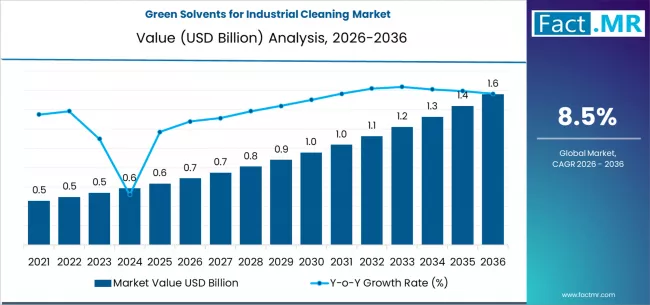
Growth is fundamentally driven by stringent global regulations on VOC emissions and hazardous air pollutants, coupled with a strong industrial shift toward sustainable and safer material inputs. Manufacturers are actively replacing traditional halogenated and petroleum-based solvents with high-performance, environmentally preferable alternatives.
Green solvents, derived from renewable feedstocks and designed for low toxicity and biodegradability, are critical for maintaining industrial hygiene and performance while reducing environmental footprint and workplace hazards. Their adoption is central to achieving regulatory compliance, improving workplace safety, and meeting corporate sustainability targets across diverse manufacturing and maintenance operations.
Green Solvents for Industrial Cleaning Market
| Metric | Value |
|---|---|
| Market Value (2026) | USD 0.69 Billion |
| Market Forecast Value (2036) | USD 1.56 Billion |
| Forecast CAGR (2026-2036) | 8.5% |
Category
| Category | Segments |
|---|---|
| Solvent Type | Bio-Based Glycol Ethers & Esters, Bio-Based Alcohols (Ethanol, Butanol), d-Limonene & Terpene-Based Solvents, Bio-Based Hydrocarbon/Methyl Soyate Solvents, Other Green & Low-VOC Solvents |
| Application | Industrial Equipment & Machinery Cleaning, Metal Parts Degreasing & Surface Prep, Electronics & Precision Cleaning, Automotive & Transportation Maintenance, Other Industrial & Institutional Cleaning |
| End-Use Industry | Manufacturing & Heavy Engineering, Automotive & Aerospace, Electronics & Semiconductor, Chemicals, Pharma & Food Processing, Other Industrial & Commercial Users |
| Region | North America, Latin America, Western Europe, Eastern Europe, East Asia, South Asia & Pacific, MEA |
Segmental Analysis
By Solvent Type, Which Chemistry Balances Performance with Sustainability?
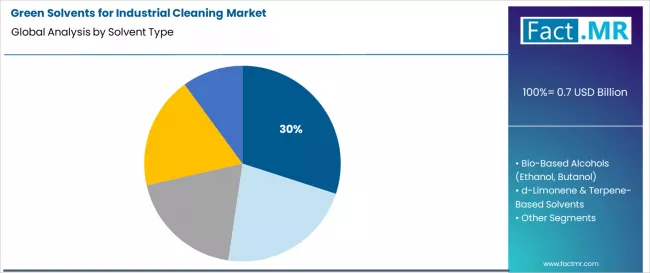
Bio-based glycol ethers and esters lead the segment with a 30% share. Their dominance stems from their ability to effectively dissolve oils, greases, and resins while offering favorable properties like low vapor pressure, high boiling points, and good water miscibility.
Derived from bio-ethanol or other renewable resources, they provide a nearly drop-in performance replacement for conventional ethylene and propylene glycol ethers, making them a preferred choice for formulators and end-users seeking to reduce VOC content without compromising cleaning efficacy in paints, inks, and degreasers.
By Application, Where is the Demand for High-Volume, Effective Cleaning Most Pronounced?
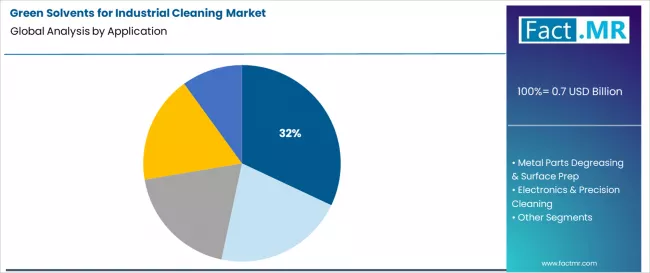
Industrial equipment and machinery cleaning represents the largest application segment at 32%. Regular maintenance cleaning in manufacturing plants, power generation facilities, and processing units requires large volumes of effective cleaners to remove built-up grime, lubricants, and processing residues.
The shift toward green solvents in this space is driven by the need to improve worker safety in enclosed spaces, reduce hazardous waste streams, and comply with indoor air quality regulations, making it a primary driver of bulk demand.
By End-Use Industry, Which Sector Drives Adoption Through Scale and Regulation?
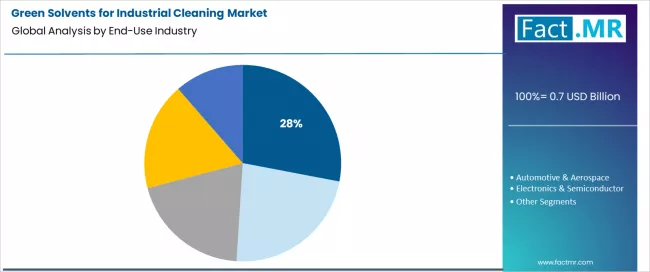
Manufacturing and heavy engineering leads the end-use sector with a 28% share. This broad sector encompasses a vast range of cleaning applications, from factory floor maintenance to component washing. The scale of operations means that solvent choices have significant implications for overall environmental compliance and worker health metrics.
Increasing pressure from supply chain mandates for greener chemistry and the sector's visibility in sustainability reporting make it a key early adopter and volume driver for green solvent formulations.
What are the Drivers, Restraints, and Key Trends of the Green Solvents for Industrial Cleaning Market?
The primary market driver is the global tightening of regulations limiting VOC emissions and the use of hazardous air pollutants (HAPs) like n-methyl-2-pyrrolidone (NMP) and trichloroethylene (TCE). Regulations such as the EU's VOC Directive and the US EPA's Significant New Alternatives Policy (SNAP) program directly incentivize substitution. Additionally, corporate sustainability goals and the demand for safer workplaces free from harsh chemical exposures are powerful market pull factors.
A significant market restraint is the higher upfront cost of many green solvents compared to established petroleum-based alternatives. Performance parity in niche, demanding applications can also be a hurdle, as some green solvents may have different evaporation rates or material compatibility profiles. Furthermore, the diversity of "green" certifications and definitions can create confusion for purchasers, potentially slowing adoption decisions.
Key trends include the development of second-generation bio-based solvents with enhanced performance tailored for specific soil types. There is growing innovation in solvent blends that combine multiple green chemistries to achieve synergistic cleaning power. The market is moving toward circular economy models, including solvent recovery and recycling services for green chemistries. Digital tools and life-cycle assessment (LCA) data are also becoming crucial for formulators and end-users to validate the environmental claims of green solvent products.
Analysis of the Green Solvents for Industrial Cleaning Market by Key Countries
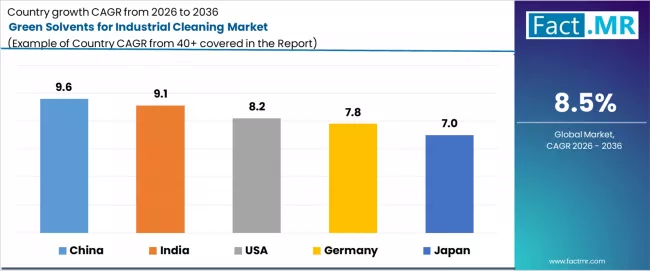
| Country | CAGR (2026-2036) |
|---|---|
| China | 9.60% |
| India | 9.10% |
| USA | 8.20% |
| Germany | 7.80% |
| Japan | 7.00% |
How are China's Manufacturing Policies and Environmental Goals Shaping Demand?
China's leading CAGR of 9.60% is fueled by its dual focus on maintaining manufacturing supremacy while enforcing its ecological civilization and dual carbon goals. National policies promoting green manufacturing and stricter enforcement of VOC emission standards compel industries to seek compliant alternatives. The sheer scale of China's industrial base translates this regulatory push into massive, sustained demand for green cleaning chemistries.
What Drives India's High Growth in the Green Solvents Segment?
Rapid industrialization and a corresponding strengthening of environmental regulations, such as the National Clean Air Programme (NCAP), underpin India’s 9.10% growth. The growth of automotive, electronics, and pharmaceutical manufacturing, sectors sensitive to both cleanliness and sustainability, creates strong demand. Government initiatives promoting bio-based products and increasing awareness of occupational health further accelerate market adoption.
How does the USA's Regulatory and Innovation Ecosystem Influence the Market?
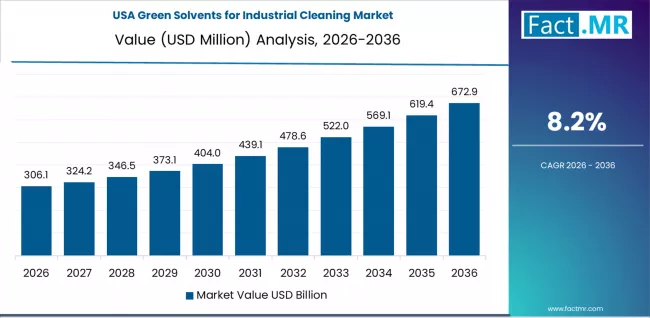
A mature regulatory framework (e.g., EPA SNAP, state-level VOC rules) and a strong culture of corporate sustainability support the USA’s 8.20% growth. Demand is driven by compliance needs, liability reduction, and innovation from chemical companies developing advanced bio-based platforms. The presence of large automotive and aerospace industries, which are early adopters of green cleaning for maintenance and production, also sustains a robust market.
Why is Germany a Key Market for High-Performance Green Formulations?
Germany's 7.80% CAGR reflects its stringent enforcement of EU chemical regulations (REACH, VOC Directive) and its leadership in advanced manufacturing and engineering. German industries demand green solvents that deliver uncompromised performance for precision cleaning and degreasing in high-tech applications. This focus on technical excellence and verifiable sustainability creates a sophisticated market for advanced, certified green solvent products.
What Role does Japan's High-Tech Manufacturing Sector Play?
Japan's 7.00% growth is anchored in its world-leading electronics, semiconductor, and precision equipment industries. These sectors require ultra-pure cleaning processes and are highly motivated to eliminate hazardous chemical risks to workers and products. The need for reliable, high-purity, and effective green solvents for precision cleaning drives continuous innovation and adoption within Japan's specialized industrial base.
Competitive Landscape of the Green Solvents for Industrial Cleaning Market
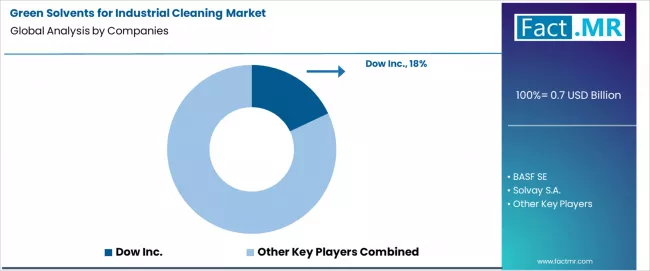
Large, integrated chemical companies leveraging their biorefining and biotechnology capabilities to produce green solvent platforms characterize the competitive landscape. Leaders like Dow and BASF compete on the strength of their renewable feedstock access, product performance portfolios, and ability to provide consistent, large-scale supply.
Specialty chemical firms like Corbion and Solvay focus on innovative, niche bio-based chemistries. Competition centers on achieving credible third-party certifications (e.g., USDA BioPreferred, EU Ecolabel), demonstrating performance equivalence in key applications, and providing strong technical support to help customers reformulate their cleaning products and processes.
Key Players in the Green Solvents for Industrial Cleaning Market
- Dow Inc.
- BASF SE
- Solvay S.A.
- Corbion N.V.
- LyondellBasell Industries N.V.
Scope of Report
| Items | Values |
|---|---|
| Quantitative Units | USD Billion |
| Solvent Type | Bio-Glycol Ethers, Bio-Alcohols, Terpenes, Bio-Hydrocarbons, Other Green Solvents |
| Application | Equipment Cleaning, Metal Degreasing, Precision Cleaning, Automotive Maintenance, Other |
| End-Use Industry | Manufacturing, Automotive/Aerospace, Electronics, Chemicals/Pharma/Food, Other |
| Key Countries | China, India, USA, Germany, Japan |
| Key Companies | Dow Inc., BASF SE, Solvay S.A., Corbion, LyondellBasell |
| Additional Analysis | Analysis of VOC content and regulatory classifications; performance benchmarking against traditional solvents; feedstock analysis (sugar, vegetable oil, citrus) and sustainability; formulation challenges and compatibility; total cost of ownership analysis including waste disposal. |
Market by Segments
-
Solvent Type :
- Bio-Based Glycol Ethers & Esters
- Bio-Based Alcohols (Ethanol, Butanol)
- d-Limonene & Terpene-Based Solvents
- Bio-Based Hydrocarbon / Methyl Soyate Solvents
- Other Green & Low-VOC Solvents
-
Application :
- Industrial Equipment & Machinery Cleaning
- Metal Parts Degreasing & Surface Prep
- Electronics & Precision Cleaning
- Automotive & Transportation Maintenance
- Other Industrial & Institutional Cleaning
-
End-Use Industry :
- Manufacturing & Heavy Engineering
- Automotive & Aerospace
- Electronics & Semiconductor
- Chemicals, Pharma & Food Processing
- Other Industrial & Commercial Users
-
Region :
-
North America
- USA
- Canada
-
Latin America
- Brazil
- Mexico
- Argentina
- Rest of Latin America
-
Western Europe
- Germany
- UK
- France
- Spain
- Italy
- BENELUX
- Rest of Western Europe
-
Eastern Europe
- Russia
- Poland
- Czech Republic
- Rest of Eastern Europe
-
East Asia
- China
- Japan
- South Korea
- Rest of East Asia
-
South Asia & Pacific
- India
- ASEAN
- Australia
- Rest of South Asia & Pacific
-
MEA
- Saudi Arabia
- UAE
- Turkiye
- Rest of MEA
-
Table of Content
- Executive Summary
- Global Market Outlook
- Demand to side Trends
- Supply to side Trends
- Technology Roadmap Analysis
- Analysis and Recommendations
- Market Overview
- Market Coverage / Taxonomy
- Market Definition / Scope / Limitations
- Market Background
- Market Dynamics
- Drivers
- Restraints
- Opportunity
- Trends
- Scenario Forecast
- Demand in Optimistic Scenario
- Demand in Likely Scenario
- Demand in Conservative Scenario
- Opportunity Map Analysis
- Product Life Cycle Analysis
- Supply Chain Analysis
- Investment Feasibility Matrix
- Value Chain Analysis
- PESTLE and Porter’s Analysis
- Regulatory Landscape
- Regional Parent Market Outlook
- Production and Consumption Statistics
- Import and Export Statistics
- Market Dynamics
- Global Market Analysis 2021 to 2025 and Forecast, 2026 to 2036
- Historical Market Size Value (USD Million) Analysis, 2021 to 2025
- Current and Future Market Size Value (USD Million) Projections, 2026 to 2036
- Y to o to Y Growth Trend Analysis
- Absolute $ Opportunity Analysis
- Global Market Pricing Analysis 2021 to 2025 and Forecast 2026 to 2036
- Global Market Analysis 2021 to 2025 and Forecast 2026 to 2036, By Solvent Type
- Introduction / Key Findings
- Historical Market Size Value (USD Million) Analysis By Solvent Type, 2021 to 2025
- Current and Future Market Size Value (USD Million) Analysis and Forecast By Solvent Type, 2026 to 2036
- Bio-Based Glycol Ethers & Esters
- Bio-Based Alcohols (Ethanol, Butanol)
- d-Limonene & Terpene-Based Solvents
- Bio-Based Hydrocarbon / Methyl Soyate Solvents
- Other Green & Low-VOC Solvents
- Bio-Based Glycol Ethers & Esters
- Y to o to Y Growth Trend Analysis By Solvent Type, 2021 to 2025
- Absolute $ Opportunity Analysis By Solvent Type, 2026 to 2036
- Global Market Analysis 2021 to 2025 and Forecast 2026 to 2036, By Application
- Introduction / Key Findings
- Historical Market Size Value (USD Million) Analysis By Application, 2021 to 2025
- Current and Future Market Size Value (USD Million) Analysis and Forecast By Application, 2026 to 2036
- Industrial Equipment & Machinery Cleaning
- Metal Parts Degreasing & Surface Prep
- Electronics & Precision Cleaning
- Automotive & Transportation Maintenance
- Other Industrial & Institutional Cleaning
- Industrial Equipment & Machinery Cleaning
- Y to o to Y Growth Trend Analysis By Application, 2021 to 2025
- Absolute $ Opportunity Analysis By Application, 2026 to 2036
- Global Market Analysis 2021 to 2025 and Forecast 2026 to 2036, By End-Use Industry
- Introduction / Key Findings
- Historical Market Size Value (USD Million) Analysis By End-Use Industry, 2021 to 2025
- Current and Future Market Size Value (USD Million) Analysis and Forecast By End-Use Industry, 2026 to 2036
- Manufacturing & Heavy Engineering
- Automotive & Aerospace
- Electronics & Semiconductor
- Chemicals, Pharma & Food Processing
- Other Industrial & Commercial Users
- Manufacturing & Heavy Engineering
- Y to o to Y Growth Trend Analysis By End-Use Industry, 2021 to 2025
- Absolute $ Opportunity Analysis By End-Use Industry, 2026 to 2036
- Global Market Analysis 2021 to 2025 and Forecast 2026 to 2036, By Region
- Introduction
- Historical Market Size Value (USD Million) Analysis By Region, 2021 to 2025
- Current Market Size Value (USD Million) Analysis and Forecast By Region, 2026 to 2036
- North America
- Latin America
- Western Europe
- Eastern Europe
- East Asia
- South Asia and Pacific
- Middle East & Africa
- Market Attractiveness Analysis By Region
- North America Market Analysis 2021 to 2025 and Forecast 2026 to 2036, By Country
- Historical Market Size Value (USD Million) Trend Analysis By Market Taxonomy, 2021 to 2025
- Market Size Value (USD Million) Forecast By Market Taxonomy, 2026 to 2036
- By Country
- USA
- Canada
- Mexico
- By Solvent Type
- By Application
- By End-Use Industry
- By Country
- Market Attractiveness Analysis
- By Country
- By Solvent Type
- By Application
- By End-Use Industry
- Key Takeaways
- Latin America Market Analysis 2021 to 2025 and Forecast 2026 to 2036, By Country
- Historical Market Size Value (USD Million) Trend Analysis By Market Taxonomy, 2021 to 2025
- Market Size Value (USD Million) Forecast By Market Taxonomy, 2026 to 2036
- By Country
- Brazil
- Chile
- Rest of Latin America
- By Solvent Type
- By Application
- By End-Use Industry
- By Country
- Market Attractiveness Analysis
- By Country
- By Solvent Type
- By Application
- By End-Use Industry
- Key Takeaways
- Western Europe Market Analysis 2021 to 2025 and Forecast 2026 to 2036, By Country
- Historical Market Size Value (USD Million) Trend Analysis By Market Taxonomy, 2021 to 2025
- Market Size Value (USD Million) Forecast By Market Taxonomy, 2026 to 2036
- By Country
- Germany
- UK
- Italy
- Spain
- France
- Nordic
- BENELUX
- Rest of Western Europe
- By Solvent Type
- By Application
- By End-Use Industry
- By Country
- Market Attractiveness Analysis
- By Country
- By Solvent Type
- By Application
- By End-Use Industry
- Key Takeaways
- Eastern Europe Market Analysis 2021 to 2025 and Forecast 2026 to 2036, By Country
- Historical Market Size Value (USD Million) Trend Analysis By Market Taxonomy, 2021 to 2025
- Market Size Value (USD Million) Forecast By Market Taxonomy, 2026 to 2036
- By Country
- Russia
- Poland
- Hungary
- Balkan & Baltic
- Rest of Eastern Europe
- By Solvent Type
- By Application
- By End-Use Industry
- By Country
- Market Attractiveness Analysis
- By Country
- By Solvent Type
- By Application
- By End-Use Industry
- Key Takeaways
- East Asia Market Analysis 2021 to 2025 and Forecast 2026 to 2036, By Country
- Historical Market Size Value (USD Million) Trend Analysis By Market Taxonomy, 2021 to 2025
- Market Size Value (USD Million) Forecast By Market Taxonomy, 2026 to 2036
- By Country
- China
- Japan
- South Korea
- By Solvent Type
- By Application
- By End-Use Industry
- By Country
- Market Attractiveness Analysis
- By Country
- By Solvent Type
- By Application
- By End-Use Industry
- Key Takeaways
- South Asia and Pacific Market Analysis 2021 to 2025 and Forecast 2026 to 2036, By Country
- Historical Market Size Value (USD Million) Trend Analysis By Market Taxonomy, 2021 to 2025
- Market Size Value (USD Million) Forecast By Market Taxonomy, 2026 to 2036
- By Country
- India
- ASEAN
- Australia & New Zealand
- Rest of South Asia and Pacific
- By Solvent Type
- By Application
- By End-Use Industry
- By Country
- Market Attractiveness Analysis
- By Country
- By Solvent Type
- By Application
- By End-Use Industry
- Key Takeaways
- Middle East & Africa Market Analysis 2021 to 2025 and Forecast 2026 to 2036, By Country
- Historical Market Size Value (USD Million) Trend Analysis By Market Taxonomy, 2021 to 2025
- Market Size Value (USD Million) Forecast By Market Taxonomy, 2026 to 2036
- By Country
- Kingdom of Saudi Arabia
- Other GCC Countries
- Turkiye
- South Africa
- Other African Union
- Rest of Middle East & Africa
- By Solvent Type
- By Application
- By End-Use Industry
- By Country
- Market Attractiveness Analysis
- By Country
- By Solvent Type
- By Application
- By End-Use Industry
- Key Takeaways
- Key Countries Market Analysis
- USA
- Pricing Analysis
- Market Share Analysis, 2025
- By Solvent Type
- By Application
- By End-Use Industry
- Canada
- Pricing Analysis
- Market Share Analysis, 2025
- By Solvent Type
- By Application
- By End-Use Industry
- Mexico
- Pricing Analysis
- Market Share Analysis, 2025
- By Solvent Type
- By Application
- By End-Use Industry
- Brazil
- Pricing Analysis
- Market Share Analysis, 2025
- By Solvent Type
- By Application
- By End-Use Industry
- Chile
- Pricing Analysis
- Market Share Analysis, 2025
- By Solvent Type
- By Application
- By End-Use Industry
- Germany
- Pricing Analysis
- Market Share Analysis, 2025
- By Solvent Type
- By Application
- By End-Use Industry
- UK
- Pricing Analysis
- Market Share Analysis, 2025
- By Solvent Type
- By Application
- By End-Use Industry
- Italy
- Pricing Analysis
- Market Share Analysis, 2025
- By Solvent Type
- By Application
- By End-Use Industry
- Spain
- Pricing Analysis
- Market Share Analysis, 2025
- By Solvent Type
- By Application
- By End-Use Industry
- France
- Pricing Analysis
- Market Share Analysis, 2025
- By Solvent Type
- By Application
- By End-Use Industry
- India
- Pricing Analysis
- Market Share Analysis, 2025
- By Solvent Type
- By Application
- By End-Use Industry
- ASEAN
- Pricing Analysis
- Market Share Analysis, 2025
- By Solvent Type
- By Application
- By End-Use Industry
- Australia & New Zealand
- Pricing Analysis
- Market Share Analysis, 2025
- By Solvent Type
- By Application
- By End-Use Industry
- China
- Pricing Analysis
- Market Share Analysis, 2025
- By Solvent Type
- By Application
- By End-Use Industry
- Japan
- Pricing Analysis
- Market Share Analysis, 2025
- By Solvent Type
- By Application
- By End-Use Industry
- South Korea
- Pricing Analysis
- Market Share Analysis, 2025
- By Solvent Type
- By Application
- By End-Use Industry
- Russia
- Pricing Analysis
- Market Share Analysis, 2025
- By Solvent Type
- By Application
- By End-Use Industry
- Poland
- Pricing Analysis
- Market Share Analysis, 2025
- By Solvent Type
- By Application
- By End-Use Industry
- Hungary
- Pricing Analysis
- Market Share Analysis, 2025
- By Solvent Type
- By Application
- By End-Use Industry
- Kingdom of Saudi Arabia
- Pricing Analysis
- Market Share Analysis, 2025
- By Solvent Type
- By Application
- By End-Use Industry
- Turkiye
- Pricing Analysis
- Market Share Analysis, 2025
- By Solvent Type
- By Application
- By End-Use Industry
- South Africa
- Pricing Analysis
- Market Share Analysis, 2025
- By Solvent Type
- By Application
- By End-Use Industry
- USA
- Market Structure Analysis
- Competition Dashboard
- Competition Benchmarking
- Market Share Analysis of Top Players
- By Regional
- By Solvent Type
- By Application
- By End-Use Industry
- Competition Analysis
- Competition Deep Dive
- Dow Inc.
- Overview
- Product Portfolio
- Profitability by Market Segments (Product/Age /Sales Channel/Region)
- Sales Footprint
- Strategy Overview
- Marketing Strategy
- Product Strategy
- Channel Strategy
- BASF SE
- Solvay S.A.
- Corbion N.V.
- LyondellBasell Industries N.V.
- Dow Inc.
- Competition Deep Dive
- Assumptions & Acronyms Used
- Research Methodology
List Of Table
- Table 1: Global Market Value (USD Million) Forecast by Region, 2021 to 2036
- Table 2: Global Market Value (USD Million) Forecast by Solvent Type, 2021 to 2036
- Table 3: Global Market Value (USD Million) Forecast by Application, 2021 to 2036
- Table 4: Global Market Value (USD Million) Forecast by End-Use Industry, 2021 to 2036
- Table 5: North America Market Value (USD Million) Forecast by Country, 2021 to 2036
- Table 6: North America Market Value (USD Million) Forecast by Solvent Type, 2021 to 2036
- Table 7: North America Market Value (USD Million) Forecast by Application, 2021 to 2036
- Table 8: North America Market Value (USD Million) Forecast by End-Use Industry, 2021 to 2036
- Table 9: Latin America Market Value (USD Million) Forecast by Country, 2021 to 2036
- Table 10: Latin America Market Value (USD Million) Forecast by Solvent Type, 2021 to 2036
- Table 11: Latin America Market Value (USD Million) Forecast by Application, 2021 to 2036
- Table 12: Latin America Market Value (USD Million) Forecast by End-Use Industry, 2021 to 2036
- Table 13: Western Europe Market Value (USD Million) Forecast by Country, 2021 to 2036
- Table 14: Western Europe Market Value (USD Million) Forecast by Solvent Type, 2021 to 2036
- Table 15: Western Europe Market Value (USD Million) Forecast by Application, 2021 to 2036
- Table 16: Western Europe Market Value (USD Million) Forecast by End-Use Industry, 2021 to 2036
- Table 17: Eastern Europe Market Value (USD Million) Forecast by Country, 2021 to 2036
- Table 18: Eastern Europe Market Value (USD Million) Forecast by Solvent Type, 2021 to 2036
- Table 19: Eastern Europe Market Value (USD Million) Forecast by Application, 2021 to 2036
- Table 20: Eastern Europe Market Value (USD Million) Forecast by End-Use Industry, 2021 to 2036
- Table 21: East Asia Market Value (USD Million) Forecast by Country, 2021 to 2036
- Table 22: East Asia Market Value (USD Million) Forecast by Solvent Type, 2021 to 2036
- Table 23: East Asia Market Value (USD Million) Forecast by Application, 2021 to 2036
- Table 24: East Asia Market Value (USD Million) Forecast by End-Use Industry, 2021 to 2036
- Table 25: South Asia and Pacific Market Value (USD Million) Forecast by Country, 2021 to 2036
- Table 26: South Asia and Pacific Market Value (USD Million) Forecast by Solvent Type, 2021 to 2036
- Table 27: South Asia and Pacific Market Value (USD Million) Forecast by Application, 2021 to 2036
- Table 28: South Asia and Pacific Market Value (USD Million) Forecast by End-Use Industry, 2021 to 2036
- Table 29: Middle East & Africa Market Value (USD Million) Forecast by Country, 2021 to 2036
- Table 30: Middle East & Africa Market Value (USD Million) Forecast by Solvent Type, 2021 to 2036
- Table 31: Middle East & Africa Market Value (USD Million) Forecast by Application, 2021 to 2036
- Table 32: Middle East & Africa Market Value (USD Million) Forecast by End-Use Industry, 2021 to 2036
List Of Figures
- Figure 1: Global Market Pricing Analysis
- Figure 2: Global Market Value (USD Million) Forecast 2021 to 2036
- Figure 3: Global Market Value Share and BPS Analysis by Solvent Type, 2026 and 2036
- Figure 4: Global Market Y to o to Y Growth Comparison by Solvent Type, 2026 to 2036
- Figure 5: Global Market Attractiveness Analysis by Solvent Type
- Figure 6: Global Market Value Share and BPS Analysis by Application, 2026 and 2036
- Figure 7: Global Market Y to o to Y Growth Comparison by Application, 2026 to 2036
- Figure 8: Global Market Attractiveness Analysis by Application
- Figure 9: Global Market Value Share and BPS Analysis by End-Use Industry, 2026 and 2036
- Figure 10: Global Market Y to o to Y Growth Comparison by End-Use Industry, 2026 to 2036
- Figure 11: Global Market Attractiveness Analysis by End-Use Industry
- Figure 12: Global Market Value (USD Million) Share and BPS Analysis by Region, 2026 and 2036
- Figure 13: Global Market Y to o to Y Growth Comparison by Region, 2026 to 2036
- Figure 14: Global Market Attractiveness Analysis by Region
- Figure 15: North America Market Incremental Dollar Opportunity, 2026 to 2036
- Figure 16: Latin America Market Incremental Dollar Opportunity, 2026 to 2036
- Figure 17: Western Europe Market Incremental Dollar Opportunity, 2026 to 2036
- Figure 18: Eastern Europe Market Incremental Dollar Opportunity, 2026 to 2036
- Figure 19: East Asia Market Incremental Dollar Opportunity, 2026 to 2036
- Figure 20: South Asia and Pacific Market Incremental Dollar Opportunity, 2026 to 2036
- Figure 21: Middle East & Africa Market Incremental Dollar Opportunity, 2026 to 2036
- Figure 22: North America Market Value Share and BPS Analysis by Country, 2026 and 2036
- Figure 23: North America Market Value Share and BPS Analysis by Solvent Type, 2026 and 2036
- Figure 24: North America Market Y to o to Y Growth Comparison by Solvent Type, 2026 to 2036
- Figure 25: North America Market Attractiveness Analysis by Solvent Type
- Figure 26: North America Market Value Share and BPS Analysis by Application, 2026 and 2036
- Figure 27: North America Market Y to o to Y Growth Comparison by Application, 2026 to 2036
- Figure 28: North America Market Attractiveness Analysis by Application
- Figure 29: North America Market Value Share and BPS Analysis by End-Use Industry, 2026 and 2036
- Figure 30: North America Market Y to o to Y Growth Comparison by End-Use Industry, 2026 to 2036
- Figure 31: North America Market Attractiveness Analysis by End-Use Industry
- Figure 32: Latin America Market Value Share and BPS Analysis by Country, 2026 and 2036
- Figure 33: Latin America Market Value Share and BPS Analysis by Solvent Type, 2026 and 2036
- Figure 34: Latin America Market Y to o to Y Growth Comparison by Solvent Type, 2026 to 2036
- Figure 35: Latin America Market Attractiveness Analysis by Solvent Type
- Figure 36: Latin America Market Value Share and BPS Analysis by Application, 2026 and 2036
- Figure 37: Latin America Market Y to o to Y Growth Comparison by Application, 2026 to 2036
- Figure 38: Latin America Market Attractiveness Analysis by Application
- Figure 39: Latin America Market Value Share and BPS Analysis by End-Use Industry, 2026 and 2036
- Figure 40: Latin America Market Y to o to Y Growth Comparison by End-Use Industry, 2026 to 2036
- Figure 41: Latin America Market Attractiveness Analysis by End-Use Industry
- Figure 42: Western Europe Market Value Share and BPS Analysis by Country, 2026 and 2036
- Figure 43: Western Europe Market Value Share and BPS Analysis by Solvent Type, 2026 and 2036
- Figure 44: Western Europe Market Y to o to Y Growth Comparison by Solvent Type, 2026 to 2036
- Figure 45: Western Europe Market Attractiveness Analysis by Solvent Type
- Figure 46: Western Europe Market Value Share and BPS Analysis by Application, 2026 and 2036
- Figure 47: Western Europe Market Y to o to Y Growth Comparison by Application, 2026 to 2036
- Figure 48: Western Europe Market Attractiveness Analysis by Application
- Figure 49: Western Europe Market Value Share and BPS Analysis by End-Use Industry, 2026 and 2036
- Figure 50: Western Europe Market Y to o to Y Growth Comparison by End-Use Industry, 2026 to 2036
- Figure 51: Western Europe Market Attractiveness Analysis by End-Use Industry
- Figure 52: Eastern Europe Market Value Share and BPS Analysis by Country, 2026 and 2036
- Figure 53: Eastern Europe Market Value Share and BPS Analysis by Solvent Type, 2026 and 2036
- Figure 54: Eastern Europe Market Y to o to Y Growth Comparison by Solvent Type, 2026 to 2036
- Figure 55: Eastern Europe Market Attractiveness Analysis by Solvent Type
- Figure 56: Eastern Europe Market Value Share and BPS Analysis by Application, 2026 and 2036
- Figure 57: Eastern Europe Market Y to o to Y Growth Comparison by Application, 2026 to 2036
- Figure 58: Eastern Europe Market Attractiveness Analysis by Application
- Figure 59: Eastern Europe Market Value Share and BPS Analysis by End-Use Industry, 2026 and 2036
- Figure 60: Eastern Europe Market Y to o to Y Growth Comparison by End-Use Industry, 2026 to 2036
- Figure 61: Eastern Europe Market Attractiveness Analysis by End-Use Industry
- Figure 62: East Asia Market Value Share and BPS Analysis by Country, 2026 and 2036
- Figure 63: East Asia Market Value Share and BPS Analysis by Solvent Type, 2026 and 2036
- Figure 64: East Asia Market Y to o to Y Growth Comparison by Solvent Type, 2026 to 2036
- Figure 65: East Asia Market Attractiveness Analysis by Solvent Type
- Figure 66: East Asia Market Value Share and BPS Analysis by Application, 2026 and 2036
- Figure 67: East Asia Market Y to o to Y Growth Comparison by Application, 2026 to 2036
- Figure 68: East Asia Market Attractiveness Analysis by Application
- Figure 69: East Asia Market Value Share and BPS Analysis by End-Use Industry, 2026 and 2036
- Figure 70: East Asia Market Y to o to Y Growth Comparison by End-Use Industry, 2026 to 2036
- Figure 71: East Asia Market Attractiveness Analysis by End-Use Industry
- Figure 72: South Asia and Pacific Market Value Share and BPS Analysis by Country, 2026 and 2036
- Figure 73: South Asia and Pacific Market Value Share and BPS Analysis by Solvent Type, 2026 and 2036
- Figure 74: South Asia and Pacific Market Y to o to Y Growth Comparison by Solvent Type, 2026 to 2036
- Figure 75: South Asia and Pacific Market Attractiveness Analysis by Solvent Type
- Figure 76: South Asia and Pacific Market Value Share and BPS Analysis by Application, 2026 and 2036
- Figure 77: South Asia and Pacific Market Y to o to Y Growth Comparison by Application, 2026 to 2036
- Figure 78: South Asia and Pacific Market Attractiveness Analysis by Application
- Figure 79: South Asia and Pacific Market Value Share and BPS Analysis by End-Use Industry, 2026 and 2036
- Figure 80: South Asia and Pacific Market Y to o to Y Growth Comparison by End-Use Industry, 2026 to 2036
- Figure 81: South Asia and Pacific Market Attractiveness Analysis by End-Use Industry
- Figure 82: Middle East & Africa Market Value Share and BPS Analysis by Country, 2026 and 2036
- Figure 83: Middle East & Africa Market Value Share and BPS Analysis by Solvent Type, 2026 and 2036
- Figure 84: Middle East & Africa Market Y to o to Y Growth Comparison by Solvent Type, 2026 to 2036
- Figure 85: Middle East & Africa Market Attractiveness Analysis by Solvent Type
- Figure 86: Middle East & Africa Market Value Share and BPS Analysis by Application, 2026 and 2036
- Figure 87: Middle East & Africa Market Y to o to Y Growth Comparison by Application, 2026 to 2036
- Figure 88: Middle East & Africa Market Attractiveness Analysis by Application
- Figure 89: Middle East & Africa Market Value Share and BPS Analysis by End-Use Industry, 2026 and 2036
- Figure 90: Middle East & Africa Market Y to o to Y Growth Comparison by End-Use Industry, 2026 to 2036
- Figure 91: Middle East & Africa Market Attractiveness Analysis by End-Use Industry
- Figure 92: Global Market - Tier Structure Analysis
- Figure 93: Global Market - Company Share Analysis
- FAQs -
How big is the green solvents for industrial cleaning market in 2026?
The global green solvents for industrial cleaning market is estimated to be valued at USD 0.7 billion in 2026.
What will be the size of green solvents for industrial cleaning market in 2036?
The market size for the green solvents for industrial cleaning market is projected to reach USD 1.6 billion by 2036.
How much will be the green solvents for industrial cleaning market growth between 2026 and 2036?
The green solvents for industrial cleaning market is expected to grow at a 8.5% CAGR between 2026 and 2036.
What are the key product types in the green solvents for industrial cleaning market?
The key product types in green solvents for industrial cleaning market are bio-based glycol ethers & esters, bio-based alcohols (ethanol, butanol), d-limonene & terpene-based solvents, bio-based hydrocarbon / methyl soyate solvents and other green & low-voc solvents.
Which application segment to contribute significant share in the green solvents for industrial cleaning market in 2026?
In terms of application, industrial equipment & machinery cleaning segment to command 32.0% share in the green solvents for industrial cleaning market in 2026.