- Market Value (2025): USD 278.0 Mn
- Estimated Value (2026): USD 300.0 Mn
- Forecast Value (2036): USD 641.7 Mn
- CAGR (2026-2036): 7.9%
High-Leucine Medical Proteins Market Forecast and Outlook 2026 to 2036
The high-leucine medical proteins market was valued at approximately USD 278.0 million in 2025 and USD 300.0 million in 2026. It is set to reach USD 641.7 million by 2036, registering a 7.9% CAGR during the 2026–2036 assessment period.
Clinicians are using leucine-rich proteins more often to help older adults, patients recovering from illness and people losing weight maintain muscle mass. Leucine plays a key role in muscle protein synthesis, making whey and fortified plant proteins useful ingredients in medical nutrition. For instance, ESPEN guidelines recommend daily protein intake of 1.0 to 1.2 grams per kilogram of body weight for older adults. This clinical focus is set to strengthen the use of high-leucine medical proteins through 2036.
Key Takeaways from the High-Leucine Medical Proteins Market
- Sales of high-leucine medical proteins stood at USD 278.0 million in 2025
- High-Leucine Medical Proteins Market Value (2026): USD 300.0 million
- High-Leucine Medical Proteins Market Forecast Value (2036): USD 641.7 million
- High-Leucine Medical Proteins Market Forecast CAGR (2026-2036): 7.9%
- Leading Medical protein source: Leucine-fortified plant (26.6%)
- Fonterra's 2025 agreement to sell its consumer brands business to Lactalis sharpened its focus on dairy ingredients and foodservice. That portfolio direction is relevant to high-leucine proteins because dairy ingredient capabilities remain central to specialized protein production.
- Key Growth Regions: Netherlands, United States, Germany; China; New Zealand
Concerns about muscle loss among people taking GLP-1 weight-loss medicines are encouraging nutrition brands to develop high-protein, leucine-enriched products. These formulations help users maintain lean muscle while losing weight. Companies such as Arla Foods Ingredients, FrieslandCampina Ingredients and Hilmar Ingredients offer leucine-rich whey proteins and blends for specialized nutrition. Greater attention to muscle preservation during weight management is set to strengthen the global market for high-leucine medical proteins.
High-Leucine Medical Proteins Market
| Metric | Value |
|---|---|
| Estimated Value in (2025) | USD 278.0 million |
| Estimated Value in (2026) | USD 300.0 million |
| Forecast Value in (2036) | USD 641.7 million |
| Forecast CAGR (2026 to 2036) | 7.9% |
Source: Fact.MR analysis. Updated Nov 19, 2026
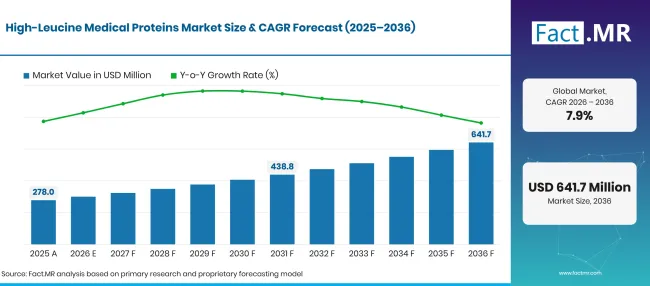
High Leucine Medical Proteins Forecast Global | Source: Fact.MR
Category
| Category | Segments |
|---|---|
| Medical protein source | Whey isolate, Casein isolate, Whey hydrolysate; Leucine-fortified plant; Mixed protein |
| Commercial form | Powder, Capsule / tablet, Liquid; Microcapsule; Ready-to-use blend |
| End application | Clinical nutrition, Supplements, Functional foods; Infant / pediatric; Specialized medical |
| Sales channel | Ingredient OEM, Medical nutrition brand, Hospital procurement; Pharmacy; Direct consumer |
| Region | Netherlands; United States; Germany; China; New Zealand |
Source: Fact.MR analysis. Updated Nov 19, 2026
Segmental Analysis
Why do Leucine-fortified plant proteins lead source demand in the High-Leucine Medical Proteins Market?
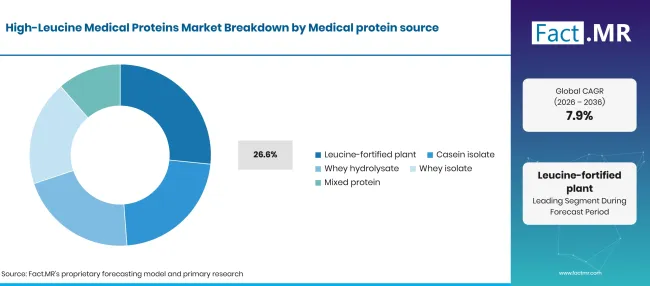
High Leucine Medical Proteins Breakdown Medical Protein Source | Source: Fact.MR
Leucine-fortified plant proteins hold 26.6% of market revenue in 2026, valued at approximately USD 79.8 million. Pea, soy and rice blends appeal to patients who avoid dairy but still need protein formulations for muscle maintenance. Whey isolate and casein isolate follow as alternative sources. The Academy of Nutrition and Dietetics' 2025 position paper recognizes the role of plant proteins in muscle health, including among older adults. This wider clinical acceptance is creating room for leucine-enriched plant formulations.
Why does Liquid lead commercial-form demand in the High-Leucine Medical Proteins Market?
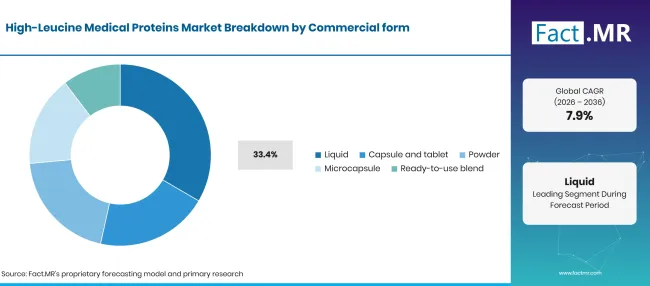
High Leucine Medical Proteins Breakdown Commercial Form | Source: Fact.MR
Ready-to-drink nutrition products and liquid feeding formulas account for 33.4% of market revenue in 2026, equivalent to approximately USD 100 million. Their convenience makes them suitable for patients who struggle with solid food intake or need nutritional support through feeding tubes. Microcapsules follow in the commercial-form category. The US FDA recognizes both oral intake and enteral tube feeding within its medical food framework, reinforcing the clinical relevance of formats designed for these uses.
Why does Infant / pediatric lead end-application demand in the High-Leucine Medical Proteins Market?
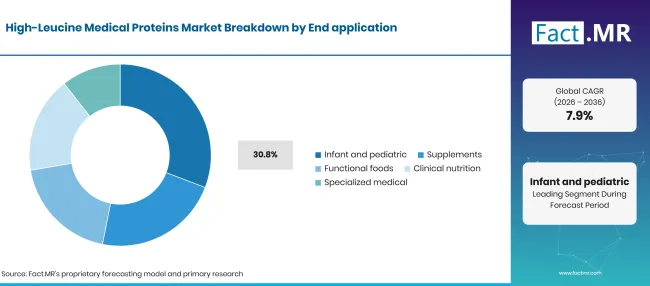
High Leucine Medical Proteins Breakdown End Application | Source: Fact.MR
Infant and pediatric nutrition contributes 30.8% of market revenue in 2026, reaching approximately USD 92.4 million. Specialized formulas for premature infants and children with medical nutrition needs place particular importance on protein quality and balanced amino acid composition. Clinical nutrition follows as another important application. The European Union's infant formula regulation, updated in January 2026, specifies protein levels and the availability of essential amino acids; underlining the importance of precise protein formulation in early-life nutrition.
Why does Direct consumer lead sales-channel demand in the High-Leucine Medical Proteins Market?
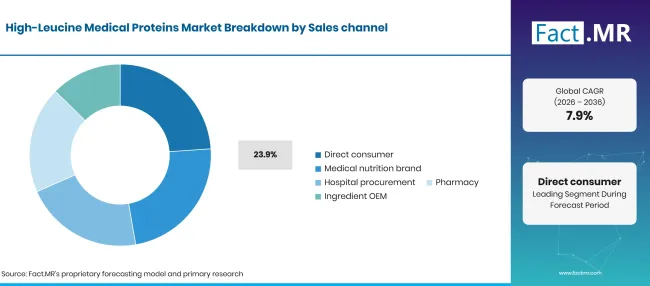
High Leucine Medical Proteins Breakdown Sales Channel | Source: Fact.MR
Direct consumer sales account for 23.9% of market revenue in 2026, worth approximately USD 71.7 million. Online purchases and subscription-based buying make specialized protein products easier to access, particularly for people managing muscle health and recovery outside hospital settings. Pharmacy and ingredient OEM channels also serve important customer groups. The US Census Bureau reported that e-commerce represented 16.4% of total US retail sales in 2025, highlighting the continued importance of online retail in consumer purchasing.
High-Leucine Medical Proteins Market-Drivers, Restraints & Trends
Driver: Rising Clinical Attention to Muscle Loss
Sarcopenia is receiving greater attention as clinicians link age-related muscle loss with falls, physical limitations and longer recovery periods. This is creating a stronger case for high-leucine medical proteins because adequate protein and leucine intake help maintain muscle protein synthesis. The WHO's 2025 healthy ageing agenda also emphasizes preserving functional ability among older adults. As hospitals and nutrition specialists place greater focus on muscle health, clinical use of leucine-rich nutrition is gaining importance.
Restraint: High Formulation Costs and Limited Reimbursement
High-leucine medical proteins face pricing pressure from specialized ingredients, formulation costs and fluctuations in whey prices. Smaller nutrition brands may find it difficult to maintain affordable products without compromising protein quality. Limited insurance coverage for oral nutrition supplements also restricts access, particularly for patients managing long-term nutritional needs at home. These financial barriers can push consumers toward conventional protein products and slow wider adoption outside hospitals.
Trend: Muscle Preservation During Weight Loss
GLP-1-based weight management has brought greater attention to muscle preservation alongside fat reduction. This creates an opportunity for the high-leucine medical proteins market as healthcare providers increasingly consider nutritional support during medically supervised weight loss. In 2025, the US FDA continued updating information on GLP-1 medicines, while clinical discussions increasingly addressed nutritional monitoring during treatment. Similar attention to maintaining lean mass could expand medical nutrition applications. A related trend is the integration of protein intake assessment into weight-management care.
Trend: Leucine-Enriched Plant Proteins
Plant-based medical nutrition is gaining relevance as healthcare providers address the needs of patients who avoid dairy or have difficulty tolerating conventional protein sources. Leucine enrichment creates an opportunity to improve the amino acid profile of plant-based formulations. In 2025 and 2026, greater attention to plant protein quality and nutritional adequacy has strengthened the case for research into alternative protein sources. Further investment in amino acid balancing and plant-protein digestibility could open new market opportunities. A related trend is the use of blended plant-protein sources in specialized clinical nutrition.
High-Leucine Medical Proteins Market by Analysis by Key Country
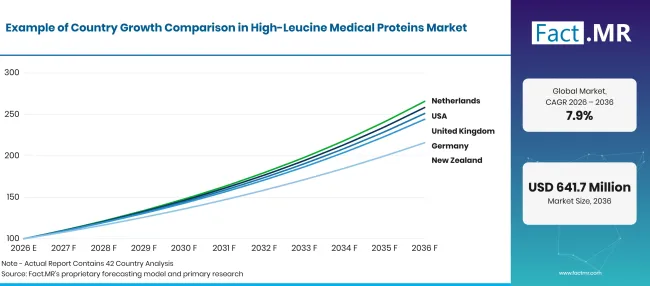
High Leucine Medical Proteins Growth Index | Source: Fact.MR
| Country | CAGR (2026-2036) |
|---|---|
| Netherlands | 12.7% |
| United States | 10.2% |
| Germany | 9.7% |
| China | 9.5% |
| New Zealand | 8.0% |
Source: Fact.MR analysis. Updated Nov 19, 2026
Why is the Netherlands the fastest-growing market for high-leucine medical proteins?
In December 2025, the Health Council of the Netherlands issued revised dietary guidelines encouraging greater consumption of legumes and nuts and a shift towards plant-based protein sources.
This creates a favourable environment for leucine-fortified plant proteins, particularly for consumers seeking alternatives to dairy-based nutrition. Clinical nutrition applications and interest in protein quality are also creating opportunities for specialized formulations in the Dutch market.
What is shaping high-leucine medical protein sales in the United States?
The American Diabetes Association's 2025 Standards of Care advised healthcare professionals to monitor protein intake among people using obesity medications to help prevent muscle loss.
This is creating a stronger market opportunity for high-leucine medical proteins as weight-management programmes increasingly address lean muscle preservation alongside weight reduction. Specialized nutrition for older adults, post-treatment recovery and patients with inadequate protein intake is adding to sales growth.
What is shaping high-leucine medical protein demand in Germany?
Germany's updated 2025 S3 clinical nutrition guidelines recommend routine malnutrition screening for older adults, including those with overweight and obesity.
This clinical approach is creating opportunities for high-leucine medical proteins in elderly nutrition and recovery care. Hospitals, rehabilitation centres and geriatric facilities are important sales channels as healthcare professionals place greater attention on nutritional assessment, muscle maintenance and individualized dietary interventions.
What is driving high-leucine medical protein demand in China?
In April 2025, China's government introduced an action plan to expand health-related consumption, improve the supply of special foods and strengthen healthcare services for older people.
These measures are creating opportunities for specialized nutritional products addressing age-related muscle loss and nutritional deficiencies. Greater spending on elderly healthcare, rehabilitation services and medical nutrition is supporting the market's expansion across China.
Why is high-leucine medical protein growth slower in New Zealand?
New Zealand's Ministry of Health published A Place to Grow Old in August 2026, outlining reforms to improve aged-care services and address the needs of an ageing population.
This creates opportunities for high-leucine medical proteins in elderly nutrition, rehabilitation and recovery programmes. Residential aged-care facilities and hospital nutrition services are important sources of sales as healthcare providers place greater attention on maintaining muscle function and nutritional status among older adults.
Competitive Landscape for High-Leucine Medical Proteins Market
Fonterra's 2025 agreement to sell its consumer brands business to Lactalis sharpened its focus on dairy ingredients and foodservice. That portfolio direction is relevant to high-leucine proteins because dairy ingredient capabilities remain central to specialized protein production.
Recent Developments
- On January 28, 2026, Arla Foods Ingredients launched Lacprodan® BLG-100 Acidic; a ready-to-stir whey protein ingredient designed for medical nutrition products. It offers high protein content, good solubility and a leucine-rich amino acid profile.
- On February 12, 2025, FrieslandCampina Ingredients announced the acquisition of Wisconsin Whey Protein to expand its whey protein isolate capacity and strengthen its presence in the North American medical and performance nutrition markets.
- Fonterra's 2025 agreement to sell its consumer brands business to Lactalis sharpened its focus on dairy ingredients and foodservice. That portfolio direction is relevant to high-leucine proteins because dairy ingredient capabilities remain central to specialized protein production.
- On November 9, 2026, Lactalis Ingredients introduced high-protein chocolate hazelnut bar concepts in 35% and 43% protein versions for everyday nutrition and muscle maintenance applications.
- On August 1, 2025, Glanbia completed the acquisition of Sweetmix; a Brazilian nutritional premix and ingredient solutions company; strengthening its presence in Latin America.
- On May 7, 2026, Hilmar Ingredients received the 2026 Breakthrough Award for its PROtelyze™ Bio-Brain whey peptide ingredient; developed for cognitive wellness applications targeting memory and attention.
Key Players in High-Leucine Medical Proteins Market
Key companies profiled include Arla Foods Ingredients; FrieslandCampina Ingredients; Fonterra; Lactalis Ingredients; Glanbia Nutritionals; and Hilmar Ingredients.
- Arla Foods Ingredients
- FrieslandCampina Ingredients
- Fonterra
- Lactalis Ingredients
- Glanbia Nutritionals
- Hilmar Ingredients
Bibliography
- American Diabetes Association Professional Practice Committee for Obesity. (2026). Pharmacologic treatment of obesity in adults: Standards of care in overweight and obesity. Diabetes, Obesity, and Cardiometabolic Care; 1(1); 5–36.
- European Commission. (2026). Commission Delegated Regulation (EU) 2026/743 of 30 March 2026 amending Delegated Regulation (EU) 2016/127 as regards the protein-related requirements for infant and follow-on formula manufactured from protein hydrolysates. Official Journal of the European Union.
- Food and Drug Administration. (n.d.). Medical foods guidance documents and regulatory information. U.S. Department of Health and Human Services.
- German Society for Nutritional Medicine. (2025). S3 guideline: Clinical nutrition and hydration in older persons.
- Health Council of the Netherlands. (2025). Dutch dietary guidelines: Protein sources and dietary patterns 2025.
- Ministry of Health, New Zealand. (2026). A place to grow old: Securing the future of aged care.
- Raj, S., Guest; N. S., Landry, M. J., Mangels, A. R., Pawlak, R.; & Rozga; M. (2025). Vegetarian dietary patterns for adults: A position paper of the Academy of Nutrition and Dietetics. Journal of the Academy of Nutrition and Dietetics, 125(6), 831–846.e2.
- U.S. Census Bureau. (2026, March 10). Quarterly retail e-commerce sales: Fourth quarter 2025. U.S. Department of Commerce
- Volkert, D., Beck; A. M., Cederholm, T.; Cruz-Jentoft; A.; Hooper; L.; Kiesswetter; E.; Maggio; M.; Raynaud-Simon; A.; Sieber; C.; Sobotka; L.; van Asselt; D.; Wirth; R.; & Bischoff; S. C. (2022). ESPEN practical guideline: Clinical nutrition and hydration in geriatrics. Clinical Nutrition, 41(4), 958–989
- World Health Organization. (2025, May 12). Measuring the progress and impact of the UN Decade of Healthy Ageing (2021–2030): Framework and indicators recommended by WHO Technical Advisory Group.
- Xinhua. (2025, April 10). China unveils plan to boost health-related consumption. The State Council of the People's Republic of China.
Segmentation
Scope of Report
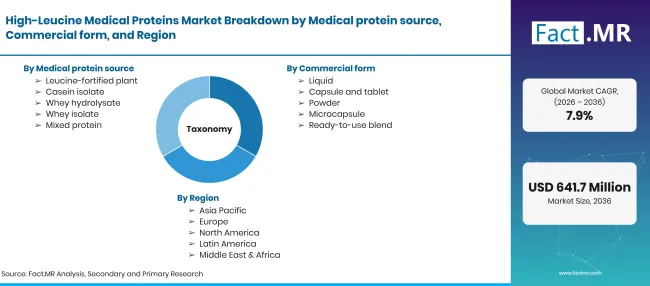
High Leucine Medical Proteins Taxonomy | Source: Fact.MR
| Items | Values |
|---|---|
| Quantitative Units (2026) | USD 300.0 Million |
| Medical protein source | Whey isolate, Casein isolate, Whey hydrolysate; Leucine-fortified plant; Mixed protein |
| Commercial form | Powder, Capsule / tablet, Liquid; Microcapsule; Ready-to-use blend |
| End application | Clinical nutrition, Supplements, Functional foods; Infant / pediatric; Specialized medical |
| Sales channel | Ingredient OEM, Medical nutrition brand, Hospital procurement; Pharmacy; Direct consumer |
| Regions Covered | North America, Latin America, Europe; East Asia; South Asia and Pacific; Middle East & Africa |
| Countries Covered | Netherlands, United States, Germany; China; New Zealand; and other countries |
| Key Companies Profiled | Arla Foods Ingredients, FrieslandCampina Ingredients, Fonterra; Lactalis Ingredients; Glanbia Nutritionals; Hilmar Ingredients |
| Additional Attributes | Dollar revenue in the High-Leucine Medical Proteins Market is segmented by medical protein source (whey isolate, casein isolate, whey hydrolysate; leucine-fortified plant; mixed protein); commercial form (powder; capsule / tablet; liquid; microcapsule; ready-to-use blend); end application (clinical nutrition; supplements; functional foods; infant / pediatric; specialized medical); sales channel (ingredient oem; medical nutrition brand; hospital procurement; pharmacy; direct consumer) and region. |
Source: Fact.MR analysis. Updated Nov 19, 2026
High-Leucine Medical Proteins Market by Segments
-
Medical protein source
- Whey isolate
- Casein isolate
- Whey hydrolysate
- Leucine-fortified plant
- Mixed protein
-
Commercial form
- Powder
- Capsule / tablet
- Liquid
- Microcapsule
- Ready-to-use blend
-
End application
- Clinical nutrition
- Supplements
- Functional foods
- Infant / pediatric
- Specialized medical
-
Sales channel
- Ingredient OEM
- Medical nutrition brand
- Hospital procurement
- Pharmacy
- Direct consumer
-
Region:
- North America
- United States
- Canada
- Mexico
- Europe
- Germany
- United Kingdom
- France
- Italy
- Spain
- Rest of Europe
- Asia Pacific
- China
- India
- Japan
- South Korea
- Australia
- Rest of Asia Pacific
- Latin America
- Brazil
- Mexico
- Argentina
- Rest of Latin America
- Middle East & Africa
- GCC Countries
- South Africa
- Rest of Middle East & Africa
- North America
Frequently Asked Questions
How big is the global High-Leucine Medical Proteins Market in 2026?
What will be the size of the High-Leucine Medical Proteins Market by 2036?
How fast will the High-Leucine Medical Proteins Market grow during the forecast period?
Which medical protein source segment holds the largest share of the High-Leucine Medical Proteins Market?
Who worked on this report


Preview the report firsthand - request a free sample
Free SampleGet the brochure for pricing and purchase details
Download PDF