Low-Impact Electrolyte Additives for EV Batteries Market
Low-Impact Electrolyte Additives for EV Batteries Market Size and Share Forecast Outlook 2026 to 2036
Low-impact electrolyte additives for EV batteries market is projected to grow from USD 6.6 billion in 2026 to USD 16.3 billion by 2036, at a CAGR of 9.5%. Non-toxic SEI formers (eco SEI chemistries, low-residue) will dominate with a 22.0% market share, while safety & thermal stability improvement will lead the functional benefit segment with a 28.0% share.
Low-Impact Electrolyte Additives for EV Batteries Market Forecast and Outlook 2026 to 2036
The global low-impact electrolyte additives for EV batteries market is projected to reach USD 16.31 billion by 2036. The market is valued at USD 6.58 billion in 2026 and is set to rise at a CAGR of 9.5% during the assessment period.
By additive type, non-toxic SEI formers (eco SEI chemistries, low-residue) hold a leading 22% share. Safety & thermal stability improvement represents the dominant functional benefit at 28%, while NMC & NCA (high-energy chemistries) are the primary battery chemistry targeted at 38.00%. The electrolyte formulation stage is the leading application stage, accounting for 56.0% market share.
Key Takeaways from the Low-Impact Electrolyte Additives for EV Batteries Market
- Market Value for 2026: USD 6.58 Billion
- Market Value for 2036: USD 16.31 Billion
- Forecast CAGR (2026-2036): 9.5%
- Leading Additive Type Share (2026): Non-toxic SEI formers (eco SEI chemistries, low-residue) (22%)
- Leading Functional Benefit Share (2026): Safety & thermal stability improvement (28%)
- Leading Battery Chemistry Targeted Share (2026): NMC & NCA (high-energy chemistries) (38.00%)
- Leading Application Stage Share (2026): Electrolyte formulation (56.0%)
- Key Players in the Market: BASF, Mitsubishi Chemical, Solvay, Soulbrain, Capchem, Kureha
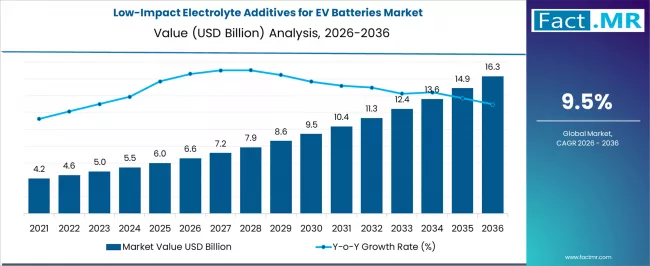
Defining trends involve the strategic incorporation of multifunctional, benign additives that simultaneously enhance cell performance while drastically reducing the environmental and toxicological footprint of the electrolyte. Innovation is rapidly advancing in ionic liquids, bio-based co-solvents, and designed-in recyclable electrolyte salts that enable efficient recovery of critical materials. Integration of these low-impact additives with next-generation battery systems, particularly solid-state and sodium-ion, is becoming critical for achieving superior safety profiles and meeting stringent sustainability regulations.
Regulatory frameworks, including the EU Battery Passport, REACH, and evolving global standards on chemical safety, are mandating the phase-out of toxic, bio-accumulative, or difficult-to-recycle components. Policies promoting a circular economy for batteries and protecting worker safety in gigafactories act as significant market catalysts, making low-impact additives a prerequisite for market access and brand leadership in the EV sector.
Low-Impact Electrolyte Additives for EV Batteries Market
| Metric | Value |
|---|---|
| Market Value (2026) | USD 6.58 Billion |
| Market Forecast Value (2036) | USD 16.31 Billion |
| Forecast CAGR (2026-2036) | 9.5% |
Category
| Category | Segments |
|---|---|
| Additive Type | Non-toxic SEI formers (eco SEI chemistries, low-residue), Ionic liquids & low-volatility solvent additives, Recyclable electrolyte salts & co-solvents, Flame-retardant & thermal-stability low-impact additives, Electrolyte stabilizers (green grades), Low-impact film-formers for separators & interfaces, Biobased co-solvents & green plasticizers, Specialty proprietary blends (multi-functional low-impact) |
| Functional Benefit | Safety & thermal stability improvement, Cycle-life & calendar life extension (low-residue), Recycling & solvent-recovery friendliness, Low-toxicity & regulatory compliance (worker & end-of-life), Low-VOC & low-emission during manufacture, Ionic conductivity |
| Battery Chemistry Targeted | NMC & NCA (high-energy chemistries), LFP (safety & recyclability focus), Solid-state, Sodium, Other specialty chemistries and hybrid systems |
| Application Stage | Electrolyte formulation, Cell formation & conditioning, Separator & interface coatings, Recycling & solvent recovery chemistries |
| Region | North America, Latin America, Western Europe, Eastern Europe, East Asia, South Asia & Pacific, MEA |
Segmental Analysis
By Additive Type, Which Component is Fundamental for Creating a Stable, Low-Toxicity Interface?
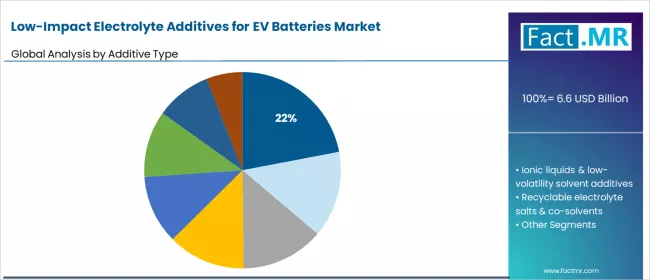
Non-toxic SEI formers (eco SEI chemistries, low-residue) lead the segment with a 22% share. This dominance stems from their critical role in replacing conventional, often fluorinated or toxic, SEI-forming additives. These next-generation formers create a stable, high-performance solid-electrolyte interphase while leaving minimal hazardous residue, directly addressing key lifecycle concerns: improving cell longevity, reducing gassing, and enabling cleaner recycling processes by minimizing contaminant load in black mass.
By Functional Benefit, What is the Paramount Concern for High-Energy-Density EV Batteries?
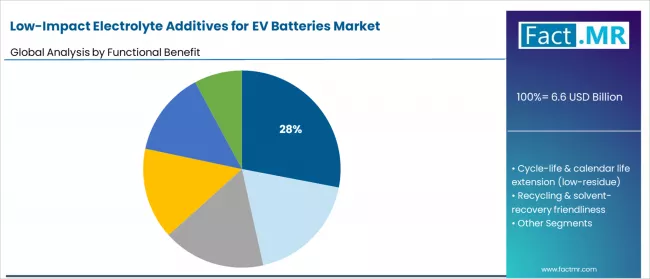
Safety & thermal stability improvement commands the largest functional benefit share at 28%. For high-nickel NMC and NCA chemistries driving longer EV range, mitigating thermal runaway risk is non-negotiable. Low-impact additives that provide flame-retardant properties, suppress gas generation, and enhance thermal abuse tolerance without compromising electrochemical performance are essential. This benefit directly addresses the core safety imperative of the EV industry, creating immense demand.
By Battery Chemistry Targeted, Which High-Performance Systems Demand the Most Advanced Additive Solutions?
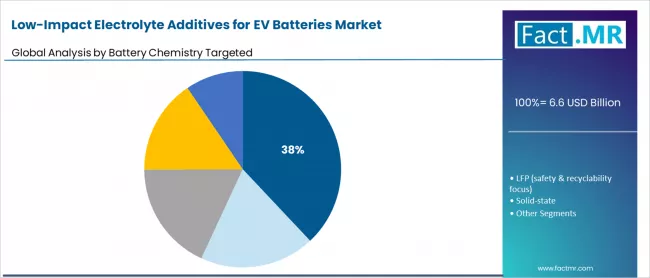
NMC & NCA (high-energy chemistries) hold the leading targeted chemistry share at 38.00%. While LFP is inherently safer, the push for higher energy density keeps NMC/NCA at the forefront of premium EVs. These aggressive chemistries are most in need of sophisticated additive packages to manage their reactivity and interfacial instability. The development of low-impact additives that can meet the extreme performance demands of these systems represents the highest value and most technically challenging segment of the market.
By Application Stage, Where is the Primary Integration Point for Additive Functionality?
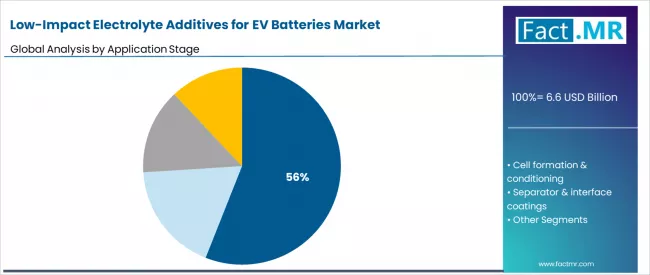
The electrolyte formulation stage represents the dominant application stage at 56.0%. This is the point where additives are directly introduced and homogeneously mixed into the electrolyte bulk, defining the core chemical environment of the cell. The performance, safety, and environmental attributes imparted by the additives are foundational and determined at this stage, making it the primary volume and value integration point for low-impact additive technologies.
What are the Drivers, Restraints, and Key Trends of the Low-Impact Electrolyte Additives for EV Batteries Market?
Market growth is driven by the explosive global expansion of EV production coupled with increasingly stringent regulations on battery sustainability and chemical safety (EU Battery Passport, REACH). Gigafactories' ESG goals and the need for safer workplace environments are pushing the elimination of toxic solvents and fluorinated compounds. The parallel rise of battery recycling industries demands electrolyte chemistries that are compatible with efficient, low-cost recovery processes, favoring designed-in recyclability.
A significant restraint is the complex performance balancing act, where introducing new, benign chemistries must not compromise cell energy density, power, or lifespan. The high cost and limited supply of some advanced ionic liquids or ultra-pure bio-derived additives can be prohibitive. Extensive and lengthy re-qualification cycles with cell manufacturers for new additive suites slow time-to-market. Furthermore, the diversity of emerging cell formats (e.g., various solid-state approaches) fragments additive development pathways.
Key trends include the design of digital passports for additives to track their environmental impact. There is a strong shift towards multi-functional additive blends that deliver safety, lifetime, and recyclability benefits in a single package. Research is intensifying in additives specifically for solid-state interfaces and aqueous processing. Furthermore, close collaboration between additive suppliers, cell makers, and recyclers is emerging to co-develop circular electrolyte systems.
Analysis of the Low-Impact Electrolyte Additives for EV Batteries Market by Key Countries
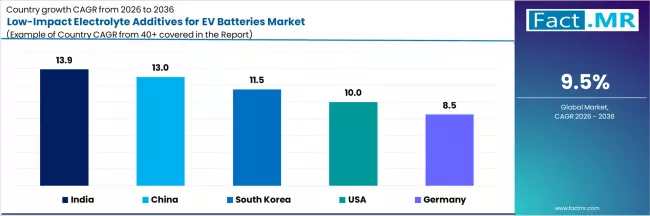
| Country | CAGR (2026-2036) |
|---|---|
| India | 13.90% |
| China | 13.00% |
| South Korea | 11.50% |
| USA | 10.00% |
| Germany | 8.50% |
How does India's Aspirational EV Growth and Sustainable Manufacturing Focus Drive High Growth?
India leads with a 13.90% CAGR, driven by its ambitious national targets for EV adoption and plans to become a global hub for sustainable battery manufacturing. New gigafactories are being established with a focus on green chemistry from the outset, favoring LFP and future sodium-ion chemistries where low-impact additives are crucial. Government policies promoting a circular economy and stricter future chemical regulations create a fertile environment for early adoption of advanced, low-impact electrolyte technologies.
Why is China's Unmatched Gigafactory Scale and Vertical Integration a Key Driver?
China's 13.00% growth is anchored in its dominant position in the global battery supply chain. As Chinese cell manufacturers aggressively pursue both high-energy NMC and mainstream LFP production, the scale of electrolyte consumption is immense. Domestic chemical giants are investing heavily in low-impact additive production to supply this demand, driven by both export market requirements and evolving domestic environmental standards, making it the largest volume market.
What Role does South Korea's Leadership in Premium Cell Manufacturing and Export Play?
Its global battery leaders who supply premium cells to major international OEMs fuel South Korea’s 11.50% growth. These manufacturers are at the forefront of adopting advanced, high-performance additive suites to ensure superior safety and longevity, which are critical for brand reputation. Compliance with the EU Battery Passport and other international regulations makes low-impact, traceable, and recyclable additives a strategic necessity for this export-oriented sector.
How does the USA's IRA-Led Reshoring and Innovation Ecosystem Influence the Market?
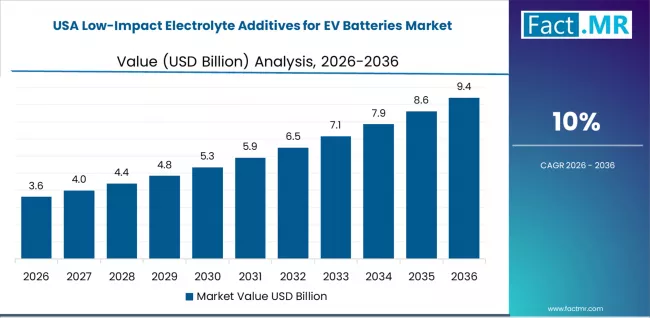
The USA's 10.00% growth is propelled by the Inflation Reduction Act (IRA), which incentivizes domestic battery material production and sustainable manufacturing. New US gigafactories are prioritizing cutting-edge, environmentally sound processes. A strong innovation ecosystem involving national labs, startups, and chemical majors is focused on developing next-generation low-impact additives, particularly for solid-state batteries and advanced recycling processes, creating a high-value market segment.
What Factors Underpin Germany's Automotive OEM Demand and Regulatory Leadership?
Germany's 8.50% growth reflects the stringent sustainability demands of its premium automotive OEMs and its central role in shaping EU regulations. German carmakers require batteries with low lifecycle environmental impact, pushing cell suppliers to adopt certified, low-toxicity additive systems. The local development of solid-state batteries and a strong focus on recyclability further drive demand for specialized, high-purity, low-impact electrolyte formulations.
Competitive Landscape of the Low-Impact Electrolyte Additives for EV Batteries Market
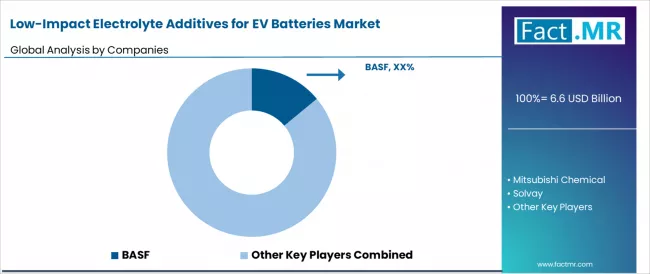
The competitive landscape is characterized by intense rivalry between global specialty chemical conglomerates and focused battery material specialists. Giants like BASF, Solvay, and Mitsubishi Chemical leverage their vast chemical synthesis expertise and global reach to develop comprehensive portfolios of low-impact additives, from novel salts to bio-based solvents, often offering integrated electrolyte solutions.
Dedicated battery chemical players like Soulbrain, Capchem, and Kureha compete through deep, application-specific expertise and strong integration into the battery manufacturing value chain, particularly in Asia. Competition centers on securing IP for next-generation additive molecules, forming joint development agreements (JDAs) with leading cell manufacturers, and providing robust data to prove both performance enhancement and improved lifecycle sustainability metrics.
Key Players in the Low-Impact Electrolyte Additives for EV Batteries Market
- BASF
- Mitsubishi Chemical
- Solvay
- Soulbrain
- Capchem
- Kureha
Scope of Report
| Items | Values |
|---|---|
| Quantitative Units | USD Billion |
| Additive Type | Non-toxic SEI formers, Ionic liquids & low-volatility solvent additives, Recyclable electrolyte salts & co-solvents, Flame-retardant & thermal-stability additives, Electrolyte stabilizers (green), Low-impact film-formers, Biobased co-solvents & green plasticizers, Specialty proprietary blends |
| Functional Benefit | Safety & thermal stability, Cycle-life extension, Recycling friendliness, Low-toxicity & compliance, Low-VOC & low-emission, Ionic conductivity |
| Battery Chemistry Targeted | NMC & NCA, LFP, Solid-state, Sodium, Other specialty/hybrid systems |
| Application Stage | Electrolyte formulation, Cell formation & conditioning, Separator & interface coatings, Recycling & solvent recovery chemistries |
| Key Countries | India, China, South Korea, USA, Germany |
| Key Companies | BASF, Mitsubishi Chemical, Solvay, Soulbrain, Capchem, Kureha |
Low-Impact Electrolyte Additives for EV Batteries Market by Segments
-
Additive Type :
- Non-toxic SEI formers (eco SEI chemistries, low-residue)
- Ionic liquids & low-volatility solvent additives
- Recyclable electrolyte salts & co-solvents
- Flame-retardant & thermal-stability low-impact additives
- Electrolyte stabilizers (green grades)
- Low-impact film-formers for separators & interfaces
- Biobased co-solvents & green plasticizers
- Specialty proprietary blends (multi-functional low-impact)
-
Functional Benefit :
- Safety & thermal stability improvement
- Cycle-life & calendar life extension (low-residue)
- Recycling & solvent-recovery friendliness
- Low-toxicity & regulatory compliance (worker & end-of-life)
- Low-VOC & low-emission during manufacture
- Ionic conductivity
-
Battery Chemistry Targeted :
- NMC & NCA (high-energy chemistries)
- LFP (safety & recyclability focus)
- Solid-state
- Sodium
- Other specialty chemistries and hybrid systems
-
Application Stage :
- Electrolyte formulation
- Cell formation & conditioning
- Separator & interface coatings
- Recycling & solvent recovery chemistries
-
Region :
-
North America
- USA
- Canada
-
Latin America
- Brazil
- Chile
- Mexico
- Argentina
- Rest of Latin America
-
Western Europe
- Germany
- France
- Sweden
- Spain
- Italy
- UK
- BENELUX
- Rest of Western Europe
-
Eastern Europe
- Poland
- Hungary
- Russia
- Rest of Eastern Europe
-
East Asia
- China
- South Korea
- Japan
- Rest of East Asia
-
South Asia & Pacific
- India
- Thailand
- Australia
- Rest of South Asia & Pacific
-
MEA
- GCC Countries
- Morocco
- Rest of MEA
-
Table of Content
- Executive Summary
- Global Market Outlook
- Demand to side Trends
- Supply to side Trends
- Technology Roadmap Analysis
- Analysis and Recommendations
- Market Overview
- Market Coverage / Taxonomy
- Market Definition / Scope / Limitations
- Market Background
- Market Dynamics
- Drivers
- Restraints
- Opportunity
- Trends
- Scenario Forecast
- Demand in Optimistic Scenario
- Demand in Likely Scenario
- Demand in Conservative Scenario
- Opportunity Map Analysis
- Product Life Cycle Analysis
- Supply Chain Analysis
- Investment Feasibility Matrix
- Value Chain Analysis
- PESTLE and Porter’s Analysis
- Regulatory Landscape
- Regional Parent Market Outlook
- Production and Consumption Statistics
- Import and Export Statistics
- Market Dynamics
- Global Market Analysis 2021 to 2025 and Forecast, 2026 to 2036
- Historical Market Size Value (USD Million) Analysis, 2021 to 2025
- Current and Future Market Size Value (USD Million) Projections, 2026 to 2036
- Y to o to Y Growth Trend Analysis
- Absolute $ Opportunity Analysis
- Global Market Pricing Analysis 2021 to 2025 and Forecast 2026 to 2036
- Global Market Analysis 2021 to 2025 and Forecast 2026 to 2036, By Additive Type
- Introduction / Key Findings
- Historical Market Size Value (USD Million) Analysis By Additive Type, 2021 to 2025
- Current and Future Market Size Value (USD Million) Analysis and Forecast By Additive Type, 2026 to 2036
- Non-toxic SEI formers (eco SEI chemistries, low-residue)
- Ionic liquids & low-volatility solvent additives
- Recyclable electrolyte salts & co-solvents
- Flame-retardant & thermal-stability low-impact additives
- Electrolyte stabilizers (green grades)
- Low-impact film-formers for separators & interfaces
- Biobased co-solvents & green plasticizers
- Specialty proprietary blends (multi-functional low-impact)
- Non-toxic SEI formers (eco SEI chemistries, low-residue)
- Y to o to Y Growth Trend Analysis By Additive Type, 2021 to 2025
- Absolute $ Opportunity Analysis By Additive Type, 2026 to 2036
- Global Market Analysis 2021 to 2025 and Forecast 2026 to 2036, By Functional Benefit
- Introduction / Key Findings
- Historical Market Size Value (USD Million) Analysis By Functional Benefit, 2021 to 2025
- Current and Future Market Size Value (USD Million) Analysis and Forecast By Functional Benefit, 2026 to 2036
- Safety & thermal stability improvement
- Cycle-life & calendar life extension (low-residue)
- Recycling & solvent-recovery friendliness
- Low-toxicity & regulatory compliance (worker & end-of-life)
- Low-VOC & low-emission during manufacture
- Ionic conductivity
- Safety & thermal stability improvement
- Y to o to Y Growth Trend Analysis By Functional Benefit, 2021 to 2025
- Absolute $ Opportunity Analysis By Functional Benefit, 2026 to 2036
- Global Market Analysis 2021 to 2025 and Forecast 2026 to 2036, By Battery Chemistry Targeted
- Introduction / Key Findings
- Historical Market Size Value (USD Million) Analysis By Battery Chemistry Targeted, 2021 to 2025
- Current and Future Market Size Value (USD Million) Analysis and Forecast By Battery Chemistry Targeted, 2026 to 2036
- NMC & NCA (high-energy chemistries)
- LFP (safety & recyclability focus)
- Solid-state
- Sodium
- Other specialty chemistries and hybrid systems
- NMC & NCA (high-energy chemistries)
- Y to o to Y Growth Trend Analysis By Battery Chemistry Targeted, 2021 to 2025
- Absolute $ Opportunity Analysis By Battery Chemistry Targeted, 2026 to 2036
- Global Market Analysis 2021 to 2025 and Forecast 2026 to 2036, By Application Stage
- Introduction / Key Findings
- Historical Market Size Value (USD Million) Analysis By Application Stage, 2021 to 2025
- Current and Future Market Size Value (USD Million) Analysis and Forecast By Application Stage, 2026 to 2036
- Electrolyte formulation
- Cell formation & conditioning
- Separator & interface coatings
- Recycling & solvent recovery chemistries
- Electrolyte formulation
- Y to o to Y Growth Trend Analysis By Application Stage, 2021 to 2025
- Absolute $ Opportunity Analysis By Application Stage, 2026 to 2036
- Global Market Analysis 2021 to 2025 and Forecast 2026 to 2036, By Region
- Introduction
- Historical Market Size Value (USD Million) Analysis By Region, 2021 to 2025
- Current Market Size Value (USD Million) Analysis and Forecast By Region, 2026 to 2036
- North America
- Latin America
- Western Europe
- Eastern Europe
- East Asia
- South Asia and Pacific
- Middle East & Africa
- Market Attractiveness Analysis By Region
- North America Market Analysis 2021 to 2025 and Forecast 2026 to 2036, By Country
- Historical Market Size Value (USD Million) Trend Analysis By Market Taxonomy, 2021 to 2025
- Market Size Value (USD Million) Forecast By Market Taxonomy, 2026 to 2036
- By Country
- USA
- Canada
- Mexico
- By Additive Type
- By Functional Benefit
- By Battery Chemistry Targeted
- By Application Stage
- By Country
- Market Attractiveness Analysis
- By Country
- By Additive Type
- By Functional Benefit
- By Battery Chemistry Targeted
- By Application Stage
- Key Takeaways
- Latin America Market Analysis 2021 to 2025 and Forecast 2026 to 2036, By Country
- Historical Market Size Value (USD Million) Trend Analysis By Market Taxonomy, 2021 to 2025
- Market Size Value (USD Million) Forecast By Market Taxonomy, 2026 to 2036
- By Country
- Brazil
- Chile
- Rest of Latin America
- By Additive Type
- By Functional Benefit
- By Battery Chemistry Targeted
- By Application Stage
- By Country
- Market Attractiveness Analysis
- By Country
- By Additive Type
- By Functional Benefit
- By Battery Chemistry Targeted
- By Application Stage
- Key Takeaways
- Western Europe Market Analysis 2021 to 2025 and Forecast 2026 to 2036, By Country
- Historical Market Size Value (USD Million) Trend Analysis By Market Taxonomy, 2021 to 2025
- Market Size Value (USD Million) Forecast By Market Taxonomy, 2026 to 2036
- By Country
- Germany
- UK
- Italy
- Spain
- France
- Nordic
- BENELUX
- Rest of Western Europe
- By Additive Type
- By Functional Benefit
- By Battery Chemistry Targeted
- By Application Stage
- By Country
- Market Attractiveness Analysis
- By Country
- By Additive Type
- By Functional Benefit
- By Battery Chemistry Targeted
- By Application Stage
- Key Takeaways
- Eastern Europe Market Analysis 2021 to 2025 and Forecast 2026 to 2036, By Country
- Historical Market Size Value (USD Million) Trend Analysis By Market Taxonomy, 2021 to 2025
- Market Size Value (USD Million) Forecast By Market Taxonomy, 2026 to 2036
- By Country
- Russia
- Poland
- Hungary
- Balkan & Baltic
- Rest of Eastern Europe
- By Additive Type
- By Functional Benefit
- By Battery Chemistry Targeted
- By Application Stage
- By Country
- Market Attractiveness Analysis
- By Country
- By Additive Type
- By Functional Benefit
- By Battery Chemistry Targeted
- By Application Stage
- Key Takeaways
- East Asia Market Analysis 2021 to 2025 and Forecast 2026 to 2036, By Country
- Historical Market Size Value (USD Million) Trend Analysis By Market Taxonomy, 2021 to 2025
- Market Size Value (USD Million) Forecast By Market Taxonomy, 2026 to 2036
- By Country
- China
- Japan
- South Korea
- By Additive Type
- By Functional Benefit
- By Battery Chemistry Targeted
- By Application Stage
- By Country
- Market Attractiveness Analysis
- By Country
- By Additive Type
- By Functional Benefit
- By Battery Chemistry Targeted
- By Application Stage
- Key Takeaways
- South Asia and Pacific Market Analysis 2021 to 2025 and Forecast 2026 to 2036, By Country
- Historical Market Size Value (USD Million) Trend Analysis By Market Taxonomy, 2021 to 2025
- Market Size Value (USD Million) Forecast By Market Taxonomy, 2026 to 2036
- By Country
- India
- ASEAN
- Australia & New Zealand
- Rest of South Asia and Pacific
- By Additive Type
- By Functional Benefit
- By Battery Chemistry Targeted
- By Application Stage
- By Country
- Market Attractiveness Analysis
- By Country
- By Additive Type
- By Functional Benefit
- By Battery Chemistry Targeted
- By Application Stage
- Key Takeaways
- Middle East & Africa Market Analysis 2021 to 2025 and Forecast 2026 to 2036, By Country
- Historical Market Size Value (USD Million) Trend Analysis By Market Taxonomy, 2021 to 2025
- Market Size Value (USD Million) Forecast By Market Taxonomy, 2026 to 2036
- By Country
- Kingdom of Saudi Arabia
- Other GCC Countries
- Turkiye
- South Africa
- Other African Union
- Rest of Middle East & Africa
- By Additive Type
- By Functional Benefit
- By Battery Chemistry Targeted
- By Application Stage
- By Country
- Market Attractiveness Analysis
- By Country
- By Additive Type
- By Functional Benefit
- By Battery Chemistry Targeted
- By Application Stage
- Key Takeaways
- Key Countries Market Analysis
- USA
- Pricing Analysis
- Market Share Analysis, 2025
- By Additive Type
- By Functional Benefit
- By Battery Chemistry Targeted
- By Application Stage
- Canada
- Pricing Analysis
- Market Share Analysis, 2025
- By Additive Type
- By Functional Benefit
- By Battery Chemistry Targeted
- By Application Stage
- Mexico
- Pricing Analysis
- Market Share Analysis, 2025
- By Additive Type
- By Functional Benefit
- By Battery Chemistry Targeted
- By Application Stage
- Brazil
- Pricing Analysis
- Market Share Analysis, 2025
- By Additive Type
- By Functional Benefit
- By Battery Chemistry Targeted
- By Application Stage
- Chile
- Pricing Analysis
- Market Share Analysis, 2025
- By Additive Type
- By Functional Benefit
- By Battery Chemistry Targeted
- By Application Stage
- Germany
- Pricing Analysis
- Market Share Analysis, 2025
- By Additive Type
- By Functional Benefit
- By Battery Chemistry Targeted
- By Application Stage
- UK
- Pricing Analysis
- Market Share Analysis, 2025
- By Additive Type
- By Functional Benefit
- By Battery Chemistry Targeted
- By Application Stage
- Italy
- Pricing Analysis
- Market Share Analysis, 2025
- By Additive Type
- By Functional Benefit
- By Battery Chemistry Targeted
- By Application Stage
- Spain
- Pricing Analysis
- Market Share Analysis, 2025
- By Additive Type
- By Functional Benefit
- By Battery Chemistry Targeted
- By Application Stage
- France
- Pricing Analysis
- Market Share Analysis, 2025
- By Additive Type
- By Functional Benefit
- By Battery Chemistry Targeted
- By Application Stage
- India
- Pricing Analysis
- Market Share Analysis, 2025
- By Additive Type
- By Functional Benefit
- By Battery Chemistry Targeted
- By Application Stage
- ASEAN
- Pricing Analysis
- Market Share Analysis, 2025
- By Additive Type
- By Functional Benefit
- By Battery Chemistry Targeted
- By Application Stage
- Australia & New Zealand
- Pricing Analysis
- Market Share Analysis, 2025
- By Additive Type
- By Functional Benefit
- By Battery Chemistry Targeted
- By Application Stage
- China
- Pricing Analysis
- Market Share Analysis, 2025
- By Additive Type
- By Functional Benefit
- By Battery Chemistry Targeted
- By Application Stage
- Japan
- Pricing Analysis
- Market Share Analysis, 2025
- By Additive Type
- By Functional Benefit
- By Battery Chemistry Targeted
- By Application Stage
- South Korea
- Pricing Analysis
- Market Share Analysis, 2025
- By Additive Type
- By Functional Benefit
- By Battery Chemistry Targeted
- By Application Stage
- Russia
- Pricing Analysis
- Market Share Analysis, 2025
- By Additive Type
- By Functional Benefit
- By Battery Chemistry Targeted
- By Application Stage
- Poland
- Pricing Analysis
- Market Share Analysis, 2025
- By Additive Type
- By Functional Benefit
- By Battery Chemistry Targeted
- By Application Stage
- Hungary
- Pricing Analysis
- Market Share Analysis, 2025
- By Additive Type
- By Functional Benefit
- By Battery Chemistry Targeted
- By Application Stage
- Kingdom of Saudi Arabia
- Pricing Analysis
- Market Share Analysis, 2025
- By Additive Type
- By Functional Benefit
- By Battery Chemistry Targeted
- By Application Stage
- Turkiye
- Pricing Analysis
- Market Share Analysis, 2025
- By Additive Type
- By Functional Benefit
- By Battery Chemistry Targeted
- By Application Stage
- South Africa
- Pricing Analysis
- Market Share Analysis, 2025
- By Additive Type
- By Functional Benefit
- By Battery Chemistry Targeted
- By Application Stage
- USA
- Market Structure Analysis
- Competition Dashboard
- Competition Benchmarking
- Market Share Analysis of Top Players
- By Regional
- By Additive Type
- By Functional Benefit
- By Battery Chemistry Targeted
- By Application Stage
- Competition Analysis
- Competition Deep Dive
- BASF
- Overview
- Product Portfolio
- Profitability by Market Segments (Product/Age /Sales Channel/Region)
- Sales Footprint
- Strategy Overview
- Marketing Strategy
- Product Strategy
- Channel Strategy
- Mitsubishi Chemical
- Solvay
- Soulbrain
- Capchem
- Kureha
- BASF
- Competition Deep Dive
- Assumptions & Acronyms Used
- Research Methodology
List Of Table
- Table 1: Global Market Value (USD Million) Forecast by Region, 2021 to 2036
- Table 2: Global Market Value (USD Million) Forecast by Additive Type, 2021 to 2036
- Table 3: Global Market Value (USD Million) Forecast by Functional Benefit, 2021 to 2036
- Table 4: Global Market Value (USD Million) Forecast by Battery Chemistry Targeted, 2021 to 2036
- Table 5: Global Market Value (USD Million) Forecast by Application Stage, 2021 to 2036
- Table 6: North America Market Value (USD Million) Forecast by Country, 2021 to 2036
- Table 7: North America Market Value (USD Million) Forecast by Additive Type, 2021 to 2036
- Table 8: North America Market Value (USD Million) Forecast by Functional Benefit, 2021 to 2036
- Table 9: North America Market Value (USD Million) Forecast by Battery Chemistry Targeted, 2021 to 2036
- Table 10: North America Market Value (USD Million) Forecast by Application Stage, 2021 to 2036
- Table 11: Latin America Market Value (USD Million) Forecast by Country, 2021 to 2036
- Table 12: Latin America Market Value (USD Million) Forecast by Additive Type, 2021 to 2036
- Table 13: Latin America Market Value (USD Million) Forecast by Functional Benefit, 2021 to 2036
- Table 14: Latin America Market Value (USD Million) Forecast by Battery Chemistry Targeted, 2021 to 2036
- Table 15: Latin America Market Value (USD Million) Forecast by Application Stage, 2021 to 2036
- Table 16: Western Europe Market Value (USD Million) Forecast by Country, 2021 to 2036
- Table 17: Western Europe Market Value (USD Million) Forecast by Additive Type, 2021 to 2036
- Table 18: Western Europe Market Value (USD Million) Forecast by Functional Benefit, 2021 to 2036
- Table 19: Western Europe Market Value (USD Million) Forecast by Battery Chemistry Targeted, 2021 to 2036
- Table 20: Western Europe Market Value (USD Million) Forecast by Application Stage, 2021 to 2036
- Table 21: Eastern Europe Market Value (USD Million) Forecast by Country, 2021 to 2036
- Table 22: Eastern Europe Market Value (USD Million) Forecast by Additive Type, 2021 to 2036
- Table 23: Eastern Europe Market Value (USD Million) Forecast by Functional Benefit, 2021 to 2036
- Table 24: Eastern Europe Market Value (USD Million) Forecast by Battery Chemistry Targeted, 2021 to 2036
- Table 25: Eastern Europe Market Value (USD Million) Forecast by Application Stage, 2021 to 2036
- Table 26: East Asia Market Value (USD Million) Forecast by Country, 2021 to 2036
- Table 27: East Asia Market Value (USD Million) Forecast by Additive Type, 2021 to 2036
- Table 28: East Asia Market Value (USD Million) Forecast by Functional Benefit, 2021 to 2036
- Table 29: East Asia Market Value (USD Million) Forecast by Battery Chemistry Targeted, 2021 to 2036
- Table 30: East Asia Market Value (USD Million) Forecast by Application Stage, 2021 to 2036
- Table 31: South Asia and Pacific Market Value (USD Million) Forecast by Country, 2021 to 2036
- Table 32: South Asia and Pacific Market Value (USD Million) Forecast by Additive Type, 2021 to 2036
- Table 33: South Asia and Pacific Market Value (USD Million) Forecast by Functional Benefit, 2021 to 2036
- Table 34: South Asia and Pacific Market Value (USD Million) Forecast by Battery Chemistry Targeted, 2021 to 2036
- Table 35: South Asia and Pacific Market Value (USD Million) Forecast by Application Stage, 2021 to 2036
- Table 36: Middle East & Africa Market Value (USD Million) Forecast by Country, 2021 to 2036
- Table 37: Middle East & Africa Market Value (USD Million) Forecast by Additive Type, 2021 to 2036
- Table 38: Middle East & Africa Market Value (USD Million) Forecast by Functional Benefit, 2021 to 2036
- Table 39: Middle East & Africa Market Value (USD Million) Forecast by Battery Chemistry Targeted, 2021 to 2036
- Table 40: Middle East & Africa Market Value (USD Million) Forecast by Application Stage, 2021 to 2036
List Of Figures
- Figure 1: Global Market Pricing Analysis
- Figure 2: Global Market Value (USD Million) Forecast 2021 to 2036
- Figure 3: Global Market Value Share and BPS Analysis by Additive Type, 2026 and 2036
- Figure 4: Global Market Y to o to Y Growth Comparison by Additive Type, 2026 to 2036
- Figure 5: Global Market Attractiveness Analysis by Additive Type
- Figure 6: Global Market Value Share and BPS Analysis by Functional Benefit, 2026 and 2036
- Figure 7: Global Market Y to o to Y Growth Comparison by Functional Benefit, 2026 to 2036
- Figure 8: Global Market Attractiveness Analysis by Functional Benefit
- Figure 9: Global Market Value Share and BPS Analysis by Battery Chemistry Targeted, 2026 and 2036
- Figure 10: Global Market Y to o to Y Growth Comparison by Battery Chemistry Targeted, 2026 to 2036
- Figure 11: Global Market Attractiveness Analysis by Battery Chemistry Targeted
- Figure 12: Global Market Value Share and BPS Analysis by Application Stage, 2026 and 2036
- Figure 13: Global Market Y to o to Y Growth Comparison by Application Stage, 2026 to 2036
- Figure 14: Global Market Attractiveness Analysis by Application Stage
- Figure 15: Global Market Value (USD Million) Share and BPS Analysis by Region, 2026 and 2036
- Figure 16: Global Market Y to o to Y Growth Comparison by Region, 2026 to 2036
- Figure 17: Global Market Attractiveness Analysis by Region
- Figure 18: North America Market Incremental Dollar Opportunity, 2026 to 2036
- Figure 19: Latin America Market Incremental Dollar Opportunity, 2026 to 2036
- Figure 20: Western Europe Market Incremental Dollar Opportunity, 2026 to 2036
- Figure 21: Eastern Europe Market Incremental Dollar Opportunity, 2026 to 2036
- Figure 22: East Asia Market Incremental Dollar Opportunity, 2026 to 2036
- Figure 23: South Asia and Pacific Market Incremental Dollar Opportunity, 2026 to 2036
- Figure 24: Middle East & Africa Market Incremental Dollar Opportunity, 2026 to 2036
- Figure 25: North America Market Value Share and BPS Analysis by Country, 2026 and 2036
- Figure 26: North America Market Value Share and BPS Analysis by Additive Type, 2026 and 2036
- Figure 27: North America Market Y to o to Y Growth Comparison by Additive Type, 2026 to 2036
- Figure 28: North America Market Attractiveness Analysis by Additive Type
- Figure 29: North America Market Value Share and BPS Analysis by Functional Benefit, 2026 and 2036
- Figure 30: North America Market Y to o to Y Growth Comparison by Functional Benefit, 2026 to 2036
- Figure 31: North America Market Attractiveness Analysis by Functional Benefit
- Figure 32: North America Market Value Share and BPS Analysis by Battery Chemistry Targeted, 2026 and 2036
- Figure 33: North America Market Y to o to Y Growth Comparison by Battery Chemistry Targeted, 2026 to 2036
- Figure 34: North America Market Attractiveness Analysis by Battery Chemistry Targeted
- Figure 35: North America Market Value Share and BPS Analysis by Application Stage, 2026 and 2036
- Figure 36: North America Market Y to o to Y Growth Comparison by Application Stage, 2026 to 2036
- Figure 37: North America Market Attractiveness Analysis by Application Stage
- Figure 38: Latin America Market Value Share and BPS Analysis by Country, 2026 and 2036
- Figure 39: Latin America Market Value Share and BPS Analysis by Additive Type, 2026 and 2036
- Figure 40: Latin America Market Y to o to Y Growth Comparison by Additive Type, 2026 to 2036
- Figure 41: Latin America Market Attractiveness Analysis by Additive Type
- Figure 42: Latin America Market Value Share and BPS Analysis by Functional Benefit, 2026 and 2036
- Figure 43: Latin America Market Y to o to Y Growth Comparison by Functional Benefit, 2026 to 2036
- Figure 44: Latin America Market Attractiveness Analysis by Functional Benefit
- Figure 45: Latin America Market Value Share and BPS Analysis by Battery Chemistry Targeted, 2026 and 2036
- Figure 46: Latin America Market Y to o to Y Growth Comparison by Battery Chemistry Targeted, 2026 to 2036
- Figure 47: Latin America Market Attractiveness Analysis by Battery Chemistry Targeted
- Figure 48: Latin America Market Value Share and BPS Analysis by Application Stage, 2026 and 2036
- Figure 49: Latin America Market Y to o to Y Growth Comparison by Application Stage, 2026 to 2036
- Figure 50: Latin America Market Attractiveness Analysis by Application Stage
- Figure 51: Western Europe Market Value Share and BPS Analysis by Country, 2026 and 2036
- Figure 52: Western Europe Market Value Share and BPS Analysis by Additive Type, 2026 and 2036
- Figure 53: Western Europe Market Y to o to Y Growth Comparison by Additive Type, 2026 to 2036
- Figure 54: Western Europe Market Attractiveness Analysis by Additive Type
- Figure 55: Western Europe Market Value Share and BPS Analysis by Functional Benefit, 2026 and 2036
- Figure 56: Western Europe Market Y to o to Y Growth Comparison by Functional Benefit, 2026 to 2036
- Figure 57: Western Europe Market Attractiveness Analysis by Functional Benefit
- Figure 58: Western Europe Market Value Share and BPS Analysis by Battery Chemistry Targeted, 2026 and 2036
- Figure 59: Western Europe Market Y to o to Y Growth Comparison by Battery Chemistry Targeted, 2026 to 2036
- Figure 60: Western Europe Market Attractiveness Analysis by Battery Chemistry Targeted
- Figure 61: Western Europe Market Value Share and BPS Analysis by Application Stage, 2026 and 2036
- Figure 62: Western Europe Market Y to o to Y Growth Comparison by Application Stage, 2026 to 2036
- Figure 63: Western Europe Market Attractiveness Analysis by Application Stage
- Figure 64: Eastern Europe Market Value Share and BPS Analysis by Country, 2026 and 2036
- Figure 65: Eastern Europe Market Value Share and BPS Analysis by Additive Type, 2026 and 2036
- Figure 66: Eastern Europe Market Y to o to Y Growth Comparison by Additive Type, 2026 to 2036
- Figure 67: Eastern Europe Market Attractiveness Analysis by Additive Type
- Figure 68: Eastern Europe Market Value Share and BPS Analysis by Functional Benefit, 2026 and 2036
- Figure 69: Eastern Europe Market Y to o to Y Growth Comparison by Functional Benefit, 2026 to 2036
- Figure 70: Eastern Europe Market Attractiveness Analysis by Functional Benefit
- Figure 71: Eastern Europe Market Value Share and BPS Analysis by Battery Chemistry Targeted, 2026 and 2036
- Figure 72: Eastern Europe Market Y to o to Y Growth Comparison by Battery Chemistry Targeted, 2026 to 2036
- Figure 73: Eastern Europe Market Attractiveness Analysis by Battery Chemistry Targeted
- Figure 74: Eastern Europe Market Value Share and BPS Analysis by Application Stage, 2026 and 2036
- Figure 75: Eastern Europe Market Y to o to Y Growth Comparison by Application Stage, 2026 to 2036
- Figure 76: Eastern Europe Market Attractiveness Analysis by Application Stage
- Figure 77: East Asia Market Value Share and BPS Analysis by Country, 2026 and 2036
- Figure 78: East Asia Market Value Share and BPS Analysis by Additive Type, 2026 and 2036
- Figure 79: East Asia Market Y to o to Y Growth Comparison by Additive Type, 2026 to 2036
- Figure 80: East Asia Market Attractiveness Analysis by Additive Type
- Figure 81: East Asia Market Value Share and BPS Analysis by Functional Benefit, 2026 and 2036
- Figure 82: East Asia Market Y to o to Y Growth Comparison by Functional Benefit, 2026 to 2036
- Figure 83: East Asia Market Attractiveness Analysis by Functional Benefit
- Figure 84: East Asia Market Value Share and BPS Analysis by Battery Chemistry Targeted, 2026 and 2036
- Figure 85: East Asia Market Y to o to Y Growth Comparison by Battery Chemistry Targeted, 2026 to 2036
- Figure 86: East Asia Market Attractiveness Analysis by Battery Chemistry Targeted
- Figure 87: East Asia Market Value Share and BPS Analysis by Application Stage, 2026 and 2036
- Figure 88: East Asia Market Y to o to Y Growth Comparison by Application Stage, 2026 to 2036
- Figure 89: East Asia Market Attractiveness Analysis by Application Stage
- Figure 90: South Asia and Pacific Market Value Share and BPS Analysis by Country, 2026 and 2036
- Figure 91: South Asia and Pacific Market Value Share and BPS Analysis by Additive Type, 2026 and 2036
- Figure 92: South Asia and Pacific Market Y to o to Y Growth Comparison by Additive Type, 2026 to 2036
- Figure 93: South Asia and Pacific Market Attractiveness Analysis by Additive Type
- Figure 94: South Asia and Pacific Market Value Share and BPS Analysis by Functional Benefit, 2026 and 2036
- Figure 95: South Asia and Pacific Market Y to o to Y Growth Comparison by Functional Benefit, 2026 to 2036
- Figure 96: South Asia and Pacific Market Attractiveness Analysis by Functional Benefit
- Figure 97: South Asia and Pacific Market Value Share and BPS Analysis by Battery Chemistry Targeted, 2026 and 2036
- Figure 98: South Asia and Pacific Market Y to o to Y Growth Comparison by Battery Chemistry Targeted, 2026 to 2036
- Figure 99: South Asia and Pacific Market Attractiveness Analysis by Battery Chemistry Targeted
- Figure 100: South Asia and Pacific Market Value Share and BPS Analysis by Application Stage, 2026 and 2036
- Figure 101: South Asia and Pacific Market Y to o to Y Growth Comparison by Application Stage, 2026 to 2036
- Figure 102: South Asia and Pacific Market Attractiveness Analysis by Application Stage
- Figure 103: Middle East & Africa Market Value Share and BPS Analysis by Country, 2026 and 2036
- Figure 104: Middle East & Africa Market Value Share and BPS Analysis by Additive Type, 2026 and 2036
- Figure 105: Middle East & Africa Market Y to o to Y Growth Comparison by Additive Type, 2026 to 2036
- Figure 106: Middle East & Africa Market Attractiveness Analysis by Additive Type
- Figure 107: Middle East & Africa Market Value Share and BPS Analysis by Functional Benefit, 2026 and 2036
- Figure 108: Middle East & Africa Market Y to o to Y Growth Comparison by Functional Benefit, 2026 to 2036
- Figure 109: Middle East & Africa Market Attractiveness Analysis by Functional Benefit
- Figure 110: Middle East & Africa Market Value Share and BPS Analysis by Battery Chemistry Targeted, 2026 and 2036
- Figure 111: Middle East & Africa Market Y to o to Y Growth Comparison by Battery Chemistry Targeted, 2026 to 2036
- Figure 112: Middle East & Africa Market Attractiveness Analysis by Battery Chemistry Targeted
- Figure 113: Middle East & Africa Market Value Share and BPS Analysis by Application Stage, 2026 and 2036
- Figure 114: Middle East & Africa Market Y to o to Y Growth Comparison by Application Stage, 2026 to 2036
- Figure 115: Middle East & Africa Market Attractiveness Analysis by Application Stage
- Figure 116: Global Market - Tier Structure Analysis
- Figure 117: Global Market - Company Share Analysis
- FAQs -
How big is the low-impact electrolyte additives for EV batteries market in 2026?
The global low-impact electrolyte additives for EV batteries market is estimated to be valued at USD 6.6 billion in 2026.
What will be the size of low-impact electrolyte additives for EV batteries market in 2036?
The market size for the low-impact electrolyte additives for EV batteries market is projected to reach USD 16.3 billion by 2036.
How much will be the low-impact electrolyte additives for EV batteries market growth between 2026 and 2036?
The low-impact electrolyte additives for EV batteries market is expected to grow at a 9.5% CAGR between 2026 and 2036.
What are the key product types in the low-impact electrolyte additives for EV batteries market?
The key product types in low-impact electrolyte additives for EV batteries market are non-toxic sei formers (eco sei chemistries, low-residue), ionic liquids & low-volatility solvent additives, recyclable electrolyte salts & co-solvents, flame-retardant & thermal-stability low-impact additives, electrolyte stabilizers (green grades), low-impact film-formers for separators & interfaces, biobased co-solvents & green plasticizers and specialty proprietary blends (multi-functional low-impact).
Which functional benefit segment to contribute significant share in the low-impact electrolyte additives for EV batteries market in 2026?
In terms of functional benefit, safety & thermal stability improvement segment to command 28.0% share in the low-impact electrolyte additives for EV batteries market in 2026.