Natural Flavor Modulators Market

Natural Flavor Modulators Market Size and Share Forecast Outlook 2026 to 2036

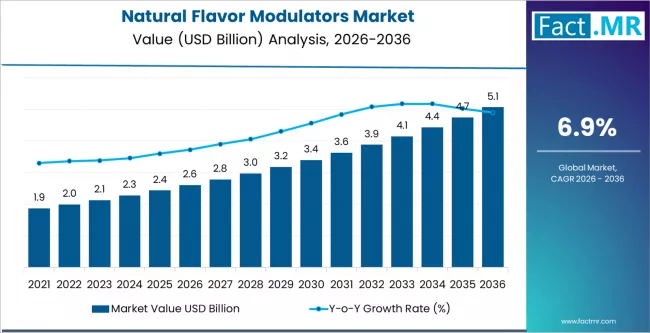
Natural flavor modulators market is projected to grow from USD 2.6 billion in 2026 to USD 5.1 billion by 2036, at a CAGR of 6.9%. Bitterness reduction will dominate with a 34.0% market share, while natural botanical extracts will lead the source segment with a 49.0% share.

Natural Flavor Modulators Market Forecast Outlook 2026 to 2036

The natural flavor modulators market is projected to reach USD 2.6 billion in 2026, growing to USD 5.1 billion by 2036, with a CAGR of 6.9%.

Key Takeaways from Natural Flavor Modulators Market

  • Natural Flavor Modulators Market Value (2026): USD 2.6 billion
  • Natural Flavor Modulators Market Forecast Value (2036): USD 5.1 billion
  • Natural Flavor Modulators Market Forecast CAGR 2026 to 2036: 6.9%
  • Leading Segment in Natural Flavor Modulators Market: Natural botanical extracts (49%)
  • Key Growth Region in Natural Flavor Modulators Market: Asia Pacific
  • Key Players in Natural Flavor Modulators Market: Givaudan SA, International Flavors & Fragrances Inc. (IFF), Symrise AG, DSMFirmenich, Sensient Technologies Corporation, Kerry Group plc, Ingredion Incorporated, Takasago International Corporation, Corbion NV, Cargill, Incorporated

Natural Flavor Modulators Market Market Value Analysis

Procurement priorities will be increasingly driven by product quality, reliability, and long-term supply consistency as companies aim to reduce operational risks. Buyer risk aversion will prompt a preference for established vendors offering proven solutions, contributing to stronger vendor lock-in.

As a result, switching costs will play a significant role in shaping buyer decisions, with companies seeking to avoid disruptions in supply chains or product performance. Vendors who can offer flexibility in pricing and product customization will have a competitive edge in retaining clients. Moreover, the long-term relationships formed due to risk mitigation strategies are likely to impact the market, as buyers seek suppliers with stable pricing and dependable delivery timelines. These factors will drive the evolution of procurement strategies in the market.

Natural Flavor Modulators Market

Metric Value
Estimated Value in (2026E) USD 2.6 billion
Forecast Value in (2036F) USD 5.1 billion
Forecast CAGR (2026 to 2036) 6.9%

Category

Category Segments
Functional Role Bitterness reduction; Sweetness enhancement; Salt modulation; Aroma balancing; Other flavor adjustment
Source Natural botanical extracts; Fermented natural modulators; Enzyme-derived modulators; Other natural sources
Application Beverages; Dairy and dairy alternatives; Bakery and confectionery; Processed foods; Snacks and savory
Region North America; Europe; Asia Pacific; Latin America; Middle East & Africa

Segmental Analysis

What Is the Impact of Source on the Natural Flavor Modulators Market?

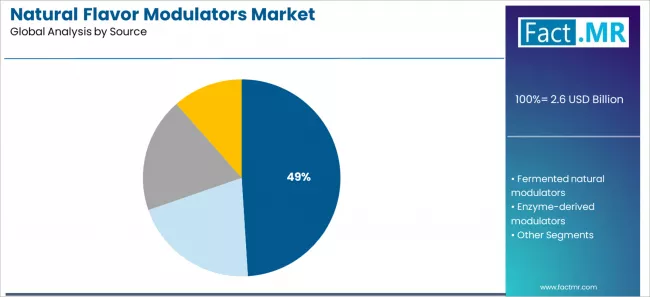
Natural Flavor Modulators Market Analysis By Source

In the natural flavor modulators market, the source plays a significant role in determining the functionality and application of the modulators. Natural botanical extracts lead the market with a 49% share, as they provide a natural, clean-label option for flavor enhancement. These extracts are widely used in various food and beverage applications to modify or enhance flavors without relying on artificial additives. As consumers continue to seek natural and healthy alternatives in their food choices, the demand for flavor modulators derived from botanical sources will remain strong, driving market growth across multiple sectors, including beverages, dairy, and processed foods.

How Does Application Influence the Natural Flavor Modulators Market?

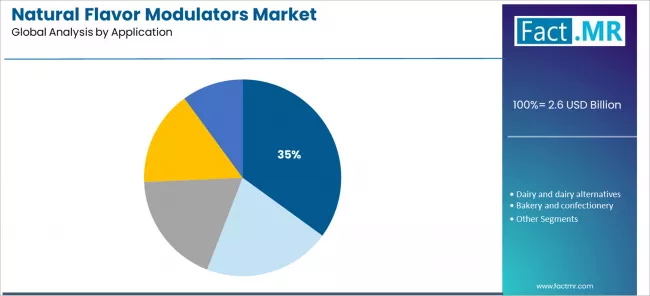
Natural Flavor Modulators Market Analysis By Application

Application plays a crucial role in shaping the demand for natural flavor modulators, with beverages accounting for 35% of the market share. Natural flavor modulators are essential in the beverage industry for balancing and enhancing flavors, especially in functional drinks, flavored waters, and health-oriented beverages. These modulators help to mask undesirable notes while enhancing the overall sensory experience. As the market for functional beverages grows, the role of natural flavor modulators will become even more critical, with an increasing focus on clean-label, natural ingredients that meet consumer demands for both health benefits and superior taste.

What are the Key Drivers, Constraints, and Emerging Trends in the Natural Flavor Modulators Market?

  • Drivers: Demand for natural flavor modulators is shaped by food and beverage manufacturers’ efforts to refine taste profiles while aligning with clean label requirements. Producers of snacks, beverages, and dairy alternatives specify modulators to enhance desirable notes and balance inherent flavors from proteins, botanicals, or fermentation derived components. Regulatory frameworks that define natural ingredient status influence supplier selection and formulation strategies.
  • Constraints: Functional performance of natural modulators varies with product matrix, pH, and processing conditions, creating challenges in formulation consistency. Some modulators require precise dosing and pilot scale testing to avoid off notes or masking of intended flavors. Differences in regional labeling regulations for natural claims affect sourcing and declaration practices for manufacturers selling in multiple markets.
  • Trend 1: Expansion of ingredient libraries that link specific modulator chemistries with targeted taste outcomes in plant based and alternative protein applications.
  • Trend 2: Increased use of predictive sensory analytics to guide modulator selection and optimize formulations before full scale production.

Analysis of the Natural Flavor Modulators Market by Key Country

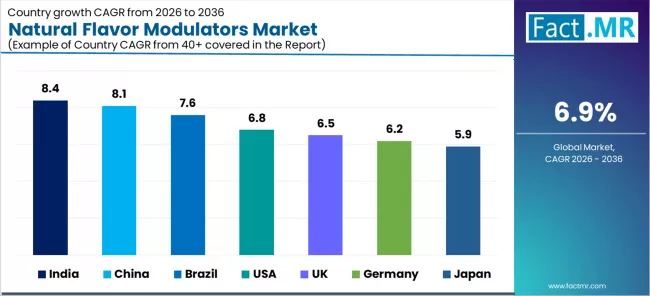
Natural Flavor Modulators Market Cagr Analysis By Country

Country CAGR (2026-2036)
India 8.4%
China 8.1%
Brazil 7.6%
USA 6.8%
UK 6.5%
Germany 6.2%
Japan 5.9%

The report covers an in-depth analysis of 40+ countries; top-performing countries are highlighted below.

What is the Growth Outlook for Natural Flavor Modulators Market in India?

India’s natural flavor modulators market is projected to grow at a CAGR of 8.4% from 2026 to 2036. As the demand for clean-label and healthier food products continues to rise, the need for natural flavor modulators to enhance taste while maintaining product integrity is increasing. These modulators are essential for improving flavor profiles in a variety of food and beverage products, including snacks, beverages, and dairy alternatives. With India’s growing focus on health-conscious eating and consumer interest in natural ingredients, the market for natural flavor modulators is set for robust growth, driven by both consumer preferences and industry innovations.

How is the Natural Flavor Modulators Market Performing in China?

China’s natural flavor modulators market is expected to grow at a CAGR of 8.1% from 2026 to 2036. As one of the largest and most diverse food markets, China’s demand for natural flavor modulators is rising, driven by the growing consumer preference for healthier, cleaner foods. These modulators are used in a wide range of applications, from beverages to packaged foods, to enhance flavors without the use of artificial additives. As consumer awareness of health and sustainability increases, the market for natural flavor modulators in China is poised for steady growth, supported by both traditional and modern food consumption trends.

What is the Market Outlook for Natural Flavor Modulators Market in Brazil?

Brazil’s natural flavor modulators market is projected to grow at a CAGR of 7.6% from 2026 to 2036. As Brazil’s food and beverage sector continues to expand, the demand for natural flavor modulators to enhance the taste of healthier, functional foods is increasing. These ingredients are crucial in improving flavor profiles in plant-based and clean-label products, which are gaining popularity in Brazil. With consumers becoming more health-conscious and environmentally aware, the market for natural flavor modulators is expected to grow steadily, driven by both local demand for healthier options and global trends in food innovation.

What is the Growth Potential for Natural Flavor Modulators Market in the USA?

The USA’s natural flavor modulators market is forecast to grow at a CAGR of 6.8% from 2026 to 2036. As the demand for natural, clean-label foods continues to rise, the need for flavor modulators to enhance taste without the use of artificial additives is growing. Natural flavor modulators are increasingly being used in a variety of products, including snacks, beverages, and functional foods, to improve taste and consumer acceptance. The USA’s market for these ingredients is driven by consumer trends toward healthier, sustainable eating, and the demand for innovative, high-quality flavor solutions. This will support continued growth in the market.

What is the Demand for Natural Flavor Modulators Market in the UK?

The UK’s natural flavor modulators market is set to grow at a CAGR of 6.5% from 2026 to 2036. With the increasing consumer focus on health, wellness, and sustainability, the demand for natural flavor modulators to improve taste in functional and clean-label foods is rising. These ingredients play an important role in enhancing flavor profiles in a wide range of products, particularly in plant-based foods and beverages. As the UK continues to prioritize sustainability and health-conscious food choices, the market for natural flavor modulators will continue to expand, supported by consumer demand for products that align with these values.

What is the Market Expansion Outlook for Natural Flavor Modulators Market in Germany?

Germany’s natural flavor modulators market is projected to grow at a CAGR of 6.2% from 2026 to 2036. As Germany’s food industry continues to innovate with healthier, more sustainable food options, the demand for natural flavor modulators to improve the taste and quality of food products is increasing. These modulators are especially important in plant-based and clean-label foods, where natural ingredients are a key selling point. With Germany’s growing focus on health, sustainability, and food quality, the market for natural flavor modulators will continue to experience steady growth, driven by both consumer trends and industry advancements.

What is the Growth Potential for Natural Flavor Modulators Market in Japan?

Japan’s natural flavor modulators market is expected to grow at a CAGR of 5.9% from 2026 to 2036. With increasing consumer demand for functional and plant-based foods, the need for natural flavor modulators to enhance taste while keeping products clean and healthy is rising. Japan’s market is driven by a focus on traditional food innovations as well as modern food trends, including plant-based and low-sugar alternatives. As Japanese consumers continue to prioritize health and wellness, the market for natural flavor modulators will expand steadily, supported by both traditional food consumption patterns and evolving dietary preferences.

How is Competition Structured in the Natural Flavor Modulators Market?

Competition in the natural flavor modulators market is shaped by depth of flavor science, breadth of modulatory solutions, and compatibility with diverse food and beverage systems. Givaudan SA, IFF, Symrise AG, and DSM Firmenich lead with research driven modulation platforms that adjust flavor intensity, balance top notes, and enhance overall sensory profiles. Their offerings are backed by formulation support and sensory validation across applications.

Sensient Technologies Corporation and Kerry Group plc differentiate with ingredient systems that integrate natural modulators with extract and aroma portfolios, aiding seamless product formulation. Ingredion Incorporated and Cargill, Incorporated offer carbohydrate based carriers and functional systems that support flavor stability and release control. Takasago International Corporation competes with targeted natural modulators geared to specific taste profiles, while Corbion NV positions its offerings with fermentation derived modulatory ingredients that align with clean label trends. Competitive differentiation arises from documented modulation performance, regulatory readiness for global markets, and technical support for rapid prototyping and scale up. Buyers evaluate suppliers based on sensory outcomes, ingredient traceability, and ease of integration into complex formulations.

Key Players in the Natural Flavor Modulators Market?

  • Givaudan SA
  • International Flavors & Fragrances Inc. (IFF)
  • Symrise AG
  • DSMFirmenich
  • Sensient Technologies Corporation
  • Kerry Group plc
  • Ingredion Incorporated
  • Takasago International Corporation
  • Corbion NV
  • Cargill, Incorporated

Scope of the Report

Items Values
Quantitative Units (2026) USD Billion
Functional Role Bitterness reduction, Sweetness enhancement, Salt modulation, Aroma balancing, Other flavor adjustment
Source Natural botanical extracts, Fermented natural modulators, Enzyme-derived modulators, Other natural sources
Application Beverages, Dairy and dairy alternatives, Bakery and confectionery, Processed foods, Snacks and savory
Regions Covered North America, Europe, Asia Pacific, Latin America, Middle East & Africa
Countries Covered United States, Canada, Mexico, Brazil, Germany, United Kingdom, France, Italy, Spain, China, Japan, South Korea, India, Australia & New Zealand
Key Companies Profiled Givaudan SA, International Flavors & Fragrances Inc. (IFF), Symrise AG, DSM-Firmenich, Sensient Technologies Corporation, Kerry Group plc, Ingredion Incorporated, Takasago International Corporation, Corbion NV, Cargill, Incorporated
Additional Attributes Dollar revenue by functional role, source, and application; regional demand trends, competitive landscape, technological advancements in natural flavor modulators, and innovations in flavor modulation techniques

Natural Flavor Modulators Market Key Segments

  • Functional Role :

    • Bitterness reduction
    • Sweetness enhancement
    • Salt modulation
    • Aroma balancing
    • Other flavor adjustment
  • Source :

    • Natural botanical extracts
    • Fermented natural modulators
    • Enzyme-derived modulators
    • Other natural sources
  • Application:

    • Beverages
    • Dairy and dairy alternatives
    • Bakery and confectionery
    • Processed foods
    • Snacks and savory
  • Region:

    • North America
      • U.S.
      • Canada
      • Mexico
    • Europe
      • Germany
      • UK
      • France
      • Italy
      • Spain
      • Nordic Countries
      • BENELUX
      • Rest of Europe
    • Asia Pacific
      • China
      • Japan
      • South Korea
      • India
      • Australia
      • Rest of Asia Pacific
    • Latin America
      • Brazil
      • Argentina
      • Rest of Latin America
    • Middle East and Africa
      • Kingdom of Saudi Arabia
      • United Arab Emirates
      • South Africa
      • Rest of Middle East and Africa
    • Other Regions
      • Oceania
      • Central Asia
      • Other Markets

Bibliographies

  • Lawless, H. T., & Heymann, H. (2023). Sensory evaluation of food: Principles and practices (3rd ed.). Springer.
  • Zhang, Y., Li, X., & Wang, R. (2024). Natural compounds as flavor modulators in plant-based and clean-label food systems. Trends in Food Science & Technology, 141, 104-116.
  • European Food Safety Authority. (2024). Scientific opinion on the safety and functional role of flavoring substances with taste-modulating properties. EFSA Journal, 22(5), e08912.
  • U.S. Food and Drug Administration. (2023). Flavoring substances, adjuvants, and modulators: Regulatory status and functional classification. FDA.
  • Institute of Food Technologists. (2024). Natural flavor modulation strategies for sugar and sodium reduction. Food Technology, 78(8), 36-45.

Table of Content

  1. Executive Summary
    • Global Market Outlook
    • Demand to side Trends
    • Supply to side Trends
    • Technology Roadmap Analysis
    • Analysis and Recommendations
  2. Market Overview
    • Market Coverage / Taxonomy
    • Market Definition / Scope / Limitations
  3. Market Background
    • Market Dynamics
      • Drivers
      • Restraints
      • Opportunity
      • Trends
    • Scenario Forecast
      • Demand in Optimistic Scenario
      • Demand in Likely Scenario
      • Demand in Conservative Scenario
    • Opportunity Map Analysis
    • Product Life Cycle Analysis
    • Supply Chain Analysis
    • Investment Feasibility Matrix
    • Value Chain Analysis
    • PESTLE and Porter’s Analysis
    • Regulatory Landscape
    • Regional Parent Market Outlook
    • Production and Consumption Statistics
    • Import and Export Statistics
  4. Global Market Analysis 2021 to 2025 and Forecast, 2026 to 2036
    • Historical Market Size Value (USD Million) Analysis, 2021 to 2025
    • Current and Future Market Size Value (USD Million) Projections, 2026 to 2036
      • Y to o to Y Growth Trend Analysis
      • Absolute $ Opportunity Analysis
  5. Global Market Pricing Analysis 2021 to 2025 and Forecast 2026 to 2036
  6. Global Market Analysis 2021 to 2025 and Forecast 2026 to 2036, By Functional Role
    • Introduction / Key Findings
    • Historical Market Size Value (USD Million) Analysis By Functional Role, 2021 to 2025
    • Current and Future Market Size Value (USD Million) Analysis and Forecast By Functional Role, 2026 to 2036
      • Bitterness reduction
      • Sweetness enhancement
      • Salt modulation
      • Aroma balancing
      • Other flavor adjustment
    • Y to o to Y Growth Trend Analysis By Functional Role, 2021 to 2025
    • Absolute $ Opportunity Analysis By Functional Role, 2026 to 2036
  7. Global Market Analysis 2021 to 2025 and Forecast 2026 to 2036, By Source
    • Introduction / Key Findings
    • Historical Market Size Value (USD Million) Analysis By Source, 2021 to 2025
    • Current and Future Market Size Value (USD Million) Analysis and Forecast By Source, 2026 to 2036
      • Natural botanical extracts
      • Fermented natural modulators
      • Enzyme‑derived modulators
      • Other natural sources
    • Y to o to Y Growth Trend Analysis By Source, 2021 to 2025
    • Absolute $ Opportunity Analysis By Source, 2026 to 2036
  8. Global Market Analysis 2021 to 2025 and Forecast 2026 to 2036, By Application
    • Introduction / Key Findings
    • Historical Market Size Value (USD Million) Analysis By Application, 2021 to 2025
    • Current and Future Market Size Value (USD Million) Analysis and Forecast By Application, 2026 to 2036
      • Beverages
      • Dairy and dairy alternatives
      • Bakery and confectionery
      • Processed foods
      • Snacks and savory
    • Y to o to Y Growth Trend Analysis By Application, 2021 to 2025
    • Absolute $ Opportunity Analysis By Application, 2026 to 2036
  9. Global Market Analysis 2021 to 2025 and Forecast 2026 to 2036, By Region
    • Introduction
    • Historical Market Size Value (USD Million) Analysis By Region, 2021 to 2025
    • Current Market Size Value (USD Million) Analysis and Forecast By Region, 2026 to 2036
      • North America
      • Latin America
      • Western Europe
      • Eastern Europe
      • East Asia
      • South Asia and Pacific
      • Middle East & Africa
    • Market Attractiveness Analysis By Region
  10. North America Market Analysis 2021 to 2025 and Forecast 2026 to 2036, By Country
    • Historical Market Size Value (USD Million) Trend Analysis By Market Taxonomy, 2021 to 2025
    • Market Size Value (USD Million) Forecast By Market Taxonomy, 2026 to 2036
      • By Country
        • USA
        • Canada
        • Mexico
      • By Functional Role
      • By Source
      • By Application
    • Market Attractiveness Analysis
      • By Country
      • By Functional Role
      • By Source
      • By Application
    • Key Takeaways
  11. Latin America Market Analysis 2021 to 2025 and Forecast 2026 to 2036, By Country
    • Historical Market Size Value (USD Million) Trend Analysis By Market Taxonomy, 2021 to 2025
    • Market Size Value (USD Million) Forecast By Market Taxonomy, 2026 to 2036
      • By Country
        • Brazil
        • Chile
        • Rest of Latin America
      • By Functional Role
      • By Source
      • By Application
    • Market Attractiveness Analysis
      • By Country
      • By Functional Role
      • By Source
      • By Application
    • Key Takeaways
  12. Western Europe Market Analysis 2021 to 2025 and Forecast 2026 to 2036, By Country
    • Historical Market Size Value (USD Million) Trend Analysis By Market Taxonomy, 2021 to 2025
    • Market Size Value (USD Million) Forecast By Market Taxonomy, 2026 to 2036
      • By Country
        • Germany
        • UK
        • Italy
        • Spain
        • France
        • Nordic
        • BENELUX
        • Rest of Western Europe
      • By Functional Role
      • By Source
      • By Application
    • Market Attractiveness Analysis
      • By Country
      • By Functional Role
      • By Source
      • By Application
    • Key Takeaways
  13. Eastern Europe Market Analysis 2021 to 2025 and Forecast 2026 to 2036, By Country
    • Historical Market Size Value (USD Million) Trend Analysis By Market Taxonomy, 2021 to 2025
    • Market Size Value (USD Million) Forecast By Market Taxonomy, 2026 to 2036
      • By Country
        • Russia
        • Poland
        • Hungary
        • Balkan & Baltic
        • Rest of Eastern Europe
      • By Functional Role
      • By Source
      • By Application
    • Market Attractiveness Analysis
      • By Country
      • By Functional Role
      • By Source
      • By Application
    • Key Takeaways
  14. East Asia Market Analysis 2021 to 2025 and Forecast 2026 to 2036, By Country
    • Historical Market Size Value (USD Million) Trend Analysis By Market Taxonomy, 2021 to 2025
    • Market Size Value (USD Million) Forecast By Market Taxonomy, 2026 to 2036
      • By Country
        • China
        • Japan
        • South Korea
      • By Functional Role
      • By Source
      • By Application
    • Market Attractiveness Analysis
      • By Country
      • By Functional Role
      • By Source
      • By Application
    • Key Takeaways
  15. South Asia and Pacific Market Analysis 2021 to 2025 and Forecast 2026 to 2036, By Country
    • Historical Market Size Value (USD Million) Trend Analysis By Market Taxonomy, 2021 to 2025
    • Market Size Value (USD Million) Forecast By Market Taxonomy, 2026 to 2036
      • By Country
        • India
        • ASEAN
        • Australia & New Zealand
        • Rest of South Asia and Pacific
      • By Functional Role
      • By Source
      • By Application
    • Market Attractiveness Analysis
      • By Country
      • By Functional Role
      • By Source
      • By Application
    • Key Takeaways
  16. Middle East & Africa Market Analysis 2021 to 2025 and Forecast 2026 to 2036, By Country
    • Historical Market Size Value (USD Million) Trend Analysis By Market Taxonomy, 2021 to 2025
    • Market Size Value (USD Million) Forecast By Market Taxonomy, 2026 to 2036
      • By Country
        • Kingdom of Saudi Arabia
        • Other GCC Countries
        • Turkiye
        • South Africa
        • Other African Union
        • Rest of Middle East & Africa
      • By Functional Role
      • By Source
      • By Application
    • Market Attractiveness Analysis
      • By Country
      • By Functional Role
      • By Source
      • By Application
    • Key Takeaways
  17. Key Countries Market Analysis
    • USA
      • Pricing Analysis
      • Market Share Analysis, 2025
        • By Functional Role
        • By Source
        • By Application
    • Canada
      • Pricing Analysis
      • Market Share Analysis, 2025
        • By Functional Role
        • By Source
        • By Application
    • Mexico
      • Pricing Analysis
      • Market Share Analysis, 2025
        • By Functional Role
        • By Source
        • By Application
    • Brazil
      • Pricing Analysis
      • Market Share Analysis, 2025
        • By Functional Role
        • By Source
        • By Application
    • Chile
      • Pricing Analysis
      • Market Share Analysis, 2025
        • By Functional Role
        • By Source
        • By Application
    • Germany
      • Pricing Analysis
      • Market Share Analysis, 2025
        • By Functional Role
        • By Source
        • By Application
    • UK
      • Pricing Analysis
      • Market Share Analysis, 2025
        • By Functional Role
        • By Source
        • By Application
    • Italy
      • Pricing Analysis
      • Market Share Analysis, 2025
        • By Functional Role
        • By Source
        • By Application
    • Spain
      • Pricing Analysis
      • Market Share Analysis, 2025
        • By Functional Role
        • By Source
        • By Application
    • France
      • Pricing Analysis
      • Market Share Analysis, 2025
        • By Functional Role
        • By Source
        • By Application
    • India
      • Pricing Analysis
      • Market Share Analysis, 2025
        • By Functional Role
        • By Source
        • By Application
    • ASEAN
      • Pricing Analysis
      • Market Share Analysis, 2025
        • By Functional Role
        • By Source
        • By Application
    • Australia & New Zealand
      • Pricing Analysis
      • Market Share Analysis, 2025
        • By Functional Role
        • By Source
        • By Application
    • China
      • Pricing Analysis
      • Market Share Analysis, 2025
        • By Functional Role
        • By Source
        • By Application
    • Japan
      • Pricing Analysis
      • Market Share Analysis, 2025
        • By Functional Role
        • By Source
        • By Application
    • South Korea
      • Pricing Analysis
      • Market Share Analysis, 2025
        • By Functional Role
        • By Source
        • By Application
    • Russia
      • Pricing Analysis
      • Market Share Analysis, 2025
        • By Functional Role
        • By Source
        • By Application
    • Poland
      • Pricing Analysis
      • Market Share Analysis, 2025
        • By Functional Role
        • By Source
        • By Application
    • Hungary
      • Pricing Analysis
      • Market Share Analysis, 2025
        • By Functional Role
        • By Source
        • By Application
    • Kingdom of Saudi Arabia
      • Pricing Analysis
      • Market Share Analysis, 2025
        • By Functional Role
        • By Source
        • By Application
    • Turkiye
      • Pricing Analysis
      • Market Share Analysis, 2025
        • By Functional Role
        • By Source
        • By Application
    • South Africa
      • Pricing Analysis
      • Market Share Analysis, 2025
        • By Functional Role
        • By Source
        • By Application
  18. Market Structure Analysis
    • Competition Dashboard
    • Competition Benchmarking
    • Market Share Analysis of Top Players
      • By Regional
      • By Functional Role
      • By Source
      • By Application
  19. Competition Analysis
    • Competition Deep Dive
      • Givaudan SA
        • Overview
        • Product Portfolio
        • Profitability by Market Segments (Product/Age /Sales Channel/Region)
        • Sales Footprint
        • Strategy Overview
          • Marketing Strategy
          • Product Strategy
          • Channel Strategy
      • International Flavors & Fragrances Inc. (IFF)
      • Symrise AG
      • DSM‑Firmenich
      • Sensient Technologies Corporation
      • Kerry Group plc
      • Ingredion Incorporated
      • Takasago International Corporation
      • Corbion NV
      • Cargill, Incorporated
  20. Assumptions & Acronyms Used
  21. Research Methodology

List Of Table

  • Table 1: Global Market Value (USD Million) Forecast by Region, 2021 to 2036
  • Table 2: Global Market Value (USD Million) Forecast by Functional Role, 2021 to 2036
  • Table 3: Global Market Value (USD Million) Forecast by Source, 2021 to 2036
  • Table 4: Global Market Value (USD Million) Forecast by Application, 2021 to 2036
  • Table 5: North America Market Value (USD Million) Forecast by Country, 2021 to 2036
  • Table 6: North America Market Value (USD Million) Forecast by Functional Role, 2021 to 2036
  • Table 7: North America Market Value (USD Million) Forecast by Source, 2021 to 2036
  • Table 8: North America Market Value (USD Million) Forecast by Application, 2021 to 2036
  • Table 9: Latin America Market Value (USD Million) Forecast by Country, 2021 to 2036
  • Table 10: Latin America Market Value (USD Million) Forecast by Functional Role, 2021 to 2036
  • Table 11: Latin America Market Value (USD Million) Forecast by Source, 2021 to 2036
  • Table 12: Latin America Market Value (USD Million) Forecast by Application, 2021 to 2036
  • Table 13: Western Europe Market Value (USD Million) Forecast by Country, 2021 to 2036
  • Table 14: Western Europe Market Value (USD Million) Forecast by Functional Role, 2021 to 2036
  • Table 15: Western Europe Market Value (USD Million) Forecast by Source, 2021 to 2036
  • Table 16: Western Europe Market Value (USD Million) Forecast by Application, 2021 to 2036
  • Table 17: Eastern Europe Market Value (USD Million) Forecast by Country, 2021 to 2036
  • Table 18: Eastern Europe Market Value (USD Million) Forecast by Functional Role, 2021 to 2036
  • Table 19: Eastern Europe Market Value (USD Million) Forecast by Source, 2021 to 2036
  • Table 20: Eastern Europe Market Value (USD Million) Forecast by Application, 2021 to 2036
  • Table 21: East Asia Market Value (USD Million) Forecast by Country, 2021 to 2036
  • Table 22: East Asia Market Value (USD Million) Forecast by Functional Role, 2021 to 2036
  • Table 23: East Asia Market Value (USD Million) Forecast by Source, 2021 to 2036
  • Table 24: East Asia Market Value (USD Million) Forecast by Application, 2021 to 2036
  • Table 25: South Asia and Pacific Market Value (USD Million) Forecast by Country, 2021 to 2036
  • Table 26: South Asia and Pacific Market Value (USD Million) Forecast by Functional Role, 2021 to 2036
  • Table 27: South Asia and Pacific Market Value (USD Million) Forecast by Source, 2021 to 2036
  • Table 28: South Asia and Pacific Market Value (USD Million) Forecast by Application, 2021 to 2036
  • Table 29: Middle East & Africa Market Value (USD Million) Forecast by Country, 2021 to 2036
  • Table 30: Middle East & Africa Market Value (USD Million) Forecast by Functional Role, 2021 to 2036
  • Table 31: Middle East & Africa Market Value (USD Million) Forecast by Source, 2021 to 2036
  • Table 32: Middle East & Africa Market Value (USD Million) Forecast by Application, 2021 to 2036

List Of Figures

  • Figure 1: Global Market Pricing Analysis
  • Figure 2: Global Market Value (USD Million) Forecast 2021 to 2036
  • Figure 3: Global Market Value Share and BPS Analysis by Functional Role, 2026 and 2036
  • Figure 4: Global Market Y to o to Y Growth Comparison by Functional Role, 2026 to 2036
  • Figure 5: Global Market Attractiveness Analysis by Functional Role
  • Figure 6: Global Market Value Share and BPS Analysis by Source, 2026 and 2036
  • Figure 7: Global Market Y to o to Y Growth Comparison by Source, 2026 to 2036
  • Figure 8: Global Market Attractiveness Analysis by Source
  • Figure 9: Global Market Value Share and BPS Analysis by Application, 2026 and 2036
  • Figure 10: Global Market Y to o to Y Growth Comparison by Application, 2026 to 2036
  • Figure 11: Global Market Attractiveness Analysis by Application
  • Figure 12: Global Market Value (USD Million) Share and BPS Analysis by Region, 2026 and 2036
  • Figure 13: Global Market Y to o to Y Growth Comparison by Region, 2026 to 2036
  • Figure 14: Global Market Attractiveness Analysis by Region
  • Figure 15: North America Market Incremental Dollar Opportunity, 2026 to 2036
  • Figure 16: Latin America Market Incremental Dollar Opportunity, 2026 to 2036
  • Figure 17: Western Europe Market Incremental Dollar Opportunity, 2026 to 2036
  • Figure 18: Eastern Europe Market Incremental Dollar Opportunity, 2026 to 2036
  • Figure 19: East Asia Market Incremental Dollar Opportunity, 2026 to 2036
  • Figure 20: South Asia and Pacific Market Incremental Dollar Opportunity, 2026 to 2036
  • Figure 21: Middle East & Africa Market Incremental Dollar Opportunity, 2026 to 2036
  • Figure 22: North America Market Value Share and BPS Analysis by Country, 2026 and 2036
  • Figure 23: North America Market Value Share and BPS Analysis by Functional Role, 2026 and 2036
  • Figure 24: North America Market Y to o to Y Growth Comparison by Functional Role, 2026 to 2036
  • Figure 25: North America Market Attractiveness Analysis by Functional Role
  • Figure 26: North America Market Value Share and BPS Analysis by Source, 2026 and 2036
  • Figure 27: North America Market Y to o to Y Growth Comparison by Source, 2026 to 2036
  • Figure 28: North America Market Attractiveness Analysis by Source
  • Figure 29: North America Market Value Share and BPS Analysis by Application, 2026 and 2036
  • Figure 30: North America Market Y to o to Y Growth Comparison by Application, 2026 to 2036
  • Figure 31: North America Market Attractiveness Analysis by Application
  • Figure 32: Latin America Market Value Share and BPS Analysis by Country, 2026 and 2036
  • Figure 33: Latin America Market Value Share and BPS Analysis by Functional Role, 2026 and 2036
  • Figure 34: Latin America Market Y to o to Y Growth Comparison by Functional Role, 2026 to 2036
  • Figure 35: Latin America Market Attractiveness Analysis by Functional Role
  • Figure 36: Latin America Market Value Share and BPS Analysis by Source, 2026 and 2036
  • Figure 37: Latin America Market Y to o to Y Growth Comparison by Source, 2026 to 2036
  • Figure 38: Latin America Market Attractiveness Analysis by Source
  • Figure 39: Latin America Market Value Share and BPS Analysis by Application, 2026 and 2036
  • Figure 40: Latin America Market Y to o to Y Growth Comparison by Application, 2026 to 2036
  • Figure 41: Latin America Market Attractiveness Analysis by Application
  • Figure 42: Western Europe Market Value Share and BPS Analysis by Country, 2026 and 2036
  • Figure 43: Western Europe Market Value Share and BPS Analysis by Functional Role, 2026 and 2036
  • Figure 44: Western Europe Market Y to o to Y Growth Comparison by Functional Role, 2026 to 2036
  • Figure 45: Western Europe Market Attractiveness Analysis by Functional Role
  • Figure 46: Western Europe Market Value Share and BPS Analysis by Source, 2026 and 2036
  • Figure 47: Western Europe Market Y to o to Y Growth Comparison by Source, 2026 to 2036
  • Figure 48: Western Europe Market Attractiveness Analysis by Source
  • Figure 49: Western Europe Market Value Share and BPS Analysis by Application, 2026 and 2036
  • Figure 50: Western Europe Market Y to o to Y Growth Comparison by Application, 2026 to 2036
  • Figure 51: Western Europe Market Attractiveness Analysis by Application
  • Figure 52: Eastern Europe Market Value Share and BPS Analysis by Country, 2026 and 2036
  • Figure 53: Eastern Europe Market Value Share and BPS Analysis by Functional Role, 2026 and 2036
  • Figure 54: Eastern Europe Market Y to o to Y Growth Comparison by Functional Role, 2026 to 2036
  • Figure 55: Eastern Europe Market Attractiveness Analysis by Functional Role
  • Figure 56: Eastern Europe Market Value Share and BPS Analysis by Source, 2026 and 2036
  • Figure 57: Eastern Europe Market Y to o to Y Growth Comparison by Source, 2026 to 2036
  • Figure 58: Eastern Europe Market Attractiveness Analysis by Source
  • Figure 59: Eastern Europe Market Value Share and BPS Analysis by Application, 2026 and 2036
  • Figure 60: Eastern Europe Market Y to o to Y Growth Comparison by Application, 2026 to 2036
  • Figure 61: Eastern Europe Market Attractiveness Analysis by Application
  • Figure 62: East Asia Market Value Share and BPS Analysis by Country, 2026 and 2036
  • Figure 63: East Asia Market Value Share and BPS Analysis by Functional Role, 2026 and 2036
  • Figure 64: East Asia Market Y to o to Y Growth Comparison by Functional Role, 2026 to 2036
  • Figure 65: East Asia Market Attractiveness Analysis by Functional Role
  • Figure 66: East Asia Market Value Share and BPS Analysis by Source, 2026 and 2036
  • Figure 67: East Asia Market Y to o to Y Growth Comparison by Source, 2026 to 2036
  • Figure 68: East Asia Market Attractiveness Analysis by Source
  • Figure 69: East Asia Market Value Share and BPS Analysis by Application, 2026 and 2036
  • Figure 70: East Asia Market Y to o to Y Growth Comparison by Application, 2026 to 2036
  • Figure 71: East Asia Market Attractiveness Analysis by Application
  • Figure 72: South Asia and Pacific Market Value Share and BPS Analysis by Country, 2026 and 2036
  • Figure 73: South Asia and Pacific Market Value Share and BPS Analysis by Functional Role, 2026 and 2036
  • Figure 74: South Asia and Pacific Market Y to o to Y Growth Comparison by Functional Role, 2026 to 2036
  • Figure 75: South Asia and Pacific Market Attractiveness Analysis by Functional Role
  • Figure 76: South Asia and Pacific Market Value Share and BPS Analysis by Source, 2026 and 2036
  • Figure 77: South Asia and Pacific Market Y to o to Y Growth Comparison by Source, 2026 to 2036
  • Figure 78: South Asia and Pacific Market Attractiveness Analysis by Source
  • Figure 79: South Asia and Pacific Market Value Share and BPS Analysis by Application, 2026 and 2036
  • Figure 80: South Asia and Pacific Market Y to o to Y Growth Comparison by Application, 2026 to 2036
  • Figure 81: South Asia and Pacific Market Attractiveness Analysis by Application
  • Figure 82: Middle East & Africa Market Value Share and BPS Analysis by Country, 2026 and 2036
  • Figure 83: Middle East & Africa Market Value Share and BPS Analysis by Functional Role, 2026 and 2036
  • Figure 84: Middle East & Africa Market Y to o to Y Growth Comparison by Functional Role, 2026 to 2036
  • Figure 85: Middle East & Africa Market Attractiveness Analysis by Functional Role
  • Figure 86: Middle East & Africa Market Value Share and BPS Analysis by Source, 2026 and 2036
  • Figure 87: Middle East & Africa Market Y to o to Y Growth Comparison by Source, 2026 to 2036
  • Figure 88: Middle East & Africa Market Attractiveness Analysis by Source
  • Figure 89: Middle East & Africa Market Value Share and BPS Analysis by Application, 2026 and 2036
  • Figure 90: Middle East & Africa Market Y to o to Y Growth Comparison by Application, 2026 to 2036
  • Figure 91: Middle East & Africa Market Attractiveness Analysis by Application
  • Figure 92: Global Market - Tier Structure Analysis
  • Figure 93: Global Market - Company Share Analysis

- FAQs -

How big is the natural flavor modulators market in 2026?

The global natural flavor modulators market is estimated to be valued at USD 2.6 billion in 2026.

What will be the size of natural flavor modulators market in 2036?

The market size for the natural flavor modulators market is projected to reach USD 5.1 billion by 2036.

How much will be the natural flavor modulators market growth between 2026 and 2036?

The natural flavor modulators market is expected to grow at a 6.9% CAGR between 2026 and 2036.

What are the key product types in the natural flavor modulators market?

The key product types in natural flavor modulators market are bitterness reduction, sweetness enhancement, salt modulation, aroma balancing and other flavor adjustment.

Which source segment to contribute significant share in the natural flavor modulators market in 2026?

In terms of source, natural botanical extracts segment to command 49.0% share in the natural flavor modulators market in 2026.
Natural Flavor Modulators Market