Nose Reconstruction Market Size, Share, Growth and Forecast (2026 - 2036)
Nose Reconstruction Market is segmented by Product, Procedure Type, Material and Region. Forecasts from 2026 to 2036.
Nose Reconstruction Market Analysis and Forecast by Fact.MR
- The Nose Reconstruction Market is expected to grow from USD 7.0 billion in 2026 to USD 14.1 billion by 2036, at a 7.3% CAGR.
- Driven by rising demand for cosmetic rhinoplasty and expanding reconstructive surgery capabilities using advanced biologic and synthetic graft materials. Growth is further supported by increasing adoption of 3D imaging and surgical planning technologies. Cartilage graft products account for 34.1% of product segment value while cosmetic nose reconstruction contributes 39.8% of procedure demand in 2026.
Summary of Nose Reconstruction Market
- Market Snapshot
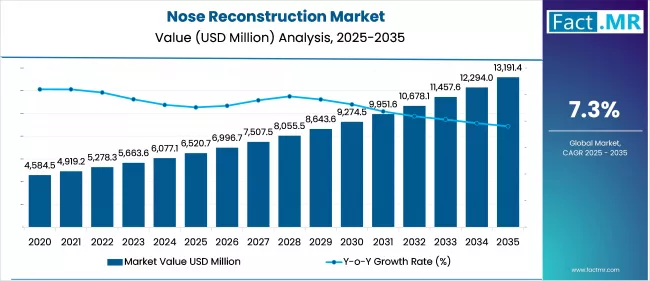
- In 2025, the global Nose Reconstruction Market was valued at approximately USD 6.5 billion.
- The market is estimated to reach USD 7 billion in 2026 and is projected to attain USD 14.1 billion by 2036.
- The nose reconstruction market is likely to expand at a CAGR of 7.3% during the forecast period.
- The market is anticipated to create an absolute dollar opportunity of USD 7.1 billion between 2026 and 2036.
- Cartilage Graft Products accounts for 34.1% of product segment share in 2026.
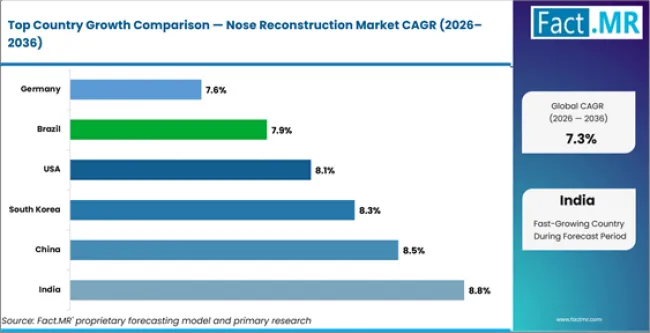
- India (8.8%) and China (8.5%) are the key growth markets during the forecast period.
- Demand and Growth Drivers
- Rising global demand for cosmetic rhinoplasty across both Western and ethnic-specific aesthetic preferences is expanding procedure volumes, particularly in South Korea, the U.S., and Middle East markets.
- Post-traumatic nasal reconstruction demand from facial injury, road traffic accidents, and sports injuries generates sustained surgical volume across hospital emergency and plastic surgery departments.
- Biologic graft materials including processed cartilage, demineralized bone, and acellular dermal matrices are reducing donor site morbidity compared to traditional autologous rib cartilage harvesting.
- 3D imaging and virtual surgical planning are improving patient communication, procedural predictability, and outcome documentation in both cosmetic and reconstructive rhinoplasty.
- Growing adoption of non-surgical rhinoplasty using injectable fillers is creating a complementary demand channel for minimally invasive nasal augmentation products.
- Product and Segment View
- Cartilage graft products lead with 34.1% of product share in 2026, reflecting the fundamental role of cartilage as the primary structural material in rhinoplasty reconstruction.
- Biologic reconstruction materials account for 28.6% of material share, reflecting growing adoption of processed and synthetic alternatives to autologous cartilage grafts.
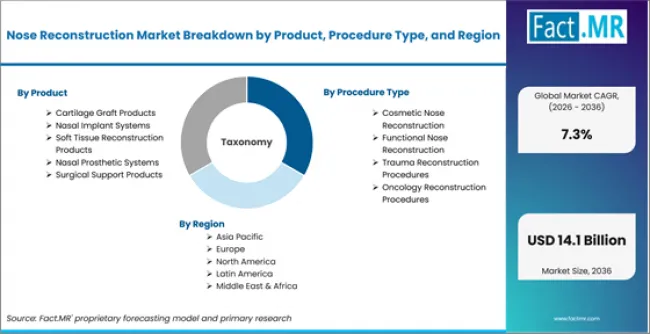
- Key segmentation includes:
- Product: Cartilage Graft Products, Synthetic Implants, Bioresorbable Materials, Prosthetic Nasal Devices
- Procedure Type: Cosmetic Nose Reconstruction, Functional Septorhinoplasty, Post-Traumatic Reconstruction, Congenital Deformity Correction
- Technique: Open Reconstruction Techniques, Closed Reconstruction Techniques, Non-Surgical Augmentation
- These products enable:
- Structural nasal framework reconstruction using cartilage grafts, synthetic implants, and bioresorbable scaffolds
- Functional airway improvement through septorhinoplasty combining cosmetic and breathing function correction
- Non-surgical nasal contour modification through injectable hyaluronic acid filler augmentation
- Geography and Competitive Outlook
- India leads at 8.8%, driven by growing medical tourism for cosmetic surgery, expanding plastic surgery training infrastructure, and rising domestic demand.
- China at 8.5% and South Korea at 8.3% reflect large cosmetic surgery markets with advanced aesthetic surgical techniques.
- USA at 8.1% reflects strong cosmetic and reconstructive rhinoplasty demand across plastic surgery and facial plastic surgery specialties.
- Major players include Stryker, DePuy Synthes (J&J), Medartis, Zimmer Biomet, and Implantech.
- Analyst Opinion
- Shambhu Nath Jha, Principal Consultant at Fact.MR, says "The nose reconstruction market sits at the intersection of cosmetic and reconstructive surgery, with cosmetic rhinoplasty generating nearly 40% of revenue. South Korea, the U.S., and Brazil are the largest procedure volume markets. Stryker leads through its CMF (craniomaxillofacial) implant portfolio, but the competitive dynamic is fragmented because rhinoplasty relies heavily on surgeon technique and autologous cartilage grafting rather than device-dependent procedures. The growth opportunity is concentrated in biologic and synthetic graft materials that reduce autologous cartilage harvesting, and in 3D-printed patient-specific frameworks that improve reconstructive outcomes."
Key Growth Drivers, Constraints, and Opportunities
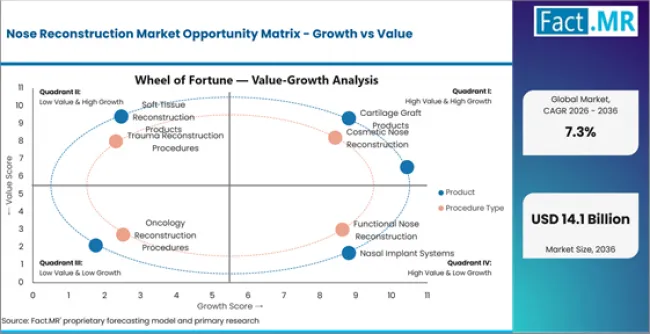
Key Factors Driving Growth
- Demand growth in cosmetic rhinoplasty in South Korea, Middle East and Latin America is creating high volume procedure growth driven by aesthetic and ethnic specific surgical preferences.
- We are reducing the need to harvest autologous rib cartilage, donor site morbidity and surgical time for complex reconstruction by advancing biologic graft material.
- 3D imaging and patient-specific surgical planning are increasing the predictability of outcomes and patient satisfaction in cosmetic and reconstructive rhinoplasty.
Key Market Constraints
- Revision rates for rhinoplasty of 5 to 15% create surgical complexity and risk of patient dissatisfaction that limits some patients from pursuing initial procedures .
- Surgeon technique remains a paramount consideration and product innovation has less of an impact on outcomes than surgeon skill and experience . This is a less fertile environment for device - driven market differentiation .
- In markets with tight control over coverage for elective surgery, the regulatory definition of cosmetic vs reconstructive procedures affects patient access and insurance reimbursement.
Key Opportunity Areas
- Patient-specific 3D printed nasal framework implants provide better anatomical fit and reduced surgical time as compared to hand carved cartilage or stock synthetic implants.
- Injectable hyaluronic acid fillers for non-surgical rhinoplasty are providing a low cost, high volume entry point for nasal contour modification.
- Medical tourism for cosmetic rhinoplasty grows, with procedure volumes clustering in destination markets such as South Korea, Turkey and Thailand.
Segment-wise Analysis of the Nose Reconstruction Market
- Cartilage graft products are expected to hold a 34.1% share of the market in 2026, demonstrating the fundamental structural role of cartilage in rhinoplasty.
- Cosmetic nose reconstruction is the most popular procedure type with 39.8% share. Rising demand for aesthetic surgeries globally is the primary factor that is driving the segment growth.
- Techniques of open reconstruction represent 44.9% of technique share, in line with the preferred surgical approach for complex structural rhinoplasty.
The market is segmented based on product, procedure type, material, application, technique and region. Cartilage grafts lead in structural necessity and synthetic implants grow on reduced donor site morbidity. Cosmetic enhancement application market share is 42.3%.
Which Product Segment Dominates the Nose Reconstruction Market?
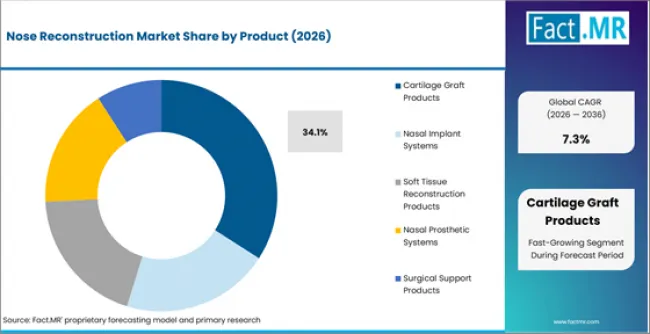
Products of cartilage graft will make up 34.1% of the product segment value in 2026. Autologous cartilage (septal, auricular and rib sources) remains the gold standard for nasal structural reconstruction, with processed allograft cartilage emerging as an alternative to avoid the need for donor site harvesting.
Synthetic implants (silicone, expanded polytetrafluoroethylene, porous polyethylene) are used for augmentation and contour correction when structural grafting is not indicated. Bioresorbable materials are a new class of materials to provide temporary structure support during the tissue remodeling.
Which Procedure Type Dominates the Nose Reconstruction Market?
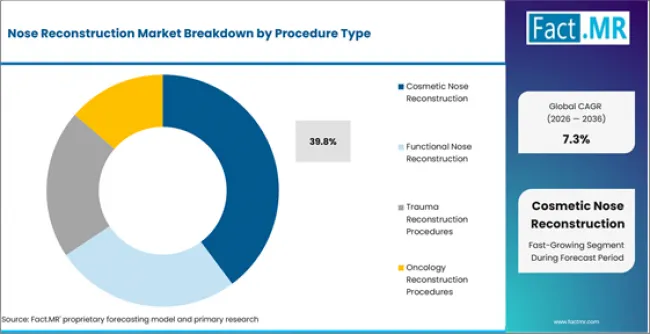
Cosmetic nose reconstruction is 39.8% of procedure type value in 2026. Aesthetic rhinoplasty for dorsal hump reduction, tip refinement and overall nasal contour improvement generates the highest procedure volumes globally. The leading markets are South Korea, the U.S., and Brazil.
Septorhinoplasty is a functional operation that combines the correction of cosmetic and breathing functions, dealing simultaneously with aesthetic problems and obstruction of the airway. Indications of congenital deformity correction and post-traumatic reconstruction are medical necessity and will be reimbursed by insurance.
Which Product Trend is Shaping the Next Phase of Growth in the Nose Reconstruction Market?
The main product trend with potential to transform complex reconstruction is 3D-printed patient-specific nasal frameworks. Still in the early stages of clinical adoption, these implants use CT imaging data to produce anatomically correct scaffolds that fit the patient's nasal structure or desired outcome, reducing time spent carving in the operating room and improving reconstructive predictability.
In the cosmetic segment, a parallel trend is non-surgical rhinoplasty with injectable hyaluronic acid fillers, which offers a lower cost, lower risk entry point for patients who want to change their nasal contour without surgery. This trend is increasing the overall addressable market by expanding the pool of patients who would not have considered surgical rhinoplasty.
Regional Outlook Across Key Markets
- India leads at 8.8%, driven by medical tourism growth, expanding plastic surgery training, and rising domestic cosmetic surgery demand.
- China at 8.5% and South Korea at 8.3% reflect large cosmetic surgery markets with advanced aesthetic techniques.
- USA at 8.1% reflects strong cosmetic and reconstructive rhinoplasty demand across multiple surgical specialties.
.webp)
CAGR Table
| Country | CAGR (%) |
|---|---|
| India | 8.8% |
| China | 8.5% |
| South Korea | 8.3% |
| USA | 8.1% |
| Brazil | 7.9% |
| Germany | 7.6% |
Source: Fact.MR analysis, based on proprietary forecasting model and primary research.
Market Outlook for Nose Reconstruction in India
India Nose Reconstruction Market is expected to grow at a CAGR of 8.8% over the forecast period 2036. The market growth is attributed to the medical tourism for cosmetic rhinoplasty and increasing private hospital plastic surgery departments. Indian surgical facilities’ cost-effectiveness attracts international patients for quality results, at less cost.
- Cosmetic rhinoplasty procedures as part of medical tourism are concentrated in surgical centres in Delhi, Mumbai and Bangalore.
- Private hospital plastic surgery department expansion meets growing domestic demand for reconstructive and cosmetic nasal surgery.
- Surgical delivery is cost effective and attracts overseas patients, driving demand for graft materials and implant products.
China Nose Reconstruction Demand Trends
The China Nose Reconstruction Market is projected to grow at a CAGR of 8.5% through 2036. E-commerce health platforms and growing domestic cosmetic surgery acceptance are expanding rhinoplasty demand. Hospital plastic surgery departments and private aesthetic clinics serve both cosmetic and reconstructive procedure volumes.
- Growing social acceptance of cosmetic surgery among younger demographics is expanding rhinoplasty procedure demand.
- Hospital plastic surgery expansion supports both cosmetic and post-traumatic nasal reconstruction volumes.
- Domestic medical device manufacturers are developing rhinoplasty implant products for the growing Chinese market.
Nose Reconstruction Growth Assessment in South Korea
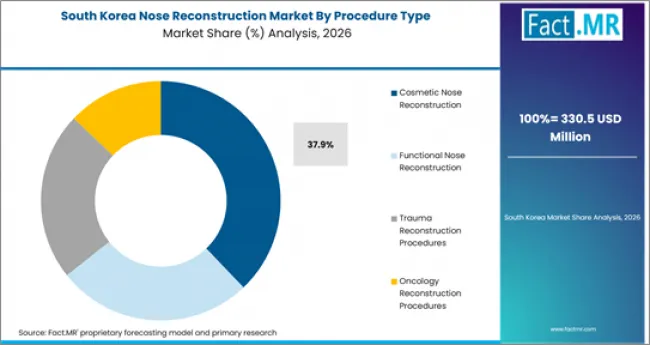
South Korea Nose Reconstruction Market to Grow at a CAGR of 8.3% During 2026-2036 South Korea is the world leader in the development of aesthetic rhinoplasty technique and the medical tourism destination for cosmetic nasal surgery. In the competitive landscape, we see a well-established surgical training infrastructure and a high concentration of procedures.
- Leadership in aesthetic rhinoplasty technique draws international medical tourists to Korean surgical expertise.
- High domestic acceptance of cosmetic surgery and high per-capita rates of procedures create concentrated market demand.
- The global reputation they attain helps to spread the techniques of specialists in rhinoplasty trained in advanced surgical programs around the world.
Market Outlook for Nose Reconstruction in USA
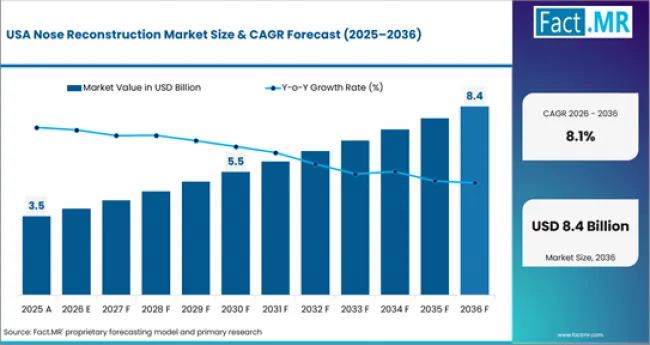
USA Nose Reconstruction Market is projected to grow at a CAGR of 8.1% by 2036. The economics of cosmetic versus reconstructive procedures are determined by FDA device classification and insurance reimbursement for functional septorhinoplasty. High absolute procedure volumes are produced by the largest plastic surgeon and facial plastic surgeon workforce.
- FDA pathways for nasal implants and biologic grafts affect market access and competitive positioning of products.
- Reimbursement for functional septorhinoplasty supports reconstructive volumes in excess of demand for elective cosmetic procedures.
- Ambulatory Surgery Center Expansion Provides Lower Cost Sites for Cosmetic Rhinoplasty That May Improve Access to Procedures
Germany Nose Reconstruction Demand Trends
Germany Nose Reconstruction market is expected to grow at a CAGR of 7.6% through 2036. Market driven by EU MDR compliance for CMF implants and GKV reimbursement for functional reconstruction. Plastic surgery departments at university hospitals have advanced reconstructive and microsurgical nasal reconstruction programs.
- Nasal Implant and Biologic Graft Market Access: EU MDR compliance requirements set regulatory standards.
- GKV reimbursement for functional septorhinoplasty is contributing to the volumes of reconstructive procedures in the German healthcare system.
- Reconstructive microsurgery programs in university hospitals are developing complex techniques for nasal reconstruction.
Competitive Benchmarking and Company Positioning
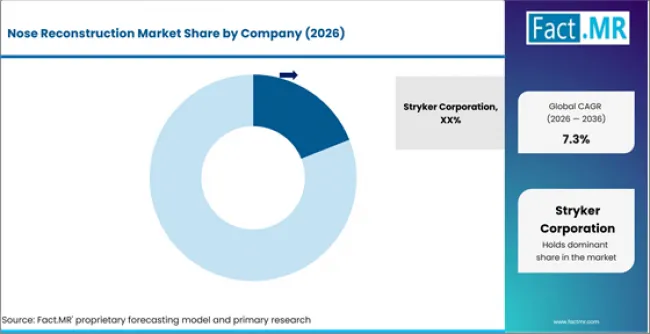
Nose Reconstruction Market Analysis By Company
- Stryker Corporation leads with approximately 19.0% market share through its craniomaxillofacial implant portfolio including nasal reconstruction plates, meshes, and fixation systems used across trauma and reconstructive indications.
- DePuy Synthes (Johnson and Johnson) competes through its CMF division portfolio of titanium plates, resorbable fixation systems, and surgical planning tools for facial reconstruction.
- Medartis and Zimmer Biomet serve specific craniomaxillofacial segments through focused implant portfolios and surgeon training programs.
The competitive landscape for nasal reconstruction devices is moderately fragmented, with CMF implant manufacturers competing alongside biologic material suppliers and injectable filler companies. Stryker leads through its comprehensive CMF portfolio, but the market is surgeon-technique dependent with significant autologous cartilage use that limits device penetration.
Implantech Associates serves the cosmetic rhinoplasty segment through silicone nasal implants designed specifically for aesthetic augmentation. Competition is shaped by product biocompatibility, surgeon familiarity, and clinical evidence supporting long-term implant outcomes and complication rates.
Key Companies in the Nose Reconstruction Market
- Stryker Corporation, DePuy Synthes (Johnson & Johnson), Medartis AG, Zimmer Biomet Holdings, Inc., Implantech Associates, Inc., Medtronic plc, Integra LifeSciences Corporation, KLS Martin Group are the leading companies.
Recent Industry Developments
Kelyniam Global, Inc. Receives FDA Clearance for Innovative Fusion™ BCP-PEEK Implant (2025)
- Kelyniam Global announced that it received U.S. FDA 510(k) clearance for its Fusion™ Cranial and Craniofacial Implants, manufactured from a novel combination of Biphasic Calcium Phosphate (BCP) reinforced with Polyether Ether Ketone (PEEK). The company stated that this is the first time the FDA has cleared BCP-PEEK material for use in cranial and craniofacial implants.
How an NHS Team Is Changing Lives by 3D Printing Body Parts" — The Times (June 2025)
- The Bristol 3D Medical Centre reported successful use of integrated 3D scanning, design, and printing technologies to create bespoke facial prostheses, including replacement noses for patients suffering traumatic facial injuries.
Bioresorbable Implant 3D Printed by Materialise Enters Clinical Trial (2025)
- Materialise and the University of Michigan's Michigan Medicine announced the start of a U.S. FDA pivotal clinical trial for a bioresorbable, 3D-printed tracheobronchial splint designed for infants and children with severe airway conditions.
Leading Companies Shaping the Nose Reconstruction Market
- Stryker Corporation
- Johnson & Johnson MedTech (DePuy Synthes)
- Zimmer Biomet
- Medtronic
- Integra LifeSciences
- KLS Martin Group
Sources and Research References
- Kelyniam Global, Inc. (2025). Kelyniam receives FDA clearance for Innovative Fusion™ implant. Kelyniam Global, Inc.
- BBC News. (2025). Face transplant recipient undergoes pioneering reconstructive procedure. BBC News.
- Materialise NV. (2025). Materialise announces clinical trial for 3D-printed bioresorbable implant technology. Materialise.
This bibliography is provided for reader reference and is not exhaustive. The full report contains Fthe complete reference list and detailed citations.
Key Questions This Report Addresses
- What is the estimated size of the global Nose Reconstruction Market in 2026, and how is it projected to grow through 2036?
- What incremental revenue opportunity is the market expected to create between 2026 and 2036?
- Which product segment holds the largest share in 2026, and what structural factors support cartilage graft leadership?
- How is the balance between autologous, allograft, and synthetic materials expected to shift over the forecast period?
- Which procedure type is projected to generate the most incremental revenue through 2036?
- Which countries are projected to register the highest CAGR, and what cosmetic surgery and medical tourism factors accelerate growth?
- How do procedure patterns in South Korea compare with the U.S. and India in terms of technique preferences and patient demographics?
- What revision rates and surgeon technique dependency could limit device-driven market differentiation?
- Who are the leading companies, and how are they differentiating through implant design, biologic materials, and surgical planning technology?
- What recent product developments in 2025 are shaping competitive positioning in the nose reconstruction market?
- Which material or technique trend is driving the next phase of growth?
- How is non-surgical rhinoplasty using injectable fillers expanding the total addressable market?
- What role are 3D printing, patient-specific implants, and virtual surgical planning playing in reshaping reconstructive approaches?
- What demand-side drivers sustain growth, and how do they vary between cosmetic and reconstructive procedure segments?
Nose Reconstruction Market Definition
The nose reconstruction market covers surgical implants, biologic grafts, synthetic materials, and prosthetic devices used in cosmetic rhinoplasty, post-traumatic nasal reconstruction, and functional septorhinoplasty procedures across open and closed surgical techniques in hospital, ambulatory surgery center, and specialty clinic settings.
Nose Reconstruction Market Inclusions
- Global and regional market size and forecasts for 2026 to 2036 across product, procedure type, material, application, technique, and region.
- Demand analysis based on cosmetic surgery procedure volumes, facial trauma statistics, plastic surgery training pipeline, and medical tourism flows.
- Competitive landscape including implant portfolios, biologic material offerings, and distribution strategies of leading companies.
Nose Reconstruction Market Exclusions
- Dermal filler products used exclusively for non-nasal facial contouring applications.
- Sinus surgery instruments and devices not designed for nasal structural reconstruction.
- General plastic surgery instruments and suture materials not specific to rhinoplasty reconstruction.
Nose Reconstruction Market Research Methodology
- Methodology combines secondary research from plastic surgery journals, cosmetic procedure databases, and facial trauma statistics with primary validation.
- Market sizing covers 30+ countries with inputs including rhinoplasty procedure volumes, cosmetic surgery spending, trauma surgery statistics, and medical tourism data.
- Primary validation includes 15+ interviews across plastic surgeons, facial plastic surgeons, CMF device manufacturers, and biologic material suppliers.
Scope of Analysis

| Parameter | Details |
|---|---|
| Quantitative Units | USD 7 billion to USD 14.1 billion, at a CAGR of 7.3% |
| Market Definition | The nose reconstruction market covers surgical implants, biologic grafts, synthetic materials, and prosthetic devices used in cosmetic rhinoplasty, post-traumatic nasal reconstruction, and functional septorhinoplasty procedures across open and closed surgical techniques in hospital, ambulatory surgery center, and specialty clinic settings. |
| Regions Covered | North America, Latin America, Europe, East Asia, South Asia and Pacific, Middle East and Africa |
| Countries Covered | India, China, South Korea, USA, Brazil, Germany, 30 plus countries |
| Key Companies | Stryker Corporation, DePuy Synthes (Johnson & Johnson), Medartis AG, Zimmer Biomet Holdings, Inc., Implantech Associates, Inc., Medtronic plc, Integra LifeSciences Corporation, KLS Martin Group |
| Forecast Period | 2026 to 2036 |
| Approach | Hybrid demand-side and top-down methodology built on rhinoplasty procedure volumes, cosmetic surgery spending, facial trauma statistics, and primary interviews |
Nose Reconstruction Market Segmentation
-
Nose Reconstruction Market Segmented by Product:
- Cartilage Graft Products
- Autologous Cartilage Grafts
- Septal Reconstruction Applications
- Functional Nasal Repair Products
- Allogenic Cartilage Systems
- Complex Defect Applications
- Advanced Rhinoplasty Systems
- Autologous Cartilage Grafts
- Nasal Implant Systems
- Silicone Nasal Implants
- Cosmetic Reconstruction Applications
- Facial Contouring Products
- Porous Polyethylene Implants
- Structural Support Applications
- Advanced Reconstruction Systems
- Silicone Nasal Implants
- Soft Tissue Reconstruction Products
- Dermal Matrix Systems
- Skin Defect Applications
- Facial Tissue Repair Products
- Fat Grafting Systems
- Volume Restoration Applications
- Aesthetic Reconstruction Systems
- Dermal Matrix Systems
- Nasal Prosthetic Systems
- Custom External Nasal Prosthetics
- Trauma Reconstruction Applications
- Patient Specific Products
- Implant Retained Prosthetics
- Oncology Reconstruction Applications
- Advanced Facial Systems
- Custom External Nasal Prosthetics
- Surgical Support Products
- Nasal Splint Systems
- Postoperative Stabilization Applications
- Recovery Support Products
- Suture And Fixation Systems
- Soft Tissue Closure Applications
- Reconstructive Surgery Systems
- Nasal Splint Systems
- Cartilage Graft Products
-
Nose Reconstruction Market Segmented by Procedure Type:
- Cosmetic Nose Reconstruction
- Aesthetic Rhinoplasty Procedures
- Facial Enhancement Applications
- Elective Surgery Products
- Revision Rhinoplasty Procedures
- Secondary Correction Applications
- Advanced Cosmetic Systems
- Aesthetic Rhinoplasty Procedures
- Functional Nose Reconstruction
- Septoplasty Reconstruction Procedures
- Breathing Correction Applications
- Nasal Airway Products
- Nasal Valve Reconstruction
- Functional Restoration Applications
- Structural Repair Systems
- Septoplasty Reconstruction Procedures
- Trauma Reconstruction Procedures
- Post Injury Nasal Reconstruction
- Fracture Repair Applications
- Emergency Surgical Products
- Complex Facial Trauma Repair
- Multi Tissue Reconstruction Applications
- Advanced Trauma Systems
- Post Injury Nasal Reconstruction
- Oncology Reconstruction Procedures
- Post Tumor Nasal Reconstruction
- Cancer Defect Applications
- Facial Restoration Products
- Microvascular Nasal Reconstruction
- Extensive Tissue Loss Applications
- Advanced Surgical Systems
- Post Tumor Nasal Reconstruction
- Cosmetic Nose Reconstruction
-
Nose Reconstruction Market Segmented by Material:
- Biologic Reconstruction Materials
- Autologous Tissue Materials
- Natural Integration Applications
- Patient Derived Products
- Collagen Based Materials
- Soft Tissue Repair Applications
- Regenerative Reconstruction Systems
- Autologous Tissue Materials
- Synthetic Reconstruction Materials
- Silicone Based Materials
- Structural Support Applications
- Nasal Implant Products
- Polymer Reconstruction Materials
- Long Term Stability Applications
- Facial Reconstruction Systems
- Silicone Based Materials
- Metal Based Reconstruction Materials
- Titanium Nasal Support Systems
- Complex Defect Applications
- Rigid Reconstruction Products
- Custom Metal Frameworks
- Patient Specific Applications
- Advanced Surgical Systems
- Titanium Nasal Support Systems
- Hybrid Reconstruction Materials
- Composite Implant Systems
- Multi Layer Reconstruction Applications
- Advanced Facial Products
- Bioactive Material Systems
- Tissue Regeneration Applications
- Modern Reconstruction Systems
- Composite Implant Systems
- Biologic Reconstruction Materials
-
Nose Reconstruction Market Segmented by Application:
- Cosmetic Enhancement Applications
- Nasal Shape Refinement
- Aesthetic Improvement Applications
- Facial Surgery Products
- Nasal Symmetry Correction
- Elective Cosmetic Applications
- Beauty Enhancement Systems
- Nasal Shape Refinement
- Congenital Defect Applications
- Cleft Related Nasal Reconstruction
- Pediatric Applications
- Congenital Repair Products
- Birth Defect Correction Procedures
- Functional Restoration Applications
- Facial Development Systems
- Cleft Related Nasal Reconstruction
- Trauma Repair Applications
- Nasal Fracture Reconstruction
- Emergency Care Applications
- Trauma Surgery Products
- Soft Tissue Trauma Repair
- Facial Injury Applications
- Advanced Reconstruction Systems
- Nasal Fracture Reconstruction
- Disease Related Applications
- Skin Cancer Reconstruction
- Oncology Applications
- Post Tumor Repair Products
- Infectious Defect Reconstruction
- Tissue Loss Applications
- Specialized Surgical Systems
- Skin Cancer Reconstruction
- Cosmetic Enhancement Applications
-
Nose Reconstruction Market Segmented by Technique:
- Open Reconstruction Techniques
- External Incision Rhinoplasty
- Complex Structural Applications
- Comprehensive Repair Products
- Full Exposure Reconstruction Procedures
- Advanced Correction Applications
- Precision Surgical Systems
- External Incision Rhinoplasty
- Closed Reconstruction Techniques
- Endonasal Rhinoplasty Procedures
- Minimally Visible Applications
- Aesthetic Surgery Products
- Internal Access Reconstruction
- Reduced Recovery Applications
- Modern Surgical Systems
- Endonasal Rhinoplasty Procedures
- Microvascular Reconstruction Techniques
- Free Flap Reconstruction Procedures
- Extensive Tissue Loss Applications
- Advanced Repair Products
- Vascularized Tissue Transfer
- Complex Oncology Applications
- Specialized Reconstruction Systems
- Free Flap Reconstruction Procedures
- Open Reconstruction Techniques
-
Nose Reconstruction Market by Region:
- North America
- USA
- Canada
- Mexico
- Latin America
- Brazil
- Chile
- Rest of Latin America
- Western Europe
- Germany
- UK
- Italy
- Spain
- France
- Nordic
- BENELUX
- Rest of Western Europe
- Eastern Europe
- Russia
- Poland
- Hungary
- Balkan & Baltic
- Rest of Eastern Europe
- East Asia
- China
- Japan
- South Korea
- South Asia and Pacific
- India
- ASEAN
- Australia & New Zealand
- Rest of South Asia and Pacific
- Middle East & Africa
- Kingdom of Saudi Arabia
- Other GCC Countries
- Turkiye
- South Africa
- Other African Union
- Rest of Middle East & Africa
- North America
- Frequently Asked Questions -
How big is the nose reconstruction market in 2026?
The global nose reconstruction market is estimated to be valued at USD 7.0 billion in 2026.
What will be the size of the nose reconstruction market in 2036?
The market size for the nose reconstruction market is projected to reach USD 14.1 billion by 2036.
How much will the nose reconstruction market grow between 2026 and 2036?
The nose reconstruction market is expected to grow at a 7.3% CAGR between 2026 and 2036.
What are the key products in the nose reconstruction market?
The key products in the nose reconstruction market are Cartilage Graft Products, Nasal Implant Systems, Soft Tissue Reconstruction Products, Nasal Prosthetic Systems and Surgical Support Products.
Which procedure type segment is expected to contribute a significant share in the nose reconstruction market in 2026?
In terms of procedure type, cosmetic nose reconstruction segment is expected to command 39.8% share in the nose reconstruction market in 2026.
Table of Content
- Key Takeaways
- Market Size and CAGR
- Top Growth Driver
- Fastest Growing Segment
- Leading Region
- Key Companies
- Emerging Opportunities
- Executive Summary
- Global Market Outlook
- Demand-side Trends
- Supply-side Trends
- Technology Roadmap Analysis
- Analysis and Recommendations
- Analyst Perspective (What is happening? Why now? What should investors know?)
- Key Questions Answered
- How large is the market?
- What is the CAGR?
- What are key trends?
- Which region dominates?
- Who are the leaders?
- Market Overview
- Market Coverage / Taxonomy
- Market Definition / Scope / Limitations
- Research Methodology
- Chapter Orientation
- Analytical Lens and Working Hypotheses
- Market Structure, Signals, and Trend Drivers
- Benchmarking and Cross-market Comparability
- Market Sizing, Forecasting, and Opportunity Mapping
- Research Design and Evidence Framework
- Desk Research Programme (Secondary Evidence)
- Expert Input and Fieldwork (Primary Evidence)
- Tooling, Models, and Reference Databases
- Data Engineering and Model Build
- Quality Assurance and Audit Trail
- Market Background
- Market Dynamics (Drivers, Restraints, Opportunity, Trends)
- Scenario Forecast (Optimistic, Likely, Conservative)
- Impact Analysis
- AI Impact
- Sustainability Impact
- Regulatory Impact
- Technology Impact
- Consumer / Buyer Analysis
- Purchase Drivers
- Adoption Barriers
- Buyer Journey
- Opportunity Map Analysis
- Product Life Cycle Analysis
- Supply Chain Analysis
- Investment Feasibility Matrix
- Value Chain Analysis
- PESTLE and Porter's Analysis
- Regulatory Landscape
- Regional Parent Market Outlook
- Production and Consumption Statistics
- Import and Export Statistics
- Global Market Analysis and Forecast, 2021 to 2036
- Historical Market Size Value (USD Million) Analysis, 2021 to 2025
- Current and Future Market Size Value (USD Million) Projections, 2026 to 2036
- Y-o-Y Growth Trend Analysis
- Absolute $ Opportunity Analysis
- Global Market Pricing Analysis, 2021 to 2036
- Global Market Analysis and Forecast, By Product, 2021 to 2036
- Introduction / Key Findings
- Historical Market Size Value (USD Million) Analysis By Product, 2021 to 2025
- Current and Future Market Size Value (USD Million) Analysis and Forecast By Product, 2026 to 2036
- Cartilage Graft Products
- Autologous Cartilage Grafts
- Allogenic Cartilage Systems
- Nasal Implant Systems
- Silicone Nasal Implants
- Porous Polyethylene Implants
- Soft Tissue Reconstruction Products
- Dermal Matrix Systems
- Fat Grafting Systems
- Nasal Prosthetic Systems
- Custom External Nasal Prosthetics
- Implant Retained Prosthetics
- Surgical Support Products
- Nasal Splint Systems
- Suture And Fixation Systems
- Cartilage Graft Products
- Y-o-Y Growth Trend Analysis By Product, 2021 to 2025
- Absolute $ Opportunity Analysis By Product, 2026 to 2036
- Global Market Analysis and Forecast, By Procedure Type, 2021 to 2036
- Introduction / Key Findings
- Historical Market Size Value (USD Million) Analysis By Procedure Type, 2021 to 2025
- Current and Future Market Size Value (USD Million) Analysis and Forecast By Procedure Type, 2026 to 2036
- Cosmetic Nose Reconstruction
- Aesthetic Rhinoplasty Procedures
- Revision Rhinoplasty Procedures
- Functional Nose Reconstruction
- Septoplasty Reconstruction Procedures
- Nasal Valve Reconstruction
- Trauma Reconstruction Procedures
- Post Injury Nasal Reconstruction
- Complex Facial Trauma Repair
- Oncology Reconstruction Procedures
- Post Tumor Nasal Reconstruction
- Microvascular Nasal Reconstruction
- Cosmetic Nose Reconstruction
- Y-o-Y Growth Trend Analysis By Procedure Type, 2021 to 2025
- Absolute $ Opportunity Analysis By Procedure Type, 2026 to 2036
- Global Market Analysis and Forecast, By Material, 2021 to 2036
- Introduction / Key Findings
- Historical Market Size Value (USD Million) Analysis By Material, 2021 to 2025
- Current and Future Market Size Value (USD Million) Analysis and Forecast By Material, 2026 to 2036
- Biologic Reconstruction Materials
- Autologous Tissue Materials
- Collagen Based Materials
- Synthetic Reconstruction Materials
- Silicone Based Materials
- Polymer Reconstruction Materials
- Metal Based Reconstruction Materials
- Titanium Nasal Support Systems
- Custom Metal Frameworks
- Hybrid Reconstruction Materials
- Composite Implant Systems
- Bioactive Material Systems
- Biologic Reconstruction Materials
- Y-o-Y Growth Trend Analysis By Material, 2021 to 2025
- Absolute $ Opportunity Analysis By Material, 2026 to 2036
- Global Market Analysis and Forecast, By Application, 2021 to 2036
- Introduction / Key Findings
- Historical Market Size Value (USD Million) Analysis By Application, 2021 to 2025
- Current and Future Market Size Value (USD Million) Analysis and Forecast By Application, 2026 to 2036
- Cosmetic Enhancement Applications
- Nasal Shape Refinement
- Nasal Symmetry Correction
- Congenital Defect Applications
- Cleft Related Nasal Reconstruction
- Birth Defect Correction Procedures
- Trauma Repair Applications
- Nasal Fracture Reconstruction
- Soft Tissue Trauma Repair
- Disease Related Applications
- Skin Cancer Reconstruction
- Infectious Defect Reconstruction
- Cosmetic Enhancement Applications
- Y-o-Y Growth Trend Analysis By Application, 2021 to 2025
- Absolute $ Opportunity Analysis By Application, 2026 to 2036
- Global Market Analysis and Forecast, By Technique, 2021 to 2036
- Introduction / Key Findings
- Historical Market Size Value (USD Million) Analysis By Technique, 2021 to 2025
- Current and Future Market Size Value (USD Million) Analysis and Forecast By Technique, 2026 to 2036
- Open Reconstruction Techniques
- External Incision Rhinoplasty
- Full Exposure Reconstruction Procedures
- Closed Reconstruction Techniques
- Endonasal Rhinoplasty Procedures
- Internal Access Reconstruction
- Microvascular Reconstruction Techniques
- Free Flap Reconstruction Procedures
- Vascularized Tissue Transfer
- Open Reconstruction Techniques
- Y-o-Y Growth Trend Analysis By Technique, 2021 to 2025
- Absolute $ Opportunity Analysis By Technique, 2026 to 2036
- Global Market Analysis and Forecast, By Region, 2021 to 2036
- Introduction
- Historical Market Size Value (USD Million) Analysis By Region, 2021 to 2025
- Current Market Size Value (USD Million) Analysis and Forecast By Region, 2026 to 2036
- North America
- Latin America
- Western Europe
- Eastern Europe
- East Asia
- South Asia and Pacific
- Middle East & Africa
- Market Attractiveness Analysis By Region
- North America Market Analysis and Forecast, By Country, 2021 to 2036
- Historical Market Size Value (USD Million) Trend Analysis By Market Taxonomy, 2021 to 2025
- Market Size Value (USD Million) Forecast By Market Taxonomy, 2026 to 2036
- By Country
- USA
- Canada
- Mexico
- By Product
- By Procedure Type
- By Material
- By Application
- By Technique
- By Country
- Market Attractiveness Analysis
- By Country
- By Product
- By Procedure Type
- By Material
- By Application
- By Technique
- Key Takeaways
- Latin America Market Analysis and Forecast, By Country
- Historical Market Size Value (USD Million) Trend Analysis By Market Taxonomy, 2021 to 2025
- Market Size Value (USD Million) Forecast By Market Taxonomy, 2026 to 2036
- By Country
- Brazil
- Chile
- Rest of Latin America
- By Product
- By Procedure Type
- By Material
- By Application
- By Technique
- By Country
- Market Attractiveness Analysis
- By Country
- By Product
- By Procedure Type
- By Material
- By Application
- By Technique
- Key Takeaways
- Western Europe Market Analysis and Forecast, By Country
- Historical Market Size Value (USD Million) Trend Analysis By Market Taxonomy, 2021 to 2025
- Market Size Value (USD Million) Forecast By Market Taxonomy, 2026 to 2036
- By Country
- Germany
- UK
- Italy
- Spain
- France
- Nordic
- BENELUX
- Rest of Western Europe
- By Product
- By Procedure Type
- By Material
- By Application
- By Technique
- By Country
- Market Attractiveness Analysis
- By Country
- By Product
- By Procedure Type
- By Material
- By Application
- By Technique
- Key Takeaways
- Eastern Europe Market Analysis and Forecast, By Country
- Historical Market Size Value (USD Million) Trend Analysis By Market Taxonomy, 2021 to 2025
- Market Size Value (USD Million) Forecast By Market Taxonomy, 2026 to 2036
- By Country
- Russia
- Poland
- Hungary
- Balkan & Baltic
- Rest of Eastern Europe
- By Product
- By Procedure Type
- By Material
- By Application
- By Technique
- By Country
- Market Attractiveness Analysis
- By Country
- By Product
- By Procedure Type
- By Material
- By Application
- By Technique
- Key Takeaways
- East Asia Market Analysis and Forecast, By Country
- Historical Market Size Value (USD Million) Trend Analysis By Market Taxonomy, 2021 to 2025
- Market Size Value (USD Million) Forecast By Market Taxonomy, 2026 to 2036
- By Country
- China
- Japan
- South Korea
- By Product
- By Procedure Type
- By Material
- By Application
- By Technique
- By Country
- Market Attractiveness Analysis
- By Country
- By Product
- By Procedure Type
- By Material
- By Application
- By Technique
- Key Takeaways
- South Asia and Pacific Market Analysis and Forecast, By Country
- Historical Market Size Value (USD Million) Trend Analysis By Market Taxonomy, 2021 to 2025
- Market Size Value (USD Million) Forecast By Market Taxonomy, 2026 to 2036
- By Country
- India
- ASEAN
- Australia & New Zealand
- Rest of South Asia and Pacific
- By Product
- By Procedure Type
- By Material
- By Application
- By Technique
- By Country
- Market Attractiveness Analysis
- By Country
- By Product
- By Procedure Type
- By Material
- By Application
- By Technique
- Key Takeaways
- Middle East & Africa Market Analysis and Forecast, By Country
- Historical Market Size Value (USD Million) Trend Analysis By Market Taxonomy, 2021 to 2025
- Market Size Value (USD Million) Forecast By Market Taxonomy, 2026 to 2036
- By Country
- Kingdom of Saudi Arabia
- Other GCC Countries
- Turkiye
- South Africa
- Other African Union
- Rest of Middle East & Africa
- By Product
- By Procedure Type
- By Material
- By Application
- By Technique
- By Country
- Market Attractiveness Analysis
- By Country
- By Product
- By Procedure Type
- By Material
- By Application
- By Technique
- Key Takeaways
- Key Countries Market Analysis
- USA
- Pricing Analysis
- Market Share Analysis, 2025
- By Product
- By Procedure Type
- By Material
- By Application
- By Technique
- Canada
- Pricing Analysis
- Market Share Analysis, 2025
- By Product
- By Procedure Type
- By Material
- By Application
- By Technique
- Mexico
- Pricing Analysis
- Market Share Analysis, 2025
- By Product
- By Procedure Type
- By Material
- By Application
- By Technique
- Brazil
- Pricing Analysis
- Market Share Analysis, 2025
- By Product
- By Procedure Type
- By Material
- By Application
- By Technique
- Chile
- Pricing Analysis
- Market Share Analysis, 2025
- By Product
- By Procedure Type
- By Material
- By Application
- By Technique
- Germany
- Pricing Analysis
- Market Share Analysis, 2025
- By Product
- By Procedure Type
- By Material
- By Application
- By Technique
- UK
- Pricing Analysis
- Market Share Analysis, 2025
- By Product
- By Procedure Type
- By Material
- By Application
- By Technique
- Italy
- Pricing Analysis
- Market Share Analysis, 2025
- By Product
- By Procedure Type
- By Material
- By Application
- By Technique
- Spain
- Pricing Analysis
- Market Share Analysis, 2025
- By Product
- By Procedure Type
- By Material
- By Application
- By Technique
- France
- Pricing Analysis
- Market Share Analysis, 2025
- By Product
- By Procedure Type
- By Material
- By Application
- By Technique
- India
- Pricing Analysis
- Market Share Analysis, 2025
- By Product
- By Procedure Type
- By Material
- By Application
- By Technique
- ASEAN
- Pricing Analysis
- Market Share Analysis, 2025
- By Product
- By Procedure Type
- By Material
- By Application
- By Technique
- Australia & New Zealand
- Pricing Analysis
- Market Share Analysis, 2025
- By Product
- By Procedure Type
- By Material
- By Application
- By Technique
- China
- Pricing Analysis
- Market Share Analysis, 2025
- By Product
- By Procedure Type
- By Material
- By Application
- By Technique
- Japan
- Pricing Analysis
- Market Share Analysis, 2025
- By Product
- By Procedure Type
- By Material
- By Application
- By Technique
- South Korea
- Pricing Analysis
- Market Share Analysis, 2025
- By Product
- By Procedure Type
- By Material
- By Application
- By Technique
- Russia
- Pricing Analysis
- Market Share Analysis, 2025
- By Product
- By Procedure Type
- By Material
- By Application
- By Technique
- Poland
- Pricing Analysis
- Market Share Analysis, 2025
- By Product
- By Procedure Type
- By Material
- By Application
- By Technique
- Hungary
- Pricing Analysis
- Market Share Analysis, 2025
- By Product
- By Procedure Type
- By Material
- By Application
- By Technique
- Kingdom of Saudi Arabia
- Pricing Analysis
- Market Share Analysis, 2025
- By Product
- By Procedure Type
- By Material
- By Application
- By Technique
- Turkiye
- Pricing Analysis
- Market Share Analysis, 2025
- By Product
- By Procedure Type
- By Material
- By Application
- By Technique
- South Africa
- Pricing Analysis
- Market Share Analysis, 2025
- By Product
- By Procedure Type
- By Material
- By Application
- By Technique
- USA
- Market Structure Analysis
- Competition Dashboard
- Competition Benchmarking
- Market Share Analysis of Top Players
- By Regional
- By Product
- By Procedure Type
- By Material
- By Application
- By Technique
- Emerging Startups
- Innovation Benchmarking
- Competition Analysis
- Competition Deep Dive
- Stryker Corporation
- Overview
- Product Portfolio
- Profitability by Market Segments (Product/Age /Sales Channel/Region)
- Sales Footprint
- Strategy Overview
- Marketing Strategy
- Product Strategy
- Channel Strategy
- DePuy Synthes (Johnson & Johnson)
- Medartis AG
- Zimmer Biomet Holdings, Inc.
- Implantech Associates, Inc.
- Medtronic plc
- Integra LifeSciences Corporation
- KLS Martin Group
- Acumed LLC
- GC Aesthetics plc
- OsteoMed LLC
- Surgical Implant Technologies (SITec)
- Stryker Corporation
- Competition Deep Dive
- Case Studies
- Success Stories
- Recent Developments
- Assumptions & Acronyms Used
List Of Table
- Table 1: Global Market Value (USD Million) Forecast by Region, 2021 to 2036
- Table 2: Global Market Value (USD Million) Forecast by Product, 2021 to 2036
- Table 3: Global Market Value (USD Million) Forecast by Procedure Type, 2021 to 2036
- Table 4: Global Market Value (USD Million) Forecast by Material, 2021 to 2036
- Table 5: Global Market Value (USD Million) Forecast by Application, 2021 to 2036
- Table 6: Global Market Value (USD Million) Forecast by Technique, 2021 to 2036
- Table 7: Global Market rma_anu Forecast by rma_anu, 2021 to 2036
- Table 8: North America Market Value (USD Million) Forecast by Country, 2021 to 2036
- Table 9: North America Market Value (USD Million) Forecast by Product, 2021 to 2036
- Table 10: North America Market Value (USD Million) Forecast by Procedure Type, 2021 to 2036
- Table 11: North America Market Value (USD Million) Forecast by Material, 2021 to 2036
- Table 12: North America Market Value (USD Million) Forecast by Application, 2021 to 2036
- Table 13: North America Market Value (USD Million) Forecast by Technique, 2021 to 2036
- Table 14: Latin America Market Value (USD Million) Forecast by Country, 2021 to 2036
- Table 15: Latin America Market Value (USD Million) Forecast by Product, 2021 to 2036
- Table 16: Latin America Market Value (USD Million) Forecast by Procedure Type, 2021 to 2036
- Table 17: Latin America Market Value (USD Million) Forecast by Material, 2021 to 2036
- Table 18: Latin America Market Value (USD Million) Forecast by Application, 2021 to 2036
- Table 19: Latin America Market Value (USD Million) Forecast by Technique, 2021 to 2036
- Table 20: Western Europe Market Value (USD Million) Forecast by Country, 2021 to 2036
- Table 21: Western Europe Market Value (USD Million) Forecast by Product, 2021 to 2036
- Table 22: Western Europe Market Value (USD Million) Forecast by Procedure Type, 2021 to 2036
- Table 23: Western Europe Market Value (USD Million) Forecast by Material, 2021 to 2036
- Table 24: Western Europe Market Value (USD Million) Forecast by Application, 2021 to 2036
- Table 25: Western Europe Market Value (USD Million) Forecast by Technique, 2021 to 2036
- Table 26: Eastern Europe Market Value (USD Million) Forecast by Country, 2021 to 2036
- Table 27: Eastern Europe Market Value (USD Million) Forecast by Product, 2021 to 2036
- Table 28: Eastern Europe Market Value (USD Million) Forecast by Procedure Type, 2021 to 2036
- Table 29: Eastern Europe Market Value (USD Million) Forecast by Material, 2021 to 2036
- Table 30: Eastern Europe Market Value (USD Million) Forecast by Application, 2021 to 2036
- Table 31: Eastern Europe Market Value (USD Million) Forecast by Technique, 2021 to 2036
- Table 32: East Asia Market Value (USD Million) Forecast by Country, 2021 to 2036
- Table 33: East Asia Market Value (USD Million) Forecast by Product, 2021 to 2036
- Table 34: East Asia Market Value (USD Million) Forecast by Procedure Type, 2021 to 2036
- Table 35: East Asia Market Value (USD Million) Forecast by Material, 2021 to 2036
- Table 36: East Asia Market Value (USD Million) Forecast by Application, 2021 to 2036
- Table 37: East Asia Market Value (USD Million) Forecast by Technique, 2021 to 2036
- Table 38: South Asia and Pacific Market Value (USD Million) Forecast by Country, 2021 to 2036
- Table 39: South Asia and Pacific Market Value (USD Million) Forecast by Product, 2021 to 2036
- Table 40: South Asia and Pacific Market Value (USD Million) Forecast by Procedure Type, 2021 to 2036
- Table 41: South Asia and Pacific Market Value (USD Million) Forecast by Material, 2021 to 2036
- Table 42: South Asia and Pacific Market Value (USD Million) Forecast by Application, 2021 to 2036
- Table 43: South Asia and Pacific Market Value (USD Million) Forecast by Technique, 2021 to 2036
- Table 44: Middle East & Africa Market Value (USD Million) Forecast by Country, 2021 to 2036
- Table 45: Middle East & Africa Market Value (USD Million) Forecast by Product, 2021 to 2036
- Table 46: Middle East & Africa Market Value (USD Million) Forecast by Procedure Type, 2021 to 2036
- Table 47: Middle East & Africa Market Value (USD Million) Forecast by Material, 2021 to 2036
- Table 48: Middle East & Africa Market Value (USD Million) Forecast by Application, 2021 to 2036
- Table 49: Middle East & Africa Market Value (USD Million) Forecast by Technique, 2021 to 2036
List Of Figures
- Figure 1: Global Market Pricing Analysis
- Figure 2: Global Market Value (USD Million) Forecast 2021 to 2036
- Figure 3: Global Market Value Share and BPS Analysis by Product, 2026 and 2036
- Figure 4: Global Market Y-o-Y Growth Comparison by Product, 2026 to 2036
- Figure 5: Global Market Attractiveness Analysis by Product
- Figure 6: Global Market Value Share and BPS Analysis by Procedure Type, 2026 and 2036
- Figure 7: Global Market Y-o-Y Growth Comparison by Procedure Type, 2026 to 2036
- Figure 8: Global Market Attractiveness Analysis by Procedure Type
- Figure 9: Global Market Value Share and BPS Analysis by Material, 2026 and 2036
- Figure 10: Global Market Y-o-Y Growth Comparison by Material, 2026 to 2036
- Figure 11: Global Market Attractiveness Analysis by Material
- Figure 12: Global Market Value Share and BPS Analysis by Application, 2026 and 2036
- Figure 13: Global Market Y-o-Y Growth Comparison by Application, 2026 to 2036
- Figure 14: Global Market Attractiveness Analysis by Application
- Figure 15: Global Market Value Share and BPS Analysis by Technique, 2026 and 2036
- Figure 16: Global Market Y-o-Y Growth Comparison by Technique, 2026 to 2036
- Figure 17: Global Market Attractiveness Analysis by Technique
- Figure 18: Global Market Value (USD Million) Share and BPS Analysis by Region, 2026 and 2036
- Figure 19: Global Market Y-o-Y Growth Comparison by Region, 2026 to 2036
- Figure 20: Global Market Attractiveness Analysis by Region
- Figure 21: North America Market Incremental Dollar Opportunity, 2026 to 2036
- Figure 22: Latin America Market Incremental Dollar Opportunity, 2026 to 2036
- Figure 23: Western Europe Market Incremental Dollar Opportunity, 2026 to 2036
- Figure 24: Eastern Europe Market Incremental Dollar Opportunity, 2026 to 2036
- Figure 25: East Asia Market Incremental Dollar Opportunity, 2026 to 2036
- Figure 26: South Asia and Pacific Market Incremental Dollar Opportunity, 2026 to 2036
- Figure 27: Middle East & Africa Market Incremental Dollar Opportunity, 2026 to 2036
- Figure 28: North America Market Value Share and BPS Analysis by Country, 2026 and 2036
- Figure 29: North America Market Value Share and BPS Analysis by Product, 2026 and 2036
- Figure 30: North America Market Y-o-Y Growth Comparison by Product, 2026 to 2036
- Figure 31: North America Market Attractiveness Analysis by Product
- Figure 32: North America Market Value Share and BPS Analysis by Procedure Type, 2026 and 2036
- Figure 33: North America Market Y-o-Y Growth Comparison by Procedure Type, 2026 to 2036
- Figure 34: North America Market Attractiveness Analysis by Procedure Type
- Figure 35: North America Market Value Share and BPS Analysis by Material, 2026 and 2036
- Figure 36: North America Market Y-o-Y Growth Comparison by Material, 2026 to 2036
- Figure 37: North America Market Attractiveness Analysis by Material
- Figure 38: North America Market Value Share and BPS Analysis by Application, 2026 and 2036
- Figure 39: North America Market Y-o-Y Growth Comparison by Application, 2026 to 2036
- Figure 40: North America Market Attractiveness Analysis by Application
- Figure 41: North America Market Value Share and BPS Analysis by Technique, 2026 and 2036
- Figure 42: North America Market Y-o-Y Growth Comparison by Technique, 2026 to 2036
- Figure 43: North America Market Attractiveness Analysis by Technique
- Figure 44: Latin America Market Value Share and BPS Analysis by Country, 2026 and 2036
- Figure 45: Latin America Market Value Share and BPS Analysis by Product, 2026 and 2036
- Figure 46: Latin America Market Y-o-Y Growth Comparison by Product, 2026 to 2036
- Figure 47: Latin America Market Attractiveness Analysis by Product
- Figure 48: Latin America Market Value Share and BPS Analysis by Procedure Type, 2026 and 2036
- Figure 49: Latin America Market Y-o-Y Growth Comparison by Procedure Type, 2026 to 2036
- Figure 50: Latin America Market Attractiveness Analysis by Procedure Type
- Figure 51: Latin America Market Value Share and BPS Analysis by Material, 2026 and 2036
- Figure 52: Latin America Market Y-o-Y Growth Comparison by Material, 2026 to 2036
- Figure 53: Latin America Market Attractiveness Analysis by Material
- Figure 54: Latin America Market Value Share and BPS Analysis by Application, 2026 and 2036
- Figure 55: Latin America Market Y-o-Y Growth Comparison by Application, 2026 to 2036
- Figure 56: Latin America Market Attractiveness Analysis by Application
- Figure 57: Latin America Market Value Share and BPS Analysis by Technique, 2026 and 2036
- Figure 58: Latin America Market Y-o-Y Growth Comparison by Technique, 2026 to 2036
- Figure 59: Latin America Market Attractiveness Analysis by Technique
- Figure 60: Western Europe Market Value Share and BPS Analysis by Country, 2026 and 2036
- Figure 61: Western Europe Market Value Share and BPS Analysis by Product, 2026 and 2036
- Figure 62: Western Europe Market Y-o-Y Growth Comparison by Product, 2026 to 2036
- Figure 63: Western Europe Market Attractiveness Analysis by Product
- Figure 64: Western Europe Market Value Share and BPS Analysis by Procedure Type, 2026 and 2036
- Figure 65: Western Europe Market Y-o-Y Growth Comparison by Procedure Type, 2026 to 2036
- Figure 66: Western Europe Market Attractiveness Analysis by Procedure Type
- Figure 67: Western Europe Market Value Share and BPS Analysis by Material, 2026 and 2036
- Figure 68: Western Europe Market Y-o-Y Growth Comparison by Material, 2026 to 2036
- Figure 69: Western Europe Market Attractiveness Analysis by Material
- Figure 70: Western Europe Market Value Share and BPS Analysis by Application, 2026 and 2036
- Figure 71: Western Europe Market Y-o-Y Growth Comparison by Application, 2026 to 2036
- Figure 72: Western Europe Market Attractiveness Analysis by Application
- Figure 73: Western Europe Market Value Share and BPS Analysis by Technique, 2026 and 2036
- Figure 74: Western Europe Market Y-o-Y Growth Comparison by Technique, 2026 to 2036
- Figure 75: Western Europe Market Attractiveness Analysis by Technique
- Figure 76: Eastern Europe Market Value Share and BPS Analysis by Country, 2026 and 2036
- Figure 77: Eastern Europe Market Value Share and BPS Analysis by Product, 2026 and 2036
- Figure 78: Eastern Europe Market Y-o-Y Growth Comparison by Product, 2026 to 2036
- Figure 79: Eastern Europe Market Attractiveness Analysis by Product
- Figure 80: Eastern Europe Market Value Share and BPS Analysis by Procedure Type, 2026 and 2036
- Figure 81: Eastern Europe Market Y-o-Y Growth Comparison by Procedure Type, 2026 to 2036
- Figure 82: Eastern Europe Market Attractiveness Analysis by Procedure Type
- Figure 83: Eastern Europe Market Value Share and BPS Analysis by Material, 2026 and 2036
- Figure 84: Eastern Europe Market Y-o-Y Growth Comparison by Material, 2026 to 2036
- Figure 85: Eastern Europe Market Attractiveness Analysis by Material
- Figure 86: Eastern Europe Market Value Share and BPS Analysis by Application, 2026 and 2036
- Figure 87: Eastern Europe Market Y-o-Y Growth Comparison by Application, 2026 to 2036
- Figure 88: Eastern Europe Market Attractiveness Analysis by Application
- Figure 89: Eastern Europe Market Value Share and BPS Analysis by Technique, 2026 and 2036
- Figure 90: Eastern Europe Market Y-o-Y Growth Comparison by Technique, 2026 to 2036
- Figure 91: Eastern Europe Market Attractiveness Analysis by Technique
- Figure 92: East Asia Market Value Share and BPS Analysis by Country, 2026 and 2036
- Figure 93: East Asia Market Value Share and BPS Analysis by Product, 2026 and 2036
- Figure 94: East Asia Market Y-o-Y Growth Comparison by Product, 2026 to 2036
- Figure 95: East Asia Market Attractiveness Analysis by Product
- Figure 96: East Asia Market Value Share and BPS Analysis by Procedure Type, 2026 and 2036
- Figure 97: East Asia Market Y-o-Y Growth Comparison by Procedure Type, 2026 to 2036
- Figure 98: East Asia Market Attractiveness Analysis by Procedure Type
- Figure 99: East Asia Market Value Share and BPS Analysis by Material, 2026 and 2036
- Figure 100: East Asia Market Y-o-Y Growth Comparison by Material, 2026 to 2036
- Figure 101: East Asia Market Attractiveness Analysis by Material
- Figure 102: East Asia Market Value Share and BPS Analysis by Application, 2026 and 2036
- Figure 103: East Asia Market Y-o-Y Growth Comparison by Application, 2026 to 2036
- Figure 104: East Asia Market Attractiveness Analysis by Application
- Figure 105: East Asia Market Value Share and BPS Analysis by Technique, 2026 and 2036
- Figure 106: East Asia Market Y-o-Y Growth Comparison by Technique, 2026 to 2036
- Figure 107: East Asia Market Attractiveness Analysis by Technique
- Figure 108: South Asia and Pacific Market Value Share and BPS Analysis by Country, 2026 and 2036
- Figure 109: South Asia and Pacific Market Value Share and BPS Analysis by Product, 2026 and 2036
- Figure 110: South Asia and Pacific Market Y-o-Y Growth Comparison by Product, 2026 to 2036
- Figure 111: South Asia and Pacific Market Attractiveness Analysis by Product
- Figure 112: South Asia and Pacific Market Value Share and BPS Analysis by Procedure Type, 2026 and 2036
- Figure 113: South Asia and Pacific Market Y-o-Y Growth Comparison by Procedure Type, 2026 to 2036
- Figure 114: South Asia and Pacific Market Attractiveness Analysis by Procedure Type
- Figure 115: South Asia and Pacific Market Value Share and BPS Analysis by Material, 2026 and 2036
- Figure 116: South Asia and Pacific Market Y-o-Y Growth Comparison by Material, 2026 to 2036
- Figure 117: South Asia and Pacific Market Attractiveness Analysis by Material
- Figure 118: South Asia and Pacific Market Value Share and BPS Analysis by Application, 2026 and 2036
- Figure 119: South Asia and Pacific Market Y-o-Y Growth Comparison by Application, 2026 to 2036
- Figure 120: South Asia and Pacific Market Attractiveness Analysis by Application
- Figure 121: South Asia and Pacific Market Value Share and BPS Analysis by Technique, 2026 and 2036
- Figure 122: South Asia and Pacific Market Y-o-Y Growth Comparison by Technique, 2026 to 2036
- Figure 123: South Asia and Pacific Market Attractiveness Analysis by Technique
- Figure 124: Middle East & Africa Market Value Share and BPS Analysis by Country, 2026 and 2036
- Figure 125: Middle East & Africa Market Value Share and BPS Analysis by Product, 2026 and 2036
- Figure 126: Middle East & Africa Market Y-o-Y Growth Comparison by Product, 2026 to 2036
- Figure 127: Middle East & Africa Market Attractiveness Analysis by Product
- Figure 128: Middle East & Africa Market Value Share and BPS Analysis by Procedure Type, 2026 and 2036
- Figure 129: Middle East & Africa Market Y-o-Y Growth Comparison by Procedure Type, 2026 to 2036
- Figure 130: Middle East & Africa Market Attractiveness Analysis by Procedure Type
- Figure 131: Middle East & Africa Market Value Share and BPS Analysis by Material, 2026 and 2036
- Figure 132: Middle East & Africa Market Y-o-Y Growth Comparison by Material, 2026 to 2036
- Figure 133: Middle East & Africa Market Attractiveness Analysis by Material
- Figure 134: Middle East & Africa Market Value Share and BPS Analysis by Application, 2026 and 2036
- Figure 135: Middle East & Africa Market Y-o-Y Growth Comparison by Application, 2026 to 2036
- Figure 136: Middle East & Africa Market Attractiveness Analysis by Application
- Figure 137: Middle East & Africa Market Value Share and BPS Analysis by Technique, 2026 and 2036
- Figure 138: Middle East & Africa Market Y-o-Y Growth Comparison by Technique, 2026 to 2036
- Figure 139: Middle East & Africa Market Attractiveness Analysis by Technique
- Figure 140: Global Market - Tier Structure Analysis
- Figure 141: Global Market - Company Share Analysis