Odor Neutralizing Agents for Landfills Market
Odor Neutralizing Agents for Landfills Market Size and Share Forecast Outlook 2026 to 2036
Odor neutralizing agents for landfills market is projected to grow from USD 0.5 billion in 2026 to USD 1.2 billion by 2036, at a CAGR of 8.4%. Bio-Enzymatic Odor Neutralizers will dominate with a 30.0% market share, while active landfill cells will lead the application zone segment with a 34.0% share.
Odor Neutralizing Agents for Landfills Market Forecast and Outlook 2026 to 2036
The global market for odor neutralizing agents in landfill operations is set for consistent growth, driven by intensifying regulatory and social pressures to mitigate community impact. Projected to expand from USD 0.52 billion in 2026 to USD 1.16 billion by 2036, the market will rise at an 8.4% CAGR.
Key Takeaways from the Odor Neutralizing Agents for Landfills Market
- Market Value for 2026: USD 0.52 Billion
- Market Value for 2036: USD 1.16 Billion
- Forecast CAGR (2026-2036): 8.4%
- Leading Neutralizer Type Share (2026): Bio-Enzymatic Odor Neutralizers (30%)
- Leading Application Zone Share (2026): Active Landfill Cells (34%)
- Leading Delivery Method Share (2026): Vapor/Mist-Based Spraying Systems (38%)
- Key Players in the Market: Ecolab, Veolia Environmental Services, Suez (Veolia), Clean Earth / Republic Services, BioAir Solutions
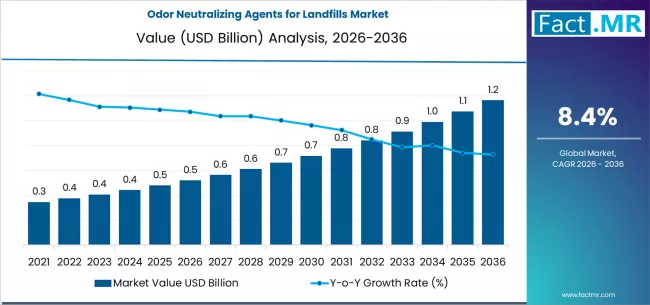
Bio-enzymatic odor neutralizers represent the leading product type, securing a 30% market share. Active landfill cells, where fresh waste is deposited, constitute the primary application zone, accounting for 34% of demand. Vapor or mist-based spraying systems are the dominant delivery method, holding a 38% share due to their effectiveness in covering large surface areas.
This growth is fundamentally linked to stricter environmental regulations governing air quality and odor emissions from waste management facilities, alongside escalating community intolerance for nuisance odors. Effective odor control is no longer merely an operational concern but a critical component of social license to operate for landfill sites. Advanced neutralizing agents help manage complex odor profiles from decomposing organic waste, converting or masking volatile organic compounds, sulfur-based gases, and ammonia.
The market's progression is characterized by a shift from simple masking agents toward technologies that neutralize or biologically degrade odor molecules at the source. Innovation focuses on longer-lasting formulations, reduced chemical usage, and integrated management systems that combine real-time monitoring with automated response, aiming to provide effective, cost-conscious, and environmentally sustainable odor abatement solutions.
Metric
| Metric | Value |
|---|---|
| Market Value (2026) | USD 0.52 Billion |
| Market Forecast Value (2036) | USD 1.16 Billion |
| Forecast CAGR (2026-2036) | 8.4% |
Category
| Category | Segments |
|---|---|
| Neutralizer Type | Bio-Enzymatic Odor Neutralizers, Hydrogen Sulfide (H₂S) Control Agents, Oxidizing Neutralizers (O₃, ClO₂, H₂O₂), Activated Carbon & Adsorbent Media, Other Specialty Odor Control Chemicals |
| Application Zone | Active Landfill Cells, Transfer Stations & Waste Handling Zones, Leachate & Gas Collection Areas, Surrounding Community Buffer Zones, Waste Storage & Pre-Treatment Sites |
| Delivery Method | Vapor/Mist-Based Spraying Systems, Solid Media Filters & Biofilters, Chemical Dosing & Neutralizing Solutions, Encapsulated Odor Control Packs, Hybrid Odor Management Systems |
| Region | North America, Latin America, Western Europe, Eastern Europe, East Asia, South Asia & Pacific, MEA |
Segmental Analysis
By Neutralizer Type, Which Segment is Most Aligned with Sustainable Practices?
Bio-enzymatic odor neutralizers lead this segment with a 30% share. Their growing preference is driven by a shift toward biological and eco-friendly solutions. These agents use blends of non-pathogenic bacteria and enzymes to biologically digest odor-causing organic compounds at the molecular level, rather than masking them.
This method addresses the odor source, produces no harmful residuals, and aligns with the waste industry's increasing sustainability goals, making it the choice for operators seeking long-term, environmentally sound odor management.
By Application Zone, Where is Odor Control Most Critical?
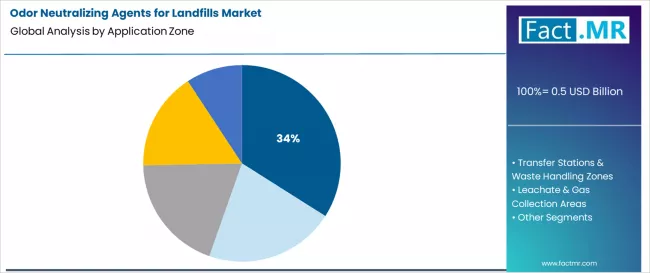
Active landfill cells represent the largest application zone, holding a 34% share. This area, where daily waste placement and compaction occur, is the primary source of fugitive odors due to the constant exposure of fresh, decomposing organic matter.
Effective and immediate odor control here is essential to contain the problem at its origin, preventing plume migration and protecting site workers and nearby communities. The continuous operation of active cells drives consistent, high-volume demand for neutralizing agents.
By Delivery Method, Which System Offers the Broadest Coverage?
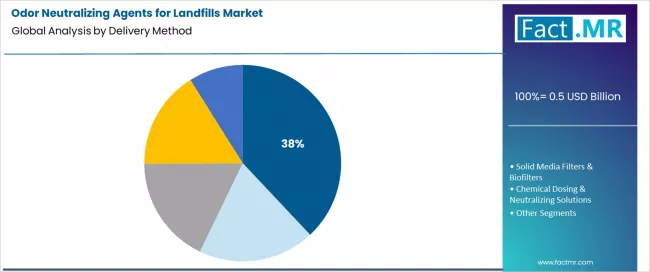
Vapor or mist-based spraying systems are the leading delivery method, commanding a 38% share. These systems are favored for their ability to deliver a fine, widespread aerosol of neutralizing agents over expansive and irregular surfaces like landfill working faces.
The mist can penetrate surface layers and provide blanket coverage more effectively than point-source applications. Their integration with weather stations and odor sensors for automated activation based on wind direction or concentration levels makes them a cornerstone of modern landfill odor management.
What are the Drivers, Restraints, and Key Trends of the Odor Neutralizing Agents for Landfills Market?
The primary market driver is the tightening of local and regional air quality regulations that include specific odor concentration limits and nuisance ordinances. Increasing urban encroachment near landfill sites amplifies community complaints, making robust odor management a prerequisite for operational permits and expansion approvals. The waste industry's own focus on environmental stewardship and improving public perception further compels investment in advanced odor control technologies to demonstrate responsible operations.
A significant market restraint is the variable and complex nature of landfill odor plumes, which are influenced by waste composition, weather, and operational practices. This makes consistent control challenging and can lead to trial-and-error in agent selection. The ongoing operational cost of chemicals and system maintenance can be substantial for site operators. Furthermore, the effectiveness of certain agents can be temporary or weather-dependent, requiring integrated, multi-pronged approaches that increase complexity and cost.
Key trends include the adoption of real-time odor monitoring networks using electronic noses and sensors that trigger automated neutralizer dispersion systems, enabling a targeted and efficient response. There is a growing use of data analytics and modeling to predict odor plume behavior based on meteorological data, allowing for proactive treatment. The market is also seeing increased deployment of hybrid systems that combine immediate-acting chemical oxidants with longer-term biological solutions for comprehensive odor management across different zones of a site.
Analysis of the Odor Neutralizing Agents for Landfills Market by Key Countries
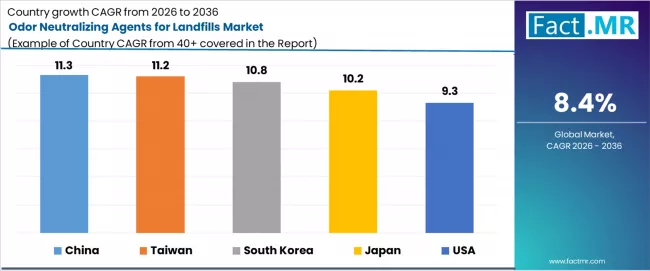
| Country | CAGR (2026-2036) |
|---|---|
| China | 11.30% |
| Taiwan | 11.20% |
| South Korea | 10.80% |
| Japan | 10.20% |
| USA | 9.30% |
How do China’s Urbanization and Waste Management Upgrades Drive Demand?
China’s leading CAGR of 11.30% is fueled by rapid urbanization bringing populations closer to existing waste facilities and a national push to modernize its waste management infrastructure.
New regulations targeting malodorous pollution as part of broader air quality campaigns mandate advanced control measures at landfills and transfer stations. The scale of China's waste generation and the government's directive to improve sanitation standards create a vast and growing market for high-efficiency odor control technologies.
What Role does Taiwan’s Dense Population and Strict Enforcement Play?
Taiwan’s 11.20% growth is driven by its extremely high population density and stringent environmental enforcement. With limited land and communities living in close proximity to waste facilities, regulators take odor complaints very seriously.
This creates a non-negotiable demand for highly effective, often technologically advanced odor neutralization systems. Taiwanese operators are early adopters of integrated sensor-and-response networks and premium neutralizing chemistries to maintain compliance and community relations.
Why is South Korea’s Advanced Waste Infrastructure a Key Market?
South Korea’s 10.80% CAGR reflects its advanced waste management policies and high public expectations for environmental quality. The country's significant investment in waste-to-energy and recycling reduces landfill reliance but makes the remaining active landfill cells focal points for odor control. Strict operational standards and a technology-forward approach drive demand for automated misting systems, advanced oxidizers, and sophisticated biofiltration solutions to manage odors from both landfilling and related leachate treatment processes.
How does Japan’s focus on Precision and Public Nuisance Control Influence the Market?
Japan’s 10.20% growth is anchored in its cultural emphasis on cleanliness and meticulous regulatory approach to public nuisance. Japanese landfill operators face zero-tolerance for odor emissions.
This results in a sophisticated market for precision dosing equipment, ultra-effective neutralizer formulations, and extensive perimeter monitoring and treatment systems. The focus is on guaranteed performance and the use of high-quality, often proprietary, chemical and biological agents.
What is Driving Demand in the USA’s Mature but Expanding Landfill Sector?
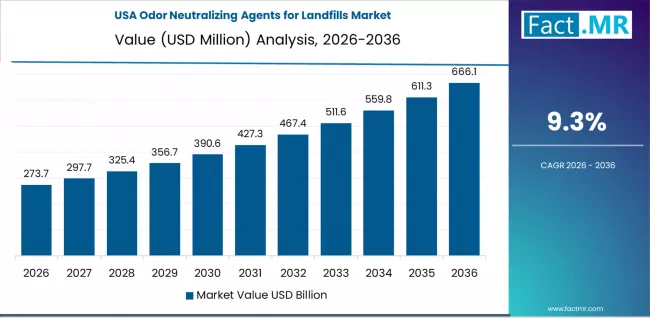
A large, active landfill sector and evolving regulatory frameworks at the state and local levels support the USA’s 9.30% CAGR. While many landfills are well-established, expansion projects and increasing waste volumes necessitate enhanced odor control to secure permits.
Consolidation of waste management companies under large players like Republic Services drives standardized, corporate-wide adoption of advanced odor management programs and bulk purchasing of effective agents, focusing on total cost of ownership and reliability.
Competitive Landscape of the Odor Neutralizing Agents for Landfills Market
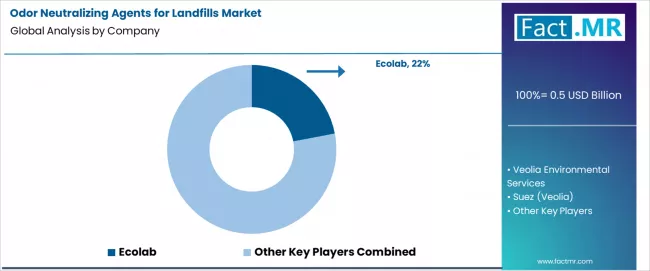
The competitive landscape features a mix of global environmental service giants and specialized odor control technology firms. Leaders like Ecolab and Veolia compete through comprehensive service offerings that combine chemical products with equipment leasing, monitoring, and on-site management services.
Competition centers on providing customized, site-wide odor management plans, demonstrating measurable reductions in odor complaints, and offering data-driven insights through monitoring platforms. A key differentiator is the move from selling chemicals to selling odor control as a managed service, with performance guarantees tied to community complaint levels or regulatory metrics.
Key Players in the Odor Neutralizing Agents for Landfills Market
- Ecolab
- Veolia Environmental Services
- Suez (Veolia)
- Clean Earth/Republic Services
- BioAir Solutions
Scope of Report
| Items | Values |
|---|---|
| Quantitative Units | USD Billion |
| Neutralizer Type | Bio-Enzymatic, H₂S Control, Oxidizing Agents, Adsorbent Media, Specialty Chemicals |
| Application Zone | Active Cells, Transfer Stations, Leachate/Gas Areas, Buffer Zones, Storage Sites |
| Delivery Method | Spray Systems, Biofilters, Dosing Solutions, Encapsulated Packs, Hybrid Systems |
| Key Countries | China, Taiwan, South Korea, Japan, USA |
| Key Companies | Ecolab, Veolia Environmental Services, Suez (Veolia), Clean Earth/Republic Services, BioAir Solutions |
| Additional Analysis | Analysis of odorant chemistry (sulfur compounds, VFAs, ammonia); efficacy testing under different weather conditions; impact on landfill gas composition; biofilter media composition and maintenance; total cost analysis of chemical vs. biological vs. hybrid systems; regulatory frameworks for odor measurement and compliance. |
Market by Segments
-
Neutralizer Type :
- Bio-Enzymatic Odor Neutralizers
- Hydrogen Sulfide (H₂S) Control Agents
- Oxidizing Neutralizers (O₃, ClO₂, H₂O₂)
- Activated Carbon & Adsorbent Media
- Other Specialty Odor Control Chemicals
-
Application Zone :
- Active Landfill Cells
- Transfer Stations & Waste Handling Zones
- Leachate & Gas Collection Areas
- Surrounding Community Buffer Zones
- Waste Storage & Pre-Treatment Sites
-
Delivery Method :
- Vapor/Mist-Based Spraying Systems
- Solid Media Filters & Biofilters
- Chemical Dosing & Neutralizing Solutions
- Encapsulated Odor Control Packs
- Hybrid Odor Management Systems
-
Region :
-
North America
- USA
- Canada
-
Latin America
- Brazil
- Mexico
- Argentina
- Rest of Latin America
-
Western Europe
- Germany
- UK
- France
- Spain
- Italy
- BENELUX
- Rest of Western Europe
-
Eastern Europe
- Russia
- Poland
- Czech Republic
- Rest of Eastern Europe
-
East Asia
- China
- Japan
- South Korea
- Taiwan
- Rest of East Asia
-
South Asia & Pacific
- India
- ASEAN
- Australia
- Rest of South Asia & Pacific
-
MEA
- Saudi Arabia
- UAE
- Turkiye
- Rest of MEA
-
Table of Content
- Executive Summary
- Global Market Outlook
- Demand to side Trends
- Supply to side Trends
- Technology Roadmap Analysis
- Analysis and Recommendations
- Market Overview
- Market Coverage / Taxonomy
- Market Definition / Scope / Limitations
- Market Background
- Market Dynamics
- Drivers
- Restraints
- Opportunity
- Trends
- Scenario Forecast
- Demand in Optimistic Scenario
- Demand in Likely Scenario
- Demand in Conservative Scenario
- Opportunity Map Analysis
- Product Life Cycle Analysis
- Supply Chain Analysis
- Investment Feasibility Matrix
- Value Chain Analysis
- PESTLE and Porter’s Analysis
- Regulatory Landscape
- Regional Parent Market Outlook
- Production and Consumption Statistics
- Import and Export Statistics
- Market Dynamics
- Global Market Analysis 2021 to 2025 and Forecast, 2026 to 2036
- Historical Market Size Value (USD Million) Analysis, 2021 to 2025
- Current and Future Market Size Value (USD Million) Projections, 2026 to 2036
- Y to o to Y Growth Trend Analysis
- Absolute $ Opportunity Analysis
- Global Market Pricing Analysis 2021 to 2025 and Forecast 2026 to 2036
- Global Market Analysis 2021 to 2025 and Forecast 2026 to 2036, By Neutralizer Type
- Introduction / Key Findings
- Historical Market Size Value (USD Million) Analysis By Neutralizer Type, 2021 to 2025
- Current and Future Market Size Value (USD Million) Analysis and Forecast By Neutralizer Type, 2026 to 2036
- Bio-Enzymatic Odor Neutralizers
- Hydrogen Sulfide (H₂S) Control Agents
- Oxidizing Neutralizers (O₃, ClO₂, H₂O₂)
- Activated Carbon & Adsorbent Media
- Other Specialty Odor Control Chemicals
- Bio-Enzymatic Odor Neutralizers
- Y to o to Y Growth Trend Analysis By Neutralizer Type, 2021 to 2025
- Absolute $ Opportunity Analysis By Neutralizer Type, 2026 to 2036
- Global Market Analysis 2021 to 2025 and Forecast 2026 to 2036, By Application Zone
- Introduction / Key Findings
- Historical Market Size Value (USD Million) Analysis By Application Zone, 2021 to 2025
- Current and Future Market Size Value (USD Million) Analysis and Forecast By Application Zone, 2026 to 2036
- Active Landfill Cells
- Transfer Stations & Waste Handling Zones
- Leachate & Gas Collection Areas
- Surrounding Community Buffer Zones
- Waste Storage & Pre-Treatment Sites
- Active Landfill Cells
- Y to o to Y Growth Trend Analysis By Application Zone, 2021 to 2025
- Absolute $ Opportunity Analysis By Application Zone, 2026 to 2036
- Global Market Analysis 2021 to 2025 and Forecast 2026 to 2036, By Delivery Method
- Introduction / Key Findings
- Historical Market Size Value (USD Million) Analysis By Delivery Method, 2021 to 2025
- Current and Future Market Size Value (USD Million) Analysis and Forecast By Delivery Method, 2026 to 2036
- Vapor/Mist-Based Spraying Systems
- Solid Media Filters & Biofilters
- Chemical Dosing & Neutralizing Solutions
- Encapsulated Odor Control Packs
- Hybrid Odor Management Systems
- Vapor/Mist-Based Spraying Systems
- Y to o to Y Growth Trend Analysis By Delivery Method, 2021 to 2025
- Absolute $ Opportunity Analysis By Delivery Method, 2026 to 2036
- Global Market Analysis 2021 to 2025 and Forecast 2026 to 2036, By Region
- Introduction
- Historical Market Size Value (USD Million) Analysis By Region, 2021 to 2025
- Current Market Size Value (USD Million) Analysis and Forecast By Region, 2026 to 2036
- North America
- Latin America
- Western Europe
- Eastern Europe
- East Asia
- South Asia and Pacific
- Middle East & Africa
- Market Attractiveness Analysis By Region
- North America Market Analysis 2021 to 2025 and Forecast 2026 to 2036, By Country
- Historical Market Size Value (USD Million) Trend Analysis By Market Taxonomy, 2021 to 2025
- Market Size Value (USD Million) Forecast By Market Taxonomy, 2026 to 2036
- By Country
- USA
- Canada
- Mexico
- By Neutralizer Type
- By Application Zone
- By Delivery Method
- By Country
- Market Attractiveness Analysis
- By Country
- By Neutralizer Type
- By Application Zone
- By Delivery Method
- Key Takeaways
- Latin America Market Analysis 2021 to 2025 and Forecast 2026 to 2036, By Country
- Historical Market Size Value (USD Million) Trend Analysis By Market Taxonomy, 2021 to 2025
- Market Size Value (USD Million) Forecast By Market Taxonomy, 2026 to 2036
- By Country
- Brazil
- Chile
- Rest of Latin America
- By Neutralizer Type
- By Application Zone
- By Delivery Method
- By Country
- Market Attractiveness Analysis
- By Country
- By Neutralizer Type
- By Application Zone
- By Delivery Method
- Key Takeaways
- Western Europe Market Analysis 2021 to 2025 and Forecast 2026 to 2036, By Country
- Historical Market Size Value (USD Million) Trend Analysis By Market Taxonomy, 2021 to 2025
- Market Size Value (USD Million) Forecast By Market Taxonomy, 2026 to 2036
- By Country
- Germany
- UK
- Italy
- Spain
- France
- Nordic
- BENELUX
- Rest of Western Europe
- By Neutralizer Type
- By Application Zone
- By Delivery Method
- By Country
- Market Attractiveness Analysis
- By Country
- By Neutralizer Type
- By Application Zone
- By Delivery Method
- Key Takeaways
- Eastern Europe Market Analysis 2021 to 2025 and Forecast 2026 to 2036, By Country
- Historical Market Size Value (USD Million) Trend Analysis By Market Taxonomy, 2021 to 2025
- Market Size Value (USD Million) Forecast By Market Taxonomy, 2026 to 2036
- By Country
- Russia
- Poland
- Hungary
- Balkan & Baltic
- Rest of Eastern Europe
- By Neutralizer Type
- By Application Zone
- By Delivery Method
- By Country
- Market Attractiveness Analysis
- By Country
- By Neutralizer Type
- By Application Zone
- By Delivery Method
- Key Takeaways
- East Asia Market Analysis 2021 to 2025 and Forecast 2026 to 2036, By Country
- Historical Market Size Value (USD Million) Trend Analysis By Market Taxonomy, 2021 to 2025
- Market Size Value (USD Million) Forecast By Market Taxonomy, 2026 to 2036
- By Country
- China
- Japan
- South Korea
- By Neutralizer Type
- By Application Zone
- By Delivery Method
- By Country
- Market Attractiveness Analysis
- By Country
- By Neutralizer Type
- By Application Zone
- By Delivery Method
- Key Takeaways
- South Asia and Pacific Market Analysis 2021 to 2025 and Forecast 2026 to 2036, By Country
- Historical Market Size Value (USD Million) Trend Analysis By Market Taxonomy, 2021 to 2025
- Market Size Value (USD Million) Forecast By Market Taxonomy, 2026 to 2036
- By Country
- India
- ASEAN
- Australia & New Zealand
- Rest of South Asia and Pacific
- By Neutralizer Type
- By Application Zone
- By Delivery Method
- By Country
- Market Attractiveness Analysis
- By Country
- By Neutralizer Type
- By Application Zone
- By Delivery Method
- Key Takeaways
- Middle East & Africa Market Analysis 2021 to 2025 and Forecast 2026 to 2036, By Country
- Historical Market Size Value (USD Million) Trend Analysis By Market Taxonomy, 2021 to 2025
- Market Size Value (USD Million) Forecast By Market Taxonomy, 2026 to 2036
- By Country
- Kingdom of Saudi Arabia
- Other GCC Countries
- Turkiye
- South Africa
- Other African Union
- Rest of Middle East & Africa
- By Neutralizer Type
- By Application Zone
- By Delivery Method
- By Country
- Market Attractiveness Analysis
- By Country
- By Neutralizer Type
- By Application Zone
- By Delivery Method
- Key Takeaways
- Key Countries Market Analysis
- USA
- Pricing Analysis
- Market Share Analysis, 2025
- By Neutralizer Type
- By Application Zone
- By Delivery Method
- Canada
- Pricing Analysis
- Market Share Analysis, 2025
- By Neutralizer Type
- By Application Zone
- By Delivery Method
- Mexico
- Pricing Analysis
- Market Share Analysis, 2025
- By Neutralizer Type
- By Application Zone
- By Delivery Method
- Brazil
- Pricing Analysis
- Market Share Analysis, 2025
- By Neutralizer Type
- By Application Zone
- By Delivery Method
- Chile
- Pricing Analysis
- Market Share Analysis, 2025
- By Neutralizer Type
- By Application Zone
- By Delivery Method
- Germany
- Pricing Analysis
- Market Share Analysis, 2025
- By Neutralizer Type
- By Application Zone
- By Delivery Method
- UK
- Pricing Analysis
- Market Share Analysis, 2025
- By Neutralizer Type
- By Application Zone
- By Delivery Method
- Italy
- Pricing Analysis
- Market Share Analysis, 2025
- By Neutralizer Type
- By Application Zone
- By Delivery Method
- Spain
- Pricing Analysis
- Market Share Analysis, 2025
- By Neutralizer Type
- By Application Zone
- By Delivery Method
- France
- Pricing Analysis
- Market Share Analysis, 2025
- By Neutralizer Type
- By Application Zone
- By Delivery Method
- India
- Pricing Analysis
- Market Share Analysis, 2025
- By Neutralizer Type
- By Application Zone
- By Delivery Method
- ASEAN
- Pricing Analysis
- Market Share Analysis, 2025
- By Neutralizer Type
- By Application Zone
- By Delivery Method
- Australia & New Zealand
- Pricing Analysis
- Market Share Analysis, 2025
- By Neutralizer Type
- By Application Zone
- By Delivery Method
- China
- Pricing Analysis
- Market Share Analysis, 2025
- By Neutralizer Type
- By Application Zone
- By Delivery Method
- Japan
- Pricing Analysis
- Market Share Analysis, 2025
- By Neutralizer Type
- By Application Zone
- By Delivery Method
- South Korea
- Pricing Analysis
- Market Share Analysis, 2025
- By Neutralizer Type
- By Application Zone
- By Delivery Method
- Russia
- Pricing Analysis
- Market Share Analysis, 2025
- By Neutralizer Type
- By Application Zone
- By Delivery Method
- Poland
- Pricing Analysis
- Market Share Analysis, 2025
- By Neutralizer Type
- By Application Zone
- By Delivery Method
- Hungary
- Pricing Analysis
- Market Share Analysis, 2025
- By Neutralizer Type
- By Application Zone
- By Delivery Method
- Kingdom of Saudi Arabia
- Pricing Analysis
- Market Share Analysis, 2025
- By Neutralizer Type
- By Application Zone
- By Delivery Method
- Turkiye
- Pricing Analysis
- Market Share Analysis, 2025
- By Neutralizer Type
- By Application Zone
- By Delivery Method
- South Africa
- Pricing Analysis
- Market Share Analysis, 2025
- By Neutralizer Type
- By Application Zone
- By Delivery Method
- USA
- Market Structure Analysis
- Competition Dashboard
- Competition Benchmarking
- Market Share Analysis of Top Players
- By Regional
- By Neutralizer Type
- By Application Zone
- By Delivery Method
- Competition Analysis
- Competition Deep Dive
- Ecolab
- Overview
- Product Portfolio
- Profitability by Market Segments (Product/Age /Sales Channel/Region)
- Sales Footprint
- Strategy Overview
- Marketing Strategy
- Product Strategy
- Channel Strategy
- Veolia Environmental Services
- Suez (Veolia)
- Clean Earth / Republic Services
- BioAir Solutions
- Ecolab
- Competition Deep Dive
- Assumptions & Acronyms Used
- Research Methodology
List Of Table
- Table 1: Global Market Value (USD Million) Forecast by Region, 2021 to 2036
- Table 2: Global Market Value (USD Million) Forecast by Neutralizer Type, 2021 to 2036
- Table 3: Global Market Value (USD Million) Forecast by Application Zone, 2021 to 2036
- Table 4: Global Market Value (USD Million) Forecast by Delivery Method, 2021 to 2036
- Table 5: North America Market Value (USD Million) Forecast by Country, 2021 to 2036
- Table 6: North America Market Value (USD Million) Forecast by Neutralizer Type, 2021 to 2036
- Table 7: North America Market Value (USD Million) Forecast by Application Zone, 2021 to 2036
- Table 8: North America Market Value (USD Million) Forecast by Delivery Method, 2021 to 2036
- Table 9: Latin America Market Value (USD Million) Forecast by Country, 2021 to 2036
- Table 10: Latin America Market Value (USD Million) Forecast by Neutralizer Type, 2021 to 2036
- Table 11: Latin America Market Value (USD Million) Forecast by Application Zone, 2021 to 2036
- Table 12: Latin America Market Value (USD Million) Forecast by Delivery Method, 2021 to 2036
- Table 13: Western Europe Market Value (USD Million) Forecast by Country, 2021 to 2036
- Table 14: Western Europe Market Value (USD Million) Forecast by Neutralizer Type, 2021 to 2036
- Table 15: Western Europe Market Value (USD Million) Forecast by Application Zone, 2021 to 2036
- Table 16: Western Europe Market Value (USD Million) Forecast by Delivery Method, 2021 to 2036
- Table 17: Eastern Europe Market Value (USD Million) Forecast by Country, 2021 to 2036
- Table 18: Eastern Europe Market Value (USD Million) Forecast by Neutralizer Type, 2021 to 2036
- Table 19: Eastern Europe Market Value (USD Million) Forecast by Application Zone, 2021 to 2036
- Table 20: Eastern Europe Market Value (USD Million) Forecast by Delivery Method, 2021 to 2036
- Table 21: East Asia Market Value (USD Million) Forecast by Country, 2021 to 2036
- Table 22: East Asia Market Value (USD Million) Forecast by Neutralizer Type, 2021 to 2036
- Table 23: East Asia Market Value (USD Million) Forecast by Application Zone, 2021 to 2036
- Table 24: East Asia Market Value (USD Million) Forecast by Delivery Method, 2021 to 2036
- Table 25: South Asia and Pacific Market Value (USD Million) Forecast by Country, 2021 to 2036
- Table 26: South Asia and Pacific Market Value (USD Million) Forecast by Neutralizer Type, 2021 to 2036
- Table 27: South Asia and Pacific Market Value (USD Million) Forecast by Application Zone, 2021 to 2036
- Table 28: South Asia and Pacific Market Value (USD Million) Forecast by Delivery Method, 2021 to 2036
- Table 29: Middle East & Africa Market Value (USD Million) Forecast by Country, 2021 to 2036
- Table 30: Middle East & Africa Market Value (USD Million) Forecast by Neutralizer Type, 2021 to 2036
- Table 31: Middle East & Africa Market Value (USD Million) Forecast by Application Zone, 2021 to 2036
- Table 32: Middle East & Africa Market Value (USD Million) Forecast by Delivery Method, 2021 to 2036
List Of Figures
- Figure 1: Global Market Pricing Analysis
- Figure 2: Global Market Value (USD Million) Forecast 2021 to 2036
- Figure 3: Global Market Value Share and BPS Analysis by Neutralizer Type, 2026 and 2036
- Figure 4: Global Market Y to o to Y Growth Comparison by Neutralizer Type, 2026 to 2036
- Figure 5: Global Market Attractiveness Analysis by Neutralizer Type
- Figure 6: Global Market Value Share and BPS Analysis by Application Zone, 2026 and 2036
- Figure 7: Global Market Y to o to Y Growth Comparison by Application Zone, 2026 to 2036
- Figure 8: Global Market Attractiveness Analysis by Application Zone
- Figure 9: Global Market Value Share and BPS Analysis by Delivery Method, 2026 and 2036
- Figure 10: Global Market Y to o to Y Growth Comparison by Delivery Method, 2026 to 2036
- Figure 11: Global Market Attractiveness Analysis by Delivery Method
- Figure 12: Global Market Value (USD Million) Share and BPS Analysis by Region, 2026 and 2036
- Figure 13: Global Market Y to o to Y Growth Comparison by Region, 2026 to 2036
- Figure 14: Global Market Attractiveness Analysis by Region
- Figure 15: North America Market Incremental Dollar Opportunity, 2026 to 2036
- Figure 16: Latin America Market Incremental Dollar Opportunity, 2026 to 2036
- Figure 17: Western Europe Market Incremental Dollar Opportunity, 2026 to 2036
- Figure 18: Eastern Europe Market Incremental Dollar Opportunity, 2026 to 2036
- Figure 19: East Asia Market Incremental Dollar Opportunity, 2026 to 2036
- Figure 20: South Asia and Pacific Market Incremental Dollar Opportunity, 2026 to 2036
- Figure 21: Middle East & Africa Market Incremental Dollar Opportunity, 2026 to 2036
- Figure 22: North America Market Value Share and BPS Analysis by Country, 2026 and 2036
- Figure 23: North America Market Value Share and BPS Analysis by Neutralizer Type, 2026 and 2036
- Figure 24: North America Market Y to o to Y Growth Comparison by Neutralizer Type, 2026 to 2036
- Figure 25: North America Market Attractiveness Analysis by Neutralizer Type
- Figure 26: North America Market Value Share and BPS Analysis by Application Zone, 2026 and 2036
- Figure 27: North America Market Y to o to Y Growth Comparison by Application Zone, 2026 to 2036
- Figure 28: North America Market Attractiveness Analysis by Application Zone
- Figure 29: North America Market Value Share and BPS Analysis by Delivery Method, 2026 and 2036
- Figure 30: North America Market Y to o to Y Growth Comparison by Delivery Method, 2026 to 2036
- Figure 31: North America Market Attractiveness Analysis by Delivery Method
- Figure 32: Latin America Market Value Share and BPS Analysis by Country, 2026 and 2036
- Figure 33: Latin America Market Value Share and BPS Analysis by Neutralizer Type, 2026 and 2036
- Figure 34: Latin America Market Y to o to Y Growth Comparison by Neutralizer Type, 2026 to 2036
- Figure 35: Latin America Market Attractiveness Analysis by Neutralizer Type
- Figure 36: Latin America Market Value Share and BPS Analysis by Application Zone, 2026 and 2036
- Figure 37: Latin America Market Y to o to Y Growth Comparison by Application Zone, 2026 to 2036
- Figure 38: Latin America Market Attractiveness Analysis by Application Zone
- Figure 39: Latin America Market Value Share and BPS Analysis by Delivery Method, 2026 and 2036
- Figure 40: Latin America Market Y to o to Y Growth Comparison by Delivery Method, 2026 to 2036
- Figure 41: Latin America Market Attractiveness Analysis by Delivery Method
- Figure 42: Western Europe Market Value Share and BPS Analysis by Country, 2026 and 2036
- Figure 43: Western Europe Market Value Share and BPS Analysis by Neutralizer Type, 2026 and 2036
- Figure 44: Western Europe Market Y to o to Y Growth Comparison by Neutralizer Type, 2026 to 2036
- Figure 45: Western Europe Market Attractiveness Analysis by Neutralizer Type
- Figure 46: Western Europe Market Value Share and BPS Analysis by Application Zone, 2026 and 2036
- Figure 47: Western Europe Market Y to o to Y Growth Comparison by Application Zone, 2026 to 2036
- Figure 48: Western Europe Market Attractiveness Analysis by Application Zone
- Figure 49: Western Europe Market Value Share and BPS Analysis by Delivery Method, 2026 and 2036
- Figure 50: Western Europe Market Y to o to Y Growth Comparison by Delivery Method, 2026 to 2036
- Figure 51: Western Europe Market Attractiveness Analysis by Delivery Method
- Figure 52: Eastern Europe Market Value Share and BPS Analysis by Country, 2026 and 2036
- Figure 53: Eastern Europe Market Value Share and BPS Analysis by Neutralizer Type, 2026 and 2036
- Figure 54: Eastern Europe Market Y to o to Y Growth Comparison by Neutralizer Type, 2026 to 2036
- Figure 55: Eastern Europe Market Attractiveness Analysis by Neutralizer Type
- Figure 56: Eastern Europe Market Value Share and BPS Analysis by Application Zone, 2026 and 2036
- Figure 57: Eastern Europe Market Y to o to Y Growth Comparison by Application Zone, 2026 to 2036
- Figure 58: Eastern Europe Market Attractiveness Analysis by Application Zone
- Figure 59: Eastern Europe Market Value Share and BPS Analysis by Delivery Method, 2026 and 2036
- Figure 60: Eastern Europe Market Y to o to Y Growth Comparison by Delivery Method, 2026 to 2036
- Figure 61: Eastern Europe Market Attractiveness Analysis by Delivery Method
- Figure 62: East Asia Market Value Share and BPS Analysis by Country, 2026 and 2036
- Figure 63: East Asia Market Value Share and BPS Analysis by Neutralizer Type, 2026 and 2036
- Figure 64: East Asia Market Y to o to Y Growth Comparison by Neutralizer Type, 2026 to 2036
- Figure 65: East Asia Market Attractiveness Analysis by Neutralizer Type
- Figure 66: East Asia Market Value Share and BPS Analysis by Application Zone, 2026 and 2036
- Figure 67: East Asia Market Y to o to Y Growth Comparison by Application Zone, 2026 to 2036
- Figure 68: East Asia Market Attractiveness Analysis by Application Zone
- Figure 69: East Asia Market Value Share and BPS Analysis by Delivery Method, 2026 and 2036
- Figure 70: East Asia Market Y to o to Y Growth Comparison by Delivery Method, 2026 to 2036
- Figure 71: East Asia Market Attractiveness Analysis by Delivery Method
- Figure 72: South Asia and Pacific Market Value Share and BPS Analysis by Country, 2026 and 2036
- Figure 73: South Asia and Pacific Market Value Share and BPS Analysis by Neutralizer Type, 2026 and 2036
- Figure 74: South Asia and Pacific Market Y to o to Y Growth Comparison by Neutralizer Type, 2026 to 2036
- Figure 75: South Asia and Pacific Market Attractiveness Analysis by Neutralizer Type
- Figure 76: South Asia and Pacific Market Value Share and BPS Analysis by Application Zone, 2026 and 2036
- Figure 77: South Asia and Pacific Market Y to o to Y Growth Comparison by Application Zone, 2026 to 2036
- Figure 78: South Asia and Pacific Market Attractiveness Analysis by Application Zone
- Figure 79: South Asia and Pacific Market Value Share and BPS Analysis by Delivery Method, 2026 and 2036
- Figure 80: South Asia and Pacific Market Y to o to Y Growth Comparison by Delivery Method, 2026 to 2036
- Figure 81: South Asia and Pacific Market Attractiveness Analysis by Delivery Method
- Figure 82: Middle East & Africa Market Value Share and BPS Analysis by Country, 2026 and 2036
- Figure 83: Middle East & Africa Market Value Share and BPS Analysis by Neutralizer Type, 2026 and 2036
- Figure 84: Middle East & Africa Market Y to o to Y Growth Comparison by Neutralizer Type, 2026 to 2036
- Figure 85: Middle East & Africa Market Attractiveness Analysis by Neutralizer Type
- Figure 86: Middle East & Africa Market Value Share and BPS Analysis by Application Zone, 2026 and 2036
- Figure 87: Middle East & Africa Market Y to o to Y Growth Comparison by Application Zone, 2026 to 2036
- Figure 88: Middle East & Africa Market Attractiveness Analysis by Application Zone
- Figure 89: Middle East & Africa Market Value Share and BPS Analysis by Delivery Method, 2026 and 2036
- Figure 90: Middle East & Africa Market Y to o to Y Growth Comparison by Delivery Method, 2026 to 2036
- Figure 91: Middle East & Africa Market Attractiveness Analysis by Delivery Method
- Figure 92: Global Market - Tier Structure Analysis
- Figure 93: Global Market - Company Share Analysis
- FAQs -
How big is the odor neutralizing agents for landfills market in 2026?
The global odor neutralizing agents for landfills market is estimated to be valued at USD 0.5 billion in 2026.
What will be the size of odor neutralizing agents for landfills market in 2036?
The market size for the odor neutralizing agents for landfills market is projected to reach USD 1.2 billion by 2036.
How much will be the odor neutralizing agents for landfills market growth between 2026 and 2036?
The odor neutralizing agents for landfills market is expected to grow at a 8.4% CAGR between 2026 and 2036.
What are the key product types in the odor neutralizing agents for landfills market?
The key product types in odor neutralizing agents for landfills market are bio-enzymatic odor neutralizers, hydrogen sulfide (h₂s) control agents, oxidizing neutralizers (o₃, clo₂, h₂o₂), activated carbon & adsorbent media and other specialty odor control chemicals.
Which application zone segment to contribute significant share in the odor neutralizing agents for landfills market in 2026?
In terms of application zone, active landfill cells segment to command 34.0% share in the odor neutralizing agents for landfills market in 2026.