PCR-Based Circular Supply Chain Platform Market
PCR-Based Circular Supply Chain Platform Market Size and Share Forecast Outlook 2026 to 2036
PCR-based circular supply chain platform market is projected to grow from USD 1.2 billion in 2026 to USD 4.3 billion by 2036, at a CAGR of 13.6%. End-to-end PCR sourcing will dominate with a 45.0% market share, while circular supply chain platforms will lead the platform model segment with a 54.0% share.
PCR-Based Circular Supply Chain Platform Market Forecast and Outlook 2026 to 2036
The PCR-based circular supply chain platform market is expected to reach USD 1.2 billion in 2026, growing to USD 4.3 billion by 2036, with a CAGR of 13.6%.
Key Takeaways from PCR-Based Circular Supply Chain Platform Market
- PCR-Based Circular Supply Chain Platform Market Value (2026): USD 1.2 billion
- PCR-Based Circular Supply Chain Platform Market Forecast Value (2036): USD 4.3 billion
- PCR-Based Circular Supply Chain Platform Market Forecast CAGR (2026-2036): 13.6%
- Leading Segment in PCR-Based Circular Supply Chain Platform Market: Cloud platforms + APIs (62%)
- Key Growth Region in PCR-Based Circular Supply Chain Platform Market: Asia Pacific
- Key Players in PCR-Based Circular Supply Chain Platform Market: Circularise, SAP, AntChain, Recykal, Sphera, Salesforce (Net Zero Cloud), Alibaba Cloud
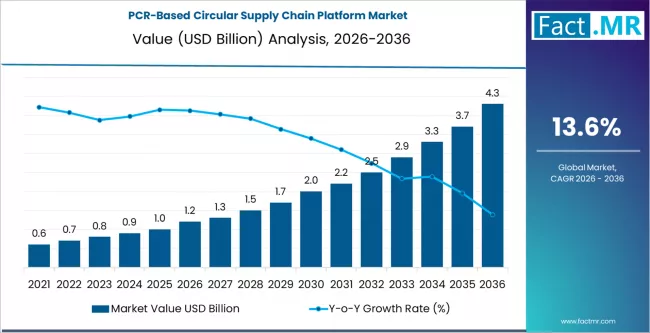
This market holds strategic importance within the broader supply chain and sustainability ecosystems, as it directly impacts the ability to reduce waste and enhance resource efficiency. Control points such as data management, supply chain traceability, and the integration of circularity principles are crucial to successful platform adoption.
Companies that can harness real-time data and monitor the movement of materials throughout the value chain gain a competitive advantage. Dependency on regulatory frameworks and environmental compliance further shapes market dynamics, pushing businesses to balance technological investments with sustainability goals. Strategic trade-offs emerge in the form of upfront capital costs versus long-term operational savings, creating decision-making challenges for players looking to capitalize on this growing demand while managing associated risks.
PCR-Based Circular Supply Chain Platform Market
| Metric | Value |
|---|---|
| Estimated Value in (2026E) | USD 1.2 billion |
| Forecast Value in (2036F) | USD 4.3 billion |
| Forecast CAGR (2026 to 2036) | 13.6% |
Category
| Category | Segments |
|---|---|
| End-use | End-to-end PCR sourcing; Brand and OEM circularity; Manufacturing ecosystems; Emerging PCR networks; Regional circularity |
| Platform Model | Circular supply chain platforms; Enterprise circular software; Platform + marketplace; Aggregator platforms; Others |
| Data Scope | Material flows and certificates; Supplier and recycler data; Production and recycling data; Collection and PCR data; Others |
| Technology | Cloud platforms + APIs; ERP-integrated platforms; High-volume data orchestration; Mobile-first platforms; Others |
| Region | North America; Europe; Asia Pacific; Latin America; Middle East & Africa |
Segmental Analysis
What Is the Impact of Platform Model on the PCR-Based Circular Supply Chain Platform Market?
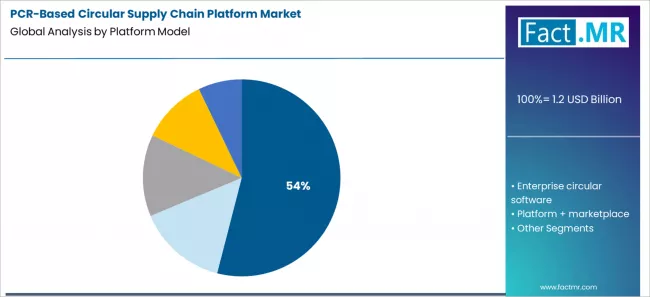
In the PCR-based circular supply chain platform market, platform model plays a significant role in shaping how companies manage and optimize their supply chains. Circular supply chain platforms lead the market with a 54% share, as they enable businesses to track and manage the flow of materials through the recycling process. These platforms focus on sustainability, offering tools to close the loop on materials and promote recycling. As businesses continue to prioritize circular economy principles, the adoption of circular supply chain platforms will grow, providing the necessary infrastructure to ensure efficient, sustainable material management.
How Does Technology Influence the PCR-Based Circular Supply Chain Platform Market?
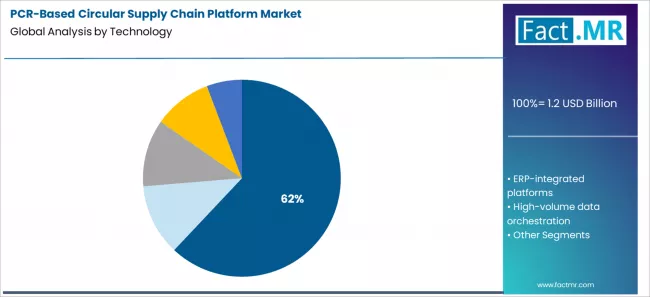
Technology plays a central role in enhancing the functionality and scalability of PCR-based circular supply chain platforms, with cloud platforms and APIs leading the market at a 62% share. These technologies allow for seamless integration across various supply chain systems, enabling real-time data sharing and collaboration among stakeholders. Cloud platforms provide the flexibility and scalability needed to manage high volumes of data, while APIs ensure easy connectivity between different software and platforms. As the demand for efficient and transparent circular supply chains grows, the continued integration of cloud platforms and APIs will be key to optimizing recycling processes and ensuring sustainability in the supply chain.
What are the Principal Drivers, Constraints, and Evolving Dynamics of the PCR Based Circular Supply Chain Platform Market?
Growth in PCR based circular supply chain platforms has been influenced by requirements to track, recover, and reintegrate post consumer recycled (PCR) materials across manufacturing and recycling networks. Manufacturers, converters, and waste managers adopt digital platforms that record material provenance, processing history, and quality attributes to support traceability and compliance with recycled content reporting. Demand has been shaped by regulatory frameworks that mandate recycled content levels and extended producer responsibility obligations, which require transparent documentation of material flows.
Constraints include the cost of implementing digital infrastructure across diverse supply chain participants and the need for consistent data capture from collection through processing and reuse. Integration challenges have arisen where legacy systems lack standard data interfaces, slowing platform deployment across partners. Efforts to define common protocols for material data exchange and improve interoperability with enterprise resource systems are advancing. Collaboration among technology providers, material suppliers, and end users aims to refine platform functionality, enable scalable data sharing, and support circular material tracking across complex supply chains.
Analysis of the PCR-Based Circular Supply Chain Platform Market by Key Country
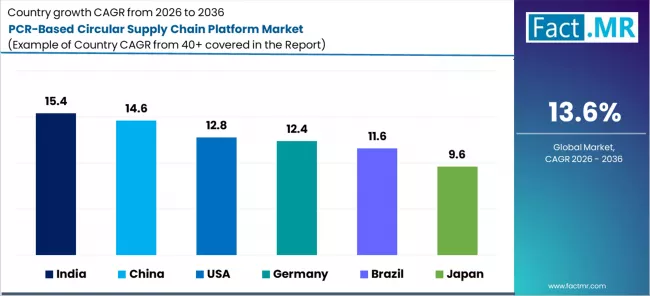
| Country | CAGR 2026 to 2036 |
|---|---|
| Germany | 12.4% |
| USA | 12.8% |
| China | 14.6% |
| India | 15.4% |
| Brazil | 11.6% |
| Japan | 9.6% |
The report covers an in-depth analysis of 40+ countries; top-performing countries are highlighted below.
What is the Growth Outlook for PCR-Based Circular Supply Chain Platforms in Germany?
Germany’s PCR-based circular supply chain platform market is projected to grow at a CAGR of 12.4% from 2026 to 2036. With Germany’s commitment to sustainability and the circular economy, the demand for platforms that optimize the use of post-consumer recycled (PCR) materials in supply chains is increasing. These platforms help improve the efficiency of recycling, reduce waste, and create more sustainable supply chain practices. As Germany continues to innovate in environmental management and expand its recycling infrastructure, the market for these platforms is expected to experience steady growth.
How is the PCR-Based Circular Supply Chain Platform Market Performing in the USA?
The USA’s PCR-based circular supply chain platform market is expected to grow at a CAGR of 12.8% from 2026 to 2036. As the country’s industries increasingly embrace sustainability and circular economy principles, the demand for PCR-based platforms that improve supply chain transparency and efficiency is on the rise. These platforms enable better material traceability, waste reduction, and more sustainable procurement processes. With growing regulatory pressure to reduce plastic waste and increase recycling, the USA’s market for PCR-based circular supply chain platforms is set to expand steadily.
What is the Market Outlook for PCR-Based Circular Supply Chain Platforms in China?
China is projected to experience significant growth in the PCR-based circular supply chain platform market, with a projected CAGR of 14.6% from 2026 to 2036. As China continues to grow its manufacturing base and focus on sustainability, the demand for platforms that facilitate the use of PCR materials in supply chains is rising. Government policies aimed at reducing plastic waste and increasing recycling efforts are driving the adoption of these platforms. With China’s large-scale manufacturing industry and increasing focus on environmental goals, the market for PCR-based circular supply chain platforms is set for substantial growth.
What is the Growth Potential for PCR-Based Circular Supply Chain Platforms in India?
India’s PCR-based circular supply chain platform market is forecast to grow at a robust CAGR of 15.4% from 2026 to 2036. As India’s manufacturing and industrial sectors continue to expand, there is increasing demand for more sustainable supply chain solutions. PCR-based platforms are becoming essential for improving the efficiency of recycling and reducing waste, particularly in industries such as packaging, electronics, and textiles. With the government’s focus on waste management and sustainability, India’s market for PCR-based circular supply chain platforms is expected to grow rapidly in the coming years.
What is the Demand for PCR-Based Circular Supply Chain Platforms in Brazil?
Brazil’s PCR-based circular supply chain platform market is set to grow at a CAGR of 11.6% from 2026 to 2036. With growing regulatory pressures on waste management and recycling, Brazil is increasingly adopting platforms that enable the efficient use of PCR materials in supply chains. As the country focuses on sustainability and waste reduction, these platforms help industries optimize their material flows and improve the recyclability of products. Brazil’s commitment to sustainability, coupled with rising consumer demand for eco-friendly products, will support steady growth in the market for PCR-based circular supply chain platforms.
What is the Market Expansion Outlook for PCR-Based Circular Supply Chain Platforms in Japan?
Japan’s PCR-based circular supply chain platform market is projected to grow at a CAGR of 9.6% from 2026 to 2036. Japan has long been at the forefront of sustainability and recycling, and the adoption of circular supply chain platforms is becoming increasingly important. These platforms allow for better management of PCR materials in supply chains, improving material reuse and recycling. While Japan’s growth rate may be slower compared to other regions, its strong regulatory framework and continued commitment to environmental sustainability will drive steady demand for these platforms.
How is Competition Structured in the PCRBased Circular Supply Chain Platform Market?
Competition in this market is shaped by platform capability to trace post consumer recycled (PCR) content, integrate with enterprise systems, and deliver actionable supply chain insights. Circularise focuses on decentralized traceability that records material attributes across multiple tiers of the value chain. SAP and Salesforce (Net Zero Cloud) compete with enterprise grade platforms that embed PCR tracking into broader supply chain management, compliance reporting, and sustainability workflows.
AntChain and Alibaba Cloud emphasize blockchain enabled data integrity and scalable cloud infrastructure to support transaction security and large datasets. Recykal positions itself with solutions tailored to recycling ecosystems and material recovery operations, offering real time tracking and partner engagement tools. Sphera integrates PCR content data with environmental and regulatory metrics to support governance and reporting. Competitive differentiation arises from ease of integration with existing enterprise resource planning systems, depth of analytics, and support for multi stakeholder collaboration. Buyers evaluate providers based on interoperability, certification readiness, and documented use cases across consumer goods and manufacturing sectors.
Key Players of the PCRBased Circular Supply Chain Platform Market
- Circularise
- SAP
- AntChain
- Recykal
- Sphera
- Salesforce (Net Zero Cloud)
- Alibaba Cloud
Scope of the Report
| Items | Values |
|---|---|
| Quantitative Units (2026) | USD Billion |
| End-use | End-to-end PCR sourcing, Brand and OEM circularity, Manufacturing ecosystems, Emerging PCR networks, Regional circularity |
| Platform Model | Circular supply chain platforms, Enterprise circular software, Platform + marketplace, Aggregator platforms, Others |
| Data Scope | Material flows and certificates, Supplier and recycler data, Production and recycling data, Collection and PCR data, Others |
| Technology | Cloud platforms + APIs, ERP-integrated platforms, High-volume data orchestration, Mobile-first platforms, Others |
| Regions Covered | North America, Europe, Asia Pacific, Latin America, Middle East & Africa |
| Countries Covered | United States, Canada, Mexico, Brazil, Germany, United Kingdom, France, Italy, Spain, China, Japan, South Korea, India, Australia & New Zealand |
| Key Companies Profiled | Circularise, SAP, AntChain, Recykal, Sphera, Salesforce (Net Zero Cloud), Alibaba Cloud |
| Additional Attributes | Dollar revenue by end-use, platform model, data scope, and technology; regional demand trends, competitive landscape, technological advancements in PCR-based circular supply chain platforms, and innovations in data orchestration and platform integration |
PCR-Based Circular Supply Chain Platform Market Key Segments
-
End-use :
- End-to-end PCR sourcing
- Brand and OEM circularity
- Manufacturing ecosystems
- Emerging PCR networks
- Regional circularity
-
Platform Model :
- Circular supply chain platforms
- Enterprise circular software
- Platform + marketplace
- Aggregator platforms
- Others
-
Data Scope :
- Material flows and certificates
- Supplier and recycler data
- Production and recycling data
- Collection and PCR data
- Others
-
Technology :
- Cloud platforms + APIs
- ERP-integrated platforms
- High-volume data orchestration
- Mobile-first platforms
- Others
-
Region :
- North America
- USA
- Canada
- Mexico
- Europe
- Germany
- UK
- France
- Italy
- Spain
- Nordic Countries
- BENELUX
- Rest of Europe
- Asia Pacific
- China
- Japan
- South Korea
- India
- Australia
- Rest of Asia Pacific
- Latin America
- Brazil
- Argentina
- Rest of Latin America
- Middle East and Africa
- Kingdom of Saudi Arabia
- United Arab Emirates
- South Africa
- Rest of Middle East and Africa
- Other Regions
- Oceania
- Central Asia
- Other Markets
- North America
Bibliographies
- Alibaba Cloud. (2026). Alibaba Cloud: Building sustainable supply chains with blockchain and cloud technology. Alibaba Cloud.
- Circularise. (2026). Circularise: Enabling traceability in circular supply chains with blockchain technology. Circularise.
- Recykal. (2026). Recykal: Real-time material tracking for circular supply chains and recycling operations. Recykal.
- European Commission. (2023).Packaging and Packaging Waste Regulation (PPWR): Traceability, recycled content verification, and digital reporting requirements. Publications Office of the European Union.
- Organisation for Economic Co-operation and Development. (2023).Digital tools for circular economy supply chains: Traceability, data governance, and verification. OECD Publishing.
- United Nations Environment Programme. (2023).Traceability and transparency in plastic value chains: Enablers of circularity. UNEP.
Table of Content
- Executive Summary
- Global Market Outlook
- Demand to side Trends
- Supply to side Trends
- Technology Roadmap Analysis
- Analysis and Recommendations
- Market Overview
- Market Coverage / Taxonomy
- Market Definition / Scope / Limitations
- Market Background
- Market Dynamics
- Drivers
- Restraints
- Opportunity
- Trends
- Scenario Forecast
- Demand in Optimistic Scenario
- Demand in Likely Scenario
- Demand in Conservative Scenario
- Opportunity Map Analysis
- Product Life Cycle Analysis
- Supply Chain Analysis
- Investment Feasibility Matrix
- Value Chain Analysis
- PESTLE and Porter’s Analysis
- Regulatory Landscape
- Regional Parent Market Outlook
- Production and Consumption Statistics
- Import and Export Statistics
- Market Dynamics
- Global Market Analysis 2021 to 2025 and Forecast, 2026 to 2036
- Historical Market Size Value (USD Million) Analysis, 2021 to 2025
- Current and Future Market Size Value (USD Million) Projections, 2026 to 2036
- Y to o to Y Growth Trend Analysis
- Absolute $ Opportunity Analysis
- Global Market Pricing Analysis 2021 to 2025 and Forecast 2026 to 2036
- Global Market Analysis 2021 to 2025 and Forecast 2026 to 2036, By End-use
- Introduction / Key Findings
- Historical Market Size Value (USD Million) Analysis By End-use, 2021 to 2025
- Current and Future Market Size Value (USD Million) Analysis and Forecast By End-use, 2026 to 2036
- End-to-end PCR sourcing
- Brand and OEM circularity
- Manufacturing ecosystems
- Emerging PCR networks
- Regional circularity
- End-to-end PCR sourcing
- Y to o to Y Growth Trend Analysis By End-use, 2021 to 2025
- Absolute $ Opportunity Analysis By End-use, 2026 to 2036
- Global Market Analysis 2021 to 2025 and Forecast 2026 to 2036, By Platform Model
- Introduction / Key Findings
- Historical Market Size Value (USD Million) Analysis By Platform Model, 2021 to 2025
- Current and Future Market Size Value (USD Million) Analysis and Forecast By Platform Model, 2026 to 2036
- Circular supply chain platforms
- Enterprise circular software
- Platform + marketplace
- Aggregator platforms
- Others
- Circular supply chain platforms
- Y to o to Y Growth Trend Analysis By Platform Model, 2021 to 2025
- Absolute $ Opportunity Analysis By Platform Model, 2026 to 2036
- Global Market Analysis 2021 to 2025 and Forecast 2026 to 2036, By Data Scope
- Introduction / Key Findings
- Historical Market Size Value (USD Million) Analysis By Data Scope, 2021 to 2025
- Current and Future Market Size Value (USD Million) Analysis and Forecast By Data Scope, 2026 to 2036
- Material flows and certificates
- Supplier and recycler data
- Production and recycling data
- Collection and PCR data
- Others
- Material flows and certificates
- Y to o to Y Growth Trend Analysis By Data Scope, 2021 to 2025
- Absolute $ Opportunity Analysis By Data Scope, 2026 to 2036
- Global Market Analysis 2021 to 2025 and Forecast 2026 to 2036, By Technology
- Introduction / Key Findings
- Historical Market Size Value (USD Million) Analysis By Technology, 2021 to 2025
- Current and Future Market Size Value (USD Million) Analysis and Forecast By Technology, 2026 to 2036
- Cloud platforms + APIs
- ERP-integrated platforms
- High-volume data orchestration
- Mobile-first platforms
- Others
- Cloud platforms + APIs
- Y to o to Y Growth Trend Analysis By Technology, 2021 to 2025
- Absolute $ Opportunity Analysis By Technology, 2026 to 2036
- Global Market Analysis 2021 to 2025 and Forecast 2026 to 2036, By Region
- Introduction
- Historical Market Size Value (USD Million) Analysis By Region, 2021 to 2025
- Current Market Size Value (USD Million) Analysis and Forecast By Region, 2026 to 2036
- North America
- Latin America
- Western Europe
- Eastern Europe
- East Asia
- South Asia and Pacific
- Middle East & Africa
- Market Attractiveness Analysis By Region
- North America Market Analysis 2021 to 2025 and Forecast 2026 to 2036, By Country
- Historical Market Size Value (USD Million) Trend Analysis By Market Taxonomy, 2021 to 2025
- Market Size Value (USD Million) Forecast By Market Taxonomy, 2026 to 2036
- By Country
- USA
- Canada
- Mexico
- By End-use
- By Platform Model
- By Data Scope
- By Technology
- By Country
- Market Attractiveness Analysis
- By Country
- By End-use
- By Platform Model
- By Data Scope
- By Technology
- Key Takeaways
- Latin America Market Analysis 2021 to 2025 and Forecast 2026 to 2036, By Country
- Historical Market Size Value (USD Million) Trend Analysis By Market Taxonomy, 2021 to 2025
- Market Size Value (USD Million) Forecast By Market Taxonomy, 2026 to 2036
- By Country
- Brazil
- Chile
- Rest of Latin America
- By End-use
- By Platform Model
- By Data Scope
- By Technology
- By Country
- Market Attractiveness Analysis
- By Country
- By End-use
- By Platform Model
- By Data Scope
- By Technology
- Key Takeaways
- Western Europe Market Analysis 2021 to 2025 and Forecast 2026 to 2036, By Country
- Historical Market Size Value (USD Million) Trend Analysis By Market Taxonomy, 2021 to 2025
- Market Size Value (USD Million) Forecast By Market Taxonomy, 2026 to 2036
- By Country
- Germany
- UK
- Italy
- Spain
- France
- Nordic
- BENELUX
- Rest of Western Europe
- By End-use
- By Platform Model
- By Data Scope
- By Technology
- By Country
- Market Attractiveness Analysis
- By Country
- By End-use
- By Platform Model
- By Data Scope
- By Technology
- Key Takeaways
- Eastern Europe Market Analysis 2021 to 2025 and Forecast 2026 to 2036, By Country
- Historical Market Size Value (USD Million) Trend Analysis By Market Taxonomy, 2021 to 2025
- Market Size Value (USD Million) Forecast By Market Taxonomy, 2026 to 2036
- By Country
- Russia
- Poland
- Hungary
- Balkan & Baltic
- Rest of Eastern Europe
- By End-use
- By Platform Model
- By Data Scope
- By Technology
- By Country
- Market Attractiveness Analysis
- By Country
- By End-use
- By Platform Model
- By Data Scope
- By Technology
- Key Takeaways
- East Asia Market Analysis 2021 to 2025 and Forecast 2026 to 2036, By Country
- Historical Market Size Value (USD Million) Trend Analysis By Market Taxonomy, 2021 to 2025
- Market Size Value (USD Million) Forecast By Market Taxonomy, 2026 to 2036
- By Country
- China
- Japan
- South Korea
- By End-use
- By Platform Model
- By Data Scope
- By Technology
- By Country
- Market Attractiveness Analysis
- By Country
- By End-use
- By Platform Model
- By Data Scope
- By Technology
- Key Takeaways
- South Asia and Pacific Market Analysis 2021 to 2025 and Forecast 2026 to 2036, By Country
- Historical Market Size Value (USD Million) Trend Analysis By Market Taxonomy, 2021 to 2025
- Market Size Value (USD Million) Forecast By Market Taxonomy, 2026 to 2036
- By Country
- India
- ASEAN
- Australia & New Zealand
- Rest of South Asia and Pacific
- By End-use
- By Platform Model
- By Data Scope
- By Technology
- By Country
- Market Attractiveness Analysis
- By Country
- By End-use
- By Platform Model
- By Data Scope
- By Technology
- Key Takeaways
- Middle East & Africa Market Analysis 2021 to 2025 and Forecast 2026 to 2036, By Country
- Historical Market Size Value (USD Million) Trend Analysis By Market Taxonomy, 2021 to 2025
- Market Size Value (USD Million) Forecast By Market Taxonomy, 2026 to 2036
- By Country
- Kingdom of Saudi Arabia
- Other GCC Countries
- Turkiye
- South Africa
- Other African Union
- Rest of Middle East & Africa
- By End-use
- By Platform Model
- By Data Scope
- By Technology
- By Country
- Market Attractiveness Analysis
- By Country
- By End-use
- By Platform Model
- By Data Scope
- By Technology
- Key Takeaways
- Key Countries Market Analysis
- USA
- Pricing Analysis
- Market Share Analysis, 2025
- By End-use
- By Platform Model
- By Data Scope
- By Technology
- Canada
- Pricing Analysis
- Market Share Analysis, 2025
- By End-use
- By Platform Model
- By Data Scope
- By Technology
- Mexico
- Pricing Analysis
- Market Share Analysis, 2025
- By End-use
- By Platform Model
- By Data Scope
- By Technology
- Brazil
- Pricing Analysis
- Market Share Analysis, 2025
- By End-use
- By Platform Model
- By Data Scope
- By Technology
- Chile
- Pricing Analysis
- Market Share Analysis, 2025
- By End-use
- By Platform Model
- By Data Scope
- By Technology
- Germany
- Pricing Analysis
- Market Share Analysis, 2025
- By End-use
- By Platform Model
- By Data Scope
- By Technology
- UK
- Pricing Analysis
- Market Share Analysis, 2025
- By End-use
- By Platform Model
- By Data Scope
- By Technology
- Italy
- Pricing Analysis
- Market Share Analysis, 2025
- By End-use
- By Platform Model
- By Data Scope
- By Technology
- Spain
- Pricing Analysis
- Market Share Analysis, 2025
- By End-use
- By Platform Model
- By Data Scope
- By Technology
- France
- Pricing Analysis
- Market Share Analysis, 2025
- By End-use
- By Platform Model
- By Data Scope
- By Technology
- India
- Pricing Analysis
- Market Share Analysis, 2025
- By End-use
- By Platform Model
- By Data Scope
- By Technology
- ASEAN
- Pricing Analysis
- Market Share Analysis, 2025
- By End-use
- By Platform Model
- By Data Scope
- By Technology
- Australia & New Zealand
- Pricing Analysis
- Market Share Analysis, 2025
- By End-use
- By Platform Model
- By Data Scope
- By Technology
- China
- Pricing Analysis
- Market Share Analysis, 2025
- By End-use
- By Platform Model
- By Data Scope
- By Technology
- Japan
- Pricing Analysis
- Market Share Analysis, 2025
- By End-use
- By Platform Model
- By Data Scope
- By Technology
- South Korea
- Pricing Analysis
- Market Share Analysis, 2025
- By End-use
- By Platform Model
- By Data Scope
- By Technology
- Russia
- Pricing Analysis
- Market Share Analysis, 2025
- By End-use
- By Platform Model
- By Data Scope
- By Technology
- Poland
- Pricing Analysis
- Market Share Analysis, 2025
- By End-use
- By Platform Model
- By Data Scope
- By Technology
- Hungary
- Pricing Analysis
- Market Share Analysis, 2025
- By End-use
- By Platform Model
- By Data Scope
- By Technology
- Kingdom of Saudi Arabia
- Pricing Analysis
- Market Share Analysis, 2025
- By End-use
- By Platform Model
- By Data Scope
- By Technology
- Turkiye
- Pricing Analysis
- Market Share Analysis, 2025
- By End-use
- By Platform Model
- By Data Scope
- By Technology
- South Africa
- Pricing Analysis
- Market Share Analysis, 2025
- By End-use
- By Platform Model
- By Data Scope
- By Technology
- USA
- Market Structure Analysis
- Competition Dashboard
- Competition Benchmarking
- Market Share Analysis of Top Players
- By Regional
- By End-use
- By Platform Model
- By Data Scope
- By Technology
- Competition Analysis
- Competition Deep Dive
- Circularise
- Overview
- Product Portfolio
- Profitability by Market Segments (Product/Age /Sales Channel/Region)
- Sales Footprint
- Strategy Overview
- Marketing Strategy
- Product Strategy
- Channel Strategy
- SAP
- AntChain
- Recykal
- Sphera
- Salesforce (Net Zero Cloud)
- Alibaba Cloud
- Circularise
- Competition Deep Dive
- Assumptions & Acronyms Used
- Research Methodology
List Of Table
- Table 1: Global Market Value (USD Million) Forecast by Region, 2021 to 2036
- Table 2: Global Market Value (USD Million) Forecast by End-use, 2021 to 2036
- Table 3: Global Market Value (USD Million) Forecast by Platform Model, 2021 to 2036
- Table 4: Global Market Value (USD Million) Forecast by Data Scope, 2021 to 2036
- Table 5: Global Market Value (USD Million) Forecast by Technology, 2021 to 2036
- Table 6: North America Market Value (USD Million) Forecast by Country, 2021 to 2036
- Table 7: North America Market Value (USD Million) Forecast by End-use, 2021 to 2036
- Table 8: North America Market Value (USD Million) Forecast by Platform Model, 2021 to 2036
- Table 9: North America Market Value (USD Million) Forecast by Data Scope, 2021 to 2036
- Table 10: North America Market Value (USD Million) Forecast by Technology, 2021 to 2036
- Table 11: Latin America Market Value (USD Million) Forecast by Country, 2021 to 2036
- Table 12: Latin America Market Value (USD Million) Forecast by End-use, 2021 to 2036
- Table 13: Latin America Market Value (USD Million) Forecast by Platform Model, 2021 to 2036
- Table 14: Latin America Market Value (USD Million) Forecast by Data Scope, 2021 to 2036
- Table 15: Latin America Market Value (USD Million) Forecast by Technology, 2021 to 2036
- Table 16: Western Europe Market Value (USD Million) Forecast by Country, 2021 to 2036
- Table 17: Western Europe Market Value (USD Million) Forecast by End-use, 2021 to 2036
- Table 18: Western Europe Market Value (USD Million) Forecast by Platform Model, 2021 to 2036
- Table 19: Western Europe Market Value (USD Million) Forecast by Data Scope, 2021 to 2036
- Table 20: Western Europe Market Value (USD Million) Forecast by Technology, 2021 to 2036
- Table 21: Eastern Europe Market Value (USD Million) Forecast by Country, 2021 to 2036
- Table 22: Eastern Europe Market Value (USD Million) Forecast by End-use, 2021 to 2036
- Table 23: Eastern Europe Market Value (USD Million) Forecast by Platform Model, 2021 to 2036
- Table 24: Eastern Europe Market Value (USD Million) Forecast by Data Scope, 2021 to 2036
- Table 25: Eastern Europe Market Value (USD Million) Forecast by Technology, 2021 to 2036
- Table 26: East Asia Market Value (USD Million) Forecast by Country, 2021 to 2036
- Table 27: East Asia Market Value (USD Million) Forecast by End-use, 2021 to 2036
- Table 28: East Asia Market Value (USD Million) Forecast by Platform Model, 2021 to 2036
- Table 29: East Asia Market Value (USD Million) Forecast by Data Scope, 2021 to 2036
- Table 30: East Asia Market Value (USD Million) Forecast by Technology, 2021 to 2036
- Table 31: South Asia and Pacific Market Value (USD Million) Forecast by Country, 2021 to 2036
- Table 32: South Asia and Pacific Market Value (USD Million) Forecast by End-use, 2021 to 2036
- Table 33: South Asia and Pacific Market Value (USD Million) Forecast by Platform Model, 2021 to 2036
- Table 34: South Asia and Pacific Market Value (USD Million) Forecast by Data Scope, 2021 to 2036
- Table 35: South Asia and Pacific Market Value (USD Million) Forecast by Technology, 2021 to 2036
- Table 36: Middle East & Africa Market Value (USD Million) Forecast by Country, 2021 to 2036
- Table 37: Middle East & Africa Market Value (USD Million) Forecast by End-use, 2021 to 2036
- Table 38: Middle East & Africa Market Value (USD Million) Forecast by Platform Model, 2021 to 2036
- Table 39: Middle East & Africa Market Value (USD Million) Forecast by Data Scope, 2021 to 2036
- Table 40: Middle East & Africa Market Value (USD Million) Forecast by Technology, 2021 to 2036
List Of Figures
- Figure 1: Global Market Pricing Analysis
- Figure 2: Global Market Value (USD Million) Forecast 2021 to 2036
- Figure 3: Global Market Value Share and BPS Analysis by End-use, 2026 and 2036
- Figure 4: Global Market Y to o to Y Growth Comparison by End-use, 2026 to 2036
- Figure 5: Global Market Attractiveness Analysis by End-use
- Figure 6: Global Market Value Share and BPS Analysis by Platform Model, 2026 and 2036
- Figure 7: Global Market Y to o to Y Growth Comparison by Platform Model, 2026 to 2036
- Figure 8: Global Market Attractiveness Analysis by Platform Model
- Figure 9: Global Market Value Share and BPS Analysis by Data Scope, 2026 and 2036
- Figure 10: Global Market Y to o to Y Growth Comparison by Data Scope, 2026 to 2036
- Figure 11: Global Market Attractiveness Analysis by Data Scope
- Figure 12: Global Market Value Share and BPS Analysis by Technology, 2026 and 2036
- Figure 13: Global Market Y to o to Y Growth Comparison by Technology, 2026 to 2036
- Figure 14: Global Market Attractiveness Analysis by Technology
- Figure 15: Global Market Value (USD Million) Share and BPS Analysis by Region, 2026 and 2036
- Figure 16: Global Market Y to o to Y Growth Comparison by Region, 2026 to 2036
- Figure 17: Global Market Attractiveness Analysis by Region
- Figure 18: North America Market Incremental Dollar Opportunity, 2026 to 2036
- Figure 19: Latin America Market Incremental Dollar Opportunity, 2026 to 2036
- Figure 20: Western Europe Market Incremental Dollar Opportunity, 2026 to 2036
- Figure 21: Eastern Europe Market Incremental Dollar Opportunity, 2026 to 2036
- Figure 22: East Asia Market Incremental Dollar Opportunity, 2026 to 2036
- Figure 23: South Asia and Pacific Market Incremental Dollar Opportunity, 2026 to 2036
- Figure 24: Middle East & Africa Market Incremental Dollar Opportunity, 2026 to 2036
- Figure 25: North America Market Value Share and BPS Analysis by Country, 2026 and 2036
- Figure 26: North America Market Value Share and BPS Analysis by End-use, 2026 and 2036
- Figure 27: North America Market Y to o to Y Growth Comparison by End-use, 2026 to 2036
- Figure 28: North America Market Attractiveness Analysis by End-use
- Figure 29: North America Market Value Share and BPS Analysis by Platform Model, 2026 and 2036
- Figure 30: North America Market Y to o to Y Growth Comparison by Platform Model, 2026 to 2036
- Figure 31: North America Market Attractiveness Analysis by Platform Model
- Figure 32: North America Market Value Share and BPS Analysis by Data Scope, 2026 and 2036
- Figure 33: North America Market Y to o to Y Growth Comparison by Data Scope, 2026 to 2036
- Figure 34: North America Market Attractiveness Analysis by Data Scope
- Figure 35: North America Market Value Share and BPS Analysis by Technology, 2026 and 2036
- Figure 36: North America Market Y to o to Y Growth Comparison by Technology, 2026 to 2036
- Figure 37: North America Market Attractiveness Analysis by Technology
- Figure 38: Latin America Market Value Share and BPS Analysis by Country, 2026 and 2036
- Figure 39: Latin America Market Value Share and BPS Analysis by End-use, 2026 and 2036
- Figure 40: Latin America Market Y to o to Y Growth Comparison by End-use, 2026 to 2036
- Figure 41: Latin America Market Attractiveness Analysis by End-use
- Figure 42: Latin America Market Value Share and BPS Analysis by Platform Model, 2026 and 2036
- Figure 43: Latin America Market Y to o to Y Growth Comparison by Platform Model, 2026 to 2036
- Figure 44: Latin America Market Attractiveness Analysis by Platform Model
- Figure 45: Latin America Market Value Share and BPS Analysis by Data Scope, 2026 and 2036
- Figure 46: Latin America Market Y to o to Y Growth Comparison by Data Scope, 2026 to 2036
- Figure 47: Latin America Market Attractiveness Analysis by Data Scope
- Figure 48: Latin America Market Value Share and BPS Analysis by Technology, 2026 and 2036
- Figure 49: Latin America Market Y to o to Y Growth Comparison by Technology, 2026 to 2036
- Figure 50: Latin America Market Attractiveness Analysis by Technology
- Figure 51: Western Europe Market Value Share and BPS Analysis by Country, 2026 and 2036
- Figure 52: Western Europe Market Value Share and BPS Analysis by End-use, 2026 and 2036
- Figure 53: Western Europe Market Y to o to Y Growth Comparison by End-use, 2026 to 2036
- Figure 54: Western Europe Market Attractiveness Analysis by End-use
- Figure 55: Western Europe Market Value Share and BPS Analysis by Platform Model, 2026 and 2036
- Figure 56: Western Europe Market Y to o to Y Growth Comparison by Platform Model, 2026 to 2036
- Figure 57: Western Europe Market Attractiveness Analysis by Platform Model
- Figure 58: Western Europe Market Value Share and BPS Analysis by Data Scope, 2026 and 2036
- Figure 59: Western Europe Market Y to o to Y Growth Comparison by Data Scope, 2026 to 2036
- Figure 60: Western Europe Market Attractiveness Analysis by Data Scope
- Figure 61: Western Europe Market Value Share and BPS Analysis by Technology, 2026 and 2036
- Figure 62: Western Europe Market Y to o to Y Growth Comparison by Technology, 2026 to 2036
- Figure 63: Western Europe Market Attractiveness Analysis by Technology
- Figure 64: Eastern Europe Market Value Share and BPS Analysis by Country, 2026 and 2036
- Figure 65: Eastern Europe Market Value Share and BPS Analysis by End-use, 2026 and 2036
- Figure 66: Eastern Europe Market Y to o to Y Growth Comparison by End-use, 2026 to 2036
- Figure 67: Eastern Europe Market Attractiveness Analysis by End-use
- Figure 68: Eastern Europe Market Value Share and BPS Analysis by Platform Model, 2026 and 2036
- Figure 69: Eastern Europe Market Y to o to Y Growth Comparison by Platform Model, 2026 to 2036
- Figure 70: Eastern Europe Market Attractiveness Analysis by Platform Model
- Figure 71: Eastern Europe Market Value Share and BPS Analysis by Data Scope, 2026 and 2036
- Figure 72: Eastern Europe Market Y to o to Y Growth Comparison by Data Scope, 2026 to 2036
- Figure 73: Eastern Europe Market Attractiveness Analysis by Data Scope
- Figure 74: Eastern Europe Market Value Share and BPS Analysis by Technology, 2026 and 2036
- Figure 75: Eastern Europe Market Y to o to Y Growth Comparison by Technology, 2026 to 2036
- Figure 76: Eastern Europe Market Attractiveness Analysis by Technology
- Figure 77: East Asia Market Value Share and BPS Analysis by Country, 2026 and 2036
- Figure 78: East Asia Market Value Share and BPS Analysis by End-use, 2026 and 2036
- Figure 79: East Asia Market Y to o to Y Growth Comparison by End-use, 2026 to 2036
- Figure 80: East Asia Market Attractiveness Analysis by End-use
- Figure 81: East Asia Market Value Share and BPS Analysis by Platform Model, 2026 and 2036
- Figure 82: East Asia Market Y to o to Y Growth Comparison by Platform Model, 2026 to 2036
- Figure 83: East Asia Market Attractiveness Analysis by Platform Model
- Figure 84: East Asia Market Value Share and BPS Analysis by Data Scope, 2026 and 2036
- Figure 85: East Asia Market Y to o to Y Growth Comparison by Data Scope, 2026 to 2036
- Figure 86: East Asia Market Attractiveness Analysis by Data Scope
- Figure 87: East Asia Market Value Share and BPS Analysis by Technology, 2026 and 2036
- Figure 88: East Asia Market Y to o to Y Growth Comparison by Technology, 2026 to 2036
- Figure 89: East Asia Market Attractiveness Analysis by Technology
- Figure 90: South Asia and Pacific Market Value Share and BPS Analysis by Country, 2026 and 2036
- Figure 91: South Asia and Pacific Market Value Share and BPS Analysis by End-use, 2026 and 2036
- Figure 92: South Asia and Pacific Market Y to o to Y Growth Comparison by End-use, 2026 to 2036
- Figure 93: South Asia and Pacific Market Attractiveness Analysis by End-use
- Figure 94: South Asia and Pacific Market Value Share and BPS Analysis by Platform Model, 2026 and 2036
- Figure 95: South Asia and Pacific Market Y to o to Y Growth Comparison by Platform Model, 2026 to 2036
- Figure 96: South Asia and Pacific Market Attractiveness Analysis by Platform Model
- Figure 97: South Asia and Pacific Market Value Share and BPS Analysis by Data Scope, 2026 and 2036
- Figure 98: South Asia and Pacific Market Y to o to Y Growth Comparison by Data Scope, 2026 to 2036
- Figure 99: South Asia and Pacific Market Attractiveness Analysis by Data Scope
- Figure 100: South Asia and Pacific Market Value Share and BPS Analysis by Technology, 2026 and 2036
- Figure 101: South Asia and Pacific Market Y to o to Y Growth Comparison by Technology, 2026 to 2036
- Figure 102: South Asia and Pacific Market Attractiveness Analysis by Technology
- Figure 103: Middle East & Africa Market Value Share and BPS Analysis by Country, 2026 and 2036
- Figure 104: Middle East & Africa Market Value Share and BPS Analysis by End-use, 2026 and 2036
- Figure 105: Middle East & Africa Market Y to o to Y Growth Comparison by End-use, 2026 to 2036
- Figure 106: Middle East & Africa Market Attractiveness Analysis by End-use
- Figure 107: Middle East & Africa Market Value Share and BPS Analysis by Platform Model, 2026 and 2036
- Figure 108: Middle East & Africa Market Y to o to Y Growth Comparison by Platform Model, 2026 to 2036
- Figure 109: Middle East & Africa Market Attractiveness Analysis by Platform Model
- Figure 110: Middle East & Africa Market Value Share and BPS Analysis by Data Scope, 2026 and 2036
- Figure 111: Middle East & Africa Market Y to o to Y Growth Comparison by Data Scope, 2026 to 2036
- Figure 112: Middle East & Africa Market Attractiveness Analysis by Data Scope
- Figure 113: Middle East & Africa Market Value Share and BPS Analysis by Technology, 2026 and 2036
- Figure 114: Middle East & Africa Market Y to o to Y Growth Comparison by Technology, 2026 to 2036
- Figure 115: Middle East & Africa Market Attractiveness Analysis by Technology
- Figure 116: Global Market - Tier Structure Analysis
- Figure 117: Global Market - Company Share Analysis
- FAQs -
How big is the pcr-based circular supply chain platform market in 2026?
The global pcr-based circular supply chain platform market is estimated to be valued at USD 1.2 billion in 2026.
What will be the size of pcr-based circular supply chain platform market in 2036?
The market size for the pcr-based circular supply chain platform market is projected to reach USD 4.3 billion by 2036.
How much will be the pcr-based circular supply chain platform market growth between 2026 and 2036?
The pcr-based circular supply chain platform market is expected to grow at a 13.6% CAGR between 2026 and 2036.
What are the key product types in the pcr-based circular supply chain platform market?
The key product types in pcr-based circular supply chain platform market are end-to-end pcr sourcing, brand and oem circularity, manufacturing ecosystems, emerging pcr networks and regional circularity.
Which platform model segment to contribute significant share in the pcr-based circular supply chain platform market in 2026?
In terms of platform model, circular supply chain platforms segment to command 54.0% share in the pcr-based circular supply chain platform market in 2026.