Plant Sterol Concentrates Market Size, Share, Growth and Forecast (2026 - 2036)
The Plant Sterol Concentrates Market is segmented by Product Type, Form, Source, Functionality, End User, Distribution Channel and Region. Forecast for 2026 to 2036.
Fact.MR is of the opinion that the Plant Sterol Concentrates Market is undergoing a preventive-health-driven transformation, where rising global demand for cholesterol-lowering functional ingredients is accelerating the shift from commodity phytosterol supply toward high-purity, application-specific sterol concentrates for nutraceutical and functional food applications.
Plant Sterol Concentrates Market Overview, Growth Outlook, and Forecast by Fact.MR
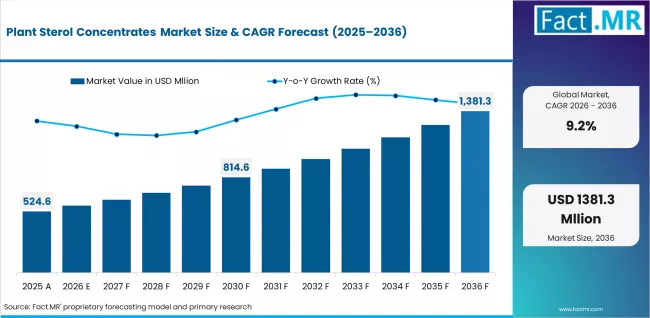
- Global Plant Sterol Concentrates Market revenue stood at USD 524.6 Mn in 2025 and is forecast to reach USD 1,381.3 Mn by 2036. At a 9.2% CAGR from 2026 to 2036.
- This market is set to expand ~ 2.4 x in value, adding USD 808.4 Mn in absolute opportunity.
- This represents a preventive-health-led growth trajectory rather than conventional ingredient market expansion, driven by accelerating demand for cholesterol-lowering functional ingredients, rising nutraceutical consumption, increasing cardiovascular health awareness, and expanding adoption of plant-based wellness products.
- Growth momentum is expected to remain strong due to increasing incorporation of phytosterol concentrates in functional foods, dietary supplements, clinical nutrition, and pharmaceutical formulations, although factors such as raw material price volatility, formulation stability challenges, regulatory approval complexities, and limited consumer awareness in developing regions may moderate adoption across certain applications and geographies.
Summary of the Plant Sterol Concentrates Market
- Market Snapshot
- Global plant sterol concentrates market revenue stood at USD 524.6 Mn in 2025 and is forecast to reach USD 1,381.3 Mn by 2036.
- At a 9.2% CAGR from 2026 to 2036, this market is set to expand ~2.4x in value, adding USD 808.4 Mn in absolute opportunity.
- Growth is being driven by increasing adoption of plant-based functional ingredients across food, nutraceutical, pharmaceutical, and wellness applications.
- Rising consumer focus on cholesterol reduction, cardiovascular health, and preventive nutrition is accelerating demand for plant sterol concentrates. Expansion of fortified foods, dietary supplements, and clean-label wellness products is further supporting market growth globally.
- Demand and Growth Drivers
- Increasing consumer awareness regarding heart health and cholesterol management is driving demand for plant sterol-enriched products.
- Growing adoption of functional foods and nutraceutical supplements is supporting expansion of plant sterol concentrate applications.
- Rising preference for plant-based and clean-label ingredients across food and healthcare industries is accelerating product adoption.
- Expansion of preventive healthcare and wellness nutrition trends is increasing use of plant sterols in dietary formulations.
- Need for solutions that provide:
- Cholesterol reduction support
- Cardiovascular health enhancement
- Functional nutrition and wellness benefits
- Plant-based and clean-label ingredient functionality
- Product and Segment View
- Beta-sitosterol holds 38% of product type share in 2025, emerging as the leading segment due to its widespread use in cholesterol-lowering and functional nutrition applications.
- Campesterol accounts for 17% share, while stigmasterol represents 14%.
- Mixed phytosterol concentrates contribute 18% share, phytostanol concentrates account for 7%, and brassicasterol represents 6%.
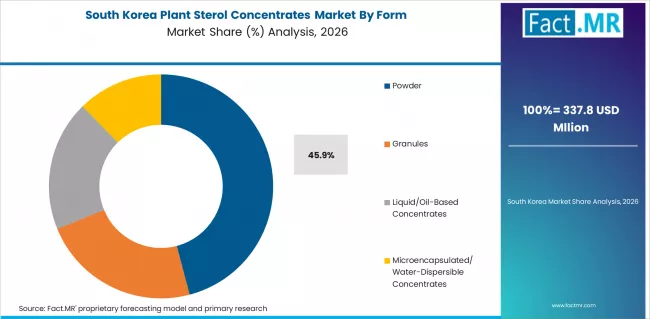
- Powder form holds 46% share in 2025, positioning it as the dominant segment driven by ease of incorporation into food, supplement, and pharmaceutical formulations.
- Liquid/oil-based concentrates account for 24% share, while granules represent 18%.
- Microencapsulated/water-dispersible concentrates contribute 12% share.
- Vegetable oil-derived sources hold 68% share, supported by abundant raw material availability and large-scale commercial extraction processes.
- Tall oil-derived sources account for 21% share, while nut & seed-derived sources contribute 7%.
- Cholesterol reduction applications hold 42% share, indicating leading adoption concentration across nutraceutical and fortified food applications.
- Cardiovascular health support accounts for 24% share, while weight management & metabolic health contributes 11%.
- Geography and Competitive Outlook
- Growth is supported across North America, Europe, and Asia Pacific driven by increasing demand for functional nutrition and plant-based wellness ingredients.
- Key growth markets and CAGR include: Germany 7.1%, Japan 7.8%, U.S. 8.3%, Canada 8.7%, China 10.1%, India 11.4%, and South Korea 11.9%.
- Market expansion is closely tied to:
- Rising adoption of cholesterol-lowering functional ingredients
- Expansion of fortified foods and nutraceutical supplements
- Increasing investment in preventive healthcare and wellness nutrition products
- Key companies active in this market include BASF SE, Cargill Incorporated, Archer Daniels Midland Company (ADM), Raisio plc, and DuPont Nutrition & Biosciences.
- Analyst Opinion
- Shambhu Nath Jha, Principal Consultant at Fact.MR, says, “The Plant Sterol Concentrates Market is no longer defined solely by conventional cholesterol-management ingredients and basic functional food fortification. Growth is increasingly driven by high-purity phytosterol formulations, advanced extraction and microencapsulation technologies, plant-based preventive healthcare trends, and the shift toward clinically supported nutraceutical solutions that enhance cardiovascular health, wellness positioning, bioavailability, and functional performance across dietary supplements, functional foods, pharmaceuticals, and clinical nutrition applications.
Plant Sterol Concentrates Market— At a Glance
| Attribute | Details |
|---|---|
| Market Value 2025 | USD 524.6 Mn |
| Market Value 2036 | USD 1,381.3 Mn |
| Absolute Dollar Opportunity 2025–2036 | USD 808.4 Mn |
| Total Growth 2025–2036 | 163.3% |
| CAGR 2026–2036 | 9.2% |
| Growth Multiple | ~2.4x |
| Key Demand Theme | Increasing adoption of plant-based functional nutrition and cholesterol management ingredients |
| Leading Segment by Product Type (2025) | Beta-Sitosterol |
| Segment Share (2025) | 38% |
| Leading Segment by Form (2025) | Powder |
| Segment Share (2025) | 46% |
| Leading Segment by Source (2025) | Vegetable Oil-Derived |
| Segment Share (2025) | 68% |
| Leading Segment by Functionality (2025) | Cholesterol Reduction |
| Segment Share (2025) | 42% |
| Leading Segment by End User (2025) | Food & Beverage Manufacturers |
| Segment Share (2025) | 39% |
| Leading Segment by Distribution Channel (2025) | Direct/B2B Sales |
| Segment Share (2025) | 52% |
| Key Growth Regions | North America, Europe, Asia Pacific |
| Country CAGRs | Germany 7.1%, Japan 7.8%, U.S. 8.3%, Canada 8.7%, China 10.1%, India 11.4%, South Korea 11.9% |
| Top Companies | BASF, Cargill, ADM, Raisio, DuPont Nutrition & Biosciences |
| Segmentation by Product Type | Beta-Sitosterol, Campesterol, Stigmasterol, Brassicasterol, Mixed Phytosterol Concentrates, Phytostanol Concentrates |
| Segmentation by Form | Powder, Granules, Liquid/Oil-Based Concentrates, Microencapsulated/Water-Dispersible Concentrates |
| Segmentation by Source | Vegetable Oil-Derived, Tall Oil-Derived, Nut & Seed-Derived, Other Plant Sources |
| Segmentation by Functionality | Cholesterol Reduction, Cardiovascular Health Support, Immune & Anti-Inflammatory Support, Weight Management & Metabolic Health, Antioxidant Functionality, General Wellness & Preventive Nutrition |
| Segmentation by End User | Food & Beverage Manufacturers, Nutraceutical Companies, Pharmaceutical Companies, Cosmetic & Personal Care Manufacturers, Contract Manufacturers, Research & Healthcare Institutions |
| Segmentation by Distribution Channel | Direct/B2B Sales, Ingredient Distributors, Online Sales, Specialty Health Ingredient Suppliers |
| Segmentation by Region | North America, Latin America, Europe, Asia Pacific, Middle East & Africa |
Key Growth Drivers, Constraints, and Opportunities
Key Factors Driving Growth
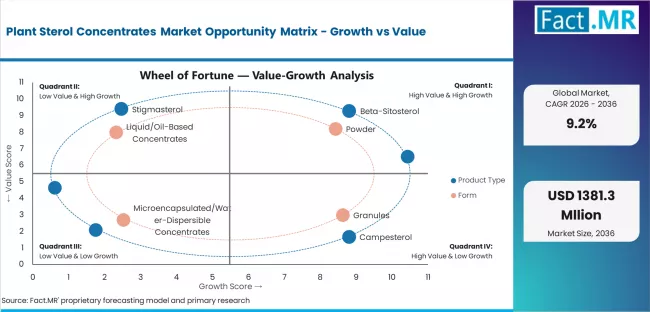
- The growing popularity of cholesterol-lowering functional food, preventive healthcare, plant-based nutrition products, and cardiovascular wellness products is anticipated to drive the demand for these products globally.
- The demand for high-purity phytosterol products, advanced extraction technologies, microencapsulation, and delivery forms that enhance bioavailability is rising.
- An increased focus on development of functionalities in food, nutraceutical supplements, clinical nutrition and fortified food application may also drive the market growth globally.
| Growth Driver | Demand Impact | Time Horizon | Key Impact Area | Fact.MR Insight |
|---|---|---|---|---|
| Rising consumer focus on cardiovascular health and cholesterol management | High | Short-Mid Term | Functional food and nutraceutical demand | Growing preventive healthcare awareness is accelerating adoption of plant sterol concentrates |
| Increasing demand for plant-based and clean-label wellness ingredients | High | Short-Mid Term | Natural health ingredients | Consumers are shifting toward plant-derived bioactive compounds for long-term wellness |
| Expansion of functional food and dietary supplement industries | High | Mid-Long Term | Fortified nutrition products | Food and supplement manufacturers are increasing phytosterol incorporation across product portfolios |
| Advancements in extraction, purification, and microencapsulation technologies | Medium-High | Mid-Long Term | High-performance sterol formulations | Improved bioavailability and formulation stability are expanding application potential |
| Rising clinical validation and regulatory acceptance of phytosterols | Medium | Short-Mid Term | Clinical nutrition and pharmaceutical applications | Scientific evidence supporting LDL-cholesterol reduction is strengthening commercial adoption |
Key Market Constraints
- The high cost of production of high purity plant sterol concentrate, sophisticated extraction techniques and specialization formulation are expected to impede the market growth globally.
- Concerns around raw materials price volatility, formulation stability, taste masking, and food matrix compatibility can influence the pace of adoption.
- Stringent regulations of approval, different regional standards of health claim and limited consumer awareness in developing countries may pose challenges for market expansion.
Key Opportunity Areas
- Manufacturers of ingredients and providers of solutions for plant sterol concentrates could expect a wave of growth as functional foods, nutraceuticals, pharmaceuticals and clinical nutrition are next generation applications.
- New avenues for growth are expected to be offered by the increasing use of these ingredients in dairy alternatives, heart-health supplements, fortified beverages, sports nutrition and preventive healthcare products.
- Increased investments in personalized nutrition, plant-based wellness products, advanced delivery technologies, clean-label formulations, and scientifically validated cardiovascular health solutions will bring long-term market value.
Segment-wise Analysis of the Plant Sterol Concentrates Market
- By the year 2026, Beta-Sitosterol accounts for a 38% market share of the product type segment due to increasing demand for cholesterol-lowering ingredients, rising incorporation in dietary supplements and functional foods, growing consumer awareness regarding cardiovascular wellness, and expanding adoption of plant-based preventive healthcare solutions.
- Food & Beverage Manufacturers represent a 39% market share of the end user segment by 2026, driven by increasing demand for fortified dairy products, functional beverages, bakery applications, and heart-health nutrition products, alongside rising investments in clean-label and plant-based food innovations globally.
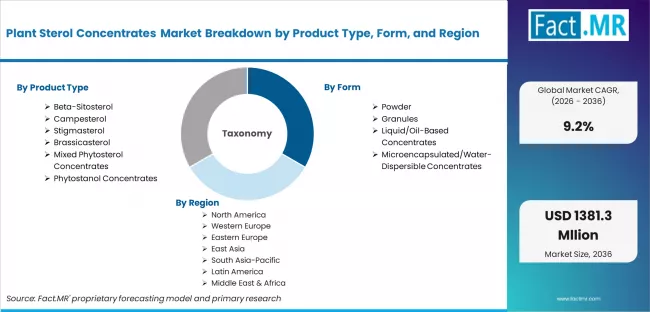
The segmentation of the Plant Sterol Concentrates Market includes product type, form, source, functionality, end user, distribution channel, and region.
Which Product Type Dominates the Plant Sterol Concentrates Market?
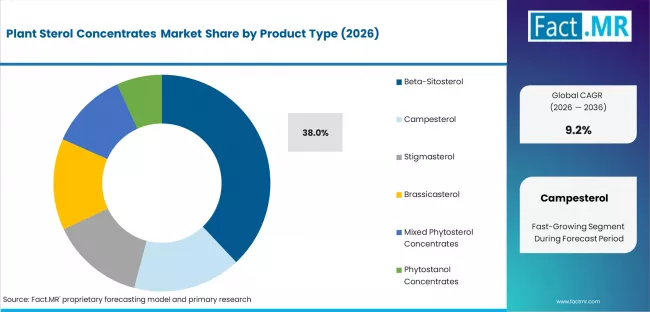
Beta-Sitosterol has a 38% share of Plant Sterol Concentrres market due to high cholesterol-lowering efficacy, extensive usage in nutrceuticals formulations and functional food and the sale is expected to grow due to increasing utilization in functional foods and dietary supplements. The key growth factors include increasing awareness about cardiovascular health, increasing expenditure for preventive healthcare, growing demand for plant-based bioactive ingredients, and increasing clinical validation of phytosterol benefits.
Which Form Dominates the Plant Sterol Concentrates Market?
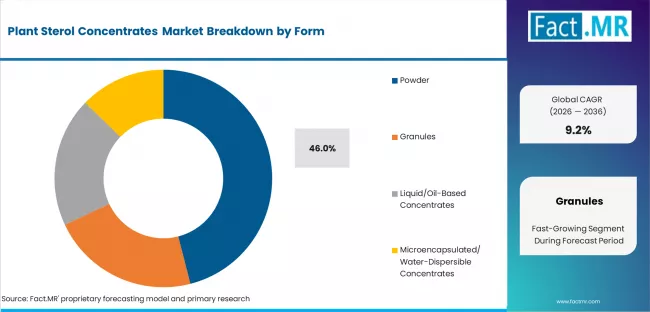
The powder segment dominates the market with over 46% of share in the Plant Sterol Concentrates Market because of ease of formulation, longer shelf stability, and compatibility with food & beverage and dietary manufacturing applications. Key Factors Influencing the market : Increasing use in powdered Nutraceuticals, Growing production of functional foods, Rising demand for ease of ingredient handling, and Increasing applications in enhanced nutrition products.
Which Source Dominates the Plant Sterol Concentrates Market?
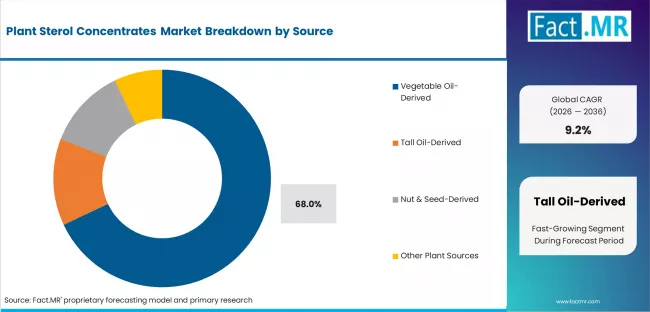
Vegetable Oil-Based sources dominates the market at the 68% stake of Plant Sterol Concentrates Market due to the wide source of raw material, economical extraction methods and relatively high phytosterol content in oil such as soybean, sunflower and rapeseed oil. Some of the key growth drivers include increasing processing capacities for vegetable oils, growing demand for sustainable plant-based ingredients, increasing production of edible oils worldwide, and expanding nutraceutical manufacturing activities.
Which Functionality Dominates the Plant Sterol Concentrates Market?
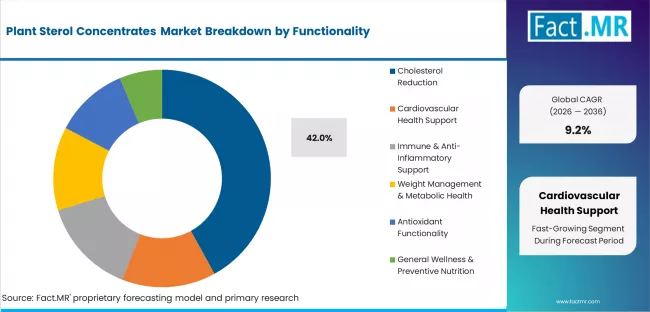
Cholesterol Reduction accounts for a dominant share of 42% in the Plant Sterol Concentrates Market and is expected to maintain its preeminence in the coming years, attributable to the high occurrence of cardiovascular diseases, increasing consumer inclination towards heart health management, and robust scientific data for positive effect on LDL-cholesterol reduction Some of the key factors contributing to the market growth are increasing awareness towards preventive healthcare, growing utilization of functional foods, increasing number of physician recommendations for phytosterol intake, and growing aging population across the globe.
Which End User Dominates the Plant Sterol Concentrates Market?
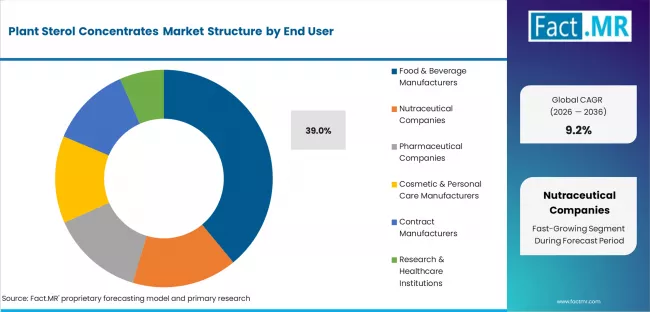
Food & Beverage Manufacturers dominate with a share of 39% owing to factors such as growing demand for fortified food products, increasing application of phytosterols in dairy products and beverages, rising consumer demand for functional nutrition products among others. Some of the major factors contributing to the growth are clean-label food innovation, rise in the number of plant-based product launches, increasing health-conscious consumer expenditure, and growing functional food retail penetration.
Regional Outlook Across Key Markets
The market analysis covers key global regions, including South Asia and Pacific, Middle East & Africa, North America, Latin America, Western Europe, and Eastern Europe. It is segmented geographically, with specific market dynamics for each region. The full report provides a detailed market attractiveness analysis.
.webp)
CAGR Table
| Country | CAGR (%) |
|---|---|
| Germany | 7.1% |
| Japan | 7.8% |
| U.S. | 8.3% |
| Canada | 8.7% |
| China | 10.1% |
| India | 11.4% |
| South Korea | 11.9% |
Source: Fact MR (FMR) analysis, based on proprietary forecasting model and primary research.
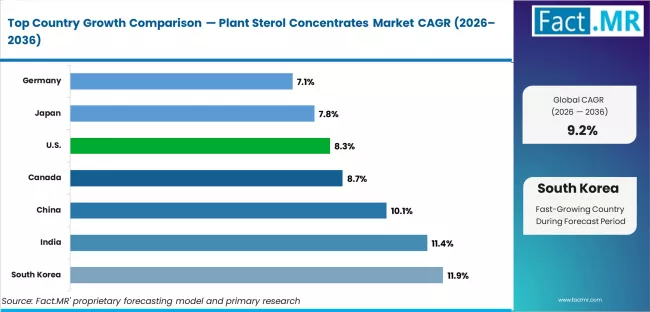
North America: The Preventive Nutrition Commercialization Hub
North America represents the global preventive nutrition commercialization hub for plant sterol concentrates, supported by strong functional food penetration, advanced nutraceutical infrastructure, and FDA-backed cholesterol-lowering health claims. Major regional players including Cargill, Incorporated, Archer Daniels Midland Company, and Bunge Limited maintain strong positions through vertically integrated supply chains, large-scale vegetable oil processing capabilities, and extensive partnerships with food and supplement manufacturers.
U.S. :-Demand for plant sterol concentrates in the U.S. is projected to rise at 8.3% CAGR through 2036. Growth is supported by increasing preventive healthcare spending and expansion of functional food applications.
Western Europe: The Global Regulatory Benchmark Region
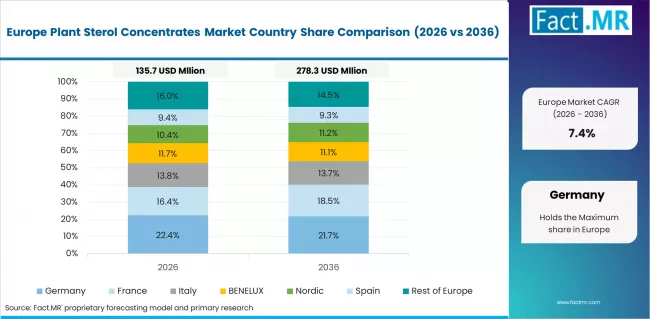
Western Europe serves as the global regulatory benchmark region for plant sterol concentrates, characterized by advanced functional food markets, EFSA-approved health claims, and high consumer awareness regarding cardiovascular wellness. Major companies including BASF SE, DSM-Firmenich, and Raisio plc maintain competitive advantages through scientific validation, high-purity ingredient portfolios, and strong relationships with European food manufacturers and nutraceutical brands.
Germany:- Demand for plant sterol concentrates in Germany is projected to rise at 7.1% CAGR through 2036. Growth is supported by mature functional food consumption patterns and strict cardiovascular nutrition standards. In January 2025, Germany’s Federal Ministry of Food and Agriculture continued initiatives promoting preventive nutrition and heart-health awareness programs [1].
East Asia: The High-Growth Functional Nutrition Manufacturing Base
East Asia represents the high-growth functional nutrition manufacturing base for plant sterol concentrates, supported by rising preventive healthcare awareness, expanding nutraceutical industries, and large-scale food processing infrastructure. Key regional players including Wilmar International Limited, Zhejiang Garden Biochemical High-Tech Co., Ltd., and Kerry Group plc are strengthening regional supply chains and specialty ingredient manufacturing capacities.
China:- Demand for plant sterol concentrates in China is projected to rise at 10.1% CAGR through 2036. Growth is driven by increasing cardiovascular disease prevalence, rapid nutraceutical market expansion, and rising government emphasis on preventive healthcare
South Korea:- Demand for plant sterol concentrates in South Korea is projected to rise at 11.9% CAGR through 2036. Growth is driven by increasing health supplement consumption, strong digital wellness retail channels, and government support for functional food innovation. In June 2025, major Korean food companies increased investments in plant-based and heart-health product portfolios incorporating phytosterol ingredients.
South Asia & Pacific: The Emerging Preventive Wellness Consumption Center
South Asia & Pacific is emerging as a major preventive wellness consumption center for plant sterol concentrates due to rising urbanization, increasing cardiovascular disease burden, and growing demand for affordable functional nutrition products. Companies including Matrix Fine Sciences Pvt. Ltd. and Kerry Group plc are strengthening regional supply networks and expanding specialty ingredient distribution capabilities.
India:- Demand for plant sterol concentrates in India is projected to rise at 11.4% CAGR through 2036. Growth is supported by increasing incidence of lifestyle-related diseases, expanding nutraceutical manufacturing, and rising preventive healthcare awareness. In February 2025, India’s Food Safety and Standards Authority of India continued strengthening functional food and nutraceutical compliance frameworks [2].
Fact.MR’s analysis of the global plant sterol concentrates market provides region-wise and country-wise assessment across North America, Western Europe, East Asia, South Asia & Pacific, Eastern Europe, Latin America, and Middle East & Africa. Readers can access detailed insights on regional growth outlook, regulatory frameworks, nutraceutical demand trends, functional food adoption, competitive positioning, manufacturing expansion, pricing analysis, and preventive healthcare-driven consumption patterns shaping long-term market opportunities.
Competitive Benchmarking and Company Positioning
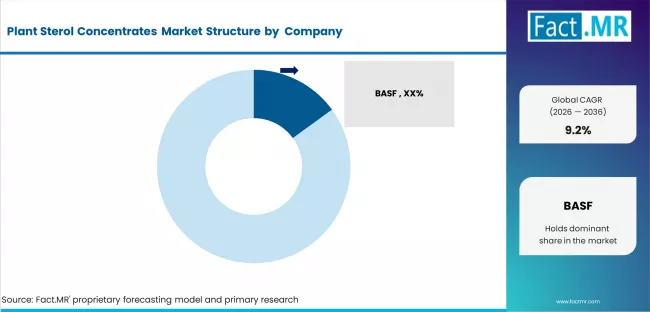
Leading Companies Shaping the Plant Sterol Concentrates Market
The embodied carbon chiller market is moderately concentrated, with players such as Trane Technologies, Johnson Controls, Carrier and Daikin Industries Ltd. Arepore on the competitive energy The competition in the industry mainly revolves around energy efficiency, GWP refrigerants, AI-based Building Management Systems (BMS) and carbon life cycle enhancements. The advantages of vertical integration ability to serve through national commercial HVAC distribution and service channels, advanced automation technologies, and multi-year service contracts give large organizations a clear edge. Commercial property and data center customers employ multi vendor sourcing strategies to reduce supplier dependency and enhance their bargaining power.
Key Players of the Plant Sterol Concentrates Market
- BASF
- Cargill, Incorporated
- Archer Daniels Midland Company
- Croda International Plc
- Raisio Oyj
- Arboris
- Matrix Life Science
- Lipoid GmbH
- Xi'an Healthful Biotechnology Co.,Ltd
- Wilmar International Ltd
Recent Industry Developments
- BASF SE expanded commercialization focus on Vegapure® plant sterol solutions for cardiovascular nutrition applications (September 2025): BASF highlighted continued expansion of its health ingredients portfolio, including plant sterol esters for human nutrition applications, strengthening its position in preventive healthcare and functional nutrition markets.
- Cargill strengthened commercialization of CoroWise® plant sterols for foods, beverages, and supplements (2025 ongoing commercialization expansion): Cargill continued expanding the application reach of CoroWise® plant sterols across heart-health-focused functional foods and nutraceutical products, supporting manufacturers targeting cholesterol-management formulations.
- ADM expanded specialty nutrition capabilities supporting functional ingredient solutions (August 2025): ADM announced continued investments in its Nutrition segment to strengthen specialty ingredient offerings for functional foods, wellness products, and preventive healthcare applications, including plant-based bioactive ingredients and health-focused nutrition solutions.
Sources and Research References
- [1] Federal Ministry of Food and Agriculture (Germany), “Nutrition and Health Policy Initiatives,” January 2025
- [2] Food Safety and Standards Authority of India (FSSAI), “Nutraceutical Regulations and Compliance Framework,” February 2025
- [3] BASF SE, “BASF Joint News Release – Closing Announcement,” September 2025
- [4] Cargill, Incorporated, “CoroWise® Plant Sterols Brochure,” 2025
- [5] Archer Daniels Midland Company (ADM), “ADM Reports Second Quarter 2025 Results,” August 2025
Plant Sterol Concentrates Market Definition
plant sterol concentrates are the active bio compounds obtained mainly from vegetable oils, tall oil, nuts, and seeds natural source. These concentrates provide phytosterols such as beta-sitosterol, campesterol, and stigmasterol which are commonly used for cholesterol reduction and cardio vascular health applications. The market covers the manufacture, sale and supply of sterol concentrates for functional food, dietary supplement, pharmaceutical and clinical nutrition application. The growth is attributed to surge in consumer awareness in preventive healthcare, heart health management, and plant-derived wellness ingredients.
Plant Sterol Concentrates Market Inclusions
It presents a detailed analysis of the market size, global and regional, and the China market from 2026 to 2036, by volume and revenue, considering the type of product, application, end user, service provider, and sales channel. It covers price analysis, raw material sourcing, technology and production forecasts, trade flows, competitive landscape, regulations, and demand patterns in functional food, nutraceutical, pharmaceutical and clinical nutrition application.
Plant Sterol Concentrates Market Exclusions
The scope does not cover finished consumer nutraceutical brands, functional packaged food, cholesterol-lowering drugs or omega-3 or probiotic ingredients where plant sterol concentrates are not present. It also excludes cosmetic formulations in which phytosterols play only a negligible functional role. The research is plant sterol concentrate ingredients based and zeroes in on immediate processed plant sterol concentrate derivatives and commercial plant sterol concentrate applications at industrial scale as opposed to retail healthcare products.
Plant Sterol Concentrates Market Research Methodology
- Primary Research
- The fact based Market Research report on Phytosterols market included a detailed qualitative and quantitative analysis along with several part of the value chain such as manufacturers, suppliers, distributors, end users and industry experts. The browsing and consulting of relevant senior management, product managers, and buyers allowed an analysis of demand trends, pricing and potential for the future growth.
- Desk Research
- Secondary research included an extensive search for annual reports of companies, investor presentations, trade journals, government databases, import-export statistics, regulations, scientific journals, and magazines of trade associations. Information in the public domain from the food, nutraceutical and pharmaceutical industries was analyzed to determine the market scope and competitive landscape.
- Market-Sizing and Forecasting
- Fact.MR’s report adopts a multi-faceted approach when estimating the market size, in perspective of both supply and demand. The forecast models considered macro-economic indicators, consumption patterns of the nutraceuticals, production capacities of phytosterols, market trends like price changes, demand across regions, and adoption rates across end-use industries.
- Data Validation and Update Cycle
- The market size was triangulated on the basis of primary interviews, secondary research and Fact MR’s in-house model. Assumptions in forecasts and market shares were periodically benchmarked with changes in the industry landscape, government laws and regulations, trade data and business performance updates.
Scope of Analysis
| Parameter | Details |
|---|---|
| Quantitative Units | USD 5.2 million in 2025 to USD 14.5 million in 2036, at a CAGR of 9.8% |
| Market Definition | The Plant Sterol Concentrates Market involves production and commercialization of phytosterol-rich ingredients used in functional foods, nutraceuticals, pharmaceuticals, and clinical nutrition products for cholesterol management and preventive cardiovascular healthcare applications. |
| Regions Covered | North America, Latin America, Europe, East Asia, South Asia and Pacific, MiddleEastand Africa |
| Countries Covered | USA, Canada, UK, Germany, China, India, 30 plus countries |
| Key Companies | BASF, Cargill, Incorporated, Archer Daniels Midland Company, Croda International Plc, Raisio Oyj, Arboris, Matrix Life Science, Lipoid GmbH, Xi'an Healthful Biotechnology Co.,Ltd, Wilmar International Ltd |
| Forecast Period | 2026 to 2036 |
| Approach | Hybrid demand-side and top-downmethodologybuilt on country-level application demand, product benchmarking, pricing analysis, shipment validation, and primary interviews across manufacturers, distributors, retailers, and end users |
Analysis by Product Type, by Form, by Source, by Functionality, by End User, by Distribution Channel and by Region
-
Plant Sterol Concentrates Market by Product Type
- Beta-Sitosterol
- Natural Beta-Sitosterol
- Enriched Beta-Sitosterol
- Campesterol
- Standard Grade
- High-Purity Grade
- Stigmasterol
- Pharmaceutical Grade
- Industrial Grade
- Brassicasterol
- Natural Source-Based
- Refined Grade
- Mixed Phytosterol Concentrates
- Standardized Blends
- Customized Blends
- Phytostanol Concentrates
- Free Stanols
- Stanol Esters
- Beta-Sitosterol
-
Plant Sterol Concentrates Market by Form
- Powder
- Fine Powder
- Spray-Dried Powder
- Granules
- Instantized Granules
- Agglomerated Granules
- Liquid/Oil-Based Concentrates
- Oil Suspensions
- Emulsified Liquids
- Microencapsulated/Water-Dispersible Concentrates
- Encapsulated Powders
- Water-Soluble Systems
- Powder
-
Plant Sterol Concentrates Market by Source
- Vegetable Oil-Derived
- Soybean Oil
- Corn Oil
- Rapeseed/Canola Oil
- Sunflower Oil
- Tall Oil-Derived
- Crude Tall Oil
- Refined Tall Oil
- Nut & Seed-Derived
- Tree Nut Sources
- Seed Oil Sources
- Other Plant Sources
- Cereals & Grains
- Legume Sources
- Vegetable Oil-Derived
-
Plant Sterol Concentrates Market by Functionality
- Cholesterol Reduction
- LDL Reduction
- Heart Health Maintenance
- Cardiovascular Health Support
- Lipid Management
- Blood Circulation Support
- Immune & Anti-Inflammatory Support
- Immune Enhancement
- Anti-Inflammatory Applications
- Weight Management & Metabolic Health
- Fat Metabolism Support
- Obesity Management
- Antioxidant Functionality
- Oxidative Stress Reduction
- Cellular Protection
- General Wellness & Preventive Nutrition
- Healthy Aging
- Preventive Healthcare
- Cholesterol Reduction
-
Plant Sterol Concentrates Market by End User
- Food & Beverage Manufacturers
- Functional Food Producers
- Beverage Manufacturers
- Nutraceutical Companies
- Dietary Supplement Brands
- Contract Supplement Manufacturers
- Pharmaceutical Companies
- Branded Pharma Companies
- Generic Drug Manufacturers
- Cosmetic & Personal Care Manufacturers
- Premium Brands
- Mass Market Brands
- Contract Manufacturers
- Private Label Manufacturers
- Third-Party Processors
- Research & Healthcare Institutions
- Academic Research Centers
- Clinical Research Organizations
- Food & Beverage Manufacturers
-
Plant Sterol Concentrates Market by Distribution Channel
- Direct/B2B Sales
- Long-Term Supply Contracts
- Spot Procurement
- Ingredient Distributors
- Regional Distributors
- Global Ingredient Suppliers
- Online Sales
- B2B E-Commerce Platforms
- Company-Owned Portals
- Specialty Health Ingredient Suppliers
- Nutraceutical Ingredient Specialists
- Functional Food Ingredient Suppliers
- Direct/B2B Sales
-
Plant Sterol Concentrates Market by Region
- North America
- USA
- Canada
- Mexico
- Latin America
- Brazil
- Chile
- Rest of LATAM
- East Asia
- China
- Japan
- South Korea
- Western Europe
- Germany
- Italy
- France
- U.K.
- Spain
- BENELUX
- Nordic
- Rest of W. Europe
- Eastern Europe
- Russia
- Hungary
- Poland
- Balkan & Baltics
- Rest of E. Europe
- South Asia & Pacific
- India
- ASEAN
- ANZ
- Rest of SAP
- Middle East and Africa
- Kingdom of Saudi Arabia
- United Arab Emirates
- South Africa
- Rest of Middle East and Africa
- North America

- Frequently Asked Questions -
How large is the demand for Plant Sterol Concentrates in the global market in 2026?
Demand for Plant Sterol Concentrates in the global market is estimated to be valued at USD 572.9 million in 2026.
What will be the market size of Plant Sterol Concentrates in the global market by 2036?
The market size for Plant Sterol Concentrates is projected to reach USD 1,381.3 million by 2036.
What is the expected demand growth for Plant Sterol Concentrates in the global market between 2026 and 2036?
Demand for Plant Sterol Concentrates in the global market is expected to grow at a CAGR of 9.2% between 2026 and 2036, driven by increasing consumer preference for cholesterol-lowering and functional food ingredients.
Which product type is expected to dominate the market?
Beta-Sitosterol is expected to dominate the market, accounting for 38% of the market share in 2026, supported by its extensive use in nutraceuticals, dietary supplements, and functional food applications.
Which region is expected to show the highest growth rate for Plant Sterol Concentrates?
South Korea is projected to show the highest regional CAGR at 11.9%, supported by rising demand for functional nutrition products and preventive healthcare solutions.
How significant is the growth outlook for India in this market?
India is expected to grow at a CAGR of 11.4%, reflecting increasing health awareness and expanding consumption of nutraceutical and fortified food products.
What is the growth outlook for China in this report?
China is anticipated to grow at a CAGR of 10.1%, supported by rising demand for plant-based health ingredients and functional beverages.
What is the growth outlook for the United States in the Plant Sterol Concentrates market?
The United States is expected to grow at a CAGR of 8.3%, influenced by increasing demand for heart-health ingredients and dietary supplements.
Which company is identified as a leading player in the Plant Sterol Concentrates market?
BASF is recognized as a leading player in this market, offering plant sterol ingredients used in functional foods, pharmaceuticals, and nutraceutical formulations.
Table of Content
- Plant Sterol Concentrates Market – Executive Summary
- Market Overview
- Market Definition & Introduction
- Market Taxonomy & Research Scope
- Global Plant Sterol Concentrates Market Demand Analysis 2021-2025 and Forecast, 2026–2036
- Historical Market Volume (MT) Analysis, 2021-2025
- Current and Future Market Volume (MT) Projections, 2026–2036
- Y-o-Y Growth Trend Analysis
- Global Plant Sterol Concentrates Market - Pricing Analysis
- Product Category and Country-Level Pricing Analysis
- Region Average Pricing Analysis Benchmark
- Price Trends and Forecasts
- Historical price trends
- Future price forecasts
- Factors Influencing Pricing
- Competitive Pricing Strategies
- Cost Structure Analysis: Elementary Deep Dive
- Pricing trends of phytosterol ingredients
- Global Plant Sterol Concentrates Market Demand (in Value or Size in US$ Mn) Analysis 2021-2025 and Forecast, 2026–2036
- Historical Market Value (US$ Mn) Analysis, 2021-2025
- Current and Future Market Value (US$ Mn) Projections, 2026–2036
- Y-o-Y Growth Trend Analysis
- Absolute $ Opportunity Analysis
- Market Background and Foundational Data Points
- Functional food industry demand
- Nutraceutical & dietary supplement consumption
- Cardiovascular disease prevalence
- Regulatory approvals & health claims
- Raw material availability
- Consumer awareness of preventive healthcare
- Extraction & formulation technology advancements
- Growth of plant-based and clean-label products
- Pharmaceutical & clinical nutrition applications
- Regional dietary and lifestyle trends
- Distribution network and supply chain expansion
- Trade Scenario, 2025
- Imports and Export Analysis
- By Region
- By Country
- Imports and Export Analysis
- Plant Sterol Concentrates Market Opportunity Assessment
- Total Available Market (US$ Mn)
- Serviceable Addressable Market (US$ Mn)
- Serviceable Obtainable Market (US$ Mn)
- Porter’s Five Forces and PESTEL Analysis
- Investment Feasibility Analysis
- Macro-Economic Factors & Forecast Factors - Relevance & Impact
- Industry Value and Supply Chain Analysis
- List of Key Channel Partners
- Profit Margin & Operating Margin at Each Node of Supply Chain.
- Notes on Value Added at Each Node in the Value Chain
- Factors Influencing Value Chain
- Market Dynamics
- Drivers
- Restraints
- Opportunity Analysis
- Key Regulations & Certifications
- Plant Sterol Concentrates Market Analysis 2021-2025 and Forecast 2026–2036, By Product Type
- Introduction / Key Findings
- Historical Market Size (US$ Mn) & Volume (MT) Trend Analysis By Product Type, 2021-2025
- Current and Future Market Size (US$ Mn) & Volume (MT) Analysis and Forecast By Product Type, 2026-2036
- Beta-Sitosterol
- Natural Beta-Sitosterol
- Enriched Beta-Sitosterol
- Campesterol
- Standard Grade
- High-Purity Grade
- Stigmasterol
- Pharmaceutical Grade
- Industrial Grade
- Brassicasterol
- Natural Source-Based
- Refined Grade
- Mixed Phytosterol Concentrates
- Standardized Blends
- Customized Blends
- Phytostanol Concentrates
- Free Stanols
- Stanol Esters
- Beta-Sitosterol
- Market Attractiveness Analysis By Product Type
- Plant Sterol Concentrates Market Analysis 2021-2025 and Forecast 2026–2036, By Form
- Introduction / Key Findings
- Historical Market Size (US$ Mn) & Volume (MT) Trend Analysis By Form, 2021-2025
- Current and Future Market Size (US$ Mn) & Volume (MT) Analysis and Forecast By Form, 2026-2036
- Powder
- Fine Powder
- Spray-Dried Powder
- Granules
- Instantized Granules
- Agglomerated Granules
- Liquid/Oil-Based Concentrates
- Oil Suspensions
- Emulsified Liquids
- Microencapsulated/Water-Dispersible Concentrates
- Encapsulated Powders
- Water-Soluble Systems
- Powder
- Market Attractiveness Analysis By Form
- Plant Sterol Concentrates Market Analysis 2021-2025 and Forecast 2026–2036, By Source
- Introduction / Key Findings
- Historical Market Size (US$ Mn) & Volume (MT) Trend Analysis By Source, 2021-2025
- Current and Future Market Size (US$ Mn) & Volume (MT) Analysis and Forecast By Source, 2026-2036
- Vegetable Oil-Derived
- Soybean Oil
- Corn Oil
- Rapeseed/Canola Oil
- Sunflower Oil
- Tall Oil-Derived
- Crude Tall Oil
- Refined Tall Oil
- Nut & Seed-Derived
- Tree Nut Sources
- Seed Oil Sources
- Other Plant Sources
- Cereals & Grains
- Legume Sources
- Vegetable Oil-Derived
- Market Attractiveness Analysis By Source
- Plant Sterol Concentrates Market Analysis 2021-2025 and Forecast 2026–2036, By Functionality
- Introduction / Key Findings
- Historical Market Size (US$ Mn) & Volume (MT) Trend Analysis By Functionality, 2021-2025
- Current and Future Market Size (US$ Mn) & Volume (MT) Analysis and Forecast By Functionality, 2026-2036
- Cholesterol Reduction
- LDL Reduction
- Heart Health Maintenance
- Cardiovascular Health Support
- Lipid Management
- Blood Circulation Support
- Immune & Anti-Inflammatory Support
- Immune Enhancement
- Anti-Inflammatory Applications
- Weight Management & Metabolic Health
- Fat Metabolism Support
- Obesity Management
- Antioxidant Functionality
- Oxidative Stress Reduction
- Cellular Protection
- General Wellness & Preventive Nutrition
- Healthy Aging
- Preventive Healthcare
- Cholesterol Reduction
- Market Attractiveness Analysis By Functionality
- Plant Sterol Concentrates Market Analysis 2021-2025 and Forecast 2026–2036, By End User
- Introduction / Key Findings
- Historical Market Size (US$ Mn) & Volume (MT) Trend Analysis By End User, 2021-2025
- Current and Future Market Size (US$ Mn) & Volume (MT) Analysis and Forecast By End User, 2026-2036
- Food & Beverage Manufacturers
- Functional Food Producers
- Beverage Manufacturers
- Nutraceutical Companies
- Dietary Supplement Brands
- Contract Supplement Manufacturers
- Pharmaceutical Companies
- Branded Pharma Companies
- Generic Drug Manufacturers
- Cosmetic & Personal Care Manufacturers
- Premium Brands
- Mass Market Brands
- Contract Manufacturers
- Private Label Manufacturers
- Third-Party Processors
- Research & Healthcare Institutions
- Academic Research Centers
- Clinical Research Organizations
- Food & Beverage Manufacturers
- Market Attractiveness Analysis By End User
- Plant Sterol Concentrates Market Analysis 2021-2025 and Forecast 2026–2036, By Distribution Channel
- Introduction / Key Findings
- Historical Market Size (US$ Mn) & Volume (MT) Trend Analysis by Distribution Channel, 2021-2025
- Current and Future Market Size (US$ Mn) & Volume (MT) Analysis and Forecast by Distribution Channel, 2026-2036
- Direct/B2B Sales
- Long-Term Supply Contracts
- Spot Procurement
- Ingredient Distributors
- Regional Distributors
- Global Ingredient Suppliers
- Online Sales
- B2B E-Commerce Platforms
- Company-Owned Portals
- Specialty Health Ingredient Suppliers
- Nutraceutical Ingredient Specialists
- Functional Food Ingredient Suppliers
- Direct/B2B Sales
- Market Attractiveness Analysis by Distribution Channel
- Global Plant Sterol Concentrates Market Analysis and Forecast, by Region
- Introduction / Key Findings
- Historical Market Size (US$ Mn) & Volume (MT) Trend Analysis by Region, 2021-2025
- Current and Future Market Size (US$ Mn) & Volume (MT) Analysis and Forecast by Region, 2026-2036
- North America
- Latin America
- Western Europe
- Eastern Europe
- East Asia
- South Asia & Pacific
- Middle East & Africa
- Market Attractiveness Analysis by Region
- North America Plant Sterol Concentrates Market Analysis and Forecast
- Introduction / Key Findings
- Pricing Analysis
- Historical Market Size (US$ Mn) & Volume (MT) Trend Analysis by Market Taxonomy, 2021-2025
- Current and Future Market Size (US$ Mn) and Volume (MT) Analysis & Forecast by Market Taxonomy, 2026-2036
- By Country
- United States
- Canada
- Mexico
- By Taxonomy
- Market Attractiveness Analysis By Country & Taxonomy
- Market Trends
- Key Market Participants – Intensity Mapping
- Drivers and Restraints - Impact Analysis
- Latin America Plant Sterol Concentrates Market Analysis and Forecast
- Introduction / Key Findings
- Pricing Analysis
- Historical Market Size (US$ Mn) & Volume (MT) Trend Analysis by Market Taxonomy, 2021-2025
- Current and Future Market Size (US$ Mn) and Volume (MT) Analysis & Forecast by Market Taxonomy, 2026-2036
- By Country
- Brazil
- Chile
- Rest of LATAM
- By Taxonomy
- Market Attractiveness Analysis By Country & Taxonomy
- Market Trends
- Key Market Participants – Intensity Mapping
- Drivers and Restraints - Impact Analysis
- Western Europe Plant Sterol Concentrates Market Analysis and Forecast
- Introduction / Key Findings
- Pricing Analysis
- Historical Market Size (US$ Mn) & Volume (MT) Trend Analysis by Market Taxonomy, 2021-2025
- Current and Future Market Size (US$ Mn) and Volume (MT) Analysis & Forecast by Market Taxonomy, 2026-2036
- By Country
- Germany
- Italy
- France
- United Kingdom
- Spain
- BENELUX
- Nordics
- Rest of Western Europe
- By Taxonomy
- Market Attractiveness Analysis By Country & Taxonomy
- Market Trends
- Key Market Participants – Intensity Mapping
- Drivers and Restraints - Impact Analysis
- Eastern Europe Plant Sterol Concentrates Market Analysis and Forecast
- Introduction / Key Findings
- Pricing Analysis
- Historical Market Size (US$ Mn) & Volume (MT) Trend Analysis by Market Taxonomy, 2021-2025
- Current and Future Market Size (US$ Mn) and Volume (MT) Analysis & Forecast by Market Taxonomy, 2026-2036
- By Country
- Russia
- Hungary
- Poland
- Balkan & Baltics
- Rest of Eastern Europe
- By Taxonomy
- Market Attractiveness Analysis By Country & Taxonomy
- Market Trends
- Key Market Participants – Intensity Mapping
- Drivers and Restraints - Impact Analysis
- East Asia Plant Sterol Concentrates Market Analysis and Forecast
- Introduction / Key Findings
- Pricing Analysis
- Historical Market Size (US$ Mn) & Volume (MT) Trend Analysis by Market Taxonomy, 2021-2025
- Current and Future Market Size (US$ Mn) and Volume (MT) Analysis & Forecast by Market Taxonomy, 2026-2036
- By Country
- China
- Japan
- South Korea
- By Taxonomy
- Market Attractiveness Analysis By Country & Taxonomy
- Market Trends
- Key Market Participants – Intensity Mapping
- Drivers and Restraints - Impact Analysis
- South Asia & Pacific Plant Sterol Concentrates Market Analysis and Forecast
- Introduction / Key Findings
- Pricing Analysis
- Historical Market Size (US$ Mn) & Volume (MT) Trend Analysis by Market Taxonomy, 2021-2025
- Current and Future Market Size (US$ Mn) and Volume (MT) Analysis & Forecast by Market Taxonomy, 2026-2036
- By Country
- India
- ASEAN
- Australia & New Zealand
- Rest of South Asia & Pacific
- By Taxonomy
- Market Attractiveness Analysis By Country & Taxonomy
- Market Trends
- Key Market Participants – Intensity Mapping
- Drivers and Restraints - Impact Analysis
- Middle East & Africa Plant Sterol Concentrates Market Analysis and Forecast
- Introduction / Key Findings
- Pricing Analysis
- Historical Market Size (US$ Mn) & Volume (MT) Trend Analysis by Market Taxonomy, 2021-2025
- Current and Future Market Size (US$ Mn) and Volume (MT) Analysis & Forecast by Market Taxonomy, 2026-2036
- By Country
- Kingdom of Saudi Arabia
- Other GCC Countries
- Turkiye
- South Africa
- Other African Union
- By Taxonomy
- Market Attractiveness Analysis By Country & Taxonomy
- Market Trends
- Key Market Participants – Intensity Mapping
- Drivers and Restraints - Impact Analysis
- Country-level Plant Sterol Concentrates Market Analysis and Forecast
- Introduction
- Market Value Proportion Analysis, By Key Countries
- Global Vs. Country Growth Comparison
- United States Plant Sterol Concentrates Market Analysis
- Market Size (US$ Mn) & Volume (MT) Analysis by Market Taxonomy, 2021–2036
- By Product Type
- By Form
- By Source
- By Functionality
- By End User
- Distribution Channel
- United States Plant Sterol Concentrates Market Analysis
-
-
- Canada Plant Sterol Concentrates Market Analysis
- Mexico Plant Sterol Concentrates Market Analysis
- Brazil Plant Sterol Concentrates Market Analysis
- Chile Plant Sterol Concentrates Market Analysis
- Germany Plant Sterol Concentrates Market Analysis
- France Plant Sterol Concentrates Market Analysis
- Italy Plant Sterol Concentrates Market Analysis
- Spain Plant Sterol Concentrates Market Analysis
- United Kingdom Plant Sterol Concentrates Market Analysis
- BENELUX Plant Sterol Concentrates Market Analysis
- Nordics Plant Sterol Concentrates Market Analysis
- Poland Plant Sterol Concentrates Market Analysis
- Russia Plant Sterol Concentrates Market Analysis
- Hungary Plant Sterol Concentrates Market Analysis
- Balkan & Baltics Plant Sterol Concentrates Market Analysis
- China Plant Sterol Concentrates Market Analysis
- Japan Plant Sterol Concentrates Market Analysis
- South Korea Plant Sterol Concentrates Market Analysis
- India Plant Sterol Concentrates Market Analysis
- ASEAN Plant Sterol Concentrates Market Analysis
- ANZ Plant Sterol Concentrates Market Analysis
- KSA Plant Sterol Concentrates Market Analysis
- Other GCC Countries Plant Sterol Concentrates Market Analysis
- South Africa Plant Sterol Concentrates Market Analysis
- Turkiye Plant Sterol Concentrates Market Analysis
-
- Plant Sterol Concentrates Market Structure Analysis
- Market Analysis by Tier of Companies
- Market Concentration
- Market Share Analysis of Top Players
- Market Space for New Brands and Dollar Opportunity
- Market Presence Analysis
- Regional Footprint of Players
- Product Footprint by Players
- Mobile Optical Pluggable Competition Analysis
- Competition Dashboard
- Pricing Analysis by Competition
- Competition Benchmarking
- Competition Deep Dive
- BASF
- Overview
- Product Portfolio
- Sales Footprint
- Key Developments
- SWOT Analysis
- Strategy Overview
- Key Financials
- Cargill, Incorporated
- Archer Daniels Midland Company
- Croda International Plc
- Raisio Oyj
- Arboris
- Matrix Life Science
- Lipoid GmbH
- Xi'an Healthful Biotechnology Co.,Ltd
- Wilmar International Ltd
- Other Prominent Players
- BASF
- Primary insights
- Assumptions & Acronyms Used
- Research Methodology & Data Sources
List Of Table
- Table 1: Global Market Value (USD Mn) Forecast by Region, 2021 to 2036
- Table 2: Global Market Volume (MT) Forecast by Region, 2021 to 2036
- Table 3: Global Market Value (USD Mn) Forecast by Product Type, 2021 to 2036
- Table 4: Global Market Volume (MT) Forecast by Product Type, 2021 to 2036
- Table 5: Global Market Value (USD Mn) Forecast by Form, 2021 to 2036
- Table 6: Global Market Volume (MT) Forecast by Form, 2021 to 2036
- Table 7: Global Market Value (USD Mn) Forecast by Source, 2021 to 2036
- Table 8: Global Market Volume (MT) Forecast by Source, 2021 to 2036
- Table 9: Global Market Value (USD Mn) Forecast by Functionality, 2021 to 2036
- Table 10: Global Market Volume (MT) Forecast by Functionality, 2021 to 2036
- Table 11: Global Market Value (USD Mn) Forecast by End User, 2021 to 2036
- Table 12: Global Market Volume (MT) Forecast by End User, 2021 to 2036
- Table 13: Global Market Value (USD Mn) Forecast by Distribution Channel, 2021 to 2036
- Table 14: Global Market Volume (MT) Forecast by Distribution Channel, 2021 to 2036
- Table 15: North America Market Value (USD Mn) Forecast by Country, 2021 to 2036
- Table 16: North America Market Volume (MT) Forecast by Country, 2021 to 2036
- Table 17: North America Market Value (USD Mn) Forecast by Product Type, 2021 to 2036
- Table 18: North America Market Volume (MT) Forecast by Product Type, 2021 to 2036
- Table 19: North America Market Value (USD Mn) Forecast by Form, 2021 to 2036
- Table 20: North America Market Volume (MT) Forecast by Form, 2021 to 2036
- Table 21: North America Market Value (USD Mn) Forecast by Source, 2021 to 2036
- Table 22: North America Market Volume (MT) Forecast by Source, 2021 to 2036
- Table 23: North America Market Value (USD Mn) Forecast by Functionality, 2021 to 2036
- Table 24: North America Market Volume (MT) Forecast by Functionality, 2021 to 2036
- Table 25: North America Market Value (USD Mn) Forecast by End User, 2021 to 2036
- Table 26: North America Market Volume (MT) Forecast by End User, 2021 to 2036
- Table 27: North America Market Value (USD Mn) Forecast by Distribution Channel, 2021 to 2036
- Table 28: North America Market Volume (MT) Forecast by Distribution Channel, 2021 to 2036
- Table 29: Latin America Market Value (USD Mn) Forecast by Country, 2021 to 2036
- Table 30: Latin America Market Volume (MT) Forecast by Country, 2021 to 2036
- Table 31: Latin America Market Value (USD Mn) Forecast by Product Type, 2021 to 2036
- Table 32: Latin America Market Volume (MT) Forecast by Product Type, 2021 to 2036
- Table 33: Latin America Market Value (USD Mn) Forecast by Form, 2021 to 2036
- Table 34: Latin America Market Volume (MT) Forecast by Form, 2021 to 2036
- Table 35: Latin America Market Value (USD Mn) Forecast by Source, 2021 to 2036
- Table 36: Latin America Market Volume (MT) Forecast by Source, 2021 to 2036
- Table 37: Latin America Market Value (USD Mn) Forecast by Functionality, 2021 to 2036
- Table 38: Latin America Market Volume (MT) Forecast by Functionality, 2021 to 2036
- Table 39: Latin America Market Value (USD Mn) Forecast by End User, 2021 to 2036
- Table 40: Latin America Market Volume (MT) Forecast by End User, 2021 to 2036
- Table 41: Latin America Market Value (USD Mn) Forecast by Distribution Channel, 2021 to 2036
- Table 42: Latin America Market Volume (MT) Forecast by Distribution Channel, 2021 to 2036
- Table 43: Western Europe Market Value (USD Mn) Forecast by Country, 2021 to 2036
- Table 44: Western Europe Market Volume (MT) Forecast by Country, 2021 to 2036
- Table 45: Western Europe Market Value (USD Mn) Forecast by Product Type, 2021 to 2036
- Table 46: Western Europe Market Volume (MT) Forecast by Product Type, 2021 to 2036
- Table 47: Western Europe Market Value (USD Mn) Forecast by Form, 2021 to 2036
- Table 48: Western Europe Market Volume (MT) Forecast by Form, 2021 to 2036
- Table 49: Western Europe Market Value (USD Mn) Forecast by Source, 2021 to 2036
- Table 50: Western Europe Market Volume (MT) Forecast by Source, 2021 to 2036
- Table 51: Western Europe Market Value (USD Mn) Forecast by Functionality, 2021 to 2036
- Table 52: Western Europe Market Volume (MT) Forecast by Functionality, 2021 to 2036
- Table 53: Western Europe Market Value (USD Mn) Forecast by End User, 2021 to 2036
- Table 54: Western Europe Market Volume (MT) Forecast by End User, 2021 to 2036
- Table 55: Western Europe Market Value (USD Mn) Forecast by Distribution Channel, 2021 to 2036
- Table 56: Western Europe Market Volume (MT) Forecast by Distribution Channel, 2021 to 2036
- Table 57: Eastern Europe Market Value (USD Mn) Forecast by Country, 2021 to 2036
- Table 58: Eastern Europe Market Volume (MT) Forecast by Country, 2021 to 2036
- Table 59: Eastern Europe Market Value (USD Mn) Forecast by Product Type, 2021 to 2036
- Table 60: Eastern Europe Market Volume (MT) Forecast by Product Type, 2021 to 2036
- Table 61: Eastern Europe Market Value (USD Mn) Forecast by Form, 2021 to 2036
- Table 62: Eastern Europe Market Volume (MT) Forecast by Form, 2021 to 2036
- Table 63: Eastern Europe Market Value (USD Mn) Forecast by Source, 2021 to 2036
- Table 64: Eastern Europe Market Volume (MT) Forecast by Source, 2021 to 2036
- Table 65: Eastern Europe Market Value (USD Mn) Forecast by Functionality, 2021 to 2036
- Table 66: Eastern Europe Market Volume (MT) Forecast by Functionality, 2021 to 2036
- Table 67: Eastern Europe Market Value (USD Mn) Forecast by End User, 2021 to 2036
- Table 68: Eastern Europe Market Volume (MT) Forecast by End User, 2021 to 2036
- Table 69: Eastern Europe Market Value (USD Mn) Forecast by Distribution Channel, 2021 to 2036
- Table 70: Eastern Europe Market Volume (MT) Forecast by Distribution Channel, 2021 to 2036
- Table 71: East Asia Market Value (USD Mn) Forecast by Country, 2021 to 2036
- Table 72: East Asia Market Volume (MT) Forecast by Country, 2021 to 2036
- Table 73: East Asia Market Value (USD Mn) Forecast by Product Type, 2021 to 2036
- Table 74: East Asia Market Volume (MT) Forecast by Product Type, 2021 to 2036
- Table 75: East Asia Market Value (USD Mn) Forecast by Form, 2021 to 2036
- Table 76: East Asia Market Volume (MT) Forecast by Form, 2021 to 2036
- Table 77: East Asia Market Value (USD Mn) Forecast by Source, 2021 to 2036
- Table 78: East Asia Market Volume (MT) Forecast by Source, 2021 to 2036
- Table 79: East Asia Market Value (USD Mn) Forecast by Functionality, 2021 to 2036
- Table 80: East Asia Market Volume (MT) Forecast by Functionality, 2021 to 2036
- Table 81: East Asia Market Value (USD Mn) Forecast by End User, 2021 to 2036
- Table 82: East Asia Market Volume (MT) Forecast by End User, 2021 to 2036
- Table 83: East Asia Market Value (USD Mn) Forecast by Distribution Channel, 2021 to 2036
- Table 84: East Asia Market Volume (MT) Forecast by Distribution Channel, 2021 to 2036
- Table 85: South Asia and Pacific Market Value (USD Mn) Forecast by Country, 2021 to 2036
- Table 86: South Asia and Pacific Market Volume (MT) Forecast by Country, 2021 to 2036
- Table 87: South Asia and Pacific Market Value (USD Mn) Forecast by Product Type, 2021 to 2036
- Table 88: South Asia and Pacific Market Volume (MT) Forecast by Product Type, 2021 to 2036
- Table 89: South Asia and Pacific Market Value (USD Mn) Forecast by Form, 2021 to 2036
- Table 90: South Asia and Pacific Market Volume (MT) Forecast by Form, 2021 to 2036
- Table 91: South Asia and Pacific Market Value (USD Mn) Forecast by Source, 2021 to 2036
- Table 92: South Asia and Pacific Market Volume (MT) Forecast by Source, 2021 to 2036
- Table 93: South Asia and Pacific Market Value (USD Mn) Forecast by Functionality, 2021 to 2036
- Table 94: South Asia and Pacific Market Volume (MT) Forecast by Functionality, 2021 to 2036
- Table 95: South Asia and Pacific Market Value (USD Mn) Forecast by End User, 2021 to 2036
- Table 96: South Asia and Pacific Market Volume (MT) Forecast by End User, 2021 to 2036
- Table 97: South Asia and Pacific Market Value (USD Mn) Forecast by Distribution Channel, 2021 to 2036
- Table 98: South Asia and Pacific Market Volume (MT) Forecast by Distribution Channel, 2021 to 2036
- Table 99: Middle East & Africa Market Value (USD Mn) Forecast by Country, 2021 to 2036
- Table 100: Middle East & Africa Market Volume (MT) Forecast by Country, 2021 to 2036
- Table 101: Middle East & Africa Market Value (USD Mn) Forecast by Product Type, 2021 to 2036
- Table 102: Middle East & Africa Market Volume (MT) Forecast by Product Type, 2021 to 2036
- Table 103: Middle East & Africa Market Value (USD Mn) Forecast by Form, 2021 to 2036
- Table 104: Middle East & Africa Market Volume (MT) Forecast by Form, 2021 to 2036
- Table 105: Middle East & Africa Market Value (USD Mn) Forecast by Source, 2021 to 2036
- Table 106: Middle East & Africa Market Volume (MT) Forecast by Source, 2021 to 2036
- Table 107: Middle East & Africa Market Value (USD Mn) Forecast by Functionality, 2021 to 2036
- Table 108: Middle East & Africa Market Volume (MT) Forecast by Functionality, 2021 to 2036
- Table 109: Middle East & Africa Market Value (USD Mn) Forecast by End User, 2021 to 2036
- Table 110: Middle East & Africa Market Volume (MT) Forecast by End User, 2021 to 2036
- Table 111: Middle East & Africa Market Value (USD Mn) Forecast by Distribution Channel, 2021 to 2036
- Table 112: Middle East & Africa Market Volume (MT) Forecast by Distribution Channel, 2021 to 2036
List Of Figures
- Figure 1: Global Market Volume (MT) Forecast 2021–2036
- Figure 2: Global Market Pricing Analysis
- Figure 3: Global Market Value (USD Mn) Forecast 2021–2036
- Figure 4: Global Market Value Share and BPS Analysis by Product Type, 2026 and 2036
- Figure 5: Global Market Y-o-Y Growth Comparison by Product Type, 2026 to 2036
- Figure 6: Global Market Attractiveness Analysis by Product Type
- Figure 7: Global Market Value Share and BPS Analysis by Form, 2026 and 2036
- Figure 8: Global Market Y-o-Y Growth Comparison by Form, 2026 to 2036
- Figure 9: Global Market Attractiveness Analysis by Form
- Figure 10: Global Market Value Share and BPS Analysis by Source, 2026 and 2036
- Figure 11: Global Market Y-o-Y Growth Comparison by Source, 2026 to 2036
- Figure 12: Global Market Attractiveness Analysis by Source
- Figure 13: Global Market Value Share and BPS Analysis by Functionality, 2026 and 2036
- Figure 14: Global Market Y-o-Y Growth Comparison by Functionality, 2026 to 2036
- Figure 15: Global Market Attractiveness Analysis by Functionality
- Figure 16: Global Market Value Share and BPS Analysis by End User, 2026 and 2036
- Figure 17: Global Market Y-o-Y Growth Comparison by End User, 2026 to 2036
- Figure 18: Global Market Attractiveness Analysis by End User
- Figure 19: Global Market Value Share and BPS Analysis by Distribution Channel, 2026 and 2036
- Figure 20: Global Market Y-o-Y Growth Comparison by Distribution Channel, 2026 to 2036
- Figure 21: Global Market Attractiveness Analysis by Distribution Channel
- Figure 22: Global Market Value (USD Mn) Share and BPS Analysis by Region, 2026 and 2036
- Figure 23: Global Market Y-o-Y Growth Comparison by Region, 2026 to 2036
- Figure 24: Global Market Attractiveness Analysis by Region
- Figure 25: North America Market Incremental $ Opportunity, 2026 to 2036
- Figure 26: Latin America Market Incremental $ Opportunity, 2026 to 2036
- Figure 27: Western Europe Market Incremental $ Opportunity, 2026 to 2036
- Figure 28: Eastern Europe Market Incremental $ Opportunity, 2026 to 2036
- Figure 29: East Asia Market Incremental $ Opportunity, 2026 to 2036
- Figure 30: South Asia and Pacific Market Incremental $ Opportunity, 2026 to 2036
- Figure 31: Middle East & Africa Market Incremental $ Opportunity, 2026 to 2036
- Figure 32: North America Market Value Share and BPS Analysis by Country, 2026 and 2036
- Figure 33: North America Market Value Share and BPS Analysis by Product Type, 2026 and 2036
- Figure 34: North America Market Y-o-Y Growth Comparison by Product Type, 2026 to 2036
- Figure 35: North America Market Attractiveness Analysis by Product Type
- Figure 36: North America Market Value Share and BPS Analysis by Form, 2026 and 2036
- Figure 37: North America Market Y-o-Y Growth Comparison by Form, 2026 to 2036
- Figure 38: North America Market Attractiveness Analysis by Form
- Figure 39: North America Market Value Share and BPS Analysis by Source, 2026 and 2036
- Figure 40: North America Market Y-o-Y Growth Comparison by Source, 2026 to 2036
- Figure 41: North America Market Attractiveness Analysis by Source
- Figure 42: North America Market Value Share and BPS Analysis by Functionality, 2026 and 2036
- Figure 43: North America Market Y-o-Y Growth Comparison by Functionality, 2026 to 2036
- Figure 44: North America Market Attractiveness Analysis by Functionality
- Figure 45: North America Market Value Share and BPS Analysis by End User, 2026 and 2036
- Figure 46: North America Market Y-o-Y Growth Comparison by End User, 2026 to 2036
- Figure 47: North America Market Attractiveness Analysis by End User
- Figure 48: North America Market Value Share and BPS Analysis by Distribution Channel, 2026 and 2036
- Figure 49: North America Market Y-o-Y Growth Comparison by Distribution Channel, 2026 to 2036
- Figure 50: North America Market Attractiveness Analysis by Distribution Channel
- Figure 51: Latin America Market Value Share and BPS Analysis by Country, 2026 and 2036
- Figure 52: Latin America Market Value Share and BPS Analysis by Product Type, 2026 and 2036
- Figure 53: Latin America Market Y-o-Y Growth Comparison by Product Type, 2026 to 2036
- Figure 54: Latin America Market Attractiveness Analysis by Product Type
- Figure 55: Latin America Market Value Share and BPS Analysis by Form, 2026 and 2036
- Figure 56: Latin America Market Y-o-Y Growth Comparison by Form, 2026 to 2036
- Figure 57: Latin America Market Attractiveness Analysis by Form
- Figure 58: Latin America Market Value Share and BPS Analysis by Source, 2026 and 2036
- Figure 59: Latin America Market Y-o-Y Growth Comparison by Source, 2026 to 2036
- Figure 60: Latin America Market Attractiveness Analysis by Source
- Figure 61: Latin America Market Value Share and BPS Analysis by Functionality, 2026 and 2036
- Figure 62: Latin America Market Y-o-Y Growth Comparison by Functionality, 2026 to 2036
- Figure 63: Latin America Market Attractiveness Analysis by Functionality
- Figure 64: Latin America Market Value Share and BPS Analysis by End User, 2026 and 2036
- Figure 65: Latin America Market Y-o-Y Growth Comparison by End User, 2026 to 2036
- Figure 66: Latin America Market Attractiveness Analysis by End User
- Figure 67: Latin America Market Value Share and BPS Analysis by Distribution Channel, 2026 and 2036
- Figure 68: Latin America Market Y-o-Y Growth Comparison by Distribution Channel, 2026 to 2036
- Figure 69: Latin America Market Attractiveness Analysis by Distribution Channel
- Figure 70: Western Europe Market Value Share and BPS Analysis by Country, 2026 and 2036
- Figure 71: Western Europe Market Value Share and BPS Analysis by Product Type, 2026 and 2036
- Figure 72: Western Europe Market Y-o-Y Growth Comparison by Product Type, 2026 to 2036
- Figure 73: Western Europe Market Attractiveness Analysis by Product Type
- Figure 74: Western Europe Market Value Share and BPS Analysis by Form, 2026 and 2036
- Figure 75: Western Europe Market Y-o-Y Growth Comparison by Form, 2026 to 2036
- Figure 76: Western Europe Market Attractiveness Analysis by Form
- Figure 77: Western Europe Market Value Share and BPS Analysis by Source, 2026 and 2036
- Figure 78: Western Europe Market Y-o-Y Growth Comparison by Source, 2026 to 2036
- Figure 79: Western Europe Market Attractiveness Analysis by Source
- Figure 80: Western Europe Market Value Share and BPS Analysis by Functionality, 2026 and 2036
- Figure 81: Western Europe Market Y-o-Y Growth Comparison by Functionality, 2026 to 2036
- Figure 82: Western Europe Market Attractiveness Analysis by Functionality
- Figure 83: Western Europe Market Value Share and BPS Analysis by End User, 2026 and 2036
- Figure 84: Western Europe Market Y-o-Y Growth Comparison by End User, 2026 to 2036
- Figure 85: Western Europe Market Attractiveness Analysis by End User
- Figure 86: Western Europe Market Value Share and BPS Analysis by Distribution Channel, 2026 and 2036
- Figure 87: Western Europe Market Y-o-Y Growth Comparison by Distribution Channel, 2026 to 2036
- Figure 88: Western Europe Market Attractiveness Analysis by Distribution Channel
- Figure 89: Eastern Europe Market Value Share and BPS Analysis by Country, 2026 and 2036
- Figure 90: Eastern Europe Market Value Share and BPS Analysis by Product Type, 2026 and 2036
- Figure 91: Eastern Europe Market Y-o-Y Growth Comparison by Product Type, 2026 to 2036
- Figure 92: Eastern Europe Market Attractiveness Analysis by Product Type
- Figure 93: Eastern Europe Market Value Share and BPS Analysis by Form, 2026 and 2036
- Figure 94: Eastern Europe Market Y-o-Y Growth Comparison by Form, 2026 to 2036
- Figure 95: Eastern Europe Market Attractiveness Analysis by Form
- Figure 96: Eastern Europe Market Value Share and BPS Analysis by Source, 2026 and 2036
- Figure 97: Eastern Europe Market Y-o-Y Growth Comparison by Source, 2026 to 2036
- Figure 98: Eastern Europe Market Attractiveness Analysis by Source
- Figure 99: Eastern Europe Market Value Share and BPS Analysis by Functionality, 2026 and 2036
- Figure 100: Eastern Europe Market Y-o-Y Growth Comparison by Functionality, 2026 to 2036
- Figure 101: Eastern Europe Market Attractiveness Analysis by Functionality
- Figure 102: Eastern Europe Market Value Share and BPS Analysis by End User, 2026 and 2036
- Figure 103: Eastern Europe Market Y-o-Y Growth Comparison by End User, 2026 to 2036
- Figure 104: Eastern Europe Market Attractiveness Analysis by End User
- Figure 105: Eastern Europe Market Value Share and BPS Analysis by Distribution Channel, 2026 and 2036
- Figure 106: Eastern Europe Market Y-o-Y Growth Comparison by Distribution Channel, 2026 to 2036
- Figure 107: Eastern Europe Market Attractiveness Analysis by Distribution Channel
- Figure 108: East Asia Market Value Share and BPS Analysis by Country, 2026 and 2036
- Figure 109: East Asia Market Value Share and BPS Analysis by Product Type, 2026 and 2036
- Figure 110: East Asia Market Y-o-Y Growth Comparison by Product Type, 2026 to 2036
- Figure 111: East Asia Market Attractiveness Analysis by Product Type
- Figure 112: East Asia Market Value Share and BPS Analysis by Form, 2026 and 2036
- Figure 113: East Asia Market Y-o-Y Growth Comparison by Form, 2026 to 2036
- Figure 114: East Asia Market Attractiveness Analysis by Form
- Figure 115: East Asia Market Value Share and BPS Analysis by Source, 2026 and 2036
- Figure 116: East Asia Market Y-o-Y Growth Comparison by Source, 2026 to 2036
- Figure 117: East Asia Market Attractiveness Analysis by Source
- Figure 118: East Asia Market Value Share and BPS Analysis by Functionality, 2026 and 2036
- Figure 119: East Asia Market Y-o-Y Growth Comparison by Functionality, 2026 to 2036
- Figure 120: East Asia Market Attractiveness Analysis by Functionality
- Figure 121: East Asia Market Value Share and BPS Analysis by End User, 2026 and 2036
- Figure 122: East Asia Market Y-o-Y Growth Comparison by End User, 2026 to 2036
- Figure 123: East Asia Market Attractiveness Analysis by End User
- Figure 124: East Asia Market Value Share and BPS Analysis by Distribution Channel, 2026 and 2036
- Figure 125: East Asia Market Y-o-Y Growth Comparison by Distribution Channel, 2026 to 2036
- Figure 126: East Asia Market Attractiveness Analysis by Distribution Channel
- Figure 127: South Asia and Pacific Market Value Share and BPS Analysis by Country, 2026 and 2036
- Figure 128: South Asia and Pacific Market Value Share and BPS Analysis by Product Type, 2026 and 2036
- Figure 129: South Asia and Pacific Market Y-o-Y Growth Comparison by Product Type, 2026 to 2036
- Figure 130: South Asia and Pacific Market Attractiveness Analysis by Product Type
- Figure 131: South Asia and Pacific Market Value Share and BPS Analysis by Form, 2026 and 2036
- Figure 132: South Asia and Pacific Market Y-o-Y Growth Comparison by Form, 2026 to 2036
- Figure 133: South Asia and Pacific Market Attractiveness Analysis by Form
- Figure 134: South Asia and Pacific Market Value Share and BPS Analysis by Source, 2026 and 2036
- Figure 135: South Asia and Pacific Market Y-o-Y Growth Comparison by Source, 2026 to 2036
- Figure 136: South Asia and Pacific Market Attractiveness Analysis by Source
- Figure 137: South Asia and Pacific Market Value Share and BPS Analysis by Functionality, 2026 and 2036
- Figure 138: South Asia and Pacific Market Y-o-Y Growth Comparison by Functionality, 2026 to 2036
- Figure 139: South Asia and Pacific Market Attractiveness Analysis by Functionality
- Figure 140: South Asia and Pacific Market Value Share and BPS Analysis by End User, 2026 and 2036
- Figure 141: South Asia and Pacific Market Y-o-Y Growth Comparison by End User, 2026 to 2036
- Figure 142: South Asia and Pacific Market Attractiveness Analysis by End User
- Figure 143: South Asia and Pacific Market Value Share and BPS Analysis by Distribution Channel, 2026 and 2036
- Figure 144: South Asia and Pacific Market Y-o-Y Growth Comparison by Distribution Channel, 2026 to 2036
- Figure 145: South Asia and Pacific Market Attractiveness Analysis by Distribution Channel
- Figure 146: Middle East & Africa Market Value Share and BPS Analysis by Country, 2026 and 2036
- Figure 147: Middle East & Africa Market Value Share and BPS Analysis by Product Type, 2026 and 2036
- Figure 148: Middle East & Africa Market Y-o-Y Growth Comparison by Product Type, 2026 to 2036
- Figure 149: Middle East & Africa Market Attractiveness Analysis by Product Type
- Figure 150: Middle East & Africa Market Value Share and BPS Analysis by Form, 2026 and 2036
- Figure 151: Middle East & Africa Market Y-o-Y Growth Comparison by Form, 2026 to 2036
- Figure 152: Middle East & Africa Market Attractiveness Analysis by Form
- Figure 153: Middle East & Africa Market Value Share and BPS Analysis by Source, 2026 and 2036
- Figure 154: Middle East & Africa Market Y-o-Y Growth Comparison by Source, 2026 to 2036
- Figure 155: Middle East & Africa Market Attractiveness Analysis by Source
- Figure 156: Middle East & Africa Market Value Share and BPS Analysis by Functionality, 2026 and 2036
- Figure 157: Middle East & Africa Market Y-o-Y Growth Comparison by Functionality, 2026 to 2036
- Figure 158: Middle East & Africa Market Attractiveness Analysis by Functionality
- Figure 159: Middle East & Africa Market Value Share and BPS Analysis by End User, 2026 and 2036
- Figure 160: Middle East & Africa Market Y-o-Y Growth Comparison by End User, 2026 to 2036
- Figure 161: Middle East & Africa Market Attractiveness Analysis by End User
- Figure 162: Middle East & Africa Market Value Share and BPS Analysis by Distribution Channel, 2026 and 2036
- Figure 163: Middle East & Africa Market Y-o-Y Growth Comparison by Distribution Channel, 2026 to 2036
- Figure 164: Middle East & Africa Market Attractiveness Analysis by Distribution Channel
- Figure 165: Global Market – Tier Structure Analysis
- Figure 166: Global Market – Company Share Analysis