Plasticizing Hair Styling Products Market (2026 - 2036)
Plasticizing Hair Styling Products Market Size and Share Forecast Outlook 2026 to 2036
Core Findings
Plasticizing Hair Styling Products Market Forecast and Outlook 2026 to 2036
Plasticizing hair styling products market is likely to be valued at USD 17.9 billion in 2026 and is projected to reach USD 23.6 billion by 2036, reflecting a 2.8% CAGR, according to Fact.MR analysis.
Plasticizing Hair Styling Products Market Key Takeaways
- Plasticizing Hair Styling Products Market Value (2026): USD 17.9 billion
- Plasticizing Hair Styling Products Forecast Value (2036): USD 23.6 billion
- Plasticizing Hair Styling Products Forecast CAGR (2026-2036): 2.8%
- Plasticizing Hair Styling Products Leading Product Type: Hair Gels (34.7%)
- Plasticizing Hair Styling Products Key Growth Regions: China, India, Germany, Brazil, USA
- Plasticizing Hair Styling Products Top Players: L’Oréal, Procter & Gamble, Unilever, Coty Inc., Henkel, Estée Lauder, Revlon, Kao Corporation, Amika Products, Avon Products
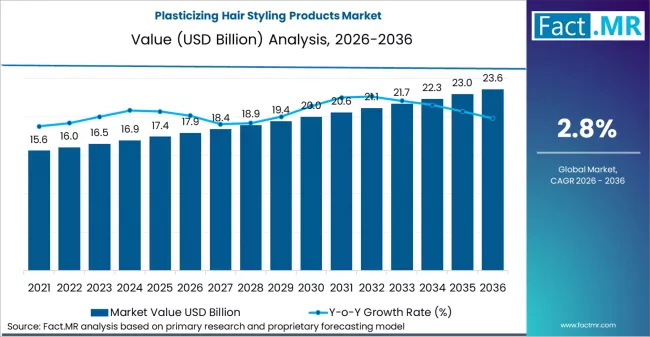
Market trends indicate a gradual shift from purely aesthetic styling solutions toward formulations that balance pliability, hair protection, and long-term fiber integrity. Adoption patterns show that manufacturers are standardizing ingredient quality, polymer blends, and container formats to ensure reproducible performance across mass, prestige, and professional channels.
Distribution and supply chain strategies are emphasizing packaging durability, transport efficiency, and alignment with high-volume urban and e-commerce logistics. Regional operators leverage local styling preferences, while global leaders focus on scalable manufacturing and operational consistency. Evidence highlights that consistent texture, handling performance, and multi-channel availability are becoming key determinants of adoption. Overall, the market trajectory points toward operational reliability, functional efficacy, and scalable supply frameworks as drivers of sustainable growth across global hair styling segments.
Plasticizing Hair Styling Products Market
| Metric | Value |
|---|---|
| Market Value (2026) | USD 17.9 billion |
| Forecast Value (2036) | USD 23.6 billion |
| Forecast CAGR (2026-2036) | 2.8% |
Category
| Category | Segments |
|---|---|
| Product Type | Hair gels; Hair sprays; Hair mousse; Hair wax; Hair pomades; Hair creams; Others |
| Ingredient Type | Chemical-based; Organic/Natural; Hybrid |
| Sales Channel | Supermarkets/Hypermarkets; Specialty stores; Pharmacies/Drug stores; Online retail; Others |
| End User / Gender | Women; Men; Unisex |
| Region | North America; Europe; Asia Pacific; Latin America; Middle East & Africa |
Segmental Analysis
By Product Type, Why Do Hair Gels Lead the Plasticizing Hair Styling Products Market?
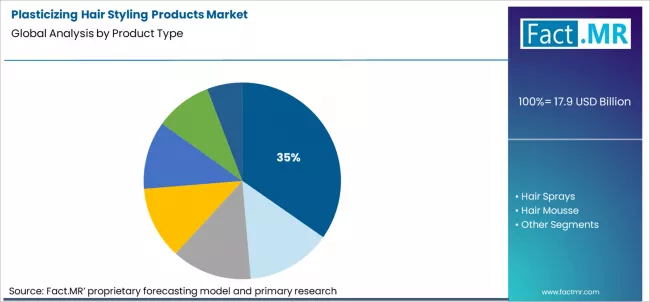
Hair gels lead the market with 34.7% share, reflecting widespread, repeatable demand across retail, e-commerce, and professional styling channels. Market adoption is driven by predictable replenishment cycles, high turnover in urban and salon settings, and multi-channel distribution that supports operational efficiency. Suppliers benefit from scalable production, standardized logistics, and recurring order volumes. Segment prominence is defined by structural market factors such as supply chain repeatability, channel coverage, and workflow integration rather than the specific characteristics of individual gels. Market growth is anchored in high-frequency consumption and consistent procurement patterns.
By Ingredient Type, Why Do Chemical-Based Formulations Represent the Largest Segment?
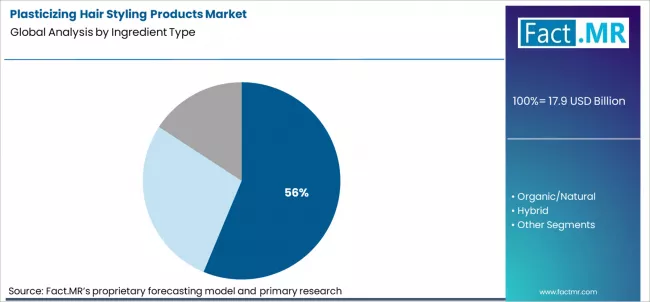
Chemical-based formulations account for 56.3% share, reflecting market preference for widely adopted, standardized solutions that facilitate scalable distribution and predictable supply chains. Demand is concentrated in segments where repeat purchases, multi-channel availability, and high turnover support recurring supplier revenue. Operational efficiency, workflow integration, and inventory predictability drive supplier and retailer planning. Segment leadership arises from structural market drivers such as procurement consistency, channel penetration, and repeatable logistics rather than the functional or chemical characteristics of individual ingredients. Adoption is guided by high-volume usage patterns and supply chain scalability, making chemical-based formulations the primary driver of market activity.
Country/Region
| Country/Region | Driver | Restraint | Trend |
|---|---|---|---|
| USA | Rising demand for long-lasting, flexible hairstyles → drives premium plasticizing hair styling product launches | FDA MoCRA 2026 cGMP and ingredient safety deadlines → increases compliance costs for small/mid-tier brands | Growth of dermatologist-tested, high-performance plasticizing styling products |
| EU | Consumer preference for clean, sustainable ingredients → drives adoption of bio-based plasticizers in styling products | EU ingredient and allergen regulations → forces reformulation and compliance costs | Expansion of compliant, eco-conscious hair styling formulations |
| India | Urbanization and e-commerce adoption → accelerates penetration of hair styling products | Supply chain and regulatory reporting challenges → slows nationwide rollout for smaller brands | Rapid expansion of online-ready, flexible hold styling products |
| Brazil | Preference for natural-origin and locally sourced ingredients → drives differentiated product launches | Import regulations and ingredient restrictions → increase formulation costs | Growth of locally sourced, sustainable, high-performance plasticizing hair styling products |
Analysis of the Plasticizing Hair Styling Products Market by Key Country
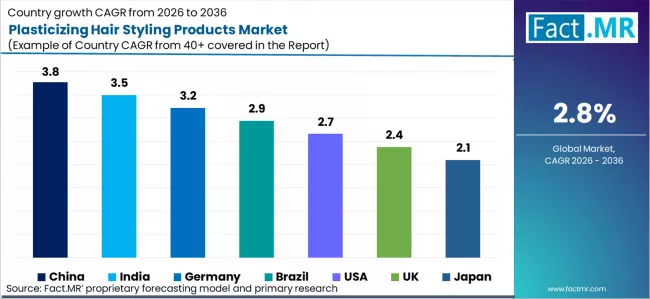
| Country | CAGR (2026-2036) |
|---|---|
| China | 3.8% |
| India | 3.5% |
| Germany | 3.2% |
| Brazil | 2.9% |
| USA | 2.7% |
| UK | 2.4% |
| Japan | 2.1% |
The report covers an in-depth analysis of 40+ countries; top-performing countries are highlighted below.
How Is Demand for Plasticizing Hair Styling Products Growing in China?
Demand for plasticizing hair styling products in China expands at 3.8% CAGR through 2036. Urban consumers increasingly seek products that provide flexible styling without damaging hair. Ecommerce and social media platforms accelerate trial and adoption across tier one and two cities. Domestic and international brands innovate formulations to meet functional performance and safety expectations. Operational improvements emphasize supply chain responsiveness, consistent product quality, and regional distribution efficiency. Premium and mid-tier segments show sustained uptake as consumer education highlights styling benefits. Brands that align production and distribution with evolving lifestyle trends consolidate market share in a market characterized by gradual but steady growth.
What Is the Growth in Adoption of Plasticizing Hair Styling Products in India?
Growth in adoption of plasticizing hair styling products in India reaches 3.5% CAGR through 2036. Rising urbanization, increasing disposable incomes, and growing attention to hair health encourage regular use of functional styling solutions. Retail modernization and e-commerce expansion improve accessibility and replenish cycles. Manufacturers focus on formulating products suitable for regional climate and hair types while ensuring consistent quality. Operational improvements include supply chain optimization and distribution to high-demand urban clusters. Premiumization and product education drive adoption in functional hair styling segments. Market expansion reflects the combination of functional efficacy, convenience, and emerging consumer preference for styling products.
How Is the Plasticizing Hair Styling Products Market Shaping in Germany?
Adoption of plasticizing hair styling products in Germany grows at 3.2% CAGR through 2036. Consumers demand products that combine styling flexibility with hair protection and safety. Retailers and specialty outlets allocate shelf space for functional styling ranges, while online channels expand access. Operational improvements emphasize regulatory compliance, product consistency, and sustainable packaging. Manufacturers optimize formulations to balance performance and consumer expectations. Urban adoption supports mid-tier and premium products, while regional penetration sustains overall market coverage. Growth reflects steady but measured demand, with market leaders focusing on functional performance, safety validation, and consistent consumer experience to differentiate offerings.
What Is the Outlook on Plasticizing Hair Styling Products in Brazil?
Outlook on plasticizing hair styling products in Brazil is 2.9% CAGR through 2036. Warm and humid conditions increase demand for formulations that provide long-lasting styling without compromising hair health. Urban retail and beauty specialty networks prioritize functional, durable styling products. Manufacturers optimize supply chain processes to ensure product integrity during transport and distribution. Operational focus emphasizes consistency, compliance with local regulations, and responsiveness to regional consumption patterns. Consumer education and marketing highlight product performance and flexibility. Market expansion is gradual, driven by steady adoption among urban populations seeking functional and convenient styling solutions.
How Is the Plasticizing Hair Styling Products Market Growing in the United States?
Growth in the plasticizing hair styling products market in the United States reaches 2.7% CAGR through 2036. Consumers integrate functional styling into broader hair care routines, seeking flexible hold with minimal damage. Retailers expand product offerings across department stores, salons, and e-commerce channels. Manufacturers prioritize formulation safety, consistency, and quality assurance. Operational improvements focus on inventory management and multi-channel distribution. Urban and suburban adoption supports premium and mid-tier segments. Brands that combine efficacy, safety, and availability strengthen positioning in a mature and competitive market with steady but modest growth rates.
What Are the Growth Patterns in the Plasticizing Hair Styling Products Market in the United Kingdom?
Growth patterns in the plasticizing hair styling products market in the United Kingdom reach 2.4% CAGR through 2036. Consumers prefer functional styling solutions with hair protection, leading to adoption primarily in urban centers. Retailers integrate mid-tier and premium offerings across physical stores and e-commerce platforms. Operational improvements emphasize quality consistency, regulatory alignment, and supply chain reliability. Manufacturers tailor formulations to local climate and hair types. Market expansion is gradual, with adoption driven by performance, safety, and convenience. Brands that ensure consistent efficacy and availability consolidate share, while incremental urban demand sustains long-term category growth.
How Is the Plasticizing Hair Styling Products Market Developing in Japan?
Outlook on the plasticizing hair styling products market in Japan grows at 2.1% CAGR through 2036. Consumers value styling solutions that maintain hair health and provide subtle, flexible hold. Urban retail, department stores, and e-commerce channels prioritize functional, high-quality product offerings. Manufacturers focus on consistent formulations, safety standards, and regulatory compliance. Operational improvements include inventory optimization and reliable regional distribution. Premium and niche segments lead adoption, supported by consumer education on product efficacy. Market growth is measured, reflecting a mature and safety-conscious consumer base, with steady demand driven by functional performance and aesthetic consistency.
How Are Supply Chain Integration, Regulatory Compliance, and Performance Validation Shaping Competitive Moats in the Plasticizing Hair Styling Products Market?
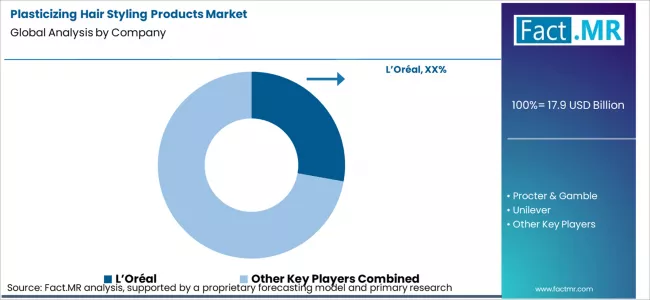
As per Fact.MR analysis, the plasticizing hair styling products market in 2026 is defined by a shift from texture-led differentiation to efficacy-verified formulations, where supply chain robustness and regulatory compliance create enduring competitive advantages. L’Oréal and Procter & Gamble leveraged global distribution and formulation expertise, which reinforced adoption across professional and mass-market channels. Unilever and Coty optimized scalable production and regional compliance, which reduced lead times and ensured consistent product performance in emerging markets. Henkel and Estée Lauder focused on validated styling performance and hair compatibility, which increased trust among professional stylists. Revlon, Kao Corporation, and Amika Products integrated environmentally compliant packaging and refillable formats, which strengthened sustainability positioning. Avon enhanced supply responsiveness and localized production, which improved penetration in direct-to-consumer and regional retail segments. Collectively, regulatory adherence, validated performance, and integrated supply chains established competitive moats, reducing the impact of marketing claims or incremental texture modifications.
Recent Developments
- L’Oréal: Infrared "Hydrogen Bond" Styling Breakthrough (Jan 2026). At CES 2026, L’Oréal Groupe unveiled the Light Straight + Multi-styler, a device that utilizes patented near-infrared light technology. This innovation marks a shift in the "plasticizing" category by using light to reshape the hair’s internal hydrogen bonds at lower temperatures ($320 ext{°F}$) compared to traditional heat ($400 ext{°F}$+). This technology allows for long-lasting "plastic" memory in the hair style without denaturing keratin or causing the brittle "crunch" associated with high-heat styling resins. Source: L’Oréal Groupe - Official CES 2026 News (January 2026)
- Unilever: "Amino-Silk" Technology for 100-Hour Hold (Jan 2026). In January 2026, Unilever announced a major transformation of its Sunsilk brand, targeting Gen Z with the launch of "Silk Touch" technology. This innovation is powered by a patented amino-silk technology that acts as a flexible plasticizing agent. Unlike traditional styling polymers that can feel heavy, this formula delivers up to 100 hours of "silky smoothness" and flexible hold, combining high-performance science with a weightless, sensorial experience designed for high-humidity environments. Source: Unilever - Sunsilk's transformation shaped by Gen Z beauty trends (January 2026)
- P&G: Launch of "Gemz" Water-Activated Styling Matrix (Nov 2025). Procter & Gamble introduced Gemz, a revolutionary water-activated hair care format that includes styling-ready conditioners. Developed over 14 years, the product uses an intricately spun, high-surface-area matrix that dissolves rapidly. In the styling context, this technology provides a "lighter-than-air" buildup-free finish. It allows consumers to transition from washing to styling with a pre-plasticized base that offers natural volume and hold without the need for traditional heavy styling creams or gels. Source: P&G - Beyond the Bottle: How Gemz is Redefining Haircare (November 2025)
Key Players in Plasticizing Hair Styling Products Market
- L’Oréal
- Procter & Gamble
- Unilever
- Coty Inc.
- Henkel
- Estée Lauder
- Revlon
- Kao Corporation
- Amika Products
- Avon Products
Scope of the Report
| Items | Values |
|---|---|
| Quantitative Units (2026) | USD billion |
| Product Type | Hair Gels, Hair Sprays, Hair Mousse, Hair Wax, Hair Pomades, Hair Creams, Others |
| Ingredient Type | Chemical-Based, Organic/Natural, Hybrid |
| Sales Channel | Supermarkets/Hypermarkets, Specialty Stores, Pharmacies/Drug Stores, Online Retail, Others |
| End User / Gender | Women, Men, Unisex |
| Region | Asia Pacific, North America, Europe, Latin America, Middle East & Africa |
| Countries Covered | China, Japan, South Korea, India, Australia & New Zealand, ASEAN, Rest of Asia Pacific, Germany, UK, France, Italy, Spain, Nordic, BENELUX, Rest of Europe, USA, Canada, Mexico, Brazil, Chile, Rest of Latin America, KSA, Other GCC, Turkey, South Africa, Other African Union, Rest of MEA |
| Key Companies Profiled | L’Oréal, Procter & Gamble, Unilever, Coty Inc., Henkel, Estée Lauder, Revlon, Kao Corporation, Amika Products, Avon Products |
| Additional Attributes | Dollar by sales by product type and ingredient; validated hair styling performance; supply chain efficiency; operational scalability; multi-channel distribution; repeatable formulation quality; inventory predictability; professional and retail adoption; material consistency; regulatory compliance; high-throughput production supporting global distribution networks. |
Plasticizing Hair Styling Products Market Segmentation
-
Product Type :
- Hair Gels
- Hair Sprays
- Hair Mousse
- Hair Wax
- Hair Pomades
- Hair Creams
- Others
-
Ingredient Type :
- Chemical-Based
- Organic/Natural
- Hybrid
-
Sales Channel :
- Supermarkets/Hypermarkets
- Specialty Stores
- Pharmacies/Drug Stores
- Online Retail
- Others
-
End User / Gender :
- Women
- Men
- Unisex
-
Region :
- Asia Pacific
- China
- Japan
- South Korea
- India
- Australia & New Zealand
- ASEAN
- Rest of Asia Pacific
- Europe
- Germany
- United Kingdom
- France
- Italy
- Spain
- Nordic
- BENELUX
- Rest of Europe
- North America
- United States
- Canada
- Mexico
- Latin America
- Brazil
- Chile
- Rest of Latin America
- Middle East & Africa
- Kingdom of Saudi Arabia
- Other GCC Countries
- Turkey
- South Africa
- Other African Union
- Rest of Middle East & Africa
- Asia Pacific
References
- European Commission. (2024). Regulation (EU) 2024/996 amending Regulation (EC) No 1223/2009 on cosmetic products. Official Journal of the European Union.
- Scientific Committee on Consumer Safety. (2023). Notes of guidance for the testing of cosmetic ingredients and their safety evaluation (12th revision). European Commission.
- National Medical Products Administration. (2024). Cosmetic Safety Technical Specifications. People’s Republic of China.
- Central Drugs Standard Control Organization. (2025). Guidelines for classification of cosmetics and borderline products. Ministry of Health and Family Welfare, Government of India.
Table of Content
- Executive Summary
- Global Market Outlook
- Demand to side Trends
- Supply to side Trends
- Technology Roadmap Analysis
- Analysis and Recommendations
- Market Overview
- Market Coverage / Taxonomy
- Market Definition / Scope / Limitations
- Research Methodology
- Chapter Orientation
- Analytical Lens and Working Hypotheses
- Market Structure, Signals, and Trend Drivers
- Benchmarking and Cross-market Comparability
- Market Sizing, Forecasting, and Opportunity Mapping
- Research Design and Evidence Framework
- Desk Research Programme (Secondary Evidence)
- Company Annual and Sustainability Reports
- Peer-reviewed Journals and Academic Literature
- Corporate Websites, Product Literature, and Technical Notes
- Earnings Decks and Investor Briefings
- Statutory Filings and Regulatory Disclosures
- Technical White Papers and Standards Notes
- Trade Journals, Industry Magazines, and Analyst Briefs
- Conference Proceedings, Webinars, and Seminar Materials
- Government Statistics Portals and Public Data Releases
- Press Releases and Reputable Media Coverage
- Specialist Newsletters and Curated Briefings
- Sector Databases and Reference Repositories
- FMR Internal Proprietary Databases and Historical Market Datasets
- Subscription Datasets and Paid Sources
- Social Channels, Communities, and Digital Listening Inputs
- Additional Desk Sources
- Expert Input and Fieldwork (Primary Evidence)
- Primary Modes
- Qualitative Interviews and Expert Elicitation
- Quantitative Surveys and Structured Data Capture
- Blended Approach
- Why Primary Evidence is Used
- Field Techniques
- Interviews
- Surveys
- Focus Groups
- Observational and In-context Research
- Social and Community Interactions
- Stakeholder Universe Engaged
- C-suite Leaders
- Board Members
- Presidents and Vice Presidents
- R&D and Innovation Heads
- Technical Specialists
- Domain Subject-matter Experts
- Scientists
- Physicians and Other Healthcare Professionals
- Governance, Ethics, and Data Stewardship
- Research Ethics
- Data Integrity and Handling
- Primary Modes
- Tooling, Models, and Reference Databases
- Desk Research Programme (Secondary Evidence)
- Data Engineering and Model Build
- Data Acquisition and Ingestion
- Cleaning, Normalisation, and Verification
- Synthesis, Triangulation, and Analysis
- Quality Assurance and Audit Trail
- Market Background
- Market Dynamics
- Drivers
- Restraints
- Opportunity
- Trends
- Scenario Forecast
- Demand in Optimistic Scenario
- Demand in Likely Scenario
- Demand in Conservative Scenario
- Opportunity Map Analysis
- Product Life Cycle Analysis
- Supply Chain Analysis
- Investment Feasibility Matrix
- Value Chain Analysis
- PESTLE and Porter’s Analysis
- Regulatory Landscape
- Regional Parent Market Outlook
- Production and Consumption Statistics
- Import and Export Statistics
- Market Dynamics
- Global Market Analysis 2021 to 2025 and Forecast, 2026 to 2036
- Historical Market Size Value (USD Million) Analysis, 2021 to 2025
- Current and Future Market Size Value (USD Million) Projections, 2026 to 2036
- Y to o to Y Growth Trend Analysis
- Absolute $ Opportunity Analysis
- Global Market Pricing Analysis 2021 to 2025 and Forecast 2026 to 2036
- Global Market Analysis 2021 to 2025 and Forecast 2026 to 2036, By Product Type
- Introduction / Key Findings
- Historical Market Size Value (USD Million) Analysis By Product Type, 2021 to 2025
- Current and Future Market Size Value (USD Million) Analysis and Forecast By Product Type, 2026 to 2036
- Hair Gels
- Hair Sprays
- Hair Mousse
- Hair Wax
- Hair Pomades
- Hair Creams
- Others
- Hair Gels
- Y to o to Y Growth Trend Analysis By Product Type, 2021 to 2025
- Absolute $ Opportunity Analysis By Product Type, 2026 to 2036
- Global Market Analysis 2021 to 2025 and Forecast 2026 to 2036, By Ingredient Type
- Introduction / Key Findings
- Historical Market Size Value (USD Million) Analysis By Ingredient Type, 2021 to 2025
- Current and Future Market Size Value (USD Million) Analysis and Forecast By Ingredient Type, 2026 to 2036
- Chemical-Based
- Organic/Natural
- Hybrid
- Chemical-Based
- Y to o to Y Growth Trend Analysis By Ingredient Type, 2021 to 2025
- Absolute $ Opportunity Analysis By Ingredient Type, 2026 to 2036
- Global Market Analysis 2021 to 2025 and Forecast 2026 to 2036, By Sales Channel
- Introduction / Key Findings
- Historical Market Size Value (USD Million) Analysis By Sales Channel, 2021 to 2025
- Current and Future Market Size Value (USD Million) Analysis and Forecast By Sales Channel, 2026 to 2036
- Supermarkets/Hypermarkets
- Specialty Stores
- Pharmacies/Drug Stores
- Online Retail
- Others
- Supermarkets/Hypermarkets
- Y to o to Y Growth Trend Analysis By Sales Channel, 2021 to 2025
- Absolute $ Opportunity Analysis By Sales Channel, 2026 to 2036
- Global Market Analysis 2021 to 2025 and Forecast 2026 to 2036, By End User or Gender
- Introduction / Key Findings
- Historical Market Size Value (USD Million) Analysis By End User or Gender, 2021 to 2025
- Current and Future Market Size Value (USD Million) Analysis and Forecast By End User or Gender, 2026 to 2036
- Women
- Men
- Unisex
- Women
- Y to o to Y Growth Trend Analysis By End User or Gender, 2021 to 2025
- Absolute $ Opportunity Analysis By End User or Gender, 2026 to 2036
- Global Market Analysis 2021 to 2025 and Forecast 2026 to 2036, By Region
- Introduction
- Historical Market Size Value (USD Million) Analysis By Region, 2021 to 2025
- Current Market Size Value (USD Million) Analysis and Forecast By Region, 2026 to 2036
- North America
- Latin America
- Western Europe
- Eastern Europe
- East Asia
- South Asia and Pacific
- Middle East & Africa
- Market Attractiveness Analysis By Region
- North America Market Analysis 2021 to 2025 and Forecast 2026 to 2036, By Country
- Historical Market Size Value (USD Million) Trend Analysis By Market Taxonomy, 2021 to 2025
- Market Size Value (USD Million) Forecast By Market Taxonomy, 2026 to 2036
- By Country
- USA
- Canada
- Mexico
- By Product Type
- By Ingredient Type
- By Sales Channel
- By End User or Gender
- By Country
- Market Attractiveness Analysis
- By Country
- By Product Type
- By Ingredient Type
- By Sales Channel
- By End User or Gender
- Key Takeaways
- Latin America Market Analysis 2021 to 2025 and Forecast 2026 to 2036, By Country
- Historical Market Size Value (USD Million) Trend Analysis By Market Taxonomy, 2021 to 2025
- Market Size Value (USD Million) Forecast By Market Taxonomy, 2026 to 2036
- By Country
- Brazil
- Chile
- Rest of Latin America
- By Product Type
- By Ingredient Type
- By Sales Channel
- By End User or Gender
- By Country
- Market Attractiveness Analysis
- By Country
- By Product Type
- By Ingredient Type
- By Sales Channel
- By End User or Gender
- Key Takeaways
- Western Europe Market Analysis 2021 to 2025 and Forecast 2026 to 2036, By Country
- Historical Market Size Value (USD Million) Trend Analysis By Market Taxonomy, 2021 to 2025
- Market Size Value (USD Million) Forecast By Market Taxonomy, 2026 to 2036
- By Country
- Germany
- UK
- Italy
- Spain
- France
- Nordic
- BENELUX
- Rest of Western Europe
- By Product Type
- By Ingredient Type
- By Sales Channel
- By End User or Gender
- By Country
- Market Attractiveness Analysis
- By Country
- By Product Type
- By Ingredient Type
- By Sales Channel
- By End User or Gender
- Key Takeaways
- Eastern Europe Market Analysis 2021 to 2025 and Forecast 2026 to 2036, By Country
- Historical Market Size Value (USD Million) Trend Analysis By Market Taxonomy, 2021 to 2025
- Market Size Value (USD Million) Forecast By Market Taxonomy, 2026 to 2036
- By Country
- Russia
- Poland
- Hungary
- Balkan & Baltic
- Rest of Eastern Europe
- By Product Type
- By Ingredient Type
- By Sales Channel
- By End User or Gender
- By Country
- Market Attractiveness Analysis
- By Country
- By Product Type
- By Ingredient Type
- By Sales Channel
- By End User or Gender
- Key Takeaways
- East Asia Market Analysis 2021 to 2025 and Forecast 2026 to 2036, By Country
- Historical Market Size Value (USD Million) Trend Analysis By Market Taxonomy, 2021 to 2025
- Market Size Value (USD Million) Forecast By Market Taxonomy, 2026 to 2036
- By Country
- China
- Japan
- South Korea
- By Product Type
- By Ingredient Type
- By Sales Channel
- By End User or Gender
- By Country
- Market Attractiveness Analysis
- By Country
- By Product Type
- By Ingredient Type
- By Sales Channel
- By End User or Gender
- Key Takeaways
- South Asia and Pacific Market Analysis 2021 to 2025 and Forecast 2026 to 2036, By Country
- Historical Market Size Value (USD Million) Trend Analysis By Market Taxonomy, 2021 to 2025
- Market Size Value (USD Million) Forecast By Market Taxonomy, 2026 to 2036
- By Country
- India
- ASEAN
- Australia & New Zealand
- Rest of South Asia and Pacific
- By Product Type
- By Ingredient Type
- By Sales Channel
- By End User or Gender
- By Country
- Market Attractiveness Analysis
- By Country
- By Product Type
- By Ingredient Type
- By Sales Channel
- By End User or Gender
- Key Takeaways
- Middle East & Africa Market Analysis 2021 to 2025 and Forecast 2026 to 2036, By Country
- Historical Market Size Value (USD Million) Trend Analysis By Market Taxonomy, 2021 to 2025
- Market Size Value (USD Million) Forecast By Market Taxonomy, 2026 to 2036
- By Country
- Kingdom of Saudi Arabia
- Other GCC Countries
- Turkiye
- South Africa
- Other African Union
- Rest of Middle East & Africa
- By Product Type
- By Ingredient Type
- By Sales Channel
- By End User or Gender
- By Country
- Market Attractiveness Analysis
- By Country
- By Product Type
- By Ingredient Type
- By Sales Channel
- By End User or Gender
- Key Takeaways
- Key Countries Market Analysis
- USA
- Pricing Analysis
- Market Share Analysis, 2025
- By Product Type
- By Ingredient Type
- By Sales Channel
- By End User or Gender
- Canada
- Pricing Analysis
- Market Share Analysis, 2025
- By Product Type
- By Ingredient Type
- By Sales Channel
- By End User or Gender
- Mexico
- Pricing Analysis
- Market Share Analysis, 2025
- By Product Type
- By Ingredient Type
- By Sales Channel
- By End User or Gender
- Brazil
- Pricing Analysis
- Market Share Analysis, 2025
- By Product Type
- By Ingredient Type
- By Sales Channel
- By End User or Gender
- Chile
- Pricing Analysis
- Market Share Analysis, 2025
- By Product Type
- By Ingredient Type
- By Sales Channel
- By End User or Gender
- Germany
- Pricing Analysis
- Market Share Analysis, 2025
- By Product Type
- By Ingredient Type
- By Sales Channel
- By End User or Gender
- UK
- Pricing Analysis
- Market Share Analysis, 2025
- By Product Type
- By Ingredient Type
- By Sales Channel
- By End User or Gender
- Italy
- Pricing Analysis
- Market Share Analysis, 2025
- By Product Type
- By Ingredient Type
- By Sales Channel
- By End User or Gender
- Spain
- Pricing Analysis
- Market Share Analysis, 2025
- By Product Type
- By Ingredient Type
- By Sales Channel
- By End User or Gender
- France
- Pricing Analysis
- Market Share Analysis, 2025
- By Product Type
- By Ingredient Type
- By Sales Channel
- By End User or Gender
- India
- Pricing Analysis
- Market Share Analysis, 2025
- By Product Type
- By Ingredient Type
- By Sales Channel
- By End User or Gender
- ASEAN
- Pricing Analysis
- Market Share Analysis, 2025
- By Product Type
- By Ingredient Type
- By Sales Channel
- By End User or Gender
- Australia & New Zealand
- Pricing Analysis
- Market Share Analysis, 2025
- By Product Type
- By Ingredient Type
- By Sales Channel
- By End User or Gender
- China
- Pricing Analysis
- Market Share Analysis, 2025
- By Product Type
- By Ingredient Type
- By Sales Channel
- By End User or Gender
- Japan
- Pricing Analysis
- Market Share Analysis, 2025
- By Product Type
- By Ingredient Type
- By Sales Channel
- By End User or Gender
- South Korea
- Pricing Analysis
- Market Share Analysis, 2025
- By Product Type
- By Ingredient Type
- By Sales Channel
- By End User or Gender
- Russia
- Pricing Analysis
- Market Share Analysis, 2025
- By Product Type
- By Ingredient Type
- By Sales Channel
- By End User or Gender
- Poland
- Pricing Analysis
- Market Share Analysis, 2025
- By Product Type
- By Ingredient Type
- By Sales Channel
- By End User or Gender
- Hungary
- Pricing Analysis
- Market Share Analysis, 2025
- By Product Type
- By Ingredient Type
- By Sales Channel
- By End User or Gender
- Kingdom of Saudi Arabia
- Pricing Analysis
- Market Share Analysis, 2025
- By Product Type
- By Ingredient Type
- By Sales Channel
- By End User or Gender
- Turkiye
- Pricing Analysis
- Market Share Analysis, 2025
- By Product Type
- By Ingredient Type
- By Sales Channel
- By End User or Gender
- South Africa
- Pricing Analysis
- Market Share Analysis, 2025
- By Product Type
- By Ingredient Type
- By Sales Channel
- By End User or Gender
- USA
- Market Structure Analysis
- Competition Dashboard
- Competition Benchmarking
- Market Share Analysis of Top Players
- By Regional
- By Product Type
- By Ingredient Type
- By Sales Channel
- By End User or Gender
- Competition Analysis
- Competition Deep Dive
- L’Oréal
- Overview
- Product Portfolio
- Profitability by Market Segments (Product/Age /Sales Channel/Region)
- Sales Footprint
- Strategy Overview
- Marketing Strategy
- Product Strategy
- Channel Strategy
- Procter & Gamble
- Unilever
- Coty Inc.
- Henkel
- Estée Lauder
- Revlon
- Kao Corporation
- Amika Products
- Avon Products
- L’Oréal
- Competition Deep Dive
- Assumptions & Acronyms Used
List Of Table
- Table 1: Global Market Value (USD Million) Forecast by Region, 2021 to 2036
- Table 2: Global Market Value (USD Million) Forecast by Product Type, 2021 to 2036
- Table 3: Global Market Value (USD Million) Forecast by Ingredient Type, 2021 to 2036
- Table 4: Global Market Value (USD Million) Forecast by Sales Channel, 2021 to 2036
- Table 5: Global Market Value (USD Million) Forecast by End User or Gender, 2021 to 2036
- Table 6: North America Market Value (USD Million) Forecast by Country, 2021 to 2036
- Table 7: North America Market Value (USD Million) Forecast by Product Type, 2021 to 2036
- Table 8: North America Market Value (USD Million) Forecast by Ingredient Type, 2021 to 2036
- Table 9: North America Market Value (USD Million) Forecast by Sales Channel, 2021 to 2036
- Table 10: North America Market Value (USD Million) Forecast by End User or Gender, 2021 to 2036
- Table 11: Latin America Market Value (USD Million) Forecast by Country, 2021 to 2036
- Table 12: Latin America Market Value (USD Million) Forecast by Product Type, 2021 to 2036
- Table 13: Latin America Market Value (USD Million) Forecast by Ingredient Type, 2021 to 2036
- Table 14: Latin America Market Value (USD Million) Forecast by Sales Channel, 2021 to 2036
- Table 15: Latin America Market Value (USD Million) Forecast by End User or Gender, 2021 to 2036
- Table 16: Western Europe Market Value (USD Million) Forecast by Country, 2021 to 2036
- Table 17: Western Europe Market Value (USD Million) Forecast by Product Type, 2021 to 2036
- Table 18: Western Europe Market Value (USD Million) Forecast by Ingredient Type, 2021 to 2036
- Table 19: Western Europe Market Value (USD Million) Forecast by Sales Channel, 2021 to 2036
- Table 20: Western Europe Market Value (USD Million) Forecast by End User or Gender, 2021 to 2036
- Table 21: Eastern Europe Market Value (USD Million) Forecast by Country, 2021 to 2036
- Table 22: Eastern Europe Market Value (USD Million) Forecast by Product Type, 2021 to 2036
- Table 23: Eastern Europe Market Value (USD Million) Forecast by Ingredient Type, 2021 to 2036
- Table 24: Eastern Europe Market Value (USD Million) Forecast by Sales Channel, 2021 to 2036
- Table 25: Eastern Europe Market Value (USD Million) Forecast by End User or Gender, 2021 to 2036
- Table 26: East Asia Market Value (USD Million) Forecast by Country, 2021 to 2036
- Table 27: East Asia Market Value (USD Million) Forecast by Product Type, 2021 to 2036
- Table 28: East Asia Market Value (USD Million) Forecast by Ingredient Type, 2021 to 2036
- Table 29: East Asia Market Value (USD Million) Forecast by Sales Channel, 2021 to 2036
- Table 30: East Asia Market Value (USD Million) Forecast by End User or Gender, 2021 to 2036
- Table 31: South Asia and Pacific Market Value (USD Million) Forecast by Country, 2021 to 2036
- Table 32: South Asia and Pacific Market Value (USD Million) Forecast by Product Type, 2021 to 2036
- Table 33: South Asia and Pacific Market Value (USD Million) Forecast by Ingredient Type, 2021 to 2036
- Table 34: South Asia and Pacific Market Value (USD Million) Forecast by Sales Channel, 2021 to 2036
- Table 35: South Asia and Pacific Market Value (USD Million) Forecast by End User or Gender, 2021 to 2036
- Table 36: Middle East & Africa Market Value (USD Million) Forecast by Country, 2021 to 2036
- Table 37: Middle East & Africa Market Value (USD Million) Forecast by Product Type, 2021 to 2036
- Table 38: Middle East & Africa Market Value (USD Million) Forecast by Ingredient Type, 2021 to 2036
- Table 39: Middle East & Africa Market Value (USD Million) Forecast by Sales Channel, 2021 to 2036
- Table 40: Middle East & Africa Market Value (USD Million) Forecast by End User or Gender, 2021 to 2036
List Of Figures
- Figure 1: Global Market Pricing Analysis
- Figure 2: Global Market Value (USD Million) Forecast 2021 to 2036
- Figure 3: Global Market Value Share and BPS Analysis by Product Type, 2026 and 2036
- Figure 4: Global Market Y to o to Y Growth Comparison by Product Type, 2026 to 2036
- Figure 5: Global Market Attractiveness Analysis by Product Type
- Figure 6: Global Market Value Share and BPS Analysis by Ingredient Type, 2026 and 2036
- Figure 7: Global Market Y to o to Y Growth Comparison by Ingredient Type, 2026 to 2036
- Figure 8: Global Market Attractiveness Analysis by Ingredient Type
- Figure 9: Global Market Value Share and BPS Analysis by Sales Channel, 2026 and 2036
- Figure 10: Global Market Y to o to Y Growth Comparison by Sales Channel, 2026 to 2036
- Figure 11: Global Market Attractiveness Analysis by Sales Channel
- Figure 12: Global Market Value Share and BPS Analysis by End User or Gender, 2026 and 2036
- Figure 13: Global Market Y to o to Y Growth Comparison by End User or Gender, 2026 to 2036
- Figure 14: Global Market Attractiveness Analysis by End User or Gender
- Figure 15: Global Market Value (USD Million) Share and BPS Analysis by Region, 2026 and 2036
- Figure 16: Global Market Y to o to Y Growth Comparison by Region, 2026 to 2036
- Figure 17: Global Market Attractiveness Analysis by Region
- Figure 18: North America Market Incremental Dollar Opportunity, 2026 to 2036
- Figure 19: Latin America Market Incremental Dollar Opportunity, 2026 to 2036
- Figure 20: Western Europe Market Incremental Dollar Opportunity, 2026 to 2036
- Figure 21: Eastern Europe Market Incremental Dollar Opportunity, 2026 to 2036
- Figure 22: East Asia Market Incremental Dollar Opportunity, 2026 to 2036
- Figure 23: South Asia and Pacific Market Incremental Dollar Opportunity, 2026 to 2036
- Figure 24: Middle East & Africa Market Incremental Dollar Opportunity, 2026 to 2036
- Figure 25: North America Market Value Share and BPS Analysis by Country, 2026 and 2036
- Figure 26: North America Market Value Share and BPS Analysis by Product Type, 2026 and 2036
- Figure 27: North America Market Y to o to Y Growth Comparison by Product Type, 2026 to 2036
- Figure 28: North America Market Attractiveness Analysis by Product Type
- Figure 29: North America Market Value Share and BPS Analysis by Ingredient Type, 2026 and 2036
- Figure 30: North America Market Y to o to Y Growth Comparison by Ingredient Type, 2026 to 2036
- Figure 31: North America Market Attractiveness Analysis by Ingredient Type
- Figure 32: North America Market Value Share and BPS Analysis by Sales Channel, 2026 and 2036
- Figure 33: North America Market Y to o to Y Growth Comparison by Sales Channel, 2026 to 2036
- Figure 34: North America Market Attractiveness Analysis by Sales Channel
- Figure 35: North America Market Value Share and BPS Analysis by End User or Gender, 2026 and 2036
- Figure 36: North America Market Y to o to Y Growth Comparison by End User or Gender, 2026 to 2036
- Figure 37: North America Market Attractiveness Analysis by End User or Gender
- Figure 38: Latin America Market Value Share and BPS Analysis by Country, 2026 and 2036
- Figure 39: Latin America Market Value Share and BPS Analysis by Product Type, 2026 and 2036
- Figure 40: Latin America Market Y to o to Y Growth Comparison by Product Type, 2026 to 2036
- Figure 41: Latin America Market Attractiveness Analysis by Product Type
- Figure 42: Latin America Market Value Share and BPS Analysis by Ingredient Type, 2026 and 2036
- Figure 43: Latin America Market Y to o to Y Growth Comparison by Ingredient Type, 2026 to 2036
- Figure 44: Latin America Market Attractiveness Analysis by Ingredient Type
- Figure 45: Latin America Market Value Share and BPS Analysis by Sales Channel, 2026 and 2036
- Figure 46: Latin America Market Y to o to Y Growth Comparison by Sales Channel, 2026 to 2036
- Figure 47: Latin America Market Attractiveness Analysis by Sales Channel
- Figure 48: Latin America Market Value Share and BPS Analysis by End User or Gender, 2026 and 2036
- Figure 49: Latin America Market Y to o to Y Growth Comparison by End User or Gender, 2026 to 2036
- Figure 50: Latin America Market Attractiveness Analysis by End User or Gender
- Figure 51: Western Europe Market Value Share and BPS Analysis by Country, 2026 and 2036
- Figure 52: Western Europe Market Value Share and BPS Analysis by Product Type, 2026 and 2036
- Figure 53: Western Europe Market Y to o to Y Growth Comparison by Product Type, 2026 to 2036
- Figure 54: Western Europe Market Attractiveness Analysis by Product Type
- Figure 55: Western Europe Market Value Share and BPS Analysis by Ingredient Type, 2026 and 2036
- Figure 56: Western Europe Market Y to o to Y Growth Comparison by Ingredient Type, 2026 to 2036
- Figure 57: Western Europe Market Attractiveness Analysis by Ingredient Type
- Figure 58: Western Europe Market Value Share and BPS Analysis by Sales Channel, 2026 and 2036
- Figure 59: Western Europe Market Y to o to Y Growth Comparison by Sales Channel, 2026 to 2036
- Figure 60: Western Europe Market Attractiveness Analysis by Sales Channel
- Figure 61: Western Europe Market Value Share and BPS Analysis by End User or Gender, 2026 and 2036
- Figure 62: Western Europe Market Y to o to Y Growth Comparison by End User or Gender, 2026 to 2036
- Figure 63: Western Europe Market Attractiveness Analysis by End User or Gender
- Figure 64: Eastern Europe Market Value Share and BPS Analysis by Country, 2026 and 2036
- Figure 65: Eastern Europe Market Value Share and BPS Analysis by Product Type, 2026 and 2036
- Figure 66: Eastern Europe Market Y to o to Y Growth Comparison by Product Type, 2026 to 2036
- Figure 67: Eastern Europe Market Attractiveness Analysis by Product Type
- Figure 68: Eastern Europe Market Value Share and BPS Analysis by Ingredient Type, 2026 and 2036
- Figure 69: Eastern Europe Market Y to o to Y Growth Comparison by Ingredient Type, 2026 to 2036
- Figure 70: Eastern Europe Market Attractiveness Analysis by Ingredient Type
- Figure 71: Eastern Europe Market Value Share and BPS Analysis by Sales Channel, 2026 and 2036
- Figure 72: Eastern Europe Market Y to o to Y Growth Comparison by Sales Channel, 2026 to 2036
- Figure 73: Eastern Europe Market Attractiveness Analysis by Sales Channel
- Figure 74: Eastern Europe Market Value Share and BPS Analysis by End User or Gender, 2026 and 2036
- Figure 75: Eastern Europe Market Y to o to Y Growth Comparison by End User or Gender, 2026 to 2036
- Figure 76: Eastern Europe Market Attractiveness Analysis by End User or Gender
- Figure 77: East Asia Market Value Share and BPS Analysis by Country, 2026 and 2036
- Figure 78: East Asia Market Value Share and BPS Analysis by Product Type, 2026 and 2036
- Figure 79: East Asia Market Y to o to Y Growth Comparison by Product Type, 2026 to 2036
- Figure 80: East Asia Market Attractiveness Analysis by Product Type
- Figure 81: East Asia Market Value Share and BPS Analysis by Ingredient Type, 2026 and 2036
- Figure 82: East Asia Market Y to o to Y Growth Comparison by Ingredient Type, 2026 to 2036
- Figure 83: East Asia Market Attractiveness Analysis by Ingredient Type
- Figure 84: East Asia Market Value Share and BPS Analysis by Sales Channel, 2026 and 2036
- Figure 85: East Asia Market Y to o to Y Growth Comparison by Sales Channel, 2026 to 2036
- Figure 86: East Asia Market Attractiveness Analysis by Sales Channel
- Figure 87: East Asia Market Value Share and BPS Analysis by End User or Gender, 2026 and 2036
- Figure 88: East Asia Market Y to o to Y Growth Comparison by End User or Gender, 2026 to 2036
- Figure 89: East Asia Market Attractiveness Analysis by End User or Gender
- Figure 90: South Asia and Pacific Market Value Share and BPS Analysis by Country, 2026 and 2036
- Figure 91: South Asia and Pacific Market Value Share and BPS Analysis by Product Type, 2026 and 2036
- Figure 92: South Asia and Pacific Market Y to o to Y Growth Comparison by Product Type, 2026 to 2036
- Figure 93: South Asia and Pacific Market Attractiveness Analysis by Product Type
- Figure 94: South Asia and Pacific Market Value Share and BPS Analysis by Ingredient Type, 2026 and 2036
- Figure 95: South Asia and Pacific Market Y to o to Y Growth Comparison by Ingredient Type, 2026 to 2036
- Figure 96: South Asia and Pacific Market Attractiveness Analysis by Ingredient Type
- Figure 97: South Asia and Pacific Market Value Share and BPS Analysis by Sales Channel, 2026 and 2036
- Figure 98: South Asia and Pacific Market Y to o to Y Growth Comparison by Sales Channel, 2026 to 2036
- Figure 99: South Asia and Pacific Market Attractiveness Analysis by Sales Channel
- Figure 100: South Asia and Pacific Market Value Share and BPS Analysis by End User or Gender, 2026 and 2036
- Figure 101: South Asia and Pacific Market Y to o to Y Growth Comparison by End User or Gender, 2026 to 2036
- Figure 102: South Asia and Pacific Market Attractiveness Analysis by End User or Gender
- Figure 103: Middle East & Africa Market Value Share and BPS Analysis by Country, 2026 and 2036
- Figure 104: Middle East & Africa Market Value Share and BPS Analysis by Product Type, 2026 and 2036
- Figure 105: Middle East & Africa Market Y to o to Y Growth Comparison by Product Type, 2026 to 2036
- Figure 106: Middle East & Africa Market Attractiveness Analysis by Product Type
- Figure 107: Middle East & Africa Market Value Share and BPS Analysis by Ingredient Type, 2026 and 2036
- Figure 108: Middle East & Africa Market Y to o to Y Growth Comparison by Ingredient Type, 2026 to 2036
- Figure 109: Middle East & Africa Market Attractiveness Analysis by Ingredient Type
- Figure 110: Middle East & Africa Market Value Share and BPS Analysis by Sales Channel, 2026 and 2036
- Figure 111: Middle East & Africa Market Y to o to Y Growth Comparison by Sales Channel, 2026 to 2036
- Figure 112: Middle East & Africa Market Attractiveness Analysis by Sales Channel
- Figure 113: Middle East & Africa Market Value Share and BPS Analysis by End User or Gender, 2026 and 2036
- Figure 114: Middle East & Africa Market Y to o to Y Growth Comparison by End User or Gender, 2026 to 2036
- Figure 115: Middle East & Africa Market Attractiveness Analysis by End User or Gender
- Figure 116: Global Market - Tier Structure Analysis
- Figure 117: Global Market - Company Share Analysis
- FAQs -
How big is the plasticizing hair styling products market in 2026?
The global plasticizing hair styling products market is estimated to be valued at USD 17.9 billion in 2026.
What will be the size of plasticizing hair styling products market in 2036?
The market size for the plasticizing hair styling products market is projected to reach USD 23.6 billion by 2036.
How much will be the plasticizing hair styling products market growth between 2026 and 2036?
The plasticizing hair styling products market is expected to grow at a 2.8% CAGR between 2026 and 2036.
What are the key product types in the plasticizing hair styling products market?
The key product types in plasticizing hair styling products market are hair gels, hair sprays, hair mousse, hair wax, hair pomades, hair creams and others.
Which ingredient type segment to contribute significant share in the plasticizing hair styling products market in 2026?
In terms of ingredient type, chemical-based segment to command 56.3% share in the plasticizing hair styling products market in 2026.