- Base Value(2026): 1.0 Bn
- Estimated Value(2026): 1.0 Bn
- Forecast Value (2036): 3.6 Bn
- CAGR (2026 - 2036): 13.7%
Smart Labeling and Consumer Transparency Systems for PCR Content Market Forecast Outlook 2026 to 2036
The smart labeling and consumer transparency systems for PCR content market is projected to reach USD 1 billion in 2026 and grow to USD 3.8 billion by 2036, reflecting a CAGR of 13.7%.
Key Takeaways from Smart Labeling and Consumer Transparency Systems for PCR Content Market
- Smart Labeling and Consumer Transparency Systems for PCR Content Market Value (2026): USD 1 billion
- Smart Labeling and Consumer Transparency Systems for PCR Content Market Forecast Value (2036): USD 3.8 billion
- Smart Labeling and Consumer Transparency Systems for PCR Content Market Forecast CAGR 2026 to 2036: 13.7%
- Leading Segment in Smart Labeling and Consumer Transparency Systems for PCR Content Market: Dynamic QR, cloud dashboards (62%)
- Key Growth Region in Smart Labeling and Consumer Transparency Systems for PCR Content Market: India (15.4%)
- Key Players in Smart Labeling and Consumer Transparency Systems for PCR Content Market: EVRYTHNG (Digimarc), Circularise, Digimarc, Kezzler, AntChain, Alibaba Cloud, Recykal, Tagbox
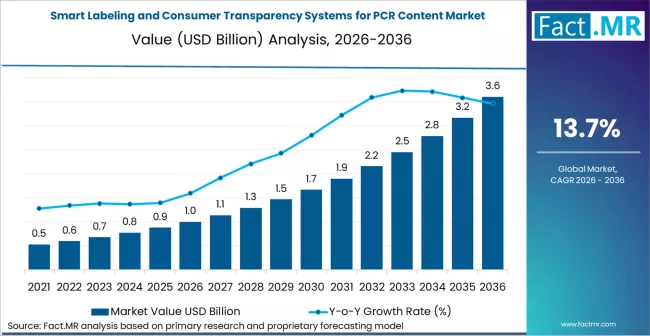
Smart Labeling And Consumer Transparency Systems For Pcr Content Market Market Value Analysis | Source: Fact.MR
This market represents a significant opportunity for companies aiming to meet growing consumer demand for sustainability and traceability. Increasing regulatory requirements and heightened awareness of environmental impacts will drive buyer intent, pushing businesses to adopt solutions that offer greater transparency in product sourcing and composition.
Decision-making in this space will be influenced by the need for operational efficiency and compliance with stringent labeling standards. As consumers and regulators demand clearer, more reliable product information, businesses that fail to adopt smart labeling technologies risk losing market share. The economic relevance of this market is underscored by its potential to enhance brand reputation, improve customer loyalty, and streamline operations, positioning companies for long-term success in an increasingly conscious global marketplace.
Smart Labeling and Consumer Transparency Systems for PCR Content Market
| Metric | Value |
|---|---|
| Estimated Value in (2026E) | USD 1 billion |
| Forecast Value in (2036F) | USD 3.8 billion |
| Forecast CAGR (2026 to 2036) | 13.7% |
Source: Fact.MR analysis. Updated Jan 22, 2026
Category
| Category | Segments |
|---|---|
| End-use | Consumer packaging & electronics; Brand transparency programs; Export-oriented products; FMCG & emerging brands; Regional brands |
| Label / Interface Type | QR / digital product passports; Smart labels & portals; QR + blockchain labels; Mobile-first labels; Others |
| Data Displayed | PCR %, origin, carbon data; Certification & claims; Traceability metadata; PCR proxy data; Others |
| Technology | Dynamic QR, cloud dashboards; API-based transparency layers; High-volume QR systems; Mobile apps & QR; Others |
| Region | North America; Europe; Asia Pacific; Latin America; Middle East & Africa |
Source: Fact.MR analysis. Updated Jan 22, 2026
Segmental Analysis
What Is the Impact of Data Displayed on the Smart Labeling and Consumer Transparency Systems for PCR Content Market?
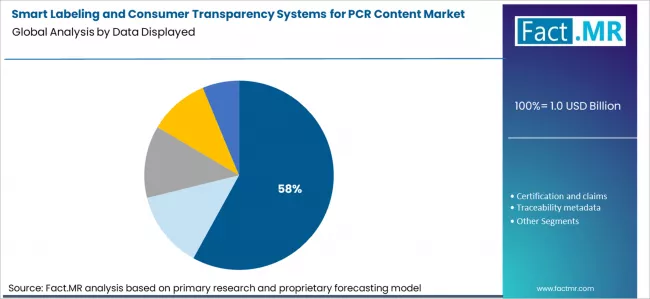
Smart Labeling And Consumer Transparency Systems For Pcr Content Market Analysis By Data Displayed | Source: Fact.MR
In the smart labeling and consumer transparency systems for PCR content market, the type of data displayed is crucial in providing consumers with the information they need to make informed purchasing decisions. PCR %, origin, and carbon data lead the market with a 58% share, as these metrics provide transparency regarding the recycled content of products, their environmental impact, and sourcing practices. As consumers increasingly prioritize sustainability, the demand for labels that display PCR data, origin, and carbon footprint will continue to grow, empowering consumers to choose products that align with their environmental values.
How Does Technology Influence the Smart Labeling and Consumer Transparency Systems for PCR Content Market?
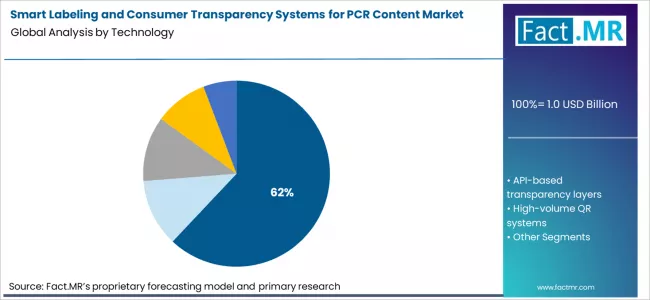
Smart Labeling And Consumer Transparency Systems For Pcr Content Market Analysis By Technology | Source: Fact.MR
Technology is a key enabler in enhancing the functionality and accessibility of smart labeling systems, with dynamic QR codes and cloud dashboards leading the market with a 62% share. This technology allows for real-time access to detailed product information, including PCR content, carbon data, and certification claims, through simple scanning. Cloud dashboards provide a centralized platform for managing and displaying this information, enhancing transparency across the supply chain. As the demand for transparency and sustainability continues to rise, the adoption of dynamic QR codes and cloud-based systems will be essential in driving the growth of the market, providing consumers and manufacturers with valuable insights into the products they use and produce.
What are the Drivers, Restraints, and Key Trends in the Smart Labeling and Consumer Transparency Systems for PCR Content Market?
- Drivers: Adoption of smart labeling and consumer transparency systems for post consumer recycled (PCR) content is shaped by brand requirements to communicate material attributes and certification to end users. Manufacturers and marketers specify QR codes, RFID tags, and digital platforms that link to verified PCR content data. Retailers and compliance teams use transparency systems to support traceability and meet regulatory reporting requirements for recycled content claims.
- Restraints: Implementation costs and data management complexity constrain uptake among smaller brands and converters that lack digital infrastructure. Integration challenges occur where existing packaging lines and enterprise systems do not support new label technologies. Variable standards for recycled content disclosure and digital traceability slow broad alignment.
- Trend 1: Deployment of interoperable labeling standards that enable cross platform access to PCR content verification.
- Trend 2: Use of consumer facing mobile interfaces that connect packaging labels to real time PCR material histories and certifications.
Analysis of the Smart Labeling and Consumer Transparency Systems for PCR Content Market by Key Country
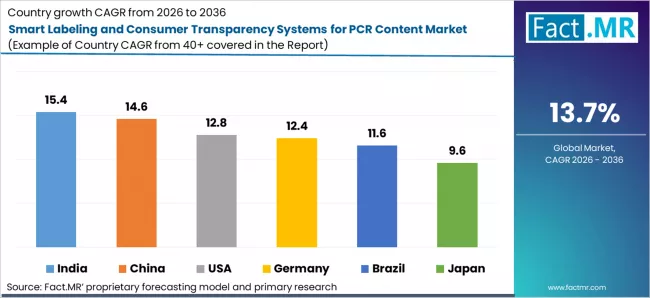
Smart Labeling And Consumer Transparency Systems For Pcr Content Market Cagr Analysis By Country | Source: Fact.MR
| Country | CAGR (2026-2036) |
|---|---|
| Germany | 12.4% |
| USA | 12.8% |
| China | 14.6% |
| India | 15.4% |
| Brazil | 11.6% |
| Japan | 9.6% |
Source: Fact.MR analysis. Updated Jan 22, 2026
The report covers an in-depth analysis of 40+ countries; top-performing countries are highlighted below.
What is the Outlook on the Smart Labeling and Consumer Transparency Systems for PCR Content Market in Germany?
Germany market in smart labeling and consumer transparency systems for PCR content is projected to grow at a CAGR of 12.4% from 2026 to 2036. Demand for smart labeling systems is increasing as Germany’s industries, particularly in packaging, manufacturing, and recycling, focus on providing transparent, sustainable product information to consumers. These systems enable better traceability of PCR content, ensuring that companies meet consumer expectations for eco-friendly products. With Germany’s strong commitment to sustainability and environmental responsibility, the market for these systems is expected to grow steadily, driven by both regulatory support and increasing consumer demand for transparency.
What is the Demand for Smart Labeling and Consumer Transparency Systems for PCR Content in the USA?
USA sales of smart labeling and consumer transparency systems for PCR content are expected to grow at a CAGR of 12.8% from 2026 to 2036. Demand for these systems is rising as industries in the USA, particularly packaging, food, and consumer goods, focus on providing clear, reliable information about the recycled content in their products. Smart labeling technology is crucial for meeting sustainability goals and ensuring regulatory compliance. With increasing consumer awareness of environmental issues and the demand for eco-conscious products, the market for smart labeling and transparency systems in the USA is expected to grow steadily.
What is the Sales Outlook on Smart Labeling and Consumer Transparency Systems for PCR Content in China?
China demand for smart labeling and consumer transparency systems for PCR content is projected to grow at a CAGR of 14.6% from 2026 to 2036. China’s industries are increasingly adopting smart labeling technologies to provide transparent and accurate information about the recycled content of products, which is crucial for meeting both local and international environmental regulations. The market for smart labeling is growing rapidly as the country moves toward more sustainable manufacturing practices and addresses growing consumer demand for sustainability. With China’s increasing focus on environmental responsibility and green technologies, the market for these systems is set for rapid growth.
What is the Demand for Smart Labeling and Consumer Transparency Systems for PCR Content in India?
India market in smart labeling and consumer transparency systems for PCR content is projected to grow at a CAGR of 15.4% from 2026 to 2036. As India’s packaging and consumer goods sectors expand, there is growing demand for transparency in product labeling, particularly with regard to the inclusion of PCR content. Smart labeling systems help businesses comply with sustainability regulations and provide consumers with accurate information about the recycled content in products. With India’s strong push toward sustainability and increased regulatory pressures, the market for these systems is expected to experience robust growth over the next decade.
What is the Sales Outlook on Smart Labeling and Consumer Transparency Systems for PCR Content in Brazil?
Brazil demand for smart labeling and consumer transparency systems for PCR content is set to grow at a CAGR of 11.6% from 2026 to 2036. As Brazil focuses on environmental sustainability and circular economy principles, the need for smart labeling systems that provide clear, transparent information about PCR content is increasing. These systems help businesses meet both local regulations and the rising consumer demand for eco-friendly products. With Brazil’s growing commitment to reducing environmental impact and improving recycling systems, the market for smart labeling and consumer transparency systems is expected to continue expanding.
What is the Market Expansion Outlook for Smart Labeling and Consumer Transparency Systems for PCR Content in Japan?
Japan market in smart labeling and consumer transparency systems for PCR content is expected to grow at a CAGR of 9.6% from 2026 to 2036. Japan’s demand for smart labeling systems is increasing as companies in the country prioritize sustainability and compliance with environmental regulations. These systems are essential for ensuring that consumers can easily access information about the recycled content of products, which is important for both regulatory compliance and consumer trust. As Japan continues to invest in sustainable packaging and product transparency, the market for smart labeling systems is expected to grow steadily.
How is Competition Structured in the Smart Labeling and Consumer Transparency Systems for PCR Content Market?
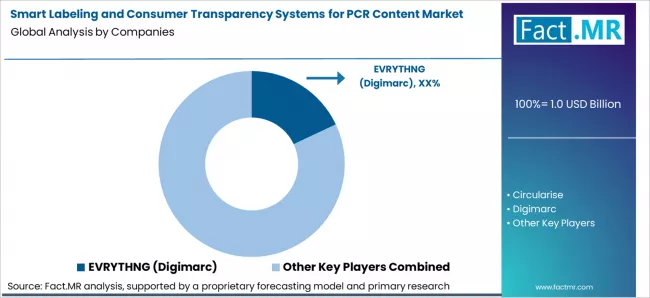
Smart Labeling And Consumer Transparency Systems For Pcr Content Market Analysis By Company | Source: Fact.MR
Competition in the smart labeling and consumer transparency systems for PCR content market is influenced by the ability to link product labels to verified material histories and provide end user visibility into post consumer recycled content claims. EVRYTHNG (Digimarc) and Digimarc leverage digital identity and persistent identifiers that connect physical packaging to cloud based material data, supporting transparent consumer access via scan to reveal interfaces. Circularise and Kezzler emphasise traceability architectures that record PCR content milestones, enabling brands and consumers to verify claims through distributed or permissioned networks.
AntChain and Alibaba Cloud compete by integrating blockchain and scalable cloud analytics to ensure data integrity and support large brand portfolios. Recykal and Tagbox position offerings that combine label functionality with supply chain documentation and user engagement features tailored to consumer goods sectors. Competitive differentiation is defined by ease of integration with existing packaging lines, depth of material and sustainability metadata, and support for multi stakeholder verification without compromising data privacy. Buyers assess suppliers based on system interoperability, consumer interface quality, and the robustness of transparency frameworks that withstand audit and regulatory expectations.
Key Players in the Smart Labeling and Consumer Transparency Systems for PCR Content Market
- EVRYTHNG (Digimarc)
- Circularise
- Digimarc
- Kezzler
- AntChain
- Alibaba Cloud
- Recykal
- Tagbox
Bibliographies
- International Organization for Standardization. (2024). ISO 22095: Chain of custody - General terminology and models. ISO.
- European Commission. (2024). Digital product passport under the Ecodesign for Sustainable Products Regulation.
- European Commission, Joint Research Centre. (2023). Consumer information, digital labeling, and environmental claims for plastics and packaging. JRC.
- U.S. Federal Trade Commission. (2023). Guides for the use of environmental marketing claims (Green Guides). FTC.
- National Institute of Standards and Technology. (2024). Data integrity and trust frameworks for digital product information systems. NIST.
Segmentation
Scope of the Report
| Items | Values |
|---|---|
| Quantitative Units (2026) | USD Billion |
| End-use | Consumer packaging & electronics, Brand transparency programs, Export-oriented products, FMCG & emerging brands, Regional brands, High-trust consumer goods |
| Label / Interface Type | QR / digital product passports, Smart labels & portals, QR + blockchain labels, Mobile-first labels, Others |
| Data Displayed | PCR %, origin, carbon data, Certification & claims, Traceability metadata, PCR proxy data, Others |
| Technology | Dynamic QR, cloud dashboards, API-based transparency layers, High-volume QR systems, Mobile apps & QR, Others |
| Regions Covered | North America, Europe, Asia Pacific, Latin America, Middle East & Africa |
| Countries Covered | United States, Canada, Mexico, Brazil, Germany, United Kingdom, France, Italy, Spain, China, Japan, South Korea, India, Australia & New Zealand |
| Key Companies Profiled | EVRYTHNG (Digimarc), Circularise, Digimarc, Kezzler, AntChain, Alibaba Cloud, Recykal, Tagbox |
| Additional Attributes | Dollar revenue by end-use, label/interface type, data displayed, and technology; regional demand trends, competitive landscape, technological advancements in smart labeling systems, and innovations in consumer transparency and sustainability initiatives |
Source: Fact.MR analysis. Updated Jan 22, 2026
Smart Labeling and Consumer Transparency Systems for PCR Content Market Key Segments
-
End-use :
- Consumer packaging & electronics
- Brand transparency programs
- Export-oriented products
- FMCG & emerging brands
- Regional brands
- High-trust consumer goods
-
Label / Interface Type :
- QR / digital product passports
- Smart labels & portals
- QR + blockchain labels
- Mobile-first labels
- Others
-
Data Displayed :
- PCR %, origin, carbon data
- Certification & claims
- Traceability metadata
- PCR proxy data
- Others
-
Technology :
- Dynamic QR, cloud dashboards
- API-based transparency layers
- High-volume QR systems
- Mobile apps & QR
- Others
-
Region :
- North America
- U.S.
- Canada
- Mexico
- Europe
- Germany
- UK
- France
- Italy
- Spain
- Nordic Countries
- BENELUX
- Rest of Europe
- Asia Pacific
- China
- Japan
- South Korea
- India
- Australia
- Rest of Asia Pacific
- Latin America
- Brazil
- Argentina
- Rest of Latin America
- Middle East and Africa
- Kingdom of Saudi Arabia
- United Arab Emirates
- South Africa
- Rest of Middle East and Africa
- Other Regions
- Oceania
- Central Asia
- Other Markets
- North America
Frequently Asked Questions
How big is the smart labeling and consumer transparency systems for pcr content market in 2026?
What will be the size of smart labeling and consumer transparency systems for pcr content market in 2036?
How much will be the smart labeling and consumer transparency systems for pcr content market growth between 2026 and 2036?
What are the key product types in the smart labeling and consumer transparency systems for pcr content market?
Which label or interface type segment to contribute significant share in the smart labeling and consumer transparency systems for pcr content market in 2026?
Who worked on this report


Preview the report firsthand - request a free sample
Free SampleGet the brochure for pricing and purchase details
Download PDF