Solid Cleansing Oils Market (2026 - 2036)
Solid Cleansing Oils Market Size and Share Forecast Outlook 2026 to 2036
Core Findings
Solid Cleansing Oils Market Forecast and Outlook 2026 to 2036
The global solid cleansing oils market is projected to expand steadily from an estimated USD 1.8 billion in 2026 to approximately USD 3.4 billion by 2036, registering a compound annual growth rate of about 6.4% during the forecast period.
Key Takeaways from the Solid Cleansing Oils Market
- Solid Cleansing Oils Market Value (2026): USD 1.8 billion
- Solid Cleansing Oils Market Forecast Value (2036): USD 3.4 billion
- Solid Cleansing Oils Market Forecast CAGR 2026 to 2036: 6.4%
- Leading Product Type: Traditional Solid Cleansing Oils (54.6%)
- Key Companies: Shu Uemura, MISSHA, ZA, Biore, Avene, Neutrogena
- Key Growth Regions: Asia Pacific, Europe, North America
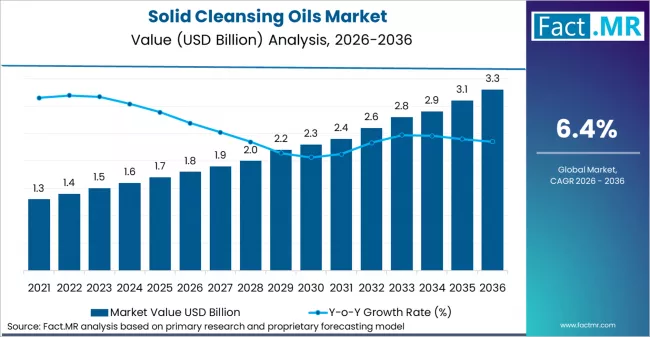
Market growth is supported by rising demand for gentle yet effective cleansing solutions, increasing preference for waterless and travel-friendly skincare formats, and growing adoption of multi-functional cleansing products.
Solid cleansing oils combine the makeup-removal efficacy of traditional oils with the portability and sustainability benefits of solid formats. These products are increasingly favored for their ability to dissolve makeup, sunscreen, and impurities without disrupting the skin barrier. Growing awareness of skin health, clean beauty formulations, and reduced packaging waste is strengthening adoption across premium and mass skincare segments globally.
Solid Cleansing Oils Market
| Metric | Value |
|---|---|
| Estimated Value in (2026E) | USD 1.8 billion |
| Forecast Value in (2036F) | USD 3.4 billion |
| Forecast CAGR 2026 to 2036 | 6.4% |
Category
| Category | Segments |
|---|---|
| Type | Traditional Cleansing Oil, Disposable Cleansing Oil, Others |
| Application | Face Cleansing Oil, Lip & Eye Cleansing Oil, Other |
| Region | North America; Europe; Asia Pacific; Latin America; Middle East & Africa |
Segmental Analysis
By Product Type, Which Segment Holds the Dominant Share in the Solid Cleansing Oils Market?
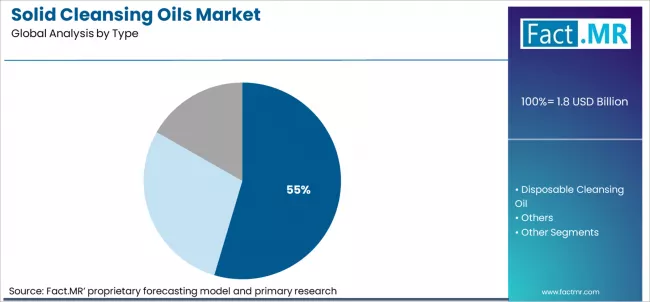
In terms of product type, traditional solid cleansing oils dominate the solid cleansing oils market, accounting for a 54.6% share in 2026. Consumers continue to prefer traditional formats due to their superior makeup-dissolving performance, rich oil blends, and suitability for daily facial cleansing. These products are widely integrated into multi-step skincare routines, particularly in premium and dermatologist-recommended regimens. Strong brand trust and consistent performance further reinforce dominance across developed and emerging markets.
- High efficacy in removing makeup, sunscreen, and impurities without disrupting the skin barrier
- Strong adoption within premium skincare routines and double-cleansing practices
By Application, Which Segment Registers the Highest Share in the Solid Cleansing Oils Market?
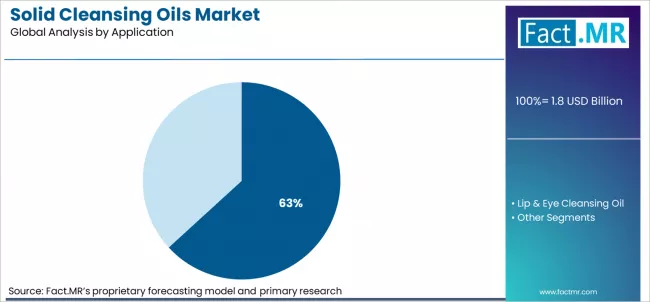
By application, face cleansing oil applications represent the largest share, accounting for 63.2% of total demand in 2026. Growing focus on facial skincare, daily makeup removal, and gentle cleansing routines supports strong adoption. Consumers increasingly prioritize products that cleanse effectively while maintaining skin hydration and barrier integrity. Continuous innovation in formulations for sensitive, acne-prone, and dry skin types further strengthens demand.
- Rising emphasis on facial skincare and daily cleansing routines
- Increasing preference for gentle, non-stripping cleansing formulations
Drivers, Restraints, and Key Trends in Solid Cleansing Oils Market
- Drivers: The solid cleansing oils market is primarily driven by increasing consumer awareness of gentle and skin-barrier-friendly cleansing solutions. Consumers are shifting away from harsh surfactant-based cleansers toward oil-based formulations that effectively remove makeup and impurities without causing dryness or irritation. The growing popularity of waterless skincare formats, driven by sustainability concerns and travel convenience, further supports adoption. Additionally, the expansion of premium skincare routines and multi-step cleansing practices particularly influenced by Asian beauty trends is accelerating demand across both developed and emerging markets.
- Restraints: Despite growing interest, higher pricing compared to conventional liquid cleansers remains a key barrier, particularly among price-sensitive consumers. Limited awareness of solid cleansing oil formats in developing regions and misconceptions regarding suitability for oily or acne-prone skin can also restrict adoption. Slower retail penetration outside specialty beauty channels may limit broader market reach.
- Key Trends: Key trends include rising demand for clean-label, plant-based, and dermatologically tested formulations. Brands are increasingly adopting refillable packaging, minimalist designs, and multifunctional cleansing products that combine makeup removal, cleansing, and skincare benefits. Innovation in texture, melting performance, and fragrance-free variants is reshaping product differentiation.
Analysis of the Solid Cleansing Oils Market by Key Country
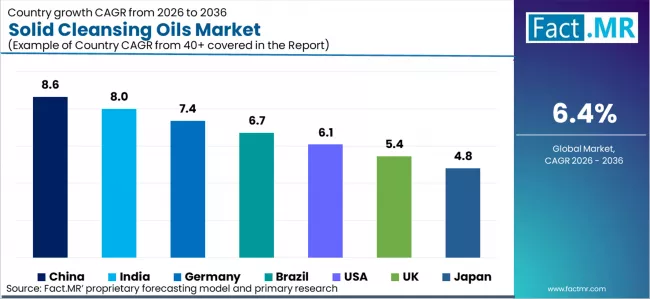
| Country | CAGR 2026 to 2036 |
|---|---|
| China | 8.6% |
| India | 8.0% |
| Germany | 7.4% |
| Brazil | 6.7% |
| USA | 6.1% |
| UK | 5.4% |
| Japan | 4.8% |
How Are Premium Skincare Routines, Digital Beauty Influence, and Urban Lifestyle Shifts Accelerating Market Growth in China?
China is projected to grow at a CAGR of 8.6% during 2026 to 2036, driven by expanding urban populations and rapid adoption of advanced skincare routines. Solid cleansing oils are increasingly incorporated into multi-step cleansing regimens inspired by K-beauty and J-beauty trends. Strong growth in e-commerce platforms and influencer-led beauty marketing is improving consumer awareness and accessibility. Rising disposable incomes and premium skincare spending in metropolitan areas continue to support robust market expansion.
- Expansion of multi-step skincare routines among urban consumers
- Strong influence of e-commerce and social media beauty platforms
Why Are Rising Skincare Awareness, Urbanization, and Digital Retail Channels Supporting Market Expansion in India?
India is expected to grow at a CAGR of 8.0%, supported by increasing skincare awareness, urban population growth, and rising disposable incomes. Consumers are increasingly seeking gentle yet effective cleansing solutions suitable for daily use and sensitive skin. Expansion of online beauty retail, growing access to international skincare brands, and increasing influence of dermatologists and beauty influencers are accelerating adoption across urban and semi-urban regions.
- Growing exposure to global skincare trends
- Rapid expansion of online beauty retail platforms
How Do Strict Quality Standards, Clean Beauty Preferences, and Consumer Trust Drive Demand in Germany?
Germany is forecast to grow at a CAGR of 7.4%, driven by strong emphasis on product safety, ingredient transparency, and clean beauty standards. Consumers prefer dermatologically tested formulations that align with sustainability values. High penetration of pharmacies and specialty beauty retailers supports product discovery and trust. Demand is further strengthened by preference for fragrance-free, skin-barrier-friendly cleansing products.
- High consumer trust in clinically tested skincare
- Strong demand for clean-label and sustainable formulations
What Role Do Skincare Culture, Climate Conditions, and Premium Beauty Adoption Play in Market Growth Across Brazil?
Brazil is projected to expand at a CAGR of 6.7%, supported by a strong skincare culture and frequent use of cleansing products. Urban consumers increasingly adopt premium skincare routines and gentle cleansing formulations suited to warm climates. Expanding retail distribution and growing awareness of skin health are supporting demand, particularly among younger and beauty-conscious consumers.
- Strong skincare and beauty consumption culture
- Rising interest in premium and gentle cleansing solutions
Why Is Demand for Solid Cleansing Oils Growing Consistently in the United States?
The USA market is expected to grow at a CAGR of 6.1%, driven by premium skincare trends, sustainability awareness, and demand for travel-friendly beauty products. Consumers value solid cleansing oils for their portability, reduced packaging waste, and skin-friendly formulations. Growth of direct-to-consumer beauty brands and subscription models is further strengthening market penetration.
- Preference for sustainable and waterless skincare formats
- Expansion of direct-to-consumer beauty brands
How Is Sustainability Awareness and Plastic-Free Beauty Adoption Shaping Demand in the United Kingdom?
The UK is forecast to grow at a CAGR of 5.4%, supported by strong sustainability awareness and preference for plastic-free skincare products. Consumers increasingly favor clean beauty formulations and refillable packaging. Growth of online beauty retail and ethical beauty brands is strengthening demand for solid cleansing oils.
- Rising preference for plastic-free and eco-friendly skincare
- Growth of online and ethical beauty brands
Why Is Market Growth Moderate but Stable in Japan?
Japan is projected to grow at a CAGR of 4.8%, reflecting a mature skincare market focused on product quality, refinement, and innovation. Consumers prioritize gentle cleansing, minimal formulations, and consistent performance. Demand is largely replacement-driven, with growth supported by product upgrades and formulation improvements rather than volume expansion.
- Strong focus on skincare quality and refinement
- Innovation-driven replacement demand
Competitive Landscape of the Solid Cleansing Oils Market
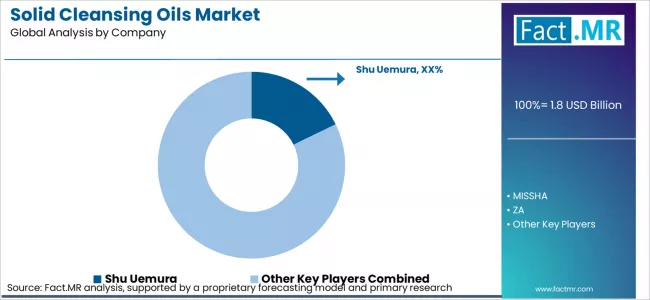
The solid cleansing oils market is characterized by competition among premium skincare brands, dermatological product manufacturers, and mass-market beauty companies. Competitive differentiation is driven primarily by formulation quality, ingredient sourcing, cleansing efficacy, and alignment with clean beauty standards rather than pricing alone. Leading players emphasize plant-based oils, fragrance-free variants, and skin barrier-friendly formulations to build consumer trust and brand loyalty.
Established brands leverage strong global distribution networks, influencer partnerships, and premium retail presence to maintain market share. In contrast, niche and emerging players focus on sustainability, refillable packaging, and artisanal formulations to attract environmentally conscious consumers. Online retail and direct-to-consumer channels play a critical role in product education, trial, and repeat purchases. Continuous innovation in texture, melting behavior, multifunctionality, and packaging sustainability remains essential for long-term competitiveness as consumer skincare preferences continue to evolve.
Key Players in the Solid Cleansing Oils Market
- Shu Uemura
- MISSHA
- ZA
- Biore
- Avene
- Neutrogena
Scope of Report
| Items | Values |
|---|---|
| Quantitative Units (2026) | USD 1.8 Billion |
| Type | Traditional Cleansing Oil, Disposable Cleansing Oil, Others |
| Application | Face Cleansing Oil, Lip & Eye Cleansing Oil, Others |
| Regions Covered | North America, Europe, Asia Pacific, Latin America, Middle East & Africa |
| Countries Covered | USA, Canada, Germany, Italy, UK, France, Japan, Australia, and other countries |
| Key Companies Profiled | Shu Uemura, MISSHA, ZA, Biore, Avene, Neutrogena |
| Additional Attributes | Dollar revenue is segmented by product type, application, distribution channel, and region. Regional demand trends are driven by rising skincare and hygiene awareness, urban lifestyle adoption, growing preference for gentle and waterless cleansing formats, and expansion of modern retail and e-commerce channels, with competition led by multinational beauty brands and established consumer goods companies focused on formulation innovation, strong branding, and sustainability-led product portfolios. |
Solid Cleansing Oils Market by Segments
-
Type
- Traditional Cleansing Oil
- Disposable Cleansing Oil
- Others
-
Application
- Face Cleansing Oil
- Lip & Eye Cleansing Oil
-
Region:
- Asia Pacific
- Japan
- South Korea
- China
- Australia
- New Zealand
- Rest of Asia Pacific
- North America
- United States
- Canada
- Mexico
- Europe
- France
- Italy
- Spain
- Norway
- UK
- Rest of Europe
- Latin America
- Chile
- Peru
- Argentina
- Asia Pacific
Bibliography
- International Organization for Standardization. 2023. Cosmetics and personal care products: Safety assessment, formulation standards, and quality requirements for facial cleansing oils and waterless skincare products. ISO Technical Report. International Organization for Standardization, Geneva.
- European Commission. 2022. Cosmetic products regulation: Ingredient safety, labeling, and market compliance requirements for skincare and cleansing formulations. European Commission, Brussels.
- Personal Care Products Council. 2023. Trends in facial cleansing products, oil-based formulations, and sustainable skincare development. PCPC, Washington, DC.
- Journal of Cosmetic Science Editorial Board. 2024. Advances in solid and oil-based facial cleansers: Skin barrier compatibility, cleansing efficacy, and consumer performance evaluation. Journal of Cosmetic Science 75(3): 189-206.
- World Health Organization. 2023. Personal hygiene practices, skincare behavior, and health implications of daily cleansing products. WHO, Geneva.
Table of Content
- Executive Summary
- Global Market Outlook
- Demand to side Trends
- Supply to side Trends
- Technology Roadmap Analysis
- Analysis and Recommendations
- Market Overview
- Market Coverage / Taxonomy
- Market Definition / Scope / Limitations
- Research Methodology
- Chapter Orientation
- Analytical Lens and Working Hypotheses
- Market Structure, Signals, and Trend Drivers
- Benchmarking and Cross-market Comparability
- Market Sizing, Forecasting, and Opportunity Mapping
- Research Design and Evidence Framework
- Desk Research Programme (Secondary Evidence)
- Company Annual and Sustainability Reports
- Peer-reviewed Journals and Academic Literature
- Corporate Websites, Product Literature, and Technical Notes
- Earnings Decks and Investor Briefings
- Statutory Filings and Regulatory Disclosures
- Technical White Papers and Standards Notes
- Primary Modes
- Qualitative Interviews and Expert Elicitation
- Quantitative Surveys and Structured Data Capture
- Blended A7oach
- Why Primary Evidence is Used
- Field Techniques
- Interviews
- Surveys
- Focus Groups
- Observational and In-context Research
- Social and Community Interactions
- Stakeholder Universe Engaged
- C-suite Leaders
- Board Members
- Presidents and Vice Presidents
- R&D and Innovation Heads
- Technical Specialists
- Domain Subject-matter Experts
- Scientists
- Physicians and Other Healthcare Professionals
- Governance, Ethics, and Data Stewardship
- Research Ethics
- Data Integrity and Handling
- Tooling, Models, and Reference Databases
- Desk Research Programme (Secondary Evidence)
- Data Engineering and Model Build
- Data Acquisition and Ingestion
- Cleaning, Normalisation, and Verification
- Synthesis, Triangulation, and Analysis
- Quality Assurance and Audit Trail
- Market Background
- Market Dynamics
- Drivers
- Restraints
- Opportunity
- Trends
- Scenario Forecast
- Demand in Optimistic Scenario
- Demand in Likely Scenario
- Demand in Conservative Scenario
- Opportunity Map Analysis
- Product Life Cycle Analysis
- Supply Chain Analysis
- Investment Feasibility Matrix
- Value Chain Analysis
- PESTLE and Porter’s Analysis
- Regulatory Landscape
- Regional Parent Market Outlook
- Production and Consumption Statistics
- Import and Export Statistics
- Market Dynamics
- Global Market Analysis 2021 to 2025 and Forecast, 2026 to 2036
- Historical Market Size Value (USD Million) Analysis, 2021 to 2025
- Current and Future Market Size Value (USD Million) Projections, 2026 to 2036
- Y to o to Y Growth Trend Analysis
- Absolute $ Opportunity Analysis
- Global Market Pricing Analysis 2021 to 2025 and Forecast 2026 to 2036
- Global Market Analysis 2021 to 2025 and Forecast 2026 to 2036, By Type
- Introduction / Key Findings
- Historical Market Size Value (USD Million) Analysis By Type, 2021 to 2025
- Current and Future Market Size Value (USD Million) Analysis and Forecast By Type, 2026 to 2036
- Traditional Cleansing Oil
- Disposable Cleansing Oil
- Others
- Traditional Cleansing Oil
- Y to o to Y Growth Trend Analysis By Type, 2021 to 2025
- Absolute $ Opportunity Analysis By Type, 2026 to 2036
- Global Market Analysis 2021 to 2025 and Forecast 2026 to 2036, By Application
- Introduction / Key Findings
- Historical Market Size Value (USD Million) Analysis By Application, 2021 to 2025
- Current and Future Market Size Value (USD Million) Analysis and Forecast By Application, 2026 to 2036
- Face Cleansing Oil
- Lip & Eye Cleansing Oil
- Face Cleansing Oil
- Y to o to Y Growth Trend Analysis By Application, 2021 to 2025
- Absolute $ Opportunity Analysis By Application, 2026 to 2036
- Global Market Analysis 2021 to 2025 and Forecast 2026 to 2036, By Region
- Introduction
- Historical Market Size Value (USD Million) Analysis By Region, 2021 to 2025
- Current Market Size Value (USD Million) Analysis and Forecast By Region, 2026 to 2036
- North America
- Latin America
- Western Europe
- Eastern Europe
- East Asia
- South Asia and Pacific
- Middle East & Africa
- Market Attractiveness Analysis By Region
- North America Market Analysis 2021 to 2025 and Forecast 2026 to 2036, By Country
- Historical Market Size Value (USD Million) Trend Analysis By Market Taxonomy, 2021 to 2025
- Market Size Value (USD Million) Forecast By Market Taxonomy, 2026 to 2036
- By Country
- USA
- Canada
- Mexico
- By Type
- By Application
- By Country
- Market Attractiveness Analysis
- By Country
- By Type
- By Application
- Key Takeaways
- Latin America Market Analysis 2021 to 2025 and Forecast 2026 to 2036, By Country
- Historical Market Size Value (USD Million) Trend Analysis By Market Taxonomy, 2021 to 2025
- Market Size Value (USD Million) Forecast By Market Taxonomy, 2026 to 2036
- By Country
- Brazil
- Chile
- Rest of Latin America
- By Type
- By Application
- By Country
- Market Attractiveness Analysis
- By Country
- By Type
- By Application
- Key Takeaways
- Western Europe Market Analysis 2021 to 2025 and Forecast 2026 to 2036, By Country
- Historical Market Size Value (USD Million) Trend Analysis By Market Taxonomy, 2021 to 2025
- Market Size Value (USD Million) Forecast By Market Taxonomy, 2026 to 2036
- By Country
- Germany
- UK
- Italy
- Spain
- France
- Nordic
- BENELUX
- Rest of Western Europe
- By Type
- By Application
- By Country
- Market Attractiveness Analysis
- By Country
- By Type
- By Application
- Key Takeaways
- Eastern Europe Market Analysis 2021 to 2025 and Forecast 2026 to 2036, By Country
- Historical Market Size Value (USD Million) Trend Analysis By Market Taxonomy, 2021 to 2025
- Market Size Value (USD Million) Forecast By Market Taxonomy, 2026 to 2036
- By Country
- Russia
- Poland
- Hungary
- Balkan & Baltic
- Rest of Eastern Europe
- By Type
- By Application
- By Country
- Market Attractiveness Analysis
- By Country
- By Type
- By Application
- Key Takeaways
- East Asia Market Analysis 2021 to 2025 and Forecast 2026 to 2036, By Country
- Historical Market Size Value (USD Million) Trend Analysis By Market Taxonomy, 2021 to 2025
- Market Size Value (USD Million) Forecast By Market Taxonomy, 2026 to 2036
- By Country
- China
- Japan
- South Korea
- By Type
- By Application
- By Country
- Market Attractiveness Analysis
- By Country
- By Type
- By Application
- Key Takeaways
- South Asia and Pacific Market Analysis 2021 to 2025 and Forecast 2026 to 2036, By Country
- Historical Market Size Value (USD Million) Trend Analysis By Market Taxonomy, 2021 to 2025
- Market Size Value (USD Million) Forecast By Market Taxonomy, 2026 to 2036
- By Country
- India
- ASEAN
- Australia & New Zealand
- Rest of South Asia and Pacific
- By Type
- By Application
- By Country
- Market Attractiveness Analysis
- By Country
- By Type
- By Application
- Key Takeaways
- Middle East & Africa Market Analysis 2021 to 2025 and Forecast 2026 to 2036, By Country
- Historical Market Size Value (USD Million) Trend Analysis By Market Taxonomy, 2021 to 2025
- Market Size Value (USD Million) Forecast By Market Taxonomy, 2026 to 2036
- By Country
- Kingdom of Saudi Arabia
- Other GCC Countries
- Turkiye
- South Africa
- Other African Union
- Rest of Middle East & Africa
- By Type
- By Application
- By Country
- Market Attractiveness Analysis
- By Country
- By Type
- By Application
- Key Takeaways
- Key Countries Market Analysis
- USA
- Pricing Analysis
- Market Share Analysis, 2025
- By Type
- By Application
- Canada
- Pricing Analysis
- Market Share Analysis, 2025
- By Type
- By Application
- Mexico
- Pricing Analysis
- Market Share Analysis, 2025
- By Type
- By Application
- Brazil
- Pricing Analysis
- Market Share Analysis, 2025
- By Type
- By Application
- Chile
- Pricing Analysis
- Market Share Analysis, 2025
- By Type
- By Application
- Germany
- Pricing Analysis
- Market Share Analysis, 2025
- By Type
- By Application
- UK
- Pricing Analysis
- Market Share Analysis, 2025
- By Type
- By Application
- Italy
- Pricing Analysis
- Market Share Analysis, 2025
- By Type
- By Application
- Spain
- Pricing Analysis
- Market Share Analysis, 2025
- By Type
- By Application
- France
- Pricing Analysis
- Market Share Analysis, 2025
- By Type
- By Application
- India
- Pricing Analysis
- Market Share Analysis, 2025
- By Type
- By Application
- ASEAN
- Pricing Analysis
- Market Share Analysis, 2025
- By Type
- By Application
- Australia & New Zealand
- Pricing Analysis
- Market Share Analysis, 2025
- By Type
- By Application
- China
- Pricing Analysis
- Market Share Analysis, 2025
- By Type
- By Application
- Japan
- Pricing Analysis
- Market Share Analysis, 2025
- By Type
- By Application
- South Korea
- Pricing Analysis
- Market Share Analysis, 2025
- By Type
- By Application
- Russia
- Pricing Analysis
- Market Share Analysis, 2025
- By Type
- By Application
- Poland
- Pricing Analysis
- Market Share Analysis, 2025
- By Type
- By Application
- Hungary
- Pricing Analysis
- Market Share Analysis, 2025
- By Type
- By Application
- Kingdom of Saudi Arabia
- Pricing Analysis
- Market Share Analysis, 2025
- By Type
- By Application
- Turkiye
- Pricing Analysis
- Market Share Analysis, 2025
- By Type
- By Application
- South Africa
- Pricing Analysis
- Market Share Analysis, 2025
- By Type
- By Application
- USA
- Market Structure Analysis
- Competition Dashboard
- Competition Benchmarking
- Market Share Analysis of Top Players
- By Regional
- By Type
- By Application
- Competition Analysis
- Competition Deep Dive
- Shu Uemura
- Overview
- Product Portfolio
- Profitability by Market Segments (Product/Age /Sales Channel/Region)
- Sales Footprint
- Strategy Overview
- Marketing Strategy
- Product Strategy
- Channel Strategy
- MISSHA
- ZA
- Biore
- Avene
- Neutrogena
- Shu Uemura
- Competition Deep Dive
- Assumptions & Acronyms Used
List Of Table
- Table 1: Global Market Value (USD Million) Forecast by Region, 2021 to 2036
- Table 2: Global Market Value (USD Million) Forecast by Type, 2021 to 2036
- Table 3: Global Market Value (USD Million) Forecast by Application, 2021 to 2036
- Table 4: North America Market Value (USD Million) Forecast by Country, 2021 to 2036
- Table 5: North America Market Value (USD Million) Forecast by Type, 2021 to 2036
- Table 6: North America Market Value (USD Million) Forecast by Application, 2021 to 2036
- Table 7: Latin America Market Value (USD Million) Forecast by Country, 2021 to 2036
- Table 8: Latin America Market Value (USD Million) Forecast by Type, 2021 to 2036
- Table 9: Latin America Market Value (USD Million) Forecast by Application, 2021 to 2036
- Table 10: Western Europe Market Value (USD Million) Forecast by Country, 2021 to 2036
- Table 11: Western Europe Market Value (USD Million) Forecast by Type, 2021 to 2036
- Table 12: Western Europe Market Value (USD Million) Forecast by Application, 2021 to 2036
- Table 13: Eastern Europe Market Value (USD Million) Forecast by Country, 2021 to 2036
- Table 14: Eastern Europe Market Value (USD Million) Forecast by Type, 2021 to 2036
- Table 15: Eastern Europe Market Value (USD Million) Forecast by Application, 2021 to 2036
- Table 16: East Asia Market Value (USD Million) Forecast by Country, 2021 to 2036
- Table 17: East Asia Market Value (USD Million) Forecast by Type, 2021 to 2036
- Table 18: East Asia Market Value (USD Million) Forecast by Application, 2021 to 2036
- Table 19: South Asia and Pacific Market Value (USD Million) Forecast by Country, 2021 to 2036
- Table 20: South Asia and Pacific Market Value (USD Million) Forecast by Type, 2021 to 2036
- Table 21: South Asia and Pacific Market Value (USD Million) Forecast by Application, 2021 to 2036
- Table 22: Middle East & Africa Market Value (USD Million) Forecast by Country, 2021 to 2036
- Table 23: Middle East & Africa Market Value (USD Million) Forecast by Type, 2021 to 2036
- Table 24: Middle East & Africa Market Value (USD Million) Forecast by Application, 2021 to 2036
List Of Figures
- Figure 1: Global Market Pricing Analysis
- Figure 2: Global Market Value (USD Million) Forecast 2021 to 2036
- Figure 3: Global Market Value Share and BPS Analysis by Type, 2026 and 2036
- Figure 4: Global Market Y to o to Y Growth Comparison by Type, 2026 to 2036
- Figure 5: Global Market Attractiveness Analysis by Type
- Figure 6: Global Market Value Share and BPS Analysis by Application, 2026 and 2036
- Figure 7: Global Market Y to o to Y Growth Comparison by Application, 2026 to 2036
- Figure 8: Global Market Attractiveness Analysis by Application
- Figure 9: Global Market Value (USD Million) Share and BPS Analysis by Region, 2026 and 2036
- Figure 10: Global Market Y to o to Y Growth Comparison by Region, 2026 to 2036
- Figure 11: Global Market Attractiveness Analysis by Region
- Figure 12: North America Market Incremental Dollar Opportunity, 2026 to 2036
- Figure 13: Latin America Market Incremental Dollar Opportunity, 2026 to 2036
- Figure 14: Western Europe Market Incremental Dollar Opportunity, 2026 to 2036
- Figure 15: Eastern Europe Market Incremental Dollar Opportunity, 2026 to 2036
- Figure 16: East Asia Market Incremental Dollar Opportunity, 2026 to 2036
- Figure 17: South Asia and Pacific Market Incremental Dollar Opportunity, 2026 to 2036
- Figure 18: Middle East & Africa Market Incremental Dollar Opportunity, 2026 to 2036
- Figure 19: North America Market Value Share and BPS Analysis by Country, 2026 and 2036
- Figure 20: North America Market Value Share and BPS Analysis by Type, 2026 and 2036
- Figure 21: North America Market Y to o to Y Growth Comparison by Type, 2026 to 2036
- Figure 22: North America Market Attractiveness Analysis by Type
- Figure 23: North America Market Value Share and BPS Analysis by Application, 2026 and 2036
- Figure 24: North America Market Y to o to Y Growth Comparison by Application, 2026 to 2036
- Figure 25: North America Market Attractiveness Analysis by Application
- Figure 26: Latin America Market Value Share and BPS Analysis by Country, 2026 and 2036
- Figure 27: Latin America Market Value Share and BPS Analysis by Type, 2026 and 2036
- Figure 28: Latin America Market Y to o to Y Growth Comparison by Type, 2026 to 2036
- Figure 29: Latin America Market Attractiveness Analysis by Type
- Figure 30: Latin America Market Value Share and BPS Analysis by Application, 2026 and 2036
- Figure 31: Latin America Market Y to o to Y Growth Comparison by Application, 2026 to 2036
- Figure 32: Latin America Market Attractiveness Analysis by Application
- Figure 33: Western Europe Market Value Share and BPS Analysis by Country, 2026 and 2036
- Figure 34: Western Europe Market Value Share and BPS Analysis by Type, 2026 and 2036
- Figure 35: Western Europe Market Y to o to Y Growth Comparison by Type, 2026 to 2036
- Figure 36: Western Europe Market Attractiveness Analysis by Type
- Figure 37: Western Europe Market Value Share and BPS Analysis by Application, 2026 and 2036
- Figure 38: Western Europe Market Y to o to Y Growth Comparison by Application, 2026 to 2036
- Figure 39: Western Europe Market Attractiveness Analysis by Application
- Figure 40: Eastern Europe Market Value Share and BPS Analysis by Country, 2026 and 2036
- Figure 41: Eastern Europe Market Value Share and BPS Analysis by Type, 2026 and 2036
- Figure 42: Eastern Europe Market Y to o to Y Growth Comparison by Type, 2026 to 2036
- Figure 43: Eastern Europe Market Attractiveness Analysis by Type
- Figure 44: Eastern Europe Market Value Share and BPS Analysis by Application, 2026 and 2036
- Figure 45: Eastern Europe Market Y to o to Y Growth Comparison by Application, 2026 to 2036
- Figure 46: Eastern Europe Market Attractiveness Analysis by Application
- Figure 47: East Asia Market Value Share and BPS Analysis by Country, 2026 and 2036
- Figure 48: East Asia Market Value Share and BPS Analysis by Type, 2026 and 2036
- Figure 49: East Asia Market Y to o to Y Growth Comparison by Type, 2026 to 2036
- Figure 50: East Asia Market Attractiveness Analysis by Type
- Figure 51: East Asia Market Value Share and BPS Analysis by Application, 2026 and 2036
- Figure 52: East Asia Market Y to o to Y Growth Comparison by Application, 2026 to 2036
- Figure 53: East Asia Market Attractiveness Analysis by Application
- Figure 54: South Asia and Pacific Market Value Share and BPS Analysis by Country, 2026 and 2036
- Figure 55: South Asia and Pacific Market Value Share and BPS Analysis by Type, 2026 and 2036
- Figure 56: South Asia and Pacific Market Y to o to Y Growth Comparison by Type, 2026 to 2036
- Figure 57: South Asia and Pacific Market Attractiveness Analysis by Type
- Figure 58: South Asia and Pacific Market Value Share and BPS Analysis by Application, 2026 and 2036
- Figure 59: South Asia and Pacific Market Y to o to Y Growth Comparison by Application, 2026 to 2036
- Figure 60: South Asia and Pacific Market Attractiveness Analysis by Application
- Figure 61: Middle East & Africa Market Value Share and BPS Analysis by Country, 2026 and 2036
- Figure 62: Middle East & Africa Market Value Share and BPS Analysis by Type, 2026 and 2036
- Figure 63: Middle East & Africa Market Y to o to Y Growth Comparison by Type, 2026 to 2036
- Figure 64: Middle East & Africa Market Attractiveness Analysis by Type
- Figure 65: Middle East & Africa Market Value Share and BPS Analysis by Application, 2026 and 2036
- Figure 66: Middle East & Africa Market Y to o to Y Growth Comparison by Application, 2026 to 2036
- Figure 67: Middle East & Africa Market Attractiveness Analysis by Application
- Figure 68: Global Market - Tier Structure Analysis
- Figure 69: Global Market - Company Share Analysis
- FAQs -
How big is the solid cleansing oils market in 2026?
The global solid cleansing oils market is estimated to be valued at USD 1.8 billion in 2026.
What will be the size of solid cleansing oils market in 2036?
The market size for the solid cleansing oils market is projected to reach USD 3.4 billion by 2036.
How much will be the solid cleansing oils market growth between 2026 and 2036?
The solid cleansing oils market is expected to grow at a 6.4% CAGR between 2026 and 2036.
What are the key product types in the solid cleansing oils market?
The key product types in solid cleansing oils market are traditional cleansing oil, disposable cleansing oil and others.
Which application segment to contribute significant share in the solid cleansing oils market in 2026?
In terms of application, face cleansing oil segment to command 63.2% share in the solid cleansing oils market in 2026.