Solid Deodorant Sticks Market (2026 - 2036)
Solid Deodorant Sticks Market Size and Share Forecast Outlook 2026 to 2036
Core Findings
Solid Deodorant Sticks Market Forecast and Outlook 2026 to 2036
The global solid deodorant sticks market is projected to expand from an estimated USD 10.3 billion in 2026 to approximately USD 21 billion by 2036, registering a compound annual growth rate of about 7.4% during the forecast period.
Key Takeaways from the Solid Deodorant Sticks Market
- Solid Deodorant Sticks Market Value (2026): USD 10.3 billion
- Solid Deodorant Sticks Market Forecast Value (2036): USD 21 billion
- Solid Deodorant Sticks Market Forecast CAGR 2026 to 2036: 7.4%
- Leading Product Type: Antiperspirant Sticks (42.6%)
- Key Companies: Unilever plc, Procter & Gamble Co., Colgate-Palmolive Company, Henkel AG & Co. KGaA, Revlon, Inc.
- Key Growth Regions: Asia Pacific, North America, Europe, Middle East & Africa
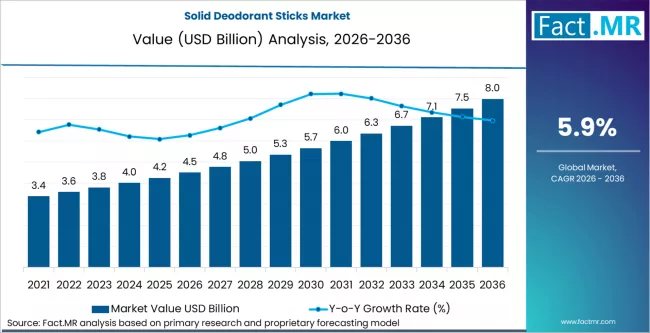
Market growth is driven by rising personal hygiene awareness, increasing urbanization, and expanding consumer demand for convenient and long-lasting deodorant formats across both developed and emerging economies. Solid deodorant sticks remain a preferred format due to ease of application, portability, and controlled dosage. Manufacturers continue to innovate through natural formulations, aluminum-free variants, and refillable packaging formats to address growing sustainability and skin-sensitivity concerns.
Expanding product portfolios targeting gender-specific and unisex consumers further support market penetration. Women and urban working professionals represent a significant share of demand in 2026, while supermarkets, pharmacies, and online retail channels continue to strengthen distribution reach. Rising disposable income and premium personal care adoption support long-term market expansion.
Solid Deodorant Sticks Market
| Metric | Value |
|---|---|
| Estimated Value in (2026E) | USD 10.3 billion |
| Forecast Value in (2036F) | USD 21 billion |
| Forecast CAGR 2026 to 2036 | 7.4% |
Category
| Category | Segments |
|---|---|
| Product Type | Antiperspirant Sticks, Deodorant-Only Sticks, Natural / Aluminum-Free Sticks, Refillable Stick Formats |
| End user | Women, Men, Unisex |
| Distribution Channel | Supermarkets & Hypermarkets, Pharmacies / Drugstores, Online Retail Specialty Stores |
| Region | North America; Europe; Asia Pacific; Latin America; Middle East & Africa |
Segmental Analysis
By Product Type, Which Segment Holds the Dominant Share in the Solid Deodorant Sticks Market?
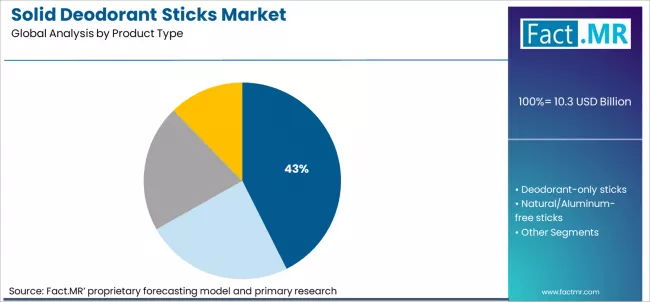
In terms of product type, antiperspirant sticks dominate the solid deodorant sticks market, accounting for a 42.6% share in 2026. Consumers continue to prefer antiperspirant formulations due to their extended sweat and odor control benefits, particularly in warm climates and high-activity lifestyles. Strong brand loyalty, dermatologist-tested formulations, and mass availability reinforce dominance across both developed and emerging markets. Ongoing innovation in skin-friendly and long-lasting formulations further strengthens adoption across diverse consumer groups.
By End User, Which Segment Registers the Highest Share in the Solid Deodorant Sticks Market?
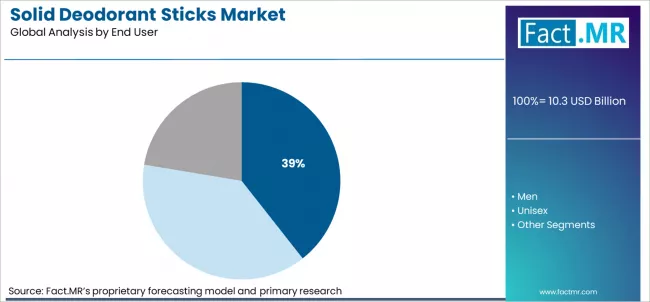
By end user, women represent the largest share, accounting for 39.4% of total demand in 2026. Increasing personal grooming awareness, higher product usage frequency, and growing participation of women in professional environments support strong consumption. Brands continue to introduce fragrance-specific, sensitive-skin, and premium variants targeting female consumers, reinforcing sustained demand growth.
Drivers, Restraints, and Key Trends in the Solid Deodorant Sticks Market
- Drivers: Rising hygiene awareness, increasing urban populations, and growing participation in professional and social environments are driving global adoption of solid deodorant sticks. Consumers increasingly prefer long-lasting, convenient personal care solutions that provide reliable odor and sweat control throughout the day. Expansion of modern retail and e-commerce channels, combined with aggressive brand marketing and wider product availability, further supports sustained demand across both developed and emerging markets.
- Restraints: Skin sensitivity concerns, irritation risks, and growing scrutiny of aluminum-based formulations can limit adoption among health-conscious consumers. Regulatory review of cosmetic ingredients and rising preference for “clean-label” personal care products also increase formulation and compliance costs for manufacturers, potentially slowing market penetration in certain regions.
- Trend 1: There is a rising shift toward natural, aluminum-free, and dermatologically tested deodorant formulations, driven by consumer demand for safer, skin-friendly, and transparent ingredient profiles. Brands are increasingly highlighting botanical extracts, essential oils, and hypoallergenic claims.
- Trend 2: Growing adoption of refillable and sustainable packaging formats is gaining momentum as brands respond to environmental concerns, plastic reduction goals, and circular economy initiatives within the personal care industry.
Analysis of the Solid Deodorant Sticks Market by Key Country
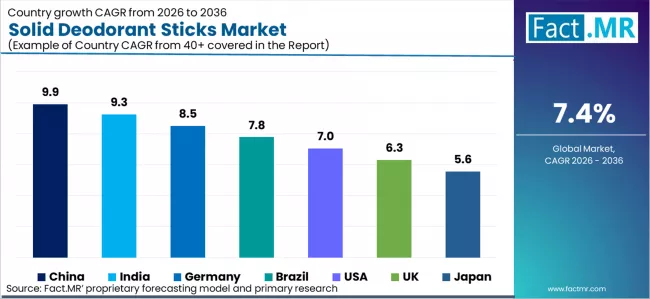
| Country | CAGR 2026 to 2036 |
|---|---|
| China | 9.9% |
| India | 9.3% |
| Germany | 8.5% |
| Brazil | 7.8% |
| USA | 7.0% |
| UK | 6.3% |
| Japan | 5.6% |
How Is Rising Urban Lifestyle Influencing Solid Deodorant Stick Demand in China?
The solid deodorant sticks market in China is projected to grow at a CAGR of 9.9 % during 2026 to 2036, driven by rapid urbanization, rising disposable income, and increasing adoption of global grooming habits. Young professionals and students in tier-one and tier-two cities are incorporating deodorants into daily hygiene routines. Expansion of e-commerce platforms and social media marketing has improved product awareness and accessibility. Growing participation of women in the workforce and increased focus on personal presentation further support strong demand growth across urban markets.
What Is Driving Strong Growth in the Indian Solid Deodorant Sticks Market?
India is expected to grow at a CAGR of 9.3%, supported by a young demographic profile, expanding middle class, and increasing hygiene awareness. Rising urban employment, hot climatic conditions, and exposure to international personal care brands are driving deodorant adoption. Affordable pricing strategies, smaller pack sizes, and aggressive marketing campaigns enhance accessibility. Growth of organized retail and online platforms is expanding reach beyond metro cities into semi-urban regions, supporting sustained market expansion.
Why Is Germany Seeing Strong Adoption of Solid Deodorant Sticks?
Germany is forecast to grow at a CAGR of 8.5%, driven by strong consumer preference for premium, natural, and dermatologically tested personal care products. Sustainability and ingredient transparency play a major role in purchasing decisions. Demand for aluminum-free, fragrance-neutral, and refillable deodorant sticks is increasing among health-conscious consumers. Well-established retail networks and high consumer trust in branded products support steady adoption, while premiumization continues to drive value growth.
What Supports Growth in the Brazilian Solid Deodorant Sticks Market?
Brazil is projected to expand at a CAGR of 7.8%, supported by warm climatic conditions, high grooming frequency, and strong cultural emphasis on personal care. Deodorant usage is well established across all age groups, driving consistent demand. Fragrance-driven formulations and long-lasting sweat protection are particularly popular. Wide availability through supermarkets, pharmacies, and specialty stores ensures strong market penetration, while promotional pricing and product innovation continue to attract consumers.
How Is the United States Maintaining Steady Market Growth?
The USA solid deodorant sticks market is expected to grow at a CAGR of 7.0%, supported by strong brand presence, continuous product innovation, and rising demand for natural and clean-label personal care products. Consumers increasingly seek aluminum-free, vegan, and skin-sensitive formulations. Premiumization and personalization trends, combined with wide distribution through retail and online channels, sustain steady growth. Replacement purchases and product upgrades contribute significantly to market expansion.
What Factors Support Demand in the UK?
The UK market is forecast to grow at a CAGR of 6.3%, driven by sustainability awareness, refillable packaging adoption, and growing preference for ethically sourced and clean-label products. Consumers show strong interest in environmentally responsible brands and minimalist formulations. Retailers actively promote eco-friendly alternatives, while online channels expand access to niche and premium deodorant brands. Regulatory emphasis on ingredient transparency further supports demand for reformulated products.
Why Is Growth Measured in Japan?
Japan is projected to grow at a CAGR of 5.6%, reflecting a mature personal care market with high product penetration. Demand is driven primarily by product innovation, premiumization, and upgrades to skin-friendly and fragrance-light formulations. Consumers prioritize quality, safety, and functionality over volume. Aging population trends and limited new user growth constrain expansion, but steady demand persists through replacement purchases and niche premium product offerings.
Competitive Landscape of the Solid Deodorant Sticks Market
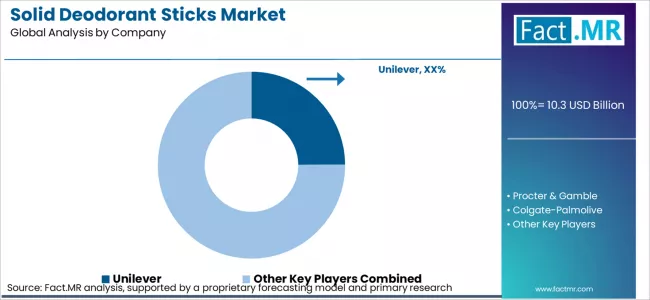
The solid deodorant sticks market is characterized by competition among multinational personal care companies and established consumer goods manufacturers with strong global and regional brand portfolios. Competitive differentiation is driven by formulation innovation, fragrance development, skin safety claims, and sustainability credentials rather than pricing alone. Companies focus on enhancing product performance while addressing consumer concerns related to skin sensitivity, ingredient transparency, and environmental impact.
Leading players invest heavily in research and development to introduce aluminum-free, natural, vegan, and dermatologically tested deodorant formulations. Innovation in fragrance layering, long-lasting protection, and sweat-control efficacy strengthens brand positioning. Sustainability has become a key competitive lever, with manufacturers expanding refillable formats, recyclable packaging, and reduced-plastic designs.
Strong global distribution networks, brand recognition, and marketing capabilities provide a significant advantage in reaching mass and premium consumer segments. Strategic use of digital marketing, influencer partnerships, and direct-to-consumer platforms further intensifies competition. As consumer preferences evolve, continuous innovation and sustainability-focused strategies are reshaping competitive dynamics in the solid deodorant sticks market.
Key Players in the Solid Deodorant Sticks Market
- Unilever plc
- Procter & Gamble Co.
- Colgate-Palmolive Company
- Henkel AG & Co. KGaA
- Revlon, Inc.
Scope of Report
| Items | Values |
|---|---|
| Quantitative Units (2026) | USD 10.3 Billion |
| Product Type | Antiperspirant, Deodorant-Only, Natural, Refillable |
| End User | Women, Men, Unisex |
| Distribution Channel | Supermarkets, Pharmacies, Online, Specialty Stores |
| Regions Covered | North America, Europe, Asia Pacific, Latin America, Middle East & Africa |
| Countries Covered | USA, Canada, Germany, Italy, UK, France, Japan, Australia, and other countries |
| Key Companies Profiled | Unilever plc, Procter & Gamble Co., Colgate-Palmolive Company, Henkel AG & Co. KGaA, Revlon, Inc. |
| Additional Attributes | Dollar revenue by product type, end user, distribution channel, and region; regional demand trends driven by rising hygiene awareness, urban lifestyle adoption, climate-related usage patterns, and expansion of modern retail and e-commerce channels; and a competitive landscape characterized by multinational personal care companies and established consumer goods manufacturers with strong branding, formulation innovation, and sustainability-focused product portfolios. |
Solid Deodorant Sticks Market by Segments
-
Product Type
- Antiperspirant sticks
- Deodorant-only sticks
- Natural/Aluminum-free sticks
- Refillable stick formats
-
End User
- Women
- Men
- Unisex
-
Distribution Channel
- Supermarkets & Hypermarkets
- Pharmacies/Drugstores
- Online Retail
- Specialty Stores
-
Region
- Asia Pacific
- Japan
- South Korea
- China
- Australia
- New Zealand
- Rest of Asia Pacific
- North America
- United States
- Canada
- Mexico
- Europe
- France
- Italy
- Spain
- Norway
- UK
- Rest of Europe
- Latin America
- Chile
- Peru
- Argentina
- Asia Pacific
Bibliography
- International Organization for Standardization. (2023). Cosmetics and personal care products: Safety assessment, formulation standards, and quality requirements for deodorant and antiperspirant products (ISO Technical Report). ISO.
- European Commission. (2022). Cosmetic products regulation: Ingredient safety, labeling, and market compliance requirements. European Commission.
- Personal Care Products Council. (2023). Deodorant and antiperspirant formulation trends, consumer safety, and sustainability practices. PCPC.
- Journal of Cosmetic Science Editorial Board. (2024). Advances in deodorant stick formulations, skin compatibility, and odor-control technologies. Journal of Cosmetic Science, 75(2), 101-118.
- World Health Organization. (2023). Personal hygiene practices, consumer behavior, and health implications in daily care products. WHO.
Table of Content
- Executive Summary
- Global Market Outlook
- Demand to side Trends
- Supply to side Trends
- Technology Roadmap Analysis
- Analysis and Recommendations
- Market Overview
- Market Coverage / Taxonomy
- Market Definition / Scope / Limitations
- Research Methodology
- Chapter Orientation
- Analytical Lens and Working Hypotheses
- Market Structure, Signals, and Trend Drivers
- Benchmarking and Cross-market Comparability
- Market Sizing, Forecasting, and Opportunity Mapping
- Research Design and Evidence Framework
- Desk Research Programme (Secondary Evidence)
- Company Annual and Sustainability Reports
- Peer-reviewed Journals and Academic Literature
- Corporate Websites, Product Literature, and Technical Notes
- Earnings Decks and Investor Briefings
- Statutory Filings and Regulatory Disclosures
- Technical White Papers and Standards Notes
- Trade Journals, Industry Magazines, and Analyst Briefs
- Conference Proceedings, Webinars, and Seminar Materials
- Government Statistics Portals and Public Data Releases
- Press Releases and Reputable Media Coverage
- Subscription Datasets and Paid Sources
- Social Channels, Communities, and Digital Listening Inputs
- Additional Desk Sources
- Expert Input and Fieldwork (Primary Evidence)
- Primary Modes
- Qualitative Interviews and Expert Elicitation
- Quantitative Surveys and Structured Data Capture
- Blended A8oach
- Why Primary Evidence is Used
- Field Techniques
- Interviews
- Surveys
- Focus Groups
- Observational and In-context Research
- Social and Community Interactions
- Stakeholder Universe Engaged
- C-suite Leaders
- Board Members
- Presidents and Vice Presidents
- R&D and Innovation Heads
- Technical Specialists
- Domain Subject-matter Experts
- Scientists
- Physicians and Other Healthcare Professionals
- Governance, Ethics, and Data Stewardship
- Research Ethics
- Data Integrity and Handling
- Primary Modes
- Tooling, Models, and Reference Databases
- Desk Research Programme (Secondary Evidence)
- Data Engineering and Model Build
- Data Acquisition and Ingestion
- Cleaning, Normalisation, and Verification
- Synthesis, Triangulation, and Analysis
- Quality Assurance and Audit Trail
- Market Background
- Market Dynamics
- Drivers
- Restraints
- Opportunity
- Trends
- Scenario Forecast
- Demand in Optimistic Scenario
- Demand in Likely Scenario
- Demand in Conservative Scenario
- Opportunity Map Analysis
- Product Life Cycle Analysis
- Supply Chain Analysis
- Investment Feasibility Matrix
- Value Chain Analysis
- PESTLE and Porter’s Analysis
- Regulatory Landscape
- Regional Parent Market Outlook
- Production and Consumption Statistics
- Import and Export Statistics
- Market Dynamics
- Global Market Analysis 2021 to 2025 and Forecast, 2026 to 2036
- Historical Market Size Value (USD Million) Analysis, 2021 to 2025
- Current and Future Market Size Value (USD Million) Projections, 2026 to 2036
- Y to o to Y Growth Trend Analysis
- Absolute $ Opportunity Analysis
- Global Market Pricing Analysis 2021 to 2025 and Forecast 2026 to 2036
- Global Market Analysis 2021 to 2025 and Forecast 2026 to 2036, By Product Type
- Introduction / Key Findings
- Historical Market Size Value (USD Million) Analysis By Product Type, 2021 to 2025
- Current and Future Market Size Value (USD Million) Analysis and Forecast By Product Type, 2026 to 2036
- Antiperspirant sticks
- Deodorant-only sticks
- Natural/Aluminum-free sticks
- Refillable stick formats
- Antiperspirant sticks
- Y to o to Y Growth Trend Analysis By Product Type, 2021 to 2025
- Absolute $ Opportunity Analysis By Product Type, 2026 to 2036
- Global Market Analysis 2021 to 2025 and Forecast 2026 to 2036, By End User
- Introduction / Key Findings
- Historical Market Size Value (USD Million) Analysis By End User, 2021 to 2025
- Current and Future Market Size Value (USD Million) Analysis and Forecast By End User, 2026 to 2036
- Women
- Men
- Unisex
- Women
- Y to o to Y Growth Trend Analysis By End User, 2021 to 2025
- Absolute $ Opportunity Analysis By End User, 2026 to 2036
- Global Market Analysis 2021 to 2025 and Forecast 2026 to 2036, By Distribution Channel
- Introduction / Key Findings
- Historical Market Size Value (USD Million) Analysis By Distribution Channel, 2021 to 2025
- Current and Future Market Size Value (USD Million) Analysis and Forecast By Distribution Channel, 2026 to 2036
- Supermarkets & Hypermarkets
- Pharmacies/Drugstores
- Online Retail
- Specialty Stores
- Supermarkets & Hypermarkets
- Y to o to Y Growth Trend Analysis By Distribution Channel, 2021 to 2025
- Absolute $ Opportunity Analysis By Distribution Channel, 2026 to 2036
- Global Market Analysis 2021 to 2025 and Forecast 2026 to 2036, By Region
- Introduction
- Historical Market Size Value (USD Million) Analysis By Region, 2021 to 2025
- Current Market Size Value (USD Million) Analysis and Forecast By Region, 2026 to 2036
- North America
- Latin America
- Western Europe
- Eastern Europe
- East Asia
- South Asia and Pacific
- Middle East & Africa
- Market Attractiveness Analysis By Region
- North America Market Analysis 2021 to 2025 and Forecast 2026 to 2036, By Country
- Historical Market Size Value (USD Million) Trend Analysis By Market Taxonomy, 2021 to 2025
- Market Size Value (USD Million) Forecast By Market Taxonomy, 2026 to 2036
- By Country
- USA
- Canada
- Mexico
- By Product Type
- By End User
- By Distribution Channel
- By Country
- Market Attractiveness Analysis
- By Country
- By Product Type
- By End User
- By Distribution Channel
- Key Takeaways
- Latin America Market Analysis 2021 to 2025 and Forecast 2026 to 2036, By Country
- Historical Market Size Value (USD Million) Trend Analysis By Market Taxonomy, 2021 to 2025
- Market Size Value (USD Million) Forecast By Market Taxonomy, 2026 to 2036
- By Country
- Brazil
- Chile
- Rest of Latin America
- By Product Type
- By End User
- By Distribution Channel
- By Country
- Market Attractiveness Analysis
- By Country
- By Product Type
- By End User
- By Distribution Channel
- Key Takeaways
- Western Europe Market Analysis 2021 to 2025 and Forecast 2026 to 2036, By Country
- Historical Market Size Value (USD Million) Trend Analysis By Market Taxonomy, 2021 to 2025
- Market Size Value (USD Million) Forecast By Market Taxonomy, 2026 to 2036
- By Country
- Germany
- UK
- Italy
- Spain
- France
- Nordic
- BENELUX
- Rest of Western Europe
- By Product Type
- By End User
- By Distribution Channel
- By Country
- Market Attractiveness Analysis
- By Country
- By Product Type
- By End User
- By Distribution Channel
- Key Takeaways
- Eastern Europe Market Analysis 2021 to 2025 and Forecast 2026 to 2036, By Country
- Historical Market Size Value (USD Million) Trend Analysis By Market Taxonomy, 2021 to 2025
- Market Size Value (USD Million) Forecast By Market Taxonomy, 2026 to 2036
- By Country
- Russia
- Poland
- Hungary
- Balkan & Baltic
- Rest of Eastern Europe
- By Product Type
- By End User
- By Distribution Channel
- By Country
- Market Attractiveness Analysis
- By Country
- By Product Type
- By End User
- By Distribution Channel
- Key Takeaways
- East Asia Market Analysis 2021 to 2025 and Forecast 2026 to 2036, By Country
- Historical Market Size Value (USD Million) Trend Analysis By Market Taxonomy, 2021 to 2025
- Market Size Value (USD Million) Forecast By Market Taxonomy, 2026 to 2036
- By Country
- China
- Japan
- South Korea
- By Product Type
- By End User
- By Distribution Channel
- By Country
- Market Attractiveness Analysis
- By Country
- By Product Type
- By End User
- By Distribution Channel
- Key Takeaways
- South Asia and Pacific Market Analysis 2021 to 2025 and Forecast 2026 to 2036, By Country
- Historical Market Size Value (USD Million) Trend Analysis By Market Taxonomy, 2021 to 2025
- Market Size Value (USD Million) Forecast By Market Taxonomy, 2026 to 2036
- By Country
- India
- ASEAN
- Australia & New Zealand
- Rest of South Asia and Pacific
- By Product Type
- By End User
- By Distribution Channel
- By Country
- Market Attractiveness Analysis
- By Country
- By Product Type
- By End User
- By Distribution Channel
- Key Takeaways
- Middle East & Africa Market Analysis 2021 to 2025 and Forecast 2026 to 2036, By Country
- Historical Market Size Value (USD Million) Trend Analysis By Market Taxonomy, 2021 to 2025
- Market Size Value (USD Million) Forecast By Market Taxonomy, 2026 to 2036
- By Country
- Kingdom of Saudi Arabia
- Other GCC Countries
- Turkiye
- South Africa
- Other African Union
- Rest of Middle East & Africa
- By Product Type
- By End User
- By Distribution Channel
- By Country
- Market Attractiveness Analysis
- By Country
- By Product Type
- By End User
- By Distribution Channel
- Key Takeaways
- Key Countries Market Analysis
- USA
- Pricing Analysis
- Market Share Analysis, 2025
- By Product Type
- By End User
- By Distribution Channel
- Canada
- Pricing Analysis
- Market Share Analysis, 2025
- By Product Type
- By End User
- By Distribution Channel
- Mexico
- Pricing Analysis
- Market Share Analysis, 2025
- By Product Type
- By End User
- By Distribution Channel
- Brazil
- Pricing Analysis
- Market Share Analysis, 2025
- By Product Type
- By End User
- By Distribution Channel
- Chile
- Pricing Analysis
- Market Share Analysis, 2025
- By Product Type
- By End User
- By Distribution Channel
- Germany
- Pricing Analysis
- Market Share Analysis, 2025
- By Product Type
- By End User
- By Distribution Channel
- UK
- Pricing Analysis
- Market Share Analysis, 2025
- By Product Type
- By End User
- By Distribution Channel
- Italy
- Pricing Analysis
- Market Share Analysis, 2025
- By Product Type
- By End User
- By Distribution Channel
- Spain
- Pricing Analysis
- Market Share Analysis, 2025
- By Product Type
- By End User
- By Distribution Channel
- France
- Pricing Analysis
- Market Share Analysis, 2025
- By Product Type
- By End User
- By Distribution Channel
- India
- Pricing Analysis
- Market Share Analysis, 2025
- By Product Type
- By End User
- By Distribution Channel
- ASEAN
- Pricing Analysis
- Market Share Analysis, 2025
- By Product Type
- By End User
- By Distribution Channel
- Australia & New Zealand
- Pricing Analysis
- Market Share Analysis, 2025
- By Product Type
- By End User
- By Distribution Channel
- China
- Pricing Analysis
- Market Share Analysis, 2025
- By Product Type
- By End User
- By Distribution Channel
- Japan
- Pricing Analysis
- Market Share Analysis, 2025
- By Product Type
- By End User
- By Distribution Channel
- South Korea
- Pricing Analysis
- Market Share Analysis, 2025
- By Product Type
- By End User
- By Distribution Channel
- Russia
- Pricing Analysis
- Market Share Analysis, 2025
- By Product Type
- By End User
- By Distribution Channel
- Poland
- Pricing Analysis
- Market Share Analysis, 2025
- By Product Type
- By End User
- By Distribution Channel
- Hungary
- Pricing Analysis
- Market Share Analysis, 2025
- By Product Type
- By End User
- By Distribution Channel
- Kingdom of Saudi Arabia
- Pricing Analysis
- Market Share Analysis, 2025
- By Product Type
- By End User
- By Distribution Channel
- Turkiye
- Pricing Analysis
- Market Share Analysis, 2025
- By Product Type
- By End User
- By Distribution Channel
- South Africa
- Pricing Analysis
- Market Share Analysis, 2025
- By Product Type
- By End User
- By Distribution Channel
- USA
- Market Structure Analysis
- Competition Dashboard
- Competition Benchmarking
- Market Share Analysis of Top Players
- By Regional
- By Product Type
- By End User
- By Distribution Channel
- Competition Analysis
- Competition Deep Dive
- Unilever
- Overview
- Product Portfolio
- Profitability by Market Segments (Product/Age /Sales Channel/Region)
- Sales Footprint
- Strategy Overview
- Marketing Strategy
- Product Strategy
- Channel Strategy
- Procter & Gamble
- Colgate-Palmolive
- Henkel
- Revlon
- Unilever
- Competition Deep Dive
- Assumptions & Acronyms Used
List Of Table
- Table 1: Global Market Value (USD Million) Forecast by Region, 2021 to 2036
- Table 2: Global Market Value (USD Million) Forecast by Product Type, 2021 to 2036
- Table 3: Global Market Value (USD Million) Forecast by End User, 2021 to 2036
- Table 4: Global Market Value (USD Million) Forecast by Distribution Channel, 2021 to 2036
- Table 5: North America Market Value (USD Million) Forecast by Country, 2021 to 2036
- Table 6: North America Market Value (USD Million) Forecast by Product Type, 2021 to 2036
- Table 7: North America Market Value (USD Million) Forecast by End User, 2021 to 2036
- Table 8: North America Market Value (USD Million) Forecast by Distribution Channel, 2021 to 2036
- Table 9: Latin America Market Value (USD Million) Forecast by Country, 2021 to 2036
- Table 10: Latin America Market Value (USD Million) Forecast by Product Type, 2021 to 2036
- Table 11: Latin America Market Value (USD Million) Forecast by End User, 2021 to 2036
- Table 12: Latin America Market Value (USD Million) Forecast by Distribution Channel, 2021 to 2036
- Table 13: Western Europe Market Value (USD Million) Forecast by Country, 2021 to 2036
- Table 14: Western Europe Market Value (USD Million) Forecast by Product Type, 2021 to 2036
- Table 15: Western Europe Market Value (USD Million) Forecast by End User, 2021 to 2036
- Table 16: Western Europe Market Value (USD Million) Forecast by Distribution Channel, 2021 to 2036
- Table 17: Eastern Europe Market Value (USD Million) Forecast by Country, 2021 to 2036
- Table 18: Eastern Europe Market Value (USD Million) Forecast by Product Type, 2021 to 2036
- Table 19: Eastern Europe Market Value (USD Million) Forecast by End User, 2021 to 2036
- Table 20: Eastern Europe Market Value (USD Million) Forecast by Distribution Channel, 2021 to 2036
- Table 21: East Asia Market Value (USD Million) Forecast by Country, 2021 to 2036
- Table 22: East Asia Market Value (USD Million) Forecast by Product Type, 2021 to 2036
- Table 23: East Asia Market Value (USD Million) Forecast by End User, 2021 to 2036
- Table 24: East Asia Market Value (USD Million) Forecast by Distribution Channel, 2021 to 2036
- Table 25: South Asia and Pacific Market Value (USD Million) Forecast by Country, 2021 to 2036
- Table 26: South Asia and Pacific Market Value (USD Million) Forecast by Product Type, 2021 to 2036
- Table 27: South Asia and Pacific Market Value (USD Million) Forecast by End User, 2021 to 2036
- Table 28: South Asia and Pacific Market Value (USD Million) Forecast by Distribution Channel, 2021 to 2036
- Table 29: Middle East & Africa Market Value (USD Million) Forecast by Country, 2021 to 2036
- Table 30: Middle East & Africa Market Value (USD Million) Forecast by Product Type, 2021 to 2036
- Table 31: Middle East & Africa Market Value (USD Million) Forecast by End User, 2021 to 2036
- Table 32: Middle East & Africa Market Value (USD Million) Forecast by Distribution Channel, 2021 to 2036
List Of Figures
- Figure 1: Global Market Pricing Analysis
- Figure 2: Global Market Value (USD Million) Forecast 2021 to 2036
- Figure 3: Global Market Value Share and BPS Analysis by Product Type, 2026 and 2036
- Figure 4: Global Market Y to o to Y Growth Comparison by Product Type, 2026 to 2036
- Figure 5: Global Market Attractiveness Analysis by Product Type
- Figure 6: Global Market Value Share and BPS Analysis by End User, 2026 and 2036
- Figure 7: Global Market Y to o to Y Growth Comparison by End User, 2026 to 2036
- Figure 8: Global Market Attractiveness Analysis by End User
- Figure 9: Global Market Value Share and BPS Analysis by Distribution Channel, 2026 and 2036
- Figure 10: Global Market Y to o to Y Growth Comparison by Distribution Channel, 2026 to 2036
- Figure 11: Global Market Attractiveness Analysis by Distribution Channel
- Figure 12: Global Market Value (USD Million) Share and BPS Analysis by Region, 2026 and 2036
- Figure 13: Global Market Y to o to Y Growth Comparison by Region, 2026 to 2036
- Figure 14: Global Market Attractiveness Analysis by Region
- Figure 15: North America Market Incremental Dollar Opportunity, 2026 to 2036
- Figure 16: Latin America Market Incremental Dollar Opportunity, 2026 to 2036
- Figure 17: Western Europe Market Incremental Dollar Opportunity, 2026 to 2036
- Figure 18: Eastern Europe Market Incremental Dollar Opportunity, 2026 to 2036
- Figure 19: East Asia Market Incremental Dollar Opportunity, 2026 to 2036
- Figure 20: South Asia and Pacific Market Incremental Dollar Opportunity, 2026 to 2036
- Figure 21: Middle East & Africa Market Incremental Dollar Opportunity, 2026 to 2036
- Figure 22: North America Market Value Share and BPS Analysis by Country, 2026 and 2036
- Figure 23: North America Market Value Share and BPS Analysis by Product Type, 2026 and 2036
- Figure 24: North America Market Y to o to Y Growth Comparison by Product Type, 2026 to 2036
- Figure 25: North America Market Attractiveness Analysis by Product Type
- Figure 26: North America Market Value Share and BPS Analysis by End User, 2026 and 2036
- Figure 27: North America Market Y to o to Y Growth Comparison by End User, 2026 to 2036
- Figure 28: North America Market Attractiveness Analysis by End User
- Figure 29: North America Market Value Share and BPS Analysis by Distribution Channel, 2026 and 2036
- Figure 30: North America Market Y to o to Y Growth Comparison by Distribution Channel, 2026 to 2036
- Figure 31: North America Market Attractiveness Analysis by Distribution Channel
- Figure 32: Latin America Market Value Share and BPS Analysis by Country, 2026 and 2036
- Figure 33: Latin America Market Value Share and BPS Analysis by Product Type, 2026 and 2036
- Figure 34: Latin America Market Y to o to Y Growth Comparison by Product Type, 2026 to 2036
- Figure 35: Latin America Market Attractiveness Analysis by Product Type
- Figure 36: Latin America Market Value Share and BPS Analysis by End User, 2026 and 2036
- Figure 37: Latin America Market Y to o to Y Growth Comparison by End User, 2026 to 2036
- Figure 38: Latin America Market Attractiveness Analysis by End User
- Figure 39: Latin America Market Value Share and BPS Analysis by Distribution Channel, 2026 and 2036
- Figure 40: Latin America Market Y to o to Y Growth Comparison by Distribution Channel, 2026 to 2036
- Figure 41: Latin America Market Attractiveness Analysis by Distribution Channel
- Figure 42: Western Europe Market Value Share and BPS Analysis by Country, 2026 and 2036
- Figure 43: Western Europe Market Value Share and BPS Analysis by Product Type, 2026 and 2036
- Figure 44: Western Europe Market Y to o to Y Growth Comparison by Product Type, 2026 to 2036
- Figure 45: Western Europe Market Attractiveness Analysis by Product Type
- Figure 46: Western Europe Market Value Share and BPS Analysis by End User, 2026 and 2036
- Figure 47: Western Europe Market Y to o to Y Growth Comparison by End User, 2026 to 2036
- Figure 48: Western Europe Market Attractiveness Analysis by End User
- Figure 49: Western Europe Market Value Share and BPS Analysis by Distribution Channel, 2026 and 2036
- Figure 50: Western Europe Market Y to o to Y Growth Comparison by Distribution Channel, 2026 to 2036
- Figure 51: Western Europe Market Attractiveness Analysis by Distribution Channel
- Figure 52: Eastern Europe Market Value Share and BPS Analysis by Country, 2026 and 2036
- Figure 53: Eastern Europe Market Value Share and BPS Analysis by Product Type, 2026 and 2036
- Figure 54: Eastern Europe Market Y to o to Y Growth Comparison by Product Type, 2026 to 2036
- Figure 55: Eastern Europe Market Attractiveness Analysis by Product Type
- Figure 56: Eastern Europe Market Value Share and BPS Analysis by End User, 2026 and 2036
- Figure 57: Eastern Europe Market Y to o to Y Growth Comparison by End User, 2026 to 2036
- Figure 58: Eastern Europe Market Attractiveness Analysis by End User
- Figure 59: Eastern Europe Market Value Share and BPS Analysis by Distribution Channel, 2026 and 2036
- Figure 60: Eastern Europe Market Y to o to Y Growth Comparison by Distribution Channel, 2026 to 2036
- Figure 61: Eastern Europe Market Attractiveness Analysis by Distribution Channel
- Figure 62: East Asia Market Value Share and BPS Analysis by Country, 2026 and 2036
- Figure 63: East Asia Market Value Share and BPS Analysis by Product Type, 2026 and 2036
- Figure 64: East Asia Market Y to o to Y Growth Comparison by Product Type, 2026 to 2036
- Figure 65: East Asia Market Attractiveness Analysis by Product Type
- Figure 66: East Asia Market Value Share and BPS Analysis by End User, 2026 and 2036
- Figure 67: East Asia Market Y to o to Y Growth Comparison by End User, 2026 to 2036
- Figure 68: East Asia Market Attractiveness Analysis by End User
- Figure 69: East Asia Market Value Share and BPS Analysis by Distribution Channel, 2026 and 2036
- Figure 70: East Asia Market Y to o to Y Growth Comparison by Distribution Channel, 2026 to 2036
- Figure 71: East Asia Market Attractiveness Analysis by Distribution Channel
- Figure 72: South Asia and Pacific Market Value Share and BPS Analysis by Country, 2026 and 2036
- Figure 73: South Asia and Pacific Market Value Share and BPS Analysis by Product Type, 2026 and 2036
- Figure 74: South Asia and Pacific Market Y to o to Y Growth Comparison by Product Type, 2026 to 2036
- Figure 75: South Asia and Pacific Market Attractiveness Analysis by Product Type
- Figure 76: South Asia and Pacific Market Value Share and BPS Analysis by End User, 2026 and 2036
- Figure 77: South Asia and Pacific Market Y to o to Y Growth Comparison by End User, 2026 to 2036
- Figure 78: South Asia and Pacific Market Attractiveness Analysis by End User
- Figure 79: South Asia and Pacific Market Value Share and BPS Analysis by Distribution Channel, 2026 and 2036
- Figure 80: South Asia and Pacific Market Y to o to Y Growth Comparison by Distribution Channel, 2026 to 2036
- Figure 81: South Asia and Pacific Market Attractiveness Analysis by Distribution Channel
- Figure 82: Middle East & Africa Market Value Share and BPS Analysis by Country, 2026 and 2036
- Figure 83: Middle East & Africa Market Value Share and BPS Analysis by Product Type, 2026 and 2036
- Figure 84: Middle East & Africa Market Y to o to Y Growth Comparison by Product Type, 2026 to 2036
- Figure 85: Middle East & Africa Market Attractiveness Analysis by Product Type
- Figure 86: Middle East & Africa Market Value Share and BPS Analysis by End User, 2026 and 2036
- Figure 87: Middle East & Africa Market Y to o to Y Growth Comparison by End User, 2026 to 2036
- Figure 88: Middle East & Africa Market Attractiveness Analysis by End User
- Figure 89: Middle East & Africa Market Value Share and BPS Analysis by Distribution Channel, 2026 and 2036
- Figure 90: Middle East & Africa Market Y to o to Y Growth Comparison by Distribution Channel, 2026 to 2036
- Figure 91: Middle East & Africa Market Attractiveness Analysis by Distribution Channel
- Figure 92: Global Market - Tier Structure Analysis
- Figure 93: Global Market - Company Share Analysis
- FAQs -
How big is the solid deodorant sticks market in 2026?
The global solid deodorant sticks market is estimated to be valued at USD 10.3 billion in 2026.
What will be the size of solid deodorant sticks market in 2036?
The market size for the solid deodorant sticks market is projected to reach USD 21.0 billion by 2036.
How much will be the solid deodorant sticks market growth between 2026 and 2036?
The solid deodorant sticks market is expected to grow at a 7.4% CAGR between 2026 and 2036.
What are the key product types in the solid deodorant sticks market?
The key product types in solid deodorant sticks market are antiperspirant sticks, deodorant-only sticks, natural/aluminum-free sticks and refillable stick formats.
Which end user segment to contribute significant share in the solid deodorant sticks market in 2026?
In terms of end user, women segment to command 39.4% share in the solid deodorant sticks market in 2026.