Surfactant-Enhanced Aquifer Remediation Fluids Market
Surfactant-Enhanced Aquifer Remediation Fluids Market Size and Share Forecast Outlook 2026 to 2036
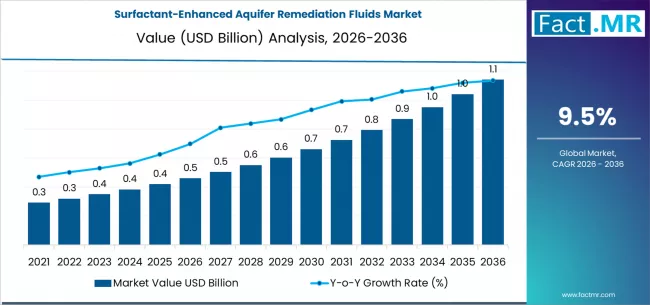
Surfactant-enhanced aquifer remediation fluids market is projected to grow from USD 0.5 billion in 2026 to USD 1.1 billion by 2036, at a CAGR of 9.5%. Non-Ionic Surfactants will dominate with a 34.0% market share, while chlorinated solvents (tce, pce, vc) will lead the contaminant type segment with a 32.0% share.
Surfactant-Enhanced Aquifer Remediation Fluids Market Forecast and Outlook 2026 to 2036
The global market for surfactant-enhanced aquifer remediation fluids is projected to reach USD 1.14 billion by 2036. The market is valued at USD 0.46 billion in 2026 and is set to rise at a CAGR of 9.5% during the assessment period. By surfactant type, non-ionic surfactants hold a leading 34% share. The contaminant type segment for chlorinated solvents represents the dominant target at 32%.
Key Takeaways from the Surfactant-Enhanced Aquifer Remediation Fluids Market
- Market Value for 2026: USD 0.46 Billion
- Market Value for 2036: USD 1.14 Billion
- Forecast CAGR (2026-2036): 9.5%
- Leading Surfactant Type Share (2026): Non-Ionic Surfactants (34%)
- Leading Contaminant Type Share (2026): Chlorinated Solvents (TCE, PCE, VC) (32%)
- Leading Application Site Share (2026): Groundwater & Aquifer Remediation (34%)
- Key Players in the Market: Regenesis, Ecolab Inc. (Nalco Water), Carus Corporation, Evoqua, EOS Remediation, Veolia Environnement S.A.
Groundwater and aquifer remediation is the foremost application site, accounting for a 34% share. This growth is driven by the critical need to remediate dense, poorly soluble contaminants that are trapped in subsurface pore spaces and inaccessible to traditional pump-and-treat methods. SEAR technology significantly enhances the recovery and treatment of these persistent pollutants by increasing their solubility and mobility in groundwater.
SEAR fluids are specialized chemical formulations designed to overcome subsurface interfacial tensions and mobilize trapped contaminants. Their application is essential for achieving remedial goals at complex sites, reducing cleanup timeframes, and ultimately restoring contaminated aquifers to beneficial use where conventional methods have failed.
Surfactant-Enhanced Aquifer Remediation Fluids Market
| Metric | Value |
|---|---|
| Market Value (2026) | USD 0.46 Billion |
| Market Forecast Value (2036) | USD 1.14 Billion |
| Forecast CAGR (2026-2036) | 9.5% |
Category
| Category | Segments |
|---|---|
| Surfactant Type | Non-Ionic Surfactants, Anionic Surfactants, Bio-Based & Green Surfactants, Amphoteric & Cationic Surfactants, Other Specialty Remediation Surfactants |
| Contaminant Type | Chlorinated Solvents (TCE, PCE, VC), Petroleum Hydrocarbons (BTEX, TPH), PFAS & Emerging Contaminants, PAHs, PCBs & Other Recalcitrant Organics, Mixed Organic & Inorganic Pollutants |
| Application Site | Groundwater & Aquifer Remediation, Industrial Brownfield Sites, Oil & Gas Contaminated Sites, Mining & Metallurgical Sites, Municipal & Landfill Sites |
| Region | North America, Latin America, Western Europe, Eastern Europe, East Asia, South Asia & Pacific, MEA |
Segmental Analysis
By Surfactant Type, Which Chemistry Offers the Broadest Compatibility with Subsurface Conditions?
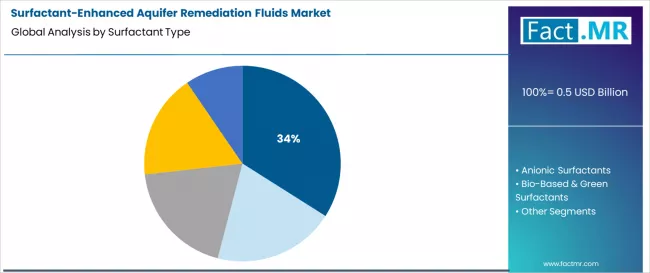
Non-ionic surfactants lead the segment with a 34% share. Their dominance is due to their low sensitivity to water hardness and ionic strength, which are highly variable in contaminated groundwater.
They are less likely to precipitate or adsorb onto aquifer materials compared to ionic surfactants, ensuring better delivery and longevity in the subsurface. This stability across diverse geochemical environments makes them a preferred and reliable choice for complex field applications.
By Contaminant Type, Which Pollutants are Most Amenable to Surfactant-Enhanced Recovery?
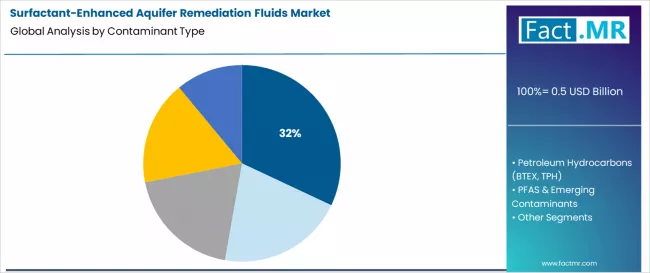
Chlorinated solvents, such as TCE and PCE, represent the largest contaminant segment at 32%. These dense non-aqueous phase liquids (DNAPLs) sink and become trapped in aquifers, creating long-term sources of groundwater pollution.
Their moderate hydrophobicity makes them highly responsive to surfactant mobilization and solubilization. SEAR is often the only viable technology to significantly reduce these source zones, driving its specification for this prevalent and challenging contaminant class.
By Application Site, Where is the Technology Considered a Critical Remediation Tool?
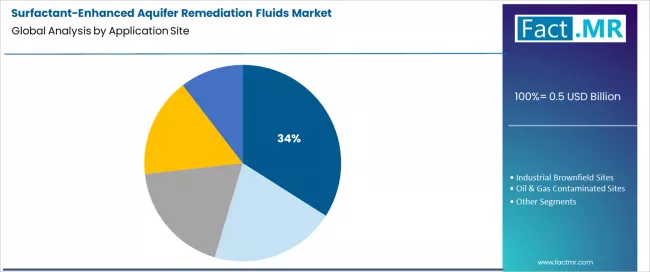
Groundwater and aquifer remediation is the leading application site with a 34% share. This is the core environment where SEAR technology is applied. Protecting and restoring groundwater resources from persistent contamination is a high-priority regulatory and public health objective.
The ability of SEAR fluids to directly target the source of plumes in the saturated zone makes this technology a critical component of the remediation toolbox for hydrogeologists and environmental engineers.
What are the Drivers, Restraints, and Key Trends of the Surfactant-Enhanced Aquifer Remediation Fluids Market?
The primary market driver is the regulatory and economic pressure to achieve faster and more complete site closures, particularly at sites with stagnant groundwater plumes or dense contaminant sources. SEAR can dramatically reduce remediation timelines compared to passive methods, offering a clear value proposition. Advances in subsurface characterization and delivery techniques have also improved the predictability and success of SEAR applications, boosting confidence in the technology.
A significant restraint is the complexity of designing and implementing a SEAR program. It requires detailed site characterization, careful formulation of the surfactant cocktail, and precise control over injection and extraction to control the mobilized contaminant plume. The potential for unwanted vertical migration of mobilized contaminants or surfactant-induced aquifer clogging poses technical risks that demand high levels of expertise, increasing project costs and complexity.
Key trends include the development of tailored surfactant blends designed for specific contaminant mixtures and site geochemistry. There is growing interest in green and biodegradable surfactants to reduce the environmental footprint of the remediation process itself. The market is moving toward integrated treatment trains that combine SEAR with subsequent technologies like in-situ chemical oxidation or bioremediation for complete destruction. Improved monitoring techniques, such as partitioning tracers and geophysical methods, are being used to quantify treatment performance in real-time.
Analysis of the Surfactant-Enhanced Aquifer Remediation Fluids Market by Key Countries
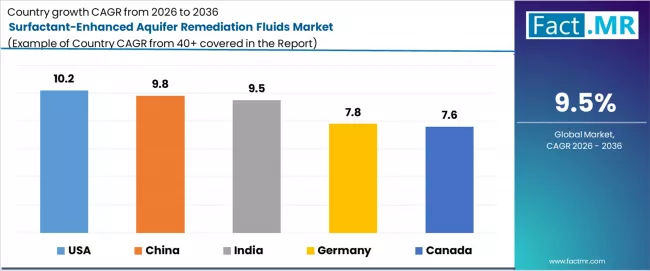
| Country | CAGR (2026-2036) |
|---|---|
| USA | 10.20% |
| China | 9.80% |
| India | 9.50% |
| Germany | 7.80% |
| Canada | 7.60% |
How do the USA's Complex Site Challenges and Regulatory Framework Drive Market Growth?
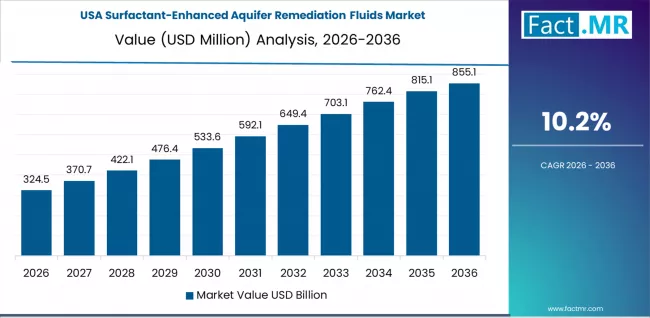
A large number of complex Superfund and industrial sites with DNAPL contamination underpin the USA’s leading CAGR of 10.20%. The regulatory framework encourages source zone treatment, and a mature environmental engineering sector possesses the expertise to deploy advanced technologies like SEAR. This combination of challenging sites, supportive policy, and technical capability sustains the largest and most advanced market for SEAR fluids.
What is the Impact of China's Focus on Industrial Groundwater Cleanup on SEAR Adoption?
China's 9.80% growth is supported by national actions to address severe groundwater pollution from its industrial base. As remediation efforts move beyond containment to active treatment of solvent and hydrocarbon source zones, SEAR presents a viable technical solution. Government-funded demonstration projects and growing domestic expertise are key factors accelerating market development.
How is India's Emerging Recognition of Subsurface Contamination Shaping the Market?
India's 9.50% growth is driven by increasing identification of industrial groundwater plumes, particularly in manufacturing clusters. The need for effective solutions to treat deep, pooled contaminants is becoming apparent. While the market is nascent, SEAR is gaining attention as a potential technology for high-priority sites, fostering early-stage demand and pilot studies.
Why is Germany a Market for Precision-Engineered Subsurface Applications?
Germany's 7.80% CAGR reflects its engineering-driven approach to remediation and strict groundwater protection standards. German projects require meticulously designed, highly controlled applications with predictable outcomes. This creates demand for high-performance, well-characterized surfactant formulations and sophisticated delivery and monitoring protocols, positioning Germany as a market for premium SEAR solutions.
What Role does Canada's Resource Sector Contamination Play in Driving Demand?
Canada's 7.60% growth is anchored in the need to remediate hydrocarbon and solvent contamination from its oil & gas and manufacturing sectors. SEAR is applicable for treating subsurface source zones at former industrial facilities and fuel terminals. Federal contaminated sites programs and challenging hydrogeology in certain regions sustain a specialized, steady demand for enhanced recovery technologies.
Competitive Landscape of the Surfactant-Enhanced Aquifer Remediation Fluids Market
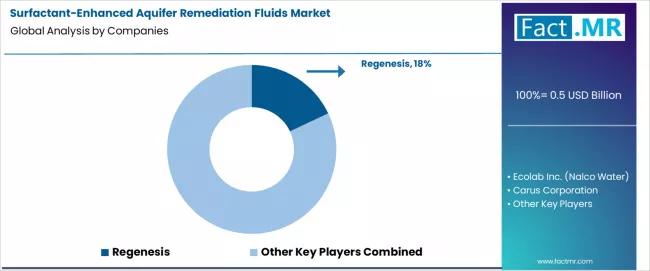
The competitive landscape involves specialized environmental technology firms and large water treatment corporations with advanced chemical divisions. Leaders like Regenesis and EOS Remediation compete through proprietary surfactant formulations and integrated design services tailored for DNAPL remediation.
Larger players like Ecolab (Nalco Water) and Veolia leverage their broad chemical portfolios and global project execution capabilities. Competition centers on demonstrating successful field performance through case studies, providing comprehensive design and optimization support, and offering robust technical data on surfactant behavior under various subsurface conditions.
Key Players in the Surfactant-Enhanced Aquifer Remediation Fluids Market
- Regenesis
- Ecolab Inc. (Nalco Water)
- Carus Corporation
- Evoqua
- EOS Remediation
- Veolia Environnement S.A.
Scope of Report
| Items | Values |
|---|---|
| Quantitative Units | USD Billion |
| Surfactant Type | Non-Ionic, Anionic, Bio-Based/Green, Amphoteric/Cationic, Other |
| Contaminant Type | Chlorinated Solvents, Petroleum Hydrocarbons, PFAS, PAHs/PCBs, Mixed |
| Application Site | Groundwater, Industrial Brownfields, Oil & Gas Sites, Mining Sites, Landfills |
| Key Countries | USA, China, India, Germany, Canada |
| Key Companies | Regenesis, Ecolab Inc., Carus Corporation, Evoqua, EOS Remediation, Veolia |
| Additional Analysis | Analysis of surfactant selection criteria (HLB, CMC); performance benchmarking through laboratory column studies; design of injection/extraction well networks; fate and transport of surfactants in the subsurface; regulatory guidelines and performance verification for SEAR applications. |
Market by Segments
-
Surfactant Type :
- Non-Ionic Surfactants
- Anionic Surfactants
- Bio-Based & Green Surfactants
- Amphoteric & Cationic Surfactants
- Other Specialty Remediation Surfactants
-
Contaminant Type :
- Chlorinated Solvents (TCE, PCE, VC)
- Petroleum Hydrocarbons (BTEX, TPH)
- PFAS & Emerging Contaminants
- PAHs, PCBs & Other Recalcitrant Organics
- Mixed Organic & Inorganic Pollutants
-
Application Site :
- Groundwater & Aquifer Remediation
- Industrial Brownfield Sites
- Oil & Gas Contaminated Sites
- Mining & Metallurgical Sites
- Municipal & Landfill Sites
-
Region :
- North America
- USA
- Canada
- Latin America
- Brazil
- Mexico
- Argentina
- Rest of Latin America
- Western Europe
- Germany
- UK
- France
- Spain
- Italy
- BENELUX
- Rest of Western Europe
- Eastern Europe
- Russia
- Poland
- Czech Republic
- Rest of Eastern Europe
- East Asia
- China
- Japan
- South Korea
- Rest of East Asia
- South Asia & Pacific
- India
- ASEAN
- Australia
- Rest of South Asia & Pacific
- MEA
- Saudi Arabia
- UAE
- Turkiye
- Rest of MEA
- North America
Table of Content
- Executive Summary
- Global Market Outlook
- Demand to side Trends
- Supply to side Trends
- Technology Roadmap Analysis
- Analysis and Recommendations
- Market Overview
- Market Coverage / Taxonomy
- Market Definition / Scope / Limitations
- Market Background
- Market Dynamics
- Drivers
- Restraints
- Opportunity
- Trends
- Scenario Forecast
- Demand in Optimistic Scenario
- Demand in Likely Scenario
- Demand in Conservative Scenario
- Opportunity Map Analysis
- Product Life Cycle Analysis
- Supply Chain Analysis
- Investment Feasibility Matrix
- Value Chain Analysis
- PESTLE and Porter’s Analysis
- Regulatory Landscape
- Regional Parent Market Outlook
- Production and Consumption Statistics
- Import and Export Statistics
- Market Dynamics
- Global Market Analysis 2021 to 2025 and Forecast, 2026 to 2036
- Historical Market Size Value (USD Million) Analysis, 2021 to 2025
- Current and Future Market Size Value (USD Million) Projections, 2026 to 2036
- Y to o to Y Growth Trend Analysis
- Absolute $ Opportunity Analysis
- Global Market Pricing Analysis 2021 to 2025 and Forecast 2026 to 2036
- Global Market Analysis 2021 to 2025 and Forecast 2026 to 2036, By Surfactant Type
- Introduction / Key Findings
- Historical Market Size Value (USD Million) Analysis By Surfactant Type, 2021 to 2025
- Current and Future Market Size Value (USD Million) Analysis and Forecast By Surfactant Type, 2026 to 2036
- Non-Ionic Surfactants
- Anionic Surfactants
- Bio-Based & Green Surfactants
- Amphoteric & Cationic Surfactants
- Other Specialty Remediation Surfactants
- Non-Ionic Surfactants
- Y to o to Y Growth Trend Analysis By Surfactant Type, 2021 to 2025
- Absolute $ Opportunity Analysis By Surfactant Type, 2026 to 2036
- Global Market Analysis 2021 to 2025 and Forecast 2026 to 2036, By Contaminant Type
- Introduction / Key Findings
- Historical Market Size Value (USD Million) Analysis By Contaminant Type, 2021 to 2025
- Current and Future Market Size Value (USD Million) Analysis and Forecast By Contaminant Type, 2026 to 2036
- Chlorinated Solvents (TCE, PCE, VC)
- Petroleum Hydrocarbons (BTEX, TPH)
- PFAS & Emerging Contaminants
- PAHs, PCBs & Other Recalcitrant Organics
- Mixed Organic & Inorganic Pollutants
- Chlorinated Solvents (TCE, PCE, VC)
- Y to o to Y Growth Trend Analysis By Contaminant Type, 2021 to 2025
- Absolute $ Opportunity Analysis By Contaminant Type, 2026 to 2036
- Global Market Analysis 2021 to 2025 and Forecast 2026 to 2036, By Application Site
- Introduction / Key Findings
- Historical Market Size Value (USD Million) Analysis By Application Site, 2021 to 2025
- Current and Future Market Size Value (USD Million) Analysis and Forecast By Application Site, 2026 to 2036
- Groundwater & Aquifer Remediation
- Industrial Brownfield Sites
- Oil & Gas Contaminated Sites
- Mining & Metallurgical Sites
- Municipal & Landfill Sites
- Groundwater & Aquifer Remediation
- Y to o to Y Growth Trend Analysis By Application Site, 2021 to 2025
- Absolute $ Opportunity Analysis By Application Site, 2026 to 2036
- Global Market Analysis 2021 to 2025 and Forecast 2026 to 2036, By Region
- Introduction
- Historical Market Size Value (USD Million) Analysis By Region, 2021 to 2025
- Current Market Size Value (USD Million) Analysis and Forecast By Region, 2026 to 2036
- North America
- Latin America
- Western Europe
- Eastern Europe
- East Asia
- South Asia and Pacific
- Middle East & Africa
- Market Attractiveness Analysis By Region
- North America Market Analysis 2021 to 2025 and Forecast 2026 to 2036, By Country
- Historical Market Size Value (USD Million) Trend Analysis By Market Taxonomy, 2021 to 2025
- Market Size Value (USD Million) Forecast By Market Taxonomy, 2026 to 2036
- By Country
- USA
- Canada
- Mexico
- By Surfactant Type
- By Contaminant Type
- By Application Site
- By Country
- Market Attractiveness Analysis
- By Country
- By Surfactant Type
- By Contaminant Type
- By Application Site
- Key Takeaways
- Latin America Market Analysis 2021 to 2025 and Forecast 2026 to 2036, By Country
- Historical Market Size Value (USD Million) Trend Analysis By Market Taxonomy, 2021 to 2025
- Market Size Value (USD Million) Forecast By Market Taxonomy, 2026 to 2036
- By Country
- Brazil
- Chile
- Rest of Latin America
- By Surfactant Type
- By Contaminant Type
- By Application Site
- By Country
- Market Attractiveness Analysis
- By Country
- By Surfactant Type
- By Contaminant Type
- By Application Site
- Key Takeaways
- Western Europe Market Analysis 2021 to 2025 and Forecast 2026 to 2036, By Country
- Historical Market Size Value (USD Million) Trend Analysis By Market Taxonomy, 2021 to 2025
- Market Size Value (USD Million) Forecast By Market Taxonomy, 2026 to 2036
- By Country
- Germany
- UK
- Italy
- Spain
- France
- Nordic
- BENELUX
- Rest of Western Europe
- By Surfactant Type
- By Contaminant Type
- By Application Site
- By Country
- Market Attractiveness Analysis
- By Country
- By Surfactant Type
- By Contaminant Type
- By Application Site
- Key Takeaways
- Eastern Europe Market Analysis 2021 to 2025 and Forecast 2026 to 2036, By Country
- Historical Market Size Value (USD Million) Trend Analysis By Market Taxonomy, 2021 to 2025
- Market Size Value (USD Million) Forecast By Market Taxonomy, 2026 to 2036
- By Country
- Russia
- Poland
- Hungary
- Balkan & Baltic
- Rest of Eastern Europe
- By Surfactant Type
- By Contaminant Type
- By Application Site
- By Country
- Market Attractiveness Analysis
- By Country
- By Surfactant Type
- By Contaminant Type
- By Application Site
- Key Takeaways
- East Asia Market Analysis 2021 to 2025 and Forecast 2026 to 2036, By Country
- Historical Market Size Value (USD Million) Trend Analysis By Market Taxonomy, 2021 to 2025
- Market Size Value (USD Million) Forecast By Market Taxonomy, 2026 to 2036
- By Country
- China
- Japan
- South Korea
- By Surfactant Type
- By Contaminant Type
- By Application Site
- By Country
- Market Attractiveness Analysis
- By Country
- By Surfactant Type
- By Contaminant Type
- By Application Site
- Key Takeaways
- South Asia and Pacific Market Analysis 2021 to 2025 and Forecast 2026 to 2036, By Country
- Historical Market Size Value (USD Million) Trend Analysis By Market Taxonomy, 2021 to 2025
- Market Size Value (USD Million) Forecast By Market Taxonomy, 2026 to 2036
- By Country
- India
- ASEAN
- Australia & New Zealand
- Rest of South Asia and Pacific
- By Surfactant Type
- By Contaminant Type
- By Application Site
- By Country
- Market Attractiveness Analysis
- By Country
- By Surfactant Type
- By Contaminant Type
- By Application Site
- Key Takeaways
- Middle East & Africa Market Analysis 2021 to 2025 and Forecast 2026 to 2036, By Country
- Historical Market Size Value (USD Million) Trend Analysis By Market Taxonomy, 2021 to 2025
- Market Size Value (USD Million) Forecast By Market Taxonomy, 2026 to 2036
- By Country
- Kingdom of Saudi Arabia
- Other GCC Countries
- Turkiye
- South Africa
- Other African Union
- Rest of Middle East & Africa
- By Surfactant Type
- By Contaminant Type
- By Application Site
- By Country
- Market Attractiveness Analysis
- By Country
- By Surfactant Type
- By Contaminant Type
- By Application Site
- Key Takeaways
- Key Countries Market Analysis
- USA
- Pricing Analysis
- Market Share Analysis, 2025
- By Surfactant Type
- By Contaminant Type
- By Application Site
- Canada
- Pricing Analysis
- Market Share Analysis, 2025
- By Surfactant Type
- By Contaminant Type
- By Application Site
- Mexico
- Pricing Analysis
- Market Share Analysis, 2025
- By Surfactant Type
- By Contaminant Type
- By Application Site
- Brazil
- Pricing Analysis
- Market Share Analysis, 2025
- By Surfactant Type
- By Contaminant Type
- By Application Site
- Chile
- Pricing Analysis
- Market Share Analysis, 2025
- By Surfactant Type
- By Contaminant Type
- By Application Site
- Germany
- Pricing Analysis
- Market Share Analysis, 2025
- By Surfactant Type
- By Contaminant Type
- By Application Site
- UK
- Pricing Analysis
- Market Share Analysis, 2025
- By Surfactant Type
- By Contaminant Type
- By Application Site
- Italy
- Pricing Analysis
- Market Share Analysis, 2025
- By Surfactant Type
- By Contaminant Type
- By Application Site
- Spain
- Pricing Analysis
- Market Share Analysis, 2025
- By Surfactant Type
- By Contaminant Type
- By Application Site
- France
- Pricing Analysis
- Market Share Analysis, 2025
- By Surfactant Type
- By Contaminant Type
- By Application Site
- India
- Pricing Analysis
- Market Share Analysis, 2025
- By Surfactant Type
- By Contaminant Type
- By Application Site
- ASEAN
- Pricing Analysis
- Market Share Analysis, 2025
- By Surfactant Type
- By Contaminant Type
- By Application Site
- Australia & New Zealand
- Pricing Analysis
- Market Share Analysis, 2025
- By Surfactant Type
- By Contaminant Type
- By Application Site
- China
- Pricing Analysis
- Market Share Analysis, 2025
- By Surfactant Type
- By Contaminant Type
- By Application Site
- Japan
- Pricing Analysis
- Market Share Analysis, 2025
- By Surfactant Type
- By Contaminant Type
- By Application Site
- South Korea
- Pricing Analysis
- Market Share Analysis, 2025
- By Surfactant Type
- By Contaminant Type
- By Application Site
- Russia
- Pricing Analysis
- Market Share Analysis, 2025
- By Surfactant Type
- By Contaminant Type
- By Application Site
- Poland
- Pricing Analysis
- Market Share Analysis, 2025
- By Surfactant Type
- By Contaminant Type
- By Application Site
- Hungary
- Pricing Analysis
- Market Share Analysis, 2025
- By Surfactant Type
- By Contaminant Type
- By Application Site
- Kingdom of Saudi Arabia
- Pricing Analysis
- Market Share Analysis, 2025
- By Surfactant Type
- By Contaminant Type
- By Application Site
- Turkiye
- Pricing Analysis
- Market Share Analysis, 2025
- By Surfactant Type
- By Contaminant Type
- By Application Site
- South Africa
- Pricing Analysis
- Market Share Analysis, 2025
- By Surfactant Type
- By Contaminant Type
- By Application Site
- USA
- Market Structure Analysis
- Competition Dashboard
- Competition Benchmarking
- Market Share Analysis of Top Players
- By Regional
- By Surfactant Type
- By Contaminant Type
- By Application Site
- Competition Analysis
- Competition Deep Dive
- Regenesis
- Overview
- Product Portfolio
- Profitability by Market Segments (Product/Age /Sales Channel/Region)
- Sales Footprint
- Strategy Overview
- Marketing Strategy
- Product Strategy
- Channel Strategy
- Ecolab Inc. (Nalco Water)
- Carus Corporation
- Evoqua
- EOS Remediation
- Veolia Environnement S.A.
- Regenesis
- Competition Deep Dive
- Assumptions & Acronyms Used
- Research Methodology
List Of Table
- Table 1: Global Market Value (USD Million) Forecast by Region, 2021 to 2036
- Table 2: Global Market Value (USD Million) Forecast by Surfactant Type, 2021 to 2036
- Table 3: Global Market Value (USD Million) Forecast by Contaminant Type, 2021 to 2036
- Table 4: Global Market Value (USD Million) Forecast by Application Site, 2021 to 2036
- Table 5: North America Market Value (USD Million) Forecast by Country, 2021 to 2036
- Table 6: North America Market Value (USD Million) Forecast by Surfactant Type, 2021 to 2036
- Table 7: North America Market Value (USD Million) Forecast by Contaminant Type, 2021 to 2036
- Table 8: North America Market Value (USD Million) Forecast by Application Site, 2021 to 2036
- Table 9: Latin America Market Value (USD Million) Forecast by Country, 2021 to 2036
- Table 10: Latin America Market Value (USD Million) Forecast by Surfactant Type, 2021 to 2036
- Table 11: Latin America Market Value (USD Million) Forecast by Contaminant Type, 2021 to 2036
- Table 12: Latin America Market Value (USD Million) Forecast by Application Site, 2021 to 2036
- Table 13: Western Europe Market Value (USD Million) Forecast by Country, 2021 to 2036
- Table 14: Western Europe Market Value (USD Million) Forecast by Surfactant Type, 2021 to 2036
- Table 15: Western Europe Market Value (USD Million) Forecast by Contaminant Type, 2021 to 2036
- Table 16: Western Europe Market Value (USD Million) Forecast by Application Site, 2021 to 2036
- Table 17: Eastern Europe Market Value (USD Million) Forecast by Country, 2021 to 2036
- Table 18: Eastern Europe Market Value (USD Million) Forecast by Surfactant Type, 2021 to 2036
- Table 19: Eastern Europe Market Value (USD Million) Forecast by Contaminant Type, 2021 to 2036
- Table 20: Eastern Europe Market Value (USD Million) Forecast by Application Site, 2021 to 2036
- Table 21: East Asia Market Value (USD Million) Forecast by Country, 2021 to 2036
- Table 22: East Asia Market Value (USD Million) Forecast by Surfactant Type, 2021 to 2036
- Table 23: East Asia Market Value (USD Million) Forecast by Contaminant Type, 2021 to 2036
- Table 24: East Asia Market Value (USD Million) Forecast by Application Site, 2021 to 2036
- Table 25: South Asia and Pacific Market Value (USD Million) Forecast by Country, 2021 to 2036
- Table 26: South Asia and Pacific Market Value (USD Million) Forecast by Surfactant Type, 2021 to 2036
- Table 27: South Asia and Pacific Market Value (USD Million) Forecast by Contaminant Type, 2021 to 2036
- Table 28: South Asia and Pacific Market Value (USD Million) Forecast by Application Site, 2021 to 2036
- Table 29: Middle East & Africa Market Value (USD Million) Forecast by Country, 2021 to 2036
- Table 30: Middle East & Africa Market Value (USD Million) Forecast by Surfactant Type, 2021 to 2036
- Table 31: Middle East & Africa Market Value (USD Million) Forecast by Contaminant Type, 2021 to 2036
- Table 32: Middle East & Africa Market Value (USD Million) Forecast by Application Site, 2021 to 2036
List Of Figures
- Figure 1: Global Market Pricing Analysis
- Figure 2: Global Market Value (USD Million) Forecast 2021 to 2036
- Figure 3: Global Market Value Share and BPS Analysis by Surfactant Type, 2026 and 2036
- Figure 4: Global Market Y to o to Y Growth Comparison by Surfactant Type, 2026 to 2036
- Figure 5: Global Market Attractiveness Analysis by Surfactant Type
- Figure 6: Global Market Value Share and BPS Analysis by Contaminant Type, 2026 and 2036
- Figure 7: Global Market Y to o to Y Growth Comparison by Contaminant Type, 2026 to 2036
- Figure 8: Global Market Attractiveness Analysis by Contaminant Type
- Figure 9: Global Market Value Share and BPS Analysis by Application Site, 2026 and 2036
- Figure 10: Global Market Y to o to Y Growth Comparison by Application Site, 2026 to 2036
- Figure 11: Global Market Attractiveness Analysis by Application Site
- Figure 12: Global Market Value (USD Million) Share and BPS Analysis by Region, 2026 and 2036
- Figure 13: Global Market Y to o to Y Growth Comparison by Region, 2026 to 2036
- Figure 14: Global Market Attractiveness Analysis by Region
- Figure 15: North America Market Incremental Dollar Opportunity, 2026 to 2036
- Figure 16: Latin America Market Incremental Dollar Opportunity, 2026 to 2036
- Figure 17: Western Europe Market Incremental Dollar Opportunity, 2026 to 2036
- Figure 18: Eastern Europe Market Incremental Dollar Opportunity, 2026 to 2036
- Figure 19: East Asia Market Incremental Dollar Opportunity, 2026 to 2036
- Figure 20: South Asia and Pacific Market Incremental Dollar Opportunity, 2026 to 2036
- Figure 21: Middle East & Africa Market Incremental Dollar Opportunity, 2026 to 2036
- Figure 22: North America Market Value Share and BPS Analysis by Country, 2026 and 2036
- Figure 23: North America Market Value Share and BPS Analysis by Surfactant Type, 2026 and 2036
- Figure 24: North America Market Y to o to Y Growth Comparison by Surfactant Type, 2026 to 2036
- Figure 25: North America Market Attractiveness Analysis by Surfactant Type
- Figure 26: North America Market Value Share and BPS Analysis by Contaminant Type, 2026 and 2036
- Figure 27: North America Market Y to o to Y Growth Comparison by Contaminant Type, 2026 to 2036
- Figure 28: North America Market Attractiveness Analysis by Contaminant Type
- Figure 29: North America Market Value Share and BPS Analysis by Application Site, 2026 and 2036
- Figure 30: North America Market Y to o to Y Growth Comparison by Application Site, 2026 to 2036
- Figure 31: North America Market Attractiveness Analysis by Application Site
- Figure 32: Latin America Market Value Share and BPS Analysis by Country, 2026 and 2036
- Figure 33: Latin America Market Value Share and BPS Analysis by Surfactant Type, 2026 and 2036
- Figure 34: Latin America Market Y to o to Y Growth Comparison by Surfactant Type, 2026 to 2036
- Figure 35: Latin America Market Attractiveness Analysis by Surfactant Type
- Figure 36: Latin America Market Value Share and BPS Analysis by Contaminant Type, 2026 and 2036
- Figure 37: Latin America Market Y to o to Y Growth Comparison by Contaminant Type, 2026 to 2036
- Figure 38: Latin America Market Attractiveness Analysis by Contaminant Type
- Figure 39: Latin America Market Value Share and BPS Analysis by Application Site, 2026 and 2036
- Figure 40: Latin America Market Y to o to Y Growth Comparison by Application Site, 2026 to 2036
- Figure 41: Latin America Market Attractiveness Analysis by Application Site
- Figure 42: Western Europe Market Value Share and BPS Analysis by Country, 2026 and 2036
- Figure 43: Western Europe Market Value Share and BPS Analysis by Surfactant Type, 2026 and 2036
- Figure 44: Western Europe Market Y to o to Y Growth Comparison by Surfactant Type, 2026 to 2036
- Figure 45: Western Europe Market Attractiveness Analysis by Surfactant Type
- Figure 46: Western Europe Market Value Share and BPS Analysis by Contaminant Type, 2026 and 2036
- Figure 47: Western Europe Market Y to o to Y Growth Comparison by Contaminant Type, 2026 to 2036
- Figure 48: Western Europe Market Attractiveness Analysis by Contaminant Type
- Figure 49: Western Europe Market Value Share and BPS Analysis by Application Site, 2026 and 2036
- Figure 50: Western Europe Market Y to o to Y Growth Comparison by Application Site, 2026 to 2036
- Figure 51: Western Europe Market Attractiveness Analysis by Application Site
- Figure 52: Eastern Europe Market Value Share and BPS Analysis by Country, 2026 and 2036
- Figure 53: Eastern Europe Market Value Share and BPS Analysis by Surfactant Type, 2026 and 2036
- Figure 54: Eastern Europe Market Y to o to Y Growth Comparison by Surfactant Type, 2026 to 2036
- Figure 55: Eastern Europe Market Attractiveness Analysis by Surfactant Type
- Figure 56: Eastern Europe Market Value Share and BPS Analysis by Contaminant Type, 2026 and 2036
- Figure 57: Eastern Europe Market Y to o to Y Growth Comparison by Contaminant Type, 2026 to 2036
- Figure 58: Eastern Europe Market Attractiveness Analysis by Contaminant Type
- Figure 59: Eastern Europe Market Value Share and BPS Analysis by Application Site, 2026 and 2036
- Figure 60: Eastern Europe Market Y to o to Y Growth Comparison by Application Site, 2026 to 2036
- Figure 61: Eastern Europe Market Attractiveness Analysis by Application Site
- Figure 62: East Asia Market Value Share and BPS Analysis by Country, 2026 and 2036
- Figure 63: East Asia Market Value Share and BPS Analysis by Surfactant Type, 2026 and 2036
- Figure 64: East Asia Market Y to o to Y Growth Comparison by Surfactant Type, 2026 to 2036
- Figure 65: East Asia Market Attractiveness Analysis by Surfactant Type
- Figure 66: East Asia Market Value Share and BPS Analysis by Contaminant Type, 2026 and 2036
- Figure 67: East Asia Market Y to o to Y Growth Comparison by Contaminant Type, 2026 to 2036
- Figure 68: East Asia Market Attractiveness Analysis by Contaminant Type
- Figure 69: East Asia Market Value Share and BPS Analysis by Application Site, 2026 and 2036
- Figure 70: East Asia Market Y to o to Y Growth Comparison by Application Site, 2026 to 2036
- Figure 71: East Asia Market Attractiveness Analysis by Application Site
- Figure 72: South Asia and Pacific Market Value Share and BPS Analysis by Country, 2026 and 2036
- Figure 73: South Asia and Pacific Market Value Share and BPS Analysis by Surfactant Type, 2026 and 2036
- Figure 74: South Asia and Pacific Market Y to o to Y Growth Comparison by Surfactant Type, 2026 to 2036
- Figure 75: South Asia and Pacific Market Attractiveness Analysis by Surfactant Type
- Figure 76: South Asia and Pacific Market Value Share and BPS Analysis by Contaminant Type, 2026 and 2036
- Figure 77: South Asia and Pacific Market Y to o to Y Growth Comparison by Contaminant Type, 2026 to 2036
- Figure 78: South Asia and Pacific Market Attractiveness Analysis by Contaminant Type
- Figure 79: South Asia and Pacific Market Value Share and BPS Analysis by Application Site, 2026 and 2036
- Figure 80: South Asia and Pacific Market Y to o to Y Growth Comparison by Application Site, 2026 to 2036
- Figure 81: South Asia and Pacific Market Attractiveness Analysis by Application Site
- Figure 82: Middle East & Africa Market Value Share and BPS Analysis by Country, 2026 and 2036
- Figure 83: Middle East & Africa Market Value Share and BPS Analysis by Surfactant Type, 2026 and 2036
- Figure 84: Middle East & Africa Market Y to o to Y Growth Comparison by Surfactant Type, 2026 to 2036
- Figure 85: Middle East & Africa Market Attractiveness Analysis by Surfactant Type
- Figure 86: Middle East & Africa Market Value Share and BPS Analysis by Contaminant Type, 2026 and 2036
- Figure 87: Middle East & Africa Market Y to o to Y Growth Comparison by Contaminant Type, 2026 to 2036
- Figure 88: Middle East & Africa Market Attractiveness Analysis by Contaminant Type
- Figure 89: Middle East & Africa Market Value Share and BPS Analysis by Application Site, 2026 and 2036
- Figure 90: Middle East & Africa Market Y to o to Y Growth Comparison by Application Site, 2026 to 2036
- Figure 91: Middle East & Africa Market Attractiveness Analysis by Application Site
- Figure 92: Global Market - Tier Structure Analysis
- Figure 93: Global Market - Company Share Analysis
- FAQs -
How big is the surfactant-enhanced aquifer remediation fluids market in 2026?
The global surfactant-enhanced aquifer remediation fluids market is estimated to be valued at USD 0.5 billion in 2026.
What will be the size of surfactant-enhanced aquifer remediation fluids market in 2036?
The market size for the surfactant-enhanced aquifer remediation fluids market is projected to reach USD 1.1 billion by 2036.
How much will be the surfactant-enhanced aquifer remediation fluids market growth between 2026 and 2036?
The surfactant-enhanced aquifer remediation fluids market is expected to grow at a 9.5% CAGR between 2026 and 2036.
What are the key product types in the surfactant-enhanced aquifer remediation fluids market?
The key product types in surfactant-enhanced aquifer remediation fluids market are non-ionic surfactants, anionic surfactants, bio-based & green surfactants, amphoteric & cationic surfactants and other specialty remediation surfactants.
Which contaminant type segment to contribute significant share in the surfactant-enhanced aquifer remediation fluids market in 2026?
In terms of contaminant type, chlorinated solvents (tce, pce, vc) segment to command 32.0% share in the surfactant-enhanced aquifer remediation fluids market in 2026.