Wound Healing Ultrasound Market
Wound Healing Ultrasound Market Size and Share Forecast Outlook 2026 to 2036
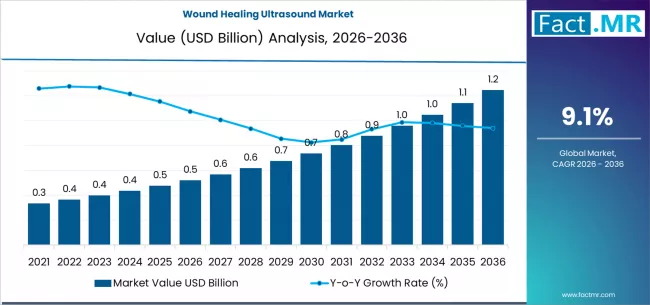
Wound healing ultrasound market is projected to grow from USD 0.5 billion in 2026 to USD 1.2 billion by 2036, at a CAGR of 9.1%. Low-frequency ultrasound therapy will dominate with a 65.1% market share, while chronic wounds will lead the application segment with a 69.3% share.
Wound Healing Ultrasound Market Forecast and Outlook 2026 to 2036
The global wound healing ultrasound market is projected to total USD 0.52 billion in 2026, advancing to USD 1.25 billion by 2036, achieving a compound annual growth rate of 9.1%. This growth is characterized by the strong dominance of low-frequency ultrasound therapy, which holds a 65.1% share due to its proven efficacy in penetrating deeper tissue for debridement and bio-stimulation.
Key Takeaways from the Wound Healing Ultrasound Market
- Market Value for 2026: USD 0.52 Billion
- Market Value for 2036: USD 1.25 Billion
- Forecast CAGR 2026 to 2036: 9.1%
- Leading Therapy Type Segment (2026): Low-frequency Ultrasound Therapy (65.1%)
- Leading Application Segment (2026): Chronic Wounds (69.3%)
- Leading End User Segment (2026): Hospitals (56.7%)
- Key Growth Countries: India (13.0% CAGR), China (12.8% CAGR), Brazil (12.3% CAGR), USA (11.8% CAGR)
- Key Players in the Market: Misonix, Sanuwave, Smith & Nephew plc., Medtronic plc., Arobella, Others
Chronic wounds will likely constitute 69.3% of all wound healing ultrasound applications in 2026, addressing the high clinical and economic burden of diabetic foot ulcers, venous leg ulcers, and pressure injuries. Hospitals remain the primary end-user at a 56.7% share, for managing complex cases.
Geographically, the highest growth rates are found in major emerging economies with rising healthcare burdens, led by India (13.0% CAGR) and China (12.8% CAGR), followed by Brazil (12.3% CAGR). The established US market also shows robust growth (11.8% CAGR) driven by technological adoption.
This market’s expansion signifies the growing integration of non-invasive, adjuvant physical therapy into standard wound care protocols, offering a solution to improve healing rates, reduce antibiotic use, and lower the long-term cost of managing non-healing wounds across diverse care settings from hospitals to home care.
Metric
| Metric | Value |
|---|---|
| Market Value (2026) | USD 0.52 Billion |
| Market Forecast Value (2036) | USD 1.25 Billion |
| Forecast CAGR 2026 to 2036 | 9.1% |
Category
| Category | Segments |
|---|---|
| Therapy Type | Low-frequency Ultrasound Therapy, High-frequency Ultrasound Therapy |
| Application | Chronic Wounds, Acute Wounds |
| End User | Hospitals, Wound Care Clinics, Home Care |
| Region | North America, Latin America, Western Europe, Eastern Europe, East Asia, South Asia & Pacific, MEA |
Segmental Analysis
By Therapy Type, Which Modality is Preferred for Deep Tissue Treatment?
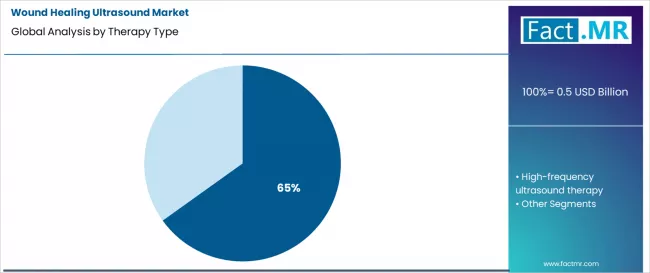
Low-frequency ultrasound therapy commands a dominant 65.1% share. This preference is due to its superior tissue penetration capabilities, which are essential for effectively debriding necrotic tissue, reducing biofilm burden, and stimulating cellular activity in deep, complex chronic wounds like diabetic foot ulcers.
Its mechanisms, including cavitation and acoustic streaming, promote healing at a foundational level, making it the clinically preferred non-invasive modality for the most challenging wound cases that dominate the market.
By Application, Where is the Greatest Unmet Clinical Need?
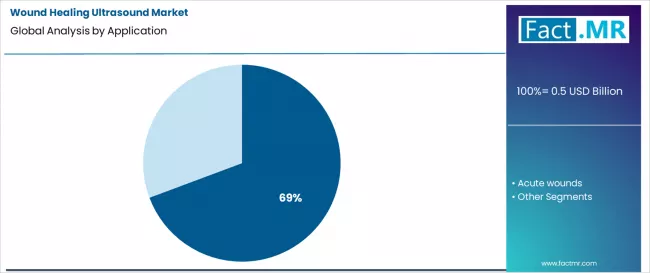
Chronic wounds represent the overwhelming application, holding a 69.3% share. This segment's dominance is driven by the severe clinical and economic burden of non-healing wounds, which are often complicated by comorbidities like diabetes and vascular disease.
Ultrasound therapy addresses a critical gap in chronic wound management by providing a non-invasive adjunct that can jumpstart stalled healing processes, reduce infection risk, and prevent amputations, creating a high-value use case.
By End User, Where are the Most Complex Cases Managed?
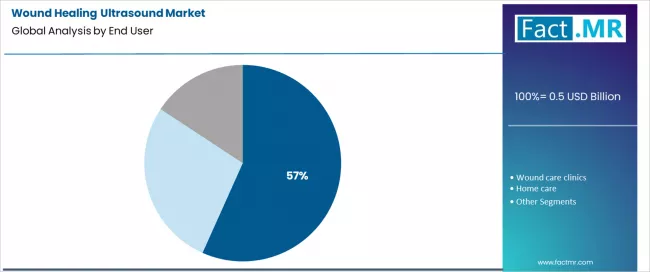
Hospitals constitute the leading end-user segment at 56.7%. This is where the most severe, infected, or surgically associated wounds are typically treated, requiring advanced therapeutic modalities.
Hospitals have the multidisciplinary teams necessary for comprehensive wound management and the capital budgets to invest in advanced ultrasound equipment. Their role as tertiary care centers solidifies their position as the primary adopters for integrating this technology into complex patient care pathways.
What are the Principal Drivers, Constraints, and Evolving Dynamics of this Market?
The paramount driver is the globally rising prevalence of diabetes and vascular diseases, leading to a surge in chronic wounds that are costly and difficult to heal with standard care alone. A key restraint is the significant upfront capital cost of professional-grade ultrasound systems and the requirement for trained clinicians to operate them effectively, limiting access in resource-constrained settings.
A major opportunity lies in the development of compact, user-friendly devices validated for safe home use, which would expand access and improve adherence for long-term chronic wound management. The defining trend is the integration of ultrasound therapy with other advanced modalities, such as negative pressure wound therapy or topical growth factors, into combined treatment protocols for synergistic healing effects.
Analysis of the Wound Healing Ultrasound Market by Key Countries
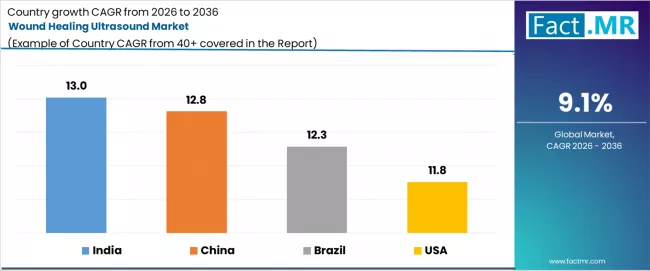
| Country | CAGR 2026 to 2036 |
|---|---|
| India | 13.0% |
| China | 12.8% |
| Brazil | 12.3% |
| USA | 11.8% |
How is India's Healthcare System Responding to the Diabetic Wound Burden?
India's leading growth rate of 13.0% CAGR is propelled by an epidemic of diabetes-related complications, creating an urgent, high-volume need for advanced wound care solutions. Growth is driven by the rapid expansion of private specialty hospitals and wound care clinics in urban and semi-urban areas, which are investing in advanced technologies to differentiate their services.
Increasing medical tourism for complex surgeries that require post-operative wound management further stimulates the adoption of adjuvant therapies like ultrasound to ensure positive outcomes.
What is Shaping China's Adoption of Advanced Wound Care Technologies?
China's robust growth at 12.8% CAGR is driven by the modernization of its hospital infrastructure and a strategic focus on improving outcomes for chronic diseases. Increased healthcare spending and a growing middle class with access to advanced treatments are key factors.
The market is also shaped by a strong domestic medical device sector actively developing and manufacturing cost-competitive ultrasound therapy devices, which are being deployed in both high-tier urban hospitals and gradually into county-level healthcare facilities to manage the growing burden of chronic wounds.
Why is Brazil's Public Health System a Conduit for Technology Adoption?
Brazil's significant growth at 12.3% CAGR is fueled by the proactive approach of its Unified Health System (SUS) in adopting technologies that can reduce long-term treatment costs and improve patient quality of life. The high prevalence of chronic wounds, particularly venous leg ulcers, within the public system creates a clear cost-benefit argument for integrating ultrasound therapy to accelerate healing and free up resources. Specialized public wound care centers are becoming key sites for the evaluation and adoption of these devices.
How do Reimbursement and Outpatient Care Trends Drive the US Market?
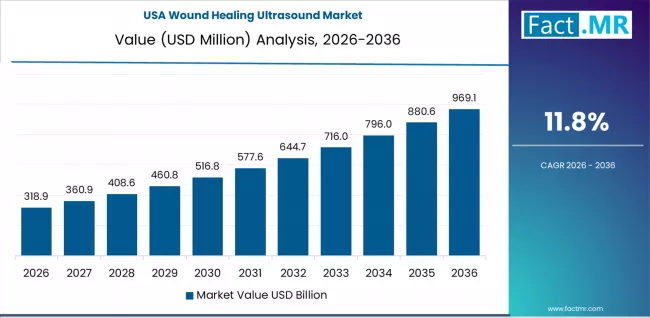
Favorable reimbursement pathways for non-invasive wound therapies within both public (Medicare) and private insurance systems characterize the USA’s strong growth at 11.8% CAGR. This financial support lowers the adoption barrier for hospitals and clinics.
Growth is propelled by the shift of wound care from inpatient to outpatient and ambulatory surgical centers, where efficient, effective adjunctive therapies like ultrasound are highly valued for improving patient throughput and outcomes in a cost-conscious setting.
Competitive Landscape of the Wound Healing Ultrasound Market
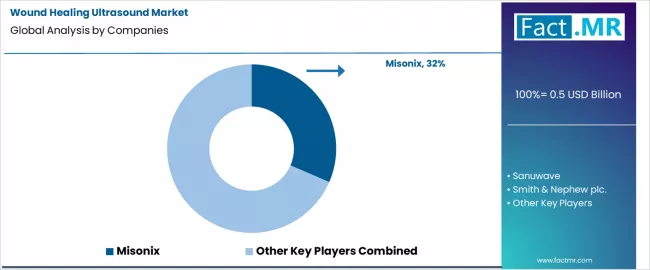
The competitive landscape features specialized medical technology companies focused on advanced wound care competing with diversified healthcare giants. Pure-play companies like Misonix and Sanuwave compete on the strength of their proprietary ultrasound technologies and clinical evidence in specific wound indications.
Large players like Smith & Nephew and Medtronic plc, in contrast, leverage their extensive wound care portfolios and global commercial footprints to integrate ultrasound devices into broader therapeutic bundles. Success hinges on demonstrating clear clinical efficacy and cost-effectiveness data to secure adoption in hospital formularies, while the emerging frontier involves developing partnerships with home health agencies to capture the growing decentralized care segment.
Key Players in the Wound Healing Ultrasound Market
- Misonix
- Sanuwave
- Smith & Nephew plc.
- Medtronic plc.
- Arobella
- Others
Scope of Report
| Items | Values |
|---|---|
| Quantitative Units | USD Billion |
| Therapy Type | Low-frequency Ultrasound Therapy, High-frequency Ultrasound Therapy |
| Application | Chronic Wounds, Acute Wounds |
| End User | Hospitals, Wound Care Clinics, Home Care |
| Key Countries | India, China, Brazil, USA |
| Key Companies | Misonix, Sanuwave, Smith & Nephew plc., Medtronic plc., Arobella, Others |
| Additional Analysis | Comparative analysis of healing rate improvement and time to closure; study of cost-effectiveness versus standard moist wound care; impact on antibiotic utilization and infection rates; analysis of device portability and ease-of-use for different care settings; assessment of training requirements and learning curves for clinicians. |
Market by Segments
-
Therapy Type :
- Low-frequency Ultrasound Therapy
- High-frequency Ultrasound Therapy
-
Application :
- Chronic Wounds
- Acute Wounds
-
End User :
- Hospitals
- Wound Care Clinics
- Home Care
-
Region :
-
North America
- USA
- Canada
-
Latin America
- Brazil
- Mexico
- Argentina
- Rest of Latin America
-
Western Europe
- Germany
- France
- Italy
- Spain
- UK
- BENELUX
- Rest of Western Europe
-
Eastern Europe
- Russia
- Poland
- Czech Republic
- Rest of Eastern Europe
-
East Asia
- China
- Japan
- South Korea
- Rest of East Asia
-
South Asia & Pacific
- India
- ASEAN
- Australia
- Rest of South Asia & Pacific
-
MEA
- GCC Countries
- South Africa
- Turkiye
- Rest of MEA
-
Bibliography
- European Wound Management Association. (2025).Position Document: Advanced Therapies for Hard-to-Heal Wounds. EWMA.
- International Diabetes Federation. (2025).IDF Diabetes Atlas - 11th Edition. IDF.
- National Pressure Injury Advisory Panel. (2024).Prevention and Treatment of Pressure Ulcers/Injuries: Clinical Practice Guideline. NPIAP.
- Sen, C. K. (2024).Human Wounds and Its Burden: An Updated Compendium of Estimates. Advances in Wound Care, 13(5), 211-224.
- World Union of Wound Healing Societies. (2025).Consensus Document on the Use of Ultrasound in Wound Management. WUWHS.
Table of Content
- Executive Summary
- Global Market Outlook
- Demand to side Trends
- Supply to side Trends
- Technology Roadmap Analysis
- Analysis and Recommendations
- Market Overview
- Market Coverage / Taxonomy
- Market Definition / Scope / Limitations
- Market Background
- Market Dynamics
- Drivers
- Restraints
- Opportunity
- Trends
- Scenario Forecast
- Demand in Optimistic Scenario
- Demand in Likely Scenario
- Demand in Conservative Scenario
- Opportunity Map Analysis
- Product Life Cycle Analysis
- Supply Chain Analysis
- Investment Feasibility Matrix
- Value Chain Analysis
- PESTLE and Porter’s Analysis
- Regulatory Landscape
- Regional Parent Market Outlook
- Production and Consumption Statistics
- Import and Export Statistics
- Market Dynamics
- Global Market Analysis 2021 to 2025 and Forecast, 2026 to 2036
- Historical Market Size Value (USD Million) Analysis, 2021 to 2025
- Current and Future Market Size Value (USD Million) Projections, 2026 to 2036
- Y to o to Y Growth Trend Analysis
- Absolute $ Opportunity Analysis
- Global Market Pricing Analysis 2021 to 2025 and Forecast 2026 to 2036
- Global Market Analysis 2021 to 2025 and Forecast 2026 to 2036, By Therapy Type
- Introduction / Key Findings
- Historical Market Size Value (USD Million) Analysis By Therapy Type, 2021 to 2025
- Current and Future Market Size Value (USD Million) Analysis and Forecast By Therapy Type, 2026 to 2036
- Low-frequency ultrasound therapy
- High-frequency ultrasound therapy
- Low-frequency ultrasound therapy
- Y to o to Y Growth Trend Analysis By Therapy Type, 2021 to 2025
- Absolute $ Opportunity Analysis By Therapy Type, 2026 to 2036
- Global Market Analysis 2021 to 2025 and Forecast 2026 to 2036, By Application
- Introduction / Key Findings
- Historical Market Size Value (USD Million) Analysis By Application, 2021 to 2025
- Current and Future Market Size Value (USD Million) Analysis and Forecast By Application, 2026 to 2036
- Chronic wounds
- Acute wounds
- Chronic wounds
- Y to o to Y Growth Trend Analysis By Application, 2021 to 2025
- Absolute $ Opportunity Analysis By Application, 2026 to 2036
- Global Market Analysis 2021 to 2025 and Forecast 2026 to 2036, By End User
- Introduction / Key Findings
- Historical Market Size Value (USD Million) Analysis By End User, 2021 to 2025
- Current and Future Market Size Value (USD Million) Analysis and Forecast By End User, 2026 to 2036
- Hospitals
- Wound care clinics
- Home care
- Hospitals
- Y to o to Y Growth Trend Analysis By End User, 2021 to 2025
- Absolute $ Opportunity Analysis By End User, 2026 to 2036
- Global Market Analysis 2021 to 2025 and Forecast 2026 to 2036, By Region
- Introduction
- Historical Market Size Value (USD Million) Analysis By Region, 2021 to 2025
- Current Market Size Value (USD Million) Analysis and Forecast By Region, 2026 to 2036
- North America
- Latin America
- Western Europe
- Eastern Europe
- East Asia
- South Asia and Pacific
- Middle East & Africa
- Market Attractiveness Analysis By Region
- North America Market Analysis 2021 to 2025 and Forecast 2026 to 2036, By Country
- Historical Market Size Value (USD Million) Trend Analysis By Market Taxonomy, 2021 to 2025
- Market Size Value (USD Million) Forecast By Market Taxonomy, 2026 to 2036
- By Country
- USA
- Canada
- Mexico
- By Therapy Type
- By Application
- By End User
- By Country
- Market Attractiveness Analysis
- By Country
- By Therapy Type
- By Application
- By End User
- Key Takeaways
- Latin America Market Analysis 2021 to 2025 and Forecast 2026 to 2036, By Country
- Historical Market Size Value (USD Million) Trend Analysis By Market Taxonomy, 2021 to 2025
- Market Size Value (USD Million) Forecast By Market Taxonomy, 2026 to 2036
- By Country
- Brazil
- Chile
- Rest of Latin America
- By Therapy Type
- By Application
- By End User
- By Country
- Market Attractiveness Analysis
- By Country
- By Therapy Type
- By Application
- By End User
- Key Takeaways
- Western Europe Market Analysis 2021 to 2025 and Forecast 2026 to 2036, By Country
- Historical Market Size Value (USD Million) Trend Analysis By Market Taxonomy, 2021 to 2025
- Market Size Value (USD Million) Forecast By Market Taxonomy, 2026 to 2036
- By Country
- Germany
- UK
- Italy
- Spain
- France
- Nordic
- BENELUX
- Rest of Western Europe
- By Therapy Type
- By Application
- By End User
- By Country
- Market Attractiveness Analysis
- By Country
- By Therapy Type
- By Application
- By End User
- Key Takeaways
- Eastern Europe Market Analysis 2021 to 2025 and Forecast 2026 to 2036, By Country
- Historical Market Size Value (USD Million) Trend Analysis By Market Taxonomy, 2021 to 2025
- Market Size Value (USD Million) Forecast By Market Taxonomy, 2026 to 2036
- By Country
- Russia
- Poland
- Hungary
- Balkan & Baltic
- Rest of Eastern Europe
- By Therapy Type
- By Application
- By End User
- By Country
- Market Attractiveness Analysis
- By Country
- By Therapy Type
- By Application
- By End User
- Key Takeaways
- East Asia Market Analysis 2021 to 2025 and Forecast 2026 to 2036, By Country
- Historical Market Size Value (USD Million) Trend Analysis By Market Taxonomy, 2021 to 2025
- Market Size Value (USD Million) Forecast By Market Taxonomy, 2026 to 2036
- By Country
- China
- Japan
- South Korea
- By Therapy Type
- By Application
- By End User
- By Country
- Market Attractiveness Analysis
- By Country
- By Therapy Type
- By Application
- By End User
- Key Takeaways
- South Asia and Pacific Market Analysis 2021 to 2025 and Forecast 2026 to 2036, By Country
- Historical Market Size Value (USD Million) Trend Analysis By Market Taxonomy, 2021 to 2025
- Market Size Value (USD Million) Forecast By Market Taxonomy, 2026 to 2036
- By Country
- India
- ASEAN
- Australia & New Zealand
- Rest of South Asia and Pacific
- By Therapy Type
- By Application
- By End User
- By Country
- Market Attractiveness Analysis
- By Country
- By Therapy Type
- By Application
- By End User
- Key Takeaways
- Middle East & Africa Market Analysis 2021 to 2025 and Forecast 2026 to 2036, By Country
- Historical Market Size Value (USD Million) Trend Analysis By Market Taxonomy, 2021 to 2025
- Market Size Value (USD Million) Forecast By Market Taxonomy, 2026 to 2036
- By Country
- Kingdom of Saudi Arabia
- Other GCC Countries
- Turkiye
- South Africa
- Other African Union
- Rest of Middle East & Africa
- By Therapy Type
- By Application
- By End User
- By Country
- Market Attractiveness Analysis
- By Country
- By Therapy Type
- By Application
- By End User
- Key Takeaways
- Key Countries Market Analysis
- USA
- Pricing Analysis
- Market Share Analysis, 2025
- By Therapy Type
- By Application
- By End User
- Canada
- Pricing Analysis
- Market Share Analysis, 2025
- By Therapy Type
- By Application
- By End User
- Mexico
- Pricing Analysis
- Market Share Analysis, 2025
- By Therapy Type
- By Application
- By End User
- Brazil
- Pricing Analysis
- Market Share Analysis, 2025
- By Therapy Type
- By Application
- By End User
- Chile
- Pricing Analysis
- Market Share Analysis, 2025
- By Therapy Type
- By Application
- By End User
- Germany
- Pricing Analysis
- Market Share Analysis, 2025
- By Therapy Type
- By Application
- By End User
- UK
- Pricing Analysis
- Market Share Analysis, 2025
- By Therapy Type
- By Application
- By End User
- Italy
- Pricing Analysis
- Market Share Analysis, 2025
- By Therapy Type
- By Application
- By End User
- Spain
- Pricing Analysis
- Market Share Analysis, 2025
- By Therapy Type
- By Application
- By End User
- France
- Pricing Analysis
- Market Share Analysis, 2025
- By Therapy Type
- By Application
- By End User
- India
- Pricing Analysis
- Market Share Analysis, 2025
- By Therapy Type
- By Application
- By End User
- ASEAN
- Pricing Analysis
- Market Share Analysis, 2025
- By Therapy Type
- By Application
- By End User
- Australia & New Zealand
- Pricing Analysis
- Market Share Analysis, 2025
- By Therapy Type
- By Application
- By End User
- China
- Pricing Analysis
- Market Share Analysis, 2025
- By Therapy Type
- By Application
- By End User
- Japan
- Pricing Analysis
- Market Share Analysis, 2025
- By Therapy Type
- By Application
- By End User
- South Korea
- Pricing Analysis
- Market Share Analysis, 2025
- By Therapy Type
- By Application
- By End User
- Russia
- Pricing Analysis
- Market Share Analysis, 2025
- By Therapy Type
- By Application
- By End User
- Poland
- Pricing Analysis
- Market Share Analysis, 2025
- By Therapy Type
- By Application
- By End User
- Hungary
- Pricing Analysis
- Market Share Analysis, 2025
- By Therapy Type
- By Application
- By End User
- Kingdom of Saudi Arabia
- Pricing Analysis
- Market Share Analysis, 2025
- By Therapy Type
- By Application
- By End User
- Turkiye
- Pricing Analysis
- Market Share Analysis, 2025
- By Therapy Type
- By Application
- By End User
- South Africa
- Pricing Analysis
- Market Share Analysis, 2025
- By Therapy Type
- By Application
- By End User
- USA
- Market Structure Analysis
- Competition Dashboard
- Competition Benchmarking
- Market Share Analysis of Top Players
- By Regional
- By Therapy Type
- By Application
- By End User
- Competition Analysis
- Competition Deep Dive
- Misonix
- Overview
- Product Portfolio
- Profitability by Market Segments (Product/Age /Sales Channel/Region)
- Sales Footprint
- Strategy Overview
- Marketing Strategy
- Product Strategy
- Channel Strategy
- Sanuwave
- Smith & Nephew plc.
- Medtronic plc.
- Arobella
- Others
- Misonix
- Competition Deep Dive
- Assumptions & Acronyms Used
- Research Methodology
List Of Table
- Table 1: Global Market Value (USD Million) Forecast by Region, 2021 to 2036
- Table 2: Global Market Value (USD Million) Forecast by Therapy Type, 2021 to 2036
- Table 3: Global Market Value (USD Million) Forecast by Application, 2021 to 2036
- Table 4: Global Market Value (USD Million) Forecast by End User, 2021 to 2036
- Table 5: North America Market Value (USD Million) Forecast by Country, 2021 to 2036
- Table 6: North America Market Value (USD Million) Forecast by Therapy Type, 2021 to 2036
- Table 7: North America Market Value (USD Million) Forecast by Application, 2021 to 2036
- Table 8: North America Market Value (USD Million) Forecast by End User, 2021 to 2036
- Table 9: Latin America Market Value (USD Million) Forecast by Country, 2021 to 2036
- Table 10: Latin America Market Value (USD Million) Forecast by Therapy Type, 2021 to 2036
- Table 11: Latin America Market Value (USD Million) Forecast by Application, 2021 to 2036
- Table 12: Latin America Market Value (USD Million) Forecast by End User, 2021 to 2036
- Table 13: Western Europe Market Value (USD Million) Forecast by Country, 2021 to 2036
- Table 14: Western Europe Market Value (USD Million) Forecast by Therapy Type, 2021 to 2036
- Table 15: Western Europe Market Value (USD Million) Forecast by Application, 2021 to 2036
- Table 16: Western Europe Market Value (USD Million) Forecast by End User, 2021 to 2036
- Table 17: Eastern Europe Market Value (USD Million) Forecast by Country, 2021 to 2036
- Table 18: Eastern Europe Market Value (USD Million) Forecast by Therapy Type, 2021 to 2036
- Table 19: Eastern Europe Market Value (USD Million) Forecast by Application, 2021 to 2036
- Table 20: Eastern Europe Market Value (USD Million) Forecast by End User, 2021 to 2036
- Table 21: East Asia Market Value (USD Million) Forecast by Country, 2021 to 2036
- Table 22: East Asia Market Value (USD Million) Forecast by Therapy Type, 2021 to 2036
- Table 23: East Asia Market Value (USD Million) Forecast by Application, 2021 to 2036
- Table 24: East Asia Market Value (USD Million) Forecast by End User, 2021 to 2036
- Table 25: South Asia and Pacific Market Value (USD Million) Forecast by Country, 2021 to 2036
- Table 26: South Asia and Pacific Market Value (USD Million) Forecast by Therapy Type, 2021 to 2036
- Table 27: South Asia and Pacific Market Value (USD Million) Forecast by Application, 2021 to 2036
- Table 28: South Asia and Pacific Market Value (USD Million) Forecast by End User, 2021 to 2036
- Table 29: Middle East & Africa Market Value (USD Million) Forecast by Country, 2021 to 2036
- Table 30: Middle East & Africa Market Value (USD Million) Forecast by Therapy Type, 2021 to 2036
- Table 31: Middle East & Africa Market Value (USD Million) Forecast by Application, 2021 to 2036
- Table 32: Middle East & Africa Market Value (USD Million) Forecast by End User, 2021 to 2036
List Of Figures
- Figure 1: Global Market Pricing Analysis
- Figure 2: Global Market Value (USD Million) Forecast 2021 to 2036
- Figure 3: Global Market Value Share and BPS Analysis by Therapy Type, 2026 and 2036
- Figure 4: Global Market Y to o to Y Growth Comparison by Therapy Type, 2026 to 2036
- Figure 5: Global Market Attractiveness Analysis by Therapy Type
- Figure 6: Global Market Value Share and BPS Analysis by Application, 2026 and 2036
- Figure 7: Global Market Y to o to Y Growth Comparison by Application, 2026 to 2036
- Figure 8: Global Market Attractiveness Analysis by Application
- Figure 9: Global Market Value Share and BPS Analysis by End User, 2026 and 2036
- Figure 10: Global Market Y to o to Y Growth Comparison by End User, 2026 to 2036
- Figure 11: Global Market Attractiveness Analysis by End User
- Figure 12: Global Market Value (USD Million) Share and BPS Analysis by Region, 2026 and 2036
- Figure 13: Global Market Y to o to Y Growth Comparison by Region, 2026 to 2036
- Figure 14: Global Market Attractiveness Analysis by Region
- Figure 15: North America Market Incremental Dollar Opportunity, 2026 to 2036
- Figure 16: Latin America Market Incremental Dollar Opportunity, 2026 to 2036
- Figure 17: Western Europe Market Incremental Dollar Opportunity, 2026 to 2036
- Figure 18: Eastern Europe Market Incremental Dollar Opportunity, 2026 to 2036
- Figure 19: East Asia Market Incremental Dollar Opportunity, 2026 to 2036
- Figure 20: South Asia and Pacific Market Incremental Dollar Opportunity, 2026 to 2036
- Figure 21: Middle East & Africa Market Incremental Dollar Opportunity, 2026 to 2036
- Figure 22: North America Market Value Share and BPS Analysis by Country, 2026 and 2036
- Figure 23: North America Market Value Share and BPS Analysis by Therapy Type, 2026 and 2036
- Figure 24: North America Market Y to o to Y Growth Comparison by Therapy Type, 2026 to 2036
- Figure 25: North America Market Attractiveness Analysis by Therapy Type
- Figure 26: North America Market Value Share and BPS Analysis by Application, 2026 and 2036
- Figure 27: North America Market Y to o to Y Growth Comparison by Application, 2026 to 2036
- Figure 28: North America Market Attractiveness Analysis by Application
- Figure 29: North America Market Value Share and BPS Analysis by End User, 2026 and 2036
- Figure 30: North America Market Y to o to Y Growth Comparison by End User, 2026 to 2036
- Figure 31: North America Market Attractiveness Analysis by End User
- Figure 32: Latin America Market Value Share and BPS Analysis by Country, 2026 and 2036
- Figure 33: Latin America Market Value Share and BPS Analysis by Therapy Type, 2026 and 2036
- Figure 34: Latin America Market Y to o to Y Growth Comparison by Therapy Type, 2026 to 2036
- Figure 35: Latin America Market Attractiveness Analysis by Therapy Type
- Figure 36: Latin America Market Value Share and BPS Analysis by Application, 2026 and 2036
- Figure 37: Latin America Market Y to o to Y Growth Comparison by Application, 2026 to 2036
- Figure 38: Latin America Market Attractiveness Analysis by Application
- Figure 39: Latin America Market Value Share and BPS Analysis by End User, 2026 and 2036
- Figure 40: Latin America Market Y to o to Y Growth Comparison by End User, 2026 to 2036
- Figure 41: Latin America Market Attractiveness Analysis by End User
- Figure 42: Western Europe Market Value Share and BPS Analysis by Country, 2026 and 2036
- Figure 43: Western Europe Market Value Share and BPS Analysis by Therapy Type, 2026 and 2036
- Figure 44: Western Europe Market Y to o to Y Growth Comparison by Therapy Type, 2026 to 2036
- Figure 45: Western Europe Market Attractiveness Analysis by Therapy Type
- Figure 46: Western Europe Market Value Share and BPS Analysis by Application, 2026 and 2036
- Figure 47: Western Europe Market Y to o to Y Growth Comparison by Application, 2026 to 2036
- Figure 48: Western Europe Market Attractiveness Analysis by Application
- Figure 49: Western Europe Market Value Share and BPS Analysis by End User, 2026 and 2036
- Figure 50: Western Europe Market Y to o to Y Growth Comparison by End User, 2026 to 2036
- Figure 51: Western Europe Market Attractiveness Analysis by End User
- Figure 52: Eastern Europe Market Value Share and BPS Analysis by Country, 2026 and 2036
- Figure 53: Eastern Europe Market Value Share and BPS Analysis by Therapy Type, 2026 and 2036
- Figure 54: Eastern Europe Market Y to o to Y Growth Comparison by Therapy Type, 2026 to 2036
- Figure 55: Eastern Europe Market Attractiveness Analysis by Therapy Type
- Figure 56: Eastern Europe Market Value Share and BPS Analysis by Application, 2026 and 2036
- Figure 57: Eastern Europe Market Y to o to Y Growth Comparison by Application, 2026 to 2036
- Figure 58: Eastern Europe Market Attractiveness Analysis by Application
- Figure 59: Eastern Europe Market Value Share and BPS Analysis by End User, 2026 and 2036
- Figure 60: Eastern Europe Market Y to o to Y Growth Comparison by End User, 2026 to 2036
- Figure 61: Eastern Europe Market Attractiveness Analysis by End User
- Figure 62: East Asia Market Value Share and BPS Analysis by Country, 2026 and 2036
- Figure 63: East Asia Market Value Share and BPS Analysis by Therapy Type, 2026 and 2036
- Figure 64: East Asia Market Y to o to Y Growth Comparison by Therapy Type, 2026 to 2036
- Figure 65: East Asia Market Attractiveness Analysis by Therapy Type
- Figure 66: East Asia Market Value Share and BPS Analysis by Application, 2026 and 2036
- Figure 67: East Asia Market Y to o to Y Growth Comparison by Application, 2026 to 2036
- Figure 68: East Asia Market Attractiveness Analysis by Application
- Figure 69: East Asia Market Value Share and BPS Analysis by End User, 2026 and 2036
- Figure 70: East Asia Market Y to o to Y Growth Comparison by End User, 2026 to 2036
- Figure 71: East Asia Market Attractiveness Analysis by End User
- Figure 72: South Asia and Pacific Market Value Share and BPS Analysis by Country, 2026 and 2036
- Figure 73: South Asia and Pacific Market Value Share and BPS Analysis by Therapy Type, 2026 and 2036
- Figure 74: South Asia and Pacific Market Y to o to Y Growth Comparison by Therapy Type, 2026 to 2036
- Figure 75: South Asia and Pacific Market Attractiveness Analysis by Therapy Type
- Figure 76: South Asia and Pacific Market Value Share and BPS Analysis by Application, 2026 and 2036
- Figure 77: South Asia and Pacific Market Y to o to Y Growth Comparison by Application, 2026 to 2036
- Figure 78: South Asia and Pacific Market Attractiveness Analysis by Application
- Figure 79: South Asia and Pacific Market Value Share and BPS Analysis by End User, 2026 and 2036
- Figure 80: South Asia and Pacific Market Y to o to Y Growth Comparison by End User, 2026 to 2036
- Figure 81: South Asia and Pacific Market Attractiveness Analysis by End User
- Figure 82: Middle East & Africa Market Value Share and BPS Analysis by Country, 2026 and 2036
- Figure 83: Middle East & Africa Market Value Share and BPS Analysis by Therapy Type, 2026 and 2036
- Figure 84: Middle East & Africa Market Y to o to Y Growth Comparison by Therapy Type, 2026 to 2036
- Figure 85: Middle East & Africa Market Attractiveness Analysis by Therapy Type
- Figure 86: Middle East & Africa Market Value Share and BPS Analysis by Application, 2026 and 2036
- Figure 87: Middle East & Africa Market Y to o to Y Growth Comparison by Application, 2026 to 2036
- Figure 88: Middle East & Africa Market Attractiveness Analysis by Application
- Figure 89: Middle East & Africa Market Value Share and BPS Analysis by End User, 2026 and 2036
- Figure 90: Middle East & Africa Market Y to o to Y Growth Comparison by End User, 2026 to 2036
- Figure 91: Middle East & Africa Market Attractiveness Analysis by End User
- Figure 92: Global Market - Tier Structure Analysis
- Figure 93: Global Market - Company Share Analysis
- FAQs -
How big is the wound healing ultrasound market in 2026?
The global wound healing ultrasound market is estimated to be valued at USD 0.5 billion in 2026.
What will be the size of wound healing ultrasound market in 2036?
The market size for the wound healing ultrasound market is projected to reach USD 1.2 billion by 2036.
How much will be the wound healing ultrasound market growth between 2026 and 2036?
The wound healing ultrasound market is expected to grow at a 9.1% CAGR between 2026 and 2036.
What are the key product types in the wound healing ultrasound market?
The key product types in wound healing ultrasound market are low-frequency ultrasound therapy and high-frequency ultrasound therapy.
Which application segment to contribute significant share in the wound healing ultrasound market in 2026?
In terms of application, chronic wounds segment to command 69.3% share in the wound healing ultrasound market in 2026.