- Base Value(2025): 315.2 Bn
- Estimated Value(2026): 347.4 Bn
- Forecast Value (2036): 917.5 Bn
- CAGR (2026 - 2036): 10.2%
Zero Waste Packaging Market Analysis and Forecast by Fact.MR
- The global market for zero waste packaging is estimated to be around US$ 347.4 billion in 2026 and has been forecast to expand at a CAGR of 10.2% to end up at US$ 917.5 billion by 2036.
- Zero waste packaging includes reusable, recyclable, compostable, and biodegradable formats designed to divert post-consumer materials from landfill and incineration.
- Materials span paper, cardboard, bioplastics, mushroom-based composites, seaweed films, and mono-material plastics engineered for closed-loop recovery.
- Growth reflects regulatory pressure on single-use plastics, corporate sustainability targets, consumer preference shifts toward eco-conscious brands, and rising investment in packaging infrastructure that supports circular economy models across food, beverage, personal care, and e-commerce supply chains.
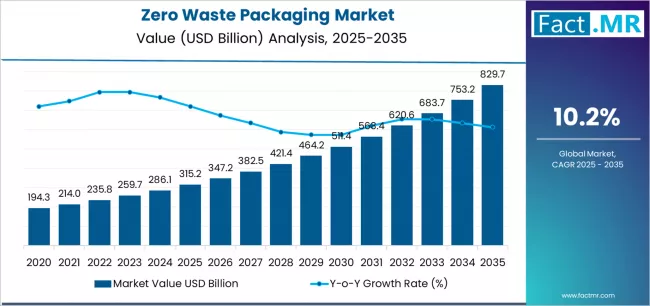
Zero Waste Packaging Market Market Value Analysis | Source: Fact.MR
Summary of Zero Waste Packaging Market
- Market Snapshot
- In 2025, the global Zero Waste Packaging Market was valued at approximately USD 315.2 billion.
- The market is estimated to reach USD 347.4 billion in 2026 and is projected to attain USD 917.5 billion by 2036.
- The zero waste packaging market is likely to expand at a CAGR of 10.2% during the forecast period.
- The market is anticipated to create an absolute dollar opportunity of USD 570.1 billion between 2026 and 2036.
- Paper And Cardboard accounts for 36% of material share in 2026.
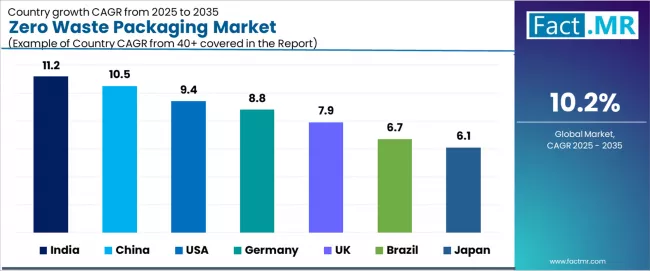
- India (11.2%) and China (10.5%) are the key growth markets during the forecast period.
- Demand and Growth Drivers
- Tightening extended producer responsibility legislation across Europe, North America, and parts of Asia Pacific is requiring packaging producers to fund end-of-life collection and recycling infrastructure.
- Brand owner sustainability pledges are driving procurement shifts toward mono-material, compostable, and reusable packaging formats across food, beverage, and personal care categories.
- Consumer demand for eco-conscious packaging is influencing retailer private label specifications and creating shelf-space advantages for brands with credible waste-reduction claims.
- Expansion of municipal and commercial composting infrastructure is improving the viability of compostable packaging formats in markets where collection systems are maturing.
- Growth in e-commerce fulfillment is increasing demand for protective packaging made from recyclable and biodegradable materials that meet transit durability requirements without plastic fill.
- Product and Segment View
- Paper And Cardboard accounts for 36% of material share in 2026, supported by consistent demand across primary end-use applications.
- Reusable And Recyclable Packaging accounts for 52% of usability type share in 2026, supported by consistent demand across primary end-use applications.
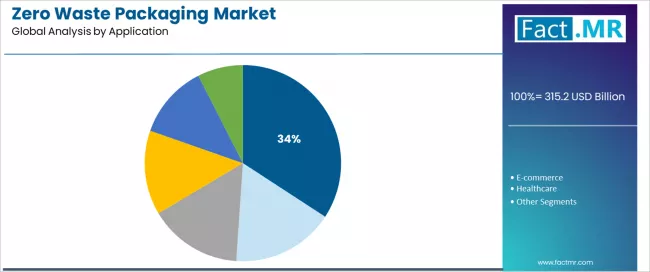
- Food And Beverages accounts for 42% of application share in 2026, supported by consistent demand across primary end-use applications.
- Key segmentation includes:
- Material: Paper And Cardboard, Corrugated Board, Kraft Paper, Biopolymer, PLA Based Materials, PHA And Starch Blends, Glass Packaging, Glass Bottles, Glass Jars, Metal Packaging, Aluminum Packaging, Steel Packaging
- Usability Type: Reusable And Recyclable Packaging, Reusable Containers, Recyclable Materials, Compostable Packaging, Industrial Compostable, Home Compostable, Edible Packaging, Food Grade Films, Advanced Edible Containers
- Application: Food And Beverages, Fresh Food Packaging, Processed Food Packaging, E Commerce, Shipping Packaging, Retail Packaging, Healthcare, Medical Packaging, Hospital Supplies, Cosmetics And Personal Care, Skincare Packaging, Personal Care Products, Electrical And Electronics, Protective Packaging, Component Packaging, Others, Industrial Packaging, Agriculture Packaging
- Distribution Channel: Direct Sales, Brand Owned Channels, Corporate Contracts, Distributors And Wholesalers, Regional Distributors, Bulk Wholesalers, Online Channels, E Commerce Platforms, Company Websites
- These systems enable:
- Diversion of post-consumer packaging materials from landfill through reusable, recyclable, and compostable design
- Barrier performance and shelf-life protection using bio-based and mono-material substrates
- Integration with existing collection, sorting, and reprocessing infrastructure for closed-loop recovery
- Geography and Competitive Outlook
- Asia Pacific leads growth with India at 11.2%, China at 10.5%, Japan at 6.1%, supported by expanding industrial capacity and infrastructure investment.
- North America shows steady demand with USA at 9.4%, reflecting established end-use markets and investment activity.
- European demand remains steady with Germany at 8.8%, UK at 7.9%, supported by regulatory requirements and technology upgrades.
- India (11.2%) and China (10.5%) are the key growth markets during the forecast period.
- Leading participants include DS Smith plc, Ecovative LLC, Biome Bioplastics Limited, Avani Eco, Sulapac Oy, TIPA.
- Analyst Opinion
- Shambhu Nath Jha, Principal Consultant at Fact.MR, says 'The zero waste packaging market is being shaped by two converging forces: regulatory mandates and brand owner commitments. Extended producer responsibility schemes in Europe and parts of Asia are making waste-generating packaging formats economically unviable. At the same time, brand owners are setting public targets that require measurable packaging circularity. The result is a procurement shift that favors paper, mono-material plastics, and compostable substrates. Companies that can deliver scalable, cost-competitive alternatives with proven supply chain compatibility are capturing share from conventional flexible and multi-layer formats.'
Key Growth Drivers, Constraints, and Opportunities
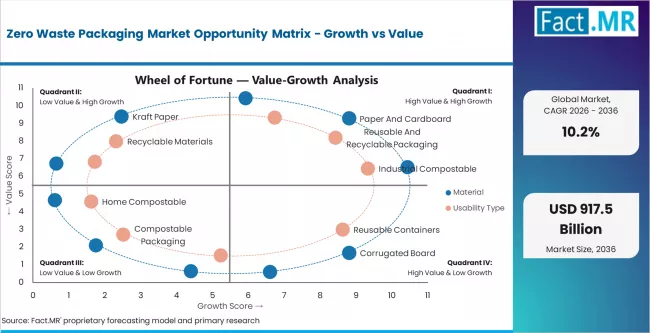
Zero Waste Packaging Market Opportunity Matrix Growth Vs Value | Source: Fact.MR
Key Factors Driving Growth
- Regulatory bans and levies on single-use plastics are accelerating the transition to recyclable and compostable packaging alternatives across multiple end-use categories.
- Corporate net-zero and circular economy targets are embedding zero waste packaging specifications into procurement frameworks across global supply chains.
- Rising consumer willingness to pay premiums for sustainably packaged products is improving the commercial viability of alternative material formats.
Key Market Constraints
- Higher material and conversion costs for compostable and bio-based packaging relative to conventional plastics limit adoption in price-sensitive categories.
- Limited composting and collection infrastructure in many markets reduces the practical circularity of compostable packaging formats.
- Performance gaps in moisture barrier and shelf-life protection for some alternative materials restrict applicability in certain food and beverage categories.
Key Opportunity Areas
- Expansion of deposit return schemes and refill systems creates demand for durable, reusable packaging formats with standardized dimensions and material specifications.
- Growth in mono-material flexible packaging enables recycling compatibility while maintaining cost and performance competitiveness against multi-layer laminates.
- Development of seaweed, mushroom, and agricultural waste-based packaging substrates offers differentiation for brands targeting premium sustainability positioning.
Segment-wise Analysis of the Zero Waste Packaging Market
- Paper And Cardboard holds 36% of the material segment in 2026, supported by established demand across primary end-use applications.
- Reusable And Recyclable Packaging represents 52% of the usability type segment in 2026, with consistent adoption across core applications.
- Food And Beverages accounts for 42% of the application segment in 2026, reflecting concentrated demand in the leading vertical.
The zero waste packaging market is segmented by material, usability type, application, distribution channel, and region. Paper And Cardboard leads by value in the near term, while emerging categories are expected to drive the next phase of growth as end-use requirements evolve.
Which Material Segment Dominates the Zero Waste Packaging Market?
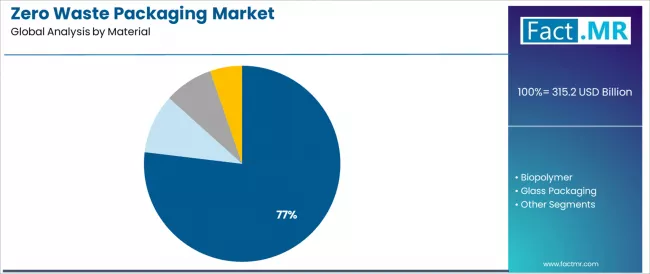
Zero Waste Packaging Market Analysis By Material | Source: Fact.MR
Paper And Cardboard is expected to account for 36% of the material segment in the global Zero Waste Packaging Market by 2026. Demand is supported by consistent procurement across primary end-use applications, where established performance requirements and pricing accessibility sustain the installed base.
The segment is expected to maintain its position through the forecast period as replacement demand and capacity expansion in core verticals continue to generate steady procurement. Emerging alternatives are gaining share, but paper and cardboard remains the primary volume category because of buyer familiarity and application suitability across mature and developing markets.
Which Usability Type Segment Dominates the Zero Waste Packaging Market?
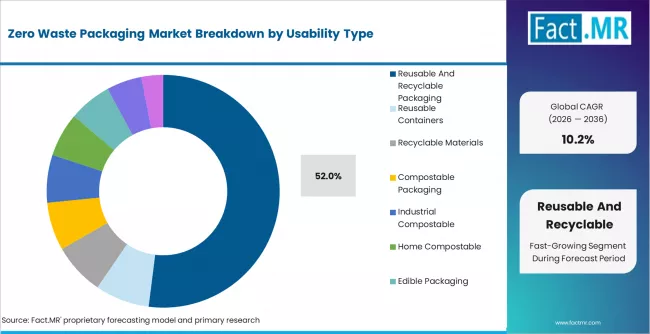
Zero Waste Packaging Market Analysis By Usability Type | Source: Fact.MR
Reusable And Recyclable Packaging is expected to account for 52% of the usability type segment in the global Zero Waste Packaging Market by 2026. Demand is supported by consistent procurement across primary end-use applications, where established performance requirements and pricing accessibility sustain the installed base.
The segment is expected to maintain its position through the forecast period as replacement demand and capacity expansion in core verticals continue to generate steady procurement. Emerging alternatives are gaining share, but reusable and recyclable packaging remains the primary volume category because of buyer familiarity and application suitability across mature and developing markets.
Which Application Segment Dominates the Zero Waste Packaging Market?
Zero Waste Packaging Market Analysis By Application | Source: Fact.MR
Food And Beverages is expected to account for 42% of the application segment in the global Zero Waste Packaging Market by 2026. Demand is supported by consistent procurement across primary end-use applications, where established performance requirements and pricing accessibility sustain the installed base.
The segment is expected to maintain its position through the forecast period as replacement demand and capacity expansion in core verticals continue to generate steady procurement. Emerging alternatives are gaining share, but food and beverages remains the primary volume category because of buyer familiarity and application suitability across mature and developing markets.
Which Product Trend is Shaping the Next Phase of Growth in the Zero Waste Packaging Market?
Compostable packaging is not yet the largest material category, but it is emerging as one of the fastest-growing segments within the zero waste packaging market. Demand is rising as food service operators, quick-service restaurants, and direct-to-consumer brands adopt compostable formats to meet single-use plastic bans and corporate waste reduction targets. Growth is strongest in markets where municipal composting infrastructure is expanding, particularly in Western Europe and select North American municipalities.
The shift toward compostable formats reflects a broader change in how packaging buyers evaluate end-of-life outcomes. Brands are increasingly selecting materials based on their compatibility with local waste processing infrastructure rather than theoretical recyclability claims. This is creating demand for packaging solutions with certified compostability credentials and demonstrated performance in commercial composting systems, which favors suppliers with material science expertise and third-party certification coverage.
Regional Outlook Across Key Markets
.webp "Top Country Growth Comparison Zero Waste Packaging Market Cagr (2026 2036)")
Top Country Growth Comparison Zero Waste Packaging Market Cagr (2026 2036) | Source: Fact.MR
- India leads growth at 11.2%, supported by expanding domestic demand, industrial capacity, and broadening end-use adoption.
- The U.S. at 9.4% reflects established demand patterns with replacement and technology upgrade activity.
- European demand remains steady with the UK at 7.9% and Germany at 8.8%, supported by regulatory compliance and technology upgrades.
CAGR Table
| Country | CAGR (%) |
|---|---|
| India | 11.2% |
| China | 10.5% |
| USA | 9.4% |
| Germany | 8.8% |
| UK | 7.9% |
| Brazil | 6.7% |
| Japan | 6.1% |
Source: Fact.MR analysis. Updated May 19, 2026
Source: Fact MR (FMR) analysis, based on proprietary forecasting model and primary research.
Zero Waste Packaging Market Cagr Analysis By Country | Source: Fact.MR
Market Outlook for Zero Waste Packagings in India
The India zero waste packaging market is projected to grow at a CAGR of 11.2% through 2036. Demand is supported by expanding end-use activity and growing adoption of higher-specification products across key application segments.
- Expanding end-use demand supports procurement across primary applications.
- Infrastructure investment is broadening the installed equipment base.
- Growing performance requirements support mid-range and premium demand.
Demand Trends for Zero Waste Packagings in China
The China zero waste packaging market is projected to grow at a CAGR of 10.5% through 2036. Demand is supported by expanding end-use activity and growing adoption of higher-specification products across key application segments.
- Expanding end-use demand supports procurement across primary applications.
- Infrastructure investment is broadening the installed equipment base.
- Growing performance requirements support mid-range and premium demand.
Growth Assessment for Zero Waste Packagings in USA
Zero Waste Packaging Market Country Value Analysis | Source: Fact.MR
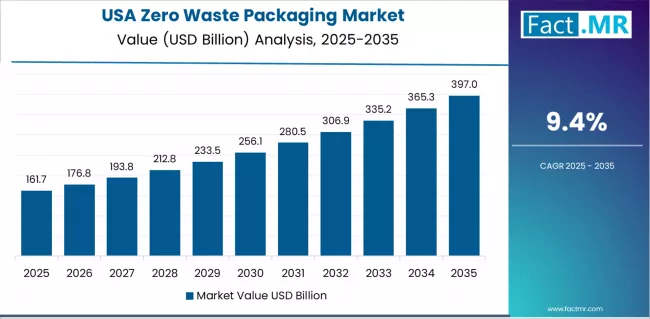
The USA zero waste packaging market is projected to grow at a CAGR of 9.4% through 2036. Demand is supported by expanding end-use activity and growing adoption of higher-specification products across key application segments.
- Expanding end-use demand supports procurement across primary applications.
- Infrastructure investment is broadening the installed equipment base.
- Growing performance requirements support mid-range and premium demand.
Market Growth Outlook for Zero Waste Packagings in Germany
The Germany zero waste packaging market is projected to grow at a CAGR of 8.8% through 2036. Demand is supported by expanding end-use activity and growing adoption of higher-specification products across key application segments.
- Expanding end-use demand supports procurement across primary applications.
- Infrastructure investment is broadening the installed equipment base.
- Growing performance requirements support mid-range and premium demand.
Market Opportunity Outlook for Zero Waste Packagings in UK
The UK zero waste packaging market is projected to grow at a CAGR of 7.9% through 2036. Demand is supported by expanding end-use activity and growing adoption of higher-specification products across key application segments.
- Expanding end-use demand supports procurement across primary applications.
- Infrastructure investment is broadening the installed equipment base.
- Growing performance requirements support mid-range and premium demand.
Demand Analysis for Zero Waste Packagings in Brazil
The Brazil zero waste packaging market is projected to grow at a CAGR of 6.7% through 2036. Demand is supported by expanding end-use activity and growing adoption of higher-specification products across key application segments.
- Expanding end-use demand supports procurement across primary applications.
- Infrastructure investment is broadening the installed equipment base.
- Growing performance requirements support mid-range and premium demand.
Growth Forecast for Zero Waste Packagings in Japan
Zero Waste Packaging Market Japan Market Share Analysis By Material | Source: Fact.MR
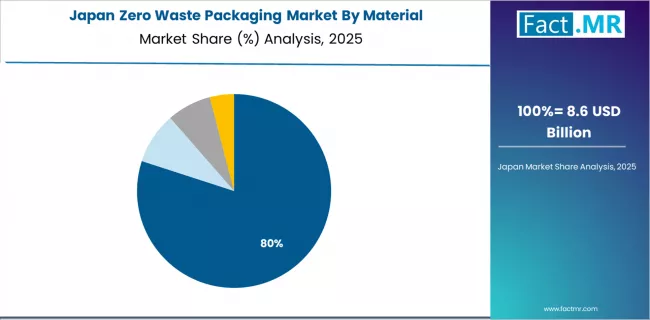
The Japan zero waste packaging market is projected to grow at a CAGR of 6.1% through 2036. Demand is supported by expanding end-use activity and growing adoption of higher-specification products across key application segments.
- Expanding end-use demand supports procurement across primary applications.
- Infrastructure investment is broadening the installed equipment base.
- Growing performance requirements support mid-range and premium demand.
Competitive Benchmarking and Company Positioning
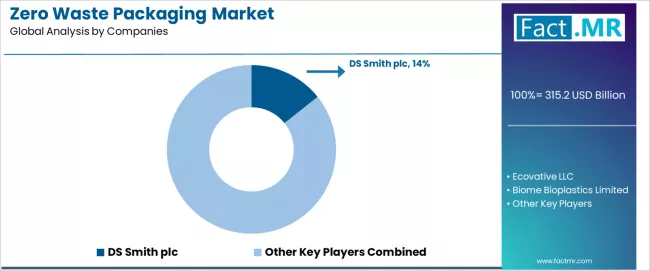
Zero Waste Packaging Market Analysis By Company | Source: Fact.MR
Zero Waste Packaging Market Analysis By Company
- DS Smith plc, Ecovative LLC, Biome Bioplastics Limited, Avani Eco hold strong positions in the global zero waste packaging market through broad product portfolios and established brand recognition.
- Sulapac Oy, TIPA, World Centric, Notpla Limited participate meaningfully across specific price tiers and regional channels, with competition shaped by product quality and distribution access.
- Technology integration and aftermarket service capability create differentiation in higher-specification product categories.
The competitive landscape is moderately fragmented, with established players, specialized manufacturers, and value-oriented producers. DS Smith plc, Ecovative LLC, Biome Bioplastics Limited, Avani Eco compete through product breadth, technical capability, and visibility across primary end-use applications.
Competition is shaped by differences between standard and premium product categories. Standard products attract price-sensitive buyers, while higher-specification systems create a premium layer of competition built around performance and service support.
Strategic priorities include expanding product portfolios, strengthening service networks, and widening reach across direct and e-commerce distribution channels.
Key Companies in the Zero Waste Packaging Market
DS Smith plc, Ecovative LLC, Biome Bioplastics Limited, Avani Eco are among the leading players in the zero waste packaging market globally, supported by strong product portfolios and established market presence.
Sulapac Oy, TIPA, World Centric, Notpla Limited hold established positions across specific application segments and regional markets.
BIOPLA, Hero Packaging continue to compete through focused product offerings and niche application strength.
Recent Industry Developments
- DS Smith plc – Product Portfolio Expansion (2025)
- DS Smith plc expanded its product portfolio with new models targeting higher-specification applications. The expansion strengthens the company's position in the growing premium segment.
- Ecovative LLC – Technology Upgrade Launch (2026)
- Ecovative LLC introduced upgraded technology capabilities across core product lines, improving operational efficiency and application versatility for end users.
- Biome Bioplastics Limited – Geographic Expansion (2025)
- Biome Bioplastics Limited expanded its distribution and service network into high-growth markets in Asia Pacific and Latin America, strengthening access to institutional procurement channels.
Leading Companies Shaping the Zero Waste Packaging Market
- DS Smith plc
- Ecovative LLC
- Biome Bioplastics Limited
- Avani Eco
- Sulapac Oy
- TIPA
- World Centric
- Notpla Limited
- BIOPLA
- Hero Packaging
Sources and Research References
- DS Smith plc. Product portfolio updates and corporate announcements.
- Ecovative LLC. Product portfolio updates and corporate announcements.
- Biome Bioplastics Limited. Product portfolio updates and corporate announcements.
- Industry association publications, government regulatory databases, trade statistics, customs databases, and company product catalogs.
- Primary interviews with manufacturers, distributors, system integrators, end users, and industry consultants.
This bibliography is provided for reader reference and is not exhaustive. The full report contains the complete reference list and detailed citations.
Key Questions This Report Addresses
- What is the current and future size of the Zero Waste Packaging Market?
- How fast is the Zero Waste Packaging Market expected to grow between 2026 and 2036?
- Which material is likely to lead the market by 2026?
- Which usability type segment is expected to account for the highest demand by 2026?
- What factors are driving demand globally?
- How is technology evolution influencing market growth?
- Which countries are projected to show the fastest growth through 2036?
- What is driving market expansion in India and China?
- Who are the key companies active in the Zero Waste Packaging Market?
- How does Fact.MR estimate and validate the market forecast?
Zero Waste Packaging Market Definition
The zero waste packaging market covers reusable, recyclable, compostable, and biodegradable packaging formats designed to eliminate or minimize post-consumer waste sent to landfill or incineration. It includes paper, cardboard, bioplastic, and alternative-material packaging used across food, beverage, personal care, household, and e-commerce applications.
Zero Waste Packaging Market Inclusions
- The scope covers global and regional market size and forecasts for 2026 to 2036 across material, usability type, application, distribution channel, and region.
- It includes regional demand analysis across major geographies, based on end-use activity levels, regulatory requirements, infrastructure investment, and technology adoption.
- The report includes pricing and cost analysis across entry-level, mid-range, and premium product categories.
- It covers technology trends, market drivers and constraints, and the competitive landscape of leading players.
Zero Waste Packaging Market Exclusions
- The scope excludes conventional single-use plastic packaging not designed for composting, reuse, or closed-loop recycling.
- It excludes industrial bulk packaging, transport containers, and palletizing materials not classified as consumer-facing zero waste packaging.
- The report excludes packaging machinery and recycling processing equipment sold separately from packaging materials.
- It also excludes informal unbranded packaging, experimental lab-scale materials without commercial production, and packaging waste management services not bundled with material supply.
Zero Waste Packaging Market Research Methodology
- The methodology combines secondary research, primary interviews, and forecast modelling.
- It draws on 120+ secondary sources and benchmarks 65+ company product portfolios.
- Market sizing covers 30+ countries through a demand-side model, supported by top-down validation.
- Key inputs include end-use activity levels, regulatory requirements, procurement patterns, and technology adoption rates.
- The model cross-checks demand with shipments, pricing trends, channel mix, and product launches.
- Primary validation includes 25+ interviews across manufacturers, distributors, system integrators, and end users.
- Final estimates go through trade-flow checks, sales-pattern review, and sensitivity testing.
Segmentation
Scope of Analysis
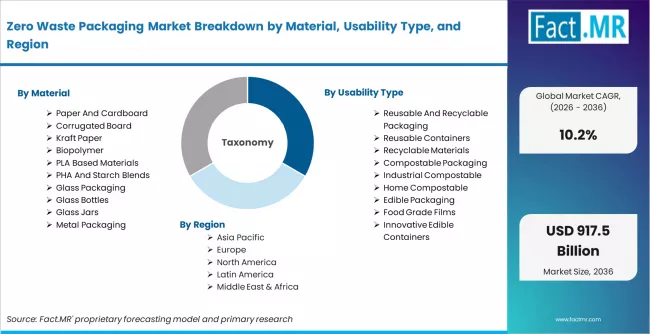
Zero Waste Packaging Market Breakdown By Material, Usability Type, And Region | Source: Fact.MR
| Parameter | Details |
|---|---|
| Quantitative Units | USD 347.4 billion to USD 917.5 billion, at a CAGR of 10.2% |
| Market Definition | Reusable, recyclable, compostable, and biodegradable packaging formats designed to eliminate post-consumer waste across food, beverage, personal care, and e-commerce applications. |
| Regions Covered | North America, Latin America, Europe, East Asia, South Asia and Pacific, Middle East and Africa |
| Countries Covered | India, China, USA, Germany, UK, Brazil, Japan, 30 plus countries |
| Key Companies | DS Smith plc, Ecovative LLC, Biome Bioplastics Limited, Avani Eco, Sulapac Oy, TIPA, World Centric, Notpla Limited, BIOPLA, Hero Packaging |
| Forecast Period | 2026 to 2036 |
| Approach | Hybrid demand-side and top-down methodology built on country-level application demand, product benchmarking, pricing analysis, shipment validation, and primary interviews across manufacturers, distributors, and end users |
Source: Fact.MR analysis. Updated May 19, 2026
Zero Waste Packaging Market Segmentation
-
Zero Waste Packaging marketSegmented by Material:
- Paper And Cardboard
- Corrugated Board
- Transport Packaging Solutions
- E Commerce Shipping Boxes
- Bulk Packaging Applications
- Transport Packaging Solutions
- Kraft Paper
- Flexible Packaging Materials
- Food Wrapping Solutions
- Eco Friendly Carry Bags
- Flexible Packaging Materials
- Biopolymer
- PLA Based Materials
- Compostable Packaging Products
- Food Containers And Films
- Disposable Tableware
- Compostable Packaging Products
- PHA And Starch Blends
- Biodegradable Packaging
- Flexible Film Applications
- Retail Packaging Solutions
- Biodegradable Packaging
- Glass Packaging
- Glass Bottles
- Reusable Beverage Containers
- Refillable Packaging Systems
- Premium Packaging Use
- Reusable Beverage Containers
- Glass Jars
- Food And Cosmetic Storage
- Long Shelf Life Packaging
- Chemical Resistant Containers
- Food And Cosmetic Storage
- Metal Packaging
- Aluminum Packaging
- Lightweight Containers
- Beverage Cans
- Foil Wrapping Applications
- Lightweight Containers
- Steel Packaging
- Durable Storage Containers
- Industrial Packaging
- Food Canning Solutions
- Durable Storage Containers
-
Zero Waste Packaging marketSegmented by Usability Type:
- Reusable And Recyclable Packaging
- Reusable Containers
- Refillable Packaging Systems
- Returnable Bottle Programs
- Loop Based Packaging Models
- Refillable Packaging Systems
- Recyclable Materials
- Mono Material Packaging
- Easy Recycling Streams
- Circular Economy Solutions
- Mono Material Packaging
- Compostable Packaging
- Industrial Compostable
- Certified Compostable Materials
- Food Waste Compatible Packaging
- Biodegradable Films
- Certified Compostable Materials
- Home Compostable
- Consumer Compost Solutions
- Household Degradable Packaging
- Eco Friendly Alternatives
- Consumer Compost Solutions
- Edible Packaging
- Food Grade Films
- Edible Coating Materials
- Snack Packaging Layers
- Dissolvable Films
- Edible Coating Materials
- Innovative Edible Containers
- Bio Based Packaging Concepts
- Seaweed And Protein Based
- Single Use Consumption Packs
- Bio Based Packaging Concepts
-
Zero Waste Packaging marketSegmented by Application:
- Food And Beverages
- Fresh Food Packaging
- Perishable Food Storage
- Fruits And Vegetable Packaging
- Dairy Product Containers
- Perishable Food Storage
- Processed Food Packaging
- Snack And Ready Meal Packaging
- Sustainable Wrapping Solutions
- Flexible Packaging Materials
- Snack And Ready Meal Packaging
- E Commerce
- Shipping Packaging
- Protective Packaging Solutions
- Corrugated Boxes And Fillers
- Returnable Packaging Systems
- Protective Packaging Solutions
- Retail Packaging
- Brand Packaging Solutions
- Eco Friendly Packaging Design
- Customer Delivery Packaging
- Brand Packaging Solutions
- Healthcare
- Medical Packaging
- Sterile Packaging Systems
- Pharmaceutical Containers
- Disposable Medical Packaging
- Sterile Packaging Systems
- Hospital Supplies
- Reusable Medical Containers
- Safe Transport Solutions
- Waste Reduction Systems
- Reusable Medical Containers
- Cosmetics And Personal Care
- Skincare Packaging
- Refillable Containers
- Cream And Lotion Packaging
- Eco Friendly Bottles
- Refillable Containers
- Personal Care Products
- Sustainable Tubes And Bottles
- Shampoo And Hygiene Packaging
- Refill Pouch Systems
- Sustainable Tubes And Bottles
- Electrical And Electronics
- Protective Packaging
- Anti Static Packaging
- Device Protection Materials
- Reusable Packaging Systems
- Anti Static Packaging
- Component Packaging
- Small Electronics Packaging
- Eco Friendly Cushioning
- Shock Resistant Materials
- Small Electronics Packaging
- Others
- Industrial Packaging
- Bulk Packaging Solutions
- Reusable Transport Containers
- Sustainable Storage Systems
- Bulk Packaging Solutions
- Agriculture Packaging
- Biodegradable Packaging
- Seed And Fertilizer Bags
- Eco Friendly Supply Chain
- Biodegradable Packaging
-
Zero Waste Packaging marketSegmented by Distribution Channel:
- Direct Sales
- Brand Owned Channels
- Direct To Consumer Packaging Supply
- Custom Packaging Solutions
- Bulk Contract Supply
- Direct To Consumer Packaging Supply
- Corporate Contracts
- B2B Supply Agreements
- Retail And E Commerce Partnerships
- Long Term Procurement Deals
- B2B Supply Agreements
- Distributors And Wholesalers
- Regional Distributors
- Local Supply Networks
- Small Business Packaging Supply
- Retail Distribution Channels
- Local Supply Networks
- Bulk Wholesalers
- Large Volume Supply
- Industrial Packaging Distribution
- Multi Client Supply Chains
- Large Volume Supply
- Online Channels
- E Commerce Platforms
- Digital Marketplaces
- Wide Product Availability
- Small Quantity Orders
- Digital Marketplaces
- Company Websites
- Direct Brand Platforms
- Customization And Ordering
- Subscription Based Supply
- Direct Brand Platforms
-
Zero Waste Packaging marketSegmented by End Of Life Type:
- Recyclable Packaging
- Mono Material Packaging
- Easy Recycling Systems
- Paper And Metal Recycling
- Plastic Stream Optimization
- Easy Recycling Systems
- Post Consumer Recycled PCR
- Reprocessed Materials
- Closed Loop Recycling
- Circular Economy Integration
- Reprocessed Materials
- Reusable Packaging
- Returnable Packaging
- Refill And Reuse Systems
- Deposit Based Models
- Retail Return Systems
- Refill And Reuse Systems
- Durable Multi Use Packaging
- Long Life Containers
- Industrial Reuse Applications
- Logistics Packaging Systems
- Long Life Containers
- Compostable Packaging
- Industrial Compostable
- Certified Compost Materials
- Food Waste Compatible Packaging
- Biodegradation In Facilities
- Certified Compost Materials
- Home Compostable
- Consumer Compost Solutions
- Household Degradation
- Eco Friendly Disposal
- Consumer Compost Solutions
- Edible Packaging
- Consumable Materials
- Food Grade Packaging
- Edible Films And Coatings
- Dissolvable Packaging
- Food Grade Packaging
- Innovative Edible Formats
- Seaweed And Protein Based
- Single Use Consumption Packs
- Zero Waste Applications
- Seaweed And Protein Based
-
Zero Waste Packaging marketby Region:
- North America
- USA
- Canada
- Mexico
- Latin America
- Brazil
- Chile
- Rest of Latin America
- Western Europe
- Germany
- UK
- Italy
- Spain
- France
- Nordic
- BENELUX
- Rest of Western Europe
- Eastern Europe
- Russia
- Poland
- Hungary
- Balkan & Baltic
- Rest of Eastern Europe
- East Asia
- China
- Japan
- South Korea
- South Asia and Pacific
- India
- ASEAN
- Australia & New Zealand
- Rest of South Asia and Pacific
- Middle East & Africa
- Kingdom of Saudi Arabia
- Other GCC Countries
- Turkiye
- South Africa
- Other African Union
- Rest of Middle East & Africa
- North America
Frequently Asked Questions
How big is the zero waste packaging market in 2025?
What will be the size of the zero waste packaging market in 2036?
How much will the zero waste packaging market grow between 2026 and 2036?
What are the key materials in the zero waste packaging market?
Which segment will contribute the most share in the Zero Waste Packaging Market in 2026?
Which countries are growing fastest in the Zero Waste Packaging Market?
Who are the key companies in the Zero Waste Packaging Market?
Who worked on this report


Preview the report firsthand - request a free sample
Free SampleGet the brochure for pricing and purchase details
Download PDF