Activated Carbon Market Size, Share, Growth and Forecast (2026 - 2036)
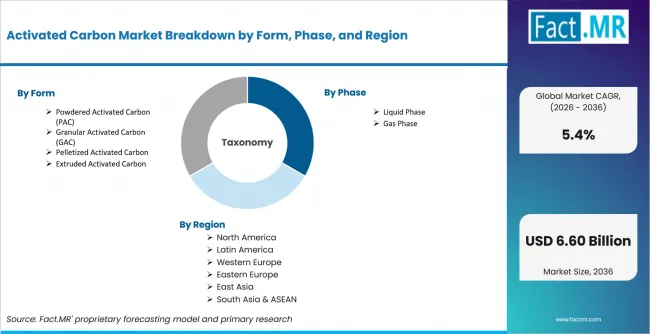
The Activated Carbon Market is segmented by Form, Phase, Application, Raw Material, End User and Region. Forecast for 2026 to 2036.
Activated Carbon Market Forecast and Outlook by Fact.MR
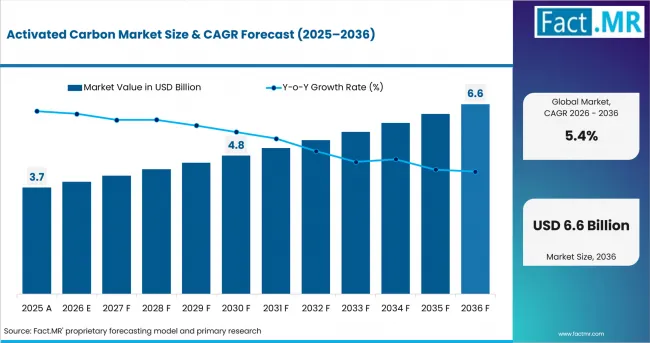
- In 2025, the activated carbon market was valued at USD 3.7 billion.
- Based on Fact.MR analysis, demand for activated carbon is estimated to grow to USD 3.9 billion in 2026 and USD 6.6 billion by 2036.
- Fact.MR projects a CAGR of 5.4% during the forecast period.
| Metric | Value |
|---|---|
| Estimated Value in 2026 | USD 3.9 billion |
| Forecast Value in 2036 | USD 6.6 billion |
| Forecast CAGR (2026 to 2036) | 5.4% |
Summary of the Activated Carbon Market
- Demand Drivers
- Water Treatment Expansion: Municipal water utilities are increasing activated carbon usage to meet drinking water quality standards. PFAS removal projects support long-term consumption.
- Industrial Emission Controls: Manufacturing facilities use activated carbon to reduce air pollutants and comply with environmental regulations. Industrial filtration investment supports demand.
- Pharmaceutical Production Growth: Drug manufacturers require activated carbon for purification processes. Expanding pharmaceutical output increases consumption across production facilities.
- Key Segments Analyzed
- By Form: Powdered Activated Carbon holds 44% share in 2026 because rapid adsorption performance supports water treatment and industrial purification applications.
- By Phase: Liquid Phase accounts for 68% share in 2026 reflecting extensive use across municipal water treatment and wastewater purification systems.
- By Application: Water & Wastewater Treatment captures 38% share in 2026 as regulatory compliance requirements drive filtration demand.
- By Raw Material: Coal-Based Activated Carbon represents 45% share in 2026 due to large-scale availability and established manufacturing infrastructure.
- By End User: Municipal Water Utilities contribute 30% share in 2026 because drinking water treatment remains the leading activated carbon application.
- By Geography: India is projected to record CAGR at 7.4% through 2036 driven by water infrastructure expansion and industrial development.
- Analyst Opinion at Fact.MR
- Shambhu Nath Jha, Principal Consultant at Fact.MR, opines, ‘Future growth will favor suppliers with purification expertise and regulatory compliance capabilities. Water treatment and pharmaceutical applications will shape value creation.’
- Strategic Implications
- Activated carbon manufacturers should expand capacity for high-purity grades. Pharmaceutical and drinking water applications support premium pricing.
- Suppliers should strengthen feedstock diversification strategies. Raw material availability influences operating margins.
- Producers should increase regional distribution capabilities across Asia. Industrial expansion supports long-term volume demand.
The market is forecast to add approximately USD 2.7 billion in revenue between 2026 and 2036. Expansion reflects steady investment in water treatment infrastructure and industrial air purification systems. Feedstock cost volatility creates pricing pressure across manufacturers. Environmental compliance requirements support long-term demand across major regions.
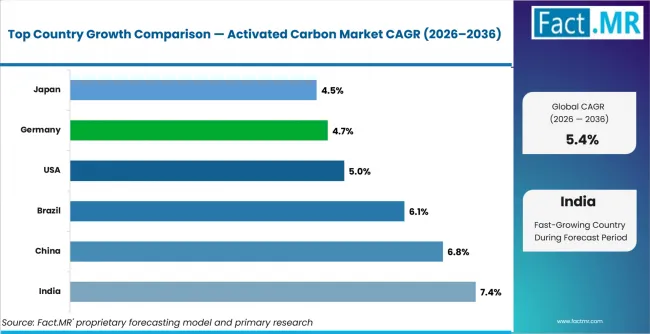
India is expected to record 7.4% CAGR supported by municipal water treatment investment. China is forecast to grow at 6.8% CAGR driven by industrial pollution control spending. Brazil is projected to expand at 6.1% CAGR through 2036 as mining activity supports purification demand. The United States is estimated to witness 5.0% CAGR due to PFAS treatment projects. Germany is likely to register 4.7% CAGR supported by industrial emission standards. Japan is anticipated to grow at 4.5% CAGR due to replacement demand from established filtration systems.
Segmental Analysis
Activated Carbon Market Analysis by Form
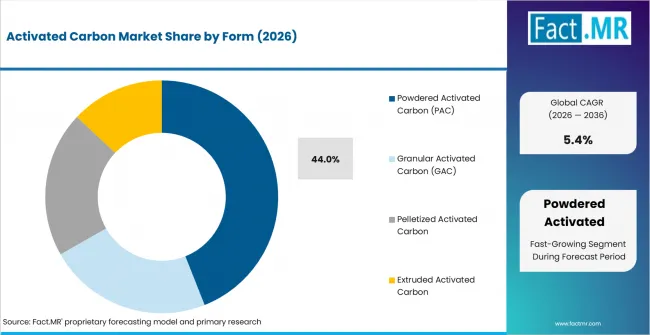
Powdered Activated Carbon accounts for 44% share in 2026. Rapid adsorption capability supports extensive use across municipal water treatment and industrial purification operations. Water treatment operators prefer powdered grades because dosing flexibility improves contaminant removal efficiency. Calgon Carbon Corporation announced a nearly $100 million investment to expand drinking water activated carbon reactivation capacity at its Columbus, Ohio facility. The project is designed to meet growing demand for activated carbon used in PFAS removal and municipal water treatment applications. [1]
- Treatment Efficiency: Powdered grades provide fast contaminant removal in liquid treatment systems. Utilities prefer these products for operational flexibility.
- Utility Demand: Water treatment investment supports powdered activated carbon consumption. Municipal infrastructure upgrades increase material requirements.
- Industrial Purification Demand: Rising filtration requirements across industrial operations support activated carbon adoption. Environmental compliance and process quality standards strengthen consumption.
Activated Carbon Market Analysis by Phase
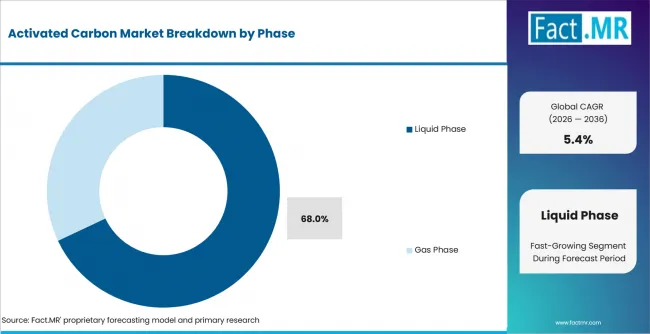
Liquid Phase holds 68% share in 2026 because water treatment remains the leading activated carbon application. Regulatory standards for drinking water quality support consistent demand across utility networks. Industrial water treatment facilities increase consumption across developing regions.
- Water Purification: Drinking water treatment requires activated carbon for contaminant control. Regulatory compliance sustains demand.
- Industrial Usage: Manufacturing facilities use liquid phase treatment systems to improve discharge quality. Environmental standards support adoption.
- PFAS Removal: Advanced treatment projects increase activated carbon requirements. Utility operators invest in long-term filtration upgrades.
Activated Carbon Market Analysis by Application
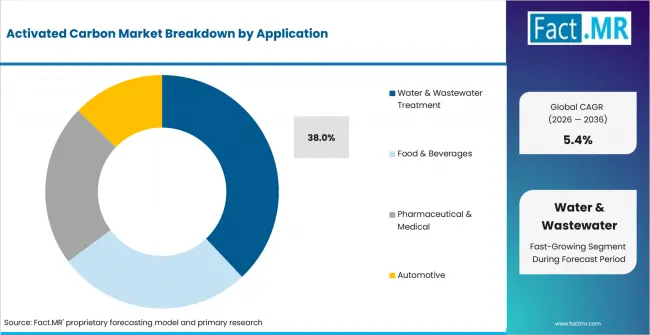
Water & Wastewater Treatment contributes 38% share in 2026. Public investment in clean water infrastructure supports segment leadership. Filtration requirements across municipal and industrial facilities strengthen consumption. Puragen announced that CPL Activated Carbons has officially rebranded to Puragen, reflecting its expanded focus on activated carbon, filtration, and purification technologies. The rebranding aligns the company's global operations around sustainable contaminant removal, carbon reactivation, and water treatment solutions. [2]
- Regulatory Pressure: Drinking water standards increase filtration requirements. Utilities expand activated carbon usage.
- Infrastructure Investment: Water treatment upgrades increase material consumption. Municipal projects support long-term demand.
- PFAS Projects: Treatment programs require advanced adsorption solutions. Activated carbon remains a preferred technology.
Activated Carbon Market Analysis by Raw Material
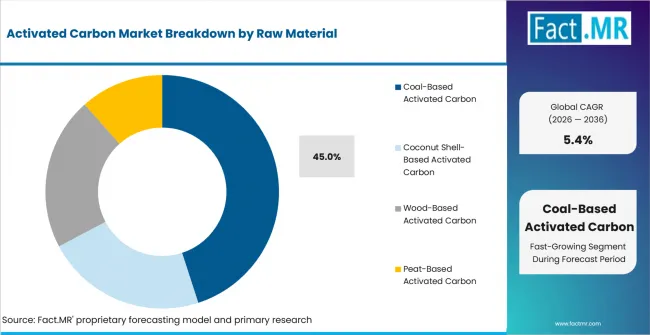
Coal-Based Activated Carbon accounts for 45% share in 2026. Established production infrastructure supports large-scale manufacturing capacity. Broad application suitability supports demand across water and industrial purification sectors. Jacobi announced a 15–20% price increase on coconut-shell activated carbon products effective July 2025 due to higher raw material, energy, and logistics costs. The move reflects strong global demand and supply pressures in the activated carbon industry. [4]
- Feedstock Availability: Coal resources support stable manufacturing output. Supply chains remain well established.
- Industrial Usage: Multiple end-use sectors utilize coal-based grades. Product versatility supports demand.
- Production Scale: Large manufacturing facilities improve cost competitiveness. Volume production supports market leadership.
Activated Carbon Market Analysis by End User
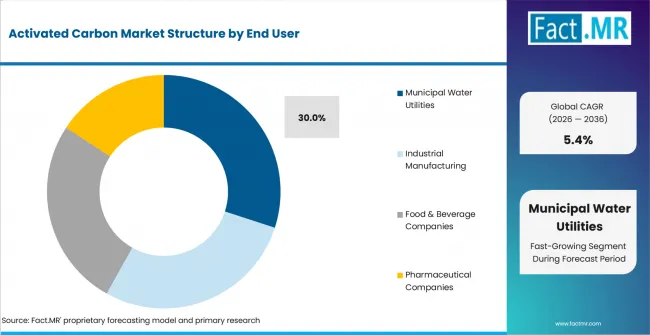
Municipal Water Utilities represent 30% share in 2026. Regulatory compliance requirements support sustained purchasing activity across utility operators. Puragen received international industry awards for its activated carbon technologies used in PFAS removal and hydrogen sulfide (H₂S) treatment in biogas applications. The recognition highlights advancements in activated carbon reactivation and contaminant removal solutions for environmental purification markets. [3]
- Public Infrastructure: Water utilities maintain consistent filtration demand. Infrastructure spending supports consumption.
- Quality Standards: Treatment facilities invest in contaminant removal technologies. Regulatory oversight drives purchasing activity.
- Long-Term Contracts: Utilities often operate under multi-year supply agreements. Stable demand supports manufacturing planning
Drivers, Restraints, and Opportunities
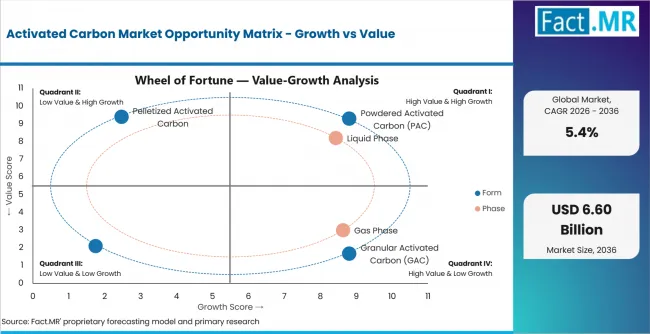
Fact.MR analysts observe that activated carbon demand is linked to water purifier requirements and industrial filtration investment. Market expansion reflects stricter environmental standards across major economies. Demand is concentrated in water treatment facilities and industrial processing operations that require contaminant removal solutions.
The industry is experiencing a shift toward higher-performance activated carbon grades. Pharmaceutical manufacturers and municipal water utilities require stricter purification standards. Premium products command higher pricing and support value growth despite moderate volume expansion.
- Water Treatment Regulations: Stricter drinking water quality standards are increasing activated carbon consumption across municipal treatment facilities. Compliance requirements support long-term demand growth.
- Feedstock Cost Volatility: Changes in raw material availability and production costs influence activated carbon pricing. Margin pressure remains a consideration for manufacturers.
- Pharmaceutical Expansion: Pharmaceutical-grade activated carbon demand is increasing across drug purification processes. Higher compliance requirements support premium product opportunities.
Regional Analysis
The activated carbon market is assessed across North America, Europe, Asia Pacific, Latin America, and the Middle East & Africa. The study evaluates purification demand, environmental compliance requirements, industrial activity, and water treatment investment across major economies.
.webp)
| Country | CAGR (2026 to 2036) |
|---|---|
| India | 7.4% |
| China | 6.8% |
| Brazil | 6.1% |
| United States | 5.0% |
| Germany | 4.7% |
| Japan | 4.5% |
Source: Fact.MR analysis based on proprietary forecasting model and primary research.
Asia Pacific Activated Carbon Market Analysis
Asia Pacific represents the leading growth opportunity for activated carbon manufacturers. Industrial expansion and water treatment investment support demand across regional markets. Environmental compliance requirements are increasing purification activity.
- India: India is projected to expand at 7.4% CAGR as municipal water treatment investment increases across major states. Pharmaceutical manufacturing capacity additions support activated carbon consumption in purification processes. Industrial wastewater treatment upgrades are increasing usage across chemical and food processing facilities.
- China: China is forecast to grow at 6.8% CAGR through 2036 supported by industrial pollution control programs and water treatment investment. Manufacturing activity sustains demand across chemical and industrial processing sectors. Domestic activated carbon production capacity supports supply security for local industries. Air quality improvement initiatives continue supporting industrial filtration requirements.
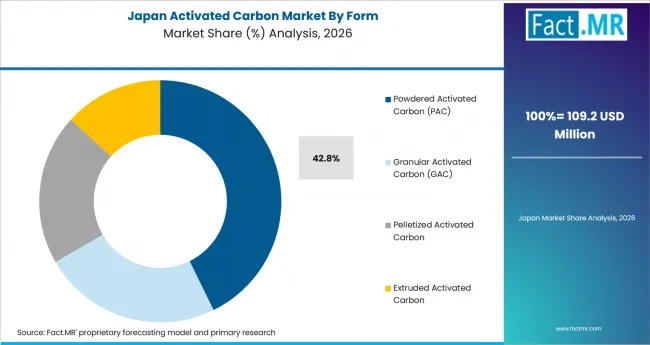
- Japan: Established purification systems support consistent activated carbon consumption across industrial facilities. Japan is projected to register 4.5% CAGR by 2036 as manufacturers maintain investment in high-purity filtration applications. Water treatment operators continue upgrading aging infrastructure in selected regions. Premium activated carbon grades account for a large share of industrial demand.
Latin America Activated Carbon Market Analysis
Latin America benefits from mining activity and environmental compliance investment. Water treatment requirements support activated carbon consumption across regional industries. Resource extraction operations remain an important demand source.
- Brazil: Brazil is expected to witness 6.1% CAGR driven by mining activity and industrial water treatment requirements. Gold recovery operations use activated carbon extensively across extraction processes. Environmental compliance spending is increasing across mining and manufacturing facilities. Water infrastructure upgrades support additional purification demand.
North America Activated Carbon Market Analysis
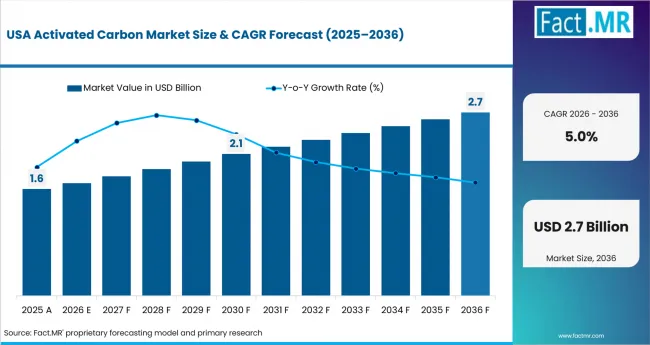
North America remains a major revenue generating region for activated carbon suppliers. Advanced water treatment infrastructure supports stable demand. Environmental regulations continue shaping purchasing activity.
- United States: The United States is projected to expand at 5.0% CAGR by 2036 as PFAS treatment projects increase filtration investment. The Environmental Protection Agency introduced national PFAS drinking water standards which increased treatment requirements. Municipal utilities are increasing activated carbon usage to meet compliance targets.
Europe Activated Carbon Market Analysis
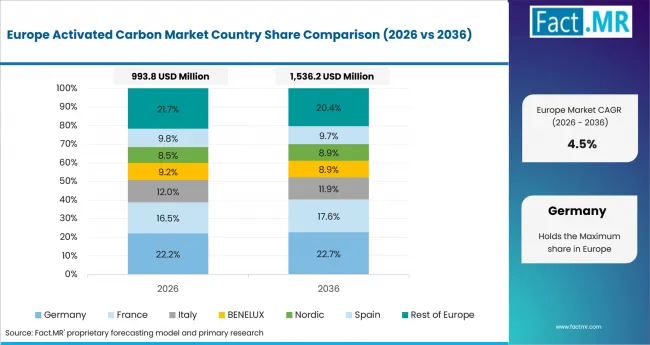
Europe maintains stable activated carbon demand through industrial filtration and environmental compliance activity. Emission control requirements support consumption across manufacturing sectors. Replacement demand contributes a large share of regional volume.
- Germany: Industrial emission standards support activated carbon demand across Germany. The country is anticipated to grow at 4.7% CAGR as chemical manufacturers invest in air purification and process filtration systems. Environmental compliance requirements support steady replacement demand. Industrial treatment applications account for a substantial share of consumption.
Competitive Aligners for Market Players
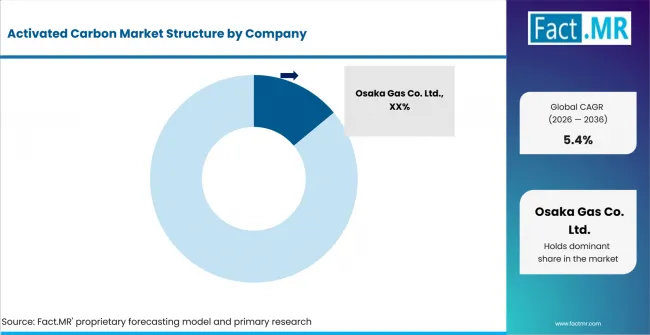
Competition is moderately concentrated among global activated carbon manufacturers with established production capacity and distribution networks. Product quality and purification performance remain primary competitive variables across water treatment and industrial filtration applications. Long-term supply agreements support revenue visibility for leading suppliers. Manufacturers with integrated feedstock access maintain cost advantages during periods of raw material volatility. Companies with diversified production assets can supply coal-based and coconut shell-based activated carbon across multiple end-use sectors. Technical expertise in pharmaceutical and water treatment grades strengthens market positioning.
Municipal water utilities and industrial filtration operators prioritize supply reliability and product consistency. Qualification requirements increase supplier switching costs across regulated applications. Long-term contracts reduce sourcing risk and support pricing stability.
Environmental compliance requirements are increasing demand for premium activated carbon products. Suppliers are expanding production capacity and strengthening regional distribution networks. Capacity investment remains a major competitive strategy across Asia Pacific and North America.
Distribution reach influences market penetration across developing economies. Manufacturers with local inventory and technical support capabilities improve service levels. Regional expansion remains a strategic priority for established suppliers.
Key Players
- Osaka Gas Co. Ltd.
- Cabot Corporation
- Kuraray Co., Ltd.
- Calgon Carbon Corporation
- Haycarb PLC
Bibliography
- Calgon Carbon Corporation. (February 2026). Calgon Carbon invests nearly $100 million to expand drinking water carbon reactivation capacity at its Columbus, Ohio plant.
- Puragen. (August 2025). CPL Activated Carbons is now Puragen.
- World Biogas Association. (2025). Puragen wins international awards.
- Jacobi Group. (June 2025). Price increase on coconut shell based activated carbons effective July 1, 2025.
This Report Addresses
- Analysis of activated carbon demand across water treatment, air purification, pharmaceutical processing, and industrial filtration applications.
- Market forecast from USD 3.9 billion in 2026 to USD 6.6 billion by 2036 at 5.4% CAGR.
- Opportunity assessment across municipal water treatment projects and pharmaceutical purification applications.
- Segment forecasts covering form, phase, application, raw material, and end user demand.
- Competitive assessment of activated carbon manufacturers and purification technology suppliers.
- Capacity expansion tracking across drinking water treatment and environmental purification markets.
- Country level analysis across India, China, Brazil, the United States, Germany, and Japan.
- Report delivery through PDF and Excel formats supported by industry analysis and primary interviews.
Activated Carbon Market Definition
The activated carbon market covers carbon-based adsorbent materials used to remove contaminants from liquids and gases. Products are manufactured from coal, coconut shells, wood, and other carbon-rich feedstocks. Activated carbon is widely used in drinking water treatment, wastewater purification, air filtration, food processing, pharmaceutical production, and industrial manufacturing. The material contains a highly porous structure that captures impurities and improves product quality across industrial processes.
Activated Carbon Market Inclusions
The study covers global and regional forecasts from 2026 to 2036 by form, phase, application, raw material, and end user. It includes water treatment demand, pharmaceutical purification applications, air filtration systems, industrial processing requirements, pricing trends, and trade flow assessment across major producing and consuming countries.
Activated Carbon Market Exclusions
The study excludes carbon black, graphite products, activated alumina, silica adsorbents, and synthetic filtration media. It omits downstream water treatment equipment and air filtration hardware. Specialty carbon composites and energy storage materials fall outside the defined scope unless directly sold as activated carbon products.
Activated Carbon Market Research Methodology
- Primary Research
- Interviews conducted with activated carbon manufacturers, water treatment operators, industrial filtration distributors, and environmental technology executives across North America, Asia Pacific, and Europe.
- Desk Research
- Analysis of company annual reports, investor presentations, environmental agency publications, regulatory announcements, and corporate disclosures released during 2024 and 2025.
- Market-Sizing and Forecasting
- Hybrid top-down and bottom-up model using production capacity, trade flows, consumption trends, and end-use demand assessment.
- Data Validation and Update Cycle
- Validated through company disclosures, distributor interviews, trade statistics, and annual industrial filtration performance reviews.
Scope of Report

| Attribute | Details |
|---|---|
| Quantitative Units | USD 3.9 billion (2026) to USD 6.6 billion (2036) at a CAGR of 5.4% |
| Market Definition | Covers activated carbon materials used for liquid and gas purification applications |
| Form Segmentation | Powdered Activated Carbon, Granular Activated Carbon, Pelletized Activated Carbon, Extruded Activated Carbon |
| Phase Segmentation | Liquid Phase, Gas Phase |
| Application Segmentation | Water & Wastewater Treatment, Food & Beverages, Pharmaceutical & Medical, Automotive, Air Purification, Gas Purification, Industrial Processing, Mining, Others |
| Raw Material Segmentation | Coal-Based Activated Carbon, Coconut Shell-Based Activated Carbon, Wood-Based Activated Carbon, Peat-Based Activated Carbon, Other Feedstocks |
| End User Segmentation | Municipal Water Utilities, Industrial Manufacturing, Food & Beverage Companies, Pharmaceutical Companies, Mining Operations, Automotive Manufacturers, Commercial Buildings & HVAC, Others |
| Regions Covered | North America, Europe, Asia Pacific, Latin America, Middle East & Africa |
| Countries Covered | United States, Germany, Japan, China, India, Brazil |
| Key Companies Profiled | Osaka Gas Co. Ltd., Cabot Corporation, Kuraray Co., Ltd., Calgon Carbon Corporation, Haycarb PLC, Kureha Corporation, Donau Carbon GmbH, Silcarbon Aktivkohle GmbH |
| Forecast Period | 2026 to 2036 |
| Approach | Hybrid top-down and bottom-up model using production capacity, trade flows, and end-use demand analysis. |
Activated Carbon Market by Segment
-
By Form
- Powdered Activated Carbon (PAC)
- Granular Activated Carbon (GAC)
- Pelletized Activated Carbon
- Extruded Activated Carbon
-
By Phase
- Liquid Phase
- Gas Phase
-
By Application
- Water & Wastewater Treatment
- Food & Beverages
- Pharmaceutical & Medical
- Automotive
- Air Purification
- Gas Purification
- Industrial Processing
- Mining
- Others
-
By Raw Material
- Coal-Based Activated Carbon
- Coconut Shell-Based Activated Carbon
- Wood-Based Activated Carbon
- Peat-Based Activated Carbon
- Other Feedstocks
-
By End User
- Municipal Water Utilities
- Industrial Manufacturing
- Food & Beverage Companies
- Pharmaceutical Companies
- Mining Operations
- Automotive Manufacturers
- Commercial Buildings & HVAC
- Others
-
By Region
- North America
- United States
- Canada
- Mexico
- Latin America
- Brazil
- Argentina
- Rest of Latin America
- Europe
- Germany
- United Kingdom
- France
- Italy
- Spain
- Rest of Europe
- Asia Pacific
- China
- Japan
- India
- ASEAN
- Australia and New Zealand
- Middle East & Africa
- GCC Countries
- South Africa
- UAE
- Rest of Middle East & Africa
- North America
- Frequently Asked Questions -
How large is the global activated carbon market in 2025?
The global activated carbon market was valued at USD 3.7 billion in 2025 based on Fact.MR industry analysis.
What will the activated carbon market size be in 2026?
Based on Fact.MR analysis, demand for activated carbon is estimated to reach USD 3.9 billion in 2026.
What is the projected activated carbon market size by 2036?
The activated carbon market is forecast to reach USD 6.6 billion by 2036 supported by water treatment and industrial purification demand.
What is the expected CAGR for the activated carbon market from 2026 to 2036?
Fact.MR projects the global activated carbon market to expand at a CAGR of 5.4% during the forecast period.
Which form is poised to lead activated carbon market demand?
Powdered Activated Carbon leads with 44% share in 2026 because rapid adsorption performance supports major purification applications.
Which application is expected to dominate activated carbon consumption?
Water and wastewater treatment leads with 38% share in 2026 due to increasing filtration requirements and regulatory compliance needs.
Which country records the leading growth in the activated carbon market?
India leads country level expansion with a projected 7.4% CAGR through 2036 supported by water infrastructure investment and industrial development.
Table of Content
- Executive Summary
- Global Market Outlook
- Demand to side Trends
- Supply to side Trends
- Technology Roadmap Analysis
- Analysis and Recommendations
- Market Overview
- Market Coverage / Taxonomy
- Market Definition / Scope / Limitations
- Research Methodology
- Chapter Orientation
- Analytical Lens and Working Hypotheses
- Market Structure, Signals, and Trend Drivers
- Benchmarking and Cross-market Comparability
- Market Sizing, Forecasting, and Opportunity Mapping
- Research Design and Evidence Framework
- Desk Research Programme (Secondary Evidence)
- Company Annual and Sustainability Reports
- Peer-reviewed Journals and Academic Literature
- Corporate Websites, Product Literature, and Technical Notes
- Earnings Decks and Investor Briefings
- Statutory Filings and Regulatory Disclosures
- Technical White Papers and Standards Notes
- Trade Journals, Industry Magazines, and Analyst Briefs
- Conference Proceedings, Webinars, and Seminar Materials
- Government Statistics Portals and Public Data Releases
- Press Releases and Reputable Media Coverage
- Specialist Newsletters and Curated Briefings
- Sector Databases and Reference Repositories
- Fact.MR Internal Proprietary Databases and Historical Market Datasets
- Subscription Datasets and Paid Sources
- Social Channels, Communities, and Digital Listening Inputs
- Additional Desk Sources
- Expert Input and Fieldwork (Primary Evidence)
- Primary Modes
- Qualitative Interviews and Expert Elicitation
- Quantitative Surveys and Structured Data Capture
- Blended Approach
- Why Primary Evidence is Used
- Field Techniques
- Interviews
- Surveys
- Focus Groups
- Observational and In-context Research
- Social and Community Interactions
- Stakeholder Universe Engaged
- C-suite Leaders
- Board Members
- Presidents and Vice Presidents
- R&D and Innovation Heads
- Technical Specialists
- Domain Subject-matter Experts
- Scientists
- Physicians and Other Healthcare Professionals
- Governance, Ethics, and Data Stewardship
- Research Ethics
- Data Integrity and Handling
- Primary Modes
- Tooling, Models, and Reference Databases
- Desk Research Programme (Secondary Evidence)
- Data Engineering and Model Build
- Data Acquisition and Ingestion
- Cleaning, Normalisation, and Verification
- Synthesis, Triangulation, and Analysis
- Trends
- Scenario Forecast
- Demand in Optimistic Scenario
- Demand in Likely Scenario
- Demand in Conservative Scenario
- Opportunity Map Analysis
- Product Life Cycle Analysis
- Supply Chain Analysis
- Investment Feasibility Matrix
- Value Chain Analysis
- PESTLE and Porter’s Analysis
- Regulatory Landscape
- Regional Parent Market Outlook
- Production and Consumption Statistics
- Import and Export Statistics
- Global Market Analysis 2021 to 2025 and Forecast, 2026 to 2036
- Historical Market Size Value (USD Million) Analysis, 2021 to 2025
- Current and Future Market Size Value (USD Million) Projections, 2026 to 2036
- Y to o to Y Growth Trend Analysis
- Absolute $ Opportunity Analysis
- Global Market Pricing Analysis 2021 to 2025 and Forecast 2026 to 2036
- Global Market Analysis 2021 to 2025 and Forecast 2026 to 2036, By Drug Class
- Introduction / Key Findings
- Historical Market Size Value (USD Million) Analysis By Drug Class , 2021 to 2025
- Current and Future Market Size Value (USD Million) Analysis and Forecast By Drug Class , 2026 to 2036
- Somatostatin Analogues (SSAs)
- Growth Hormone Receptor Antagonists (GHRAs)
- Dopamine Agonists
- Others
- Somatostatin Analogues (SSAs)
- Y to o to Y Growth Trend Analysis By Drug Class , 2021 to 2025
- Absolute $ Opportunity Analysis By Drug Class , 2026 to 2036
- Global Market Analysis 2021 to 2025 and Forecast 2026 to 2036, By Distribution Channel
- Introduction / Key Findings
- Historical Market Size Value (USD Million) Analysis By Distribution Channel, 2021 to 2025
- Current and Future Market Size Value (USD Million) Analysis and Forecast By Distribution Channel, 2026 to 2036
- Hospital Pharmacies
- Retail Pharmacies
- Hospital Pharmacies
- Y to o to Y Growth Trend Analysis By Distribution Channel, 2021 to 2025
- Absolute $ Opportunity Analysis By Distribution Channel, 2026 to 2036
- Global Market Analysis 2021 to 2025 and Forecast 2026 to 2036, By Indication
- Introduction / Key Findings
- Historical Market Size Value (USD Million) Analysis By Indication, 2021 to 2025
- Current and Future Market Size Value (USD Million) Analysis and Forecast By Indication, 2026 to 2036
- Acromegaly
- Cushing's Syndrome
- Acromegaly
- Y to o to Y Growth Trend Analysis By Indication, 2021 to 2025
- Absolute $ Opportunity Analysis By Indication, 2026 to 2036
- Global Market Analysis 2021 to 2025 and Forecast 2026 to 2036, By Treatment Type
- Introduction / Key Findings
- Historical Market Size Value (USD Million) Analysis By Treatment Type, 2021 to 2025
- Current and Future Market Size Value (USD Million) Analysis and Forecast By Treatment Type, 2026 to 2036
- Drug Therapy
- Surgery
- Radiation Therapy
- Combination Therapy
- Drug Therapy
- Y to o to Y Growth Trend Analysis By Treatment Type, 2021 to 2025
- Absolute $ Opportunity Analysis By Treatment Type, 2026 to 2036
- Global Market Analysis 2021 to 2025 and Forecast 2026 to 2036, By End User
- Introduction / Key Findings
- Historical Market Size Value (USD Million) Analysis By End User, 2021 to 2025
- Current and Future Market Size Value (USD Million) Analysis and Forecast By End User, 2026 to 2036
- Hospitals
- Specialty Endocrinology Clinics
- Ambulatory Care Centers
- Academic Research Institutes
- Hospitals
- Y to o to Y Growth Trend Analysis By End User, 2021 to 2025
- Absolute $ Opportunity Analysis By End User, 2026 to 2036
- Global Market Analysis 2021 to 2025 and Forecast 2026 to 2036, By Region
- Introduction
- Historical Market Size Value (USD Million) Analysis By Region, 2021 to 2025
- Current Market Size Value (USD Million) Analysis and Forecast By Region, 2026 to 2036
- North America
- Latin America
- Western Europe
- Eastern Europe
- East Asia
- South Asia and Pacific
- Middle East & Africa
- Market Attractiveness Analysis By Region
- North America Market Analysis 2021 to 2025 and Forecast 2026 to 2036, By Country
- Historical Market Size Value (USD Million) Trend Analysis By Market Taxonomy, 2021 to 2025
- Market Size Value (USD Million) Forecast By Market Taxonomy, 2026 to 2036
- By Country
- USA
- Canada
- Mexico
- By Drug Class
- By Distribution Channel
- By Indication
- By Treatment Type
- By End User
- By Country
- Market Attractiveness Analysis
- By Country
- By Drug Class
- By Distribution Channel
- By Indication
- By Treatment Type
- By End User
- Key Takeaways
- Latin America Market Analysis 2021 to 2025 and Forecast 2026 to 2036, By Country
- Historical Market Size Value (USD Million) Trend Analysis By Market Taxonomy, 2021 to 2025
- Market Size Value (USD Million) Forecast By Market Taxonomy, 2026 to 2036
- By Country
- Brazil
- Chile
- Rest of Latin America
- By Drug Class
- By Distribution Channel
- By Indication
- By Treatment Type
- By End User
- By Country
- Market Attractiveness Analysis
- By Country
- By Drug Class
- By Distribution Channel
- By Indication
- By Treatment Type
- By End User
- Key Takeaways
- Western Europe Market Analysis 2021 to 2025 and Forecast 2026 to 2036, By Country
- Historical Market Size Value (USD Million) Trend Analysis By Market Taxonomy, 2021 to 2025
- Market Size Value (USD Million) Forecast By Market Taxonomy, 2026 to 2036
- By Country
- Germany
- UK
- Italy
- Spain
- France
- Nordic
- BENELUX
- Rest of Western Europe
- By Drug Class
- By Distribution Channel
- By Indication
- By Treatment Type
- By End User
- By Country
- Market Attractiveness Analysis
- By Country
- By Drug Class
- By Distribution Channel
- By Indication
- By Treatment Type
- By End User
- Key Takeaways
- Eastern Europe Market Analysis 2021 to 2025 and Forecast 2026 to 2036, By Country
- Historical Market Size Value (USD Million) Trend Analysis By Market Taxonomy, 2021 to 2025
- Market Size Value (USD Million) Forecast By Market Taxonomy, 2026 to 2036
- By Country
- Russia
- Poland
- Hungary
- Balkan & Baltic
- Rest of Eastern Europe
- By Drug Class
- By Distribution Channel
- By Indication
- By Treatment Type
- By End User
- By Country
- Market Attractiveness Analysis
- By Country
- By Drug Class
- By Distribution Channel
- By Indication
- By Treatment Type
- By End User
- Key Takeaways
- East Asia Market Analysis 2021 to 2025 and Forecast 2026 to 2036, By Country
- Historical Market Size Value (USD Million) Trend Analysis By Market Taxonomy, 2021 to 2025
- Market Size Value (USD Million) Forecast By Market Taxonomy, 2026 to 2036
- By Country
- China
- Japan
- South Korea
- By Drug Class
- By Distribution Channel
- By Indication
- By Treatment Type
- By End User
- By Country
- Market Attractiveness Analysis
- By Country
- By Drug Class
- By Distribution Channel
- By Indication
- By Treatment Type
- By End User
- Key Takeaways
- South Asia and Pacific Market Analysis 2021 to 2025 and Forecast 2026 to 2036, By Country
- Historical Market Size Value (USD Million) Trend Analysis By Market Taxonomy, 2021 to 2025
- Market Size Value (USD Million) Forecast By Market Taxonomy, 2026 to 2036
- By Country
- India
- ASEAN
- Australia & New Zealand
- Rest of South Asia and Pacific
- By Drug Class
- By Distribution Channel
- By Indication
- By Treatment Type
- By End User
- By Country
- Market Attractiveness Analysis
- By Country
- By Drug Class
- By Distribution Channel
- By Indication
- By Treatment Type
- By End User
- Key Takeaways
- Middle East & Africa Market Analysis 2021 to 2025 and Forecast 2026 to 2036, By Country
- Historical Market Size Value (USD Million) Trend Analysis By Market Taxonomy, 2021 to 2025
- Market Size Value (USD Million) Forecast By Market Taxonomy, 2026 to 2036
- By Country
- Kingdom of Saudi Arabia
- Other GCC Countries
- Turkiye
- South Africa
- Other African Union
- Rest of Middle East & Africa
- By Drug Class
- By Distribution Channel
- By Indication
- By Treatment Type
- By End User
- By Country
- Market Attractiveness Analysis
- By Country
- By Drug Class
- By Distribution Channel
- By Indication
- By Treatment Type
- By End User
- Key Takeaways
- Key Countries Market Analysis
- USA
- Pricing Analysis
- Market Share Analysis, 2025
- By Drug Class
- By Distribution Channel
- By Indication
- By Treatment Type
- By End User
- Canada
- Pricing Analysis
- Market Share Analysis, 2025
- By Drug Class
- By Distribution Channel
- By Indication
- By Treatment Type
- By End User
- Mexico
- Pricing Analysis
- Market Share Analysis, 2025
- By Drug Class
- By Distribution Channel
- By Indication
- By Treatment Type
- By End User
- Brazil
- Pricing Analysis
- Market Share Analysis, 2025
- By Drug Class
- By Distribution Channel
- By Indication
- By Treatment Type
- By End User
- Chile
- Pricing Analysis
- Market Share Analysis, 2025
- By Drug Class
- By Distribution Channel
- By Indication
- By Treatment Type
- By End User
- Germany
- Pricing Analysis
- Market Share Analysis, 2025
- By Drug Class
- By Distribution Channel
- By Indication
- By Treatment Type
- By End User
- UK
- Pricing Analysis
- Market Share Analysis, 2025
- By Drug Class
- By Distribution Channel
- By Indication
- By Treatment Type
- By End User
- Italy
- Pricing Analysis
- Market Share Analysis, 2025
- By Drug Class
- By Distribution Channel
- By Indication
- By Treatment Type
- By End User
- Spain
- Pricing Analysis
- Market Share Analysis, 2025
- By Drug Class
- By Distribution Channel
- By Indication
- By Treatment Type
- By End User
- France
- Pricing Analysis
- Market Share Analysis, 2025
- By Drug Class
- By Distribution Channel
- By Indication
- By Treatment Type
- By End User
- India
- Pricing Analysis
- Market Share Analysis, 2025
- By Drug Class
- By Distribution Channel
- By Indication
- By Treatment Type
- By End User
- ASEAN
- Pricing Analysis
- Market Share Analysis, 2025
- By Drug Class
- By Distribution Channel
- By Indication
- By Treatment Type
- By End User
- Australia & New Zealand
- Pricing Analysis
- Market Share Analysis, 2025
- By Drug Class
- By Distribution Channel
- By Indication
- By Treatment Type
- By End User
- China
- Pricing Analysis
- Market Share Analysis, 2025
- By Drug Class
- By Distribution Channel
- By Indication
- By Treatment Type
- By End User
- Japan
- Pricing Analysis
- Market Share Analysis, 2025
- By Drug Class
- By Distribution Channel
- By Indication
- By Treatment Type
- By End User
- South Korea
- Pricing Analysis
- Market Share Analysis, 2025
- By Drug Class
- By Distribution Channel
- By Indication
- By Treatment Type
- By End User
- Russia
- Pricing Analysis
- Market Share Analysis, 2025
- By Drug Class
- By Distribution Channel
- By Indication
- By Treatment Type
- By End User
- Poland
- Pricing Analysis
- Market Share Analysis, 2025
- By Drug Class
- By Distribution Channel
- By Indication
- By Treatment Type
- By End User
- Hungary
- Pricing Analysis
- Market Share Analysis, 2025
- By Drug Class
- By Distribution Channel
- By Indication
- By Treatment Type
- By End User
- Kingdom of Saudi Arabia
- Pricing Analysis
- Market Share Analysis, 2025
- By Drug Class
- By Distribution Channel
- By Indication
- By Treatment Type
- By End User
- Turkiye
- Pricing Analysis
- Market Share Analysis, 2025
- By Drug Class
- By Distribution Channel
- By Indication
- By Treatment Type
- By End User
- South Africa
- Pricing Analysis
- Market Share Analysis, 2025
- By Drug Class
- By Distribution Channel
- By Indication
- By Treatment Type
- By End User
- USA
- Market Structure Analysis
- Competition Dashboard
- Competition Benchmarking
- Market Share Analysis of Top Players
- By Regional
- By Drug Class
- By Distribution Channel
- By Indication
- By Treatment Type
- By End User
- Competition Analysis
- Competition Deep Dive
- Ipsen Pharma
- Overview
- Product Portfolio
- Profitability by Market Segments (Product/Age /Sales Channel/Region)
- Sales Footprint
- Strategy Overview
- Marketing Strategy
- Product Strategy
- Channel Strategy
- Novartis AG
- Pfizer Inc.
- Recordati S.p.A.
- Crinetics Pharmaceuticals
- Camurus AB
- Ipsen Pharma
- Competition Deep Dive
- Assumptions & Acronyms Used
List Of Table
- Table 1: Global Market Value (USD Million) Forecast by Region, 2021 to 2036
- Table 2: Global Market Value (USD Million) Forecast by Drug Class, 2021 to 2036
- Table 3: Global Market Value (USD Million) Forecast by Distribution Channel, 2021 to 2036
- Table 4: Global Market Value (USD Million) Forecast by Indication, 2021 to 2036
- Table 5: Global Market Value (USD Million) Forecast by Treatment Type, 2021 to 2036
- Table 6: Global Market Value (USD Million) Forecast by End User, 2021 to 2036
- Table 7: North America Market Value (USD Million) Forecast by Country, 2021 to 2036
- Table 8: North America Market Value (USD Million) Forecast by Drug Class, 2021 to 2036
- Table 9: North America Market Value (USD Million) Forecast by Distribution Channel, 2021 to 2036
- Table 10: North America Market Value (USD Million) Forecast by Indication, 2021 to 2036
- Table 11: North America Market Value (USD Million) Forecast by Treatment Type, 2021 to 2036
- Table 12: North America Market Value (USD Million) Forecast by End User, 2021 to 2036
- Table 13: Latin America Market Value (USD Million) Forecast by Country, 2021 to 2036
- Table 14: Latin America Market Value (USD Million) Forecast by Drug Class, 2021 to 2036
- Table 15: Latin America Market Value (USD Million) Forecast by Distribution Channel, 2021 to 2036
- Table 16: Latin America Market Value (USD Million) Forecast by Indication, 2021 to 2036
- Table 17: Latin America Market Value (USD Million) Forecast by Treatment Type, 2021 to 2036
- Table 18: Latin America Market Value (USD Million) Forecast by End User, 2021 to 2036
- Table 19: Western Europe Market Value (USD Million) Forecast by Country, 2021 to 2036
- Table 20: Western Europe Market Value (USD Million) Forecast by Drug Class, 2021 to 2036
- Table 21: Western Europe Market Value (USD Million) Forecast by Distribution Channel, 2021 to 2036
- Table 22: Western Europe Market Value (USD Million) Forecast by Indication, 2021 to 2036
- Table 23: Western Europe Market Value (USD Million) Forecast by Treatment Type, 2021 to 2036
- Table 24: Western Europe Market Value (USD Million) Forecast by End User, 2021 to 2036
- Table 25: Eastern Europe Market Value (USD Million) Forecast by Country, 2021 to 2036
- Table 26: Eastern Europe Market Value (USD Million) Forecast by Drug Class, 2021 to 2036
- Table 27: Eastern Europe Market Value (USD Million) Forecast by Distribution Channel, 2021 to 2036
- Table 28: Eastern Europe Market Value (USD Million) Forecast by Indication, 2021 to 2036
- Table 29: Eastern Europe Market Value (USD Million) Forecast by Treatment Type, 2021 to 2036
- Table 30: Eastern Europe Market Value (USD Million) Forecast by End User, 2021 to 2036
- Table 31: East Asia Market Value (USD Million) Forecast by Country, 2021 to 2036
- Table 32: East Asia Market Value (USD Million) Forecast by Drug Class, 2021 to 2036
- Table 33: East Asia Market Value (USD Million) Forecast by Distribution Channel, 2021 to 2036
- Table 34: East Asia Market Value (USD Million) Forecast by Indication, 2021 to 2036
- Table 35: East Asia Market Value (USD Million) Forecast by Treatment Type, 2021 to 2036
- Table 36: East Asia Market Value (USD Million) Forecast by End User, 2021 to 2036
- Table 37: South Asia and Pacific Market Value (USD Million) Forecast by Country, 2021 to 2036
- Table 38: South Asia and Pacific Market Value (USD Million) Forecast by Drug Class, 2021 to 2036
- Table 39: South Asia and Pacific Market Value (USD Million) Forecast by Distribution Channel, 2021 to 2036
- Table 40: South Asia and Pacific Market Value (USD Million) Forecast by Indication, 2021 to 2036
- Table 41: South Asia and Pacific Market Value (USD Million) Forecast by Treatment Type, 2021 to 2036
- Table 42: South Asia and Pacific Market Value (USD Million) Forecast by End User, 2021 to 2036
- Table 43: Middle East & Africa Market Value (USD Million) Forecast by Country, 2021 to 2036
- Table 44: Middle East & Africa Market Value (USD Million) Forecast by Drug Class, 2021 to 2036
- Table 45: Middle East & Africa Market Value (USD Million) Forecast by Distribution Channel, 2021 to 2036
- Table 46: Middle East & Africa Market Value (USD Million) Forecast by Indication, 2021 to 2036
- Table 47: Middle East & Africa Market Value (USD Million) Forecast by Treatment Type, 2021 to 2036
- Table 48: Middle East & Africa Market Value (USD Million) Forecast by End User, 2021 to 2036
List Of Figures
- Figure 1: Global Market Pricing Analysis
- Figure 2: Global Market Value (USD Million) Forecast 2021-2036
- Figure 3: Global Market Value Share and BPS Analysis by Drug Class, 2026 and 2036
- Figure 4: Global Market Y-o-Y Growth Comparison by Drug Class, 2026 to 2036
- Figure 5: Global Market Attractiveness Analysis by Drug Class
- Figure 6: Global Market Value Share and BPS Analysis by Distribution Channel, 2026 and 2036
- Figure 7: Global Market Y-o-Y Growth Comparison by Distribution Channel, 2026 to 2036
- Figure 8: Global Market Attractiveness Analysis by Distribution Channel
- Figure 9: Global Market Value Share and BPS Analysis by Indication, 2026 and 2036
- Figure 10: Global Market Y-o-Y Growth Comparison by Indication, 2026 to 2036
- Figure 11: Global Market Attractiveness Analysis by Indication
- Figure 12: Global Market Value Share and BPS Analysis by Treatment Type, 2026 and 2036
- Figure 13: Global Market Y-o-Y Growth Comparison by Treatment Type, 2026 to 2036
- Figure 14: Global Market Attractiveness Analysis by Treatment Type
- Figure 15: Global Market Value Share and BPS Analysis by End User, 2026 and 2036
- Figure 16: Global Market Y-o-Y Growth Comparison by End User, 2026 to 2036
- Figure 17: Global Market Attractiveness Analysis by End User
- Figure 18: Global Market Value (USD Million) Share and BPS Analysis by Region, 2026 and 2036
- Figure 19: Global Market Y-o-Y Growth Comparison by Region, 2026 to 2036
- Figure 20: Global Market Attractiveness Analysis by Region
- Figure 21: North America Market Incremental Dollar Opportunity, 2026 to 2036
- Figure 22: Latin America Market Incremental Dollar Opportunity, 2026 to 2036
- Figure 23: Western Europe Market Incremental Dollar Opportunity, 2026 to 2036
- Figure 24: Eastern Europe Market Incremental Dollar Opportunity, 2026 to 2036
- Figure 25: East Asia Market Incremental Dollar Opportunity, 2026 to 2036
- Figure 26: South Asia and Pacific Market Incremental Dollar Opportunity, 2026 to 2036
- Figure 27: Middle East & Africa Market Incremental Dollar Opportunity, 2026 to 2036
- Figure 28: North America Market Value Share and BPS Analysis by Country, 2026 and 2036
- Figure 29: North America Market Value Share and BPS Analysis by Drug Class, 2026 and 2036
- Figure 30: North America Market Y-o-Y Growth Comparison by Drug Class, 2026 to 2036
- Figure 31: North America Market Attractiveness Analysis by Drug Class
- Figure 32: North America Market Value Share and BPS Analysis by Distribution Channel, 2026 and 2036
- Figure 33: North America Market Y-o-Y Growth Comparison by Distribution Channel, 2026 to 2036
- Figure 34: North America Market Attractiveness Analysis by Distribution Channel
- Figure 35: North America Market Value Share and BPS Analysis by Indication, 2026 and 2036
- Figure 36: North America Market Y-o-Y Growth Comparison by Indication, 2026 to 2036
- Figure 37: North America Market Attractiveness Analysis by Indication
- Figure 38: North America Market Value Share and BPS Analysis by Treatment Type, 2026 and 2036
- Figure 39: North America Market Y-o-Y Growth Comparison by Treatment Type, 2026 to 2036
- Figure 40: North America Market Attractiveness Analysis by Treatment Type
- Figure 41: North America Market Value Share and BPS Analysis by End User, 2026 and 2036
- Figure 42: North America Market Y-o-Y Growth Comparison by End User, 2026 to 2036
- Figure 43: North America Market Attractiveness Analysis by End User
- Figure 44: Latin America Market Value Share and BPS Analysis by Country, 2026 and 2036
- Figure 45: Latin America Market Value Share and BPS Analysis by Drug Class, 2026 and 2036
- Figure 46: Latin America Market Y-o-Y Growth Comparison by Drug Class, 2026 to 2036
- Figure 47: Latin America Market Attractiveness Analysis by Drug Class
- Figure 48: Latin America Market Value Share and BPS Analysis by Distribution Channel, 2026 and 2036
- Figure 49: Latin America Market Y-o-Y Growth Comparison by Distribution Channel, 2026 to 2036
- Figure 50: Latin America Market Attractiveness Analysis by Distribution Channel
- Figure 51: Latin America Market Value Share and BPS Analysis by Indication, 2026 and 2036
- Figure 52: Latin America Market Y-o-Y Growth Comparison by Indication, 2026 to 2036
- Figure 53: Latin America Market Attractiveness Analysis by Indication
- Figure 54: Latin America Market Value Share and BPS Analysis by Treatment Type, 2026 and 2036
- Figure 55: Latin America Market Y-o-Y Growth Comparison by Treatment Type, 2026 to 2036
- Figure 56: Latin America Market Attractiveness Analysis by Treatment Type
- Figure 57: Latin America Market Value Share and BPS Analysis by End User, 2026 and 2036
- Figure 58: Latin America Market Y-o-Y Growth Comparison by End User, 2026 to 2036
- Figure 59: Latin America Market Attractiveness Analysis by End User
- Figure 60: Western Europe Market Value Share and BPS Analysis by Country, 2026 and 2036
- Figure 61: Western Europe Market Value Share and BPS Analysis by Drug Class, 2026 and 2036
- Figure 62: Western Europe Market Y-o-Y Growth Comparison by Drug Class, 2026 to 2036
- Figure 63: Western Europe Market Attractiveness Analysis by Drug Class
- Figure 64: Western Europe Market Value Share and BPS Analysis by Distribution Channel, 2026 and 2036
- Figure 65: Western Europe Market Y-o-Y Growth Comparison by Distribution Channel, 2026 to 2036
- Figure 66: Western Europe Market Attractiveness Analysis by Distribution Channel
- Figure 67: Western Europe Market Value Share and BPS Analysis by Indication, 2026 and 2036
- Figure 68: Western Europe Market Y-o-Y Growth Comparison by Indication, 2026 to 2036
- Figure 69: Western Europe Market Attractiveness Analysis by Indication
- Figure 70: Western Europe Market Value Share and BPS Analysis by Treatment Type, 2026 and 2036
- Figure 71: Western Europe Market Y-o-Y Growth Comparison by Treatment Type, 2026 to 2036
- Figure 72: Western Europe Market Attractiveness Analysis by Treatment Type
- Figure 73: Western Europe Market Value Share and BPS Analysis by End User, 2026 and 2036
- Figure 74: Western Europe Market Y-o-Y Growth Comparison by End User, 2026 to 2036
- Figure 75: Western Europe Market Attractiveness Analysis by End User
- Figure 76: Eastern Europe Market Value Share and BPS Analysis by Country, 2026 and 2036
- Figure 77: Eastern Europe Market Value Share and BPS Analysis by Drug Class, 2026 and 2036
- Figure 78: Eastern Europe Market Y-o-Y Growth Comparison by Drug Class, 2026 to 2036
- Figure 79: Eastern Europe Market Attractiveness Analysis by Drug Class
- Figure 80: Eastern Europe Market Value Share and BPS Analysis by Distribution Channel, 2026 and 2036
- Figure 81: Eastern Europe Market Y-o-Y Growth Comparison by Distribution Channel, 2026 to 2036
- Figure 82: Eastern Europe Market Attractiveness Analysis by Distribution Channel
- Figure 83: Eastern Europe Market Value Share and BPS Analysis by Indication, 2026 and 2036
- Figure 84: Eastern Europe Market Y-o-Y Growth Comparison by Indication, 2026 to 2036
- Figure 85: Eastern Europe Market Attractiveness Analysis by Indication
- Figure 86: Eastern Europe Market Value Share and BPS Analysis by Treatment Type, 2026 and 2036
- Figure 87: Eastern Europe Market Y-o-Y Growth Comparison by Treatment Type, 2026 to 2036
- Figure 88: Eastern Europe Market Attractiveness Analysis by Treatment Type
- Figure 89: Eastern Europe Market Value Share and BPS Analysis by End User, 2026 and 2036
- Figure 90: Eastern Europe Market Y-o-Y Growth Comparison by End User, 2026 to 2036
- Figure 91: Eastern Europe Market Attractiveness Analysis by End User
- Figure 92: East Asia Market Value Share and BPS Analysis by Country, 2026 and 2036
- Figure 93: East Asia Market Value Share and BPS Analysis by Drug Class, 2026 and 2036
- Figure 94: East Asia Market Y-o-Y Growth Comparison by Drug Class, 2026 to 2036
- Figure 95: East Asia Market Attractiveness Analysis by Drug Class
- Figure 96: East Asia Market Value Share and BPS Analysis by Distribution Channel, 2026 and 2036
- Figure 97: East Asia Market Y-o-Y Growth Comparison by Distribution Channel, 2026 to 2036
- Figure 98: East Asia Market Attractiveness Analysis by Distribution Channel
- Figure 99: East Asia Market Value Share and BPS Analysis by Indication, 2026 and 2036
- Figure 100: East Asia Market Y-o-Y Growth Comparison by Indication, 2026 to 2036
- Figure 101: East Asia Market Attractiveness Analysis by Indication
- Figure 102: East Asia Market Value Share and BPS Analysis by Treatment Type, 2026 and 2036
- Figure 103: East Asia Market Y-o-Y Growth Comparison by Treatment Type, 2026 to 2036
- Figure 104: East Asia Market Attractiveness Analysis by Treatment Type
- Figure 105: East Asia Market Value Share and BPS Analysis by End User, 2026 and 2036
- Figure 106: East Asia Market Y-o-Y Growth Comparison by End User, 2026 to 2036
- Figure 107: East Asia Market Attractiveness Analysis by End User
- Figure 108: South Asia and Pacific Market Value Share and BPS Analysis by Country, 2026 and 2036
- Figure 109: South Asia and Pacific Market Value Share and BPS Analysis by Drug Class, 2026 and 2036
- Figure 110: South Asia and Pacific Market Y-o-Y Growth Comparison by Drug Class, 2026 to 2036
- Figure 111: South Asia and Pacific Market Attractiveness Analysis by Drug Class
- Figure 112: South Asia and Pacific Market Value Share and BPS Analysis by Distribution Channel, 2026 and 2036
- Figure 113: South Asia and Pacific Market Y-o-Y Growth Comparison by Distribution Channel, 2026 to 2036
- Figure 114: South Asia and Pacific Market Attractiveness Analysis by Distribution Channel
- Figure 115: South Asia and Pacific Market Value Share and BPS Analysis by Indication, 2026 and 2036
- Figure 116: South Asia and Pacific Market Y-o-Y Growth Comparison by Indication, 2026 to 2036
- Figure 117: South Asia and Pacific Market Attractiveness Analysis by Indication
- Figure 118: South Asia and Pacific Market Value Share and BPS Analysis by Treatment Type, 2026 and 2036
- Figure 119: South Asia and Pacific Market Y-o-Y Growth Comparison by Treatment Type, 2026 to 2036
- Figure 120: South Asia and Pacific Market Attractiveness Analysis by Treatment Type
- Figure 121: South Asia and Pacific Market Value Share and BPS Analysis by End User, 2026 and 2036
- Figure 122: South Asia and Pacific Market Y-o-Y Growth Comparison by End User, 2026 to 2036
- Figure 123: South Asia and Pacific Market Attractiveness Analysis by End User
- Figure 124: Middle East & Africa Market Value Share and BPS Analysis by Country, 2026 and 2036
- Figure 125: Middle East & Africa Market Value Share and BPS Analysis by Drug Class, 2026 and 2036
- Figure 126: Middle East & Africa Market Y-o-Y Growth Comparison by Drug Class, 2026 to 2036
- Figure 127: Middle East & Africa Market Attractiveness Analysis by Drug Class
- Figure 128: Middle East & Africa Market Value Share and BPS Analysis by Distribution Channel, 2026 and 2036
- Figure 129: Middle East & Africa Market Y-o-Y Growth Comparison by Distribution Channel, 2026 to 2036
- Figure 130: Middle East & Africa Market Attractiveness Analysis by Distribution Channel
- Figure 131: Middle East & Africa Market Value Share and BPS Analysis by Indication, 2026 and 2036
- Figure 132: Middle East & Africa Market Y-o-Y Growth Comparison by Indication, 2026 to 2036
- Figure 133: Middle East & Africa Market Attractiveness Analysis by Indication
- Figure 134: Middle East & Africa Market Value Share and BPS Analysis by Treatment Type, 2026 and 2036
- Figure 135: Middle East & Africa Market Y-o-Y Growth Comparison by Treatment Type, 2026 to 2036
- Figure 136: Middle East & Africa Market Attractiveness Analysis by Treatment Type
- Figure 137: Middle East & Africa Market Value Share and BPS Analysis by End User, 2026 and 2036
- Figure 138: Middle East & Africa Market Y-o-Y Growth Comparison by End User, 2026 to 2036
- Figure 139: Middle East & Africa Market Attractiveness Analysis by End User
- Figure 140: Global Market - Tier Structure Analysis
- Figure 141: Global Market - Company Share Analysis