Cancer Profiling Market Size, Share, Growth and Forecast (2026 - 2036)

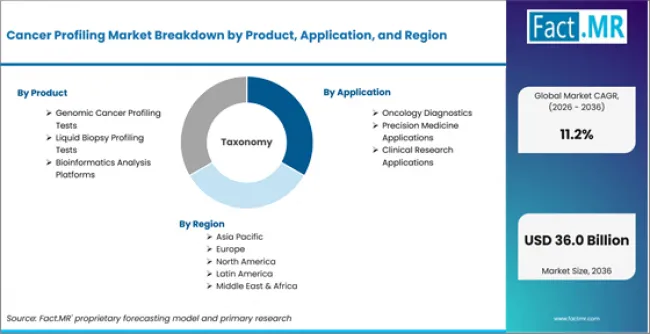
Cancer Profiling Market is segmented by Product (Genomic Cancer Profiling Tests, Liquid Biopsy Profiling Tests, Bioinformatics Analysis Platforms), Application (Oncology Diagnostics, Precision Medicine Applications, Clinical Research Applications), End Use (Hospitals & Oncology Centers, Diagnostic Laboratories, Academic & Research Institutes), and Region, with forecasts covering the period from 2026 to 2036.

Cancer Profiling Analysis and Forecast by Fact.MR

  • The Cancer Profiling Market is expected to grow from USD 12.5 billion in 2026 to USD 36.0 billion by 2036, at a 11.2% CAGR.
  • Driven by companion-diagnostic label expansion across solid tumors, rising liquid biopsy adoption for treatment selection and monitoring, and improving payer coverage including minimal residual disease reimbursement, with Genomic Cancer Profiling Tests accounting for 64.7% share.
  • Oncology Diagnostics contributing 58.9% share as providers prioritize earlier detection, treatment-selection accuracy, and resource efficiency across clinical settings.
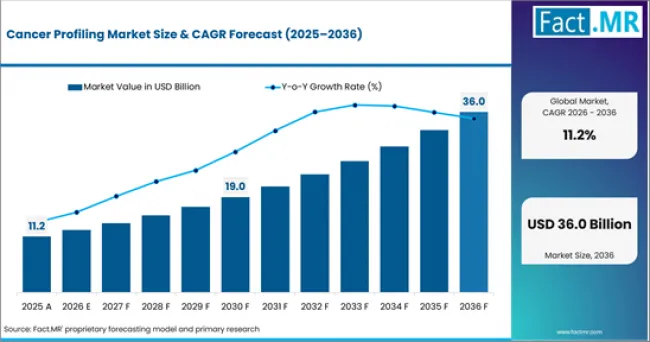
Cancer Profiling Market Value Analysis

Summary of Cancer Profiling Market

  • Market Snapshot
    • In 2025, the global Cancer Profiling Market was valued at approximately USD 11.2 billion.
    • The market is estimated to reach USD 12.5 billion in 2026 and is projected to attain USD 36.0 billion by 2036.
    • The market is likely to expand at a CAGR of 11.2% during the forecast period.
    • The market is anticipated to create an absolute dollar opportunity of USD 23.6 billion between 2026 and 2036.
    • Genomic Cancer Profiling Tests accounts for 64.7% of product share in 2026.
    • China (15.1%) and India (14.0%) are the key growth markets during the forecast period.
  • Demand and Growth Drivers
    • Companion diagnostic label expansion is moving comprehensive profiling from a research adjunct toward a treatment-selection requirement, with assays such as Guardant360 CDx adding solid-tumor indications that pull demand into routine oncology.
    • Liquid biopsy adoption is rising as single blood-sample genomic profiling across solid tumors reduces reliance on tissue and supports serial monitoring, broadening the addressable testing population.
    • Medicare and payer coverage decisions, including minimal residual disease assay reimbursement, are improving the economics of profiling and accelerating clinical uptake.
    • Expansion of companion-diagnostic labels beyond lung into colorectal and other solid tumors creates pull-through demand for comprehensive assays.
    • Genomic AI and evidence-generation collaborations can lower interpretation cost and accelerate clinical adoption of next-generation sequencing.
  • Product and Segment View
    • Genomic Cancer Profiling Tests accounts for 64.7% of the product segment in 2026, emerging as the leading category.
    • Oncology Diagnostics accounts for 58.9% of the application segment in 2026, making it the dominant use setting.
    • Key segmentation includes:
      • Product: Genomic Cancer Profiling Tests, Liquid Biopsy Profiling Tests, Bioinformatics Analysis Platforms
      • Application: Oncology Diagnostics, Precision Medicine Applications, Clinical Research Applications
      • End Use: Hospitals & Oncology Centers, Diagnostic Laboratories, Academic & Research Institutes
      • Technology: Next Generation Sequencing, PCR Based Cancer Testing, Microarray Technology
      • Formulation: Laboratory Based Testing Services, On Site Testing Systems, Digital Analysis Platforms
      • Distribution Channel: Direct Institutional Sales, Diagnostic Service Providers, Online Diagnostic Platforms
    • These systems enable:
      • Comprehensive genomic tumor characterization
      • Therapy and companion-diagnostic selection
      • Serial liquid biopsy monitoring
  • Geography and Competitive Outlook
    • North America leads on comprehensive profiling adoption, companion-diagnostic label expansion, and payer coverage that funds liquid biopsy and minimal residual disease testing.
    • Europe demand reflects structured oncology networks and IVDR compliance shaping assay qualification across reference laboratories.
    • The steepest regional growth sits in Asia Pacific, where rising cancer incidence and sustained genomics investment in China and India widen the profiling base.
    • China (15.1%) and India (14.0%) lead country growth, with other major markets showing steady demand.
    • Key companies include Illumina, Inc., F. Hoffmann-La Roche Ltd (Foundation Medicine), Guardant Health, Inc., Thermo Fisher Scientific Inc., QIAGEN N.V., NeoGenomics Laboratories, Inc..
  • Analyst Opinion
    • Shambhu Nath Jha, Principal Consultant at Fact.MR, says 'Cancer profiling is crossing from research adjunct to treatment-selection requirement, and companion-diagnostic labels are the lever. As Guardant360 CDx and similar assays add solid-tumor indications, comprehensive and liquid-biopsy testing moves into routine oncology. The economics now turn on coverage decisions, including minimal residual disease reimbursement, which fund longitudinal testing rather than one-time diagnosis. China and India are scaling fastest on rising incidence and genomics investment. The decisive capability is analytics: assays paired with genomic AI and payer relationships win accounts. Players selling sequencing capacity without interpretation and coverage strategy will cede ground to integrated competitors.'

Key Growth Drivers, Constraints, and Opportunities
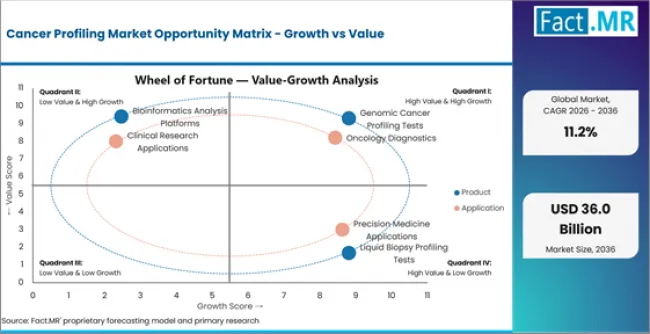
Cancer Profiling Market Opportunity Matrix Growth Vs Value

Key Factors Driving Growth

  • Companion diagnostic label expansion is moving comprehensive profiling from a research adjunct toward a treatment-selection requirement, with assays such as Guardant360 CDx adding solid-tumor indications that pull demand into routine oncology.
  • Liquid biopsy adoption is rising as single blood-sample genomic profiling across solid tumors reduces reliance on tissue and supports serial monitoring, broadening the addressable testing population.
  • Medicare and payer coverage decisions, including minimal residual disease assay reimbursement, are improving the economics of profiling and accelerating clinical uptake.

Key Market Constraints

  • Variable reimbursement across assay types and geographies limits routine use of comprehensive profiling outside well-covered indications.
  • Reproducibility, variant-interpretation consistency, and the need for bioinformatics expertise raise barriers to standardized clinical reporting.
  • Tissue sample availability and quality continue to constrain comprehensive genomic profiling where liquid biopsy is not yet validated.

Key Opportunity Areas

  • Expansion of companion-diagnostic labels beyond lung into colorectal and other solid tumors creates pull-through demand for comprehensive assays.
  • Genomic AI and evidence-generation collaborations can lower interpretation cost and accelerate clinical adoption of next-generation sequencing.
  • Minimal residual disease and monitoring applications open recurring, longitudinal testing revenue beyond one-time diagnosis.

Segment-wise Analysis of the Cancer Profiling

  • Genomic Cancer Profiling Tests holds 64.7% of the product segment in 2026, supported by clinical preference and procurement scale.
  • Oncology Diagnostics represents 58.9% of the application segment in 2026, anchored by its dominant care setting.

The Cancer Profiling Market is segmented by product, application, end use, technology, formulation, distribution channel. Demand is shaped by clinical pathway choices, reimbursement exposure, and procurement structure, with leading segments anchored in higher-volume care settings while faster-growing categories capture incremental demand as adoption broadens.

Which Product Segment Dominates the Cancer Profiling?
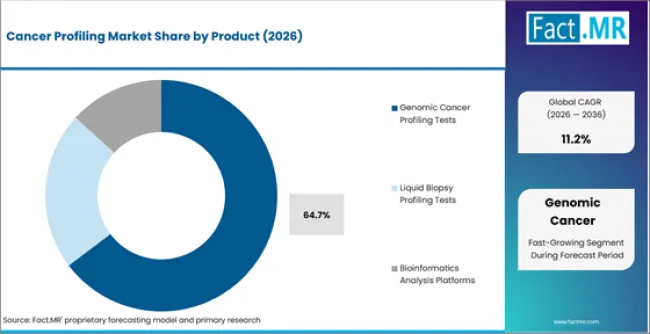
Cancer Profiling Market Analysis By Product

Genomic Cancer Profiling Tests lead the product segment with 64.7% share in 2026, as comprehensive panels move from research toward treatment-selection requirements. Next-generation sequencing underpins this category, increasingly tied to companion-diagnostic labels that link a single assay to multiple therapy decisions.

The segment is expected to retain leadership as label expansion and liquid biopsy broaden the testable population. Bioinformatics platforms grow in importance as interpretation becomes the bottleneck, but the genomic profiling test itself remains the core revenue driver across hospital and laboratory settings.

Which Application Segment Dominates the Cancer Profiling?
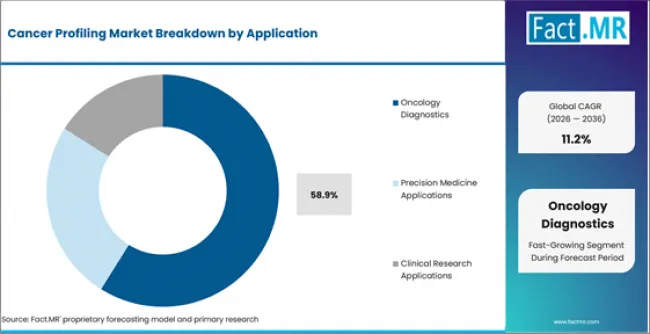
Cancer Profiling Market Analysis By Application

Oncology Diagnostics dominate at 58.9% in 2026, reflecting the central role of tumor characterization in diagnosis and therapy selection. Profiling is embedded in solid-tumor pathways where companion-diagnostic results determine treatment eligibility.

The application is likely to hold its lead as comprehensive profiling becomes routine in more tumor types. Precision-medicine and monitoring applications expand through minimal residual disease testing, adding longitudinal volume, but front-line oncology diagnosis remains the largest demand channel.

Which Product Trend is Shaping the Next Phase of Growth in the Cancer Profiling?

Genomic Cancer Profiling Tests hold 64.7% of the product segment, and the defining shift is the move toward comprehensive, often blood-based profiling tied directly to therapy selection. Next-generation sequencing, the leading technology, is being paired with companion-diagnostic labels and genomic AI so that a single assay supports multiple solid-tumor treatment decisions, concentrating demand in hospitals and oncology centers.

Liquid biopsy is the most disruptive force within this shift. Single blood-sample profiling across solid tumors reduces dependence on tissue, supports serial monitoring, and expands testing into earlier and recurrent disease settings. Coverage decisions for minimal residual disease assays reinforce the trend by funding longitudinal testing, supporting sustained demand for laboratory-based testing services.

Regional Outlook Across Key Markets

  • North America leads on comprehensive profiling adoption, companion-diagnostic label expansion, and payer coverage that funds liquid biopsy and minimal residual disease testing.
  • Europe demand reflects structured oncology networks and IVDR compliance shaping assay qualification across reference laboratories.
  • The steepest regional growth sits in Asia Pacific, where rising cancer incidence and sustained genomics investment in China and India widen the profiling base.
  • Japan shows steady demand anchored in established molecular pathology and reimbursement for companion diagnostics.

Top Country Growth Comparison Cancer Profiling Market Cagr (2026 2036)

CAGR Table

Country CAGR (%)
China 15.1%
India 14.0%
Germany 12.9%
Brazil 11.8%
U.S. 10.6%
UK 9.5%
Japan 8.4%

Source: Fact MR (FMR) analysis, based on proprietary forecasting model and primary research.
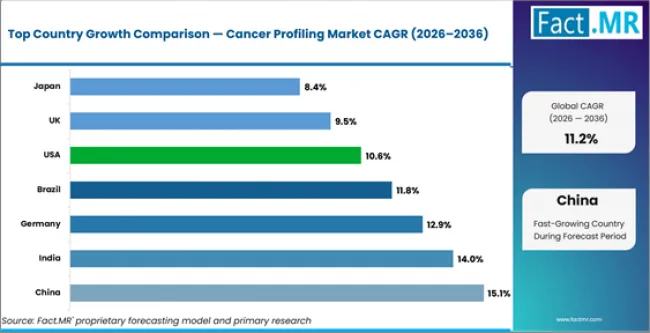
Cancer Profiling Market Cagr Analysis By Country

Market Outlook for Cancer Profiling in China

The China Cancer Profiling market is projected to grow at a CAGR of 15.1% through 2036. Government support for genomics self-sufficiency and domestic sequencing capacity is reshaping the cancer profiling landscape, narrowing the gap with imported next-generation sequencing platforms. Centralized procurement influences hospital assay pricing, while expanding oncology centers lift demand for genomic cancer profiling tests and laboratory-based testing services.

  • Domestic sequencing capacity is lifting local supply of next-generation sequencing assays into hospital oncology centers.
  • Centralized procurement is steering laboratory-based testing service pricing toward cost-competitive providers.

India Cancer Profiling Demand Trends

The India Cancer Profiling market is projected to grow at a CAGR of 14.0% through 2036. Demand is concentrated in metropolitan oncology centers and reference laboratories where rising cancer incidence and growing private oncology investment expand comprehensive genomic profiling. Cost-effectiveness shapes adoption toward laboratory-based testing services and PCR-based cancer testing, while import dependency affects sequencing reagent pricing.

  • Private oncology investment is widening access to genomic cancer profiling tests in metro reference laboratories.
  • Cost-effectiveness favors PCR-based cancer testing and centralized laboratory-based services over distributed on-site systems.

Cancer Profiling Growth Assessment in Germany

The Germany Cancer Profiling market is projected to grow at a CAGR of 12.9% through 2036. EU IVDR compliance governs how cancer profiling assays qualify and are validated across German reference laboratories, raising evidence and documentation requirements. The GKV reimbursement framework and reference pricing shape which comprehensive profiling tests gain routine funding, favoring next-generation sequencing platforms with strong clinical evidence.

  • EU IVDR validation requirements concentrate testing among laboratories with full assay documentation.
  • GKV reimbursement pathways shape routine funding for next-generation sequencing comprehensive profiling.

United States Cancer Profiling Market Opportunity Outlook
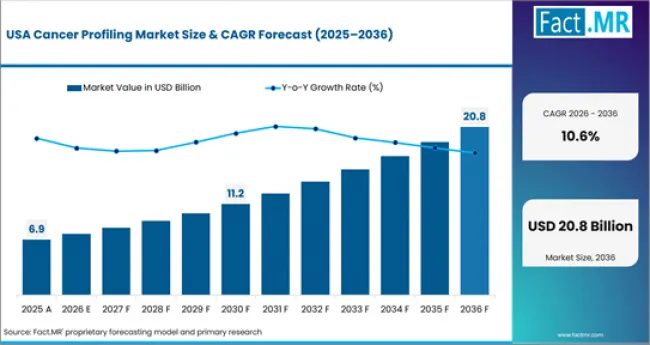
Cancer Profiling Market Country Value Analysis

The United States Cancer Profiling market is projected to grow at a CAGR of 10.6% through 2036. Hospital and oncology-center networks anchor demand, with comprehensive genomic profiling increasingly embedded in treatment-selection pathways. FDA companion-diagnostic approvals and the insurance and reimbursement landscape, including Medicare coverage for minimal residual disease assays, drive adoption of liquid biopsy and next-generation sequencing across specialty oncology practices.

  • FDA companion-diagnostic label expansion is pulling comprehensive profiling into routine solid-tumor treatment selection.
  • Medicare coverage for minimal residual disease assays supports recurring liquid biopsy testing revenue.

Cancer Profiling Demand Analysis in Japan
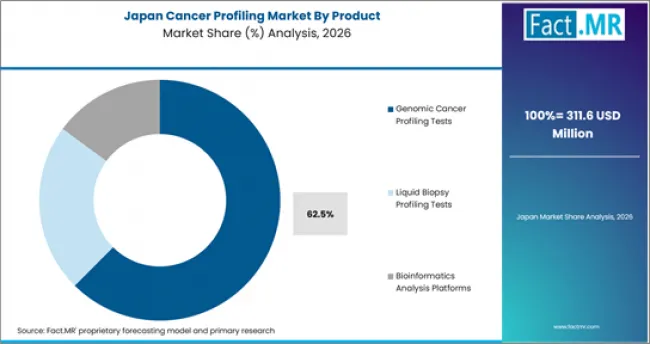
Cancer Profiling Market Japan Market Share Analysis By Product

The Japan Cancer Profiling market is projected to grow at a CAGR of 8.4% through 2036. Established molecular pathology infrastructure means growth is led by expansion of companion-diagnostic testing and liquid biopsy rather than first-time capacity build-out. PMDA approval pathways and NHI reimbursement revisions shape which assays gain routine use, while preference for validated platforms supports next-generation sequencing demand.

  • NHI reimbursement for companion diagnostics sustains demand for validated next-generation sequencing assays.
  • Preference for established platforms supports laboratory-based testing services in academic centers.

Competitive Benchmarking and Company Positioning
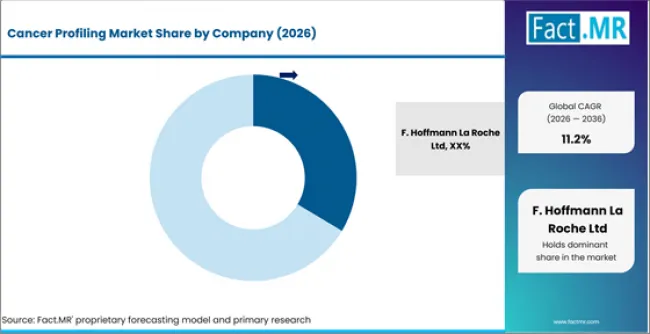
Cancer Profiling Market Analysis By Company

Cancer Profiling Analysis By Company

  • Illumina, Roche through Foundation Medicine, Guardant Health, and Thermo Fisher hold leading positions through sequencing platforms, comprehensive genomic profiling assays, and FDA-approved companion diagnostics with broad clinical reach.
  • QIAGEN, NeoGenomics, Caris Life Sciences, and Natera compete across PCR-based testing, laboratory services, and minimal residual disease assays, with payer coverage shaping competitive position.
  • Platform and analytics collaborations, including genomic AI partnerships, increasingly differentiate competitors as interpretation and evidence generation become central to clinical adoption.

The competitive landscape is concentrated among integrated sequencing and profiling players, with differentiation driven by assay breadth, companion-diagnostic labels, and payer coverage. Illumina, Roche through Foundation Medicine, Guardant Health, and Thermo Fisher are best positioned to capture treatment-selection demand through comprehensive panels and FDA-approved companion diagnostics that pull through recurring reagent and service revenue.

Below the leaders, QIAGEN, NeoGenomics, Caris Life Sciences, and Natera maintain strong positions in PCR-based testing, reference-laboratory services, and minimal residual disease monitoring. Competition turns on coverage decisions, turnaround time, and the clinical evidence supporting specific indications rather than platform breadth alone.

Analytics is an increasingly decisive battleground. Collaborations linking sequencing with genomic AI and evidence generation, alongside Tempus AI and Agilent's platform positions, raise the value of interpretation and reporting. Companies that combine validated assays with scalable bioinformatics and payer relationships are positioned to deepen account retention.

Key Companies in the Cancer Profiling

  • Leading companies in the cancer profiling market include Illumina, Inc., F. Hoffmann-La Roche Ltd (Foundation Medicine), Guardant Health, Inc., Thermo Fisher Scientific Inc., which hold strong positions through portfolio breadth, clinical evidence, and broad distribution.
  • QIAGEN N.V., NeoGenomics Laboratories, Inc., Caris Life Sciences, Natera, Inc. maintain established positions across specific segments and channels, competing on assay or product performance, service, and regional reach.
  • Tempus AI, Inc., Agilent Technologies, Inc. and other specialists compete through focused offerings and niche strength, reinforcing relevance in a competitive but evolving market.

Recent Industry Developments

  • Guardant Health, Inc. - FDA Companion Diagnostic Expansion for Guardant360 CDx (January 2026)
    • In January 2026, Guardant Health reported FDA approval of Guardant360 CDx as a companion diagnostic to identify patients with BRAF V600E-mutant metastatic colorectal cancer eligible for a specific therapy combination. The approval extends companion-diagnostic labels beyond lung into additional solid tumors, supporting comprehensive liquid biopsy demand.
  • Thermo Fisher Scientific Inc. - FDA Approval of Oncomine Dx Express Test (July 2025)
    • In July 2025, Thermo Fisher announced FDA approval of the Oncomine Dx Express Test on the Ion Torrent Genexus Dx Integrated Sequencer as an in vitro diagnostic companion diagnostic and for tumor profiling. The approval supports decentralized next-generation sequencing in clinical settings.
  • Natera, Inc. - Medicare Coverage for Signatera MRD Assay (June 2025)
    • In June 2025, Natera announced that its genome-based Signatera minimal residual disease assay gained Medicare coverage under LCD L38779. The coverage decision strengthens reimbursement for longitudinal liquid biopsy testing and recurring profiling revenue.
  • Illumina, Inc. - Genomic AI Collaboration with Tempus AI (April 2025)
    • In April 2025, Illumina and Tempus AI announced a collaboration to accelerate clinical adoption of next-generation sequencing through genomic AI and evidence generation. The partnership targets faster interpretation and broader clinical uptake of comprehensive profiling.

Leading Companies Shaping the Cancer Profiling

  • Illumina, Inc.
  • F. Hoffmann-La Roche Ltd (Foundation Medicine)
  • Guardant Health, Inc.
  • Thermo Fisher Scientific Inc.
  • QIAGEN N.V.
  • NeoGenomics Laboratories, Inc.
  • Caris Life Sciences
  • Natera, Inc.
  • Tempus AI, Inc.
  • Agilent Technologies, Inc.

Cancer Profiling Segmentation

  • Cancer Profiling Market Segmented by Product:

    • Genomic Cancer Profiling Tests
      • Next Generation Sequencing Panels
        • Whole Exome Sequencing Panels
        • Targeted Gene Panels
      • Whole Genome Profiling Tests
        • Somatic Mutation Profiling
        • Germline Mutation Profiling
    • Liquid Biopsy Profiling Tests
      • Circulating Tumor DNA Tests
        • Early Cancer Detection Panels
        • Minimal Residual Disease Tests
      • Circulating Tumor Cell Tests
        • Metastatic Cancer Tracking Tests
        • Treatment Response Monitoring Tests
    • Bioinformatics Analysis Platforms
      • AI Driven Genomic Platforms
        • Predictive Cancer Modeling Tools
        • Mutation Pattern Recognition Systems
      • Data Interpretation Software
        • Clinical Reporting Platforms
        • Variant Annotation Systems
  • Cancer Profiling Market Segmented by Application:

    • Oncology Diagnostics
      • Solid Tumor Profiling
        • Lung Cancer Profiling Applications
        • Breast Cancer Profiling Applications
      • Hematological Cancer Profiling
        • Leukemia Profiling Applications
        • Lymphoma Profiling Applications
    • Precision Medicine Applications
      • Therapy Selection Applications
        • Targeted Therapy Matching
        • Immunotherapy Suitability Testing
      • Treatment Optimization Applications
        • Drug Resistance Profiling
        • Dose Optimization Studies
    • Clinical Research Applications
      • Drug Development Studies
        • Clinical Trial Stratification
        • Biomarker Discovery Studies
      • Academic Research Applications
        • Cancer Genomics Research
        • Population Based Cancer Studies
  • Cancer Profiling Market Segmented by End Use:

    • Hospitals & Oncology Centers
      • Cancer Specialty Hospitals
        • Comprehensive Cancer Centers
        • Regional Oncology Hospitals
      • Multi Specialty Hospitals
        • Integrated Oncology Departments
        • Tertiary Care Hospitals
    • Diagnostic Laboratories
      • Molecular Diagnostic Labs
        • Genetic Testing Laboratories
        • Pathology Reference Labs
      • Independent Testing Labs
        • Private Diagnostic Chains
        • Specialized Cancer Labs
    • Academic & Research Institutes
      • Medical Research Universities
        • Cancer Research Institutes
        • Genomics Research Centers
      • Clinical Trial Organizations
        • Pharmaceutical Research Units
        • Biotech Research Labs
  • Cancer Profiling Market Segmented by Technology:

    • Next Generation Sequencing
      • High Throughput Sequencing
        • Massively Parallel Sequencing Systems
        • Ultra Deep Sequencing Platforms
      • Targeted Sequencing Technology
        • Cancer Gene Panel Sequencing
        • Hotspot Mutation Sequencing
    • PCR Based Cancer Testing
      • Real Time PCR Systems
        • Quantitative Mutation Detection
        • Expression Level Analysis Systems
      • Digital PCR Systems
        • Ultra Sensitive Mutation Detection
        • Copy Number Variation Analysis
    • Microarray Technology
      • DNA Microarray Systems
        • Gene Expression Profiling Arrays
        • Mutation Screening Arrays
      • Protein Microarray Systems
        • Cancer Biomarker Detection Arrays
        • Antibody Interaction Profiling
  • Cancer Profiling Market Segmented by Formulation:

    • Laboratory Based Testing Services
      • Centralized Genomic Testing Labs
        • High Complexity Testing Labs
        • Reference Oncology Laboratories
      • Specialized Molecular Labs
        • Cancer Genomics Labs
        • Biomarker Analysis Labs
    • On Site Testing Systems
      • Point of Care Genetic Testing
        • Rapid Molecular Testing Kits
        • Bedside Cancer Screening Tools
      • Portable Diagnostic Systems
        • Mobile Genetic Analysis Units
        • Field Deployable Testing Systems
    • Digital Analysis Platforms
      • Cloud Genomics Platforms
        • AI Based Interpretation Systems
        • Remote Reporting Platforms
      • Bioinformatics Platforms
        • Variant Analysis Software
        • Cancer Risk Prediction Engines
  • Cancer Profiling Market Segmented by Distribution Channel:

    • Direct Institutional Sales
      • Hospital Procurement Contracts
        • Oncology Department Agreements
        • Diagnostic Procurement Programs
      • Research Institution Contracts
        • University Lab Supply Agreements
        • Clinical Trial Supply Contracts
    • Diagnostic Service Providers
      • Reference Laboratories
        • National Diagnostic Chains
        • Regional Testing Laboratories
      • Specialized Genetic Testing Labs
        • Cancer Screening Service Providers
        • Private Genomic Labs
    • Online Diagnostic Platforms
      • Digital Health Platforms
        • Telemedicine Diagnostic Services
        • Remote Sample Testing Platforms
      • E Health Marketplaces
        • Patient Direct Testing Platforms
        • Subscription Based Genomic Services
  • Cancer Profiling Market by Region:

    • North America
      • USA
      • Canada
      • Mexico
    • Latin America
      • Brazil
      • Chile
      • Rest of Latin America
    • Western Europe
      • Germany
      • UK
      • Italy
      • Spain
      • France
      • Nordic
      • BENELUX
      • Rest of Western Europe
    • Eastern Europe
      • Russia
      • Poland
      • Hungary
      • Balkan & Baltic
      • Rest of Eastern Europe
    • East Asia
      • China
      • Japan
      • South Korea
    • South Asia and Pacific
      • India
      • ASEAN
      • Australia & New Zealand
      • Rest of South Asia and Pacific
    • Middle East & Africa
      • Kingdom of Saudi Arabia
      • Other GCC Countries
      • Turkiye
      • South Africa
      • Other African Union
      • Rest of Middle East & Africa

Sources and Research References

  • World Health Organization and International Agency for Research on Cancer. Cancer incidence and subtype data.
  • U.S. Food and Drug Administration. Companion-diagnostic approval records.
  • Illumina, Roche, Guardant Health, and Thermo Fisher. Assay and platform references.
  • Centers for Medicare and Medicaid Services. Coverage determination records.
  • Primary interviews with oncologists, laboratory directors, payers, and assay developers.

This bibliography is provided for reader reference and is not exhaustive. The full report contains the complete reference list and detailed citations.

Key Questions This Report Addresses

  • What is the current and future size of the Cancer Profiling Market?
  • How fast is the Cancer Profiling Market expected to grow between 2026 and 2036?
  • Which product segment is likely to lead the market by 2026?
  • Which application segment is expected to account for the highest demand by 2026?
  • What factors are driving demand in the cancer profiling market globally?
  • Which countries are projected to show the fastest growth through 2036?
  • What is driving market expansion in China and India?
  • Who are the key companies active in the cancer profiling market?
  • How is companion-diagnostic label expansion changing routine profiling demand?
  • What is the role of liquid biopsy and minimal residual disease testing in recurring revenue?
  • How does Fact.MR estimate and validate the cancer profiling market forecast?

Cancer Profiling Market Definition

The cancer profiling market covers genomic and molecular tests, liquid biopsy assays, and bioinformatics platforms used to characterize tumors for diagnosis, treatment selection, and monitoring. It spans next-generation sequencing, PCR-based testing, and microarray technologies delivered through laboratory services, on-site systems, and digital analysis platforms across hospitals, diagnostic laboratories, and research institutes.

Cancer Profiling Market Inclusions

  • The scope covers global and regional market size and forecasts for 2026 to 2036 across product type, application, end use, technology, formulation, and distribution channel.
  • It includes demand tied to comprehensive genomic profiling, companion diagnostics, minimal residual disease testing, and liquid biopsy adoption in oncology.
  • Pricing and reimbursement analysis spans tissue and blood-based assays, including Medicare and payer coverage dynamics in major markets.
  • Coverage includes bioinformatics and digital analysis platforms supporting variant interpretation and clinical reporting.

Cancer Profiling Market Exclusions

  • The scope excludes general clinical chemistry and routine pathology not specific to molecular tumor characterization.
  • It excludes cancer therapeutics and drug products, which are addressed in separate oncology coverage.
  • Research-use-only reagents without a diagnostic or clinical-profiling application are excluded.
  • Imaging-based cancer detection without molecular profiling content is excluded.

Cancer Profiling Market Research Methodology

  • The methodology combines secondary research, primary interviews, and demand-side modeling.
  • It draws on 130 plus secondary sources and benchmarks 60 plus assay and platform portfolios.
  • Market sizing covers 30 plus countries through a test-volume and oncology-incidence model with top-down validation.
  • Key inputs include cancer incidence, comprehensive genomic profiling adoption, companion-diagnostic label expansion, and payer coverage.
  • The model cross-checks test demand with sequencing instrument placements, reagent pull-through, and laboratory volumes.
  • Primary validation includes 25 plus interviews across oncologists, laboratory directors, payers, and assay developers.
  • Final estimates pass through coverage-policy review, adoption-curve analysis, and sensitivity testing.

Scope of Analysis

Cancer Profiling Market Breakdown By Product, Application, And Region

Parameter Details
Quantitative Units USD 12.5 billion to USD 36.0 billion, at a CAGR of 11.2%
Market Definition The cancer profiling market covers genomic, liquid biopsy, and bioinformatics products and services used to characterize tumors for diagnosis, treatment selection, and monitoring across clinical and research settings.
Regions Covered North America, Latin America, Europe, East Asia, South Asia and Pacific, Middle East and Africa
Countries Covered China, India, Germany, Brazil, U.S., UK, Japan, 30 plus countries
Key Companies Illumina, Inc., F. Hoffmann-La Roche Ltd (Foundation Medicine), Guardant Health, Inc., Thermo Fisher Scientific Inc., QIAGEN N.V., NeoGenomics Laboratories, Inc., Caris Life Sciences, Natera, Inc., Tempus AI, Inc., Agilent Technologies, Inc.
Forecast Period 2026 to 2036
Approach Hybrid demand-side and top-down methodology built on country-level demand, product and assay benchmarking, pricing analysis, shipment validation, and primary interviews across providers, laboratories, distributors, and end users

- Frequently Asked Questions -

How big is the cancer profiling market in 2026?

The global cancer profiling market is estimated to be valued at USD 12.5 billion in 2026.

What will be the size of cancer profiling market in 2036?

The market size for the cancer profiling market is projected to reach USD 36.0 billion by 2036.

How much will be the cancer profiling market growth between 2026 and 2036?

The cancer profiling market is expected to grow at a 11.2% CAGR between 2026 and 2036.

What are the key product in the cancer profiling market?

The key product in cancer profiling market are Genomic Cancer Profiling Tests, Liquid Biopsy Profiling Tests and Bioinformatics Analysis Platforms.

Which application segment is expected to contribute significant share in the cancer profiling market in 2026?

In terms of application, oncology diagnostics segment is expected to command 58.9% share in the cancer profiling market in 2026.

Table of Content

  1. Key Takeaways
    • Market Size and CAGR
    • Top Growth Driver
    • Fastest Growing Segment
    • Leading Region
    • Key Companies
    • Emerging Opportunities
  2. Executive Summary
    • Global Market Outlook
    • Demand-side Trends
    • Supply-side Trends
    • Technology Roadmap Analysis
    • Analysis and Recommendations
    • Analyst Perspective (What is happening? Why now? What should investors know?)
    • Key Questions Answered
      • How large is the market?
      • What is the CAGR?
      • What are key trends?
      • Which region dominates?
      • Who are the leaders?
  3. Market Overview
    • Market Coverage / Taxonomy
    • Market Definition / Scope / Limitations
  4. Research Methodology
    • Chapter Orientation
    • Analytical Lens and Working Hypotheses
      • Market Structure, Signals, and Trend Drivers
      • Benchmarking and Cross-market Comparability
      • Market Sizing, Forecasting, and Opportunity Mapping
    • Research Design and Evidence Framework
      • Desk Research Programme (Secondary Evidence)
      • Expert Input and Fieldwork (Primary Evidence)
      • Tooling, Models, and Reference Databases
    • Data Engineering and Model Build
    • Quality Assurance and Audit Trail
  5. Market Background
    • Market Dynamics (Drivers, Restraints, Opportunity, Trends)
    • Scenario Forecast (Optimistic, Likely, Conservative)
    • Impact Analysis
      • AI Impact
      • Sustainability Impact
      • Regulatory Impact
      • Technology Impact
    • Consumer / Buyer Analysis
      • Purchase Drivers
      • Adoption Barriers
      • Buyer Journey
    • Opportunity Map Analysis
    • Product Life Cycle Analysis
    • Supply Chain Analysis
    • Investment Feasibility Matrix
    • Value Chain Analysis
    • PESTLE and Porter's Analysis
    • Regulatory Landscape
    • Regional Parent Market Outlook
    • Production and Consumption Statistics
    • Import and Export Statistics
  6. Global Market Analysis and Forecast, 2021 to 2036
    • Historical Market Size Value (USD Million) Analysis, 2021 to 2025
    • Current and Future Market Size Value (USD Million) Projections, 2026 to 2036
      • Y-o-Y Growth Trend Analysis
      • Absolute $ Opportunity Analysis
  7. Global Market Pricing Analysis, 2021 to 2036
  8. Global Market Analysis and Forecast, By Product, 2021 to 2036
    • Introduction / Key Findings
    • Historical Market Size Value (USD Million) Analysis By Product, 2021 to 2025
    • Current and Future Market Size Value (USD Million) Analysis and Forecast By Product, 2026 to 2036
      • Genomic Cancer Profiling Tests
        • Next Generation Sequencing Panels
        • Whole Genome Profiling Tests
      • Liquid Biopsy Profiling Tests
        • Circulating Tumor DNA Tests
        • Circulating Tumor Cell Tests
      • Bioinformatics Analysis Platforms
        • AI Driven Genomic Platforms
        • Data Interpretation Software
    • Y-o-Y Growth Trend Analysis By Product, 2021 to 2025
    • Absolute $ Opportunity Analysis By Product, 2026 to 2036
  9. Global Market Analysis and Forecast, By Application, 2021 to 2036
    • Introduction / Key Findings
    • Historical Market Size Value (USD Million) Analysis By Application, 2021 to 2025
    • Current and Future Market Size Value (USD Million) Analysis and Forecast By Application, 2026 to 2036
      • Oncology Diagnostics
        • Solid Tumor Profiling
        • Hematological Cancer Profiling
      • Precision Medicine Applications
        • Therapy Selection Applications
        • Treatment Optimization Applications
      • Clinical Research Applications
        • Drug Development Studies
        • Academic Research Applications
    • Y-o-Y Growth Trend Analysis By Application, 2021 to 2025
    • Absolute $ Opportunity Analysis By Application, 2026 to 2036
  10. Global Market Analysis and Forecast, By End Use, 2021 to 2036
    • Introduction / Key Findings
    • Historical Market Size Value (USD Million) Analysis By End Use, 2021 to 2025
    • Current and Future Market Size Value (USD Million) Analysis and Forecast By End Use, 2026 to 2036
      • Hospitals & Oncology Centers
        • Cancer Specialty Hospitals
        • Multi Specialty Hospitals
      • Diagnostic Laboratories
        • Molecular Diagnostic Labs
        • Independent Testing Labs
      • Academic & Research Institutes
        • Medical Research Universities
        • Clinical Trial Organizations
    • Y-o-Y Growth Trend Analysis By End Use, 2021 to 2025
    • Absolute $ Opportunity Analysis By End Use, 2026 to 2036
  11. Global Market Analysis and Forecast, By Technology, 2021 to 2036
    • Introduction / Key Findings
    • Historical Market Size Value (USD Million) Analysis By Technology, 2021 to 2025
    • Current and Future Market Size Value (USD Million) Analysis and Forecast By Technology, 2026 to 2036
      • Next Generation Sequencing
        • High Throughput Sequencing
        • Targeted Sequencing Technology
      • PCR Based Cancer Testing
        • Real Time PCR Systems
        • Digital PCR Systems
      • Microarray Technology
        • DNA Microarray Systems
        • Protein Microarray Systems
    • Y-o-Y Growth Trend Analysis By Technology, 2021 to 2025
    • Absolute $ Opportunity Analysis By Technology, 2026 to 2036
  12. Global Market Analysis and Forecast, By Formulation, 2021 to 2036
    • Introduction / Key Findings
    • Historical Market Size Value (USD Million) Analysis By Formulation, 2021 to 2025
    • Current and Future Market Size Value (USD Million) Analysis and Forecast By Formulation, 2026 to 2036
      • Laboratory Based Testing Services
        • Centralized Genomic Testing Labs
        • Specialized Molecular Labs
      • On Site Testing Systems
        • Point of Care Genetic Testing
        • Portable Diagnostic Systems
      • Digital Analysis Platforms
        • Cloud Genomics Platforms
        • Bioinformatics Platforms
    • Y-o-Y Growth Trend Analysis By Formulation, 2021 to 2025
    • Absolute $ Opportunity Analysis By Formulation, 2026 to 2036
  13. Global Market Analysis and Forecast, By Distribution Channel
    • Introduction / Key Findings
    • Historical Market Size Value (USD Million) Analysis By Distribution Channel, 2021 to 2025
    • Current and Future Market Size Value (USD Million) Analysis and Forecast By Distribution Channel, 2026 to 2036
      • Direct Institutional Sales
        • Hospital Procurement Contracts
        • Research Institution Contracts
      • Diagnostic Service Providers
        • Reference Laboratories
        • Specialized Genetic Testing Labs
      • Online Diagnostic Platforms
        • Digital Health Platforms
        • E Health Marketplaces
    • Y-o-Y Growth Trend Analysis By Distribution Channel, 2021 to 2025
    • Absolute $ Opportunity Analysis By Distribution Channel, 2026 to 2036
  14. Global Market Analysis and Forecast, By Region, 2021 to 2036
    • Introduction
    • Historical Market Size Value (USD Million) Analysis By Region, 2021 to 2025
    • Current Market Size Value (USD Million) Analysis and Forecast By Region, 2026 to 2036
      • North America
      • Latin America
      • Western Europe
      • Eastern Europe
      • East Asia
      • South Asia and Pacific
      • Middle East & Africa
    • Market Attractiveness Analysis By Region
  15. North America Market Analysis and Forecast, By Country, 2021 to 2036
    • Historical Market Size Value (USD Million) Trend Analysis By Market Taxonomy, 2021 to 2025
    • Market Size Value (USD Million) Forecast By Market Taxonomy, 2026 to 2036
      • By Country
        • USA
        • Canada
        • Mexico
      • By Product
      • By Application
      • By End Use
      • By Technology
      • By Formulation
      • By Distribution Channel
    • Market Attractiveness Analysis
      • By Country
      • By Product
      • By Application
      • By End Use
      • By Technology
      • By Formulation
      • By Distribution Channel
    • Key Takeaways
  16. Latin America Market Analysis and Forecast, By Country
    • Historical Market Size Value (USD Million) Trend Analysis By Market Taxonomy, 2021 to 2025
    • Market Size Value (USD Million) Forecast By Market Taxonomy, 2026 to 2036
      • By Country
        • Brazil
        • Chile
        • Rest of Latin America
      • By Product
      • By Application
      • By End Use
      • By Technology
      • By Formulation
      • By Distribution Channel
    • Market Attractiveness Analysis
      • By Country
      • By Product
      • By Application
      • By End Use
      • By Technology
      • By Formulation
      • By Distribution Channel
    • Key Takeaways
  17. Western Europe Market Analysis and Forecast, By Country
    • Historical Market Size Value (USD Million) Trend Analysis By Market Taxonomy, 2021 to 2025
    • Market Size Value (USD Million) Forecast By Market Taxonomy, 2026 to 2036
      • By Country
        • Germany
        • UK
        • Italy
        • Spain
        • France
        • Nordic
        • BENELUX
        • Rest of Western Europe
      • By Product
      • By Application
      • By End Use
      • By Technology
      • By Formulation
      • By Distribution Channel
    • Market Attractiveness Analysis
      • By Country
      • By Product
      • By Application
      • By End Use
      • By Technology
      • By Formulation
      • By Distribution Channel
    • Key Takeaways
  18. Eastern Europe Market Analysis and Forecast, By Country
    • Historical Market Size Value (USD Million) Trend Analysis By Market Taxonomy, 2021 to 2025
    • Market Size Value (USD Million) Forecast By Market Taxonomy, 2026 to 2036
      • By Country
        • Russia
        • Poland
        • Hungary
        • Balkan & Baltic
        • Rest of Eastern Europe
      • By Product
      • By Application
      • By End Use
      • By Technology
      • By Formulation
      • By Distribution Channel
    • Market Attractiveness Analysis
      • By Country
      • By Product
      • By Application
      • By End Use
      • By Technology
      • By Formulation
      • By Distribution Channel
    • Key Takeaways
  19. East Asia Market Analysis and Forecast, By Country
    • Historical Market Size Value (USD Million) Trend Analysis By Market Taxonomy, 2021 to 2025
    • Market Size Value (USD Million) Forecast By Market Taxonomy, 2026 to 2036
      • By Country
        • China
        • Japan
        • South Korea
      • By Product
      • By Application
      • By End Use
      • By Technology
      • By Formulation
      • By Distribution Channel
    • Market Attractiveness Analysis
      • By Country
      • By Product
      • By Application
      • By End Use
      • By Technology
      • By Formulation
      • By Distribution Channel
    • Key Takeaways
  20. South Asia and Pacific Market Analysis and Forecast, By Country
    • Historical Market Size Value (USD Million) Trend Analysis By Market Taxonomy, 2021 to 2025
    • Market Size Value (USD Million) Forecast By Market Taxonomy, 2026 to 2036
      • By Country
        • India
        • ASEAN
        • Australia & New Zealand
        • Rest of South Asia and Pacific
      • By Product
      • By Application
      • By End Use
      • By Technology
      • By Formulation
      • By Distribution Channel
    • Market Attractiveness Analysis
      • By Country
      • By Product
      • By Application
      • By End Use
      • By Technology
      • By Formulation
      • By Distribution Channel
    • Key Takeaways
  21. Middle East & Africa Market Analysis and Forecast, By Country
    • Historical Market Size Value (USD Million) Trend Analysis By Market Taxonomy, 2021 to 2025
    • Market Size Value (USD Million) Forecast By Market Taxonomy, 2026 to 2036
      • By Country
        • Kingdom of Saudi Arabia
        • Other GCC Countries
        • Turkiye
        • South Africa
        • Other African Union
        • Rest of Middle East & Africa
      • By Product
      • By Application
      • By End Use
      • By Technology
      • By Formulation
      • By Distribution Channel
    • Market Attractiveness Analysis
      • By Country
      • By Product
      • By Application
      • By End Use
      • By Technology
      • By Formulation
      • By Distribution Channel
    • Key Takeaways
  22. Key Countries Market Analysis
    • USA
      • Pricing Analysis
      • Market Share Analysis, 2025
        • By Product
        • By Application
        • By End Use
        • By Technology
        • By Formulation
        • By Distribution Channel
    • Canada
      • Pricing Analysis
      • Market Share Analysis, 2025
        • By Product
        • By Application
        • By End Use
        • By Technology
        • By Formulation
        • By Distribution Channel
    • Mexico
      • Pricing Analysis
      • Market Share Analysis, 2025
        • By Product
        • By Application
        • By End Use
        • By Technology
        • By Formulation
        • By Distribution Channel
    • Brazil
      • Pricing Analysis
      • Market Share Analysis, 2025
        • By Product
        • By Application
        • By End Use
        • By Technology
        • By Formulation
        • By Distribution Channel
    • Chile
      • Pricing Analysis
      • Market Share Analysis, 2025
        • By Product
        • By Application
        • By End Use
        • By Technology
        • By Formulation
        • By Distribution Channel
    • Germany
      • Pricing Analysis
      • Market Share Analysis, 2025
        • By Product
        • By Application
        • By End Use
        • By Technology
        • By Formulation
        • By Distribution Channel
    • UK
      • Pricing Analysis
      • Market Share Analysis, 2025
        • By Product
        • By Application
        • By End Use
        • By Technology
        • By Formulation
        • By Distribution Channel
    • Italy
      • Pricing Analysis
      • Market Share Analysis, 2025
        • By Product
        • By Application
        • By End Use
        • By Technology
        • By Formulation
        • By Distribution Channel
    • Spain
      • Pricing Analysis
      • Market Share Analysis, 2025
        • By Product
        • By Application
        • By End Use
        • By Technology
        • By Formulation
        • By Distribution Channel
    • France
      • Pricing Analysis
      • Market Share Analysis, 2025
        • By Product
        • By Application
        • By End Use
        • By Technology
        • By Formulation
        • By Distribution Channel
    • India
      • Pricing Analysis
      • Market Share Analysis, 2025
        • By Product
        • By Application
        • By End Use
        • By Technology
        • By Formulation
        • By Distribution Channel
    • ASEAN
      • Pricing Analysis
      • Market Share Analysis, 2025
        • By Product
        • By Application
        • By End Use
        • By Technology
        • By Formulation
        • By Distribution Channel
    • Australia & New Zealand
      • Pricing Analysis
      • Market Share Analysis, 2025
        • By Product
        • By Application
        • By End Use
        • By Technology
        • By Formulation
        • By Distribution Channel
    • China
      • Pricing Analysis
      • Market Share Analysis, 2025
        • By Product
        • By Application
        • By End Use
        • By Technology
        • By Formulation
        • By Distribution Channel
    • Japan
      • Pricing Analysis
      • Market Share Analysis, 2025
        • By Product
        • By Application
        • By End Use
        • By Technology
        • By Formulation
        • By Distribution Channel
    • South Korea
      • Pricing Analysis
      • Market Share Analysis, 2025
        • By Product
        • By Application
        • By End Use
        • By Technology
        • By Formulation
        • By Distribution Channel
    • Russia
      • Pricing Analysis
      • Market Share Analysis, 2025
        • By Product
        • By Application
        • By End Use
        • By Technology
        • By Formulation
        • By Distribution Channel
    • Poland
      • Pricing Analysis
      • Market Share Analysis, 2025
        • By Product
        • By Application
        • By End Use
        • By Technology
        • By Formulation
        • By Distribution Channel
    • Hungary
      • Pricing Analysis
      • Market Share Analysis, 2025
        • By Product
        • By Application
        • By End Use
        • By Technology
        • By Formulation
        • By Distribution Channel
    • Kingdom of Saudi Arabia
      • Pricing Analysis
      • Market Share Analysis, 2025
        • By Product
        • By Application
        • By End Use
        • By Technology
        • By Formulation
        • By Distribution Channel
    • Turkiye
      • Pricing Analysis
      • Market Share Analysis, 2025
        • By Product
        • By Application
        • By End Use
        • By Technology
        • By Formulation
        • By Distribution Channel
    • South Africa
      • Pricing Analysis
      • Market Share Analysis, 2025
        • By Product
        • By Application
        • By End Use
        • By Technology
        • By Formulation
        • By Distribution Channel
  23. Market Structure Analysis
    • Competition Dashboard
    • Competition Benchmarking
    • Market Share Analysis of Top Players
      • By Regional
      • By Product
      • By Application
      • By End Use
      • By Technology
      • By Formulation
      • By Distribution Channel
      • Emerging Startups
      • Innovation Benchmarking
    • Competition Analysis
      • Competition Deep Dive
        • F. Hoffmann La Roche Ltd
          • Overview
          • Product Portfolio
          • Profitability by Market Segments (Product/Age /Sales Channel/Region)
          • Sales Footprint
          • Strategy Overview
            • Marketing Strategy
            • Product Strategy
            • Channel Strategy
        • Illumina Inc.
        • QIAGEN
        • Thermo Fisher Scientific Inc.
        • Abbott
        • Nanostring Technologies Inc.
        • Siemens AG
        • HTG Molecular Diagnostics, Inc.
        • Perkin Elmer Inc.
        • Agilent Technologies Inc.
        • Negenomics Laboratory Inc.
        • Genomic Health
        • Biogenex
        • Pacific Biosciences of California Inc.
    • Case Studies
    • Success Stories
    • Recent Developments
  24. Assumptions & Acronyms Used

List Of Table

  • Table 1: Global Market Value (USD Million) Forecast by Region, 2021 to 2036
  • Table 2: Global Market Value (USD Million) Forecast by Product, 2021 to 2036
  • Table 3: Global Market Value (USD Million) Forecast by Application, 2021 to 2036
  • Table 4: Global Market Value (USD Million) Forecast by End Use, 2021 to 2036
  • Table 5: Global Market Value (USD Million) Forecast by Technology, 2021 to 2036
  • Table 6: Global Market Value (USD Million) Forecast by Formulation, 2021 to 2036
  • Table 7: Global Market Value (USD Million) Forecast by Distribution Channel, 2021 to 2036
  • Table 8: Global Market rma_anu Forecast by rma_anu, 2021 to 2036
  • Table 9: North America Market Value (USD Million) Forecast by Country, 2021 to 2036
  • Table 10: North America Market Value (USD Million) Forecast by Product, 2021 to 2036
  • Table 11: North America Market Value (USD Million) Forecast by Application, 2021 to 2036
  • Table 12: North America Market Value (USD Million) Forecast by End Use, 2021 to 2036
  • Table 13: North America Market Value (USD Million) Forecast by Technology, 2021 to 2036
  • Table 14: North America Market Value (USD Million) Forecast by Formulation, 2021 to 2036
  • Table 15: North America Market Value (USD Million) Forecast by Distribution Channel, 2021 to 2036
  • Table 16: Latin America Market Value (USD Million) Forecast by Country, 2021 to 2036
  • Table 17: Latin America Market Value (USD Million) Forecast by Product, 2021 to 2036
  • Table 18: Latin America Market Value (USD Million) Forecast by Application, 2021 to 2036
  • Table 19: Latin America Market Value (USD Million) Forecast by End Use, 2021 to 2036
  • Table 20: Latin America Market Value (USD Million) Forecast by Technology, 2021 to 2036
  • Table 21: Latin America Market Value (USD Million) Forecast by Formulation, 2021 to 2036
  • Table 22: Latin America Market Value (USD Million) Forecast by Distribution Channel, 2021 to 2036
  • Table 23: Western Europe Market Value (USD Million) Forecast by Country, 2021 to 2036
  • Table 24: Western Europe Market Value (USD Million) Forecast by Product, 2021 to 2036
  • Table 25: Western Europe Market Value (USD Million) Forecast by Application, 2021 to 2036
  • Table 26: Western Europe Market Value (USD Million) Forecast by End Use, 2021 to 2036
  • Table 27: Western Europe Market Value (USD Million) Forecast by Technology, 2021 to 2036
  • Table 28: Western Europe Market Value (USD Million) Forecast by Formulation, 2021 to 2036
  • Table 29: Western Europe Market Value (USD Million) Forecast by Distribution Channel, 2021 to 2036
  • Table 30: Eastern Europe Market Value (USD Million) Forecast by Country, 2021 to 2036
  • Table 31: Eastern Europe Market Value (USD Million) Forecast by Product, 2021 to 2036
  • Table 32: Eastern Europe Market Value (USD Million) Forecast by Application, 2021 to 2036
  • Table 33: Eastern Europe Market Value (USD Million) Forecast by End Use, 2021 to 2036
  • Table 34: Eastern Europe Market Value (USD Million) Forecast by Technology, 2021 to 2036
  • Table 35: Eastern Europe Market Value (USD Million) Forecast by Formulation, 2021 to 2036
  • Table 36: Eastern Europe Market Value (USD Million) Forecast by Distribution Channel, 2021 to 2036
  • Table 37: East Asia Market Value (USD Million) Forecast by Country, 2021 to 2036
  • Table 38: East Asia Market Value (USD Million) Forecast by Product, 2021 to 2036
  • Table 39: East Asia Market Value (USD Million) Forecast by Application, 2021 to 2036
  • Table 40: East Asia Market Value (USD Million) Forecast by End Use, 2021 to 2036
  • Table 41: East Asia Market Value (USD Million) Forecast by Technology, 2021 to 2036
  • Table 42: East Asia Market Value (USD Million) Forecast by Formulation, 2021 to 2036
  • Table 43: East Asia Market Value (USD Million) Forecast by Distribution Channel, 2021 to 2036
  • Table 44: South Asia and Pacific Market Value (USD Million) Forecast by Country, 2021 to 2036
  • Table 45: South Asia and Pacific Market Value (USD Million) Forecast by Product, 2021 to 2036
  • Table 46: South Asia and Pacific Market Value (USD Million) Forecast by Application, 2021 to 2036
  • Table 47: South Asia and Pacific Market Value (USD Million) Forecast by End Use, 2021 to 2036
  • Table 48: South Asia and Pacific Market Value (USD Million) Forecast by Technology, 2021 to 2036
  • Table 49: South Asia and Pacific Market Value (USD Million) Forecast by Formulation, 2021 to 2036
  • Table 50: South Asia and Pacific Market Value (USD Million) Forecast by Distribution Channel, 2021 to 2036
  • Table 51: Middle East & Africa Market Value (USD Million) Forecast by Country, 2021 to 2036
  • Table 52: Middle East & Africa Market Value (USD Million) Forecast by Product, 2021 to 2036
  • Table 53: Middle East & Africa Market Value (USD Million) Forecast by Application, 2021 to 2036
  • Table 54: Middle East & Africa Market Value (USD Million) Forecast by End Use, 2021 to 2036
  • Table 55: Middle East & Africa Market Value (USD Million) Forecast by Technology, 2021 to 2036
  • Table 56: Middle East & Africa Market Value (USD Million) Forecast by Formulation, 2021 to 2036
  • Table 57: Middle East & Africa Market Value (USD Million) Forecast by Distribution Channel, 2021 to 2036

List Of Figures

  • Figure 1: Global Market Pricing Analysis
  • Figure 2: Global Market Value (USD Million) Forecast 2021 to 2036
  • Figure 3: Global Market Value Share and BPS Analysis by Product, 2026 and 2036
  • Figure 4: Global Market Y-o-Y Growth Comparison by Product, 2026 to 2036
  • Figure 5: Global Market Attractiveness Analysis by Product
  • Figure 6: Global Market Value Share and BPS Analysis by Application, 2026 and 2036
  • Figure 7: Global Market Y-o-Y Growth Comparison by Application, 2026 to 2036
  • Figure 8: Global Market Attractiveness Analysis by Application
  • Figure 9: Global Market Value Share and BPS Analysis by End Use, 2026 and 2036
  • Figure 10: Global Market Y-o-Y Growth Comparison by End Use, 2026 to 2036
  • Figure 11: Global Market Attractiveness Analysis by End Use
  • Figure 12: Global Market Value Share and BPS Analysis by Technology, 2026 and 2036
  • Figure 13: Global Market Y-o-Y Growth Comparison by Technology, 2026 to 2036
  • Figure 14: Global Market Attractiveness Analysis by Technology
  • Figure 15: Global Market Value Share and BPS Analysis by Formulation, 2026 and 2036
  • Figure 16: Global Market Y-o-Y Growth Comparison by Formulation, 2026 to 2036
  • Figure 17: Global Market Attractiveness Analysis by Formulation
  • Figure 18: Global Market Value Share and BPS Analysis by Distribution Channel, 2026 and 2036
  • Figure 19: Global Market Y-o-Y Growth Comparison by Distribution Channel, 2026 to 2036
  • Figure 20: Global Market Attractiveness Analysis by Distribution Channel
  • Figure 21: Global Market Value (USD Million) Share and BPS Analysis by Region, 2026 and 2036
  • Figure 22: Global Market Y-o-Y Growth Comparison by Region, 2026 to 2036
  • Figure 23: Global Market Attractiveness Analysis by Region
  • Figure 24: North America Market Incremental Dollar Opportunity, 2026 to 2036
  • Figure 25: Latin America Market Incremental Dollar Opportunity, 2026 to 2036
  • Figure 26: Western Europe Market Incremental Dollar Opportunity, 2026 to 2036
  • Figure 27: Eastern Europe Market Incremental Dollar Opportunity, 2026 to 2036
  • Figure 28: East Asia Market Incremental Dollar Opportunity, 2026 to 2036
  • Figure 29: South Asia and Pacific Market Incremental Dollar Opportunity, 2026 to 2036
  • Figure 30: Middle East & Africa Market Incremental Dollar Opportunity, 2026 to 2036
  • Figure 31: North America Market Value Share and BPS Analysis by Country, 2026 and 2036
  • Figure 32: North America Market Value Share and BPS Analysis by Product, 2026 and 2036
  • Figure 33: North America Market Y-o-Y Growth Comparison by Product, 2026 to 2036
  • Figure 34: North America Market Attractiveness Analysis by Product
  • Figure 35: North America Market Value Share and BPS Analysis by Application, 2026 and 2036
  • Figure 36: North America Market Y-o-Y Growth Comparison by Application, 2026 to 2036
  • Figure 37: North America Market Attractiveness Analysis by Application
  • Figure 38: North America Market Value Share and BPS Analysis by End Use, 2026 and 2036
  • Figure 39: North America Market Y-o-Y Growth Comparison by End Use, 2026 to 2036
  • Figure 40: North America Market Attractiveness Analysis by End Use
  • Figure 41: North America Market Value Share and BPS Analysis by Technology, 2026 and 2036
  • Figure 42: North America Market Y-o-Y Growth Comparison by Technology, 2026 to 2036
  • Figure 43: North America Market Attractiveness Analysis by Technology
  • Figure 44: North America Market Value Share and BPS Analysis by Formulation, 2026 and 2036
  • Figure 45: North America Market Y-o-Y Growth Comparison by Formulation, 2026 to 2036
  • Figure 46: North America Market Attractiveness Analysis by Formulation
  • Figure 47: North America Market Value Share and BPS Analysis by Distribution Channel, 2026 and 2036
  • Figure 48: North America Market Y-o-Y Growth Comparison by Distribution Channel, 2026 to 2036
  • Figure 49: North America Market Attractiveness Analysis by Distribution Channel
  • Figure 50: Latin America Market Value Share and BPS Analysis by Country, 2026 and 2036
  • Figure 51: Latin America Market Value Share and BPS Analysis by Product, 2026 and 2036
  • Figure 52: Latin America Market Y-o-Y Growth Comparison by Product, 2026 to 2036
  • Figure 53: Latin America Market Attractiveness Analysis by Product
  • Figure 54: Latin America Market Value Share and BPS Analysis by Application, 2026 and 2036
  • Figure 55: Latin America Market Y-o-Y Growth Comparison by Application, 2026 to 2036
  • Figure 56: Latin America Market Attractiveness Analysis by Application
  • Figure 57: Latin America Market Value Share and BPS Analysis by End Use, 2026 and 2036
  • Figure 58: Latin America Market Y-o-Y Growth Comparison by End Use, 2026 to 2036
  • Figure 59: Latin America Market Attractiveness Analysis by End Use
  • Figure 60: Latin America Market Value Share and BPS Analysis by Technology, 2026 and 2036
  • Figure 61: Latin America Market Y-o-Y Growth Comparison by Technology, 2026 to 2036
  • Figure 62: Latin America Market Attractiveness Analysis by Technology
  • Figure 63: Latin America Market Value Share and BPS Analysis by Formulation, 2026 and 2036
  • Figure 64: Latin America Market Y-o-Y Growth Comparison by Formulation, 2026 to 2036
  • Figure 65: Latin America Market Attractiveness Analysis by Formulation
  • Figure 66: Latin America Market Value Share and BPS Analysis by Distribution Channel, 2026 and 2036
  • Figure 67: Latin America Market Y-o-Y Growth Comparison by Distribution Channel, 2026 to 2036
  • Figure 68: Latin America Market Attractiveness Analysis by Distribution Channel
  • Figure 69: Western Europe Market Value Share and BPS Analysis by Country, 2026 and 2036
  • Figure 70: Western Europe Market Value Share and BPS Analysis by Product, 2026 and 2036
  • Figure 71: Western Europe Market Y-o-Y Growth Comparison by Product, 2026 to 2036
  • Figure 72: Western Europe Market Attractiveness Analysis by Product
  • Figure 73: Western Europe Market Value Share and BPS Analysis by Application, 2026 and 2036
  • Figure 74: Western Europe Market Y-o-Y Growth Comparison by Application, 2026 to 2036
  • Figure 75: Western Europe Market Attractiveness Analysis by Application
  • Figure 76: Western Europe Market Value Share and BPS Analysis by End Use, 2026 and 2036
  • Figure 77: Western Europe Market Y-o-Y Growth Comparison by End Use, 2026 to 2036
  • Figure 78: Western Europe Market Attractiveness Analysis by End Use
  • Figure 79: Western Europe Market Value Share and BPS Analysis by Technology, 2026 and 2036
  • Figure 80: Western Europe Market Y-o-Y Growth Comparison by Technology, 2026 to 2036
  • Figure 81: Western Europe Market Attractiveness Analysis by Technology
  • Figure 82: Western Europe Market Value Share and BPS Analysis by Formulation, 2026 and 2036
  • Figure 83: Western Europe Market Y-o-Y Growth Comparison by Formulation, 2026 to 2036
  • Figure 84: Western Europe Market Attractiveness Analysis by Formulation
  • Figure 85: Western Europe Market Value Share and BPS Analysis by Distribution Channel, 2026 and 2036
  • Figure 86: Western Europe Market Y-o-Y Growth Comparison by Distribution Channel, 2026 to 2036
  • Figure 87: Western Europe Market Attractiveness Analysis by Distribution Channel
  • Figure 88: Eastern Europe Market Value Share and BPS Analysis by Country, 2026 and 2036
  • Figure 89: Eastern Europe Market Value Share and BPS Analysis by Product, 2026 and 2036
  • Figure 90: Eastern Europe Market Y-o-Y Growth Comparison by Product, 2026 to 2036
  • Figure 91: Eastern Europe Market Attractiveness Analysis by Product
  • Figure 92: Eastern Europe Market Value Share and BPS Analysis by Application, 2026 and 2036
  • Figure 93: Eastern Europe Market Y-o-Y Growth Comparison by Application, 2026 to 2036
  • Figure 94: Eastern Europe Market Attractiveness Analysis by Application
  • Figure 95: Eastern Europe Market Value Share and BPS Analysis by End Use, 2026 and 2036
  • Figure 96: Eastern Europe Market Y-o-Y Growth Comparison by End Use, 2026 to 2036
  • Figure 97: Eastern Europe Market Attractiveness Analysis by End Use
  • Figure 98: Eastern Europe Market Value Share and BPS Analysis by Technology, 2026 and 2036
  • Figure 99: Eastern Europe Market Y-o-Y Growth Comparison by Technology, 2026 to 2036
  • Figure 100: Eastern Europe Market Attractiveness Analysis by Technology
  • Figure 101: Eastern Europe Market Value Share and BPS Analysis by Formulation, 2026 and 2036
  • Figure 102: Eastern Europe Market Y-o-Y Growth Comparison by Formulation, 2026 to 2036
  • Figure 103: Eastern Europe Market Attractiveness Analysis by Formulation
  • Figure 104: Eastern Europe Market Value Share and BPS Analysis by Distribution Channel, 2026 and 2036
  • Figure 105: Eastern Europe Market Y-o-Y Growth Comparison by Distribution Channel, 2026 to 2036
  • Figure 106: Eastern Europe Market Attractiveness Analysis by Distribution Channel
  • Figure 107: East Asia Market Value Share and BPS Analysis by Country, 2026 and 2036
  • Figure 108: East Asia Market Value Share and BPS Analysis by Product, 2026 and 2036
  • Figure 109: East Asia Market Y-o-Y Growth Comparison by Product, 2026 to 2036
  • Figure 110: East Asia Market Attractiveness Analysis by Product
  • Figure 111: East Asia Market Value Share and BPS Analysis by Application, 2026 and 2036
  • Figure 112: East Asia Market Y-o-Y Growth Comparison by Application, 2026 to 2036
  • Figure 113: East Asia Market Attractiveness Analysis by Application
  • Figure 114: East Asia Market Value Share and BPS Analysis by End Use, 2026 and 2036
  • Figure 115: East Asia Market Y-o-Y Growth Comparison by End Use, 2026 to 2036
  • Figure 116: East Asia Market Attractiveness Analysis by End Use
  • Figure 117: East Asia Market Value Share and BPS Analysis by Technology, 2026 and 2036
  • Figure 118: East Asia Market Y-o-Y Growth Comparison by Technology, 2026 to 2036
  • Figure 119: East Asia Market Attractiveness Analysis by Technology
  • Figure 120: East Asia Market Value Share and BPS Analysis by Formulation, 2026 and 2036
  • Figure 121: East Asia Market Y-o-Y Growth Comparison by Formulation, 2026 to 2036
  • Figure 122: East Asia Market Attractiveness Analysis by Formulation
  • Figure 123: East Asia Market Value Share and BPS Analysis by Distribution Channel, 2026 and 2036
  • Figure 124: East Asia Market Y-o-Y Growth Comparison by Distribution Channel, 2026 to 2036
  • Figure 125: East Asia Market Attractiveness Analysis by Distribution Channel
  • Figure 126: South Asia and Pacific Market Value Share and BPS Analysis by Country, 2026 and 2036
  • Figure 127: South Asia and Pacific Market Value Share and BPS Analysis by Product, 2026 and 2036
  • Figure 128: South Asia and Pacific Market Y-o-Y Growth Comparison by Product, 2026 to 2036
  • Figure 129: South Asia and Pacific Market Attractiveness Analysis by Product
  • Figure 130: South Asia and Pacific Market Value Share and BPS Analysis by Application, 2026 and 2036
  • Figure 131: South Asia and Pacific Market Y-o-Y Growth Comparison by Application, 2026 to 2036
  • Figure 132: South Asia and Pacific Market Attractiveness Analysis by Application
  • Figure 133: South Asia and Pacific Market Value Share and BPS Analysis by End Use, 2026 and 2036
  • Figure 134: South Asia and Pacific Market Y-o-Y Growth Comparison by End Use, 2026 to 2036
  • Figure 135: South Asia and Pacific Market Attractiveness Analysis by End Use
  • Figure 136: South Asia and Pacific Market Value Share and BPS Analysis by Technology, 2026 and 2036
  • Figure 137: South Asia and Pacific Market Y-o-Y Growth Comparison by Technology, 2026 to 2036
  • Figure 138: South Asia and Pacific Market Attractiveness Analysis by Technology
  • Figure 139: South Asia and Pacific Market Value Share and BPS Analysis by Formulation, 2026 and 2036
  • Figure 140: South Asia and Pacific Market Y-o-Y Growth Comparison by Formulation, 2026 to 2036
  • Figure 141: South Asia and Pacific Market Attractiveness Analysis by Formulation
  • Figure 142: South Asia and Pacific Market Value Share and BPS Analysis by Distribution Channel, 2026 and 2036
  • Figure 143: South Asia and Pacific Market Y-o-Y Growth Comparison by Distribution Channel, 2026 to 2036
  • Figure 144: South Asia and Pacific Market Attractiveness Analysis by Distribution Channel
  • Figure 145: Middle East & Africa Market Value Share and BPS Analysis by Country, 2026 and 2036
  • Figure 146: Middle East & Africa Market Value Share and BPS Analysis by Product, 2026 and 2036
  • Figure 147: Middle East & Africa Market Y-o-Y Growth Comparison by Product, 2026 to 2036
  • Figure 148: Middle East & Africa Market Attractiveness Analysis by Product
  • Figure 149: Middle East & Africa Market Value Share and BPS Analysis by Application, 2026 and 2036
  • Figure 150: Middle East & Africa Market Y-o-Y Growth Comparison by Application, 2026 to 2036
  • Figure 151: Middle East & Africa Market Attractiveness Analysis by Application
  • Figure 152: Middle East & Africa Market Value Share and BPS Analysis by End Use, 2026 and 2036
  • Figure 153: Middle East & Africa Market Y-o-Y Growth Comparison by End Use, 2026 to 2036
  • Figure 154: Middle East & Africa Market Attractiveness Analysis by End Use
  • Figure 155: Middle East & Africa Market Value Share and BPS Analysis by Technology, 2026 and 2036
  • Figure 156: Middle East & Africa Market Y-o-Y Growth Comparison by Technology, 2026 to 2036
  • Figure 157: Middle East & Africa Market Attractiveness Analysis by Technology
  • Figure 158: Middle East & Africa Market Value Share and BPS Analysis by Formulation, 2026 and 2036
  • Figure 159: Middle East & Africa Market Y-o-Y Growth Comparison by Formulation, 2026 to 2036
  • Figure 160: Middle East & Africa Market Attractiveness Analysis by Formulation
  • Figure 161: Middle East & Africa Market Value Share and BPS Analysis by Distribution Channel, 2026 and 2036
  • Figure 162: Middle East & Africa Market Y-o-Y Growth Comparison by Distribution Channel, 2026 to 2036
  • Figure 163: Middle East & Africa Market Attractiveness Analysis by Distribution Channel
  • Figure 164: Global Market - Tier Structure Analysis
  • Figure 165: Global Market - Company Share Analysis

Cancer Profiling Market

About The Report

down arrow