Accelerometer Medical Sensors Market Size, Share, Growth and Forecast (2026 - 2036)
The Accelerometer Medical Sensors Market is Segmented by Product Type (Wearable Accelerometer Sensors, Implantable Accelerometer Sensors, Patch-Based Sensors, Handheld Device Sensors, Equipment-Integrated Sensors), by Axis Type, by Application, by End User, by Sales Channel, and by Region. Forecast for 2026 to 2036.
Fact.MR notes that accelerometer medical sensor demand is shifting toward continuous motion data collection in clinical and home care. Device makers need low-power sensors that support longer wear time.
Accelerometer Medical Sensors Market Size, Market Forecast and Outlook by Fact.MR
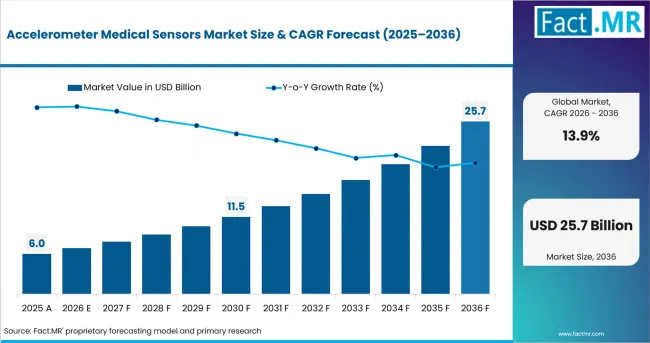
- The accelerometer medical sensors market surpassed a value of USD 6.0 billion in 2025. Demand is anticipated to rise from USD 7.0 billion in 2026 to USD 25.7 billion by 2036.
- The market is forecast to record 13.9% CAGR during 2026 to 2036 as wearable devices and clinical trial sensors expand across healthcare workflows.
- Accelerometer medical sensor demand is becoming more evidence-led. Medical device companies need sensors that capture movement data with stable power use and dependable signal quality.
- The FDA encourages development of safe and effective medical devices that incorporate sensor-based digital health technology.
- FDA guidance supports a clearer regulatory setting for sensor-enabled medical devices.
Summary of the Accelerometer Medical Sensors Market
- Demand Drivers in the Market
- Remote Monitoring: Healthcare providers use accelerometer sensors to track activity and recovery outside hospitals.
- Clinical Trials: Sponsors use wearable motion data to collect real-world mobility endpoints.
- Fall Risk: Elder care providers use motion sensors to support fall alerts and patient safety workflows.
- Key Segments Analyzed
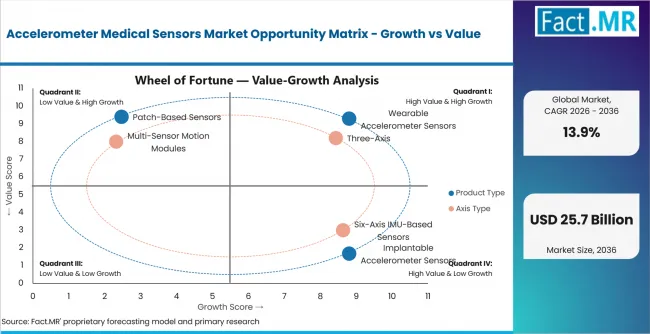
- By Product Type: Wearable accelerometer sensors are expected to hold 46.0% share in 2026 because wrist and patch devices drive continuous motion tracking.
- By Axis Type: Three-axis sensors lead because medical wearables need movement capture across body positions. The segment is likely to account for 52.0% share in 2026.
- By Application: Patient activity monitoring is projected to hold 38.0% share in 2026 because continuous mobility data supports remote care.
- By End User: Medical device manufacturers is anticipated to capture 41.0% share in 2026 as sensor integration starts during product design.
- By Sales Channel: Direct OEM supply is expected to hold 49.0% share in 2026 because device makers need qualified component supply.
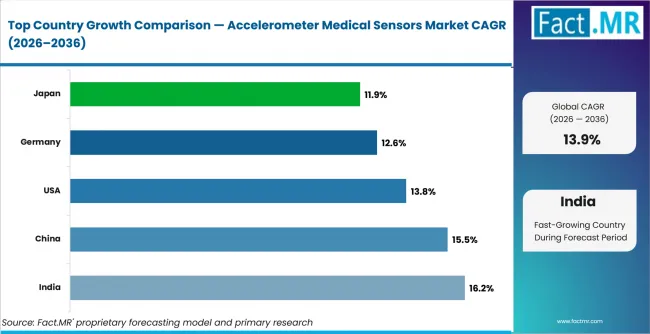
- By Geography: India is projected to record 16.2% CAGR through 2036 as remote monitoring and affordable wearable adoption expand.
- Analyst Opinion at Fact.MR
- Shambhu Nath Jha, Principal Consultant at Fact.MR, states, “Accelerometer medical sensors are moving from basic movement detection into clinical data use. Demand is rising in remote monitoring and mobility tracking.”
- Strategic Implications
- Power Efficiency: Sensor suppliers need designs that support longer wear time in small medical devices.
- Data Quality: Device makers should validate motion data before using it for clinical decisions.
- OEM Support: Component suppliers need documentation that helps medical device companies manage qualification.
| Metric | Value |
|---|---|
| Industry Size 2026 | USD 7.0 billion |
| Industry Value 2036 | USD 25.7 billion |
| CAGR 2026 to 2036 | 13.9% |
The market is shifting from basic step counting to clinical-grade motion measurement. Accelerometers support activity tracking and implantable device monitoring. Clinical trial sponsors use wearable sensors to measure real-world mobility. Home healthcare providers use motion data to support patient follow-up after discharge.
India is projected to record 16.2% CAGR from 2026 to 2036 as remote monitoring and affordable wearable adoption expand. China is likely to post 15.5% CAGR by 2036 as connected health device manufacturing deepens. The United States is expected to register 13.8% CAGR through 2036 as clinical trials and remote patient monitoring sustain demand. Germany is forecast to advance at 12.6% CAGR by 2036 because regulated medical device design and rehabilitation care support adoption. Japan is set to record 11.9% CAGR from 2026 to 2036 as aging care and fall monitoring create steady use.
Segmental Analysis
Accelerometer Medical Sensors Market Analysis by Product Type

Wearable accelerometer sensors are expected to hold 46.0% share in 2026 because wrist and patch devices drive continuous motion tracking. Wearables use accelerometers to measure activity and mobility. Implantable sensors support pacemakers and other devices that need motion-aware sensing. Patch-based sensors serve short-term monitoring and clinical trial programs. Handheld device sensors support portable diagnostic and therapy tools.
- Wearable Demand: Wrist and patch products use motion sensing to track daily patient behavior over longer periods.
- Implantable Use: Miniature sensors help implanted devices adjust therapy based on body movement and posture.
- Equipment Integration: Hospital devices use embedded accelerometers to monitor tilt and patient-support movement.
Accelerometer Medical Sensors Market Analysis by Axis Type

Three-axis sensors lead with 52.0% share in 2026 because medical wearables need movement data across body positions. A three-axis design helps devices measure motion in normal patient conditions. Single-axis sensors serve simple position or vibration sensing. Dual-axis products support tilt and orientation tasks. Six-axis IMU sensors combine acceleration and rotation data.
- Three-Axis Value: Multi-direction sensing helps devices capture walking and sleep movement with better context.
- Basic Motion: Single-axis and dual-axis options serve simpler tilt or vibration detection tasks in lower-cost designs.
- IMU Expansion: Six-axis modules add rotation data for gait and rehabilitation assessment.
Accelerometer Medical Sensors Market Analysis by Application

Patient activity monitoring is projected to hold 38.0% share in 2026 because continuous mobility data supports remote care. Activity data helps clinicians understand movement level and physical function. Fall detection follows because older adults and high-risk patients need quick alert support. Sleep tracking uses accelerometers to estimate rest patterns and movement during sleep. Implantable device monitoring uses motion data for therapy adjustment. Rehabilitation and gait analysis use accelerometers to assess movement quality.
- Activity Insight: Motion data gives clinicians a clearer view of recovery behavior between appointments.
- Fall Alerts: Accelerometers can detect sudden movement patterns and support faster response for high-risk patients.
- Rehab Tracking: Gait and exercise monitoring help therapists assess progress outside supervised treatment sessions.
Accelerometer Medical Sensors Market Analysis by End User

Medical device manufacturers lead as sensor integration starts during product design. Device makers need small sensors that match power and accuracy targets. The segment is anticipated to capture 41.0% share in 2026 because accelerometers are built into wearables and monitoring systems. Hospitals use sensor-enabled devices for inpatient and discharge follow-up. Remote patient monitoring providers use motion data to support care programs. Clinical trial sponsors use wearable sensors for real-world endpoints. Home healthcare providers use devices for patient safety and recovery tracking.
- Device Design: Medical device firms choose accelerometers early to match power and package needs.
- Remote Care: Monitoring providers use movement data to review patient status without constant clinic visits.
- Trial Evidence: Clinical sponsors use wearable accelerometers to capture real-world mobility and sleep endpoints.
Accelerometer Medical Sensors Market Analysis by Sales Channel

Direct OEM supply is expected to hold 49.0% share in 2026 because device makers need qualified component supply. Medical device companies often need technical files and stable supply agreements. Distributor sales support smaller device developers and prototyping. Clinical trial platform supply serves sponsors that need complete wearable systems. Healthcare technology integrators support remote monitoring deployments. Online medical supply channels serve replacement devices and accessories.
- OEM Qualification: Direct supply gives device makers closer control over component documentation and lifecycle planning.
- Distributor Access: Smaller developers use distribution channels for prototyping and early design evaluation.
- Platform Supply: Trial vendors package sensors with software workflows for remote clinical data collection.
Accelerometer Medical Sensors Market Drivers, Restraints, and Opportunities
Remote patient monitoring and clinical trial digitization are the main drivers for accelerometer medical sensor demand. STMicroelectronics introduced the MIS2DU12 MEMS accelerometer in 2026 for wearable and implantable medical applications, with a focus on ultra-low power and compact profile. [2] The product launch supports the push toward smaller sensors that can operate inside body-worn or implanted devices.
Validation burden can slow adoption. Medical use needs reliable signal quality and battery performance. Clinicians need confidence that sensor output reflects real patient movement. Device makers need regulatory documentation and cybersecurity planning for connected systems. Low-cost sensors may not meet medical-grade accuracy and lifecycle expectations.
Opportunities in the Accelerometer Medical Sensors Market
- Remote Recovery: Sensors can support post-surgery monitoring through daily activity and mobility trends, helping clinicians track rehabilitation progress outside hospital visits safely.
- Fall Prevention: Elder care providers can use accelerometer alerts to detect sudden movement changes and support faster response at home or facilities.
- Clinical Endpoints: Trial sponsors can use motion data to measure real-world function, improving outcome tracking across mobility-focused studies and patient follow-ups reliably.
Regional Analysis
Based on regional analysis, the accelerometer medical sensors market is segmented into North America, Latin America, Western Europe, Eastern Europe, East Asia, South Asia and Pacific, and Middle East and Africa.
.webp)
| Country | CAGR (2026 to 2036) |
|---|---|
| India | 16.2% |
| China | 15.5% |
| United States | 13.8% |
| Germany | 12.6% |
| Japan | 11.9% |

South Asia and East Asia Accelerometer Medical Sensors Market Analysis
South Asia and East Asia demand comes from wearable health adoption and remote monitoring programs. India leads the outlook because connected care and lower-cost wearables are expanding. China has stronger sensor and health device manufacturing. Japan has steady demand from aging care and medical technology replacement.
- India: India is projected to record 16.2% CAGR from 2026 to 2036 as remote monitoring and affordable wearable gain use. Hospitals and digital health providers can use accelerometer-based devices for mobility tracking and recovery follow-up. Low-cost wearables can support screening and home care. Private clinics may use sensor-enabled devices for chronic disease programs. Adoption will depend on price and data reliability.
- China: China has strong electronics manufacturing capacity and a growing connected health device base. Local wearable brands and medical device makers can add accelerometers to remote monitoring products. The country is likely to post 15.5% CAGR through 2036 as connected health device manufacturing deepens. Hospitals and elder care providers can use motion data for safety and rehabilitation. Quality control will matter as products move into regulated medical use.
- Japan: Japan is set to record 11.9% CAGR by 2036 as aging care and fall monitoring create steady use. The U.S. International Trade Administration reported in 2025 that Japan’s caregiving technology priorities include monitoring and communication systems equipped with sensors for use in caregiving facilities [3]. Elder care facilities need devices for fall alerts and activity tracking. Hospitals can use accelerometer-enabled systems for rehabilitation and mobility review. The market is more replacement-led than India and China.
North America Accelerometer Medical Sensors Market Analysis

North America demand is led by the United States because clinical trials and digital health companies use sensor-based devices. Wearable sensors measure activity and mobility outside traditional care. The market benefits from strong medical device design capability and digital health investment.
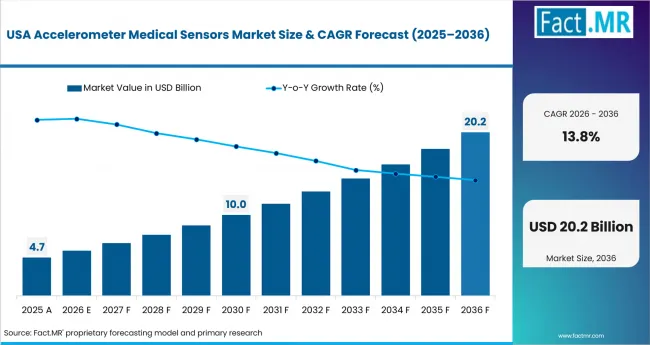
- United States: The United States is expected to register 13.8% CAGR through 2036 as clinical trials and remote patient monitoring support demand. FDA states that portable digital health technologies can be worn or placed in the environment to collect real-time data from clinical trial participants at home or remote locations [4]. Sponsors use wearable devices to collect activity and mobility endpoints. Hospitals and home care providers use sensors to track recovery and fall risk. Medical device firms need qualified components with clear documentation.
Western Europe Accelerometer Medical Sensors Market Analysis

Western Europe demand comes from regulated medical device design and remote patient monitoring. Germany leads the regional view because medical technology companies and rehabilitation providers need reliable motion sensors.
- Germany: Germany is forecast to advance at 12.6% CAGR by 2036 because regulated medical device design and rehabilitation care support adoption. Medical device manufacturers use accelerometers in wearable monitors and therapy equipment. Rehabilitation centers can use motion tracking to assess gait and exercise adherence. Hospitals will need dependable data handling and device documentation. Privacy and interoperability will influence remote monitoring adoption.
Competitive Aligners for Market Suppliers
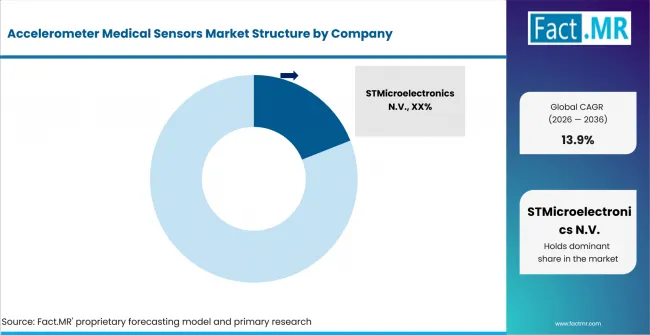
The accelerometer medical sensors market depends on compact motion sensors used in wearables and connected medical devices. STMicroelectronics N.V. supports device makers through MEMS sensor platforms suited for activity tracking and patient monitoring. Analog Devices, Inc. brings motion sensing capability for wearable health systems.
Bosch Sensortec GmbH serves demand through small and low power sensor designs. TE Connectivity Ltd. supports medical device applications through sensor and connectivity expertise. Murata Manufacturing Co., Ltd. adds strength through electronic component supply and miniaturized sensor technologies. Medical device makers need sensors that work accurately during daily movement and long wear time.
Competition will depend on reliability and software interpretation over the study period. Raw movement data is not enough for clinical use. Device makers need validated algorithms and clear documentation. Suppliers that combine sensor accuracy with low power design and medical workflow support will gain better design wins.
Key Companies in Accelerometer Medical Sensors Market
- STMicroelectronics N.V.
- Analog Devices, Inc.
- Bosch Sensortec GmbH
- TE Connectivity Ltd.
- Murata Manufacturing Co., Ltd.
Bibliography
- [1] U.S. Food and Drug Administration. (2026). Medical devices that incorporate sensor-based digital health technology. U.S. Food and Drug Administration.
- [2] STMicroelectronics. (2026, February 26). Tiny motion sensor boosts comfort and precision in wearable and implantable medical applications. STMicroelectronics.
- [3] International Trade Administration. (2025, February 5). Japan healthcare caregiving technologies. U.S. Department of Commerce.
- [4] U.S. Food and Drug Administration. (2026, April 23). Digital health technologies (DHTs) for drug development. U.S. Food and Drug Administration.
This Report Addresses
- Strategic intelligence on accelerometer medical sensor demand across product type, axis type, application, end user, and sales channel.
- Forecast mapping from USD 7.0 billion in 2026 to USD 25.7 billion by 2036.
- Segment analysis covering wearable sensors, three-axis sensors, patient activity monitoring, medical device manufacturers, and direct OEM supply.
- Regional outlook covering India, China, the United States, Germany, and Japan.
- Competitive analysis of STMicroelectronics N.V., Analog Devices, Inc., Bosch Sensortec GmbH, TE Connectivity Ltd., Murata Manufacturing Co., Ltd.
- Product assessment covering wearable sensors, implantable sensors, patch-based sensors, handheld sensors, and equipment-integrated sensors.
- Application assessment covering activity monitoring, fall detection, sleep tracking, implantable monitoring, and rehabilitation analysis.
- Primary interviews, supplier checks, official source review, and medical device workflow validation support the forecast.
Accelerometer Medical Sensors Market Definition
The accelerometer medical sensors market covers motion-sensing components used in medical devices and monitoring systems. These sensors measure acceleration and posture-related data. The market differs from general accelerometer demand because sensor selection must meet medical use and data reliability needs.
Accelerometer Medical Sensors Market Inclusions
The scope includes accelerometers used in wearable health monitors and remote patient monitoring products. It includes single-axis and IMU-based motion sensors. Sensors sold to medical device makers and clinical trial platforms are included.
Accelerometer Medical Sensors Market Exclusions
The scope excludes accelerometers used only in smartphones and consumer fitness products without healthcare or clinical use. General MEMS motion sensors are excluded unless supplied into medical or health monitoring applications. Software-only activity tracking platforms are outside scope when no accelerometer sensor hardware is supplied.
Accelerometer Medical Sensors Market Research Methodology
- Primary Research
- Primary research includes interviews with medical device engineers and remote monitoring platform suppliers. It includes input from wearable device designers and clinical trial technology managers.
- Desk Research
- Desk research reviews regulatory pages and company product materials. It covers wearable sensor specifications and digital health technology references.
- Market-Sizing and Forecasting
- Forecasting uses product type demand and application movement. Axis type mix and sales channel structure support the market assessment.
- Data Validation and Update Cycle
- Forecasts are validated through supplier checks and healthcare technology feedback. Wearable device adoption and clinical sensor platform use help confirm market direction.
Scope of the Report

| Attribute | Details |
|---|---|
| Quantitative Units | USD 7.0 billion in 2026 to USD 25.7 billion by 2036 at 13.9% CAGR |
| Market Definition | Motion-sensing components used in medical devices, wearables, implants, patches, and monitoring systems |
| Product Type | Wearable Accelerometer Sensors, Implantable Accelerometer Sensors, Patch-Based Sensors, Handheld Device Sensors, Equipment-Integrated Sensors |
| Axis Type | Single-Axis, Dual-Axis, Three-Axis, Six-Axis IMU-Based Sensors, Multi-Sensor Motion Modules |
| Application | Patient Activity Monitoring, Fall Detection, Sleep Tracking, Implantable Device Monitoring, Rehabilitation and Gait Analysis |
| End User | Hospitals, Remote Patient Monitoring Providers, Clinical Trial Sponsors, Medical Device Manufacturers, Home Healthcare Providers |
| Sales Channel | Direct OEM Supply, Distributor Sales, Clinical Trial Platform Supply, Healthcare Technology Integrators, Online Medical Supply Channels |
| Regions Covered | North America, Latin America, Western Europe, Eastern Europe, East Asia, South Asia and Pacific, Middle East and Africa |
| Countries Covered | India, China, United States, Germany, Japan |
| Key Companies Profiled | STMicroelectronics N.V., Analog Devices, Inc., Bosch Sensortec GmbH, TE Connectivity Ltd., Murata Manufacturing Co., Ltd. |
| Forecast Period | 2026 to 2036 |
| Approach | Hybrid top-down and bottom-up approach using product type demand, axis type mix, application movement, end-user demand, sales channel structure, and regional validation |
Accelerometer Medical Sensors Market Analysis by Segments
-
By Product Type:
- Wearable Accelerometer Sensors
- Implantable Accelerometer Sensors
- Patch-Based Sensors
- Handheld Device Sensors
- Equipment-Integrated Sensors
-
By Axis Type:
- Single-Axis
- Dual-Axis
- Three-Axis
- Six-Axis IMU-Based Sensors
- Multi-Sensor Motion Modules
-
By Application:
- Patient Activity Monitoring
- Fall Detection
- Sleep Tracking
- Implantable Device Monitoring
- Rehabilitation and Gait Analysis
-
By End User:
- Hospitals
- Remote Patient Monitoring Providers
- Clinical Trial Sponsors
- Medical Device Manufacturers
- Home Healthcare Providers
-
By Sales Channel:
- Direct OEM Supply
- Distributor Sales
- Clinical Trial Platform Supply
- Healthcare Technology Integrators
- Online Medical Supply Channels
-
Region:
- North America
- United States
- Canada
- Europe
- Germany
- United Kingdom
- France
- Italy
- Spain
- Asia Pacific
- China
- Japan
- South Korea
- Taiwan
- Singapore
- Latin America
- Brazil
- Mexico
- Argentina
- Middle East & Africa
- GCC Countries
- South Africa
- Israel
- North America
- Frequently Asked Questions -
What is the Accelerometer Medical Sensors Market size in 2026?
The accelerometer medical sensors market is estimated to reach USD 7.0 billion in 2026 as connected health devices expand.
What will the Accelerometer Medical Sensors Market be worth by 2036?
The accelerometer medical sensors market is projected to reach USD 25.7 billion by 2036.
What CAGR is projected for the Accelerometer Medical Sensors Market?
The accelerometer medical sensors market is forecast to record 13.9% CAGR during 2026 to 2036.
Which product type leads the Accelerometer Medical Sensors Market?
Wearable accelerometer sensors lead with 46.0% share in 2026 because wrist and patch devices drive continuous motion tracking.
Which country records the leading growth in the Accelerometer Medical Sensors Market?
India is projected to record 16.2% CAGR through 2036 as remote monitoring and affordable wearable adoption expand.
How does China perform in the Accelerometer Medical Sensors Market?
China is likely to post 15.5% CAGR through 2036 as connected health device manufacturing deepens.
What is the primary driver in the Accelerometer Medical Sensors Market?
The primary driver is remote patient monitoring. Motion sensors help track activity and mobility outside hospitals.
What is the main restraint in the Accelerometer Medical Sensors Market?
The main restraint is validation burden. Medical use needs dependable motion data and documented sensor performance.
Why are three-axis sensors important in this market?
Three-axis sensors are important because patient movement happens across multiple body positions and motion directions.
Table of Content
- Executive Summary
- Global Market Outlook
- Demand to side Trends
- Supply to side Trends
- Technology Roadmap Analysis
- Analysis and Recommendations
- Market Overview
- Market Coverage / Taxonomy
- Market Definition / Scope / Limitations
- Research Methodology
- Chapter Orientation
- Analytical Lens and Working Hypotheses
- Market Structure, Signals, and Trend Drivers
- Benchmarking and Cross-market Comparability
- Market Sizing, Forecasting, and Opportunity Mapping
- Research Design and Evidence Framework
- Desk Research Programme (Secondary Evidence)
- Company Annual and Sustainability Reports
- Peer-reviewed Journals and Academic Literature
- Corporate Websites, Product Literature, and Technical Notes
- Earnings Decks and Investor Briefings
- Statutory Filings and Regulatory Disclosures
- Technical White Papers and Standards Notes
- Trade Journals, Industry Magazines, and Analyst Briefs
- Conference Proceedings, Webinars, and Seminar Materials
- Government Statistics Portals and Public Data Releases
- Press Releases and Reputable Media Coverage
- Specialist Newsletters and Curated Briefings
- Sector Databases and Reference Repositories
- Fact.MR Internal Proprietary Databases and Historical Market Datasets
- Subscription Datasets and Paid Sources
- Social Channels, Communities, and Digital Listening Inputs
- Additional Desk Sources
- Expert Input and Fieldwork (Primary Evidence)
- Primary Modes
- Qualitative Interviews and Expert Elicitation
- Quantitative Surveys and Structured Data Capture
- Blended Approach
- Why Primary Evidence is Used
- Field Techniques
- Interviews
- Surveys
- Focus Groups
- Observational and In-context Research
- Social and Community Interactions
- Stakeholder Universe Engaged
- C-suite Leaders
- Board Members
- Presidents and Vice Presidents
- R&D and Innovation Heads
- Technical Specialists
- Domain Subject-matter Experts
- Scientists
- Physicians and Other Healthcare Professionals
- Governance, Ethics, and Data Stewardship
- Research Ethics
- Data Integrity and Handling
- Primary Modes
- Tooling, Models, and Reference Databases
- Desk Research Programme (Secondary Evidence)
- Data Engineering and Model Build
- Data Acquisition and Ingestion
- Cleaning, Normalisation, and Verification
- Synthesis, Triangulation, and Analysis
- Quality Assurance and Audit Trail
- Market Background
- Market Dynamics
- Drivers
- Restraints
- Opportunity
- Trends
- Scenario Forecast
- Demand in Optimistic Scenario
- Demand in Likely Scenario
- Demand in Conservative Scenario
- Opportunity Map Analysis
- Product Life Cycle Analysis
- Supply Chain Analysis
- Investment Feasibility Matrix
- Value Chain Analysis
- PESTLE and Porter’s Analysis
- Regulatory Landscape
- Regional Parent Market Outlook
- Production and Consumption Statistics
- Import and Export Statistics
- Market Dynamics
- Global Market Analysis 2021 to 2025 and Forecast, 2026 to 2036
- Historical Market Size Value (USD Million) Analysis, 2021 to 2025
- Current and Future Market Size Value (USD Million) Projections, 2026 to 2036
- Y to o to Y Growth Trend Analysis
- Absolute $ Opportunity Analysis
- Global Market Pricing Analysis 2021 to 2025 and Forecast 2026 to 2036
- Global Market Analysis 2021 to 2025 and Forecast 2026 to 2036, By Product Type
- Introduction / Key Findings
- Historical Market Size Value (USD Million) Analysis By Product Type , 2021 to 2025
- Current and Future Market Size Value (USD Million) Analysis and Forecast By Product Type , 2026 to 2036
- Integrated Circuits (ICs)
- Vacuum Tube
- Optoelectronics
- Integrated Circuits (ICs)
- Y to o to Y Growth Trend Analysis By Product Type , 2021 to 2025
- Absolute $ Opportunity Analysis By Product Type , 2026 to 2036
- Global Market Analysis 2021 to 2025 and Forecast 2026 to 2036, By End Use
- Introduction / Key Findings
- Historical Market Size Value (USD Million) Analysis By End Use, 2021 to 2025
- Current and Future Market Size Value (USD Million) Analysis and Forecast By End Use, 2026 to 2036
- Consumer Electronics
- Automotive
- Networking & Telecommunication
- Consumer Electronics
- Y to o to Y Growth Trend Analysis By End Use, 2021 to 2025
- Absolute $ Opportunity Analysis By End Use, 2026 to 2036
- Global Market Analysis 2021 to 2025 and Forecast 2026 to 2036, By Component Type
- Introduction / Key Findings
- Historical Market Size Value (USD Million) Analysis By Component Type, 2021 to 2025
- Current and Future Market Size Value (USD Million) Analysis and Forecast By Component Type, 2026 to 2036
- Digital Components
- Analog Components
- RF Components
- Digital Components
- Y to o to Y Growth Trend Analysis By Component Type, 2021 to 2025
- Absolute $ Opportunity Analysis By Component Type, 2026 to 2036
- Global Market Analysis 2021 to 2025 and Forecast 2026 to 2036, By Sales Channel
- Introduction / Key Findings
- Historical Market Size Value (USD Million) Analysis By Sales Channel, 2021 to 2025
- Current and Future Market Size Value (USD Million) Analysis and Forecast By Sales Channel, 2026 to 2036
- Distributors
- Direct Sales
- Online Channels
- Distributors
- Y to o to Y Growth Trend Analysis By Sales Channel, 2021 to 2025
- Absolute $ Opportunity Analysis By Sales Channel, 2026 to 2036
- Global Market Analysis 2021 to 2025 and Forecast 2026 to 2036, By Application
- Introduction / Key Findings
- Historical Market Size Value (USD Million) Analysis By Application, 2021 to 2025
- Current and Future Market Size Value (USD Million) Analysis and Forecast By Application, 2026 to 2036
- Smartphones & Tablets
- Industrial Automation
- Computing Devices
- Smartphones & Tablets
- Y to o to Y Growth Trend Analysis By Application, 2021 to 2025
- Absolute $ Opportunity Analysis By Application, 2026 to 2036
- Global Market Analysis 2021 to 2025 and Forecast 2026 to 2036, By Region
- Introduction
- Historical Market Size Value (USD Million) Analysis By Region, 2021 to 2025
- Current Market Size Value (USD Million) Analysis and Forecast By Region, 2026 to 2036
- North America
- Latin America
- Western Europe
- Eastern Europe
- East Asia
- South Asia and Pacific
- Middle East & Africa
- Market Attractiveness Analysis By Region
- North America Market Analysis 2021 to 2025 and Forecast 2026 to 2036, By Country
- Historical Market Size Value (USD Million) Trend Analysis By Market Taxonomy, 2021 to 2025
- Market Size Value (USD Million) Forecast By Market Taxonomy, 2026 to 2036
- By Country
- USA
- Canada
- Mexico
- By Product Type
- By End Use
- By Component Type
- By Sales Channel
- By Application
- By Country
- Market Attractiveness Analysis
- By Country
- By Product Type
- By End Use
- By Component Type
- By Sales Channel
- By Application
- Key Takeaways
- Latin America Market Analysis 2021 to 2025 and Forecast 2026 to 2036, By Country
- Historical Market Size Value (USD Million) Trend Analysis By Market Taxonomy, 2021 to 2025
- Market Size Value (USD Million) Forecast By Market Taxonomy, 2026 to 2036
- By Country
- Brazil
- Chile
- Rest of Latin America
- By Product Type
- By End Use
- By Component Type
- By Sales Channel
- By Application
- By Country
- Market Attractiveness Analysis
- By Country
- By Product Type
- By End Use
- By Component Type
- By Sales Channel
- By Application
- Key Takeaways
- Western Europe Market Analysis 2021 to 2025 and Forecast 2026 to 2036, By Country
- Historical Market Size Value (USD Million) Trend Analysis By Market Taxonomy, 2021 to 2025
- Market Size Value (USD Million) Forecast By Market Taxonomy, 2026 to 2036
- By Country
- Germany
- UK
- Italy
- Spain
- France
- Nordic
- BENELUX
- Rest of Western Europe
- By Product Type
- By End Use
- By Component Type
- By Sales Channel
- By Application
- By Country
- Market Attractiveness Analysis
- By Country
- By Product Type
- By End Use
- By Component Type
- By Sales Channel
- By Application
- Key Takeaways
- Eastern Europe Market Analysis 2021 to 2025 and Forecast 2026 to 2036, By Country
- Historical Market Size Value (USD Million) Trend Analysis By Market Taxonomy, 2021 to 2025
- Market Size Value (USD Million) Forecast By Market Taxonomy, 2026 to 2036
- By Country
- Russia
- Poland
- Hungary
- Balkan & Baltic
- Rest of Eastern Europe
- By Product Type
- By End Use
- By Component Type
- By Sales Channel
- By Application
- By Country
- Market Attractiveness Analysis
- By Country
- By Product Type
- By End Use
- By Component Type
- By Sales Channel
- By Application
- Key Takeaways
- East Asia Market Analysis 2021 to 2025 and Forecast 2026 to 2036, By Country
- Historical Market Size Value (USD Million) Trend Analysis By Market Taxonomy, 2021 to 2025
- Market Size Value (USD Million) Forecast By Market Taxonomy, 2026 to 2036
- By Country
- China
- Japan
- South Korea
- By Product Type
- By End Use
- By Component Type
- By Sales Channel
- By Application
- By Country
- Market Attractiveness Analysis
- By Country
- By Product Type
- By End Use
- By Component Type
- By Sales Channel
- By Application
- Key Takeaways
- South Asia and Pacific Market Analysis 2021 to 2025 and Forecast 2026 to 2036, By Country
- Historical Market Size Value (USD Million) Trend Analysis By Market Taxonomy, 2021 to 2025
- Market Size Value (USD Million) Forecast By Market Taxonomy, 2026 to 2036
- By Country
- India
- ASEAN
- Australia & New Zealand
- Rest of South Asia and Pacific
- By Product Type
- By End Use
- By Component Type
- By Sales Channel
- By Application
- By Country
- Market Attractiveness Analysis
- By Country
- By Product Type
- By End Use
- By Component Type
- By Sales Channel
- By Application
- Key Takeaways
- Middle East & Africa Market Analysis 2021 to 2025 and Forecast 2026 to 2036, By Country
- Historical Market Size Value (USD Million) Trend Analysis By Market Taxonomy, 2021 to 2025
- Market Size Value (USD Million) Forecast By Market Taxonomy, 2026 to 2036
- By Country
- Kingdom of Saudi Arabia
- Other GCC Countries
- Turkiye
- South Africa
- Other African Union
- Rest of Middle East & Africa
- By Product Type
- By End Use
- By Component Type
- By Sales Channel
- By Application
- By Country
- Market Attractiveness Analysis
- By Country
- By Product Type
- By End Use
- By Component Type
- By Sales Channel
- By Application
- Key Takeaways
- Key Countries Market Analysis
- USA
- Pricing Analysis
- Market Share Analysis, 2025
- By Product Type
- By End Use
- By Component Type
- By Sales Channel
- By Application
- Canada
- Pricing Analysis
- Market Share Analysis, 2025
- By Product Type
- By End Use
- By Component Type
- By Sales Channel
- By Application
- Mexico
- Pricing Analysis
- Market Share Analysis, 2025
- By Product Type
- By End Use
- By Component Type
- By Sales Channel
- By Application
- Brazil
- Pricing Analysis
- Market Share Analysis, 2025
- By Product Type
- By End Use
- By Component Type
- By Sales Channel
- By Application
- Chile
- Pricing Analysis
- Market Share Analysis, 2025
- By Product Type
- By End Use
- By Component Type
- By Sales Channel
- By Application
- Germany
- Pricing Analysis
- Market Share Analysis, 2025
- By Product Type
- By End Use
- By Component Type
- By Sales Channel
- By Application
- UK
- Pricing Analysis
- Market Share Analysis, 2025
- By Product Type
- By End Use
- By Component Type
- By Sales Channel
- By Application
- Italy
- Pricing Analysis
- Market Share Analysis, 2025
- By Product Type
- By End Use
- By Component Type
- By Sales Channel
- By Application
- Spain
- Pricing Analysis
- Market Share Analysis, 2025
- By Product Type
- By End Use
- By Component Type
- By Sales Channel
- By Application
- France
- Pricing Analysis
- Market Share Analysis, 2025
- By Product Type
- By End Use
- By Component Type
- By Sales Channel
- By Application
- India
- Pricing Analysis
- Market Share Analysis, 2025
- By Product Type
- By End Use
- By Component Type
- By Sales Channel
- By Application
- ASEAN
- Pricing Analysis
- Market Share Analysis, 2025
- By Product Type
- By End Use
- By Component Type
- By Sales Channel
- By Application
- Australia & New Zealand
- Pricing Analysis
- Market Share Analysis, 2025
- By Product Type
- By End Use
- By Component Type
- By Sales Channel
- By Application
- China
- Pricing Analysis
- Market Share Analysis, 2025
- By Product Type
- By End Use
- By Component Type
- By Sales Channel
- By Application
- Japan
- Pricing Analysis
- Market Share Analysis, 2025
- By Product Type
- By End Use
- By Component Type
- By Sales Channel
- By Application
- South Korea
- Pricing Analysis
- Market Share Analysis, 2025
- By Product Type
- By End Use
- By Component Type
- By Sales Channel
- By Application
- Russia
- Pricing Analysis
- Market Share Analysis, 2025
- By Product Type
- By End Use
- By Component Type
- By Sales Channel
- By Application
- Poland
- Pricing Analysis
- Market Share Analysis, 2025
- By Product Type
- By End Use
- By Component Type
- By Sales Channel
- By Application
- Hungary
- Pricing Analysis
- Market Share Analysis, 2025
- By Product Type
- By End Use
- By Component Type
- By Sales Channel
- By Application
- Kingdom of Saudi Arabia
- Pricing Analysis
- Market Share Analysis, 2025
- By Product Type
- By End Use
- By Component Type
- By Sales Channel
- By Application
- Turkiye
- Pricing Analysis
- Market Share Analysis, 2025
- By Product Type
- By End Use
- By Component Type
- By Sales Channel
- By Application
- South Africa
- Pricing Analysis
- Market Share Analysis, 2025
- By Product Type
- By End Use
- By Component Type
- By Sales Channel
- By Application
- USA
- Market Structure Analysis
- Competition Dashboard
- Competition Benchmarking
- Market Share Analysis of Top Players
- By Regional
- By Product Type
- By End Use
- By Component Type
- By Sales Channel
- By Application
- Competition Analysis
- Competition Deep Dive
- Infineon Technologies AG
- Overview
- Product Portfolio
- Profitability by Market Segments (Product/Age /Sales Channel/Region)
- Sales Footprint
- Strategy Overview
- Marketing Strategy
- Product Strategy
- Channel Strategy
- STMicroelectronics N.V.
- Advanced Micro Devices, Inc.
- Microchip Technology, Inc.
- Analog Devices, Inc.
- Infineon Technologies AG
- Competition Deep Dive
- Assumptions & Acronyms Used
List Of Table
- Table 1: Global Market Value (USD Million) Forecast by Region, 2021 to 2036
- Table 2: Global Market Value (USD Million) Forecast by Product Type , 2021 to 2036
- Table 3: Global Market Value (USD Million) Forecast by End Use, 2021 to 2036
- Table 4: Global Market Value (USD Million) Forecast by Component Type, 2021 to 2036
- Table 5: Global Market Value (USD Million) Forecast by Sales Channel, 2021 to 2036
- Table 6: Global Market Value (USD Million) Forecast by Application, 2021 to 2036
- Table 7: North America Market Value (USD Million) Forecast by Country, 2021 to 2036
- Table 8: North America Market Value (USD Million) Forecast by Product Type , 2021 to 2036
- Table 9: North America Market Value (USD Million) Forecast by End Use, 2021 to 2036
- Table 10: North America Market Value (USD Million) Forecast by Component Type, 2021 to 2036
- Table 11: North America Market Value (USD Million) Forecast by Sales Channel, 2021 to 2036
- Table 12: North America Market Value (USD Million) Forecast by Application, 2021 to 2036
- Table 13: Latin America Market Value (USD Million) Forecast by Country, 2021 to 2036
- Table 14: Latin America Market Value (USD Million) Forecast by Product Type , 2021 to 2036
- Table 15: Latin America Market Value (USD Million) Forecast by End Use, 2021 to 2036
- Table 16: Latin America Market Value (USD Million) Forecast by Component Type, 2021 to 2036
- Table 17: Latin America Market Value (USD Million) Forecast by Sales Channel, 2021 to 2036
- Table 18: Latin America Market Value (USD Million) Forecast by Application, 2021 to 2036
- Table 19: Western Europe Market Value (USD Million) Forecast by Country, 2021 to 2036
- Table 20: Western Europe Market Value (USD Million) Forecast by Product Type , 2021 to 2036
- Table 21: Western Europe Market Value (USD Million) Forecast by End Use, 2021 to 2036
- Table 22: Western Europe Market Value (USD Million) Forecast by Component Type, 2021 to 2036
- Table 23: Western Europe Market Value (USD Million) Forecast by Sales Channel, 2021 to 2036
- Table 24: Western Europe Market Value (USD Million) Forecast by Application, 2021 to 2036
- Table 25: Eastern Europe Market Value (USD Million) Forecast by Country, 2021 to 2036
- Table 26: Eastern Europe Market Value (USD Million) Forecast by Product Type , 2021 to 2036
- Table 27: Eastern Europe Market Value (USD Million) Forecast by End Use, 2021 to 2036
- Table 28: Eastern Europe Market Value (USD Million) Forecast by Component Type, 2021 to 2036
- Table 29: Eastern Europe Market Value (USD Million) Forecast by Sales Channel, 2021 to 2036
- Table 30: Eastern Europe Market Value (USD Million) Forecast by Application, 2021 to 2036
- Table 31: East Asia Market Value (USD Million) Forecast by Country, 2021 to 2036
- Table 32: East Asia Market Value (USD Million) Forecast by Product Type , 2021 to 2036
- Table 33: East Asia Market Value (USD Million) Forecast by End Use, 2021 to 2036
- Table 34: East Asia Market Value (USD Million) Forecast by Component Type, 2021 to 2036
- Table 35: East Asia Market Value (USD Million) Forecast by Sales Channel, 2021 to 2036
- Table 36: East Asia Market Value (USD Million) Forecast by Application, 2021 to 2036
- Table 37: South Asia and Pacific Market Value (USD Million) Forecast by Country, 2021 to 2036
- Table 38: South Asia and Pacific Market Value (USD Million) Forecast by Product Type , 2021 to 2036
- Table 39: South Asia and Pacific Market Value (USD Million) Forecast by End Use, 2021 to 2036
- Table 40: South Asia and Pacific Market Value (USD Million) Forecast by Component Type, 2021 to 2036
- Table 41: South Asia and Pacific Market Value (USD Million) Forecast by Sales Channel, 2021 to 2036
- Table 42: South Asia and Pacific Market Value (USD Million) Forecast by Application, 2021 to 2036
- Table 43: Middle East & Africa Market Value (USD Million) Forecast by Country, 2021 to 2036
- Table 44: Middle East & Africa Market Value (USD Million) Forecast by Product Type , 2021 to 2036
- Table 45: Middle East & Africa Market Value (USD Million) Forecast by End Use, 2021 to 2036
- Table 46: Middle East & Africa Market Value (USD Million) Forecast by Component Type, 2021 to 2036
- Table 47: Middle East & Africa Market Value (USD Million) Forecast by Sales Channel, 2021 to 2036
- Table 48: Middle East & Africa Market Value (USD Million) Forecast by Application, 2021 to 2036
List Of Figures
- Figure 1: Global Market Pricing Analysis
- Figure 2: Global Market Value (USD Million) Forecast 2021-2036
- Figure 3: Global Market Value Share and BPS Analysis by Product Type, 2026 and 2036
- Figure 4: Global Market Y-o-Y Growth Comparison by Product Type,2026 to 2036
- Figure 5: Global Market Attractiveness Analysis by Product Type
- Figure 6: Global Market Value Share and BPS Analysis by End Use, 2026 and 2036
- Figure 7: Global Market Y-o-Y Growth Comparison by End Use,2026 to 2036
- Figure 8: Global Market Attractiveness Analysis by End Use
- Figure 9: Global Market Value Share and BPS Analysis by Component Type, 2026 and 2036
- Figure 10: Global Market Y-o-Y Growth Comparison by Component Type,2026 to 2036
- Figure 11: Global Market Attractiveness Analysis by Component Type
- Figure 12: Global Market Value Share and BPS Analysis by Sales Channel, 2026 and 2036
- Figure 13: Global Market Y-o-Y Growth Comparison by Sales Channel,2026 to 2036
- Figure 14: Global Market Attractiveness Analysis by Sales Channel
- Figure 15: Global Market Value Share and BPS Analysis by Application, 2026 and 2036
- Figure 16: Global Market Y-o-Y Growth Comparison by Application,2026 to 2036
- Figure 17: Global Market Attractiveness Analysis by Application
- Figure 18: Global Market Value (USD Million) Share and BPS Analysis by Region, 2026 and 2036
- Figure 19: Global Market Y-o-Y Growth Comparison by Region,2026 to 2036
- Figure 20: Global Market Attractiveness Analysis by Region
- Figure 21: North America Market Incremental Dollar Opportunity,2026 to 2036
- Figure 22: Latin America Market Incremental Dollar Opportunity,2026 to 2036
- Figure 23: Western Europe Market Incremental Dollar Opportunity,2026 to 2036
- Figure 24: Eastern Europe Market Incremental Dollar Opportunity,2026 to 2036
- Figure 25: East Asia Market Incremental Dollar Opportunity,2026 to 2036
- Figure 26: South Asia and Pacific Market Incremental Dollar Opportunity,2026 to 2036
- Figure 27: Middle East & Africa Market Incremental Dollar Opportunity,2026 to 2036
- Figure 28: North America Market Value Share and BPS Analysis by Country, 2026 and 2036
- Figure 29: North America Market Value Share and BPS Analysis by Product Type, 2026 and 2036
- Figure 30: North America Market Y-o-Y Growth Comparison by Product Type,2026 to 2036
- Figure 31: North America Market Attractiveness Analysis by Product Type
- Figure 32: North America Market Value Share and BPS Analysis by End Use, 2026 and 2036
- Figure 33: North America Market Y-o-Y Growth Comparison by End Use,2026 to 2036
- Figure 34: North America Market Attractiveness Analysis by End Use
- Figure 35: North America Market Value Share and BPS Analysis by Component Type, 2026 and 2036
- Figure 36: North America Market Y-o-Y Growth Comparison by Component Type,2026 to 2036
- Figure 37: North America Market Attractiveness Analysis by Component Type
- Figure 38: North America Market Value Share and BPS Analysis by Sales Channel, 2026 and 2036
- Figure 39: North America Market Y-o-Y Growth Comparison by Sales Channel,2026 to 2036
- Figure 40: North America Market Attractiveness Analysis by Sales Channel
- Figure 41: North America Market Value Share and BPS Analysis by Application, 2026 and 2036
- Figure 42: North America Market Y-o-Y Growth Comparison by Application,2026 to 2036
- Figure 43: North America Market Attractiveness Analysis by Application
- Figure 44: Latin America Market Value Share and BPS Analysis by Country, 2026 and 2036
- Figure 45: Latin America Market Value Share and BPS Analysis by Product Type, 2026 and 2036
- Figure 46: Latin America Market Y-o-Y Growth Comparison by Product Type,2026 to 2036
- Figure 47: Latin America Market Attractiveness Analysis by Product Type
- Figure 48: Latin America Market Value Share and BPS Analysis by End Use, 2026 and 2036
- Figure 49: Latin America Market Y-o-Y Growth Comparison by End Use,2026 to 2036
- Figure 50: Latin America Market Attractiveness Analysis by End Use
- Figure 51: Latin America Market Value Share and BPS Analysis by Component Type, 2026 and 2036
- Figure 52: Latin America Market Y-o-Y Growth Comparison by Component Type,2026 to 2036
- Figure 53: Latin America Market Attractiveness Analysis by Component Type
- Figure 54: Latin America Market Value Share and BPS Analysis by Sales Channel, 2026 and 2036
- Figure 55: Latin America Market Y-o-Y Growth Comparison by Sales Channel,2026 to 2036
- Figure 56: Latin America Market Attractiveness Analysis by Sales Channel
- Figure 57: Latin America Market Value Share and BPS Analysis by Application, 2026 and 2036
- Figure 58: Latin America Market Y-o-Y Growth Comparison by Application,2026 to 2036
- Figure 59: Latin America Market Attractiveness Analysis by Application
- Figure 60: Western Europe Market Value Share and BPS Analysis by Country, 2026 and 2036
- Figure 61: Western Europe Market Value Share and BPS Analysis by Product Type, 2026 and 2036
- Figure 62: Western Europe Market Y-o-Y Growth Comparison by Product Type,2026 to 2036
- Figure 63: Western Europe Market Attractiveness Analysis by Product Type
- Figure 64: Western Europe Market Value Share and BPS Analysis by End Use, 2026 and 2036
- Figure 65: Western Europe Market Y-o-Y Growth Comparison by End Use,2026 to 2036
- Figure 66: Western Europe Market Attractiveness Analysis by End Use
- Figure 67: Western Europe Market Value Share and BPS Analysis by Component Type, 2026 and 2036
- Figure 68: Western Europe Market Y-o-Y Growth Comparison by Component Type,2026 to 2036
- Figure 69: Western Europe Market Attractiveness Analysis by Component Type
- Figure 70: Western Europe Market Value Share and BPS Analysis by Sales Channel, 2026 and 2036
- Figure 71: Western Europe Market Y-o-Y Growth Comparison by Sales Channel,2026 to 2036
- Figure 72: Western Europe Market Attractiveness Analysis by Sales Channel
- Figure 73: Western Europe Market Value Share and BPS Analysis by Application, 2026 and 2036
- Figure 74: Western Europe Market Y-o-Y Growth Comparison by Application,2026 to 2036
- Figure 75: Western Europe Market Attractiveness Analysis by Application
- Figure 76: Eastern Europe Market Value Share and BPS Analysis by Country, 2026 and 2036
- Figure 77: Eastern Europe Market Value Share and BPS Analysis by Product Type, 2026 and 2036
- Figure 78: Eastern Europe Market Y-o-Y Growth Comparison by Product Type,2026 to 2036
- Figure 79: Eastern Europe Market Attractiveness Analysis by Product Type
- Figure 80: Eastern Europe Market Value Share and BPS Analysis by End Use, 2026 and 2036
- Figure 81: Eastern Europe Market Y-o-Y Growth Comparison by End Use,2026 to 2036
- Figure 82: Eastern Europe Market Attractiveness Analysis by End Use
- Figure 83: Eastern Europe Market Value Share and BPS Analysis by Component Type, 2026 and 2036
- Figure 84: Eastern Europe Market Y-o-Y Growth Comparison by Component Type,2026 to 2036
- Figure 85: Eastern Europe Market Attractiveness Analysis by Component Type
- Figure 86: Eastern Europe Market Value Share and BPS Analysis by Sales Channel, 2026 and 2036
- Figure 87: Eastern Europe Market Y-o-Y Growth Comparison by Sales Channel,2026 to 2036
- Figure 88: Eastern Europe Market Attractiveness Analysis by Sales Channel
- Figure 89: Eastern Europe Market Value Share and BPS Analysis by Application, 2026 and 2036
- Figure 90: Eastern Europe Market Y-o-Y Growth Comparison by Application,2026 to 2036
- Figure 91: Eastern Europe Market Attractiveness Analysis by Application
- Figure 92: East Asia Market Value Share and BPS Analysis by Country, 2026 and 2036
- Figure 93: East Asia Market Value Share and BPS Analysis by Product Type, 2026 and 2036
- Figure 94: East Asia Market Y-o-Y Growth Comparison by Product Type,2026 to 2036
- Figure 95: East Asia Market Attractiveness Analysis by Product Type
- Figure 96: East Asia Market Value Share and BPS Analysis by End Use, 2026 and 2036
- Figure 97: East Asia Market Y-o-Y Growth Comparison by End Use,2026 to 2036
- Figure 98: East Asia Market Attractiveness Analysis by End Use
- Figure 99: East Asia Market Value Share and BPS Analysis by Component Type, 2026 and 2036
- Figure 100: East Asia Market Y-o-Y Growth Comparison by Component Type,2026 to 2036
- Figure 101: East Asia Market Attractiveness Analysis by Component Type
- Figure 102: East Asia Market Value Share and BPS Analysis by Sales Channel, 2026 and 2036
- Figure 103: East Asia Market Y-o-Y Growth Comparison by Sales Channel,2026 to 2036
- Figure 104: East Asia Market Attractiveness Analysis by Sales Channel
- Figure 105: East Asia Market Value Share and BPS Analysis by Application, 2026 and 2036
- Figure 106: East Asia Market Y-o-Y Growth Comparison by Application,2026 to 2036
- Figure 107: East Asia Market Attractiveness Analysis by Application
- Figure 108: South Asia and Pacific Market Value Share and BPS Analysis by Country, 2026 and 2036
- Figure 109: South Asia and Pacific Market Value Share and BPS Analysis by Product Type, 2026 and 2036
- Figure 110: South Asia and Pacific Market Y-o-Y Growth Comparison by Product Type,2026 to 2036
- Figure 111: South Asia and Pacific Market Attractiveness Analysis by Product Type
- Figure 112: South Asia and Pacific Market Value Share and BPS Analysis by End Use, 2026 and 2036
- Figure 113: South Asia and Pacific Market Y-o-Y Growth Comparison by End Use,2026 to 2036
- Figure 114: South Asia and Pacific Market Attractiveness Analysis by End Use
- Figure 115: South Asia and Pacific Market Value Share and BPS Analysis by Component Type, 2026 and 2036
- Figure 116: South Asia and Pacific Market Y-o-Y Growth Comparison by Component Type,2026 to 2036
- Figure 117: South Asia and Pacific Market Attractiveness Analysis by Component Type
- Figure 118: South Asia and Pacific Market Value Share and BPS Analysis by Sales Channel, 2026 and 2036
- Figure 119: South Asia and Pacific Market Y-o-Y Growth Comparison by Sales Channel,2026 to 2036
- Figure 120: South Asia and Pacific Market Attractiveness Analysis by Sales Channel
- Figure 121: South Asia and Pacific Market Value Share and BPS Analysis by Application, 2026 and 2036
- Figure 122: South Asia and Pacific Market Y-o-Y Growth Comparison by Application,2026 to 2036
- Figure 123: South Asia and Pacific Market Attractiveness Analysis by Application
- Figure 124: Middle East & Africa Market Value Share and BPS Analysis by Country, 2026 and 2036
- Figure 125: Middle East & Africa Market Value Share and BPS Analysis by Product Type, 2026 and 2036
- Figure 126: Middle East & Africa Market Y-o-Y Growth Comparison by Product Type,2026 to 2036
- Figure 127: Middle East & Africa Market Attractiveness Analysis by Product Type
- Figure 128: Middle East & Africa Market Value Share and BPS Analysis by End Use, 2026 and 2036
- Figure 129: Middle East & Africa Market Y-o-Y Growth Comparison by End Use,2026 to 2036
- Figure 130: Middle East & Africa Market Attractiveness Analysis by End Use
- Figure 131: Middle East & Africa Market Value Share and BPS Analysis by Component Type, 2026 and 2036
- Figure 132: Middle East & Africa Market Y-o-Y Growth Comparison by Component Type,2026 to 2036
- Figure 133: Middle East & Africa Market Attractiveness Analysis by Component Type
- Figure 134: Middle East & Africa Market Value Share and BPS Analysis by Sales Channel, 2026 and 2036
- Figure 135: Middle East & Africa Market Y-o-Y Growth Comparison by Sales Channel,2026 to 2036
- Figure 136: Middle East & Africa Market Attractiveness Analysis by Sales Channel
- Figure 137: Middle East & Africa Market Value Share and BPS Analysis by Application, 2026 and 2036
- Figure 138: Middle East & Africa Market Y-o-Y Growth Comparison by Application,2026 to 2036
- Figure 139: Middle East & Africa Market Attractiveness Analysis by Application
- Figure 140: Global Market - Tier Structure Analysis
- Figure 141: Global Market - Company Share Analysis