Aftershave Lotions and Creams Market Size, Share, Growth and Forecast (2026 - 2036)
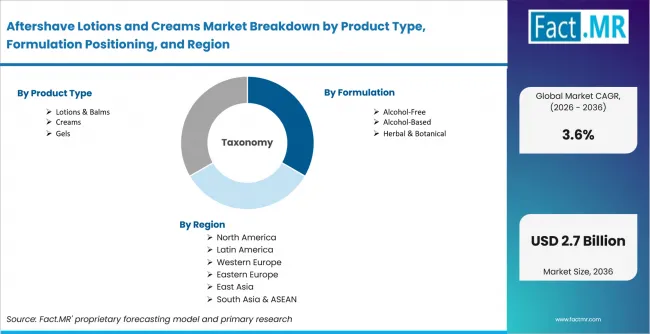
The Aftershave Lotions and Creams Market is segmented by Product Type, by Formulation Positioning, by Price Point, by Sales Channel, by End User, and Region. Forecast for 2026 to 2036.
Aftershave Lotions and Creams Market Size, Market Forecast and Outlook by Fact.MR
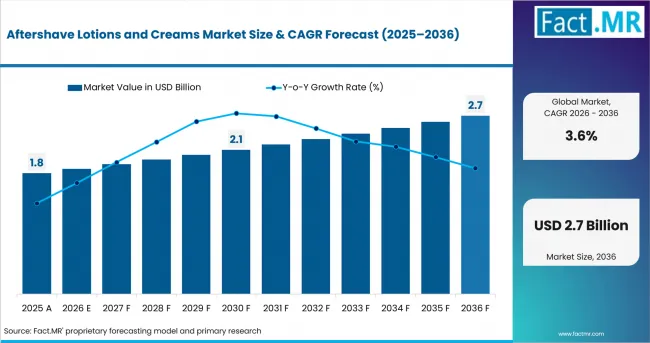
- The aftershave lotions and creams market surpassed a valuation of USD 1.8 billion in 2025.
- Demand is set to rise from USD 1.9 billion in 2026 to USD 2.7 billion by 2036.
- The market is forecast to record 3.6% CAGR during 2026 to 2036 as daily grooming routines move toward post-shave skin comfort.
| Metric | Details |
|---|---|
| Industry Size 2026 | USD 1.9 billion |
| Industry Value 2036 | USD 2.7 billion |
| CAGR 2026 to 2036 | 3.6% |
Summary of Aftershave Lotions and Creams Market
- Demand Drivers in the Market
- Skin Comfort Need: Grooming brand managers are positioning aftershave creams around razor irritation and hydration.
- Ingredient Disclosure: Product listing rules support stronger cosmetic documentation in the United States.
- Fragrance Discipline: Fragrance allergen labelling rules create stronger label review needs for scented aftershave products.
- Key Segments Analyzed
- By Product Type: Lotions & balms are expected to hold 52.0% share in 2026 because they combine familiar aftershave use with hydration.
- By Formulation Positioning: Alcohol-free products are likely to account for 41.0% share in 2026 as sensitive-skin claims gain wider retail support.
- By Price Point: Mass products are projected to capture 69.0% share in 2026 since daily grooming products need accessible pricing.
- By Sales Channel: Supermarkets & hypermarkets are anticipated to hold 34.0% share in 2026 as routine grooming products gain shelf access.
- By End User: Men are expected to represent 86.0% share in 2026 because face shaving stays the core use case for aftershave care.
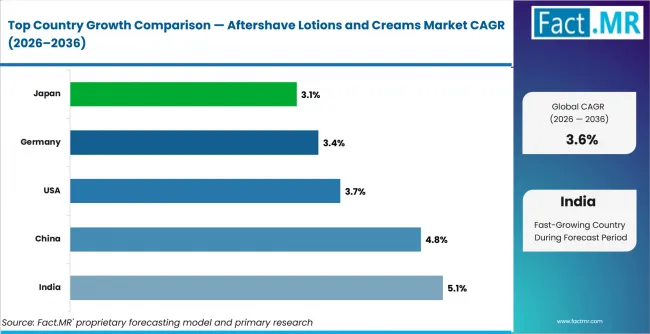
- By Geography: India is projected to grow at 5.1% CAGR through 2036 as affordable grooming products reach more urban shoppers.
- Analyst Opinion at Fact.MR
- Shambhu Nath Jha, Senior Analyst at Fact.MR, states, “Aftershave lotions and creams are becoming closer to everyday skincare. The stronger opportunity is in products that reduce post-shave sting and dryness. Brands that keep fragrance pleasant without causing skin discomfort will gain better repeat demand.”
- Strategic Implications
- Skin-Type Labelling: Grooming brands need clearer front-pack guidance for dry and sensitive skin.
- Alcohol Balance: Product teams should reduce harsh alcohol feel in daily-use formats.
- Retail Placement: Beauty retailers can place aftershave creams near razors and men’s moisturizers to improve basket value.
Aftershave demand is becoming more skin-care led. Shoppers no longer treat aftershave only as a scented finishing product. They are checking alcohol content and irritation control before purchase. FDA cosmetic product listing rules under MoCRA are adding stronger discipline to product documentation in the United States [1]. This supports brands that can prove ingredient transparency and safe product positioning.
India is projected to record 5.1% CAGR from 2026 to 2036 as urban grooming habits and affordable skincare access expand. China is likely to post 4.8% CAGR because online beauty platforms support men’s skincare discovery. The United States is expected to register 3.7% CAGR as premium grooming and sensitive-skin products gain steady shelf support. Germany is forecast at 3.4% CAGR by 2036 as fragrance allergen labelling strengthens product claim discipline. Japan is projected to grow at 3.1% CAGR because mature skincare routines support gentle aftershave formats.
Segmental Analysis
Aftershave Lotions and Creams Market Analysis by Product Type
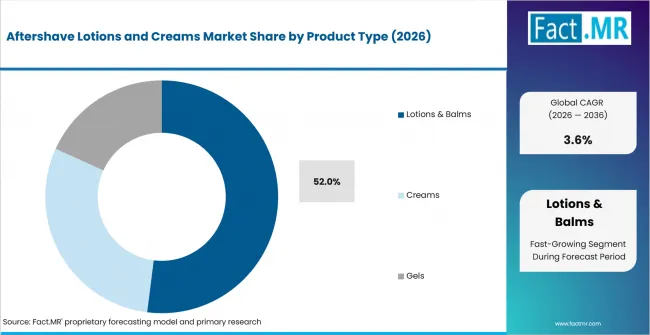
Lotions & balms are expected to hold 52.0% share in 2026 because they offer a familiar post-shave format with better skin comfort. Creams are gaining traction among users with dryness after shaving. Gels appeal to shoppers who prefer quick absorption and cooling feel. Splashes keep demand among fragrance-led users but alcohol sting limits daily use. Lotions and balms lead because they balance routine grooming with simple hydration.
- Daily Use: Lotions and balms support repeat purchase because they feel easy after regular shaving.
- Dry Skin Need: Creams support users who need richer hydration after razor use.
- Cooling Format: Gels appeal to shoppers who want quick absorption and a fresh feel.
Aftershave Lotions and Creams Market Analysis by Formulation Positioning
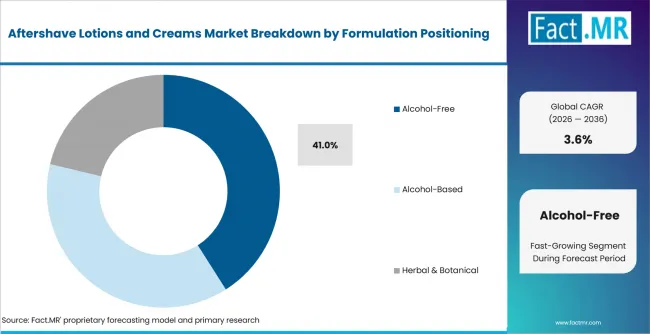
Formulation choice is moving toward comfort and ingredient clarity. Alcohol-free products are likely to account for 41.0% share in 2026 because sensitive-skin users want less sting after shaving. Alcohol-based products keep a traditional role among splash users. Herbal and botanical products gain attention through aloe and chamomile claims.
- Alcohol-Free Shift: Alcohol-free products lead because daily users prefer lower sting and softer skin feel.
- Traditional Splash: Alcohol-based products keep demand among fragrance-led grooming users.
- Botanical Appeal: Herbal products gain trial through aloe-led and plant-based skin comfort claims.
Aftershave Lotions and Creams Market Analysis by Price Point
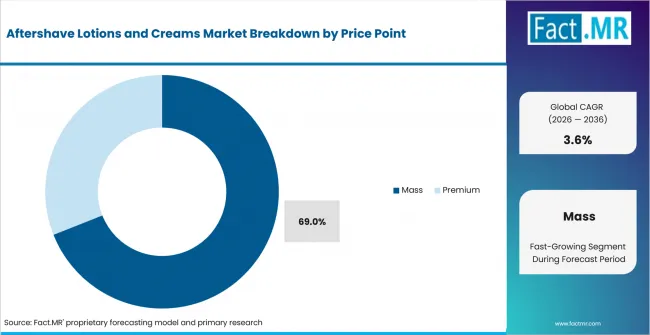
Mass products are projected to capture 69.0% share in 2026 because aftershave is a repeat grooming item. Price access is important for daily shavers and younger users. Premium products are gaining ground through dermatologist-style claims and stronger fragrance positioning. Mass brands benefit from supermarket access and familiar grooming labels. Premium formats must justify price through texture and scent quality.
- Mass Access: Mass products lead because routine grooming shoppers need affordable replenishment.
- Premium Upgrade: Premium products grow through refined fragrance and sensitive-skin claims.
- Value Packs: Larger packs support repeat users who shave frequently.
Aftershave Lotions and Creams Market Analysis by Sales Channel
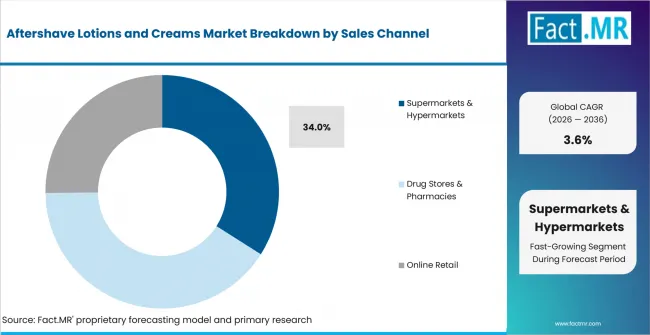
Supermarkets & hypermarkets are anticipated to hold 34.0% share in 2026 as routine grooming products gain regular shelf visibility. These stores support impulse purchases and mass products. Drug stores build trust for sensitive-skin creams and alcohol-free balms. Online retail supports product comparison and ingredient-led browsing.
- Routine Shelf: Supermarkets support repeat purchases through shaving and grooming aisles.
- Pharmacy Trust: Drug stores support sensitive-skin and dermatology-positioned aftershave products.
- Online Discovery: Online retail helps shoppers compare alcohol-free and fragrance-led options.
Aftershave Lotions and Creams Market Analysis by End User
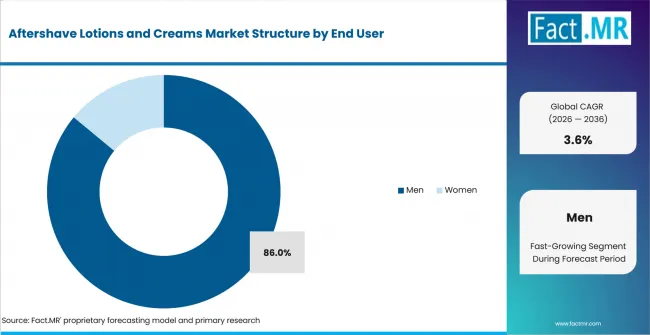
Men are expected to represent 86.0% share in 2026 because facial shaving is the main use case for aftershave lotions and creams. Men’s grooming brands are expanding post-shave care beyond classic splashes. Women’s use is smaller but relevant after facial hair removal and sensitive-skin shaving needs. Male demand will lead because razors and aftershave products are often sold as connected routines.
- Male Grooming: Men lead because face shaving creates regular post-shave skin care demand.
- Sensitive Use: Women use aftershave-style creams after facial hair removal and irritation-prone shaving.
- Routine Pairing: Retailers can pair aftershave products with razors and shaving creams.
Aftershave Lotions and Creams Market Drivers, Restraints, and Opportunities
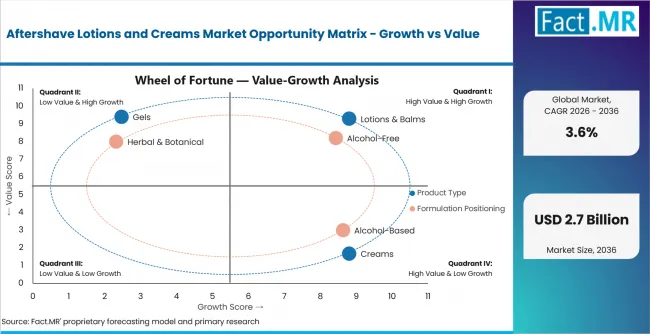
Post-shave skin comfort is the main driver for aftershave lotions and creams. Shaving can leave skin dry and irritated, which creates demand for soothing balms and creams. P&G’s 2025 annual report shows grooming stayed part of its growth base through Gillette and Braun exposure [3]. These signals support the role of shaving-linked care products.
The main restraint is product overlap with regular moisturizers. Some shoppers may use face cream instead of aftershave balm. Alcohol-heavy splashes can lose daily-use appeal among sensitive-skin users. Fragrance allergen labelling in Europe also raises compliance work for scented aftershave products. Brands need cleaner claims and simpler skin-type guidance to protect repeat demand.
Opportunities in the Aftershave Lotions and Creams Market
- Sensitive-Skin Products: Brands can build alcohol-free balms for users who face razor burn and dryness.
- Men’s Skincare: Suppliers can position aftershave creams as part of daily facial care.
- Online Education: Digital platforms can explain texture and skin-type differences before purchase.
Regional Analysis
Based on regional analysis, the aftershave lotions and creams market is segmented into North America, Western Europe, East Asia, South Asia and Pacific, and other regions.
.webp)
| Country | CAGR 2026 to 2036 |
|---|---|
| India | 5.1% |
| China | 4.8% |
| United States | 3.7% |
| Germany | 3.4% |
| Japan | 3.1% |

South Asia and Pacific Aftershave Lotions and Creams Market Analysis
South Asia and Pacific demand is led by India. Urban grooming routines and online beauty platforms support broader access to aftershave creams. Affordable mass products will keep the region volume-led.
- India: India is projected to record 5.1% CAGR through 2036 as men’s grooming products become more routine in urban retail. Gillette India stated on May 26, 2025 that its quarterly sales rose 13%, with growth led by the Grooming category and supported by a focused portfolio of daily-use categories and consumer value [2]. Affordable balms and lotions will lead because price access shapes repeat purchase. Premium products can gain demand in metro cities through fragrance and sensitive-skin positioning. Pharmacy channels can support users who want gentler products after razor irritation.
East Asia Aftershave Lotions and Creams Market Analysis
East Asia demand is supported by skincare habits and digital discovery. China has a growing men’s skincare base. Japan supports gentle products and lower-fragrance formats.
- China: China is likely to post 4.8% CAGR through 2036 because online beauty platforms are helping men compare grooming and skincare products. Aftershave creams gain attention as shoppers move from fragrance-led splashes toward skin comfort. Local and global brands can sell alcohol-free balms through product education and reviews. E-commerce channels support premium trial through smaller packs and routine bundles. Social content can connect shaving irritation with hydration needs. Growth will be strongest among urban male users who already buy face wash and moisturizers.
- Japan: Japan is projected to grow at 3.1% CAGR through 2036 as mature skincare habits support gentle aftershave formats. Consumers prefer mild textures and low-irritation products after shaving. Drug stores and convenience retail support steady access to mass products. Premium demand will come from users who want refined scent and better skin feel. Brands need subtle claims because the market is already familiar with men’s grooming.
North America Aftershave Lotions and Creams Market Analysis
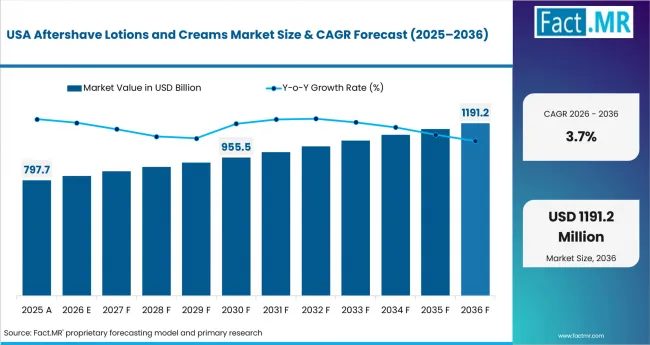
North America demand is led by the United States. Premium grooming and online subscription models support steady aftershave sales.
- United States: The United States is expected to register 3.7% CAGR through 2036 as premium grooming and sensitive-skin products gain shelf support. Consumers are moving from classic splashes to balms and creams that feel closer to skincare. Online platforms can support niche textures and fragrance-led premium formats. Growth will depend on alcohol-free claims and strong review signals.
Western Europe Aftershave Lotions and Creams Market Analysis
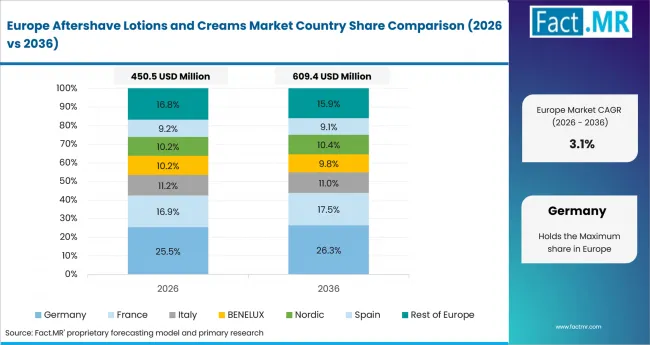
Western Europe demand is led by Germany. Fragrance tradition supports splash products, while skincare habits support alcohol-free balms.
- Germany: Germany is forecast at 3.4% CAGR through 2036 as pharmacy skincare and men’s grooming support steady aftershave demand. Beiersdorf stated on March 2, 2026 that its Derma business with Eucerin and Aquaphor delivered 11.7% organic sales growth in 2025, while NIVEA reached nominal sales of €5.5 billion [4]. Shoppers are selective about fragrance and skin tolerance. Premium products can gain demand through dermatology-style claims and mild formulas.
Competitive Aligners for Market Suppliers
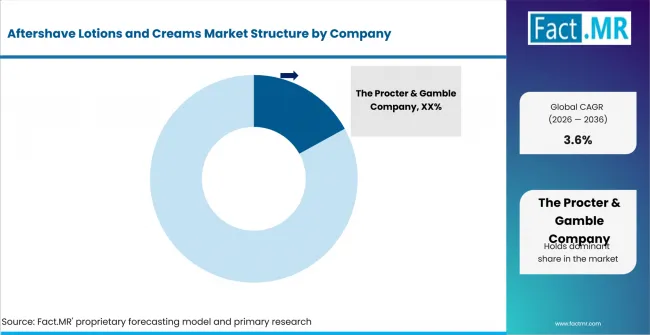
The aftershave lotions and creams market includes global grooming companies and skincare-led personal care brands. The Procter & Gamble Company supports the market through Gillette and its broader male grooming portfolio. Beiersdorf AG adds strength through NIVEA MEN and skin care expertise. L’Oréal S.A. supports men’s grooming through L’Oréal Men Expert and wider beauty channel access [5]. Edgewell Personal Care Company competes through Schick, Wilkinson Sword and related wet shave brands.
Competition is led by skin comfort and post-shave feel. Mass grooming brands compete through price access and shelf visibility. Premium brands focus on fragrance quality and a smoother after-shave experience. Pharmacy-oriented products gain attention through sensitive-skin claims. Online brands use reviews and routine bundles to encourage repeat purchases.
Supplier strength through 2036 will come from clear product positioning. Alcohol-free balms need to offer comfort without a greasy feel. Splashes need fragrance appeal without harsh skin impact. Creams need stronger hydration cues for daily use. Brands that connect shaving tools with post-shave care can build stronger repeat demand.
Key Companies in Aftershave Lotions and Creams Market
- The Procter & Gamble Company
- Beiersdorf AG
- L’Oréal S.A.
- Edgewell Personal Care Company
Bibliography
- [1] U.S. Food and Drug Administration. (2026, March 13). Modernization of Cosmetics Regulation Act of 2022.
- [2] Gillette India Limited. (2025, May 26). Gillette India Limited announces financial results for the third quarter and the fiscal year ended March 31, 2025. Procter & Gamble.
- [3] The Procter & Gamble Company. (2025, August 4). 2025 annual report. Procter & Gamble Investor Relations.
- [4] Beiersdorf AG. (2026, March 2). Full year results 2025: Beiersdorf grows in a slowing market, Derma outperforms.
- [5] L’Oréal Finance. (2025, March 24). 2024 Universal Registration Document.
This Report Addresses
- Strategic intelligence on aftershave lotions and creams across product type and formulation positioning.
- Forecast mapping from USD 1.9 billion in 2026 to USD 2.7 billion by 2036.
- Segment analysis covering lotions & balms, alcohol-free products, mass price point, supermarket channels, and male users.
- Regional outlook covering India, China, the United States, Germany, and Japan.
- Competitive analysis of The Procter & Gamble Company, Beiersdorf AG, L’Oréal S.A., Edgewell Personal Care Company.
- Product assessment covering balms, creams, gels, splashes, and herbal formats.
- Channel assessment covering supermarkets, pharmacies, online retail, and grooming stores.
- Primary interviews, retail checks, cosmetic rule review, and company reporting support the forecast.
Aftershave Lotions and Creams Market Definition
The aftershave lotions and creams market covers post-shave products applied to facial skin after shaving. These products help reduce discomfort and support skin hydration. The market includes lotion and splash formats. It differs from razors and shaving creams because demand starts after hair removal is complete.
Aftershave Lotions and Creams Market Inclusions
The scope includes alcohol-free balms and sensitive-skin aftershave formats. It includes mass and premium price points. Sales through supermarkets and department stores are included. Products for men and women are covered.
Aftershave Lotions and Creams Market Exclusions
The scope excludes shaving foams and regular moisturizers without post-shave claims. It excludes perfumes sold only as fragrance products. Medical creams used for severe skin infection or prescription care are outside the scope.
Aftershave Lotions and Creams Market Research Methodology
- Primary Research: Primary research includes interviews with grooming brand managers and beauty retail category heads. Pharmacy skincare buyers and online beauty merchandisers were reviewed separately.
- Desk Research: Desk research reviews cosmetic product rules and company annual reports. Product pages and retail listings support format-level validation.
- Market-Sizing and Forecasting: Forecasting uses product type demand and sales channel movement. Price point mix and end-user adoption support the 2026 to 2036 outlook.
- Data Validation and Update Cycle: Forecasts are validated through retail assortment checks and grooming brand feedback. Regional assumptions are reviewed with regulatory rules and men’s skincare channel activity.
Scope of the Report

| Attribute | Details |
| Quantitative Units | USD 1.9 billion in 2026 to USD 2.7 billion by 2036 at 3.6% CAGR |
| Market Definition | Post-shave lotions, creams, balms, gels, and splashes used for skin comfort after shaving |
| Product Type | Lotions & Balms, Creams, Gels, Splashes, Other Products |
| Formulation Positioning | Alcohol-Free, Alcohol-Based, Herbal & Botanical, Fragrance-Led, Sensitive-Skin |
| Price Point | Mass, Premium |
| Sales Channel | Supermarkets & Hypermarkets, Drug Stores & Pharmacies, Online Retail, Specialty Grooming Stores, Departmental Stores |
| End User | Men, Women |
| Regions Covered | North America, Western Europe, East Asia, South Asia and Pacific, Other Regions |
| Countries Covered | India, China, United States, Germany, Japan |
| Key Companies Profiled | The Procter & Gamble Company, Beiersdorf AG, L’Oréal S.A., Edgewell Personal Care Company |
| Forecast Period | 2026 to 2036 |
| Approach | Hybrid top-down and bottom-up approach using product type demand, formulation mix, sales channel checks, price point movement, and grooming brand validation |
Aftershave Lotions and Creams Market Analysis by Segments
-
By Product Type:
- Lotions & Balms
- Creams
- Gels
- Splashes
- Other Products
-
By Formulation Positioning:
- Alcohol-Free
- Alcohol-Based
- Herbal & Botanical
- Fragrance-Led
- Sensitive-Skin
-
By Price Point:
- Mass
- Premium
-
By Sales Channel:
- Supermarkets & Hypermarkets
- Drug Stores & Pharmacies
- Online Retail
- Specialty Grooming Stores
- Departmental Stores
-
By End User:
- Men
- Women
-
By Region:
- North America
- United States
- Canada
- Western Europe
- Germany
- United Kingdom
- France
- Italy
- Spain
- East Asia
- China
- Japan
- South Korea
- South Asia and Pacific
- India
- ASEAN
- Australia and New Zealand
- Other Regions
- Latin America
- Middle East and Africa
- North America
- Frequently Asked Questions -
What is the Aftershave Lotions and Creams Market size in 2026?
The aftershave lotions and creams market is estimated to reach USD 1.9 billion in 2026.
What will the Aftershave Lotions and Creams Market be worth by 2036?
The aftershave lotions and creams market is projected to reach USD 2.7 billion by 2036.
What CAGR is projected for the Aftershave Lotions and Creams Market?
The aftershave lotions and creams market is forecast to record 3.6% CAGR during 2026 to 2036.
Which product type leads the Aftershave Lotions and Creams Market?
Lotions & balms lead with 52.0% share in 2026 because they combine familiar use with skin hydration.
Which country grows fastest in the Aftershave Lotions and Creams Market?
India grows fastest at 5.1% CAGR through 2036 as affordable grooming products reach more urban shoppers.
How does China perform in the Aftershave Lotions and Creams Market?
China is projected to post 4.8% CAGR through 2036 as online beauty platforms support men’s skincare discovery.
How does the United States perform in the Aftershave Lotions and Creams Market?
The United States is expected to register 3.7% CAGR through 2036 as premium grooming products gain shelf support.
How does Germany perform in the Aftershave Lotions and Creams Market?
Germany is forecast at 3.4% CAGR through 2036 as pharmacy skincare and fragrance label discipline support steady demand.
Why are lotions and balms important in this market?
Lotions and balms are important because they support hydration and reduce harsh post-shave feel.
Why are alcohol-free aftershave products gaining demand?
Alcohol-free aftershave products are gaining demand because sensitive-skin users prefer lower sting after shaving.
What restrains the Aftershave Lotions and Creams Market?
Product overlap with regular moisturizers restrains demand because some shoppers replace aftershave balm with face cream.
What is the main opportunity in this market?
The main opportunity is sensitive-skin aftershave care with alcohol-free and low-fragrance positioning.
How do online channels affect this market?
Online channels help shoppers compare ingredients and skin-type claims before buying aftershave products.
Table of Content
- Executive Summary
- Global Market Outlook
- Demand to side Trends
- Supply to side Trends
- Technology Roadmap Analysis
- Analysis and Recommendations
- Market Overview
- Market Coverage / Taxonomy
- Market Definition / Scope / Limitations
- Research Methodology
- Chapter Orientation
- Analytical Lens and Working Hypotheses
- Market Structure, Signals, and Trend Drivers
- Benchmarking and Cross-market Comparability
- Market Sizing, Forecasting, and Opportunity Mapping
- Research Design and Evidence Framework
- Desk Research Programme (Secondary Evidence)
- Company Annual and Sustainability Reports
- Peer-reviewed Journals and Academic Literature
- Corporate Websites, Product Literature, and Technical Notes
- Earnings Decks and Investor Briefings
- Statutory Filings and Regulatory Disclosures
- Technical White Papers and Standards Notes
- Trade Journals, Industry Magazines, and Analyst Briefs
- Conference Proceedings, Webinars, and Seminar Materials
- Government Statistics Portals and Public Data Releases
- Press Releases and Reputable Media Coverage
- Specialist Newsletters and Curated Briefings
- Sector Databases and Reference Repositories
- Fact.MR Internal Proprietary Databases and Historical Market Datasets
- Subscription Datasets and Paid Sources
- Social Channels, Communities, and Digital Listening Inputs
- Additional Desk Sources
- Expert Input and Fieldwork (Primary Evidence)
- Primary Modes
- Qualitative Interviews and Expert Elicitation
- Quantitative Surveys and Structured Data Capture
- Blended Approach
- Why Primary Evidence is Used
- Field Techniques
- Interviews
- Surveys
- Focus Groups
- Observational and In-context Research
- Social and Community Interactions
- Stakeholder Universe Engaged
- C-suite Leaders
- Board Members
- Presidents and Vice Presidents
- R&D and Innovation Heads
- Technical Specialists
- Domain Subject-matter Experts
- Scientists
- Physicians and Other Healthcare Professionals
- Governance, Ethics, and Data Stewardship
- Research Ethics
- Data Integrity and Handling
- Primary Modes
- Tooling, Models, and Reference Databases
- Desk Research Programme (Secondary Evidence)
- Data Engineering and Model Build
- Data Acquisition and Ingestion
- Cleaning, Normalisation, and Verification
- Synthesis, Triangulation, and Analysis
- Quality Assurance and Audit Trail
- Market Background
- Market Dynamics
- Drivers
- Restraints
- Opportunity
- Trends
- Scenario Forecast
- Demand in Optimistic Scenario
- Demand in Likely Scenario
- Demand in Conservative Scenario
- Opportunity Map Analysis
- Product Life Cycle Analysis
- Supply Chain Analysis
- Investment Feasibility Matrix
- Value Chain Analysis
- PESTLE and Porter’s Analysis
- Regulatory Landscape
- Regional Parent Market Outlook
- Production and Consumption Statistics
- Import and Export Statistics
- Market Dynamics
- Global Market Analysis 2021 to 2025 and Forecast, 2026 to 2036
- Historical Market Size Value (USD Million) Analysis, 2021 to 2025
- Current and Future Market Size Value (USD Million) Projections, 2026 to 2036
- Y to o to Y Growth Trend Analysis
- Absolute $ Opportunity Analysis
- Global Market Pricing Analysis 2021 to 2025 and Forecast 2026 to 2036
- Global Market Analysis 2021 to 2025 and Forecast 2026 to 2036, By Product Type
- Introduction / Key Findings
- Historical Market Size Value (USD Million) Analysis By Product Type , 2021 to 2025
- Current and Future Market Size Value (USD Million) Analysis and Forecast By Product Type , 2026 to 2036
- Lotions & Balms
- Creams
- Gels
- Lotions & Balms
- Y to o to Y Growth Trend Analysis By Product Type , 2021 to 2025
- Absolute $ Opportunity Analysis By Product Type , 2026 to 2036
- Global Market Analysis 2021 to 2025 and Forecast 2026 to 2036, By Formulation Positioning
- Introduction / Key Findings
- Historical Market Size Value (USD Million) Analysis By Formulation Positioning, 2021 to 2025
- Current and Future Market Size Value (USD Million) Analysis and Forecast By Formulation Positioning, 2026 to 2036
- Alcohol-Free
- Alcohol-Based
- Herbal & Botanical
- Alcohol-Free
- Y to o to Y Growth Trend Analysis By Formulation Positioning, 2021 to 2025
- Absolute $ Opportunity Analysis By Formulation Positioning, 2026 to 2036
- Global Market Analysis 2021 to 2025 and Forecast 2026 to 2036, By Price Point
- Introduction / Key Findings
- Historical Market Size Value (USD Million) Analysis By Price Point, 2021 to 2025
- Current and Future Market Size Value (USD Million) Analysis and Forecast By Price Point, 2026 to 2036
- Mass
- Premium
- Mass
- Y to o to Y Growth Trend Analysis By Price Point, 2021 to 2025
- Absolute $ Opportunity Analysis By Price Point, 2026 to 2036
- Global Market Analysis 2021 to 2025 and Forecast 2026 to 2036, By Sales Channel
- Introduction / Key Findings
- Historical Market Size Value (USD Million) Analysis By Sales Channel, 2021 to 2025
- Current and Future Market Size Value (USD Million) Analysis and Forecast By Sales Channel, 2026 to 2036
- Supermarkets & Hypermarkets
- Drug Stores & Pharmacies
- Online Retail
- Supermarkets & Hypermarkets
- Y to o to Y Growth Trend Analysis By Sales Channel, 2021 to 2025
- Absolute $ Opportunity Analysis By Sales Channel, 2026 to 2036
- Global Market Analysis 2021 to 2025 and Forecast 2026 to 2036, By End User
- Introduction / Key Findings
- Historical Market Size Value (USD Million) Analysis By End User, 2021 to 2025
- Current and Future Market Size Value (USD Million) Analysis and Forecast By End User, 2026 to 2036
- Men
- Women
- Men
- Y to o to Y Growth Trend Analysis By End User, 2021 to 2025
- Absolute $ Opportunity Analysis By End User, 2026 to 2036
- Global Market Analysis 2021 to 2025 and Forecast 2026 to 2036, By Region
- Introduction
- Historical Market Size Value (USD Million) Analysis By Region, 2021 to 2025
- Current Market Size Value (USD Million) Analysis and Forecast By Region, 2026 to 2036
- North America
- Latin America
- Western Europe
- Eastern Europe
- East Asia
- South Asia and Pacific
- Middle East & Africa
- Market Attractiveness Analysis By Region
- North America Market Analysis 2021 to 2025 and Forecast 2026 to 2036, By Country
- Historical Market Size Value (USD Million) Trend Analysis By Market Taxonomy, 2021 to 2025
- Market Size Value (USD Million) Forecast By Market Taxonomy, 2026 to 2036
- By Country
- USA
- Canada
- Mexico
- By Product Type
- By Formulation Positioning
- By Price Point
- By Sales Channel
- By End User
- By Country
- Market Attractiveness Analysis
- By Country
- By Product Type
- By Formulation Positioning
- By Price Point
- By Sales Channel
- By End User
- Key Takeaways
- Latin America Market Analysis 2021 to 2025 and Forecast 2026 to 2036, By Country
- Historical Market Size Value (USD Million) Trend Analysis By Market Taxonomy, 2021 to 2025
- Market Size Value (USD Million) Forecast By Market Taxonomy, 2026 to 2036
- By Country
- Brazil
- Chile
- Rest of Latin America
- By Product Type
- By Formulation Positioning
- By Price Point
- By Sales Channel
- By End User
- By Country
- Market Attractiveness Analysis
- By Country
- By Product Type
- By Formulation Positioning
- By Price Point
- By Sales Channel
- By End User
- Key Takeaways
- Western Europe Market Analysis 2021 to 2025 and Forecast 2026 to 2036, By Country
- Historical Market Size Value (USD Million) Trend Analysis By Market Taxonomy, 2021 to 2025
- Market Size Value (USD Million) Forecast By Market Taxonomy, 2026 to 2036
- By Country
- Germany
- UK
- Italy
- Spain
- France
- Nordic
- BENELUX
- Rest of Western Europe
- By Product Type
- By Formulation Positioning
- By Price Point
- By Sales Channel
- By End User
- By Country
- Market Attractiveness Analysis
- By Country
- By Product Type
- By Formulation Positioning
- By Price Point
- By Sales Channel
- By End User
- Key Takeaways
- Eastern Europe Market Analysis 2021 to 2025 and Forecast 2026 to 2036, By Country
- Historical Market Size Value (USD Million) Trend Analysis By Market Taxonomy, 2021 to 2025
- Market Size Value (USD Million) Forecast By Market Taxonomy, 2026 to 2036
- By Country
- Russia
- Poland
- Hungary
- Balkan & Baltic
- Rest of Eastern Europe
- By Product Type
- By Formulation Positioning
- By Price Point
- By Sales Channel
- By End User
- By Country
- Market Attractiveness Analysis
- By Country
- By Product Type
- By Formulation Positioning
- By Price Point
- By Sales Channel
- By End User
- Key Takeaways
- East Asia Market Analysis 2021 to 2025 and Forecast 2026 to 2036, By Country
- Historical Market Size Value (USD Million) Trend Analysis By Market Taxonomy, 2021 to 2025
- Market Size Value (USD Million) Forecast By Market Taxonomy, 2026 to 2036
- By Country
- China
- Japan
- South Korea
- By Product Type
- By Formulation Positioning
- By Price Point
- By Sales Channel
- By End User
- By Country
- Market Attractiveness Analysis
- By Country
- By Product Type
- By Formulation Positioning
- By Price Point
- By Sales Channel
- By End User
- Key Takeaways
- South Asia and Pacific Market Analysis 2021 to 2025 and Forecast 2026 to 2036, By Country
- Historical Market Size Value (USD Million) Trend Analysis By Market Taxonomy, 2021 to 2025
- Market Size Value (USD Million) Forecast By Market Taxonomy, 2026 to 2036
- By Country
- India
- ASEAN
- Australia & New Zealand
- Rest of South Asia and Pacific
- By Product Type
- By Formulation Positioning
- By Price Point
- By Sales Channel
- By End User
- By Country
- Market Attractiveness Analysis
- By Country
- By Product Type
- By Formulation Positioning
- By Price Point
- By Sales Channel
- By End User
- Key Takeaways
- Middle East & Africa Market Analysis 2021 to 2025 and Forecast 2026 to 2036, By Country
- Historical Market Size Value (USD Million) Trend Analysis By Market Taxonomy, 2021 to 2025
- Market Size Value (USD Million) Forecast By Market Taxonomy, 2026 to 2036
- By Country
- Kingdom of Saudi Arabia
- Other GCC Countries
- Turkiye
- South Africa
- Other African Union
- Rest of Middle East & Africa
- By Product Type
- By Formulation Positioning
- By Price Point
- By Sales Channel
- By End User
- By Country
- Market Attractiveness Analysis
- By Country
- By Product Type
- By Formulation Positioning
- By Price Point
- By Sales Channel
- By End User
- Key Takeaways
- Key Countries Market Analysis
- USA
- Pricing Analysis
- Market Share Analysis, 2025
- By Product Type
- By Formulation Positioning
- By Price Point
- By Sales Channel
- By End User
- Canada
- Pricing Analysis
- Market Share Analysis, 2025
- By Product Type
- By Formulation Positioning
- By Price Point
- By Sales Channel
- By End User
- Mexico
- Pricing Analysis
- Market Share Analysis, 2025
- By Product Type
- By Formulation Positioning
- By Price Point
- By Sales Channel
- By End User
- Brazil
- Pricing Analysis
- Market Share Analysis, 2025
- By Product Type
- By Formulation Positioning
- By Price Point
- By Sales Channel
- By End User
- Chile
- Pricing Analysis
- Market Share Analysis, 2025
- By Product Type
- By Formulation Positioning
- By Price Point
- By Sales Channel
- By End User
- Germany
- Pricing Analysis
- Market Share Analysis, 2025
- By Product Type
- By Formulation Positioning
- By Price Point
- By Sales Channel
- By End User
- UK
- Pricing Analysis
- Market Share Analysis, 2025
- By Product Type
- By Formulation Positioning
- By Price Point
- By Sales Channel
- By End User
- Italy
- Pricing Analysis
- Market Share Analysis, 2025
- By Product Type
- By Formulation Positioning
- By Price Point
- By Sales Channel
- By End User
- Spain
- Pricing Analysis
- Market Share Analysis, 2025
- By Product Type
- By Formulation Positioning
- By Price Point
- By Sales Channel
- By End User
- France
- Pricing Analysis
- Market Share Analysis, 2025
- By Product Type
- By Formulation Positioning
- By Price Point
- By Sales Channel
- By End User
- India
- Pricing Analysis
- Market Share Analysis, 2025
- By Product Type
- By Formulation Positioning
- By Price Point
- By Sales Channel
- By End User
- ASEAN
- Pricing Analysis
- Market Share Analysis, 2025
- By Product Type
- By Formulation Positioning
- By Price Point
- By Sales Channel
- By End User
- Australia & New Zealand
- Pricing Analysis
- Market Share Analysis, 2025
- By Product Type
- By Formulation Positioning
- By Price Point
- By Sales Channel
- By End User
- China
- Pricing Analysis
- Market Share Analysis, 2025
- By Product Type
- By Formulation Positioning
- By Price Point
- By Sales Channel
- By End User
- Japan
- Pricing Analysis
- Market Share Analysis, 2025
- By Product Type
- By Formulation Positioning
- By Price Point
- By Sales Channel
- By End User
- South Korea
- Pricing Analysis
- Market Share Analysis, 2025
- By Product Type
- By Formulation Positioning
- By Price Point
- By Sales Channel
- By End User
- Russia
- Pricing Analysis
- Market Share Analysis, 2025
- By Product Type
- By Formulation Positioning
- By Price Point
- By Sales Channel
- By End User
- Poland
- Pricing Analysis
- Market Share Analysis, 2025
- By Product Type
- By Formulation Positioning
- By Price Point
- By Sales Channel
- By End User
- Hungary
- Pricing Analysis
- Market Share Analysis, 2025
- By Product Type
- By Formulation Positioning
- By Price Point
- By Sales Channel
- By End User
- Kingdom of Saudi Arabia
- Pricing Analysis
- Market Share Analysis, 2025
- By Product Type
- By Formulation Positioning
- By Price Point
- By Sales Channel
- By End User
- Turkiye
- Pricing Analysis
- Market Share Analysis, 2025
- By Product Type
- By Formulation Positioning
- By Price Point
- By Sales Channel
- By End User
- South Africa
- Pricing Analysis
- Market Share Analysis, 2025
- By Product Type
- By Formulation Positioning
- By Price Point
- By Sales Channel
- By End User
- USA
- Market Structure Analysis
- Competition Dashboard
- Competition Benchmarking
- Market Share Analysis of Top Players
- By Regional
- By Product Type
- By Formulation Positioning
- By Price Point
- By Sales Channel
- By End User
- Competition Analysis
- Competition Deep Dive
- The Procter & Gamble Company
- Overview
- Product Portfolio
- Profitability by Market Segments (Product/Age /Sales Channel/Region)
- Sales Footprint
- Strategy Overview
- Marketing Strategy
- Product Strategy
- Channel Strategy
- Beiersdorf AG
- L’Oréal S.A.
- Edgewell Personal Care Company
- The Procter & Gamble Company
- Competition Deep Dive
- Assumptions & Acronyms Used
List Of Table
- Table 1: Global Market Value (USD Million) Forecast by Region, 2021 to 2036
- Table 2: Global Market Value (USD Million) Forecast by Product Type, 2021 to 2036
- Table 3: Global Market Value (USD Million) Forecast by Formulation Positioning, 2021 to 2036
- Table 4: Global Market Value (USD Million) Forecast by Price Point, 2021 to 2036
- Table 5: Global Market Value (USD Million) Forecast by Sales Channel, 2021 to 2036
- Table 6: Global Market Value (USD Million) Forecast by End User, 2021 to 2036
- Table 7: North America Market Value (USD Million) Forecast by Country, 2021 to 2036
- Table 8: North America Market Value (USD Million) Forecast by Product Type, 2021 to 2036
- Table 9: North America Market Value (USD Million) Forecast by Formulation Positioning, 2021 to 2036
- Table 10: North America Market Value (USD Million) Forecast by Price Point, 2021 to 2036
- Table 11: North America Market Value (USD Million) Forecast by Sales Channel, 2021 to 2036
- Table 12: North America Market Value (USD Million) Forecast by End User, 2021 to 2036
- Table 13: Latin America Market Value (USD Million) Forecast by Country, 2021 to 2036
- Table 14: Latin America Market Value (USD Million) Forecast by Product Type, 2021 to 2036
- Table 15: Latin America Market Value (USD Million) Forecast by Formulation Positioning, 2021 to 2036
- Table 16: Latin America Market Value (USD Million) Forecast by Price Point, 2021 to 2036
- Table 17: Latin America Market Value (USD Million) Forecast by Sales Channel, 2021 to 2036
- Table 18: Latin America Market Value (USD Million) Forecast by End User, 2021 to 2036
- Table 19: Western Europe Market Value (USD Million) Forecast by Country, 2021 to 2036
- Table 20: Western Europe Market Value (USD Million) Forecast by Product Type, 2021 to 2036
- Table 21: Western Europe Market Value (USD Million) Forecast by Formulation Positioning, 2021 to 2036
- Table 22: Western Europe Market Value (USD Million) Forecast by Price Point, 2021 to 2036
- Table 23: Western Europe Market Value (USD Million) Forecast by Sales Channel, 2021 to 2036
- Table 24: Western Europe Market Value (USD Million) Forecast by End User, 2021 to 2036
- Table 25: Eastern Europe Market Value (USD Million) Forecast by Country, 2021 to 2036
- Table 26: Eastern Europe Market Value (USD Million) Forecast by Product Type, 2021 to 2036
- Table 27: Eastern Europe Market Value (USD Million) Forecast by Formulation Positioning, 2021 to 2036
- Table 28: Eastern Europe Market Value (USD Million) Forecast by Price Point, 2021 to 2036
- Table 29: Eastern Europe Market Value (USD Million) Forecast by Sales Channel, 2021 to 2036
- Table 30: Eastern Europe Market Value (USD Million) Forecast by End User, 2021 to 2036
- Table 31: East Asia Market Value (USD Million) Forecast by Country, 2021 to 2036
- Table 32: East Asia Market Value (USD Million) Forecast by Product Type, 2021 to 2036
- Table 33: East Asia Market Value (USD Million) Forecast by Formulation Positioning, 2021 to 2036
- Table 34: East Asia Market Value (USD Million) Forecast by Price Point, 2021 to 2036
- Table 35: East Asia Market Value (USD Million) Forecast by Sales Channel, 2021 to 2036
- Table 36: East Asia Market Value (USD Million) Forecast by End User, 2021 to 2036
- Table 37: South Asia and Pacific Market Value (USD Million) Forecast by Country, 2021 to 2036
- Table 38: South Asia and Pacific Market Value (USD Million) Forecast by Product Type, 2021 to 2036
- Table 39: South Asia and Pacific Market Value (USD Million) Forecast by Formulation Positioning, 2021 to 2036
- Table 40: South Asia and Pacific Market Value (USD Million) Forecast by Price Point, 2021 to 2036
- Table 41: South Asia and Pacific Market Value (USD Million) Forecast by Sales Channel, 2021 to 2036
- Table 42: South Asia and Pacific Market Value (USD Million) Forecast by End User, 2021 to 2036
- Table 43: Middle East & Africa Market Value (USD Million) Forecast by Country, 2021 to 2036
- Table 44: Middle East & Africa Market Value (USD Million) Forecast by Product Type, 2021 to 2036
- Table 45: Middle East & Africa Market Value (USD Million) Forecast by Formulation Positioning, 2021 to 2036
- Table 46: Middle East & Africa Market Value (USD Million) Forecast by Price Point, 2021 to 2036
- Table 47: Middle East & Africa Market Value (USD Million) Forecast by Sales Channel, 2021 to 2036
- Table 48: Middle East & Africa Market Value (USD Million) Forecast by End User, 2021 to 2036
List Of Figures
- Figure 1: Global Market Pricing Analysis
- Figure 2: Global Market Value (USD Million) Forecast 2021-2036
- Figure 3: Global Market Value Share and BPS Analysis by Product Type, 2026 and 2036
- Figure 4: Global Market Y-o-Y Growth Comparison by Product Type, 2026 to 2036
- Figure 5: Global Market Attractiveness Analysis by Product Type
- Figure 6: Global Market Value Share and BPS Analysis by Formulation Positioning, 2026 and 2036
- Figure 7: Global Market Y-o-Y Growth Comparison by Formulation Positioning, 2026 to 2036
- Figure 8: Global Market Attractiveness Analysis by Formulation Positioning
- Figure 9: Global Market Value Share and BPS Analysis by Price Point, 2026 and 2036
- Figure 10: Global Market Y-o-Y Growth Comparison by Price Point, 2026 to 2036
- Figure 11: Global Market Attractiveness Analysis by Price Point
- Figure 12: Global Market Value Share and BPS Analysis by Sales Channel, 2026 and 2036
- Figure 13: Global Market Y-o-Y Growth Comparison by Sales Channel, 2026 to 2036
- Figure 14: Global Market Attractiveness Analysis by Sales Channel
- Figure 15: Global Market Value Share and BPS Analysis by End User, 2026 and 2036
- Figure 16: Global Market Y-o-Y Growth Comparison by End User, 2026 to 2036
- Figure 17: Global Market Attractiveness Analysis by End User
- Figure 18: Global Market Value (USD Million) Share and BPS Analysis by Region, 2026 and 2036
- Figure 19: Global Market Y-o-Y Growth Comparison by Region, 2026 to 2036
- Figure 20: Global Market Attractiveness Analysis by Region
- Figure 21: North America Market Incremental Dollar Opportunity, 2026 to 2036
- Figure 22: Latin America Market Incremental Dollar Opportunity, 2026 to 2036
- Figure 23: Western Europe Market Incremental Dollar Opportunity, 2026 to 2036
- Figure 24: Eastern Europe Market Incremental Dollar Opportunity, 2026 to 2036
- Figure 25: East Asia Market Incremental Dollar Opportunity, 2026 to 2036
- Figure 26: South Asia and Pacific Market Incremental Dollar Opportunity, 2026 to 2036
- Figure 27: Middle East & Africa Market Incremental Dollar Opportunity, 2026 to 2036
- Figure 28: North America Market Value Share and BPS Analysis by Country, 2026 and 2036
- Figure 29: North America Market Value Share and BPS Analysis by Product Type, 2026 and 2036
- Figure 30: North America Market Y-o-Y Growth Comparison by Product Type, 2026 to 2036
- Figure 31: North America Market Attractiveness Analysis by Product Type
- Figure 32: North America Market Value Share and BPS Analysis by Formulation Positioning, 2026 and 2036
- Figure 33: North America Market Y-o-Y Growth Comparison by Formulation Positioning, 2026 to 2036
- Figure 34: North America Market Attractiveness Analysis by Formulation Positioning
- Figure 35: North America Market Value Share and BPS Analysis by Price Point, 2026 and 2036
- Figure 36: North America Market Y-o-Y Growth Comparison by Price Point, 2026 to 2036
- Figure 37: North America Market Attractiveness Analysis by Price Point
- Figure 38: North America Market Value Share and BPS Analysis by Sales Channel, 2026 and 2036
- Figure 39: North America Market Y-o-Y Growth Comparison by Sales Channel, 2026 to 2036
- Figure 40: North America Market Attractiveness Analysis by Sales Channel
- Figure 41: North America Market Value Share and BPS Analysis by End User, 2026 and 2036
- Figure 42: North America Market Y-o-Y Growth Comparison by End User, 2026 to 2036
- Figure 43: North America Market Attractiveness Analysis by End User
- Figure 44: Latin America Market Value Share and BPS Analysis by Country, 2026 and 2036
- Figure 45: Latin America Market Value Share and BPS Analysis by Product Type, 2026 and 2036
- Figure 46: Latin America Market Y-o-Y Growth Comparison by Product Type, 2026 to 2036
- Figure 47: Latin America Market Attractiveness Analysis by Product Type
- Figure 48: Latin America Market Value Share and BPS Analysis by Formulation Positioning, 2026 and 2036
- Figure 49: Latin America Market Y-o-Y Growth Comparison by Formulation Positioning, 2026 to 2036
- Figure 50: Latin America Market Attractiveness Analysis by Formulation Positioning
- Figure 51: Latin America Market Value Share and BPS Analysis by Price Point, 2026 and 2036
- Figure 52: Latin America Market Y-o-Y Growth Comparison by Price Point, 2026 to 2036
- Figure 53: Latin America Market Attractiveness Analysis by Price Point
- Figure 54: Latin America Market Value Share and BPS Analysis by Sales Channel, 2026 and 2036
- Figure 55: Latin America Market Y-o-Y Growth Comparison by Sales Channel, 2026 to 2036
- Figure 56: Latin America Market Attractiveness Analysis by Sales Channel
- Figure 57: Latin America Market Value Share and BPS Analysis by End User, 2026 and 2036
- Figure 58: Latin America Market Y-o-Y Growth Comparison by End User, 2026 to 2036
- Figure 59: Latin America Market Attractiveness Analysis by End User
- Figure 60: Western Europe Market Value Share and BPS Analysis by Country, 2026 and 2036
- Figure 61: Western Europe Market Value Share and BPS Analysis by Product Type, 2026 and 2036
- Figure 62: Western Europe Market Y-o-Y Growth Comparison by Product Type, 2026 to 2036
- Figure 63: Western Europe Market Attractiveness Analysis by Product Type
- Figure 64: Western Europe Market Value Share and BPS Analysis by Formulation Positioning, 2026 and 2036
- Figure 65: Western Europe Market Y-o-Y Growth Comparison by Formulation Positioning, 2026 to 2036
- Figure 66: Western Europe Market Attractiveness Analysis by Formulation Positioning
- Figure 67: Western Europe Market Value Share and BPS Analysis by Price Point, 2026 and 2036
- Figure 68: Western Europe Market Y-o-Y Growth Comparison by Price Point, 2026 to 2036
- Figure 69: Western Europe Market Attractiveness Analysis by Price Point
- Figure 70: Western Europe Market Value Share and BPS Analysis by Sales Channel, 2026 and 2036
- Figure 71: Western Europe Market Y-o-Y Growth Comparison by Sales Channel, 2026 to 2036
- Figure 72: Western Europe Market Attractiveness Analysis by Sales Channel
- Figure 73: Western Europe Market Value Share and BPS Analysis by End User, 2026 and 2036
- Figure 74: Western Europe Market Y-o-Y Growth Comparison by End User, 2026 to 2036
- Figure 75: Western Europe Market Attractiveness Analysis by End User
- Figure 76: Eastern Europe Market Value Share and BPS Analysis by Country, 2026 and 2036
- Figure 77: Eastern Europe Market Value Share and BPS Analysis by Product Type, 2026 and 2036
- Figure 78: Eastern Europe Market Y-o-Y Growth Comparison by Product Type, 2026 to 2036
- Figure 79: Eastern Europe Market Attractiveness Analysis by Product Type
- Figure 80: Eastern Europe Market Value Share and BPS Analysis by Formulation Positioning, 2026 and 2036
- Figure 81: Eastern Europe Market Y-o-Y Growth Comparison by Formulation Positioning, 2026 to 2036
- Figure 82: Eastern Europe Market Attractiveness Analysis by Formulation Positioning
- Figure 83: Eastern Europe Market Value Share and BPS Analysis by Price Point, 2026 and 2036
- Figure 84: Eastern Europe Market Y-o-Y Growth Comparison by Price Point, 2026 to 2036
- Figure 85: Eastern Europe Market Attractiveness Analysis by Price Point
- Figure 86: Eastern Europe Market Value Share and BPS Analysis by Sales Channel, 2026 and 2036
- Figure 87: Eastern Europe Market Y-o-Y Growth Comparison by Sales Channel, 2026 to 2036
- Figure 88: Eastern Europe Market Attractiveness Analysis by Sales Channel
- Figure 89: Eastern Europe Market Value Share and BPS Analysis by End User, 2026 and 2036
- Figure 90: Eastern Europe Market Y-o-Y Growth Comparison by End User, 2026 to 2036
- Figure 91: Eastern Europe Market Attractiveness Analysis by End User
- Figure 92: East Asia Market Value Share and BPS Analysis by Country, 2026 and 2036
- Figure 93: East Asia Market Value Share and BPS Analysis by Product Type, 2026 and 2036
- Figure 94: East Asia Market Y-o-Y Growth Comparison by Product Type, 2026 to 2036
- Figure 95: East Asia Market Attractiveness Analysis by Product Type
- Figure 96: East Asia Market Value Share and BPS Analysis by Formulation Positioning, 2026 and 2036
- Figure 97: East Asia Market Y-o-Y Growth Comparison by Formulation Positioning, 2026 to 2036
- Figure 98: East Asia Market Attractiveness Analysis by Formulation Positioning
- Figure 99: East Asia Market Value Share and BPS Analysis by Price Point, 2026 and 2036
- Figure 100: East Asia Market Y-o-Y Growth Comparison by Price Point, 2026 to 2036
- Figure 101: East Asia Market Attractiveness Analysis by Price Point
- Figure 102: East Asia Market Value Share and BPS Analysis by Sales Channel, 2026 and 2036
- Figure 103: East Asia Market Y-o-Y Growth Comparison by Sales Channel, 2026 to 2036
- Figure 104: East Asia Market Attractiveness Analysis by Sales Channel
- Figure 105: East Asia Market Value Share and BPS Analysis by End User, 2026 and 2036
- Figure 106: East Asia Market Y-o-Y Growth Comparison by End User, 2026 to 2036
- Figure 107: East Asia Market Attractiveness Analysis by End User
- Figure 108: South Asia and Pacific Market Value Share and BPS Analysis by Country, 2026 and 2036
- Figure 109: South Asia and Pacific Market Value Share and BPS Analysis by Product Type, 2026 and 2036
- Figure 110: South Asia and Pacific Market Y-o-Y Growth Comparison by Product Type, 2026 to 2036
- Figure 111: South Asia and Pacific Market Attractiveness Analysis by Product Type
- Figure 112: South Asia and Pacific Market Value Share and BPS Analysis by Formulation Positioning, 2026 and 2036
- Figure 113: South Asia and Pacific Market Y-o-Y Growth Comparison by Formulation Positioning, 2026 to 2036
- Figure 114: South Asia and Pacific Market Attractiveness Analysis by Formulation Positioning
- Figure 115: South Asia and Pacific Market Value Share and BPS Analysis by Price Point, 2026 and 2036
- Figure 116: South Asia and Pacific Market Y-o-Y Growth Comparison by Price Point, 2026 to 2036
- Figure 117: South Asia and Pacific Market Attractiveness Analysis by Price Point
- Figure 118: South Asia and Pacific Market Value Share and BPS Analysis by Sales Channel, 2026 and 2036
- Figure 119: South Asia and Pacific Market Y-o-Y Growth Comparison by Sales Channel, 2026 to 2036
- Figure 120: South Asia and Pacific Market Attractiveness Analysis by Sales Channel
- Figure 121: South Asia and Pacific Market Value Share and BPS Analysis by End User, 2026 and 2036
- Figure 122: South Asia and Pacific Market Y-o-Y Growth Comparison by End User, 2026 to 2036
- Figure 123: South Asia and Pacific Market Attractiveness Analysis by End User
- Figure 124: Middle East & Africa Market Value Share and BPS Analysis by Country, 2026 and 2036
- Figure 125: Middle East & Africa Market Value Share and BPS Analysis by Product Type, 2026 and 2036
- Figure 126: Middle East & Africa Market Y-o-Y Growth Comparison by Product Type, 2026 to 2036
- Figure 127: Middle East & Africa Market Attractiveness Analysis by Product Type
- Figure 128: Middle East & Africa Market Value Share and BPS Analysis by Formulation Positioning, 2026 and 2036
- Figure 129: Middle East & Africa Market Y-o-Y Growth Comparison by Formulation Positioning, 2026 to 2036
- Figure 130: Middle East & Africa Market Attractiveness Analysis by Formulation Positioning
- Figure 131: Middle East & Africa Market Value Share and BPS Analysis by Price Point, 2026 and 2036
- Figure 132: Middle East & Africa Market Y-o-Y Growth Comparison by Price Point, 2026 to 2036
- Figure 133: Middle East & Africa Market Attractiveness Analysis by Price Point
- Figure 134: Middle East & Africa Market Value Share and BPS Analysis by Sales Channel, 2026 and 2036
- Figure 135: Middle East & Africa Market Y-o-Y Growth Comparison by Sales Channel, 2026 to 2036
- Figure 136: Middle East & Africa Market Attractiveness Analysis by Sales Channel
- Figure 137: Middle East & Africa Market Value Share and BPS Analysis by End User, 2026 and 2036
- Figure 138: Middle East & Africa Market Y-o-Y Growth Comparison by End User, 2026 to 2036
- Figure 139: Middle East & Africa Market Attractiveness Analysis by End User
- Figure 140: Global Market - Tier Structure Analysis
- Figure 141: Global Market - Company Share Analysis