Captured Carbon Substrate Market
Captured Carbon Substrate Market Size and Share Forecast Outlook 2026 to 2036
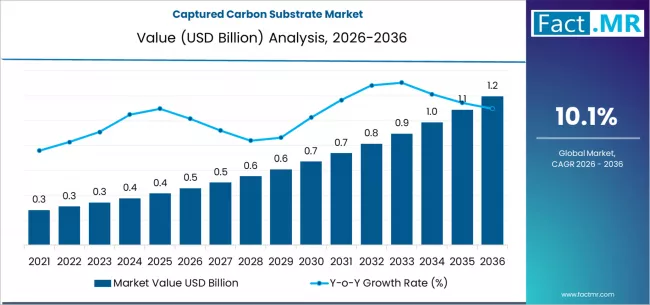
Captured carbon substrate market is projected to grow from USD 0.5 billion in 2026 to USD 1.2 billion by 2036, at a CAGR of 10.1%. Active packaging & industrial filters will dominate with a 38.0% market share, while carbon-embedded sheets & films will lead the substrate type segment with a 39.9% share.
Captured Carbon Substrates Market Forecast and Outlook 2026 to 2036
The global captured carbon substrates market is projected to total USD 0.46 billion in 2026, and to USD 1.20 billion by 2036, progressing at a 10.1% CAGR. This growth is driven by the convergence of two powerful trends, the imperative to valorize captured carbon dioxide and the escalating demand for advanced functional materials in packaging and filtration. These substrates transform waste carbon into a valuable resource, embedding it within films, papers, and nonwovens to create products with inherent adsorptive properties.
Key Takeaways from the Captured Carbon Substrates Market
- Market Value for 2026: USD 0.46 Billion
- Market Value for 2036: USD 1.20 Billion
- Forecast CAGR 2026 to 2036: 10.1%
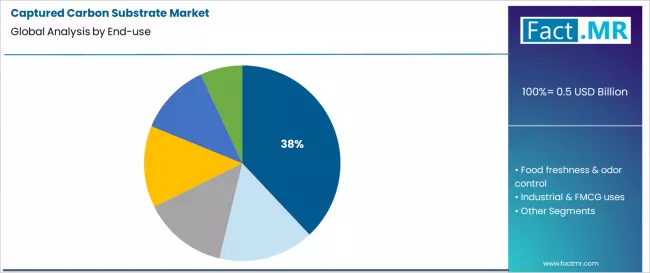
- Leading End-Use Segment (2026): Active Packaging & Industrial Filters (38.0%)
- Leading Substrate Type (2026): Carbon-Embedded Sheets & Films (39.9%)
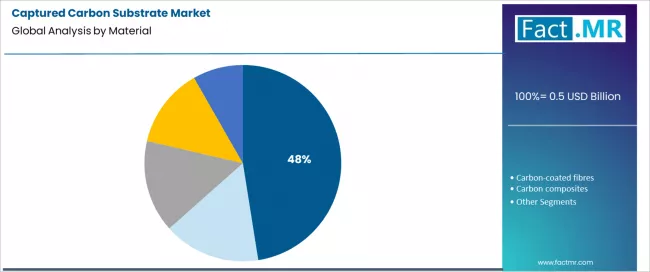
- Leading Material Segment (2026): Activated Carbon, Bio-char (47.5%)
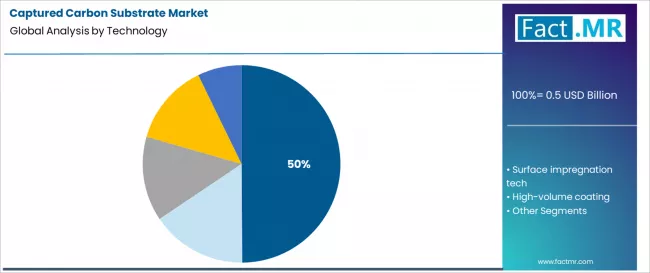
- Leading Technology Segment (2026): Adsorptive Carbon Capture Matrices (49.9%)
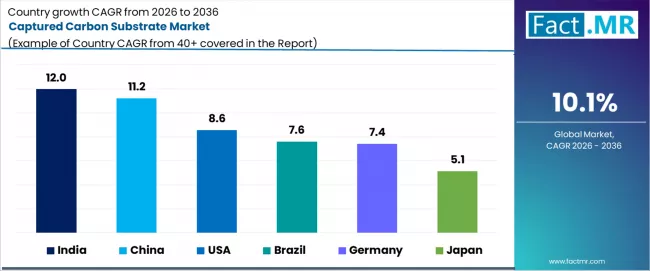
- Key Growth Countries: India (12.0% CAGR), China (11.2% CAGR), USA (8.6% CAGR), Brazil (7.6% CAGR), Germany (7.4% CAGR), Japan (5.1% CAGR)
- Key Players: Kuraray Co., Ltd., Cabot Corporation, Freudenberg Group, Calgon Carbon China, Indo German Carbon

This represents a pivotal shift from linear carbon capture and storage to circular carbon capture and utilization. By integrating captured carbon into material matrices, manufacturers can develop products that actively improve shelf life, purify air and water, or enhance safety.
The market’s expansion is therefore not merely an environmental initiative but a strategic materials innovation, offering a dual-value proposition of carbon sequestration and superior product performance that meets regulatory and consumer demand for sustainable, functional solutions.
Captured Carbon Substrates Market
| Metric | Value |
|---|---|
| Market Value (2026) | USD 0.46 Billion |
| Market Forecast Value (2036) | USD 1.20 Billion |
| Forecast CAGR 2026 to 2036 | 10.1% |
Category
| Category | Segments |
|---|---|
| End-Use | Active Packaging & Industrial Filters, Food Freshness & Odor Control, Industrial & FMCG Uses, Packaging & Safety Products, Industrial Filtration, High-Purity Capture |
| Substrate Type | Carbon-Embedded Sheets & Films, Paper & Nonwoven Substrates, Carbon Films, Carbon-Lined Sheets, Others |
| Material | Activated Carbon, Bio-char, Carbon-Coated Fibres, Carbon Composites, Bio-char Materials, Others |
| Technology | Adsorptive Carbon Capture Matrices, Surface Impregnation Tech, High-Volume Coating, Cost-Efficient Impregnation, Others |
| Region | North America, Latin America, Western Europe, Eastern Europe, East Asia, South Asia & Pacific, Middle East & Africa |
Can Waste Carbon Become the Defining Ingredient for Next-Generation Functional Materials?
The market's trajectory is shaped by the material science challenge of moving beyond merely storing captured CO2 to functionally integrating it. The key lies in developing efficient, scalable processes to transform captured carbon into consistent, high-surface-area materials like activated carbon or bio-char, and then successfully bonding them to carrier substrates without clogging pores or compromising processability.
This intersects with stringent regulations on volatile organic compounds and ethylene in food packaging, creating a ready application for carbon's adsorptive power. The economics are bolstered by emerging carbon credit mechanisms that assign tangible value to the permanent sequestration achieved when carbon is locked into durable goods, making the substrate not just a product but a certified carbon sink.
Segmental Analysis
By Technology, Which Process is Central to Creating a Functional Composite Material?

Adsorptive carbon capture matrices command a leading 49.9% share. This technology focuses on engineering the interface between the captured carbon material and the substrate to maximize surface area accessibility and adsorptive capacity.
It involves precisely formulating binders, pore structures, and application methods to ensure the carbon remains highly active and integrated within the film or sheet. The effectiveness of this matrix directly determines the performance of the end product, making it the core technological differentiator.
By End-Use, Which Segment Offers the Clearest Path for Dual Environmental and Functional Benefits?

Active packaging and industrial filters constitute the primary end-use segment at 38.0%. In packaging, captured carbon substrates actively scavenge odors, moisture, or ripening gases, extending shelf-life and reducing food waste. In filtration, they provide a sustainable source of adsorption media for air and water purification.
This segment leverages the functional property of carbon (adsorption) to solve tangible industrial problems, while the carbon's origin story provides a powerful sustainability narrative, creating a strong value proposition that justifies development and adoption.
By Material, Which Feedstock Balances Performance, Scalability, and Origin Story?

Activated carbon and bio-char hold a dominant 47.5% share. Activated carbon, whether derived from captured CO2 or sustainable biomass, offers the proven, high-performance adsorption profile demanded by industrial applications. Bio-char, a charcoal produced from pyrolyzed organic waste, represents a complementary pathway that also sequesters carbon.
The combination allows market players to offer solutions based on different carbon capture feedstocks such as direct air capture, point-source emissions, or biomass wast), providing flexibility and resilience in the supply chain for carbon-based additives.
What are the Principal Drivers, Constraints, and Evolving Dynamics of the Captured Carbon Substrates Market?
| Attribute | Market Influence |
|---|---|
| Driver | Corporate net-zero strategies and compliance carbon pricing, creating demand for durable carbon sequestration products. |
| Restraint | High cost and energy intensity of converting captured CO2 into consistent, functional material additives. |
| Opportunity | Integration with direct air capture (DAC) facilities to create localized, carbon-to-product manufacturing hubs. |
| Trend | Development of multifunctional substrates where captured carbon also provides coloration, UV protection, or flame retardancy. |
Analysis of the Captured Carbon Substrates Market by Key Countries

| Country | CAGR 2026 to 2036 |
|---|---|
| USA | 8.6% |
| Germany | 7.4% |
| China | 11.2% |
| India | 12.0% |
| Brazil | 7.6% |
| Japan | 5.1% |
How do Federal Incentives and Tech Investment shape USA’s Innovation Landscape?
The USA's 8.6% CAGR is supported by federal tax credits for carbon sequestration (45Q) and significant venture capital flowing into carbon tech startups. The demand driver is strong in active packaging for food and industrial filtration for air quality.
The presence of advanced material companies and a robust DAC industry fosters partnerships to develop and pilot new substrates. The market focuses on high-performance applications where the carbon origin story commands a premium, such as in specialty packaging for premium brands or high-efficiency filters.
What Characterizes Germany's Engineering-Led Approach to Carbon Utilization?
Germany's 7.4% CAGR reflects its systematic, engineering-driven approach to the circular economy within the EU's regulatory framework. The demand driver is tied to industrial filtration and advanced materials for manufacturing.
German chemical and filtration specialists like Freudenberg invest in R&D to precisely engineer the pore structure and binding of captured carbon for specific technical applications, emphasizing measurable performance gains and lifecycle validation over marketing narratives.
What Underpins China's Rapid Scale-Up in Manufacturing and Food Security Applications?
China's 11.2% CAGR is fueled by massive state and private investment in carbon capture technology and its vast manufacturing base for packaging and nonwovens. The primary demand driver is food freshness & odor control in a country prioritizing food security and reducing post-harvest loss.
This drives scaling of surface impregnation tech on paper & nonwoven substrates at high volumes. Domestic players like Calgon Carbon China are pivotal in scaling production to meet demand from both domestic FMCG brands and export-oriented manufacturers.
Why is India's Industrial Growth and Urbanization a Key Market Catalyst?
India's leading 12.0% CAGR is propelled by its rapid industrial expansion and urban air quality challenges. The demand driver spans industrial & FMCG uses, including water purification, odor control in packaging, and industrial air filters.
The market is highly price-sensitive, fostering innovation in cost-efficient impregnation methods and the use of locally sourced bio-char. Growth is driven by the need for affordable adsorption solutions that also align with corporate sustainability reporting, with domestic carbon producers like Indo German Carbon playing a significant role.
How is Brazil's Bio-Char Potential and Agricultural Sector Influencing Development?
Brazil's 7.6% CAGR is linked to its vast agricultural sector, which provides abundant biomass for bio-char production, a key material pathway. The demand driver includes packaging & safety products for its agribusiness exports and domestic food industry.
The focus is on developing integrated systems where agricultural waste is converted into bio-char and then incorporated into packaging or filtration products used within the same economic loop, creating a compelling circular model that leverages local resources.
What Niche does Japan Occupy in High-Precision Industrial and Environmental Applications?
Japan's 5.1% CAGR represents a focused market for ultra-high-purity and performance-critical applications. The demand driver is industrial filtration for electronics manufacturing, pharmaceuticals, and high-end environmental remediation.
Japanese material science leaders seek high-purity capture substrates with exceptionally consistent particle size and adsorption profiles. The market is defined by deep technical collaboration between carbon specialists and end-users to develop custom solutions for mission-critical processes where failure is not an option.
Competitive Landscape of the Captured Carbon Substrates Market
The competitive frontier is defined by collaborations across a novel value chain, linking carbon capture firms, chemical processors, and substrate converters. Specialty chemical companies like Cabot Corporation and Kuraray compete through deep expertise in carbon black and advanced polymers, developing proprietary methods to integrate captured carbon into their material portfolios.
Traditional activated carbon producers are pivoting to market captured-carbon grades. Success hinges on securing reliable, cost-competitive supplies of processed carbon from capture partners, developing intellectual property around integration technologies and forging application development partnerships with major packaging and filtration OEMs to design next-generation products around the unique properties of these new substrates.
Key Players in the Captured Carbon Substrates Market
- Kuraray Co., Ltd.
- Cabot Corporation
- Freudenberg Group
- Calgon Carbon China
- Indo German Carbon
Scope of Report
| Items | Metrics |
|---|---|
| Quantitative Units | USD Billion |
| Technology | Adsorptive Carbon Capture Matrices, Surface Impregnation Tech, High-Volume Coating, Cost-Efficient Impregnation, Others |
| Substrate Type | Carbon-Embedded Sheets & Films, Paper & Nonwoven Substrates, Carbon Films, Carbon-Lined Sheets, Others |
| End-Use | Active Packaging & Industrial Filters, Food Freshness & Odor Control, Industrial & FMCG Uses, Packaging & Safety Products, Industrial Filtration, High-Purity Capture |
| Material | Activated Carbon, Bio-char, Carbon-Coated Fibres, Carbon Composites, Bio-char Materials, Others |
| Key Countries | India, China, USA, Brazil, Germany, Japan |
| Key Companies | Kuraray, Cabot, Freudenberg, Calgon Carbon China, Indo German Carbon |
| Additional Analysis | Lifecycle assessment comparing carbon footprint of substrates from different capture pathways; performance benchmarking vs. virgin activated carbon; analysis of regulatory pathways for food contact and filtration approvals; study of supply chain logistics from capture site to converter; economic modeling of carbon credit impact on substrate pricing. |
Market by Segments
-
End-Use :
- Active Packaging & Industrial Filters
- Food Freshness & Odor Control
- Industrial & FMCG Uses
- Packaging & Safety Products
- Industrial Filtration
- High-Purity Capture
-
Substrate Type :
- Carbon-Embedded Sheets & Films
- Paper & Nonwoven Substrates
- Carbon Films
- Carbon-Lined Sheets
- Others
-
Material :
- Activated Carbon, Bio-char
- Carbon-Coated Fibres
- Carbon Composites
- Bio-char Materials
- Others
-
Technology :
- Adsorptive Carbon Capture Matrices
- Surface Impregnation Tech
- High-Volume Coating
- Cost-Efficient Impregnation
- Others
-
Region :
-
North America
- USA
- Canada
-
Latin America
- Brazil
- Mexico
- Argentina
- Rest of Latin America
-
Western Europe
- Germany
- France
- Italy
- Spain
- UK
- BENELUX
- Rest of Western Europe
-
Eastern Europe
- Russia
- Poland
- Czech Republic
- Rest of Eastern Europe
-
East Asia
- China
- Japan
- South Korea
- Rest of East Asia
-
South Asia & Pacific
- India
- ASEAN
- Australia
- Rest of South Asia & Pacific
-
MEA
- GCC Countries
- South Africa
- Turkiye
- Rest of MEA
-
Bibliography
- American Carbon Registry. (2025). Methodology for the Quantification of Carbon Sequestration in Durable Products.
- European Commission, Directorate-General for Research and Innovation. (2024). Carbon Capture and Utilisation in the Circular Economy.
- International Journal of Greenhouse Gas Control. (2025). Techno-economic analysis of integrated DAC-to-material pathways.
- National Renewable Energy Laboratory (NREL). (2024). Life Cycle Assessment of Carbon-Derived Materials for Industrial Applications.
- The Innovation Fund (EU). (2025). Project Portfolio: Innovative CCU Technologies.
- World Economic Forum. (2024). The Future of Carbon Utilization: Scaling New Value Chains.
Table of Content
- Executive Summary
- Global Market Outlook
- Demand to side Trends
- Supply to side Trends
- Technology Roadmap Analysis
- Analysis and Recommendations
- Market Overview
- Market Coverage / Taxonomy
- Market Definition / Scope / Limitations
- Market Background
- Market Dynamics
- Drivers
- Restraints
- Opportunity
- Trends
- Scenario Forecast
- Demand in Optimistic Scenario
- Demand in Likely Scenario
- Demand in Conservative Scenario
- Opportunity Map Analysis
- Product Life Cycle Analysis
- Supply Chain Analysis
- Investment Feasibility Matrix
- Value Chain Analysis
- PESTLE and Porter’s Analysis
- Regulatory Landscape
- Regional Parent Market Outlook
- Production and Consumption Statistics
- Import and Export Statistics
- Market Dynamics
- Global Market Analysis 2021 to 2025 and Forecast, 2026 to 2036
- Historical Market Size Value (USD Million) Analysis, 2021 to 2025
- Current and Future Market Size Value (USD Million) Projections, 2026 to 2036
- Y to o to Y Growth Trend Analysis
- Absolute $ Opportunity Analysis
- Global Market Pricing Analysis 2021 to 2025 and Forecast 2026 to 2036
- Global Market Analysis 2021 to 2025 and Forecast 2026 to 2036, By End-use
- Introduction / Key Findings
- Historical Market Size Value (USD Million) Analysis By End-use, 2021 to 2025
- Current and Future Market Size Value (USD Million) Analysis and Forecast By End-use, 2026 to 2036
- Active packaging & industrial filters
- Food freshness & odor control
- Industrial & FMCG uses
- Packaging & safety products
- Industrial filtration
- High-purity capture
- Active packaging & industrial filters
- Y to o to Y Growth Trend Analysis By End-use, 2021 to 2025
- Absolute $ Opportunity Analysis By End-use, 2026 to 2036
- Global Market Analysis 2021 to 2025 and Forecast 2026 to 2036, By Substrate Type
- Introduction / Key Findings
- Historical Market Size Value (USD Million) Analysis By Substrate Type, 2021 to 2025
- Current and Future Market Size Value (USD Million) Analysis and Forecast By Substrate Type, 2026 to 2036
- Carbon-embedded sheets & films
- Paper & nonwoven substrates
- Carbon films
- Carbon-lined sheets
- Others
- Carbon-embedded sheets & films
- Y to o to Y Growth Trend Analysis By Substrate Type, 2021 to 2025
- Absolute $ Opportunity Analysis By Substrate Type, 2026 to 2036
- Global Market Analysis 2021 to 2025 and Forecast 2026 to 2036, By Material
- Introduction / Key Findings
- Historical Market Size Value (USD Million) Analysis By Material, 2021 to 2025
- Current and Future Market Size Value (USD Million) Analysis and Forecast By Material, 2026 to 2036
- Activated carbon, bio-char
- Carbon-coated fibres
- Carbon composites
- Bio-char materials
- Others
- Activated carbon, bio-char
- Y to o to Y Growth Trend Analysis By Material, 2021 to 2025
- Absolute $ Opportunity Analysis By Material, 2026 to 2036
- Global Market Analysis 2021 to 2025 and Forecast 2026 to 2036, By Technology
- Introduction / Key Findings
- Historical Market Size Value (USD Million) Analysis By Technology, 2021 to 2025
- Current and Future Market Size Value (USD Million) Analysis and Forecast By Technology, 2026 to 2036
- Adsorptive carbon capture matrices
- Surface impregnation tech
- High-volume coating
- Cost-efficient impregnation
- Others
- Adsorptive carbon capture matrices
- Y to o to Y Growth Trend Analysis By Technology, 2021 to 2025
- Absolute $ Opportunity Analysis By Technology, 2026 to 2036
- Global Market Analysis 2021 to 2025 and Forecast 2026 to 2036, By Region
- Introduction
- Historical Market Size Value (USD Million) Analysis By Region, 2021 to 2025
- Current Market Size Value (USD Million) Analysis and Forecast By Region, 2026 to 2036
- North America
- Latin America
- Western Europe
- Eastern Europe
- East Asia
- South Asia and Pacific
- Middle East & Africa
- Market Attractiveness Analysis By Region
- North America Market Analysis 2021 to 2025 and Forecast 2026 to 2036, By Country
- Historical Market Size Value (USD Million) Trend Analysis By Market Taxonomy, 2021 to 2025
- Market Size Value (USD Million) Forecast By Market Taxonomy, 2026 to 2036
- By Country
- USA
- Canada
- Mexico
- By End-use
- By Substrate Type
- By Material
- By Technology
- By Country
- Market Attractiveness Analysis
- By Country
- By End-use
- By Substrate Type
- By Material
- By Technology
- Key Takeaways
- Latin America Market Analysis 2021 to 2025 and Forecast 2026 to 2036, By Country
- Historical Market Size Value (USD Million) Trend Analysis By Market Taxonomy, 2021 to 2025
- Market Size Value (USD Million) Forecast By Market Taxonomy, 2026 to 2036
- By Country
- Brazil
- Chile
- Rest of Latin America
- By End-use
- By Substrate Type
- By Material
- By Technology
- By Country
- Market Attractiveness Analysis
- By Country
- By End-use
- By Substrate Type
- By Material
- By Technology
- Key Takeaways
- Western Europe Market Analysis 2021 to 2025 and Forecast 2026 to 2036, By Country
- Historical Market Size Value (USD Million) Trend Analysis By Market Taxonomy, 2021 to 2025
- Market Size Value (USD Million) Forecast By Market Taxonomy, 2026 to 2036
- By Country
- Germany
- UK
- Italy
- Spain
- France
- Nordic
- BENELUX
- Rest of Western Europe
- By End-use
- By Substrate Type
- By Material
- By Technology
- By Country
- Market Attractiveness Analysis
- By Country
- By End-use
- By Substrate Type
- By Material
- By Technology
- Key Takeaways
- Eastern Europe Market Analysis 2021 to 2025 and Forecast 2026 to 2036, By Country
- Historical Market Size Value (USD Million) Trend Analysis By Market Taxonomy, 2021 to 2025
- Market Size Value (USD Million) Forecast By Market Taxonomy, 2026 to 2036
- By Country
- Russia
- Poland
- Hungary
- Balkan & Baltic
- Rest of Eastern Europe
- By End-use
- By Substrate Type
- By Material
- By Technology
- By Country
- Market Attractiveness Analysis
- By Country
- By End-use
- By Substrate Type
- By Material
- By Technology
- Key Takeaways
- East Asia Market Analysis 2021 to 2025 and Forecast 2026 to 2036, By Country
- Historical Market Size Value (USD Million) Trend Analysis By Market Taxonomy, 2021 to 2025
- Market Size Value (USD Million) Forecast By Market Taxonomy, 2026 to 2036
- By Country
- China
- Japan
- South Korea
- By End-use
- By Substrate Type
- By Material
- By Technology
- By Country
- Market Attractiveness Analysis
- By Country
- By End-use
- By Substrate Type
- By Material
- By Technology
- Key Takeaways
- South Asia and Pacific Market Analysis 2021 to 2025 and Forecast 2026 to 2036, By Country
- Historical Market Size Value (USD Million) Trend Analysis By Market Taxonomy, 2021 to 2025
- Market Size Value (USD Million) Forecast By Market Taxonomy, 2026 to 2036
- By Country
- India
- ASEAN
- Australia & New Zealand
- Rest of South Asia and Pacific
- By End-use
- By Substrate Type
- By Material
- By Technology
- By Country
- Market Attractiveness Analysis
- By Country
- By End-use
- By Substrate Type
- By Material
- By Technology
- Key Takeaways
- Middle East & Africa Market Analysis 2021 to 2025 and Forecast 2026 to 2036, By Country
- Historical Market Size Value (USD Million) Trend Analysis By Market Taxonomy, 2021 to 2025
- Market Size Value (USD Million) Forecast By Market Taxonomy, 2026 to 2036
- By Country
- Kingdom of Saudi Arabia
- Other GCC Countries
- Turkiye
- South Africa
- Other African Union
- Rest of Middle East & Africa
- By End-use
- By Substrate Type
- By Material
- By Technology
- By Country
- Market Attractiveness Analysis
- By Country
- By End-use
- By Substrate Type
- By Material
- By Technology
- Key Takeaways
- Key Countries Market Analysis
- USA
- Pricing Analysis
- Market Share Analysis, 2025
- By End-use
- By Substrate Type
- By Material
- By Technology
- Canada
- Pricing Analysis
- Market Share Analysis, 2025
- By End-use
- By Substrate Type
- By Material
- By Technology
- Mexico
- Pricing Analysis
- Market Share Analysis, 2025
- By End-use
- By Substrate Type
- By Material
- By Technology
- Brazil
- Pricing Analysis
- Market Share Analysis, 2025
- By End-use
- By Substrate Type
- By Material
- By Technology
- Chile
- Pricing Analysis
- Market Share Analysis, 2025
- By End-use
- By Substrate Type
- By Material
- By Technology
- Germany
- Pricing Analysis
- Market Share Analysis, 2025
- By End-use
- By Substrate Type
- By Material
- By Technology
- UK
- Pricing Analysis
- Market Share Analysis, 2025
- By End-use
- By Substrate Type
- By Material
- By Technology
- Italy
- Pricing Analysis
- Market Share Analysis, 2025
- By End-use
- By Substrate Type
- By Material
- By Technology
- Spain
- Pricing Analysis
- Market Share Analysis, 2025
- By End-use
- By Substrate Type
- By Material
- By Technology
- France
- Pricing Analysis
- Market Share Analysis, 2025
- By End-use
- By Substrate Type
- By Material
- By Technology
- India
- Pricing Analysis
- Market Share Analysis, 2025
- By End-use
- By Substrate Type
- By Material
- By Technology
- ASEAN
- Pricing Analysis
- Market Share Analysis, 2025
- By End-use
- By Substrate Type
- By Material
- By Technology
- Australia & New Zealand
- Pricing Analysis
- Market Share Analysis, 2025
- By End-use
- By Substrate Type
- By Material
- By Technology
- China
- Pricing Analysis
- Market Share Analysis, 2025
- By End-use
- By Substrate Type
- By Material
- By Technology
- Japan
- Pricing Analysis
- Market Share Analysis, 2025
- By End-use
- By Substrate Type
- By Material
- By Technology
- South Korea
- Pricing Analysis
- Market Share Analysis, 2025
- By End-use
- By Substrate Type
- By Material
- By Technology
- Russia
- Pricing Analysis
- Market Share Analysis, 2025
- By End-use
- By Substrate Type
- By Material
- By Technology
- Poland
- Pricing Analysis
- Market Share Analysis, 2025
- By End-use
- By Substrate Type
- By Material
- By Technology
- Hungary
- Pricing Analysis
- Market Share Analysis, 2025
- By End-use
- By Substrate Type
- By Material
- By Technology
- Kingdom of Saudi Arabia
- Pricing Analysis
- Market Share Analysis, 2025
- By End-use
- By Substrate Type
- By Material
- By Technology
- Turkiye
- Pricing Analysis
- Market Share Analysis, 2025
- By End-use
- By Substrate Type
- By Material
- By Technology
- South Africa
- Pricing Analysis
- Market Share Analysis, 2025
- By End-use
- By Substrate Type
- By Material
- By Technology
- USA
- Market Structure Analysis
- Competition Dashboard
- Competition Benchmarking
- Market Share Analysis of Top Players
- By Regional
- By End-use
- By Substrate Type
- By Material
- By Technology
- Competition Analysis
- Competition Deep Dive
- Kuraray Co., Ltd.
- Overview
- Product Portfolio
- Profitability by Market Segments (Product/Age /Sales Channel/Region)
- Sales Footprint
- Strategy Overview
- Marketing Strategy
- Product Strategy
- Channel Strategy
- Cabot Corporation
- Freudenberg Group
- Calgon Carbon China
- Indo German Carbon
- Kuraray Co., Ltd.
- Competition Deep Dive
- Assumptions & Acronyms Used
- Research Methodology
List Of Table
- Table 1: Global Market Value (USD Million) Forecast by Region, 2021 to 2036
- Table 2: Global Market Value (USD Million) Forecast by End-use, 2021 to 2036
- Table 3: Global Market Value (USD Million) Forecast by Substrate Type, 2021 to 2036
- Table 4: Global Market Value (USD Million) Forecast by Material, 2021 to 2036
- Table 5: Global Market Value (USD Million) Forecast by Technology, 2021 to 2036
- Table 6: North America Market Value (USD Million) Forecast by Country, 2021 to 2036
- Table 7: North America Market Value (USD Million) Forecast by End-use, 2021 to 2036
- Table 8: North America Market Value (USD Million) Forecast by Substrate Type, 2021 to 2036
- Table 9: North America Market Value (USD Million) Forecast by Material, 2021 to 2036
- Table 10: North America Market Value (USD Million) Forecast by Technology, 2021 to 2036
- Table 11: Latin America Market Value (USD Million) Forecast by Country, 2021 to 2036
- Table 12: Latin America Market Value (USD Million) Forecast by End-use, 2021 to 2036
- Table 13: Latin America Market Value (USD Million) Forecast by Substrate Type, 2021 to 2036
- Table 14: Latin America Market Value (USD Million) Forecast by Material, 2021 to 2036
- Table 15: Latin America Market Value (USD Million) Forecast by Technology, 2021 to 2036
- Table 16: Western Europe Market Value (USD Million) Forecast by Country, 2021 to 2036
- Table 17: Western Europe Market Value (USD Million) Forecast by End-use, 2021 to 2036
- Table 18: Western Europe Market Value (USD Million) Forecast by Substrate Type, 2021 to 2036
- Table 19: Western Europe Market Value (USD Million) Forecast by Material, 2021 to 2036
- Table 20: Western Europe Market Value (USD Million) Forecast by Technology, 2021 to 2036
- Table 21: Eastern Europe Market Value (USD Million) Forecast by Country, 2021 to 2036
- Table 22: Eastern Europe Market Value (USD Million) Forecast by End-use, 2021 to 2036
- Table 23: Eastern Europe Market Value (USD Million) Forecast by Substrate Type, 2021 to 2036
- Table 24: Eastern Europe Market Value (USD Million) Forecast by Material, 2021 to 2036
- Table 25: Eastern Europe Market Value (USD Million) Forecast by Technology, 2021 to 2036
- Table 26: East Asia Market Value (USD Million) Forecast by Country, 2021 to 2036
- Table 27: East Asia Market Value (USD Million) Forecast by End-use, 2021 to 2036
- Table 28: East Asia Market Value (USD Million) Forecast by Substrate Type, 2021 to 2036
- Table 29: East Asia Market Value (USD Million) Forecast by Material, 2021 to 2036
- Table 30: East Asia Market Value (USD Million) Forecast by Technology, 2021 to 2036
- Table 31: South Asia and Pacific Market Value (USD Million) Forecast by Country, 2021 to 2036
- Table 32: South Asia and Pacific Market Value (USD Million) Forecast by End-use, 2021 to 2036
- Table 33: South Asia and Pacific Market Value (USD Million) Forecast by Substrate Type, 2021 to 2036
- Table 34: South Asia and Pacific Market Value (USD Million) Forecast by Material, 2021 to 2036
- Table 35: South Asia and Pacific Market Value (USD Million) Forecast by Technology, 2021 to 2036
- Table 36: Middle East & Africa Market Value (USD Million) Forecast by Country, 2021 to 2036
- Table 37: Middle East & Africa Market Value (USD Million) Forecast by End-use, 2021 to 2036
- Table 38: Middle East & Africa Market Value (USD Million) Forecast by Substrate Type, 2021 to 2036
- Table 39: Middle East & Africa Market Value (USD Million) Forecast by Material, 2021 to 2036
- Table 40: Middle East & Africa Market Value (USD Million) Forecast by Technology, 2021 to 2036
List Of Figures
- Figure 1: Global Market Pricing Analysis
- Figure 2: Global Market Value (USD Million) Forecast 2021 to 2036
- Figure 3: Global Market Value Share and BPS Analysis by End-use, 2026 and 2036
- Figure 4: Global Market Y to o to Y Growth Comparison by End-use, 2026 to 2036
- Figure 5: Global Market Attractiveness Analysis by End-use
- Figure 6: Global Market Value Share and BPS Analysis by Substrate Type, 2026 and 2036
- Figure 7: Global Market Y to o to Y Growth Comparison by Substrate Type, 2026 to 2036
- Figure 8: Global Market Attractiveness Analysis by Substrate Type
- Figure 9: Global Market Value Share and BPS Analysis by Material, 2026 and 2036
- Figure 10: Global Market Y to o to Y Growth Comparison by Material, 2026 to 2036
- Figure 11: Global Market Attractiveness Analysis by Material
- Figure 12: Global Market Value Share and BPS Analysis by Technology, 2026 and 2036
- Figure 13: Global Market Y to o to Y Growth Comparison by Technology, 2026 to 2036
- Figure 14: Global Market Attractiveness Analysis by Technology
- Figure 15: Global Market Value (USD Million) Share and BPS Analysis by Region, 2026 and 2036
- Figure 16: Global Market Y to o to Y Growth Comparison by Region, 2026 to 2036
- Figure 17: Global Market Attractiveness Analysis by Region
- Figure 18: North America Market Incremental Dollar Opportunity, 2026 to 2036
- Figure 19: Latin America Market Incremental Dollar Opportunity, 2026 to 2036
- Figure 20: Western Europe Market Incremental Dollar Opportunity, 2026 to 2036
- Figure 21: Eastern Europe Market Incremental Dollar Opportunity, 2026 to 2036
- Figure 22: East Asia Market Incremental Dollar Opportunity, 2026 to 2036
- Figure 23: South Asia and Pacific Market Incremental Dollar Opportunity, 2026 to 2036
- Figure 24: Middle East & Africa Market Incremental Dollar Opportunity, 2026 to 2036
- Figure 25: North America Market Value Share and BPS Analysis by Country, 2026 and 2036
- Figure 26: North America Market Value Share and BPS Analysis by End-use, 2026 and 2036
- Figure 27: North America Market Y to o to Y Growth Comparison by End-use, 2026 to 2036
- Figure 28: North America Market Attractiveness Analysis by End-use
- Figure 29: North America Market Value Share and BPS Analysis by Substrate Type, 2026 and 2036
- Figure 30: North America Market Y to o to Y Growth Comparison by Substrate Type, 2026 to 2036
- Figure 31: North America Market Attractiveness Analysis by Substrate Type
- Figure 32: North America Market Value Share and BPS Analysis by Material, 2026 and 2036
- Figure 33: North America Market Y to o to Y Growth Comparison by Material, 2026 to 2036
- Figure 34: North America Market Attractiveness Analysis by Material
- Figure 35: North America Market Value Share and BPS Analysis by Technology, 2026 and 2036
- Figure 36: North America Market Y to o to Y Growth Comparison by Technology, 2026 to 2036
- Figure 37: North America Market Attractiveness Analysis by Technology
- Figure 38: Latin America Market Value Share and BPS Analysis by Country, 2026 and 2036
- Figure 39: Latin America Market Value Share and BPS Analysis by End-use, 2026 and 2036
- Figure 40: Latin America Market Y to o to Y Growth Comparison by End-use, 2026 to 2036
- Figure 41: Latin America Market Attractiveness Analysis by End-use
- Figure 42: Latin America Market Value Share and BPS Analysis by Substrate Type, 2026 and 2036
- Figure 43: Latin America Market Y to o to Y Growth Comparison by Substrate Type, 2026 to 2036
- Figure 44: Latin America Market Attractiveness Analysis by Substrate Type
- Figure 45: Latin America Market Value Share and BPS Analysis by Material, 2026 and 2036
- Figure 46: Latin America Market Y to o to Y Growth Comparison by Material, 2026 to 2036
- Figure 47: Latin America Market Attractiveness Analysis by Material
- Figure 48: Latin America Market Value Share and BPS Analysis by Technology, 2026 and 2036
- Figure 49: Latin America Market Y to o to Y Growth Comparison by Technology, 2026 to 2036
- Figure 50: Latin America Market Attractiveness Analysis by Technology
- Figure 51: Western Europe Market Value Share and BPS Analysis by Country, 2026 and 2036
- Figure 52: Western Europe Market Value Share and BPS Analysis by End-use, 2026 and 2036
- Figure 53: Western Europe Market Y to o to Y Growth Comparison by End-use, 2026 to 2036
- Figure 54: Western Europe Market Attractiveness Analysis by End-use
- Figure 55: Western Europe Market Value Share and BPS Analysis by Substrate Type, 2026 and 2036
- Figure 56: Western Europe Market Y to o to Y Growth Comparison by Substrate Type, 2026 to 2036
- Figure 57: Western Europe Market Attractiveness Analysis by Substrate Type
- Figure 58: Western Europe Market Value Share and BPS Analysis by Material, 2026 and 2036
- Figure 59: Western Europe Market Y to o to Y Growth Comparison by Material, 2026 to 2036
- Figure 60: Western Europe Market Attractiveness Analysis by Material
- Figure 61: Western Europe Market Value Share and BPS Analysis by Technology, 2026 and 2036
- Figure 62: Western Europe Market Y to o to Y Growth Comparison by Technology, 2026 to 2036
- Figure 63: Western Europe Market Attractiveness Analysis by Technology
- Figure 64: Eastern Europe Market Value Share and BPS Analysis by Country, 2026 and 2036
- Figure 65: Eastern Europe Market Value Share and BPS Analysis by End-use, 2026 and 2036
- Figure 66: Eastern Europe Market Y to o to Y Growth Comparison by End-use, 2026 to 2036
- Figure 67: Eastern Europe Market Attractiveness Analysis by End-use
- Figure 68: Eastern Europe Market Value Share and BPS Analysis by Substrate Type, 2026 and 2036
- Figure 69: Eastern Europe Market Y to o to Y Growth Comparison by Substrate Type, 2026 to 2036
- Figure 70: Eastern Europe Market Attractiveness Analysis by Substrate Type
- Figure 71: Eastern Europe Market Value Share and BPS Analysis by Material, 2026 and 2036
- Figure 72: Eastern Europe Market Y to o to Y Growth Comparison by Material, 2026 to 2036
- Figure 73: Eastern Europe Market Attractiveness Analysis by Material
- Figure 74: Eastern Europe Market Value Share and BPS Analysis by Technology, 2026 and 2036
- Figure 75: Eastern Europe Market Y to o to Y Growth Comparison by Technology, 2026 to 2036
- Figure 76: Eastern Europe Market Attractiveness Analysis by Technology
- Figure 77: East Asia Market Value Share and BPS Analysis by Country, 2026 and 2036
- Figure 78: East Asia Market Value Share and BPS Analysis by End-use, 2026 and 2036
- Figure 79: East Asia Market Y to o to Y Growth Comparison by End-use, 2026 to 2036
- Figure 80: East Asia Market Attractiveness Analysis by End-use
- Figure 81: East Asia Market Value Share and BPS Analysis by Substrate Type, 2026 and 2036
- Figure 82: East Asia Market Y to o to Y Growth Comparison by Substrate Type, 2026 to 2036
- Figure 83: East Asia Market Attractiveness Analysis by Substrate Type
- Figure 84: East Asia Market Value Share and BPS Analysis by Material, 2026 and 2036
- Figure 85: East Asia Market Y to o to Y Growth Comparison by Material, 2026 to 2036
- Figure 86: East Asia Market Attractiveness Analysis by Material
- Figure 87: East Asia Market Value Share and BPS Analysis by Technology, 2026 and 2036
- Figure 88: East Asia Market Y to o to Y Growth Comparison by Technology, 2026 to 2036
- Figure 89: East Asia Market Attractiveness Analysis by Technology
- Figure 90: South Asia and Pacific Market Value Share and BPS Analysis by Country, 2026 and 2036
- Figure 91: South Asia and Pacific Market Value Share and BPS Analysis by End-use, 2026 and 2036
- Figure 92: South Asia and Pacific Market Y to o to Y Growth Comparison by End-use, 2026 to 2036
- Figure 93: South Asia and Pacific Market Attractiveness Analysis by End-use
- Figure 94: South Asia and Pacific Market Value Share and BPS Analysis by Substrate Type, 2026 and 2036
- Figure 95: South Asia and Pacific Market Y to o to Y Growth Comparison by Substrate Type, 2026 to 2036
- Figure 96: South Asia and Pacific Market Attractiveness Analysis by Substrate Type
- Figure 97: South Asia and Pacific Market Value Share and BPS Analysis by Material, 2026 and 2036
- Figure 98: South Asia and Pacific Market Y to o to Y Growth Comparison by Material, 2026 to 2036
- Figure 99: South Asia and Pacific Market Attractiveness Analysis by Material
- Figure 100: South Asia and Pacific Market Value Share and BPS Analysis by Technology, 2026 and 2036
- Figure 101: South Asia and Pacific Market Y to o to Y Growth Comparison by Technology, 2026 to 2036
- Figure 102: South Asia and Pacific Market Attractiveness Analysis by Technology
- Figure 103: Middle East & Africa Market Value Share and BPS Analysis by Country, 2026 and 2036
- Figure 104: Middle East & Africa Market Value Share and BPS Analysis by End-use, 2026 and 2036
- Figure 105: Middle East & Africa Market Y to o to Y Growth Comparison by End-use, 2026 to 2036
- Figure 106: Middle East & Africa Market Attractiveness Analysis by End-use
- Figure 107: Middle East & Africa Market Value Share and BPS Analysis by Substrate Type, 2026 and 2036
- Figure 108: Middle East & Africa Market Y to o to Y Growth Comparison by Substrate Type, 2026 to 2036
- Figure 109: Middle East & Africa Market Attractiveness Analysis by Substrate Type
- Figure 110: Middle East & Africa Market Value Share and BPS Analysis by Material, 2026 and 2036
- Figure 111: Middle East & Africa Market Y to o to Y Growth Comparison by Material, 2026 to 2036
- Figure 112: Middle East & Africa Market Attractiveness Analysis by Material
- Figure 113: Middle East & Africa Market Value Share and BPS Analysis by Technology, 2026 and 2036
- Figure 114: Middle East & Africa Market Y to o to Y Growth Comparison by Technology, 2026 to 2036
- Figure 115: Middle East & Africa Market Attractiveness Analysis by Technology
- Figure 116: Global Market - Tier Structure Analysis
- Figure 117: Global Market - Company Share Analysis
- FAQs -
How big is the captured carbon substrate market in 2026?
The global captured carbon substrate market is estimated to be valued at USD 0.5 billion in 2026.
What will be the size of captured carbon substrate market in 2036?
The market size for the captured carbon substrate market is projected to reach USD 1.2 billion by 2036.
How much will be the captured carbon substrate market growth between 2026 and 2036?
The captured carbon substrate market is expected to grow at a 10.1% CAGR between 2026 and 2036.
What are the key product types in the captured carbon substrate market?
The key product types in captured carbon substrate market are active packaging & industrial filters, food freshness & odor control, industrial & fmcg uses, packaging & safety products, industrial filtration and high-purity capture.
Which substrate type segment to contribute significant share in the captured carbon substrate market in 2026?
In terms of substrate type, carbon-embedded sheets & films segment to command 39.9% share in the captured carbon substrate market in 2026.