Low Carbon Footprint Formulated Crop Protection Market

Low Carbon Footprint Formulated Crop Protection Market Size and Share Forecast Outlook 2026 to 2036

Low carbon footprint formulated crop protection market is projected to grow from USD 1.1 billion in 2026 to USD 4.9 billion by 2036, at a CAGR of 15.8%. Low-Solvent Water-Based Formulations will dominate with a 34.0% market share, while herbicides will lead the crop protection type segment with a 36.0% share.

Low Carbon Footprint Formulated Crop Protection Market Forecast and Outlook 2026 to 2036

The global low-carbon footprint formulated crop protection market is projected to reach USD 4.88 billion by 2036. The market is valued at USD 1.13 billion in 2026 and is set to rise at a CAGR of 15.8% during the assessment period. By formulation strategy, low-solvent water-based formulations hold a leading 34% share. The herbicides crop protection type segment represents a dominant 36% market share.

Key Takeaways from the Low Carbon Footprint Formulated Crop Protection Market

  • Market Value for 2026: USD 1.13 Billion
  • Market Value for 2036: USD 4.88 Billion
  • Forecast CAGR (2026-2036): 15.8%
  • Leading Formulation Strategy Share (2026): Low-Solvent Water-Based Formulations (34%)
  • Leading Crop Protection Type Share (2026): Herbicides (36%)
  • Key Players in the Market: Koppert Cress Protection Solutions, Rovensa Group, Ginkgo Agro Solutions, Hello Nature (Ag Formulations), UPL OpenAg (Low-Carbon Lines)

Low Carbon Footprint Formulated Crop Protection Market Market Value Analysis

Essential trends include the systematic reformulation of existing actives into greener carriers, such as bio-derived solvents and concentrated powders that reduce packaging and transport emissions. Innovation is accelerating in continuous-flow manufacturing processes that lower energy consumption per unit produced. Integration of these products into carbon accounting platforms allows growers and distributors to quantify emission reductions, linking product choice directly to sustainability metrics.

Regulatory and market mechanisms are pivotal drivers. Carbon taxation proposals on chemical production and plastic packaging increase the cost of conventional formulations. Conversely, green procurement policies from major food corporations and government incentives for sustainable input use create a powerful market pull. Regulatory fast-tracking for products with verified lower lifecycle emissions further accelerates commercial development.

Low Carbon Footprint Formulated Crop Protection Market

Metric Value
Market Value (2026) USD 1.13 Billion
Market Forecast Value (2036) USD 4.88 Billion
Forecast CAGR (2026-2036) 15.8%

Category

Category Segments
Formulation Strategy Low-Solvent Water-Based Formulations, Bio-Derived & Renewable Carrier Systems, Concentrated & Dose-Reduction Formulations, Energy-Efficient Manufacturing Chemistries, Others
Crop Protection Type Herbicides, Fungicides, Insecticides, Seed Treatment & Soil Protectants, Others
Region North America, Latin America, Western Europe, Eastern Europe, East Asia, South Asia & Pacific, MEA

Segmental Analysis

By Formulation Strategy, Which Approach Cuts Emissions at the Source?
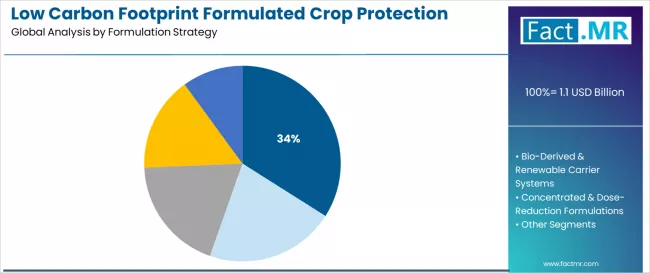
Low Carbon Footprint Formulated Crop Protection Market Analysis By Formulation Strategy

Low-solvent water-based formulations lead the segment with a 34% share. This dominance stems from eliminating or drastically reducing petroleum-derived solvents, a major source of a formulation's carbon footprint. These systems lower volatile organic compound emissions during application and reduce hazardous waste. Their development represents a direct and measurable step in decarbonizing the chemical backbone of crop protection, appealing to regulators and sustainability-conscious buyers.

By Crop Protection Type, Which Category Offers the Largest Volume for Impact?
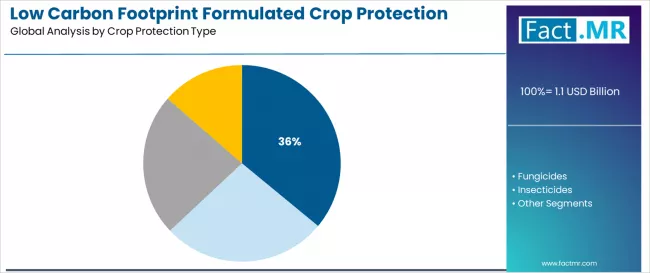
Low Carbon Footprint Formulated Crop Protection Market Analysis By Crop Protection Type

Herbicides hold the largest category share at 36%. Given their high volume of use globally, even incremental reductions in the carbon intensity of herbicide formulations yield significant aggregate emission savings. Furthermore, innovations like ultra-concentrated herbicides reduce packaging, transport weight, and fuel consumption for application, creating a compounded carbon benefit that aligns with broad-acre farming's efficiency goals.

What are the Drivers, Restraints, and Key Trends of the Low Carbon Footprint Formulated Crop Protection Market?

Market expansion is driven by stringent corporate net-zero commitments across the food value chain, forcing a reevaluation of input sourcing. The rising cost of fossil-fuel-based chemical feedstocks makes bio-alternatives more competitive. Government grants and green chemistry initiatives support R&D. Consumer demand for sustainably produced food transmits pressure directly to growers and their input suppliers.

A primary restraint is the higher upfront cost of developing and scaling novel green chemistry processes. Performance parity with established high-solvent formulations can be challenging for certain actives. The fragmented nature of global regulations requires navigating disparate standards to achieve universal market access. Farmer adoption depends on clear agronomic and economic benefits beyond carbon credentials.

Key trends feature the use of lifecycle analysis to validate and market emission reductions. Partnerships between agrochemical firms and biotechnology companies are scaling bio-based production. There is a growing market for drop-in replacement formulations compatible with existing farm infrastructure, lowering the barrier to adoption.

Analysis of the Low Carbon Footprint Formulated Crop Protection Market by Key Countries

Low Carbon Footprint Formulated Crop Protection Market Cagr Analysis By Country

Country CAGR (2026-2036)
USA 16.40%
Australia 16.10%
France 15.70%
Brazil 15.20%
Germany 15.00%

How do USA's Corporate Sustainability Demands Influence Market Growth?
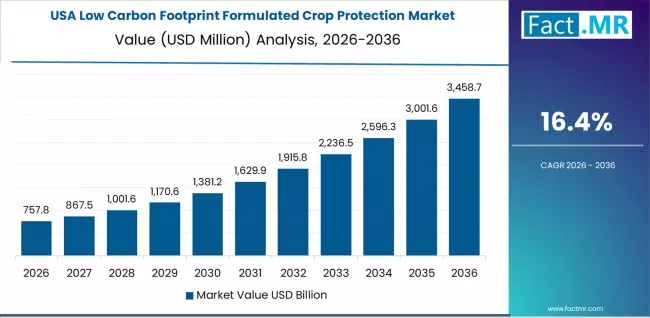
The USA leads with a 16.40% CAGR, driven by powerful market forces from food brands and retailers requiring low-carbon sourcing. American growers supplying these chains must demonstrate input efficiency, creating direct demand for certified low-footprint crop protection. Venture capital investment in agri-tech green chemistry further accelerates innovation, positioning the US as a hub for developing and scaling next-generation sustainable formulations.

Why does Australia's Climate-Exposed Agriculture Prioritize Emission Reduction?

Australia's 16.10% growth is linked to its agriculture sector's acute visibility regarding climate impacts. Australian farmers and exporters proactively adopt low-carbon inputs to future-proof market access and align with national sustainability goals. The high value of export-oriented horticulture and grains provides the economic basis for investing in premium, low-footprint protection products that enhance brand reputation in Asia-Pacific markets.

What drives France's Regulatory Leadership in Green Chemistry Adoption?

Stringent national and EU policies, including the Farm to Fork strategy and national carbon budgets, propel France’s 15.70% growth. French regulations actively discourage high-carbon inputs, creating a compliance-driven market. Domestic companies and research institutes are leaders in developing bio-derived carriers and concentrated formulations, supported by a policy environment that rewards innovation in sustainable chemistry.

How is Brazil's Scale and Export Economy Shaping Sustainable Input Use?

Brazil's 15.20% growth stems from the sheer scale of its commodity agriculture and its need to defend export market share. Major trading partners increasingly scrutinize the carbon footprint of imported soy and corn. Brazilian input manufacturers are responding by developing bio-derived carrier systems suited to tropical conditions, allowing large-scale producers to reduce per-hectare emissions without sacrificing the efficacy required in intensive production systems.

What Factors Underpin Germany's Engineering and Certification Focus?

Germany's 15.00% growth reflects its precision-oriented approach, where products must meet rigorous certified standards. German farmers and cooperatives demand formulations with verified lifecycle assessments and clear environmental product declarations. The strong presence of chemical and engineering firms drives innovation in energy-efficient manufacturing processes, making Germany a center for producing high-tech, low-footprint crop protection solutions for the European market.

Competitive Landscape of the Low Carbon Footprint Formulated Crop Protection Market
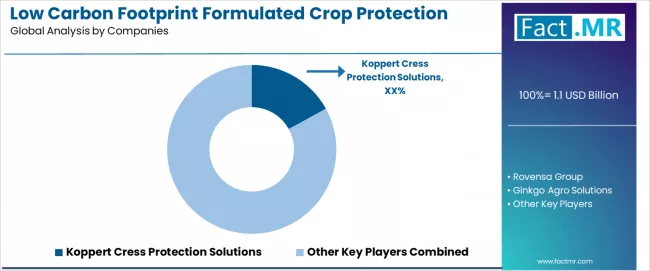
Low Carbon Footprint Formulated Crop Protection Market Analysis By Company

The landscape features competition between specialized sustainable agriculture firms and established agrochemical giants launching dedicated green lines. Specialists like Koppert Cress, Rovensa Group, and Hello Nature compete through pure-play sustainability branding, deep expertise in biocontrols, and bio-based formulation technology. Their entire value proposition is built on low environmental impact.

Major corporations like UPL OpenAg compete by leveraging their vast manufacturing and distribution scale to reformulate parts of their portfolio for lower carbon output, offering farmers a familiar brand with improved sustainability credentials. Competition centers on scientific validation of emission claims, securing third-party certifications, and forming alliances with downstream food companies to create preferred supplier networks for low-carbon inputs.

Key Players in the Low Carbon Footprint Formulated Crop Protection Market

  • Koppert Cress Protection Solutions
  • Rovensa Group
  • Ginkgo Agro Solutions
  • Hello Nature (Ag Formulations)
  • UPL OpenAg (Low-Carbon Lines)

Scope of Report

Items Values
Quantitative Units USD Billion
Formulation Strategy Low-Solvent Water-Based Formulations, Bio-Derived & Renewable Carrier Systems, Concentrated & Dose-Reduction Formulations, Energy-Efficient Manufacturing Chemistries, Others
Crop Protection Type Herbicides, Fungicides, Insecticides, Seed Treatment & Soil Protectants, Others
Key Countries USA, Australia, France, Brazil, Germany
Key Companies Koppert Cress Protection Solutions, Rovensa Group, Ginkgo Agro Solutions, Hello Nature (Ag Formulations), UPL OpenAg (Low-Carbon Lines)
Additional Analysis Lifecycle assessment methodologies, carbon accounting integration with farm management software, regulatory landscape for green chemistry claims, and cost-parity analysis with conventional formulations.

Low Carbon Footprint Formulated Crop Protection Market by Segments

  • Formulation Strategy :

    • Low-Solvent Water-Based Formulations
    • Bio-Derived & Renewable Carrier Systems
    • Concentrated & Dose-Reduction Formulations
    • Energy-Efficient Manufacturing Chemistries
    • Others
  • Crop Protection Type :

    • Herbicides
    • Fungicides
    • Insecticides
    • Seed Treatment & Soil Protectants
    • Others
  • Region :

    • North America

      • USA
      • Canada
    • Latin America

      • Brazil
      • Mexico
      • Argentina
      • Rest of Latin America
    • Western Europe

      • Germany
      • UK
      • France
      • Spain
      • Italy
      • BENELUX
      • Rest of Western Europe
    • Eastern Europe

      • Czech Republic
      • Poland
      • Russia
      • Rest of Eastern Europe
    • East Asia

      • China
      • Japan
      • South Korea
      • Rest of East Asia
    • South Asia & Pacific

      • India
      • Indonesia
      • Australia
      • Rest of South Asia & Pacific
    • MEA

      • GCC Countries
      • Turkiye
      • Saudi Arabia
      • Rest of MEA

Table of Content

  1. Executive Summary
    • Global Market Outlook
    • Demand to side Trends
    • Supply to side Trends
    • Technology Roadmap Analysis
    • Analysis and Recommendations
  2. Market Overview
    • Market Coverage / Taxonomy
    • Market Definition / Scope / Limitations
  3. Market Background
    • Market Dynamics
      • Drivers
      • Restraints
      • Opportunity
      • Trends
    • Scenario Forecast
      • Demand in Optimistic Scenario
      • Demand in Likely Scenario
      • Demand in Conservative Scenario
    • Opportunity Map Analysis
    • Product Life Cycle Analysis
    • Supply Chain Analysis
    • Investment Feasibility Matrix
    • Value Chain Analysis
    • PESTLE and Porter’s Analysis
    • Regulatory Landscape
    • Regional Parent Market Outlook
    • Production and Consumption Statistics
    • Import and Export Statistics
  4. Global Market Analysis 2021 to 2025 and Forecast, 2026 to 2036
    • Historical Market Size Value (USD Million) Analysis, 2021 to 2025
    • Current and Future Market Size Value (USD Million) Projections, 2026 to 2036
      • Y to o to Y Growth Trend Analysis
      • Absolute $ Opportunity Analysis
  5. Global Market Pricing Analysis 2021 to 2025 and Forecast 2026 to 2036
  6. Global Market Analysis 2021 to 2025 and Forecast 2026 to 2036, By Formulation Strategy
    • Introduction / Key Findings
    • Historical Market Size Value (USD Million) Analysis By Formulation Strategy, 2021 to 2025
    • Current and Future Market Size Value (USD Million) Analysis and Forecast By Formulation Strategy, 2026 to 2036
      • Low-Solvent Water-Based Formulations
      • Bio-Derived & Renewable Carrier Systems
      • Concentrated & Dose-Reduction Formulations
      • Energy-Efficient Manufacturing Chemistries
      • Others
    • Y to o to Y Growth Trend Analysis By Formulation Strategy, 2021 to 2025
    • Absolute $ Opportunity Analysis By Formulation Strategy, 2026 to 2036
  7. Global Market Analysis 2021 to 2025 and Forecast 2026 to 2036, By Crop Protection Type
    • Introduction / Key Findings
    • Historical Market Size Value (USD Million) Analysis By Crop Protection Type, 2021 to 2025
    • Current and Future Market Size Value (USD Million) Analysis and Forecast By Crop Protection Type, 2026 to 2036
      • Herbicides
      • Fungicides
      • Insecticides
      • Seed Treatment & Soil Protectants
    • Y to o to Y Growth Trend Analysis By Crop Protection Type, 2021 to 2025
    • Absolute $ Opportunity Analysis By Crop Protection Type, 2026 to 2036
  8. Global Market Analysis 2021 to 2025 and Forecast 2026 to 2036, By Region
    • Introduction
    • Historical Market Size Value (USD Million) Analysis By Region, 2021 to 2025
    • Current Market Size Value (USD Million) Analysis and Forecast By Region, 2026 to 2036
      • North America
      • Latin America
      • Western Europe
      • Eastern Europe
      • East Asia
      • South Asia and Pacific
      • Middle East & Africa
    • Market Attractiveness Analysis By Region
  9. North America Market Analysis 2021 to 2025 and Forecast 2026 to 2036, By Country
    • Historical Market Size Value (USD Million) Trend Analysis By Market Taxonomy, 2021 to 2025
    • Market Size Value (USD Million) Forecast By Market Taxonomy, 2026 to 2036
      • By Country
        • USA
        • Canada
        • Mexico
      • By Formulation Strategy
      • By Crop Protection Type
    • Market Attractiveness Analysis
      • By Country
      • By Formulation Strategy
      • By Crop Protection Type
    • Key Takeaways
  10. Latin America Market Analysis 2021 to 2025 and Forecast 2026 to 2036, By Country
    • Historical Market Size Value (USD Million) Trend Analysis By Market Taxonomy, 2021 to 2025
    • Market Size Value (USD Million) Forecast By Market Taxonomy, 2026 to 2036
      • By Country
        • Brazil
        • Chile
        • Rest of Latin America
      • By Formulation Strategy
      • By Crop Protection Type
    • Market Attractiveness Analysis
      • By Country
      • By Formulation Strategy
      • By Crop Protection Type
    • Key Takeaways
  11. Western Europe Market Analysis 2021 to 2025 and Forecast 2026 to 2036, By Country
    • Historical Market Size Value (USD Million) Trend Analysis By Market Taxonomy, 2021 to 2025
    • Market Size Value (USD Million) Forecast By Market Taxonomy, 2026 to 2036
      • By Country
        • Germany
        • UK
        • Italy
        • Spain
        • France
        • Nordic
        • BENELUX
        • Rest of Western Europe
      • By Formulation Strategy
      • By Crop Protection Type
    • Market Attractiveness Analysis
      • By Country
      • By Formulation Strategy
      • By Crop Protection Type
    • Key Takeaways
  12. Eastern Europe Market Analysis 2021 to 2025 and Forecast 2026 to 2036, By Country
    • Historical Market Size Value (USD Million) Trend Analysis By Market Taxonomy, 2021 to 2025
    • Market Size Value (USD Million) Forecast By Market Taxonomy, 2026 to 2036
      • By Country
        • Russia
        • Poland
        • Hungary
        • Balkan & Baltic
        • Rest of Eastern Europe
      • By Formulation Strategy
      • By Crop Protection Type
    • Market Attractiveness Analysis
      • By Country
      • By Formulation Strategy
      • By Crop Protection Type
    • Key Takeaways
  13. East Asia Market Analysis 2021 to 2025 and Forecast 2026 to 2036, By Country
    • Historical Market Size Value (USD Million) Trend Analysis By Market Taxonomy, 2021 to 2025
    • Market Size Value (USD Million) Forecast By Market Taxonomy, 2026 to 2036
      • By Country
        • China
        • Japan
        • South Korea
      • By Formulation Strategy
      • By Crop Protection Type
    • Market Attractiveness Analysis
      • By Country
      • By Formulation Strategy
      • By Crop Protection Type
    • Key Takeaways
  14. South Asia and Pacific Market Analysis 2021 to 2025 and Forecast 2026 to 2036, By Country
    • Historical Market Size Value (USD Million) Trend Analysis By Market Taxonomy, 2021 to 2025
    • Market Size Value (USD Million) Forecast By Market Taxonomy, 2026 to 2036
      • By Country
        • India
        • ASEAN
        • Australia & New Zealand
        • Rest of South Asia and Pacific
      • By Formulation Strategy
      • By Crop Protection Type
    • Market Attractiveness Analysis
      • By Country
      • By Formulation Strategy
      • By Crop Protection Type
    • Key Takeaways
  15. Middle East & Africa Market Analysis 2021 to 2025 and Forecast 2026 to 2036, By Country
    • Historical Market Size Value (USD Million) Trend Analysis By Market Taxonomy, 2021 to 2025
    • Market Size Value (USD Million) Forecast By Market Taxonomy, 2026 to 2036
      • By Country
        • Kingdom of Saudi Arabia
        • Other GCC Countries
        • Turkiye
        • South Africa
        • Other African Union
        • Rest of Middle East & Africa
      • By Formulation Strategy
      • By Crop Protection Type
    • Market Attractiveness Analysis
      • By Country
      • By Formulation Strategy
      • By Crop Protection Type
    • Key Takeaways
  16. Key Countries Market Analysis
    • USA
      • Pricing Analysis
      • Market Share Analysis, 2025
        • By Formulation Strategy
        • By Crop Protection Type
    • Canada
      • Pricing Analysis
      • Market Share Analysis, 2025
        • By Formulation Strategy
        • By Crop Protection Type
    • Mexico
      • Pricing Analysis
      • Market Share Analysis, 2025
        • By Formulation Strategy
        • By Crop Protection Type
    • Brazil
      • Pricing Analysis
      • Market Share Analysis, 2025
        • By Formulation Strategy
        • By Crop Protection Type
    • Chile
      • Pricing Analysis
      • Market Share Analysis, 2025
        • By Formulation Strategy
        • By Crop Protection Type
    • Germany
      • Pricing Analysis
      • Market Share Analysis, 2025
        • By Formulation Strategy
        • By Crop Protection Type
    • UK
      • Pricing Analysis
      • Market Share Analysis, 2025
        • By Formulation Strategy
        • By Crop Protection Type
    • Italy
      • Pricing Analysis
      • Market Share Analysis, 2025
        • By Formulation Strategy
        • By Crop Protection Type
    • Spain
      • Pricing Analysis
      • Market Share Analysis, 2025
        • By Formulation Strategy
        • By Crop Protection Type
    • France
      • Pricing Analysis
      • Market Share Analysis, 2025
        • By Formulation Strategy
        • By Crop Protection Type
    • India
      • Pricing Analysis
      • Market Share Analysis, 2025
        • By Formulation Strategy
        • By Crop Protection Type
    • ASEAN
      • Pricing Analysis
      • Market Share Analysis, 2025
        • By Formulation Strategy
        • By Crop Protection Type
    • Australia & New Zealand
      • Pricing Analysis
      • Market Share Analysis, 2025
        • By Formulation Strategy
        • By Crop Protection Type
    • China
      • Pricing Analysis
      • Market Share Analysis, 2025
        • By Formulation Strategy
        • By Crop Protection Type
    • Japan
      • Pricing Analysis
      • Market Share Analysis, 2025
        • By Formulation Strategy
        • By Crop Protection Type
    • South Korea
      • Pricing Analysis
      • Market Share Analysis, 2025
        • By Formulation Strategy
        • By Crop Protection Type
    • Russia
      • Pricing Analysis
      • Market Share Analysis, 2025
        • By Formulation Strategy
        • By Crop Protection Type
    • Poland
      • Pricing Analysis
      • Market Share Analysis, 2025
        • By Formulation Strategy
        • By Crop Protection Type
    • Hungary
      • Pricing Analysis
      • Market Share Analysis, 2025
        • By Formulation Strategy
        • By Crop Protection Type
    • Kingdom of Saudi Arabia
      • Pricing Analysis
      • Market Share Analysis, 2025
        • By Formulation Strategy
        • By Crop Protection Type
    • Turkiye
      • Pricing Analysis
      • Market Share Analysis, 2025
        • By Formulation Strategy
        • By Crop Protection Type
    • South Africa
      • Pricing Analysis
      • Market Share Analysis, 2025
        • By Formulation Strategy
        • By Crop Protection Type
  17. Market Structure Analysis
    • Competition Dashboard
    • Competition Benchmarking
    • Market Share Analysis of Top Players
      • By Regional
      • By Formulation Strategy
      • By Crop Protection Type
  18. Competition Analysis
    • Competition Deep Dive
      • Koppert Cress Protection Solutions
        • Overview
        • Product Portfolio
        • Profitability by Market Segments (Product/Age /Sales Channel/Region)
        • Sales Footprint
        • Strategy Overview
          • Marketing Strategy
          • Product Strategy
          • Channel Strategy
      • Rovensa Group
      • Ginkgo Agro Solutions
      • Hello Nature (Ag Formulations)
      • UPL OpenAg (Low-Carbon Lines)
      • Others
  19. Assumptions & Acronyms Used
  20. Research Methodology

List Of Table

  • Table 1: Global Market Value (USD Million) Forecast by Region, 2021 to 2036
  • Table 2: Global Market Value (USD Million) Forecast by Formulation Strategy, 2021 to 2036
  • Table 3: Global Market Value (USD Million) Forecast by Crop Protection Type, 2021 to 2036
  • Table 4: North America Market Value (USD Million) Forecast by Country, 2021 to 2036
  • Table 5: North America Market Value (USD Million) Forecast by Formulation Strategy, 2021 to 2036
  • Table 6: North America Market Value (USD Million) Forecast by Crop Protection Type, 2021 to 2036
  • Table 7: Latin America Market Value (USD Million) Forecast by Country, 2021 to 2036
  • Table 8: Latin America Market Value (USD Million) Forecast by Formulation Strategy, 2021 to 2036
  • Table 9: Latin America Market Value (USD Million) Forecast by Crop Protection Type, 2021 to 2036
  • Table 10: Western Europe Market Value (USD Million) Forecast by Country, 2021 to 2036
  • Table 11: Western Europe Market Value (USD Million) Forecast by Formulation Strategy, 2021 to 2036
  • Table 12: Western Europe Market Value (USD Million) Forecast by Crop Protection Type, 2021 to 2036
  • Table 13: Eastern Europe Market Value (USD Million) Forecast by Country, 2021 to 2036
  • Table 14: Eastern Europe Market Value (USD Million) Forecast by Formulation Strategy, 2021 to 2036
  • Table 15: Eastern Europe Market Value (USD Million) Forecast by Crop Protection Type, 2021 to 2036
  • Table 16: East Asia Market Value (USD Million) Forecast by Country, 2021 to 2036
  • Table 17: East Asia Market Value (USD Million) Forecast by Formulation Strategy, 2021 to 2036
  • Table 18: East Asia Market Value (USD Million) Forecast by Crop Protection Type, 2021 to 2036
  • Table 19: South Asia and Pacific Market Value (USD Million) Forecast by Country, 2021 to 2036
  • Table 20: South Asia and Pacific Market Value (USD Million) Forecast by Formulation Strategy, 2021 to 2036
  • Table 21: South Asia and Pacific Market Value (USD Million) Forecast by Crop Protection Type, 2021 to 2036
  • Table 22: Middle East & Africa Market Value (USD Million) Forecast by Country, 2021 to 2036
  • Table 23: Middle East & Africa Market Value (USD Million) Forecast by Formulation Strategy, 2021 to 2036
  • Table 24: Middle East & Africa Market Value (USD Million) Forecast by Crop Protection Type, 2021 to 2036

List Of Figures

  • Figure 1: Global Market Pricing Analysis
  • Figure 2: Global Market Value (USD Million) Forecast 2021 to 2036
  • Figure 3: Global Market Value Share and BPS Analysis by Formulation Strategy, 2026 and 2036
  • Figure 4: Global Market Y to o to Y Growth Comparison by Formulation Strategy, 2026 to 2036
  • Figure 5: Global Market Attractiveness Analysis by Formulation Strategy
  • Figure 6: Global Market Value Share and BPS Analysis by Crop Protection Type, 2026 and 2036
  • Figure 7: Global Market Y to o to Y Growth Comparison by Crop Protection Type, 2026 to 2036
  • Figure 8: Global Market Attractiveness Analysis by Crop Protection Type
  • Figure 9: Global Market Value (USD Million) Share and BPS Analysis by Region, 2026 and 2036
  • Figure 10: Global Market Y to o to Y Growth Comparison by Region, 2026 to 2036
  • Figure 11: Global Market Attractiveness Analysis by Region
  • Figure 12: North America Market Incremental Dollar Opportunity, 2026 to 2036
  • Figure 13: Latin America Market Incremental Dollar Opportunity, 2026 to 2036
  • Figure 14: Western Europe Market Incremental Dollar Opportunity, 2026 to 2036
  • Figure 15: Eastern Europe Market Incremental Dollar Opportunity, 2026 to 2036
  • Figure 16: East Asia Market Incremental Dollar Opportunity, 2026 to 2036
  • Figure 17: South Asia and Pacific Market Incremental Dollar Opportunity, 2026 to 2036
  • Figure 18: Middle East & Africa Market Incremental Dollar Opportunity, 2026 to 2036
  • Figure 19: North America Market Value Share and BPS Analysis by Country, 2026 and 2036
  • Figure 20: North America Market Value Share and BPS Analysis by Formulation Strategy, 2026 and 2036
  • Figure 21: North America Market Y to o to Y Growth Comparison by Formulation Strategy, 2026 to 2036
  • Figure 22: North America Market Attractiveness Analysis by Formulation Strategy
  • Figure 23: North America Market Value Share and BPS Analysis by Crop Protection Type, 2026 and 2036
  • Figure 24: North America Market Y to o to Y Growth Comparison by Crop Protection Type, 2026 to 2036
  • Figure 25: North America Market Attractiveness Analysis by Crop Protection Type
  • Figure 26: Latin America Market Value Share and BPS Analysis by Country, 2026 and 2036
  • Figure 27: Latin America Market Value Share and BPS Analysis by Formulation Strategy, 2026 and 2036
  • Figure 28: Latin America Market Y to o to Y Growth Comparison by Formulation Strategy, 2026 to 2036
  • Figure 29: Latin America Market Attractiveness Analysis by Formulation Strategy
  • Figure 30: Latin America Market Value Share and BPS Analysis by Crop Protection Type, 2026 and 2036
  • Figure 31: Latin America Market Y to o to Y Growth Comparison by Crop Protection Type, 2026 to 2036
  • Figure 32: Latin America Market Attractiveness Analysis by Crop Protection Type
  • Figure 33: Western Europe Market Value Share and BPS Analysis by Country, 2026 and 2036
  • Figure 34: Western Europe Market Value Share and BPS Analysis by Formulation Strategy, 2026 and 2036
  • Figure 35: Western Europe Market Y to o to Y Growth Comparison by Formulation Strategy, 2026 to 2036
  • Figure 36: Western Europe Market Attractiveness Analysis by Formulation Strategy
  • Figure 37: Western Europe Market Value Share and BPS Analysis by Crop Protection Type, 2026 and 2036
  • Figure 38: Western Europe Market Y to o to Y Growth Comparison by Crop Protection Type, 2026 to 2036
  • Figure 39: Western Europe Market Attractiveness Analysis by Crop Protection Type
  • Figure 40: Eastern Europe Market Value Share and BPS Analysis by Country, 2026 and 2036
  • Figure 41: Eastern Europe Market Value Share and BPS Analysis by Formulation Strategy, 2026 and 2036
  • Figure 42: Eastern Europe Market Y to o to Y Growth Comparison by Formulation Strategy, 2026 to 2036
  • Figure 43: Eastern Europe Market Attractiveness Analysis by Formulation Strategy
  • Figure 44: Eastern Europe Market Value Share and BPS Analysis by Crop Protection Type, 2026 and 2036
  • Figure 45: Eastern Europe Market Y to o to Y Growth Comparison by Crop Protection Type, 2026 to 2036
  • Figure 46: Eastern Europe Market Attractiveness Analysis by Crop Protection Type
  • Figure 47: East Asia Market Value Share and BPS Analysis by Country, 2026 and 2036
  • Figure 48: East Asia Market Value Share and BPS Analysis by Formulation Strategy, 2026 and 2036
  • Figure 49: East Asia Market Y to o to Y Growth Comparison by Formulation Strategy, 2026 to 2036
  • Figure 50: East Asia Market Attractiveness Analysis by Formulation Strategy
  • Figure 51: East Asia Market Value Share and BPS Analysis by Crop Protection Type, 2026 and 2036
  • Figure 52: East Asia Market Y to o to Y Growth Comparison by Crop Protection Type, 2026 to 2036
  • Figure 53: East Asia Market Attractiveness Analysis by Crop Protection Type
  • Figure 54: South Asia and Pacific Market Value Share and BPS Analysis by Country, 2026 and 2036
  • Figure 55: South Asia and Pacific Market Value Share and BPS Analysis by Formulation Strategy, 2026 and 2036
  • Figure 56: South Asia and Pacific Market Y to o to Y Growth Comparison by Formulation Strategy, 2026 to 2036
  • Figure 57: South Asia and Pacific Market Attractiveness Analysis by Formulation Strategy
  • Figure 58: South Asia and Pacific Market Value Share and BPS Analysis by Crop Protection Type, 2026 and 2036
  • Figure 59: South Asia and Pacific Market Y to o to Y Growth Comparison by Crop Protection Type, 2026 to 2036
  • Figure 60: South Asia and Pacific Market Attractiveness Analysis by Crop Protection Type
  • Figure 61: Middle East & Africa Market Value Share and BPS Analysis by Country, 2026 and 2036
  • Figure 62: Middle East & Africa Market Value Share and BPS Analysis by Formulation Strategy, 2026 and 2036
  • Figure 63: Middle East & Africa Market Y to o to Y Growth Comparison by Formulation Strategy, 2026 to 2036
  • Figure 64: Middle East & Africa Market Attractiveness Analysis by Formulation Strategy
  • Figure 65: Middle East & Africa Market Value Share and BPS Analysis by Crop Protection Type, 2026 and 2036
  • Figure 66: Middle East & Africa Market Y to o to Y Growth Comparison by Crop Protection Type, 2026 to 2036
  • Figure 67: Middle East & Africa Market Attractiveness Analysis by Crop Protection Type
  • Figure 68: Global Market - Tier Structure Analysis
  • Figure 69: Global Market - Company Share Analysis

- FAQs -

How big is the low carbon footprint formulated crop protection market in 2026?

The global low carbon footprint formulated crop protection market is estimated to be valued at USD 1.1 billion in 2026.

What will be the size of low carbon footprint formulated crop protection market in 2036?

The market size for the low carbon footprint formulated crop protection market is projected to reach USD 4.9 billion by 2036.

How much will be the low carbon footprint formulated crop protection market growth between 2026 and 2036?

The low carbon footprint formulated crop protection market is expected to grow at a 15.8% CAGR between 2026 and 2036.

What are the key product types in the low carbon footprint formulated crop protection market?

The key product types in low carbon footprint formulated crop protection market are low-solvent water-based formulations, bio-derived & renewable carrier systems, concentrated & dose-reduction formulations, energy-efficient manufacturing chemistries and others.

Which crop protection type segment to contribute significant share in the low carbon footprint formulated crop protection market in 2026?

In terms of crop protection type, herbicides segment to command 36.0% share in the low carbon footprint formulated crop protection market in 2026.

Low Carbon Footprint Formulated Crop Protection Market