Clean Beauty Packaging Prototypes Market

Clean Beauty Packaging Prototypes Market Size and Share Forecast Outlook 2026 to 2036

Clean beauty packaging prototypes market is projected to grow from USD 1.2 billion in 2026 to USD 2.9 billion by 2036, at a CAGR of 9.0%. Refillable / Reusable Concepts will dominate with a 34.1% market share, while glass (recycled / lightweight) will lead the material type segment with a 29.7% share.

Clean Beauty Packaging Prototypes Market Forecast and Outlook 2026 to 2036

The global clean beauty packaging prototypes market is positioned at the forefront of a transformative shift in cosmetic and personal care branding, projected to expand from USD 1.23 billion in 2026 to USD 2.91 billion by 2036, advancing at a 9.0% CAGR.

Key Takeaways from the Clean Beauty Packaging Prototypes Market

  • Market Value for 2026: USD 1.23 Billion
  • Market Value for 2036: USD 2.91 Billion
  • Forecast CAGR (2026-2036): 9.0%
  • Leading Prototype Type Segment (2026): Refillable / Reusable Concepts (34%)
  • Leading Material Type Segment (2026): Glass (Recycled / Lightweight) (30%)
  • Leading End-Use Product Segment (2026): Skincare Packaging (38%)
  • Key Growth Countries: India (10.80% CAGR), China (10.20% CAGR), USA (9.60% CAGR), Germany (8.70% CAGR), Japan (8.10% CAGR)
  • Key Players in the Market: AptarGroup, Inc., Berry Global, Inc., Albéa (Groupe Pochet), HCT Group, Silgan Holdings
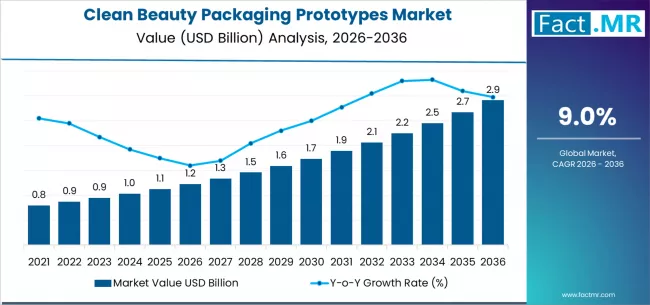
Clean Beauty Packaging Prototypes Market Market Value Analysis

This robust growth is propelled by the convergence of the clean beauty movement's ingredient transparency ethos with urgent consumer and regulatory demands for sustainable packaging solutions. Refillable and reusable concepts lead prototype development with a 34% share, reflecting a strategic pivot from single-use disposal to circular engagement models.

Glass, particularly recycled and lightweight variants, remains the material of choice for 30% of prototypes, prized for its inert quality and premium recyclability. Skincare, as the foundational clean beauty category, drives 38% of end-use demand, where packaging integrity and sustainability directly align with product purity claims.

The market's trajectory is defined by brands racing to innovate beyond mere material substitution, developing holistic systems that encompass refill mechanics, minimalist design for reduced material use, and end-of-life clarity through compostable or mono-material structures. India (10.80% CAGR) and China (10.20% CAGR) are key growth engines, driven by massive consumer bases rapidly adopting clean beauty principles alongside tightening environmental policies, forcing both domestic brands and global players to localize sustainable packaging development.

Metric

Metric Value
Market Value (2026) USD 1.23 Billion
Market Forecast Value (2036) USD 2.91 Billion
Forecast CAGR (2026-2036) 9.0%

Category

Category Segments
Prototype Type Refillable / Reusable Concepts, Minimalist Sustainable Designs, Biodegradable / Compostable Materials, Recycled / PCR Material Prototypes, Others
Material Type Glass (Recycled / Lightweight), Sustainable Plastics (PCR / Bio-based), Metal & Aluminum, Paperboard & Fiber, Others
End-Use Product Skincare Packaging, Makeup / Color Cosmetics, Hair Care Packaging, Fragrance Packaging, Others
Region North America, Latin America, Western Europe, Eastern Europe, East Asia, South Asia & Pacific, MEA

Segmental Analysis

By Prototype Type, Which Concept is Defining Circular Engagement?
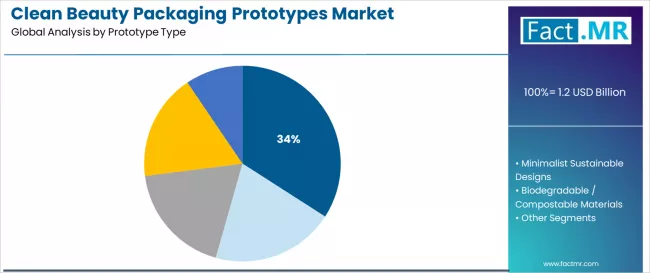
Clean Beauty Packaging Prototypes Market Analysis By Prototype Type

Refillable and reusable concepts hold a leading 34% market share, representing the most direct strategy for waste elimination while fostering ongoing brand loyalty. These prototypes move beyond material innovation to system design, encompassing durable primary containers, convenient refill pouches or cartridges, and streamlined in-store or mail-back logistics. Their dominance underscores a brand commitment to tangible, long-term circularity, addressing the consumer desire to reduce single-use plastic without sacrificing product experience or aesthetic appeal.

By Material Type, Which Offers Purity and Premium Perception?
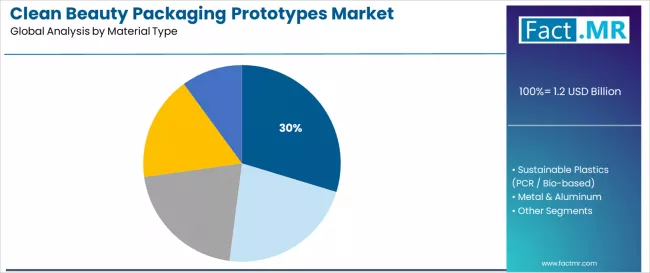
Clean Beauty Packaging Prototypes Market Analysis By Material Type

Glass, especially in recycled and lightweight engineered forms, leads the material segment with a 30% share. Its dominance in clean beauty prototyping is anchored in its inherent qualities: impermeability, which protects sensitive formulations; a premium, inert feel that communicates purity; and a well-established, infinitely recyclable end-of-life pathway. Innovations in lightweighting and strengthening technologies are mitigating its traditional weight and breakage drawbacks, solidifying its role as the benchmark material for skincare serums, oils, and fragrance prototypes.

By End-Use Product, Which Category is the Core Driver?
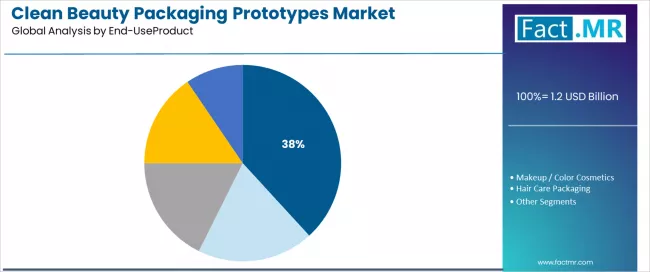
Clean Beauty Packaging Prototypes Market Analysis By End Useproduct

Skincare packaging constitutes the dominant end-use segment, accounting for 38% of prototype development. Skincare is the heart of the clean beauty movement, where efficacy, ingredient integrity, and preservation are paramount. Packaging prototypes for this category must not only be sustainable but also functionally superior-offering precise dispensing, airtight seals, and UV protection. The high-value, frequent-use nature of skincare products justifies investment in advanced sustainable prototypes, making this category the primary testing ground for new packaging technologies and circular business models.

What are the Drivers, Restraints, and Key Trends of the Clean Beauty Packaging Prototypes Market?

The primary market driver is the powerful consumer demand for brands to demonstrate holistic sustainability, with packaging being the most visible and tangible proof point. Stringent extended producer responsibility regulations and pending bans on certain single-use plastics are compelling brands to invest in compliant alternative prototypes. The clean beauty segment's premium positioning allows for the cost absorption associated with developing and testing higher-priced sustainable packaging solutions, accelerating innovation cycles.

A significant market restraint is the high cost and technical complexity of developing, testing, and scaling functional prototypes that meet both aesthetic and performance criteria for luxury products. Supply chain challenges in securing consistent, high-quality streams of post-consumer recycled or bio-based materials can hinder scalability. Furthermore, consumer confusion around proper end-of-life disposal for novel materials like compostable plastics can undermine the environmental benefits and lead to greenwashing accusations if not communicated effectively.

Key trends include the rise of digital product passports and QR codes on prototypes to educate consumers on material composition and recycling instructions. There is strong growth in water-soluble and mono-material plastic prototypes that simplify recycling. Brands are increasingly co-developing proprietary refill ecosystems to create customer lock-in. Additionally, the use of augmented reality in prototyping allows for rapid virtual testing of shelf appeal and consumer interaction before physical samples are produced, reducing development waste.

Analysis of the Clean Beauty Packaging Prototypes Market by Key Countries
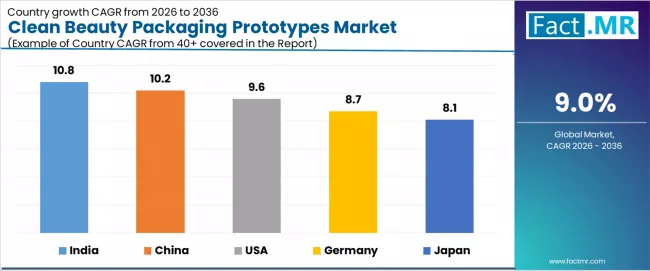
Clean Beauty Packaging Prototypes Market Cagr Analysis By Country

Country CAGR (2026-2036)
India 10.80%
China 10.20%
USA 9.60%
Germany 8.70%
Japan 8.10%

How is India's Burgeoning Clean Beauty Market and Policy Shift Driving Innovation?

India's leading CAGR of 10.80% is fueled by a surge in domestic clean beauty brands and the rapid consumer adoption of sustainability principles, coupled with a strong governmental push against single-use plastics. The market demands cost-effective yet innovative prototypes that leverage local materials, such as molded fiber from agricultural waste, and refill systems suited to high-density urban retail. Price sensitivity necessitates prototypes that deliver sustainability without a prohibitive premium, driving unique, locally-sourced material innovation.

What is the Impact of China's Dual Role as Manufacturing Hub and Consumption Giant?

China's 10.20% growth is driven by its unparalleled packaging manufacturing ecosystem rapidly pivoting to meet global brand demand for sustainable prototypes, while its own massive consumer market increasingly values eco-conscious brands. Chinese packaging engineers are innovating in advanced PCR processing and bio-based plastics to serve both export and domestic needs. The scale and speed of Chinese prototyping capabilities are crucial for global brands seeking to iterate and launch sustainable packaging lines quickly.

Why Does the USA's Brand-Centric Market and Regulatory Landscape Sustain Demand?
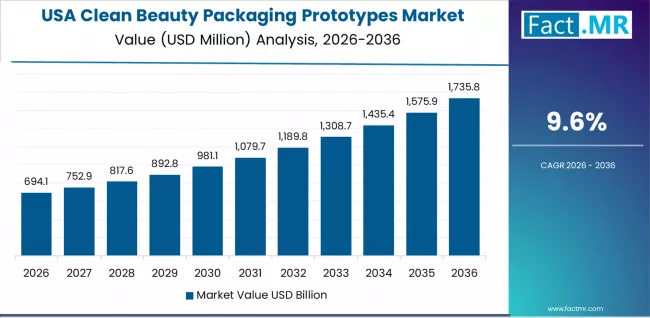
Clean Beauty Packaging Prototypes Market Country Value Analysis

The USA's 9.60% growth is anchored in its concentration of clean beauty brand headquarters and a consumer base highly responsive to sustainability marketing. A patchwork of state-level packaging regulations creates a complex compliance landscape, driving brands to prototype versatile solutions. The market is characterized by demand for high-design, Instagram-worthy prototypes that communicate sustainability instantly on-shelf and online, with a strong focus on refillable systems for direct-to-consumer models.

How is Germany's Engineering Rigor and Green Legislation Shaping Prototyping?

Germany's 8.70% CAGR reflects its strict packaging laws and engineering excellence. German brands and suppliers focus on technically rigorous prototypes with impeccable life-cycle assessment data. The market favors prototypes designed for disassembly and high-value recycling, such as pure aluminum jars or separable multi-material components. Innovation is methodical, with an emphasis on proving long-term durability and true circularity over superficial design trends.

What Role Does Japan's Minimalist Aesthetic and Precision Manufacturing Play?

Japan's 8.10% growth occurs within a market that values minimalist design, supreme functionality, and meticulous waste sorting. Prototypes emphasize precise, reduced material use, elegant refill mechanisms, and clear, instructive disposal graphics. Japanese packaging technologists excel in creating lightweight, strong structures and pioneering new applications for paperboard and biopolymers. The demand is for prototypes that achieve sustainability through extreme efficiency and user-friendly design, aligning with cultural values of respect and resourcefulness.

Competitive Landscape of the Clean Beauty Packaging Prototypes Market
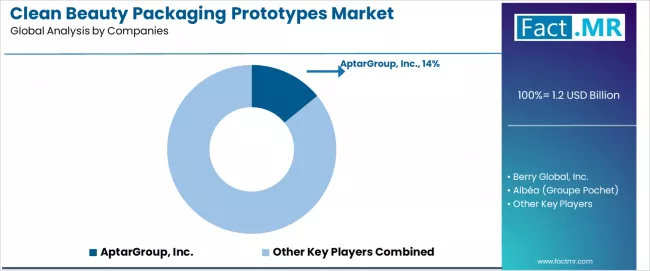
Clean Beauty Packaging Prototypes Market Analysis By Company

The competitive landscape features global packaging conglomerates with dedicated sustainable divisions competing alongside niche design studios specializing in circular innovation. Competition intensifies around proprietary refill technology patents, access to certified advanced recycled material streams, and speed-to-market for bespoke client solutions. Success is increasingly tied to offering end-to-end services-from conceptual design and life-cycle analysis to pilot production and recycling pathway validation-positioning suppliers as strategic sustainability partners rather than mere component manufacturers.

Key Players in the Clean Beauty Packaging Prototypes Market

  • AptarGroup, Inc.
  • Berry Global, Inc.
  • Albéa (Groupe Pochet)
  • HCT Group
  • Silgan Holdings

Scope of Report

Items Values
Quantitative Units USD Billion
Prototype Type Refillable / Reusable Concepts, Minimalist Sustainable Designs, Biodegradable / Compostable Materials, Recycled / PCR Material Prototypes, Others
Material Type Glass (Recycled / Lightweight), Sustainable Plastics (PCR / Bio-based), Metal & Aluminum, Paperboard & Fiber, Others
End-Use Product Skincare Packaging, Makeup / Color Cosmetics, Hair Care Packaging, Fragrance Packaging, Others
Key Countries India, China, USA, Germany, Japan
Key Companies AptarGroup, Inc., Berry Global, Inc., Albéa (Groupe Pochet), HCT Group, Silgan Holdings
Additional Analysis Life-cycle assessment comparisons of different prototype systems; consumer willingness-to-pay for refillable packaging; compatibility testing of bio-based plastics with complex cosmetic formulations; design for disassembly principles in multi-material packs; scalability analysis of novel material supply chains.

Market by Segments

  • Prototype Type :

    • Refillable / Reusable Concepts
    • Minimalist Sustainable Designs
    • Biodegradable / Compostable Materials
    • Recycled / PCR Material Prototypes
    • Others
  • Material Type :

    • Glass (Recycled / Lightweight)
    • Sustainable Plastics (PCR / Bio-based)
    • Metal & Aluminum
    • Paperboard & Fiber
    • Others
  • End-Use Product :

    • Skincare Packaging
    • Makeup / Color Cosmetics
    • Hair Care Packaging
    • Fragrance Packaging
    • Others
  • Region :

    • North America
      • USA
      • Canada
    • Latin America
      • Brazil
      • Mexico
      • Argentina
      • Rest of Latin America
    • Western Europe
      • Germany
      • UK
      • France
      • Spain
      • Italy
      • Netherlands
      • BENELUX
      • Rest of Western Europe
    • Eastern Europe
      • Russia
      • Poland
      • Czech Republic
      • Rest of Eastern Europe
    • East Asia
      • China
      • Japan
      • South Korea
      • Rest of East Asia
    • South Asia & Pacific
      • India
      • ASEAN
      • Australia
      • Rest of South Asia & Pacific
    • MEA
      • Saudi Arabia
      • UAE
      • Turkiye
      • Rest of MEA

References

  • Boz, Z., Korhonen, V., & Koelsch Sand, C. (2023). Consumer considerations for the implementation of sustainable packaging: A review. Journal of Cleaner Production, 252, 119889.
  • Garcia, J. M., & Robertson, M. L. (2024). The future of plastics recycling: Chemical advances and environmental imperatives. Science, 383(6681), 254-259.
  • Herbes, C., Beuthner, C., & Ramme, I. (2023). Consumer attitudes towards biobased packaging: A cross-cultural study. Sustainable Production and Consumption, 35, 181-194.
  • Klein, F., & Emberger-Klein, A. (2024). The clean beauty movement: Drivers, consumer perceptions, and market implications. Journal of Retailing and Consumer Services, 76, 103542.
  • Magnier, L., & Crie, D. (2023). Communicating packaging eco-friendliness: The role of pictorial and verbal claims. International Journal of Research in Marketing, 40(2), 398-416.
  • Molina-Besch, K., & Wikström, F. (2024). The environmental impact of packaging in the cosmetics industry: Opportunities for improvement. Packaging Technology and Science, 37(1), 3-18.
  • Steenis, N. D., & van Herpen, E. (2023). Consumer response to sustainable packaging design: A meta-analysis. Journal of Environmental Psychology, 69, 101411.
  • Svanes, E., & Oestergaard, S. (2024). Sustainable packaging design: A framework for holistic development. Journal of Industrial Ecology, 28(2), 345-360.
  • Williams, H., & Wikström, F. (2023). The influence of packaging attributes on consumer food waste behavior. Waste Management, 145, 44-51.
  • Wyrwa, J., & Barska, A. (2024). Packaging innovations in the sustainable cosmetics market. Sustainability, 16(3), 1296.

Table of Content

  1. Executive Summary
    • Global Market Outlook
    • Demand to side Trends
    • Supply to side Trends
    • Technology Roadmap Analysis
    • Analysis and Recommendations
  2. Market Overview
    • Market Coverage / Taxonomy
    • Market Definition / Scope / Limitations
  3. Market Background
    • Market Dynamics
      • Drivers
      • Restraints
      • Opportunity
      • Trends
    • Scenario Forecast
      • Demand in Optimistic Scenario
      • Demand in Likely Scenario
      • Demand in Conservative Scenario
    • Opportunity Map Analysis
    • Product Life Cycle Analysis
    • Supply Chain Analysis
    • Investment Feasibility Matrix
    • Value Chain Analysis
    • PESTLE and Porter’s Analysis
    • Regulatory Landscape
    • Regional Parent Market Outlook
    • Production and Consumption Statistics
    • Import and Export Statistics
  4. Global Market Analysis 2021 to 2025 and Forecast, 2026 to 2036
    • Historical Market Size Value (USD Million) Analysis, 2021 to 2025
    • Current and Future Market Size Value (USD Million) Projections, 2026 to 2036
      • Y to o to Y Growth Trend Analysis
      • Absolute $ Opportunity Analysis
  5. Global Market Pricing Analysis 2021 to 2025 and Forecast 2026 to 2036
  6. Global Market Analysis 2021 to 2025 and Forecast 2026 to 2036, By Prototype Type
    • Introduction / Key Findings
    • Historical Market Size Value (USD Million) Analysis By Prototype Type, 2021 to 2025
    • Current and Future Market Size Value (USD Million) Analysis and Forecast By Prototype Type, 2026 to 2036
      • Refillable / Reusable Concepts
      • Minimalist Sustainable Designs
      • Biodegradable / Compostable Materials
      • Recycled / PCR Material Prototypes
      • Others
    • Y to o to Y Growth Trend Analysis By Prototype Type, 2021 to 2025
    • Absolute $ Opportunity Analysis By Prototype Type, 2026 to 2036
  7. Global Market Analysis 2021 to 2025 and Forecast 2026 to 2036, By Material Type
    • Introduction / Key Findings
    • Historical Market Size Value (USD Million) Analysis By Material Type, 2021 to 2025
    • Current and Future Market Size Value (USD Million) Analysis and Forecast By Material Type, 2026 to 2036
      • Glass (Recycled / Lightweight)
      • Sustainable Plastics (PCR / Bio‑based)
      • Metal & Aluminum
      • Paperboard & Fiber
      • Others
    • Y to o to Y Growth Trend Analysis By Material Type, 2021 to 2025
    • Absolute $ Opportunity Analysis By Material Type, 2026 to 2036
  8. Global Market Analysis 2021 to 2025 and Forecast 2026 to 2036, By End‑UseProduct
    • Introduction / Key Findings
    • Historical Market Size Value (USD Million) Analysis By End‑UseProduct, 2021 to 2025
    • Current and Future Market Size Value (USD Million) Analysis and Forecast By End‑UseProduct, 2026 to 2036
      • Skincare Packaging
      • Makeup / Color Cosmetics
      • Hair Care Packaging
      • Fragrance Packaging
      • Others
    • Y to o to Y Growth Trend Analysis By End‑UseProduct, 2021 to 2025
    • Absolute $ Opportunity Analysis By End‑UseProduct, 2026 to 2036
  9. Global Market Analysis 2021 to 2025 and Forecast 2026 to 2036, By Region
    • Introduction
    • Historical Market Size Value (USD Million) Analysis By Region, 2021 to 2025
    • Current Market Size Value (USD Million) Analysis and Forecast By Region, 2026 to 2036
      • North America
      • Latin America
      • Western Europe
      • Eastern Europe
      • East Asia
      • South Asia and Pacific
      • Middle East & Africa
    • Market Attractiveness Analysis By Region
  10. North America Market Analysis 2021 to 2025 and Forecast 2026 to 2036, By Country
    • Historical Market Size Value (USD Million) Trend Analysis By Market Taxonomy, 2021 to 2025
    • Market Size Value (USD Million) Forecast By Market Taxonomy, 2026 to 2036
      • By Country
        • USA
        • Canada
        • Mexico
      • By Prototype Type
      • By Material Type
      • By End‑UseProduct
    • Market Attractiveness Analysis
      • By Country
      • By Prototype Type
      • By Material Type
      • By End‑UseProduct
    • Key Takeaways
  11. Latin America Market Analysis 2021 to 2025 and Forecast 2026 to 2036, By Country
    • Historical Market Size Value (USD Million) Trend Analysis By Market Taxonomy, 2021 to 2025
    • Market Size Value (USD Million) Forecast By Market Taxonomy, 2026 to 2036
      • By Country
        • Brazil
        • Chile
        • Rest of Latin America
      • By Prototype Type
      • By Material Type
      • By End‑UseProduct
    • Market Attractiveness Analysis
      • By Country
      • By Prototype Type
      • By Material Type
      • By End‑UseProduct
    • Key Takeaways
  12. Western Europe Market Analysis 2021 to 2025 and Forecast 2026 to 2036, By Country
    • Historical Market Size Value (USD Million) Trend Analysis By Market Taxonomy, 2021 to 2025
    • Market Size Value (USD Million) Forecast By Market Taxonomy, 2026 to 2036
      • By Country
        • Germany
        • UK
        • Italy
        • Spain
        • France
        • Nordic
        • BENELUX
        • Rest of Western Europe
      • By Prototype Type
      • By Material Type
      • By End‑UseProduct
    • Market Attractiveness Analysis
      • By Country
      • By Prototype Type
      • By Material Type
      • By End‑UseProduct
    • Key Takeaways
  13. Eastern Europe Market Analysis 2021 to 2025 and Forecast 2026 to 2036, By Country
    • Historical Market Size Value (USD Million) Trend Analysis By Market Taxonomy, 2021 to 2025
    • Market Size Value (USD Million) Forecast By Market Taxonomy, 2026 to 2036
      • By Country
        • Russia
        • Poland
        • Hungary
        • Balkan & Baltic
        • Rest of Eastern Europe
      • By Prototype Type
      • By Material Type
      • By End‑UseProduct
    • Market Attractiveness Analysis
      • By Country
      • By Prototype Type
      • By Material Type
      • By End‑UseProduct
    • Key Takeaways
  14. East Asia Market Analysis 2021 to 2025 and Forecast 2026 to 2036, By Country
    • Historical Market Size Value (USD Million) Trend Analysis By Market Taxonomy, 2021 to 2025
    • Market Size Value (USD Million) Forecast By Market Taxonomy, 2026 to 2036
      • By Country
        • China
        • Japan
        • South Korea
      • By Prototype Type
      • By Material Type
      • By End‑UseProduct
    • Market Attractiveness Analysis
      • By Country
      • By Prototype Type
      • By Material Type
      • By End‑UseProduct
    • Key Takeaways
  15. South Asia and Pacific Market Analysis 2021 to 2025 and Forecast 2026 to 2036, By Country
    • Historical Market Size Value (USD Million) Trend Analysis By Market Taxonomy, 2021 to 2025
    • Market Size Value (USD Million) Forecast By Market Taxonomy, 2026 to 2036
      • By Country
        • India
        • ASEAN
        • Australia & New Zealand
        • Rest of South Asia and Pacific
      • By Prototype Type
      • By Material Type
      • By End‑UseProduct
    • Market Attractiveness Analysis
      • By Country
      • By Prototype Type
      • By Material Type
      • By End‑UseProduct
    • Key Takeaways
  16. Middle East & Africa Market Analysis 2021 to 2025 and Forecast 2026 to 2036, By Country
    • Historical Market Size Value (USD Million) Trend Analysis By Market Taxonomy, 2021 to 2025
    • Market Size Value (USD Million) Forecast By Market Taxonomy, 2026 to 2036
      • By Country
        • Kingdom of Saudi Arabia
        • Other GCC Countries
        • Turkiye
        • South Africa
        • Other African Union
        • Rest of Middle East & Africa
      • By Prototype Type
      • By Material Type
      • By End‑UseProduct
    • Market Attractiveness Analysis
      • By Country
      • By Prototype Type
      • By Material Type
      • By End‑UseProduct
    • Key Takeaways
  17. Key Countries Market Analysis
    • USA
      • Pricing Analysis
      • Market Share Analysis, 2025
        • By Prototype Type
        • By Material Type
        • By End‑UseProduct
    • Canada
      • Pricing Analysis
      • Market Share Analysis, 2025
        • By Prototype Type
        • By Material Type
        • By End‑UseProduct
    • Mexico
      • Pricing Analysis
      • Market Share Analysis, 2025
        • By Prototype Type
        • By Material Type
        • By End‑UseProduct
    • Brazil
      • Pricing Analysis
      • Market Share Analysis, 2025
        • By Prototype Type
        • By Material Type
        • By End‑UseProduct
    • Chile
      • Pricing Analysis
      • Market Share Analysis, 2025
        • By Prototype Type
        • By Material Type
        • By End‑UseProduct
    • Germany
      • Pricing Analysis
      • Market Share Analysis, 2025
        • By Prototype Type
        • By Material Type
        • By End‑UseProduct
    • UK
      • Pricing Analysis
      • Market Share Analysis, 2025
        • By Prototype Type
        • By Material Type
        • By End‑UseProduct
    • Italy
      • Pricing Analysis
      • Market Share Analysis, 2025
        • By Prototype Type
        • By Material Type
        • By End‑UseProduct
    • Spain
      • Pricing Analysis
      • Market Share Analysis, 2025
        • By Prototype Type
        • By Material Type
        • By End‑UseProduct
    • France
      • Pricing Analysis
      • Market Share Analysis, 2025
        • By Prototype Type
        • By Material Type
        • By End‑UseProduct
    • India
      • Pricing Analysis
      • Market Share Analysis, 2025
        • By Prototype Type
        • By Material Type
        • By End‑UseProduct
    • ASEAN
      • Pricing Analysis
      • Market Share Analysis, 2025
        • By Prototype Type
        • By Material Type
        • By End‑UseProduct
    • Australia & New Zealand
      • Pricing Analysis
      • Market Share Analysis, 2025
        • By Prototype Type
        • By Material Type
        • By End‑UseProduct
    • China
      • Pricing Analysis
      • Market Share Analysis, 2025
        • By Prototype Type
        • By Material Type
        • By End‑UseProduct
    • Japan
      • Pricing Analysis
      • Market Share Analysis, 2025
        • By Prototype Type
        • By Material Type
        • By End‑UseProduct
    • South Korea
      • Pricing Analysis
      • Market Share Analysis, 2025
        • By Prototype Type
        • By Material Type
        • By End‑UseProduct
    • Russia
      • Pricing Analysis
      • Market Share Analysis, 2025
        • By Prototype Type
        • By Material Type
        • By End‑UseProduct
    • Poland
      • Pricing Analysis
      • Market Share Analysis, 2025
        • By Prototype Type
        • By Material Type
        • By End‑UseProduct
    • Hungary
      • Pricing Analysis
      • Market Share Analysis, 2025
        • By Prototype Type
        • By Material Type
        • By End‑UseProduct
    • Kingdom of Saudi Arabia
      • Pricing Analysis
      • Market Share Analysis, 2025
        • By Prototype Type
        • By Material Type
        • By End‑UseProduct
    • Turkiye
      • Pricing Analysis
      • Market Share Analysis, 2025
        • By Prototype Type
        • By Material Type
        • By End‑UseProduct
    • South Africa
      • Pricing Analysis
      • Market Share Analysis, 2025
        • By Prototype Type
        • By Material Type
        • By End‑UseProduct
  18. Market Structure Analysis
    • Competition Dashboard
    • Competition Benchmarking
    • Market Share Analysis of Top Players
      • By Regional
      • By Prototype Type
      • By Material Type
      • By End‑UseProduct
  19. Competition Analysis
    • Competition Deep Dive
      • AptarGroup, Inc.
        • Overview
        • Product Portfolio
        • Profitability by Market Segments (Product/Age /Sales Channel/Region)
        • Sales Footprint
        • Strategy Overview
          • Marketing Strategy
          • Product Strategy
          • Channel Strategy
      • Berry Global, Inc.
      • Albéa (Groupe Pochet)
      • HCT Group
      • Silgan Holdings
      • Others
  20. Assumptions & Acronyms Used
  21. Research Methodology

List Of Table

  • Table 1: Global Market Value (USD Million) Forecast by Region, 2021 to 2036
  • Table 2: Global Market Value (USD Million) Forecast by Prototype Type, 2021 to 2036
  • Table 3: Global Market Value (USD Million) Forecast by Material Type, 2021 to 2036
  • Table 4: Global Market Value (USD Million) Forecast by End‑UseProduct, 2021 to 2036
  • Table 5: North America Market Value (USD Million) Forecast by Country, 2021 to 2036
  • Table 6: North America Market Value (USD Million) Forecast by Prototype Type, 2021 to 2036
  • Table 7: North America Market Value (USD Million) Forecast by Material Type, 2021 to 2036
  • Table 8: North America Market Value (USD Million) Forecast by End‑UseProduct, 2021 to 2036
  • Table 9: Latin America Market Value (USD Million) Forecast by Country, 2021 to 2036
  • Table 10: Latin America Market Value (USD Million) Forecast by Prototype Type, 2021 to 2036
  • Table 11: Latin America Market Value (USD Million) Forecast by Material Type, 2021 to 2036
  • Table 12: Latin America Market Value (USD Million) Forecast by End‑UseProduct, 2021 to 2036
  • Table 13: Western Europe Market Value (USD Million) Forecast by Country, 2021 to 2036
  • Table 14: Western Europe Market Value (USD Million) Forecast by Prototype Type, 2021 to 2036
  • Table 15: Western Europe Market Value (USD Million) Forecast by Material Type, 2021 to 2036
  • Table 16: Western Europe Market Value (USD Million) Forecast by End‑UseProduct, 2021 to 2036
  • Table 17: Eastern Europe Market Value (USD Million) Forecast by Country, 2021 to 2036
  • Table 18: Eastern Europe Market Value (USD Million) Forecast by Prototype Type, 2021 to 2036
  • Table 19: Eastern Europe Market Value (USD Million) Forecast by Material Type, 2021 to 2036
  • Table 20: Eastern Europe Market Value (USD Million) Forecast by End‑UseProduct, 2021 to 2036
  • Table 21: East Asia Market Value (USD Million) Forecast by Country, 2021 to 2036
  • Table 22: East Asia Market Value (USD Million) Forecast by Prototype Type, 2021 to 2036
  • Table 23: East Asia Market Value (USD Million) Forecast by Material Type, 2021 to 2036
  • Table 24: East Asia Market Value (USD Million) Forecast by End‑UseProduct, 2021 to 2036
  • Table 25: South Asia and Pacific Market Value (USD Million) Forecast by Country, 2021 to 2036
  • Table 26: South Asia and Pacific Market Value (USD Million) Forecast by Prototype Type, 2021 to 2036
  • Table 27: South Asia and Pacific Market Value (USD Million) Forecast by Material Type, 2021 to 2036
  • Table 28: South Asia and Pacific Market Value (USD Million) Forecast by End‑UseProduct, 2021 to 2036
  • Table 29: Middle East & Africa Market Value (USD Million) Forecast by Country, 2021 to 2036
  • Table 30: Middle East & Africa Market Value (USD Million) Forecast by Prototype Type, 2021 to 2036
  • Table 31: Middle East & Africa Market Value (USD Million) Forecast by Material Type, 2021 to 2036
  • Table 32: Middle East & Africa Market Value (USD Million) Forecast by End‑UseProduct, 2021 to 2036

List Of Figures

  • Figure 1: Global Market Pricing Analysis
  • Figure 2: Global Market Value (USD Million) Forecast 2021 to 2036
  • Figure 3: Global Market Value Share and BPS Analysis by Prototype Type, 2026 and 2036
  • Figure 4: Global Market Y to o to Y Growth Comparison by Prototype Type, 2026 to 2036
  • Figure 5: Global Market Attractiveness Analysis by Prototype Type
  • Figure 6: Global Market Value Share and BPS Analysis by Material Type, 2026 and 2036
  • Figure 7: Global Market Y to o to Y Growth Comparison by Material Type, 2026 to 2036
  • Figure 8: Global Market Attractiveness Analysis by Material Type
  • Figure 9: Global Market Value Share and BPS Analysis by End‑UseProduct, 2026 and 2036
  • Figure 10: Global Market Y to o to Y Growth Comparison by End‑UseProduct, 2026 to 2036
  • Figure 11: Global Market Attractiveness Analysis by End‑UseProduct
  • Figure 12: Global Market Value (USD Million) Share and BPS Analysis by Region, 2026 and 2036
  • Figure 13: Global Market Y to o to Y Growth Comparison by Region, 2026 to 2036
  • Figure 14: Global Market Attractiveness Analysis by Region
  • Figure 15: North America Market Incremental Dollar Opportunity, 2026 to 2036
  • Figure 16: Latin America Market Incremental Dollar Opportunity, 2026 to 2036
  • Figure 17: Western Europe Market Incremental Dollar Opportunity, 2026 to 2036
  • Figure 18: Eastern Europe Market Incremental Dollar Opportunity, 2026 to 2036
  • Figure 19: East Asia Market Incremental Dollar Opportunity, 2026 to 2036
  • Figure 20: South Asia and Pacific Market Incremental Dollar Opportunity, 2026 to 2036
  • Figure 21: Middle East & Africa Market Incremental Dollar Opportunity, 2026 to 2036
  • Figure 22: North America Market Value Share and BPS Analysis by Country, 2026 and 2036
  • Figure 23: North America Market Value Share and BPS Analysis by Prototype Type, 2026 and 2036
  • Figure 24: North America Market Y to o to Y Growth Comparison by Prototype Type, 2026 to 2036
  • Figure 25: North America Market Attractiveness Analysis by Prototype Type
  • Figure 26: North America Market Value Share and BPS Analysis by Material Type, 2026 and 2036
  • Figure 27: North America Market Y to o to Y Growth Comparison by Material Type, 2026 to 2036
  • Figure 28: North America Market Attractiveness Analysis by Material Type
  • Figure 29: North America Market Value Share and BPS Analysis by End‑UseProduct, 2026 and 2036
  • Figure 30: North America Market Y to o to Y Growth Comparison by End‑UseProduct, 2026 to 2036
  • Figure 31: North America Market Attractiveness Analysis by End‑UseProduct
  • Figure 32: Latin America Market Value Share and BPS Analysis by Country, 2026 and 2036
  • Figure 33: Latin America Market Value Share and BPS Analysis by Prototype Type, 2026 and 2036
  • Figure 34: Latin America Market Y to o to Y Growth Comparison by Prototype Type, 2026 to 2036
  • Figure 35: Latin America Market Attractiveness Analysis by Prototype Type
  • Figure 36: Latin America Market Value Share and BPS Analysis by Material Type, 2026 and 2036
  • Figure 37: Latin America Market Y to o to Y Growth Comparison by Material Type, 2026 to 2036
  • Figure 38: Latin America Market Attractiveness Analysis by Material Type
  • Figure 39: Latin America Market Value Share and BPS Analysis by End‑UseProduct, 2026 and 2036
  • Figure 40: Latin America Market Y to o to Y Growth Comparison by End‑UseProduct, 2026 to 2036
  • Figure 41: Latin America Market Attractiveness Analysis by End‑UseProduct
  • Figure 42: Western Europe Market Value Share and BPS Analysis by Country, 2026 and 2036
  • Figure 43: Western Europe Market Value Share and BPS Analysis by Prototype Type, 2026 and 2036
  • Figure 44: Western Europe Market Y to o to Y Growth Comparison by Prototype Type, 2026 to 2036
  • Figure 45: Western Europe Market Attractiveness Analysis by Prototype Type
  • Figure 46: Western Europe Market Value Share and BPS Analysis by Material Type, 2026 and 2036
  • Figure 47: Western Europe Market Y to o to Y Growth Comparison by Material Type, 2026 to 2036
  • Figure 48: Western Europe Market Attractiveness Analysis by Material Type
  • Figure 49: Western Europe Market Value Share and BPS Analysis by End‑UseProduct, 2026 and 2036
  • Figure 50: Western Europe Market Y to o to Y Growth Comparison by End‑UseProduct, 2026 to 2036
  • Figure 51: Western Europe Market Attractiveness Analysis by End‑UseProduct
  • Figure 52: Eastern Europe Market Value Share and BPS Analysis by Country, 2026 and 2036
  • Figure 53: Eastern Europe Market Value Share and BPS Analysis by Prototype Type, 2026 and 2036
  • Figure 54: Eastern Europe Market Y to o to Y Growth Comparison by Prototype Type, 2026 to 2036
  • Figure 55: Eastern Europe Market Attractiveness Analysis by Prototype Type
  • Figure 56: Eastern Europe Market Value Share and BPS Analysis by Material Type, 2026 and 2036
  • Figure 57: Eastern Europe Market Y to o to Y Growth Comparison by Material Type, 2026 to 2036
  • Figure 58: Eastern Europe Market Attractiveness Analysis by Material Type
  • Figure 59: Eastern Europe Market Value Share and BPS Analysis by End‑UseProduct, 2026 and 2036
  • Figure 60: Eastern Europe Market Y to o to Y Growth Comparison by End‑UseProduct, 2026 to 2036
  • Figure 61: Eastern Europe Market Attractiveness Analysis by End‑UseProduct
  • Figure 62: East Asia Market Value Share and BPS Analysis by Country, 2026 and 2036
  • Figure 63: East Asia Market Value Share and BPS Analysis by Prototype Type, 2026 and 2036
  • Figure 64: East Asia Market Y to o to Y Growth Comparison by Prototype Type, 2026 to 2036
  • Figure 65: East Asia Market Attractiveness Analysis by Prototype Type
  • Figure 66: East Asia Market Value Share and BPS Analysis by Material Type, 2026 and 2036
  • Figure 67: East Asia Market Y to o to Y Growth Comparison by Material Type, 2026 to 2036
  • Figure 68: East Asia Market Attractiveness Analysis by Material Type
  • Figure 69: East Asia Market Value Share and BPS Analysis by End‑UseProduct, 2026 and 2036
  • Figure 70: East Asia Market Y to o to Y Growth Comparison by End‑UseProduct, 2026 to 2036
  • Figure 71: East Asia Market Attractiveness Analysis by End‑UseProduct
  • Figure 72: South Asia and Pacific Market Value Share and BPS Analysis by Country, 2026 and 2036
  • Figure 73: South Asia and Pacific Market Value Share and BPS Analysis by Prototype Type, 2026 and 2036
  • Figure 74: South Asia and Pacific Market Y to o to Y Growth Comparison by Prototype Type, 2026 to 2036
  • Figure 75: South Asia and Pacific Market Attractiveness Analysis by Prototype Type
  • Figure 76: South Asia and Pacific Market Value Share and BPS Analysis by Material Type, 2026 and 2036
  • Figure 77: South Asia and Pacific Market Y to o to Y Growth Comparison by Material Type, 2026 to 2036
  • Figure 78: South Asia and Pacific Market Attractiveness Analysis by Material Type
  • Figure 79: South Asia and Pacific Market Value Share and BPS Analysis by End‑UseProduct, 2026 and 2036
  • Figure 80: South Asia and Pacific Market Y to o to Y Growth Comparison by End‑UseProduct, 2026 to 2036
  • Figure 81: South Asia and Pacific Market Attractiveness Analysis by End‑UseProduct
  • Figure 82: Middle East & Africa Market Value Share and BPS Analysis by Country, 2026 and 2036
  • Figure 83: Middle East & Africa Market Value Share and BPS Analysis by Prototype Type, 2026 and 2036
  • Figure 84: Middle East & Africa Market Y to o to Y Growth Comparison by Prototype Type, 2026 to 2036
  • Figure 85: Middle East & Africa Market Attractiveness Analysis by Prototype Type
  • Figure 86: Middle East & Africa Market Value Share and BPS Analysis by Material Type, 2026 and 2036
  • Figure 87: Middle East & Africa Market Y to o to Y Growth Comparison by Material Type, 2026 to 2036
  • Figure 88: Middle East & Africa Market Attractiveness Analysis by Material Type
  • Figure 89: Middle East & Africa Market Value Share and BPS Analysis by End‑UseProduct, 2026 and 2036
  • Figure 90: Middle East & Africa Market Y to o to Y Growth Comparison by End‑UseProduct, 2026 to 2036
  • Figure 91: Middle East & Africa Market Attractiveness Analysis by End‑UseProduct
  • Figure 92: Global Market - Tier Structure Analysis
  • Figure 93: Global Market - Company Share Analysis

- FAQs -

How big is the clean beauty packaging prototypes market in 2026?

The global clean beauty packaging prototypes market is estimated to be valued at USD 1.2 billion in 2026.

What will be the size of clean beauty packaging prototypes market in 2036?

The market size for the clean beauty packaging prototypes market is projected to reach USD 2.9 billion by 2036.

How much will be the clean beauty packaging prototypes market growth between 2026 and 2036?

The clean beauty packaging prototypes market is expected to grow at a 9.0% CAGR between 2026 and 2036.

What are the key product types in the clean beauty packaging prototypes market?

The key product types in clean beauty packaging prototypes market are refillable / reusable concepts, minimalist sustainable designs, biodegradable / compostable materials, recycled / pcr material prototypes and others.

Which material type segment to contribute significant share in the clean beauty packaging prototypes market in 2026?

In terms of material type, glass (recycled / lightweight) segment to command 29.7% share in the clean beauty packaging prototypes market in 2026.

Clean Beauty Packaging Prototypes Market