Composite Airframe Specialty Fasteners Market (2026 - 2036)

Composite Airframe Specialty Fasteners Market is segmented by Fastener Design (Hi-Lok / Hi-Lite Pins, Titanium/Corrosion-Isolating Bolts, Bonded Inserts & Bushings, and Other), Application (Composite Fuselage, Wings & Control Surfaces, Empennage, and Other), Aircraft Type (Commercial, Defense, Business Jets, Rotary Wing), Sales Channel (OEM/Tier Direct, Distributors, MRO, and Other), and Region. Forecast for 2026 to 2036.

Core Findings

    Composite Airframe Specialty Fasteners Market Forecast 2026 to 2036

    In 2025, the composite airframe specialty fasteners market was valued at USD 390 million. Based on Future Market Insights' analysis, demand for composite airframe specialty fasteners is estimated to grow to USD 410 million in 2026 and USD 714 million by 2036. FMI projects a CAGR of 5.7% during the forecast period.

    The absolute dollar growth from 2026 to 2036 is USD 304 million. This growth is driven by the increasing adoption of lightweight, high-performance fasteners in aerospace applications, particularly for composite airframes in both commercial and military aircraft. However, the market faces challenges related to raw material costs and the need for highly specialized manufacturing processes.

    India leads with a CAGR of 7.8%, supported by increasing aerospace manufacturing and growing demand for lightweight materials. China follows with a 7.2% CAGR, driven by its expanding aerospace sector and the push for advanced composites in aircraft production. South Korea grows at 5.0%, benefiting from strong aerospace industry investments. The USA shows growth at 4.9%, fueled by the demand for advanced fasteners in both commercial and defense sectors. France and Germany grow at 4.6% and 4.3%, respectively, supported by the continued growth of aerospace manufacturing in Europe. The UK grows at 4.2%, while Japan shows the slowest growth at 3.6%, due to a mature aerospace market with slower adoption of new materials.
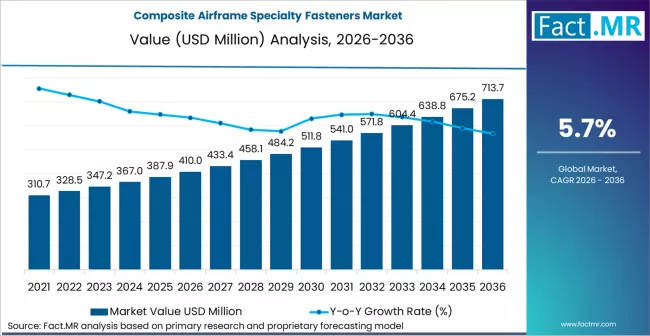
    Composite Airframe Specialty Fasteners Market Market Value Analysis

    Composite Airframe Specialty Fasteners Market Definition

    The composite airframe specialty fasteners market refers to the production and sale of fasteners engineered specifically for joining composite materials in aircraft structures. These fasteners include inserts, pins, bolts, and threaded systems designed to accommodate the unique properties of composites such as low density, anisotropy, and sensitivity to bearing damage. Their primary function is to secure load‑bearing joints while minimizing delamination, stress concentrations, and weight penalties. Key end uses include commercial aircraft, business jets, military platforms, and aerospace maintenance, repair, and overhaul (MRO) services where composite skins, frames, and structural components are prevalent.

    Market Inclusions

    This report covers global and regional market sizes for composite airframe specialty fasteners with a defined forecast period. It includes segment breakdowns by product type (composite‑specific bolts, blind inserts, countersunk systems), material (titanium, aluminum alloys, corrosion‑resistant steels), and aerospace application (fuselage, wings, empennage, interiors). End users such as OEMs and MRO providers are analyzed. Pricing trends, raw material supply dynamics, and trade flow data are also included to show overall market behavior.

    Market Exclusions

    The scope excludes general airframe fasteners not designed for composite interfaces, such as standard rivets and conventional aerospace bolts used in metal‑to‑metal joints. Finished aircraft, complete assemblies, and unrelated hardware such as electrical connectors, fluid fittings, or hydraulic components are not covered. Fasteners intended solely for non‑aerospace industries are omitted to focus strictly on specialty composite joining solutions.

    Research Methodology

    • Primary Research: Interviews were conducted with aerospace engineers, fastener suppliers, OEM procurement specialists, and MRO professionals.
    • Desk Research: Data was sourced from industry reports, aerospace manufacturing publications, and trade statistics.
    • Market‑Sizing and Forecasting: A hybrid model was used, combining top‑down aerospace material demand estimates with bottom‑up shipment and revenue data.
    • Data Validation and Update Cycle: Findings were validated through expert review and aligned with recent production and trade figures, with periodic updates.

    Composite Airframe Specialty Fasteners Market Summary

    • Composite Airframe Specialty Fasteners Market Definition
      • The composite airframe specialty fasteners market encompasses fasteners designed specifically for use with composite materials in aircraft structures. These fasteners, including Hi-Lok/Hi-Lite pins, titanium/corrosion-isolating bolts, and bonded inserts & bushings, are engineered to handle the unique challenges posed by composites such as low density, anisotropy, and sensitivity to bearing damage. Their primary role is to ensure structural integrity while reducing weight, preventing delamination, and minimizing stress concentrations in airframe applications such as fuselage, wings, and control surfaces. These fasteners are critical for aircraft construction, offering high-performance, durable, and lightweight solutions to secure composite airframes and other components in commercial, defense, and business aircraft.
    • Demand Drivers in the Market
      • Increasing Use of Composite Materials: The aerospace industry’s shift toward using composite materials for their lightweight and fuel-efficient properties is driving the demand for specialized fasteners tailored to composite airframes.
      • Aerospace Production Growth: With the continued growth in both commercial and military aircraft production, the need for advanced fastening solutions that can secure composite airframes is also increasing.
      • Regulatory and Safety Standards: The aviation industry's strict safety standards for structural integrity and material performance require the use of fasteners that can withstand the demanding conditions of composite airframe applications.
      • Fuel Efficiency and Weight Reduction Focus: Composites are integral to meeting fuel efficiency targets in aircraft, and the fasteners used must support these materials while ensuring safety, durability, and minimal weight.
    • Key Segments Analyzed in the FMI Report
      • Fastener Design: Hi-Lok/Hi-Lite pins are expected to dominate the market by 2026 due to their ability to offer strong, reliable, and secure connections in composite airframe applications.
      • Material: Titanium and corrosion-resistant alloys are projected to be the leading materials due to their strength, durability, and resistance to fatigue and environmental degradation.
      • Aircraft Type: Commercial aircraft are expected to capture the largest market share, driven by the increasing demand for lightweight, high-performance fasteners in the production of commercial aircraft.
      • Sales Channel: OEM/Tier direct sales are expected to account for the largest market share, driven by the integration of composite airframe specialty fasteners into the original manufacturing process of aircraft.
    • Analyst Opinion at FMI
      • Fact MR analysts predict that "The composite airframe specialty fasteners market will experience significant growth, driven by the ongoing trend towards composite materials in aircraft manufacturing, alongside growing demand for lightweight, high-performance fasteners that enhance fuel efficiency and meet rigorous aerospace standards."
    • Strategic Implications/Executive Takeaways
      • Focus on Composite-Specific Fastening Solutions: Manufacturers should prioritize developing fasteners that specifically address the challenges of composite airframes, focusing on minimizing weight, improving durability, and ensuring long-term performance.
      • Leverage Growth in Emerging Markets: India and China, with their rapidly expanding aerospace industries, present substantial growth opportunities for composite airframe specialty fasteners.
      • Enhance MRO Capabilities: The expanding demand for maintenance, repair, and overhaul (MRO) services presents an opportunity to grow the supply of fasteners for retrofitting and servicing aircraft with composite airframes.
    • Methodology
      • Primary Research: Interviews with aerospace engineers, fastener suppliers, OEM procurement specialists, and MRO professionals provided in-depth insights into the demand drivers and technological innovations shaping the market.
      • Desk Research: Data from industry reports, aerospace publications, and trade statistics were leveraged to supplement findings from primary research.
      • Market Sizing and Forecasting: A hybrid model combining top-down and bottom-up approaches was employed to estimate market size and forecast future growth, validated through expert reviews and recent production data.

    Segmental Analysis

    Composite Airframe Specialty Fasteners Market Analysis by Aircraft Type
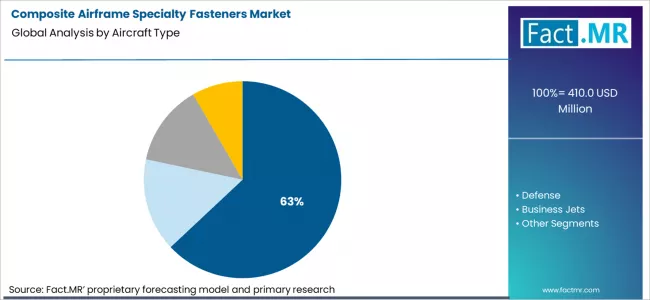
    Composite Airframe Specialty Fasteners Market Analysis By Aircraft Type

    • Market Overview: Commercial aircraft are expected to capture 63% of the composite airframe specialty fasteners market by 2026. As the commercial aviation sector continues to expand, the demand for lightweight, durable, and corrosion-resistant fasteners for composite airframes is rising. These fasteners are crucial for maintaining the structural integrity of aircraft, especially as manufacturers increasingly use composite materials for airframe construction.
    • Demand Drivers:
      • Lightweight and Performance Requirements: Composite materials offer significant weight reduction advantages, which is essential for fuel efficiency in commercial aircraft. Composite airframe specialty fasteners are specifically designed to support these materials, ensuring strong and durable joints without adding weight.
      • Increased Use of Composites in Aircraft Manufacturing: The aviation industry is increasingly adopting composite materials in the construction of aircraft to reduce weight and improve fuel efficiency. This shift drives the demand for specialized fasteners that can effectively secure composite materials in the airframe.
      • Regulatory and Safety Standards: Given the rigorous safety standards in commercial aviation, specialty fasteners that ensure the structural integrity and reliability of composite airframes are in high demand, contributing to the growth of the market.

    Composite Airframe Specialty Fasteners Market Analysis by Sales Channel
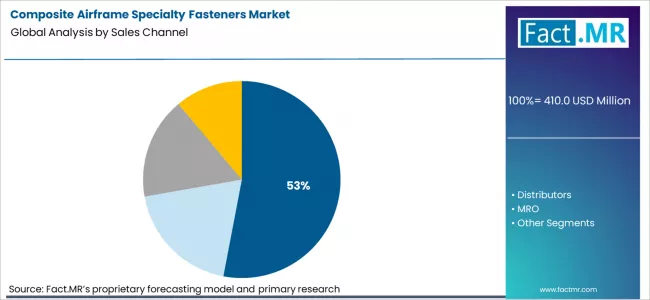
    Composite Airframe Specialty Fasteners Market Analysis By Sales Channel

    • Market Overview: OEM/Tier direct sales are projected to hold 53% of the market share by 2026. OEMs (Original Equipment Manufacturers) and Tier-1 suppliers are the primary customers for composite airframe specialty fasteners, as these fasteners are integral to the assembly of new aircraft. These direct channels ensure that manufacturers receive fasteners that meet the required specifications for quality and performance in composite applications.
    • Demand Drivers:
      • Integration in Aircraft Production: OEM/Tier direct channels play a vital role in ensuring that fasteners used in the initial production of aircraft meet the required specifications for safety, performance, and material compatibility, especially for composite airframes.
      • Customization and Quality Control: Direct sales from OEMs and Tier-1 suppliers offer customization to meet specific design and material requirements for each aircraft, ensuring high-quality fasteners that are specifically designed for composite materials.
      • Increased Production of New Aircraft: As the commercial aviation sector grows and the production of new aircraft increases, the demand for composite airframe specialty fasteners through OEM/Tier direct channels also rises. These fasteners are essential in ensuring the durability and safety of composite airframes.

    Composite Airframe Specialty Fasteners Market Drivers, Restraints, and Opportunities

    FMR analysts observe that the composite airframe specialty fasteners market is a growth‑transition segment shaped by the increasing use of composite materials in commercial and defense aircraft. Historically, metallic airframes dominated, using conventional fasteners; as manufacturers shifted toward carbon fiber and other composites to reduce weight and improve fuel efficiency, legacy fastener systems proved inadequate, creating structural demand for specialty fasteners designed for composite layups. The 2026 valuation reflects this shift, where adoption tracks with growing composite content in airframes and tightening OEM and certification requirements tied to fatigue, moisture ingress, and galvanic corrosion.

    While demand for traditional fasteners persists in metal structures, fasteners engineered for composite assemblies, including titanium inserts, bonded fastener systems, and non‑galvanic solutions, are gaining share. These engineered products carry higher per‑unit costs, contributing to net market value growth even as unit volumes scale with aircraft build and retrofit rates. The market exists at its current size because composite adoption is now mainstream in modern aircraft programs, and specialty fasteners are essential to meet structural integrity and longevity requirements.

    • Composite Integration Demand: As composite materials replace metal in airframes, specialty fasteners that manage differential stiffness and minimize delamination replace standard hardware in critical joints.
    • Certification & Material Standards: Aviation regulators such as FAA and EASA require fasteners that meet defined fatigue, environmental, and composite‑specific criteria, raising specification levels.
    • Regional Aerospace Programs: In North America and Europe, high composite usage in commercial and defense platforms drives stronger adoption of specialty fasteners compared with regions with smaller composite airframe programs.

    Regional Analysis

    The market analysis covers key global regions, including South Asia and Pacific, East Asia, North America, Western Europe, and Germany. It is segmented geographically, with specific market dynamics for each region. The full report provides a detailed market attractiveness analysis.
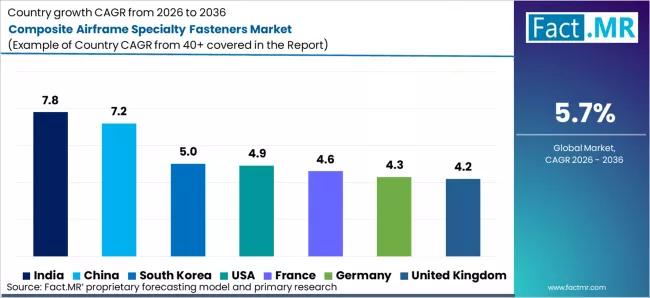
    Composite Airframe Specialty Fasteners Market Cagr Analysis By Country

    Country CAGR (2026-2036)
    India 7.8%
    China 7.2%
    South Korea 5.0%
    USA 4.9%
    France 4.6%
    Germany 4.3%
    United Kingdom 4.2%
    Japan 3.6%

    Source: Fact MR (FMR) analysis, based on proprietary forecasting model and primary research.

    South Asia and Pacific:

    South Asia and Pacific are "emerging markets" for composite airframe specialty fasteners, with increasing demand driven by the expanding aerospace sectors in India and China.

    • India: Demand for composite airframe specialty fasteners in India is projected to rise at 7.8% CAGR through 2036. India’s growing aerospace industry, combined with an increasing demand for advanced materials in aircraft manufacturing, continues to drive market growth.
    • China: Demand for composite airframe specialty fasteners in China is projected to rise at 7.2% CAGR through 2036. China’s aerospace sector expansion and focus on lightweight, durable fasteners contribute to steady growth in demand.

    East Asia:

    East Asia, particularly South Korea and Japan, is a "key region" for composite airframe specialty fasteners, where increasing demand for advanced materials in aircraft manufacturing is growing rapidly.

    • South Korea: Demand for composite airframe specialty fasteners in South Korea is projected to rise at 5.0% CAGR through 2036. South Korea’s aerospace manufacturing industry and growing demand for composite materials continue to drive the market.
    • Japan: Demand for composite airframe specialty fasteners in Japan is projected to rise at 3.6% CAGR through 2036. Japan’s aerospace industry, with its focus on advanced, lightweight materials, continues to support the steady demand for these specialty fasteners.

    North America:

    North America, particularly the USA, remains a strong market for composite airframe specialty fasteners, driven by the demand for high-performance materials in commercial and military aircraft production.

    • USA: Demand for composite airframe specialty fasteners in the U.S. is projected to rise at 4.9% CAGR through 2036. The USA’s aerospace sector, combined with growing demand for composite materials in airframe manufacturing, continues to support strong market growth.

    Western Europe:

    In Western Europe, countries like France, Germany, and the UK continue to drive the demand for composite airframe specialty fasteners, supported by robust aerospace industries and stringent industry standards.

    • France: Demand for composite airframe specialty fasteners in France is projected to rise at 4.6% CAGR through 2036. France’s aerospace sector and the growing demand for durable, lightweight materials in aircraft manufacturing continue to drive steady growth.
    • Germany: Demand for composite airframe specialty fasteners in Germany is projected to rise at 4.3% CAGR through 2036. Germany’s strong aerospace industry and focus on advanced materials continue to support the demand for specialty fasteners.
    • United Kingdom: Demand for composite airframe specialty fasteners in the UK is projected to rise at 4.2% CAGR through 2036. The UK’s aerospace industry, combined with demand for innovative and durable materials, continues to contribute to market growth.

    Fact MR's analysis of the Composite Airframe Specialty Fasteners Market in South Asia and Pacific, East Asia, North America, Western Europe, and Germany consists of country-wise assessments that include India, China, South Korea, the USA, France, Germany, the United Kingdom, and Japan. Readers can find detailed trends, regulatory updates, and company-specific investments shaping the market’s growth in these countries.

    How Are Key Players Competing in the Composite Airframe Specialty Fasteners Market?
    Composite Airframe Specialty Fasteners Market Analysis By Company

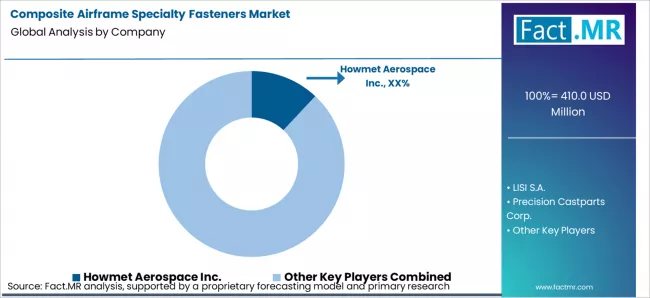
    The composite airframe specialty fasteners market is characterized by competition centered on providing lightweight, durable, and high-performance fastening solutions for composite materials in aerospace applications. Howmet Aerospace Inc. and LISI S.A. lead with advanced, high-strength fasteners specifically designed for the unique demands of composite airframes. Precision Castparts Corp. and Stanley Black & Decker, Inc. focus on producing corrosion-resistant fasteners with superior structural integrity, ensuring performance under harsh aerospace conditions. Wilhelm Böllhoff GmbH & Co. KG and TriMas Corporation offer fasteners engineered to reduce weight while maintaining high load-bearing capacity, catering to the rising demand for composite materials. Monogram Aerospace Fasteners, Inc. and National Aerospace Fasteners Corporation focus on creating innovative fastening systems that reduce assembly times and improve operational efficiency. TFI Aerospace Ltd. strengthens its competitive position by developing fasteners optimized for composite materials in airframe construction, providing solutions that meet the aerospace industry’s exacting standards.

    Recent Industry Developments

    • FAA (Federal Aviation Administration) | Final Rule AD 2025-23-09 | January 2026 The FAA issued a final airworthiness directive (effective January 13, 2026) mandating new high-frequency eddy current (HFEC) inspections around the door stop fitting nuts on Airbus A318/A319/A320/A321 series aircraft to address fatigue cracking in critical fuselage joints.
    • EASA (European Union Aviation Safety Agency) | Standard Practices for DECOMATIC Fasteners | February 2026 EASA updated safety specifications (AD 2025-0228R1) for specialized DECOMATIC titanium bolts used in Dassault Falcon aircraft, establishing 2026 installation and replacement protocols to ensure structural integrity in hybrid metallic-composite assemblies.
    • NASA (National Aeronautics and Space Administration) | SBIR 2025-I Solicitation | May 2025 NASA awarded Phase I research funding to develop machine learning-driven tools that bridge the gap between composite material selection and vehicle-level fastener design, specifically targeting high-fidelity structural validation for extreme environment propulsion systems.

    Key Players of the Composite Airframe Specialty Fasteners Market

    • Howmet Aerospace Inc.
    • LISI S.A.
    • Precision Castparts Corp.
    • Stanley Black & Decker, Inc.
    • Wilhelm Böllhoff GmbH & Co. KG
    • TriMas Corporation
    • Monogram Aerospace Fasteners, Inc.
    • National Aerospace Fasteners Corporation
    • TFI Aerospace Ltd.

    Report Scope

    Metric Value
    Quantitative Units USD 410 million (2026) to USD 714 million (2036), at a CAGR of 5.7%
    Market Definition The composite airframe specialty fasteners market includes fasteners used in composite airframe applications such as fuselage, wings, and control surfaces, designed for lightweight and durable performance in aerospace.
    By Fastener Design Hi-Lok / Hi-Lite Pins, Titanium/Corrosion-Isolating Bolts, Bonded Inserts & Bushings, Other
    By Application Composite Fuselage, Wings & Control Surfaces, Empennage, Other
    By Aircraft Type Commercial, Defense, Business Jets, Rotary Wing
    By Sales Channel OEM/Tier Direct, Distributors, MRO, Other
    Regions Covered North America, Latin America, Europe, East Asia, South Asia, Oceania, Middle East and Africa
    Countries Covered United States, Canada, Mexico, Brazil, Argentina, Germany, France, United Kingdom, Italy, Spain, China, India, Japan, South Korea, Indonesia, Australia, and 40+ countries
    Key Companies Profiled Howmet Aerospace Inc., LISI S.A., Precision Castparts Corp., Stanley Black & Decker, Inc., Wilhelm Böllhoff GmbH & Co. KG, TriMas Corporation, Monogram Aerospace Fasteners, Inc., National Aerospace Fasteners Corporation, TFI Aerospace Ltd.
    Forecast Period 2026 to 2036
    Approach Hybrid top-down and bottom-up market modeling validated through primary interviews with manufacturers and supported by trade data benchmarking and market research.

    Composite Airframe Specialty Fasteners Market Key Segments

    • By Fastener Design :

      • Hi-Lok / Hi-Lite Pins
      • Titanium/Corrosion-Isolating Bolts
      • Bonded Inserts & Bushings
      • Other
    • By Application :

      • Composite Fuselage
      • Wings & Control Surfaces
      • Empennage
      • Other
    • By Aircraft Type :

      • Commercial
      • Defense
      • Business Jets
      • Rotary Wing
    • By Sales Channel :

      • OEM/Tier Direct
      • Distributors
      • MRO
      • Other
    • Region :

      • North America
        • USA
        • Canada
        • Mexico
      • Europe
        • Germany
        • UK
        • France
        • Italy
        • Spain
        • Nordic Countries
        • BENELUX
        • Rest of Europe
      • Asia Pacific
        • China
        • Japan
        • South Korea
        • India
        • Australia
        • Rest of Asia Pacific
      • Latin America
        • Brazil
        • Argentina
        • Rest of Latin America
      • Middle East and Africa
        • Kingdom of Saudi Arabia
        • United Arab Emirates
        • South Africa
        • Rest of Middle East and Africa
      • Other Regions
        • Oceania
        • Central Asia
        • Other Markets

    Bibliographies

    • Federal Aviation Administration. (2026, January). Airworthiness directive 2025-23-09: Airbus SAS Model A318, A319, A320, and A321 series airplanes. U.S. Department of Transportation.
    • European Union Aviation Safety Agency. (2026, February 6). Airworthiness directive 2025-0228R1: Standard practices and structures-DECOMATIC titanium bolts replacement. European Union Aviation Safety Agency.
    • National Aeronautics and Space Administration. (2025, May). NASA SBIR/STTR Phase I selections and abstracts, 2025 solicitation. National Aeronautics and Space Administration.
    • Howmet Aerospace Inc. (2025). Specialty fasteners for composite airframes and aerospace applications. Howmet Aerospace Inc.
    • LISI Aerospace. (2025). Composite airframe specialty fasteners for lightweight aerospace construction. LISI Aerospace.
    • Precision Castparts Corp. (2025). Fastening solutions for composite aerospace structures. Precision Castparts Corp.

    Table of Content

    1. Executive Summary
      • Global Market Outlook
      • Demand to side Trends
      • Supply to side Trends
      • Technology Roadmap Analysis
      • Analysis and Recommendations
    2. Market Overview
      • Market Coverage / Taxonomy
      • Market Definition / Scope / Limitations
    3. Research Methodology
      • Chapter Orientation
      • Analytical Lens and Working Hypotheses
        • Market Structure, Signals, and Trend Drivers
        • Benchmarking and Cross-market Comparability
        • Market Sizing, Forecasting, and Opportunity Mapping
      • Research Design and Evidence Framework
        • Desk Research Programme (Secondary Evidence)
          • Company Annual and Sustainability Reports
          • Peer-reviewed Journals and Academic Literature
          • Corporate Websites, Product Literature, and Technical Notes
          • Earnings Decks and Investor Briefings
          • Statutory Filings and Regulatory Disclosures
          • Technical White Papers and Standards Notes
          • Trade Journals, Industry Magazines, and Analyst Briefs
          • Conference Proceedings, Webinars, and Seminar Materials
          • Government Statistics Portals and Public Data Releases
          • Press Releases and Reputable Media Coverage
          • Specialist Newsletters and Curated Briefings
          • Sector Databases and Reference Repositories
          • FMR Internal Proprietary Databases and Historical Market Datasets
          • Subscription Datasets and Paid Sources
          • Social Channels, Communities, and Digital Listening Inputs
          • Additional Desk Sources
        • Expert Input and Fieldwork (Primary Evidence)
          • Primary Modes
            • Qualitative Interviews and Expert Elicitation
            • Quantitative Surveys and Structured Data Capture
            • Blended Approach
          • Why Primary Evidence is Used
          • Field Techniques
            • Interviews
            • Surveys
            • Focus Groups
            • Observational and In-context Research
            • Social and Community Interactions
          • Stakeholder Universe Engaged
            • C-suite Leaders
            • Board Members
            • Presidents and Vice Presidents
            • R&D and Innovation Heads
            • Technical Specialists
            • Domain Subject-matter Experts
            • Scientists
            • Physicians and Other Healthcare Professionals
          • Governance, Ethics, and Data Stewardship
            • Research Ethics
            • Data Integrity and Handling
        • Tooling, Models, and Reference Databases
      • Data Engineering and Model Build
        • Data Acquisition and Ingestion
        • Cleaning, Normalisation, and Verification
        • Synthesis, Triangulation, and Analysis
      • Quality Assurance and Audit Trail
    4. Market Background
      • Market Dynamics
        • Drivers
        • Restraints
        • Opportunity
        • Trends
      • Scenario Forecast
        • Demand in Optimistic Scenario
        • Demand in Likely Scenario
        • Demand in Conservative Scenario
      • Opportunity Map Analysis
      • Product Life Cycle Analysis
      • Supply Chain Analysis
      • Investment Feasibility Matrix
      • Value Chain Analysis
      • PESTLE and Porter’s Analysis
      • Regulatory Landscape
      • Regional Parent Market Outlook
      • Production and Consumption Statistics
      • Import and Export Statistics
    5. Global Market Analysis 2021 to 2025 and Forecast, 2026 to 2036
      • Historical Market Size Value (USD Million) Analysis, 2021 to 2025
      • Current and Future Market Size Value (USD Million) Projections, 2026 to 2036
        • Y to o to Y Growth Trend Analysis
        • Absolute $ Opportunity Analysis
    6. Global Market Pricing Analysis 2021 to 2025 and Forecast 2026 to 2036
    7. Global Market Analysis 2021 to 2025 and Forecast 2026 to 2036, By Aircraft Type
      • Introduction / Key Findings
      • Historical Market Size Value (USD Million) Analysis By Aircraft Type , 2021 to 2025
      • Current and Future Market Size Value (USD Million) Analysis and Forecast By Aircraft Type , 2026 to 2036
        • Commercial
        • Defense
        • Business Jets
        • Rotary Wing
      • Y to o to Y Growth Trend Analysis By Aircraft Type , 2021 to 2025
      • Absolute $ Opportunity Analysis By Aircraft Type , 2026 to 2036
    8. Global Market Analysis 2021 to 2025 and Forecast 2026 to 2036, By Sales Channel
      • Introduction / Key Findings
      • Historical Market Size Value (USD Million) Analysis By Sales Channel, 2021 to 2025
      • Current and Future Market Size Value (USD Million) Analysis and Forecast By Sales Channel, 2026 to 2036
        • OEM/Tier Direct
        • Distributors
        • MRO
        • Other
      • Y to o to Y Growth Trend Analysis By Sales Channel, 2021 to 2025
      • Absolute $ Opportunity Analysis By Sales Channel, 2026 to 2036
    9. Global Market Analysis 2021 to 2025 and Forecast 2026 to 2036, By Region
      • Introduction
      • Historical Market Size Value (USD Million) Analysis By Region, 2021 to 2025
      • Current Market Size Value (USD Million) Analysis and Forecast By Region, 2026 to 2036
        • North America
        • Latin America
        • Western Europe
        • Eastern Europe
        • East Asia
        • South Asia and Pacific
        • Middle East & Africa
      • Market Attractiveness Analysis By Region
    10. North America Market Analysis 2021 to 2025 and Forecast 2026 to 2036, By Country
      • Historical Market Size Value (USD Million) Trend Analysis By Market Taxonomy, 2021 to 2025
      • Market Size Value (USD Million) Forecast By Market Taxonomy, 2026 to 2036
        • By Country
          • USA
          • Canada
          • Mexico
        • By Aircraft Type
        • By Sales Channel
      • Market Attractiveness Analysis
        • By Country
        • By Aircraft Type
        • By Sales Channel
      • Key Takeaways
    11. Latin America Market Analysis 2021 to 2025 and Forecast 2026 to 2036, By Country
      • Historical Market Size Value (USD Million) Trend Analysis By Market Taxonomy, 2021 to 2025
      • Market Size Value (USD Million) Forecast By Market Taxonomy, 2026 to 2036
        • By Country
          • Brazil
          • Chile
          • Rest of Latin America
        • By Aircraft Type
        • By Sales Channel
      • Market Attractiveness Analysis
        • By Country
        • By Aircraft Type
        • By Sales Channel
      • Key Takeaways
    12. Western Europe Market Analysis 2021 to 2025 and Forecast 2026 to 2036, By Country
      • Historical Market Size Value (USD Million) Trend Analysis By Market Taxonomy, 2021 to 2025
      • Market Size Value (USD Million) Forecast By Market Taxonomy, 2026 to 2036
        • By Country
          • Germany
          • UK
          • Italy
          • Spain
          • France
          • Nordic
          • BENELUX
          • Rest of Western Europe
        • By Aircraft Type
        • By Sales Channel
      • Market Attractiveness Analysis
        • By Country
        • By Aircraft Type
        • By Sales Channel
      • Key Takeaways
    13. Eastern Europe Market Analysis 2021 to 2025 and Forecast 2026 to 2036, By Country
      • Historical Market Size Value (USD Million) Trend Analysis By Market Taxonomy, 2021 to 2025
      • Market Size Value (USD Million) Forecast By Market Taxonomy, 2026 to 2036
        • By Country
          • Russia
          • Poland
          • Hungary
          • Balkan & Baltic
          • Rest of Eastern Europe
        • By Aircraft Type
        • By Sales Channel
      • Market Attractiveness Analysis
        • By Country
        • By Aircraft Type
        • By Sales Channel
      • Key Takeaways
    14. East Asia Market Analysis 2021 to 2025 and Forecast 2026 to 2036, By Country
      • Historical Market Size Value (USD Million) Trend Analysis By Market Taxonomy, 2021 to 2025
      • Market Size Value (USD Million) Forecast By Market Taxonomy, 2026 to 2036
        • By Country
          • China
          • Japan
          • South Korea
        • By Aircraft Type
        • By Sales Channel
      • Market Attractiveness Analysis
        • By Country
        • By Aircraft Type
        • By Sales Channel
      • Key Takeaways
    15. South Asia and Pacific Market Analysis 2021 to 2025 and Forecast 2026 to 2036, By Country
      • Historical Market Size Value (USD Million) Trend Analysis By Market Taxonomy, 2021 to 2025
      • Market Size Value (USD Million) Forecast By Market Taxonomy, 2026 to 2036
        • By Country
          • India
          • ASEAN
          • Australia & New Zealand
          • Rest of South Asia and Pacific
        • By Aircraft Type
        • By Sales Channel
      • Market Attractiveness Analysis
        • By Country
        • By Aircraft Type
        • By Sales Channel
      • Key Takeaways
    16. Middle East & Africa Market Analysis 2021 to 2025 and Forecast 2026 to 2036, By Country
      • Historical Market Size Value (USD Million) Trend Analysis By Market Taxonomy, 2021 to 2025
      • Market Size Value (USD Million) Forecast By Market Taxonomy, 2026 to 2036
        • By Country
          • Kingdom of Saudi Arabia
          • Other GCC Countries
          • Turkiye
          • South Africa
          • Other African Union
          • Rest of Middle East & Africa
        • By Aircraft Type
        • By Sales Channel
      • Market Attractiveness Analysis
        • By Country
        • By Aircraft Type
        • By Sales Channel
      • Key Takeaways
    17. Key Countries Market Analysis
      • USA
        • Pricing Analysis
        • Market Share Analysis, 2025
          • By Aircraft Type
          • By Sales Channel
      • Canada
        • Pricing Analysis
        • Market Share Analysis, 2025
          • By Aircraft Type
          • By Sales Channel
      • Mexico
        • Pricing Analysis
        • Market Share Analysis, 2025
          • By Aircraft Type
          • By Sales Channel
      • Brazil
        • Pricing Analysis
        • Market Share Analysis, 2025
          • By Aircraft Type
          • By Sales Channel
      • Chile
        • Pricing Analysis
        • Market Share Analysis, 2025
          • By Aircraft Type
          • By Sales Channel
      • Germany
        • Pricing Analysis
        • Market Share Analysis, 2025
          • By Aircraft Type
          • By Sales Channel
      • UK
        • Pricing Analysis
        • Market Share Analysis, 2025
          • By Aircraft Type
          • By Sales Channel
      • Italy
        • Pricing Analysis
        • Market Share Analysis, 2025
          • By Aircraft Type
          • By Sales Channel
      • Spain
        • Pricing Analysis
        • Market Share Analysis, 2025
          • By Aircraft Type
          • By Sales Channel
      • France
        • Pricing Analysis
        • Market Share Analysis, 2025
          • By Aircraft Type
          • By Sales Channel
      • India
        • Pricing Analysis
        • Market Share Analysis, 2025
          • By Aircraft Type
          • By Sales Channel
      • ASEAN
        • Pricing Analysis
        • Market Share Analysis, 2025
          • By Aircraft Type
          • By Sales Channel
      • Australia & New Zealand
        • Pricing Analysis
        • Market Share Analysis, 2025
          • By Aircraft Type
          • By Sales Channel
      • China
        • Pricing Analysis
        • Market Share Analysis, 2025
          • By Aircraft Type
          • By Sales Channel
      • Japan
        • Pricing Analysis
        • Market Share Analysis, 2025
          • By Aircraft Type
          • By Sales Channel
      • South Korea
        • Pricing Analysis
        • Market Share Analysis, 2025
          • By Aircraft Type
          • By Sales Channel
      • Russia
        • Pricing Analysis
        • Market Share Analysis, 2025
          • By Aircraft Type
          • By Sales Channel
      • Poland
        • Pricing Analysis
        • Market Share Analysis, 2025
          • By Aircraft Type
          • By Sales Channel
      • Hungary
        • Pricing Analysis
        • Market Share Analysis, 2025
          • By Aircraft Type
          • By Sales Channel
      • Kingdom of Saudi Arabia
        • Pricing Analysis
        • Market Share Analysis, 2025
          • By Aircraft Type
          • By Sales Channel
      • Turkiye
        • Pricing Analysis
        • Market Share Analysis, 2025
          • By Aircraft Type
          • By Sales Channel
      • South Africa
        • Pricing Analysis
        • Market Share Analysis, 2025
          • By Aircraft Type
          • By Sales Channel
    18. Market Structure Analysis
      • Competition Dashboard
      • Competition Benchmarking
      • Market Share Analysis of Top Players
        • By Regional
        • By Aircraft Type
        • By Sales Channel
    19. Competition Analysis
      • Competition Deep Dive
        • Howmet Aerospace Inc.
          • Overview
          • Product Portfolio
          • Profitability by Market Segments (Product/Age /Sales Channel/Region)
          • Sales Footprint
          • Strategy Overview
            • Marketing Strategy
            • Product Strategy
            • Channel Strategy
        • LISI S.A.
        • Precision Castparts Corp.
        • Stanley Black & Decker, Inc.
        • Wilhelm Böllhoff GmbH & Co. KG
        • TriMas Corporation
        • Monogram Aerospace Fasteners, Inc.
        • National Aerospace Fasteners Corporation
        • TFI Aerospace Ltd.
    20. Assumptions & Acronyms Used

    List Of Table

    • Table 1: Global Market Value (USD Million) Forecast by Region, 2021 to 2036
    • Table 2: Global Market Value (USD Million) Forecast by Aircraft Type, 2021 to 2036
    • Table 3: Global Market Value (USD Million) Forecast by Sales Channel, 2021 to 2036
    • Table 4: North America Market Value (USD Million) Forecast by Country, 2021 to 2036
    • Table 5: North America Market Value (USD Million) Forecast by Aircraft Type, 2021 to 2036
    • Table 6: North America Market Value (USD Million) Forecast by Sales Channel, 2021 to 2036
    • Table 7: Latin America Market Value (USD Million) Forecast by Country, 2021 to 2036
    • Table 8: Latin America Market Value (USD Million) Forecast by Aircraft Type, 2021 to 2036
    • Table 9: Latin America Market Value (USD Million) Forecast by Sales Channel, 2021 to 2036
    • Table 10: Western Europe Market Value (USD Million) Forecast by Country, 2021 to 2036
    • Table 11: Western Europe Market Value (USD Million) Forecast by Aircraft Type, 2021 to 2036
    • Table 12: Western Europe Market Value (USD Million) Forecast by Sales Channel, 2021 to 2036
    • Table 13: Eastern Europe Market Value (USD Million) Forecast by Country, 2021 to 2036
    • Table 14: Eastern Europe Market Value (USD Million) Forecast by Aircraft Type, 2021 to 2036
    • Table 15: Eastern Europe Market Value (USD Million) Forecast by Sales Channel, 2021 to 2036
    • Table 16: East Asia Market Value (USD Million) Forecast by Country, 2021 to 2036
    • Table 17: East Asia Market Value (USD Million) Forecast by Aircraft Type, 2021 to 2036
    • Table 18: East Asia Market Value (USD Million) Forecast by Sales Channel, 2021 to 2036
    • Table 19: South Asia and Pacific Market Value (USD Million) Forecast by Country, 2021 to 2036
    • Table 20: South Asia and Pacific Market Value (USD Million) Forecast by Aircraft Type, 2021 to 2036
    • Table 21: South Asia and Pacific Market Value (USD Million) Forecast by Sales Channel, 2021 to 2036
    • Table 22: Middle East & Africa Market Value (USD Million) Forecast by Country, 2021 to 2036
    • Table 23: Middle East & Africa Market Value (USD Million) Forecast by Aircraft Type, 2021 to 2036
    • Table 24: Middle East & Africa Market Value (USD Million) Forecast by Sales Channel, 2021 to 2036

    List Of Figures

    • Figure 1: Global Market Pricing Analysis
    • Figure 2: Global Market Value (USD Million) Forecast 2021-2036
    • Figure 3: Global Market Value Share and BPS Analysis by Aircraft Type, 2026 and 2036
    • Figure 4: Global Market Y to o to Y Growth Comparison by Aircraft Type, 2026 to 2036
    • Figure 5: Global Market Attractiveness Analysis by Aircraft Type
    • Figure 6: Global Market Value Share and BPS Analysis by Sales Channel, 2026 and 2036
    • Figure 7: Global Market Y to o to Y Growth Comparison by Sales Channel, 2026 to 2036
    • Figure 8: Global Market Attractiveness Analysis by Sales Channel
    • Figure 9: Global Market Value (USD Million) Share and BPS Analysis by Region, 2026 and 2036
    • Figure 10: Global Market Y to o to Y Growth Comparison by Region, 2026 to 2036
    • Figure 11: Global Market Attractiveness Analysis by Region
    • Figure 12: North America Market Incremental Dollar Opportunity, 2026 to 2036
    • Figure 13: Latin America Market Incremental Dollar Opportunity, 2026 to 2036
    • Figure 14: Western Europe Market Incremental Dollar Opportunity, 2026 to 2036
    • Figure 15: Eastern Europe Market Incremental Dollar Opportunity, 2026 to 2036
    • Figure 16: East Asia Market Incremental Dollar Opportunity, 2026 to 2036
    • Figure 17: South Asia and Pacific Market Incremental Dollar Opportunity, 2026 to 2036
    • Figure 18: Middle East & Africa Market Incremental Dollar Opportunity, 2026 to 2036
    • Figure 19: North America Market Value Share and BPS Analysis by Country, 2026 and 2036
    • Figure 20: North America Market Value Share and BPS Analysis by Aircraft Type, 2026 and 2036
    • Figure 21: North America Market Y to o to Y Growth Comparison by Aircraft Type, 2026 to 2036
    • Figure 22: North America Market Attractiveness Analysis by Aircraft Type
    • Figure 23: North America Market Value Share and BPS Analysis by Sales Channel, 2026 and 2036
    • Figure 24: North America Market Y to o to Y Growth Comparison by Sales Channel, 2026 to 2036
    • Figure 25: North America Market Attractiveness Analysis by Sales Channel
    • Figure 26: Latin America Market Value Share and BPS Analysis by Country, 2026 and 2036
    • Figure 27: Latin America Market Value Share and BPS Analysis by Aircraft Type, 2026 and 2036
    • Figure 28: Latin America Market Y to o to Y Growth Comparison by Aircraft Type, 2026 to 2036
    • Figure 29: Latin America Market Attractiveness Analysis by Aircraft Type
    • Figure 30: Latin America Market Value Share and BPS Analysis by Sales Channel, 2026 and 2036
    • Figure 31: Latin America Market Y to o to Y Growth Comparison by Sales Channel, 2026 to 2036
    • Figure 32: Latin America Market Attractiveness Analysis by Sales Channel
    • Figure 33: Western Europe Market Value Share and BPS Analysis by Country, 2026 and 2036
    • Figure 34: Western Europe Market Value Share and BPS Analysis by Aircraft Type, 2026 and 2036
    • Figure 35: Western Europe Market Y to o to Y Growth Comparison by Aircraft Type, 2026 to 2036
    • Figure 36: Western Europe Market Attractiveness Analysis by Aircraft Type
    • Figure 37: Western Europe Market Value Share and BPS Analysis by Sales Channel, 2026 and 2036
    • Figure 38: Western Europe Market Y to o to Y Growth Comparison by Sales Channel, 2026 to 2036
    • Figure 39: Western Europe Market Attractiveness Analysis by Sales Channel
    • Figure 40: Eastern Europe Market Value Share and BPS Analysis by Country, 2026 and 2036
    • Figure 41: Eastern Europe Market Value Share and BPS Analysis by Aircraft Type, 2026 and 2036
    • Figure 42: Eastern Europe Market Y to o to Y Growth Comparison by Aircraft Type, 2026 to 2036
    • Figure 43: Eastern Europe Market Attractiveness Analysis by Aircraft Type
    • Figure 44: Eastern Europe Market Value Share and BPS Analysis by Sales Channel, 2026 and 2036
    • Figure 45: Eastern Europe Market Y to o to Y Growth Comparison by Sales Channel, 2026 to 2036
    • Figure 46: Eastern Europe Market Attractiveness Analysis by Sales Channel
    • Figure 47: East Asia Market Value Share and BPS Analysis by Country, 2026 and 2036
    • Figure 48: East Asia Market Value Share and BPS Analysis by Aircraft Type, 2026 and 2036
    • Figure 49: East Asia Market Y to o to Y Growth Comparison by Aircraft Type, 2026 to 2036
    • Figure 50: East Asia Market Attractiveness Analysis by Aircraft Type
    • Figure 51: East Asia Market Value Share and BPS Analysis by Sales Channel, 2026 and 2036
    • Figure 52: East Asia Market Y to o to Y Growth Comparison by Sales Channel, 2026 to 2036
    • Figure 53: East Asia Market Attractiveness Analysis by Sales Channel
    • Figure 54: South Asia and Pacific Market Value Share and BPS Analysis by Country, 2026 and 2036
    • Figure 55: South Asia and Pacific Market Value Share and BPS Analysis by Aircraft Type, 2026 and 2036
    • Figure 56: South Asia and Pacific Market Y to o to Y Growth Comparison by Aircraft Type, 2026 to 2036
    • Figure 57: South Asia and Pacific Market Attractiveness Analysis by Aircraft Type
    • Figure 58: South Asia and Pacific Market Value Share and BPS Analysis by Sales Channel, 2026 and 2036
    • Figure 59: South Asia and Pacific Market Y to o to Y Growth Comparison by Sales Channel, 2026 to 2036
    • Figure 60: South Asia and Pacific Market Attractiveness Analysis by Sales Channel
    • Figure 61: Middle East & Africa Market Value Share and BPS Analysis by Country, 2026 and 2036
    • Figure 62: Middle East & Africa Market Value Share and BPS Analysis by Aircraft Type, 2026 and 2036
    • Figure 63: Middle East & Africa Market Y to o to Y Growth Comparison by Aircraft Type, 2026 to 2036
    • Figure 64: Middle East & Africa Market Attractiveness Analysis by Aircraft Type
    • Figure 65: Middle East & Africa Market Value Share and BPS Analysis by Sales Channel, 2026 and 2036
    • Figure 66: Middle East & Africa Market Y to o to Y Growth Comparison by Sales Channel, 2026 to 2036
    • Figure 67: Middle East & Africa Market Attractiveness Analysis by Sales Channel
    • Figure 68: Global Market - Tier Structure Analysis
    • Figure 69: Global Market - Company Share Analysis

    - FAQs -

    How large is the demand for Composite Airframe Specialty Fasteners in the global market in 2026?

    Demand for Composite Airframe Specialty Fasteners in the global market is estimated to be valued at USD 410 million in 2026.

    What will be the market size of Composite Airframe Specialty Fasteners in the global market by 2036?

    The market size for Composite Airframe Specialty Fasteners is projected to reach USD 714 million by 2036.

    What is the expected demand growth for Composite Airframe Specialty Fasteners in the global market between 2026 and 2036?

    Demand for Composite Airframe Specialty Fasteners in the global market is expected to grow at a CAGR of 5.7% between 2026 and 2036.

    Which aircraft type is expected to dominate the market?

    Commercial Aircraft is expected to dominate the market, accounting for 63% of the market share in 2026, driven by growing demand for lightweight, durable materials and fasteners in the production of commercial aircraft.

    Which region is expected to show the highest growth rate for Composite Airframe Specialty Fasteners?

    India is projected to show the highest regional CAGR at 7.8% during the forecast period, supported by the growing aerospace industry and increasing demand for composite materials in aircraft manufacturing.

    How significant is the growth outlook for China in this market?

    China is expected to grow at a CAGR of 7.2%, driven by the rapid expansion of its aerospace sector and the increasing use of composite materials in aircraft production, which boosts the demand for specialty fasteners.

    What is the growth outlook for the United States in this report?

    The United States is anticipated to grow at a CAGR of 4.9% from 2026 to 2036, supported by strong demand for composite fasteners in the commercial aircraft sector and ongoing aircraft production activities.

    What is the growth forecast for South Korea in the Composite Airframe Specialty Fasteners market?

    South Korea is projected to expand at a CAGR of 5.0%, fueled by the country’s strong aerospace industry and increasing demand for lightweight, high-performance fasteners in aircraft manufacturing.

    Which European market is highlighted in this analysis?

    Germany is a key European market, with a projected CAGR of 4.3%, driven by demand for advanced composite materials and fasteners in the aerospace sector, particularly for commercial aircraft.

    Which company is identified as a leading player in the Composite Airframe Specialty Fasteners market?

    Howmet Aerospace Inc. is recognized as a leading player in this market, providing a range of specialty fasteners used in composite airframe applications in the aerospace industry.

    What are Composite Airframe Specialty Fasteners used for?

    Composite Airframe Specialty Fasteners are used in aircraft manufacturing to securely attach components to composite airframes, providing a strong, lightweight, and reliable fastening solution that meets the high-performance demands of the aerospace industry.

    What does the Composite Airframe Specialty Fasteners market include in this report?

    The market scope includes fasteners specifically designed for use in composite airframes, focusing on the commercial aircraft sector where lightweight, durable, and high-strength fasteners are critical.

    How is the market forecast developed in this report?

    The forecast is developed using historical data on aircraft production trends, demand for composite materials in aerospace, and insights from key industry players involved in the production of specialty fasteners for composite airframes.

    What is meant by the Composite Airframe Specialty Fasteners market in this report?

    The market refers to the global production, trade, and consumption of fasteners used in the aerospace industry, specifically for composite airframes, where strength, weight efficiency, and performance are paramount.

    Composite Airframe Specialty Fasteners Market