- Base Value(2025): 95 Mn
- Forecast Value (2036): 310 Mn
- CAGR (2036): 11.1%
What is the cryogenic vial racks market forecast to be worth by 2036?
USD 108 million in 2026 to USD 310 million by 2036 at 11.1% CAGR.
- The Cryogenic Vial Racks Market was valued at USD 95 million in 2025.
- The market is estimated at USD 108 million in 2026 and is projected to reach USD 310 million by 2036.
- The market is forecast to expand at 11.1% CAGR during the forecast period as biobanking, regenerative medicine and biological sample preservation continue expanding worldwide.
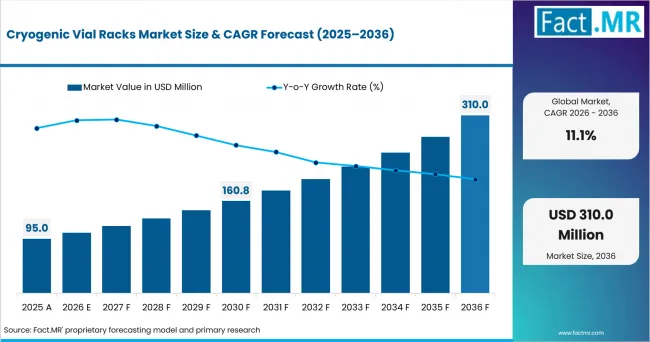
Cryogenic Vial Racks Market Market Value Analysis | Source: Fact.MR
What are the defining numbers behind cryogenic vial rack growth?
USD 202 million absolute opportunity by 2036 led by the United States, Germany and China.
- Demand Drivers in the Market
- Biobank expansion is increasing demand for organized cryogenic storage.
- Cell and gene therapy research requires secure long-term sample preservation.
- Laboratory automation is improving sample management efficiency.
- Precision medicine programs continue supporting cryogenic infrastructure investment.
- Key Segments Analyzed
- By Rack Material: Polycarbonate is expected to hold 34.0% share in 2026 because of its durability and resistance to cryogenic temperatures.
- By Temperature Range: Liquid Nitrogen Vapor Phase is projected to account for 37.0% share in 2026 due to widespread use in biological sample storage.
- By Vial Format: 2 mL Vials are expected to hold 33.0% share in 2026 because they are widely used across biobanks and research laboratories.
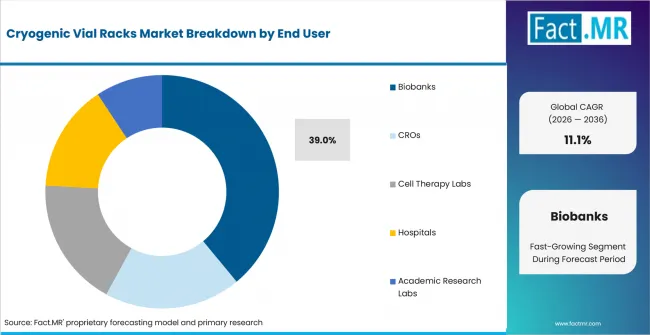
- By End User: Biobanks are projected to account for 39.0% share in 2026 because they store large collections of biological specimens.
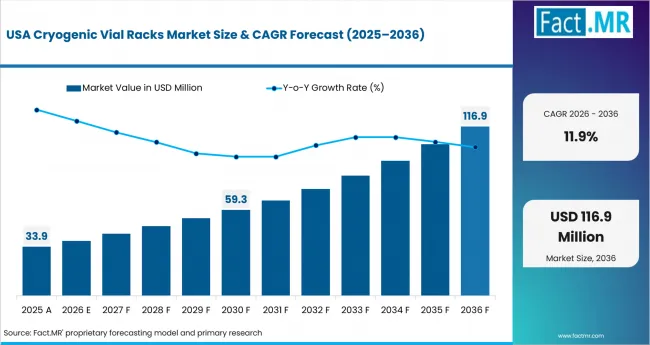
- By Geography: The United States is projected to record 11.9% CAGR through 2036.
- Analyst Opinion at Fact.MR
- Shambhu Nath Jha, Senior Analyst at Fact.MR, states, "Cryogenic vial racks are becoming an essential component of modern biobanking and laboratory storage systems. Demand is increasing as research organizations expand sample collections and strengthen traceability across cryogenic storage operations."
- Strategic Implications
- Expand product portfolios for automated biobank storage systems.
- Develop racks compatible with barcode and digital sample tracking.
- Strengthen partnerships with biobanks and cell therapy laboratories.
- Invest in durable materials that withstand repeated cryogenic storage cycles.
Cryogenic vial racks provide organized storage for biological samples maintained in ultra-low freezers and liquid nitrogen systems. They improve storage efficiency, sample identification and retrieval while protecting valuable specimens used in research and clinical applications.
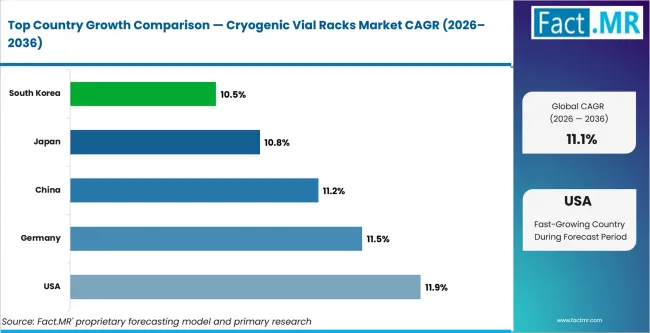
The United States is projected to record 11.9% CAGR through 2036, supported by expanding biobank networks and cell therapy research. Germany is expected to expand at 11.5% CAGR due to strong life science research and laboratory automation. China is forecast to grow at 11.2% CAGR as investments in biotechnology and precision medicine continue increasing. Japan is projected to advance at 10.8% CAGR through growing regenerative medicine research. South Korea is expected to register 10.5% CAGR through 2036 as biopharmaceutical research infrastructure expands.
How does the cryogenic vial racks market break down by segment?
Polycarbonate racks lead at 34.0%; Biobanks lead at 39.0%.
Which rack material dominates?
Polycarbonate holds 34.0% share in 2026.
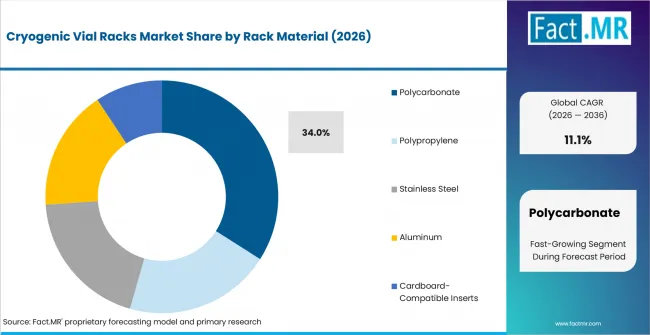
Cryogenic Vial Racks Market Analysis By Rack Material | Source: Fact.MR
Polycarbonate racks lead because they remain durable at extremely low temperatures and resist cracking during repeated freeze and thaw cycles. They provide reliable support for long-term biological sample storage. Laboratories prefer polycarbonate because it combines strength with low weight. The material also supports repeated handling without losing structural stability. Azenta launched the BioArc™ Ultra automated ultracold sample management system. The platform is designed for high-density sample storage used in biorepositories and supports storage of cryogenic tubes and rack-based sample inventories, improving storage density and sample management efficiency. [1]
Which temperature range dominates?
Liquid Nitrogen Vapor Phase leads with 37.0% share in 2026.
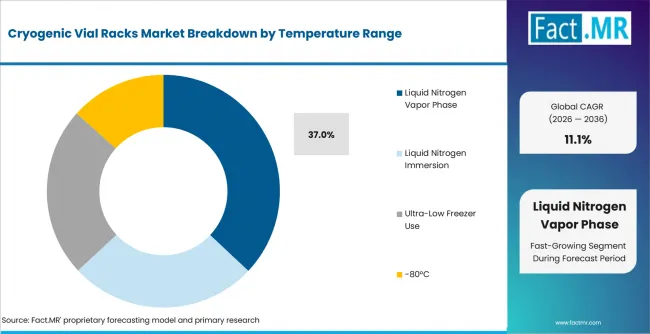
Cryogenic Vial Racks Market Analysis By Temperature Range | Source: Fact.MR
Liquid nitrogen vapor phase storage leads because it offers reliable preservation while reducing direct sample contact with liquid nitrogen. This method helps lower contamination risks. Biobanks and cell therapy laboratories widely use vapor phase systems for long-term storage of valuable biological specimens. Growing sample volumes continue supporting demand. The segment also benefits from expanding regenerative medicine research. Cryoport announced that its MVE Biological Solutions division expanded its High-Efficiency (HE) cryogenic freezer portfolio with the new HE 800°C model. The freezer was developed for fertility clinics, biorepositories, and clinical laboratories requiring large-scale storage of biological samples. The system provides high-capacity liquid nitrogen storage while reducing floor-space requirements and operational costs. [2]
Which vial format dominates?
2 ml Vials hold 33.0% share in 2026.
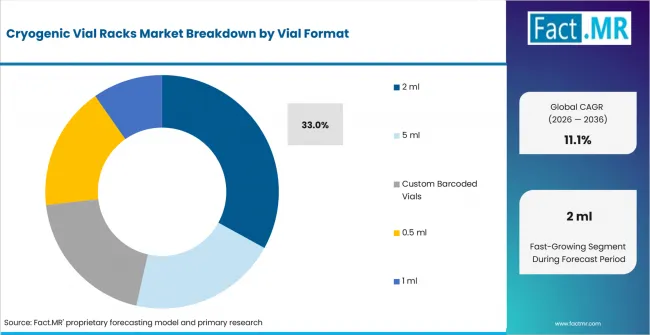
Cryogenic Vial Racks Market Analysis By Vial Format | Source: Fact.MR
2 ml vials remain the most widely used format because they provide sufficient storage volume for many biological samples. They are compatible with most cryogenic storage systems and laboratory workflows. Research organizations prefer standardized vial sizes that simplify storage and sample retrieval. Barcode compatibility further supports their adoption. Micronic introduced its Eco-Friendly Choice (EFC) Rack Range RM, a new sustainable rack series for sample storage. The racks are manufactured using recycled materials and are designed for use with cryogenic storage tubes. [3]
Which end user dominates?
Biobanks account for 39.0% share in 2026.
Cryogenic Vial Racks Market Analysis By End User | Source: Fact.MR
Biobanks lead because they maintain large collections of biological specimens for long-term research. Organized rack systems improve storage efficiency and sample traceability. Expanding investments in precision medicine and population health studies continue increasing sample storage requirements. Automated storage systems are also supporting demand. CSafe announced the launch of its reusable CGT Cryo Series shipping solution for cell and gene therapies. The cryogenic system uses liquid nitrogen dry-vapor technology to maintain temperatures below -150°C during transport and includes integrated monitoring and chain-of-custody capabilities. [4]
What is accelerating cryogenic vial rack demand and what is holding it back?
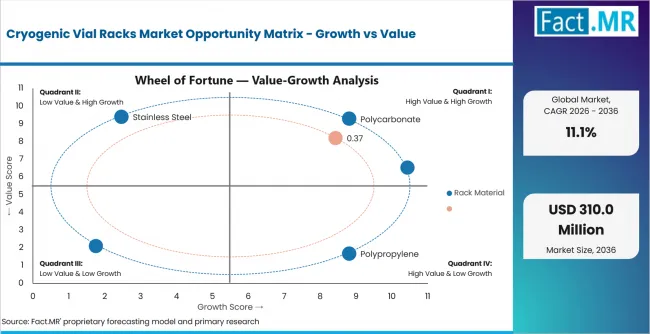
Biobank expansion drives demand while high storage infrastructure costs restrain adoption.
Cryogenic Vial Racks Market Opportunity Matrix Growth Vs Value | Source: Fact.MR
The primary growth driver is rapid expansion of biobanks, cell therapy programs and genomic research. These activities require secure and well-organized cryogenic storage systems.
Laboratories are increasing investment in automated sample management to improve retrieval speed and reduce handling errors. Barcode tracking and digital inventory systems also support wider adoption.
Growth in regenerative medicine continues creating additional demand. The primary restraint is the high cost of cryogenic storage infrastructure. Laboratories must invest in storage equipment, monitoring systems and backup power to protect valuable samples. Strict handling requirements and regular maintenance also increase operating costs. Smaller laboratories may delay infrastructure upgrades because of budget limitations.
Where do the biggest cryogenic vial rack opportunities sit?
- Biobank Expansion: National and commercial biobanks continue increasing storage capacity for research collections.
- Cell and Gene Therapy: Advanced therapy developers require secure cryogenic storage throughout research and manufacturing.
- Clinical Research: Clinical trial laboratories are expanding biological sample storage to support precision medicine studies.
- Laboratory Automation: Automated storage systems are creating demand for racks designed for robotic handling and barcode tracking.
Which countries are scaling cryogenic vial rack adoption fastest?
United States 11.9%, Germany 11.5%, China 11.2%, Japan 10.8%, South Korea 10.5%.
Based on regional analysis, the cryogenic vial racks market is segmented into North America, Western Europe, Asia Pacific, Latin America, and Middle East and Africa.
.webp "Top Country Growth Comparison Cryogenic Vial Racks Market Cagr (2026 2036)")
Top Country Growth Comparison Cryogenic Vial Racks Market Cagr (2026 2036) | Source: Fact.MR
| Country | CAGR (2026-2036) |
|---|---|
| United States | 11.9% |
| Germany | 11.5% |
| China | 11.2% |
| Japan | 10.8% |
| South Korea | 10.5% |
Source: Fact.MR analysis. Updated Jun 26, 2026
Cryogenic Vial Racks Market Cagr Analysis By Country | Source: Fact.MR
Why is the United States leading the cryogenic vial racks market?
11.9% CAGR, supported by biobank expansion and cell therapy research
Cryogenic Vial Racks Market Country Value Analysis | Source: Fact.MR
The United States is projected to record 11.9% CAGR through 2036 due to continued investment in biobanks, precision medicine and advanced cell therapy research. Research organizations are expanding cryogenic storage capacity to manage growing biological sample collections. Hospitals, pharmaceutical companies and academic institutes are also investing in automated storage systems that improve sample traceability and retrieval efficiency. Demand remains strong across public and private research programs.
What is driving growth in Germany?
11.5% CAGR, driven by biotechnology research and laboratory modernization
Germany is expected to post 11.5% CAGR through 2036 as biotechnology companies and research institutes continue expanding cryogenic storage facilities. Sample preservation remains essential for genomics and clinical research. Laboratories are adopting durable storage racks that support barcode tracking and automated inventory systems. Government support for life science innovation also contributes to market growth. Demand is increasing across pharmaceutical and academic research laboratories.
How is China expanding adoption?
11.2% CAGR, supported by biotechnology investment and healthcare research
China is forecast to advance at 11.2% CAGR by 2036 due to rising investment in biotechnology and precision healthcare. Research centers are increasing storage capacity to support expanding biological sample collections. Cell therapy and genomic medicine programs continue driving demand for reliable cryogenic storage systems. Laboratory modernization is further supporting market expansion. The country remains an important growth market for laboratory equipment suppliers.
What supports demand in Japan?
10.8% CAGR, driven by regenerative medicine and precision healthcare
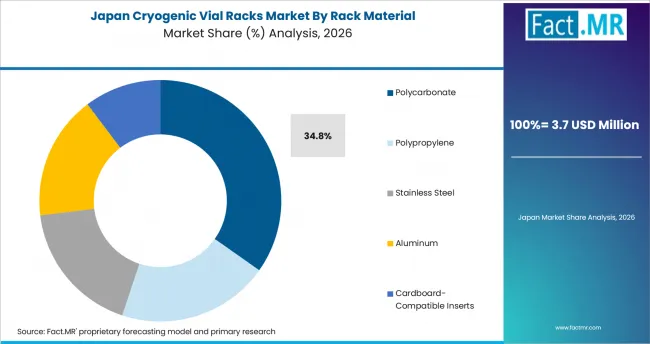
Cryogenic Vial Racks Market Japan Market Share Analysis By Rack Material | Source: Fact.MR
Japan is expected to register 10.8% CAGR by 2036 as regenerative medicine research and precision healthcare programs continue expanding. Long-term storage of biological samples remains essential for advanced medical research. Laboratories are investing in high-quality cryogenic storage products that improve organization and sample protection. Automation and digital inventory systems are also supporting adoption.
Why is South Korea an important market?
10.5% CAGR, supported by biopharmaceutical research and laboratory expansion
South Korea is projected to grow at 10.5% CAGR by 2036 as biopharmaceutical companies and research laboratories increase investment in cryogenic storage infrastructure. Growth in biologics and cell therapy research is creating steady demand for organized sample storage. Laboratories are adopting cryogenic vial racks that improve storage efficiency and reduce sample handling errors. Expansion of biomedical research facilities continues supporting market growth.
Who leads the cryogenic vial racks landscape?
Thermo Fisher Scientific, Corning, Azenta Life Sciences, Greiner Bio-One and DWK Life Sciences / WHEATONlead through laboratory storage expertise and cryogenic sample management capabilities.
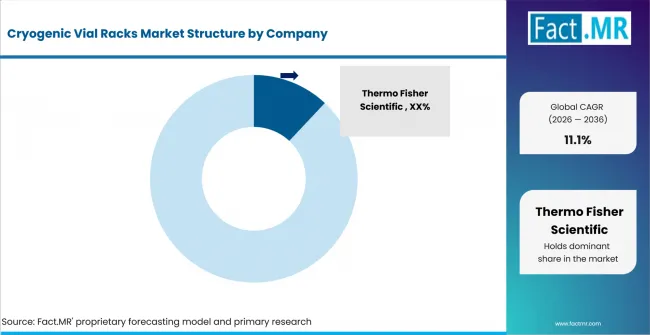
Cryogenic Vial Racks Market Analysis By Company | Source: Fact.MR
The market is characterized by competition focused on storage durability, sample organization and compatibility with automated laboratory systems. Suppliers continue developing rack designs that improve storage density and withstand repeated exposure to cryogenic temperatures. Biobanks remain the largest opportunity for leading participants. Companies are also expanding across cell therapy laboratories and academic research institutes where biological sample collections continue growing.
Automation compatibility is becoming an important purchasing factor. End users increasingly prefer cryogenic vial racks that integrate with barcode systems and laboratory information management systems.
Thermo Fisher Scientific and Corning maintain strong positions through broad laboratory product portfolios. Azenta Life Sciences and Heathrow Scientific continue expanding their cryogenic storage offerings with products designed for high-density storage and long-term sample preservation. Competition through 2036 will depend on product durability and digital compatibility. Suppliers that deliver reliable cryogenic performance and automated storage integration are expected to strengthen their market position.
Which companies are the key players?
Thermo Fisher Scientific, Corning, Azenta Life Sciences, Greiner Bio-One, DWK Life Sciences / WHEATON, Eppendorf, and Heathrow Scientific
- Thermo Fisher Scientific
- Corning
- Azenta Life Sciences
- Greiner Bio-One
- DWK Life Sciences / WHEATON
- Eppendorf
- Heathrow Scientific
Bibliography
- [1] Azenta Life Sciences. (2024, February 2). Azenta launches the BioArc™ Ultra, a breakthrough automated solution for efficient, eco-friendly ultracold sample management. Azenta Life Sciences.
- [2] Cryoport, Inc. (2025, March 12). Cryoport’s MVE Biological Solutions expands High-Efficiency cryogenic freezer series for fertility clinics, biorepositories, and clinical laboratories. Cryoport, Inc.
- [3] Micronic. (2024). Eco-Friendly Choice Rack Range RM. Micronic.
- [4] CSafe. (2024, April 16). CSafe elevates cell and gene therapy transport with reusable cryogenic solution. CSafe.
This Report Addresses
- Strategic intelligence on cryogenic vial rack technologies.
- Segment analysis covering rack materials and temperature ranges.
- Evaluation of vial formats and end-user demand.
- Regional outlook covering the United States and Germany.
- Assessment of China, Japan, and South Korea.
- Competitive analysis of Thermo Fisher Scientific and leading suppliers.
- Analysis of biobanking and cell therapy storage trends.
- Assessment of laboratory automation and sample traceability.
- Primary interviews and supplier benchmarking.
- Evaluation of growth opportunities across cryogenic storage applications.
What does the cryogenic vial racks market cover?
Storage rack systems designed for cryogenic preservation of biological samples.
The market covers cryogenic storage racks, rack inserts and sample organization systems used with ultra-low temperature freezers and liquid nitrogen storage equipment.
What is included in the scope?
Cryogenic storage racks and sample organization solutions.
The scope includes polycarbonate racks, polypropylene racks, stainless steel racks, aluminum racks and cardboard-compatible inserts.
What is excluded from the scope?
Cryogenic freezers, storage tanks and laboratory consumables.
The scope excludes liquid nitrogen storage vessels, ultra-low freezers, cryogenic vials, and laboratory refrigeration equipment.
How was the analysis built?
100+ sources, 30+ laboratory equipment assessments, 25+ countries and industry interviews.
- Primary Research: Interviews with laboratory managers, biobank operators, life science researchers and laboratory equipment suppliers.
- Desk Research: Analysis of biobank expansion, regenerative medicine activity and laboratory infrastructure investments.
- Market Sizing and Forecasting: Estimates based on cryogenic storage capacity, laboratory equipment demand and biological sample volumes.
- Data Validation and Update Cycle: Forecasts validated through supplier benchmarking, laboratory procurement analysis and industry interviews.
Segmentation
What is the report's scope and coverage?
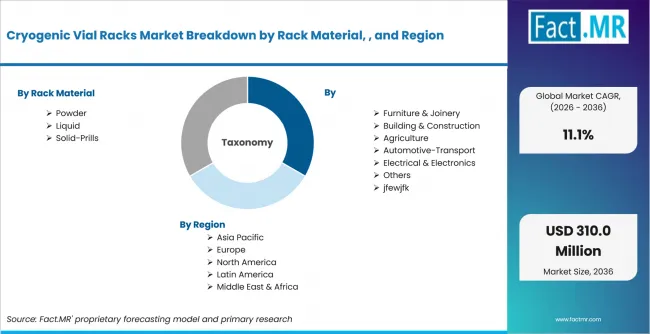
Cryogenic Vial Racks Market Breakdown By Rack Material, , And Region | Source: Fact.MR
| Attribute | Details |
|---|---|
| Quantitative Units | USD Million in 2026 to USD Million by 2036 at CAGR |
| Market Definition | Storage rack systems designed to organize and preserve biological samples in cryogenic environments |
| Rack Materials Covered | Polycarbonate, Polypropylene, Stainless Steel, Aluminum, Cardboard-Compatible Inserts |
| Temperature Ranges Covered | -80°C, Liquid Nitrogen Vapor Phase, Liquid Nitrogen Immersion, Ultra-Low Freezer Use |
| Vial Formats Covered | 0.5 ml, 1 ml, 2 ml, 5 ml, Custom Barcoded Vials |
| End Users Covered | Biobanks, CROs, Cell Therapy Labs, Hospitals, Academic Research Labs |
| Regions Covered | North America, Western Europe, Asia Pacific, Latin America, Middle East & Africa |
| Key Countries Covered | United States, Germany, China, Japan, South Korea |
| Companies Covered | Thermo Fisher Scientific, Corning, Azenta Life Sciences, Greiner Bio-One, DWK Life Sciences / WHEATON, Eppendorf, Heathrow Scientific |
| Forecast Period | 2026 to 2036 |
| Research Approach | Hybrid top-down and bottom-up methodology using laboratory equipment demand, biobank capacity, cryogenic storage installations and life science research investments |
Source: Fact.MR analysis. Updated Jun 26, 2026
How is market segmented?
-
By Rack Material
- Polycarbonate
- Polypropylene
- Stainless Steel
- Aluminum
- Cardboard-Compatible Inserts
-
By Temperature Range
- -80°C
- Liquid Nitrogen Vapor Phase
- Liquid Nitrogen Immersion
- Ultra-Low Freezer Use
-
By Vial Format
- 0.5 ml
- 1 ml
- 2 ml
- 5 ml
- Custom Barcoded Vials
-
By End User
- Biobanks
- CROs
- Cell Therapy Labs
- Hospitals
- Academic Research Labs
-
Region:
- North America
- United States
- Canada
- Europe
- Germany
- United Kingdom
- France
- Italy
- Spain
- Asia Pacific
- China
- Japan
- South Korea
- India
- Singapore
- Latin America
- Brazil
- Mexico
- Argentina
- Middle East & Africa
- GCC Countries
- South Africa
- Israel
- North America
Frequently Asked Questions
Which rack material leads the market?
Which temperature range accounts for the largest share?
What is driving demand for cryogenic vial racks?
Which country is growing the fastest?
What is the primary challenge facing the market?
Which end user accounts for the largest share?
What opportunities exist for suppliers?
Why are laboratories adopting cryogenic vial racks?
Which vial format generates the highest demand?
Why are polycarbonate racks widely adopted?
Who worked on this report


Preview the report firsthand - request a free sample
Free SampleGet the brochure for pricing and purchase details
Download PDF