Gastrointestinal Therapeutics Market
Gastrointestinal Therapeutics Market Size and Share Forecast Outlook 2026 to 2036
Gastrointestinal therapeutics market is projected to grow from USD 48.2 billion in 2026 to USD 89.7 billion by 2036, at a CAGR of 6.4%. Inflammatory Bowel Disease will dominate with a 38.4% market share, while hospitals will lead the end-user category segment with a 54.7% share.
Gastrointestinal Therapeutics Market Forecast and Outlook 2026 to 2036
The global gastrointestinal therapeutics market is valued at USD 48.2 billion in 2026 and is projected to reach USD 89.7 billion by 2036, representing an absolute increase of USD 41.5 billion over the forecast period. This reflects total growth of 86.1%, with demand expanding at a CAGR of 6.4% between 2026 and 2036.
The market is expected to grow by nearly 1.9X, supported by the rising global burden of gastrointestinal disorders, improved diagnosis rates, and continued investment in advanced treatment capabilities across hospitals and specialty care settings.
Key Takeaways from the Gastrointestinal Therapeutics Market
- Gastrointestinal Therapeutics Market Value (2026): USD 48.2 billion
- Gastrointestinal Therapeutics Market Forecast Value (2036): USD 89.7 billion
- Gastrointestinal Therapeutics Market Forecast CAGR: 6.4%
- Leading Therapeutic Segment in Gastrointestinal Therapeutics Market: Inflammatory Bowel Disease Therapeutics (38.4%)
- Key Growth Regions in Gastrointestinal Therapeutics Market: North America, Europe, Asia Pacific
- Key Players in Gastrointestinal Therapeutics Market: AbbVie Inc., Johnson & Johnson, Pfizer Inc., Takeda Pharmaceutical Company Limited, Gilead Sciences Inc.
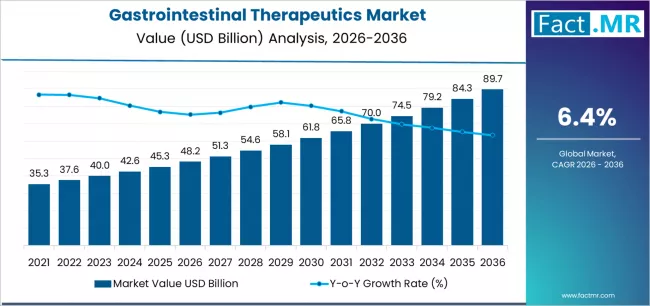
Inflammatory bowel disease therapeutics account for the largest share of the market at 38.4% in 2026. Chronic disease prevalence, long-term treatment requirements, and expanding use of biologics and targeted therapies continue to sustain demand within this segment. From an end-use perspective, hospitals dominate with a 54.7% share, reflecting their role in managing complex cases, administering advanced therapies, and coordinating multidisciplinary gastroenterology care.
At a broader level, market growth is influenced by progress in targeted drug development, personalized treatment strategies, and improvements in therapeutic efficacy and safety profiles. Adoption of precision medicine approaches, combination therapies, and novel drug delivery systems is improving patient outcomes while supporting longer treatment durations. Ongoing healthcare modernization, coupled with sustained research activity in digestive diseases, continues to reinforce long-term demand for gastrointestinal therapeutics across both developed and emerging healthcare systems.
Gastrointestinal Therapeutics Market
| Metric | Value |
|---|---|
| Estimated Value in (2026E) | USD 48.2 billion |
| Forecast Value in (2036F) | USD 89.7 billion |
| Forecast CAGR (2026 to 2036) | 6.4% |
Category
| Category | Segments |
|---|---|
| Therapeutic Indication | Inflammatory Bowel Disease; Gastroesophageal Reflux Disease; Peptic Ulcers; Irritable Bowel Syndrome; Gastrointestinal Infections; Other Indications |
| Drug Class | Proton Pump Inhibitors; Anti-inflammatory Drugs; Antispasmodics; Antibiotics; Probiotics; Other Drug Classes |
| Route of Administration | Oral Medications; Injectable Formulations; Topical Applications; Rectal Preparations; Other Routes |
| End-User Category | Hospitals; Specialty Clinics; Ambulatory Surgical Centers; Other Healthcare Services |
| Region | North America; Europe; Asia Pacific; Latin America; Middle East & Africa |
Segmental Analysis
By Therapeutic Indication, Which Segment Holds the Dominant Market Share?
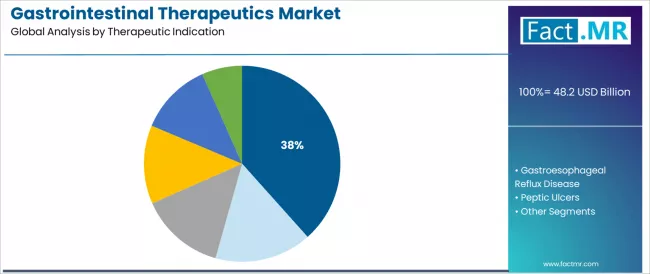
Inflammatory bowel disease therapeutics are projected to account for 38.4% of the gastrointestinal therapeutics market in 2026, retaining segment leadership. This reflects high disease prevalence, long-term treatment requirements, and established clinical efficacy across biologic and small-molecule therapies. Standardized treatment protocols and continued clinical investment support sustained utilization across gastroenterology practices.
By End-User Category, Which Segment Registers the Highest Share?
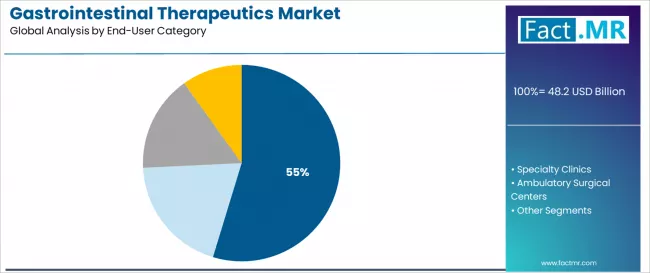
Hospitals are projected to represent 54.7% of market demand in 2026, driven by centralized management of chronic gastrointestinal conditions. Access to specialized diagnostics, multidisciplinary care teams, and advanced therapeutic administration supports hospital-led utilization. Ongoing improvements in treatment modalities and institutional care frameworks are expected to reinforce hospital dominance over the forecast period.
What are the Drivers, Restraints, and Key Trends of the Gastrointestinal Therapeutics Market?
The gastrointestinal therapeutics market is expanding due to rising prevalence of digestive disorders, increasing healthcare modernization, and growing demand for effective treatment options across clinical settings. Improved diagnosis rates and wider access to specialist care are supporting adoption of advanced therapies. However, market growth is restrained by competition from alternative treatment approaches, high drug development and commercialization costs, and stringent regulatory requirements that can extend approval timelines.
A key trend shaping the market is the integration of precision medicine and patient-centric treatment strategies. Personalized therapies based on disease subtype and patient response are improving treatment efficacy and outcomes. Another important trend is the adoption of advanced drug delivery technologies and connected patient-care systems. These innovations enable targeted delivery, improved adherence, real-time monitoring, and predictive treatment adjustments, extending the clinical value of gastrointestinal therapeutics beyond conventional pharmacological approaches.
Analysis of the Gastrointestinal Therapeutics Market by Key Countries
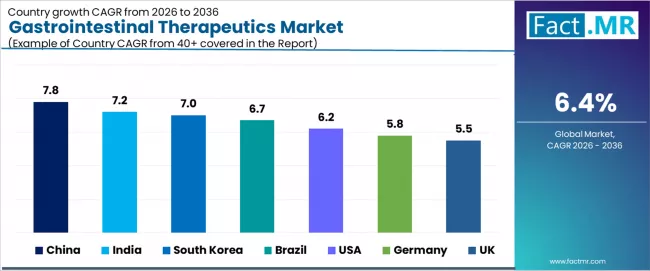
| Country | CAGR (2026-2036) |
|---|---|
| China | 7.8% |
| India | 7.2% |
| Germany | 5.8% |
| Brazil | 6.7% |
| USA | 6.2% |
| UK | 5.5% |
| South Korea | 7.0% |
How are Healthcare Modernization and Standardization Driving China’s Market Leadership?
China’s gastrointestinal therapeutics market is projected to grow at a CAGR of 7.8% through 2036, supported by healthcare modernization policies, urban hospital expansion, and emphasis on standardized treatment protocols. Rising diagnosis rates and broader access to advanced therapies are strengthening demand across public and private healthcare systems. Pharmaceutical manufacturers are expanding distribution and hospital engagement capabilities to support growing treatment volumes.
- Expanding hospital networks and rising clinical awareness are increasing demand for gastrointestinal therapeutics.
- Infrastructure modernization supports adoption of advanced and standardized treatment solutions.
Why is Healthcare Investment Strengthening India’s Market Potential?
India’s gastrointestinal therapeutics market is expanding at a CAGR of 7.2%, driven by rising healthcare investment, growing disease awareness, and expanding pharmaceutical distribution networks. Increased access to hospitals and specialty clinics is supporting demand across both urban and semi-urban regions.
- Hospital expansion and improved care access are creating opportunities for therapeutic adoption.
- Growing awareness initiatives are supporting uptake of specialized gastrointestinal treatments.
How do Advanced Standards Support Market Expansion in South Korea?
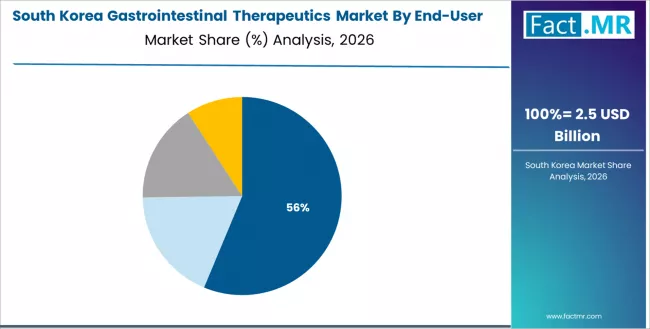
South Korea’s gastrointestinal therapeutics market is projected to grow at a CAGR of 7.0% through 2036, supported by advanced healthcare standards, regulatory clarity, and adoption of innovative treatment technologies. Providers prioritize precision and consistency in gastrointestinal care, sustaining demand for advanced therapies.
- Strong healthcare technology adoption drives demand for premium therapeutic systems.
- Regulatory stability supports consistent use of innovative gastrointestinal treatments.
Why is Healthcare Modernization Fueling Growth in Brazil?
Brazil’s gastrointestinal therapeutics market is expected to grow at a CAGR of 6.7% through 2036, supported by healthcare infrastructure upgrades and improving pharmaceutical distribution. Demand is rising across hospitals seeking efficiency-focused treatments aligned with modernization goals.
- Expanding healthcare access is increasing demand for gastrointestinal therapies.
- Focus on treatment efficiency supports adoption of modern therapeutic solutions.
How do Technology Integration and Treatment Optimization Support Growth in the USA?
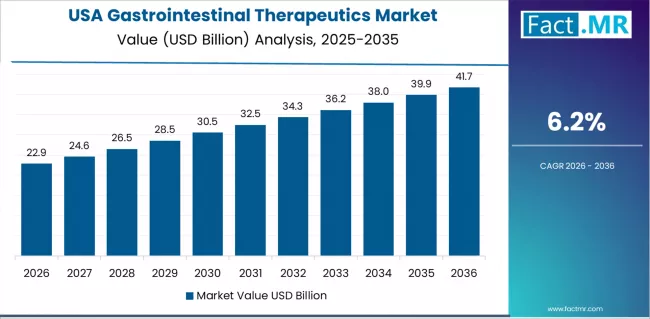
The USA gastrointestinal therapeutics market is projected to expand at a CAGR of 6.2% through 2036, driven by advanced treatment technologies, integrated care models, and emphasis on therapeutic precision. Providers prioritize reliability and clinical outcomes across inpatient and outpatient settings.
- Integration of advanced treatment technologies is sustaining therapeutic demand.
- Focus on precision care supports adoption of specialized gastrointestinal solutions.
Why do Quality and Efficiency Standards Sustain Growth in Germany?
Germany’s gastrointestinal therapeutics market is forecast to grow at a CAGR of 5.8%, supported by established healthcare standards, consistent pharmaceutical demand, and focus on treatment efficiency. Providers emphasize reliability and proven clinical performance.
- Mature pharmaceutical markets support stable therapeutic demand.
- Strong quality standards reinforce adoption of premium treatments.
How is Precision-Focused Healthcare Supporting Market Growth in the UK?
The UK gastrointestinal therapeutics market is projected to grow at a CAGR of 5.5%, driven by emphasis on clinical precision, technology integration, and standardized care pathways. Demand remains steady across hospital and specialty care settings.
- Precision-driven treatment approaches are increasing demand for advanced therapeutics.
- Emphasis on clinical excellence supports continued adoption.
Competitive Landscape of the Gastrointestinal Therapeutics Market
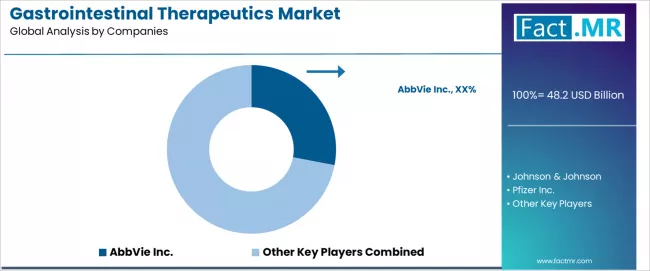
The gastrointestinal therapeutics market is characterized by competition among established pharmaceutical companies, specialized therapeutic manufacturers, and integrated healthcare solution providers.
Companies are investing in advanced drug development, specialized therapeutic platforms, product innovation capabilities, and comprehensive distribution networks to deliver consistent, high-quality, and reliable therapeutic systems. Innovation in targeted therapy development, precision medicine approaches, and patient-focused product development is central to strengthening market position and clinical satisfaction.
AbbVie Inc. emphasizes on therapeutic innovation and comprehensive gastrointestinal treatment solutions, offering institutional and clinical systems with emphasis on treatment excellence and pharmaceutical heritage. Johnson & Johnson provides integrated pharmaceutical automation with a focus on healthcare market applications and precision therapeutic networks.
Pfizer Inc. delivers comprehensive pharmaceutical technology solutions with a focus on clinical positioning and treatment efficiency. Takeda Pharmaceutical Company Limited specializes in comprehensive therapeutic technologies with an emphasis on gastrointestinal applications. Gilead Sciences Inc. focuses on comprehensive pharmaceutical products with advanced design and premium positioning capabilities.
Key Players in the Gastrointestinal Therapeutics Market
- AbbVie Inc.
- Johnson & Johnson
- Pfizer Inc.
- Takeda Pharmaceutical Company Limited
- Gilead Sciences Inc.
- Roche Holding AG
- Novartis AG
- Bristol-Myers Squibb Company
- Merck & Co. Inc.
- Sanofi SA
- GlaxoSmithKline plc
- Bayer AG
- AstraZeneca plc
- Eli Lilly and Company
- Boehringer Ingelheim International GmbH
Scope of the Report
| Items | Values |
|---|---|
| Quantitative Units (2026) | USD 48.2 Billion |
| Therapeutic Indication | Inflammatory Bowel Disease, Gastroesophageal Reflux Disease, Peptic Ulcers, Irritable Bowel Syndrome, Gastrointestinal Infections, Other Indications |
| Drug Class | Proton Pump Inhibitors, Anti-inflammatory Drugs, Antispasmodics, Antibiotics, Probiotics, Other Drug Classes |
| Route of Administration | Oral Medications, Injectable Formulations, Topical Applications, Rectal Preparations, Other Routes |
| End-User Category | Hospitals, Specialty Clinics, Ambulatory Surgical Centers, Other Healthcare Services |
| Regions Covered | North America, Europe, Asia Pacific, Latin America, MEA, Other Regions |
| Countries Covered | China, India, Germany, Brazil, USA, UK, South Korea, and 40+ countries |
| Key Companies Profiled | AbbVie Inc., Johnson & Johnson, Pfizer Inc., Takeda Pharmaceutical Company Limited, Gilead Sciences Inc., and other leading pharmaceutical companies |
| Additional Attributes | Dollar sales by therapeutic indication, drug class, route of administration, end-user category, and region; regional demand trends, competitive landscape, technological advancements in pharmaceutical engineering, treatment performance optimization initiatives, therapeutic enhancement programs, and premium product development strategies |
Gastrointestinal Therapeutics Market by Segments
-
Therapeutic Indication :
- Inflammatory Bowel Disease
- Gastroesophageal Reflux Disease
- Peptic Ulcers
- Irritable Bowel Syndrome
- Gastrointestinal Infections
- Other Indications
-
Drug Class :
- Proton Pump Inhibitors
- Anti-inflammatory Drugs
- Antispasmodics
- Antibiotics
- Probiotics
- Other Drug Classes
-
Route of Administration :
- Oral Medications
- Injectable Formulations
- Topical Applications
- Rectal Preparations
- Other Routes
-
End-User Category :
- Hospitals
- Specialty Clinics
- Ambulatory Surgical Centers
- Other Healthcare Services
-
Region :
-
North America
- USA
- Canada
- Mexico
-
Europe
- Germany
- UK
- France
- Italy
- Spain
- Nordic Countries
- BENELUX
- Rest of Europe
-
Asia Pacific
- China
- India
- Japan
- South Korea
- Australia
- Rest of Asia Pacific
-
Latin America
- Brazil
- Argentina
- Rest of Latin America
-
MEA
- Saudi Arabia
- UAE
- South Africa
- Rest of MEA
-
Table of Content
- Executive Summary
- Global Market Outlook
- Demand to side Trends
- Supply to side Trends
- Technology Roadmap Analysis
- Analysis and Recommendations
- Market Overview
- Market Coverage / Taxonomy
- Market Definition / Scope / Limitations
- Market Background
- Market Dynamics
- Drivers
- Restraints
- Opportunity
- Trends
- Scenario Forecast
- Demand in Optimistic Scenario
- Demand in Likely Scenario
- Demand in Conservative Scenario
- Opportunity Map Analysis
- Product Life Cycle Analysis
- Supply Chain Analysis
- Investment Feasibility Matrix
- Value Chain Analysis
- PESTLE and Porter’s Analysis
- Regulatory Landscape
- Regional Parent Market Outlook
- Production and Consumption Statistics
- Import and Export Statistics
- Market Dynamics
- Global Market Analysis 2021 to 2025 and Forecast, 2026 to 2036
- Historical Market Size Value (USD Million) Analysis, 2021 to 2025
- Current and Future Market Size Value (USD Million) Projections, 2026 to 2036
- Y to o to Y Growth Trend Analysis
- Absolute $ Opportunity Analysis
- Global Market Pricing Analysis 2021 to 2025 and Forecast 2026 to 2036
- Global Market Analysis 2021 to 2025 and Forecast 2026 to 2036, By Therapeutic Indication
- Introduction / Key Findings
- Historical Market Size Value (USD Million) Analysis By Therapeutic Indication, 2021 to 2025
- Current and Future Market Size Value (USD Million) Analysis and Forecast By Therapeutic Indication, 2026 to 2036
- Inflammatory Bowel Disease
- Gastroesophageal Reflux Disease
- Peptic Ulcers
- Irritable Bowel Syndrome
- Gastrointestinal Infections
- Other Indications
- Y to o to Y Growth Trend Analysis By Therapeutic Indication, 2021 to 2025
- Absolute $ Opportunity Analysis By Therapeutic Indication, 2026 to 2036
- Global Market Analysis 2021 to 2025 and Forecast 2026 to 2036, By End-User Category
- Introduction / Key Findings
- Historical Market Size Value (USD Million) Analysis By End-User Category, 2021 to 2025
- Current and Future Market Size Value (USD Million) Analysis and Forecast By End-User Category, 2026 to 2036
- Hospitals
- Specialty Clinics
- Ambulatory Surgical Centers
- Other Healthcare Services
- Y to o to Y Growth Trend Analysis By End-User Category, 2021 to 2025
- Absolute $ Opportunity Analysis By End-User Category, 2026 to 2036
- Global Market Analysis 2021 to 2025 and Forecast 2026 to 2036, By Region
- Introduction
- Historical Market Size Value (USD Million) Analysis By Region, 2021 to 2025
- Current Market Size Value (USD Million) Analysis and Forecast By Region, 2026 to 2036
- North America
- Latin America
- Western Europe
- Eastern Europe
- East Asia
- South Asia and Pacific
- Middle East & Africa
- Market Attractiveness Analysis By Region
- North America Market Analysis 2021 to 2025 and Forecast 2026 to 2036, By Country
- Historical Market Size Value (USD Million) Trend Analysis By Market Taxonomy, 2021 to 2025
- Market Size Value (USD Million) Forecast By Market Taxonomy, 2026 to 2036
- By Country
- USA
- Canada
- Mexico
- By Therapeutic Indication
- By End-User Category
- By Country
- Market Attractiveness Analysis
- By Country
- By Therapeutic Indication
- By End-User Category
- Key Takeaways
- Latin America Market Analysis 2021 to 2025 and Forecast 2026 to 2036, By Country
- Historical Market Size Value (USD Million) Trend Analysis By Market Taxonomy, 2021 to 2025
- Market Size Value (USD Million) Forecast By Market Taxonomy, 2026 to 2036
- By Country
- Brazil
- Chile
- Rest of Latin America
- By Therapeutic Indication
- By End-User Category
- By Country
- Market Attractiveness Analysis
- By Country
- By Therapeutic Indication
- By End-User Category
- Key Takeaways
- Western Europe Market Analysis 2021 to 2025 and Forecast 2026 to 2036, By Country
- Historical Market Size Value (USD Million) Trend Analysis By Market Taxonomy, 2021 to 2025
- Market Size Value (USD Million) Forecast By Market Taxonomy, 2026 to 2036
- By Country
- Germany
- UK
- Italy
- Spain
- France
- Nordic
- BENELUX
- Rest of Western Europe
- By Therapeutic Indication
- By End-User Category
- By Country
- Market Attractiveness Analysis
- By Country
- By Therapeutic Indication
- By End-User Category
- Key Takeaways
- Eastern Europe Market Analysis 2021 to 2025 and Forecast 2026 to 2036, By Country
- Historical Market Size Value (USD Million) Trend Analysis By Market Taxonomy, 2021 to 2025
- Market Size Value (USD Million) Forecast By Market Taxonomy, 2026 to 2036
- By Country
- Russia
- Poland
- Hungary
- Balkan & Baltic
- Rest of Eastern Europe
- By Therapeutic Indication
- By End-User Category
- By Country
- Market Attractiveness Analysis
- By Country
- By Therapeutic Indication
- By End-User Category
- Key Takeaways
- East Asia Market Analysis 2021 to 2025 and Forecast 2026 to 2036, By Country
- Historical Market Size Value (USD Million) Trend Analysis By Market Taxonomy, 2021 to 2025
- Market Size Value (USD Million) Forecast By Market Taxonomy, 2026 to 2036
- By Country
- China
- Japan
- South Korea
- By Therapeutic Indication
- By End-User Category
- By Country
- Market Attractiveness Analysis
- By Country
- By Therapeutic Indication
- By End-User Category
- Key Takeaways
- South Asia and Pacific Market Analysis 2021 to 2025 and Forecast 2026 to 2036, By Country
- Historical Market Size Value (USD Million) Trend Analysis By Market Taxonomy, 2021 to 2025
- Market Size Value (USD Million) Forecast By Market Taxonomy, 2026 to 2036
- By Country
- India
- ASEAN
- Australia & New Zealand
- Rest of South Asia and Pacific
- By Therapeutic Indication
- By End-User Category
- By Country
- Market Attractiveness Analysis
- By Country
- By Therapeutic Indication
- By End-User Category
- Key Takeaways
- Middle East & Africa Market Analysis 2021 to 2025 and Forecast 2026 to 2036, By Country
- Historical Market Size Value (USD Million) Trend Analysis By Market Taxonomy, 2021 to 2025
- Market Size Value (USD Million) Forecast By Market Taxonomy, 2026 to 2036
- By Country
- Kingdom of Saudi Arabia
- Other GCC Countries
- Turkiye
- South Africa
- Other African Union
- Rest of Middle East & Africa
- By Therapeutic Indication
- By End-User Category
- By Country
- Market Attractiveness Analysis
- By Country
- By Therapeutic Indication
- By End-User Category
- Key Takeaways
- Key Countries Market Analysis
- USA
- Pricing Analysis
- Market Share Analysis, 2025
- By Therapeutic Indication
- By End-User Category
- Canada
- Pricing Analysis
- Market Share Analysis, 2025
- By Therapeutic Indication
- By End-User Category
- Mexico
- Pricing Analysis
- Market Share Analysis, 2025
- By Therapeutic Indication
- By End-User Category
- Brazil
- Pricing Analysis
- Market Share Analysis, 2025
- By Therapeutic Indication
- By End-User Category
- Chile
- Pricing Analysis
- Market Share Analysis, 2025
- By Therapeutic Indication
- By End-User Category
- Germany
- Pricing Analysis
- Market Share Analysis, 2025
- By Therapeutic Indication
- By End-User Category
- UK
- Pricing Analysis
- Market Share Analysis, 2025
- By Therapeutic Indication
- By End-User Category
- Italy
- Pricing Analysis
- Market Share Analysis, 2025
- By Therapeutic Indication
- By End-User Category
- Spain
- Pricing Analysis
- Market Share Analysis, 2025
- By Therapeutic Indication
- By End-User Category
- France
- Pricing Analysis
- Market Share Analysis, 2025
- By Therapeutic Indication
- By End-User Category
- India
- Pricing Analysis
- Market Share Analysis, 2025
- By Therapeutic Indication
- By End-User Category
- ASEAN
- Pricing Analysis
- Market Share Analysis, 2025
- By Therapeutic Indication
- By End-User Category
- Australia & New Zealand
- Pricing Analysis
- Market Share Analysis, 2025
- By Therapeutic Indication
- By End-User Category
- China
- Pricing Analysis
- Market Share Analysis, 2025
- By Therapeutic Indication
- By End-User Category
- Japan
- Pricing Analysis
- Market Share Analysis, 2025
- By Therapeutic Indication
- By End-User Category
- South Korea
- Pricing Analysis
- Market Share Analysis, 2025
- By Therapeutic Indication
- By End-User Category
- Russia
- Pricing Analysis
- Market Share Analysis, 2025
- By Therapeutic Indication
- By End-User Category
- Poland
- Pricing Analysis
- Market Share Analysis, 2025
- By Therapeutic Indication
- By End-User Category
- Hungary
- Pricing Analysis
- Market Share Analysis, 2025
- By Therapeutic Indication
- By End-User Category
- Kingdom of Saudi Arabia
- Pricing Analysis
- Market Share Analysis, 2025
- By Therapeutic Indication
- By End-User Category
- Turkiye
- Pricing Analysis
- Market Share Analysis, 2025
- By Therapeutic Indication
- By End-User Category
- South Africa
- Pricing Analysis
- Market Share Analysis, 2025
- By Therapeutic Indication
- By End-User Category
- USA
- Market Structure Analysis
- Competition Dashboard
- Competition Benchmarking
- Market Share Analysis of Top Players
- By Regional
- By Therapeutic Indication
- By End-User Category
- Competition Analysis
- Competition Deep Dive
- AbbVie Inc.
- Overview
- Product Portfolio
- Profitability by Market Segments (Product/Age /Sales Channel/Region)
- Sales Footprint
- Strategy Overview
- Marketing Strategy
- Product Strategy
- Channel Strategy
- Johnson & Johnson
- Pfizer Inc.
- Takeda Pharmaceutical Company Limited
- Gilead Sciences Inc.
- Roche Holding AG
- Novartis AG
- Bristol-Myers Squibb Company
- Merck & Co. Inc.
- Sanofi SA
- GlaxoSmithKline plc
- Bayer AG
- AstraZeneca plc
- Eli Lilly and Company
- Boehringer Ingelheim International GmbH
- AbbVie Inc.
- Competition Deep Dive
- Assumptions & Acronyms Used
- Research Methodology
List Of Table
- Table 1: Global Market Value (USD Million) Forecast by Region, 2021 to 2036
- Table 2: Global Market Value (USD Million) Forecast by Therapeutic Indication, 2021 to 2036
- Table 3: Global Market Value (USD Million) Forecast by End-User Category, 2021 to 2036
- Table 4: North America Market Value (USD Million) Forecast by Country, 2021 to 2036
- Table 5: North America Market Value (USD Million) Forecast by Therapeutic Indication, 2021 to 2036
- Table 6: North America Market Value (USD Million) Forecast by End-User Category, 2021 to 2036
- Table 7: Latin America Market Value (USD Million) Forecast by Country, 2021 to 2036
- Table 8: Latin America Market Value (USD Million) Forecast by Therapeutic Indication, 2021 to 2036
- Table 9: Latin America Market Value (USD Million) Forecast by End-User Category, 2021 to 2036
- Table 10: Western Europe Market Value (USD Million) Forecast by Country, 2021 to 2036
- Table 11: Western Europe Market Value (USD Million) Forecast by Therapeutic Indication, 2021 to 2036
- Table 12: Western Europe Market Value (USD Million) Forecast by End-User Category, 2021 to 2036
- Table 13: Eastern Europe Market Value (USD Million) Forecast by Country, 2021 to 2036
- Table 14: Eastern Europe Market Value (USD Million) Forecast by Therapeutic Indication, 2021 to 2036
- Table 15: Eastern Europe Market Value (USD Million) Forecast by End-User Category, 2021 to 2036
- Table 16: East Asia Market Value (USD Million) Forecast by Country, 2021 to 2036
- Table 17: East Asia Market Value (USD Million) Forecast by Therapeutic Indication, 2021 to 2036
- Table 18: East Asia Market Value (USD Million) Forecast by End-User Category, 2021 to 2036
- Table 19: South Asia and Pacific Market Value (USD Million) Forecast by Country, 2021 to 2036
- Table 20: South Asia and Pacific Market Value (USD Million) Forecast by Therapeutic Indication, 2021 to 2036
- Table 21: South Asia and Pacific Market Value (USD Million) Forecast by End-User Category, 2021 to 2036
- Table 22: Middle East & Africa Market Value (USD Million) Forecast by Country, 2021 to 2036
- Table 23: Middle East & Africa Market Value (USD Million) Forecast by Therapeutic Indication, 2021 to 2036
- Table 24: Middle East & Africa Market Value (USD Million) Forecast by End-User Category, 2021 to 2036
List Of Figures
- Figure 1: Global Market Pricing Analysis
- Figure 2: Global Market Value (USD Million) Forecast 2021 to 2036
- Figure 3: Global Market Value Share and BPS Analysis by Therapeutic Indication, 2026 and 2036
- Figure 4: Global Market Y to o to Y Growth Comparison by Therapeutic Indication, 2026 to 2036
- Figure 5: Global Market Attractiveness Analysis by Therapeutic Indication
- Figure 6: Global Market Value Share and BPS Analysis by End-User Category, 2026 and 2036
- Figure 7: Global Market Y to o to Y Growth Comparison by End-User Category, 2026 to 2036
- Figure 8: Global Market Attractiveness Analysis by End-User Category
- Figure 9: Global Market Value (USD Million) Share and BPS Analysis by Region, 2026 and 2036
- Figure 10: Global Market Y to o to Y Growth Comparison by Region, 2026 to 2036
- Figure 11: Global Market Attractiveness Analysis by Region
- Figure 12: North America Market Incremental Dollar Opportunity, 2026 to 2036
- Figure 13: Latin America Market Incremental Dollar Opportunity, 2026 to 2036
- Figure 14: Western Europe Market Incremental Dollar Opportunity, 2026 to 2036
- Figure 15: Eastern Europe Market Incremental Dollar Opportunity, 2026 to 2036
- Figure 16: East Asia Market Incremental Dollar Opportunity, 2026 to 2036
- Figure 17: South Asia and Pacific Market Incremental Dollar Opportunity, 2026 to 2036
- Figure 18: Middle East & Africa Market Incremental Dollar Opportunity, 2026 to 2036
- Figure 19: North America Market Value Share and BPS Analysis by Country, 2026 and 2036
- Figure 20: North America Market Value Share and BPS Analysis by Therapeutic Indication, 2026 and 2036
- Figure 21: North America Market Y to o to Y Growth Comparison by Therapeutic Indication, 2026 to 2036
- Figure 22: North America Market Attractiveness Analysis by Therapeutic Indication
- Figure 23: North America Market Value Share and BPS Analysis by End-User Category, 2026 and 2036
- Figure 24: North America Market Y to o to Y Growth Comparison by End-User Category, 2026 to 2036
- Figure 25: North America Market Attractiveness Analysis by End-User Category
- Figure 26: Latin America Market Value Share and BPS Analysis by Country, 2026 and 2036
- Figure 27: Latin America Market Value Share and BPS Analysis by Therapeutic Indication, 2026 and 2036
- Figure 28: Latin America Market Y to o to Y Growth Comparison by Therapeutic Indication, 2026 to 2036
- Figure 29: Latin America Market Attractiveness Analysis by Therapeutic Indication
- Figure 30: Latin America Market Value Share and BPS Analysis by End-User Category, 2026 and 2036
- Figure 31: Latin America Market Y to o to Y Growth Comparison by End-User Category, 2026 to 2036
- Figure 32: Latin America Market Attractiveness Analysis by End-User Category
- Figure 33: Western Europe Market Value Share and BPS Analysis by Country, 2026 and 2036
- Figure 34: Western Europe Market Value Share and BPS Analysis by Therapeutic Indication, 2026 and 2036
- Figure 35: Western Europe Market Y to o to Y Growth Comparison by Therapeutic Indication, 2026 to 2036
- Figure 36: Western Europe Market Attractiveness Analysis by Therapeutic Indication
- Figure 37: Western Europe Market Value Share and BPS Analysis by End-User Category, 2026 and 2036
- Figure 38: Western Europe Market Y to o to Y Growth Comparison by End-User Category, 2026 to 2036
- Figure 39: Western Europe Market Attractiveness Analysis by End-User Category
- Figure 40: Eastern Europe Market Value Share and BPS Analysis by Country, 2026 and 2036
- Figure 41: Eastern Europe Market Value Share and BPS Analysis by Therapeutic Indication, 2026 and 2036
- Figure 42: Eastern Europe Market Y to o to Y Growth Comparison by Therapeutic Indication, 2026 to 2036
- Figure 43: Eastern Europe Market Attractiveness Analysis by Therapeutic Indication
- Figure 44: Eastern Europe Market Value Share and BPS Analysis by End-User Category, 2026 and 2036
- Figure 45: Eastern Europe Market Y to o to Y Growth Comparison by End-User Category, 2026 to 2036
- Figure 46: Eastern Europe Market Attractiveness Analysis by End-User Category
- Figure 47: East Asia Market Value Share and BPS Analysis by Country, 2026 and 2036
- Figure 48: East Asia Market Value Share and BPS Analysis by Therapeutic Indication, 2026 and 2036
- Figure 49: East Asia Market Y to o to Y Growth Comparison by Therapeutic Indication, 2026 to 2036
- Figure 50: East Asia Market Attractiveness Analysis by Therapeutic Indication
- Figure 51: East Asia Market Value Share and BPS Analysis by End-User Category, 2026 and 2036
- Figure 52: East Asia Market Y to o to Y Growth Comparison by End-User Category, 2026 to 2036
- Figure 53: East Asia Market Attractiveness Analysis by End-User Category
- Figure 54: South Asia and Pacific Market Value Share and BPS Analysis by Country, 2026 and 2036
- Figure 55: South Asia and Pacific Market Value Share and BPS Analysis by Therapeutic Indication, 2026 and 2036
- Figure 56: South Asia and Pacific Market Y to o to Y Growth Comparison by Therapeutic Indication, 2026 to 2036
- Figure 57: South Asia and Pacific Market Attractiveness Analysis by Therapeutic Indication
- Figure 58: South Asia and Pacific Market Value Share and BPS Analysis by End-User Category, 2026 and 2036
- Figure 59: South Asia and Pacific Market Y to o to Y Growth Comparison by End-User Category, 2026 to 2036
- Figure 60: South Asia and Pacific Market Attractiveness Analysis by End-User Category
- Figure 61: Middle East & Africa Market Value Share and BPS Analysis by Country, 2026 and 2036
- Figure 62: Middle East & Africa Market Value Share and BPS Analysis by Therapeutic Indication, 2026 and 2036
- Figure 63: Middle East & Africa Market Y to o to Y Growth Comparison by Therapeutic Indication, 2026 to 2036
- Figure 64: Middle East & Africa Market Attractiveness Analysis by Therapeutic Indication
- Figure 65: Middle East & Africa Market Value Share and BPS Analysis by End-User Category, 2026 and 2036
- Figure 66: Middle East & Africa Market Y to o to Y Growth Comparison by End-User Category, 2026 to 2036
- Figure 67: Middle East & Africa Market Attractiveness Analysis by End-User Category
- Figure 68: Global Market - Tier Structure Analysis
- Figure 69: Global Market - Company Share Analysis
- FAQs -
How big is the gastrointestinal therapeutics market in 2026?
The global gastrointestinal therapeutics market is estimated to be valued at USD 48.2 billion in 2026.
What will be the size of gastrointestinal therapeutics market in 2036?
The market size for the gastrointestinal therapeutics market is projected to reach USD 89.7 billion by 2036.
How much will be the gastrointestinal therapeutics market growth between 2026 and 2036?
The gastrointestinal therapeutics market is expected to grow at a 6.4% CAGR between 2026 and 2036.
What are the key product types in the gastrointestinal therapeutics market?
The key product types in gastrointestinal therapeutics market are inflammatory bowel disease, gastroesophageal reflux disease, peptic ulcers, irritable bowel syndrome, gastrointestinal infections and other indications.
Which end-user category segment to contribute significant share in the gastrointestinal therapeutics market in 2026?
In terms of end-user category, hospitals segment to command 54.7% share in the gastrointestinal therapeutics market in 2026.