Multiple Sclerosis Therapeutics Market

Multiple Sclerosis Therapeutics Market Size and Share Forecast Outlook 2025 to 2035

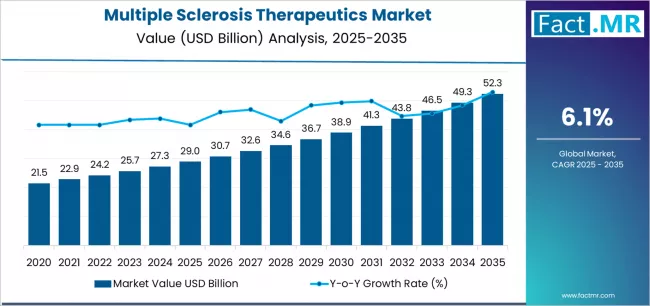
Multiple sclerosis therapeutics market is projected to grow from USD 29.0 billion in 2025 to USD 52.3 billion by 2035, at a CAGR of 6.1%. Immunosuppressants will dominate with a 60.5% market share, while injectable will lead the route of administration segment with a 52.5% share.

Multiple Sclerosis Therapeutics Market Forecast and Outlook 2025 to 2035

The global multiple sclerosis therapeutics market is projected to reach USD 52.3 billion by 2035, recording an absolute increase of USD 23.35 billion over the forecast period. The market is valued at USD 28.95 billion in 2025 and is set to rise at a CAGR of 6.1% during the assessment period.

Quick Stats for Multiple Sclerosis Therapeutics Market

  • Multiple Sclerosis Therapeutics Market Value (2025): USD 28.95 billion
  • Multiple Sclerosis Therapeutics Market Forecast Value (2035): USD 52.3 billion
  • Multiple Sclerosis Therapeutics Market Forecast CAGR: 6.1%
  • Leading Drug Class in Multiple Sclerosis Therapeutics Market: Immunosuppressants (60.5%)
  • Leading Route of Administration in Multiple Sclerosis Therapeutics Market: Injectable (52.5%)
  • Leading Distribution Channel in Multiple Sclerosis Therapeutics Market: Hospital Pharmacies (46.5%)
  • Key Growth Regions in Multiple Sclerosis Therapeutics Market: North America, Europe, and Asia Pacific
  • Top Players in Multiple Sclerosis Therapeutics Market: Biogen, Teva Pharmaceutical Industries Ltd., Pfizer Inc., Bayer AG, Sanofi, F. Hoffmann-La Roche Ltd., Johnson & Johnson Services, Inc., Merck & Co., Inc., Takeda Pharmaceutical Company Limited, Horizon Therapeutics plc

Multiple Sclerosis Therapeutics Market Market Value Analysis

The overall market size is expected to grow by approximately 1.8 times during the same period, supported by increasing prevalence of multiple sclerosis across developed and developing regions worldwide, driving demand for disease-modifying therapies in relapsing-remitting and progressive MS management, and increasing investments in novel biologics and oral formulations with superior efficacy profiles across immunomodulation and neuroprotection applications globally.

Patients with multiple sclerosis face mounting pressure to manage complex neurological symptoms and prevent disability progression while addressing treatment adherence challenges and medication side effects, with modern MS therapeutics providing documented clinical advantages including reduced relapse rates, delayed disability progression, and improved quality of life metrics compared to historical interferon-based treatments alone.

Rising demand for personalized medicine approaches and expanding access to high-efficacy therapies enabling early aggressive treatment strategies create substantial opportunities for pharmaceutical manufacturers and specialty care providers. However, treatment costs and healthcare budget constraints may pose obstacles to widespread access in emerging markets.

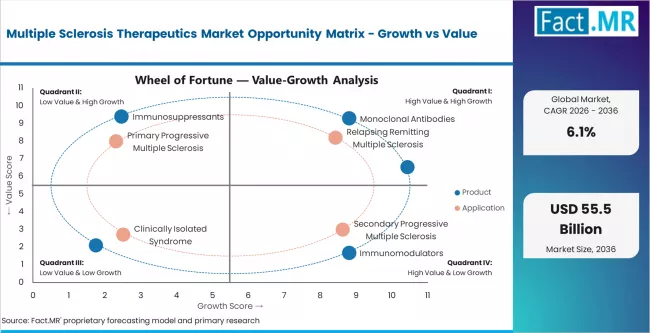
The immunosuppressants segment dominates market activity with 60.5% market share, driven by extensive adoption of monoclonal antibodies and sphingosine-1-phosphate receptor modulators requiring immune system modulation across relapsing and progressive MS phenotypes worldwide. Neurologists increasingly recognize the therapeutics benefits of immunosuppressant agents, with typical product offerings providing effective disease activity suppression and disability stabilization at various potency levels through established specialty pharmacy distribution networks.

The injectable route of administration segment demonstrates substantial market presence with 52.5% share, supported by established biologic therapies and subcutaneous formulations enabling convenient self-administration in chronic disease management protocols. Hospital pharmacies emerge as the dominant distribution channel with 46.5% market share, reflecting the specialty medication nature requiring prior authorization, patient monitoring programs, and comprehensive risk evaluation and mitigation strategies. North America represents the leading regional market, driven by high MS prevalence rates and comprehensive insurance coverage supporting access to advanced disease-modifying therapies.

Regional dynamics show North America maintaining market leadership, supported by established neurology care infrastructure and robust pharmaceutical innovation ecosystems. Europe demonstrates strong market presence driven by aging populations and comprehensive healthcare systems supporting MS specialty care, while Asia Pacific shows expanding activity through improving diagnosis rates and increasing therapy access. USA leads market development through advanced treatment protocols and extensive clinical research participation, while European countries including Germany, UK, and France maintain sophisticated MS care networks.

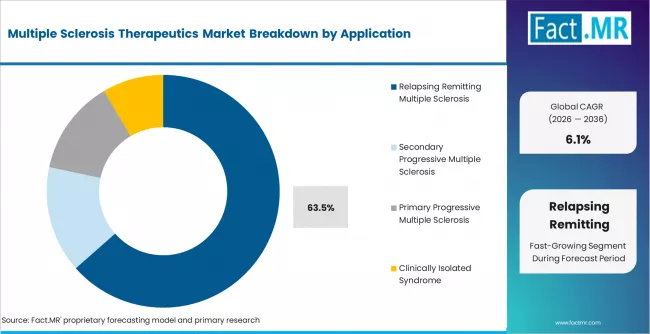
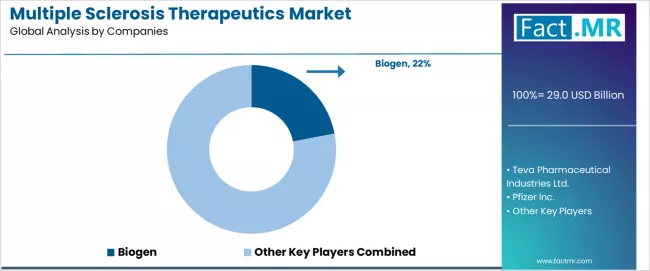
The competitive landscape features moderate concentration with Biogen maintaining approximately 22% market leadership position, while established pharmaceutical companies including Teva Pharmaceutical Industries Ltd., Pfizer Inc., Bayer AG, and Sanofi compete through product lifecycle management, biosimilar development, and novel mechanism-of-action therapies across relapsing-remitting MS, secondary progressive MS, and primary progressive MS applications.

Multiple Sclerosis Therapeutics Market Year-over-Year Forecast 2025 to 2035

Between 2025 and 2029, the multiple sclerosis therapeutics market is projected to expand from USD 28.95 billion to USD 36.7 billion, resulting in a value increase of USD 7.75 billion, which represents 33.2% of the total forecast growth for the period. This phase of development will be shaped by rising demand for high-efficacy therapies in early aggressive treatment paradigms, product innovation in oral disease-modifying drugs with improved safety profiles and convenient dosing regimens, as well as expanding integration with biomarker-guided treatment selection and MRI-based monitoring protocols. Companies are establishing competitive positions through investment in next-generation monoclonal antibodies, CNS-penetrant small molecules, and strategic market expansion across specialty neurology centers, infusion clinics, and patient support programs.

From 2029 to 2035, the market is forecast to grow from USD 36.7 billion to USD 52.3 billion, adding another USD 15.6 billion, which constitutes 66.8% of the overall expansion. This period is expected to be characterized by the expansion of specialized therapeutics applications, including remyelination therapies and neuroprotective agents tailored for progressive MS phenotypes, strategic collaborations between pharmaceutical companies and academic medical centers, and an enhanced focus on real-world evidence generation and patient-reported outcome measurement. The growing emphasis on precision medicine approaches and rising adoption of combination therapy strategies will drive demand for innovative MS therapeutics across diverse patient populations and disease stages.

Multiple Sclerosis Therapeutics Market Key Takeaways

Metric Value
Market Value (2025) USD 28.95 billion
Market Forecast Value (2035) USD 52.3 billion
Forecast CAGR (2025-2035) 6.1%

Why is the Multiple Sclerosis Therapeutics Market Growing?

The multiple sclerosis therapeutics market grows by enabling patients with relapsing-remitting and progressive MS to manage debilitating neurological symptoms and prevent long-term disability accumulation while maintaining functional independence and quality of life without exclusive reliance on symptomatic treatments.

Patients with multiple sclerosis face mounting pressure to prevent relapses and slow brain atrophy while managing cognitive impairment, mobility limitations, and fatigue, with modern disease-modifying therapies typically providing targeted immunomodulation including relapse rate reduction by 30-70%, disability progression delays measured through expanded disability status scale improvements, and MRI lesion activity suppression compared to placebo alone, making early therapeutics intervention essential for optimal long-term outcomes.

The neurology specialty's need for evidence-based and mechanism-specific treatment options creates demand for diverse MS therapeutics that can provide durable efficacy, manageable safety profiles, and flexible administration methods without compromising patient adherence or healthcare system sustainability. Neurologist adoption and expanding early treatment paradigms drive utilization in academic MS centers, community neurology practices, and infusion clinic settings, where therapeutics outcomes have direct impact on patient functional preservation and healthcare resource utilization.

The growing global MS prevalence, affecting approximately 2.8 million people worldwide with higher rates in temperate climates and developed regions, creates expanding patient populations requiring lifelong disease management. Rising awareness about MS progression patterns and treatment window importance enables informed therapy selection and adherence to treat-to-target strategies. However, safety concerns including progressive multifocal leukoencephalopathy risk and immunosuppression-related infections may limit utilization among patients with specific risk profiles and comorbidity considerations across different therapeutics classes.

Segmental Analysis

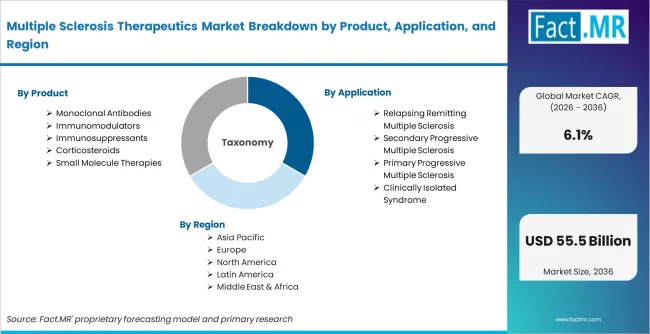
The market is segmented by drug class, route of administration, distribution channel, and region. By drug class, the market is divided into immunosuppressants and immunostimulants. Based on route of administration, the market is categorized into oral, injectable, and others.

By distribution channel, the market includes hospital pharmacies, retail pharmacies, and e-commerce. Regionally, the market is divided into Asia Pacific, Europe, North America, Latin America, and Middle East & Africa.

By Drug Class, Which Segment Accounts for the Dominant Market Share?

Multiple Sclerosis Therapeutics Market Analysis By Drug Class

The immunosuppressants segment represents the dominant force in the multiple sclerosis therapeutics market, capturing approximately 60.5% of total market share in 2025. This established drug class category encompasses solutions featuring potent immune system modulation mechanisms and selective lymphocyte targeting properties, including advanced monoclonal antibodies combining CD20 depletion and alpha-4 integrin blockade, sphingosine-1-phosphate receptor modulators preventing lymphocyte egress from lymphoid tissues, and fumaric acid derivatives that enable superior disease activity suppression and disability stabilization across relapsing-remitting and secondary progressive MS phenotypes worldwide.

The immunosuppressants segment's market leadership stems from its superior efficacy profiles demonstrated in pivotal clinical trials, with therapeutics solutions capable of addressing aggressive disease activity including highly active relapsing MS, breakthrough disease on first-line therapies, and rapidly evolving severe MS while maintaining acceptable benefit-risk ratios across diverse patient populations.

The immunostimulants segment maintains substantial market presence in the 39-40% range, serving patients requiring interferon-based mechanisms or glatiramer acetate-mediated immunomodulation for mild to moderate relapsing-remitting MS where safety profiles favor first-line utilization.

These solutions offer established long-term safety data for patients initiating disease-modifying therapy while providing sufficient efficacy to modify disease course. The immunostimulants segment demonstrates steady utilization patterns, driven by historical clinical experience and patient preference for injectable medications with decades of real-world evidence.

Within the drug class category, novel immunosuppressants including BTK inhibitors and anti-CD20 monoclonal antibodies demonstrate growing adoption driven by convenient oral formulations and improved CNS penetration characteristics. This therapeutics advancement benefits from continuous pharmaceutical innovation targeting specific immune pathways implicated in MS pathophysiology.

Key therapeutics advantages driving the immunosuppressants segment include:

  • Advanced efficacy profiles with documented annualized relapse rate reductions exceeding 50-70% compared to placebo across pivotal registration trials
  • Established disability progression benefits allowing delayed time to confirmed disability worsening measured through expanded disability status scale assessments
  • Enhanced MRI activity suppression features enabling reduction in gadolinium-enhancing lesions and new T2 lesions while maintaining treatment integrity
  • Superior disease control providing optimal outcomes for highly active MS and inadequate responders to first-line therapies across various disease severity levels

By Route of Administration, Which Segment Accounts for the Largest Market Share?

Multiple Sclerosis Therapeutics Market Analysis By Route Of Administration

Injectable route of administration dominates the multiple sclerosis therapeutics delivery landscape with approximately 52.5% market share in 2025, reflecting the critical role of parenteral biologics in supporting high-efficacy disease modification through monoclonal antibody mechanisms and subcutaneous self-administration protocols across patient populations worldwide.

The injectable segment's market leadership is reinforced by established biologic therapy dominance including natalizumab infusions, ocrelizumab intravenous administrations, and subcutaneous ofatumumab formulations, as well as traditional interferon and glatiramer acetate products that pioneered disease-modifying MS treatment paradigms.

Within this segment, intravenous infusions represent significant therapeutics modalities, driven by high-efficacy monoclonal antibodies requiring infusion center administration with medical supervision. This sub-segment benefits from established specialty infusion networks and comprehensive patient monitoring programs supporting safety management.

The oral segment represents substantial market presence with 33-34% share through specialized requirements for convenient daily or twice-daily administration where patients prefer tablet formulations over injection-based therapies. This segment benefits from growing oral disease-modifying therapy portfolio including sphingosine-1-phosphate modulators and fumaric acid derivatives.

The others category maintains presence through emerging routes including subcutaneous depot formulations and investigational transdermal delivery systems, while established subcutaneous self-injection devices serve patient populations preferring home-based administration.

Key market dynamics supporting route of administration growth include:

  • Injectable segment strength driven by biologic therapy mechanisms and high-efficacy profiles, requiring specialized administration infrastructure and patient monitoring
  • Oral formulation expansion trends reflecting patient preference research and pharmaceutical development priorities for convenient dosing
  • Integration of long-interval dosing strategies enabling extended dosing intervals for monoclonal antibodies reducing treatment burden
  • Growing emphasis on patient-centric administration options and shared decision-making driving personalized route selection without compromising efficacy

By Distribution Channel, Which Segment Accounts for a Significant Market Share?

Multiple Sclerosis Therapeutics Market Analysis By Distribution Channel

Hospital pharmacies represent a leading distribution channel segment in the multiple sclerosis therapeutics market with approximately 46.5% market share in 2025, reflecting the specialty medication nature of MS therapeutics requiring prior authorization processes, risk evaluation and mitigation strategies, and comprehensive patient monitoring protocols. The hospital pharmacy segment demonstrates consistent utilization driven by infusion therapy administration, specialty medication management, and payer-mandated distribution channel requirements for high-cost biologics.

The retail pharmacy segment emerges as an important distribution category with substantial market presence, driven by oral MS therapy dispensing and subcutaneous self-injectable products where patients obtain medications through community pharmacy networks. Specialty retail pharmacy divisions within major pharmacy chains serve MS patients through dedicated support programs and insurance coordination services.

Within distribution channels, hospital-based specialty pharmacies demonstrate particular strength serving infusion-based therapies and complex medication management requirements. E-commerce channels address home delivery preferences and mail-order pharmacy programs supporting chronic medication refills.

Key distribution dynamics include:

  • Hospital pharmacy requirements accelerating across infusion-based therapies with emphasis on medical supervision and adverse event management capabilities
  • Retail pharmacy expansion supporting oral MS therapy growth and patient convenience through local access points
  • Specialty pharmacy integration providing comprehensive patient support services including injection training and adherence monitoring
  • E-commerce channel development emphasizing convenient home delivery and automated refill programs for maintenance therapy management

What are the Drivers, Restraints, and Key Trends of the Multiple Sclerosis Therapeutics Market?
The market is driven by three concrete demand factors tied to patient outcomes. First, rising MS diagnosis rates and improving disease identification through advanced MRI techniques create expanding treatment populations, with disease-modifying therapies representing a critical intervention for preventing disability, requiring widespread patient access. Second, growing clinical evidence supporting early aggressive treatment strategies drives neurologist prescribing patterns and treatment algorithm evolution, with numerous studies demonstrating superior long-term outcomes through high-efficacy therapy initiation by 2030. Third, increasing patient activism and treatment expectations enable more assertive disease management approaches that prioritize disability prevention while accepting manageable safety risks through comprehensive monitoring programs.

Market restraints include high treatment costs and payer coverage limitations that can challenge patient access and healthcare system sustainability, particularly where annual therapy costs exceed $60,000-90,000 and lifetime treatment expenses accumulate substantially. Safety monitoring requirements and risk mitigation program complexity pose another significant obstacle, as MS therapeutics utilization depends on comprehensive patient screening, ongoing surveillance protocols, and management of rare but serious adverse events including progressive multifocal leukoencephalopathy and opportunistic infections, potentially affecting treatment persistence and switching patterns. Limited treatment options for progressive MS phenotypes create additional unmet needs, demanding continued pharmaceutical innovation and novel mechanism development beyond immune suppression approaches.

Key trends indicate accelerated biomarker-guided therapy selection in developed markets, particularly North America and Europe, where neurologists demonstrate willingness to utilize neurofilament light chain measurements, OCT imaging, and genetic profiling. Precision medicine trends toward treat-to-target strategies with no evidence of disease activity goals and proactive treatment escalation enable optimized outcomes that balance efficacy and safety. However, the market thesis could face disruption if significant advances in remyelination therapies or major breakthroughs in neuroprotective agents shift treatment paradigms away from immune suppression-focused approaches toward regenerative medicine strategies.

Analysis of the Multiple Sclerosis Therapeutics Market by Key Countries

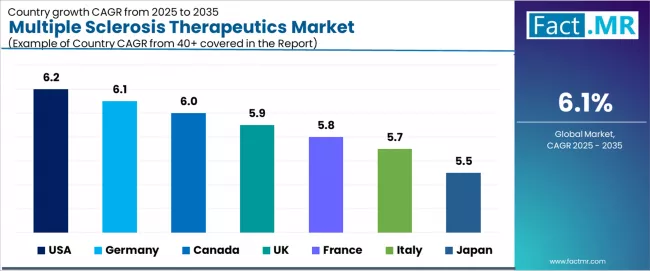
Multiple Sclerosis Therapeutics Market Cagr Analysis By Country

Country CAGR (2025-2035)
USA 6.2%
Germany 6.1%
Canada 6.0%
UK 5.9%
France 5.8%
Italy 5.7%
Japan 5.5%

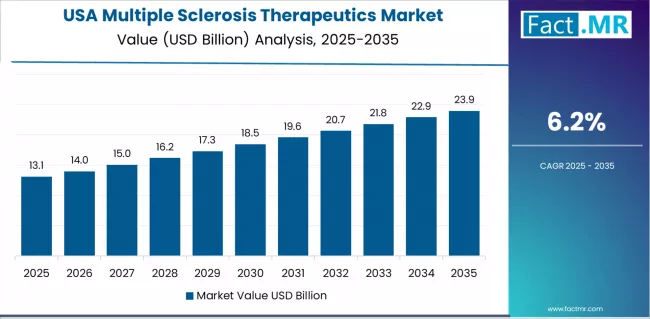
The global multiple sclerosis therapeutics market is expanding robustly, with USA leading at a 6.2% CAGR through 2035, driven by high MS prevalence rates, advanced neurology infrastructure, and comprehensive insurance coverage supporting access to innovative therapies. Germany follows at 6.1%, supported by sophisticated MS care centers, clinical research excellence, and universal healthcare coverage. Canada records 6.0%, reflecting established MS treatment networks with growing adoption of high-efficacy therapies and patient advocacy programs.

UK advances at 5.9%, leveraging NHS specialized neurology services and systematic MS care pathways. France posts 5.8%, focusing on comprehensive MS registries and coordinated specialty care delivery, while Italy grows steadily at 5.7%, emphasizing regional MS centers and academic excellence in neuroinflammation research. Japan demonstrates 5.5% growth, anchored by improving MS diagnosis rates and expanding access to approved disease-modifying therapies.

How is USA Leading Global Market Expansion?

Multiple Sclerosis Therapeutics Market Country Value Analysis

USA demonstrates the strongest growth potential in the multiple sclerosis therapeutics market with a CAGR of 6.2% through 2035. The country's leadership position stems from high MS prevalence estimated at over 400,000 patients, sophisticated academic medical centers with MS specialty programs, and favorable reimbursement frameworks supporting access to high-efficacy disease-modifying therapies.

Growth is concentrated in major healthcare markets and neurology excellence centers, including Boston, Cleveland, Baltimore, San Francisco, and Rochester, where comprehensive MS clinics are increasingly implementing early aggressive treatment strategies, biomarker-guided therapy selection, and treat-to-target protocols across diverse patient phenotypes and disease stages.

Distribution channels through specialty pharmacies, hospital infusion centers, and patient assistance programs expand treatment accessibility across commercially insured, Medicare, and Medicaid populations. The country's concentration of pharmaceutical innovation and clinical trial infrastructure provides strong momentum for novel therapy adoption, including comprehensive implementation across community neurology practices and integrated healthcare systems serving MS patients.

Key market factors:

  • MS patient populations concentrated in northern states and regions with higher latitude showing elevated prevalence rates
  • Academic medical center leadership through institutions including Cleveland Clinic, Johns Hopkins, UCSF, and Mayo Clinic advancing MS care excellence
  • Comprehensive insurance coverage through commercial plans, Medicare Part D, and manufacturer patient assistance programs enabling broad therapy access
  • Pharmaceutical innovation ecosystem featuring companies like Biogen driving next-generation MS therapeutics development and regulatory approval pathways

Why is Germany Emerging as a High-Growth Market?

In major healthcare regions including Bavaria, Baden-Württemberg, North Rhine-Westphalia, and Berlin, the adoption of advanced MS therapeutics solutions is accelerating across university hospitals, specialized MS centers, and community neurology practices, driven by aging population demographics and systematic MS registry participation supporting evidence-based care.

The market demonstrates strong growth momentum with a CAGR of 6.1% through 2035, linked to comprehensive universal healthcare coverage and increasing emphasis on treat-to-target approaches. German neurologists are implementing high-efficacy therapy protocols and biomarker monitoring strategies to enhance disease control while meeting quality standards demanded by evidence-based medicine principles. The country's robust clinical research infrastructure creates ongoing opportunities for novel therapy access through clinical trials and early access programs.

Key development areas:

  • University hospital MS centers leading high-efficacy therapy adoption with emphasis on early aggressive treatment and disability prevention
  • National MS registry (German MS Registry) supporting real-world evidence generation and treatment optimization strategies
  • Comprehensive healthcare coverage through statutory health insurance enabling equitable access to approved disease-modifying therapies
  • Strong collaboration between academic centers and pharmaceutical companies advancing clinical research and therapeutics innovation

What drives Canada’s Market Resilience?

Canada market expansion is driven by diverse healthcare initiatives, including specialized MS clinics in academic centers and comprehensive provincial drug coverage programs supporting therapy access. The country demonstrates solid growth potential with a CAGR of 6.0% through 2035, supported by high MS prevalence rates estimated at over 90,000 patients and increasing adoption of high-efficacy therapies in major healthcare regions.

Canadian neurologists face implementation challenges related to provincial formulary variations and prior authorization requirements, requiring clear demonstration of treatment appropriateness and failure of first-line options. However, established MS care networks and comprehensive patient registries create stable baseline demand for disease-modifying therapies, particularly among MS clinics and academic neurology departments where evidence-based treatment algorithms drive prescribing decisions and treatment optimization protocols.

Market characteristics:

  • Academic MS centers and specialized clinics showing robust patient volumes with substantial disease-modifying therapy utilization across phenotypes
  • Provincial healthcare variations between comprehensive coverage in Ontario and British Columbia and evolving access in other provinces
  • Future projections indicate continued emphasis on treat-to-target approaches with focus on no evidence of disease activity goals
  • Growing emphasis on patient-reported outcomes and quality of life assessments supporting holistic MS care delivery

How does UK Demonstrate Integrated Care Leadership?

The UK market leads in systematic MS care delivery based on integration with NHS neurology services and National Institute for Health and Care Excellence technology appraisal frameworks guiding treatment access. The country shows strong potential with a CAGR of 5.9% through 2035, driven by specialized MS teams and comprehensive care pathways in major regions, including England, Scotland, Wales, and Northern Ireland.

UK neurologists are adopting evidence-based treatment algorithms and shared decision-making approaches for MS therapy selection, particularly in regional neuroscience centers and teaching hospitals demanding rigorous cost-effectiveness demonstration. Distribution channels through NHS hospital pharmacies and homecare providers expand coverage across universal healthcare system supporting equitable treatment access.

Leading market segments:

  • Regional neuroscience centers in major cities implementing specialized MS services with multidisciplinary team approaches
  • NHS treatment pathways incorporating NICE guidance and quality standards achieving consistent care delivery
  • Strategic emphasis on health technology assessment and real-world evidence supporting formulary decision-making
  • Focus on MS specialist nurses and patient support programs enhancing treatment adherence and safety monitoring

What Positions France for Research Excellence Leadership?

In major healthcare regions including Île-de-France, Auvergne-Rhône-Alpes, Provence-Alpes-Côte d'Azur, and Grand Est, neurologists are implementing advanced MS therapeutics solutions through academic hospital networks and specialized neurology centers, with documented outcomes showing improved disability prevention through systematic treatment protocols.

The market shows steady growth potential with a CAGR of 5.8% through 2035, linked to comprehensive MS registry systems (OFSEP registry), ongoing clinical research programs, and coordinated specialty care delivery in major population centers. Neurologists are adopting treat-to-target approaches and biomarker-guided therapy escalation to enhance long-term outcomes while maintaining safety standards demanded by French regulatory frameworks. The country's strong academic neurology tradition creates ongoing opportunities for innovative therapy adoption that differentiates through clinical excellence and research participation.

Market development factors:

  • Academic hospital networks leading MS care with emphasis on research participation and evidence generation
  • National MS registry (OFSEP) supporting epidemiology research and real-world evidence collection across patient populations
  • Universal healthcare coverage (Assurance Maladie) enabling comprehensive treatment access with specialty medication pathways
  • Integration of pharmaceutical industry partnerships and investigator-initiated research advancing therapeutics innovation

How Does Italy Show Academic Excellence Leadership?

Italy's multiple sclerosis therapeutics market demonstrates sophisticated research capabilities focused on MS pathophysiology investigation and therapeutics mechanism exploration, with documented contributions to international clinical trials achieving substantial advancement in understanding disease heterogeneity.

The country maintains steady growth momentum with a CAGR of 5.7% through 2035, driven by strong academic neurology departments emphasizing neuroinflammation research and clinical trial participation that align with Italian medical tradition. Major healthcare regions, including Lombardy, Lazio, Veneto, and Emilia-Romagna, showcase coordinated MS care networks where university hospitals integrate seamlessly with regional neurology centers supporting comprehensive patient management programs.

Key market characteristics:

  • University hospital neurology departments driving MS research excellence with emphasis on immunology and neuroimaging
  • Regional MS networks providing coordinated care delivery across primary neurology centers and satellite clinics
  • National Health Service (SSN) coverage supporting approved disease-modifying therapy access with regional formulary management
  • Collaboration between Italian Neurological Society and pharmaceutical companies advancing clinical research and therapeutics development

What Characterizes Japan's Market Development?

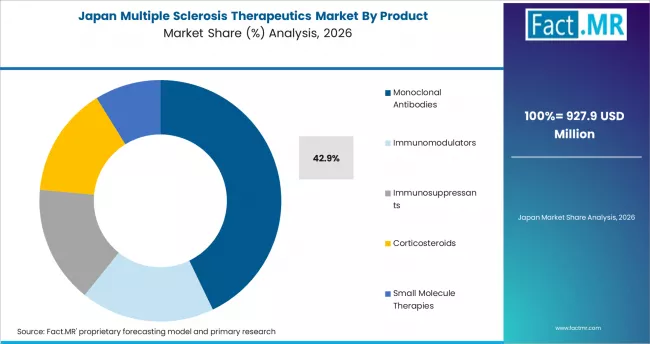
Multiple Sclerosis Therapeutics Market Japan Market Share Analysis By Drug Class

In major metropolitan areas including Tokyo, Osaka, Nagoya, and Fukuoka, the adoption of MS therapeutics solutions is expanding across university hospitals and specialized neurology centers, driven by improving disease recognition and increasing approval of international standard therapies. The market demonstrates steady growth potential with a CAGR of 5.5% through 2035, linked to rising MS diagnosis rates and growing awareness among Japanese neurologists regarding treatment options and disease management strategies.

Japanese healthcare providers are implementing approved disease-modifying therapies and safety monitoring protocols to enhance patient outcomes while meeting regulatory standards and national health insurance requirements. The country's traditionally lower MS prevalence compared to Western populations creates unique epidemiological characteristics, while increasing therapy availability drives systematic treatment adoption.

Key development areas:

  • University hospital neurology departments leading MS diagnosis and treatment with emphasis on differential diagnosis from neuromyelitis optica
  • Regulatory approval expansion enabling access to international standard therapies including monoclonal antibodies and oral agents
  • National health insurance coverage supporting approved therapy reimbursement with safety monitoring requirements
  • Growing clinical research participation and international collaboration advancing MS care quality and therapeutics options

Europe Market Split by Country

Multiple Sclerosis Therapeutics Market Europe Country Market Share Analysis, 2025 & 2035

The multiple sclerosis therapeutics market in Europe is projected to grow from USD 9.84 billion in 2025 to USD 17.52 billion by 2035, registering a CAGR of 5.9% over the forecast period. Germany is expected to maintain its leadership position with a 28.3% market share in 2025, adjusting to 27.9% by 2035, supported by its extensive MS center infrastructure, comprehensive universal healthcare coverage, and sophisticated clinical research networks serving European neurology communities.

UK follows with a 19.7% share in 2025, projected to reach 19.9% by 2035, driven by comprehensive NHS neurology services and systematic MS care pathway implementation in major healthcare regions. France holds a 18.4% share in 2025, expected to maintain 18.6% by 2035 through ongoing MS registry development and academic research excellence.

Italy commands a 16.2% share, while Spain accounts for 11.8% in 2025. The rest of Europe region is anticipated to gain momentum, expanding its collective share from 5.6% to 6.1% by 2035, attributed to increasing MS therapy access in Nordic countries and emerging Eastern European healthcare systems implementing modern neurology care standards.

Competitive Landscape of the Multiple Sclerosis Therapeutics Market

Multiple Sclerosis Therapeutics Market Analysis By Company

The multiple sclerosis therapeutics market features approximately 10-15 meaningful players with moderate concentration, where Biogen controls roughly 22% of global market share through established product franchises, extensive clinical development pipelines, and deep MS therapeutics expertise. Competition centers on therapeutics efficacy, safety differentiation, and patient support programs rather than price competition alone.

Market leaders include Biogen, which maintains competitive advantages through pioneering MS therapeutics development, comprehensive product portfolio spanning injectable and oral agents, and deep integration with academic MS centers and specialty neurology networks, creating high prescriber confidence among neurologists seeking proven treatment options. This company leverages decades of MS-focused research and development expertise to defend market positions while advancing next-generation therapies and biosimilar strategies.

Challengers encompass established pharmaceutical companies including Teva Pharmaceutical Industries Ltd., Sanofi, and F. Hoffmann-La Roche Ltd., which compete through diversified product portfolios and strong presence in generic/biosimilar segments through lifecycle management and novel mechanism development.

Specialty pharmaceutical companies, including Bayer AG, Pfizer Inc., and Merck & Co., Inc., focus on specific therapeutics mechanisms or administration routes, offering differentiated capabilities in sphingosine-1-phosphate modulation, interferon technologies, and monoclonal antibody platforms.

Emerging biotechnology innovators and specialty pharma companies create competitive pressure through novel targets including BTK inhibitors and remyelination agents, particularly in progressive MS development programs where unmet needs remain substantial. Market dynamics favor companies that combine therapeutics efficacy with manageable safety profiles and comprehensive patient support capabilities that address treatment initiation, adherence monitoring, and adverse event management.

Strategic emphasis on real-world evidence generation, biomarker validation, and precision medicine approaches enables differentiation in increasingly sophisticated MS treatment landscapes across developed markets and expanding access initiatives in emerging regions.

Global Multiple Sclerosis Therapeutics Market — Stakeholder Contribution Framework

Multiple sclerosis therapeutics represent a critical pharmaceutical category that enables patients with relapsing-remitting and progressive MS to manage debilitating neurological symptoms and prevent long-term disability accumulation while maintaining functional independence, typically providing targeted advantages including relapse rate reduction by 30-70%, disability progression delays, and MRI lesion activity suppression compared to placebo alone while ensuring improved quality of life and functional preservation.

With the market projected to grow from USD 28.95 billion in 2025 to USD 52.3 billion by 2035 at a 6.1% CAGR, these solutions offer compelling advantages for early aggressive treatment strategies, disease activity suppression, and diverse patient phenotypes across global healthcare systems. Scaling market penetration and patient access requires coordinated action across healthcare policies, clinical guidelines, pharmaceutical manufacturers, neurology providers, and patient advocacy initiatives.

How Could Governments Spur Local Development and Adoption?

  • Specialty Care Infrastructure: Include MS centers in national neurology development initiatives, providing targeted support for multidisciplinary MS clinic establishment and supporting research institutions through clinical trial facilitation and registry development programs.
  • Tax Policy & Coverage Support: Implement favorable reimbursement frameworks for disease-modifying therapies, provide tax incentives for pharmaceutical companies investing in progressive MS research, and establish patient assistance program structures that improve access for underinsured populations.
  • Regulatory Framework Development: Create accelerated approval pathways for high-efficacy MS therapies addressing unmet needs, establish clear safety monitoring guidelines and risk mitigation frameworks, and develop international harmonization protocols facilitating global clinical development.
  • Healthcare Infrastructure & Education: Fund neurology training programs emphasizing MS specialty care competencies, invest in MRI infrastructure supporting disease monitoring, and establish educational initiatives improving MS awareness and early diagnosis capabilities.
  • Research & Innovation Support: Establish public-private partnerships for MS research, support academic-industry collaborations investigating novel mechanisms and biomarker development, and create regulatory environments encouraging therapeutics innovation beyond immunosuppression.

How Could Industry Bodies Support Market Development?

  • Clinical Guidelines & Evidence: Define standardized treatment algorithms for MS phenotype-specific therapy selection, establish universal disease activity monitoring protocols and treat-to-target frameworks, and create real-world evidence registries supporting comparative effectiveness research.
  • Market Education & Best Practices: Lead messaging demonstrating MS therapeutics benefits, emphasizing early treatment importance, disability prevention priorities, and realistic safety considerations compared to disease progression risks.
  • Quality Standards & Safety: Develop guidelines for risk evaluation and mitigation strategies, safety monitoring protocols, and adverse event management frameworks ensuring patient safety across therapeutics classes.
  • Professional Development: Run certification programs for MS specialists, infusion nurses, and specialty pharmacists on optimizing therapy management, safety monitoring, and patient support in comprehensive care delivery models.

How Could Manufacturers and Pharmaceutical Companies Strengthen the Ecosystem?

  • Advanced Product Development: Develop next-generation MS therapeutics with enhanced CNS penetration, improved safety profiles, and novel mechanisms addressing progressive MS and remyelination that advance beyond current immunosuppression paradigms.
  • Clinical Evidence Programs: Provide comprehensive phase 3 trial data, long-term extension studies, and head-to-head comparative trials demonstrating superior efficacy and acceptable safety supporting evidence-based prescribing.
  • Patient Support Initiatives: Offer comprehensive patient assistance programs addressing financial barriers, injection training, adherence support, and adverse event management that help patients access and persist on therapy.
  • Research & Collaboration Networks: Build comprehensive clinical development capabilities, academic partnerships, and biomarker research programs ensuring MS therapeutics address complete disease spectrum from early relapsing to advanced progressive stages.

How Could Neurologists and Healthcare Teams Navigate the Market?

  • Evidence-Based Treatment Protocols: Incorporate validated MS treatment algorithms into clinical practice, with particular emphasis on treat-to-target approaches, no evidence of disease activity goals, and proactive escalation strategies for breakthrough disease.
  • Patient Education Excellence: Establish comprehensive patient counseling programs addressing treatment expectations, safety monitoring requirements, and shared decision-making frameworks through optimized communication approaches.
  • Multidisciplinary Care Models: Implement integrated MS clinics combining neurologists, MS nurses, rehabilitation specialists, and mental health providers offering comprehensive disease management addressing medical, functional, and psychosocial needs.
  • Outcomes Measurement Systems: Develop standardized disease activity monitoring, patient-reported outcome tracking, and quality of life assessment enabling continuous treatment optimization and value demonstration.

How Could Investors and Financial Enablers Unlock Value?

  • Market Leader Investment: Provide growth capital for established companies like Biogen and emerging biotechnology innovators to fund late-stage clinical programs, regulatory submissions, and commercial infrastructure supporting market leadership.
  • Progressive MS Innovation Financing: Back companies developing remyelination therapies, neuroprotective agents, and BTK inhibitors addressing substantial unmet needs in progressive MS where current treatments show limited efficacy.
  • Market Access Funding: Finance patient access initiatives and affordability programs in emerging markets including Latin America and Asia Pacific, supporting treatment availability expansion addressing global MS burden.
  • Digital Health Integration: Support companies developing MS monitoring applications, telemedicine platforms, and artificial intelligence-enabled MRI analysis tools enhancing disease surveillance through technology-enabled neurology care.

Key Players in the Multiple Sclerosis Therapeutics Market

  • Biogen
  • Teva Pharmaceutical Industries Ltd.
  • Pfizer Inc.
  • Bayer AG
  • Sanofi
  • F. Hoffmann-La Roche Ltd.
  • Johnson & Johnson Services, Inc.
  • Merck & Co., Inc.
  • Takeda Pharmaceutical Company Limited
  • Horizon Therapeutics plc

Scope of the Report

Items Values
Quantitative Units USD 28.95 Billion
Drug Class Immunosuppressants, Immunostimulants
Route of Administration Oral, Injectable, Others
Distribution Channel Hospital Pharmacies, Retail Pharmacies, E-Commerce
Regions Covered Asia Pacific, Europe, North America, Latin America, Middle East & Africa
Country Covered USA, Germany, Canada, UK, France, Italy, Japan, and 40+ countries
Key Companies Profiled Biogen, Teva Pharmaceutical Industries Ltd., Pfizer Inc., Bayer AG, Sanofi, F. Hoffmann-La Roche Ltd., Johnson & Johnson Services, Inc., Merck & Co., Inc., Takeda Pharmaceutical Company Limited, Horizon Therapeutics plc
Additional Attributes Dollar sales by drug class and route of administration categories, regional adoption trends across North America, Europe, and Asia Pacific, competitive landscape with pharmaceutical manufacturers and specialty pharmacy providers, therapeutics specifications and safety monitoring requirements, integration with neurology care pathways and MS specialty clinics, innovations in monoclonal antibodies and oral disease-modifying therapies, and development of specialized applications with clinical evidence generation and patient support program capabilities.

Multiple Sclerosis Therapeutics Market by Segments

  • Drug Class :

    • Immunosuppressants
    • Immunostimulants
  • Route of Administration :

    • Oral
    • Injectable
    • Others
  • Distribution Channel :

    • Hospital Pharmacies
    • Retail Pharmacies
    • E-Commerce
  • Region :

    • Asia Pacific
      • China
      • Japan
      • India
      • South Korea
      • Australia
      • Thailand
      • Rest of Asia Pacific
    • Europe
      • Germany
      • UK
      • France
      • Italy
      • Spain
      • Denmark
      • Sweden
      • Norway
      • Rest of Europe
    • North America
      • USA
      • Canada
      • Mexico
    • Latin America
      • Brazil
      • Argentina
      • Rest of Latin America
    • Middle East & Africa
      • South Africa
      • Saudi Arabia
      • UAE
      • Kuwait
      • Rest of Middle East & Africa

Table of Content

  1. Executive Summary
    • Global Market Outlook
    • Demand to side Trends
    • Supply to side Trends
    • Technology Roadmap Analysis
    • Analysis and Recommendations
  2. Market Overview
    • Market Coverage / Taxonomy
    • Market Definition / Scope / Limitations
  3. Market Background
    • Market Dynamics
      • Drivers
      • Restraints
      • Opportunity
      • Trends
    • Scenario Forecast
      • Demand in Optimistic Scenario
      • Demand in Likely Scenario
      • Demand in Conservative Scenario
    • Opportunity Map Analysis
    • Product Life Cycle Analysis
    • Supply Chain Analysis
    • Investment Feasibility Matrix
    • Value Chain Analysis
    • PESTLE and Porter’s Analysis
    • Regulatory Landscape
    • Regional Parent Market Outlook
    • Production and Consumption Statistics
    • Import and Export Statistics
  4. Global Market Analysis 2020 to 2024 and Forecast, 2025 to 2035
    • Historical Market Size Value (USD Million) Analysis, 2020 to 2024
    • Current and Future Market Size Value (USD Million) Projections, 2025 to 2035
      • Y to o to Y Growth Trend Analysis
      • Absolute $ Opportunity Analysis
  5. Global Market Pricing Analysis 2020 to 2024 and Forecast 2025 to 2035
  6. Global Market Analysis 2020 to 2024 and Forecast 2025 to 2035, By Drug Class
    • Introduction / Key Findings
    • Historical Market Size Value (USD Million) Analysis By Drug Class, 2020 to 2024
    • Current and Future Market Size Value (USD Million) Analysis and Forecast By Drug Class, 2025 to 2035
      • Immunosuppressants
      • Immunostimulants
    • Y to o to Y Growth Trend Analysis By Drug Class, 2020 to 2024
    • Absolute $ Opportunity Analysis By Drug Class, 2025 to 2035
  7. Global Market Analysis 2020 to 2024 and Forecast 2025 to 2035, By Route of Administration
    • Introduction / Key Findings
    • Historical Market Size Value (USD Million) Analysis By Route of Administration, 2020 to 2024
    • Current and Future Market Size Value (USD Million) Analysis and Forecast By Route of Administration, 2025 to 2035
      • Injectable
      • Oral
      • Others
    • Y to o to Y Growth Trend Analysis By Route of Administration, 2020 to 2024
    • Absolute $ Opportunity Analysis By Route of Administration, 2025 to 2035
  8. Global Market Analysis 2020 to 2024 and Forecast 2025 to 2035, By Distribution Channel
    • Introduction / Key Findings
    • Historical Market Size Value (USD Million) Analysis By Distribution Channel, 2020 to 2024
    • Current and Future Market Size Value (USD Million) Analysis and Forecast By Distribution Channel, 2025 to 2035
      • Hospital Pharmacies
      • Retail Pharmacies
      • E-Commerce
    • Y to o to Y Growth Trend Analysis By Distribution Channel, 2020 to 2024
    • Absolute $ Opportunity Analysis By Distribution Channel, 2025 to 2035
  9. Global Market Analysis 2020 to 2024 and Forecast 2025 to 2035, By Region
    • Introduction
    • Historical Market Size Value (USD Million) Analysis By Region, 2020 to 2024
    • Current Market Size Value (USD Million) Analysis and Forecast By Region, 2025 to 2035
      • North America
      • Latin America
      • Western Europe
      • Eastern Europe
      • East Asia
      • South Asia and Pacific
      • Middle East & Africa
    • Market Attractiveness Analysis By Region
  10. North America Market Analysis 2020 to 2024 and Forecast 2025 to 2035, By Country
    • Historical Market Size Value (USD Million) Trend Analysis By Market Taxonomy, 2020 to 2024
    • Market Size Value (USD Million) Forecast By Market Taxonomy, 2025 to 2035
      • By Country
        • USA
        • Canada
        • Mexico
      • By Drug Class
      • By Route of Administration
      • By Distribution Channel
    • Market Attractiveness Analysis
      • By Country
      • By Drug Class
      • By Route of Administration
      • By Distribution Channel
    • Key Takeaways
  11. Latin America Market Analysis 2020 to 2024 and Forecast 2025 to 2035, By Country
    • Historical Market Size Value (USD Million) Trend Analysis By Market Taxonomy, 2020 to 2024
    • Market Size Value (USD Million) Forecast By Market Taxonomy, 2025 to 2035
      • By Country
        • Brazil
        • Chile
        • Rest of Latin America
      • By Drug Class
      • By Route of Administration
      • By Distribution Channel
    • Market Attractiveness Analysis
      • By Country
      • By Drug Class
      • By Route of Administration
      • By Distribution Channel
    • Key Takeaways
  12. Western Europe Market Analysis 2020 to 2024 and Forecast 2025 to 2035, By Country
    • Historical Market Size Value (USD Million) Trend Analysis By Market Taxonomy, 2020 to 2024
    • Market Size Value (USD Million) Forecast By Market Taxonomy, 2025 to 2035
      • By Country
        • Germany
        • UK
        • Italy
        • Spain
        • France
        • Nordic
        • BENELUX
        • Rest of Western Europe
      • By Drug Class
      • By Route of Administration
      • By Distribution Channel
    • Market Attractiveness Analysis
      • By Country
      • By Drug Class
      • By Route of Administration
      • By Distribution Channel
    • Key Takeaways
  13. Eastern Europe Market Analysis 2020 to 2024 and Forecast 2025 to 2035, By Country
    • Historical Market Size Value (USD Million) Trend Analysis By Market Taxonomy, 2020 to 2024
    • Market Size Value (USD Million) Forecast By Market Taxonomy, 2025 to 2035
      • By Country
        • Russia
        • Poland
        • Hungary
        • Balkan & Baltic
        • Rest of Eastern Europe
      • By Drug Class
      • By Route of Administration
      • By Distribution Channel
    • Market Attractiveness Analysis
      • By Country
      • By Drug Class
      • By Route of Administration
      • By Distribution Channel
    • Key Takeaways
  14. East Asia Market Analysis 2020 to 2024 and Forecast 2025 to 2035, By Country
    • Historical Market Size Value (USD Million) Trend Analysis By Market Taxonomy, 2020 to 2024
    • Market Size Value (USD Million) Forecast By Market Taxonomy, 2025 to 2035
      • By Country
        • China
        • Japan
        • South Korea
      • By Drug Class
      • By Route of Administration
      • By Distribution Channel
    • Market Attractiveness Analysis
      • By Country
      • By Drug Class
      • By Route of Administration
      • By Distribution Channel
    • Key Takeaways
  15. South Asia and Pacific Market Analysis 2020 to 2024 and Forecast 2025 to 2035, By Country
    • Historical Market Size Value (USD Million) Trend Analysis By Market Taxonomy, 2020 to 2024
    • Market Size Value (USD Million) Forecast By Market Taxonomy, 2025 to 2035
      • By Country
        • India
        • ASEAN
        • Australia & New Zealand
        • Rest of South Asia and Pacific
      • By Drug Class
      • By Route of Administration
      • By Distribution Channel
    • Market Attractiveness Analysis
      • By Country
      • By Drug Class
      • By Route of Administration
      • By Distribution Channel
    • Key Takeaways
  16. Middle East & Africa Market Analysis 2020 to 2024 and Forecast 2025 to 2035, By Country
    • Historical Market Size Value (USD Million) Trend Analysis By Market Taxonomy, 2020 to 2024
    • Market Size Value (USD Million) Forecast By Market Taxonomy, 2025 to 2035
      • By Country
        • Kingdom of Saudi Arabia
        • Other GCC Countries
        • Turkiye
        • South Africa
        • Other African Union
        • Rest of Middle East & Africa
      • By Drug Class
      • By Route of Administration
      • By Distribution Channel
    • Market Attractiveness Analysis
      • By Country
      • By Drug Class
      • By Route of Administration
      • By Distribution Channel
    • Key Takeaways
  17. Key Countries Market Analysis
    • USA
      • Pricing Analysis
      • Market Share Analysis, 2024
        • By Drug Class
        • By Route of Administration
        • By Distribution Channel
    • Canada
      • Pricing Analysis
      • Market Share Analysis, 2024
        • By Drug Class
        • By Route of Administration
        • By Distribution Channel
    • Mexico
      • Pricing Analysis
      • Market Share Analysis, 2024
        • By Drug Class
        • By Route of Administration
        • By Distribution Channel
    • Brazil
      • Pricing Analysis
      • Market Share Analysis, 2024
        • By Drug Class
        • By Route of Administration
        • By Distribution Channel
    • Chile
      • Pricing Analysis
      • Market Share Analysis, 2024
        • By Drug Class
        • By Route of Administration
        • By Distribution Channel
    • Germany
      • Pricing Analysis
      • Market Share Analysis, 2024
        • By Drug Class
        • By Route of Administration
        • By Distribution Channel
    • UK
      • Pricing Analysis
      • Market Share Analysis, 2024
        • By Drug Class
        • By Route of Administration
        • By Distribution Channel
    • Italy
      • Pricing Analysis
      • Market Share Analysis, 2024
        • By Drug Class
        • By Route of Administration
        • By Distribution Channel
    • Spain
      • Pricing Analysis
      • Market Share Analysis, 2024
        • By Drug Class
        • By Route of Administration
        • By Distribution Channel
    • France
      • Pricing Analysis
      • Market Share Analysis, 2024
        • By Drug Class
        • By Route of Administration
        • By Distribution Channel
    • India
      • Pricing Analysis
      • Market Share Analysis, 2024
        • By Drug Class
        • By Route of Administration
        • By Distribution Channel
    • ASEAN
      • Pricing Analysis
      • Market Share Analysis, 2024
        • By Drug Class
        • By Route of Administration
        • By Distribution Channel
    • Australia & New Zealand
      • Pricing Analysis
      • Market Share Analysis, 2024
        • By Drug Class
        • By Route of Administration
        • By Distribution Channel
    • China
      • Pricing Analysis
      • Market Share Analysis, 2024
        • By Drug Class
        • By Route of Administration
        • By Distribution Channel
    • Japan
      • Pricing Analysis
      • Market Share Analysis, 2024
        • By Drug Class
        • By Route of Administration
        • By Distribution Channel
    • South Korea
      • Pricing Analysis
      • Market Share Analysis, 2024
        • By Drug Class
        • By Route of Administration
        • By Distribution Channel
    • Russia
      • Pricing Analysis
      • Market Share Analysis, 2024
        • By Drug Class
        • By Route of Administration
        • By Distribution Channel
    • Poland
      • Pricing Analysis
      • Market Share Analysis, 2024
        • By Drug Class
        • By Route of Administration
        • By Distribution Channel
    • Hungary
      • Pricing Analysis
      • Market Share Analysis, 2024
        • By Drug Class
        • By Route of Administration
        • By Distribution Channel
    • Kingdom of Saudi Arabia
      • Pricing Analysis
      • Market Share Analysis, 2024
        • By Drug Class
        • By Route of Administration
        • By Distribution Channel
    • Turkiye
      • Pricing Analysis
      • Market Share Analysis, 2024
        • By Drug Class
        • By Route of Administration
        • By Distribution Channel
    • South Africa
      • Pricing Analysis
      • Market Share Analysis, 2024
        • By Drug Class
        • By Route of Administration
        • By Distribution Channel
  18. Market Structure Analysis
    • Competition Dashboard
    • Competition Benchmarking
    • Market Share Analysis of Top Players
      • By Regional
      • By Drug Class
      • By Route of Administration
      • By Distribution Channel
  19. Competition Analysis
    • Competition Deep Dive
      • Biogen
        • Overview
        • Product Portfolio
        • Profitability by Market Segments (Product/Age /Sales Channel/Region)
        • Sales Footprint
        • Strategy Overview
          • Marketing Strategy
          • Product Strategy
          • Channel Strategy
      • Teva Pharmaceutical Industries Ltd.
      • Pfizer Inc.
      • Bayer AG
      • Sanofi
      • F. Hoffmann-La Roche Ltd.
      • Johnson & Johnson Services, Inc.
      • Merck & Co., Inc.
      • Takeda Pharmaceutical Company Limited
      • Horizon Therapeutics plc
  20. Assumptions & Acronyms Used
  21. Research Methodology

List Of Table

  • Table 1: Global Market Value (USD Million) Forecast by Region, 2020 to 2035
  • Table 2: Global Market Value (USD Million) Forecast by Drug Class, 2020 to 2035
  • Table 3: Global Market Value (USD Million) Forecast by Route of Administration, 2020 to 2035
  • Table 4: Global Market Value (USD Million) Forecast by Distribution Channel, 2020 to 2035
  • Table 5: North America Market Value (USD Million) Forecast by Country, 2020 to 2035
  • Table 6: North America Market Value (USD Million) Forecast by Drug Class, 2020 to 2035
  • Table 7: North America Market Value (USD Million) Forecast by Route of Administration, 2020 to 2035
  • Table 8: North America Market Value (USD Million) Forecast by Distribution Channel, 2020 to 2035
  • Table 9: Latin America Market Value (USD Million) Forecast by Country, 2020 to 2035
  • Table 10: Latin America Market Value (USD Million) Forecast by Drug Class, 2020 to 2035
  • Table 11: Latin America Market Value (USD Million) Forecast by Route of Administration, 2020 to 2035
  • Table 12: Latin America Market Value (USD Million) Forecast by Distribution Channel, 2020 to 2035
  • Table 13: Western Europe Market Value (USD Million) Forecast by Country, 2020 to 2035
  • Table 14: Western Europe Market Value (USD Million) Forecast by Drug Class, 2020 to 2035
  • Table 15: Western Europe Market Value (USD Million) Forecast by Route of Administration, 2020 to 2035
  • Table 16: Western Europe Market Value (USD Million) Forecast by Distribution Channel, 2020 to 2035
  • Table 17: Eastern Europe Market Value (USD Million) Forecast by Country, 2020 to 2035
  • Table 18: Eastern Europe Market Value (USD Million) Forecast by Drug Class, 2020 to 2035
  • Table 19: Eastern Europe Market Value (USD Million) Forecast by Route of Administration, 2020 to 2035
  • Table 20: Eastern Europe Market Value (USD Million) Forecast by Distribution Channel, 2020 to 2035
  • Table 21: East Asia Market Value (USD Million) Forecast by Country, 2020 to 2035
  • Table 22: East Asia Market Value (USD Million) Forecast by Drug Class, 2020 to 2035
  • Table 23: East Asia Market Value (USD Million) Forecast by Route of Administration, 2020 to 2035
  • Table 24: East Asia Market Value (USD Million) Forecast by Distribution Channel, 2020 to 2035
  • Table 25: South Asia and Pacific Market Value (USD Million) Forecast by Country, 2020 to 2035
  • Table 26: South Asia and Pacific Market Value (USD Million) Forecast by Drug Class, 2020 to 2035
  • Table 27: South Asia and Pacific Market Value (USD Million) Forecast by Route of Administration, 2020 to 2035
  • Table 28: South Asia and Pacific Market Value (USD Million) Forecast by Distribution Channel, 2020 to 2035
  • Table 29: Middle East & Africa Market Value (USD Million) Forecast by Country, 2020 to 2035
  • Table 30: Middle East & Africa Market Value (USD Million) Forecast by Drug Class, 2020 to 2035
  • Table 31: Middle East & Africa Market Value (USD Million) Forecast by Route of Administration, 2020 to 2035
  • Table 32: Middle East & Africa Market Value (USD Million) Forecast by Distribution Channel, 2020 to 2035

List Of Figures

  • Figure 1: Global Market Pricing Analysis
  • Figure 2: Global Market Value (USD Million) Forecast 2020 to 2035
  • Figure 3: Global Market Value Share and BPS Analysis by Drug Class, 2025 and 2035
  • Figure 4: Global Market Y to o to Y Growth Comparison by Drug Class, 2025 to 2035
  • Figure 5: Global Market Attractiveness Analysis by Drug Class
  • Figure 6: Global Market Value Share and BPS Analysis by Route of Administration, 2025 and 2035
  • Figure 7: Global Market Y to o to Y Growth Comparison by Route of Administration, 2025 to 2035
  • Figure 8: Global Market Attractiveness Analysis by Route of Administration
  • Figure 9: Global Market Value Share and BPS Analysis by Distribution Channel, 2025 and 2035
  • Figure 10: Global Market Y to o to Y Growth Comparison by Distribution Channel, 2025 to 2035
  • Figure 11: Global Market Attractiveness Analysis by Distribution Channel
  • Figure 12: Global Market Value (USD Million) Share and BPS Analysis by Region, 2025 and 2035
  • Figure 13: Global Market Y to o to Y Growth Comparison by Region, 2025 to 2035
  • Figure 14: Global Market Attractiveness Analysis by Region
  • Figure 15: North America Market Incremental Dollar Opportunity, 2025 to 2035
  • Figure 16: Latin America Market Incremental Dollar Opportunity, 2025 to 2035
  • Figure 17: Western Europe Market Incremental Dollar Opportunity, 2025 to 2035
  • Figure 18: Eastern Europe Market Incremental Dollar Opportunity, 2025 to 2035
  • Figure 19: East Asia Market Incremental Dollar Opportunity, 2025 to 2035
  • Figure 20: South Asia and Pacific Market Incremental Dollar Opportunity, 2025 to 2035
  • Figure 21: Middle East & Africa Market Incremental Dollar Opportunity, 2025 to 2035
  • Figure 22: North America Market Value Share and BPS Analysis by Country, 2025 and 2035
  • Figure 23: North America Market Value Share and BPS Analysis by Drug Class, 2025 and 2035
  • Figure 24: North America Market Y to o to Y Growth Comparison by Drug Class, 2025 to 2035
  • Figure 25: North America Market Attractiveness Analysis by Drug Class
  • Figure 26: North America Market Value Share and BPS Analysis by Route of Administration, 2025 and 2035
  • Figure 27: North America Market Y to o to Y Growth Comparison by Route of Administration, 2025 to 2035
  • Figure 28: North America Market Attractiveness Analysis by Route of Administration
  • Figure 29: North America Market Value Share and BPS Analysis by Distribution Channel, 2025 and 2035
  • Figure 30: North America Market Y to o to Y Growth Comparison by Distribution Channel, 2025 to 2035
  • Figure 31: North America Market Attractiveness Analysis by Distribution Channel
  • Figure 32: Latin America Market Value Share and BPS Analysis by Country, 2025 and 2035
  • Figure 33: Latin America Market Value Share and BPS Analysis by Drug Class, 2025 and 2035
  • Figure 34: Latin America Market Y to o to Y Growth Comparison by Drug Class, 2025 to 2035
  • Figure 35: Latin America Market Attractiveness Analysis by Drug Class
  • Figure 36: Latin America Market Value Share and BPS Analysis by Route of Administration, 2025 and 2035
  • Figure 37: Latin America Market Y to o to Y Growth Comparison by Route of Administration, 2025 to 2035
  • Figure 38: Latin America Market Attractiveness Analysis by Route of Administration
  • Figure 39: Latin America Market Value Share and BPS Analysis by Distribution Channel, 2025 and 2035
  • Figure 40: Latin America Market Y to o to Y Growth Comparison by Distribution Channel, 2025 to 2035
  • Figure 41: Latin America Market Attractiveness Analysis by Distribution Channel
  • Figure 42: Western Europe Market Value Share and BPS Analysis by Country, 2025 and 2035
  • Figure 43: Western Europe Market Value Share and BPS Analysis by Drug Class, 2025 and 2035
  • Figure 44: Western Europe Market Y to o to Y Growth Comparison by Drug Class, 2025 to 2035
  • Figure 45: Western Europe Market Attractiveness Analysis by Drug Class
  • Figure 46: Western Europe Market Value Share and BPS Analysis by Route of Administration, 2025 and 2035
  • Figure 47: Western Europe Market Y to o to Y Growth Comparison by Route of Administration, 2025 to 2035
  • Figure 48: Western Europe Market Attractiveness Analysis by Route of Administration
  • Figure 49: Western Europe Market Value Share and BPS Analysis by Distribution Channel, 2025 and 2035
  • Figure 50: Western Europe Market Y to o to Y Growth Comparison by Distribution Channel, 2025 to 2035
  • Figure 51: Western Europe Market Attractiveness Analysis by Distribution Channel
  • Figure 52: Eastern Europe Market Value Share and BPS Analysis by Country, 2025 and 2035
  • Figure 53: Eastern Europe Market Value Share and BPS Analysis by Drug Class, 2025 and 2035
  • Figure 54: Eastern Europe Market Y to o to Y Growth Comparison by Drug Class, 2025 to 2035
  • Figure 55: Eastern Europe Market Attractiveness Analysis by Drug Class
  • Figure 56: Eastern Europe Market Value Share and BPS Analysis by Route of Administration, 2025 and 2035
  • Figure 57: Eastern Europe Market Y to o to Y Growth Comparison by Route of Administration, 2025 to 2035
  • Figure 58: Eastern Europe Market Attractiveness Analysis by Route of Administration
  • Figure 59: Eastern Europe Market Value Share and BPS Analysis by Distribution Channel, 2025 and 2035
  • Figure 60: Eastern Europe Market Y to o to Y Growth Comparison by Distribution Channel, 2025 to 2035
  • Figure 61: Eastern Europe Market Attractiveness Analysis by Distribution Channel
  • Figure 62: East Asia Market Value Share and BPS Analysis by Country, 2025 and 2035
  • Figure 63: East Asia Market Value Share and BPS Analysis by Drug Class, 2025 and 2035
  • Figure 64: East Asia Market Y to o to Y Growth Comparison by Drug Class, 2025 to 2035
  • Figure 65: East Asia Market Attractiveness Analysis by Drug Class
  • Figure 66: East Asia Market Value Share and BPS Analysis by Route of Administration, 2025 and 2035
  • Figure 67: East Asia Market Y to o to Y Growth Comparison by Route of Administration, 2025 to 2035
  • Figure 68: East Asia Market Attractiveness Analysis by Route of Administration
  • Figure 69: East Asia Market Value Share and BPS Analysis by Distribution Channel, 2025 and 2035
  • Figure 70: East Asia Market Y to o to Y Growth Comparison by Distribution Channel, 2025 to 2035
  • Figure 71: East Asia Market Attractiveness Analysis by Distribution Channel
  • Figure 72: South Asia and Pacific Market Value Share and BPS Analysis by Country, 2025 and 2035
  • Figure 73: South Asia and Pacific Market Value Share and BPS Analysis by Drug Class, 2025 and 2035
  • Figure 74: South Asia and Pacific Market Y to o to Y Growth Comparison by Drug Class, 2025 to 2035
  • Figure 75: South Asia and Pacific Market Attractiveness Analysis by Drug Class
  • Figure 76: South Asia and Pacific Market Value Share and BPS Analysis by Route of Administration, 2025 and 2035
  • Figure 77: South Asia and Pacific Market Y to o to Y Growth Comparison by Route of Administration, 2025 to 2035
  • Figure 78: South Asia and Pacific Market Attractiveness Analysis by Route of Administration
  • Figure 79: South Asia and Pacific Market Value Share and BPS Analysis by Distribution Channel, 2025 and 2035
  • Figure 80: South Asia and Pacific Market Y to o to Y Growth Comparison by Distribution Channel, 2025 to 2035
  • Figure 81: South Asia and Pacific Market Attractiveness Analysis by Distribution Channel
  • Figure 82: Middle East & Africa Market Value Share and BPS Analysis by Country, 2025 and 2035
  • Figure 83: Middle East & Africa Market Value Share and BPS Analysis by Drug Class, 2025 and 2035
  • Figure 84: Middle East & Africa Market Y to o to Y Growth Comparison by Drug Class, 2025 to 2035
  • Figure 85: Middle East & Africa Market Attractiveness Analysis by Drug Class
  • Figure 86: Middle East & Africa Market Value Share and BPS Analysis by Route of Administration, 2025 and 2035
  • Figure 87: Middle East & Africa Market Y to o to Y Growth Comparison by Route of Administration, 2025 to 2035
  • Figure 88: Middle East & Africa Market Attractiveness Analysis by Route of Administration
  • Figure 89: Middle East & Africa Market Value Share and BPS Analysis by Distribution Channel, 2025 and 2035
  • Figure 90: Middle East & Africa Market Y to o to Y Growth Comparison by Distribution Channel, 2025 to 2035
  • Figure 91: Middle East & Africa Market Attractiveness Analysis by Distribution Channel
  • Figure 92: Global Market - Tier Structure Analysis
  • Figure 93: Global Market - Company Share Analysis

- FAQs -

How big is the multiple sclerosis therapeutics market in 2025?

The global multiple sclerosis therapeutics market is estimated to be valued at USD 29.0 billion in 2025.

What will be the size of multiple sclerosis therapeutics market in 2035?

The market size for the multiple sclerosis therapeutics market is projected to reach USD 52.3 billion by 2035.

How much will be the multiple sclerosis therapeutics market growth between 2025 and 2035?

The multiple sclerosis therapeutics market is expected to grow at a 6.1% CAGR between 2025 and 2035.

What are the key product types in the multiple sclerosis therapeutics market?

The key product types in multiple sclerosis therapeutics market are immunosuppressants and immunostimulants.

Which route of administration segment to contribute significant share in the multiple sclerosis therapeutics market in 2025?

In terms of route of administration, injectable segment to command 52.5% share in the multiple sclerosis therapeutics market in 2025.

Multiple Sclerosis Therapeutics Market