- Market Value (2025): USD 660.2 Mn
- Estimated Value (2026): USD 763.8 Mn
- Forecast Value (2036): USD 3280.0 Mn
- CAGR (2026-2036): 15.7%
What is the GLP-1 Telehealth Platforms Market forecast to be worth by 2036?
USD 763.8 million in 2026 to USD 3,280.0 million by 2036 at 15.7% CAGR.
- The GLP-1 telehealth platforms market reached USD 660.2 million in 2025.
- Demand is projected to increase from USD 763.8 million in 2026 to USD 3,280.0 million by 2036.
- The market is forecast to record 15.7% CAGR from 2026 to 2036 as virtual prescribing and monitored pharmacy routing mature.
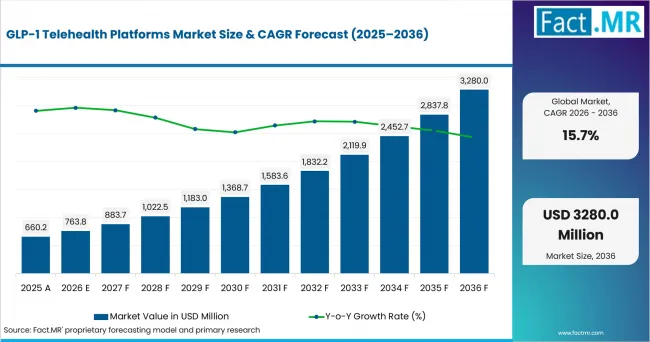
Glp 1 Telehealth Platforms Market Value Analysis | Source: Fact.MR
What are the defining numbers behind GLP-1 Telehealth Platforms Market growth?
USD 2,516.2 million absolute opportunity is expected by 2036. Growth is led by Physician-led virtual clinics and Obesity/BMI-qualified patients. Prescribing & titration and Direct consumers complete the main share leaders.
- Demand Drivers in the Market
- Clinical review remains central because GLP-1 prescribing depends on eligibility checks and dose follow-up. Services with visible escalation routes are expected to carry more trust than intake-only forms.
- Medication access is expected to favor platforms that explain pharmacy routing before treatment starts. Users and sponsors need to know how refills, sourcing and local care handoffs are handled.
- Employer and health-plan interest is expected to shift attention from first prescriptions to continuing outcomes. This favors care models that combine coaching, reporting and medication-spend controls.
- Key Segments Analyzed
- By Care Model: Physician-led virtual clinics are expected to hold 51.2% share in 2026 because the prescribing path needs a clear clinical owner. These models support eligibility review and titration decisions before treatment expands.
- By Revenue Model: Cash-pay subscription is projected to account for 31.8% share in 2026 as self-pay users seek faster enrollment. Longer-term scale depends on affordability and movement into reimbursed care.
- By Service Scope: Prescribing & titration is anticipated to capture 46.0% share in 2026. This service anchors lab monitoring and behavioral support. It also includes GLP-1 companion products used during care.
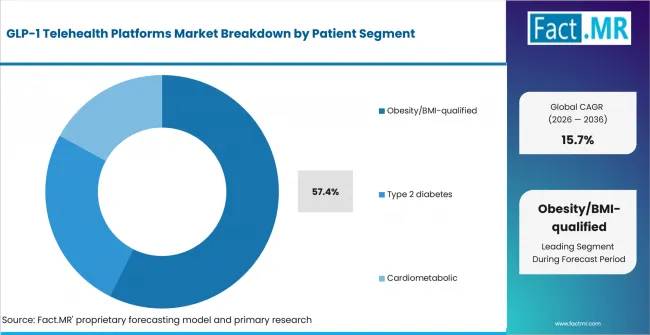
- By Patient Segment: Obesity/BMI-qualified patients are estimated to represent 57.4% share in 2026. This group creates the largest care pathway because chronic weight management needs repeated clinical review.
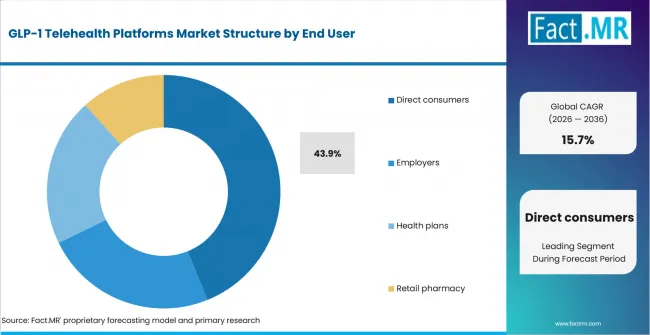
- By End User: Direct consumers are forecast to hold 43.9% share in 2026 as users begin care when treatment intent is high. Employer and health-plan channels matter when coverage support expands.
- Analyst Opinion at Fact.MR
- Shambhu Nath Jha, Sr. Consultant at Fact.MR, states, “GLP-1 telehealth platforms are expected to be judged on clinical responsibility instead of intake volume alone. Durable providers must show licensed review and safe prescribing. Pharmacy transparency and follow-up keep patients connected after the first dose.”
- Strategic Implications
- Providers can scale enrollment more effectively once hybrid virtual and in-person pathways are fully operational. Partnerships with local labs and examination centers can extend clinical reach while preserving patient convenience.
- Sponsors should look beyond the first prescription when evaluating virtual obesity care. Contract reviews can cover provider credentials, coaching quality and e-prescription systems that support the full journey from intake through refill.
- Platform operators face greater scrutiny as customer acquisition expands. Promotional claims about compounded GLP-1 products and product equivalence require careful review before campaigns go live.
The U.S. Food and Drug Administration announced 30 warning letters to telehealth companies in March 2026 for false or misleading claims about compounded GLP-1 products. It shows why promotion review and pharmacy sourcing are expected to become provider selection tests.
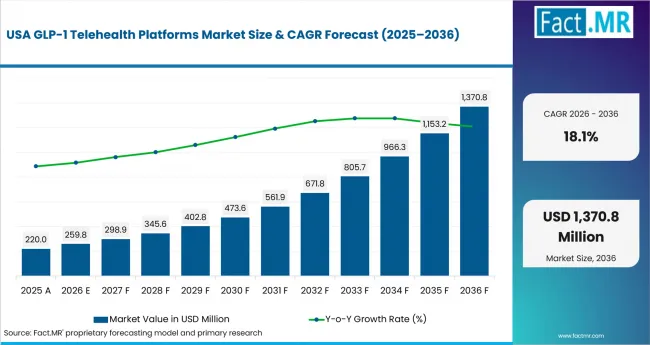
The USA is expected to record an 18.1% CAGR from 2026 to 2036 due to employer purchasing and direct-to-consumer access. The UK is projected to record a 17.5% CAGR as pathway discipline shapes private virtual care. Canada is anticipated to grow at 17.2% as provincial rules influence service localization. Australia is estimated to post a 16.9% CAGR through telehealth acceptance across distant communities. Germany is forecast at 16.4% through evidence standards and structured procurement.
How does the GLP-1 Telehealth Platforms Market break down by segment?
Physician-led virtual clinics are expected to lead Care Model at 51.2% share in 2026. Cash-pay subscription is projected to lead Revenue Model at 31.8% share in 2026.
Which care model dominates?
Physician-led virtual clinics are projected to account for 51.2% share in 2026.
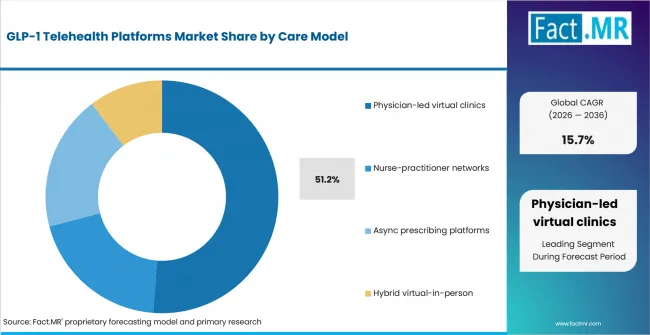
Glp 1 Telehealth Platforms Market Analysis By Care Model | Source: Fact.MR
Physician-led models give the prescribing pathway a clear clinical owner from initial assessment through dose adjustment. They are especially relevant when users have obesity-related conditions or require closer review of side effects. Nurse-practitioner networks widen access in lower-cost settings, while asynchronous prescribing platforms support simpler cases. Hybrid virtual-in-person models remain valuable when blood tests, physical examinations or local referrals are required before treatment can continue safely under appropriate clinical supervision.
What leads the Revenue Model segment?
Cash-pay subscription is expected to hold 31.8% share in 2026.
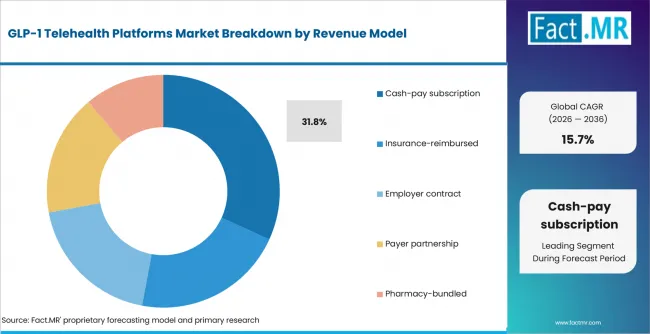
Glp 1 Telehealth Platforms Market Analysis By Revenue Model | Source: Fact.MR
Cash-pay subscriptions support rapid enrollment because users do not need to wait for benefit verification or prior authorization. Monthly billing also gives platforms a predictable revenue stream and a simple consumer offer. Insurance-reimbursed care becomes more important when treatment costs rise or long-term use is expected. Employer contracts, payer partnerships and pharmacy-bundled services create additional routes by combining clinical care, medication access and continued support within a structured and partly covered program.
How does Service Scope shape demand?
Prescribing & titration is anticipated to lead with 46.0% share in 2026.
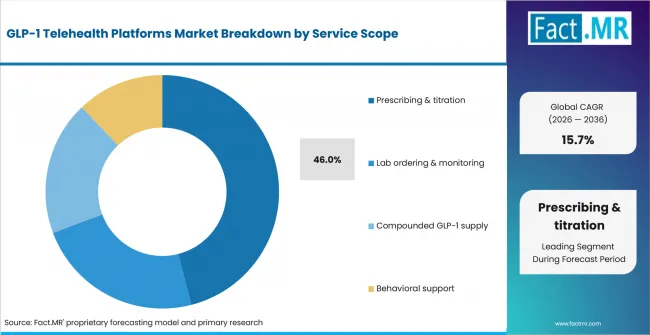
Glp 1 Telehealth Platforms Market Analysis By Service Scope | Source: Fact.MR
Prescribing and titration lead because medication management remains the central clinical responsibility in virtual GLP-1 care. Providers must review progress, side effects and adherence before adjusting the dose or changing treatment. Lab ordering supports safety checks and helps identify metabolic risks. Behavioral support improves eating and activity routines between visits. Home delivery of injectables adds convenience, but it also requires reliable fulfillment, temperature control and clear follow-up when shipments or prescriptions change.
What supports Obesity/BMI-qualified patients?
Obesity/BMI-qualified patients are estimated to represent 57.4% share in 2026.
Glp 1 Telehealth Platforms Market Analysis By Patient Segment | Source: Fact.MR
Obesity and BMI-qualified patients form the largest addressable group because current treatment pathways often begin with weight-related eligibility criteria. Many users also present with hypertension, sleep apnea or other conditions that strengthen the case for structured care. Type 2 diabetes and broader cardiometabolic groups remain important where GLP-1 medicines support glucose control and risk reduction. Access still varies by indication, insurance policy, prior authorization rules and the availability of covered alternatives.
What supports Direct consumers within End User?
Direct consumers are forecast to hold 43.9% share in 2026.
Glp 1 Telehealth Platforms Market Analysis By End User | Source: Fact.MR
Direct consumers lead because they can enter virtual care without waiting for an employer or health-plan enrollment process. This route works well when treatment intent is high and users are willing to pay for faster access. Employers and insurers are gaining relevance as they seek programs that combine prescribing with coaching and measurable outcomes. Metabolic continuity services also become more important after treatment starts, especially when users require refill support, maintenance planning or help managing side effects.
What is accelerating GLP-1 Telehealth Platforms Market adoption, and what is holding it back?
Demand is expected to be driven by specialist access constraints and consumer convenience. Adoption is expected to be held back by promotion scrutiny, licensure limits and continuity gaps.
Drivers Impact Analysis
| DRIVER | QUALITATIVE IMPACT | GEOGRAPHIC RELEVANCE | IMPACT TIMELINE |
|---|---|---|---|
| Specialist access constraints | High | Global | Short term (<=2 years) |
| Consumer demand for convenience | High | Global | Short term (<=2 years) |
| Longitudinal titration needs | Medium | Global | Medium term (2-4 years) |
| Employer and payer contracting | Medium | USA and enterprise markets | Medium term (2-4 years) |
Source: Fact.MR analysis. Updated Jul 27, 2026
- Specialist access constraints: Virtual clinics are expected to extend obesity-medicine expertise beyond locations with local specialists. The benefit matters only when the platform shows licensed review and a path to in-person care.
- Consumer demand for convenience: Online intake and prescription coordination are expected to reduce travel burden for suitable patients. Convenience has value when users still receive safety checks and escalation instructions.
- Longitudinal titration needs: Repeated dose decisions are expected to favor platforms built for continuing care. One-time prescribing has less value when tolerability and refill timing remain unresolved.
- Employer and payer contracting: Sponsors are expected to test virtual-first models that combine access, coaching and utilization reporting. Contracting favors platforms that document outcomes and control medication-related spend.
Opportunity Impact Analysis
| OPPORTUNITY | QUALITATIVE IMPACT | GEOGRAPHIC RELEVANCE | IMPACT TIMELINE |
|---|---|---|---|
| Hybrid virtual-in-person networks | High | Global | Short term (<=2 years) |
| Insurance-reimbursed care | Medium | USA and UK | Medium term (2-4 years) |
| Verified pharmacy connectivity | Medium | Global | Medium term (2-4 years) |
Source: Fact.MR analysis. Updated Jul 27, 2026
- Hybrid virtual-in-person networks: Local laboratory and examination partners are expected to strengthen remote pathways without removing convenience. These networks help platforms handle cases that need testing or physical review.
- Insurance-reimbursed care: Platforms can diversify beyond cash pay by showing quality, credentialing and claims integration.
- Verified pharmacy connectivity: Clear sourcing and fulfillment status are expected to differentiate services as compounded-medicine scrutiny rises. Providers need to show where medicines come from and how refills are managed.
Restraints Impact Analysis
| RESTRAINT | QUALITATIVE IMPACT | GEOGRAPHIC RELEVANCE | IMPACT TIMELINE |
|---|---|---|---|
| Regulatory scrutiny of promotion | High | Global | Short term (<=2 years) |
| Cross-state or cross-border licensure | High | Regulated and payer-funded markets | Medium term (2-4 years) |
| Continuity gaps | Medium | Global | Medium term (2-4 years) |
Source: Fact.MR analysis. Updated Jul 27, 2026
- Regulatory scrutiny of promotion: Authorities are challenging misleading claims about compounded GLP-1 products and product equivalence. Platforms that blur education and sales claims face higher compliance risk.
- Cross-state or cross-border licensure: Clinical coverage cannot expand faster than lawful prescribing and professional registration. This slows market entry when each jurisdiction requires a different care route.
- Continuity gaps: Remote care creates limited value if records and laboratory results do not reach the wider care team. Poor handoff can weaken patient trust and payer confidence.
Which countries are scaling GLP-1 Telehealth Platforms Market fastest?
The country comparison is defined more by payment design and clinical governance than by the overall CAGR range. The total spread between the USA and Germany is 1.70% points. The USA forms the upper position. The UK and Canada remain closely aligned. Australia follows through access needs across distant communities. Germany records a slightly lower rate because evidence and procurement expectations are more formal.
- The USA shows the highest listed rate because employer purchasing and direct-to-consumer access create a wide commercial pathway for virtual GLP-1 care.
- The UK remains close to the USA in CAGR terms. Its route is shaped by NHS evidence expectations and private virtual-care services that must fit defined clinical pathways.
- Canada is positioned near the UK because provincial delivery rules and benefit variation require platforms to localize referrals and medication access support.
- Australia holds a measured position as geography strengthens the access case for telehealth. Platform design still needs professional oversight and pharmacy coordination.
- Germany stands below the other listed countries because evidence expectations and interoperability checks can lengthen procurement and market entry.
Comparable CAGRs can therefore produce different entry conditions across these countries. Deployment timing depends on reimbursement fit, licensed coverage and pharmacy transparency. Commercial readiness also reflects the quality of follow-up support.
The full report provides country-level CAGR analysis across North America and Latin America. Europe and East Asia are included. South Asia and Pacific and the Middle East and Africa complete coverage.
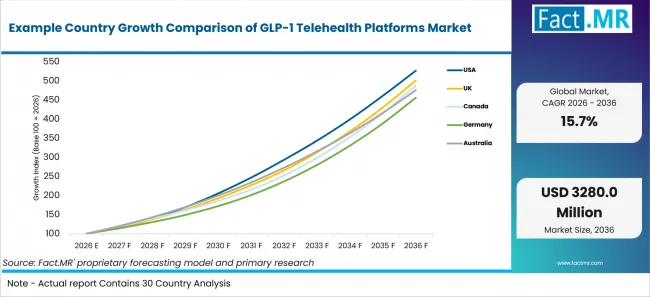
Example Country Growth Comparison Of Glp 1 Telehealth Platforms Market | Source: Fact.MR
| Country | CAGR (2026-2036) |
|---|---|
| USA | 18.1% |
| UK | 17.5% |
| Canada | 17.2% |
| Australia | 16.9% |
| Germany | 16.4% |
Source: Fact.MR analysis. Updated Jul 27, 2026
What supports USA adoption?
18.1% CAGR, supported by employer purchasing and direct-to-consumer access.
Glp 1 Telehealth Platforms Market Country Value Analysis | Source: Fact.MR
The USA combines a large self-pay market with employer-sponsored obesity programs. Commercial success will increasingly depend on licensed coverage across states, prior-authorization support and transparent pharmacy routing. FDA scrutiny of misleading compounded GLP-1 promotion also raises the value of platforms that clearly separate clinical prescribing from product advertising. Providers that document titration, side-effect management and refill continuity are likely to secure stronger employer and health-plan contracts.
What supports UK growth through 2036?
17.5% CAGR, supported by pathway discipline and private virtual-care adoption.
The UK market is shaped by defined obesity-treatment pathways rather than rapid online prescribing alone. Virtual providers must identify when remote assessment is suitable and when laboratory testing or in-person review is required. NICE evidence expectations influence how treatment benefits and eligibility are communicated. Private platforms can gain traction by reducing waiting time, but continued growth will depend on responsible prescribing, follow-up quality and coordination with wider primary-care services.
How is Canada scaling demand?
17.2% CAGR, driven by provincial delivery variation and benefit design.
Canada requires platforms to adapt their operating model across provincial healthcare and professional-regulation systems. A service that works in one province may require different prescriber coverage, referral arrangements or pharmacy support elsewhere. Employer benefits can widen access where public coverage is limited, while virtual care reduces travel for users outside major urban centers. Market expansion therefore depends on localized clinical networks rather than one national enrollment and fulfillment model.
What is driving Australia’s growth from 2026 to 2036?
16.9% CAGR, backed by telehealth acceptance and access needs across distant communities.
Australia presents a strong access case because specialist obesity care can be difficult to reach outside major cities. Telehealth platforms can connect remote patients with prescribers while coordinating laboratory tests and pharmacy fulfillment closer to home. However, professional guidance places emphasis on establishing a genuine clinician-patient relationship rather than relying on questionnaire-only prescribing. Platforms that combine convenience with documented follow-up and local escalation routes are better positioned for sustained adoption.
How does Germany perform?
16.4% CAGR, led by evidence standards and structured digital-health procurement.
Germany’s growth is tied to integration quality rather than consumer acquisition speed. Platforms entering the market must work within strict data-protection, medical-practice and reimbursement requirements. Insurers and clinical partners are likely to examine evidence, record exchange and follow-up procedures before approving broader use. Electronic prescription infrastructure can support remote medication coordination, but platforms still require clear links to laboratories, pharmacies and in-person care when digital assessment alone is insufficient.
Who leads the GLP-1 Telehealth Platforms Market?
Hims & Hers and Ro hold the strongest consumer-facing positions, while LifeMD adds a broader clinical pathway that includes testing and insurance support.
Hims & Hers has widened access to FDA-approved GLP-1 options through supported prescription and pharmacy routes. Ro combines medication management with continued monitoring, coaching and side-effect support through its Body program. LifeMD connects online assessment with provider review, laboratory testing and insurance assistance. Noom brings behavioral engagement through its GLP-1Rx and companion programs. WeightWatchers Med+ expands the field through its LillyDirect connection, while Calibrate has shifted toward employer-focused obesity management.
Which companies are the key providers?
Key companies include Hims & Hers and Ro. LifeMD and Noom complete the provider group alongside WeightWatchers Clinic and Calibrate.
- Hims & Hers
- Ro
- LifeMD
- Noom
- WeightWatchers Clinic
- Calibrate
Bibliography
- Calibrate. (2026, February 19). Calibrate completes transition to enterprise-focused obesity management, more than doubles client roster.
- Hims & Hers. (2026, April 23). Full range of FDA-approved GLP-1s available on Hims & Hers.
- Noom. (2026, February 4). The Noom Engagement Report: New Data Shows that the GLP-1 Patients Who Use Noom the Most Also Lose the Most Weight and Stay On Medication Program Longest.
- U.S. Food and Drug Administration. (2026, March 3). FDA warns 30 telehealth companies against illegal marketing of compounded GLP-1s.
- World Health Organization. (2025, December 1). WHO issues global guideline on the use of GLP-1 medicines in treating obesity.
This Report Answers
- The report provides strategic intelligence on the GLP-1 Telehealth Platforms Market across Care Model and Revenue Model choices that shape virtual obesity-care pathways.
- Segment analysis covers Physician-led virtual clinics and Cash-pay subscription as the share leaders within the 2026 market.
- Country outlook evaluates the USA and UK alongside Canada and Australia. Germany completes the growth comparison across the profiled markets.
- Competitive analysis profiles Hims & Hers and Ro alongside LifeMD and Noom. WeightWatchers Clinic and Calibrate complete the provider set.
- Service assessment covers Prescribing & titration and Lab ordering & monitoring. Compounded GLP-1 supply and Behavioral support complete the service view.
What does the GLP-1 Telehealth Platforms Market cover?
Virtual-care platforms evaluate eligible patients for GLP-1 treatment and coordinate the clinical, behavioral and pharmacy steps needed for remote obesity or metabolic care.
The GLP-1 Telehealth Platforms Market covers physician-led virtual clinics and nurse-practitioner networks. Async prescribing platforms and hybrid virtual-in-person care are included. Coverage extends to cash-pay subscription and insurance-reimbursed care. Employer contracts remain part of the revenue scope. Payer partnerships and pharmacy-bundled models are included when they support a licensed care pathway.
The market includes prescribing & titration and laboratory ordering. Compounded GLP-1 supply and behavioral support are included when these services are part of clinical care. The World Health Organization issued a GLP-1 obesity-treatment guideline in December 2025. That guideline reinforces the need to treat GLP-1 medicine use as part of broader professional care.
The market differs from general wellness apps because commercial value comes from clinical review and lawful prescribing. Advertising-only lead generation remains outside the boundary. General diet coaching is excluded unless it supports a monitored GLP-1 care pathway.
What is included in the scope?
GLP-1 telehealth platforms are used by direct consumers and employers. Health plans and retail pharmacies are included when they use platform-led care pathways. The scope includes licensed virtual prescribing and follow-up services tied to obesity, type 2 diabetes and cardiometabolic care.
The scope includes Care Model and Revenue Model alongside Service Scope, Patient Segment and End User. Coverage spans physician-led clinics and nurse-practitioner networks. Async prescribing and hybrid virtual-in-person models follow the same clinical-responsibility rule.
What is excluded from the scope?
Advertising-only GLP-1 lead pages and non-clinical wellness content remain outside the scope of this market.
The scope excludes services that do not provide or coordinate licensed clinical review. General weight-loss apps are excluded unless they support a GLP-1 care pathway. Standalone pharmacy fulfillment is excluded when it has no platform-led prescribing relationship.
How Was the Analysis Built?
The analysis draws on 120+ sources, 35+ company portfolios, 25+ countries, and more than 20 industry interviews.
- Primary Research: Primary research includes discussions with manufacturers, service providers, technology developers, distributors, end users, procurement teams, and subject-matter experts. These conversations examine purchasing priorities, product adoption, operational challenges, approval requirements, competitive positioning, and the factors that influence wider market acceptance.
- Desk Research: Desk research covers government statistics, regulatory publications, company filings, trade data, technical studies, industry associations, standards, public policy, and other authoritative sources. Every source used in the analysis is documented in the bibliography.
- Market Sizing and Forecasting: Market estimates combine historical performance, demand indicators, pricing and volume trends, segment shares, company participation, country-level growth, adoption patterns, investment activity, and barriers to market expansion.
- Data Validation and Update Cycle: Findings are validated by comparing primary interviews with public data, company activity, regulatory changes, trade patterns, and industry developments. Regular updates review new product launches, capacity changes, partnerships, approvals, procurement trends, and shifts in commercial adoption.
Segmentation
What is the report's scope and coverage?
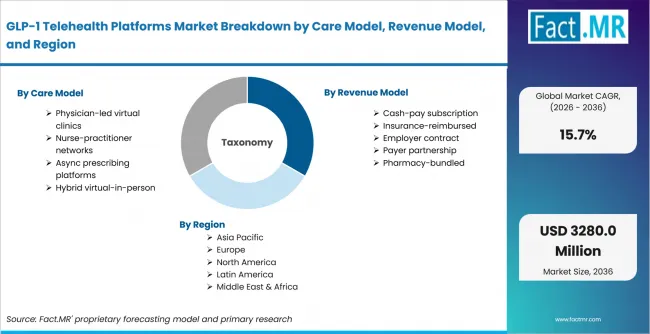
Glp 1 Telehealth Platforms Market Breakdown By Care Model, Revenue Model, And Region | Source: Fact.MR
| Attribute | Details |
|---|---|
| Quantitative Units | USD 763.8 million in 2026 to USD 3,280.0 million by 2036 at 15.7% CAGR |
| Market Definition | Virtual-care platforms that evaluate eligible patients for GLP-1 treatment. They coordinate prescribing and titration with laboratory monitoring. Behavioral support and pharmacy fulfillment are included when they form part of licensed clinical care. The scope distinguishes licensed clinical care from advertising or non-clinical wellness content. |
| Care Model | Physician-led virtual clinics; Nurse-practitioner networks; Async prescribing platforms; Hybrid virtual-in-person |
| Revenue Model | Cash-pay subscription; Insurance-reimbursed; Employer contract; Payer partnership; Pharmacy-bundled |
| Service Scope | Prescribing & titration; Lab ordering & monitoring; Compounded GLP-1 supply; Behavioral support |
| Patient Segment | Obesity/BMI-qualified; Type 2 diabetes; Cardiometabolic |
| End User | Direct consumers; Employers; Health plans; Retail pharmacy |
| Regions Covered | North America; Latin America; Europe; East Asia; South Asia and Pacific; Middle East and Africa |
| Countries Covered | USA; UK; Canada; Australia; Germany |
| Key Companies Profiled | Hims & Hers; Ro; LifeMD; Noom; WeightWatchers Clinic; Calibrate |
| Forecast Period | 2026 to 2036 |
| Approach | Hybrid top-down and bottom-up approach using telehealth adoption patterns; obesity-care pathways; GLP-1 prescribing workflows; pharmacy routing; clinical review requirements; reimbursement pathways; patient segment demand; employer and payer contracting; country adoption patterns and company portfolio review |
Source: Fact.MR analysis. Updated Jul 27, 2026
How is the market segmented?
-
By Care Model:
- Physician-led virtual clinics
- Nurse-practitioner networks
- Async prescribing platforms
- Hybrid virtual-in-person
-
By Revenue Model:
- Cash-pay subscription
- Insurance-reimbursed
- Employer contract
- Payer partnership
- Pharmacy-bundled
-
By Service Scope:
- Prescribing & titration
- Lab ordering & monitoring
- Compounded GLP-1 supply
- Behavioral support
-
By Patient Segment:
- Obesity/BMI-qualified
- Type 2 diabetes
- Cardiometabolic
-
By End User:
- Direct consumers
- Employers
- Health plans
- Retail pharmacy
-
By Region:
- North America
- Latin America
- Europe
- East Asia
- South Asia and Pacific
- Middle East and Africa
Frequently Asked Questions
Which Care Model leads the market?
Which Revenue Model leads the market?
Which Service Scope category leads the market?
Which Patient Segment leads the market?
Which End User leads the market?
Which country records the highest listed CAGR?
What is the primary driver in this market?
What is the main restraint?
Why do direct consumers lead demand?
Who worked on this report


Preview the report firsthand - request a free sample
Free SampleGet the brochure for pricing and purchase details
Download PDF