High-Voltage Cable for Non-Fluorinated Sheathing Market

High-Voltage Cable for Non-Fluorinated Sheathing Market Size and Share Forecast Outlook 2026 to 2036

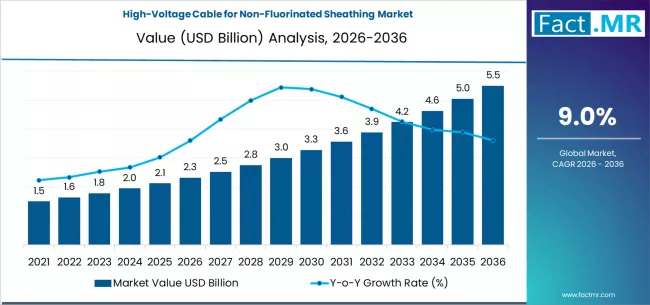
High-voltage cable for non-fluorinated sheathing market is projected to grow from USD 2.3 billion in 2026 to USD 5.5 billion by 2036, at a CAGR of 9.0%. XLPE (Non‑Fluorinated) will dominate with a 38.6% market share, while medium voltage (1–35 kv) will lead the voltage rating segment with a 42.3% share.

High-Voltage Cable Non-Fluorinated Sheathing Market Forecast and Outlook 2026 to 2036

The global non-fluorinated high-voltage cable sheathing market will likely progress from USD 2.32 billion in 2026 to USD 5.49 billion by 2036 at a 9.0% CAGR. A decisive industry pivot towards environmentally sustainable and regulatory-compliant material solutions is reshaping the market.This shift marks a fundamental move away from traditional fluoropolymers like PVDF and ECTFE, driven by intensifying global restrictions on PFAS substances and a parallel demand for durable, high-performance insulation in expanding power infrastructure.Growth is underpinned by massive global investments in grid modernization, renewable energy integration, and electric vehicle charging networks, all of which require miles of reliable cabling.

Key Takeaways from the High-Voltage Cable Non-Fluorinated Sheathing Market

  • Market Value for 2026: USD 2.32 Billion
  • Market Value for 2036: USD 5.49 Billion
  • Forecast CAGR (2026 to 2036): 9.0%
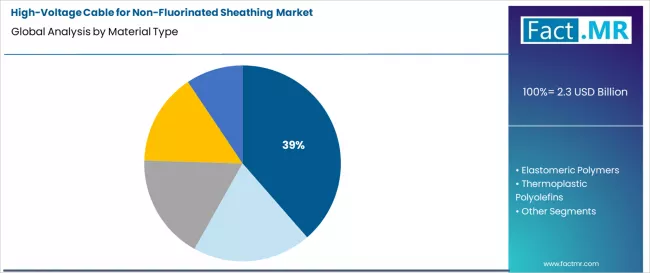
  • Leading Material Type Segment (2026): XLPE (Non-Fluorinated) (39%)
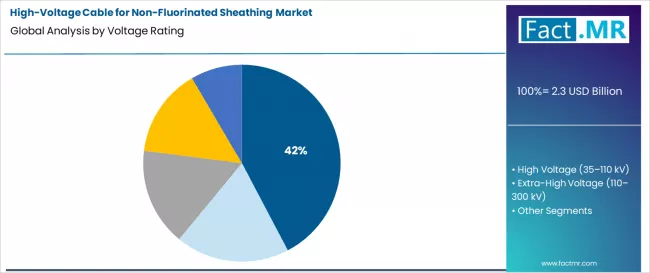
  • Leading Voltage Rating Segment (2026): Medium Voltage (1-35 kV) (42%)
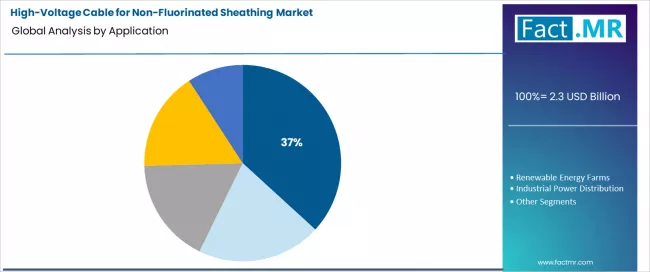
  • Leading Application Segment (2026): Power Transmission (37%)
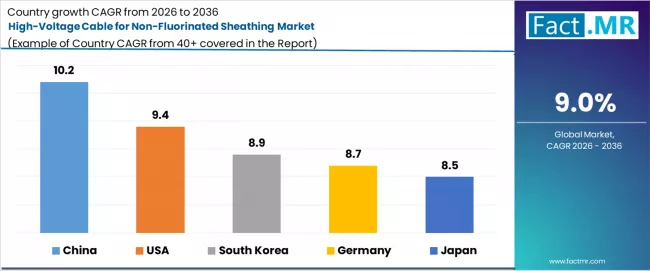
  • Key Growth Countries: China (10.20% CAGR), USA (9.40% CAGR), South Korea (8.90% CAGR), Germany (8.70% CAGR), Japan (8.50% CAGR)
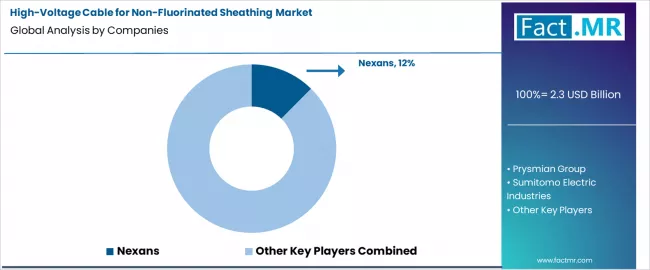
  • Key Players in the Market: Nexans, Prysmian Group, Sumitomo Electric Industries, LS Cable & System, General Cable (PPC)

High Voltage Cable For Non Fluorinated Sheathing Market Market Value Analysis

Non-fluorinated materials, particularly cross-linked polyethylene (XLPE) and advanced elastomers, are being engineered to meet the exacting dielectric, thermal, and mechanical demands of medium to ultra-high voltage applications without the environmental legacy concerns.The market's evolution is characterized by innovation in bio-based and thermoplastic polyolefin systems that offer enhanced recyclability at end-of-life.

China's 10.20% CAGR reflects its unparalleled scale in grid expansion and cable manufacturing, where domestic sustainability goals are increasingly influencing material specifications.This transition represents a critical recalibration of the cable industry's material science foundation, balancing operational excellence with environmental stewardship across power transmission, industrial, and green energy applications.

Metric

Metric Value
Market Value (2026) USD 2.32 Billion
Market Forecast Value (2036) USD 5.49 Billion
Forecast CAGR (2026 to 2036) 9.0%

Category

Category Segments
Material Type XLPE (Non-Fluorinated), Elastomeric Polymers, Thermoplastic Polyolefins, Bio-Based Resin Systems, Others
Voltage Rating Medium Voltage (1-35 kV), High Voltage (35-110 kV), Extra-High Voltage (110-300 kV), Ultra-High Voltage (>300 kV), Others
Application Power Transmission, Renewable Energy Farms, Industrial Power Distribution, EV Charging Infrastructure, Others
Region North America, Latin America, Western Europe, Eastern Europe, East Asia, South Asia & Pacific, MEA

Segmental Analysis

By Material Type, Which Polymer is the Incumbent Workhorse Transitioning?

High Voltage Cable For Non Fluorinated Sheathing Market Analysis By Material Type

Non-fluorinated cross-linked polyethylene (XLPE) commands a leading 39% share. Its dominance is rooted in its well-established performance pedigree as a thermoset material offering excellent electrical insulation, moisture resistance, and thermal stability up to 90°C. The industry possesses decades of processing and installation experience with XLPE.

In its non-fluorinated formulation, it serves as the most straightforward, performance-proven alternative for a wide range of voltage ratings, providing a trusted technical solution that minimizes re-engineering risks for cable manufacturers facing PFAS phase-outs, especially in medium and high-voltage applications.

By Voltage Rating, Which Segment Captures the Bulk of Grid and Infrastructure Demand?

High Voltage Cable For Non Fluorinated Sheathing Market Analysis By Voltage Rating

Medium voltage (1-35 kV) cables hold the largest share at 42%. This voltage range forms the backbone of urban and suburban power distribution networks, connecting substations to commercial and industrial end-users, and is critical for renewable energy farm collection systems.

The sheer volume of cable required for these dense, expanding networks drives material consumption. Non-fluorinated sheathing for MV applications must balance cost-effectiveness with robust performance for direct burial, duct, and overhead installations, making it a high-volume testing ground for new material formulations.

By Application, Where is Foundational Grid Investment Concentrated?

High Voltage Cable For Non Fluorinated Sheathing Market Analysis By Application

Power transmission represents the largest application segment at 37%. This encompasses the critical infrastructure of long-distance power lines, interconnectors, and backbone transmission networks that operate at high and extra-high voltages.

Investments here are driven by the need for grid resilience, capacity expansion, and integrating remote renewable generation. The sheathing material for these cables must provide exceptional long-term durability against environmental stressors, partial discharge resistance, and mechanical protection, making material choice a paramount factor in multi-decade asset planning.

What are the Drivers, Restraints, and Key Trends of the High-Voltage Cable Non-Fluorinated Sheathing Market?

The primary market driver is the global wave of regulatory actions aimed at restricting or banning PFAS chemicals, compelling cable producers and utilities to seek compliant alternatives for new projects and future-proof their supply chains.

Unprecedented investments in grid modernization, offshore wind farms, and solar parks are creating record demand for high-voltage cables. The sustainability mandates of utilities and governments, focusing on the circular economy and lower carbon footprint across infrastructure projects, are accelerating the adoption of non-fluorinated, and increasingly bio-based, sheathing materials.

A significant market restraint is the performance gap that some non-fluorinated materials may exhibit in extreme environments compared to specialized fluoropolymers, particularly in terms of long-term UV resistance, chemical corrosion resistance in industrial settings, and operating temperature ceilings.

The reformulation and requalification process for new cable designs is time-consuming and capital-intensive, requiring extensive type-testing to international standards like the IEC, and AEIC. The current cost premium for some advanced non-fluorinated or bio-based compounds can be a barrier in highly competitive, cost-sensitive project bids.

Key trends include the rapid development of drop-in non-fluorinated compounds designed to process on existing XLPE or elastomer production lines with minimal adjustment. There is strong R&D focus on thermoplastic, recyclable polyolefins that can match the performance of thermoset XLPE.

The integration of nanoparticle additives to enhance dielectric strength, thermal conductivity, and mechanical properties in non-fluorinated matrices is gaining traction. Additionally, the market is seeing a rise in closed-loop recycling initiatives for cable sheathing waste, aligning material development with end-of-life recovery strategies.

Analysis of the High-Voltage Cable Non-Fluorinated Sheathing Market by Key Countries

High Voltage Cable For Non Fluorinated Sheathing Market Cagr Analysis By Country

Country CAGR (2026-2036)
China 10.20%
USA 9.40%
South Korea 8.90%
Germany 8.70%
Japan 8.50%

How is China's Grid Expansion and Manufacturing Scale Driving Growth?

China's leading 10.20% CAGR is fueled by its massive national grid expansion projects, including ultra-high-voltage (UHV) lines to transmit power across vast distances, and the world's largest rollout of renewable energy capacity.

Domestic cable manufacturers, which dominate global production volume, are under dual pressure from national environmental policies and export market requirements to adopt green material solutions. This creates a vast, captive market for innovating and scaling non-fluorinated sheathing compounds, with domestic material suppliers rising to meet this demand.

What is the Impact of the USA's Regulatory Shifts and Infrastructure Investment?

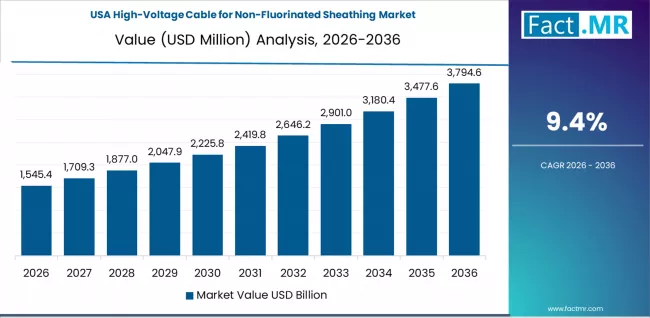
High Voltage Cable For Non Fluorinated Sheathing Market Country Value Analysis

The USA's 9.40% growth is driven by a clear regulatory push against PFAS, influencing utility procurement policies, coupled with historic federal investment in grid resilience and clean energy infrastructure through acts like the Inflation Reduction Act and Bipartisan Infrastructure Law.

American utilities and cable makers are proactively seeking qualified alternative materials to de-risk future projects. The market is characterized by a strong focus on developing and certifying non-fluorinated solutions for harsh environments, from offshore wind farms to arid desert solar installations.

Why is South Korea's Offshore Wind and Tech Export Focus a Key Factor?

South Korea's 8.90% CAGR is closely tied to its ambitious national offshore wind power targets and the global export strength of its cable giants. Korean cable companies are leaders in submarine cable technology, an area where material durability is critical.

To supply both domestic mega-projects and international clients adhering to strict environmental standards, these companies are driving demand for high-performance, non-fluorinated sheathing materials that can withstand deep-water pressures and saltwater corrosion over decades.

How is Germany's Energiewende and Engineering Precision Shaping Demand?

Germany's 8.70% growth reflects the core demands of its Energiewende, or energy transition, requiring a massive build-out of grid infrastructure to connect wind-rich northern regions to industrial centers in the south.

German engineering standards demand utmost reliability and longevity. The early adoption of EU PFAS restrictions makes German utilities and manufacturers first movers in specifying and validating non-fluorinated materials, with a particular focus on solutions for underground cabling in densely populated areas and for connecting industrial parks.

What Role does Japan's Disaster-Resilient Infrastructure and Innovation Play?

Japan's 8.50% growth is shaped by its need for disaster-resilient and compact grid infrastructure, along with its leadership in advanced material science. Japanese companies excel in developing high-performance, lightweight, and space-saving cable designs.

The demand is for non-fluorinated sheathing materials that offer superior fire retardancy, seismic resilience, and exceptional long-term stability in humid and saline coastal environments prevalent across the archipelago.

Competitive Landscape of the High-Voltage Cable Non-Fluorinated Sheathing Market

High Voltage Cable For Non Fluorinated Sheathing Market Analysis By Company

Integrated cable manufacturers with in-house compound development capabilities and global chemical giants supplying specialized polymers define the competitive landscape. Competition centers on proprietary compound formulations that deliver a winning balance of electrical performance, durability, processability, and environmental credentials.

Securing long-term supply agreements with major utilities and project developers is crucial. Success increasingly hinges on achieving and promoting third-party certifications for new materials, building a robust portfolio of case studies in landmark projects, and navigating the complex regulatory landscape across different regions to enable global sales.

Key Players in the High-Voltage Cable Non-Fluorinated Sheathing Market

  • Nexans
  • Prysmian Group
  • Sumitomo Electric Industries
  • LS Cable & System
  • General Cable (PPC)

Scope of Report

Items Values
Quantitative Units USD Billion
Material Type XLPE (Non-Fluorinated), Elastomeric Polymers, Thermoplastic Polyolefins, Bio-Based Resin Systems, Others
Voltage Rating Medium Voltage (1-35 kV), High Voltage (35-110 kV), Extra-High Voltage (110-300 kV), Ultra-High Voltage (>300 kV), Others
Application Power Transmission, Renewable Energy Farms, Industrial Power Distribution, EV Charging Infrastructure, Others
Key Countries China, USA, South Korea, Germany, Japan
Key Companies Nexans, Prysmian Group, Sumitomo Electric Industries, LS Cable & System, General Cable (PPC)
Additional Analysis Comparative lifetime cost analysis (LCA) of fluorinated vs. non-fluorinated cable systems; long-term aging studies under simultaneous electrical, thermal, and mechanical stress; performance in extreme conditions (sub-zero, desert, submarine); analysis of partial discharge inception and propagation in new material systems; end-of-life recyclability and material recovery processes; regulatory pathway analysis for grid-scale cable approvals.

Market by Segments

  • Material Type :

    • XLPE (Non-Fluorinated)
    • Elastomeric Polymers
    • Thermoplastic Polyolefins
    • Bio-Based Resin Systems
    • Others
  • Voltage Rating :

    • Medium Voltage (1-35 kV)
    • High Voltage (35-110 kV)
    • Extra-High Voltage (110-300 kV)
    • Ultra-High Voltage (>300 kV)
    • Others
  • Application :

    • Power Transmission
    • Renewable Energy Farms
    • Industrial Power Distribution
    • EV Charging Infrastructure
    • Others
  • Region :

    • North America
      • USA
      • Canada
    • Latin America
      • Brazil
      • Mexico
      • Argentina
      • Rest of Latin America
    • Western Europe
      • Germany
      • UK
      • France
      • Spain
      • Italy
      • BENELUX
      • Rest of Western Europe
    • Eastern Europe
      • Russia
      • Poland
      • Czech Republic
      • Rest of Eastern Europe
    • East Asia
      • China
      • Japan
      • South Korea
      • Rest of East Asia
    • South Asia & Pacific
      • India
      • ASEAN
      • Australia
      • Rest of South Asia & Pacific
    • MEA
      • Saudi Arabia
      • UAE
      • Turkiye
      • Rest of MEA

References

  • Boggs, S., & Xu, J. (2021). High voltage cable insulation engineering. Wiley-IEEE Press.
  • European Chemicals Agency. (2023). Annex XV restriction report: Per- and polyfluoroalkyl substances (PFAS). ECHA.
  • Gubanski, S. M., & Vlastós, A. E. (2022). Modern outdoor insulation concerns and challenges. IEEE Transactions on Dielectrics and Electrical Insulation, 29(5), 1601-1614.
  • International Energy Agency. (2024). Electricity Grids and Secure Energy Transitions. IEA.
  • Küchler, A. (2023). High voltage engineering: Fundamentals - technology - applications. Springer. Mazzanti, G., & Marzinotto, M. (2022). Extruded cables for high-voltage direct-current transmission: Advances in research and development. Wiley.
  • Naidu, M. S., & Kamaraju, V. (2021). High voltage engineering (6th ed.). McGraw Hill.
  • Papailiou, K. O. (Ed.). (2023). Overhead lines: CSTE-CIGRE guide to construction, design, and erection. Springer.
  • Vaughan, A. S., & Sutton, S. J. (2022). The development of polymeric materials for DC cable insulation. Journal of Physics D: Applied Physics, 55(46), 463001.
  • Wang, S., & Li, J. (2023). Thermal aging and lifetime estimation of XLPE insulation for high-voltage cables: A review. Polymer Testing, 124, 108098.

Table of Content

  1. Executive Summary
    • Global Market Outlook
    • Demand to side Trends
    • Supply to side Trends
    • Technology Roadmap Analysis
    • Analysis and Recommendations
  2. Market Overview
    • Market Coverage / Taxonomy
    • Market Definition / Scope / Limitations
  3. Market Background
    • Market Dynamics
      • Drivers
      • Restraints
      • Opportunity
      • Trends
    • Scenario Forecast
      • Demand in Optimistic Scenario
      • Demand in Likely Scenario
      • Demand in Conservative Scenario
    • Opportunity Map Analysis
    • Product Life Cycle Analysis
    • Supply Chain Analysis
    • Investment Feasibility Matrix
    • Value Chain Analysis
    • PESTLE and Porter’s Analysis
    • Regulatory Landscape
    • Regional Parent Market Outlook
    • Production and Consumption Statistics
    • Import and Export Statistics
  4. Global Market Analysis 2021 to 2025 and Forecast, 2026 to 2036
    • Historical Market Size Value (USD Million) Analysis, 2021 to 2025
    • Current and Future Market Size Value (USD Million) Projections, 2026 to 2036
      • Y to o to Y Growth Trend Analysis
      • Absolute $ Opportunity Analysis
  5. Global Market Pricing Analysis 2021 to 2025 and Forecast 2026 to 2036
  6. Global Market Analysis 2021 to 2025 and Forecast 2026 to 2036, By Material Type
    • Introduction / Key Findings
    • Historical Market Size Value (USD Million) Analysis By Material Type, 2021 to 2025
    • Current and Future Market Size Value (USD Million) Analysis and Forecast By Material Type, 2026 to 2036
      • XLPE (Non‑Fluorinated)
      • Elastomeric Polymers
      • Thermoplastic Polyolefins
      • Bio‑Based Resin Systems
      • Others
    • Y to o to Y Growth Trend Analysis By Material Type, 2021 to 2025
    • Absolute $ Opportunity Analysis By Material Type, 2026 to 2036
  7. Global Market Analysis 2021 to 2025 and Forecast 2026 to 2036, By Voltage Rating
    • Introduction / Key Findings
    • Historical Market Size Value (USD Million) Analysis By Voltage Rating, 2021 to 2025
    • Current and Future Market Size Value (USD Million) Analysis and Forecast By Voltage Rating, 2026 to 2036
      • Medium Voltage (1–35 kV)
      • High Voltage (35–110 kV)
      • Extra‑High Voltage (110–300 kV)
      • Ultra‑High Voltage (>300 kV)
      • Others
    • Y to o to Y Growth Trend Analysis By Voltage Rating, 2021 to 2025
    • Absolute $ Opportunity Analysis By Voltage Rating, 2026 to 2036
  8. Global Market Analysis 2021 to 2025 and Forecast 2026 to 2036, By Application
    • Introduction / Key Findings
    • Historical Market Size Value (USD Million) Analysis By Application, 2021 to 2025
    • Current and Future Market Size Value (USD Million) Analysis and Forecast By Application, 2026 to 2036
      • Power Transmission
      • Renewable Energy Farms
      • Industrial Power Distribution
      • EV Charging Infrastructure
      • Others
    • Y to o to Y Growth Trend Analysis By Application, 2021 to 2025
    • Absolute $ Opportunity Analysis By Application, 2026 to 2036
  9. Global Market Analysis 2021 to 2025 and Forecast 2026 to 2036, By Region
    • Introduction
    • Historical Market Size Value (USD Million) Analysis By Region, 2021 to 2025
    • Current Market Size Value (USD Million) Analysis and Forecast By Region, 2026 to 2036
      • North America
      • Latin America
      • Western Europe
      • Eastern Europe
      • East Asia
      • South Asia and Pacific
      • Middle East & Africa
    • Market Attractiveness Analysis By Region
  10. North America Market Analysis 2021 to 2025 and Forecast 2026 to 2036, By Country
    • Historical Market Size Value (USD Million) Trend Analysis By Market Taxonomy, 2021 to 2025
    • Market Size Value (USD Million) Forecast By Market Taxonomy, 2026 to 2036
      • By Country
        • USA
        • Canada
        • Mexico
      • By Material Type
      • By Voltage Rating
      • By Application
    • Market Attractiveness Analysis
      • By Country
      • By Material Type
      • By Voltage Rating
      • By Application
    • Key Takeaways
  11. Latin America Market Analysis 2021 to 2025 and Forecast 2026 to 2036, By Country
    • Historical Market Size Value (USD Million) Trend Analysis By Market Taxonomy, 2021 to 2025
    • Market Size Value (USD Million) Forecast By Market Taxonomy, 2026 to 2036
      • By Country
        • Brazil
        • Chile
        • Rest of Latin America
      • By Material Type
      • By Voltage Rating
      • By Application
    • Market Attractiveness Analysis
      • By Country
      • By Material Type
      • By Voltage Rating
      • By Application
    • Key Takeaways
  12. Western Europe Market Analysis 2021 to 2025 and Forecast 2026 to 2036, By Country
    • Historical Market Size Value (USD Million) Trend Analysis By Market Taxonomy, 2021 to 2025
    • Market Size Value (USD Million) Forecast By Market Taxonomy, 2026 to 2036
      • By Country
        • Germany
        • UK
        • Italy
        • Spain
        • France
        • Nordic
        • BENELUX
        • Rest of Western Europe
      • By Material Type
      • By Voltage Rating
      • By Application
    • Market Attractiveness Analysis
      • By Country
      • By Material Type
      • By Voltage Rating
      • By Application
    • Key Takeaways
  13. Eastern Europe Market Analysis 2021 to 2025 and Forecast 2026 to 2036, By Country
    • Historical Market Size Value (USD Million) Trend Analysis By Market Taxonomy, 2021 to 2025
    • Market Size Value (USD Million) Forecast By Market Taxonomy, 2026 to 2036
      • By Country
        • Russia
        • Poland
        • Hungary
        • Balkan & Baltic
        • Rest of Eastern Europe
      • By Material Type
      • By Voltage Rating
      • By Application
    • Market Attractiveness Analysis
      • By Country
      • By Material Type
      • By Voltage Rating
      • By Application
    • Key Takeaways
  14. East Asia Market Analysis 2021 to 2025 and Forecast 2026 to 2036, By Country
    • Historical Market Size Value (USD Million) Trend Analysis By Market Taxonomy, 2021 to 2025
    • Market Size Value (USD Million) Forecast By Market Taxonomy, 2026 to 2036
      • By Country
        • China
        • Japan
        • South Korea
      • By Material Type
      • By Voltage Rating
      • By Application
    • Market Attractiveness Analysis
      • By Country
      • By Material Type
      • By Voltage Rating
      • By Application
    • Key Takeaways
  15. South Asia and Pacific Market Analysis 2021 to 2025 and Forecast 2026 to 2036, By Country
    • Historical Market Size Value (USD Million) Trend Analysis By Market Taxonomy, 2021 to 2025
    • Market Size Value (USD Million) Forecast By Market Taxonomy, 2026 to 2036
      • By Country
        • India
        • ASEAN
        • Australia & New Zealand
        • Rest of South Asia and Pacific
      • By Material Type
      • By Voltage Rating
      • By Application
    • Market Attractiveness Analysis
      • By Country
      • By Material Type
      • By Voltage Rating
      • By Application
    • Key Takeaways
  16. Middle East & Africa Market Analysis 2021 to 2025 and Forecast 2026 to 2036, By Country
    • Historical Market Size Value (USD Million) Trend Analysis By Market Taxonomy, 2021 to 2025
    • Market Size Value (USD Million) Forecast By Market Taxonomy, 2026 to 2036
      • By Country
        • Kingdom of Saudi Arabia
        • Other GCC Countries
        • Turkiye
        • South Africa
        • Other African Union
        • Rest of Middle East & Africa
      • By Material Type
      • By Voltage Rating
      • By Application
    • Market Attractiveness Analysis
      • By Country
      • By Material Type
      • By Voltage Rating
      • By Application
    • Key Takeaways
  17. Key Countries Market Analysis
    • USA
      • Pricing Analysis
      • Market Share Analysis, 2025
        • By Material Type
        • By Voltage Rating
        • By Application
    • Canada
      • Pricing Analysis
      • Market Share Analysis, 2025
        • By Material Type
        • By Voltage Rating
        • By Application
    • Mexico
      • Pricing Analysis
      • Market Share Analysis, 2025
        • By Material Type
        • By Voltage Rating
        • By Application
    • Brazil
      • Pricing Analysis
      • Market Share Analysis, 2025
        • By Material Type
        • By Voltage Rating
        • By Application
    • Chile
      • Pricing Analysis
      • Market Share Analysis, 2025
        • By Material Type
        • By Voltage Rating
        • By Application
    • Germany
      • Pricing Analysis
      • Market Share Analysis, 2025
        • By Material Type
        • By Voltage Rating
        • By Application
    • UK
      • Pricing Analysis
      • Market Share Analysis, 2025
        • By Material Type
        • By Voltage Rating
        • By Application
    • Italy
      • Pricing Analysis
      • Market Share Analysis, 2025
        • By Material Type
        • By Voltage Rating
        • By Application
    • Spain
      • Pricing Analysis
      • Market Share Analysis, 2025
        • By Material Type
        • By Voltage Rating
        • By Application
    • France
      • Pricing Analysis
      • Market Share Analysis, 2025
        • By Material Type
        • By Voltage Rating
        • By Application
    • India
      • Pricing Analysis
      • Market Share Analysis, 2025
        • By Material Type
        • By Voltage Rating
        • By Application
    • ASEAN
      • Pricing Analysis
      • Market Share Analysis, 2025
        • By Material Type
        • By Voltage Rating
        • By Application
    • Australia & New Zealand
      • Pricing Analysis
      • Market Share Analysis, 2025
        • By Material Type
        • By Voltage Rating
        • By Application
    • China
      • Pricing Analysis
      • Market Share Analysis, 2025
        • By Material Type
        • By Voltage Rating
        • By Application
    • Japan
      • Pricing Analysis
      • Market Share Analysis, 2025
        • By Material Type
        • By Voltage Rating
        • By Application
    • South Korea
      • Pricing Analysis
      • Market Share Analysis, 2025
        • By Material Type
        • By Voltage Rating
        • By Application
    • Russia
      • Pricing Analysis
      • Market Share Analysis, 2025
        • By Material Type
        • By Voltage Rating
        • By Application
    • Poland
      • Pricing Analysis
      • Market Share Analysis, 2025
        • By Material Type
        • By Voltage Rating
        • By Application
    • Hungary
      • Pricing Analysis
      • Market Share Analysis, 2025
        • By Material Type
        • By Voltage Rating
        • By Application
    • Kingdom of Saudi Arabia
      • Pricing Analysis
      • Market Share Analysis, 2025
        • By Material Type
        • By Voltage Rating
        • By Application
    • Turkiye
      • Pricing Analysis
      • Market Share Analysis, 2025
        • By Material Type
        • By Voltage Rating
        • By Application
    • South Africa
      • Pricing Analysis
      • Market Share Analysis, 2025
        • By Material Type
        • By Voltage Rating
        • By Application
  18. Market Structure Analysis
    • Competition Dashboard
    • Competition Benchmarking
    • Market Share Analysis of Top Players
      • By Regional
      • By Material Type
      • By Voltage Rating
      • By Application
  19. Competition Analysis
    • Competition Deep Dive
      • Nexans
        • Overview
        • Product Portfolio
        • Profitability by Market Segments (Product/Age /Sales Channel/Region)
        • Sales Footprint
        • Strategy Overview
          • Marketing Strategy
          • Product Strategy
          • Channel Strategy
      • Prysmian Group
      • Sumitomo Electric Industries
      • LS Cable & System
      • General Cable (PPC)
      • Others
  20. Assumptions & Acronyms Used
  21. Research Methodology

List Of Table

  • Table 1: Global Market Value (USD Million) Forecast by Region, 2021 to 2036
  • Table 2: Global Market Value (USD Million) Forecast by Material Type, 2021 to 2036
  • Table 3: Global Market Value (USD Million) Forecast by Voltage Rating, 2021 to 2036
  • Table 4: Global Market Value (USD Million) Forecast by Application, 2021 to 2036
  • Table 5: North America Market Value (USD Million) Forecast by Country, 2021 to 2036
  • Table 6: North America Market Value (USD Million) Forecast by Material Type, 2021 to 2036
  • Table 7: North America Market Value (USD Million) Forecast by Voltage Rating, 2021 to 2036
  • Table 8: North America Market Value (USD Million) Forecast by Application, 2021 to 2036
  • Table 9: Latin America Market Value (USD Million) Forecast by Country, 2021 to 2036
  • Table 10: Latin America Market Value (USD Million) Forecast by Material Type, 2021 to 2036
  • Table 11: Latin America Market Value (USD Million) Forecast by Voltage Rating, 2021 to 2036
  • Table 12: Latin America Market Value (USD Million) Forecast by Application, 2021 to 2036
  • Table 13: Western Europe Market Value (USD Million) Forecast by Country, 2021 to 2036
  • Table 14: Western Europe Market Value (USD Million) Forecast by Material Type, 2021 to 2036
  • Table 15: Western Europe Market Value (USD Million) Forecast by Voltage Rating, 2021 to 2036
  • Table 16: Western Europe Market Value (USD Million) Forecast by Application, 2021 to 2036
  • Table 17: Eastern Europe Market Value (USD Million) Forecast by Country, 2021 to 2036
  • Table 18: Eastern Europe Market Value (USD Million) Forecast by Material Type, 2021 to 2036
  • Table 19: Eastern Europe Market Value (USD Million) Forecast by Voltage Rating, 2021 to 2036
  • Table 20: Eastern Europe Market Value (USD Million) Forecast by Application, 2021 to 2036
  • Table 21: East Asia Market Value (USD Million) Forecast by Country, 2021 to 2036
  • Table 22: East Asia Market Value (USD Million) Forecast by Material Type, 2021 to 2036
  • Table 23: East Asia Market Value (USD Million) Forecast by Voltage Rating, 2021 to 2036
  • Table 24: East Asia Market Value (USD Million) Forecast by Application, 2021 to 2036
  • Table 25: South Asia and Pacific Market Value (USD Million) Forecast by Country, 2021 to 2036
  • Table 26: South Asia and Pacific Market Value (USD Million) Forecast by Material Type, 2021 to 2036
  • Table 27: South Asia and Pacific Market Value (USD Million) Forecast by Voltage Rating, 2021 to 2036
  • Table 28: South Asia and Pacific Market Value (USD Million) Forecast by Application, 2021 to 2036
  • Table 29: Middle East & Africa Market Value (USD Million) Forecast by Country, 2021 to 2036
  • Table 30: Middle East & Africa Market Value (USD Million) Forecast by Material Type, 2021 to 2036
  • Table 31: Middle East & Africa Market Value (USD Million) Forecast by Voltage Rating, 2021 to 2036
  • Table 32: Middle East & Africa Market Value (USD Million) Forecast by Application, 2021 to 2036

List Of Figures

  • Figure 1: Global Market Pricing Analysis
  • Figure 2: Global Market Value (USD Million) Forecast 2021 to 2036
  • Figure 3: Global Market Value Share and BPS Analysis by Material Type, 2026 and 2036
  • Figure 4: Global Market Y to o to Y Growth Comparison by Material Type, 2026 to 2036
  • Figure 5: Global Market Attractiveness Analysis by Material Type
  • Figure 6: Global Market Value Share and BPS Analysis by Voltage Rating, 2026 and 2036
  • Figure 7: Global Market Y to o to Y Growth Comparison by Voltage Rating, 2026 to 2036
  • Figure 8: Global Market Attractiveness Analysis by Voltage Rating
  • Figure 9: Global Market Value Share and BPS Analysis by Application, 2026 and 2036
  • Figure 10: Global Market Y to o to Y Growth Comparison by Application, 2026 to 2036
  • Figure 11: Global Market Attractiveness Analysis by Application
  • Figure 12: Global Market Value (USD Million) Share and BPS Analysis by Region, 2026 and 2036
  • Figure 13: Global Market Y to o to Y Growth Comparison by Region, 2026 to 2036
  • Figure 14: Global Market Attractiveness Analysis by Region
  • Figure 15: North America Market Incremental Dollar Opportunity, 2026 to 2036
  • Figure 16: Latin America Market Incremental Dollar Opportunity, 2026 to 2036
  • Figure 17: Western Europe Market Incremental Dollar Opportunity, 2026 to 2036
  • Figure 18: Eastern Europe Market Incremental Dollar Opportunity, 2026 to 2036
  • Figure 19: East Asia Market Incremental Dollar Opportunity, 2026 to 2036
  • Figure 20: South Asia and Pacific Market Incremental Dollar Opportunity, 2026 to 2036
  • Figure 21: Middle East & Africa Market Incremental Dollar Opportunity, 2026 to 2036
  • Figure 22: North America Market Value Share and BPS Analysis by Country, 2026 and 2036
  • Figure 23: North America Market Value Share and BPS Analysis by Material Type, 2026 and 2036
  • Figure 24: North America Market Y to o to Y Growth Comparison by Material Type, 2026 to 2036
  • Figure 25: North America Market Attractiveness Analysis by Material Type
  • Figure 26: North America Market Value Share and BPS Analysis by Voltage Rating, 2026 and 2036
  • Figure 27: North America Market Y to o to Y Growth Comparison by Voltage Rating, 2026 to 2036
  • Figure 28: North America Market Attractiveness Analysis by Voltage Rating
  • Figure 29: North America Market Value Share and BPS Analysis by Application, 2026 and 2036
  • Figure 30: North America Market Y to o to Y Growth Comparison by Application, 2026 to 2036
  • Figure 31: North America Market Attractiveness Analysis by Application
  • Figure 32: Latin America Market Value Share and BPS Analysis by Country, 2026 and 2036
  • Figure 33: Latin America Market Value Share and BPS Analysis by Material Type, 2026 and 2036
  • Figure 34: Latin America Market Y to o to Y Growth Comparison by Material Type, 2026 to 2036
  • Figure 35: Latin America Market Attractiveness Analysis by Material Type
  • Figure 36: Latin America Market Value Share and BPS Analysis by Voltage Rating, 2026 and 2036
  • Figure 37: Latin America Market Y to o to Y Growth Comparison by Voltage Rating, 2026 to 2036
  • Figure 38: Latin America Market Attractiveness Analysis by Voltage Rating
  • Figure 39: Latin America Market Value Share and BPS Analysis by Application, 2026 and 2036
  • Figure 40: Latin America Market Y to o to Y Growth Comparison by Application, 2026 to 2036
  • Figure 41: Latin America Market Attractiveness Analysis by Application
  • Figure 42: Western Europe Market Value Share and BPS Analysis by Country, 2026 and 2036
  • Figure 43: Western Europe Market Value Share and BPS Analysis by Material Type, 2026 and 2036
  • Figure 44: Western Europe Market Y to o to Y Growth Comparison by Material Type, 2026 to 2036
  • Figure 45: Western Europe Market Attractiveness Analysis by Material Type
  • Figure 46: Western Europe Market Value Share and BPS Analysis by Voltage Rating, 2026 and 2036
  • Figure 47: Western Europe Market Y to o to Y Growth Comparison by Voltage Rating, 2026 to 2036
  • Figure 48: Western Europe Market Attractiveness Analysis by Voltage Rating
  • Figure 49: Western Europe Market Value Share and BPS Analysis by Application, 2026 and 2036
  • Figure 50: Western Europe Market Y to o to Y Growth Comparison by Application, 2026 to 2036
  • Figure 51: Western Europe Market Attractiveness Analysis by Application
  • Figure 52: Eastern Europe Market Value Share and BPS Analysis by Country, 2026 and 2036
  • Figure 53: Eastern Europe Market Value Share and BPS Analysis by Material Type, 2026 and 2036
  • Figure 54: Eastern Europe Market Y to o to Y Growth Comparison by Material Type, 2026 to 2036
  • Figure 55: Eastern Europe Market Attractiveness Analysis by Material Type
  • Figure 56: Eastern Europe Market Value Share and BPS Analysis by Voltage Rating, 2026 and 2036
  • Figure 57: Eastern Europe Market Y to o to Y Growth Comparison by Voltage Rating, 2026 to 2036
  • Figure 58: Eastern Europe Market Attractiveness Analysis by Voltage Rating
  • Figure 59: Eastern Europe Market Value Share and BPS Analysis by Application, 2026 and 2036
  • Figure 60: Eastern Europe Market Y to o to Y Growth Comparison by Application, 2026 to 2036
  • Figure 61: Eastern Europe Market Attractiveness Analysis by Application
  • Figure 62: East Asia Market Value Share and BPS Analysis by Country, 2026 and 2036
  • Figure 63: East Asia Market Value Share and BPS Analysis by Material Type, 2026 and 2036
  • Figure 64: East Asia Market Y to o to Y Growth Comparison by Material Type, 2026 to 2036
  • Figure 65: East Asia Market Attractiveness Analysis by Material Type
  • Figure 66: East Asia Market Value Share and BPS Analysis by Voltage Rating, 2026 and 2036
  • Figure 67: East Asia Market Y to o to Y Growth Comparison by Voltage Rating, 2026 to 2036
  • Figure 68: East Asia Market Attractiveness Analysis by Voltage Rating
  • Figure 69: East Asia Market Value Share and BPS Analysis by Application, 2026 and 2036
  • Figure 70: East Asia Market Y to o to Y Growth Comparison by Application, 2026 to 2036
  • Figure 71: East Asia Market Attractiveness Analysis by Application
  • Figure 72: South Asia and Pacific Market Value Share and BPS Analysis by Country, 2026 and 2036
  • Figure 73: South Asia and Pacific Market Value Share and BPS Analysis by Material Type, 2026 and 2036
  • Figure 74: South Asia and Pacific Market Y to o to Y Growth Comparison by Material Type, 2026 to 2036
  • Figure 75: South Asia and Pacific Market Attractiveness Analysis by Material Type
  • Figure 76: South Asia and Pacific Market Value Share and BPS Analysis by Voltage Rating, 2026 and 2036
  • Figure 77: South Asia and Pacific Market Y to o to Y Growth Comparison by Voltage Rating, 2026 to 2036
  • Figure 78: South Asia and Pacific Market Attractiveness Analysis by Voltage Rating
  • Figure 79: South Asia and Pacific Market Value Share and BPS Analysis by Application, 2026 and 2036
  • Figure 80: South Asia and Pacific Market Y to o to Y Growth Comparison by Application, 2026 to 2036
  • Figure 81: South Asia and Pacific Market Attractiveness Analysis by Application
  • Figure 82: Middle East & Africa Market Value Share and BPS Analysis by Country, 2026 and 2036
  • Figure 83: Middle East & Africa Market Value Share and BPS Analysis by Material Type, 2026 and 2036
  • Figure 84: Middle East & Africa Market Y to o to Y Growth Comparison by Material Type, 2026 to 2036
  • Figure 85: Middle East & Africa Market Attractiveness Analysis by Material Type
  • Figure 86: Middle East & Africa Market Value Share and BPS Analysis by Voltage Rating, 2026 and 2036
  • Figure 87: Middle East & Africa Market Y to o to Y Growth Comparison by Voltage Rating, 2026 to 2036
  • Figure 88: Middle East & Africa Market Attractiveness Analysis by Voltage Rating
  • Figure 89: Middle East & Africa Market Value Share and BPS Analysis by Application, 2026 and 2036
  • Figure 90: Middle East & Africa Market Y to o to Y Growth Comparison by Application, 2026 to 2036
  • Figure 91: Middle East & Africa Market Attractiveness Analysis by Application
  • Figure 92: Global Market - Tier Structure Analysis
  • Figure 93: Global Market - Company Share Analysis

- FAQs -

How big is the high-voltage cable for non-fluorinated sheathing market in 2026?

The global high-voltage cable for non-fluorinated sheathing market is estimated to be valued at USD 2.3 billion in 2026.

What will be the size of high-voltage cable for non-fluorinated sheathing market in 2036?

The market size for the high-voltage cable for non-fluorinated sheathing market is projected to reach USD 5.5 billion by 2036.

How much will be the high-voltage cable for non-fluorinated sheathing market growth between 2026 and 2036?

The high-voltage cable for non-fluorinated sheathing market is expected to grow at a 9.0% CAGR between 2026 and 2036.

What are the key product types in the high-voltage cable for non-fluorinated sheathing market?

The key product types in high-voltage cable for non-fluorinated sheathing market are xlpe (non‑fluorinated), elastomeric polymers, thermoplastic polyolefins, bio‑based resin systems and others.

Which voltage rating segment to contribute significant share in the high-voltage cable for non-fluorinated sheathing market in 2026?

In terms of voltage rating, medium voltage (1–35 kv) segment to command 42.3% share in the high-voltage cable for non-fluorinated sheathing market in 2026.
High-Voltage Cable for Non-Fluorinated Sheathing Market