Interactive Projector Market (2026 - 2036)

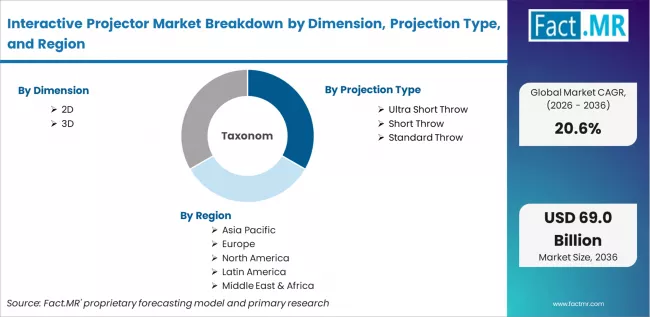
Interactive Projector Market is segmented by Projection Technology (Digital Light Processing (DLP), Liquid Crystal Display (LCD), and Liquid Crystal on Silicon (LCoS)), Projection Type (Ultra Short Throw, Short Throw, and Standard Throw), Dimension (2D and 3D), Interaction Type (Pen-based and Touch-based), Resolution (HD (1280x720), Full HD (1920x1080), WXGA (1280x800), and 4K and Above), Application (Interactive Learning, Presentation and Collaboration, Interactive Signage and Display, Simulation and Training, and Entertainment and Gaming), End User (Educational Institutions, Corporate Enterprises, Government and Public Sector, Healthcare Providers, Retail and Hospitality, and Museums and Exhibition Centers), and Region. Forecast for 2026 to 2036.

Core Findings

    Silicone-Organic Hybrids Market Forecast and Outlook By Fact.MR

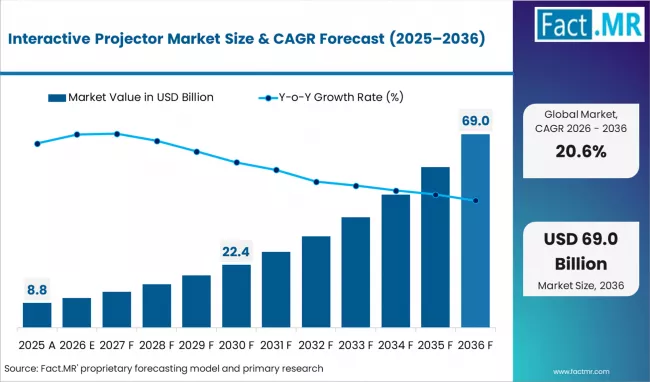
    In 2025, the interactive projector market was valued at USD 8.8 billion. Based on Fact MR analysis, demand for interactive projectors is estimated to grow to USD 10.6 billion in 2026 and USD 71.4 billion by 2036. FMR projects a CAGR of 20.6% during the forecast period.

    The absolute dollar growth from 2026 to 2036 is USD 60.8 billion. This level of expansion reflects a structural shift in digital presentation and collaborative display technologies rather than incremental equipment upgrades. Interactive projection systems are increasingly deployed across classrooms, corporate meeting spaces, training environments, and digital learning platforms. These systems allow real time annotation, touch interaction, and collaborative content sharing on large display surfaces. Adoption continues as educational institutions and enterprises invest in digital learning tools and hybrid collaboration infrastructure. Structural constraints remain present through high equipment costs, budget limitations in public education systems, and competition from large format interactive flat panel displays.

    India leads with a projected CAGR of 22.4%, supported by rapid expansion of digital classrooms and large scale deployment of interactive learning technologies across schools and training institutions. China follows with a CAGR of 21.6%, driven by strong demand for digital education infrastructure and smart classroom equipment. Germany records a CAGR of 20.8%, reflecting increasing use of collaborative display systems in corporate training and industrial education environments. The United States shows a CAGR of 18.9%, supported by continued adoption in enterprise collaboration and education technology markets. Mature markets generate a growing share of replacement demand as earlier generation projection systems are upgraded. Budget constraints and competition from flat panel display technologies act as structural constraints in established markets.
    Interactive Projector Market Market Value Analysis

    Interactive Projector Market

    Metric Details
    Industry Size (2026E) USD 10.6 billion
    Industry Value (2036F) USD 71.4 billion
    CAGR (2026 to 2036) 20.6%

    Interactive Projector Market Definition

    The Interactive Projector Market includes projection devices that allow users to interact directly with projected images using touch, digital pens, or gesture input. These projectors combine display technology with sensors or cameras that detect user interaction on a projection surface such as a wall or screen. Interactive projectors are commonly used in classrooms, corporate meeting rooms, and training environments to support collaborative presentations and digital learning activities. Their primary function is to transform standard projection surfaces into interactive workspaces where users can write, draw, or control digital content during presentations or instruction.

    Market Inclusions

    This report covers global and regional market sizes for interactive projectors with forecast analysis for the study period. The market is segmented by product type including ultra short throw projectors, short throw projectors, and standard interactive projection systems. Application segments include education, corporate training, business presentations, and public information displays. End users include schools, universities, corporate offices, and training institutions. The report also evaluates pricing trends, production patterns, and selected trade flow analysis across major electronics and display technology markets.

    Market Exclusions

    The report excludes standard digital projectors that do not support interactive input features. Interactive whiteboards sold as standalone hardware systems are also excluded. Large format display panels and flat screen collaboration displays fall outside the defined scope. The analysis does not include projection mapping equipment used for entertainment events or advertising installations. Accessories such as projection screens, mounting equipment, and audio systems are not included, as the study focuses strictly on interactive projector devices.

    Research Methodology

    • Primary Research: Interviews were conducted with projector manufacturers, education technology providers, distributors, and institutional procurement managers.
    • Desk Research: Public information was gathered from electronics industry publications, company reports, government education technology data, and trade statistics.
    • Market-Sizing and Forecasting: A hybrid model combining bottom up shipment analysis with top down demand assessment across education and enterprise sectors was applied.
    • Data Validation and Update Cycle: Findings were cross verified through multiple industry data sources and expert inputs, with periodic updates conducted as new market information becomes available.

    Summary of the Interactive Projector Market

    • Market Definition
      • The market comprises projection systems integrated with sensors or cameras that allow users to interact directly with projected digital images using touch, digital pens, or gesture input. These devices convert projection surfaces such as walls or screens into interactive workspaces for collaborative presentations, teaching, and training activities.
    • Demand Drivers
      • Expansion of digital classroom infrastructure across schools and universities adopting interactive teaching technologies.
      • Increasing use of collaborative display tools in corporate meeting rooms and training environments.
      • Deployment of interactive projection systems for simulation, training, and digital presentation applications.
      • Rising demand for collaborative content sharing and real time annotation tools in hybrid work and learning environments.
    • Key Segments Analyzed
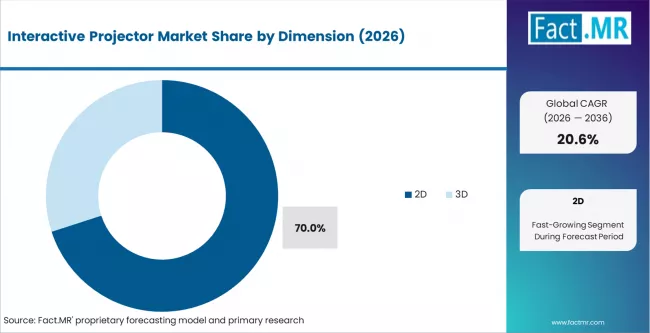
      • Dimension: Two dimensional interactive projectors represent around 70% share due to widespread use in classrooms and conference rooms.
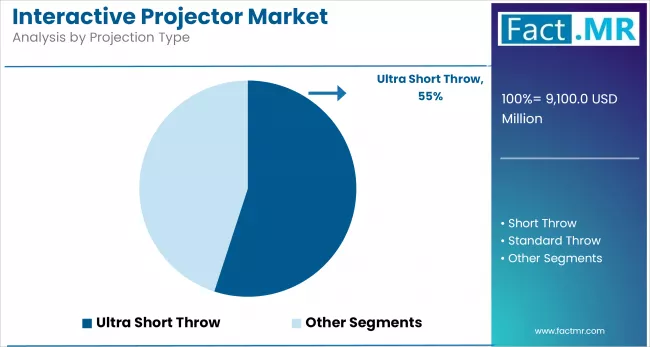
      • Projection Type: Ultra short throw projectors account for about 45% share supported by their ability to project large images from minimal distance.
      • Application: Interactive learning and presentation systems represent major demand areas across education and corporate collaboration environments.
      • Geography: India records the fastest expansion supported by large scale deployment of digital classroom technologies.
    • Analyst Opinion at Fact MR
      • Shambhu Nath Jha, Principal Consultant, Fact MR, opines, "In this updated edition of the Interactive Projector Market report, industry participants will observe that demand continues to rise as education institutions and enterprises adopt digital collaboration tools. Interactive projection systems allow users to interact with digital content directly on large display surfaces. Companies that integrate advanced projection optics, interactive software, and connectivity features will maintain stronger positions within this evolving display technology market."
    • Strategic Implications or Executive Takeaways
      • Invest in development of ultra short throw projection systems that support interactive learning and collaboration environments.
      • Strengthen integration capabilities with digital learning platforms and enterprise collaboration software.
      • Expand product portfolios supporting education technology deployment and corporate training infrastructure.
      • Develop projection systems that combine high resolution display performance with reliable touch or pen based interaction features.
    • Methodology
      • Primary interviews conducted with projector manufacturers, education technology providers, distributors, and institutional procurement managers.
      • Desk research based on electronics industry publications, company reports, government education technology statistics, and trade databases.
      • Market sizing developed using a hybrid approach combining bottom up shipment analysis and top down demand assessment across education and enterprise sectors.
      • Findings validated through multiple industry data sources and expert consultations following Fact MR internal modeling standards.

    Segmental Analysis

    Interactive Projector Market Analysis by Dimension
    Interactive Projector Market Analysis By Dimension

    • Market Overview: Two dimensional projection systems are projected to account for around 70% share of the interactive projector market by 2026. Two dimensional interactive projectors are widely used in classrooms, training facilities, and corporate meeting environments to support presentations, digital learning, and collaborative discussions. These systems allow users to interact with projected content through touch enabled pens or gesture based input. Educational institutions and corporate organizations rely on two dimensional projection systems to display multimedia content, digital whiteboards, and presentation materials. The affordability and ease of integration of two dimensional projectors continue to support their widespread adoption across education and business environments.
    • Demand Drivers:
      • Educational Technology Adoption: Schools and universities deploy interactive projectors to support digital learning environments and classroom collaboration.
      • Corporate Presentation Systems: Businesses use interactive projectors in conference rooms and training centers to facilitate presentations and team collaboration.
      • Ease of Installation: Two dimensional projectors are easier to install and operate within classrooms and meeting spaces compared with advanced projection systems.

    Interactive Projector Market Analysis by Projection Type
    Interactive Projector Market Analysis By Projection Type

    • Market Overview: Ultra short throw projectors are expected to represent approximately 45% share of the interactive projector market in 2026. These projectors are designed to project large images from a very short distance between the projector and the screen or wall surface. Ultra short throw projection technology reduces shadow interference and glare, which improves visibility during interactive presentations and classroom instruction. Educational institutions and training centers increasingly deploy ultra short throw projectors to maximize screen size in limited room spaces while maintaining clear image quality.
    • Demand Drivers:
      • Space Efficient Projection: Ultra short throw projectors can produce large images from minimal distance, making them suitable for classrooms and small meeting rooms.
      • Reduced Shadow Interference: The projection angle minimizes shadows created by presenters standing near the display surface.
      • Improved Classroom Interaction: Teachers and trainers can interact with projected content directly on the screen without obstructing the projected image.

    Key Dynamics

    Interactive Projector Market Drivers, Restraints, and Opportunities

    FMR analysts observe that the interactive projector market developed from the expansion of digital classroom technologies and presentation systems used in education and corporate environments. Early interactive projectors replaced conventional whiteboards by allowing users to write, draw, and control digital content directly on projected surfaces. The current market valuation reflects demand from schools, training centers, and conference facilities where interactive visual systems support collaborative learning and digital presentations. Growth emerged as educational institutions adopted digital teaching tools that combine projection hardware with touch or pen-based interaction.

    A structural shift is occurring as conventional projection systems lose share to integrated interactive displays and flat panel collaboration screens. Standard interactive projectors remain widely deployed in classrooms due to lower installation costs compared with large interactive displays. Advanced projector systems now incorporate short-throw optics, multi-touch capabilities, and wireless connectivity that allow users to interact directly with projected digital interfaces. These enhanced systems command higher unit prices due to advanced optical components and integrated control software. Even with slower replacement cycles in education infrastructure, higher pricing associated with advanced projector technologies supports gradual market value growth.

    • Digital Classroom Adoption: Educational institutions deploy interactive projectors to support collaborative teaching environments where teachers and students interact with digital learning materials.
    • Education Technology Standards: Government education technology initiatives and procurement guidelines in several countries encourage the adoption of digital classroom infrastructure in schools.
    • Asia Education Infrastructure: China, India, and Southeast Asian countries continue expanding digital classroom programs as public education systems invest in interactive teaching technologies.

    Regional Analysis

    The market analysis covers key global regions, including South Asia, East Asia, North America, and Europe. It is segmented geographically, with specific market dynamics for each region. The full report provides a detailed market attractiveness analysis.

    Top Country Growth Comparison Interactive Projector Market Cagr (2026 2036)

    Country CAGR (2026-2036)
    India 22.4%
    China 21.6%
    Germany 20.8%
    USA 18.9%

    Source: Fact MR (FMR) analysis, based on proprietary forecasting model and primary research
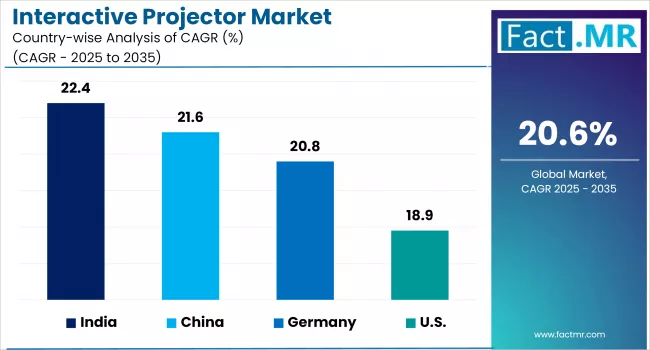
    Interactive Projector Market Cagr Analysis By Country

    South Asia

    India represents a major market supported by digital education initiatives, classroom technology adoption, and growth in smart learning infrastructure. Key companies include Epson, BenQ Corporation, and Hitachi Digital Media.

    • India: Demand for interactive projectors in India is projected to rise at 22.4% CAGR through 2036. Growth is supported by digital classroom programs promoted by the Ministry of Education (04-2025) and expansion of educational display technologies by Epson (08-2025).

    East Asia

    China is a key market supported by education technology investment, corporate presentation systems, and smart classroom infrastructure.

    • China: Demand for interactive projectors in China is projected to rise at 21.6% CAGR through 2036. Growth is supported by smart education initiatives promoted by the Ministry of Education (03-2025) and expansion of interactive display technologies by BenQ Corporation (07-2025).

    North America
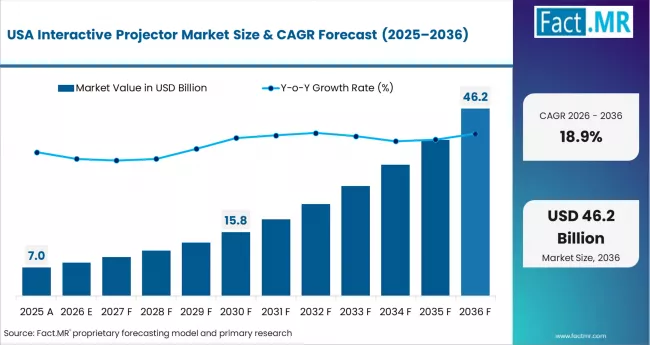
    Interactive Projector Market Country Value Analysis

    The USA represents a significant market supported by corporate collaboration tools, classroom technology adoption, and digital presentation systems.

    • USA: Demand for interactive projectors in the U.S. is projected to rise at 18.9% CAGR through 2036. Growth is supported by digital learning infrastructure programs (05-2025) and deployment of collaborative display solutions by ViewSonic Corporation (09-2025).

    Europe
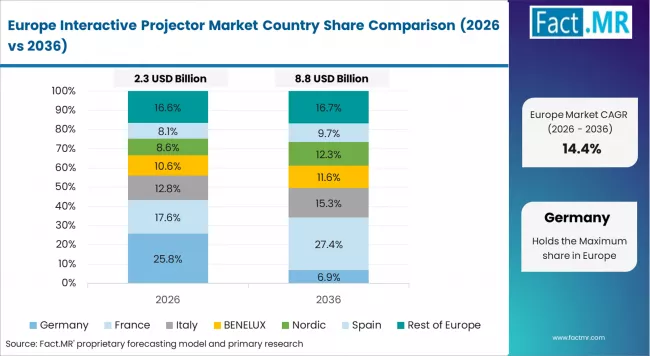
    Interactive Projector Market Europe Country Market Share Analysis, 2026 & 2036

    Germany is an important market supported by digital classroom development, corporate training systems, and enterprise presentation technologies.

    • Germany: Demand for interactive projectors in Germany is projected to rise at 20.8% CAGR through 2036. Growth is supported by digital education initiatives promoted by the Federal Ministry of Education and Research (03-2025) and expansion of projection technologies by Hitachi Digital Media (08-2025).

    Fact MR's analysis of the interactive projector market in South Asia, East Asia, North America, and Europe consists of country-wise assessments that include India, China, Germany, and the USA. Readers can find detailed trends, regulatory updates, and company-specific investments shaping market growth in these countries.

    Competitive Landscape
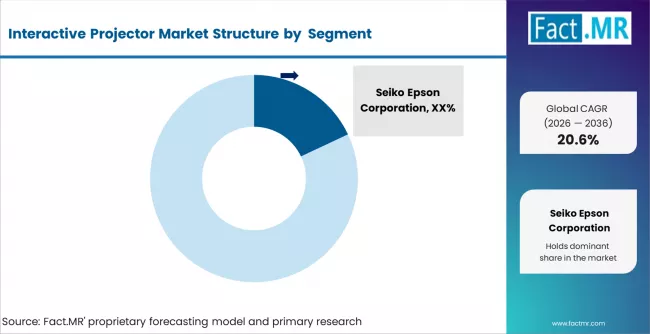
    Interactive Projector Market Analysis By Company

    Competitive Structure and Buyer Dynamics in the Interactive Projector Market

    The competitive structure of the Interactive Projector Market is moderately concentrated, with a limited number of established electronics manufacturers controlling a significant portion of global supply. Companies such as Seiko Epson Corporation, BenQ Corporation, Dell Technologies Inc., and Optoma Corporation maintain strong positions through recognized projector product lines and established distribution networks across education, corporate, and training environments. These firms supply interactive projection systems that integrate touch or pen based interaction with digital display technologies. Competition in the market is primarily shaped by image clarity, projection brightness, software compatibility, and reliability in classroom or meeting room settings. Product differentiation also depends on ease of installation, integration with collaboration software, and long term operational durability. Vendors that maintain strong relationships with educational institutions and enterprise technology distributors often achieve stronger market presence.

    Certain companies hold structural advantages through established manufacturing capabilities and integration with broader display or computing product ecosystems. Seiko Epson Corporation benefits from long experience in projection technologies and extensive optical engineering expertise. Dell Technologies Inc. maintains advantages through established enterprise hardware distribution networks and long standing relationships with corporate and institutional buyers. BenQ Corporation and Optoma Corporation compete through specialized display technologies and focused product development within projection systems. Institutional buyers such as schools, universities, and corporate training centers typically evaluate multiple vendors before procurement. Procurement teams assess image quality, maintenance requirements, and compatibility with existing digital infrastructure. Competitive bidding and vendor comparison processes moderate supplier pricing leverage, though manufacturers with proven product reliability and strong service support retain moderate negotiating influence.

    Key Players of the Interactive Projector Market

    • Seiko Epson Corporation
    • BenQ Corporation
    • Dell Technologies Inc.
    • Optoma Corporation

    Report Scope

    Interactive Projector Market Breakdown By Dimension, Projection Type, And Region

    Metric Value
    Quantitative Units USD 10.6 billion (2026) to USD 71.4 billion (2036), at a CAGR of 20.6%
    Market Definition The interactive projector market includes development and deployment of projection systems integrated with interactive technologies that enable touch or pen-based user interaction for educational, corporate, and commercial display environments.
    Projection Technology Digital Light Processing (DLP), Liquid Crystal Display (LCD), Liquid Crystal on Silicon (LCoS)
    Projection Type Ultra Short Throw, Short Throw, Standard Throw
    Dimension 2D, 3D
    Interaction Type Pen-based, Touch-based
    Resolution HD (1280x720), Full HD (1920x1080), WXGA (1280x800), 4K and Above
    Application Coverage Interactive Learning, Presentation and Collaboration, Interactive Signage and Display, Simulation and Training, Entertainment and Gaming
    End User Segmentation Educational Institutions, Corporate Enterprises, Government and Public Sector, Healthcare Providers, Retail and Hospitality, Museums and Exhibition Centers
    Key Companies Profiled Seiko Epson Corporation, BenQ Corporation, Dell Technologies Inc., Optoma Corporation
    Forecast Period 2026 to 2036
    Approach Hybrid top-down and bottom-up market modeling validated through interviews with projection technology manufacturers and enterprise users, supported by shipment analysis, display technology benchmarking, and adoption trends across education and corporate sectors.

    Bibliographies

    • [1] Codex Alimentarius Commission. (2023). Dairy product standards. Food and Agriculture Organization of the United Nations.
    • [2] Dairy Farmers of America. (2025). Permeate ingredient supply expansion.
    • [3] DMK Group. (2025). Dairy processing industry expansion.
    • [4] Fonterra Co-operative Group. (2025). Dairy processing facilities expansion.
    • [5] Gujarat Cooperative Milk Marketing Federation. (2025). Production capacity expansion.
    • [6] Lactalis Group. (2025). Dairy ingredient supply expansion.
    • [7] Ministry of Agriculture, Forestry and Fisheries, Japan. (2025). Processed food manufacturing programs.
    • [8] National Dairy Development Board, India. (2025). Dairy processing expansion initiatives.
    • [9] U.S. Food and Drug Administration. (2025). Dairy ingredient labeling regulations.

    This Report Addresses

    • Market size estimation and revenue forecasts for the Interactive Projector Market from 2026 to 2036, supported by projection equipment shipment benchmarks and digital classroom infrastructure deployment indicators.
    • Growth opportunity mapping across digital light processing, liquid crystal display, and liquid crystal on silicon projection technologies used in interactive display environments.
    • Segment and regional revenue forecasts covering interactive learning, corporate presentation and collaboration systems, simulation and training applications, and interactive signage deployments across major institutional markets.
    • Competition strategy assessment including projection technology development capability, display system integration, and enterprise collaboration hardware benchmarking among leading projector manufacturers.
    • Regulatory and institutional procurement analysis covering education technology deployment guidelines and public sector digital infrastructure programs influencing interactive display adoption.
    • Market report delivery in PDF, Excel, PPT, and interactive dashboard formats designed for education technology investment planning, enterprise collaboration infrastructure evaluation, and display equipment procurement analysis.
    • Supply chain vulnerability assessments identifying optical component sourcing dependencies, projection system manufacturing concentration, and semiconductor component supply risks affecting interactive projector production.

    Interactive Projector Market Key Segments

    • Projection Technology :

      • Digital Light Processing (DLP)
      • Liquid Crystal Display (LCD)
      • Liquid Crystal on Silicon (LCoS)
    • Projection Type :

      • Ultra Short Throw
      • Short Throw
      • Standard Throw
    • Dimension :

      • 2D
      • 3D
    • Interaction Type :

      • Pen Based
      • Touch Based
    • Resolution :

      • HD (1280x720)
      • Full HD (1920x1080)
      • WXGA (1280x800)
      • 4K and Above
    • Application :

      • Interactive Learning
      • Presentation and Collaboration
      • Interactive Signage and Display
      • Simulation and Training
      • Entertainment and Gaming
    • End User :

      • Educational Institutions
      • Corporate Enterprises
      • Government and Public Sector
      • Healthcare Providers
      • Retail and Hospitality
      • Museums and Exhibition Centers
    • Region :

      • North America
        • USA
        • Canada
        • Mexico
      • Europe
        • Germany
        • UK
        • France
        • Italy
        • Spain
        • Nordic Countries
        • BENELUX
        • Rest of Europe
      • Asia Pacific
        • China
        • Japan
        • South Korea
        • India
        • Australia
        • Rest of Asia Pacific
      • Latin America
        • Brazil
        • Argentina
        • Rest of Latin America
      • Middle East and Africa
        • Kingdom of Saudi Arabia
        • United Arab Emirates
        • South Africa
        • Rest of Middle East and Africa
      • Other Regions
        • Oceania
        • Central Asia
        • Other Markets

    Table of Content

    1. Executive Summary
      • Global Market Outlook
      • Demand to side Trends
      • Supply to side Trends
      • Technology Roadmap Analysis
      • Analysis and Recommendations
    2. Market Overview
      • Market Coverage / Taxonomy
      • Market Definition / Scope / Limitations
    3. Research Methodology
      • Chapter Orientation
      • Analytical Lens and Working Hypotheses
        • Market Structure, Signals, and Trend Drivers
        • Benchmarking and Cross-market Comparability
        • Market Sizing, Forecasting, and Opportunity Mapping
      • Research Design and Evidence Framework
        • Desk Research Programme (Secondary Evidence)
          • Company Annual and Sustainability Reports
          • Peer-reviewed Journals and Academic Literature
          • Corporate Websites, Product Literature, and Technical Notes
          • Earnings Decks and Investor Briefings
          • Statutory Filings and Regulatory Disclosures
          • Technical White Papers and Standards Notes
          • Trade Journals, Industry Magazines, and Analyst Briefs
          • Conference Proceedings, Webinars, and Seminar Materials
          • Government Statistics Portals and Public Data Releases
          • Press Releases and Reputable Media Coverage
          • Specialist Newsletters and Curated Briefings
          • Sector Databases and Reference Repositories
          • Fact.MR Internal Proprietary Databases and Historical Market Datasets
          • Subscription Datasets and Paid Sources
          • Social Channels, Communities, and Digital Listening Inputs
          • Additional Desk Sources
        • Expert Input and Fieldwork (Primary Evidence)
          • Primary Modes
            • Qualitative Interviews and Expert Elicitation
            • Quantitative Surveys and Structured Data Capture
            • Blended Approach
          • Why Primary Evidence is Used
          • Field Techniques
            • Interviews
            • Surveys
            • Focus Groups
            • Observational and In-context Research
            • Social and Community Interactions
          • Stakeholder Universe Engaged
            • C-suite Leaders
            • Board Members
            • Presidents and Vice Presidents
            • R&D and Innovation Heads
            • Technical Specialists
            • Domain Subject-matter Experts
            • Scientists
            • Physicians and Other Healthcare Professionals
          • Governance, Ethics, and Data Stewardship
            • Research Ethics
            • Data Integrity and Handling
        • Tooling, Models, and Reference Databases
      • Data Engineering and Model Build
        • Data Acquisition and Ingestion
        • Cleaning, Normalisation, and Verification
        • Synthesis, Triangulation, and Analysis
      • Quality Assurance and Audit Trail
    4. Market Background
      • Market Dynamics
        • Drivers
        • Restraints
        • Opportunity
        • Trends
      • Scenario Forecast
        • Demand in Optimistic Scenario
        • Demand in Likely Scenario
        • Demand in Conservative Scenario
      • Opportunity Map Analysis
      • Product Life Cycle Analysis
      • Supply Chain Analysis
      • Investment Feasibility Matrix
      • Value Chain Analysis
      • PESTLE and Porter’s Analysis
      • Regulatory Landscape
      • Regional Parent Market Outlook
      • Production and Consumption Statistics
      • Import and Export Statistics
    5. Global Market Analysis 2021 to 2025 and Forecast, 2026 to 2036
      • Historical Market Size Value (USD Million) Analysis, 2021 to 2025
      • Current and Future Market Size Value (USD Million) Projections, 2026 to 2036
        • Y to o to Y Growth Trend Analysis
        • Absolute $ Opportunity Analysis
    6. Global Market Pricing Analysis 2021 to 2025 and Forecast 2026 to 2036
    7. Global Market Analysis 2021 to 2025 and Forecast 2026 to 2036, By Dimension
      • Introduction / Key Findings
      • Historical Market Size Value (USD Million) Analysis By Dimension, 2021 to 2025
      • Current and Future Market Size Value (USD Million) Analysis and Forecast By Dimension, 2026 to 2036
        • 2D
        • 3D
      • Y to o to Y Growth Trend Analysis By Dimension, 2021 to 2025
      • Absolute $ Opportunity Analysis By Dimension, 2026 to 2036
    8. Global Market Analysis 2021 to 2025 and Forecast 2026 to 2036, By Projection Type
      • Introduction / Key Findings
      • Historical Market Size Value (USD Million) Analysis By Projection Type, 2021 to 2025
      • Current and Future Market Size Value (USD Million) Analysis and Forecast By Projection Type, 2026 to 2036
        • Ultra Short Throw
        • Short Throw
        • Standard Throw
      • Y to o to Y Growth Trend Analysis By Projection Type, 2021 to 2025
      • Absolute $ Opportunity Analysis By Projection Type, 2026 to 2036
    9. Global Market Analysis 2021 to 2025 and Forecast 2026 to 2036, By Region
      • Introduction
      • Historical Market Size Value (USD Million) Analysis By Region, 2021 to 2025
      • Current Market Size Value (USD Million) Analysis and Forecast By Region, 2026 to 2036
        • North America
        • Latin America
        • Western Europe
        • Eastern Europe
        • East Asia
        • South Asia and Pacific
        • Middle East & Africa
      • Market Attractiveness Analysis By Region
    10. North America Market Analysis 2021 to 2025 and Forecast 2026 to 2036, By Country
      • Historical Market Size Value (USD Million) Trend Analysis By Market Taxonomy, 2021 to 2025
      • Market Size Value (USD Million) Forecast By Market Taxonomy, 2026 to 2036
        • By Country
          • USA
          • Canada
          • Mexico
        • By Dimension
        • By Projection Type
      • Market Attractiveness Analysis
        • By Country
        • By Dimension
        • By Projection Type
      • Key Takeaways
    11. Latin America Market Analysis 2021 to 2025 and Forecast 2026 to 2036, By Country
      • Historical Market Size Value (USD Million) Trend Analysis By Market Taxonomy, 2021 to 2025
      • Market Size Value (USD Million) Forecast By Market Taxonomy, 2026 to 2036
        • By Country
          • Brazil
          • Chile
          • Rest of Latin America
        • By Dimension
        • By Projection Type
      • Market Attractiveness Analysis
        • By Country
        • By Dimension
        • By Projection Type
      • Key Takeaways
    12. Western Europe Market Analysis 2021 to 2025 and Forecast 2026 to 2036, By Country
      • Historical Market Size Value (USD Million) Trend Analysis By Market Taxonomy, 2021 to 2025
      • Market Size Value (USD Million) Forecast By Market Taxonomy, 2026 to 2036
        • By Country
          • Germany
          • UK
          • Italy
          • Spain
          • France
          • Nordic
          • BENELUX
          • Rest of Western Europe
        • By Dimension
        • By Projection Type
      • Market Attractiveness Analysis
        • By Country
        • By Dimension
        • By Projection Type
      • Key Takeaways
    13. Eastern Europe Market Analysis 2021 to 2025 and Forecast 2026 to 2036, By Country
      • Historical Market Size Value (USD Million) Trend Analysis By Market Taxonomy, 2021 to 2025
      • Market Size Value (USD Million) Forecast By Market Taxonomy, 2026 to 2036
        • By Country
          • Russia
          • Poland
          • Hungary
          • Balkan & Baltic
          • Rest of Eastern Europe
        • By Dimension
        • By Projection Type
      • Market Attractiveness Analysis
        • By Country
        • By Dimension
        • By Projection Type
      • Key Takeaways
    14. East Asia Market Analysis 2021 to 2025 and Forecast 2026 to 2036, By Country
      • Historical Market Size Value (USD Million) Trend Analysis By Market Taxonomy, 2021 to 2025
      • Market Size Value (USD Million) Forecast By Market Taxonomy, 2026 to 2036
        • By Country
          • China
          • Japan
          • South Korea
        • By Dimension
        • By Projection Type
      • Market Attractiveness Analysis
        • By Country
        • By Dimension
        • By Projection Type
      • Key Takeaways
    15. South Asia and Pacific Market Analysis 2021 to 2025 and Forecast 2026 to 2036, By Country
      • Historical Market Size Value (USD Million) Trend Analysis By Market Taxonomy, 2021 to 2025
      • Market Size Value (USD Million) Forecast By Market Taxonomy, 2026 to 2036
        • By Country
          • India
          • ASEAN
          • Australia & New Zealand
          • Rest of South Asia and Pacific
        • By Dimension
        • By Projection Type
      • Market Attractiveness Analysis
        • By Country
        • By Dimension
        • By Projection Type
      • Key Takeaways
    16. Middle East & Africa Market Analysis 2021 to 2025 and Forecast 2026 to 2036, By Country
      • Historical Market Size Value (USD Million) Trend Analysis By Market Taxonomy, 2021 to 2025
      • Market Size Value (USD Million) Forecast By Market Taxonomy, 2026 to 2036
        • By Country
          • Kingdom of Saudi Arabia
          • Other GCC Countries
          • Turkiye
          • South Africa
          • Other African Union
          • Rest of Middle East & Africa
        • By Dimension
        • By Projection Type
      • Market Attractiveness Analysis
        • By Country
        • By Dimension
        • By Projection Type
      • Key Takeaways
    17. Key Countries Market Analysis
      • USA
        • Pricing Analysis
        • Market Share Analysis, 2025
          • By Dimension
          • By Projection Type
      • Canada
        • Pricing Analysis
        • Market Share Analysis, 2025
          • By Dimension
          • By Projection Type
      • Mexico
        • Pricing Analysis
        • Market Share Analysis, 2025
          • By Dimension
          • By Projection Type
      • Brazil
        • Pricing Analysis
        • Market Share Analysis, 2025
          • By Dimension
          • By Projection Type
      • Chile
        • Pricing Analysis
        • Market Share Analysis, 2025
          • By Dimension
          • By Projection Type
      • Germany
        • Pricing Analysis
        • Market Share Analysis, 2025
          • By Dimension
          • By Projection Type
      • UK
        • Pricing Analysis
        • Market Share Analysis, 2025
          • By Dimension
          • By Projection Type
      • Italy
        • Pricing Analysis
        • Market Share Analysis, 2025
          • By Dimension
          • By Projection Type
      • Spain
        • Pricing Analysis
        • Market Share Analysis, 2025
          • By Dimension
          • By Projection Type
      • France
        • Pricing Analysis
        • Market Share Analysis, 2025
          • By Dimension
          • By Projection Type
      • India
        • Pricing Analysis
        • Market Share Analysis, 2025
          • By Dimension
          • By Projection Type
      • ASEAN
        • Pricing Analysis
        • Market Share Analysis, 2025
          • By Dimension
          • By Projection Type
      • Australia & New Zealand
        • Pricing Analysis
        • Market Share Analysis, 2025
          • By Dimension
          • By Projection Type
      • China
        • Pricing Analysis
        • Market Share Analysis, 2025
          • By Dimension
          • By Projection Type
      • Japan
        • Pricing Analysis
        • Market Share Analysis, 2025
          • By Dimension
          • By Projection Type
      • South Korea
        • Pricing Analysis
        • Market Share Analysis, 2025
          • By Dimension
          • By Projection Type
      • Russia
        • Pricing Analysis
        • Market Share Analysis, 2025
          • By Dimension
          • By Projection Type
      • Poland
        • Pricing Analysis
        • Market Share Analysis, 2025
          • By Dimension
          • By Projection Type
      • Hungary
        • Pricing Analysis
        • Market Share Analysis, 2025
          • By Dimension
          • By Projection Type
      • Kingdom of Saudi Arabia
        • Pricing Analysis
        • Market Share Analysis, 2025
          • By Dimension
          • By Projection Type
      • Turkiye
        • Pricing Analysis
        • Market Share Analysis, 2025
          • By Dimension
          • By Projection Type
      • South Africa
        • Pricing Analysis
        • Market Share Analysis, 2025
          • By Dimension
          • By Projection Type
    18. Market Structure Analysis
      • Competition Dashboard
      • Competition Benchmarking
      • Market Share Analysis of Top Players
        • By Regional
        • By Dimension
        • By Projection Type
    19. Competition Analysis
      • Competition Deep Dive
        • Seiko Epson Corporation
          • Overview
          • Product Portfolio
          • Profitability by Market Segments (Product/Age /Sales Channel/Region)
          • Sales Footprint
          • Strategy Overview
            • Marketing Strategy
            • Product Strategy
            • Channel Strategy
        • BenQ Corporation
        • Dell Technologies Inc.
        • Optoma Corporation
    20. Assumptions & Acronyms Used

    List Of Table

    • Table 1: Global Market Value (USD Million) Forecast by Region, 2021 to 2036
    • Table 2: Global Market Value (USD Million) Forecast by Dimension, 2021 to 2036
    • Table 3: Global Market Value (USD Million) Forecast by Projection Type, 2021 to 2036
    • Table 4: North America Market Value (USD Million) Forecast by Country, 2021 to 2036
    • Table 5: North America Market Value (USD Million) Forecast by Dimension, 2021 to 2036
    • Table 6: North America Market Value (USD Million) Forecast by Projection Type, 2021 to 2036
    • Table 7: Latin America Market Value (USD Million) Forecast by Country, 2021 to 2036
    • Table 8: Latin America Market Value (USD Million) Forecast by Dimension, 2021 to 2036
    • Table 9: Latin America Market Value (USD Million) Forecast by Projection Type, 2021 to 2036
    • Table 10: Western Europe Market Value (USD Million) Forecast by Country, 2021 to 2036
    • Table 11: Western Europe Market Value (USD Million) Forecast by Dimension, 2021 to 2036
    • Table 12: Western Europe Market Value (USD Million) Forecast by Projection Type, 2021 to 2036
    • Table 13: Eastern Europe Market Value (USD Million) Forecast by Country, 2021 to 2036
    • Table 14: Eastern Europe Market Value (USD Million) Forecast by Dimension, 2021 to 2036
    • Table 15: Eastern Europe Market Value (USD Million) Forecast by Projection Type, 2021 to 2036
    • Table 16: East Asia Market Value (USD Million) Forecast by Country, 2021 to 2036
    • Table 17: East Asia Market Value (USD Million) Forecast by Dimension, 2021 to 2036
    • Table 18: East Asia Market Value (USD Million) Forecast by Projection Type, 2021 to 2036
    • Table 19: South Asia and Pacific Market Value (USD Million) Forecast by Country, 2021 to 2036
    • Table 20: South Asia and Pacific Market Value (USD Million) Forecast by Dimension, 2021 to 2036
    • Table 21: South Asia and Pacific Market Value (USD Million) Forecast by Projection Type, 2021 to 2036
    • Table 22: Middle East & Africa Market Value (USD Million) Forecast by Country, 2021 to 2036
    • Table 23: Middle East & Africa Market Value (USD Million) Forecast by Dimension, 2021 to 2036
    • Table 24: Middle East & Africa Market Value (USD Million) Forecast by Projection Type, 2021 to 2036

    List Of Figures

    • Figure 1: Global Market Pricing Analysis
    • Figure 2: Global Market Value (USD Million) Forecast 2021 to 2036
    • Figure 3: Global Market Value Share and BPS Analysis by Dimension, 2026 and 2036
    • Figure 4: Global Market Y-o-Y Growth Comparison by Dimension, 2026 to 2036
    • Figure 5: Global Market Attractiveness Analysis by Dimension
    • Figure 6: Global Market Value Share and BPS Analysis by Projection Type, 2026 and 2036
    • Figure 7: Global Market Y-o-Y Growth Comparison by Projection Type, 2026 to 2036
    • Figure 8: Global Market Attractiveness Analysis by Projection Type
    • Figure 9: Global Market Value (USD Million) Share and BPS Analysis by Region, 2026 and 2036
    • Figure 10: Global Market Y-o-Y Growth Comparison by Region, 2026 to 2036
    • Figure 11: Global Market Attractiveness Analysis by Region
    • Figure 12: North America Market Incremental Dollar Opportunity, 2026 to 2036
    • Figure 13: Latin America Market Incremental Dollar Opportunity, 2026 to 2036
    • Figure 14: Western Europe Market Incremental Dollar Opportunity, 2026 to 2036
    • Figure 15: Eastern Europe Market Incremental Dollar Opportunity, 2026 to 2036
    • Figure 16: East Asia Market Incremental Dollar Opportunity, 2026 to 2036
    • Figure 17: South Asia and Pacific Market Incremental Dollar Opportunity, 2026 to 2036
    • Figure 18: Middle East & Africa Market Incremental Dollar Opportunity, 2026 to 2036
    • Figure 19: North America Market Value Share and BPS Analysis by Country, 2026 and 2036
    • Figure 20: North America Market Value Share and BPS Analysis by Dimension, 2026 and 2036
    • Figure 21: North America Market Y-o-Y Growth Comparison by Dimension, 2026 to 2036
    • Figure 22: North America Market Attractiveness Analysis by Dimension
    • Figure 23: North America Market Value Share and BPS Analysis by Projection Type, 2026 and 2036
    • Figure 24: North America Market Y-o-Y Growth Comparison by Projection Type, 2026 to 2036
    • Figure 25: North America Market Attractiveness Analysis by Projection Type
    • Figure 26: Latin America Market Value Share and BPS Analysis by Country, 2026 and 2036
    • Figure 27: Latin America Market Value Share and BPS Analysis by Dimension, 2026 and 2036
    • Figure 28: Latin America Market Y-o-Y Growth Comparison by Dimension, 2026 to 2036
    • Figure 29: Latin America Market Attractiveness Analysis by Dimension
    • Figure 30: Latin America Market Value Share and BPS Analysis by Projection Type, 2026 and 2036
    • Figure 31: Latin America Market Y-o-Y Growth Comparison by Projection Type, 2026 to 2036
    • Figure 32: Latin America Market Attractiveness Analysis by Projection Type
    • Figure 33: Western Europe Market Value Share and BPS Analysis by Country, 2026 and 2036
    • Figure 34: Western Europe Market Value Share and BPS Analysis by Dimension, 2026 and 2036
    • Figure 35: Western Europe Market Y-o-Y Growth Comparison by Dimension, 2026 to 2036
    • Figure 36: Western Europe Market Attractiveness Analysis by Dimension
    • Figure 37: Western Europe Market Value Share and BPS Analysis by Projection Type, 2026 and 2036
    • Figure 38: Western Europe Market Y-o-Y Growth Comparison by Projection Type, 2026 to 2036
    • Figure 39: Western Europe Market Attractiveness Analysis by Projection Type
    • Figure 40: Eastern Europe Market Value Share and BPS Analysis by Country, 2026 and 2036
    • Figure 41: Eastern Europe Market Value Share and BPS Analysis by Dimension, 2026 and 2036
    • Figure 42: Eastern Europe Market Y-o-Y Growth Comparison by Dimension, 2026 to 2036
    • Figure 43: Eastern Europe Market Attractiveness Analysis by Dimension
    • Figure 44: Eastern Europe Market Value Share and BPS Analysis by Projection Type, 2026 and 2036
    • Figure 45: Eastern Europe Market Y-o-Y Growth Comparison by Projection Type, 2026 to 2036
    • Figure 46: Eastern Europe Market Attractiveness Analysis by Projection Type
    • Figure 47: East Asia Market Value Share and BPS Analysis by Country, 2026 and 2036
    • Figure 48: East Asia Market Value Share and BPS Analysis by Dimension, 2026 and 2036
    • Figure 49: East Asia Market Y-o-Y Growth Comparison by Dimension, 2026 to 2036
    • Figure 50: East Asia Market Attractiveness Analysis by Dimension
    • Figure 51: East Asia Market Value Share and BPS Analysis by Projection Type, 2026 and 2036
    • Figure 52: East Asia Market Y-o-Y Growth Comparison by Projection Type, 2026 to 2036
    • Figure 53: East Asia Market Attractiveness Analysis by Projection Type
    • Figure 54: South Asia and Pacific Market Value Share and BPS Analysis by Country, 2026 and 2036
    • Figure 55: South Asia and Pacific Market Value Share and BPS Analysis by Dimension, 2026 and 2036
    • Figure 56: South Asia and Pacific Market Y-o-Y Growth Comparison by Dimension, 2026 to 2036
    • Figure 57: South Asia and Pacific Market Attractiveness Analysis by Dimension
    • Figure 58: South Asia and Pacific Market Value Share and BPS Analysis by Projection Type, 2026 and 2036
    • Figure 59: South Asia and Pacific Market Y-o-Y Growth Comparison by Projection Type, 2026 to 2036
    • Figure 60: South Asia and Pacific Market Attractiveness Analysis by Projection Type
    • Figure 61: Middle East & Africa Market Value Share and BPS Analysis by Country, 2026 and 2036
    • Figure 62: Middle East & Africa Market Value Share and BPS Analysis by Dimension, 2026 and 2036
    • Figure 63: Middle East & Africa Market Y-o-Y Growth Comparison by Dimension, 2026 to 2036
    • Figure 64: Middle East & Africa Market Attractiveness Analysis by Dimension
    • Figure 65: Middle East & Africa Market Value Share and BPS Analysis by Projection Type, 2026 and 2036
    • Figure 66: Middle East & Africa Market Y-o-Y Growth Comparison by Projection Type, 2026 to 2036
    • Figure 67: Middle East & Africa Market Attractiveness Analysis by Projection Type
    • Figure 68: Global Market - Tier Structure Analysis
    • Figure 69: Global Market - Company Share Analysis

    - Frequently Asked Questions -

    How large is the demand for Interactive Projectors in the global market in 2026?

    Demand for Interactive Projectors in the global market is estimated to be valued at USD 10.6 billion in 2026.

    What will be the market size of Interactive Projectors in the global market by 2036?

    Market size for Interactive Projectors is projected to reach USD 71.4 billion by 2036.

    What is the expected demand growth for Interactive Projectors in the global market between 2026 and 2036?

    Demand for Interactive Projectors in the global market is expected to grow at a CAGR of 20.6% during 2026 to 2036.

    Which Dimension Segment is poised to lead global demand by 2026?

    2D interactive projectors are expected to remain the dominant segment, accounting for approximately 70% of the global market share in 2026.

    Which Company is Identified as a Leading Participant in the Interactive Projector Market?

    Seiko Epson Corporation is identified as a leading participant in the interactive projector market due to its strong portfolio of projection and display technologies.

    What is Driving Interactive Projector Demand in the United States?

    Demand growth in the United States is supported by increasing adoption of digital classroom technologies and interactive presentation tools in corporate environments.

    What is the United States Growth Outlook in this Report?

    The United States interactive projector market is projected to expand at a CAGR of 18.9% during 2026 to 2036.

    Why is China an Important Market for Interactive Projectors?

    China represents a significant market due to large scale investments in digital education infrastructure and increasing adoption of smart classroom solutions.

    What is the China Growth Outlook in this Report?

    The China interactive projector market is projected to expand at a CAGR of 21.6% during 2026 to 2036.

    What Factors Support Interactive Projector Demand in India?

    India demand growth is associated with expanding digital learning initiatives and increasing adoption of interactive display technologies in schools and training centers.

    What is the India Growth Outlook in this Report?

    The India interactive projector market is projected to expand at a CAGR of 22.4% during 2026 to 2036.

    Why is Germany Considered an Important Market for Interactive Projectors?

    Germany represents an established technology market where interactive display systems are widely used in education and corporate training environments.

    What is the Germany Growth Outlook in this Report?

    The Germany interactive projector market is projected to expand at a CAGR of 20.8% during 2026 to 2036.

    What are Interactive Projectors and What are They Mainly Used For?

    Interactive projectors are display devices that enable users to interact with projected images through touch or digital pen input.

    What does Interactive Projector Market Mean in this Report?

    Interactive projector market refers to global production, trade, and adoption of projectors designed to support interactive presentations and collaborative digital environments.

    What is Included in the Scope of this Interactive Projector Market Report?

    The scope includes interactive projector systems categorized by dimension and their deployment across education, corporate, and training environments.

    What is Excluded from the Scope of this Report?

    Conventional non interactive projectors and unrelated display technologies are excluded unless integrated with interactive projection systems.

    What does Market Forecast Mean on this Page?

    Market forecast represents a projection of future demand based on digital education adoption trends and enterprise collaboration technology deployment.

    How is the Interactive Projector Market Forecast Developed in this Report?

    Forecast analysis is developed using education technology adoption statistics, corporate presentation technology demand, and global projection equipment shipment data.

    Interactive Projector Market