Mattifying Skin Care Products Market (2026 - 2036)
Mattifying Skin Care Products Market Size and Share Forecast Outlook 2026 to 2036
Core Findings
Mattifying Skin Care Products Market Forecast and Outlook 2026 to 2036
Mattifying skin care products market is likely to be valued at USD 14.2 billion in 2026 and is projected to reach USD 24.7 billion by 2036, reflecting a 5.7% CAGR, according to Fact.MR analysis.
Mattifying Skin Care Products Market Key Takeaways
- Mattifying Skin Care Products Market Value (2026): USD 14.2 billion
- Mattifying Skin Care Products Forecast Value (2036): USD 24.7 billion
- Mattifying Skin Care Products Forecast CAGR (2026-2036): 5.7%
- Mattifying Skin Care Products Leading Product Type: Mattifying creams (40%)
- Mattifying Skin Care Products Key Growth Regions: China, India, Germany, Brazil, USA
- Mattifying Skin Care Products Top Players: L’Oréal, Procter and Gamble, Unilever, Beiersdorf, Shiseido, Johnson and Johnson, Estée Lauder Companies, Kao Corporation
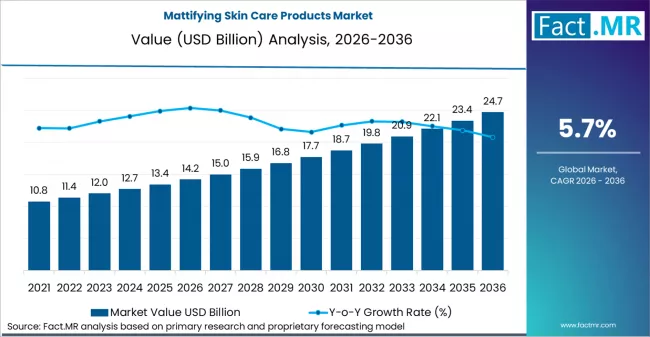
Market growth is being shaped by the shift from basic oil-control solutions to clinically informed, multi-functional formulations that balance sebum regulation with barrier support. Rising consumer demand for standardized, dermatologist-validated products is driving adoption across mass, prestige, and direct-to-consumer channels.
Supply chain and operational strategies emphasize scalable production, reproducible formulation quality, and efficient distribution to meet high-volume urban and e-commerce demand. Competitive dynamics reflect segmentation between science-driven leaders, emphasizing advanced actives and targeted delivery, and traditional brands expanding coverage through regional innovations. Regional wellness players, particularly in Asia-Pacific and Middle East markets, are increasing penetration with hybrid approaches that integrate natural extracts with performance actives. Market expansion demonstrates a strategic migration toward operationally consistent, performance-focused, and scalable mattifying skincare solutions that address both functional efficacy and consumer preference.
Mattifying Skin Care Products Market
| Metric | Value |
|---|---|
| Market Value (2026) | USD 14.2 billion |
| Forecast Value (2036) | USD 24.7 billion |
| Forecast CAGR (2026-2036) | 5.7% |
Category
| Category | Segments |
|---|---|
| Product Type | Mattifying creams; Mattifying lotions; Mattifying gels; Mattifying powders; Mattifying primers |
| Skin Type | Oily skin; Combination skin; Acne prone skin; Sensitive skin |
| Distribution Channel | Online retail; Supermarkets and hypermarkets; Specialty beauty stores; Pharmacies and drug stores |
| End User | Women; Men; Unisex |
| Region | North America; Europe; Asia Pacific; Latin America; Middle East & Africa |
Segmental Analysis
By Product Type, Why Do Mattifying Creams Lead the Market?
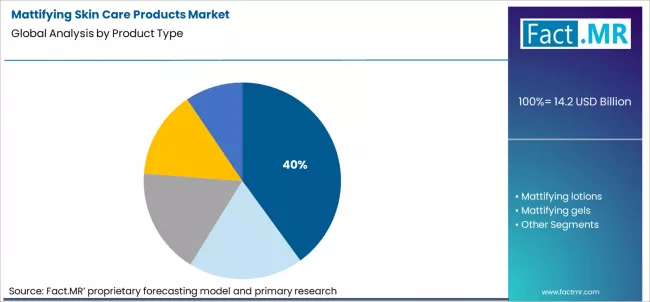
Mattifying creams lead the market with 40% share, reflecting their widespread adoption across retail, e-commerce, and professional channels that rely on repeat purchasing and predictable demand cycles. The market emphasizes operational efficiency, inventory consistency, and scalable distribution across multiple outlets. Suppliers benefit from standardized production, recurring orders, and streamlined logistics. Growth is reinforced by high-frequency usage patterns, urban consumer density, and multi-channel penetration. Segment prominence arises from structural market factors such as procurement repeatability, distribution reliability, and channel scalability, rather than specific product formulation or texture. Market adoption is determined by workflow and operational efficiency across the value chain.
By Skin Type, Why Does Oily Skin Represent the Largest Segment?
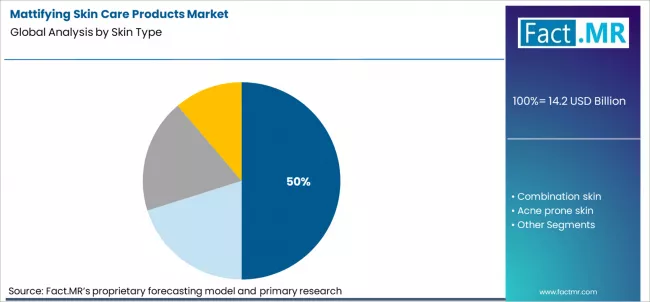
Oily skin accounts for 50% share, reflecting the largest consumer demographic with repeatable and frequent purchasing behavior. Market demand is concentrated in segments where multi-channel distribution, inventory planning, and predictable replenishment cycles support consistent supplier revenue. Suppliers benefit from scalable production, standardization, and reliable logistics. Segment prominence is defined by structural market drivers including operational efficiency, supply chain repeatability, and widespread channel penetration. Adoption is guided by consumption patterns and recurring demand rather than the specific formulation of individual products. Oily skin dominates as the primary driver of overall market activity due to consistent volume and repeatable procurement.
Country/Region
| Country/Region | Driver | Restraint | Trend |
|---|---|---|---|
| USA | Metabolic Beauty surge and L’Oréal Cell BioPrint AI diagnostics → expands adoption of dermatologist-validated mattifying skincare for oily/combination skin | MoCRA 2026 cGMP deadlines + PFAS/formaldehyde restrictions → high compliance costs for small/mid-tier brands | Growth of adaptive, precision mattifying products using biomimetic peptides |
| EU | Consumer demand for sustainable, blue-beauty compliant formulations → drives R&D into sugar-derived emollients | EU ingredient and labeling regulations → reformulation and CapEx requirements for legacy mattifiers | Rise of eco-conscious, compliant matte skincare lines |
| India | Launch of UNLICS (Kao) targeting Gen Z men → drives male grooming segment adoption | Supply chain and regulatory reporting challenges → slows nationwide distribution for smaller brands | Rapid expansion of gender-targeted, e-commerce-ready mattifying lotions |
| Global Trend | AI + biotech convergence and epigenetic skincare innovations → enables real-time, hyper-personalized mattifying routines | High R&D and validation requirements → increase entry barriers for smaller players | Shift from reactive oil absorption to cellular and skin longevity-focused adaptive mattifying |
| Brazil | Biodiversity and natural-origin ingredient sourcing → supports differentiated mattifying skincare launches | Complex import regulations → increase formulation costs for multinational brands | Growth of sustainable, locally sourced mattifying skincare products |
Analysis of the Mattifying Skin Care Products Market by Key Country
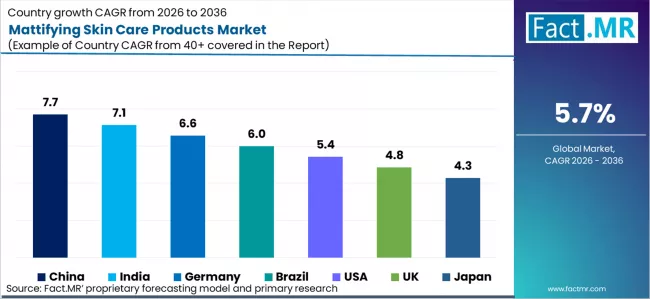
| Country | CAGR (2026-2036) |
|---|---|
| China | 7.7% |
| India | 7.1% |
| Germany | 6.6% |
| Brazil | 6.0% |
| USA | 5.4% |
| UK | 4.8% |
| Japan | 4.3% |
The report covers an in-depth analysis of 40+ countries; top-performing countries are highlighted below.
How Is Demand for Mattifying Skin Care Products Developing in China?
Demand for mattifying skin care products in China grows at 7.7% CAGR through 2036. Urban consumers increasingly seek products that control oil and shine due to widespread adoption of multistep skincare regimens supported by beauty technology platforms. Domestic brands invest in R&D and digital marketing to align with evolving skin health expectations. Ecommerce platforms facilitate rapid trial and replenishment across tier one and two cities, increasing market penetration. Retailers integrate inventory analytics to maintain optimal stock levels. Operational emphasis lies on formulation innovation and supply chain responsiveness. Consumer preference for functional performance in highhumidity conditions further accelerates adoption, contributing to sustained longterm growth across both mass and premium segments.
What Is the Growth in Adoption of Mattifying Skin Care Products in India?
Growth in adoption of mattifying skin care products in India is 7.1% CAGR through 2036. Rising awareness of skin health, increasing urbanisation, and higher disposable incomes support broader usage. Multibrand retail outlets and online channels expand category visibility. Manufacturers tailor formulations for local climatic conditions where heat and humidity lead to excess sebum production. Operational focus emphasises supply chain flexibility to manage frequent replenishment cycles in highgrowth urban clusters. Regional distribution improvements reduce stockout risk in secondary cities. Premiumisation trends drive demand for products with both functional benefits and brand prestige. Retailers and brands that maintain consistent quality and availability strengthen their presence in a competitive market landscape.
How Is the Mattifying Skin Care Products Market Shaping in Germany?
Adoption of mattifying skin care products in Germany grows at 6.6% CAGR through 2036. High consumer expectations for product efficacy and skin health drive steady demand. Regulatory emphasis on safe, welldocumented formulations encourages brands to invest in clinical validation and transparent labelling. Urban retail and specialist skincare clinics increase shelf space dedicated to functional mattifying solutions. Operational improvements concentrate on environmentally responsible packaging and ingredient sourcing, aligning with broader sustainability mandates. Retailers prioritise products that combine performance with regulatory compliance. Consumers show preference for products with proven results under moderate climatic conditions, supporting a resilient market that balances innovation with established safety requirements.
What Is the Outlook on Mattifying Skin Care Products in Brazil?
Outlook on the mattifying skin care products market in Brazil is 6.0% CAGR through 2036. Tropical climate conditions increase demand for formulations that reduce shine and improve skin comfort. Distribution channels adapt to regional variations in retail infrastructure, with a strong presence of drugstore and beauty retail formats. Manufacturers optimise supply chains for humidityresilient products and invest in moisturecontrol packaging. Operational focus emphasises consistent availability across urban and peripheral regions. Consumer education initiatives highlight functional attributes, increasing category awareness. Ecommerce growth supports rapid replenishment. Brands that tailor messaging to practical performance needs consolidate their position in a market where functional benefits matter to daily skincare routines.
How Is the Mattifying Skin Care Products Market Growing in the United States?
Growth in the mattifying skin care products market in the United States is 5.4% CAGR through 2036. Consumers increasingly integrate mattifying solutions into broader skincare routines aimed at overall skin health and appearance. Premium salons and dermatology clinics influence trend adoption, especially among urban demographics. Operational improvements focus on product quality consistency and broad distribution through mass retail, specialty stores, and online platforms. Ecommerce and social media engagement drive quicker product trials and repeat purchases. Supply chains align with demand analytics to manage inventory effectively. Brands emphasise formulation efficacy and brand trust to differentiate offerings in a mature, competitive landscape that values both performance and safety.
What Are the Growth Patterns in the Mattifying Skin Care Products Market in the United Kingdom?
Growth patterns in the mattifying skin care products market in the United Kingdom reach 4.8% CAGR through 2036. Consumer preference for balanced skin texture and shine control supports steady uptake. Retailers expand shelf presence in specialist beauty stores and online channels. Regulatory frameworks encourage transparent labelling, prompting brands to highlight functional benefits supported by clinical data. Operational focus emphasises sustainable packaging and compliant formulations. Urban demand supports premium product tiers, while broad availability sustains midtier adoption. Inventory systems integrate predictive analytics to align stock with consumer demand. The market advantage accrues to brands that combine regulatory compliance with visible performance outcomes.
How Is the Mattifying Skin Care Products Market Developing in Japan?
Outlook on the mattifying skin care products market in Japan grows at 4.3% CAGR through 2036. Consumer emphasis on skin texture and environmental resilience supports measured adoption. Urban retail channels and specialist beauty counters introduce formulations tailored for moderate climates and sensitive skin profiles. Operational improvements focus on formulation consistency, quality assurance, and compliance with national safety guidelines. Retailers enhance product education to highlight functional benefits. Ecommerce platforms provide convenient access across regions. Brands that synchronise product performance with consumer expectations for skin health achieve durable market positions in a landscape defined by detailoriented purchasing behaviour and stringent safety standards.
How Are Efficacy Verification and Channel Integration Creating Competitive Moats in the Mattifying Skin Care Products Market?
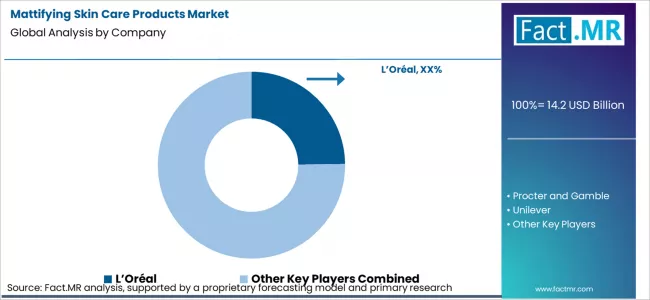
As per Fact.MR analysis, the mattifying skin care products market in 2026 has shifted from texture led differentiation to clinically substantiated oil control, where verified performance and channel integration shape competitive advantage. Rising consumer demand for measurable sebum reduction prompted large players to emphasize efficacy data, which increased switching costs and reinforced incumbent positions. L’Oréal and Estée Lauder leveraged dermatologist partnerships and clinical panels, which strengthened their presence in premium and professional channels, resulting in deeper retail placement. Procter and Gamble and Unilever scaled production and distribution, which lowered unit costs and expanded access in mass market segments, increasing penetration in emerging markets. Beiersdorf’s portfolio balance between sensitive skin positioning and mattifying efficacy improved professional prescribing and repeat purchase. Shiseido and Kao Corporation integrated mattifying formats into broader skincare regimens, which sustained multi product basket buys. Johnson and Johnson reinforced compliance and safety frameworks, which supported long term partnerships with healthcare adjacent retailers. These causes collectively established competitive moats rooted in validated performance, supply continuity, and channel depth rather than cosmetic claims alone.
Recent Developments
- Shiseido: Deployment of "Action Plan 2025-2026" and VOYAGER AI (Jan 2026). Shiseido is currently executing its "Action Plan 2025-2026," which centralizes its global R&D to "Regain Skincare Leadership." A core part of this strategy is the VOYAGER AI platform, which Shiseido is using to fast-track "disruptive" formulations. For the mattifying market, this involves optimizing oil-in-water emulsification to create mists and sunscreens that provide a high-performance matte finish without the heavy feel of traditional powders. Source: Shiseido Company - 2025 Q3 Results and 2030 Strategy (Nov 2025/Jan 2026)
- Unilever: "Cloud Soft" Technology Expansion for Oil Control (Oct 2025). In its Q3 2025 results, Unilever highlighted the double-digit growth of its Vaseline brand, driven specifically by the launch of Cloud Soft Light Moisturiser. Developed for high-humidity markets (India and SE Asia), this product uses "Micro-droplet" technology to deliver a matte, non-greasy finish while repairing the skin barrier. This is part of Unilever's broader "Personal Care" strategy to elevate mass-market products into "premium brand experiences" using advanced facial skincare science. Source: Unilever - Q3 2025 Trading Statement and Strategy Update (Oct 2025)
- Beiersdorf: Record R&D Investment in "Breakthrough" Mattifying Actives (Feb 2025). Beiersdorf reported a record R&D expenditure of €354 million in its 2025 fiscal update. CEO Vincent Warnery confirmed that the company is focusing on "high-efficacy" ingredients to lead the dermo-cosmetics market. This includes the expansion of Eucerin’s Oil Control technologies into new regions like India. The development focuses on "sebum-regulating" particles that provide a long-lasting dry-touch finish, catering to the rising consumer demand for medical-grade mattifying solutions. Source: Beiersdorf - 2024 Annual Report and 2025 Strategy Update (Feb 2025)
Key Players in Mattifying Skin Care Products Market
- L’Oréal
- Procter and Gamble
- Unilever
- Beiersdorf
- Shiseido
- Johnson and Johnson
- Estée Lauder Companies
- Kao Corporation
Scope of the Report
| Items | Values |
|---|---|
| Quantitative Units (2026) | USD billion |
| Product Type | Mattifying creams, Mattifying lotions, Mattifying gels, Mattifying powders, Mattifying primers |
| Skin Type | Oily skin, Combination skin, Acne prone skin, Sensitive skin |
| Distribution Channel | Online retail, Supermarkets and hypermarkets, Specialty beauty stores, Pharmacies and drug stores |
| End User | Women, Men, Unisex |
| Region | Asia Pacific, Europe, North America, Latin America, Middle East & Africa |
| Countries Covered | China, Japan, South Korea, India, Australia & New Zealand, ASEAN, Rest of Asia Pacific, Germany, United Kingdom, France, Italy, Spain, Nordic, BENELUX, Rest of Europe, United States, Canada, Mexico, Brazil, Chile, Rest of Latin America, Kingdom of Saudi Arabia, Other GCC Countries, Turkey, South Africa, Other African Union, Rest of Middle East & Africa |
| Key Companies Profiled | L’Oréal, Procter and Gamble, Unilever, Beiersdorf, Shiseido, Johnson and Johnson, Estée Lauder Companies, Kao Corporation |
| Additional Attributes | Dollar by sales by product type and skin type; clinical validation for sebum control; operational efficiency in multi-channel distribution; urban and e-commerce-focused SKU deployment; automated filling, labeling, and packaging for hygiene and consistency; compliance with MoCRA, EU cosmetic regulations, PMDA, ANVISA; repeatable procurement cycles and supply chain scalability; efficacy verification and dermatologist-backed testing; multi-product basket adoption strategies; integration of science-driven ingredients with natural extracts; performance-focused marketing; sustainability in packaging and ingredient sourcing; operational focus on traceable inventory, stock consistency, and high-frequency replenishment. |
Mattifying Skin Care Products Market Segmentation
-
Product Type :
- Mattifying creams
- Mattifying lotions
- Mattifying gels
- Mattifying powders
- Mattifying primers
-
Skin Type :
- Oily skin
- Combination skin
- Acne prone skin
- Sensitive skin
-
Distribution Channel :
- Online retail
- Supermarkets and hypermarkets
- Specialty beauty stores
- Pharmacies and drug stores
-
End User :
- Women
- Men
- Unisex
-
Region :
- Asia Pacific
- China
- Japan
- South Korea
- India
- Australia & New Zealand
- ASEAN
- Rest of Asia Pacific
- Europe
- Germany
- United Kingdom
- France
- Italy
- Spain
- Nordic
- BENELUX
- Rest of Europe
- North America
- United States
- Canada
- Mexico
- Latin America
- Brazil
- Chile
- Rest of Latin America
- Middle East & Africa
- Kingdom of Saudi Arabia
- Other GCC Countries
- Turkey
- South Africa
- Other African Union
- Rest of Middle East & Africa
- Asia Pacific
References
- U.S. Food and Drug Administration. (2024). Modernization of Cosmetics Regulation Act (MoCRA): Cosmetic product safety substantiation and good manufacturing practices. U.S. Department of Health and Human Services.
- European Commission. (2024). Commission Regulation (EU) 2024/996 amending Regulation (EC) No 1223/2009 on cosmetic products. Official Journal of the European Union.
- Scientific Committee on Consumer Safety. (2023). Notes of guidance for the testing of cosmetic ingredients and their safety evaluation (12th revision). European Commission.
- National Medical Products Administration. (2024). Cosmetic Safety Technical Specifications. People’s Republic of China.
- Central Drugs Standard Control Organization. (2025). Guidelines for classification of cosmetics and borderline products. Ministry of Health and Family Welfare, Government of India.
Table of Content
- Executive Summary
- Global Market Outlook
- Demand to side Trends
- Supply to side Trends
- Technology Roadmap Analysis
- Analysis and Recommendations
- Market Overview
- Market Coverage / Taxonomy
- Market Definition / Scope / Limitations
- Research Methodology
- Chapter Orientation
- Analytical Lens and Working Hypotheses
- Market Structure, Signals, and Trend Drivers
- Benchmarking and Cross-market Comparability
- Market Sizing, Forecasting, and Opportunity Mapping
- Research Design and Evidence Framework
- Desk Research Programme (Secondary Evidence)
- Company Annual and Sustainability Reports
- Peer-reviewed Journals and Academic Literature
- Corporate Websites, Product Literature, and Technical Notes
- Earnings Decks and Investor Briefings
- Statutory Filings and Regulatory Disclosures
- Technical White Papers and Standards Notes
- Trade Journals, Industry Magazines, and Analyst Briefs
- Conference Proceedings, Webinars, and Seminar Materials
- Government Statistics Portals and Public Data Releases
- Press Releases and Reputable Media Coverage
- Specialist Newsletters and Curated Briefings
- Sector Databases and Reference Repositories
- FMR Internal Proprietary Databases and Historical Market Datasets
- Subscription Datasets and Paid Sources
- Social Channels, Communities, and Digital Listening Inputs
- Additional Desk Sources
- Expert Input and Fieldwork (Primary Evidence)
- Primary Modes
- Qualitative Interviews and Expert Elicitation
- Quantitative Surveys and Structured Data Capture
- Blended Approach
- Why Primary Evidence is Used
- Field Techniques
- Interviews
- Surveys
- Focus Groups
- Observational and In-context Research
- Social and Community Interactions
- Stakeholder Universe Engaged
- C-suite Leaders
- Board Members
- Presidents and Vice Presidents
- R&D and Innovation Heads
- Technical Specialists
- Domain Subject-matter Experts
- Scientists
- Physicians and Other Healthcare Professionals
- Governance, Ethics, and Data Stewardship
- Research Ethics
- Data Integrity and Handling
- Primary Modes
- Tooling, Models, and Reference Databases
- Desk Research Programme (Secondary Evidence)
- Data Engineering and Model Build
- Data Acquisition and Ingestion
- Cleaning, Normalisation, and Verification
- Synthesis, Triangulation, and Analysis
- Quality Assurance and Audit Trail
- Market Background
- Market Dynamics
- Drivers
- Restraints
- Opportunity
- Trends
- Scenario Forecast
- Demand in Optimistic Scenario
- Demand in Likely Scenario
- Demand in Conservative Scenario
- Opportunity Map Analysis
- Product Life Cycle Analysis
- Supply Chain Analysis
- Investment Feasibility Matrix
- Value Chain Analysis
- PESTLE and Porter’s Analysis
- Regulatory Landscape
- Regional Parent Market Outlook
- Production and Consumption Statistics
- Import and Export Statistics
- Market Dynamics
- Global Market Analysis 2021 to 2025 and Forecast, 2026 to 2036
- Historical Market Size Value (USD Million) Analysis, 2021 to 2025
- Current and Future Market Size Value (USD Million) Projections, 2026 to 2036
- Y to o to Y Growth Trend Analysis
- Absolute $ Opportunity Analysis
- Global Market Pricing Analysis 2021 to 2025 and Forecast 2026 to 2036
- Global Market Analysis 2021 to 2025 and Forecast 2026 to 2036, By Product Type
- Introduction / Key Findings
- Historical Market Size Value (USD Million) Analysis By Product Type, 2021 to 2025
- Current and Future Market Size Value (USD Million) Analysis and Forecast By Product Type, 2026 to 2036
- Mattifying creams
- Mattifying lotions
- Mattifying gels
- Mattifying powders
- Mattifying primers
- Mattifying creams
- Y to o to Y Growth Trend Analysis By Product Type, 2021 to 2025
- Absolute $ Opportunity Analysis By Product Type, 2026 to 2036
- Global Market Analysis 2021 to 2025 and Forecast 2026 to 2036, By Skin Type
- Introduction / Key Findings
- Historical Market Size Value (USD Million) Analysis By Skin Type, 2021 to 2025
- Current and Future Market Size Value (USD Million) Analysis and Forecast By Skin Type, 2026 to 2036
- Oily skin
- Combination skin
- Acne prone skin
- Sensitive skin
- Oily skin
- Y to o to Y Growth Trend Analysis By Skin Type, 2021 to 2025
- Absolute $ Opportunity Analysis By Skin Type, 2026 to 2036
- Global Market Analysis 2021 to 2025 and Forecast 2026 to 2036, By Distribution Channel
- Introduction / Key Findings
- Historical Market Size Value (USD Million) Analysis By Distribution Channel, 2021 to 2025
- Current and Future Market Size Value (USD Million) Analysis and Forecast By Distribution Channel, 2026 to 2036
- Online retail
- Supermarkets and hypermarkets
- Specialty beauty stores
- Pharmacies and drug stores
- Online retail
- Y to o to Y Growth Trend Analysis By Distribution Channel, 2021 to 2025
- Absolute $ Opportunity Analysis By Distribution Channel, 2026 to 2036
- Global Market Analysis 2021 to 2025 and Forecast 2026 to 2036, By End User
- Introduction / Key Findings
- Historical Market Size Value (USD Million) Analysis By End User, 2021 to 2025
- Current and Future Market Size Value (USD Million) Analysis and Forecast By End User, 2026 to 2036
- Women
- Men
- Unisex
- Women
- Y to o to Y Growth Trend Analysis By End User, 2021 to 2025
- Absolute $ Opportunity Analysis By End User, 2026 to 2036
- Global Market Analysis 2021 to 2025 and Forecast 2026 to 2036, By Region
- Introduction
- Historical Market Size Value (USD Million) Analysis By Region, 2021 to 2025
- Current Market Size Value (USD Million) Analysis and Forecast By Region, 2026 to 2036
- North America
- Latin America
- Western Europe
- Eastern Europe
- East Asia
- South Asia and Pacific
- Middle East & Africa
- Market Attractiveness Analysis By Region
- North America Market Analysis 2021 to 2025 and Forecast 2026 to 2036, By Country
- Historical Market Size Value (USD Million) Trend Analysis By Market Taxonomy, 2021 to 2025
- Market Size Value (USD Million) Forecast By Market Taxonomy, 2026 to 2036
- By Country
- USA
- Canada
- Mexico
- By Product Type
- By Skin Type
- By Distribution Channel
- By End User
- By Country
- Market Attractiveness Analysis
- By Country
- By Product Type
- By Skin Type
- By Distribution Channel
- By End User
- Key Takeaways
- Latin America Market Analysis 2021 to 2025 and Forecast 2026 to 2036, By Country
- Historical Market Size Value (USD Million) Trend Analysis By Market Taxonomy, 2021 to 2025
- Market Size Value (USD Million) Forecast By Market Taxonomy, 2026 to 2036
- By Country
- Brazil
- Chile
- Rest of Latin America
- By Product Type
- By Skin Type
- By Distribution Channel
- By End User
- By Country
- Market Attractiveness Analysis
- By Country
- By Product Type
- By Skin Type
- By Distribution Channel
- By End User
- Key Takeaways
- Western Europe Market Analysis 2021 to 2025 and Forecast 2026 to 2036, By Country
- Historical Market Size Value (USD Million) Trend Analysis By Market Taxonomy, 2021 to 2025
- Market Size Value (USD Million) Forecast By Market Taxonomy, 2026 to 2036
- By Country
- Germany
- UK
- Italy
- Spain
- France
- Nordic
- BENELUX
- Rest of Western Europe
- By Product Type
- By Skin Type
- By Distribution Channel
- By End User
- By Country
- Market Attractiveness Analysis
- By Country
- By Product Type
- By Skin Type
- By Distribution Channel
- By End User
- Key Takeaways
- Eastern Europe Market Analysis 2021 to 2025 and Forecast 2026 to 2036, By Country
- Historical Market Size Value (USD Million) Trend Analysis By Market Taxonomy, 2021 to 2025
- Market Size Value (USD Million) Forecast By Market Taxonomy, 2026 to 2036
- By Country
- Russia
- Poland
- Hungary
- Balkan & Baltic
- Rest of Eastern Europe
- By Product Type
- By Skin Type
- By Distribution Channel
- By End User
- By Country
- Market Attractiveness Analysis
- By Country
- By Product Type
- By Skin Type
- By Distribution Channel
- By End User
- Key Takeaways
- East Asia Market Analysis 2021 to 2025 and Forecast 2026 to 2036, By Country
- Historical Market Size Value (USD Million) Trend Analysis By Market Taxonomy, 2021 to 2025
- Market Size Value (USD Million) Forecast By Market Taxonomy, 2026 to 2036
- By Country
- China
- Japan
- South Korea
- By Product Type
- By Skin Type
- By Distribution Channel
- By End User
- By Country
- Market Attractiveness Analysis
- By Country
- By Product Type
- By Skin Type
- By Distribution Channel
- By End User
- Key Takeaways
- South Asia and Pacific Market Analysis 2021 to 2025 and Forecast 2026 to 2036, By Country
- Historical Market Size Value (USD Million) Trend Analysis By Market Taxonomy, 2021 to 2025
- Market Size Value (USD Million) Forecast By Market Taxonomy, 2026 to 2036
- By Country
- India
- ASEAN
- Australia & New Zealand
- Rest of South Asia and Pacific
- By Product Type
- By Skin Type
- By Distribution Channel
- By End User
- By Country
- Market Attractiveness Analysis
- By Country
- By Product Type
- By Skin Type
- By Distribution Channel
- By End User
- Key Takeaways
- Middle East & Africa Market Analysis 2021 to 2025 and Forecast 2026 to 2036, By Country
- Historical Market Size Value (USD Million) Trend Analysis By Market Taxonomy, 2021 to 2025
- Market Size Value (USD Million) Forecast By Market Taxonomy, 2026 to 2036
- By Country
- Kingdom of Saudi Arabia
- Other GCC Countries
- Turkiye
- South Africa
- Other African Union
- Rest of Middle East & Africa
- By Product Type
- By Skin Type
- By Distribution Channel
- By End User
- By Country
- Market Attractiveness Analysis
- By Country
- By Product Type
- By Skin Type
- By Distribution Channel
- By End User
- Key Takeaways
- Key Countries Market Analysis
- USA
- Pricing Analysis
- Market Share Analysis, 2025
- By Product Type
- By Skin Type
- By Distribution Channel
- By End User
- Canada
- Pricing Analysis
- Market Share Analysis, 2025
- By Product Type
- By Skin Type
- By Distribution Channel
- By End User
- Mexico
- Pricing Analysis
- Market Share Analysis, 2025
- By Product Type
- By Skin Type
- By Distribution Channel
- By End User
- Brazil
- Pricing Analysis
- Market Share Analysis, 2025
- By Product Type
- By Skin Type
- By Distribution Channel
- By End User
- Chile
- Pricing Analysis
- Market Share Analysis, 2025
- By Product Type
- By Skin Type
- By Distribution Channel
- By End User
- Germany
- Pricing Analysis
- Market Share Analysis, 2025
- By Product Type
- By Skin Type
- By Distribution Channel
- By End User
- UK
- Pricing Analysis
- Market Share Analysis, 2025
- By Product Type
- By Skin Type
- By Distribution Channel
- By End User
- Italy
- Pricing Analysis
- Market Share Analysis, 2025
- By Product Type
- By Skin Type
- By Distribution Channel
- By End User
- Spain
- Pricing Analysis
- Market Share Analysis, 2025
- By Product Type
- By Skin Type
- By Distribution Channel
- By End User
- France
- Pricing Analysis
- Market Share Analysis, 2025
- By Product Type
- By Skin Type
- By Distribution Channel
- By End User
- India
- Pricing Analysis
- Market Share Analysis, 2025
- By Product Type
- By Skin Type
- By Distribution Channel
- By End User
- ASEAN
- Pricing Analysis
- Market Share Analysis, 2025
- By Product Type
- By Skin Type
- By Distribution Channel
- By End User
- Australia & New Zealand
- Pricing Analysis
- Market Share Analysis, 2025
- By Product Type
- By Skin Type
- By Distribution Channel
- By End User
- China
- Pricing Analysis
- Market Share Analysis, 2025
- By Product Type
- By Skin Type
- By Distribution Channel
- By End User
- Japan
- Pricing Analysis
- Market Share Analysis, 2025
- By Product Type
- By Skin Type
- By Distribution Channel
- By End User
- South Korea
- Pricing Analysis
- Market Share Analysis, 2025
- By Product Type
- By Skin Type
- By Distribution Channel
- By End User
- Russia
- Pricing Analysis
- Market Share Analysis, 2025
- By Product Type
- By Skin Type
- By Distribution Channel
- By End User
- Poland
- Pricing Analysis
- Market Share Analysis, 2025
- By Product Type
- By Skin Type
- By Distribution Channel
- By End User
- Hungary
- Pricing Analysis
- Market Share Analysis, 2025
- By Product Type
- By Skin Type
- By Distribution Channel
- By End User
- Kingdom of Saudi Arabia
- Pricing Analysis
- Market Share Analysis, 2025
- By Product Type
- By Skin Type
- By Distribution Channel
- By End User
- Turkiye
- Pricing Analysis
- Market Share Analysis, 2025
- By Product Type
- By Skin Type
- By Distribution Channel
- By End User
- South Africa
- Pricing Analysis
- Market Share Analysis, 2025
- By Product Type
- By Skin Type
- By Distribution Channel
- By End User
- USA
- Market Structure Analysis
- Competition Dashboard
- Competition Benchmarking
- Market Share Analysis of Top Players
- By Regional
- By Product Type
- By Skin Type
- By Distribution Channel
- By End User
- Competition Analysis
- Competition Deep Dive
- L’Oréal
- Overview
- Product Portfolio
- Profitability by Market Segments (Product/Age /Sales Channel/Region)
- Sales Footprint
- Strategy Overview
- Marketing Strategy
- Product Strategy
- Channel Strategy
- Procter and Gamble
- Unilever
- Beiersdorf
- Shiseido
- Johnson and Johnson
- Estée Lauder Companies
- Kao Corporation
- L’Oréal
- Competition Deep Dive
- Assumptions & Acronyms Used
List Of Table
- Table 1: Global Market Value (USD Million) Forecast by Region, 2021 to 2036
- Table 2: Global Market Value (USD Million) Forecast by Product Type, 2021 to 2036
- Table 3: Global Market Value (USD Million) Forecast by Skin Type, 2021 to 2036
- Table 4: Global Market Value (USD Million) Forecast by Distribution Channel, 2021 to 2036
- Table 5: Global Market Value (USD Million) Forecast by End User, 2021 to 2036
- Table 6: North America Market Value (USD Million) Forecast by Country, 2021 to 2036
- Table 7: North America Market Value (USD Million) Forecast by Product Type, 2021 to 2036
- Table 8: North America Market Value (USD Million) Forecast by Skin Type, 2021 to 2036
- Table 9: North America Market Value (USD Million) Forecast by Distribution Channel, 2021 to 2036
- Table 10: North America Market Value (USD Million) Forecast by End User, 2021 to 2036
- Table 11: Latin America Market Value (USD Million) Forecast by Country, 2021 to 2036
- Table 12: Latin America Market Value (USD Million) Forecast by Product Type, 2021 to 2036
- Table 13: Latin America Market Value (USD Million) Forecast by Skin Type, 2021 to 2036
- Table 14: Latin America Market Value (USD Million) Forecast by Distribution Channel, 2021 to 2036
- Table 15: Latin America Market Value (USD Million) Forecast by End User, 2021 to 2036
- Table 16: Western Europe Market Value (USD Million) Forecast by Country, 2021 to 2036
- Table 17: Western Europe Market Value (USD Million) Forecast by Product Type, 2021 to 2036
- Table 18: Western Europe Market Value (USD Million) Forecast by Skin Type, 2021 to 2036
- Table 19: Western Europe Market Value (USD Million) Forecast by Distribution Channel, 2021 to 2036
- Table 20: Western Europe Market Value (USD Million) Forecast by End User, 2021 to 2036
- Table 21: Eastern Europe Market Value (USD Million) Forecast by Country, 2021 to 2036
- Table 22: Eastern Europe Market Value (USD Million) Forecast by Product Type, 2021 to 2036
- Table 23: Eastern Europe Market Value (USD Million) Forecast by Skin Type, 2021 to 2036
- Table 24: Eastern Europe Market Value (USD Million) Forecast by Distribution Channel, 2021 to 2036
- Table 25: Eastern Europe Market Value (USD Million) Forecast by End User, 2021 to 2036
- Table 26: East Asia Market Value (USD Million) Forecast by Country, 2021 to 2036
- Table 27: East Asia Market Value (USD Million) Forecast by Product Type, 2021 to 2036
- Table 28: East Asia Market Value (USD Million) Forecast by Skin Type, 2021 to 2036
- Table 29: East Asia Market Value (USD Million) Forecast by Distribution Channel, 2021 to 2036
- Table 30: East Asia Market Value (USD Million) Forecast by End User, 2021 to 2036
- Table 31: South Asia and Pacific Market Value (USD Million) Forecast by Country, 2021 to 2036
- Table 32: South Asia and Pacific Market Value (USD Million) Forecast by Product Type, 2021 to 2036
- Table 33: South Asia and Pacific Market Value (USD Million) Forecast by Skin Type, 2021 to 2036
- Table 34: South Asia and Pacific Market Value (USD Million) Forecast by Distribution Channel, 2021 to 2036
- Table 35: South Asia and Pacific Market Value (USD Million) Forecast by End User, 2021 to 2036
- Table 36: Middle East & Africa Market Value (USD Million) Forecast by Country, 2021 to 2036
- Table 37: Middle East & Africa Market Value (USD Million) Forecast by Product Type, 2021 to 2036
- Table 38: Middle East & Africa Market Value (USD Million) Forecast by Skin Type, 2021 to 2036
- Table 39: Middle East & Africa Market Value (USD Million) Forecast by Distribution Channel, 2021 to 2036
- Table 40: Middle East & Africa Market Value (USD Million) Forecast by End User, 2021 to 2036
List Of Figures
- Figure 1: Global Market Pricing Analysis
- Figure 2: Global Market Value (USD Million) Forecast 2021 to 2036
- Figure 3: Global Market Value Share and BPS Analysis by Product Type, 2026 and 2036
- Figure 4: Global Market Y to o to Y Growth Comparison by Product Type, 2026 to 2036
- Figure 5: Global Market Attractiveness Analysis by Product Type
- Figure 6: Global Market Value Share and BPS Analysis by Skin Type, 2026 and 2036
- Figure 7: Global Market Y to o to Y Growth Comparison by Skin Type, 2026 to 2036
- Figure 8: Global Market Attractiveness Analysis by Skin Type
- Figure 9: Global Market Value Share and BPS Analysis by Distribution Channel, 2026 and 2036
- Figure 10: Global Market Y to o to Y Growth Comparison by Distribution Channel, 2026 to 2036
- Figure 11: Global Market Attractiveness Analysis by Distribution Channel
- Figure 12: Global Market Value Share and BPS Analysis by End User, 2026 and 2036
- Figure 13: Global Market Y to o to Y Growth Comparison by End User, 2026 to 2036
- Figure 14: Global Market Attractiveness Analysis by End User
- Figure 15: Global Market Value (USD Million) Share and BPS Analysis by Region, 2026 and 2036
- Figure 16: Global Market Y to o to Y Growth Comparison by Region, 2026 to 2036
- Figure 17: Global Market Attractiveness Analysis by Region
- Figure 18: North America Market Incremental Dollar Opportunity, 2026 to 2036
- Figure 19: Latin America Market Incremental Dollar Opportunity, 2026 to 2036
- Figure 20: Western Europe Market Incremental Dollar Opportunity, 2026 to 2036
- Figure 21: Eastern Europe Market Incremental Dollar Opportunity, 2026 to 2036
- Figure 22: East Asia Market Incremental Dollar Opportunity, 2026 to 2036
- Figure 23: South Asia and Pacific Market Incremental Dollar Opportunity, 2026 to 2036
- Figure 24: Middle East & Africa Market Incremental Dollar Opportunity, 2026 to 2036
- Figure 25: North America Market Value Share and BPS Analysis by Country, 2026 and 2036
- Figure 26: North America Market Value Share and BPS Analysis by Product Type, 2026 and 2036
- Figure 27: North America Market Y to o to Y Growth Comparison by Product Type, 2026 to 2036
- Figure 28: North America Market Attractiveness Analysis by Product Type
- Figure 29: North America Market Value Share and BPS Analysis by Skin Type, 2026 and 2036
- Figure 30: North America Market Y to o to Y Growth Comparison by Skin Type, 2026 to 2036
- Figure 31: North America Market Attractiveness Analysis by Skin Type
- Figure 32: North America Market Value Share and BPS Analysis by Distribution Channel, 2026 and 2036
- Figure 33: North America Market Y to o to Y Growth Comparison by Distribution Channel, 2026 to 2036
- Figure 34: North America Market Attractiveness Analysis by Distribution Channel
- Figure 35: North America Market Value Share and BPS Analysis by End User, 2026 and 2036
- Figure 36: North America Market Y to o to Y Growth Comparison by End User, 2026 to 2036
- Figure 37: North America Market Attractiveness Analysis by End User
- Figure 38: Latin America Market Value Share and BPS Analysis by Country, 2026 and 2036
- Figure 39: Latin America Market Value Share and BPS Analysis by Product Type, 2026 and 2036
- Figure 40: Latin America Market Y to o to Y Growth Comparison by Product Type, 2026 to 2036
- Figure 41: Latin America Market Attractiveness Analysis by Product Type
- Figure 42: Latin America Market Value Share and BPS Analysis by Skin Type, 2026 and 2036
- Figure 43: Latin America Market Y to o to Y Growth Comparison by Skin Type, 2026 to 2036
- Figure 44: Latin America Market Attractiveness Analysis by Skin Type
- Figure 45: Latin America Market Value Share and BPS Analysis by Distribution Channel, 2026 and 2036
- Figure 46: Latin America Market Y to o to Y Growth Comparison by Distribution Channel, 2026 to 2036
- Figure 47: Latin America Market Attractiveness Analysis by Distribution Channel
- Figure 48: Latin America Market Value Share and BPS Analysis by End User, 2026 and 2036
- Figure 49: Latin America Market Y to o to Y Growth Comparison by End User, 2026 to 2036
- Figure 50: Latin America Market Attractiveness Analysis by End User
- Figure 51: Western Europe Market Value Share and BPS Analysis by Country, 2026 and 2036
- Figure 52: Western Europe Market Value Share and BPS Analysis by Product Type, 2026 and 2036
- Figure 53: Western Europe Market Y to o to Y Growth Comparison by Product Type, 2026 to 2036
- Figure 54: Western Europe Market Attractiveness Analysis by Product Type
- Figure 55: Western Europe Market Value Share and BPS Analysis by Skin Type, 2026 and 2036
- Figure 56: Western Europe Market Y to o to Y Growth Comparison by Skin Type, 2026 to 2036
- Figure 57: Western Europe Market Attractiveness Analysis by Skin Type
- Figure 58: Western Europe Market Value Share and BPS Analysis by Distribution Channel, 2026 and 2036
- Figure 59: Western Europe Market Y to o to Y Growth Comparison by Distribution Channel, 2026 to 2036
- Figure 60: Western Europe Market Attractiveness Analysis by Distribution Channel
- Figure 61: Western Europe Market Value Share and BPS Analysis by End User, 2026 and 2036
- Figure 62: Western Europe Market Y to o to Y Growth Comparison by End User, 2026 to 2036
- Figure 63: Western Europe Market Attractiveness Analysis by End User
- Figure 64: Eastern Europe Market Value Share and BPS Analysis by Country, 2026 and 2036
- Figure 65: Eastern Europe Market Value Share and BPS Analysis by Product Type, 2026 and 2036
- Figure 66: Eastern Europe Market Y to o to Y Growth Comparison by Product Type, 2026 to 2036
- Figure 67: Eastern Europe Market Attractiveness Analysis by Product Type
- Figure 68: Eastern Europe Market Value Share and BPS Analysis by Skin Type, 2026 and 2036
- Figure 69: Eastern Europe Market Y to o to Y Growth Comparison by Skin Type, 2026 to 2036
- Figure 70: Eastern Europe Market Attractiveness Analysis by Skin Type
- Figure 71: Eastern Europe Market Value Share and BPS Analysis by Distribution Channel, 2026 and 2036
- Figure 72: Eastern Europe Market Y to o to Y Growth Comparison by Distribution Channel, 2026 to 2036
- Figure 73: Eastern Europe Market Attractiveness Analysis by Distribution Channel
- Figure 74: Eastern Europe Market Value Share and BPS Analysis by End User, 2026 and 2036
- Figure 75: Eastern Europe Market Y to o to Y Growth Comparison by End User, 2026 to 2036
- Figure 76: Eastern Europe Market Attractiveness Analysis by End User
- Figure 77: East Asia Market Value Share and BPS Analysis by Country, 2026 and 2036
- Figure 78: East Asia Market Value Share and BPS Analysis by Product Type, 2026 and 2036
- Figure 79: East Asia Market Y to o to Y Growth Comparison by Product Type, 2026 to 2036
- Figure 80: East Asia Market Attractiveness Analysis by Product Type
- Figure 81: East Asia Market Value Share and BPS Analysis by Skin Type, 2026 and 2036
- Figure 82: East Asia Market Y to o to Y Growth Comparison by Skin Type, 2026 to 2036
- Figure 83: East Asia Market Attractiveness Analysis by Skin Type
- Figure 84: East Asia Market Value Share and BPS Analysis by Distribution Channel, 2026 and 2036
- Figure 85: East Asia Market Y to o to Y Growth Comparison by Distribution Channel, 2026 to 2036
- Figure 86: East Asia Market Attractiveness Analysis by Distribution Channel
- Figure 87: East Asia Market Value Share and BPS Analysis by End User, 2026 and 2036
- Figure 88: East Asia Market Y to o to Y Growth Comparison by End User, 2026 to 2036
- Figure 89: East Asia Market Attractiveness Analysis by End User
- Figure 90: South Asia and Pacific Market Value Share and BPS Analysis by Country, 2026 and 2036
- Figure 91: South Asia and Pacific Market Value Share and BPS Analysis by Product Type, 2026 and 2036
- Figure 92: South Asia and Pacific Market Y to o to Y Growth Comparison by Product Type, 2026 to 2036
- Figure 93: South Asia and Pacific Market Attractiveness Analysis by Product Type
- Figure 94: South Asia and Pacific Market Value Share and BPS Analysis by Skin Type, 2026 and 2036
- Figure 95: South Asia and Pacific Market Y to o to Y Growth Comparison by Skin Type, 2026 to 2036
- Figure 96: South Asia and Pacific Market Attractiveness Analysis by Skin Type
- Figure 97: South Asia and Pacific Market Value Share and BPS Analysis by Distribution Channel, 2026 and 2036
- Figure 98: South Asia and Pacific Market Y to o to Y Growth Comparison by Distribution Channel, 2026 to 2036
- Figure 99: South Asia and Pacific Market Attractiveness Analysis by Distribution Channel
- Figure 100: South Asia and Pacific Market Value Share and BPS Analysis by End User, 2026 and 2036
- Figure 101: South Asia and Pacific Market Y to o to Y Growth Comparison by End User, 2026 to 2036
- Figure 102: South Asia and Pacific Market Attractiveness Analysis by End User
- Figure 103: Middle East & Africa Market Value Share and BPS Analysis by Country, 2026 and 2036
- Figure 104: Middle East & Africa Market Value Share and BPS Analysis by Product Type, 2026 and 2036
- Figure 105: Middle East & Africa Market Y to o to Y Growth Comparison by Product Type, 2026 to 2036
- Figure 106: Middle East & Africa Market Attractiveness Analysis by Product Type
- Figure 107: Middle East & Africa Market Value Share and BPS Analysis by Skin Type, 2026 and 2036
- Figure 108: Middle East & Africa Market Y to o to Y Growth Comparison by Skin Type, 2026 to 2036
- Figure 109: Middle East & Africa Market Attractiveness Analysis by Skin Type
- Figure 110: Middle East & Africa Market Value Share and BPS Analysis by Distribution Channel, 2026 and 2036
- Figure 111: Middle East & Africa Market Y to o to Y Growth Comparison by Distribution Channel, 2026 to 2036
- Figure 112: Middle East & Africa Market Attractiveness Analysis by Distribution Channel
- Figure 113: Middle East & Africa Market Value Share and BPS Analysis by End User, 2026 and 2036
- Figure 114: Middle East & Africa Market Y to o to Y Growth Comparison by End User, 2026 to 2036
- Figure 115: Middle East & Africa Market Attractiveness Analysis by End User
- Figure 116: Global Market - Tier Structure Analysis
- Figure 117: Global Market - Company Share Analysis
- FAQs -
How big is the mattifying skin care products market in 2026?
The global mattifying skin care products market is estimated to be valued at USD 14.2 billion in 2026.
What will be the size of mattifying skin care products market in 2036?
The market size for the mattifying skin care products market is projected to reach USD 24.7 billion by 2036.
How much will be the mattifying skin care products market growth between 2026 and 2036?
The mattifying skin care products market is expected to grow at a 5.7% CAGR between 2026 and 2036.
What are the key product types in the mattifying skin care products market?
The key product types in mattifying skin care products market are mattifying creams, mattifying lotions, mattifying gels, mattifying powders and mattifying primers.
Which skin type segment to contribute significant share in the mattifying skin care products market in 2026?
In terms of skin type, oily skin segment to command 50.0% share in the mattifying skin care products market in 2026.