Paperboard Cold Chain Cartons Market
Paperboard Cold Chain Cartons Market Size and Share Forecast Outlook 2026 to 2036
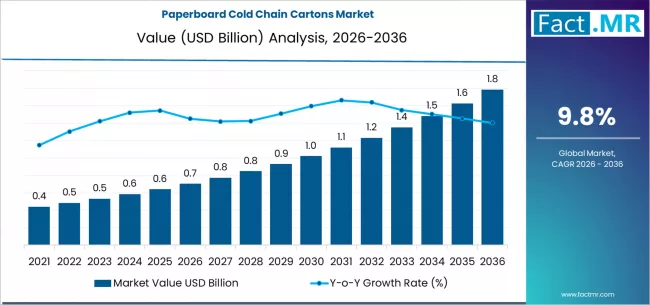
Paperboard cold chain cartons market is projected to grow from USD 0.7 billion in 2026 to USD 1.8 billion by 2036, at a CAGR of 9.8%. Fresh food & pharma logistics will dominate with a 38.0% market share, while insulated paperboard cartons will lead the packaging format segment with a 42.8% share.
Paperboard Cold Chain Cartons Market Forecast and Outlook 2026 to 2036
The global paperboard cold chain cartons market is projected to total USD 0.70 billion in 2026, and to USD 1.79 billion by 2036, progressing at a 9.8% CAGR. This growth is driven by the critical need for sustainable, high-performance thermal packaging within global temperature-controlled supply chains.
Key Takeaways from the Paperboard Cold Chain Cartons Market
- Market Value for 2026: USD 0.70 Billion
- Market Value for 2036: USD 1.79 Billion
- Forecast CAGR 2026 to 2036: 9.8%
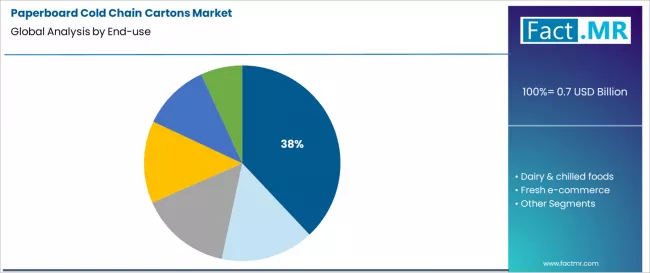
- Leading End-Use Segment (2026): Fresh Food & Pharma Logistics (38.0%)
- Leading Packaging Format (2026): Insulated Paperboard Cartons (42.8%)
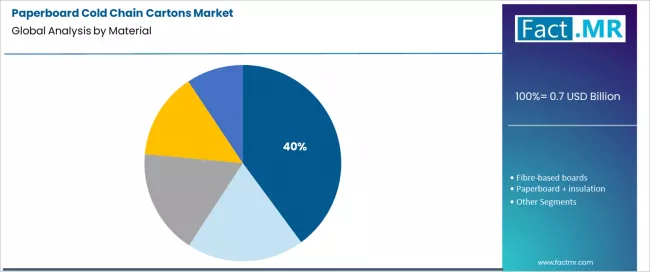
- Leading Material Segment (2026): Coated Paperboard + Liners (39.9%)
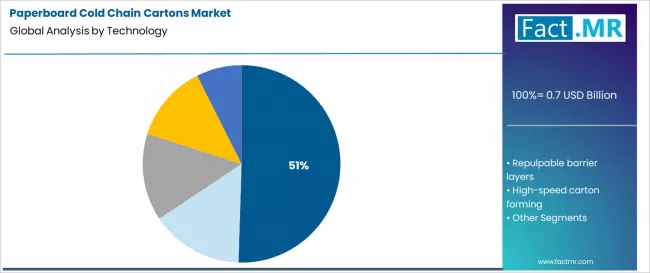
- Leading Technology Segment (2026): Moisture-Resistant & Thermal Coatings (50.5%)
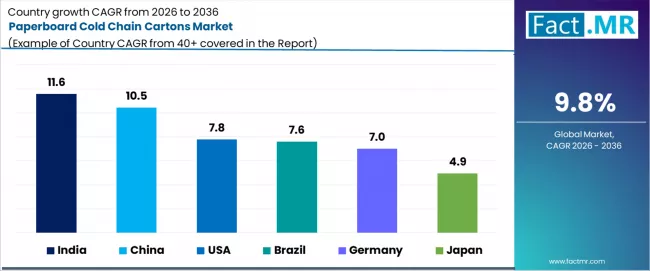
- Key Growth Countries: India (11.6% CAGR), China (10.5% CAGR), USA (7.8% CAGR), Brazil (7.6% CAGR), Germany (7.0% CAGR), Japan (4.9% CAGR)
- Key Players: Sonoco Products Company, Graphic Packaging International, Mondi Group, Smurfit Kappa Group, Nine Dragons Paper, ITC Paperboards

As regulatory and consumer pressure mounts against single-use plastics and expanded polystyrene foam, the logistics industry is pivoting toward fibre-based solutions that offer reliable insulation while aligning with circular economy goals.
This transition represents a material evolution in protective packaging. Advanced paperboard cartons integrate moisture-resistant coatings, repulpable barrier layers, and engineered liners to create a robust alternative capable of maintaining temperature integrity for fresh food, pharmaceuticals, and vaccines.
The economic and environmental imperative is clear: to reduce plastic waste, lower carbon footprint through recyclable material streams, and meet stringent safety standards for sensitive goods, making paperboard cold chain cartons a strategic asset in modern, responsible logistics.
Paperboard Cold Chain Cartons Market
| Metric | Value |
|---|---|
| Market Value (2026) | USD 0.70 Billion |
| Market Forecast Value (2036) | USD 1.79 Billion |
| Forecast CAGR 2026 to 2036 | 9.8% |
Category
| Category | Segments |
|---|---|
| End-Use | Fresh Food & Pharma Logistics, Dairy & Chilled Foods, Fresh E-commerce, Vaccines & Perishables, Protein Exports, High-Value Cold Logistics |
| Packaging Format | Insulated Paperboard Cartons, Foldable Cold Cartons, Corrugated Cold Boxes, Flat-Pack Cold Cartons, Others |
| Material | Coated Paperboard + Liners, Fibre-Based Boards, Paperboard + Insulation, Kraft Paperboard, Others |
| Technology | Moisture-Resistant & Thermal Coatings, Repulpable Barrier Layers, High-Speed Carton Forming, Cost-Efficient Cold Coatings, Others |
| Region | North America, Latin America, Western Europe, Eastern Europe, East Asia, South Asia & Pacific, Middle East & Africa |
What Catalyses the Demand for Paperboard Cold Chain Cartons?
The expansion of the paperboard cold chain cartons market is being shaped by several interlinked packaging industry dynamics. Stringent global bans on single-use plastics and polystyrene foam are creating a regulatory push for sustainable alternatives in protective packaging. Rapid growth of direct-to-consumer e-commerce for perishable goods demands packaging that is both thermally efficient and easily disposable for the home consumer.
Advancements in coating technologies, such as water-based moisture barriers and bio-based thermal liners, are closing the performance gap with traditional materials. Furthermore, the push for supply chain decarbonization favors paperboard due to its high recyclability and lower embodied carbon compared to plastic foams, making it a preferred choice for brands with public sustainability commitments.
Segmental Analysis
By Technology, Which Innovation is Critical for Balancing Performance and Sustainability?

Moisture-resistant and thermal coatings command a leading 50.5% share. This technology is fundamental because it addresses the core weaknesses of untreated paperboard in cold, humid environments. Advanced coatings applied to the board create a functional barrier against vapour transmission and liquid moisture while enhancing thermal reflectivity or insulation value.
This allows the carton to protect its contents from both temperature fluctuation and condensation, enabling paperboard to meet the rigorous performance standards required for pharmaceutical and fresh food logistics without compromising its inherent recyclability.
By End-Use, Which Sector Combines High Regulatory Scrutiny with Volume Demand?

Fresh food and pharma logistics constitute the primary end-use segment at 38.0%. This sector operates under the strictest guidelines for product integrity and safety, governed by standards like GDP for medicines.
The high value of the goods, coupled with the severe financial and health consequences of failure, justifies investment in reliable, high-performance packaging. Paperboard cartons are increasingly validated for these applications, offering a sustainable, trackable, and high-assurance solution for temperature-sensitive shipments across both industries.
By Material, Which Configuration Offers a Pragmatic Path to Market Adoption?

Coated paperboard combined with functional liners holds a dominant 39.9% share. This configuration leverages the structural strength and cost-effectiveness of standard paperboard while adding specialized performance through coatings and separate insulating or barrier liners.
This modular approach allows converters to tailor the material stack for specific cold-chain requirements using established supply chains for board and film. It represents a versatile and scalable solution that balances performance, cost, and manufacturing readiness.
What are the Principal Drivers, Constraints, and Evolving Dynamics of the Paperboard Cold Chain Cartons Market?
Growth is principally driven by global legislative bans on plastic foam coolers and corporate net-zero commitments, which are forcing a systemic shift toward recyclable packaging in logistics. A significant constraint is the higher per-unit cost and greater bulk of paperboard solutions compared to ultra-efficient EPS for equivalent thermal performance, impacting economics for high-volume, low-margin shipments.
A major opportunity lies in the development of integrated, lightweight paperboard systems that combine insulation with PCMs to compete directly with advanced polystyrene coolers. The key trend is the functional integration of these cartons with the Internet of Things, embedding smart sensors during manufacture to provide real-time location and condition monitoring, thereby adding data-driven value to the physical package.
Analysis of the Paperboard Cold Chain Cartons Market by Key Countries

| Country | CAGR 2026 to 2036 |
|---|---|
| USA | 7.8% |
| Germany | 7.0% |
| China | 10.5% |
| India | 11.6% |
| Brazil | 7.6% |
| Japan | 4.9% |
How do Sub-National Plastic Bans and a Mature Logistics Sector Influence USA’s Paperboard Cold Chain Cartons Market?
The USA's 7.8% CAGR is propelled by state-level bans on polystyrene foam and the robust needs of its national pharmaceutical and meal-kit delivery networks. The demand driver is strongest in fresh food & pharma logistics, where major shippers are seeking ESG-compliant alternatives.
Industry capacity for advanced coated and laminated paperboard is significant, with integrated players like Graphic Packaging driving innovation. Adoption is focused on solutions that meet both thermal performance standards and the recycling infrastructure prevalent in major metropolitan areas.
What characterizes Germany's Regulation-Led Transition Within the EU Framework?
Germany's 7.0% CAGR reflects its adherence to the EU's SUP Directive and its leadership in high-quality logistics. The regulatory landscape actively discourages single-use plastic packaging, creating a compliance-driven market. The demand driver is precision cold-chain for high-value pharmaceuticals and specialty foods.
German engineering focuses on optimizing the repulpable barrier layers and carton design for seamless integration into automated pharmaceutical fulfillment centers, emphasizing closed-loop recyclability within the German waste system.
What underpins China's Massive Scale in Dairy and Chilled Food Distribution?
China's 10.5% CAGR is fueled by its enormous domestic consumption of dairy, chilled prepared foods, and growing biopharma sector. The primary demand driver is the need for efficient, scalable packaging for its vast and modernizing cold-chain networks.
Massive industry capacity for fibre-based boards and converting supports the rapid production of foldable cold cartons. The market is characterized by a focus on cost-effective, high-volume solutions that cater to the scale of Chinese e-grocery and domestic food production.
How is India's E-Commerce Explosion for Perishables Catalyzing Demand?
India's leading 11.6% CAGR is directly tied to the explosive growth of quick-commerce and fresh food e-commerce platforms. The demand driver is the urgent need for affordable, effective single-use cold packaging for last-mile delivery. This fosters demand for corrugated cold boxes and solutions suitable for high-speed carton forming at fulfillment hubs.
Price sensitivity drives innovation in cost-efficient cold coatings and designs that maximize performance from locally sourced kraft paperboard, with domestic players like ITC Paperboards well-positioned to supply this growth.
Why is Brazil's Market Growth Focused on Healthcare and Regional Food Security?
Brazil's 7.6% CAGR is closely linked to the strengthening of its national vaccine distribution network and the logistics for regional perishable food exports. The demand driver stems from public health initiatives and the needs of its large agricultural sector.
The market prioritizes robustness and reliability for challenging distribution climates, with a focus on flat-pack cold cartons that save on inbound logistics costs. Growth depends on solutions that balance performance with the economic realities of regional distribution.
What defines Japan's Niche in High-Value, Precision Export Logistics?
Japan's 4.9% CAGR represents a mature market focused on exceptional quality for premium exports like seafood and specialty produce. The demand driver is the uncompromising requirement to protect high-value-per-kg goods during long-distance transport. Japanese converters seek ultra-refined moisture-resistant & thermal coatings and precision engineering to create lightweight yet highly reliable cartons. The trade pattern of exporting premium goods to discerning international markets necessitates packaging that guarantees integrity and aligns with Japan’s reputation for quality.
Competitive Landscape of the Paperboard Cold Chain Cartons Market
The competitive arena is dominated by integrated paperboard and packaging giants leveraging their vertical capabilities. Global players like Mondi and Smurfit Kappa compete through their extensive R&D in functional barriers and coatings, combined with vast converting networks to produce tailored carton solutions. Competition intensifies around securing proprietary, repulpable coating technologies that offer high moisture and grease resistance without compromising recyclability.
Strategic partnerships are crucial, with carton manufacturers collaborating closely with chemical companies for advanced coatings, with PCM suppliers for integrated thermal systems, and with major logistics firms to develop standardized, efficient designs. Success is increasingly linked to the ability to provide comprehensive environmental lifecycle assessments and secure certifications validating the carton's recyclability within specific regional waste streams, thereby assuring brand owners of their sustainability claims.
Key Players in the Paperboard Cold Chain Cartons Market
- Sonoco Products Company
- Graphic Packaging International
- Mondi Group
- Smurfit Kappa Group
- Nine Dragons Paper
- ITC Paperboards
Scope of Report
| Items | Metrics |
|---|---|
| Quantitative Units | USD Billion |
| Technology | Moisture-Resistant & Thermal Coatings, Repulpable Barrier Layers, High-Speed Carton Forming, Cost-Efficient Cold Coatings, Others |
| Packaging Format | Insulated Paperboard Cartons, Foldable Cold Cartons, Corrugated Cold Boxes, Flat-Pack Cold Cartons, Others |
| End-Use | Fresh Food & Pharma Logistics, Dairy & Chilled Foods, Fresh E-commerce, Vaccines & Perishables, Protein Exports, High-Value Cold Logistics |
| Material | Coated Paperboard + Liners, Fibre-Based Boards, Paperboard + Insulation, Kraft Paperboard, Others |
| Key Countries | India, China, USA, Brazil, Germany, Japan |
| Key Companies | Sonoco, Graphic Packaging, Mondi, Smurfit Kappa, Nine Dragons Paper, ITC Paperboards |
| Additional Analysis | Comparative thermal performance benchmarking vs. EPS and VIPs; total cost-in-use analysis including disposal/ recycling fees; study of coating migration and food contact safety; impact of carton design on supply chain cube efficiency; analysis of end-of-life collection and recycling infrastructure compatibility. |
Market by Segments
-
End-Use :
- Fresh Food & Pharma Logistics
- Dairy & Chilled Foods
- Fresh E-commerce
- Vaccines & Perishables
- Protein Exports
- High-Value Cold Logistics
-
Packaging Format :
- Insulated Paperboard Cartons
- Foldable Cold Cartons
- Corrugated Cold Boxes
- Flat-Pack Cold Cartons
- Others
-
Material :
- Coated Paperboard + Liners
- Fibre-Based Boards
- Paperboard + Insulation
- Kraft Paperboard
- Others
-
Technology :
- Moisture-Resistant & Thermal Coatings
- Repulpable Barrier Layers
- High-Speed Carton Forming
- Cost-Efficient Cold Coatings
- Others
-
Region :
- North America
- USA
- Canada
- Latin America
- Brazil
- Mexico
- Argentina
- Rest of Latin America
- Western Europe
- Germany
- France
- Italy
- Spain
- UK
- BENELUX
- Rest of Western Europe
- Eastern Europe
- Russia
- Poland
- Czech Republic
- Rest of Eastern Europe
- East Asia
- China
- Japan
- South Korea
- Rest of East Asia
- South Asia & Pacific
- India
- ASEAN
- Australia
- Rest of South Asia & Pacific
- MEA
- GCC Countries
- South Africa
- Turkiye
- Rest of MEA
- North America
References
- European Commission. (2025). Commission Regulation on the Application of Single-Use Plastic Rules to Protective Packaging.
- International Safe Transit Association (ISTA). (2024). ISTA 7D Test Procedure for Thermal Performance of Packaging.
- Journal of Packaging Technology and Research. (2025). Advances in Water-Based Barrier Coatings for Sustainable Cold Chain Packaging.
- Pharmaceutical Commerce. (2024). Annual Cold Chain Biopharma Logistics Report.
- The Fibre Box Association. (2025). Guidelines for the Design and Use of Corrugated Containers in Cold Chain Applications.
- World Health Organization (WHO). (2024). Guidance on the Selection of Passive Containers for the Transport of Time- and Temperature-Sensitive Pharmaceutical Products.
Table of Content
- Executive Summary
- Global Market Outlook
- Demand to side Trends
- Supply to side Trends
- Technology Roadmap Analysis
- Analysis and Recommendations
- Market Overview
- Market Coverage / Taxonomy
- Market Definition / Scope / Limitations
- Market Background
- Market Dynamics
- Drivers
- Restraints
- Opportunity
- Trends
- Scenario Forecast
- Demand in Optimistic Scenario
- Demand in Likely Scenario
- Demand in Conservative Scenario
- Opportunity Map Analysis
- Product Life Cycle Analysis
- Supply Chain Analysis
- Investment Feasibility Matrix
- Value Chain Analysis
- PESTLE and Porter’s Analysis
- Regulatory Landscape
- Regional Parent Market Outlook
- Production and Consumption Statistics
- Import and Export Statistics
- Market Dynamics
- Global Market Analysis 2021 to 2025 and Forecast, 2026 to 2036
- Historical Market Size Value (USD Million) Analysis, 2021 to 2025
- Current and Future Market Size Value (USD Million) Projections, 2026 to 2036
- Y to o to Y Growth Trend Analysis
- Absolute $ Opportunity Analysis
- Global Market Pricing Analysis 2021 to 2025 and Forecast 2026 to 2036
- Global Market Analysis 2021 to 2025 and Forecast 2026 to 2036, By End-use
- Introduction / Key Findings
- Historical Market Size Value (USD Million) Analysis By End-use, 2021 to 2025
- Current and Future Market Size Value (USD Million) Analysis and Forecast By End-use, 2026 to 2036
- Fresh food & pharma logistics
- Dairy & chilled foods
- Fresh e-commerce
- Vaccines & perishables
- Protein exports
- High-value cold logistics
- Fresh food & pharma logistics
- Y to o to Y Growth Trend Analysis By End-use, 2021 to 2025
- Absolute $ Opportunity Analysis By End-use, 2026 to 2036
- Global Market Analysis 2021 to 2025 and Forecast 2026 to 2036, By Packaging Format
- Introduction / Key Findings
- Historical Market Size Value (USD Million) Analysis By Packaging Format, 2021 to 2025
- Current and Future Market Size Value (USD Million) Analysis and Forecast By Packaging Format, 2026 to 2036
- Insulated paperboard cartons
- Foldable cold cartons
- Corrugated cold boxes
- Flat-pack cold cartons
- Others
- Insulated paperboard cartons
- Y to o to Y Growth Trend Analysis By Packaging Format, 2021 to 2025
- Absolute $ Opportunity Analysis By Packaging Format, 2026 to 2036
- Global Market Analysis 2021 to 2025 and Forecast 2026 to 2036, By Material
- Introduction / Key Findings
- Historical Market Size Value (USD Million) Analysis By Material, 2021 to 2025
- Current and Future Market Size Value (USD Million) Analysis and Forecast By Material, 2026 to 2036
- Coated paperboard + liners
- Fibre-based boards
- Paperboard + insulation
- Kraft paperboard
- Others
- Coated paperboard + liners
- Y to o to Y Growth Trend Analysis By Material, 2021 to 2025
- Absolute $ Opportunity Analysis By Material, 2026 to 2036
- Global Market Analysis 2021 to 2025 and Forecast 2026 to 2036, By Technology
- Introduction / Key Findings
- Historical Market Size Value (USD Million) Analysis By Technology, 2021 to 2025
- Current and Future Market Size Value (USD Million) Analysis and Forecast By Technology, 2026 to 2036
- Moisture-resistant & thermal coatings
- Repulpable barrier layers
- High-speed carton forming
- Cost-efficient cold coatings
- Others
- Moisture-resistant & thermal coatings
- Y to o to Y Growth Trend Analysis By Technology, 2021 to 2025
- Absolute $ Opportunity Analysis By Technology, 2026 to 2036
- Global Market Analysis 2021 to 2025 and Forecast 2026 to 2036, By Region
- Introduction
- Historical Market Size Value (USD Million) Analysis By Region, 2021 to 2025
- Current Market Size Value (USD Million) Analysis and Forecast By Region, 2026 to 2036
- North America
- Latin America
- Western Europe
- Eastern Europe
- East Asia
- South Asia and Pacific
- Middle East & Africa
- Market Attractiveness Analysis By Region
- North America Market Analysis 2021 to 2025 and Forecast 2026 to 2036, By Country
- Historical Market Size Value (USD Million) Trend Analysis By Market Taxonomy, 2021 to 2025
- Market Size Value (USD Million) Forecast By Market Taxonomy, 2026 to 2036
- By Country
- USA
- Canada
- Mexico
- By End-use
- By Packaging Format
- By Material
- By Technology
- By Country
- Market Attractiveness Analysis
- By Country
- By End-use
- By Packaging Format
- By Material
- By Technology
- Key Takeaways
- Latin America Market Analysis 2021 to 2025 and Forecast 2026 to 2036, By Country
- Historical Market Size Value (USD Million) Trend Analysis By Market Taxonomy, 2021 to 2025
- Market Size Value (USD Million) Forecast By Market Taxonomy, 2026 to 2036
- By Country
- Brazil
- Chile
- Rest of Latin America
- By End-use
- By Packaging Format
- By Material
- By Technology
- By Country
- Market Attractiveness Analysis
- By Country
- By End-use
- By Packaging Format
- By Material
- By Technology
- Key Takeaways
- Western Europe Market Analysis 2021 to 2025 and Forecast 2026 to 2036, By Country
- Historical Market Size Value (USD Million) Trend Analysis By Market Taxonomy, 2021 to 2025
- Market Size Value (USD Million) Forecast By Market Taxonomy, 2026 to 2036
- By Country
- Germany
- UK
- Italy
- Spain
- France
- Nordic
- BENELUX
- Rest of Western Europe
- By End-use
- By Packaging Format
- By Material
- By Technology
- By Country
- Market Attractiveness Analysis
- By Country
- By End-use
- By Packaging Format
- By Material
- By Technology
- Key Takeaways
- Eastern Europe Market Analysis 2021 to 2025 and Forecast 2026 to 2036, By Country
- Historical Market Size Value (USD Million) Trend Analysis By Market Taxonomy, 2021 to 2025
- Market Size Value (USD Million) Forecast By Market Taxonomy, 2026 to 2036
- By Country
- Russia
- Poland
- Hungary
- Balkan & Baltic
- Rest of Eastern Europe
- By End-use
- By Packaging Format
- By Material
- By Technology
- By Country
- Market Attractiveness Analysis
- By Country
- By End-use
- By Packaging Format
- By Material
- By Technology
- Key Takeaways
- East Asia Market Analysis 2021 to 2025 and Forecast 2026 to 2036, By Country
- Historical Market Size Value (USD Million) Trend Analysis By Market Taxonomy, 2021 to 2025
- Market Size Value (USD Million) Forecast By Market Taxonomy, 2026 to 2036
- By Country
- China
- Japan
- South Korea
- By End-use
- By Packaging Format
- By Material
- By Technology
- By Country
- Market Attractiveness Analysis
- By Country
- By End-use
- By Packaging Format
- By Material
- By Technology
- Key Takeaways
- South Asia and Pacific Market Analysis 2021 to 2025 and Forecast 2026 to 2036, By Country
- Historical Market Size Value (USD Million) Trend Analysis By Market Taxonomy, 2021 to 2025
- Market Size Value (USD Million) Forecast By Market Taxonomy, 2026 to 2036
- By Country
- India
- ASEAN
- Australia & New Zealand
- Rest of South Asia and Pacific
- By End-use
- By Packaging Format
- By Material
- By Technology
- By Country
- Market Attractiveness Analysis
- By Country
- By End-use
- By Packaging Format
- By Material
- By Technology
- Key Takeaways
- Middle East & Africa Market Analysis 2021 to 2025 and Forecast 2026 to 2036, By Country
- Historical Market Size Value (USD Million) Trend Analysis By Market Taxonomy, 2021 to 2025
- Market Size Value (USD Million) Forecast By Market Taxonomy, 2026 to 2036
- By Country
- Kingdom of Saudi Arabia
- Other GCC Countries
- Turkiye
- South Africa
- Other African Union
- Rest of Middle East & Africa
- By End-use
- By Packaging Format
- By Material
- By Technology
- By Country
- Market Attractiveness Analysis
- By Country
- By End-use
- By Packaging Format
- By Material
- By Technology
- Key Takeaways
- Key Countries Market Analysis
- USA
- Pricing Analysis
- Market Share Analysis, 2025
- By End-use
- By Packaging Format
- By Material
- By Technology
- Canada
- Pricing Analysis
- Market Share Analysis, 2025
- By End-use
- By Packaging Format
- By Material
- By Technology
- Mexico
- Pricing Analysis
- Market Share Analysis, 2025
- By End-use
- By Packaging Format
- By Material
- By Technology
- Brazil
- Pricing Analysis
- Market Share Analysis, 2025
- By End-use
- By Packaging Format
- By Material
- By Technology
- Chile
- Pricing Analysis
- Market Share Analysis, 2025
- By End-use
- By Packaging Format
- By Material
- By Technology
- Germany
- Pricing Analysis
- Market Share Analysis, 2025
- By End-use
- By Packaging Format
- By Material
- By Technology
- UK
- Pricing Analysis
- Market Share Analysis, 2025
- By End-use
- By Packaging Format
- By Material
- By Technology
- Italy
- Pricing Analysis
- Market Share Analysis, 2025
- By End-use
- By Packaging Format
- By Material
- By Technology
- Spain
- Pricing Analysis
- Market Share Analysis, 2025
- By End-use
- By Packaging Format
- By Material
- By Technology
- France
- Pricing Analysis
- Market Share Analysis, 2025
- By End-use
- By Packaging Format
- By Material
- By Technology
- India
- Pricing Analysis
- Market Share Analysis, 2025
- By End-use
- By Packaging Format
- By Material
- By Technology
- ASEAN
- Pricing Analysis
- Market Share Analysis, 2025
- By End-use
- By Packaging Format
- By Material
- By Technology
- Australia & New Zealand
- Pricing Analysis
- Market Share Analysis, 2025
- By End-use
- By Packaging Format
- By Material
- By Technology
- China
- Pricing Analysis
- Market Share Analysis, 2025
- By End-use
- By Packaging Format
- By Material
- By Technology
- Japan
- Pricing Analysis
- Market Share Analysis, 2025
- By End-use
- By Packaging Format
- By Material
- By Technology
- South Korea
- Pricing Analysis
- Market Share Analysis, 2025
- By End-use
- By Packaging Format
- By Material
- By Technology
- Russia
- Pricing Analysis
- Market Share Analysis, 2025
- By End-use
- By Packaging Format
- By Material
- By Technology
- Poland
- Pricing Analysis
- Market Share Analysis, 2025
- By End-use
- By Packaging Format
- By Material
- By Technology
- Hungary
- Pricing Analysis
- Market Share Analysis, 2025
- By End-use
- By Packaging Format
- By Material
- By Technology
- Kingdom of Saudi Arabia
- Pricing Analysis
- Market Share Analysis, 2025
- By End-use
- By Packaging Format
- By Material
- By Technology
- Turkiye
- Pricing Analysis
- Market Share Analysis, 2025
- By End-use
- By Packaging Format
- By Material
- By Technology
- South Africa
- Pricing Analysis
- Market Share Analysis, 2025
- By End-use
- By Packaging Format
- By Material
- By Technology
- USA
- Market Structure Analysis
- Competition Dashboard
- Competition Benchmarking
- Market Share Analysis of Top Players
- By Regional
- By End-use
- By Packaging Format
- By Material
- By Technology
- Competition Analysis
- Competition Deep Dive
- Sonoco Products Company
- Overview
- Product Portfolio
- Profitability by Market Segments (Product/Age /Sales Channel/Region)
- Sales Footprint
- Strategy Overview
- Marketing Strategy
- Product Strategy
- Channel Strategy
- Graphic Packaging International
- Mondi Group
- Smurfit Kappa Group
- Nine Dragons Paper
- ITC Paperboards
- Sonoco Products Company
- Competition Deep Dive
- Assumptions & Acronyms Used
- Research Methodology
List Of Table
- Table 1: Global Market Value (USD Million) Forecast by Region, 2021 to 2036
- Table 2: Global Market Value (USD Million) Forecast by End-use, 2021 to 2036
- Table 3: Global Market Value (USD Million) Forecast by Packaging Format, 2021 to 2036
- Table 4: Global Market Value (USD Million) Forecast by Material, 2021 to 2036
- Table 5: Global Market Value (USD Million) Forecast by Technology, 2021 to 2036
- Table 6: North America Market Value (USD Million) Forecast by Country, 2021 to 2036
- Table 7: North America Market Value (USD Million) Forecast by End-use, 2021 to 2036
- Table 8: North America Market Value (USD Million) Forecast by Packaging Format, 2021 to 2036
- Table 9: North America Market Value (USD Million) Forecast by Material, 2021 to 2036
- Table 10: North America Market Value (USD Million) Forecast by Technology, 2021 to 2036
- Table 11: Latin America Market Value (USD Million) Forecast by Country, 2021 to 2036
- Table 12: Latin America Market Value (USD Million) Forecast by End-use, 2021 to 2036
- Table 13: Latin America Market Value (USD Million) Forecast by Packaging Format, 2021 to 2036
- Table 14: Latin America Market Value (USD Million) Forecast by Material, 2021 to 2036
- Table 15: Latin America Market Value (USD Million) Forecast by Technology, 2021 to 2036
- Table 16: Western Europe Market Value (USD Million) Forecast by Country, 2021 to 2036
- Table 17: Western Europe Market Value (USD Million) Forecast by End-use, 2021 to 2036
- Table 18: Western Europe Market Value (USD Million) Forecast by Packaging Format, 2021 to 2036
- Table 19: Western Europe Market Value (USD Million) Forecast by Material, 2021 to 2036
- Table 20: Western Europe Market Value (USD Million) Forecast by Technology, 2021 to 2036
- Table 21: Eastern Europe Market Value (USD Million) Forecast by Country, 2021 to 2036
- Table 22: Eastern Europe Market Value (USD Million) Forecast by End-use, 2021 to 2036
- Table 23: Eastern Europe Market Value (USD Million) Forecast by Packaging Format, 2021 to 2036
- Table 24: Eastern Europe Market Value (USD Million) Forecast by Material, 2021 to 2036
- Table 25: Eastern Europe Market Value (USD Million) Forecast by Technology, 2021 to 2036
- Table 26: East Asia Market Value (USD Million) Forecast by Country, 2021 to 2036
- Table 27: East Asia Market Value (USD Million) Forecast by End-use, 2021 to 2036
- Table 28: East Asia Market Value (USD Million) Forecast by Packaging Format, 2021 to 2036
- Table 29: East Asia Market Value (USD Million) Forecast by Material, 2021 to 2036
- Table 30: East Asia Market Value (USD Million) Forecast by Technology, 2021 to 2036
- Table 31: South Asia and Pacific Market Value (USD Million) Forecast by Country, 2021 to 2036
- Table 32: South Asia and Pacific Market Value (USD Million) Forecast by End-use, 2021 to 2036
- Table 33: South Asia and Pacific Market Value (USD Million) Forecast by Packaging Format, 2021 to 2036
- Table 34: South Asia and Pacific Market Value (USD Million) Forecast by Material, 2021 to 2036
- Table 35: South Asia and Pacific Market Value (USD Million) Forecast by Technology, 2021 to 2036
- Table 36: Middle East & Africa Market Value (USD Million) Forecast by Country, 2021 to 2036
- Table 37: Middle East & Africa Market Value (USD Million) Forecast by End-use, 2021 to 2036
- Table 38: Middle East & Africa Market Value (USD Million) Forecast by Packaging Format, 2021 to 2036
- Table 39: Middle East & Africa Market Value (USD Million) Forecast by Material, 2021 to 2036
- Table 40: Middle East & Africa Market Value (USD Million) Forecast by Technology, 2021 to 2036
List Of Figures
- Figure 1: Global Market Pricing Analysis
- Figure 2: Global Market Value (USD Million) Forecast 2021 to 2036
- Figure 3: Global Market Value Share and BPS Analysis by End-use, 2026 and 2036
- Figure 4: Global Market Y to o to Y Growth Comparison by End-use, 2026 to 2036
- Figure 5: Global Market Attractiveness Analysis by End-use
- Figure 6: Global Market Value Share and BPS Analysis by Packaging Format, 2026 and 2036
- Figure 7: Global Market Y to o to Y Growth Comparison by Packaging Format, 2026 to 2036
- Figure 8: Global Market Attractiveness Analysis by Packaging Format
- Figure 9: Global Market Value Share and BPS Analysis by Material, 2026 and 2036
- Figure 10: Global Market Y to o to Y Growth Comparison by Material, 2026 to 2036
- Figure 11: Global Market Attractiveness Analysis by Material
- Figure 12: Global Market Value Share and BPS Analysis by Technology, 2026 and 2036
- Figure 13: Global Market Y to o to Y Growth Comparison by Technology, 2026 to 2036
- Figure 14: Global Market Attractiveness Analysis by Technology
- Figure 15: Global Market Value (USD Million) Share and BPS Analysis by Region, 2026 and 2036
- Figure 16: Global Market Y to o to Y Growth Comparison by Region, 2026 to 2036
- Figure 17: Global Market Attractiveness Analysis by Region
- Figure 18: North America Market Incremental Dollar Opportunity, 2026 to 2036
- Figure 19: Latin America Market Incremental Dollar Opportunity, 2026 to 2036
- Figure 20: Western Europe Market Incremental Dollar Opportunity, 2026 to 2036
- Figure 21: Eastern Europe Market Incremental Dollar Opportunity, 2026 to 2036
- Figure 22: East Asia Market Incremental Dollar Opportunity, 2026 to 2036
- Figure 23: South Asia and Pacific Market Incremental Dollar Opportunity, 2026 to 2036
- Figure 24: Middle East & Africa Market Incremental Dollar Opportunity, 2026 to 2036
- Figure 25: North America Market Value Share and BPS Analysis by Country, 2026 and 2036
- Figure 26: North America Market Value Share and BPS Analysis by End-use, 2026 and 2036
- Figure 27: North America Market Y to o to Y Growth Comparison by End-use, 2026 to 2036
- Figure 28: North America Market Attractiveness Analysis by End-use
- Figure 29: North America Market Value Share and BPS Analysis by Packaging Format, 2026 and 2036
- Figure 30: North America Market Y to o to Y Growth Comparison by Packaging Format, 2026 to 2036
- Figure 31: North America Market Attractiveness Analysis by Packaging Format
- Figure 32: North America Market Value Share and BPS Analysis by Material, 2026 and 2036
- Figure 33: North America Market Y to o to Y Growth Comparison by Material, 2026 to 2036
- Figure 34: North America Market Attractiveness Analysis by Material
- Figure 35: North America Market Value Share and BPS Analysis by Technology, 2026 and 2036
- Figure 36: North America Market Y to o to Y Growth Comparison by Technology, 2026 to 2036
- Figure 37: North America Market Attractiveness Analysis by Technology
- Figure 38: Latin America Market Value Share and BPS Analysis by Country, 2026 and 2036
- Figure 39: Latin America Market Value Share and BPS Analysis by End-use, 2026 and 2036
- Figure 40: Latin America Market Y to o to Y Growth Comparison by End-use, 2026 to 2036
- Figure 41: Latin America Market Attractiveness Analysis by End-use
- Figure 42: Latin America Market Value Share and BPS Analysis by Packaging Format, 2026 and 2036
- Figure 43: Latin America Market Y to o to Y Growth Comparison by Packaging Format, 2026 to 2036
- Figure 44: Latin America Market Attractiveness Analysis by Packaging Format
- Figure 45: Latin America Market Value Share and BPS Analysis by Material, 2026 and 2036
- Figure 46: Latin America Market Y to o to Y Growth Comparison by Material, 2026 to 2036
- Figure 47: Latin America Market Attractiveness Analysis by Material
- Figure 48: Latin America Market Value Share and BPS Analysis by Technology, 2026 and 2036
- Figure 49: Latin America Market Y to o to Y Growth Comparison by Technology, 2026 to 2036
- Figure 50: Latin America Market Attractiveness Analysis by Technology
- Figure 51: Western Europe Market Value Share and BPS Analysis by Country, 2026 and 2036
- Figure 52: Western Europe Market Value Share and BPS Analysis by End-use, 2026 and 2036
- Figure 53: Western Europe Market Y to o to Y Growth Comparison by End-use, 2026 to 2036
- Figure 54: Western Europe Market Attractiveness Analysis by End-use
- Figure 55: Western Europe Market Value Share and BPS Analysis by Packaging Format, 2026 and 2036
- Figure 56: Western Europe Market Y to o to Y Growth Comparison by Packaging Format, 2026 to 2036
- Figure 57: Western Europe Market Attractiveness Analysis by Packaging Format
- Figure 58: Western Europe Market Value Share and BPS Analysis by Material, 2026 and 2036
- Figure 59: Western Europe Market Y to o to Y Growth Comparison by Material, 2026 to 2036
- Figure 60: Western Europe Market Attractiveness Analysis by Material
- Figure 61: Western Europe Market Value Share and BPS Analysis by Technology, 2026 and 2036
- Figure 62: Western Europe Market Y to o to Y Growth Comparison by Technology, 2026 to 2036
- Figure 63: Western Europe Market Attractiveness Analysis by Technology
- Figure 64: Eastern Europe Market Value Share and BPS Analysis by Country, 2026 and 2036
- Figure 65: Eastern Europe Market Value Share and BPS Analysis by End-use, 2026 and 2036
- Figure 66: Eastern Europe Market Y to o to Y Growth Comparison by End-use, 2026 to 2036
- Figure 67: Eastern Europe Market Attractiveness Analysis by End-use
- Figure 68: Eastern Europe Market Value Share and BPS Analysis by Packaging Format, 2026 and 2036
- Figure 69: Eastern Europe Market Y to o to Y Growth Comparison by Packaging Format, 2026 to 2036
- Figure 70: Eastern Europe Market Attractiveness Analysis by Packaging Format
- Figure 71: Eastern Europe Market Value Share and BPS Analysis by Material, 2026 and 2036
- Figure 72: Eastern Europe Market Y to o to Y Growth Comparison by Material, 2026 to 2036
- Figure 73: Eastern Europe Market Attractiveness Analysis by Material
- Figure 74: Eastern Europe Market Value Share and BPS Analysis by Technology, 2026 and 2036
- Figure 75: Eastern Europe Market Y to o to Y Growth Comparison by Technology, 2026 to 2036
- Figure 76: Eastern Europe Market Attractiveness Analysis by Technology
- Figure 77: East Asia Market Value Share and BPS Analysis by Country, 2026 and 2036
- Figure 78: East Asia Market Value Share and BPS Analysis by End-use, 2026 and 2036
- Figure 79: East Asia Market Y to o to Y Growth Comparison by End-use, 2026 to 2036
- Figure 80: East Asia Market Attractiveness Analysis by End-use
- Figure 81: East Asia Market Value Share and BPS Analysis by Packaging Format, 2026 and 2036
- Figure 82: East Asia Market Y to o to Y Growth Comparison by Packaging Format, 2026 to 2036
- Figure 83: East Asia Market Attractiveness Analysis by Packaging Format
- Figure 84: East Asia Market Value Share and BPS Analysis by Material, 2026 and 2036
- Figure 85: East Asia Market Y to o to Y Growth Comparison by Material, 2026 to 2036
- Figure 86: East Asia Market Attractiveness Analysis by Material
- Figure 87: East Asia Market Value Share and BPS Analysis by Technology, 2026 and 2036
- Figure 88: East Asia Market Y to o to Y Growth Comparison by Technology, 2026 to 2036
- Figure 89: East Asia Market Attractiveness Analysis by Technology
- Figure 90: South Asia and Pacific Market Value Share and BPS Analysis by Country, 2026 and 2036
- Figure 91: South Asia and Pacific Market Value Share and BPS Analysis by End-use, 2026 and 2036
- Figure 92: South Asia and Pacific Market Y to o to Y Growth Comparison by End-use, 2026 to 2036
- Figure 93: South Asia and Pacific Market Attractiveness Analysis by End-use
- Figure 94: South Asia and Pacific Market Value Share and BPS Analysis by Packaging Format, 2026 and 2036
- Figure 95: South Asia and Pacific Market Y to o to Y Growth Comparison by Packaging Format, 2026 to 2036
- Figure 96: South Asia and Pacific Market Attractiveness Analysis by Packaging Format
- Figure 97: South Asia and Pacific Market Value Share and BPS Analysis by Material, 2026 and 2036
- Figure 98: South Asia and Pacific Market Y to o to Y Growth Comparison by Material, 2026 to 2036
- Figure 99: South Asia and Pacific Market Attractiveness Analysis by Material
- Figure 100: South Asia and Pacific Market Value Share and BPS Analysis by Technology, 2026 and 2036
- Figure 101: South Asia and Pacific Market Y to o to Y Growth Comparison by Technology, 2026 to 2036
- Figure 102: South Asia and Pacific Market Attractiveness Analysis by Technology
- Figure 103: Middle East & Africa Market Value Share and BPS Analysis by Country, 2026 and 2036
- Figure 104: Middle East & Africa Market Value Share and BPS Analysis by End-use, 2026 and 2036
- Figure 105: Middle East & Africa Market Y to o to Y Growth Comparison by End-use, 2026 to 2036
- Figure 106: Middle East & Africa Market Attractiveness Analysis by End-use
- Figure 107: Middle East & Africa Market Value Share and BPS Analysis by Packaging Format, 2026 and 2036
- Figure 108: Middle East & Africa Market Y to o to Y Growth Comparison by Packaging Format, 2026 to 2036
- Figure 109: Middle East & Africa Market Attractiveness Analysis by Packaging Format
- Figure 110: Middle East & Africa Market Value Share and BPS Analysis by Material, 2026 and 2036
- Figure 111: Middle East & Africa Market Y to o to Y Growth Comparison by Material, 2026 to 2036
- Figure 112: Middle East & Africa Market Attractiveness Analysis by Material
- Figure 113: Middle East & Africa Market Value Share and BPS Analysis by Technology, 2026 and 2036
- Figure 114: Middle East & Africa Market Y to o to Y Growth Comparison by Technology, 2026 to 2036
- Figure 115: Middle East & Africa Market Attractiveness Analysis by Technology
- Figure 116: Global Market - Tier Structure Analysis
- Figure 117: Global Market - Company Share Analysis
- FAQs -
How big is the paperboard cold chain cartons market in 2026?
The global paperboard cold chain cartons market is estimated to be valued at USD 0.7 billion in 2026.
What will be the size of paperboard cold chain cartons market in 2036?
The market size for the paperboard cold chain cartons market is projected to reach USD 1.8 billion by 2036.
How much will be the paperboard cold chain cartons market growth between 2026 and 2036?
The paperboard cold chain cartons market is expected to grow at a 9.8% CAGR between 2026 and 2036.
What are the key product types in the paperboard cold chain cartons market?
The key product types in paperboard cold chain cartons market are fresh food & pharma logistics, dairy & chilled foods, fresh e-commerce, vaccines & perishables, protein exports and high-value cold logistics.
Which packaging format segment to contribute significant share in the paperboard cold chain cartons market in 2026?
In terms of packaging format, insulated paperboard cartons segment to command 42.8% share in the paperboard cold chain cartons market in 2026.