Zero-Waste Tote Formats Market
Zero-Waste Tote Formats Market Size and Share Forecast Outlook 2026 to 2036
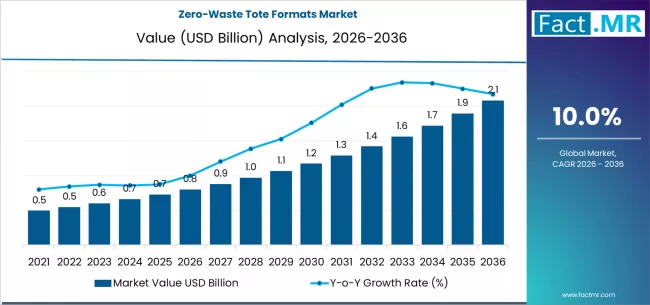
Zero-waste tote formats market is projected to grow from USD 0.8 billion in 2026 to USD 2.1 billion by 2036, at a CAGR of 10.0%. Retail & grocery will dominate with a 44.1% market share, while reusable totes & bins will lead the packaging format segment with a 47.3% share.
Zero-Waste Tote Formats Market Forecast and Outlook 2026 to 2036
The market for zero-waste tote formats is projected to total USD 0.80 billion in 2026, and reach USD 2.08 billion by 2036, progressing at a 10.0% CAGR. This expansion is fundamentally driven by the global transition from single-use carrier bags to regulated reusable systems, propelled by extended producer responsibility legislation and corporate sustainability commitments. The economic model is shifting from the sale of disposable items to the provision of durable assets managed within shared pooling and reverse logistics networks.
Key Takeaways from the Zero-Waste Tote Formats Market
- Market Value for 2026: USD 0.80 Billion
- Market Value for 2036: USD 2.08 Billion
- Forecast CAGR 2026 to 2036: 10.0%
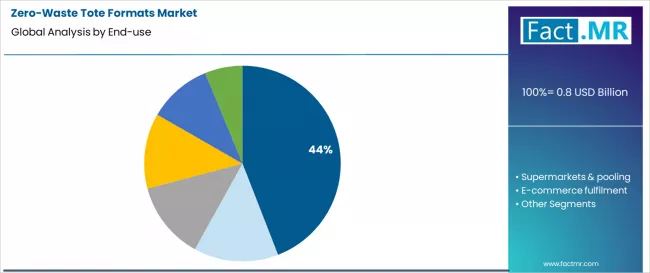
- Leading End-Use Segment (2026): Retail & Grocery (44.1%)
- Leading Packaging Format Segment (2026): Reusable Totes & Bins (47.3%)
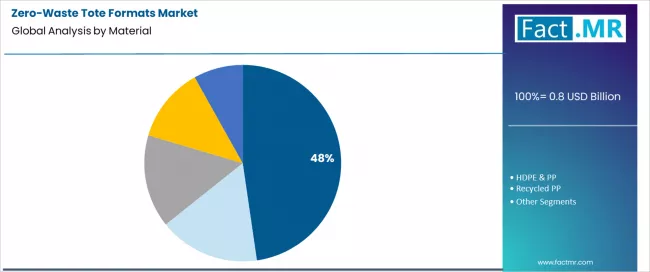
- Leading Material Segment (2026): PP & Recycled PET Fabrics (47.7%)
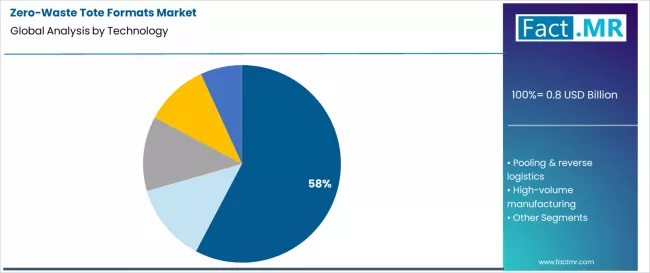
- Leading Technology Segment (2026): High-Cycle Durability & Washability (57.7%)
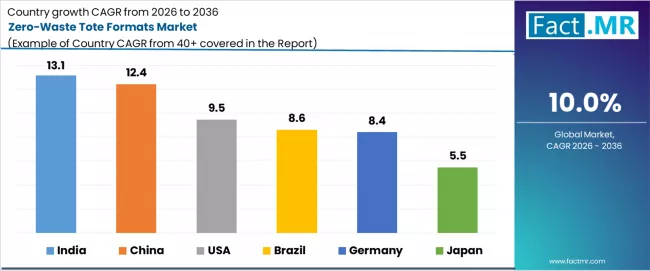
- Key Growth Countries: India (13.1% CAGR), China (12.4% CAGR), USA (9.5% CAGR), Brazil (8.6% CAGR), Germany (8.4% CAGR), Japan (5.5% CAGR)
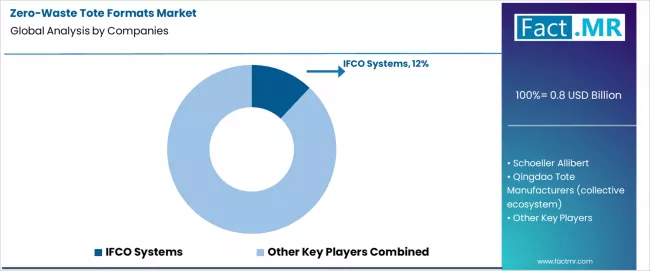
- Key Players: IFCO Systems, Schoeller Allibert, Qingdao Tote Manufacturers, Nilkamal Limited, Orbis Corporation, Sekisui Chemical Co., Ltd.

Growth is underpinned by the demonstrable total cost of ownership advantage for high-volume users like grocery retailers and e-commerce fulfillment centers. Durable totes reduce constant procurement of cardboard and single-use plastics, lower damage rates for goods in transit, and streamline handling operations.
This market represents the physical infrastructure enabling the reusable packaging economy, with demand scaling in direct correlation with the implementation of reuse mandates and the sophistication of logistics networks to manage asset circulation.
Zero-Waste Tote Formats Market
| Metric | Value |
|---|---|
| Market Value (2026) | USD 0.80 Billion |
| Market Forecast Value (2036) | USD 2.08 Billion |
| Forecast CAGR 2026 to 2036 | 10.0% |
Category
| Category | Segments |
|---|---|
| End-Use | Retail & Grocery, Supermarkets & Pooling, E-commerce Fulfilment, Kirana & Local Retail, Food Distribution, High-Quality Reuse |
| Packaging Format | Reusable Totes & Bins, Collapsible Totes, Stackable Totes, Lightweight Totes, Others |
| Material | PP & Recycled PET Fabrics, HDPE & PP, Recycled PP, PP, Others |
| Technology | High-Cycle Durability & Washability, Pooling & Reverse Logistics, High-Volume Manufacturing, Cost-Efficient Moulding, Others |
| Region | North America, Latin America, Western Europe, Eastern Europe, East Asia, South Asia & Pacific, Middle East & Africa |
Operational Infrastructure: The Backbone of the Reuse RevolutionAdoption is constrained less by product availability and more by the maturity of reverse logistics and asset-tracking infrastructure. The successful deployment of tote pooling systems, such as those mandated by France’s Loi AGEC for fresh produce distribution, relies on standardized dimensions, interoperable tracking (often via RFID or QR codes), and shared washing facilities. This creates a bifurcated market: closed-loop systems operated by a single entity for internal supply chains, and open-loop pooling networks requiring industry-wide collaboration and third-party logistics partners. Growth is directly tied to investments in this supporting operational layer, which dictates the efficient return, cleaning, and recirculation of totes.
Segmental Analysis
By Technology, Which Attribute is Non-Negotiable for Commercial Viability?

High-cycle durability and washability technology commands a leading 57.7% share. This segment is critical because the economic and environmental return on investment for reusable totes depends on maximizing the number of safe trips each unit can complete. Technologies here include reinforced stress points, anti-microbial coatings, and material formulations that withstand industrial washing at high temperatures without degrading. A tote that fails prematurely or cannot be sanitized effectively breaks the reuse loop, reverting the system to a linear model and negating its core value proposition.
- Economic Foundation: Determines the cost-per-trip metric that defines the business case against single-use alternatives.
- Hygiene Compliance: Ensures totes meet food safety standards for repeated use in grocery and produce supply chains.
By End-Use, Which Segment is the Primary Engine for Standardized Pooling Systems?

Retail and grocery constitute the primary end-use segment at 44.1%. This sector faces direct regulatory pressure to reduce packaging waste and possesses the consolidated volume necessary to justify investments in pooled tote networks. Major supermarket chains are driving standardization for fresh produce logistics from farm to store, creating high-volume demand for durable, stackable, and traceable totes that can be shared across suppliers within a defined geographic region.
- Regulatory Catalyst: Directly targeted by EPR and single-use plastic bans, forcing systemic change.
- Volume Consolidator: Possesses the scale to establish and mandate the use of standardized reusable container systems.
By Material, Which Combination Meets Performance and Circularity Demands?

Polypropylene and recycled PET fabrics hold a dominant 47.7% share. This material set offers an optimal balance: PP provides excellent impact resistance and washability, while rPET fabrics, often used in softer, collapsible designs, incorporate high levels of post-consumer recycled content. The combination addresses both functional requirements for longevity and corporate goals for increasing recycled material usage in durable goods, aligning with circular economy principles.
- Performance-Circularity Balance: PP ensures durability, while integrated rPET content supports recycled material mandates.
- Design Versatility: Enables both rigid bin and flexible, collapsible tote formats from related polymer families.
What are the Drivers, Restraints, and Key Trends of the Zero-Waste Tote Formats Market?
Growth is principally driven by stringent legislative bans on single-use plastics and mandatory reuse targets for retailers and manufacturers, creating a compliance-driven replacement market. A significant constraint is the high initial capital outlay required for fleet acquisition and the establishment of washing and reverse logistics infrastructure, which can deter small and medium enterprises.
A major opportunity lies in the digitization of tote pools through IoT sensors, enabling dynamic tracking, loss prevention, and data-driven optimization of circulation efficiency. The key trend is the rise of third-party managed pooling services, which lower the barrier to entry for brands by offering reusable packaging as a managed service, shifting the model from product sales to service subscription.
Country

| Country | CAGR 2026 to 2036 |
|---|---|
| USA | 9.5% |
| Germany | 8.4% |
| China | 12.4% |
| India | 13.1% |
| Brazil | 8.6% |
| Japan | 5.5% |
How do State-Level Bans and Retailer Consortiums Shape the US Landscape?
A 9.5% CAGR reflects a patchwork of state-level single-use plastic bag bans and voluntary but powerful initiatives by retail consortiums. Large grocery chains are forming alliances to adopt standardized reusable produce totes for back-of-store logistics, aiming to eliminate cardboard. The focus is on robust, pallet-compatible designs that integrate into existing automated distribution centers, with growing interest in third-party managed pooling to handle inter-company circulation.
- Alliance-Driven Standardization: Retailer groups, rather than federal policy, are establishing de facto tote standards.
- Supply Chain Integration: Demand centers on totes engineered for compatibility with high-automation DCs and existing material handling equipment.
What Characterizes Germany's Regulatory-First Approach and Closed-Loop Systems?
An 8.4% CAGR is characterized by compliance with the EU’s Single-Use Plastics Directive and Germany’s own Packaging Act, which incentivizes reusable systems. The market is advanced, with established closed-loop systems for beverage crates now expanding into fresh food. Demand is for high-quality, long-lifecycle totes that integrate with Germany’s efficient deposit-return logistics, emphasizing traceability and seamless operation within highly organized retail supply chains.
- Regulatory Framework: Clear legal reuse quotas and EPR fees create a predictable, compliance-led demand environment.
- System Integration: Totes are designed as components within pre-existing, highly efficient reverse logistics networks.
What Underpins China's Rapid Scale-Up in E-Commerce and Green City Pilots?
China’s 12.4% CAGR is fueled by national “Zero-Waste City” initiatives and the massive scale of its e-commerce sector, which seeks to reduce cardboard consumption. Pilot programs in major cities mandate reusable packaging for express delivery and fresh food e-commerce. This drives demand for lightweight, collapsible totes suited for last-mile delivery and cost-optimized, high-volume manufacturing to serve billions of potential trips annually.
- E-Commerce Driver: The logistics of giants like Alibaba and JD.com are a primary testing ground and scaling vector for reusable formats.
- Pilot-to-Scale Model: Government-backed city pilots create controlled environments to refine systems before national rollout.
How is India's Formalizing Retail and E-Commerce Boom Catalyzing Adoption?
India’s leading 13.1% CAGR is propelled by the rapid formalization of retail and the explosive growth of quick-commerce and e-grocery. The need to streamline operations and reduce costs in these low-margin sectors makes durable totes attractive. Demand is for ultra-cost-optimized, stackable designs that can withstand challenging logistics conditions, with a focus on simple, owner-operated closed-loop systems within individual company networks.
- Formalization & E-Grocery: The growth of organized retail and 10-minute delivery models creates immediate, volume-driven demand.
- Cost-Optimized Durability: Priority is on achieving necessary durability at the lowest possible unit cost for mass deployment.
Why is Brazil's Growth Linked to Local Retail Networks and Informal Sector Integration?
An 8.6% CAGR is tied to the modernization of vast kirana and local retail networks and initiatives in major cities like São Paulo to reduce packaging waste. The focus is on introducing simple, low-cost reusable crates and totes into these traditional supply chains. Success depends on designs that are compatible with small-vehicle transport and business models that facilitate collection and return from a fragmented retailer base.
- Traditional Retail Modernization: Targets the integration of reusable systems into long-established, fragmented supply chains.
- Fragmentation Challenge: Designs and business models must address the complexity of collection from numerous small stores.
What Defines Japan's Focus on High-Quality, Long-Lifecycle Asset Management?
Japan’s 5.5% CAGR represents a mature market focused on asset quality and meticulous management. Reusable totes in food distribution and factory logistics are treated as high-value capital assets, expected to last for decades. Demand centers on exceptional build quality, easy repairability, and sophisticated tracking systems to minimize loss. The emphasis is on maximizing asset utilization within well-defined, company-specific closed loops.
- Asset Mentality: Totes are viewed and managed as long-term capital equipment, not consumables.
- Efficiency & Loss Prevention: Sophisticated management and tracking systems ensure near-zero loss rates in closed-loop operations.
Competitive Landscape of the Zero-Waste Tote Formats Market

The competitive landscape is defined by strategic moves to secure scale and control key channels. Capacity expansion is aggressive in Asia, with Qingdao-based manufacturers scaling output to serve global demand for cost-optimized solutions. Mergers and acquisitions activity is focused on vertical integration, such as pooling service providers acquiring manufacturers to secure supply. Partnerships are crucial, exemplified by agreements between tote manufacturers like Schoeller Allibert and major grocery retailers to develop exclusive, standardized pooling systems.
Certifications for food contact, recycled content, and lifecycle assessments are becoming key differentiators in regulated markets like Europe. Channel strategy is bifurcating: some players sell directly to large enterprises for proprietary loops, while others supply third-party pooling operators. Pricing models are evolving from flat sales to per-trip leasing fees aligned with the Packaging-as-a-Service trend. Localization of production is increasing near major consumer markets to reduce logistics carbon footprint and respond quickly to regional demand. New product launches are focused on smart totes with embedded tracking and collapsible designs that optimize empty return logistics.
Key Players in the Zero-Waste Tote Formats Market
- IFCO Systems
- Schoeller Allibert
- Qingdao Tote Manufacturers (collective ecosystem)
- Nilkamal Limited
- Orbis Corporation
- Sekisui Chemical Co., Ltd.
Scope of Report
| Items | Metrics |
|---|---|
| Quantitative Units | USD Billion |
| Technology | High-Cycle Durability & Washability, Pooling & Reverse Logistics, High-Volume Manufacturing, Cost-Efficient Moulding, Others |
| Packaging Format | Reusable Totes & Bins, Collapsible Totes, Stackable Totes, Lightweight Totes, Others |
| End-Use | Retail & Grocery, Supermarkets & Pooling, E-commerce Fulfilment, Kirana & Local Retail, Food Distribution, High-Quality Reuse |
| Material | PP & Recycled PET Fabrics, HDPE & PP, Recycled PP, PP, Others |
| Key Countries | India, China, USA, Brazil, Germany, Japan |
| Key Companies | IFCO, Schoeller Allibert, Qingdao Tote Manufacturers, Nilkamal, Orbis, Sekisui |
| Additional Analysis | Total cost of ownership analysis for pooled vs. owned systems; lifecycle assessment of various material choices; study of loss rates in open-loop pools; impact of digital tracking on asset utilization; analysis of washing infrastructure economics and location strategy. |
Market by Segments
-
End-Use :
- Retail & Grocery
- Supermarkets & Pooling
- E-commerce Fulfilment
- Kirana & Local Retail
- Food Distribution
- High-Quality Reuse
-
Packaging Format :
- Reusable Totes & Bins
- Collapsible Totes
- Stackable Totes
- Lightweight Totes
- Others
-
Material :
- PP & Recycled PET Fabrics
- HDPE & PP
- Recycled PP
- PP
- Others
-
Technology :
- High-Cycle Durability & Washability
- Pooling & Reverse Logistics
- High-Volume Manufacturing
- Cost-Efficient Moulding
- Others
-
Region :
- North America
- USA
- Canada
- Latin America
- Brazil
- Mexico
- Argentina
- Rest of Latin America
- Western Europe
- Germany
- France
- Italy
- Spain
- UK
- BENELUX
- Rest of Western Europe
- Eastern Europe
- Russia
- Poland
- Czech Republic
- Rest of Eastern Europe
- East Asia
- China
- Japan
- South Korea
- Rest of East Asia
- South Asia & Pacific
- India
- ASEAN
- Australia
- Rest of South Asia & Pacific
- MEA
- GCC Countries
- South Africa
- Turkiye
- Rest of MEA
- North America
References
- Ellen MacArthur Foundation. (2025). Universal Reuse Policies: A Global Review of Legislation and its Impact on Packaging Systems.
- European Commission. (2024). Commission Implementing Regulation on the Reuse of Packaging.
- Food Marketing Institute. (2025). The Reusable Packaging Playbook for Grocery Retailers.
- UN Environment Programme. (2024). Turning off the Tap: How the world can end plastic pollution and create a circular economy.
- U.S. Plastics Pact. (2025). Roadmap to Reuse: Strategies for Implementing Reusable Packaging in the United States.
- World Economic Forum. (2024). The Future of Reusable Packaging: Scaling Return Systems.
Table of Content
- Executive Summary
- Global Market Outlook
- Demand to side Trends
- Supply to side Trends
- Technology Roadmap Analysis
- Analysis and Recommendations
- Market Overview
- Market Coverage / Taxonomy
- Market Definition / Scope / Limitations
- Market Background
- Market Dynamics
- Drivers
- Restraints
- Opportunity
- Trends
- Scenario Forecast
- Demand in Optimistic Scenario
- Demand in Likely Scenario
- Demand in Conservative Scenario
- Opportunity Map Analysis
- Product Life Cycle Analysis
- Supply Chain Analysis
- Investment Feasibility Matrix
- Value Chain Analysis
- PESTLE and Porter’s Analysis
- Regulatory Landscape
- Regional Parent Market Outlook
- Production and Consumption Statistics
- Import and Export Statistics
- Market Dynamics
- Global Market Analysis 2021 to 2025 and Forecast, 2026 to 2036
- Historical Market Size Value (USD Million) Analysis, 2021 to 2025
- Current and Future Market Size Value (USD Million) Projections, 2026 to 2036
- Y to o to Y Growth Trend Analysis
- Absolute $ Opportunity Analysis
- Global Market Pricing Analysis 2021 to 2025 and Forecast 2026 to 2036
- Global Market Analysis 2021 to 2025 and Forecast 2026 to 2036, By End-use
- Introduction / Key Findings
- Historical Market Size Value (USD Million) Analysis By End-use, 2021 to 2025
- Current and Future Market Size Value (USD Million) Analysis and Forecast By End-use, 2026 to 2036
- Retail & grocery
- Supermarkets & pooling
- E-commerce fulfilment
- Kirana & local retail
- Food distribution
- High-quality reuse
- Retail & grocery
- Y to o to Y Growth Trend Analysis By End-use, 2021 to 2025
- Absolute $ Opportunity Analysis By End-use, 2026 to 2036
- Global Market Analysis 2021 to 2025 and Forecast 2026 to 2036, By Packaging Format
- Introduction / Key Findings
- Historical Market Size Value (USD Million) Analysis By Packaging Format, 2021 to 2025
- Current and Future Market Size Value (USD Million) Analysis and Forecast By Packaging Format, 2026 to 2036
- Reusable totes & bins
- Collapsible totes
- Stackable totes
- Lightweight totes
- Others
- Reusable totes & bins
- Y to o to Y Growth Trend Analysis By Packaging Format, 2021 to 2025
- Absolute $ Opportunity Analysis By Packaging Format, 2026 to 2036
- Global Market Analysis 2021 to 2025 and Forecast 2026 to 2036, By Material
- Introduction / Key Findings
- Historical Market Size Value (USD Million) Analysis By Material, 2021 to 2025
- Current and Future Market Size Value (USD Million) Analysis and Forecast By Material, 2026 to 2036
- PP & recycled PET fabrics
- HDPE & PP
- Recycled PP
- PP
- Others
- PP & recycled PET fabrics
- Y to o to Y Growth Trend Analysis By Material, 2021 to 2025
- Absolute $ Opportunity Analysis By Material, 2026 to 2036
- Global Market Analysis 2021 to 2025 and Forecast 2026 to 2036, By Technology
- Introduction / Key Findings
- Historical Market Size Value (USD Million) Analysis By Technology, 2021 to 2025
- Current and Future Market Size Value (USD Million) Analysis and Forecast By Technology, 2026 to 2036
- High-cycle durability & washability
- Pooling & reverse logistics
- High-volume manufacturing
- Cost-efficient moulding
- Others
- High-cycle durability & washability
- Y to o to Y Growth Trend Analysis By Technology, 2021 to 2025
- Absolute $ Opportunity Analysis By Technology, 2026 to 2036
- Global Market Analysis 2021 to 2025 and Forecast 2026 to 2036, By Region
- Introduction
- Historical Market Size Value (USD Million) Analysis By Region, 2021 to 2025
- Current Market Size Value (USD Million) Analysis and Forecast By Region, 2026 to 2036
- North America
- Latin America
- Western Europe
- Eastern Europe
- East Asia
- South Asia and Pacific
- Middle East & Africa
- Market Attractiveness Analysis By Region
- North America Market Analysis 2021 to 2025 and Forecast 2026 to 2036, By Country
- Historical Market Size Value (USD Million) Trend Analysis By Market Taxonomy, 2021 to 2025
- Market Size Value (USD Million) Forecast By Market Taxonomy, 2026 to 2036
- By Country
- USA
- Canada
- Mexico
- By End-use
- By Packaging Format
- By Material
- By Technology
- By Country
- Market Attractiveness Analysis
- By Country
- By End-use
- By Packaging Format
- By Material
- By Technology
- Key Takeaways
- Latin America Market Analysis 2021 to 2025 and Forecast 2026 to 2036, By Country
- Historical Market Size Value (USD Million) Trend Analysis By Market Taxonomy, 2021 to 2025
- Market Size Value (USD Million) Forecast By Market Taxonomy, 2026 to 2036
- By Country
- Brazil
- Chile
- Rest of Latin America
- By End-use
- By Packaging Format
- By Material
- By Technology
- By Country
- Market Attractiveness Analysis
- By Country
- By End-use
- By Packaging Format
- By Material
- By Technology
- Key Takeaways
- Western Europe Market Analysis 2021 to 2025 and Forecast 2026 to 2036, By Country
- Historical Market Size Value (USD Million) Trend Analysis By Market Taxonomy, 2021 to 2025
- Market Size Value (USD Million) Forecast By Market Taxonomy, 2026 to 2036
- By Country
- Germany
- UK
- Italy
- Spain
- France
- Nordic
- BENELUX
- Rest of Western Europe
- By End-use
- By Packaging Format
- By Material
- By Technology
- By Country
- Market Attractiveness Analysis
- By Country
- By End-use
- By Packaging Format
- By Material
- By Technology
- Key Takeaways
- Eastern Europe Market Analysis 2021 to 2025 and Forecast 2026 to 2036, By Country
- Historical Market Size Value (USD Million) Trend Analysis By Market Taxonomy, 2021 to 2025
- Market Size Value (USD Million) Forecast By Market Taxonomy, 2026 to 2036
- By Country
- Russia
- Poland
- Hungary
- Balkan & Baltic
- Rest of Eastern Europe
- By End-use
- By Packaging Format
- By Material
- By Technology
- By Country
- Market Attractiveness Analysis
- By Country
- By End-use
- By Packaging Format
- By Material
- By Technology
- Key Takeaways
- East Asia Market Analysis 2021 to 2025 and Forecast 2026 to 2036, By Country
- Historical Market Size Value (USD Million) Trend Analysis By Market Taxonomy, 2021 to 2025
- Market Size Value (USD Million) Forecast By Market Taxonomy, 2026 to 2036
- By Country
- China
- Japan
- South Korea
- By End-use
- By Packaging Format
- By Material
- By Technology
- By Country
- Market Attractiveness Analysis
- By Country
- By End-use
- By Packaging Format
- By Material
- By Technology
- Key Takeaways
- South Asia and Pacific Market Analysis 2021 to 2025 and Forecast 2026 to 2036, By Country
- Historical Market Size Value (USD Million) Trend Analysis By Market Taxonomy, 2021 to 2025
- Market Size Value (USD Million) Forecast By Market Taxonomy, 2026 to 2036
- By Country
- India
- ASEAN
- Australia & New Zealand
- Rest of South Asia and Pacific
- By End-use
- By Packaging Format
- By Material
- By Technology
- By Country
- Market Attractiveness Analysis
- By Country
- By End-use
- By Packaging Format
- By Material
- By Technology
- Key Takeaways
- Middle East & Africa Market Analysis 2021 to 2025 and Forecast 2026 to 2036, By Country
- Historical Market Size Value (USD Million) Trend Analysis By Market Taxonomy, 2021 to 2025
- Market Size Value (USD Million) Forecast By Market Taxonomy, 2026 to 2036
- By Country
- Kingdom of Saudi Arabia
- Other GCC Countries
- Turkiye
- South Africa
- Other African Union
- Rest of Middle East & Africa
- By End-use
- By Packaging Format
- By Material
- By Technology
- By Country
- Market Attractiveness Analysis
- By Country
- By End-use
- By Packaging Format
- By Material
- By Technology
- Key Takeaways
- Key Countries Market Analysis
- USA
- Pricing Analysis
- Market Share Analysis, 2025
- By End-use
- By Packaging Format
- By Material
- By Technology
- Canada
- Pricing Analysis
- Market Share Analysis, 2025
- By End-use
- By Packaging Format
- By Material
- By Technology
- Mexico
- Pricing Analysis
- Market Share Analysis, 2025
- By End-use
- By Packaging Format
- By Material
- By Technology
- Brazil
- Pricing Analysis
- Market Share Analysis, 2025
- By End-use
- By Packaging Format
- By Material
- By Technology
- Chile
- Pricing Analysis
- Market Share Analysis, 2025
- By End-use
- By Packaging Format
- By Material
- By Technology
- Germany
- Pricing Analysis
- Market Share Analysis, 2025
- By End-use
- By Packaging Format
- By Material
- By Technology
- UK
- Pricing Analysis
- Market Share Analysis, 2025
- By End-use
- By Packaging Format
- By Material
- By Technology
- Italy
- Pricing Analysis
- Market Share Analysis, 2025
- By End-use
- By Packaging Format
- By Material
- By Technology
- Spain
- Pricing Analysis
- Market Share Analysis, 2025
- By End-use
- By Packaging Format
- By Material
- By Technology
- France
- Pricing Analysis
- Market Share Analysis, 2025
- By End-use
- By Packaging Format
- By Material
- By Technology
- India
- Pricing Analysis
- Market Share Analysis, 2025
- By End-use
- By Packaging Format
- By Material
- By Technology
- ASEAN
- Pricing Analysis
- Market Share Analysis, 2025
- By End-use
- By Packaging Format
- By Material
- By Technology
- Australia & New Zealand
- Pricing Analysis
- Market Share Analysis, 2025
- By End-use
- By Packaging Format
- By Material
- By Technology
- China
- Pricing Analysis
- Market Share Analysis, 2025
- By End-use
- By Packaging Format
- By Material
- By Technology
- Japan
- Pricing Analysis
- Market Share Analysis, 2025
- By End-use
- By Packaging Format
- By Material
- By Technology
- South Korea
- Pricing Analysis
- Market Share Analysis, 2025
- By End-use
- By Packaging Format
- By Material
- By Technology
- Russia
- Pricing Analysis
- Market Share Analysis, 2025
- By End-use
- By Packaging Format
- By Material
- By Technology
- Poland
- Pricing Analysis
- Market Share Analysis, 2025
- By End-use
- By Packaging Format
- By Material
- By Technology
- Hungary
- Pricing Analysis
- Market Share Analysis, 2025
- By End-use
- By Packaging Format
- By Material
- By Technology
- Kingdom of Saudi Arabia
- Pricing Analysis
- Market Share Analysis, 2025
- By End-use
- By Packaging Format
- By Material
- By Technology
- Turkiye
- Pricing Analysis
- Market Share Analysis, 2025
- By End-use
- By Packaging Format
- By Material
- By Technology
- South Africa
- Pricing Analysis
- Market Share Analysis, 2025
- By End-use
- By Packaging Format
- By Material
- By Technology
- USA
- Market Structure Analysis
- Competition Dashboard
- Competition Benchmarking
- Market Share Analysis of Top Players
- By Regional
- By End-use
- By Packaging Format
- By Material
- By Technology
- Competition Analysis
- Competition Deep Dive
- IFCO Systems
- Overview
- Product Portfolio
- Profitability by Market Segments (Product/Age /Sales Channel/Region)
- Sales Footprint
- Strategy Overview
- Marketing Strategy
- Product Strategy
- Channel Strategy
- Schoeller Allibert
- Qingdao Tote Manufacturers (collective ecosystem)
- Nilkamal Limited
- Orbis Corporation
- Sekisui Chemical Co., Ltd.
- IFCO Systems
- Competition Deep Dive
- Assumptions & Acronyms Used
- Research Methodology
List Of Table
- Table 1: Global Market Value (USD Million) Forecast by Region, 2021 to 2036
- Table 2: Global Market Value (USD Million) Forecast by End-use, 2021 to 2036
- Table 3: Global Market Value (USD Million) Forecast by Packaging Format, 2021 to 2036
- Table 4: Global Market Value (USD Million) Forecast by Material, 2021 to 2036
- Table 5: Global Market Value (USD Million) Forecast by Technology, 2021 to 2036
- Table 6: North America Market Value (USD Million) Forecast by Country, 2021 to 2036
- Table 7: North America Market Value (USD Million) Forecast by End-use, 2021 to 2036
- Table 8: North America Market Value (USD Million) Forecast by Packaging Format, 2021 to 2036
- Table 9: North America Market Value (USD Million) Forecast by Material, 2021 to 2036
- Table 10: North America Market Value (USD Million) Forecast by Technology, 2021 to 2036
- Table 11: Latin America Market Value (USD Million) Forecast by Country, 2021 to 2036
- Table 12: Latin America Market Value (USD Million) Forecast by End-use, 2021 to 2036
- Table 13: Latin America Market Value (USD Million) Forecast by Packaging Format, 2021 to 2036
- Table 14: Latin America Market Value (USD Million) Forecast by Material, 2021 to 2036
- Table 15: Latin America Market Value (USD Million) Forecast by Technology, 2021 to 2036
- Table 16: Western Europe Market Value (USD Million) Forecast by Country, 2021 to 2036
- Table 17: Western Europe Market Value (USD Million) Forecast by End-use, 2021 to 2036
- Table 18: Western Europe Market Value (USD Million) Forecast by Packaging Format, 2021 to 2036
- Table 19: Western Europe Market Value (USD Million) Forecast by Material, 2021 to 2036
- Table 20: Western Europe Market Value (USD Million) Forecast by Technology, 2021 to 2036
- Table 21: Eastern Europe Market Value (USD Million) Forecast by Country, 2021 to 2036
- Table 22: Eastern Europe Market Value (USD Million) Forecast by End-use, 2021 to 2036
- Table 23: Eastern Europe Market Value (USD Million) Forecast by Packaging Format, 2021 to 2036
- Table 24: Eastern Europe Market Value (USD Million) Forecast by Material, 2021 to 2036
- Table 25: Eastern Europe Market Value (USD Million) Forecast by Technology, 2021 to 2036
- Table 26: East Asia Market Value (USD Million) Forecast by Country, 2021 to 2036
- Table 27: East Asia Market Value (USD Million) Forecast by End-use, 2021 to 2036
- Table 28: East Asia Market Value (USD Million) Forecast by Packaging Format, 2021 to 2036
- Table 29: East Asia Market Value (USD Million) Forecast by Material, 2021 to 2036
- Table 30: East Asia Market Value (USD Million) Forecast by Technology, 2021 to 2036
- Table 31: South Asia and Pacific Market Value (USD Million) Forecast by Country, 2021 to 2036
- Table 32: South Asia and Pacific Market Value (USD Million) Forecast by End-use, 2021 to 2036
- Table 33: South Asia and Pacific Market Value (USD Million) Forecast by Packaging Format, 2021 to 2036
- Table 34: South Asia and Pacific Market Value (USD Million) Forecast by Material, 2021 to 2036
- Table 35: South Asia and Pacific Market Value (USD Million) Forecast by Technology, 2021 to 2036
- Table 36: Middle East & Africa Market Value (USD Million) Forecast by Country, 2021 to 2036
- Table 37: Middle East & Africa Market Value (USD Million) Forecast by End-use, 2021 to 2036
- Table 38: Middle East & Africa Market Value (USD Million) Forecast by Packaging Format, 2021 to 2036
- Table 39: Middle East & Africa Market Value (USD Million) Forecast by Material, 2021 to 2036
- Table 40: Middle East & Africa Market Value (USD Million) Forecast by Technology, 2021 to 2036
List Of Figures
- Figure 1: Global Market Pricing Analysis
- Figure 2: Global Market Value (USD Million) Forecast 2021 to 2036
- Figure 3: Global Market Value Share and BPS Analysis by End-use, 2026 and 2036
- Figure 4: Global Market Y to o to Y Growth Comparison by End-use, 2026 to 2036
- Figure 5: Global Market Attractiveness Analysis by End-use
- Figure 6: Global Market Value Share and BPS Analysis by Packaging Format, 2026 and 2036
- Figure 7: Global Market Y to o to Y Growth Comparison by Packaging Format, 2026 to 2036
- Figure 8: Global Market Attractiveness Analysis by Packaging Format
- Figure 9: Global Market Value Share and BPS Analysis by Material, 2026 and 2036
- Figure 10: Global Market Y to o to Y Growth Comparison by Material, 2026 to 2036
- Figure 11: Global Market Attractiveness Analysis by Material
- Figure 12: Global Market Value Share and BPS Analysis by Technology, 2026 and 2036
- Figure 13: Global Market Y to o to Y Growth Comparison by Technology, 2026 to 2036
- Figure 14: Global Market Attractiveness Analysis by Technology
- Figure 15: Global Market Value (USD Million) Share and BPS Analysis by Region, 2026 and 2036
- Figure 16: Global Market Y to o to Y Growth Comparison by Region, 2026 to 2036
- Figure 17: Global Market Attractiveness Analysis by Region
- Figure 18: North America Market Incremental Dollar Opportunity, 2026 to 2036
- Figure 19: Latin America Market Incremental Dollar Opportunity, 2026 to 2036
- Figure 20: Western Europe Market Incremental Dollar Opportunity, 2026 to 2036
- Figure 21: Eastern Europe Market Incremental Dollar Opportunity, 2026 to 2036
- Figure 22: East Asia Market Incremental Dollar Opportunity, 2026 to 2036
- Figure 23: South Asia and Pacific Market Incremental Dollar Opportunity, 2026 to 2036
- Figure 24: Middle East & Africa Market Incremental Dollar Opportunity, 2026 to 2036
- Figure 25: North America Market Value Share and BPS Analysis by Country, 2026 and 2036
- Figure 26: North America Market Value Share and BPS Analysis by End-use, 2026 and 2036
- Figure 27: North America Market Y to o to Y Growth Comparison by End-use, 2026 to 2036
- Figure 28: North America Market Attractiveness Analysis by End-use
- Figure 29: North America Market Value Share and BPS Analysis by Packaging Format, 2026 and 2036
- Figure 30: North America Market Y to o to Y Growth Comparison by Packaging Format, 2026 to 2036
- Figure 31: North America Market Attractiveness Analysis by Packaging Format
- Figure 32: North America Market Value Share and BPS Analysis by Material, 2026 and 2036
- Figure 33: North America Market Y to o to Y Growth Comparison by Material, 2026 to 2036
- Figure 34: North America Market Attractiveness Analysis by Material
- Figure 35: North America Market Value Share and BPS Analysis by Technology, 2026 and 2036
- Figure 36: North America Market Y to o to Y Growth Comparison by Technology, 2026 to 2036
- Figure 37: North America Market Attractiveness Analysis by Technology
- Figure 38: Latin America Market Value Share and BPS Analysis by Country, 2026 and 2036
- Figure 39: Latin America Market Value Share and BPS Analysis by End-use, 2026 and 2036
- Figure 40: Latin America Market Y to o to Y Growth Comparison by End-use, 2026 to 2036
- Figure 41: Latin America Market Attractiveness Analysis by End-use
- Figure 42: Latin America Market Value Share and BPS Analysis by Packaging Format, 2026 and 2036
- Figure 43: Latin America Market Y to o to Y Growth Comparison by Packaging Format, 2026 to 2036
- Figure 44: Latin America Market Attractiveness Analysis by Packaging Format
- Figure 45: Latin America Market Value Share and BPS Analysis by Material, 2026 and 2036
- Figure 46: Latin America Market Y to o to Y Growth Comparison by Material, 2026 to 2036
- Figure 47: Latin America Market Attractiveness Analysis by Material
- Figure 48: Latin America Market Value Share and BPS Analysis by Technology, 2026 and 2036
- Figure 49: Latin America Market Y to o to Y Growth Comparison by Technology, 2026 to 2036
- Figure 50: Latin America Market Attractiveness Analysis by Technology
- Figure 51: Western Europe Market Value Share and BPS Analysis by Country, 2026 and 2036
- Figure 52: Western Europe Market Value Share and BPS Analysis by End-use, 2026 and 2036
- Figure 53: Western Europe Market Y to o to Y Growth Comparison by End-use, 2026 to 2036
- Figure 54: Western Europe Market Attractiveness Analysis by End-use
- Figure 55: Western Europe Market Value Share and BPS Analysis by Packaging Format, 2026 and 2036
- Figure 56: Western Europe Market Y to o to Y Growth Comparison by Packaging Format, 2026 to 2036
- Figure 57: Western Europe Market Attractiveness Analysis by Packaging Format
- Figure 58: Western Europe Market Value Share and BPS Analysis by Material, 2026 and 2036
- Figure 59: Western Europe Market Y to o to Y Growth Comparison by Material, 2026 to 2036
- Figure 60: Western Europe Market Attractiveness Analysis by Material
- Figure 61: Western Europe Market Value Share and BPS Analysis by Technology, 2026 and 2036
- Figure 62: Western Europe Market Y to o to Y Growth Comparison by Technology, 2026 to 2036
- Figure 63: Western Europe Market Attractiveness Analysis by Technology
- Figure 64: Eastern Europe Market Value Share and BPS Analysis by Country, 2026 and 2036
- Figure 65: Eastern Europe Market Value Share and BPS Analysis by End-use, 2026 and 2036
- Figure 66: Eastern Europe Market Y to o to Y Growth Comparison by End-use, 2026 to 2036
- Figure 67: Eastern Europe Market Attractiveness Analysis by End-use
- Figure 68: Eastern Europe Market Value Share and BPS Analysis by Packaging Format, 2026 and 2036
- Figure 69: Eastern Europe Market Y to o to Y Growth Comparison by Packaging Format, 2026 to 2036
- Figure 70: Eastern Europe Market Attractiveness Analysis by Packaging Format
- Figure 71: Eastern Europe Market Value Share and BPS Analysis by Material, 2026 and 2036
- Figure 72: Eastern Europe Market Y to o to Y Growth Comparison by Material, 2026 to 2036
- Figure 73: Eastern Europe Market Attractiveness Analysis by Material
- Figure 74: Eastern Europe Market Value Share and BPS Analysis by Technology, 2026 and 2036
- Figure 75: Eastern Europe Market Y to o to Y Growth Comparison by Technology, 2026 to 2036
- Figure 76: Eastern Europe Market Attractiveness Analysis by Technology
- Figure 77: East Asia Market Value Share and BPS Analysis by Country, 2026 and 2036
- Figure 78: East Asia Market Value Share and BPS Analysis by End-use, 2026 and 2036
- Figure 79: East Asia Market Y to o to Y Growth Comparison by End-use, 2026 to 2036
- Figure 80: East Asia Market Attractiveness Analysis by End-use
- Figure 81: East Asia Market Value Share and BPS Analysis by Packaging Format, 2026 and 2036
- Figure 82: East Asia Market Y to o to Y Growth Comparison by Packaging Format, 2026 to 2036
- Figure 83: East Asia Market Attractiveness Analysis by Packaging Format
- Figure 84: East Asia Market Value Share and BPS Analysis by Material, 2026 and 2036
- Figure 85: East Asia Market Y to o to Y Growth Comparison by Material, 2026 to 2036
- Figure 86: East Asia Market Attractiveness Analysis by Material
- Figure 87: East Asia Market Value Share and BPS Analysis by Technology, 2026 and 2036
- Figure 88: East Asia Market Y to o to Y Growth Comparison by Technology, 2026 to 2036
- Figure 89: East Asia Market Attractiveness Analysis by Technology
- Figure 90: South Asia and Pacific Market Value Share and BPS Analysis by Country, 2026 and 2036
- Figure 91: South Asia and Pacific Market Value Share and BPS Analysis by End-use, 2026 and 2036
- Figure 92: South Asia and Pacific Market Y to o to Y Growth Comparison by End-use, 2026 to 2036
- Figure 93: South Asia and Pacific Market Attractiveness Analysis by End-use
- Figure 94: South Asia and Pacific Market Value Share and BPS Analysis by Packaging Format, 2026 and 2036
- Figure 95: South Asia and Pacific Market Y to o to Y Growth Comparison by Packaging Format, 2026 to 2036
- Figure 96: South Asia and Pacific Market Attractiveness Analysis by Packaging Format
- Figure 97: South Asia and Pacific Market Value Share and BPS Analysis by Material, 2026 and 2036
- Figure 98: South Asia and Pacific Market Y to o to Y Growth Comparison by Material, 2026 to 2036
- Figure 99: South Asia and Pacific Market Attractiveness Analysis by Material
- Figure 100: South Asia and Pacific Market Value Share and BPS Analysis by Technology, 2026 and 2036
- Figure 101: South Asia and Pacific Market Y to o to Y Growth Comparison by Technology, 2026 to 2036
- Figure 102: South Asia and Pacific Market Attractiveness Analysis by Technology
- Figure 103: Middle East & Africa Market Value Share and BPS Analysis by Country, 2026 and 2036
- Figure 104: Middle East & Africa Market Value Share and BPS Analysis by End-use, 2026 and 2036
- Figure 105: Middle East & Africa Market Y to o to Y Growth Comparison by End-use, 2026 to 2036
- Figure 106: Middle East & Africa Market Attractiveness Analysis by End-use
- Figure 107: Middle East & Africa Market Value Share and BPS Analysis by Packaging Format, 2026 and 2036
- Figure 108: Middle East & Africa Market Y to o to Y Growth Comparison by Packaging Format, 2026 to 2036
- Figure 109: Middle East & Africa Market Attractiveness Analysis by Packaging Format
- Figure 110: Middle East & Africa Market Value Share and BPS Analysis by Material, 2026 and 2036
- Figure 111: Middle East & Africa Market Y to o to Y Growth Comparison by Material, 2026 to 2036
- Figure 112: Middle East & Africa Market Attractiveness Analysis by Material
- Figure 113: Middle East & Africa Market Value Share and BPS Analysis by Technology, 2026 and 2036
- Figure 114: Middle East & Africa Market Y to o to Y Growth Comparison by Technology, 2026 to 2036
- Figure 115: Middle East & Africa Market Attractiveness Analysis by Technology
- Figure 116: Global Market - Tier Structure Analysis
- Figure 117: Global Market - Company Share Analysis
- FAQs -
How big is the zero-waste tote formats market in 2026?
The global zero-waste tote formats market is estimated to be valued at USD 0.8 billion in 2026.
What will be the size of zero-waste tote formats market in 2036?
The market size for the zero-waste tote formats market is projected to reach USD 2.1 billion by 2036.
How much will be the zero-waste tote formats market growth between 2026 and 2036?
The zero-waste tote formats market is expected to grow at a 10.0% CAGR between 2026 and 2036.
What are the key product types in the zero-waste tote formats market?
The key product types in zero-waste tote formats market are retail & grocery, supermarkets & pooling, e-commerce fulfilment, kirana & local retail, food distribution and high-quality reuse.
Which packaging format segment to contribute significant share in the zero-waste tote formats market in 2026?
In terms of packaging format, reusable totes & bins segment to command 47.3% share in the zero-waste tote formats market in 2026.